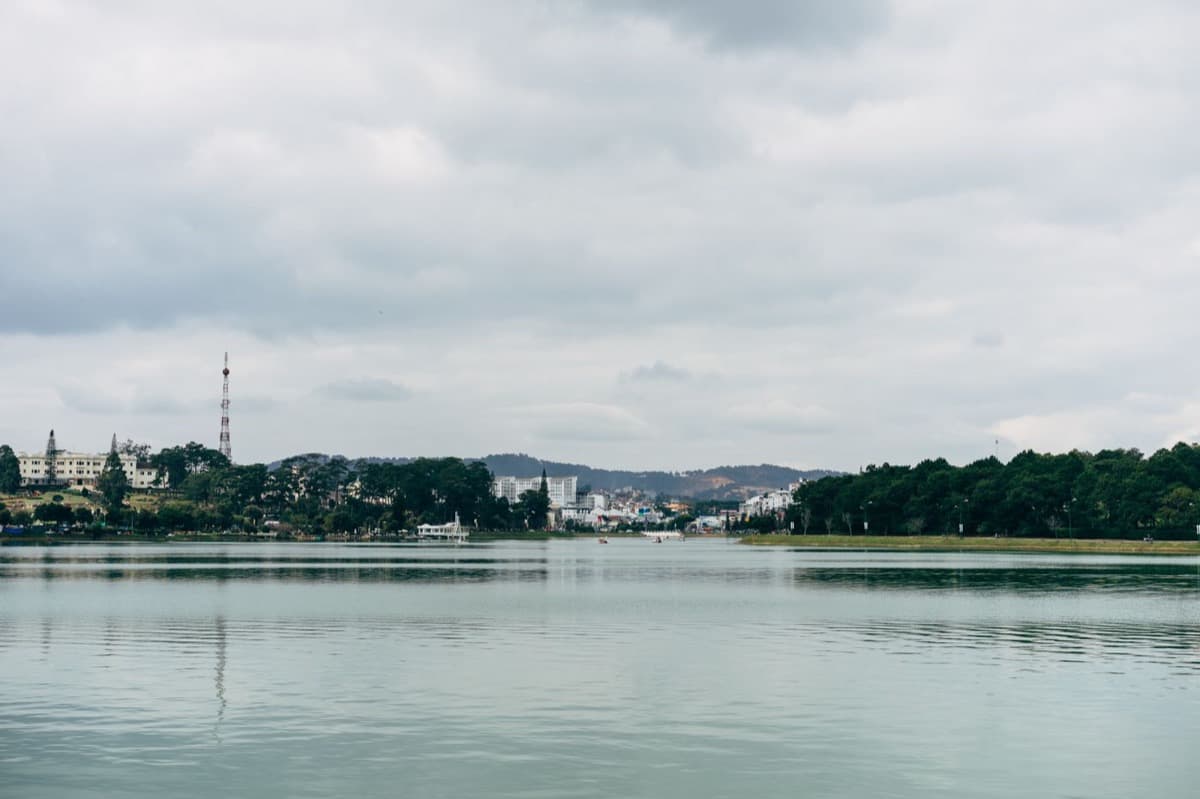
Da Lat is a French hill station that Vietnam made entirely its own. Walk from the last emperor's summer villa, through the downtown market and around the manufactured lake at its heart, out to the flower gardens that gave the City of Flowers its name.
Start · Bao Dai Summer Palace: the Third Palace
DirectionsStops
- 1
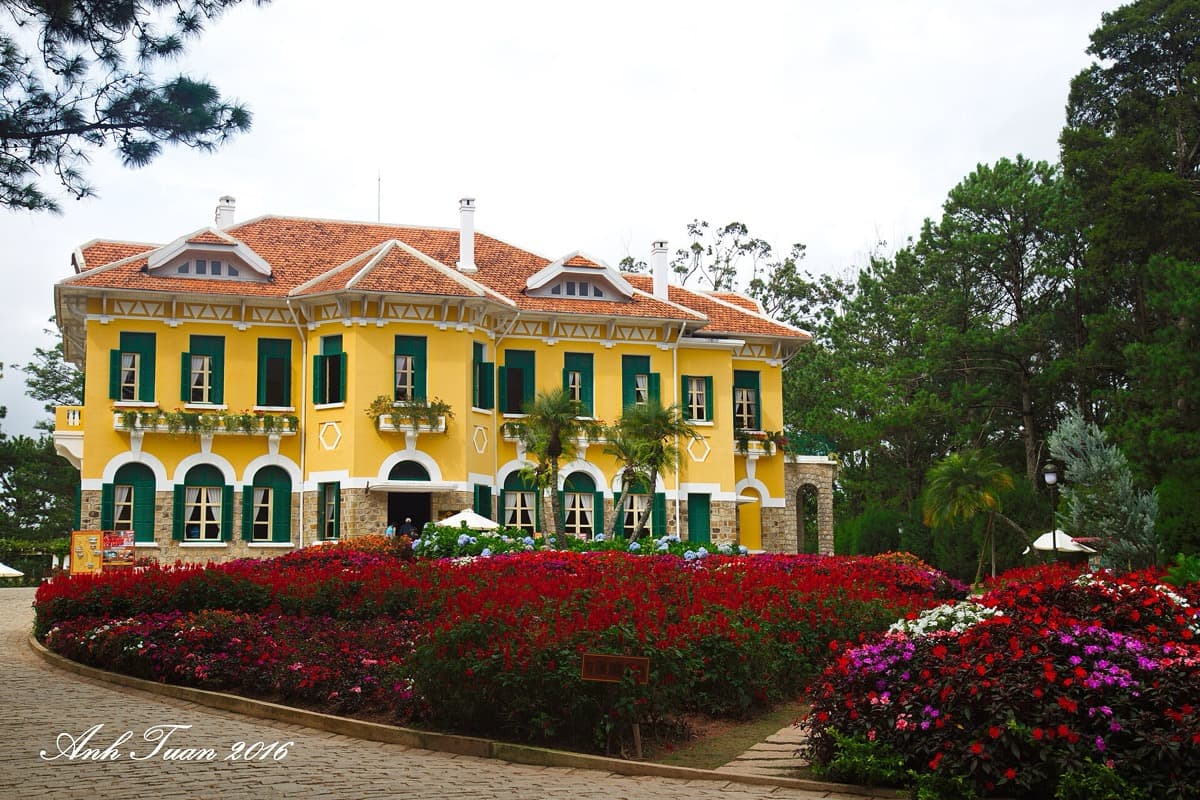
Bao Dai Summer Palace: the Third Palace
The pine-set summer villa of the last emperor of the Nguyen dynasty, and the colonial choice the town inherited.
- 2
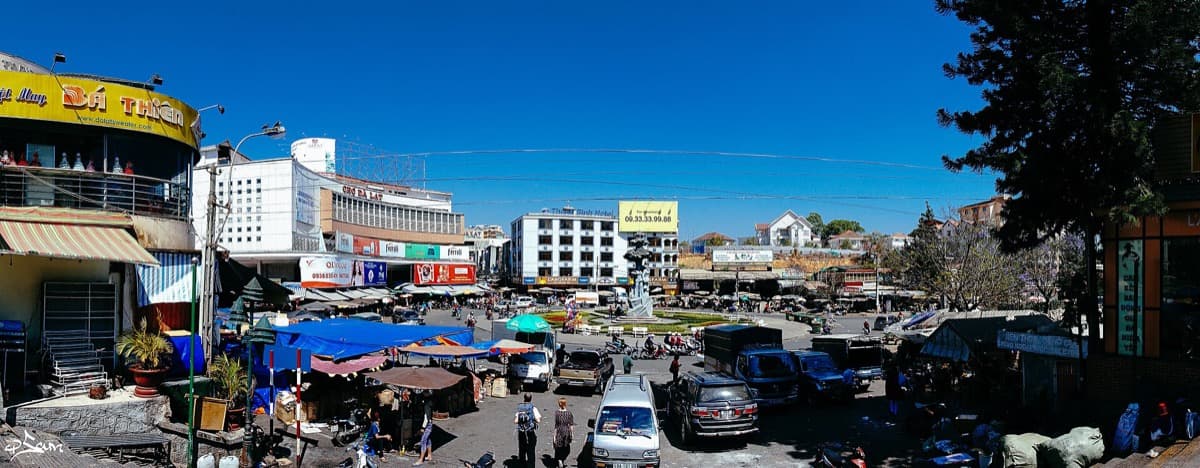
Da Lat Market: the town's own downtown
A modernist concrete market designed and built by Vietnamese hands at the end of the nineteen fifties, still the busy center of the city.
- 3
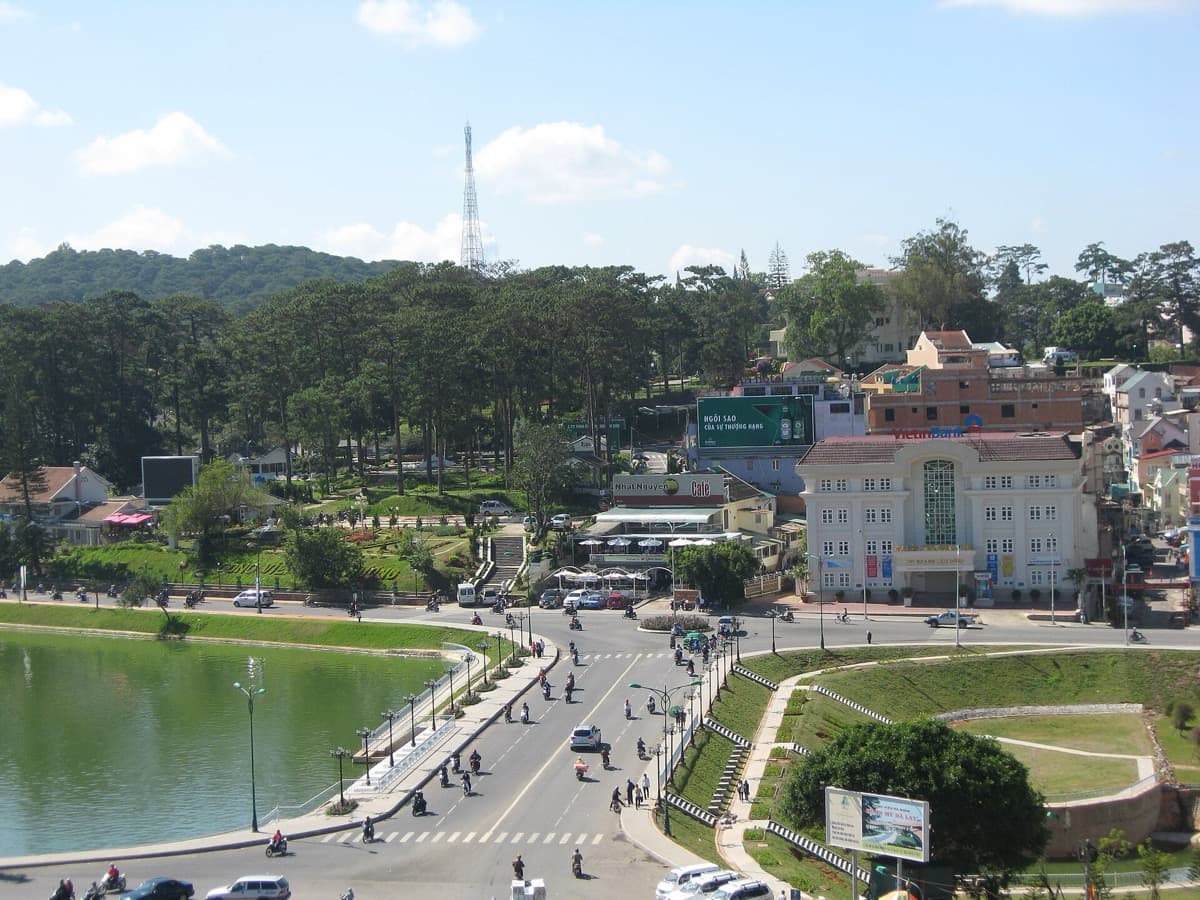
Cau Ong Dao: the dam-bridge that makes the lake
The stone dam at the southern end of the lake, the piece of colonial engineering that shaped the whole town.
- 4
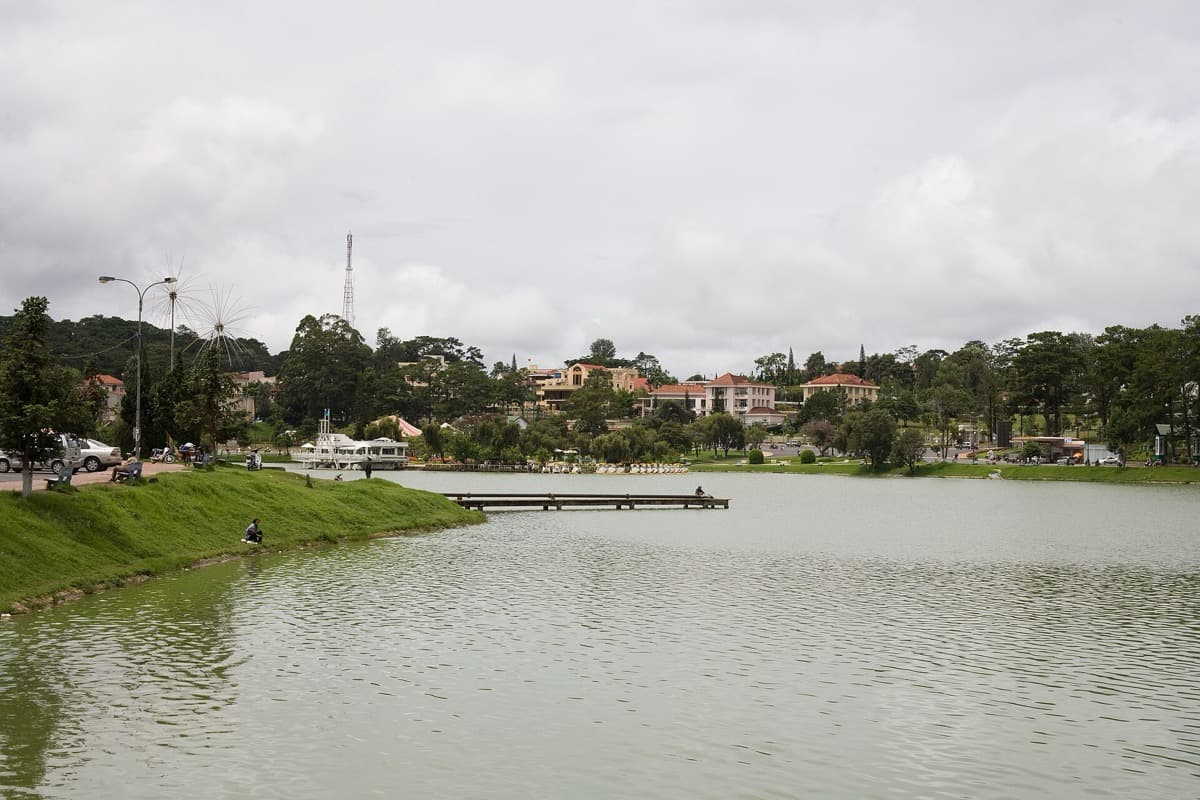
Xuan Huong Lake: the crescent at the heart
The artificial crescent lake at the center of Da Lat, and the sensory heart of the walk.
- 5
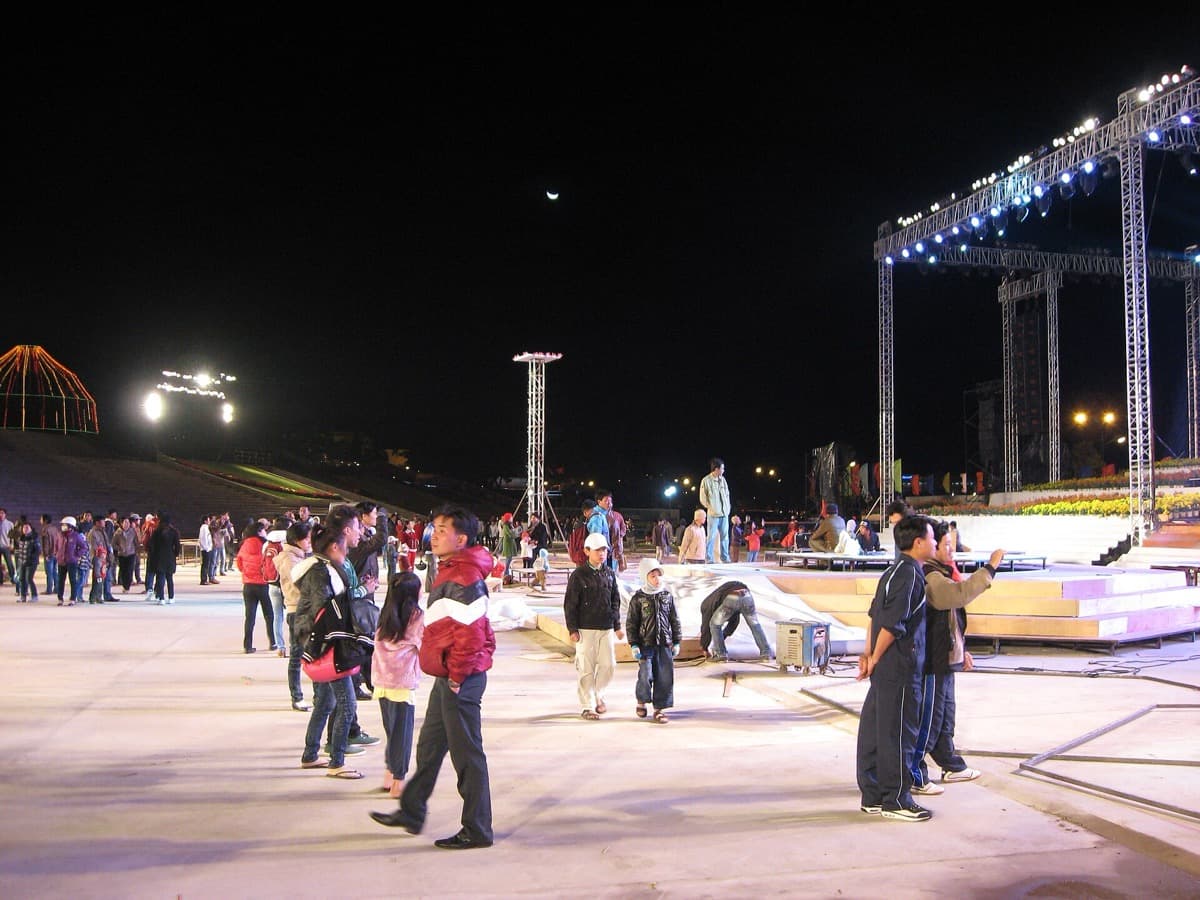
Lam Vien Square: flowers built as architecture
A twenty-first-century civic square with two glass buildings shaped like an artichoke bud and a wild sunflower, the living present of the garden city.
- 6
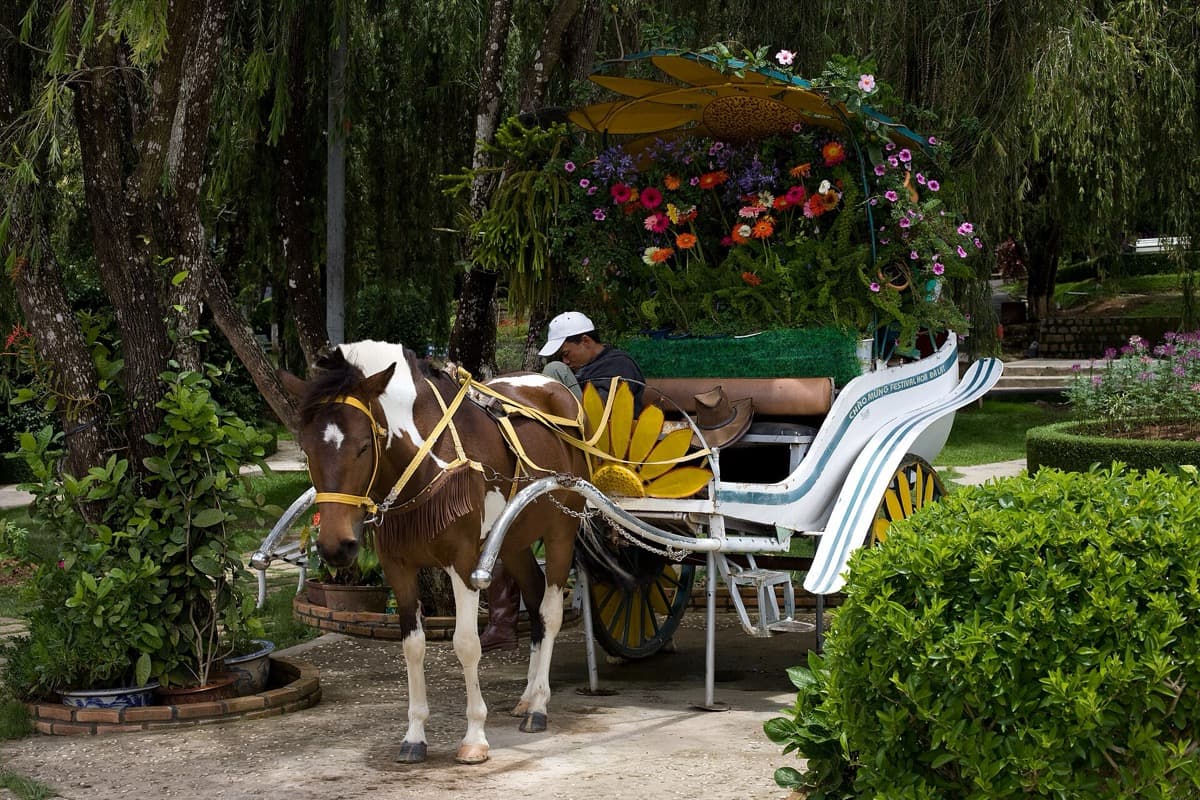
Da Lat Flower Gardens: what the garden became
Terraced beds of roses, orchids, and hydrangeas on the far shore, the closing stop and the emotional payoff of the City of Flowers.
Details
Best Time to Visit
Morning is the best time to start, when mist sits on the lake and the light is soft before the afternoon heat and showers. Da Lat stays cool all year, so any season works, but the dry months from November through March are the most reliable. If you want the hills washed yellow with wild sunflowers, come toward the end of the rainy season, around October and November.
Pro Tips
- •Start early. The lake wears its best light and mist in the morning, and the long uphill and downhill legs are easier before the afternoon heat and showers arrive.
- •The two long legs, villa to market and square to gardens, are the walk's spread-out transects. If the altitude or the hills are tiring you, a short taxi or motorbike-taxi ride between them is easy to find and keeps the walk enjoyable.
- •Bring small cash. The palace and the flower gardens each charge a small entry ticket, and the market runs on cash.
- •Pack a light jacket and something waterproof. Da Lat stays cool all year and rain can arrive without much warning, then clear just as fast.
- •Save the market for when you are hungry. Its produce and food stalls are best when you can graze, and the surrounding streets come alive after dark.
- •Wear real walking shoes. Pavements are uneven and the town is genuinely hilly.
Safety & Precautions
- •Da Lat sits at altitude and is steeply hilly, so pace yourself on the climbs and stay hydrated. The thin, cool air tires people faster than they expect.
- •Weather turns quickly. Bright sun can give way to a cold shower within the hour, and the evenings drop cooler after dark, so carry a layer.
- •Pavements, steps, and lakeside paths are often uneven and can be slick after rain. Watch your footing, especially on the market staircases and along the dam-bridge road.
- •The palace and any churches or pagodas you pass are places of respect. Dress modestly, keep your voice down indoors, and follow posted photo rules.
Travel advisory: Exercise Normal Precautions (Level 1).
Gallery
Related Reading
Go deeper on what you'll see, hear, and walk through.
Overview
Best Self-Guided Walking Tours in Da Lat (2026)
3 min
Overview
Da Lat Travel Guide: How Many Days, Getting Around, When to Go (2026)
5 min
Overview
How to See Da Lat: A Borrowed France That Vietnam Kept
6 min
Overview
One Day in Da Lat: A Walkable Hill-Station Itinerary (2026)
6 min
Thematic
What to Eat in Da Lat: A Food Guide (2026)
5 min
Companion
The Manufactured Paradise: Da Lat's Beloved Lake Was Once a Stream
7 min
Read the walk
The full story of Xuan Huong Lake: The Garden City, in words. Prefer to listen? Play it narrated, from home or on location.
Introduction
This is Da Lat, in the highlands of southern Vietnam, a cool pine town that France built as a hill station and the country then made entirely its own. Over six stops and about three and a half hours, walking roughly ten and a half kilometres, you will read this place as a garden city that outlived the empire that laid it out. The route runs west to northeast: from a last emperor's summer villa in the pines, down into the Vietnamese-built downtown, across the wall that manufactured the lake, along the water at the city's heart, into a modern civic square shaped like flowers, and out to the flower gardens on the far shore. Da Lat is hilly and spread out, so two of these legs are long and deliberate, a slow transect across town rather than a quick hop. Take them at your own pace. Every stop stands on its own, so if one does not call to you, walk on to the next without losing the thread. Bring a light layer, because the air up here stays cool even under a bright sun, and expect a sudden afternoon shower now and then. You will notice the same three things again and again: pine resin, lake mist, and flowers, first as gardens, then as market steam, then as architecture. The bones of this town are colonial, the dam and the boulevards and the villa, but the life inside them belongs to Vietnam. When you arrive at the Bao Dai Summer Palace, begin with stop one.
1. Bao Dai Summer Palace: the Third Palace
Stand among the pines here and notice how quiet it gets, the resin smell, the filtered light, a big pale villa set back behind a lawn. This is the Third Palace, one of three houses the last emperor kept in Da Lat, and the one where he actually summered. City records date its construction from nineteen thirty-three to nineteen thirty-eight, and the palace's own history credits two French architects, Paul Veysseyre and Arthur Kruze, with the design. Look at the shape of it: symmetrical wings, flat roofs, wide windows made to pull in the mountain light. Wikipedia files it under European colonial architecture, though most travel guides call the style Art Deco, and standing in front of those clean horizontal lines you can see why. This was the summer residence of Bao Dai, the final emperor of the Nguyen dynasty, who lived here roughly from nineteen thirty-eight until nineteen fifty-four with his consort Nam Phuong and their children, among them the Crown Prince, Bao Long. Inside, the rooms are kept in period style, family portraits and busts, a study, a set of bedrooms upstairs, the furniture of a working monarchy on holiday. What matters for this walk is the choice underneath it all. France picked this cool hill for European comfort, and the emperor picked it too, building his retreat in the pines above a town being engineered below. When the empire ended, the villa stayed, and Da Lat absorbed it the way it absorbed everything else the French left behind. Take your time in the gardens. From here the rest of the walk drops downhill toward the town those planners drew, and toward the lake they made from a mountain stream.
2. Da Lat Market: the town's own downtown
Come down into the town and the air changes: engine noise, frying oil, the steam off bowls of soup, crates of strawberries and artichokes and candied fruit stacked in the cool. This is Cho Da Lat, the covered market at the center of downtown, and it is where the thesis of this whole walk comes clear. The villa on the hill was colonial. This building is Vietnam's own. Wikipedia's account notes that a stable two-storey market stood here by nineteen sixty, replacing an older open-air tree market on the same ground. It went up in a modernist idiom, poured concrete, long horizontal lines, one of the first multi-storey markets in the country, and it was designed and built by Vietnamese architects and engineers at the end of the nineteen fifties. Tourism accounts name the architect Nguyen Duy Duc, and credit a grand connecting staircase up to the Hoa Binh area above to Ngo Viet Thu, the Vietnamese architect who had just won the First Grand Prix de Rome in nineteen fifty-five and would go on to design the Independence Palace in Saigon. Whether or not every attribution holds, the point stands: a newly independent country built its mountain town a proper civic marketplace, and it is still doing exactly that job. Wander the levels. The lower floor is produce and dry goods, the upper floors clothing and household things, and the stalls spill out into the surrounding streets after dark. This is not a monument to look at from across a square. It is a working building, busy every day, and it tells you that when the French left, the life of Da Lat did not pause. It just kept trading.
3. Cau Ong Dao: the dam-bridge that makes the lake
You are standing on the wall that makes the lake. This is Cau Ong Dao, Mr. Dao's bridge, a low dam-bridge at the southern end of the water that both holds the lake back and carries the road across it. It is named for a local official, and the honest thing to say is simply that:…
Full narration for this stop unlocks with the tour.
4. Xuan Huong Lake: the crescent at the heart
Now walk the shore itself. The lake curves away from you in a long crescent, and on a cool morning the mist sits on it until the sun burns through, pedal boats shaped like swans nosing out from the banks, pine hills rising behind. This is Xuan Huong Lake, the heart of Da Lat,…
Full narration for this stop unlocks with the tour.
5. Lam Vien Square: flowers built as architecture
Here the garden city stops quoting its past and starts speaking in the present tense. Lam Vien Square opens on the southern side of the lake, a broad modern plaza of more than seventy thousand square metres, and rising from it are two glass buildings shaped like flowers. One is…
Full narration for this stop unlocks with the tour.
6. Da Lat Flower Gardens: what the garden became
The last leg runs northeast along the water, a little over a kilometre, and it ends in the thing the whole town is named for. The Da Lat Flower Gardens sit on the northern shore of the lake, terraced beds climbing the slope, and the garden's own history dates their founding to…
Full narration for this stop unlocks with the tour.