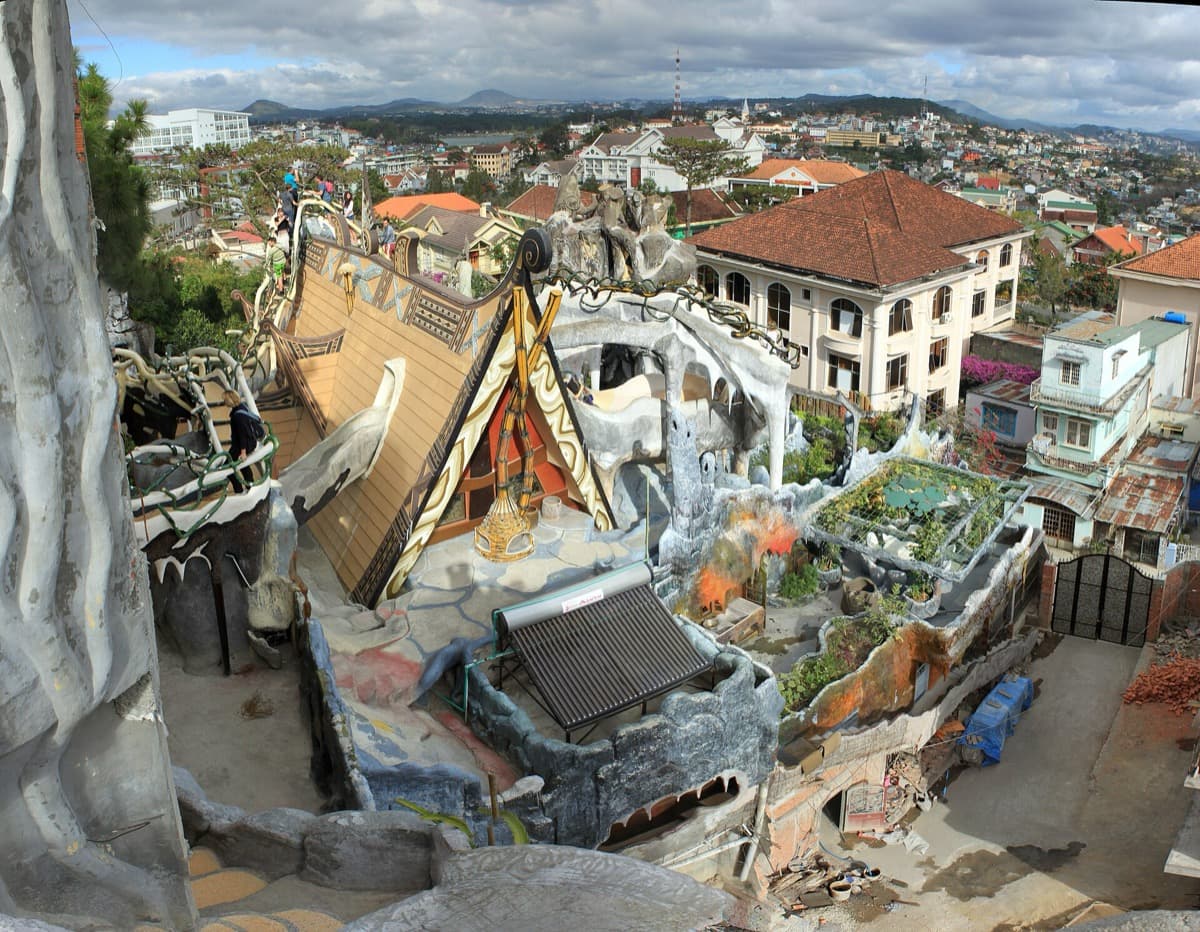
Da Lat was born as a French health resort, then filled up with dreamers. This self-paced walk links six sacred and strange buildings across its pine hills, from the town's founding pagoda to a concrete tree-house and a Catholic church shaped like a Buddhist temple.
Start · Linh Son Temple: The Community's Bell
DirectionsStops
- 1
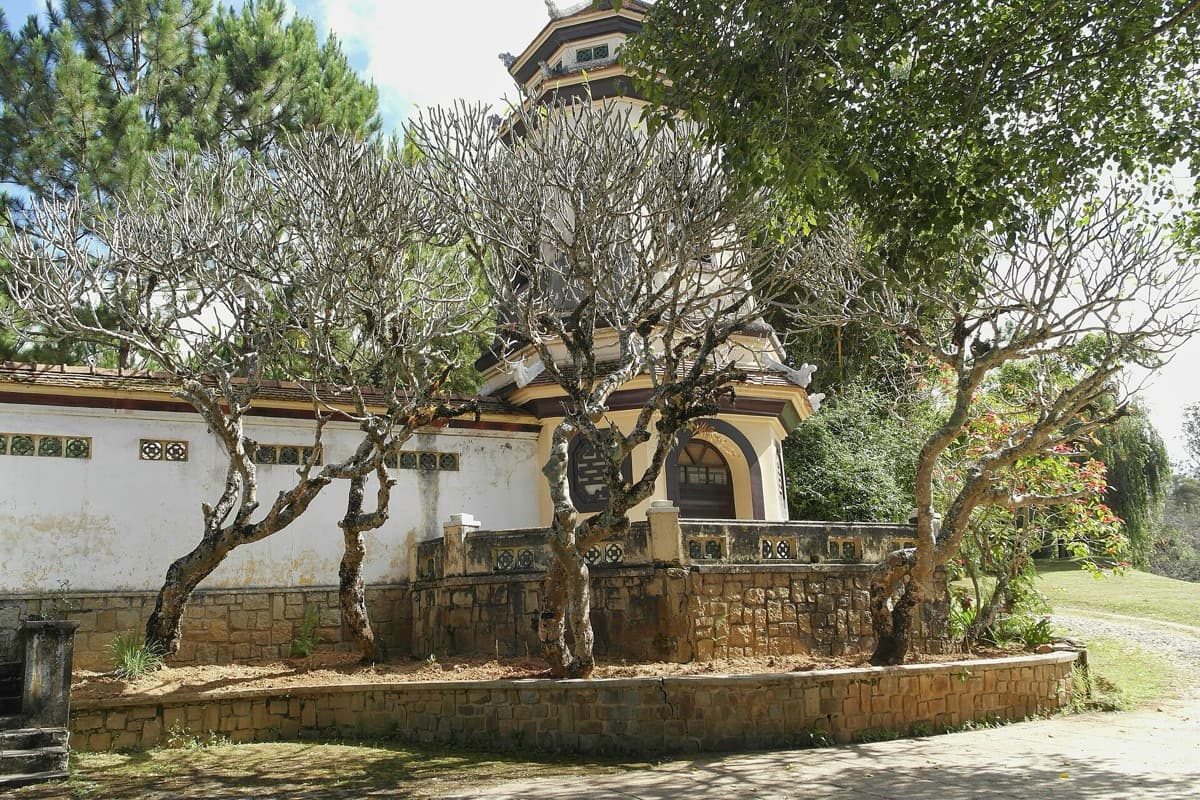
Linh Son Temple: The Community's Bell
A pine-hill Buddhist temple built by ordinary townspeople in the late nineteen thirties, and a calm, central place to begin.
- 2
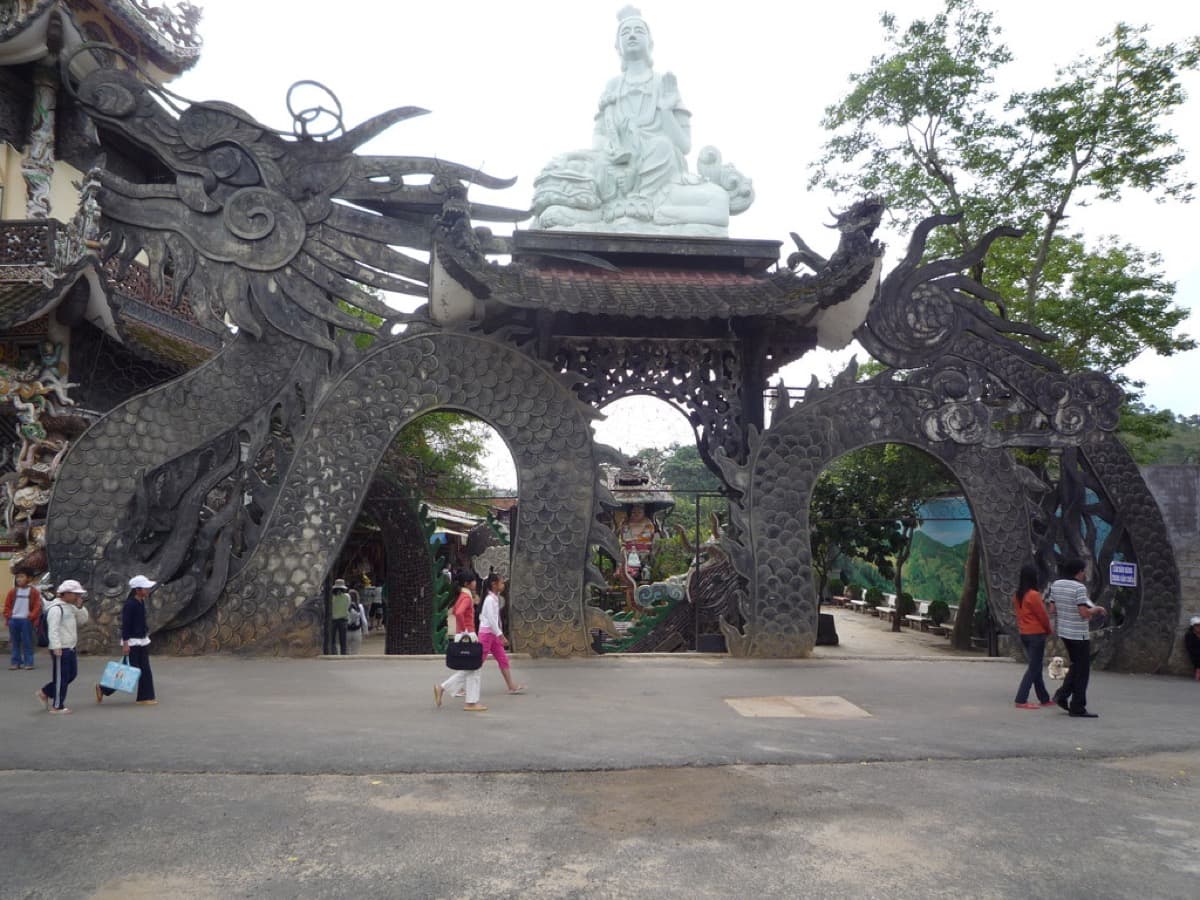
Linh Quang Pagoda: The Mother Temple
Documented as the first pagoda founded in Da Lat, blessed by an imperial edict, and the northern turning point of the walk.
- 3
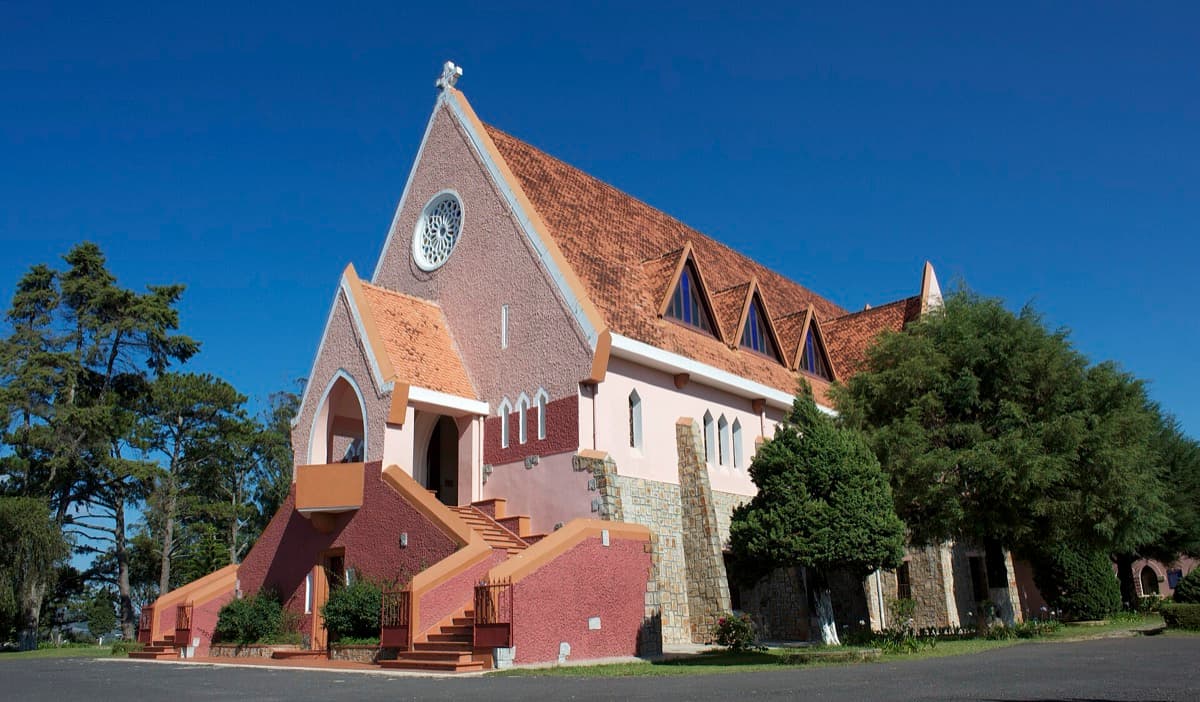
Domaine de Marie: The Pink Convent
A Catholic convent church with pink limestone walls and a roof borrowed from the Central Highlands longhouse, initiated by a Governor-General's wife.
- 4
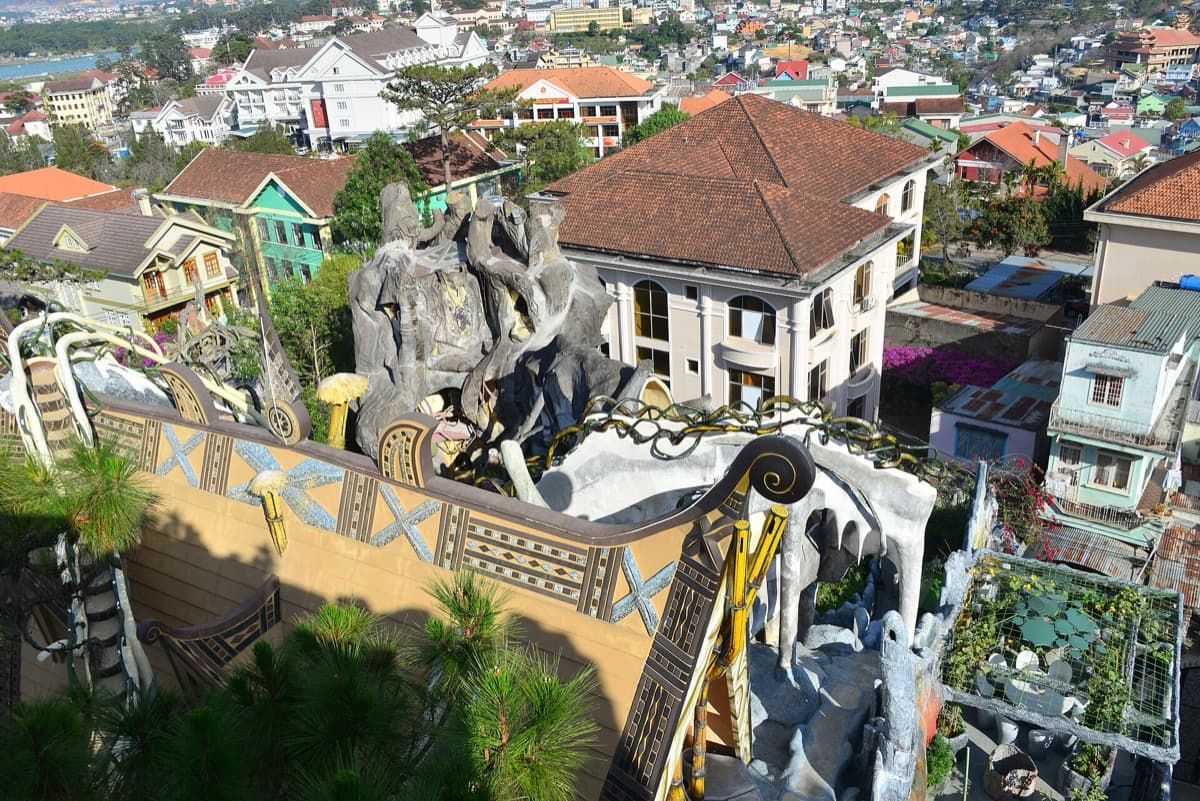
Hang Nga Guesthouse: The Crazy House
A concrete building shaped like a giant twisting tree, designed by an architect who is the daughter of a former Communist Party leader.
- 5
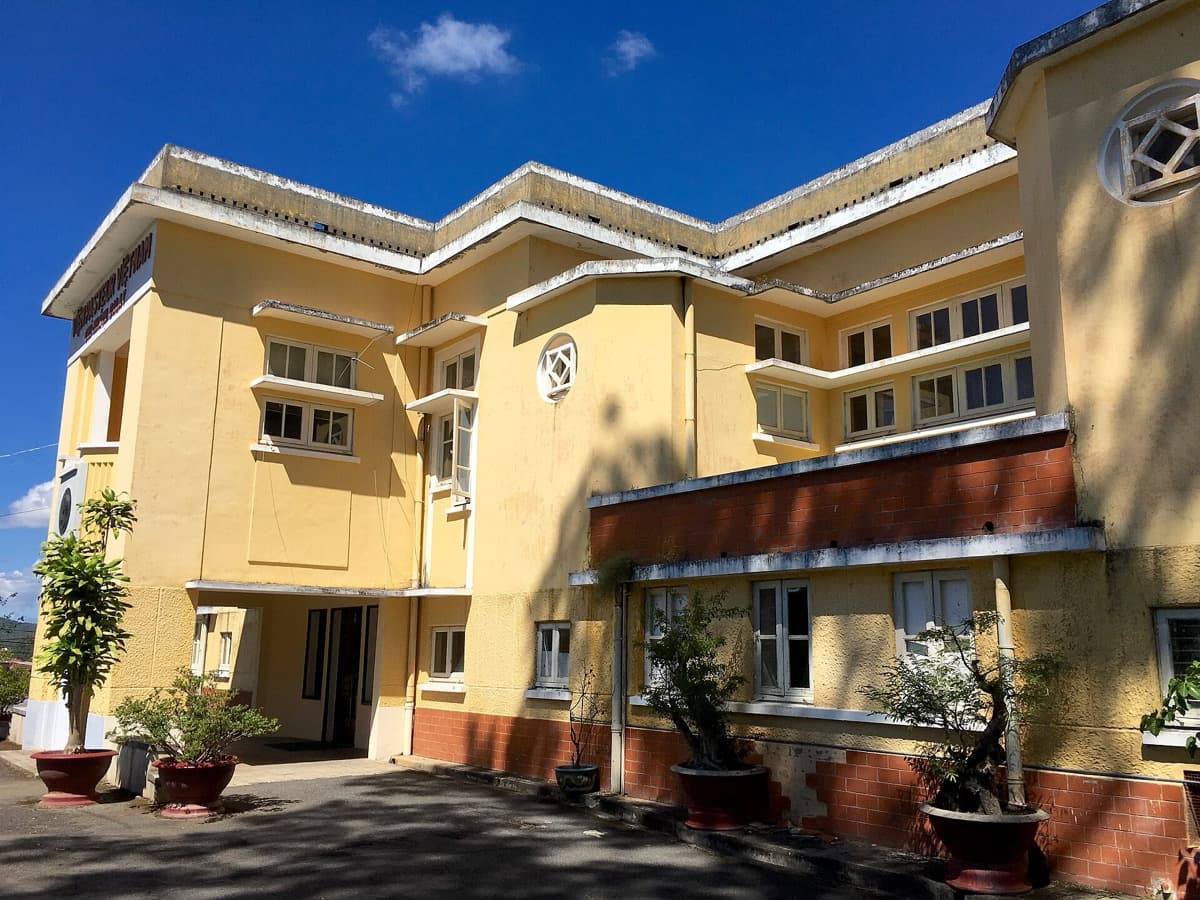
Institut Pasteur de Dalat: Where the Town Began
A working vaccine research institute tied to the Swiss doctor whose note about the cool air invented Da Lat itself.
- 6
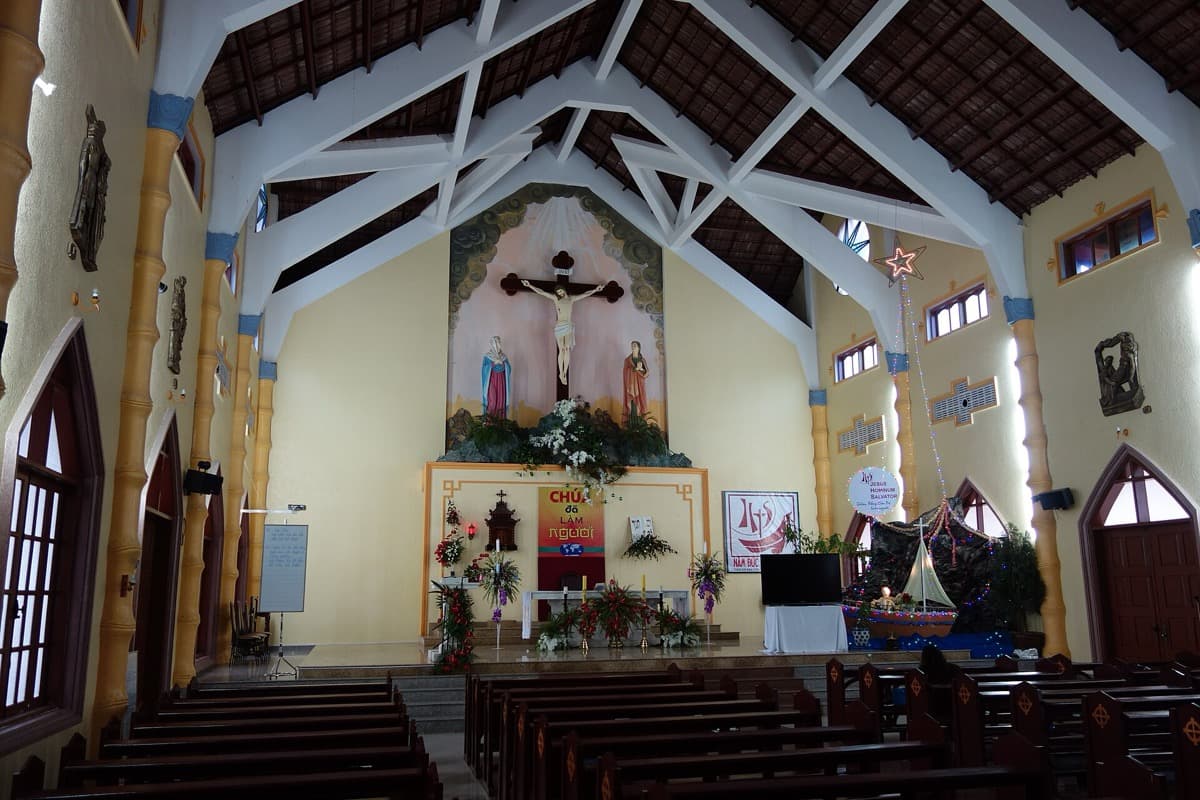
Du Sinh Church: A Temple With a Cross
A hilltop Catholic church built for northern refugees in the shape of a Vietnamese temple, by a designer of royal lineage.
Details
Best Time to Visit
The dry season, roughly November through April, brings the clearest skies and the easiest walking. On any day, set out in the cool early morning: the pagodas and convent are quiet, the light through the pines is soft, and you will beat the afternoon clouds that often bring sudden rain to these highlands. Da Lat stays cool year-round, so there is no hot season to avoid, only the wet afternoons.
Pro Tips
- •Start early. The morning air is cool and clear, the pagodas and the pink convent are at their quietest, and you will finish before the afternoon rain tends to arrive.
- •Dress in layers. Da Lat is cool year-round thanks to its altitude, and a light jacket keeps you comfortable while a modest layer covers shoulders and knees for the churches and pagodas.
- •Carry small cash in Vietnamese dong. Everything on this walk is free except the Crazy House, whose entry is a small fee of around sixty thousand dong.
- •Wear comfortable shoes with grip. The route climbs and descends pine hills and crosses uneven pavement, so trainers beat sandals here.
- •Treat the leg from the pink convent to the Crazy House as an intentional transect of close to a kilometre and a half. Pause for a coffee midway if you like; Da Lat's cafe culture is part of its heritage.
- •Move at your own pace and skip freely. Each stop stands on its own, so linger in a courtyard that holds you and pass by anything that does not.
Safety & Precautions
- •Da Lat sits high in the mountains, around fifteen hundred metres, and the walking is steep and hilly. Pace yourself, drink water, and rest on the longer climbs.
- •Highland weather turns fast. Sudden afternoon rain is common, roads and steps get slick, so carry a light rain layer and watch your footing.
- •Every pagoda, the convent, and the churches are active places of worship. Keep your voice low, cover your shoulders and knees, remove your hat inside halls, and ask before photographing anyone at prayer.
- •Distances between some sites are longer than a compact old town, and pavements can be uneven or broken. Watch your step, and if a leg feels too long, book a ride through a ride-hail app or use a metered taxi, and confirm the fare or that the meter is running before you set off rather than accepting an unmetered quote.
Travel advisory: Exercise Normal Precautions (Level 1).
Gallery
Related Reading
Go deeper on what you'll see, hear, and walk through.
Overview
Best Self-Guided Walking Tours in Da Lat (2026)
3 min
Overview
Da Lat Travel Guide: How Many Days, Getting Around, When to Go (2026)
5 min
Overview
How to See Da Lat: A Borrowed France That Vietnam Kept
6 min
Overview
One Day in Da Lat: A Walkable Hill-Station Itinerary (2026)
6 min
Companion
Private Heavens on a Mountain: Why Da Lat's Devout and Its Eccentrics Are the Same Story
8 min
Deep dive
The Crazy House: A Communist Leader's Daughter Poured a Dream in Concrete
6 min
Read the walk
The full story of Crazy House: Sacred and Strange, in words. Prefer to listen? Play it narrated, from home or on location.
Introduction
Da Lat sits high in the pine-covered mountains of southern Vietnam, and it began as an idea about air. A Swiss-born doctor climbed these ridges in the eighteen nineties and told the French this cool plateau should become a health resort. It did. But once the spa town was built, something stranger happened. The devout and the eccentric moved in, and each one raised a private paradise on the same set of hills. Monks founded the town's first pagoda here. French nuns built a pink convent roofed like a Central Highlands longhouse. A priest of royal blood shaped a Catholic church like a Buddhist temple. And a Communist general's daughter poured a house in the form of a giant concrete tree. This walk reads the sacred and the strange side by side, and finds they share one impulse: to build heaven on a mountain. This tour has six stops. It runs roughly three hours if you linger, and covers about eight kilometres across hilly, spread-out ground, so treat the longer legs as part of the pleasure. You will move north to a quiet founding pagoda, back down through a pink convent, across town to the famous strange house, past the science building that started it all, and up to a hilltop church for a reflective finish. Everything here is free to enter except one attraction, and all of it is self-paced. Stop when a courtyard holds you. Skip what does not. When you arrive at Linh Son Temple, begin with stop one.
1. Linh Son Temple: The Community's Bell
You are standing on a pine hill at Linh Son Temple, and it makes a fitting place to begin. This is not an ancient site. The encyclopedia records that work began in the year nineteen thirty-eight and the temple opened in nineteen forty, funded by ordinary townspeople rather than a court or a colonial office. Two lay Buddhists, Vo Dinh Dung and Nguyen Van Tien, gave the largest gifts, and their generosity is part of why the place feels rooted in the community rather than imposed on it. Look for the great bell. By reputation it is bronze alloyed with gold, and the story told about it is charming: the gold is said to make it so heavy that no thief could ever carry it off. Whether or not the metal is truly precious, the tale tells you how the town felt about this bell. Inside, the main Buddha statue was cast in the year nineteen fifty-two, a serene golden figure that anchors the hall. Take your time in the courtyard. The temple is a working place of worship, so you may find monks in saffron, incense curling in the cool air, and locals pausing on their way through the day. Notice how young the whole thing is. Da Lat itself is barely more than a century old as a town, and its sacred architecture grew up alongside its villas and its lake, not before them. That is the quiet argument this walk will make again and again: the holy and the eccentric here are the same age, built by people who chose this mountain on purpose. When you are ready, we head north to something older still.
2. Linh Quang Pagoda: The Mother Temple
If Linh Son felt young, this place is where Da Lat's Buddhist story actually begins. Linh Quang Pagoda is documented as the first pagoda founded in the town, and it carries the honored title of mother temple. The Vietnamese-language encyclopedia records that a monk named Thich Nhan Thu founded it in the year nineteen thirty-one, when this was still a raw highland settlement. He started with little more than a hermitage and built it up, stone by stone, into a full temple. There is a royal footnote here worth knowing. In the year nineteen thirty-eight, Bao Dai, the last emperor of Vietnam, granted this pagoda an imperial edict, formally recognizing it as an official sanctuary of the new mountain town. Think about what that means. Before Da Lat had settled into its identity, the throne itself reached up here and blessed this modest temple. The recognition marked Buddhism as part of the town's foundation, not an afterthought. The buildings blend Vietnamese and Chinese lines, with eaves that curve upward at the corners and bright porcelain-mosaic figures worked into the decoration. The temple has been restored more than once across the decades, so what you see is layered, old bones under newer skin. Stand in the courtyard and consider that you are at the northern turning point of this walk. From here the route bends back south, and the mood shifts. We leave the purely devout and move toward the hybrid and the strange, toward builders who fused faith with imagination. But keep this founding date in mind. Nineteen thirty-one. Everything that follows was raised on ground where a single monk had already decided this cool hill was worth a temple.
3. Domaine de Marie: The Pink Convent
The pink walls in front of you belong to Domaine de Marie, a Catholic convent church that locals simply call the Pink Church. Run your eye along the color first. Those walls are pink limestone, warm against the pines, and the roofline is the surprise. It is shaped in the style…
Full narration for this stop unlocks with the tour.
4. Hang Nga Guesthouse: The Crazy House
That was a longer leg, and it was meant to be. You have crossed a good stretch of town, close to a kilometre and a half, to reach the strangest building in Da Lat, and the walk earns the contrast. This is Hang Nga Guesthouse, known to nearly everyone as the Crazy House. Nothing…
Full narration for this stop unlocks with the tour.
5. Institut Pasteur de Dalat: Where the Town Began
Just down the way stands a working institution that explains why any of this exists: the Institut Pasteur de Dalat. Do not look for a ticket booth. This is an active vaccine research and production center, not a museum, so we read it from the outside, as the science origin of…
Full narration for this stop unlocks with the tour.
6. Du Sinh Church: A Temple With a Cross
We finish on a hill in the southwest, at Du Sinh Church, and it is the purest expression of everything this walk has argued. Look at the building. Your eye reads a Vietnamese temple: brick walls, a red-tile roof, a bell tower whose four main columns are shaped, by tradition,…
Full narration for this stop unlocks with the tour.