
A flat walk through Granada's center, from a Nasrid merchants' inn and the silk market to Isabel and Fernando's Royal Chapel, Cano's cathedral front, the Gran Vía and Plaza Nueva, built over the Darro. Cathedral and chapel interiors are ticketed and not included.
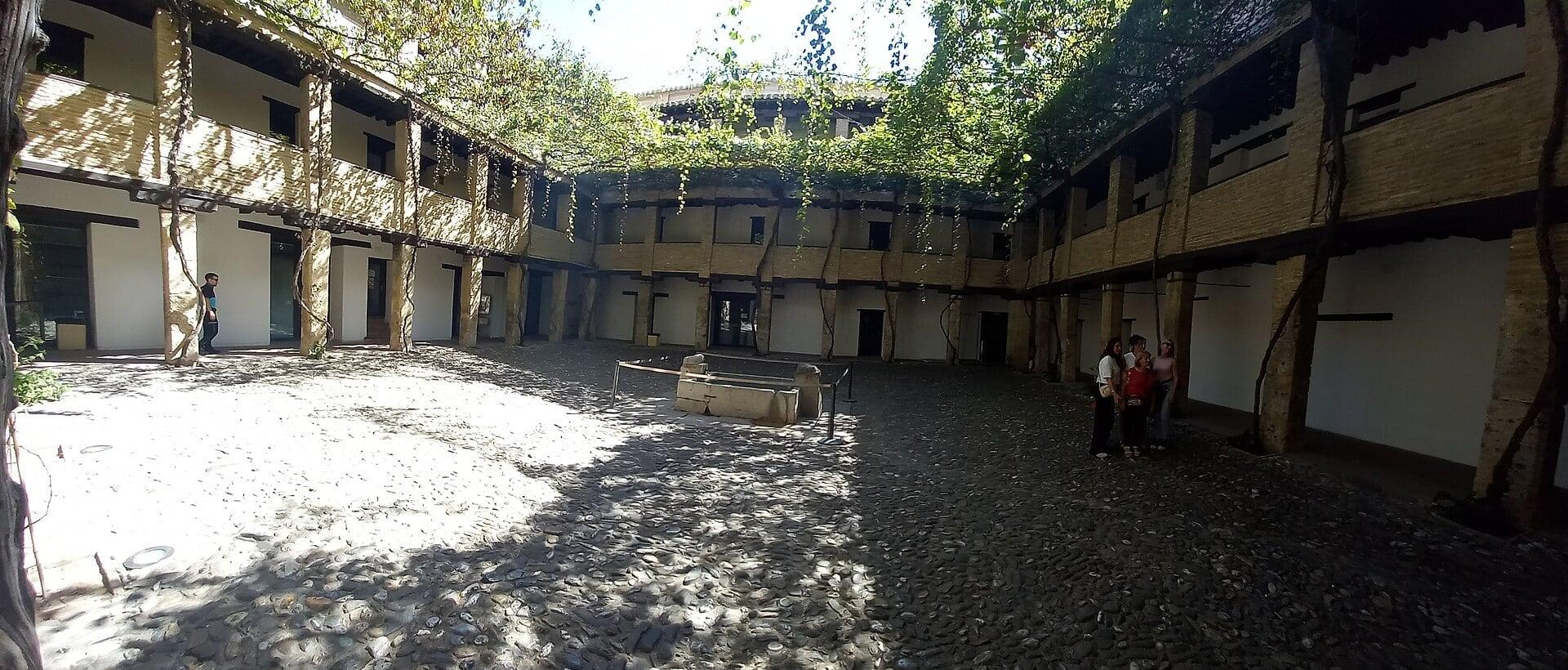
Start · Corral del Carbón: An Inn That Locked at Sunset
DirectionsStops
- 1
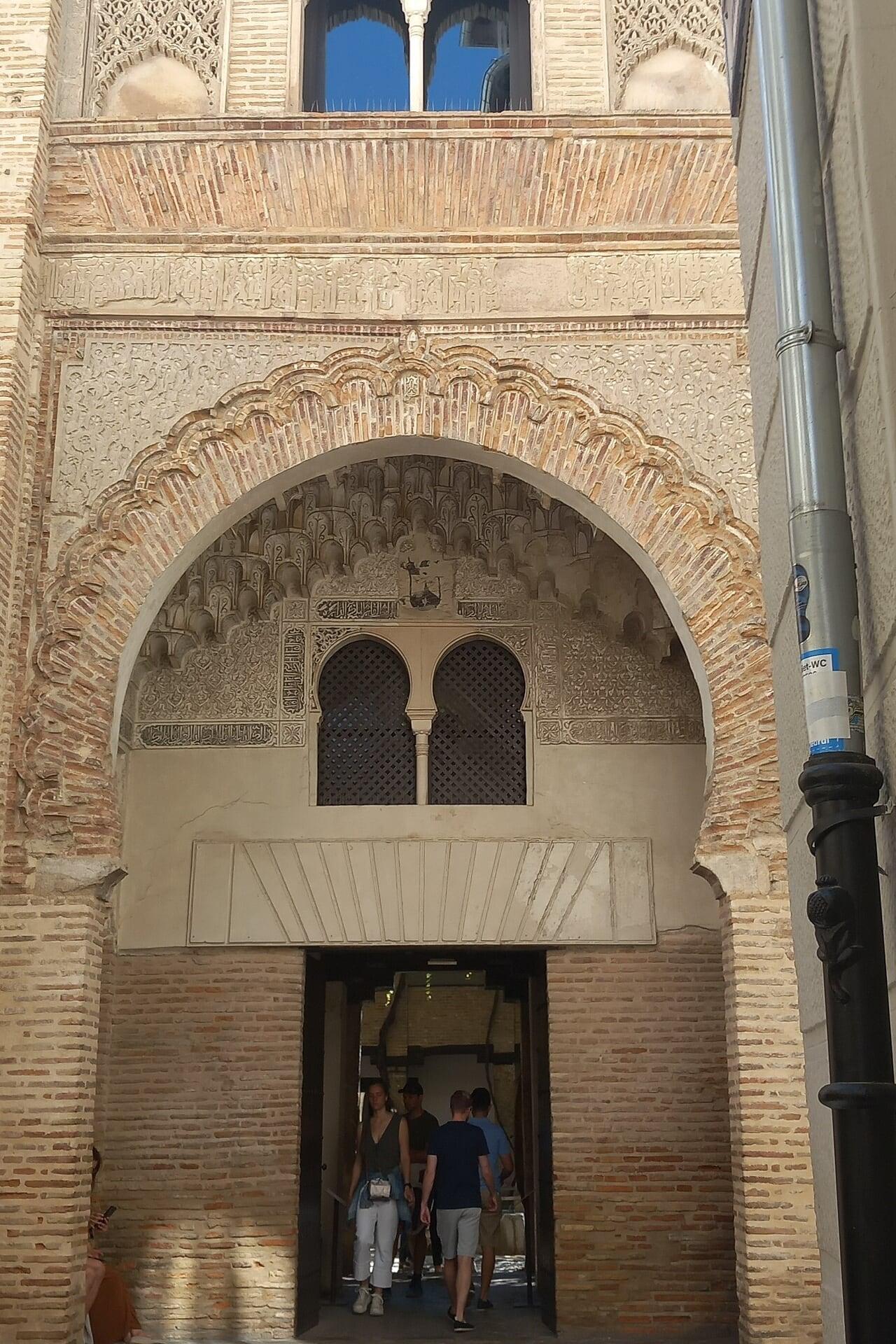
Corral del Carbón: An Inn That Locked at Sunset
A merchants' inn locked its guests in at night. Built in the first half of the 1300s, it later became a playhouse, a coal store and a tenement; the courtyard is on the Alhambra trust's ticket and free on Sundays.
- 2
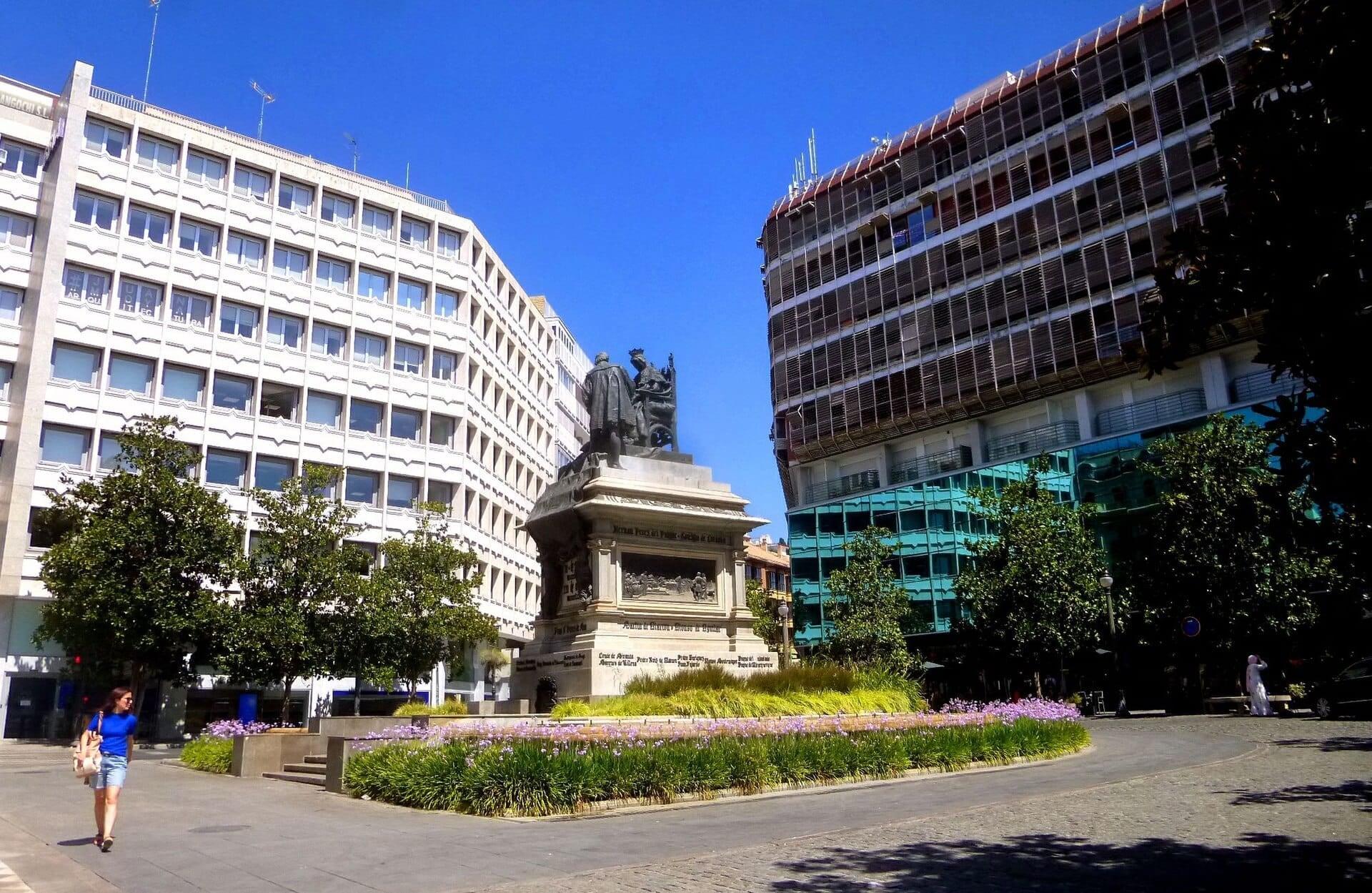
Plaza de Isabel la Católica: A River Under the Street
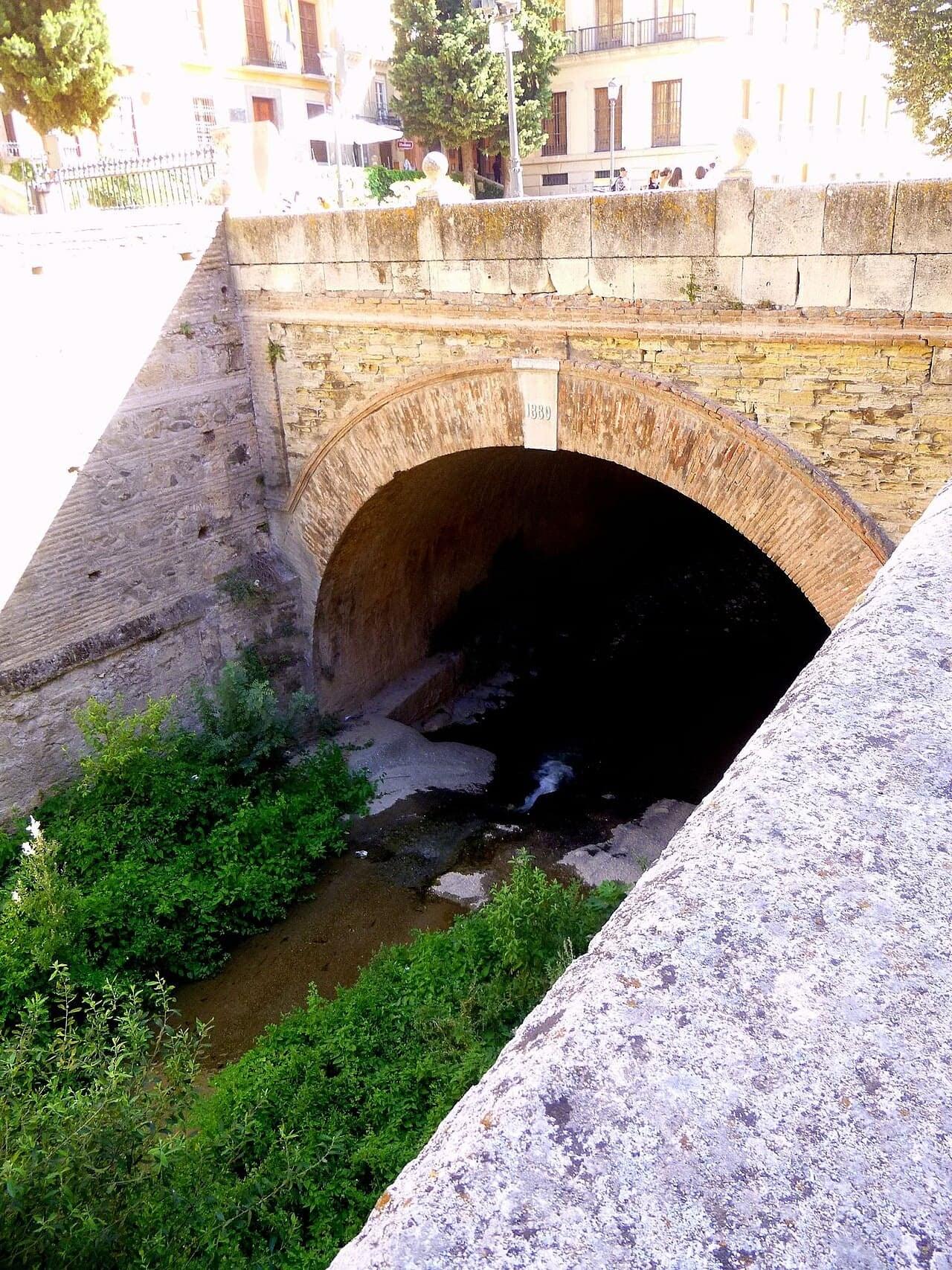
A river runs under this busy street. The Darro was vaulted over in the late 1800s, and the bronze of Columbus before Queen Isabel was unveiled by the crowd itself in 1892.
- 3
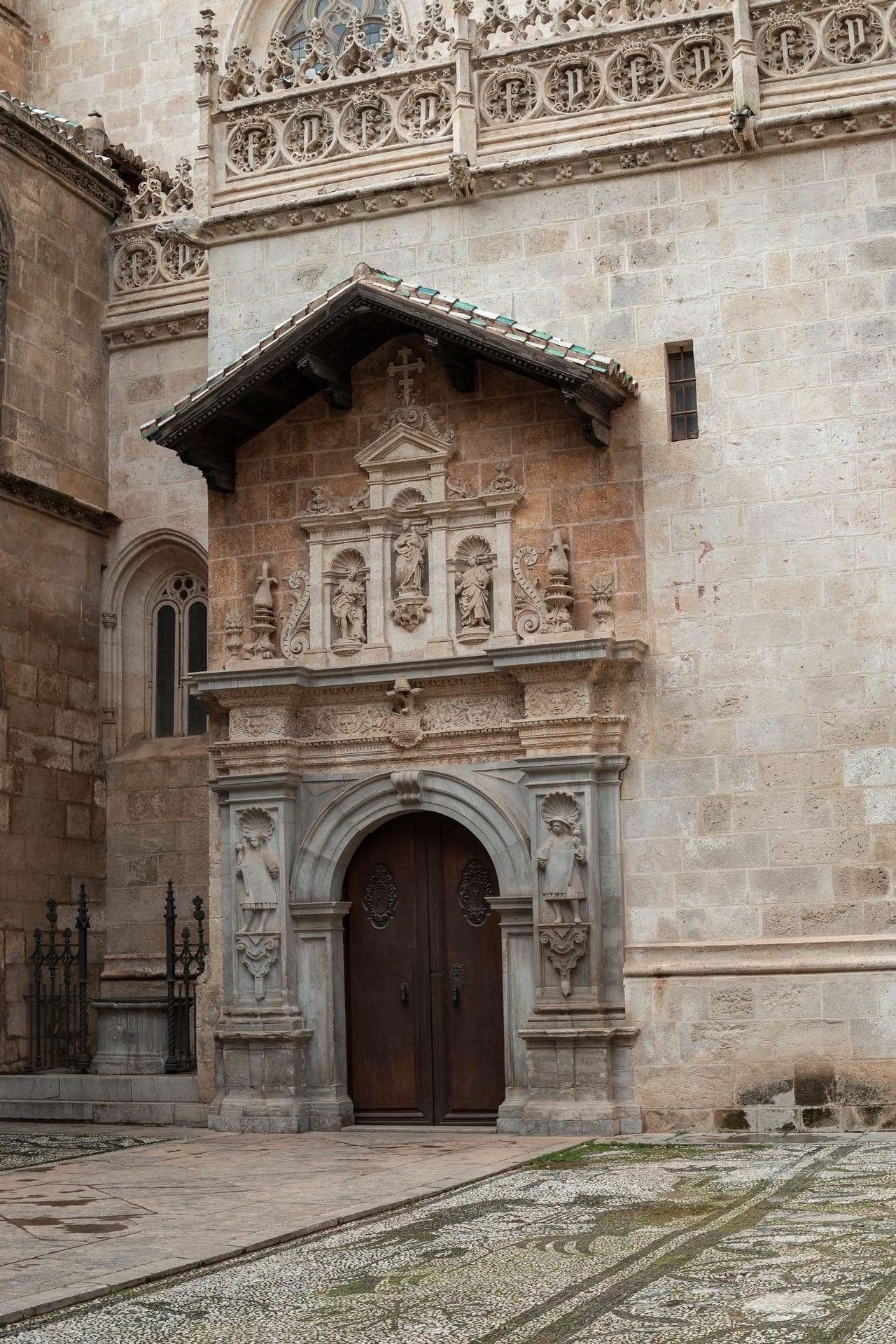
Royal Chapel and the Madraza: Tomb and College
A royal tomb faces a sultan's college here. Isabel and Fernando's Gothic burial chapel, with its Renaissance door of 1527, stands across the lane from the Madraza of 1349, the city hall from 1500.
- 4
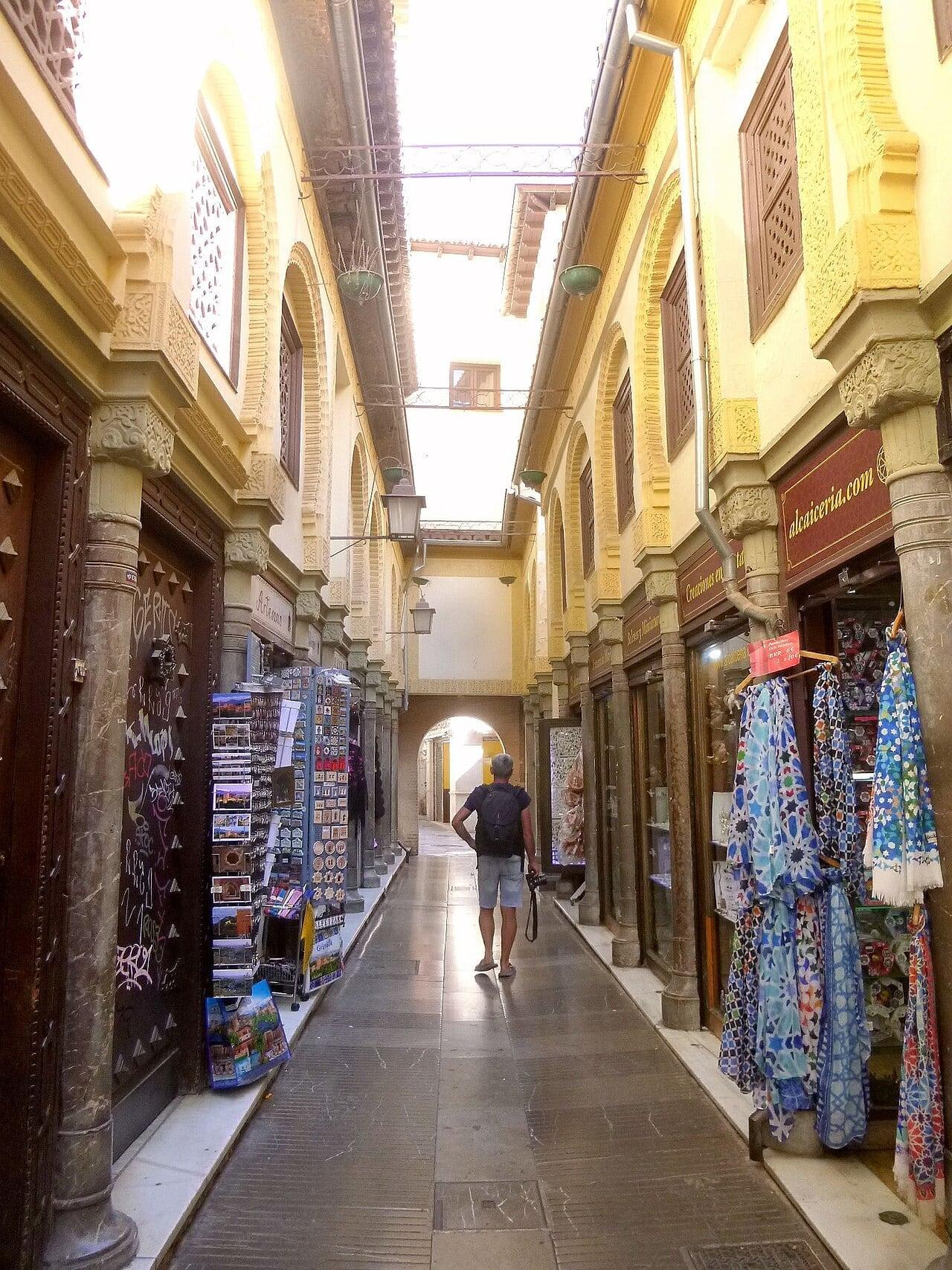
Alcaicería: The Alhambra Copied
A silk market burned and came back Alhambra-style. After the fire of July 1843 it was rebuilt in a neo-Nasrid style that the Alhambra trust calls the city's first imitation of the Alhambra.
- 5
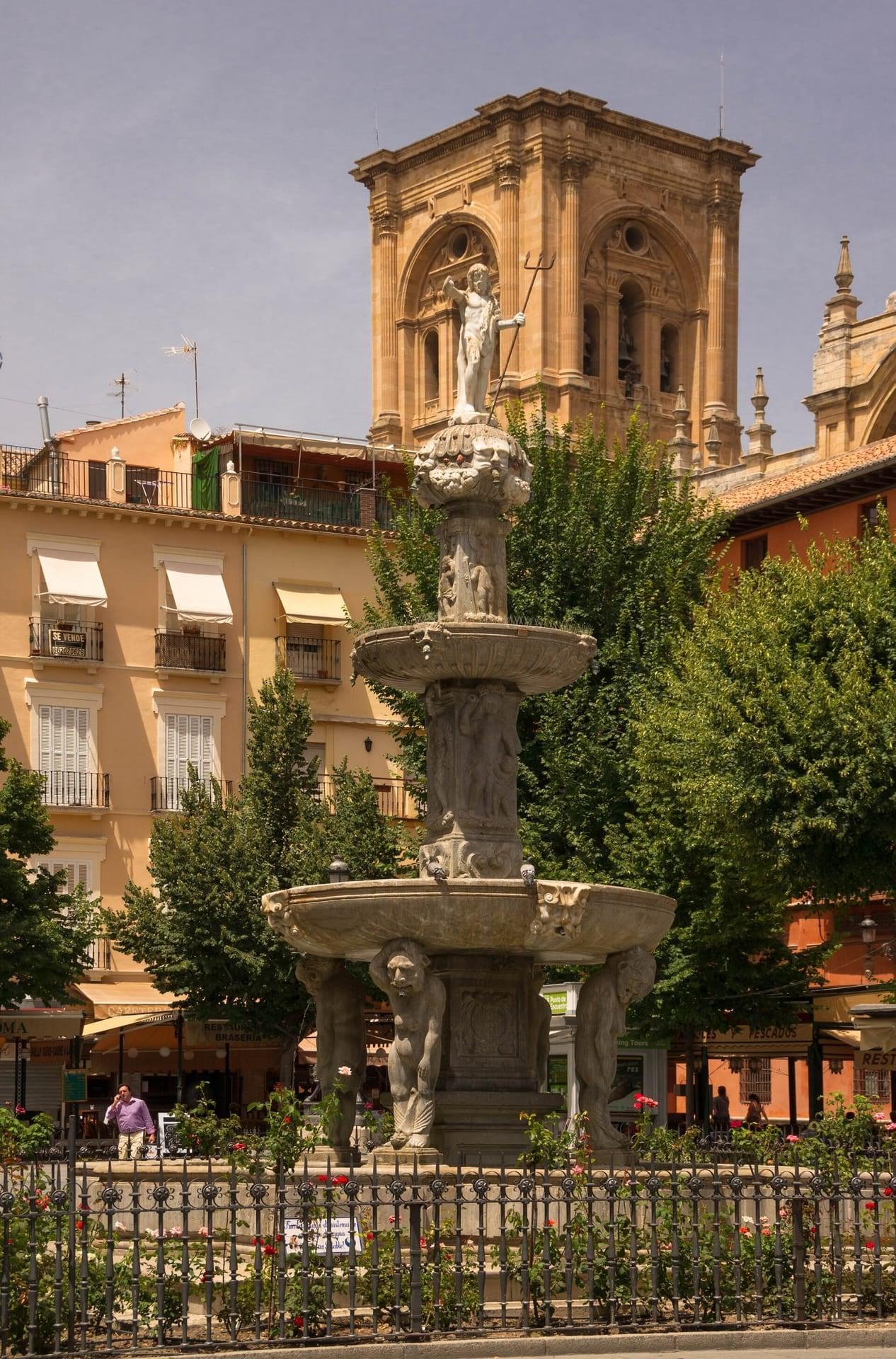
Plaza de Bib-Rambla: Outside the Wall
Granada's main square began outside the wall. Enlarged through most of the 1500s, it lost its gate-arches in the 1800s and gained its fountain of giants in the 1940s.
- 6
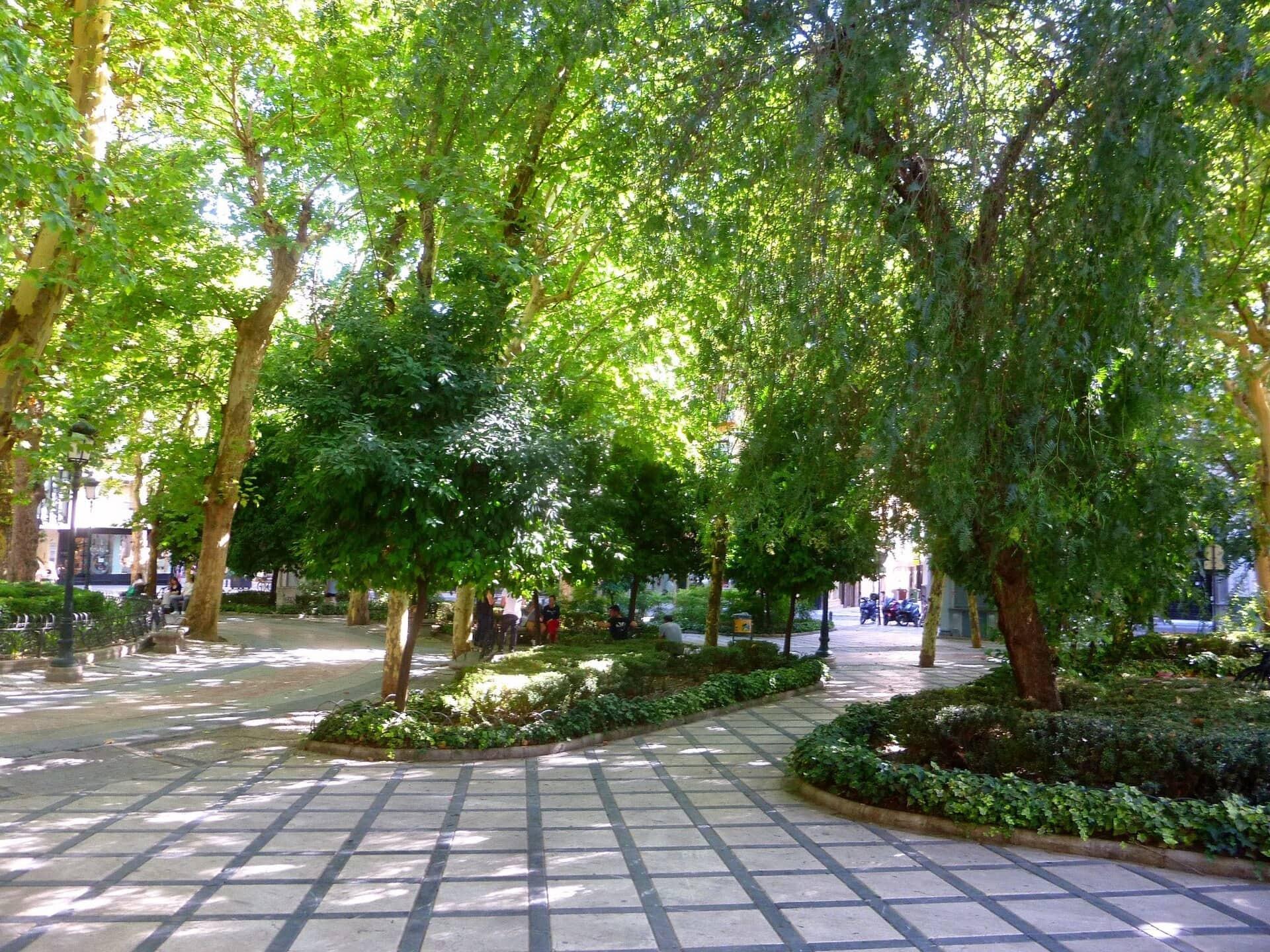
Plaza de la Trinidad: Where a Convent Stood
A friars' convent became an English garden square. Begun in 1517, it was emptied in 1835, pulled down in the 1880s, and replaced by a square of trees, paths and a fountain.
- 7
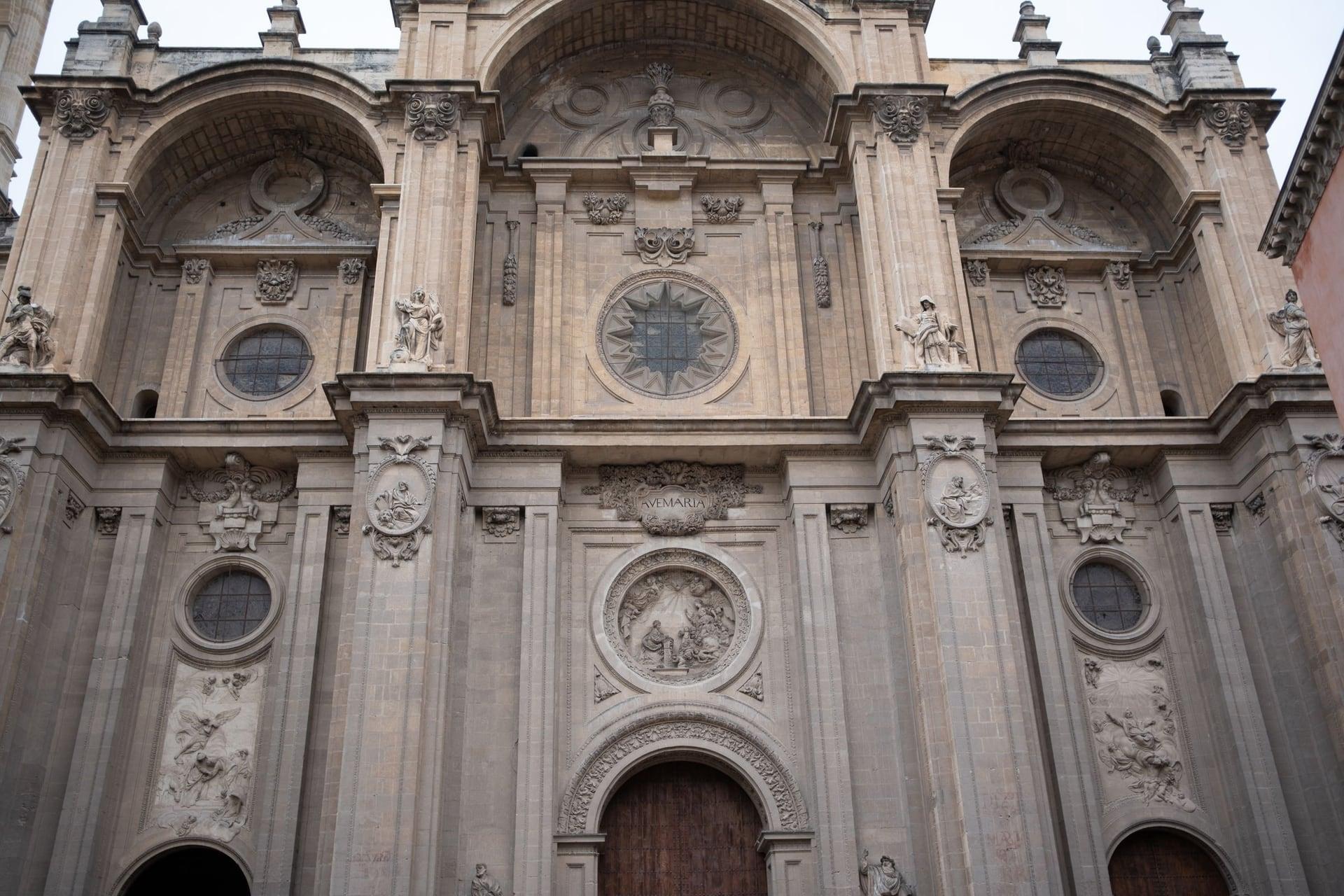
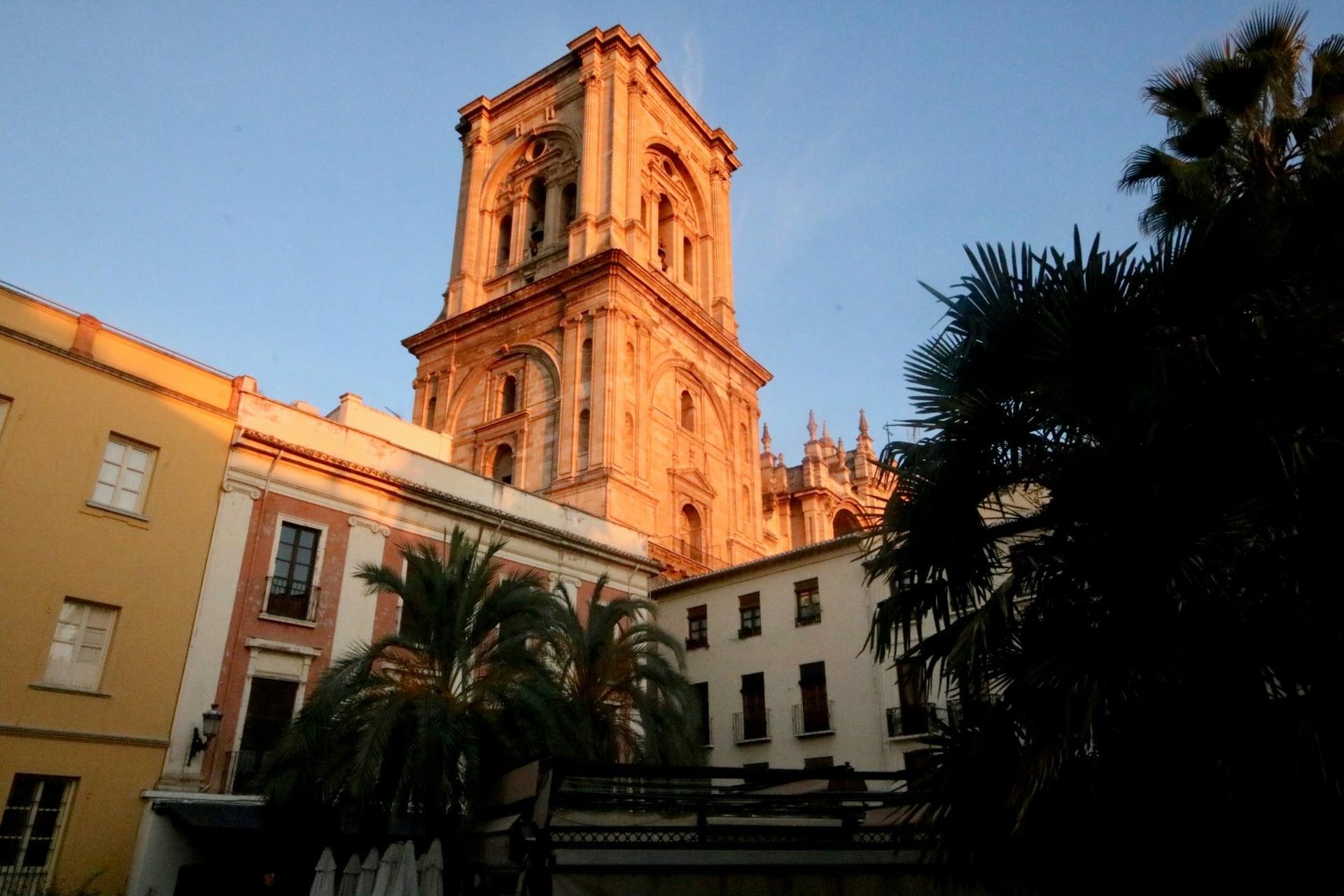
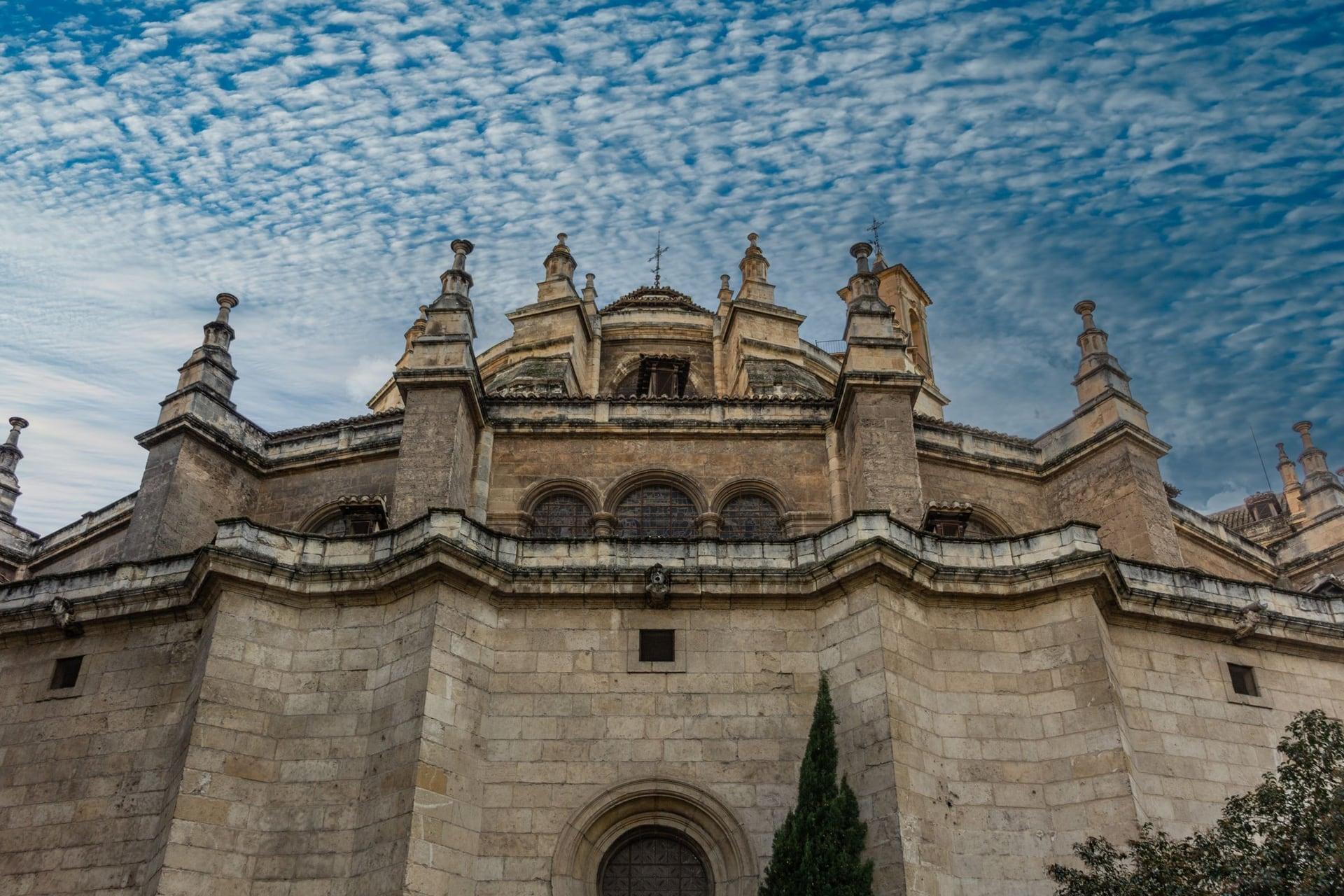
Cathedral West Front: A Painter's Last Design
A painter drew this front in his last months. Alonso Cano was master of works for 123 days in 1667; the front was built after his death, beside a tower planned at 81 m and stopped at 57.
- 8
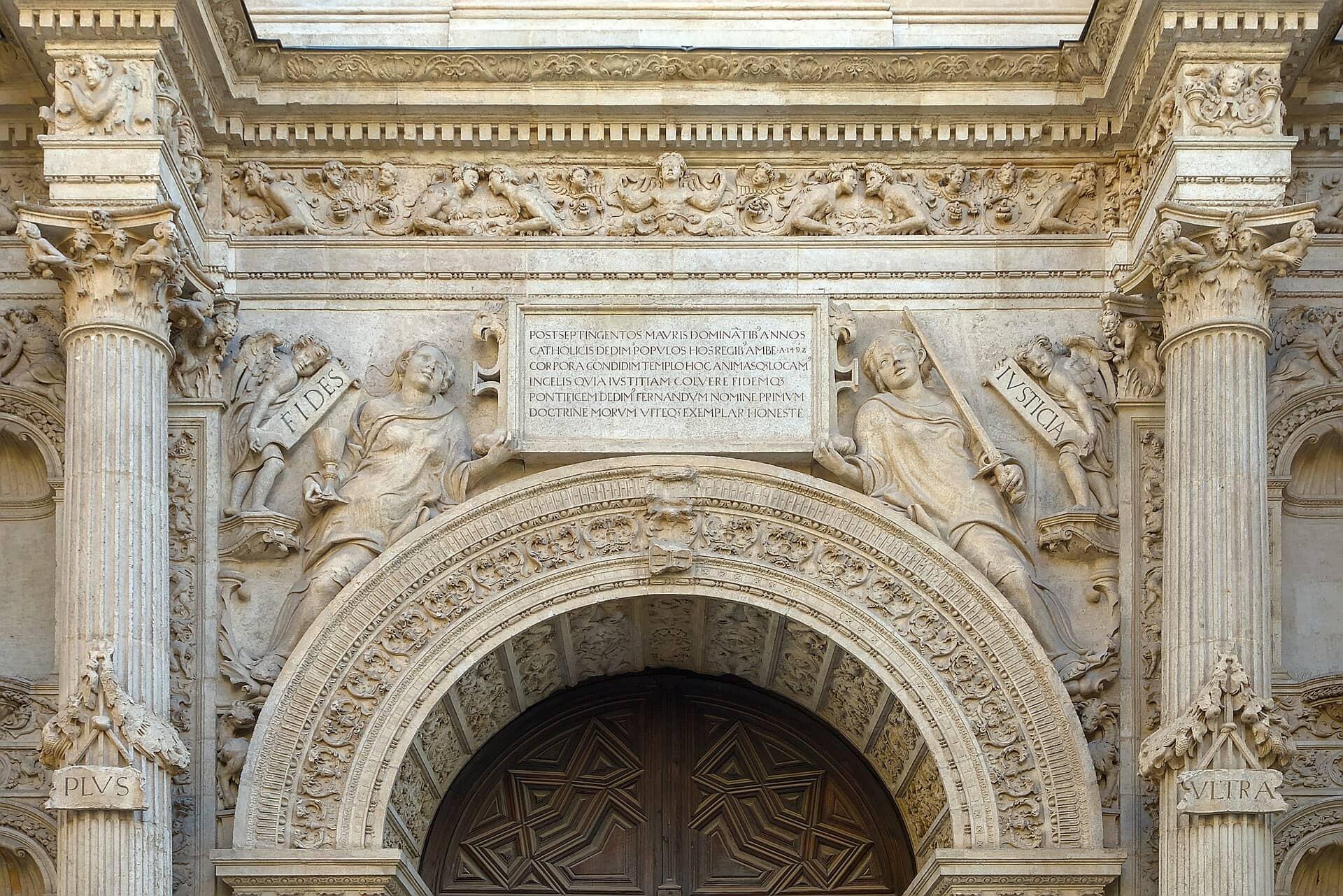
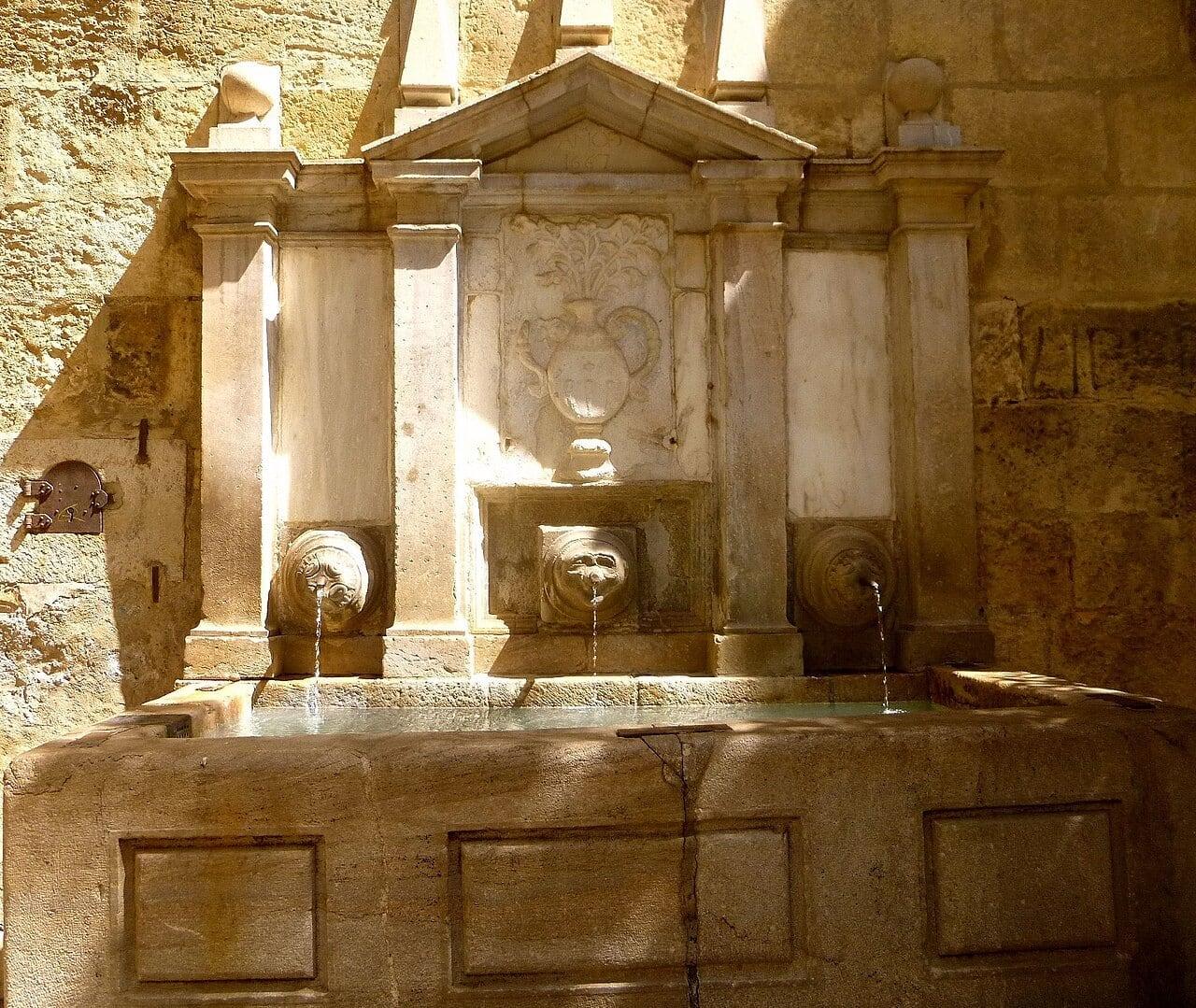
Puerta del Perdón: Siloé's Signature
A carved door bears its architect's initial. Siloé finished the lower story of the Door of Forgiveness in 1537, and the city widened this street in 1945 so people could stand back and look.
- 9
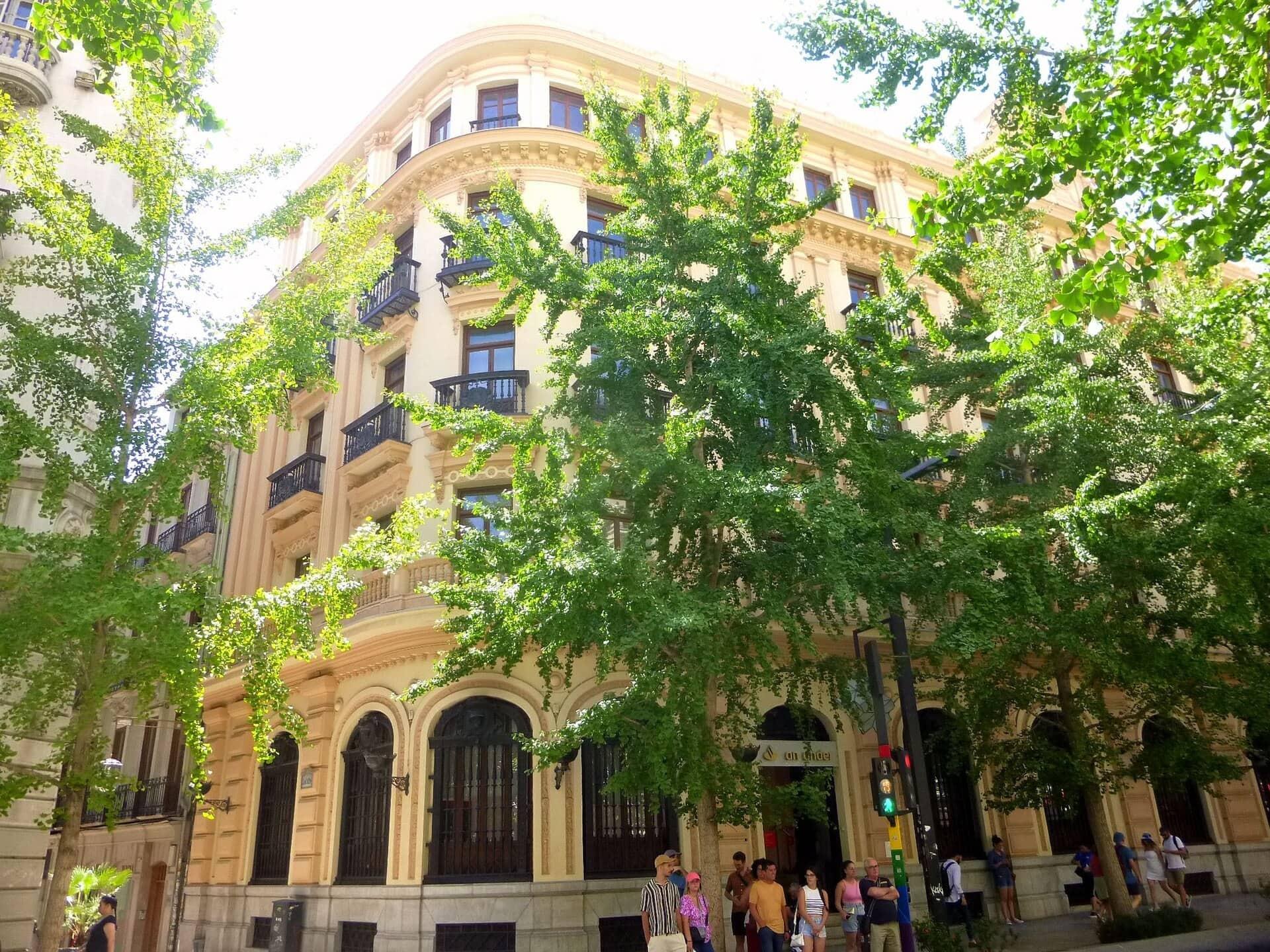
Gran Vía de Colón: Sugar Money's Avenue
Sugar money cut this avenue through the old lanes. Works ran from 1895 to 1903, and the new blocks copied the Paris of 1900, hiding the cathedral behind them.
- 10
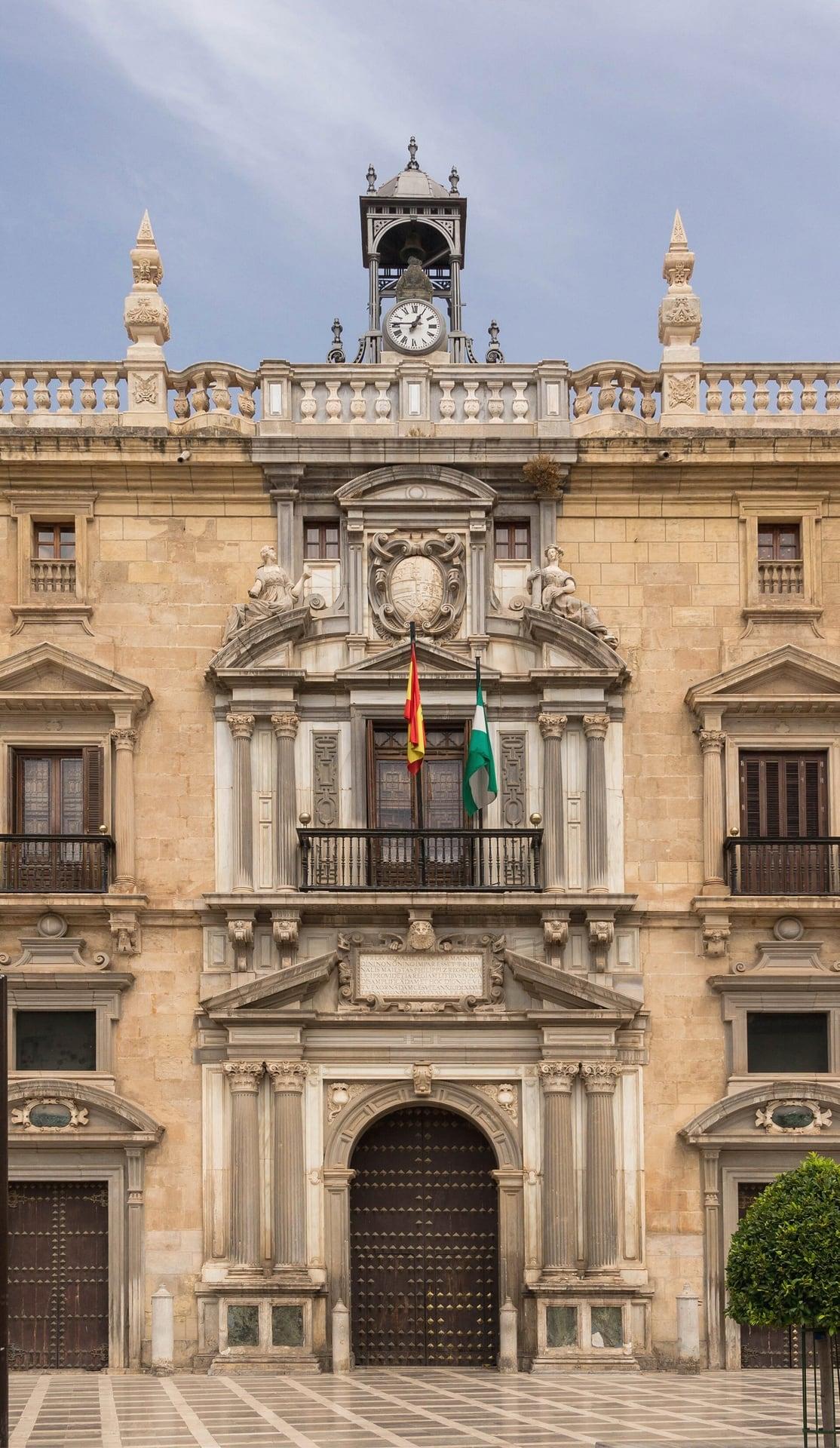
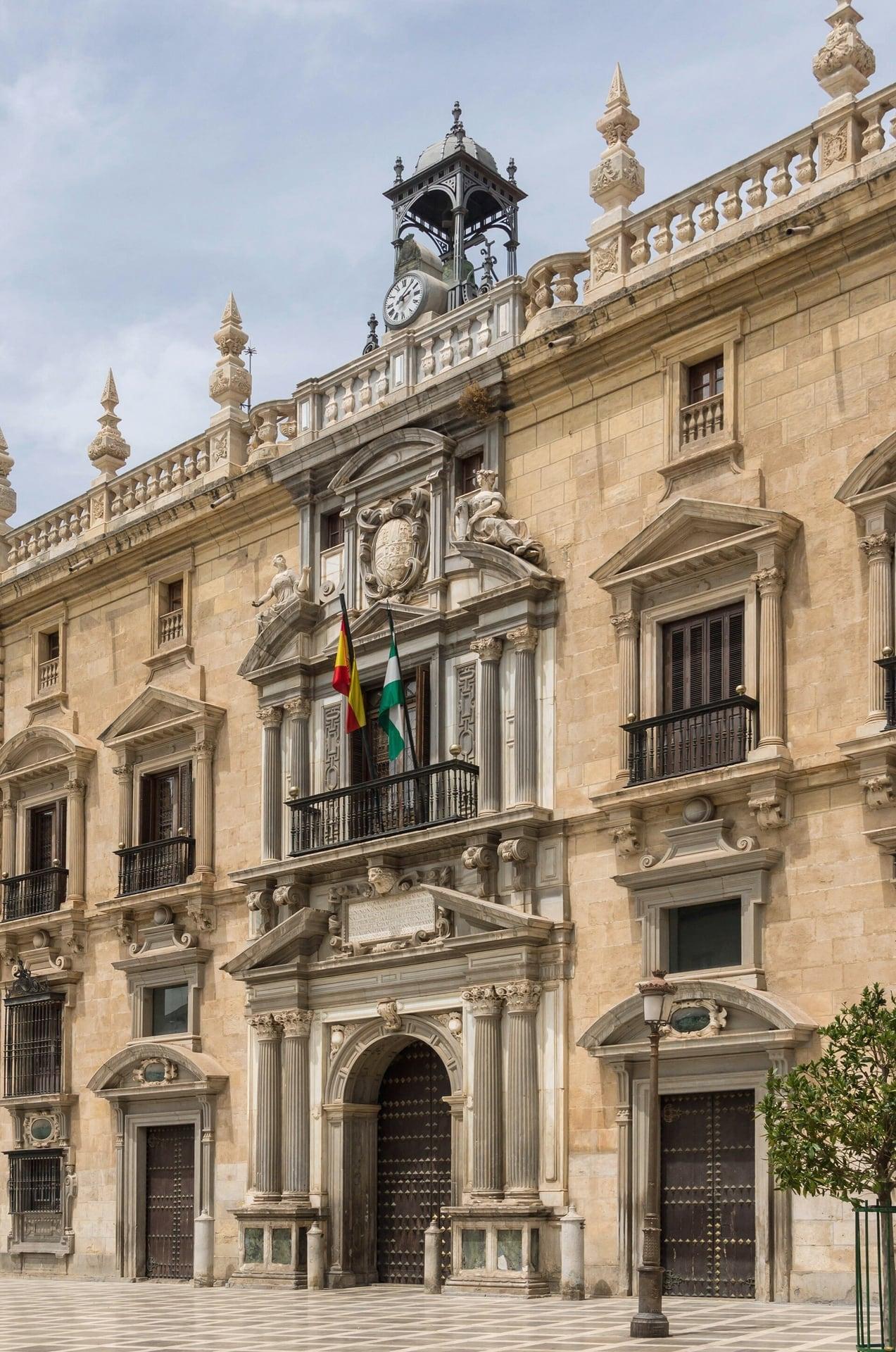
Plaza Nueva: A Square Over the River
This square was made by roofing over a river. The first stretch of vault was done by 1515, and the court of appeal for southern Castile moved to its palace here in 1505.
- 11
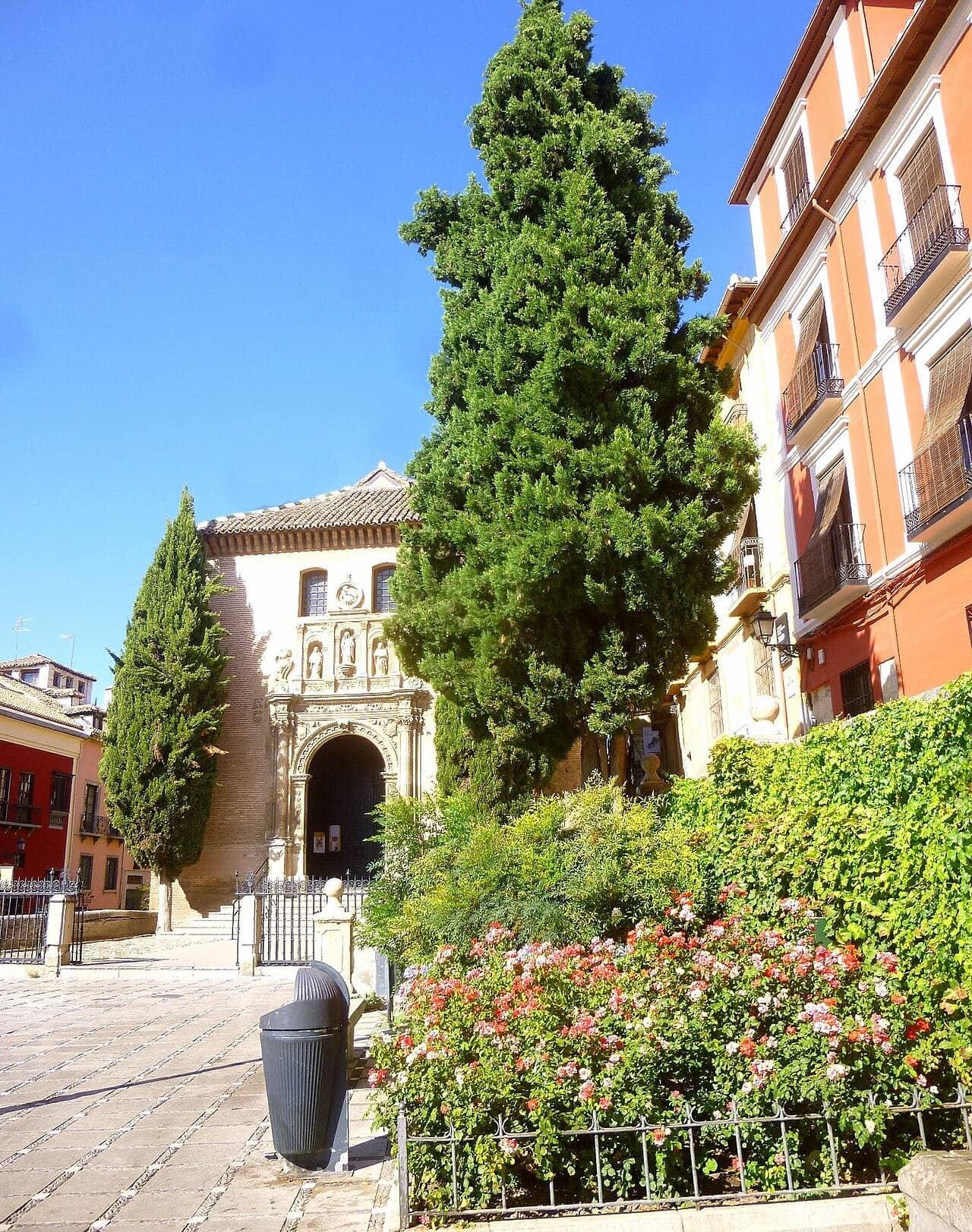
Santa Ana: Where the Darro Comes Out
The Darro comes out from under the city here. The vaults from Plaza Nueva end at this square, under a church with a brick tower in the Mudéjar style.
Details
Best Time to Visit
Any day; the walk is flat and the same in summer and winter. To go inside as well, the Royal Chapel opens Monday to Saturday 10:00 to 18:30 and Sunday 11:30 to 18:30, and the cathedral Monday to Saturday 10:00 to 18:15 and Sundays 15:00 to 18:15. The chapel queue forms in Calle Oficios in the morning. The Corral del Carbón's courtyard is free on Sundays. Checked 8 November 2026.
Pro Tips
- •Getting to the start: the Alhambra minibus C30 has its terminus at Plaza Isabel la Católica 4 (Pavaneras) again since 10 August 2026, about 120 meters from stop 1. City buses stop at Puerta Real, about 250 meters down Calle Reyes Católicos. On 8 November 2026 from 15:00 to 22:00, and 9 and 10 November from 15:00 to 18:00, resurfacing at Humilladero diverts lines 9, 11, 13, 33, S2, C30 and C32 (operator notice dated 6 November 2026). Checked 8 November 2026.
- •The cathedral's own how-to page lists lines 4, 8, 11, 21, 33, C31, C32 and C34 at the Gran Vía / Catedral stop, and C30 and C35 at Plaza Isabel Católica. Private cars cannot enter the center; taxis can. Checked 8 November 2026.
- •At stop 2 you look along the street at the statue of Columbus and Isabel. If you want it close up, it stands on a pedestrian square on the Corral del Carbón's side of the street, reachable without crossing a road.
- •Cathedral and Royal Chapel tickets are separate and sold on the Archdiocese's official site, ticketsgranadacristiana.com. The cathedral includes a free app audioguide. Neither allows large backpacks or suitcases. Photos are allowed in the cathedral if you do not disturb people praying, and not at all in the Royal Chapel. Checked 8 November 2026.
- •The Madraza (Universidad de Granada) is open Monday to Friday 9:00 to 21:00, and on Saturdays only when an exhibition is on; closed Sundays, holidays, Holy Week, Christmas and August. Its oratory can be visited free on weekdays at 11:00, eight people at a time, booked in person at the Calle Oficios information point with ID. Checked 8 November 2026.
- •For an angled view of the cathedral's west front, which the cathedral itself recommends, walk round from stop 7 to the statue of Alonso Cano in the little square in front of the Sagrario.
- •Getting away from the end: the C31 (Albaicín) and C34 (Sacromonte) minibuses leave from Plaza Nueva, next to stop 11. Checked 8 November 2026.
Safety & Precautions
- •This walk includes no admission. The cathedral, the Royal Chapel and the Corral del Carbón's courtyard have their own tickets or hours; every stop works from outside.
- •Earthquakes in August 2026 closed the cathedral. The Archdiocese announced it reopened for visits on 11 September 2026 (one exhibition room still closed), but the cathedral's own news page still showed its 1 September closure notice on 8 November 2026. Check the official ticket site on the day. Checked 8 November 2026.
- •The cathedral is closed to visits on 25 December, 1 January and Good Friday, and during services; the Royal Chapel on 25 December and 1 January. On Sundays the chapel admits only worshippers from 10:00 to 10:45 and opens to visitors at 11:30. Checked 8 November 2026.
- •Main-road crossings: Calle Reyes Católicos at the lights after stop 1, and the mouth of Calle Cárcel Baja and the Gran Vía, both at lights, after stop 8; the road at Plaza de Villamena, just before them, has no lights. Calle Elvira, after stop 9, is crossed at the mouth of Calle Pan with no marked crossing; it and the road along Plaza Nueva and Plaza de Santa Ana carry minibuses and taxis: step aside.
- •Six steps lead up from Calle Sillería into Plaza Pescadería after stop 6. To avoid them, go back down Calle Mesones and up Calle Marqués de Gerona to the cathedral square. The rest of the walk is step-free.
- •Calle Oficios and parts of the center are paved with river pebbles set on edge, slippery when wet and hard on wheels.
- •The Alcaicería's lanes are two to three meters wide and crowded, with insistent sellers, and Plaza Nueva is busy at night: keep bags and phones close. GPS can weaken in the narrow lanes and under the market's arches.
- •The Chancillería is a working court building, the Madraza a university building and the cathedral and chapel places of worship: outside only unless you go in on their own terms.
Travel advisory: Exercise Increased Caution (Level 2).
Gallery
Related Reading
Go deeper on what you'll see, hear, and walk through.
Overview
Granada Travel Guide: Alhambra Tickets, How Many Days, Getting Around (2026)
5 min
Overview
One Day in Granada: A Walkable Alhambra-to-Sacromonte Itinerary (2026)
5 min
Thematic
Best History Walking Tours in Granada (2026)
2 min
Thematic
Granada 1492: The Hinge Year You Are Standing On
6 min
Companion
Granada Cathedral and Royal Chapel: Ask What a Building Was Before
6 min
Read the walk
The full story of Granada Cathedral and Royal Chapel: The City Made Over, in words. Prefer to listen? Play it narrated, from home or on location.
Introduction
Granada, in Andalusia in southern Spain, has a city center where almost every building used to be something else. A merchants' inn became a playhouse and then a coal yard. A college of the Nasrid sultans, the Muslim rulers of Granada, became the city hall. A river disappeared under the streets. And over it all, the Christian monarchs who took the city in fourteen ninety-two laid down their tomb, their court of appeal and their cathedral. Ask of each building: what was it before?
Three people shape what you will see. Queen Isabel, who with King Fernando chose Granada for their burial. Diego de Siloé, the architect who turned the cathedral from Gothic to Renaissance and carved his initial on one of its side doors. And Alonso Cano, a Granada painter and sculptor who drew the cathedral's front in the last months of his life.
The cathedral and the Royal Chapel are ticketed inside, and every stop works from outside.
The walk is eleven stops over about one point three kilometers, eight-tenths of a mile, and takes about sixty minutes. It is flat, with six steps at one point and a way round them. It begins at the Corral del Carbón, near the Alhambra minibus terminus at Plaza de Isabel la Católica. It ends at Plaza de Santa Ana, beside Plaza Nueva, where the Darro river comes out from under the city. When you arrive at the Corral del Carbón, begin with stop one.
1. Corral del Carbón: An Inn That Locked at Sunset
Welcome to the Corral del Carbón, and to the start of this walk. The courtyard behind this gate is part of the Alhambra's ticket for its monuments in the lower town, and it is free on Sundays. You can look in through the gate from the lane.
Look at the gate first. A tall pointed horseshoe arch of brick, its edge cut into little scallops. Around it, panels of plaster carved into leaves. Over it runs a band of writing, a short chapter of the Qur'an. Above that, a pair of small windows, and a deep eave on carved brackets.
This was built in the first half of the thirteen hundreds as the New Corn Exchange. Merchants brought wheat here to store and sell, and slept here. Apart from the little windows over the gate, where the keeper lived, the inn was built with no windows at all, so that nothing could be stolen. Goods and pack animals stayed on the ground floor, round the courtyard. The merchants slept upstairs, on two floors of small rooms, twenty-two to a floor, with lamps and big mats but no beds. The keeper lived over this door. And this one door was shut tight at sunset. The merchants stayed in until dawn.
Then the inn changed lives. After the Christian conquest it went to a royal official. When he died without heirs it was sold at auction and became a playhouse. Later the ground-floor rooms stored coal, which gave the building its name, and families moved in upstairs. At one point thirty-six families lived here. Finally the Alhambra's own ticket money bought it, and it was restored between nineteen twenty-nine and nineteen thirty-one.
Keep that question with you on this walk: what was this building before?
Follow the route out of the lane and across Calle Reyes Católicos at the lights. Next is a statue, and a river you cannot see.
2. Plaza de Isabel la Católica: A River Under the Street
When the lights let you, cross to the sidewalk at the foot of Calle Estribo, the narrow street ahead, and stop there, out of the way. Then look along the main street to the bronze group on its tall plinth.
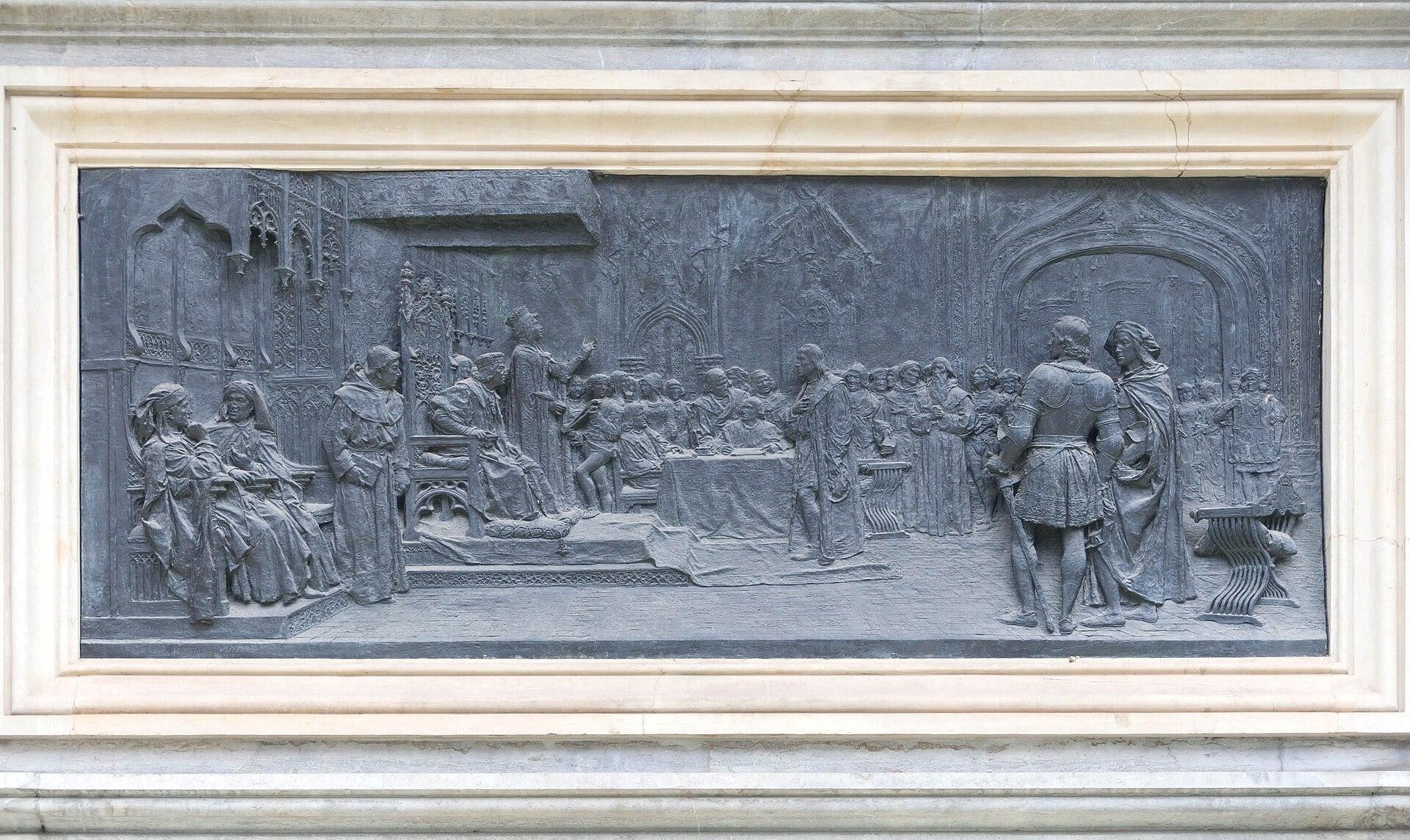
That is Christopher Columbus before Queen Isabel. Isabel is the first of our three people. She and her husband, King Fernando, are the Catholic Monarchs, whose armies took Granada. Granada wanted this monument to recall that conquest, in fourteen ninety-two, and the agreements for his voyage, the Capitulations of Santa Fe, signed just outside the city that April.
In eighteen ninety-two Spain marked four hundred years since the voyage, and Granada four hundred years since its conquest. The regent spent a month in Seville for the celebrations and would not come to Granada. On the evening of the second of November, angry crowds burned the arches and the wooden stands built for the royal party. Then they ran to the Paseo del Salón, pulled the cover off this monument and unveiled it themselves. It stood there first, and moved here around nineteen sixty.
Now look down at the street under your feet. For centuries the Darro river ran open here. A bridge crossed it opposite the square where the monument stands, and this bank was named for its tanners and dyers. In eighteen fifty-four, after failed attempts, the city began covering the river with a vault, and the street you stand on was built on top of it. The houses along it went up later in the eighteen hundreds, and archaeologists found that some seem to rest on the vault's own walls.
The vault is still under you, and you will meet the river again at the end of the walk.
Follow the route up Calle Estribo, a short pedestrian street with no steps. Next is a royal tomb and a college of the sultans, face to face.
3. Royal Chapel and the Madraza: Tomb and College
Walk on to where Calle Estribo meets Calle Oficios, the widest spot in the lane, and stop there. A queue forms here in the morning: keep to the side of the arcaded building.
The Royal Chapel has its own ticket, and the details are on this stop's card. The chapel is a place of worship, and no photos are allowed inside.
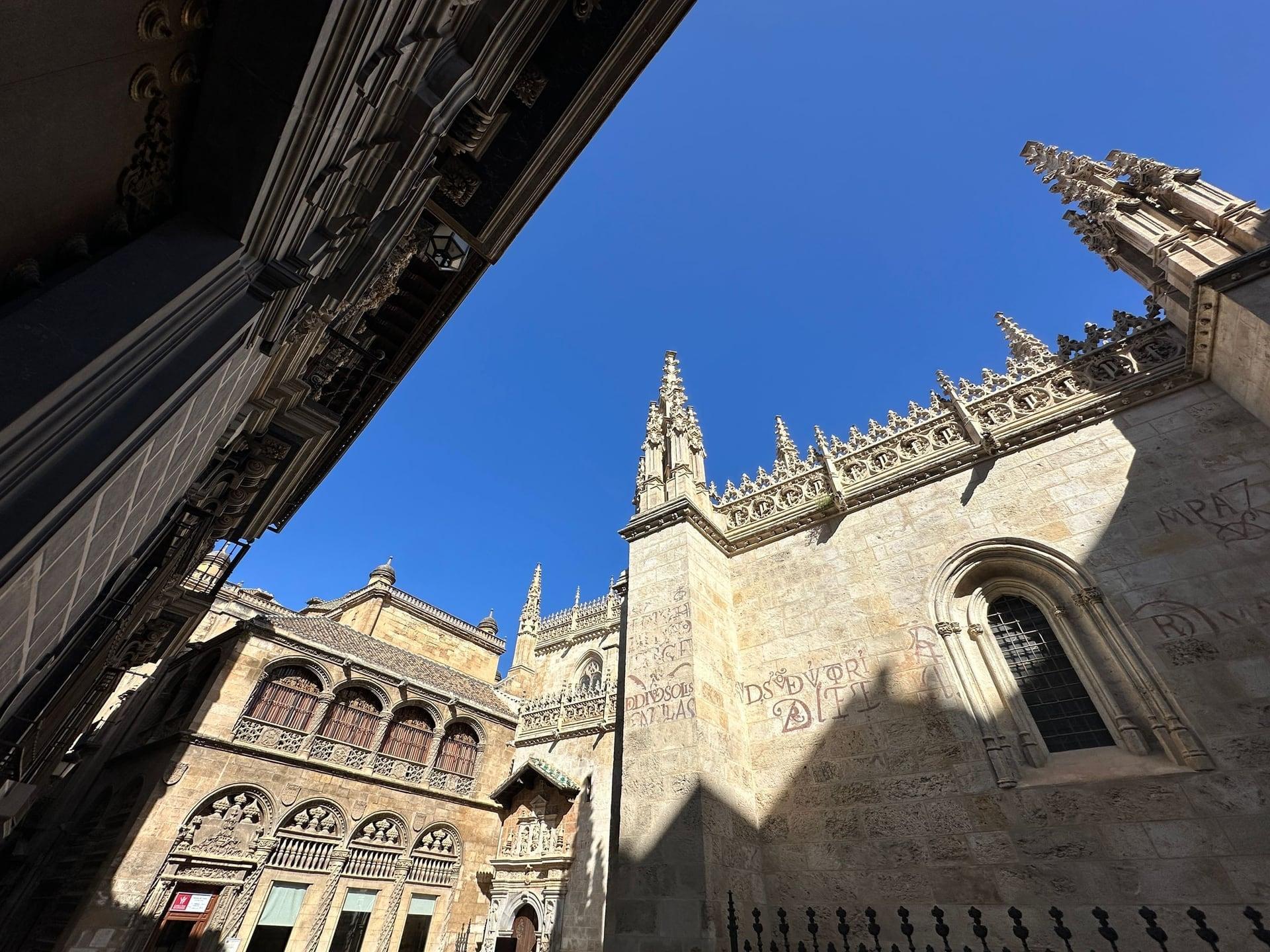
Look at the chapel's long wall. It is Gothic: buttresses rising to flowering pinnacles, stone lace along the top, gargoyles, and everywhere the shields and initials of Isabel and Fernando. In September fifteen oh four the monarchs decided they would be buried in Granada. The queen died that November, a year before work began. The king died in fifteen sixteen, and the chapel was finished the next year. Inside, an inscription runs round the walls. As the chapel publishes it, the monarchs list among their deeds that they expelled the Moors and the Jews from these kingdoms. In fourteen ninety-two the Jews of Castile and Aragon were ordered to convert or leave. Those were real people, driven from their homes.
Now find the carved doorway a few steps along the lane. It is not Gothic at all. It was added in fifteen twenty-seven, in the new Renaissance style: a round arch, and niches with the Virgin and Child between two Saint Johns. Gothic walls, a Renaissance door.
The arcaded building is the Lonja, the city's exchange of fifteen eighteen, where silk was traded. And beside you is the Madraza, with its later, Baroque front. Behind that front was a college founded in thirteen forty-nine by a Nasrid sultan. In fifteen hundred it became Granada's city hall. The conquerors' tomb and the conquered kingdom's college face each other across one lane.
Underfoot are river pebbles set on edge: beautiful, and slippery when wet.
Follow the route under the arch into the market lanes. Next is the old silk market.
4. Alcaicería: The Alhambra Copied
Walk on through the arch into the Placeta de la Seda, the little square where the market lanes meet, and stop there. The lanes around you are only two or three meters wide, so stand clear of the shop fronts.
This is the Alcaicería, the silk market. It sold silk for centuries, well into the eighteen hundreds. It was its own little enclosed town, with gates to get in and an outer ring of houses and shops stacked one on top of another. After the conquest it belonged to the Crown: its rents went to the king, and the governor of the Alhambra ran it.
Now look at the shop arches all around you, in the style of the Nasrid palaces. It looks like a corner of the Alhambra. It is not old at all.
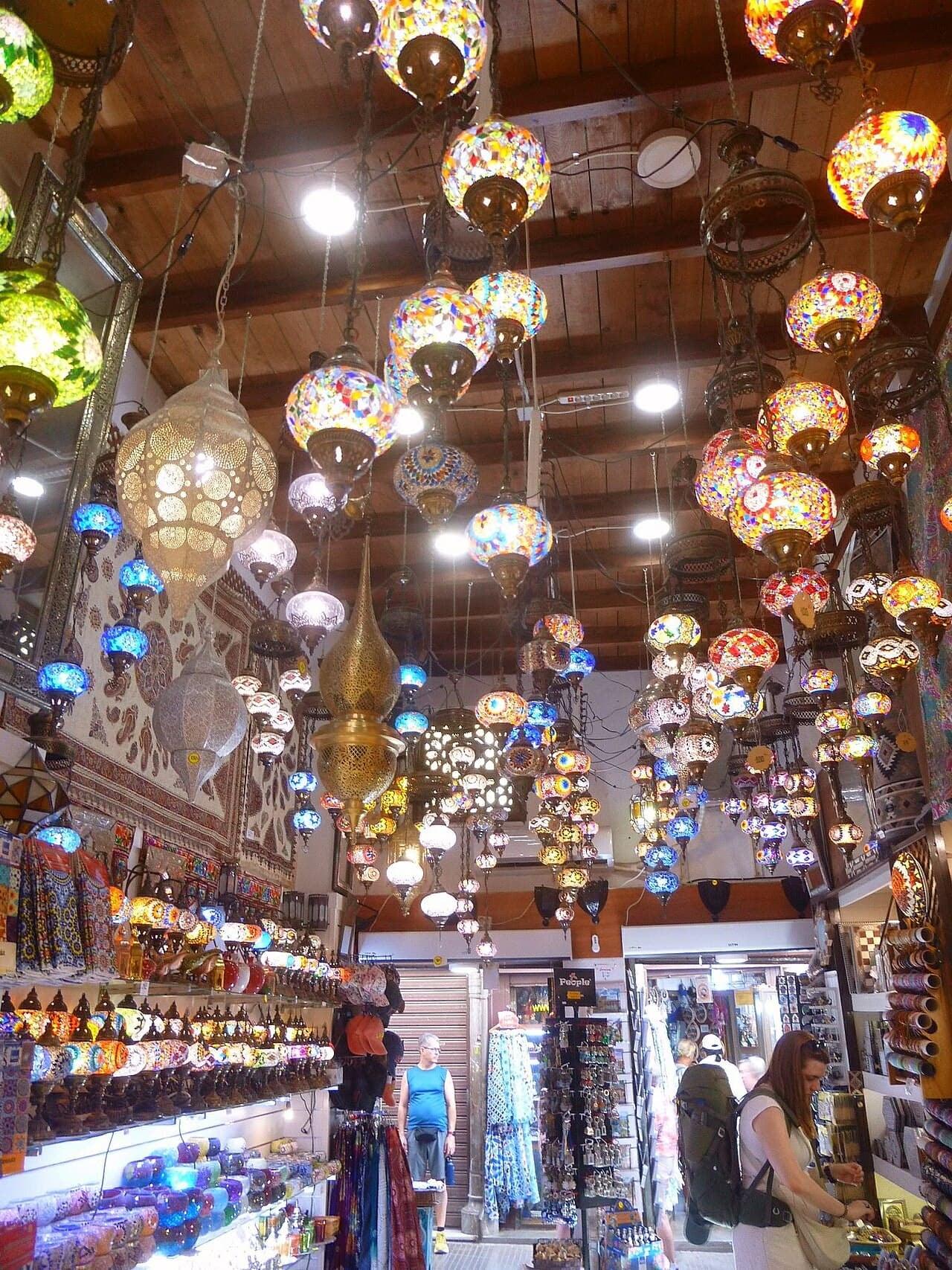
In the small hours of the twentieth of July, eighteen forty-three, a fire tore through the market and destroyed most of its shops. The rebuilders chose a strongly Nasrid look, and the Alhambra's own staff call it the first imitation of Alhambra style in the city. So what you see is an eighteen-forties idea of a Moorish bazaar, built long before today's souvenir trade filled it. A real Nasrid column from the old market is kept in the Alhambra's museum up the hill.
That is a habit worth keeping in Granada: Moorish-looking does not always mean old.
Hold on to your bag and phone in these lanes. They are crowded, and people sell hard here.
Follow the route down the lanes and out under another arch into a big open square. Next is Plaza de Bib-Rambla.
5. Plaza de Bib-Rambla: Outside the Wall
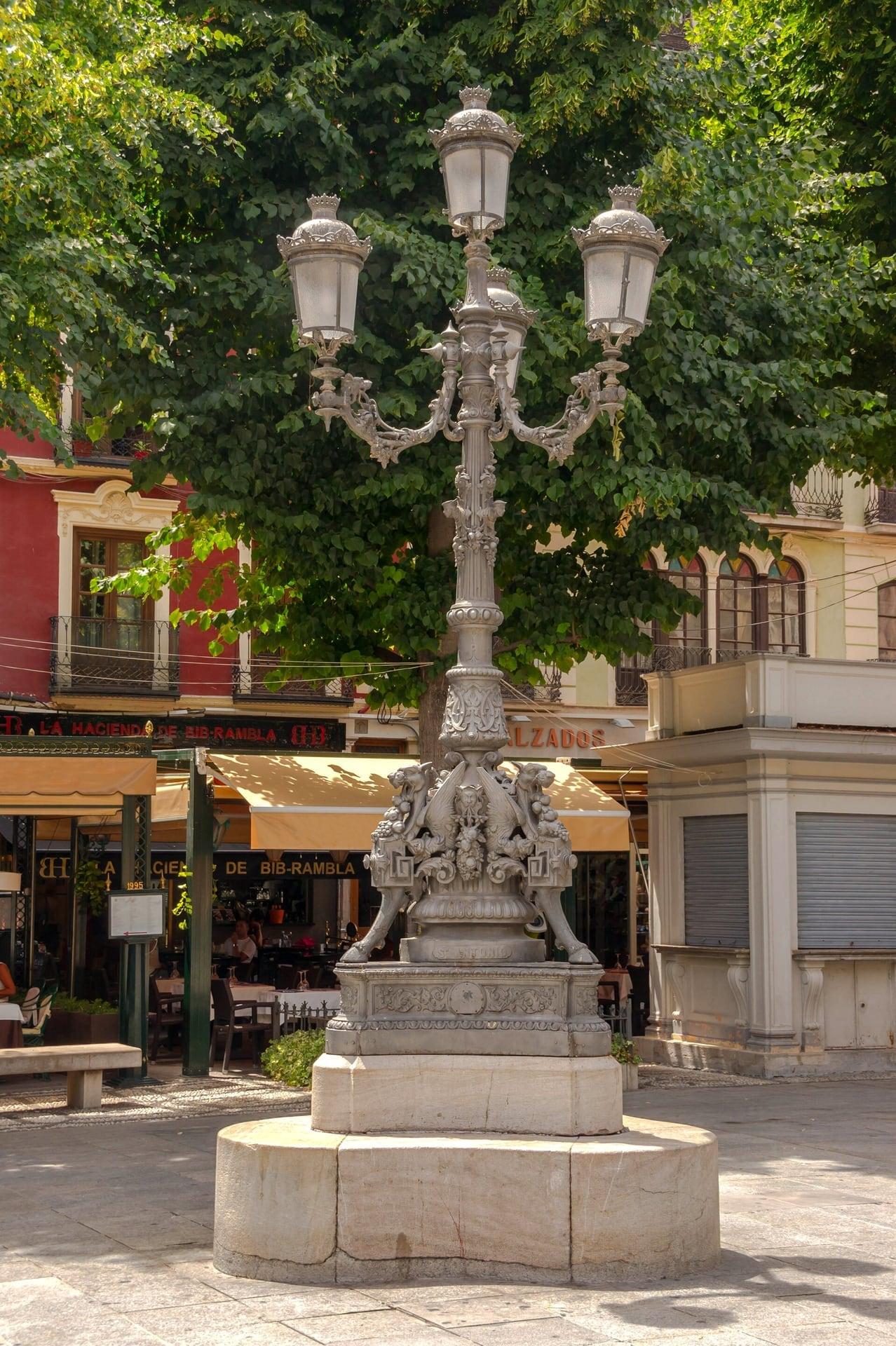
Walk on out of the lane into Plaza de Bib-Rambla and stop on the path near the fountain with the stone giants. This is open sky, a good place to breathe after the lanes. In Nasrid times this ground lay just outside the city wall, beside the fish market and the butchers. Its…
Full narration for this stop unlocks with the tour.
6. Plaza de la Trinidad: Where a Convent Stood
Walk on to the corner of Plaza de la Trinidad, where Calle Mesones arrives, and stop on the square's own sidewalk. Cars use the little street round the square, so stay on the sidewalk. Look into the square. A fountain in the middle, paths running out from it like spokes, big…
Full narration for this stop unlocks with the tour.
7. Cathedral West Front: A Painter's Last Design
Walk on down Calle Marqués de Gerona to where it opens into the square, and stop at the mouth of the street. The cathedral's front fills the view ahead. Stay here: there is no need to climb the steps onto the cathedral's platform. The cathedral is ticketed inside, and the…
Full narration for this stop unlocks with the tour.
8. Puerta del Perdón: Siloé's Signature
As you walk on along Calle Cárcel Baja, look across the street for a little stone fountain with three spouts, dated sixteen sixty-seven. Stop on the sidewalk opposite the tall carved door just beyond it: the Puerta del Perdón, the Door of Forgiveness. It is not a way in. This…
Full narration for this stop unlocks with the tour.
9. Gran Vía de Colón: Sugar Money's Avenue
Walk on down the Gran Vía's sidewalk, away from the crossings, and stop by the wall, out of the stream of people. Look across the road and up and down the avenue. Look at the fronts. Tall apartment blocks of the early nineteen hundreds, modernist and historicist, one grand…
Full narration for this stop unlocks with the tour.
10. Plaza Nueva: A Square Over the River
Walk on across the end of Calle Cárcel Alta, watching for cars, into Plaza Nueva, and stop in the open square, in front of the long stone palace that faces it. Minibuses and taxis use the road through the square. That palace is the Real Chancillería, the Royal Chancery. In…
Full narration for this stop unlocks with the tour.
11. Santa Ana: Where the Darro Comes Out
Walk on along the edge of the square to Plaza de Santa Ana, and stop on the footway by the wall. The road beside you carries minibuses and taxis, so keep to the footway. Find the church ahead with its brick tower. That is Santa Ana. Its tower is brick, in the Mudéjar style, and…
Full narration for this stop unlocks with the tour.
- Granada (Andalusia, Spain) - Cathedral - Upper part of Puerta del Perdón (Gate of Forgiveness) — Benjamin Smith, CC BY-SA 4.0 · source
Images may be cropped or resized. Other photos via Unsplash and Pexels.