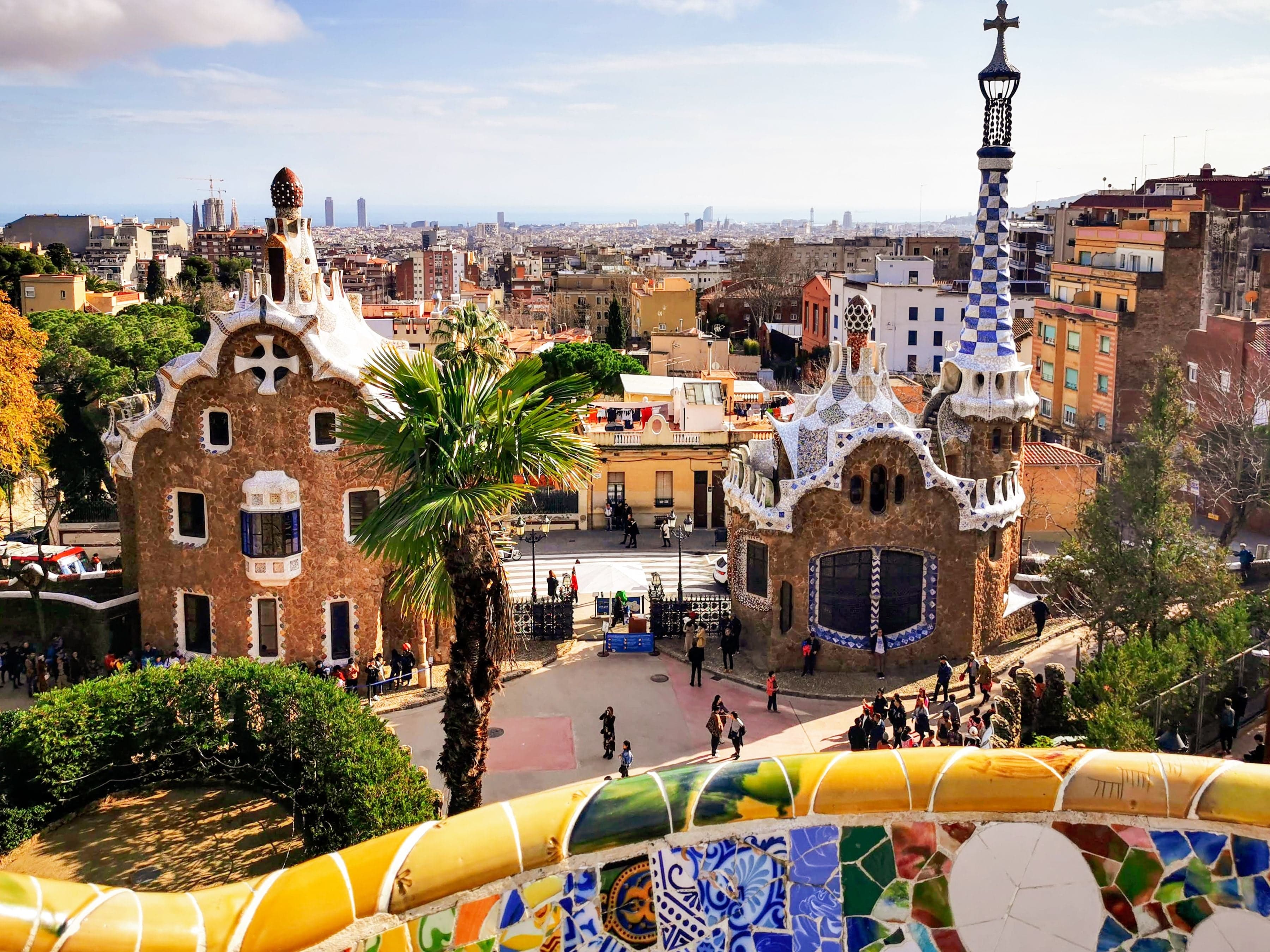
From Gaudí's first house through Gràcia's squares, Diamant, Virreina, Nord and Rovira i Trias, then up Carrer de Larrard to Park Güell's main gate, its gatehouses and its palm-leaf gate.
Start · Casa Vicens: Gaudí's First House
DirectionsStops
- 1
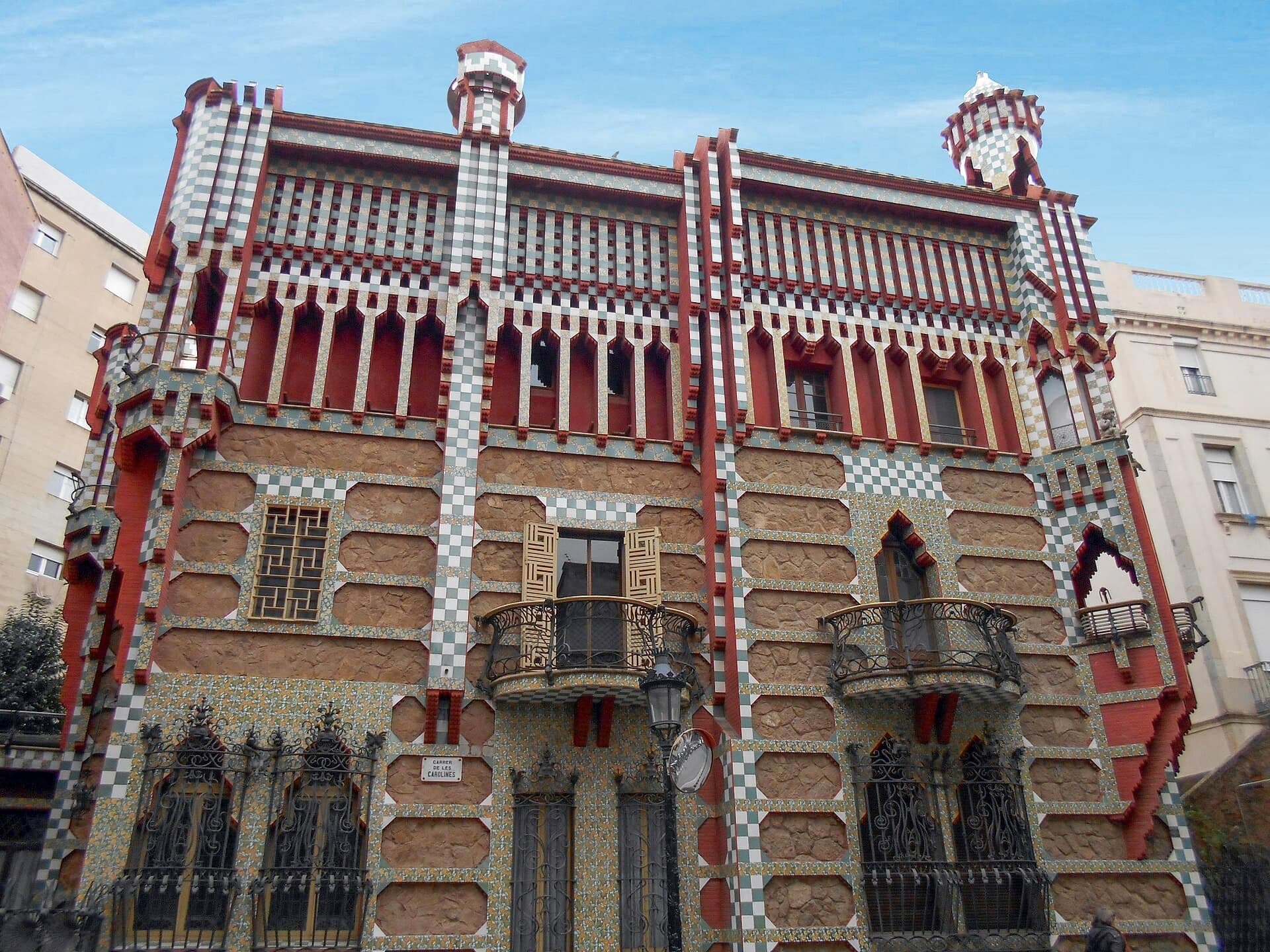
Casa Vicens: Gaudí's First House
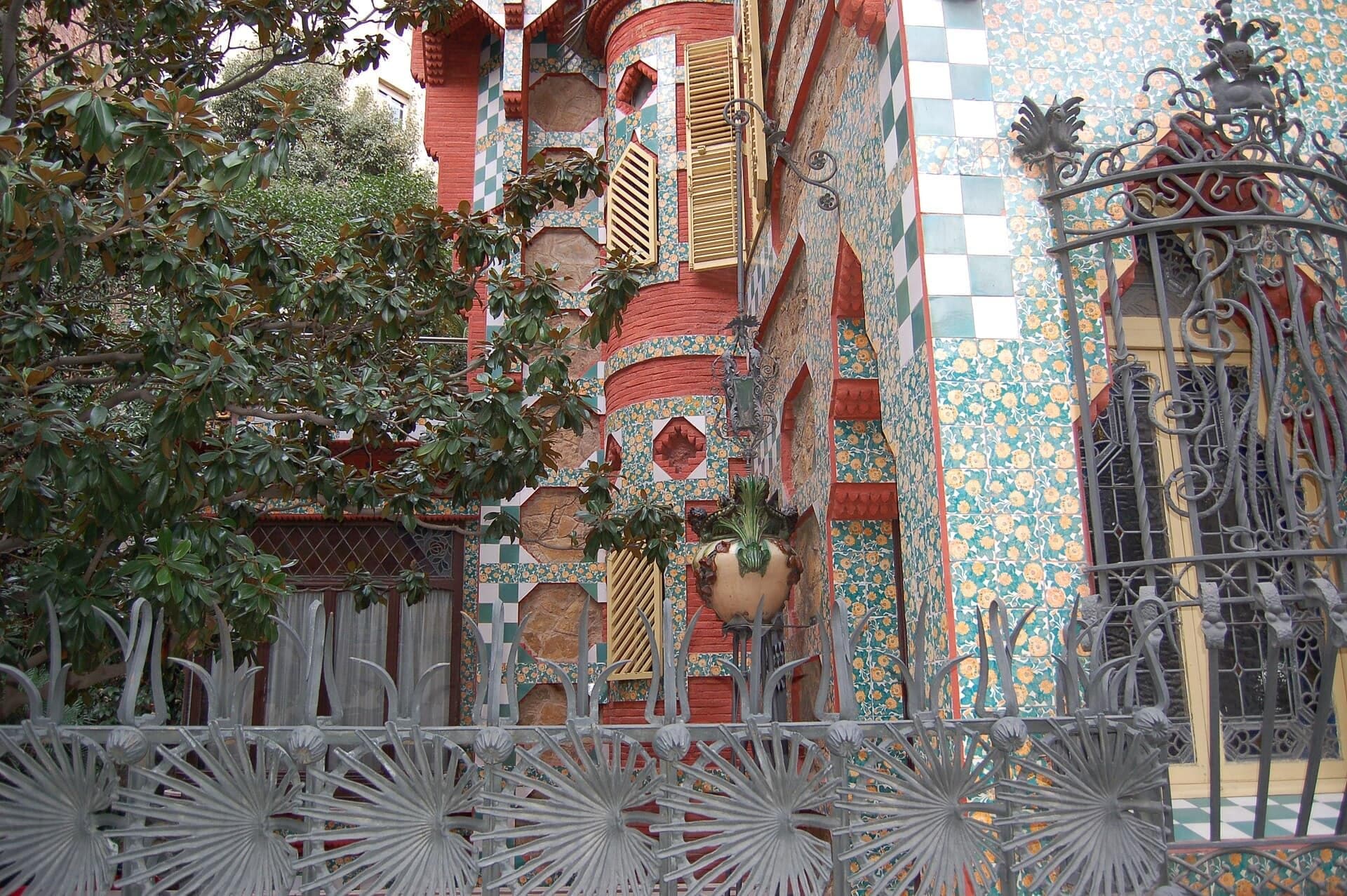
Gaudí's first house, seen whole from across the street. A summer villa of stone, brick and yellow-flowered tile behind a fence of iron palm leaves.
- 2
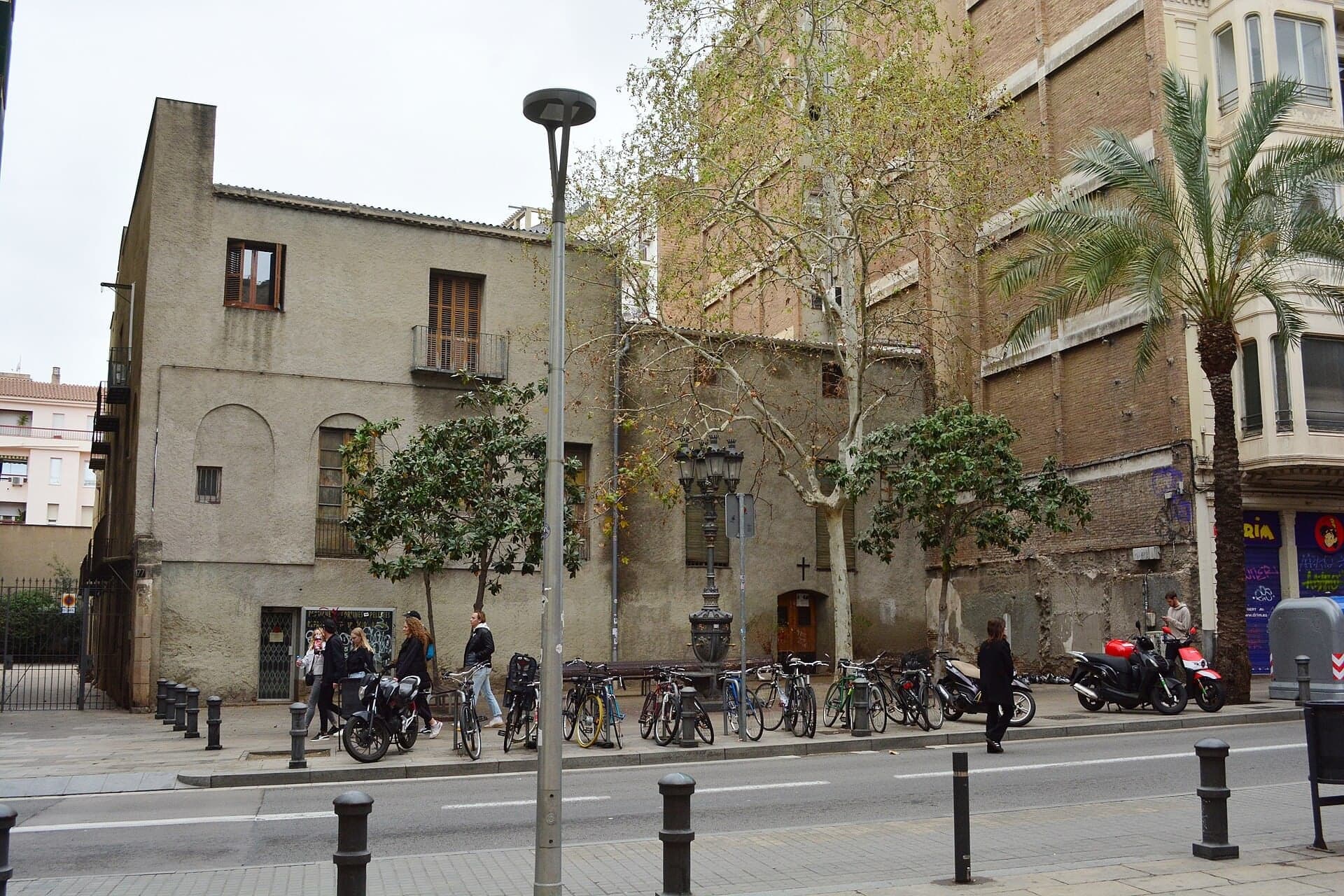
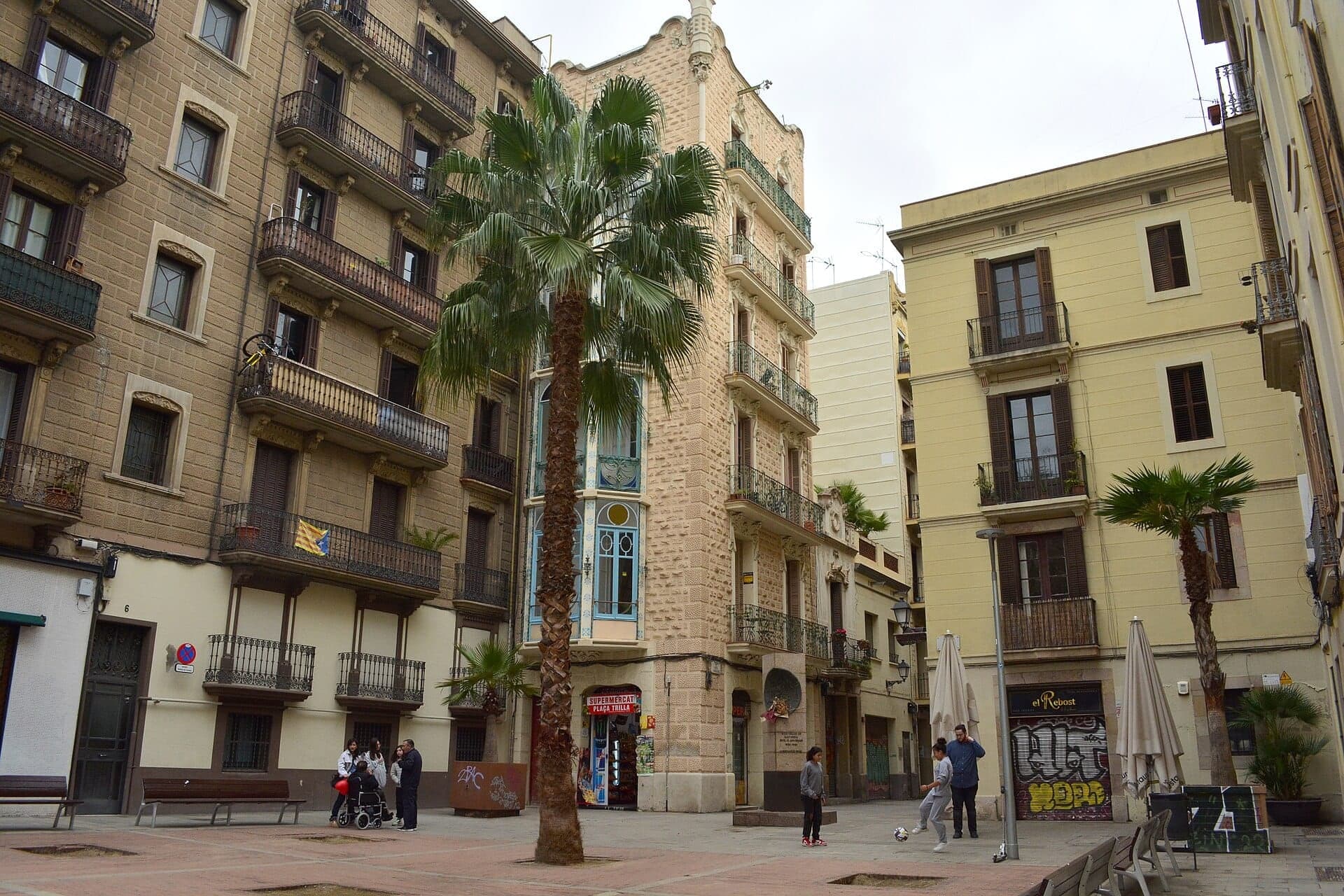
Plaça de Trilla: The Farm That Became Streets
An old manor farmhouse boxed in by apartment blocks. In 1825 its owner's widow asked to turn the fields into building plots.
- 3
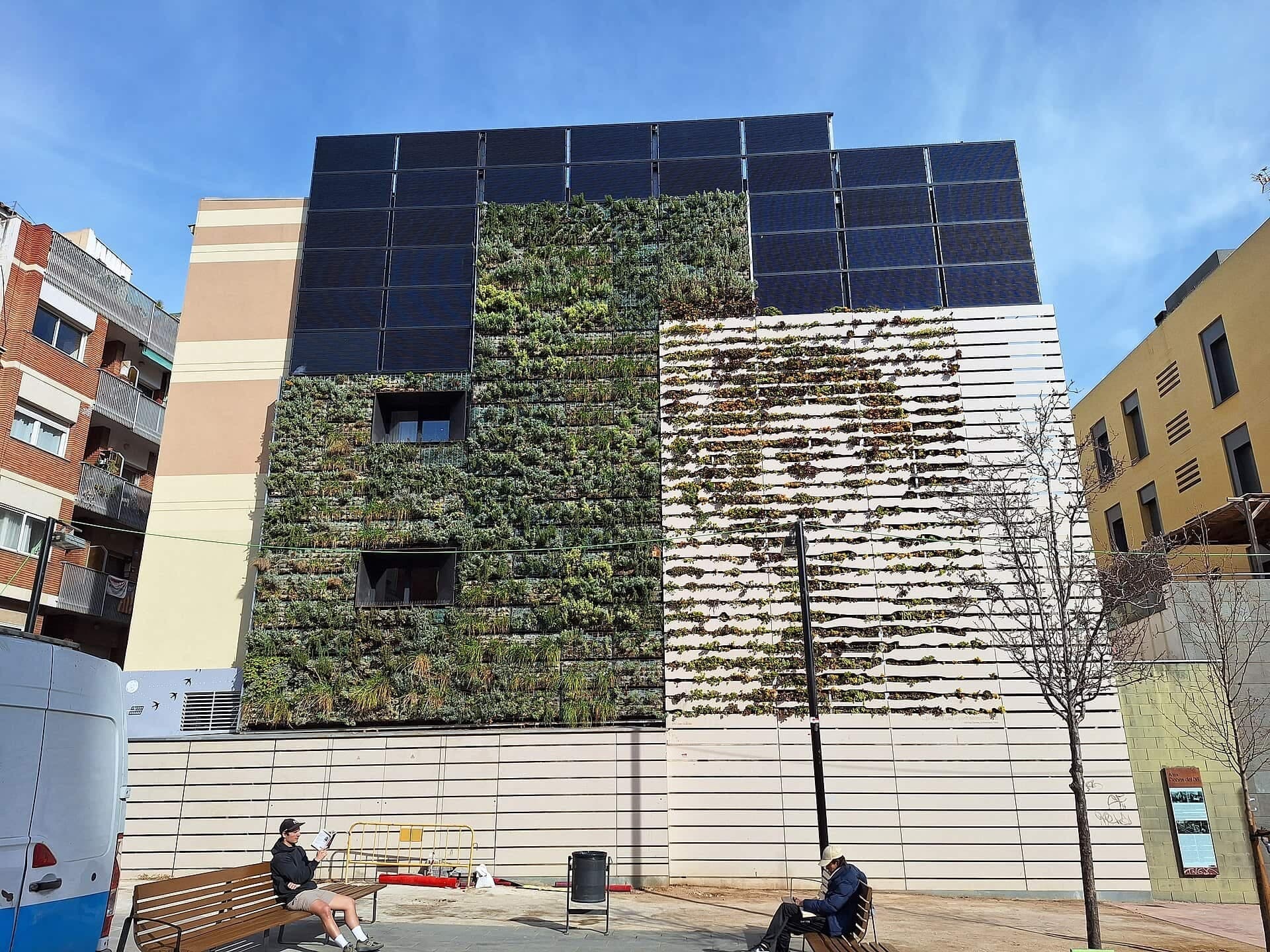
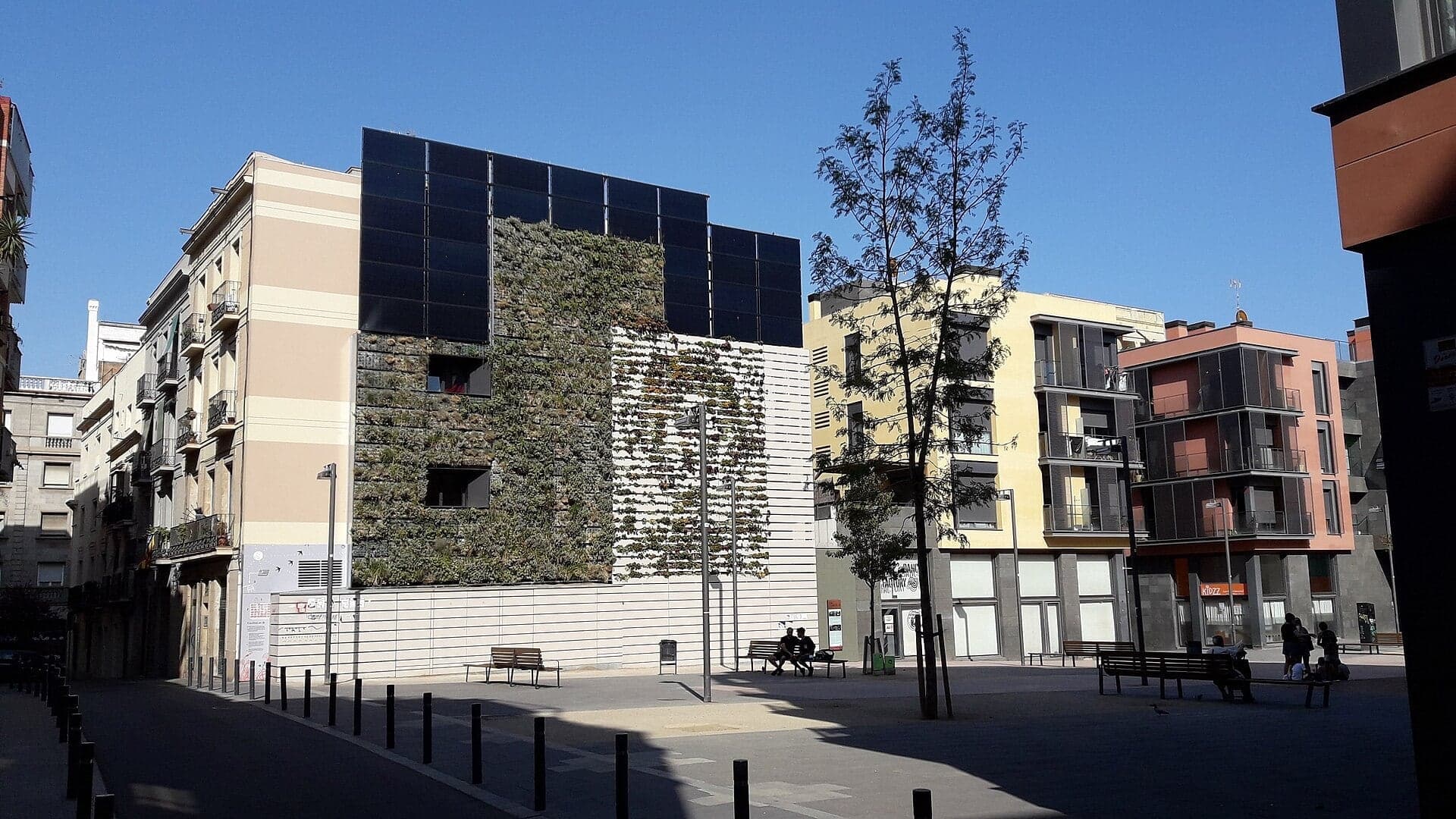
Plaça de les Dones del 36: A Wall That Works
A small square named for the women of the Civil War. Its bare party wall became a working wall in 2020.
- 4
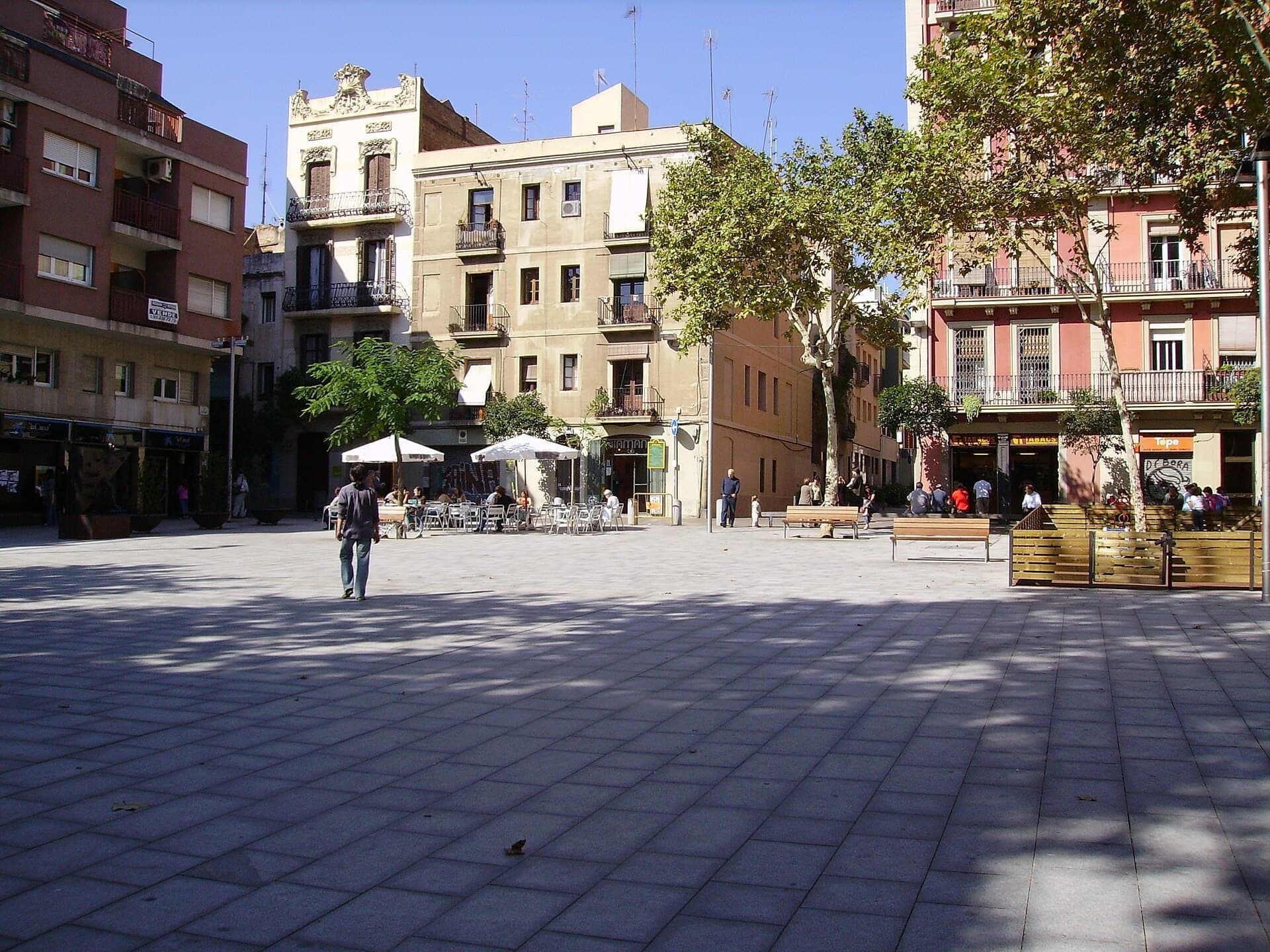
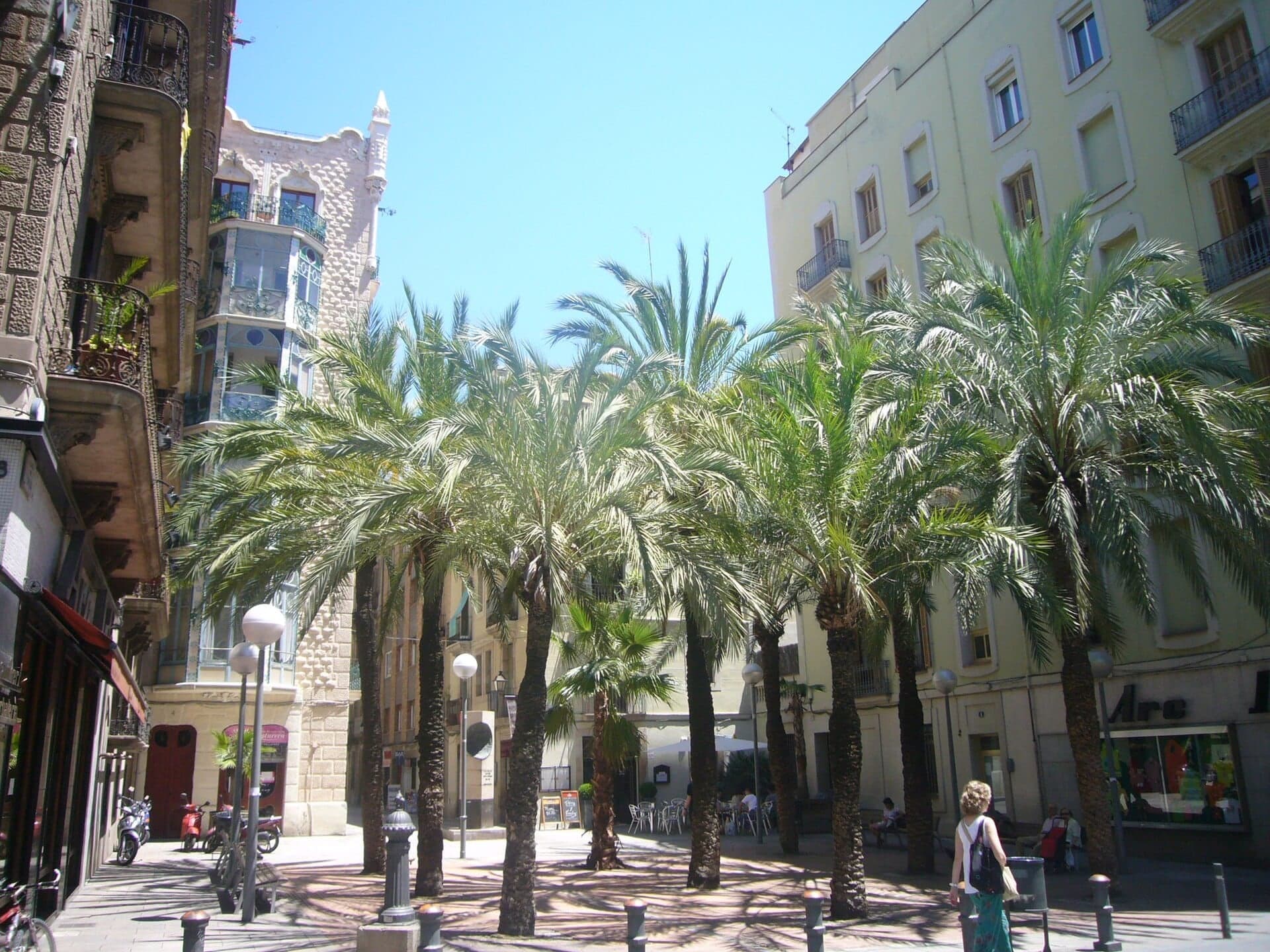
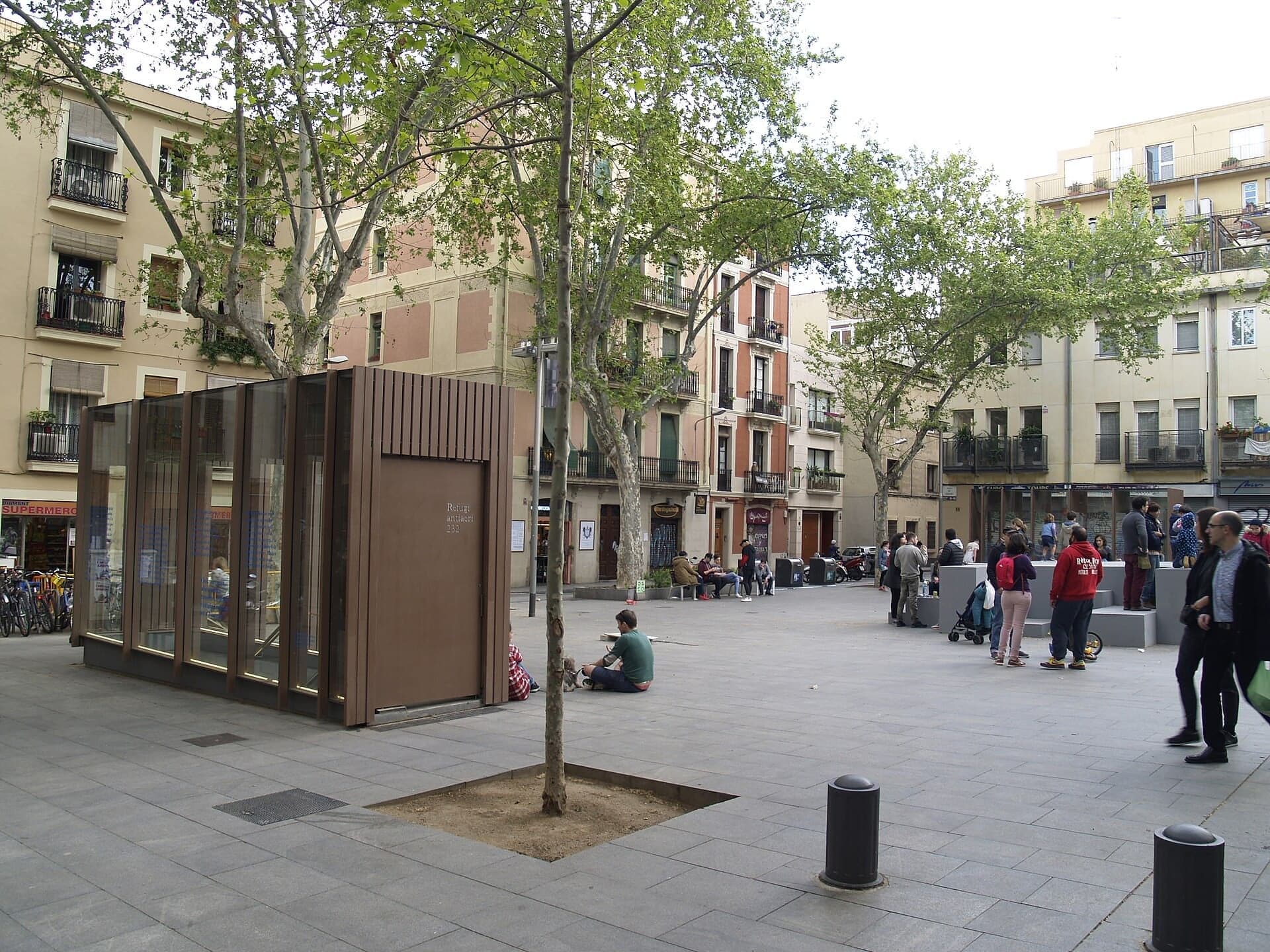
Plaça del Diamant: The Jeweler's Streets
A jeweler named these streets after his stock in 1850. A famous novel's square, with a wartime shelter dug beneath it.
- 5
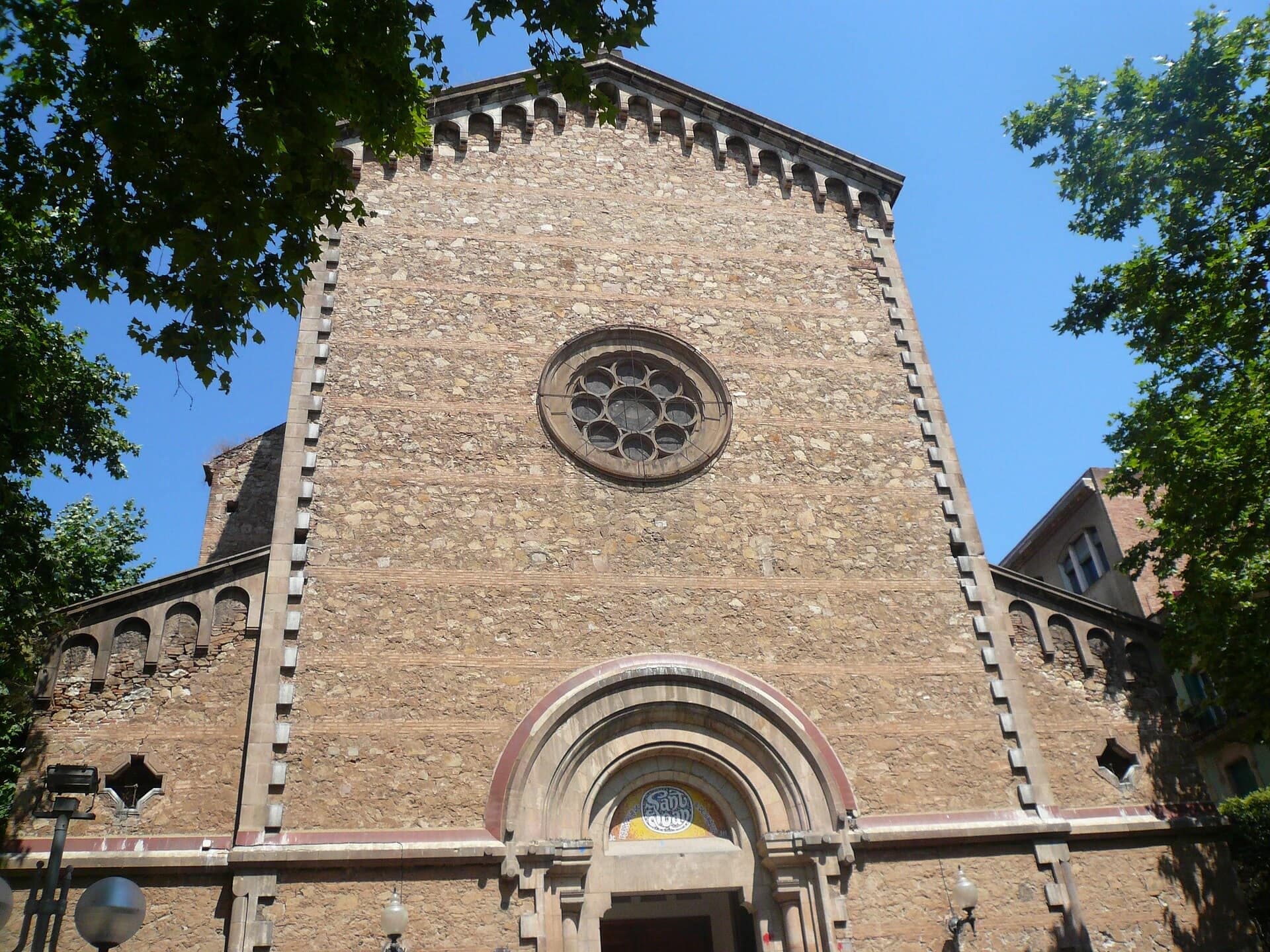
Plaça de la Virreina: The Vicereine's Square
A square named for a Viceroy of Peru's widow, closed by a church on the palace plot. The last piece of the estate to be built up, in 1883.
- 6
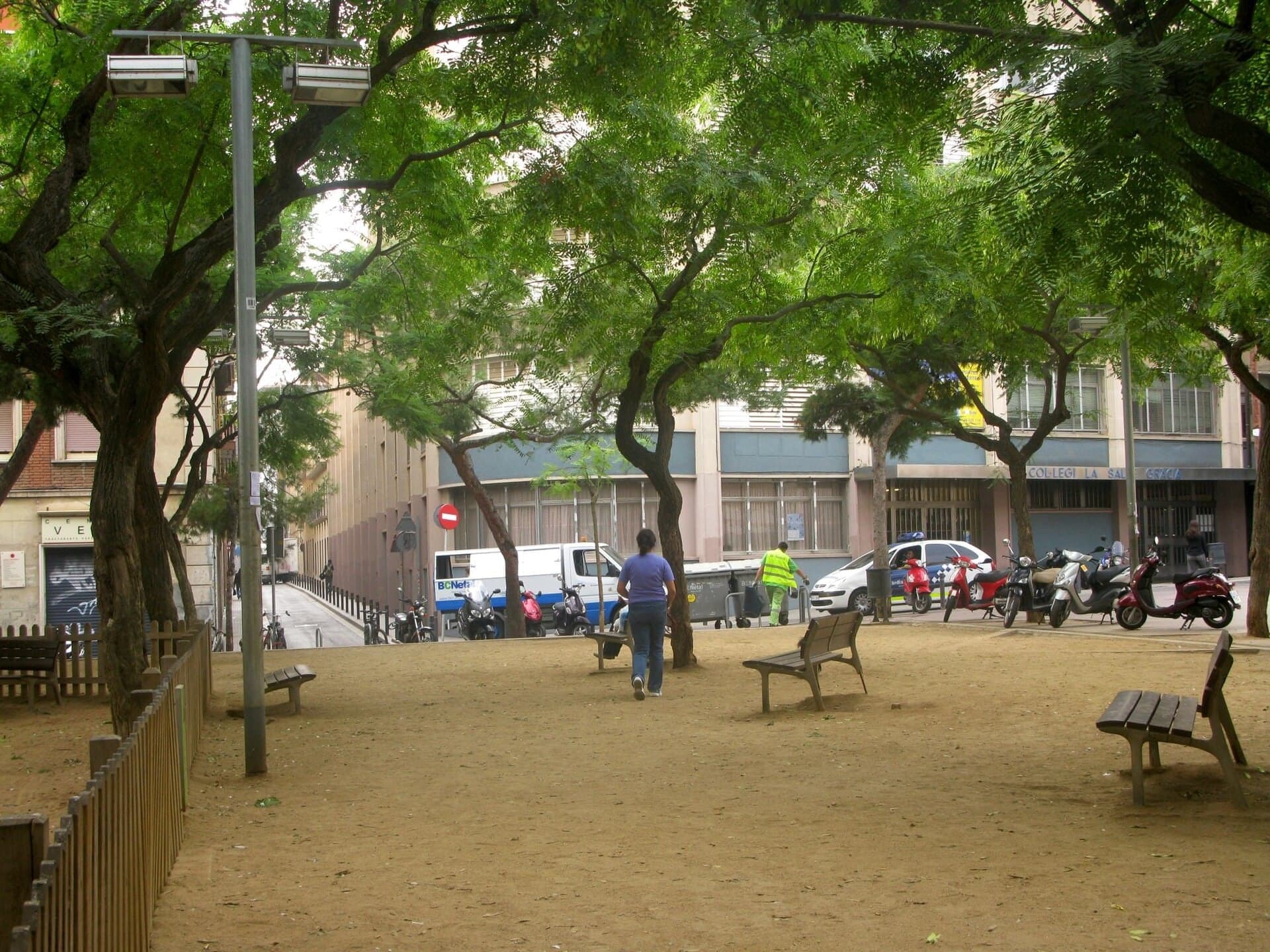
Plaça del Nord: Arms of a Lost Town
A quiet square of sand and trees laid out by Rovira i Trias. Its fountain carries the arms of independent Gràcia.
- 7
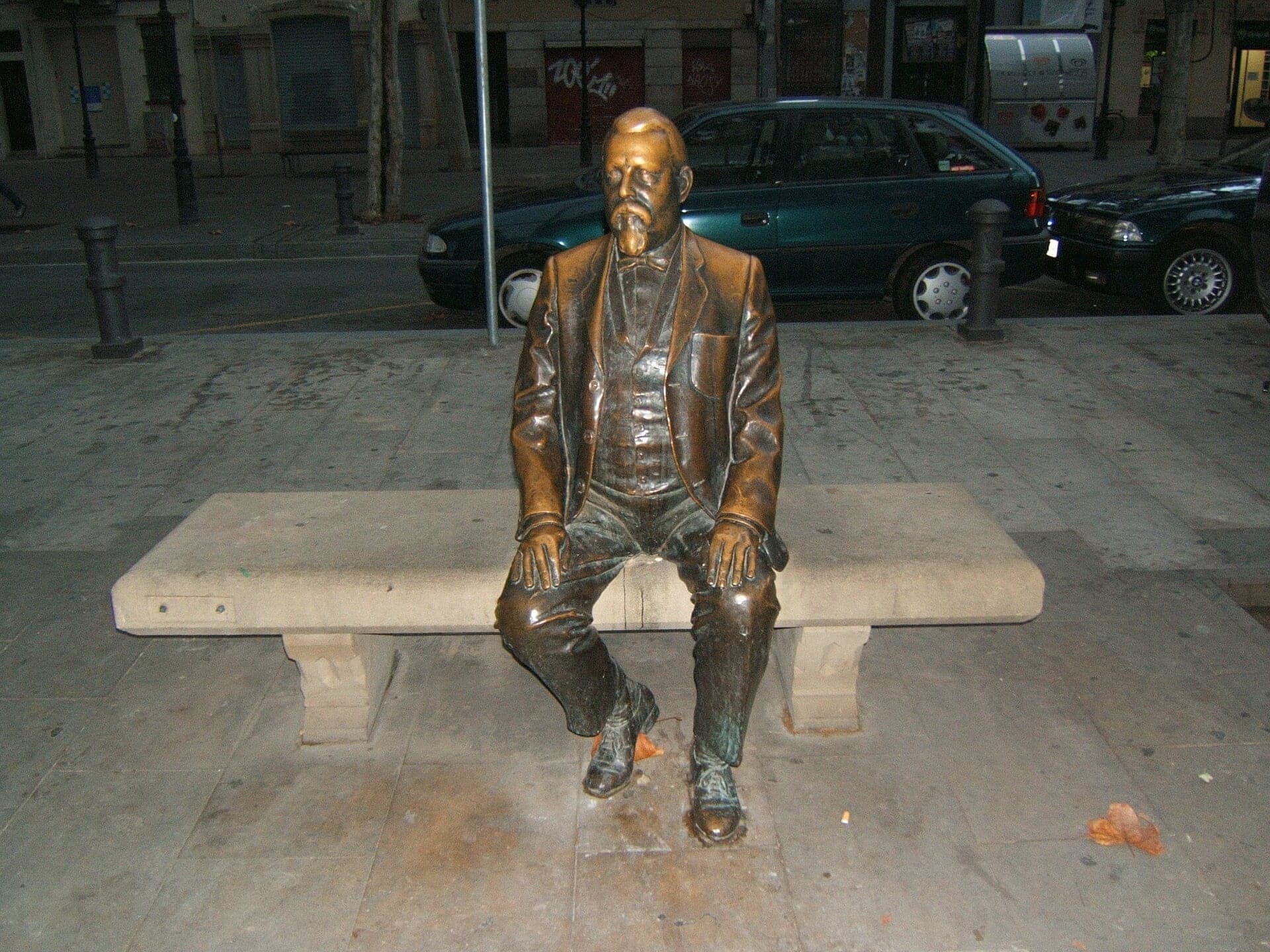
Plaça de Rovira i Trias: The Plan That Won
The architect who won Barcelona's 1859 competition sits in bronze. A map of his plan for the Eixample lies at his feet.
- 8
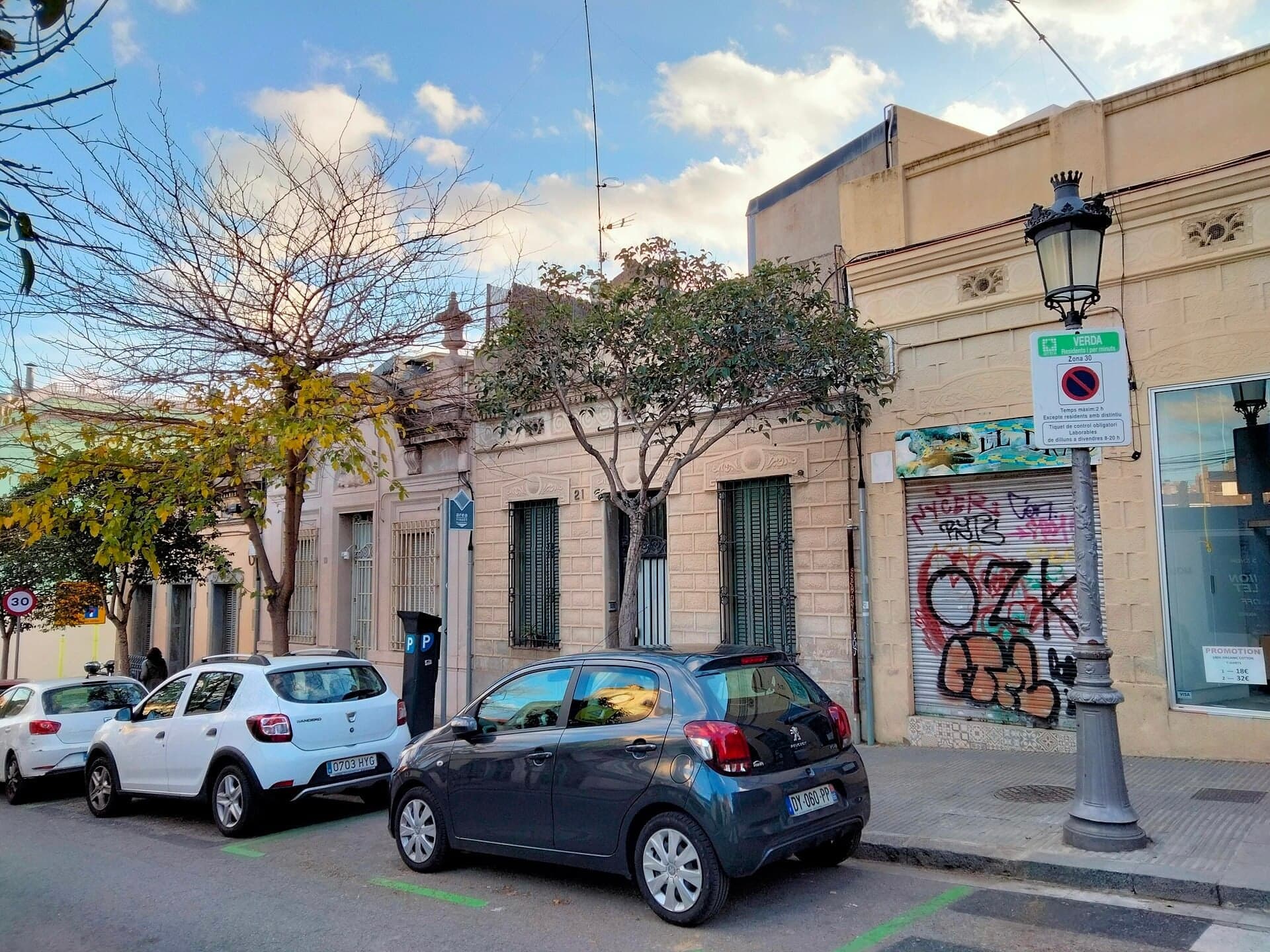
Carrer de Larrard: Too Steep for a Tram
The straight street up to Park Güell follows an old farm track. In 1910 the city refused a tram here as too steep.
- 9
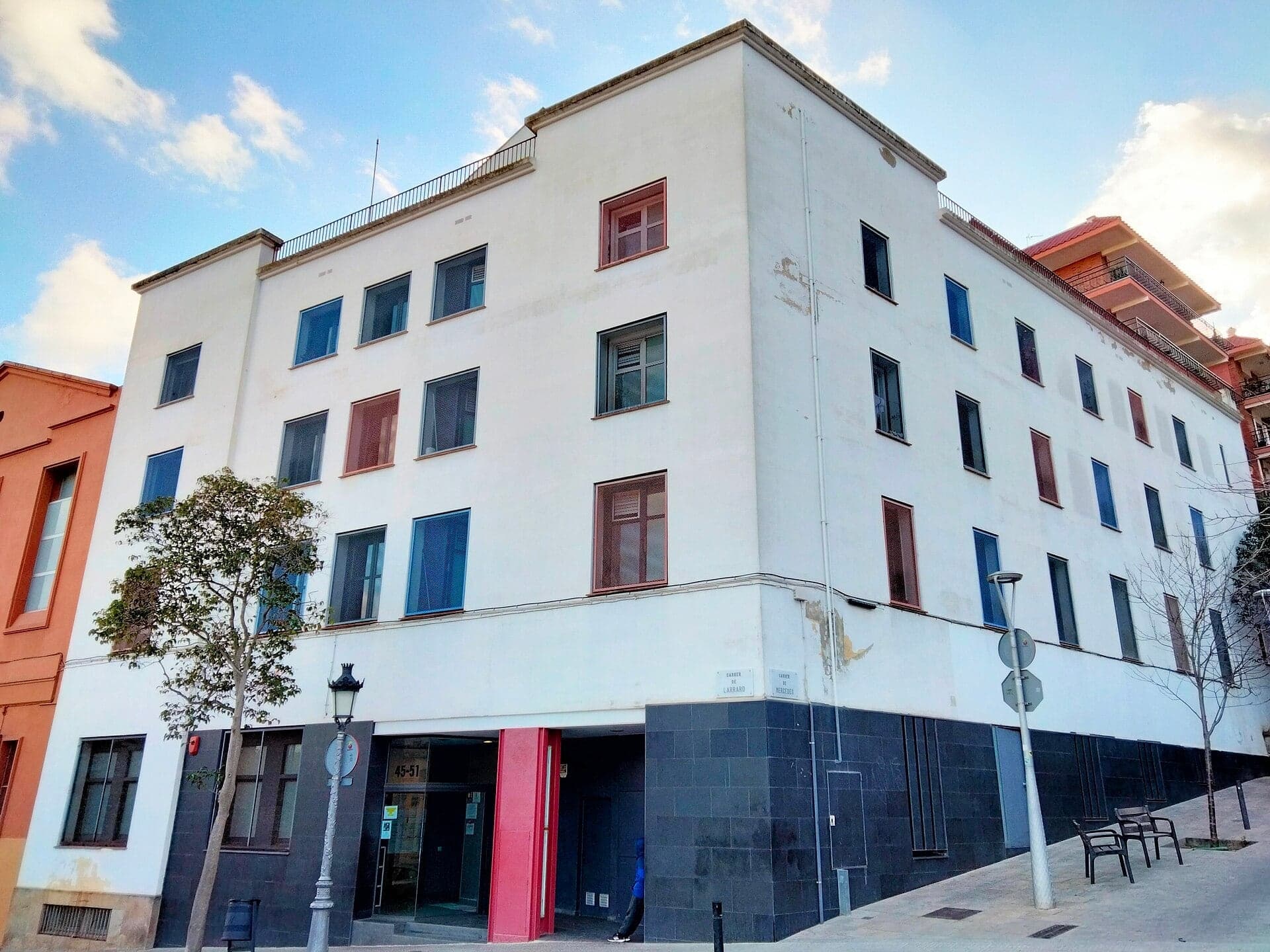
Carrer de Larrard: Sixty Plots, Two Houses
Halfway up the climb, on the approach street to an estate that planned sixty houses and built two.
- 10
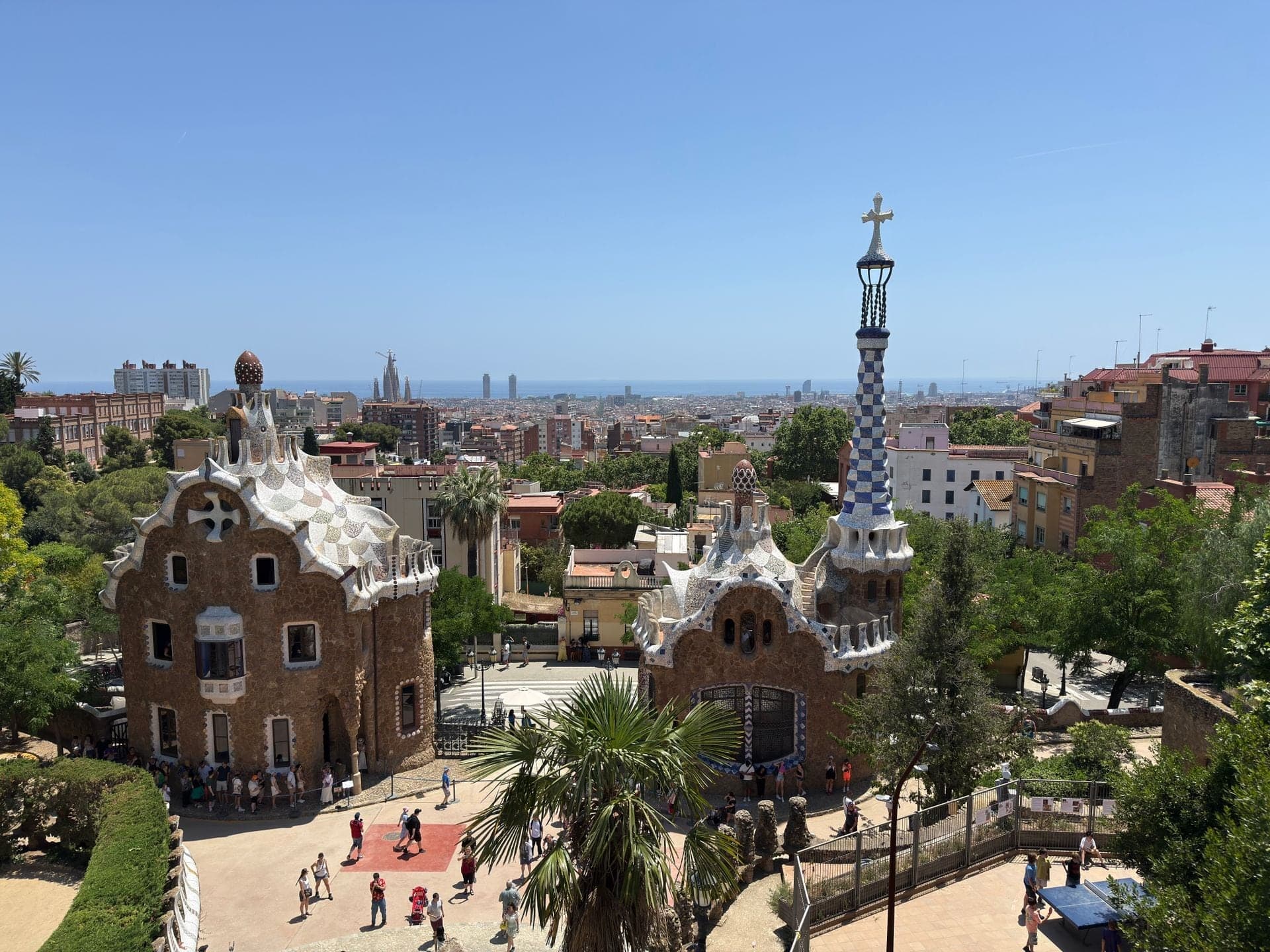
Park Güell: The Main Gate
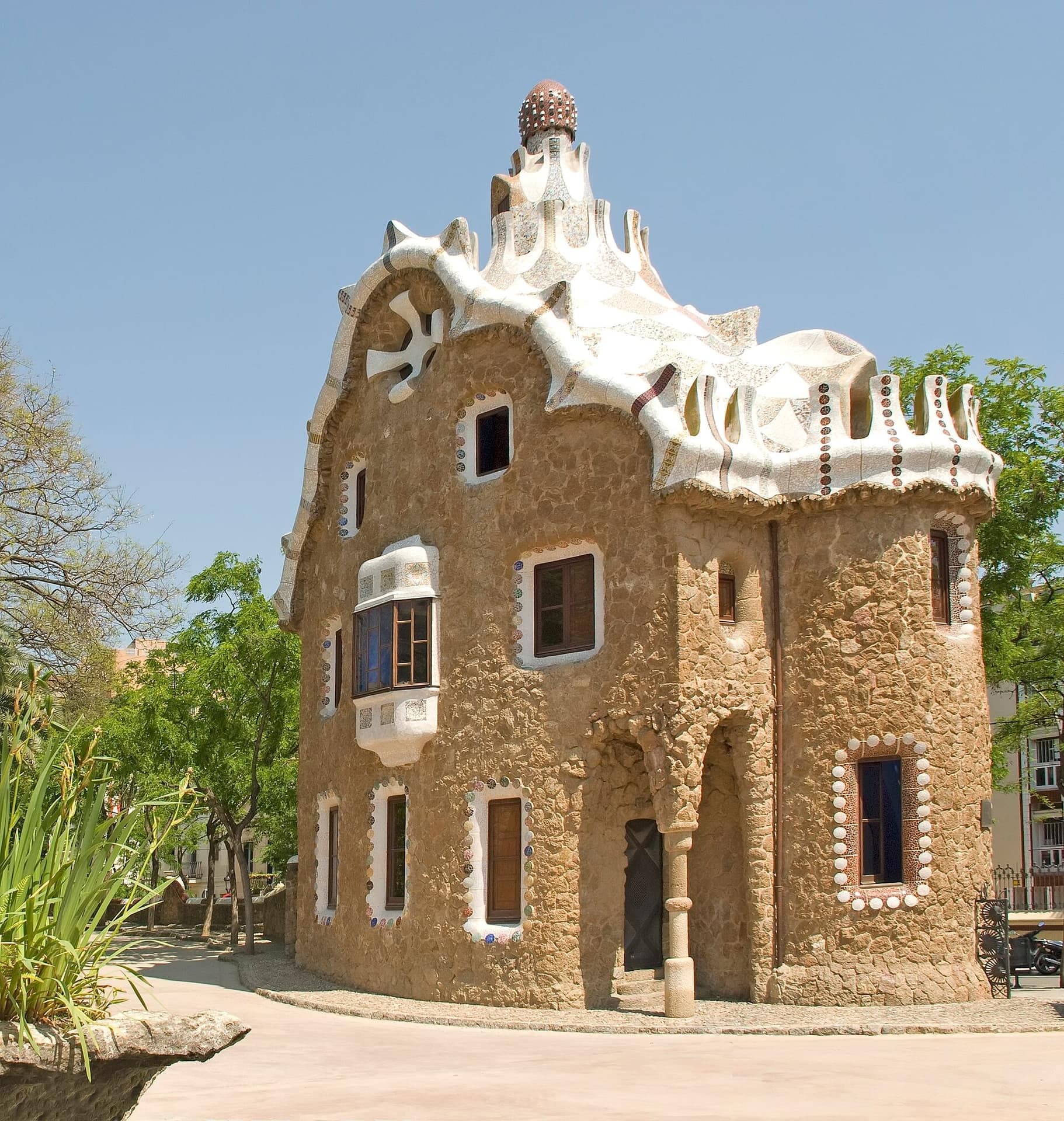
Park Güell's main gate and Gaudí's two gatehouses, seen free from across the street. The iron gate came from Casa Vicens.
Details
Best Time to Visit
A weekday morning, so the climb up Carrer de Larrard comes before the heat: it is a hot climb on summer afternoons. If you hold a Park Güell ticket, time the start about an hour and a half before your slot. Visitor slots run from 9:30am to 7:30pm (checked 12 October 2026). Casa Vicens opens at 9am. On Sunday mornings the Plaça del Diamant shelter opens for a visit at 11am, by booking. Gràcia's squares are loud on weekend nights, and in mid August the Festa Major fills these streets with decorations and crowds.
Pro Tips
- •Getting to the start: Casa Vicens is at Carrer de les Carolines 18 to 24, about 300 metres from Fontana Metro (L3); Lesseps (L3) and the FGC stations Gràcia and Plaça Molina, and buses 22, 24, 27, 87, 114, H6, V17 and D40 are also close. Checked 12 October 2026 at casavicens.org.
- •Casa Vicens (stop 1): open every day 9am to 8pm from March to October and 9am to 6pm from November to February; last entry 1 hour 15 minutes before closing; visits take about an hour and a quarter; free under 11. Closed all day on Wednesday 14 October 2026, on 25 December and from 7 to 14 January 2027. Ticket prices are on casavicens.org. Checked 12 October 2026.
- •Plaça del Diamant shelter, Refuge 232 (stop 4): open visits every Sunday at 11am, one hour, 3 EUR, booked by email with the Taller d'Història de Gràcia; in Catalan, in Spanish on the second Sunday of the month, English only for booked groups. Checked 12 October 2026 at tallerhistoriadegracia.cat.
- •Park Güell (stop 10): the whole park, all 12 hectares, is ticketed for visitors (18 EUR general), with timed, named tickets and no re-entry. The park recommends three entrances: Carrer de Larrard (entry from the side lane at Carrer d'Olot and Carrer de Marianao, by the main gate), Carretera del Carmel 23, and Avinguda del Santuari de Sant Josep de la Muntanya by outdoor escalator. Vallcarca Metro (L3) is not recommended: the Baixada de la Glòria escalators are out of service. Checked 12 October 2026 at parkguell.barcelona.
- •Step-light alternative for the climb: from the foot of Carrer de Larrard, walk west along Travessera de Dalt to Avinguda del Santuari de Sant Josep de la Muntanya and ride its outdoor escalators, then follow Carrer d'Olot east to the gate. It is about 200 metres longer, and it is lighter on steps, not step-free: escalators can be out of service, with stairs beside them, and Carrer d'Olot's pavement west of the gate has short flights of steps.
- •Two of Gràcia's best-known squares are a few streets south of the route: the Plaça de la Vila de Gràcia, with the town's civic bell tower by Rovira i Trias (33.5 metres, inaugurated in 1864), and the Plaça del Sol, which once hosted the Twelfth Night fair. Both are lived-in squares; the Sol is a night-time square, so keep it quiet.
- •Ticket holders: the Park Güell ticket includes the Bus Güell shuttle to and from Alfons X Metro (L4), about 15 minutes. Checked 12 October 2026 at parkguell.barcelona.
Safety & Precautions
- •The last part climbs about 55 metres with no steps: Carrer del Torrent de les Flors is about 14 percent for 100 metres, and the top of Carrer de Larrard about 13 percent for 100 metres and about 18 percent for the last 50 metres. Pavements are narrow on the side streets. Carry water in summer: the climb is hot on a summer afternoon.
- •Crossings: Gran de Gràcia at the lights (leg 1 to 2); Travessera de Dalt, a six-lane road in two halves, at the lights with sound, then the foot of Larrard at a third light (leg 7 to 8); on Larrard, Carrer de la Mare de Déu de la Salut at the lights and Carrer de Sant Cugat del Vallès at a zebra (leg 8 to 9), then Rambla de Mercedes and Larrard itself at zebra crossings without lights, used by taxis to the park (leg 9 to 10).
- •Park Güell's gate (stop 10) draws crowds and pickpockets: keep bags closed and in front of you. The gate queue can spill onto the pavement; stand aside.
- •Works: the Jardins de la Font del Carbó, right next to the main entrance on Carrer d'Olot, are being restored from January 2026 to about January 2028, so expect hoardings beside the gate. Inside the park, some paths are closed for drainage, lighting and Wi-Fi works (parkguell.barcelona disruptions page, checked 12 October 2026).
- •Gràcia and the streets below the park are residential: stay on the pavements, keep voices low in the squares, do not sit on doorsteps or go into doorways or courtyards. The park's own rules ask visitors to respect local residents.
- •There is no free area inside Park Güell for visitors: do not try to enter without a ticket for your time slot. Before 9:30am and in the evening residents' band, tourist visits are not allowed.
Travel advisory: Exercise Increased Caution (Level 2).
Gallery
Related Reading
Go deeper on what you'll see, hear, and walk through.
Overview
Barcelona Travel Guide: How Many Days, Getting Around, When to Go
6 min
Overview
Best Self-Guided Walking Tours in Barcelona (2026)
5 min
Thematic
Best Architecture Walking Tours in Barcelona (2026)
3 min
Companion
Cerdà's Eixample: The Grid Madrid Imposed and the Buildings That Broke Its Rules
5 min
Companion
How Barcelona Wrote a New Architectural Language in Forty Years
5 min
Read the walk
The full story of Park Güell and Gràcia: Village Squares to Gaudí's Gate, in words. Prefer to listen? Play it narrated, from home or on location.
Introduction
Barcelona, the capital of Catalonia in Spain, absorbed the town of Gràcia in eighteen ninety-seven. For fifty years before that it governed itself, and grew farm by farm. A landowner turned his farm into building plots, drew a grid of narrow streets, named them, and put a square in the middle, which the town came to require and reward with tax breaks.
This walk crosses those developments one square at a time, up to the last and grandest of them, on the hill at the top: Park Güell, drawn up as a private estate of sixty houses.
Three people recur. Antoni Gaudí, whose first house starts the walk and whose gatehouses end it. Eusebi Güell, the client who took on the hill. And Antoni Rovira i Trias, the architect who laid out two of these squares. Gràcia is a lived-in neighborhood, so keep voices low in its squares.
The walk is ten stops over just under two and a half kilometres, about a mile and a half, and takes about an hour and a half. The last part climbs about fifty-five metres, with no steps: one street at about fourteen percent, and the top of Carrer de Larrard at thirteen to eighteen percent. It begins at Casa Vicens, near Fontana Metro on line three, and ends across the street from Park Güell's main gate. The park is ticketed, by timed slot; the walk works with a ticket or without.
1. Casa Vicens: Gaudí's First House
Welcome to Casa Vicens. Stand on this pavement, straight across the narrow street from the house, and step back against the wall behind you: the best of it is high up.
Casa Vicens is a museum today, open with a ticket, and its street front reads from here for free.
This is Antoni Gaudí's first house. It was designed in eighteen seventy-eight and built from eighteen eighty-three to eighteen eighty-five, as a summer house for Manuel Vicens, when Gràcia was a separate town of fields and villas. Gaudí was barely thirty. The house's own museum calls it the first large commission he ever received.
Look at the skin of the building. Gaudí mixed three materials: stone, bare brick, and tile. Catalonia's heritage inventory describes a wide range of colored tiles from Valencia, with a clear influence from Islamic architecture. Find the yellow flowers on the tiles; the museum calls them carnations, and they cover the facades. Then let your eyes climb to the top of the house.
Now bring your eyes down to the garden fence. The iron is shaped into palm leaves, the leaf of the dwarf fan palm, which grows wild around the western Mediterranean, repeated all along the railing. Remember that leaf. An iron gate in the same palm leaves left Casa Vicens long ago, and you will meet it at the very end of the walk.
The house was enlarged in the nineteen twenties, so not every tile you see is from Gaudí's time. After more than a century in private hands, it opened to the public in twenty seventeen, and since two thousand and five it has shared a place on UNESCO's World Heritage List with Park Güell, where this walk ends.
Follow the route along this pavement to Gràcia's main street, and cross it at the lights. Next is a farm that turned itself into streets.
2. Plaça de Trilla: The Farm That Became Streets
Walk on into the Plaça de Trilla, the small square just off Gràcia's main street, and stop on the paving.
Now turn round and look back across the main street, Gran de Gràcia, for the old house: a manor farmhouse, lower than everything around it, boxed in by newer apartment blocks. This is Can Trilla. Catalonia's heritage inventory describes two fairly matching blocks, with a ground floor, two floors and an attic, windows under pointed arches on the side of a passage, and a little chapel with a front in a baroque spirit and a doorway of cut stone. From here you see only part of it. The town grew right up to its walls.
This house once owned wide farmland all around it. In eighteen twenty-five the widow of its owner, a lawyer named Trilla, asked permission to turn the estate into building land. The streets around you came out of that request, a quarter of a century before Gràcia won the right to govern itself.
The square's own name followed the politics of the day. It carried the names of two queens and a saint, and only after the second queen gave up her throne did it take the name of the man whose land it had been.
Keep this pattern in mind, because you will see it again and again on this walk: a farm, an owner, a grid of narrow streets, and a square in the middle. The house itself is private, so enjoy it from here.
Follow the route into the lanes behind the square. Next is a much newer square, with a wall that has been given a job.
3. Plaça de les Dones del 36: A Wall That Works
Walk on into the Plaça de les Dones del trenta-sis, the Square of the Women of Thirty-Six, and stop on the paving.
Start with the walls around you. Look for the one that has been given a job. It is a party wall, the bare side a building shows when the plot beside it is left empty or cleared. Cities are full of them, blank and grey. In twenty twenty Barcelona turned this one into a working wall. Under a city plan for rehabilitating party walls, it got better insulation for the building behind it, new windows, a vertical garden to add greenery and biodiversity, thirty-one solar panels, and a mural of a militiawoman of nineteen thirty-six. If you can pick out the panels and the planting, you are looking at design doing a job.
That year, nineteen thirty-six, is the square's name. It was named in two thousand and six as an official recognition of the work women did during the Spanish Civil War, which began that year. The city chose a Gràcia neighbor to stand for them, a member of a group of women known as the Dones del trenta-sis, the Women of Thirty-Six.
Find the memorial at the edge of the square. Its line, in Catalan, says: I want peace, but I do not want forgetting.
This square is about memory more than land, and it is the exception on the walk. But Gràcia keeps that war in its squares, and at the next one, the neighbors dug down into it.
Follow the route through the lanes. Next is the Plaça del Diamant, the Diamond Square.
4. Plaça del Diamant: The Jeweler's Streets
Walk on to this corner of the Plaça del Diamant, stop on the pavement, and turn to face the square. Read the street signs before anything else. In eighteen fifty a Barcelona dealer in precious stones bought this land, a long rectangle about three hundred and twenty metres by…
Full narration for this stop unlocks with the tour.
5. Plaça de la Virreina: The Vicereine's Square
Walk on into the Plaça de la Virreina and stop on the square, with the church front that closes it ahead of you. The name means the Vicereine. The man who had a summer palace here was named Viceroy of Peru in seventeen sixty-one, and his estate stretched across much of this…
Full narration for this stop unlocks with the tour.
6. Plaça del Nord: Arms of a Lost Town
Walk on into the Plaça del Nord and step off the shared street onto the square itself. This is a quiet one, so keep your voice down. The square was laid out in the middle of the eighteen hundreds for the owners of the land, one of them a man named Martí, by the architect Antoni…
Full narration for this stop unlocks with the tour.
7. Plaça de Rovira i Trias: The Plan That Won
Walk on to the Plaça de Rovira i Trias and stop near the bronze man sitting on the bench. This is Antoni Rovira i Trias, at life size, in the square he designed in eighteen sixty-one. Its other name is the Square of the Three Gentlemen, for the three owners of the farmland it…
Full narration for this stop unlocks with the tour.
8. Carrer de Larrard: Too Steep for a Tram
Walk on up the first stretch of Carrer de Larrard and stop on the pavement, with the street climbing straight ahead of you. At the top of the street, the hill fills the view. Its old name was the Muntanya Pelada, the Bare Mountain. The name on the street sign belongs to Antoni…
Full narration for this stop unlocks with the tour.
9. Carrer de Larrard: Sixty Plots, Two Houses
Walk on up Larrard and stop on the pavement for a breather. This was the approach to the park. The plots near its entrance were built up with modest houses, one house to a plot, of the kind found elsewhere in Gràcia; a permit for one of them, at number fifty-six, was granted in…
Full narration for this stop unlocks with the tour.
10. Park Güell: The Main Gate
Walk on to the pavement across from the park's main gate, and face the gate and the two small buildings beside it. This is Park Güell. The park is ticketed for visitors, by timed slot, and everything at this stop is seen for free from the street. The details are on this stop's…
Full narration for this stop unlocks with the tour.
- Casa Vicens, de Antoni Gaudí. — Canaan, CC BY-SA 4.0 · source
- Barcelona, casa Vicens (Antoni Gaudí) — cstnow, CC BY 2.0 · source
- Masia Can Trilla, Plaça de Trilla, Barcelona. This 17th- through 18th-century structure dates back to when Gràcia was a rural area outside o — Joe Mabel, CC BY-SA 4.0 · source
- Plaça de Trilla, Barcelona — Jordiferrer, CC BY-SA 3.0 · source
- Plaça de les Dones del 36 — Pere López Brosa, CC BY-SA 4.0 · source
- Plaça de les Dones del 36. Jardí vertical. — pere prlpz, CC BY-SA 3.0 · source
- Plaça del Diamant, al barri de Gràcia de Barcelona. — User:1997 (author assumed on Commons), CC BY-SA 3.0 · source
- {{{nombre}}} — Vanbasten 23, CC BY-SA 4.0 · source
- Església de Sant Joan de Gràcia. Pl. Virreina - c/ Robí, 28 - c/ Astúries, 91 - c/ Església, 1 - c/ Santa Creu, 2 (Barcelona). — pere prlpz, CC BY-SA 3.0 · source
- Plaça de la Virreina, Barcelona. — Joe Mabel, CC BY-SA 4.0 · source
- Barcelona Grâcia 24 — Alain Rouiller, CC BY-SA 2.0 · source
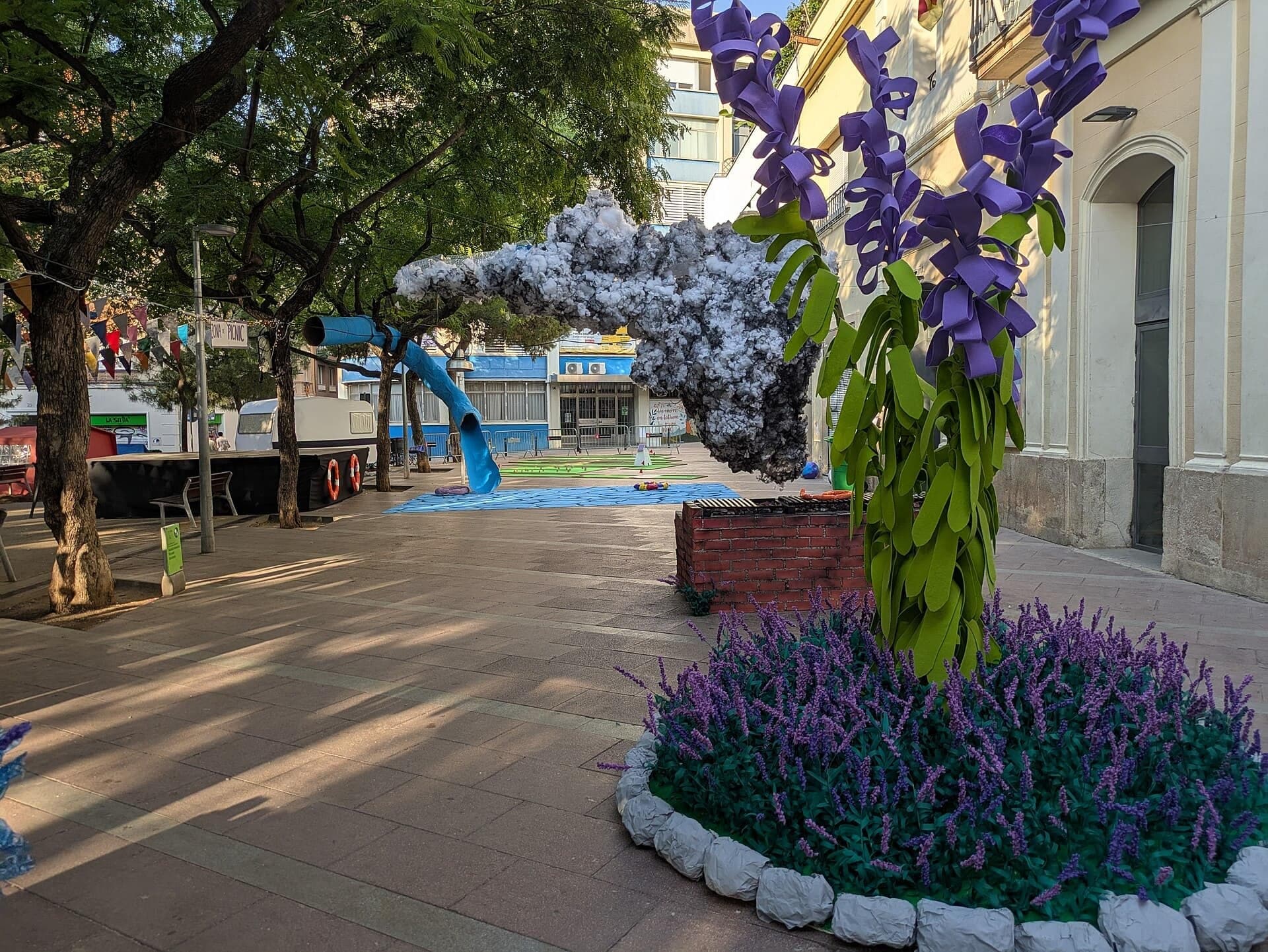
- Guarnit del plaça del Nord durant la Festa Major de Gràcia 2025 — KRLS, CC BY 4.0 · source
- Estàtua d'Antoni Rovira i Trias (Barcelona, Catalunya) — Literat Tours, CC BY-SA 3.0 · source
- Edifici protegit com a bé amb elements d'interès (nivell C) com a part del conjunt de la plaça Rovira i Trias. — Pere López Brosa, CC BY-SA 4.0 · source
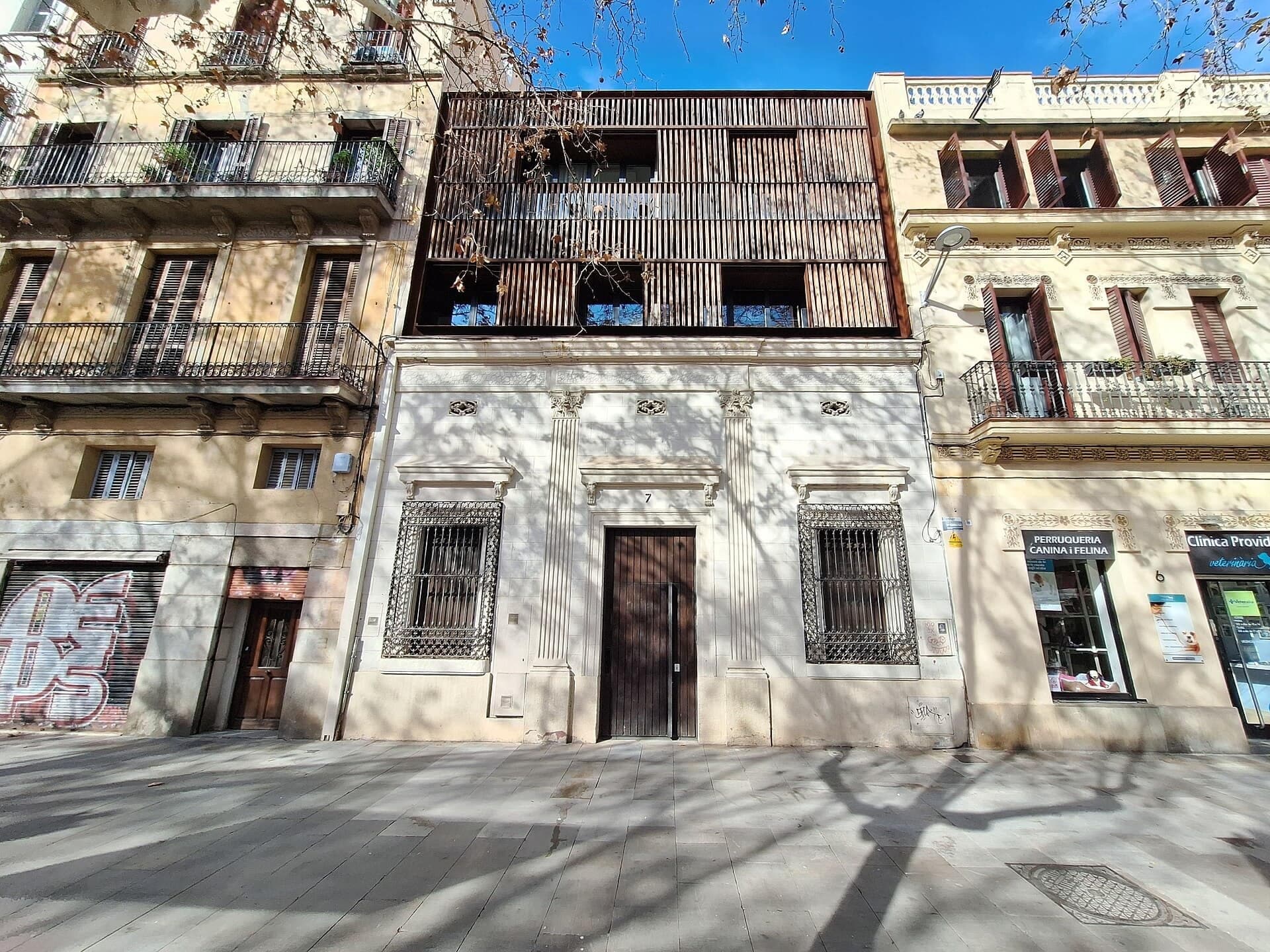
- Cases al carrer de Larrard, 17-21 (Barcelona) — Enric, CC BY 4.0 · source
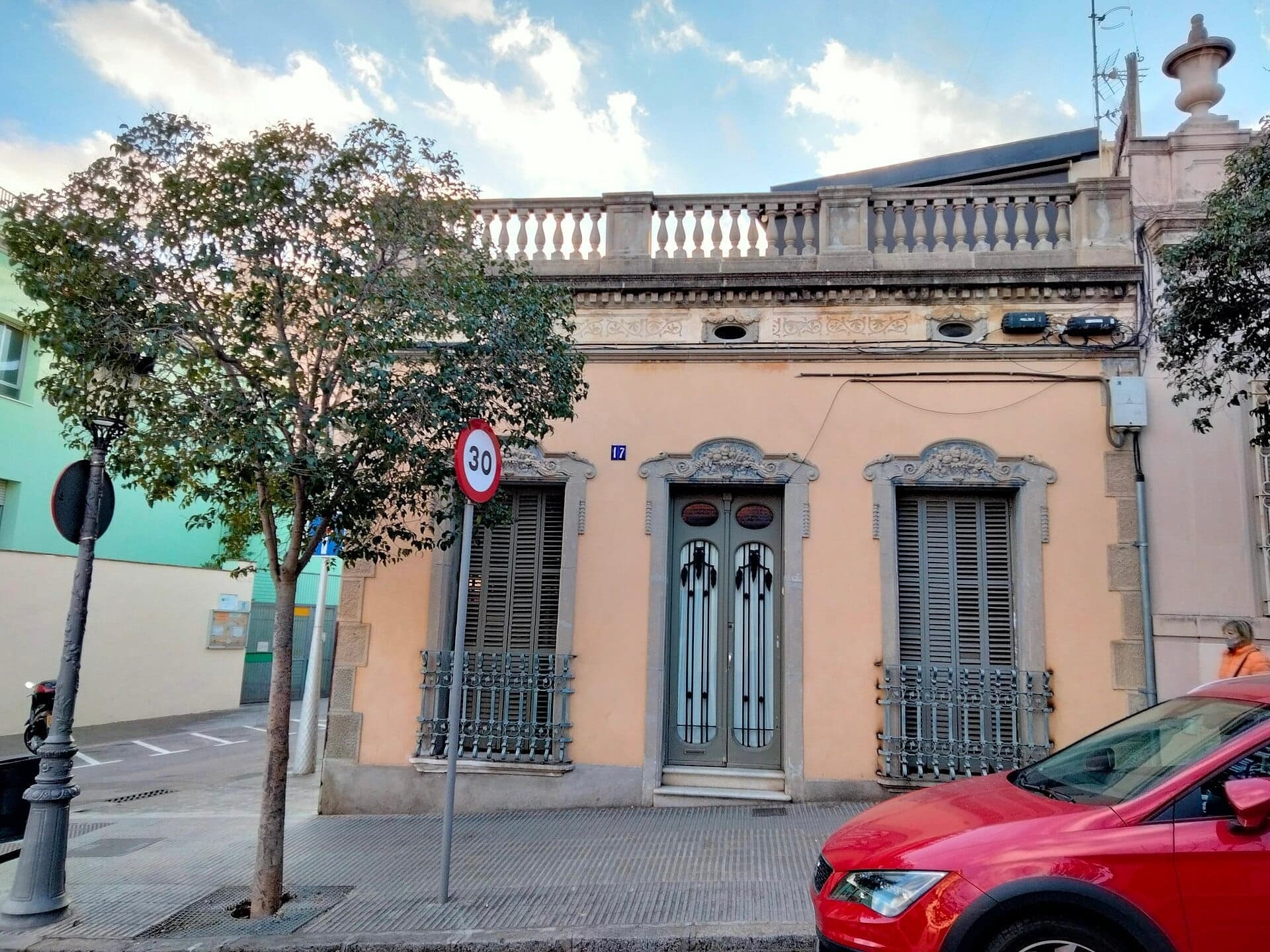
- Casa al carrer de Larrard, 17 - c. Sant Cugat del Vallès (Barcelona) — Enric, CC BY 4.0 · source
- Antiga escola del CENU, c. Larrard 45-51 - c. Mercedes 6 (Barcelona) — Enric, CC BY-SA 4.0 · source
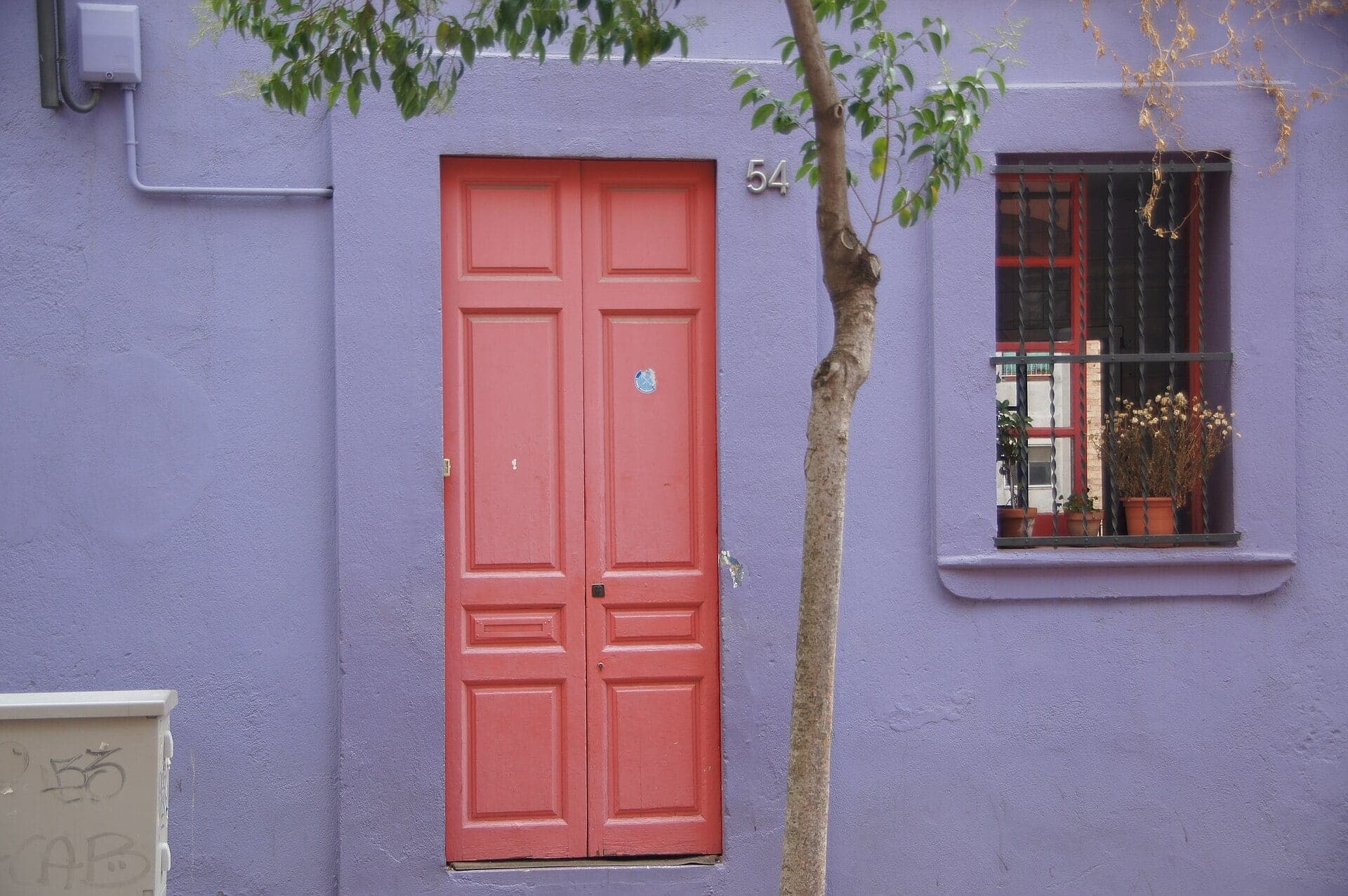
- Carrer de Larrard, 54, Barcelona — Martin Abegglen from Bern, Switzerland, CC BY-SA 2.0 · source
Images may be cropped or resized. Other photos via Unsplash and Pexels.