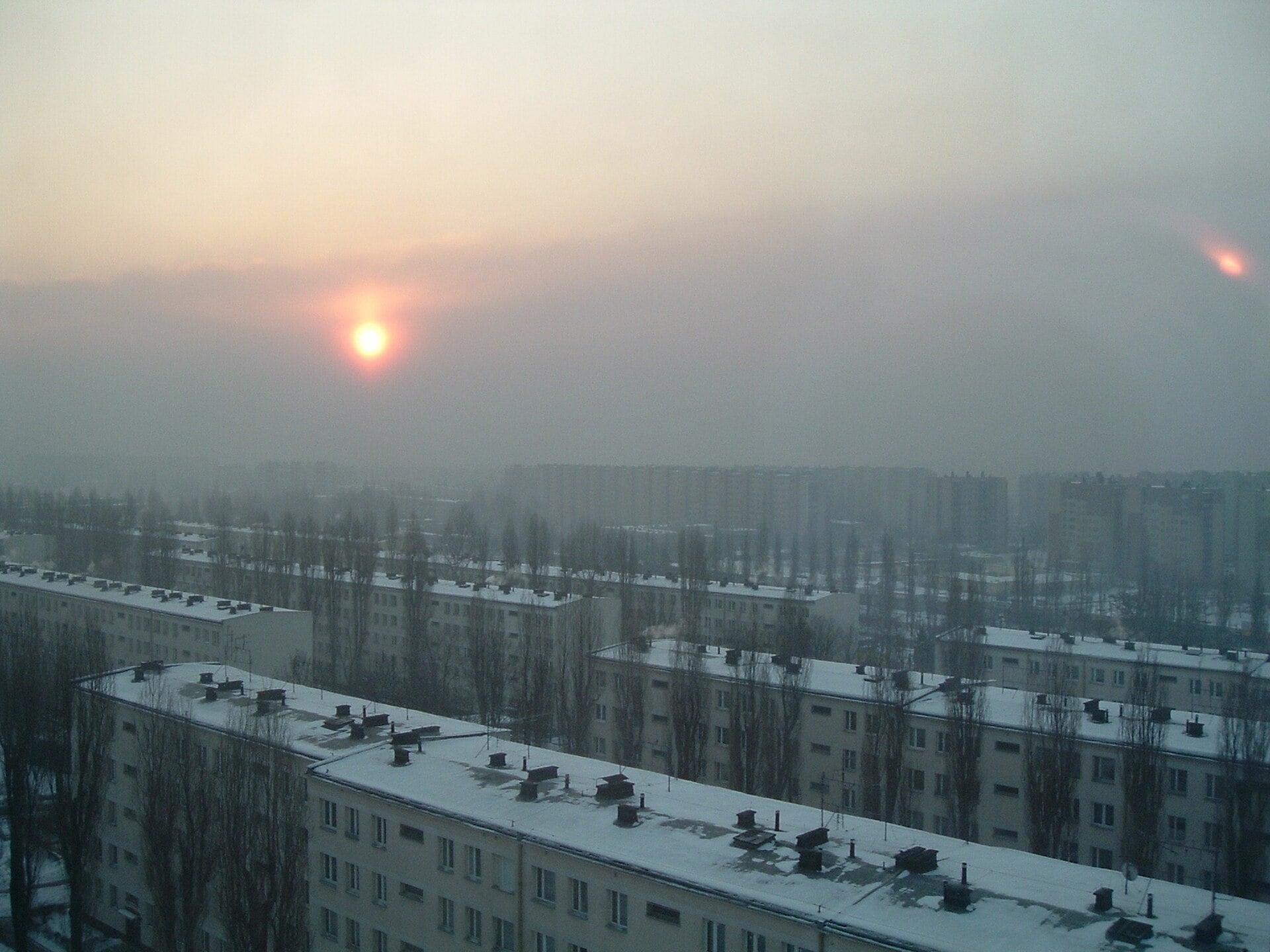
Kraków's socialist model town, begun in 1949 and planned without a church. Up the plan's axis from Plac Centralny and the Avenue of Roses, past the missing town hall, the 1960 cross and the People's Theatre, out of the plan to the Arka Pana.
Start · Plac Centralny
DirectionsStops
- 1
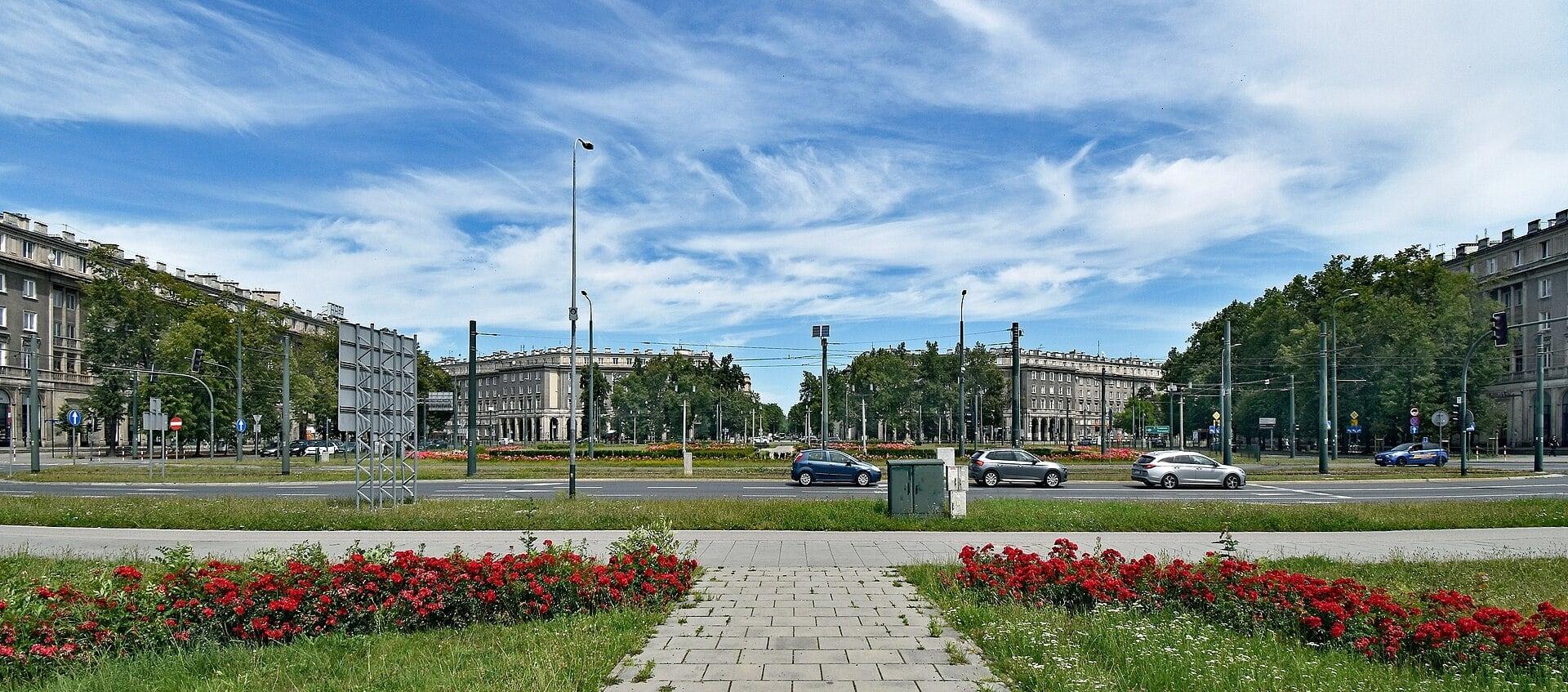
Plac Centralny
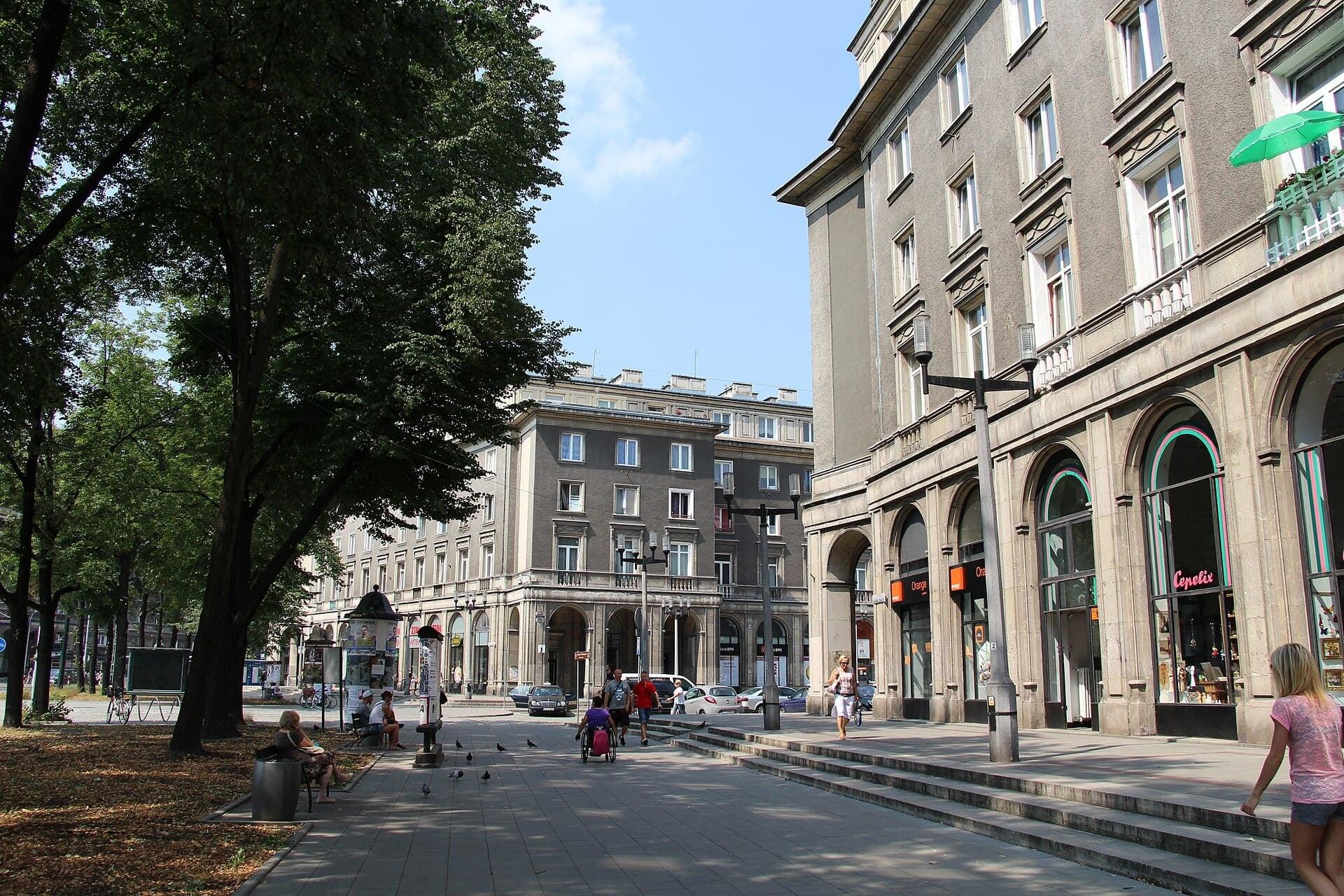
A model town's plan fans out from here. The Central Square of Nowa Huta, a pentagon of arcaded palace fronts on the edge of the Vistula escarpment, where five avenues begin.
- 2
Aleja Róż: Lenin's Avenue
Lenin stood here for sixteen years. Aleja Róż, the Avenue of Roses, the plan's main axis, where the statue stood from 1973 until it was taken down one December night in 1989.
- 3
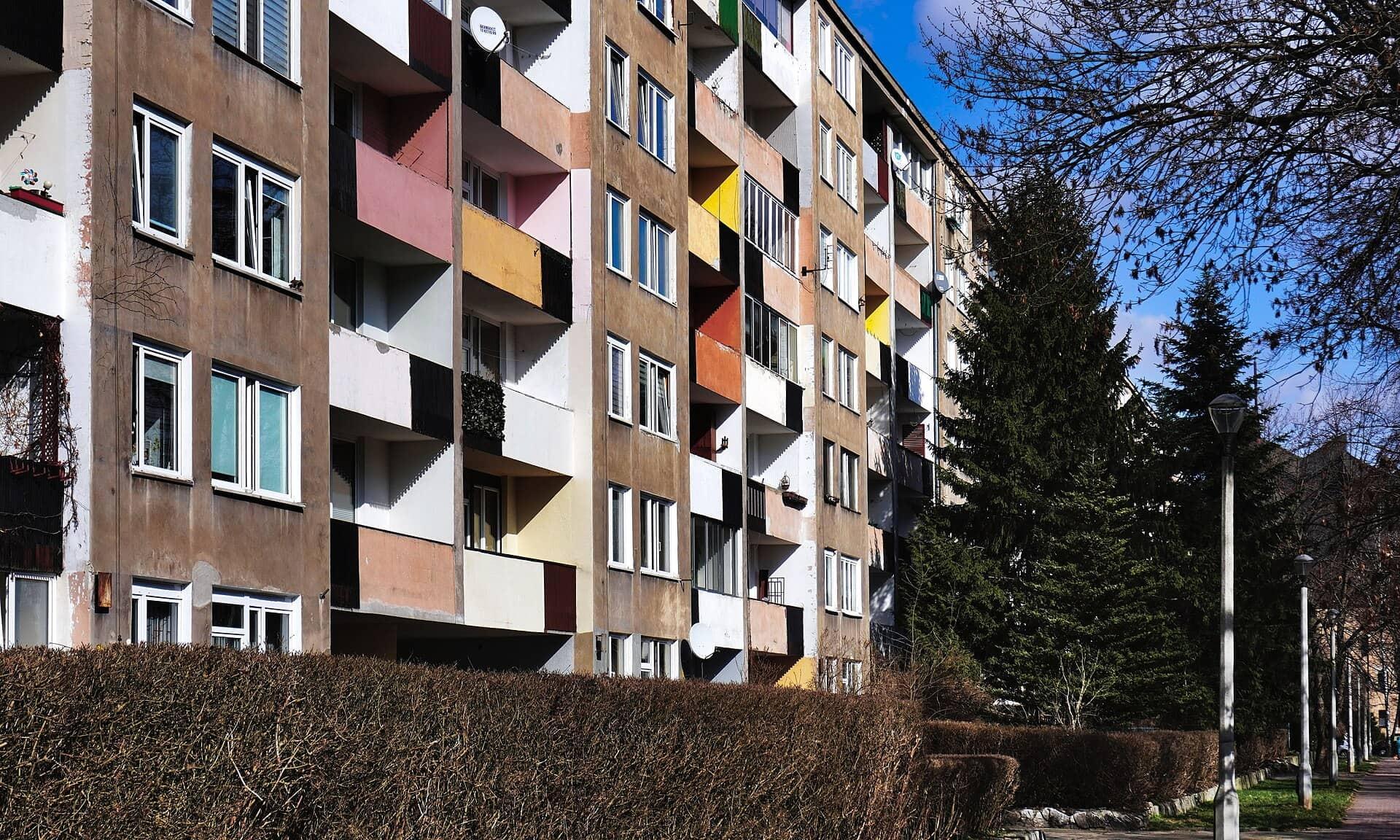
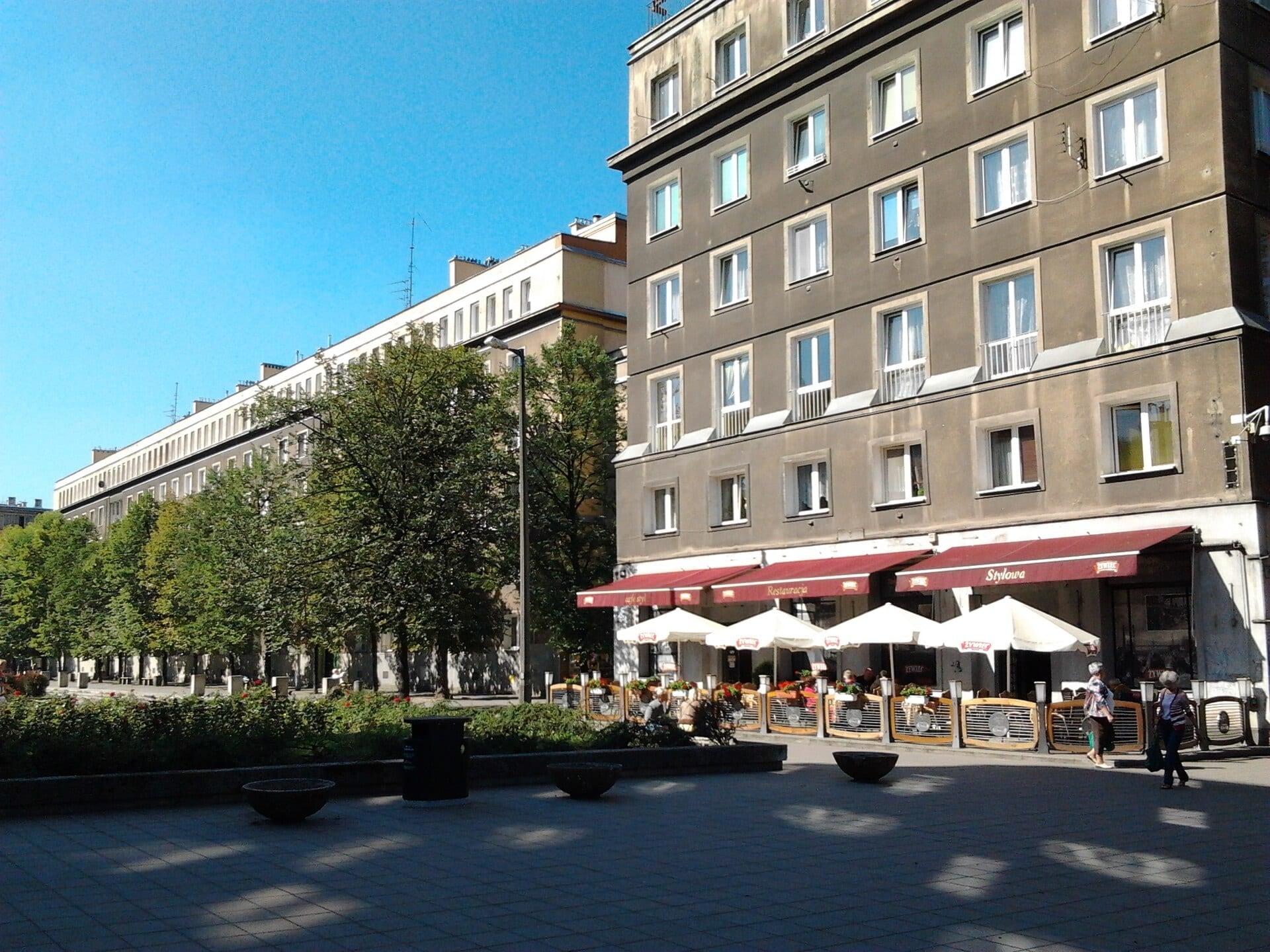
Swedish Block
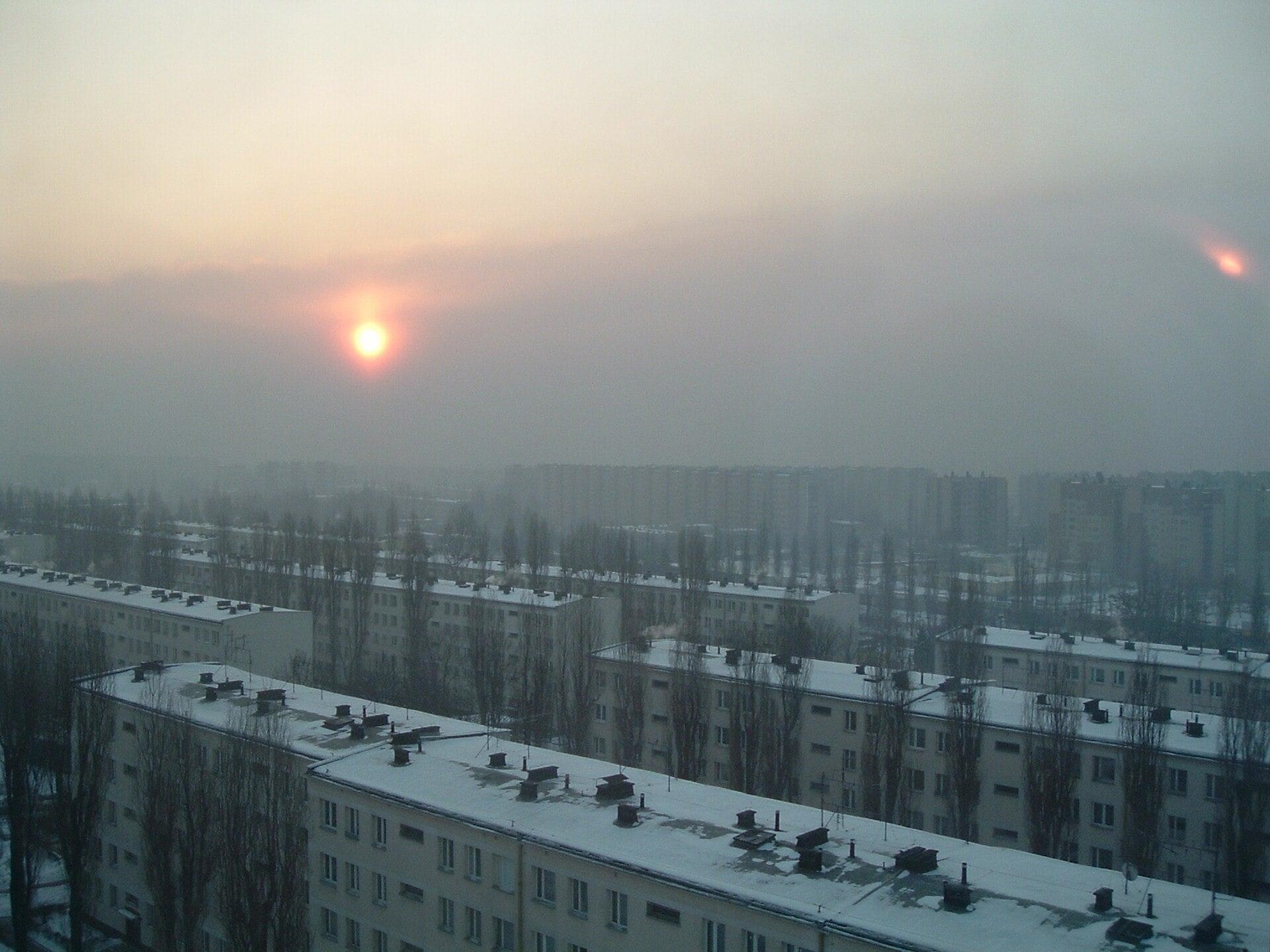
The plan changed its mind in concrete. The Swedish Block (Blok Szwedzki), 1957 to 1959: a modernist slab of glass and loggias, two blocks from the palace fronts.
- 4
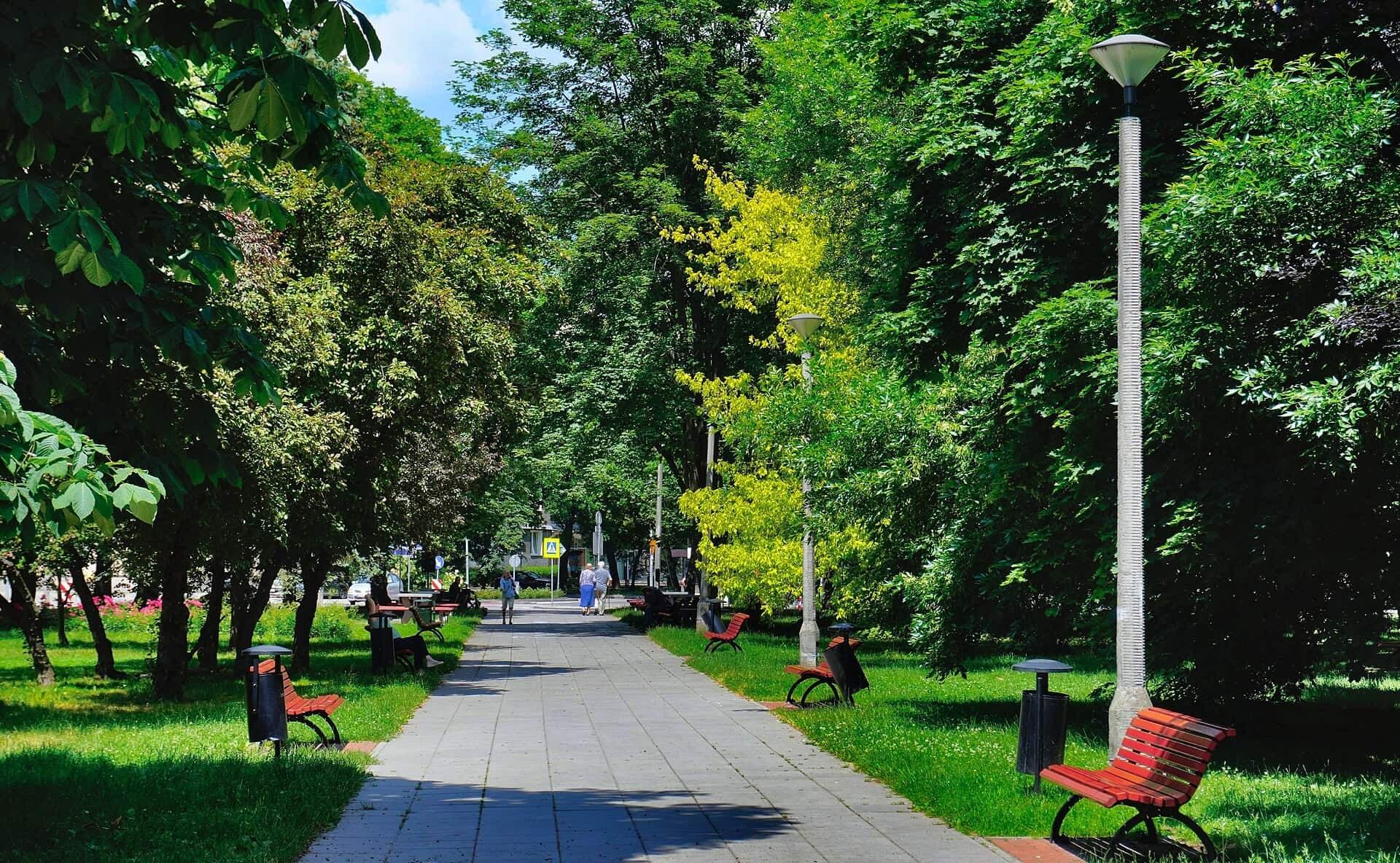
Park Ratuszowy: The Missing Town Hall
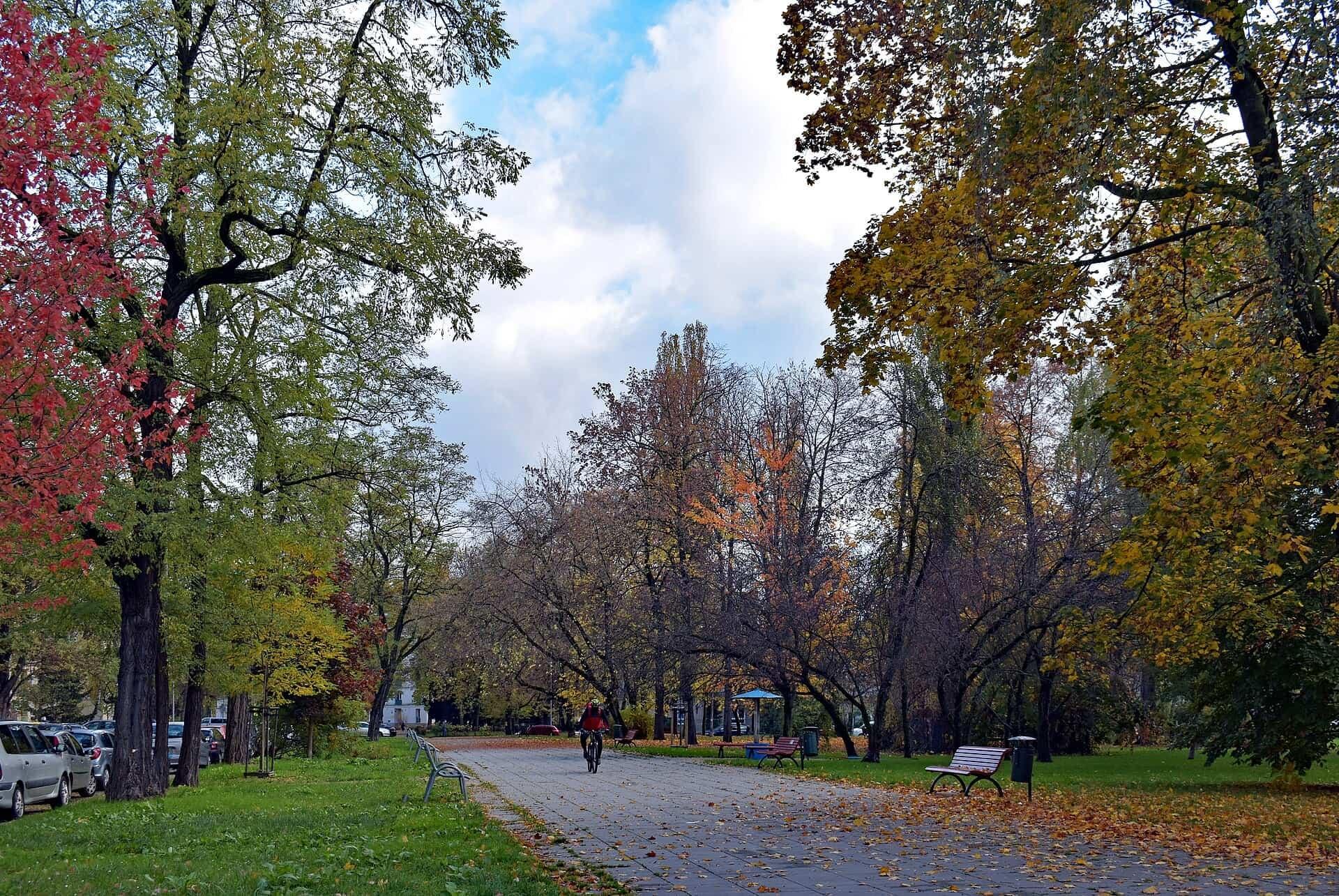
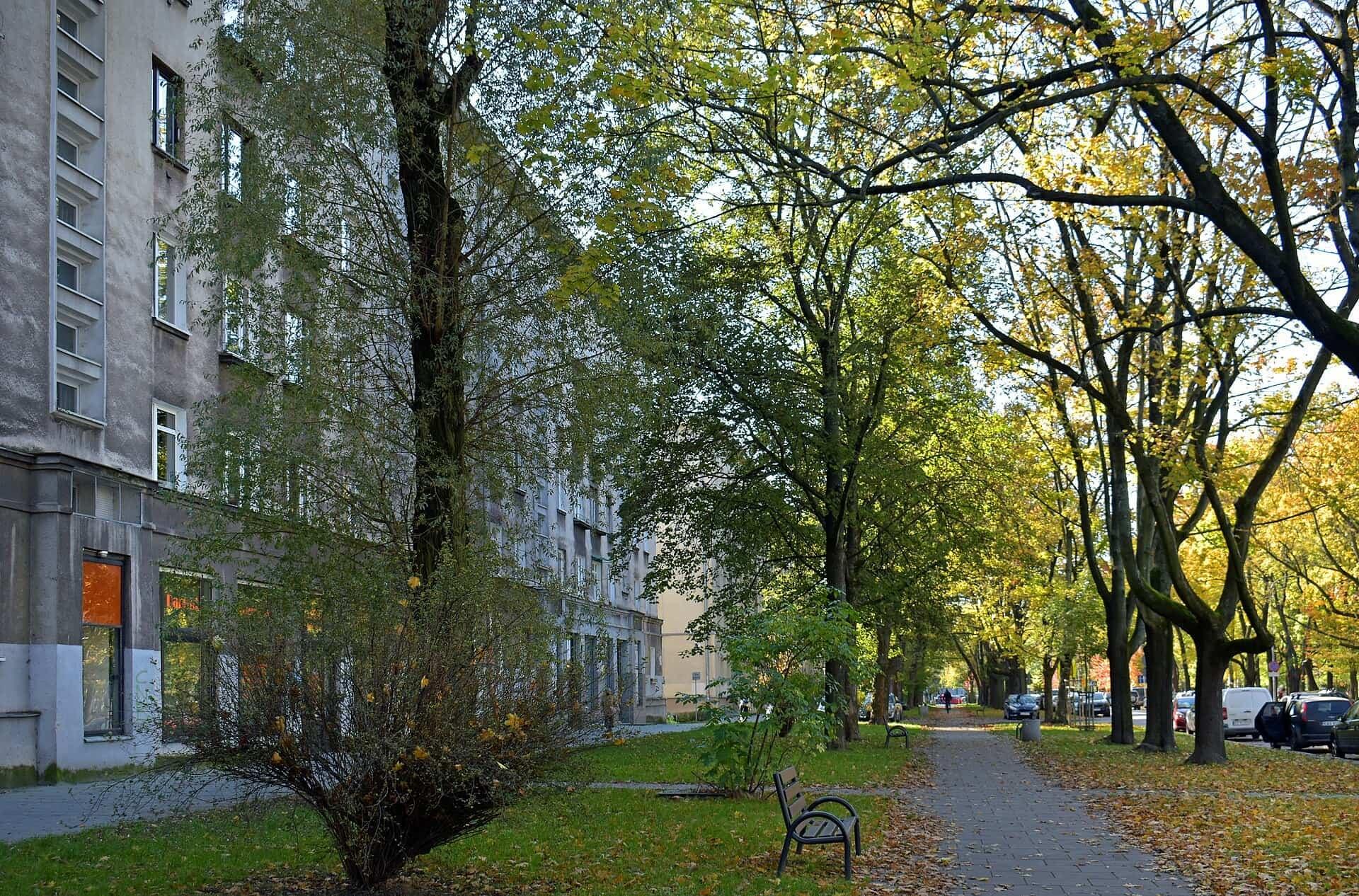
The axis should end at a town hall. Park Ratuszowy, Town Hall Park: the green where the plan put a town hall with a tall spire that was never built.
- 5
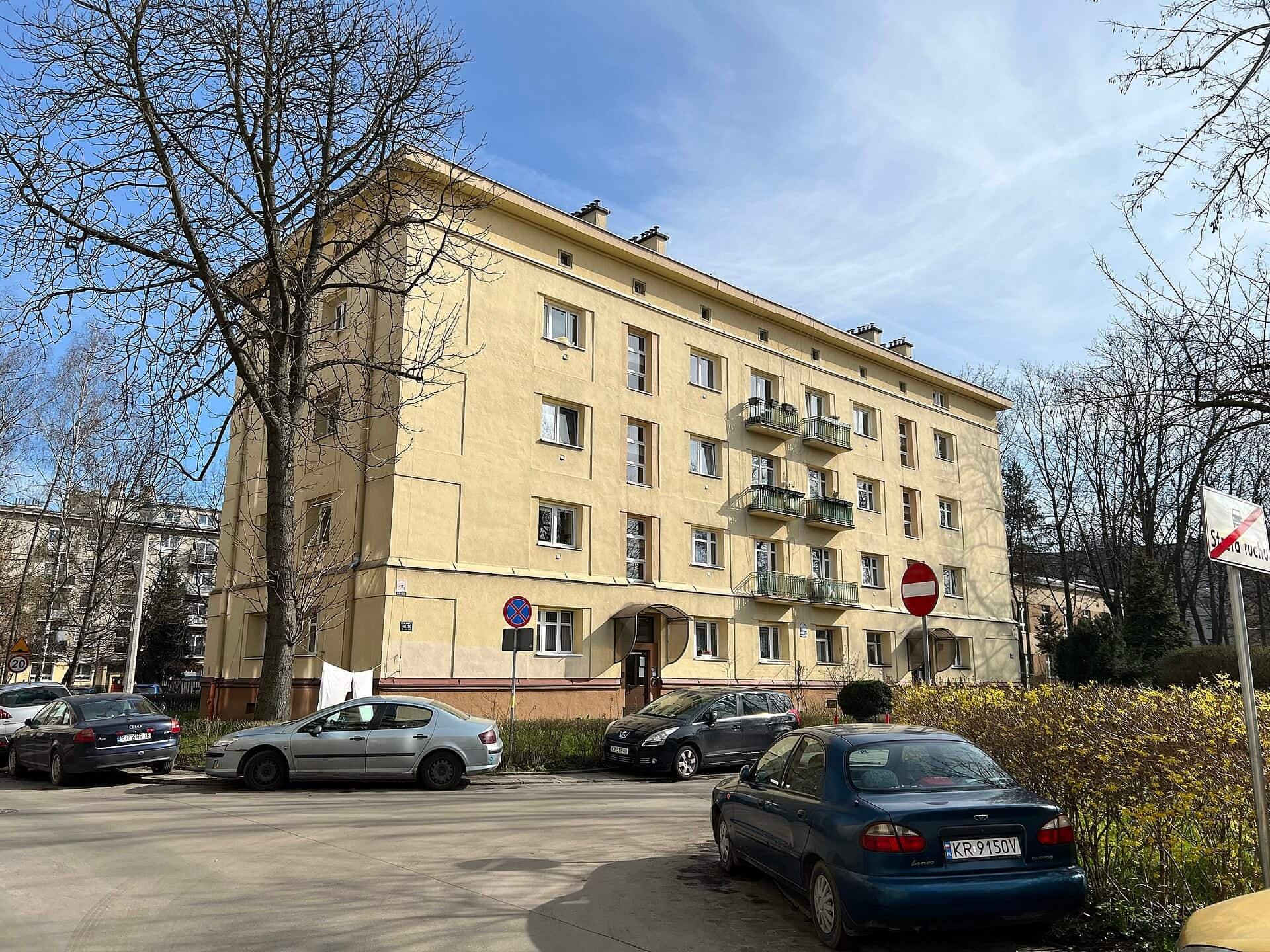
Osiedle Urocze
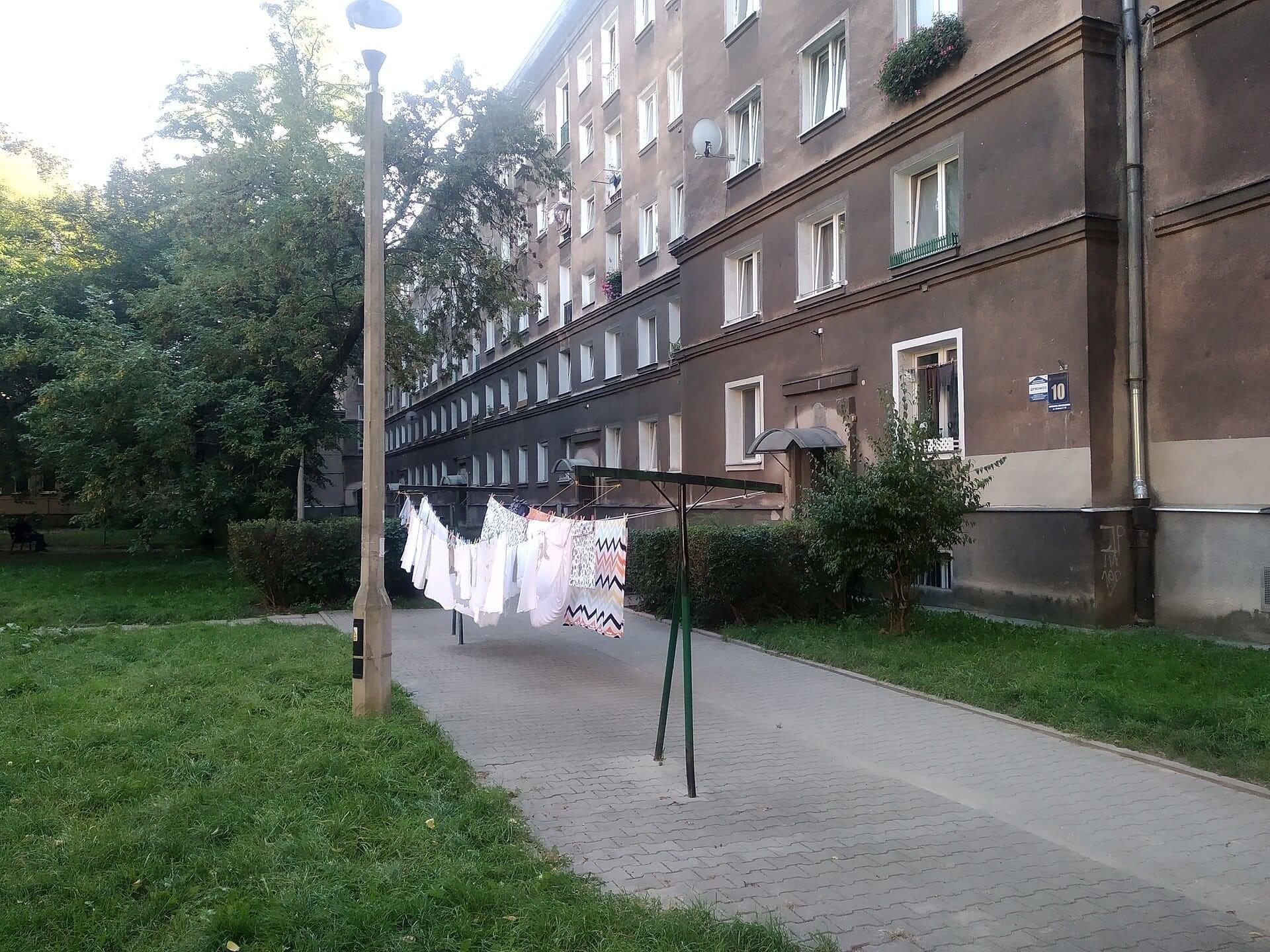
The plan still works on this estate. Osiedle Urocze, a neighborhood unit: kindergarten and school inside a ring of flats, so a child never crosses a main road.
- 6
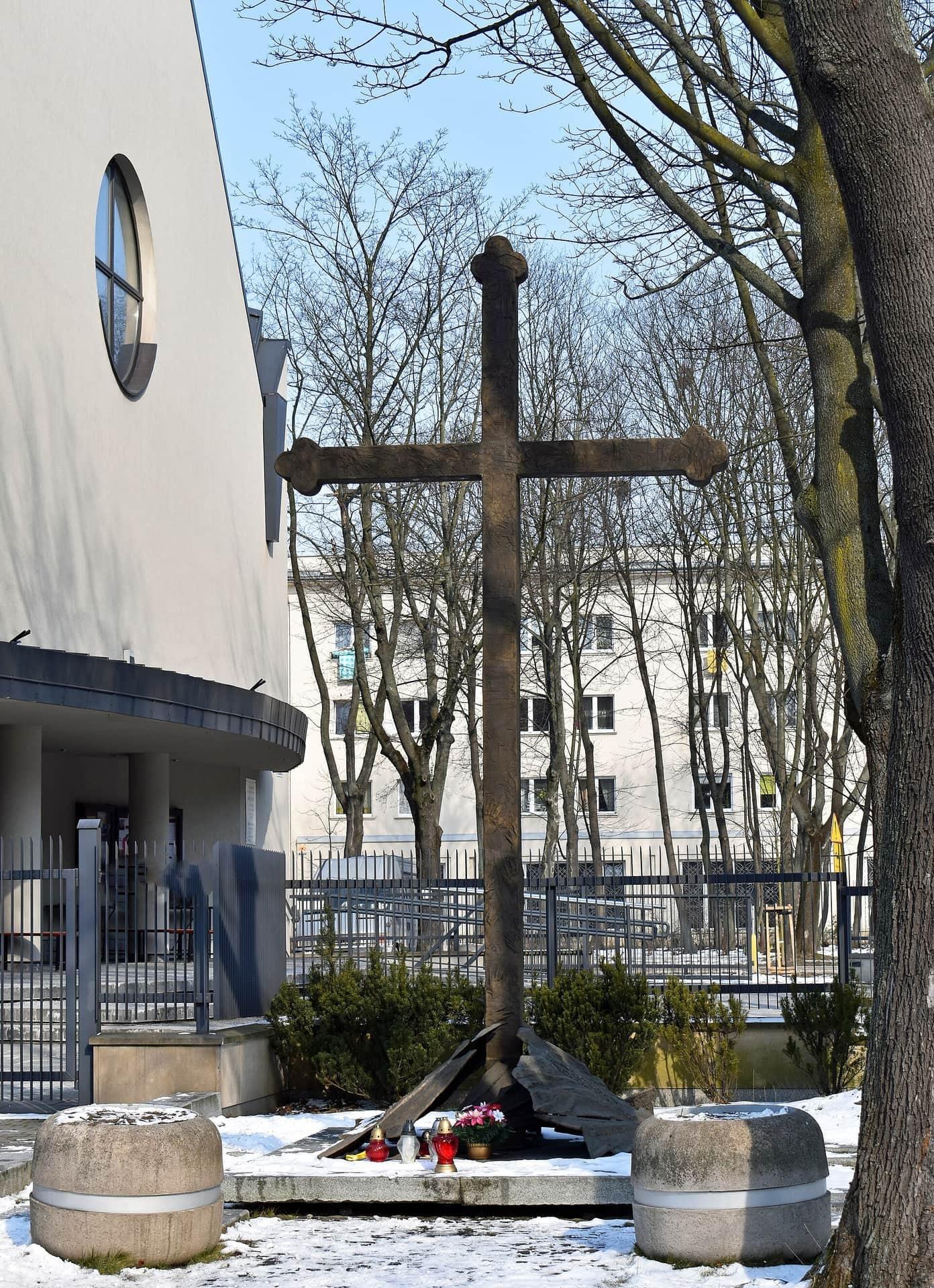
Nowa Huta Cross
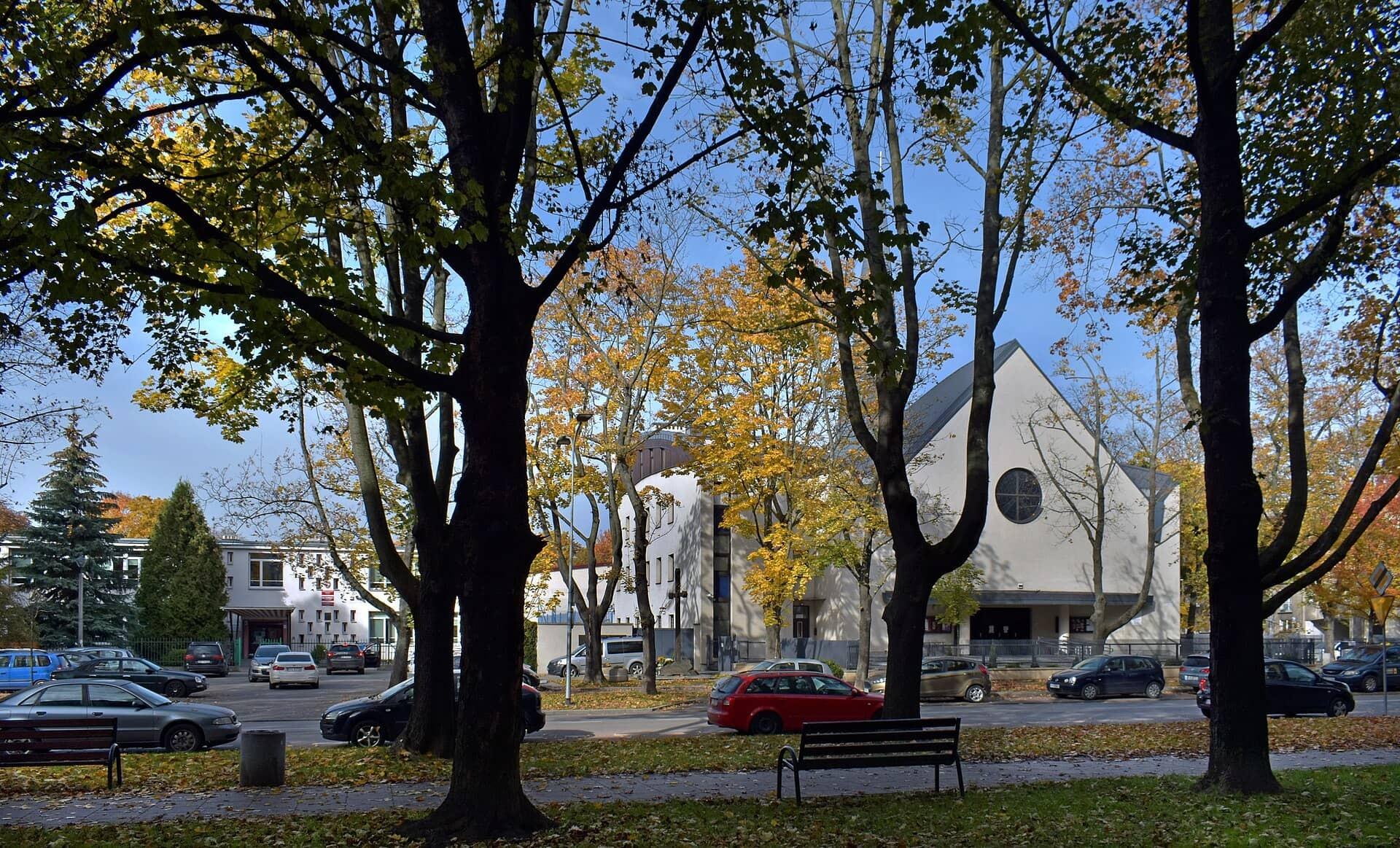
Where the town first said no, in 1960. The corner of the 1960 cross defense: a small church, a monument cross and the school the authorities built on the church's plot.
- 7
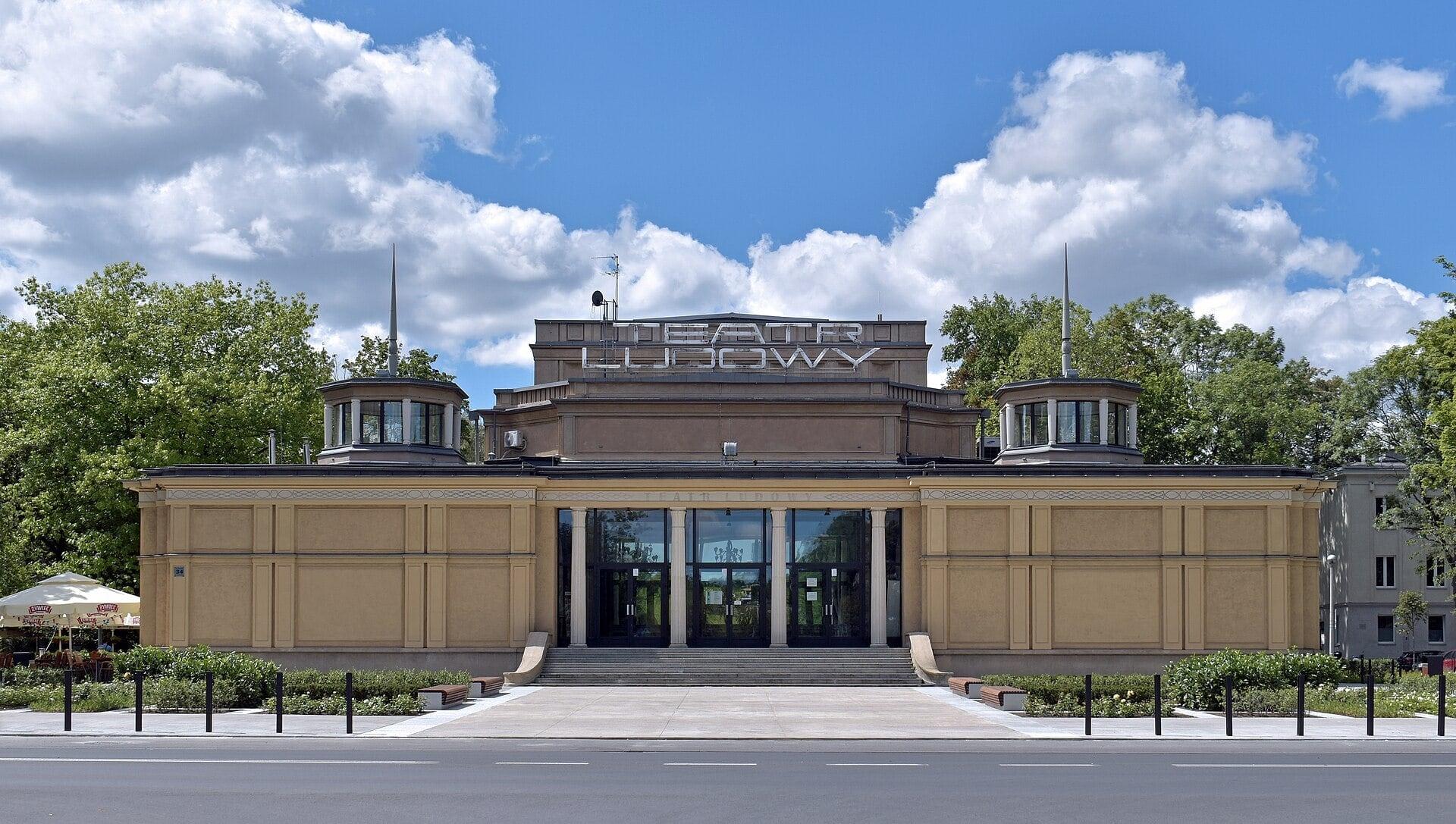
Teatr Ludowy
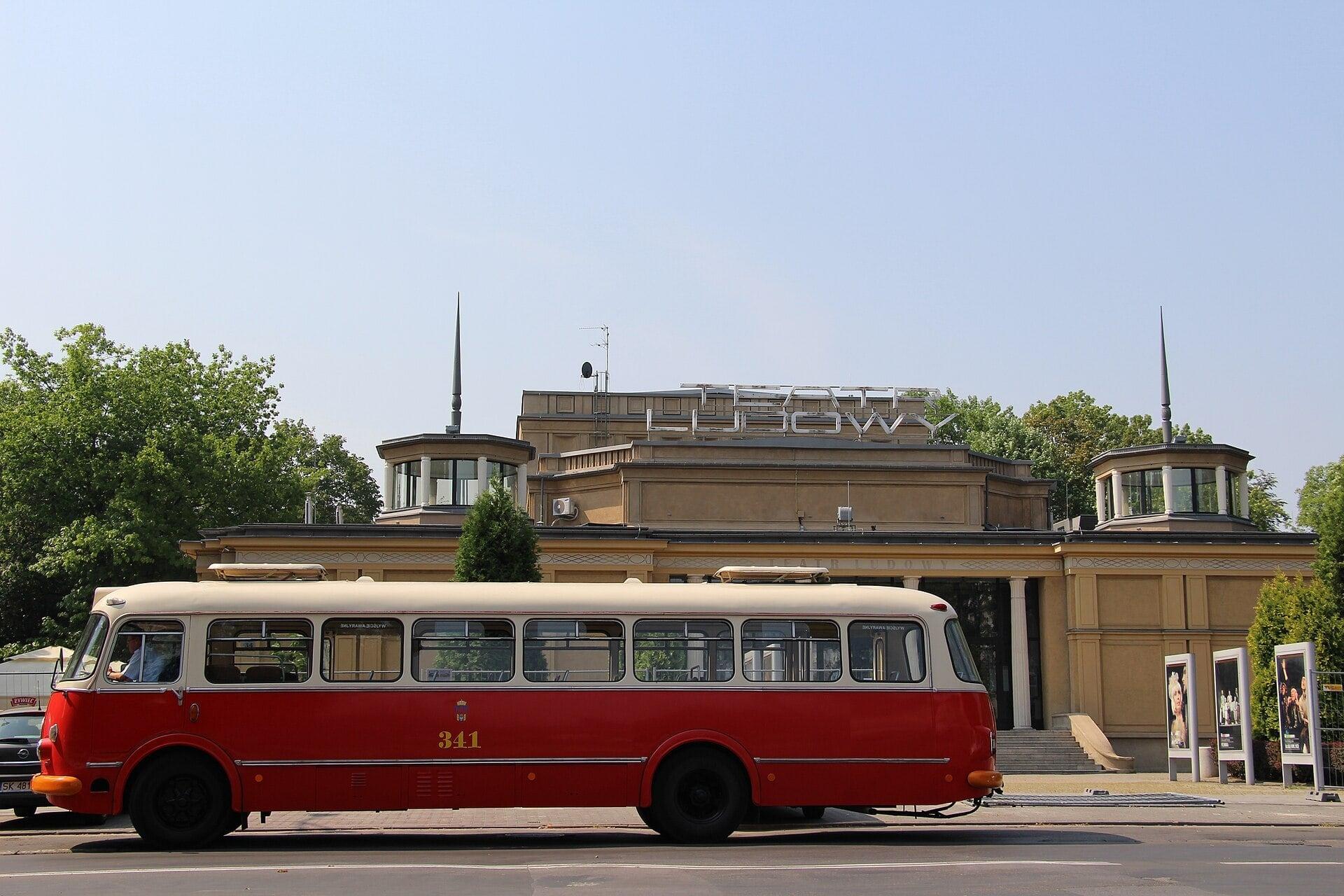
Culture was part of the ration here. The People's Theatre, opened in 1955, its front crowned by glazed lanterns, which gave its name to three estates.
- 8
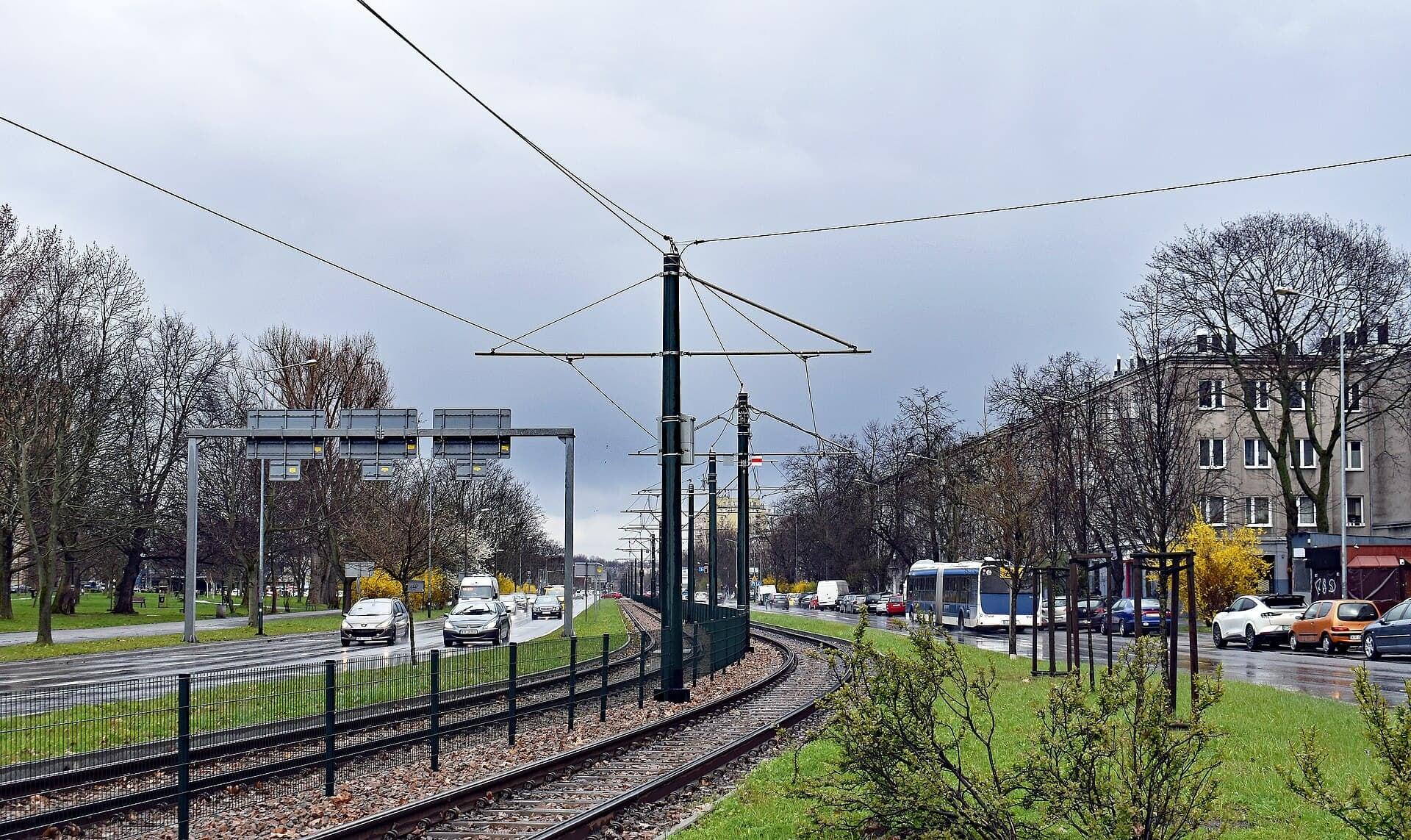
Bieńczyce: Outside the Plan
You have just walked out of the plan. Bieńczyce, the old village beyond Kocmyrzowska, where the protected 1950s town ends and the Church was sent instead.
- 9
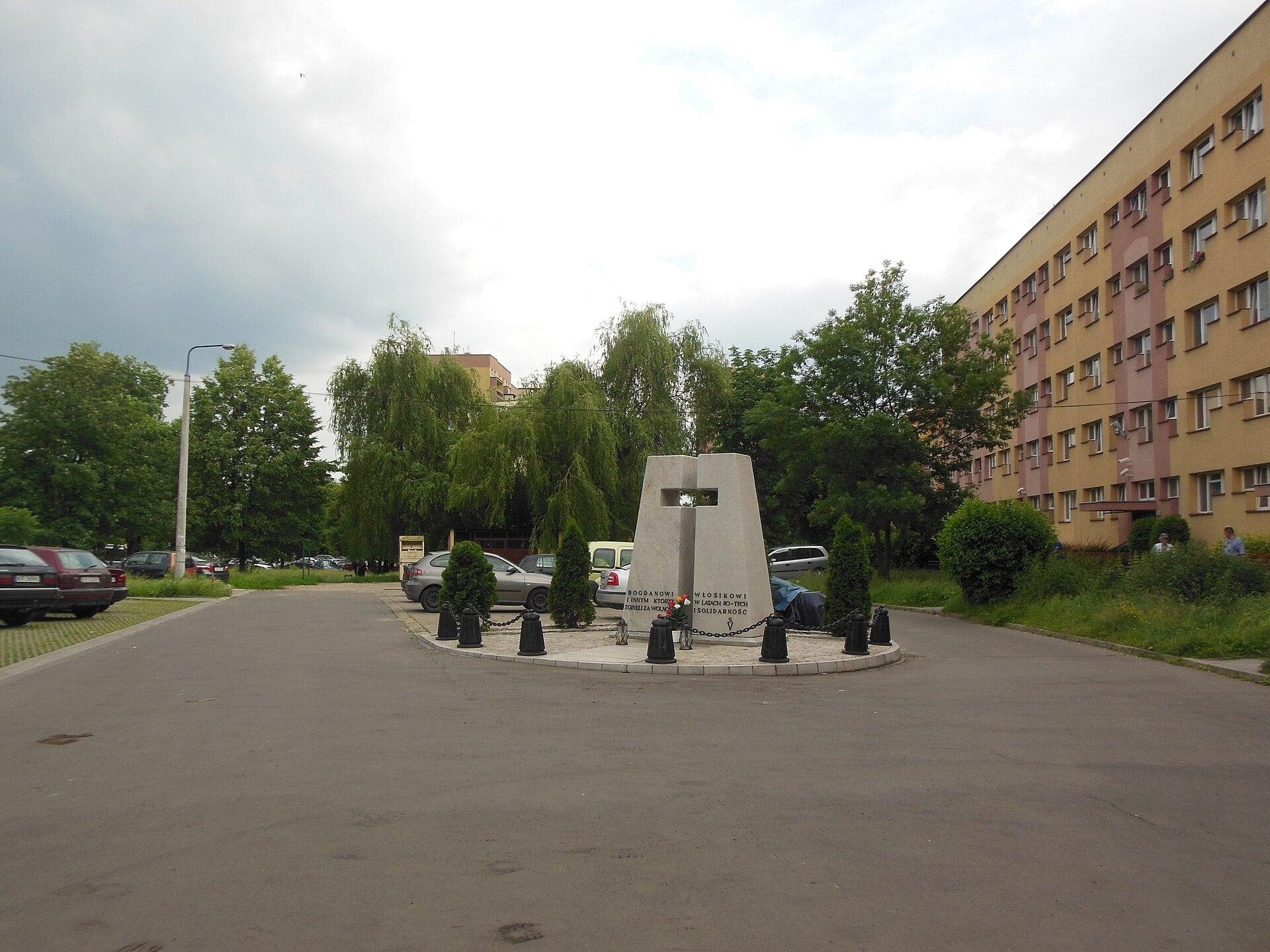
Plac Bogdana Włosika
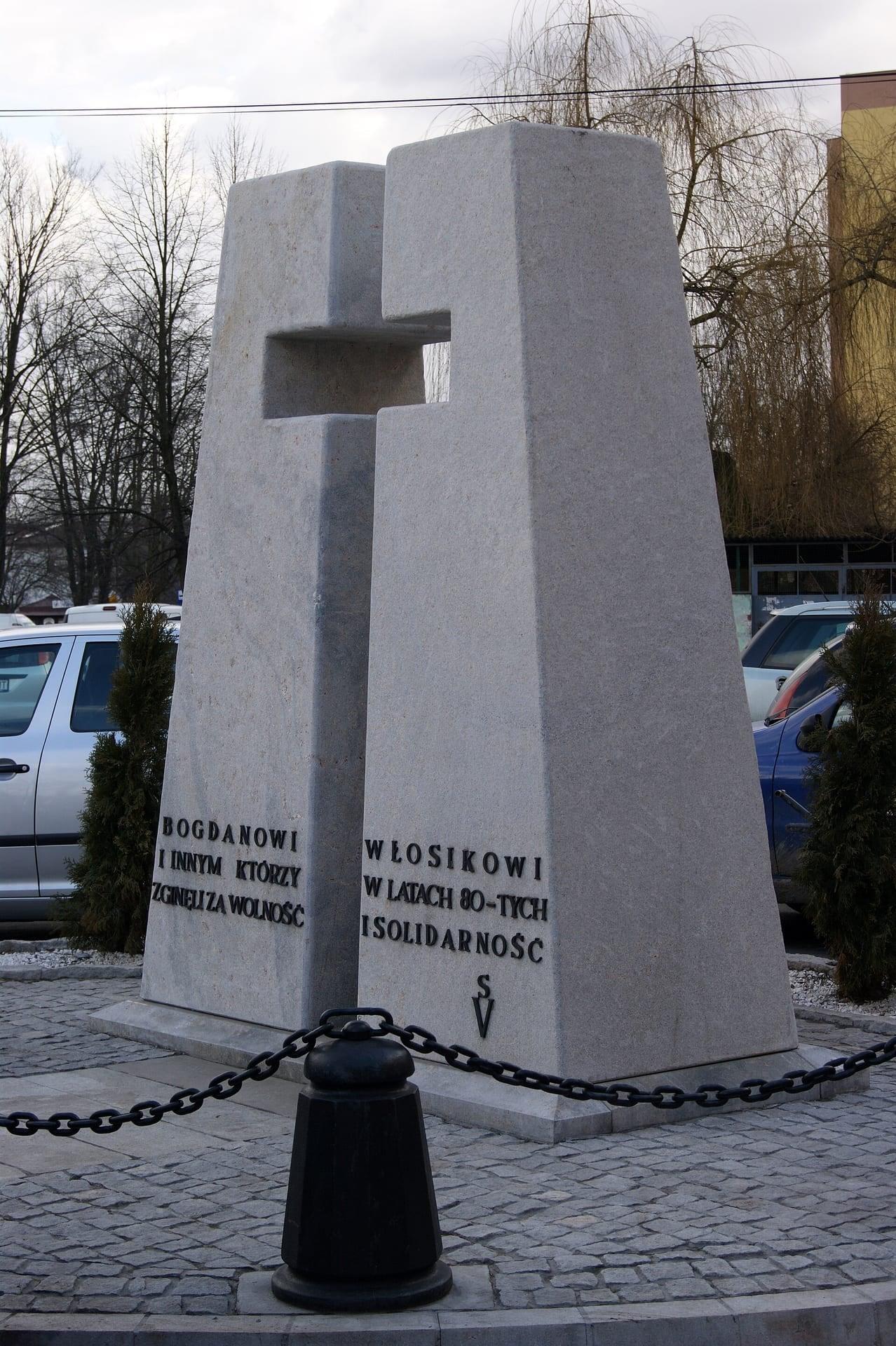
This square is named for a steelworker. Plac Bogdana Włosika, named for the twenty year old shot near the church on 13 October 1982.
- 10
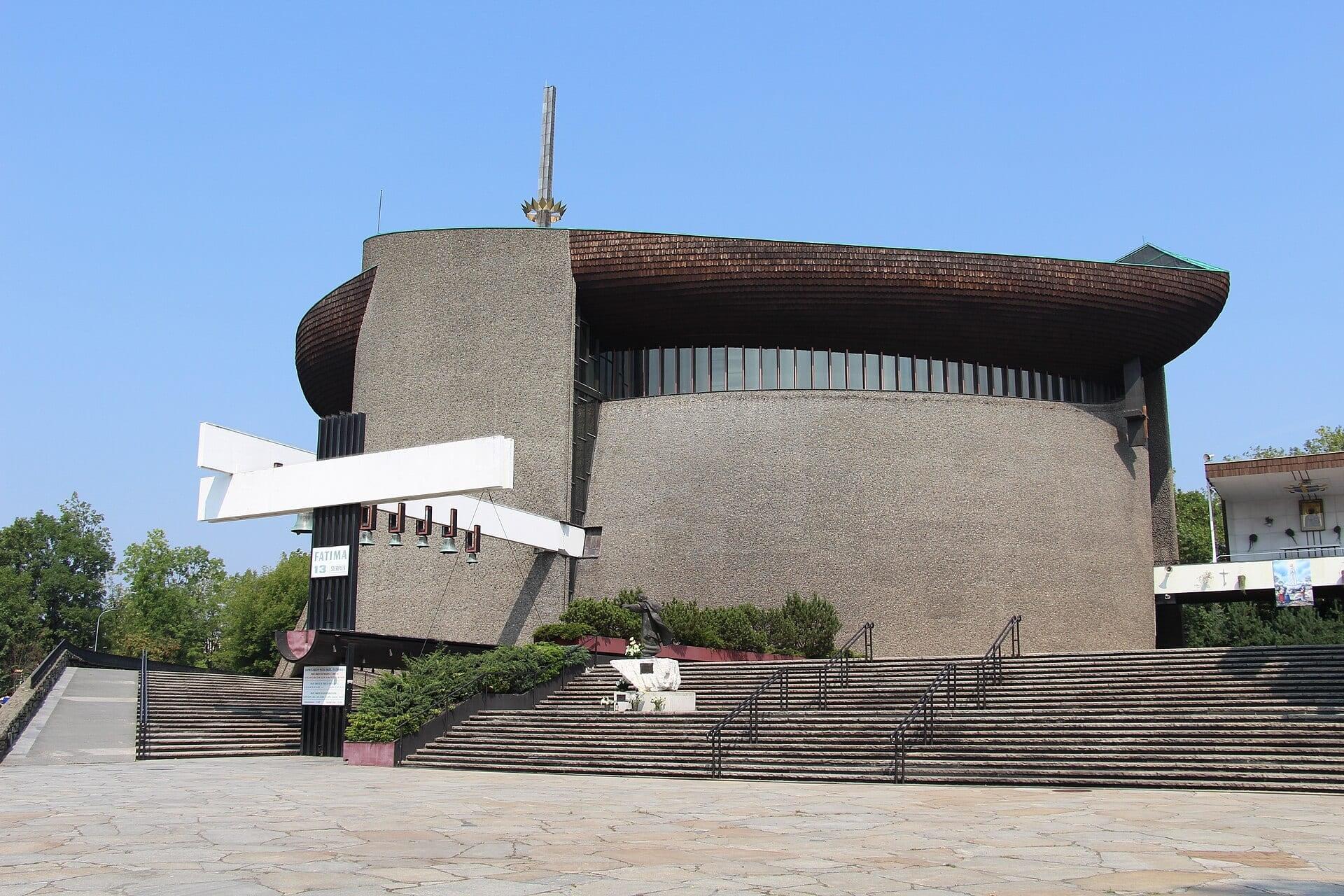
Arka Pana: The Lord's Ark
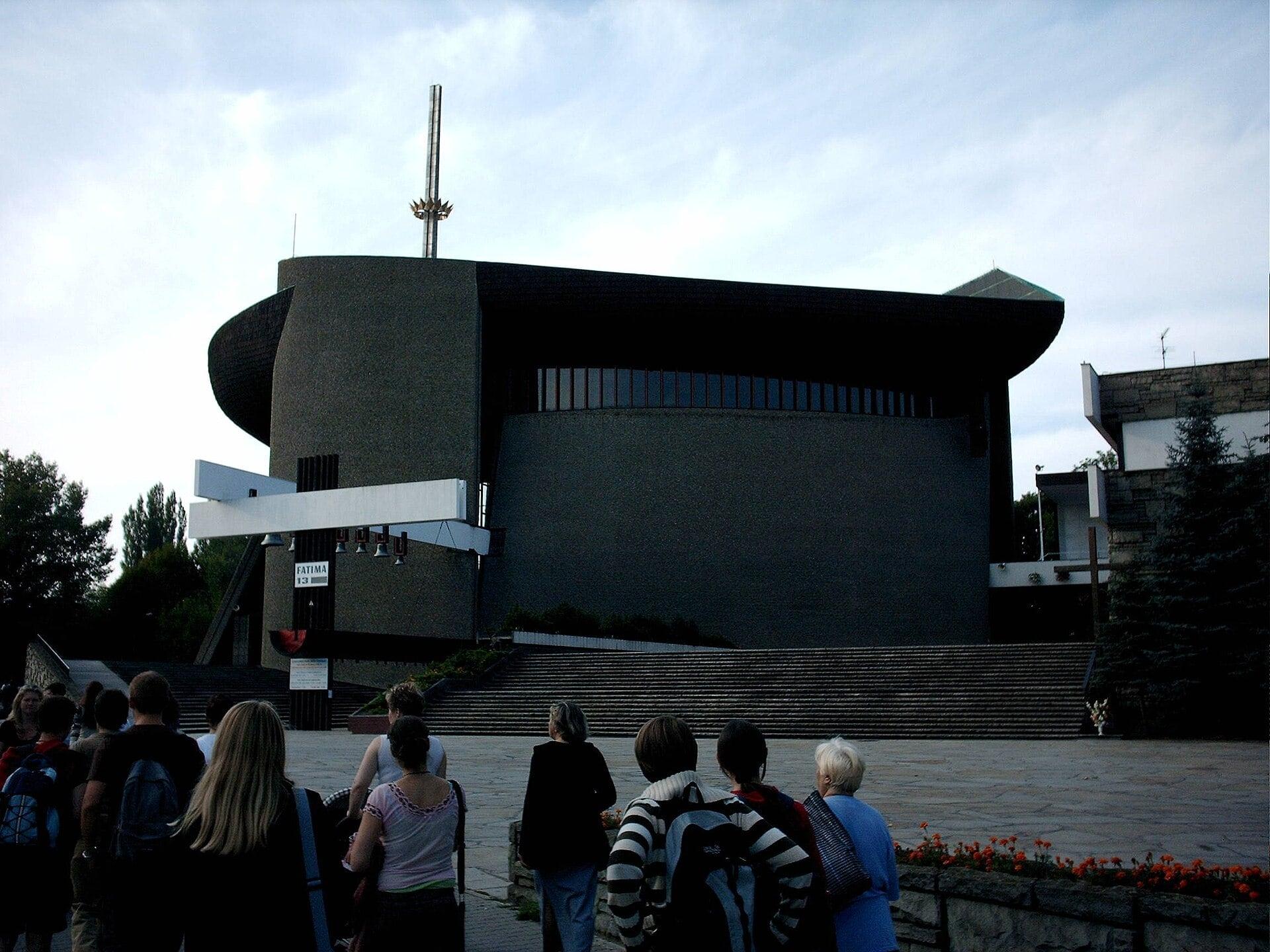
The church the plan left out. The Arka Pana, the Lord's Ark: a boat of larch shingle and river pebbles, built by hand over ten years, consecrated in 1977.
Details
Best Time to Visit
Daylight, any day; late morning to early afternoon in winter, when the Arka's south front at stop 9 is lit and its east side at stop 10 is still bright (sunset in Kraków 15:41 on 1 December, 15:38 on 15 December, 15:49 on 1 January, 16:34 on 1 February; computed, KRK-SHARED-FACTS). All pins are public sidewalks and park paths, lit after dark. Sundays: Masses at the Arka Pana at 6:30, 8:00, 9:30, 11:00, 12:30, 16:00, 17:30 and 19:00; weekdays at 6:00, 6:30, 7:00, 7:30, 8:00, 11:00 and 18:00 (arkapana.pl); the 13th of each month a prayer vigil 11:00 to 21:00 brings crowds. The theatre's forecourt fills before evening shows. Winter: December and January highs about 1 to 3 °C, January lows near minus 5 °C; ice on the park path and the steps. Checked 23 November 2026.
Pro Tips
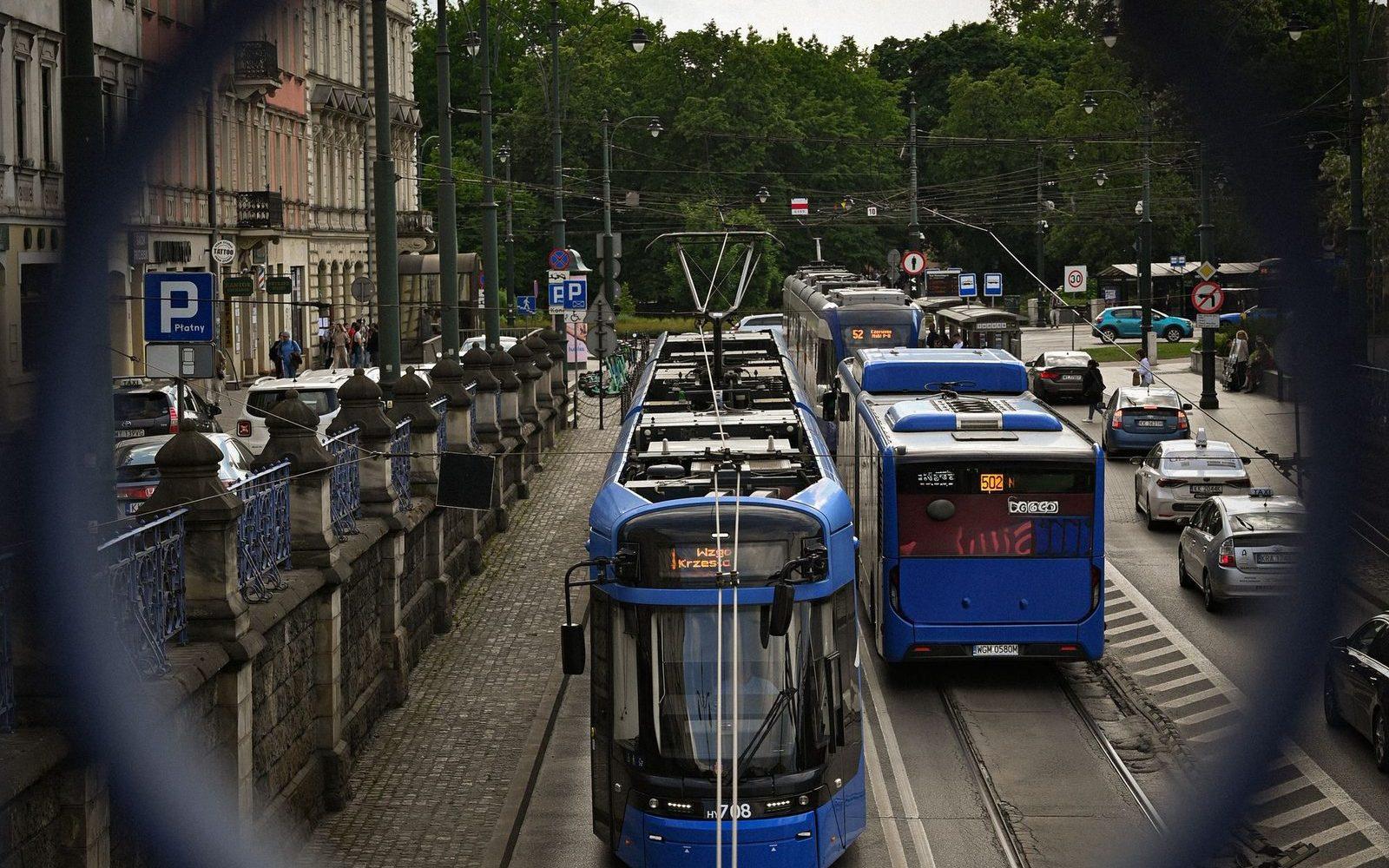
- •Getting there: tram 74 from Teatr Słowackiego (about 22 minutes), or 22 or 70 from Stradom (about 27 minutes), to the stop 'Plac Centralny im. R. Reagana'; line 16 also stops there. The walk starts at the north edge of the square, at the foot of Aleja Róż. Lines from ZTP Kraków's official timetable feed (valid to 19 February 2027); they change with track works, so check MPK Kraków (mpk.krakow.pl) or the Jakdojade app on the day. Checked 23 November 2026.
- •The walk ends at the Arka Pana, about 400 m from the tram stop 'Teatr Ludowy' on Kocmyrzowska (back down Obrońców Krzyża, over the same lights; trams 1 and 5 to the center, 5 to Teatr Słowackiego in about 23 minutes); buses stop at 'Arka Pana' beside stop 9.
- •Nothing on the walk is ticketed. The Arka Pana is a working church: if the doors are open, go in quietly; opening hours outside Mass are not published.
- •The Nowa Huta Museum (the old Światowid cinema, os. Centrum E 1) is closed for rebuilding, planned 2025 to 2028 (muzeumkrakowa.pl, krakow.pl; checked 23 November 2026). The Nowa Huta Underground shelter (os. Szkolne 37), about 1 km east of the square, is run by Muzeum Krakowa: check its hours before going.
Safety & Precautions
- •One tram crossing (leg 7 to 8, Kocmyrzowska): two signal crossings with push buttons, one for each carriageway, with the tram tracks between them, then a third signal across Obrońców Krzyża. Look both ways for trams before crossing the rails, which have no light of their own on the map; wait on the paving between carriageway and tracks, never on the rails. Traffic drives on the right.
- •Other crossings are zebras (Aleja Przyjaźni with a refuge island, Aleja Róż's north stretch, Rydza-Śmigłego, Ludźmierska, Macieja Wielgusa) and estate lanes; a few steps on an estate lane without sidewalk at Osiedle Urocze. Stay on the north side of Plac Centralny: the lawn is inside a ring of tram tracks and traffic.
- •Winter: short days and icy paths and steps (the park's diagonal path, the steps up to Fatimska at the end). On smog days check Kraków's air-quality notices.
- •Osiedle Urocze (stop 5) has a kindergarten and school: never photograph children; keep to the lane's edge at drop-off and pick-up times.
- •The Arka Pana and the Sacred Heart church are living parishes: quiet during Mass, no photographs of people at prayer.
Travel advisory: Exercise Normal Precautions (Level 1).
Gallery
Related Reading
Go deeper on what you'll see, hear, and walk through.
Read the walk
The full story of Nowa Huta: The Town Without a Church, in words. Prefer to listen? Play it narrated, from home or on location.
Introduction
Nowa Huta, the New Steelworks, is Krakow's planned socialist town. It was begun in nineteen forty nine on farmland east of the old city, beside a steelworks later named for Lenin, and it was meant to be a model: palaces for workers, wide avenues, a theater and schools. One thing was left out of the plan on purpose. There was no church.
This walk follows the plan's main axis north from its Central Square, up the Avenue of Roses where Lenin's statue stood, past a park where the town hall was never built, through a housing estate and past the theater, and then out of the plan, to the church the town got anyway. On the way are the corner where residents fought for a cross in nineteen sixty, and a square named for a young steelworker killed in nineteen eighty two.
There are ten stops over about two point one kilometers, about one point three miles, and it takes about seventy minutes. It is flat, on paved sidewalks and park paths, with one short flight of steps near the end. The walk crosses one busy street with tram tracks, on traffic lights. Nothing on the walk needs a ticket.
To get there, take tram seventy four from Teatr Slowackiego, about twenty minutes, or tram twenty two or seventy, to the stop Plac Centralny. Lines change with track works, so check MPK Krakow or the Jakdojade app. The walk ends at the church, about four hundred meters from the tram stop Teatr Ludowy, where trams one and five run back to the center.
Winter days are short, with sunset before four in December, and paths and steps can be icy. On winter smog days, check the air quality before you set out. People live on these estates and worship at these churches, so be considerate with your camera.
When you arrive at the Central Square, begin with stop one.
1. Plac Centralny
Turn your back to the avenue and face the square. It is wide and five sided: a lawn in the middle, trams and cars circling it, and around the edges, long blocks with arcades at street level and balustrades above. These are workers' flats dressed as palaces. The city describes the style as in the spirit of the Renaissance and French classicism.
This is the Central Square of Nowa Huta, the hinge of the whole plan. Building began in nineteen forty nine, and the square went up between nineteen fifty two and nineteen fifty six, at the edge of the high bank above the Vistula. From here five wide avenues fan out and divide the district into four residential sectors, lettered A to D.
The plan was not finished. Three pieces were drawn and never built: a theater by the escarpment, an obelisk in the middle of this square, and a town hall with a tall spire. Keep them in mind. The town hall and the theater come back on this walk, and so does a building the plan never drew at all.
One more thing to read is the street sign. In two thousand four the city council added a patron to the square's name: an American president of the nineteen eighties. A square built to honor one idea now carries the name of a man who stood for the opposite.
Stay on this side of the square: the lawn is inside a ring of tram tracks and traffic.
Follow the route north, up the avenue behind you.
2. Aleja Róż: Lenin's Avenue
You are in the middle of Aleja Roz, the Avenue of Roses, with arcaded blocks on both sides and planted beds along the paved strip. Orient by the avenue itself: it runs straight back to the square.
This was planned as Nowa Huta's main axis, leading to a market square with a town hall that was never built. In the nineteen seventies the green squares were paved over, and in the center of this avenue the authorities put up a statue of Lenin. It was set up in April nineteen seventy three: six and a half meters tall and seven metric tons, on a granite plinth. The Institute of National Remembrance, the state's history institute, calls it the largest memorial of its kind in Poland. Where exactly the plinth stood is not marked today, so picture it somewhere here on the avenue.
The Institute says it never had fans in Nowa Huta. One morning someone left an old bicycle and a pair of worn out shoes beside it, with a rude note telling Lenin to leave town. On a night in April nineteen seventy nine a bomb went off under it and damaged only the heel. Nobody was ever convicted, and a police booth was set beside it around the clock. In the autumn of nineteen eighty nine young protesters attacked it again and again. On the night of the tenth of December it was dismantled and taken away. Three years later a Swedish businessman bought it for his museum of curiosities in the town of Varnamo.
In two thousand twenty three part of the avenue was restored to its nineteen fifties look.
Follow the route on up the avenue to the next cross street.
3. Swedish Block
Ahead of you, past the end of the park, a long, plain block of flats runs away from you at an angle: flat walls, rows of loggias, lots of glass. Compare it with the palace fronts you just left behind on the avenue.
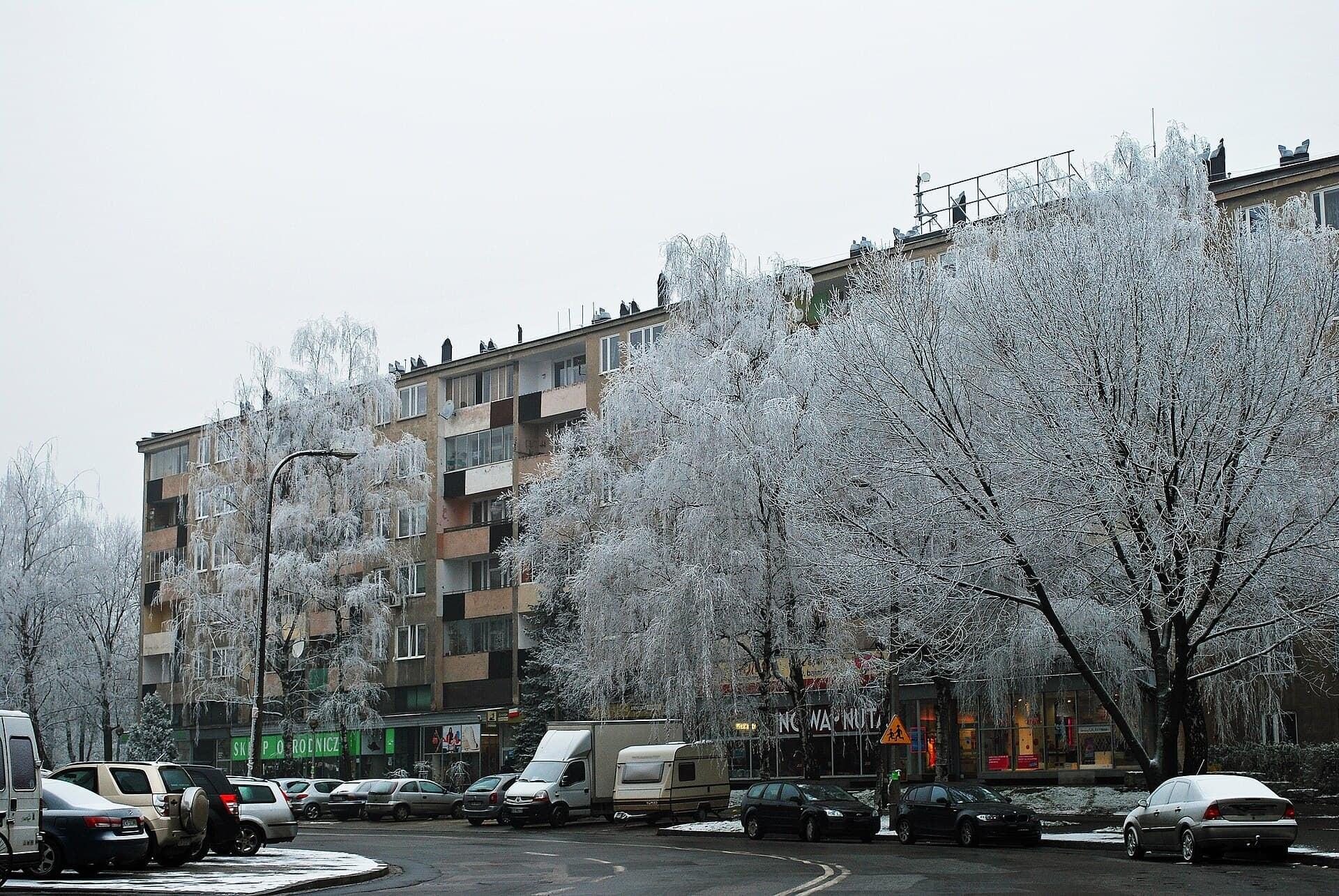
This is the Swedish Block, Blok Szwedzki, on an estate called Szklane Domy, the Glass Houses. It was built between nineteen fifty seven and nineteen fifty nine, and the city calls it one of the most important symbols of Nowa Huta's change after nineteen fifty six, from socialist realism to modernism.
That date matters. In nineteen fifty six Poland went through a political thaw, and the compulsory style went with it. Within two blocks the town stops pretending to be a Renaissance palace. This block is about two hundred and sixty meters long, with fourteen staircases and two hundred and seventy two flats. It was designed after its architect visited Sweden, and built of Siporex, a light cellular concrete made under Swedish license. That is where the name comes from. It sits at an angle of thirty degrees, the angle of the town's grid.
The estate's name, the Glass Houses, borrows a dream from a Polish novel of the early twentieth century: glass houses for a better society. Here someone tried to build them.
People live here, so look from the path and leave the stairwells to the residents.
Follow the route into the park, along the diagonal path.
4. Park Ratuszowy: The Missing Town Hall
You have crossed the park on its diagonal path. Turn and look back down the line of the avenue, toward the square, through the trees. This green has a name that tells you what is missing. It is Park Ratuszowy, Town Hall Park. The plan put a market square here with a town hall,…
Full narration for this stop unlocks with the tour.
5. Osiedle Urocze
You are inside a housing estate now, on its quiet lane. Around the edge stand four story blocks of flats. In the middle, behind fences, are a kindergarten on one side of the lane and school buildings on the other. This is Osiedle Urocze. Osiedle means estate, and this is the…
Full narration for this stop unlocks with the tour.
6. Nowa Huta Cross
You are at a street corner. Look for the small church and, beside it by the side street, a tall monument in the shape of a cross. Behind them are the low buildings of a school. The plan had no church in it. The Institute of National Remembrance puts it plainly: Nowa Huta was to…
Full narration for this stop unlocks with the tour.
7. Teatr Ludowy
Across the forecourt stands a theater with a formal front, crowned by glazed lanterns. If the trees are in leaf, look for the lanterns above them. This is the Teatr Ludowy, the People's Theater, Nowa Huta's first theater. It opened on the third of December nineteen fifty five,…
Full narration for this stop unlocks with the tour.
8. Bieńczyce: Outside the Plan
You have crossed the busy street and its tram tracks. Behind you is Kocmyrzowska. To your right is the Bienczyce market, and around it, later blocks of flats. That street behind you is a border, though nothing on the ground marks it. In two thousand twenty three the President…
Full narration for this stop unlocks with the tour.
9. Plac Bogdana Włosika
Across the street to your left is a small square with a memorial stele. Ahead, on this side, is the church you have been walking toward, with its tall steel mast. The square carries the name of Bogdan Wlosik. This is the account of the Institute of National Remembrance. On the…
Full narration for this stop unlocks with the tour.
10. Arka Pana: The Lord's Ark
In front of you, across its grounds, is the side of the church: a great curved roof covered in wooden shingle, shaped like the hull of a boat, over walls faced with rounded pebbles. This is the Arka Pana, the Lord's Ark, Noah's ark built as a church. It is the end of the story…
Full narration for this stop unlocks with the tour.
- Centralny (Central) Square, view from S, Nowa Huta, Kraków, Poland.jpg | Centralny (Central) Square, view from S, Nowa Huta, Kraków, Poland — Zygmunt Put, CC BY-SA 4.0 · source
- Kraków - Plac Centralny im. Ronalda Reagana (25884290702).jpg | Nowa Huta | Plac Centralny im. Ronalda Reagana — Fred Romero from Paris, France, CC BY 2.0 · source
- BlokSzwedzki-OsiedleSzklaneDomy1-NowaHuta-POL, Kraków.jpg | Blok Szwedzki w Krakowie na osiedlu Szklane Domy 1. Proj. Janusz Ingarden i Mart — Mach240390, CC BY 4.0 · source
- Block of flats (1957 by arch. Marta and Janusz Ingardens), 1 osiedle Szklane Domy, Nowa Huta, Krakow, Poland.JPG | Block of flats (1957 by a — Zygmunt Put Zetpe0202, CC BY-SA 4.0 · source
- ParkRatuszowy-OgólnyWidokNaPółnocnyZachód-NowaHuta-POL, Kraków.jpg | 4.0 Park Ratuszowy w Krakowie w Dzielnicy XVIII Nowa Huta. Ogólny widok — Mach240390, CC BY 4.0 · source
- Ratuszowy Park, N, osiedle Szklane Domy, Nowa Huta, Kraków, Poland.jpg | Ratuszowy Park, N, osiedle Szklane Domy, Nowa Huta, Kraków, Poland — Zygmunt Put, CC BY-SA 4.0 · source
- Osiedle Urocze 10 Kraków.jpg | Osiedle Urocze 10, Kraków — Lesnydzban, CC BY 4.0 · source
- Block of flats, 7 osiedle Urocze, Nowa Huta, Krakow, Poland.jpg | Block of flats, 7 osiedle Urocze, Nowa Huta, Krakow, Poland — Zygmunt Put, CC BY-SA 4.0 · source
- Nowa Huta Cross Memorial, Nowa Huta, Krakow,Poland.jpg | Nowa Huta Cross Memorial, Nowa Huta, Krakow,Poland — Zygmunt Put Zetpe0202, CC BY-SA 4.0 · source
- School, cross, church, 35osiedle Teatralne, Nowa Huta, Krakow, Poland.jpg | School, cross, church, 35osiedle Teatralne, Nowa Huta, Krakow, P — Zygmunt Put, CC BY-SA 4.0 · source
- Ludowy (People's) Theatre, 34 osiedle Teatralne, Nowa Huta, Kraków, Poland.jpg | Ludowy (People's) Theatre, 34 osiedle Teatralne, Nowa Huta, — Zygmunt Put, CC BY-SA 4.0 · source
- Kraków - Teatr Ludowy (26005060745).jpg | Nowa Huta | Osiedle Teatralne — Fred Romero from Paris, France, CC BY 2.0 · source
- Kocmyrzowska Street, view to NE, Nowa Huta, Kraków, Poland.jpg | [s8] Kocmyrzowska Street, view to NE, Nowa Huta, Kraków, Poland — Zygmunt Put, CC BY-SA 4.0 · source
- PlacWłosika-Bieńczyce-POL, Kraków.jpg | Plac Bogdana Włosika w Bieńczycach, Kraków. — Mach240390, CC BY-SA 3.0 · source
- Bogdan Wlosik Memorial, 11 osiedle Przy Arce,Nowa Huta,Krakow,Poland.jpg | Bogdan Wlosik Memorial, 11 osiedle Przy Arce,Nowa Huta,Krakow,Pol — Zygmunt Put, CC BY-SA 4.0 · source
- Kraków - Parafia Matki Bożej Królowej Polski (3).jpg | Obrońców Krzyża Roman Catholic Parish Church of Our Lady Queen of Polish in Krakow bu — Fred Romero from Paris, France, CC BY 2.0 · source
Images may be cropped or resized. Other photos via Unsplash and Pexels.