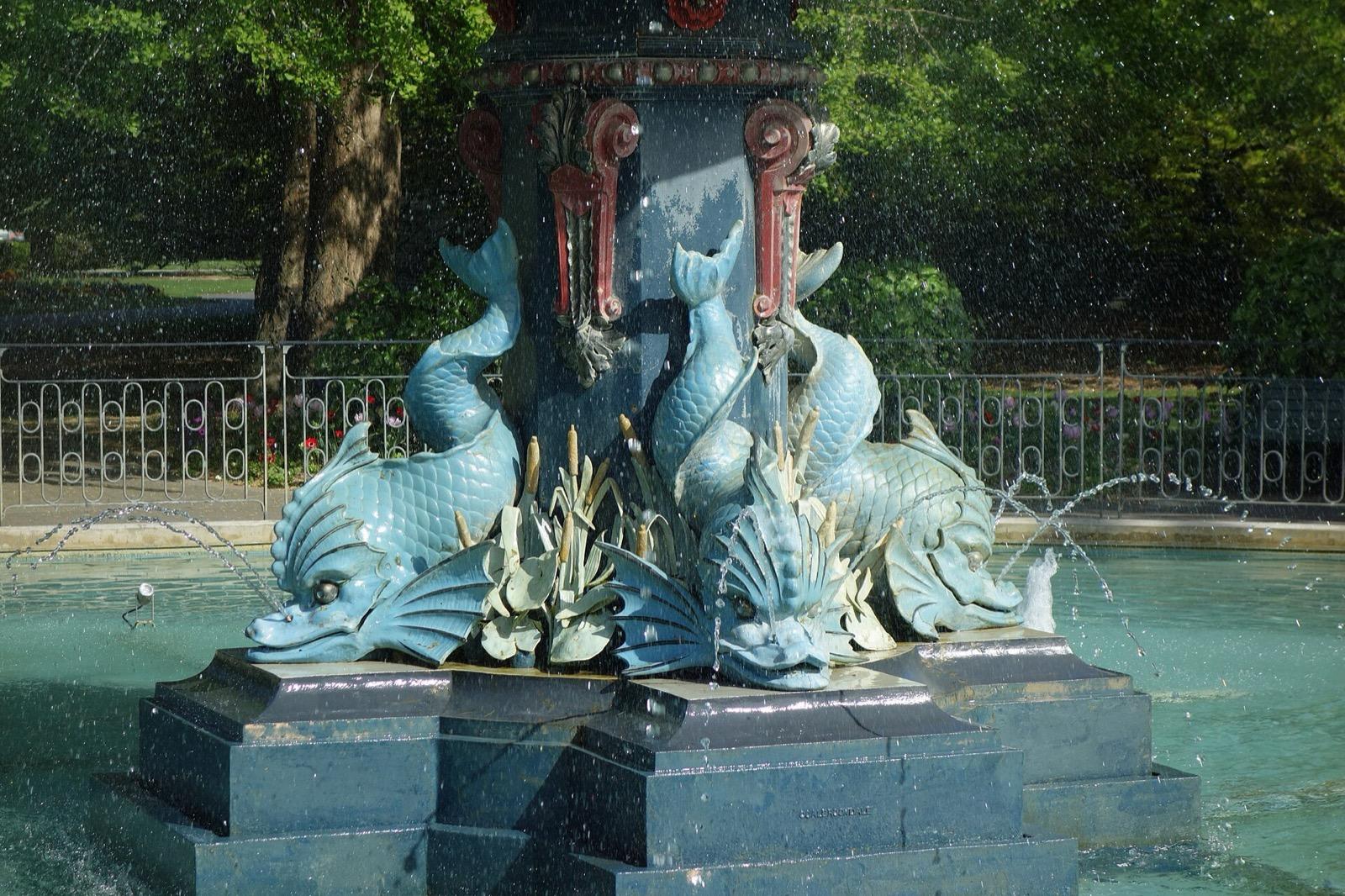
A flat riverside walk through Christchurch's green heart, following the willow-lined Avon past a memorial arch, a working boatshed, and a run of Gothic stone into the gardens the garden city is named for.
Start · The Bridge of Remembrance: The Arch Over the River
DirectionsStops
- 1
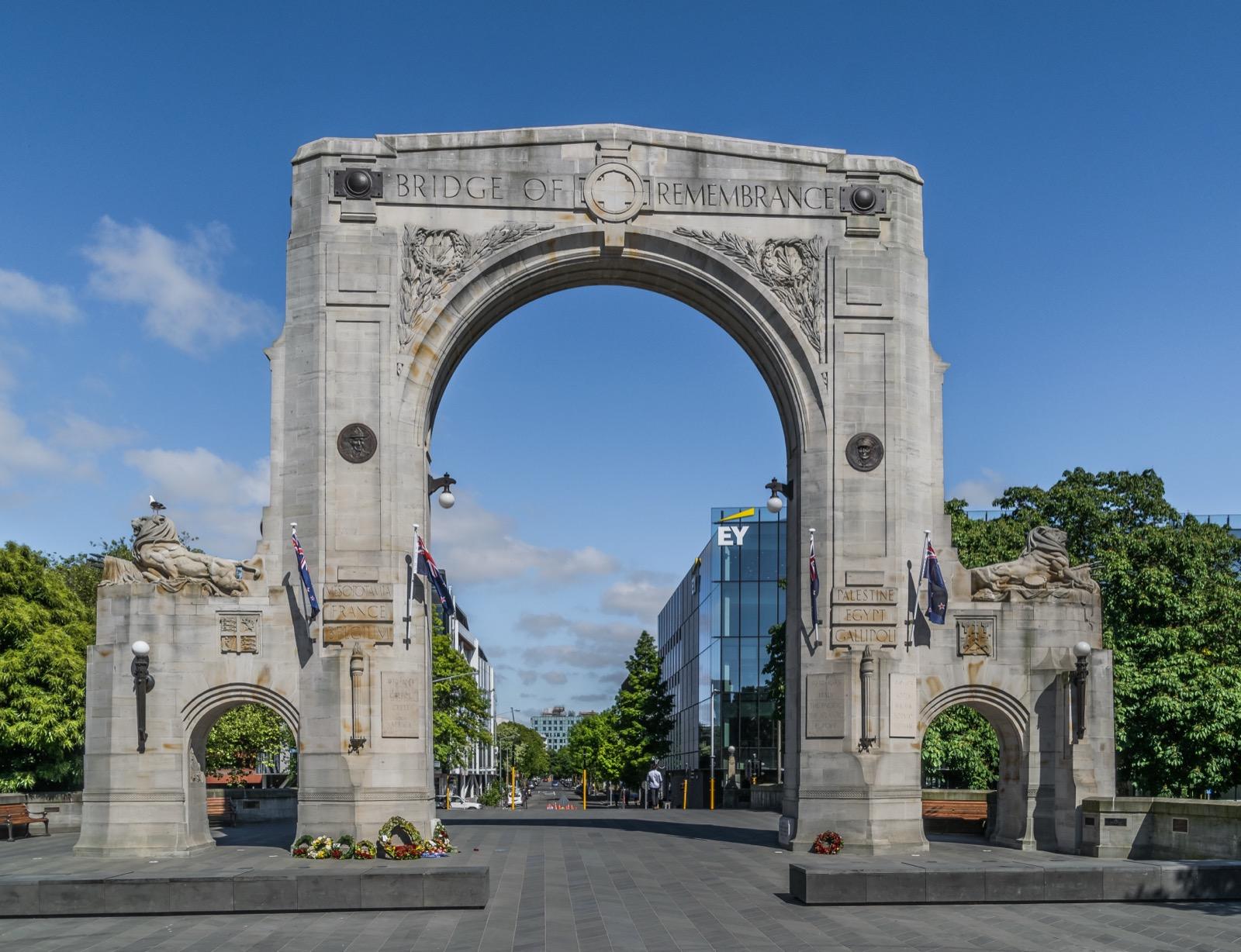
The Bridge of Remembrance: The Arch Over the River
A memorial arch spanning the Avon River, raised to the soldiers who marched this way to war.
- 2
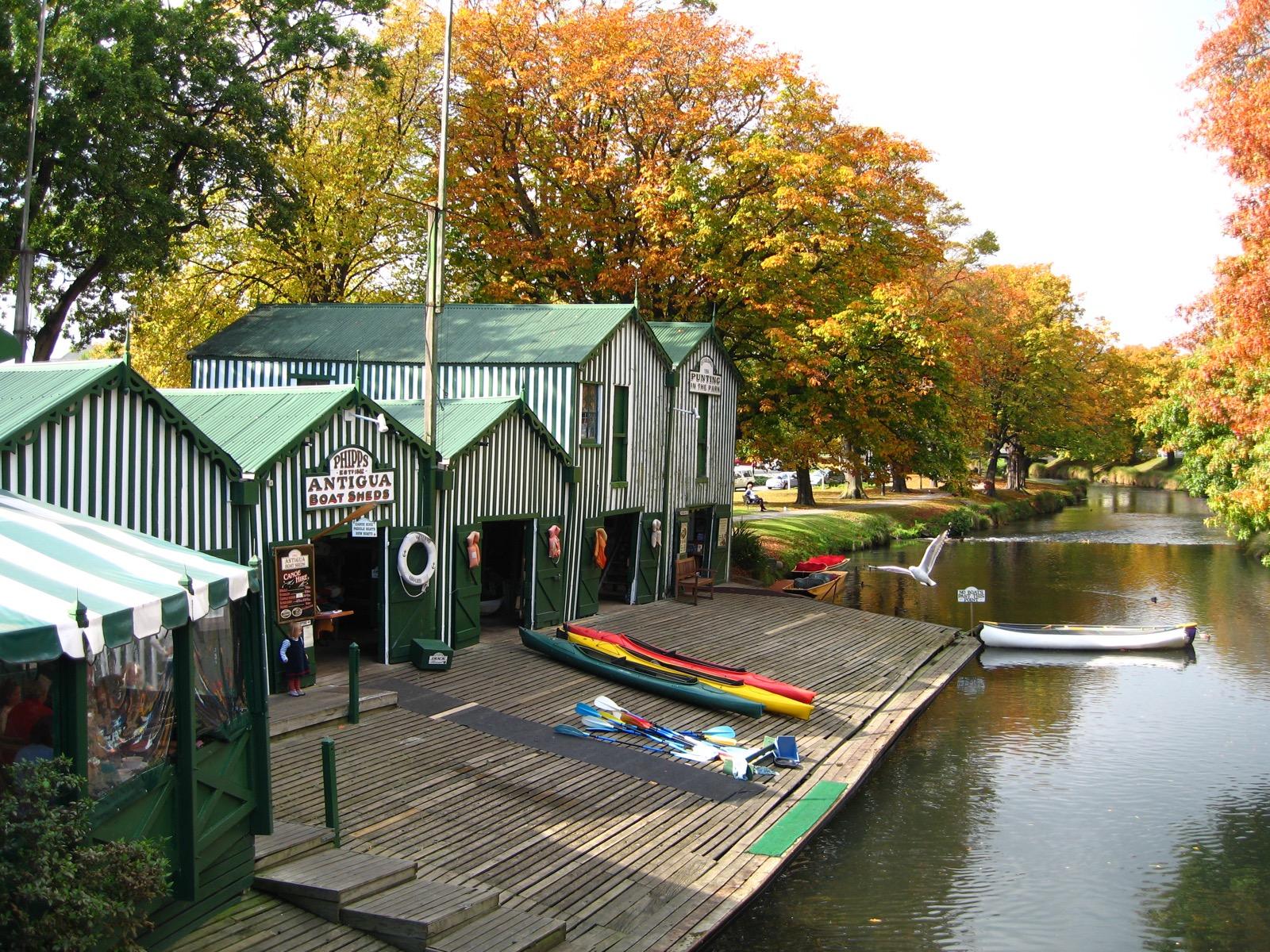
The Antigua Boat Sheds: Punts on the Ōtākaro
A green-painted Victorian boatshed on the willow-lined river, where flat-bottomed punts are still poled along the water.
- 3
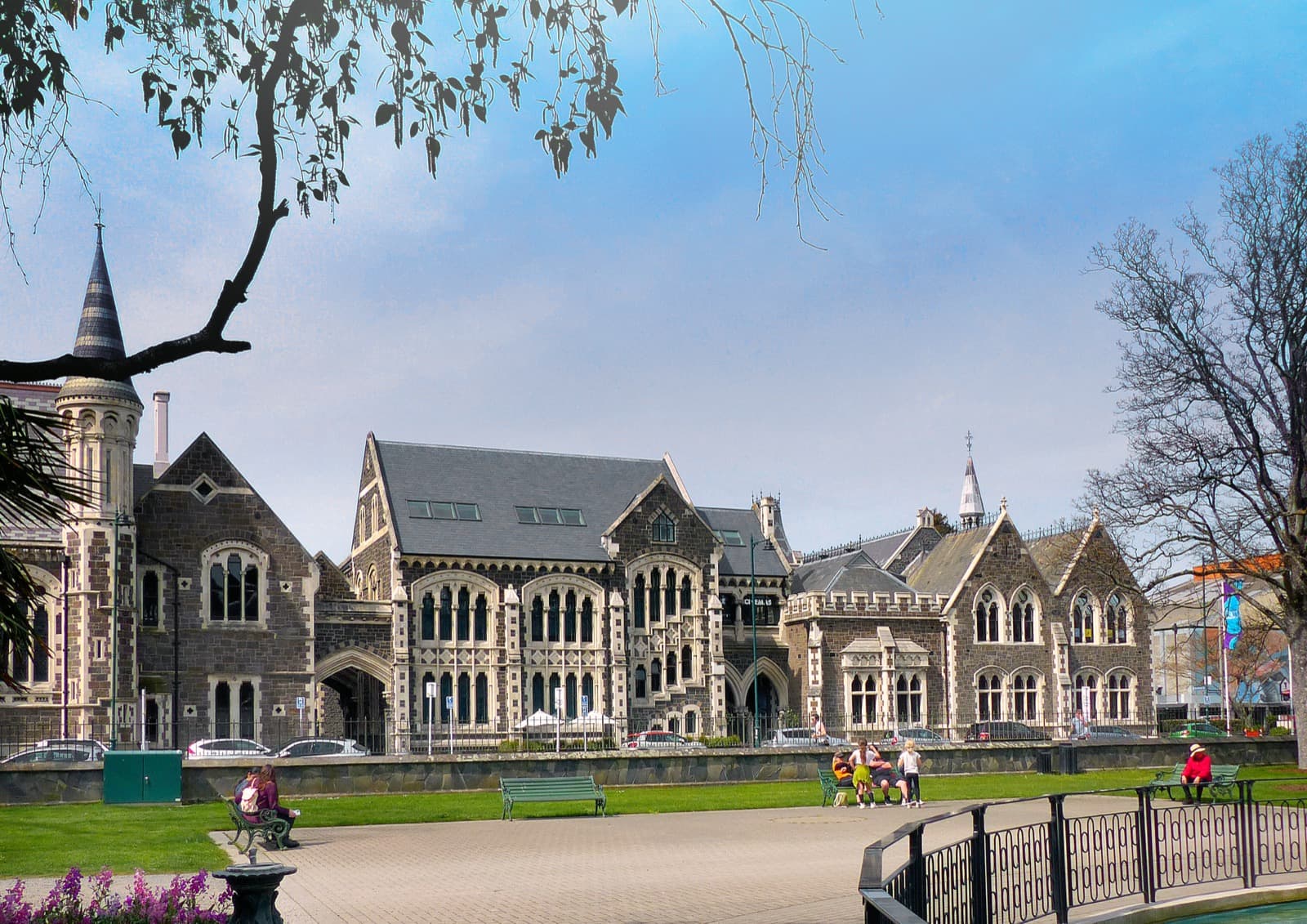
The Arts Centre Te Matatiki Toi Ora: Rutherford's Gothic College
A great range of High Victorian Gothic stone, once Canterbury's university, restored stone by stone after the earthquake.
- 4
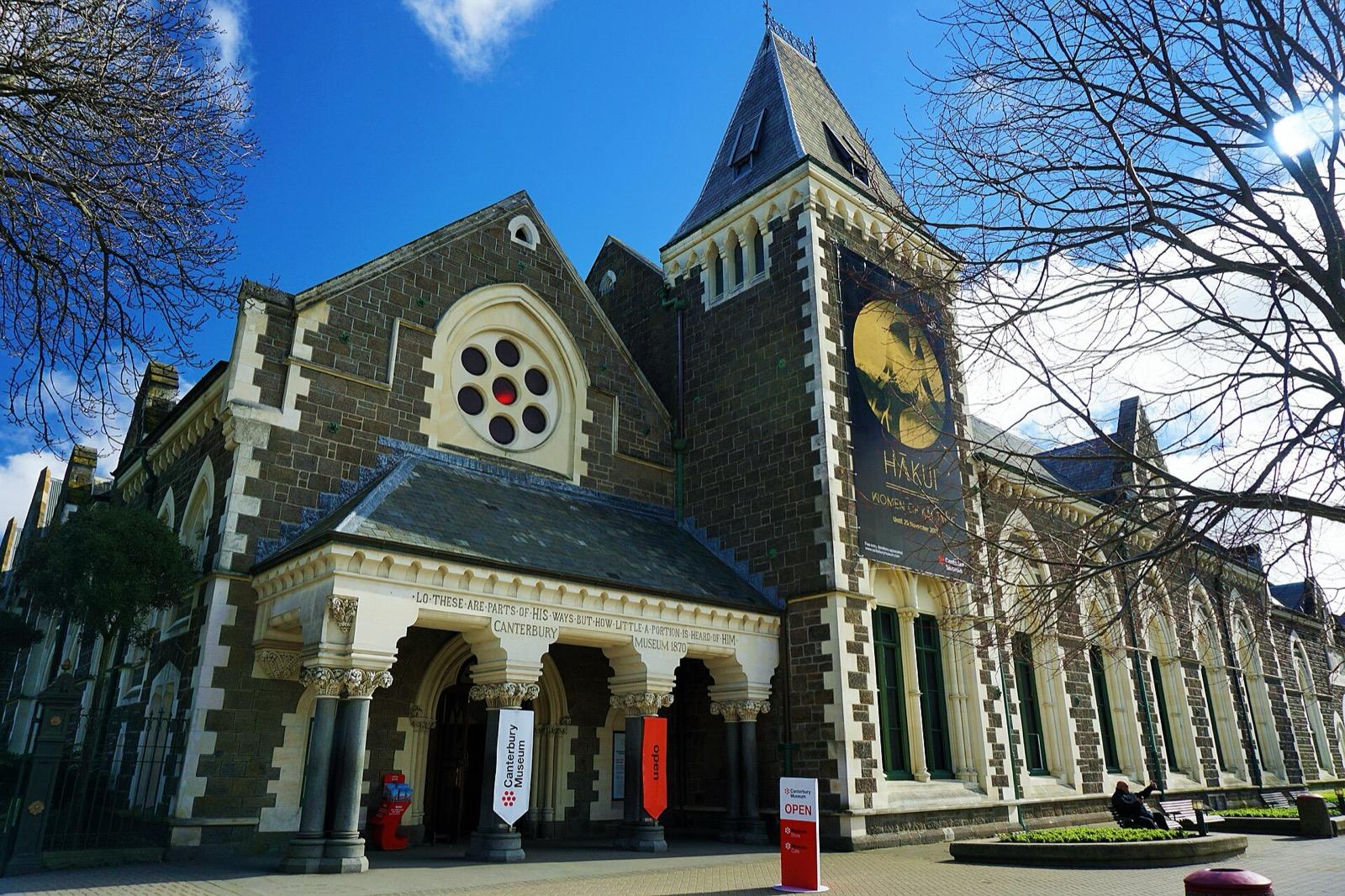
Canterbury Museum: The Bones of the Moa
A Gothic Revival museum of grey basalt that holds the natural and human history of Canterbury, from the moa to Ngāi Tahu to Antarctica.
- 5
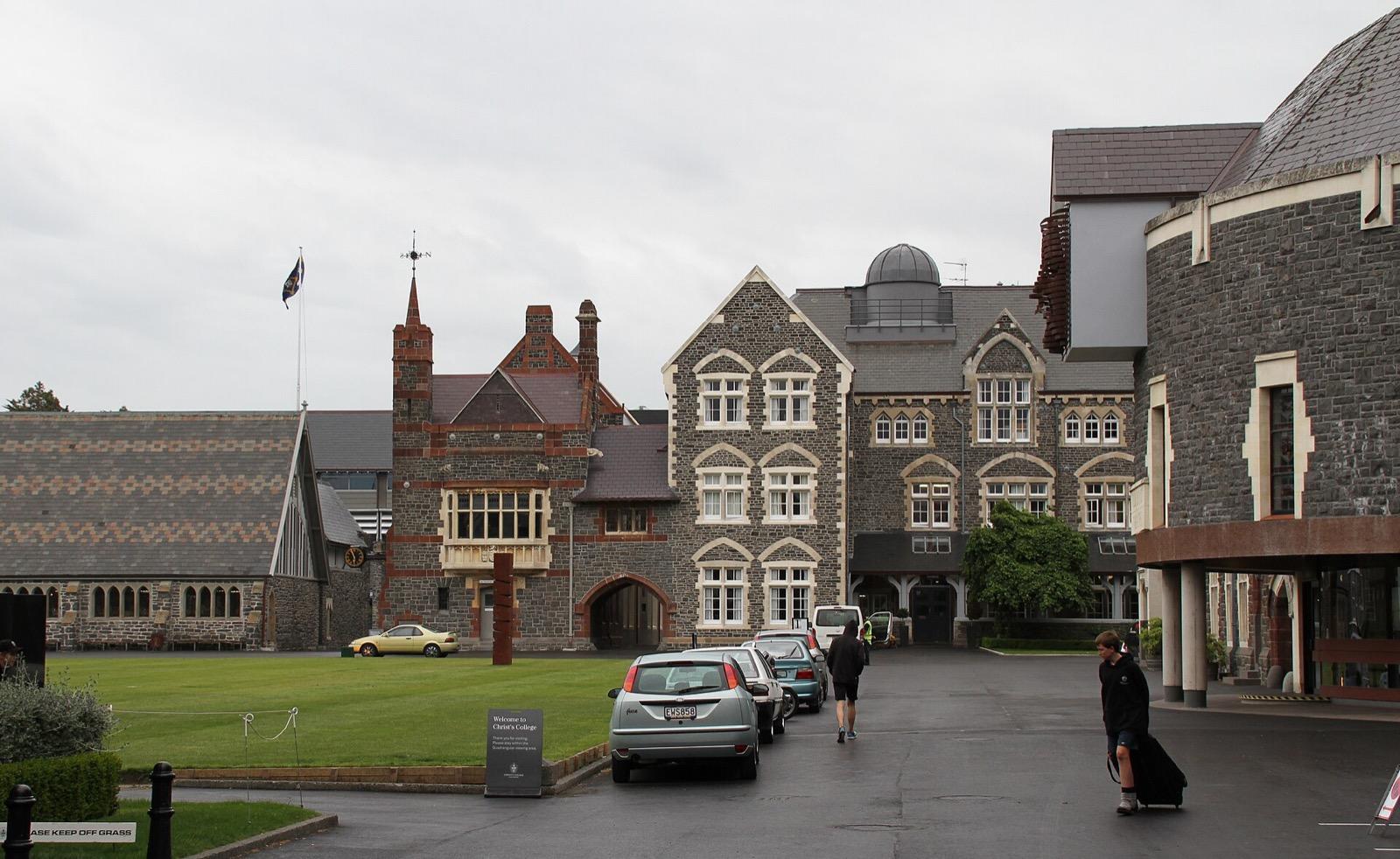
Christ's College: The Gothic Quadrangle
A stone-and-timber Gothic quadrangle at the edge of Hagley Park, home of the oldest independent school in New Zealand.
- 6
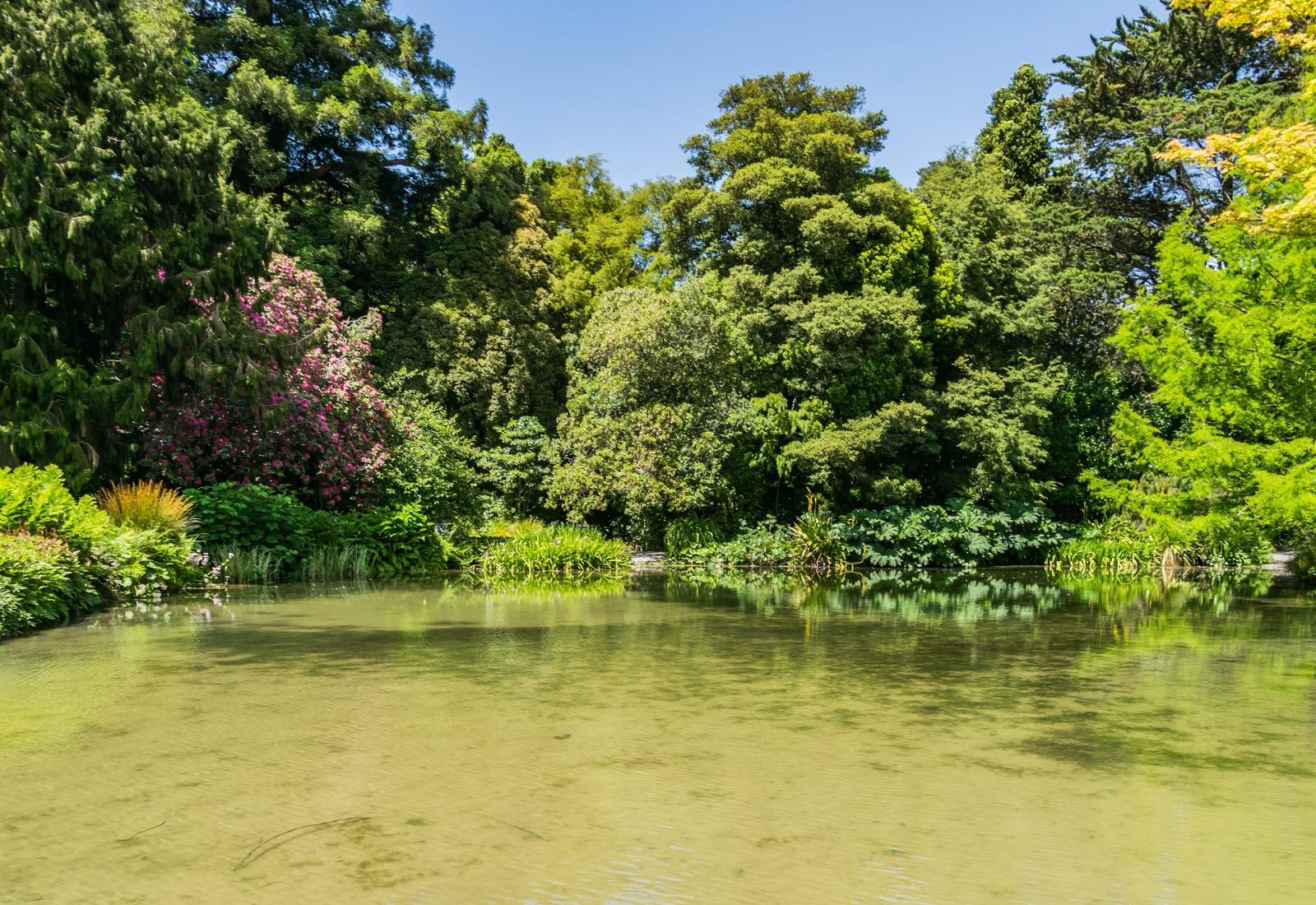
The Christchurch Botanic Gardens: The Oak and the River
The riverside garden the city is named for, begun in eighteen sixty-three with a single English oak planted for a royal wedding.
- 7
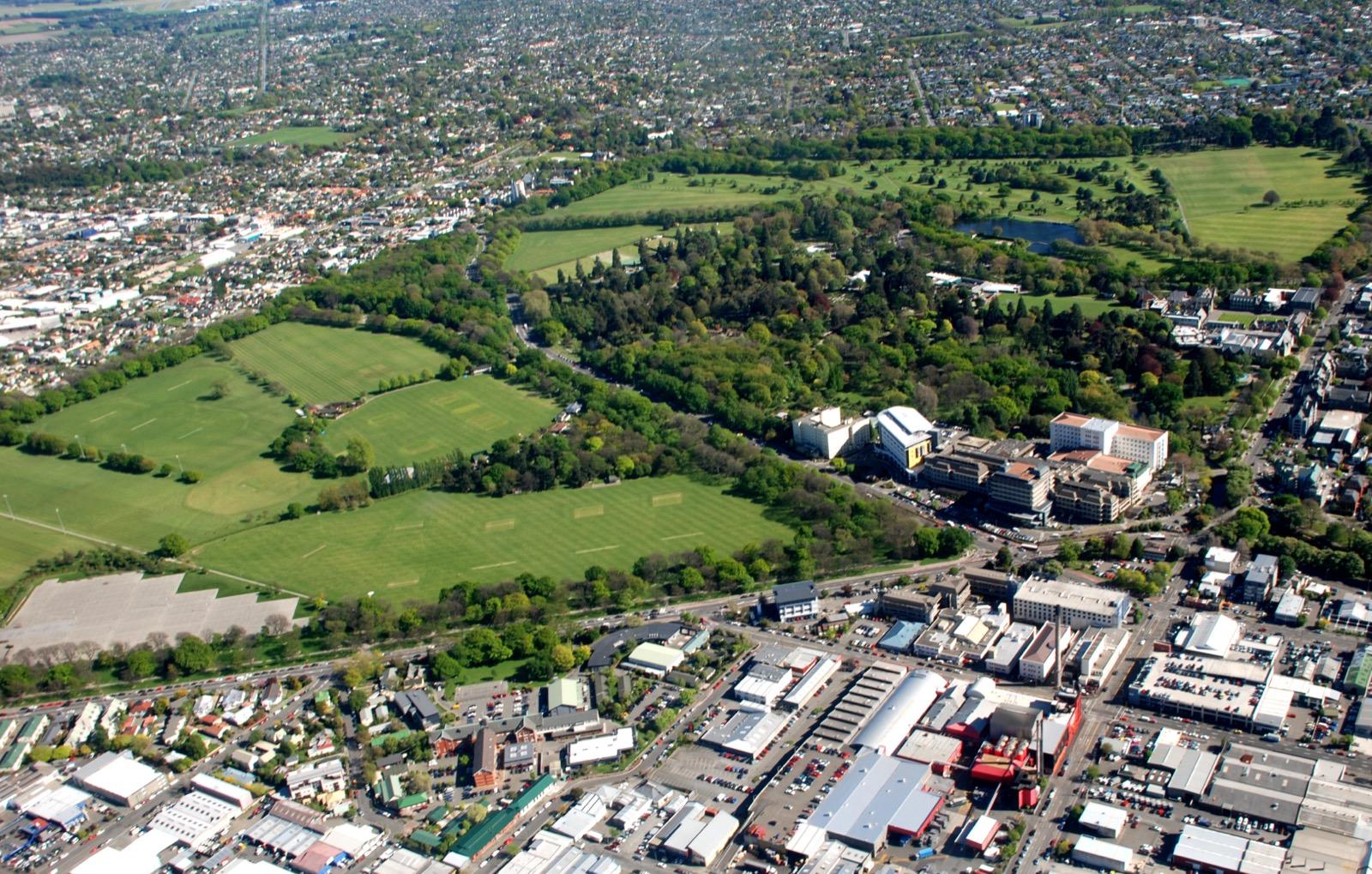
Hagley Park: The Green Set Aside Forever
The vast public park the Canterbury founders reserved by law forever, the breathing space at the heart of the garden city.
Details
Best Time to Visit
Late spring through early autumn, roughly October to April, gives the warmest, driest weather and the Botanic Gardens at their fullest, with roses in November and December. Mid-morning or the golden hour before dusk gives the best light along the willow-lined river. Weekday mornings are quietest; the park and gardens are open and free year-round, so even a crisp winter walk works if you dress for changeable Canterbury weather.
Pro Tips
- •This is a flat, easy walk of about two kilometres on level paths and city footpaths, so it suits an unhurried pace with plenty of pauses by the river.
- •The Botanic Gardens and Hagley Park are free and have no fixed route, so treat them as the place to linger longest rather than rush through.
- •Canterbury Museum's Rolleston Avenue building is closed for redevelopment as of this year, so read the stone exterior on the walk and, if you want the collection, seek out the museum's pop-up on Gloucester Street separately.
- •Punting on the Avon runs from the Antigua Boat Sheds as a paid activity; you can watch the punts glide under the willows for free without booking a boat.
- •Carry a refillable water bottle and a snack, since the walk deliberately anchors to gardens and monuments rather than particular cafes, and stay hydrated on warm days.
- •The Arts Centre grounds and courtyards are free to wander into; step through an archway to see the Gothic quadrangles up close, and check separately if you want to visit Rutherford's Den.
Safety & Precautions
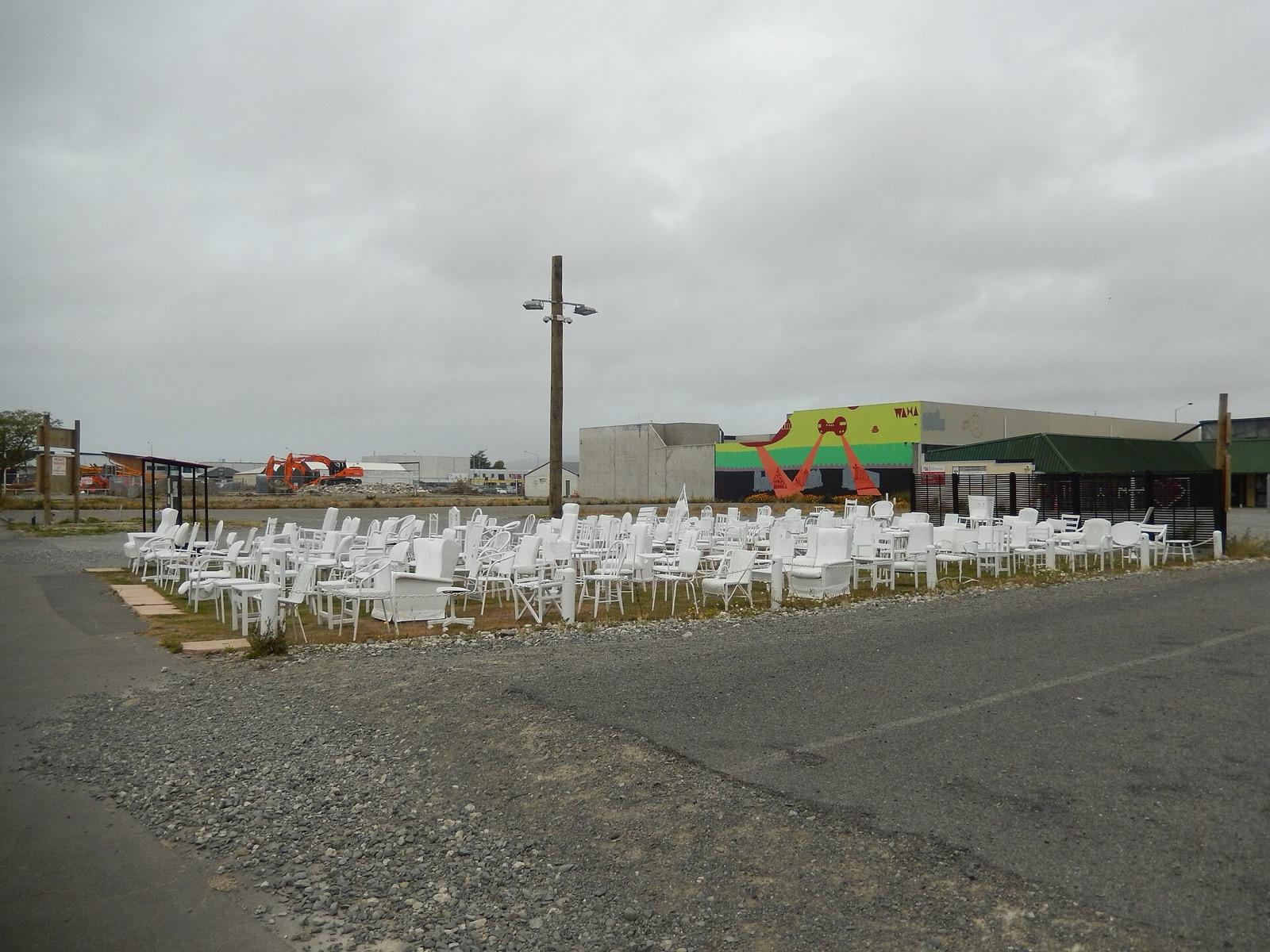
- •This walk crosses ground marked by the deep and recent grief of the February twenty eleven earthquake, which killed one hundred and eighty-five people; approach the city's memorial and remembrance sites, including the Bridge of Remembrance, with quiet respect.
- •Parts of central Christchurch remain active rebuild and restoration sites, so expect occasional construction hoardings and closures near heritage buildings and follow any signage.
- •Canterbury weather changes quickly, so bring sun protection for the exposed park and a waterproof layer for sudden rain or a cold wind off the plains.
- •Keep valuables discreet with ordinary city street-awareness, and note that some museums and historic sites charge entry in New Zealand dollars while the gardens and park are free.
Travel advisory: Exercise Normal Precautions (Level 1).
Gallery
Related Reading
Go deeper on what you'll see, hear, and walk through.
Overview
Best Self-Guided Walking Tours in Christchurch (2026)
3 min
Overview
Christchurch Travel Guide: Days, Transport, Weather, Safety, Budget
6 min
Overview
One Day in Christchurch: A Walkable Morning-to-Evening Itinerary
7 min
Thematic
Christchurch: The Garden City That Rebuilt Its Heart
8 min
Companion
The Christchurch Botanic Gardens: Why a Garden City Grew Around One Oak
7 min
Deep dive
The Arts Centre Te Matatiki Toi Ora: The Gothic College Rebuilt Stone by Stone
7 min
Read
What to Eat in Christchurch: Canterbury Lamb, Akaroa Salmon, and How to Order Like a Local
6 min
Read the walk
The full story of Botanic Gardens: The Garden City's Green Spine, in words. Prefer to listen? Play it narrated, from home or on location.
Introduction
Christchurch, New Zealand calls itself the garden city, and this walk reads the green spine that earns the name. Over about three kilometres and roughly ninety minutes, seven stops trace the willow-lined Avon River, the Ōtākaro, from a memorial arch to a great park set aside forever. The land here is the Country of Ngāi Tahu, the mana whenua, the people who hold customary authority over Canterbury, whose presence long predates the settler town. This is a young city that reached for permanence: an English garden and a Gothic university dropped onto the Canterbury plains, then a city that lost its heart to the earthquake of February twenty eleven and rebuilt its stone spine one block at a time. The river carries all of it, leisure and remembrance, founders' ambition and living Māori Country, loss and recovery. From the Bridge of Remembrance the route follows the water to the old green boatshed where flat-bottomed punts are still poled along, then turns up Rolleston Avenue past the Arts Centre, the Canterbury Museum, and the Gothic quadrangle of Christ's College, before opening into the Botanic Gardens and the vast green of Hagley Park. It is a gentle, level walk on the Canterbury plain, and it is entirely your own: your pace, your route, no group, no schedule, no one hurrying you along and no tip expected. Linger by the river as long as you like. When you arrive at the Bridge of Remembrance at the foot of Cashel Street, begin with stop one.
1. The Bridge of Remembrance: The Arch Over the River
You are standing at the foot of Cashel Street, where a great stone arch crosses the Ōtākaro Avon River. This is the Bridge of Remembrance, and it is exactly what its name says. In the First World War, soldiers crossed the river here from the King Edward Barracks on Cashel Street, marching to the railway station on Moorhouse Avenue to embark for war. The arch was raised to them. It was designed in nineteen twenty-one by the architect William Gummer, and unveiled on the eleventh of November nineteen twenty-four, Armistice Day, the anniversary of the guns falling silent. It is built of concrete faced with Tasmanian stone. The carved lions over the end arches and the lettering are the work of the Canterbury carver Frederick Gurnsey, and panels list the great battles of that war, with the Second World War added later. Heritage New Zealand records it as a Category One historic place, the highest listing, recognised in nineteen eighty-five. Then came the earthquakes. The arch was damaged, and the repairs were slow and careful. It reopened and was rededicated on Anzac Day, the twenty-fifth of April twenty sixteen, the day New Zealand and Australia remember their war dead. So this is a place of remembrance twice over, for the soldiers who marched away and for a city that had to rebuild the very stones that remembered them. It is a footbridge now, closed to cars since nineteen seventy-six, so you can stand in the middle of it over the water. Take your time. There is no group behind you.
2. The Antigua Boat Sheds: Punts on the Ōtākaro
Follow the river upstream and the willows close in over the water, and here on the northern bank is a long green-painted timber boatshed. These are the Antigua Boat Sheds, at two Cambridge Terrace, named for nearby Antigua Street. They opened in August eighteen eighty-two, with the first boat launched on the twenty-eighth of July that year. Two boat builders from the port of Lyttelton, Albert Shaw and J T Tidd, put them up on this bank. Look at the timberwork: the pointed finials and the decorated bargeboards are a kind of picturesque carpentry, half-timbered in an old Elizabethan manner, the sort of thing a settler town built when it wanted to look established. In May nineteen oh seven a fire destroyed about half the structure, and the eastern end was rebuilt as two storeys, which is why the shed changes shape as you look along it. Heritage New Zealand lists it as a Category One historic place, and records it as the only surviving nineteenth-century commercial boatshed on a river in New Zealand. It was the last of the city's old boatsheds, and quiet strengthening work is why it came through the earthquakes standing. From here, flat-bottomed punts are still poled along the Avon in the Edwardian manner, a boatman standing at the stern with a long pole, gliding under the willows. Punting is a paid activity if you want it, but you do not need to take a boat to feel the point of this place. The river was, and is, for leisure. After the remembrance of the arch, this is the other face of the water: a slow afternoon, willows, and no hurry at all.
3. The Arts Centre Te Matatiki Toi Ora: Rutherford's Gothic College
Turn up Rolleston Avenue and a long range of grey Gothic stone rises beside you, all pointed arches, gables and towers. This is the Arts Centre, which carries the gifted Māori name Te Matatiki Toi Ora, a springboard of creative life and knowledge, given in twenty fifteen. But for most of its life this stone was a university. It began in eighteen seventy-seven as Canterbury College, and grew into the University of Canterbury, which stayed here until it moved out to its Ilam campus in nineteen seventy-four. The leading architect was Benjamin Mountfort, the man who gave Christchurch much of its Gothic Revival face, with later buildings by Samuel Hurst Seager and others, twenty-two Gothic buildings in all, extended over the decades to nineteen twenty-six. And this is where a young physicist worked. Ernest Rutherford, who would later be honoured as the father of nuclear physics, studied at Canterbury College from eighteen ninety, doing his early research in a basement den in the Clock Tower Building. That room, Rutherford's Den, is preserved on the site. Then, on the twenty-second of February twenty eleven, the earthquake struck, and this stone precinct was severely damaged. What has happened since is one of the largest heritage restoration projects in the world, worth around two hundred and ninety million dollars, done patiently, stone by numbered stone. The grounds and courtyards are free to walk into. Step through an archway into a stone quadrangle and you are inside the settlers' ambition made solid, and inside the city's determination to put it back exactly as it was.
4. Canterbury Museum: The Bones of the Moa
A little further along Rolleston Avenue stands another of Benjamin Mountfort's Gothic buildings, this one in grey basalt cut from the Halswell Quarry. This is the Canterbury Museum, at eleven Rolleston Avenue. It first opened its doors on the first of October eighteen seventy,…
Full narration for this stop unlocks with the tour.
5. Christ's College: The Gothic Quadrangle
Keep on along Rolleston Avenue, with the great green of Hagley Park now on your left, and you reach a cluster of stone and timber buildings gathered around a quadrangle. This is Christ's College, and it is the oldest independent school in New Zealand. It was founded in eighteen…
Full narration for this stop unlocks with the tour.
6. The Christchurch Botanic Gardens: The Oak and the River
Now the stone gives way to green, and you pass into the Christchurch Botanic Gardens, laid out in a great loop of the Ōtākaro Avon River. This is about twenty-one hectares of garden, and it is the heart of everything the garden city means. It began in eighteen sixty-three, and…
Full narration for this stop unlocks with the tour.
7. Hagley Park: The Green Set Aside Forever
The gardens open out, and around them stretches something even larger: Hagley Park, an enormous green of oaks, lawns and playing fields wrapped right around the Botanic Gardens. This is where the walk ends, and it is the right place to end it, because Hagley Park is the whole…
Full narration for this stop unlocks with the tour.