In Delft, the Netherlands, a single shot on a convent staircase turned a rebellion into a country. This walk follows the crime, the man, and the tomb where a rebel became the founder of a royal dynasty.
Start · Prinsenhof: The Shot on the Stairs
DirectionsStops
- 1
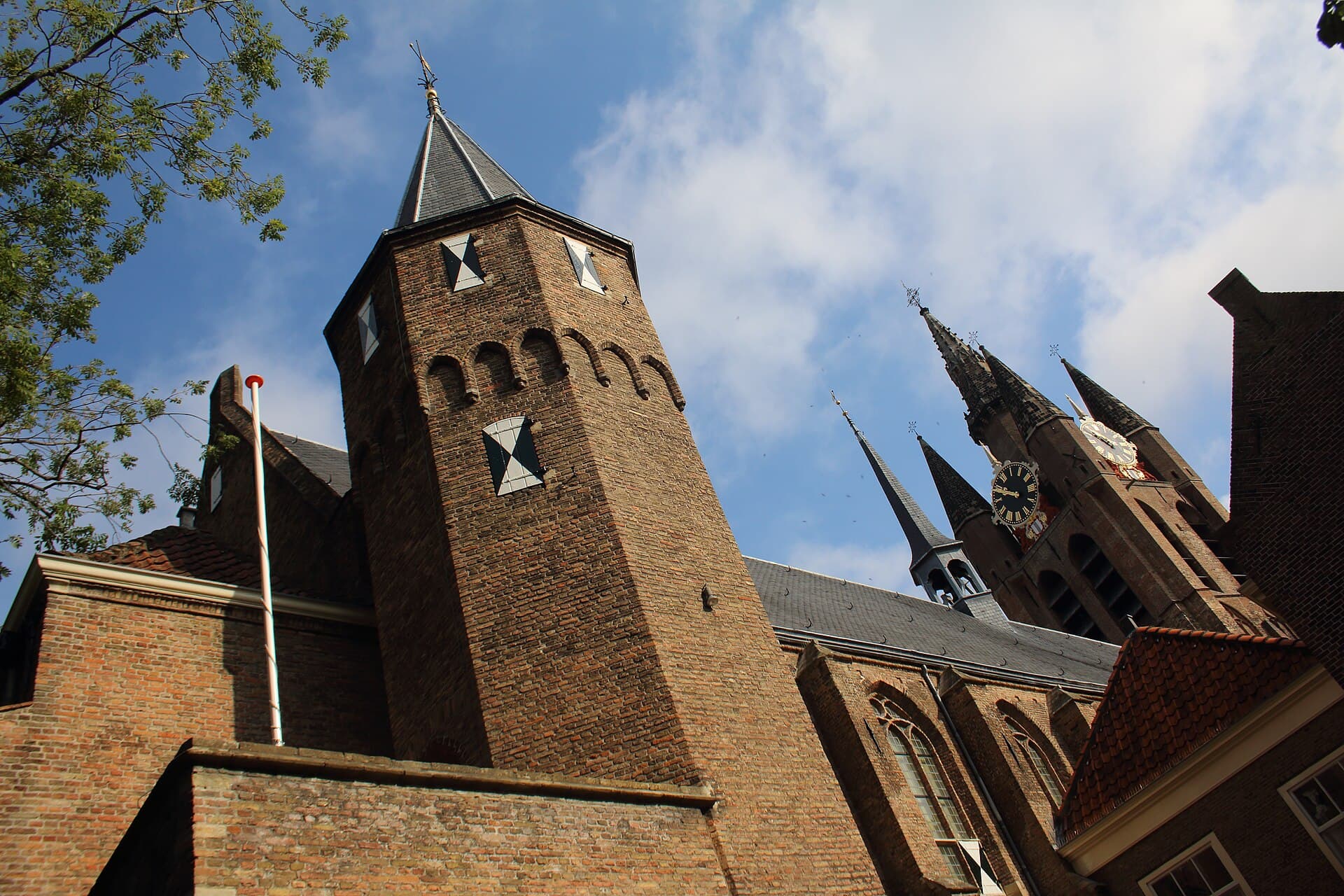
Prinsenhof: The Shot on the Stairs
The former St Agatha convent where William of Orange kept his court and where he was assassinated on the staircase in the year fifteen eighty-four.
- 2
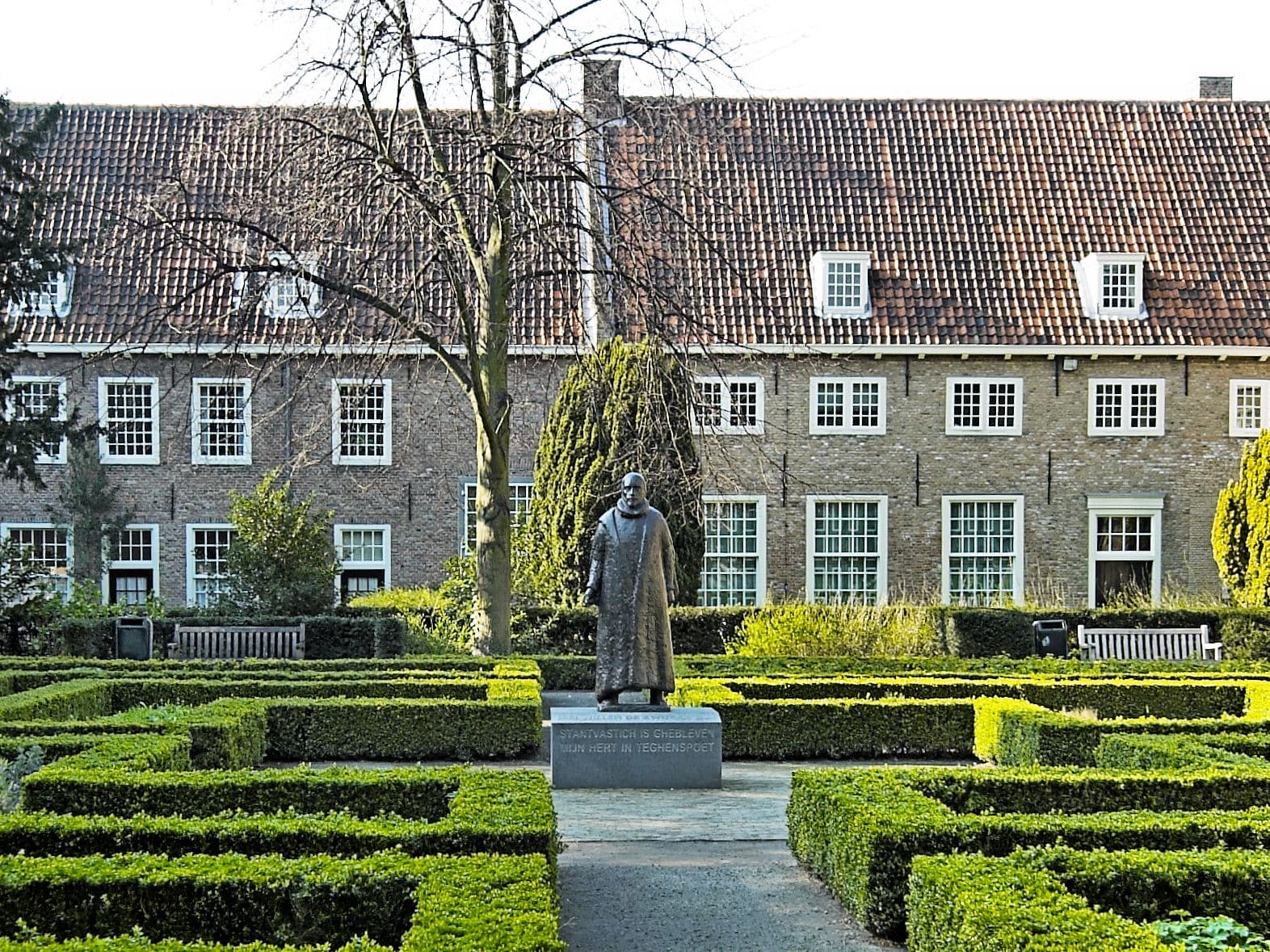
William of Orange: Father of the Fatherland
The standing bronze statue of Willem van Oranje in the Prinsenhof garden square, where the man meets the myth the Netherlands built around him.
- 3
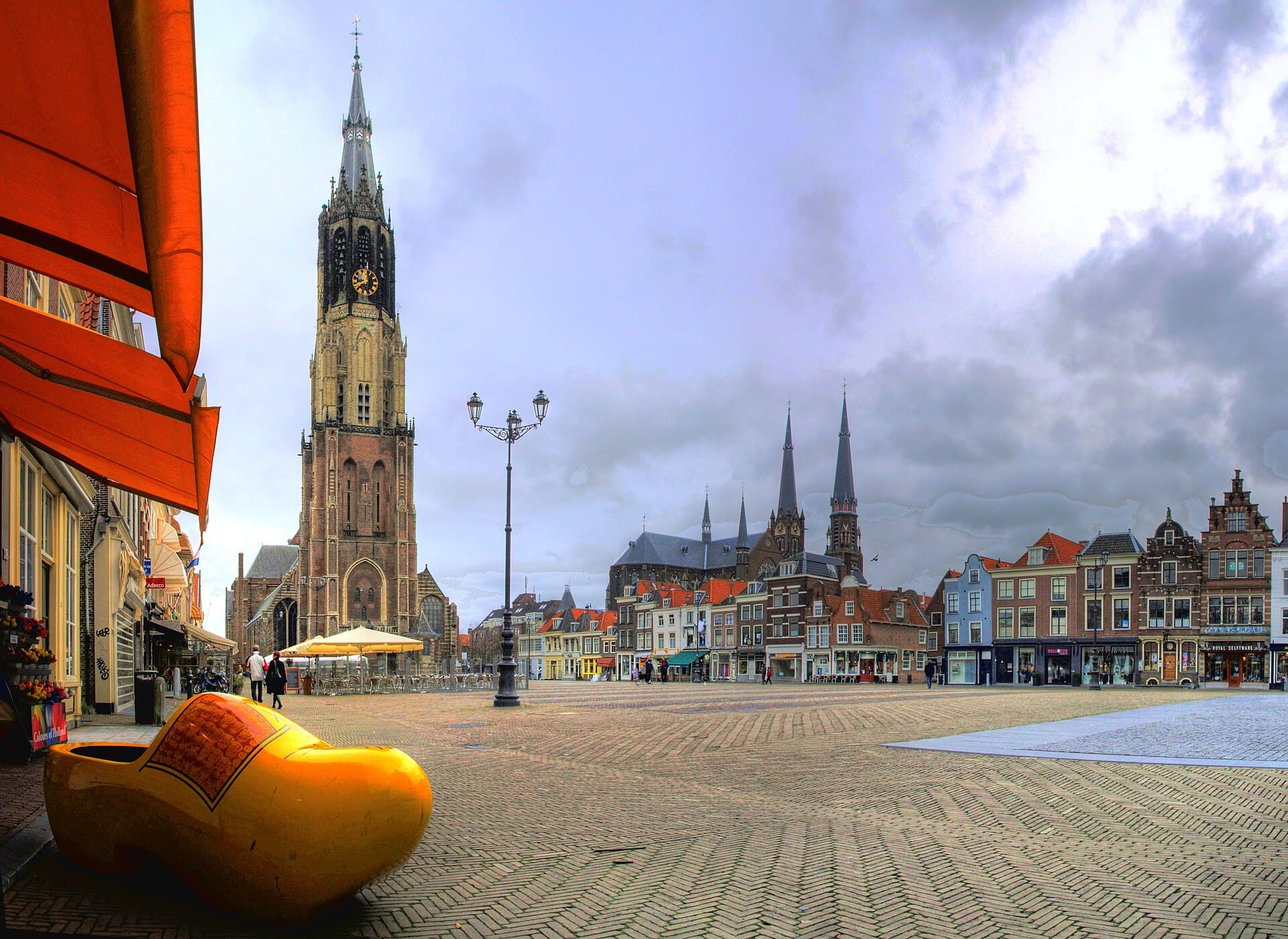
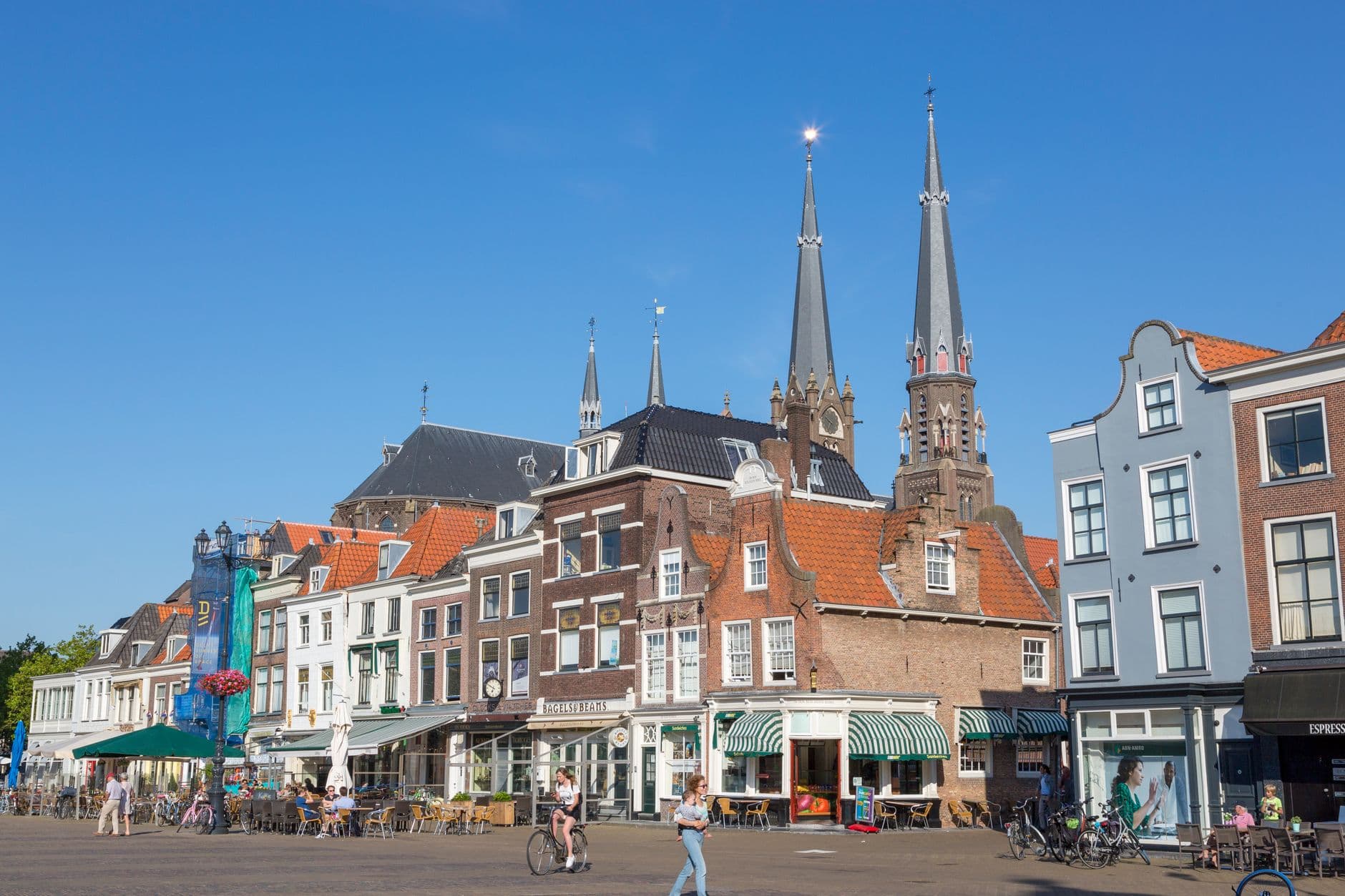
The Markt: Stage of the Eighty Years' War
Delft's grand market square, framed by church and town hall, where the wider story of the Dutch Revolt comes into view.
- 4
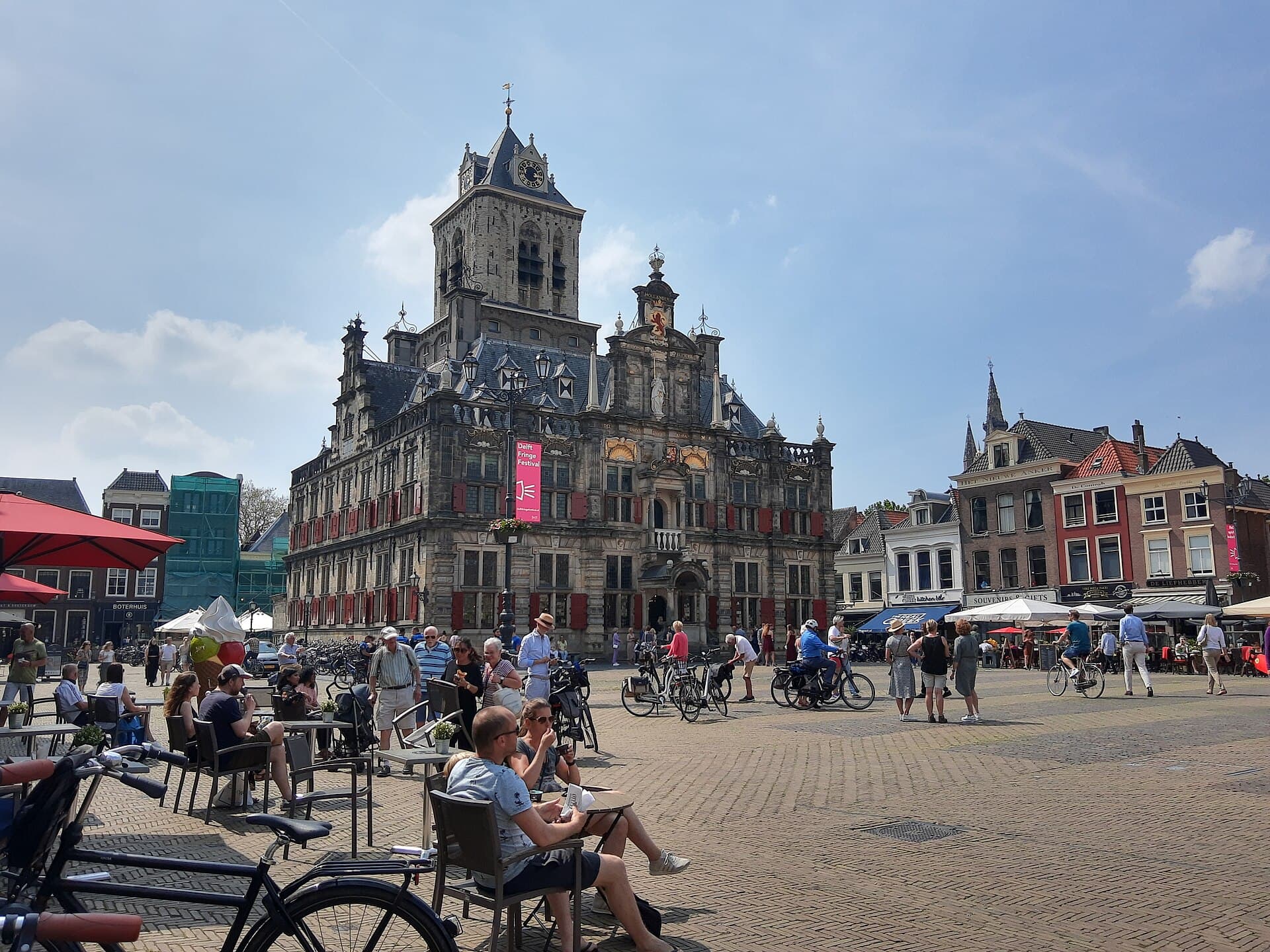
The Stadhuis and the Prisoner in the Steen
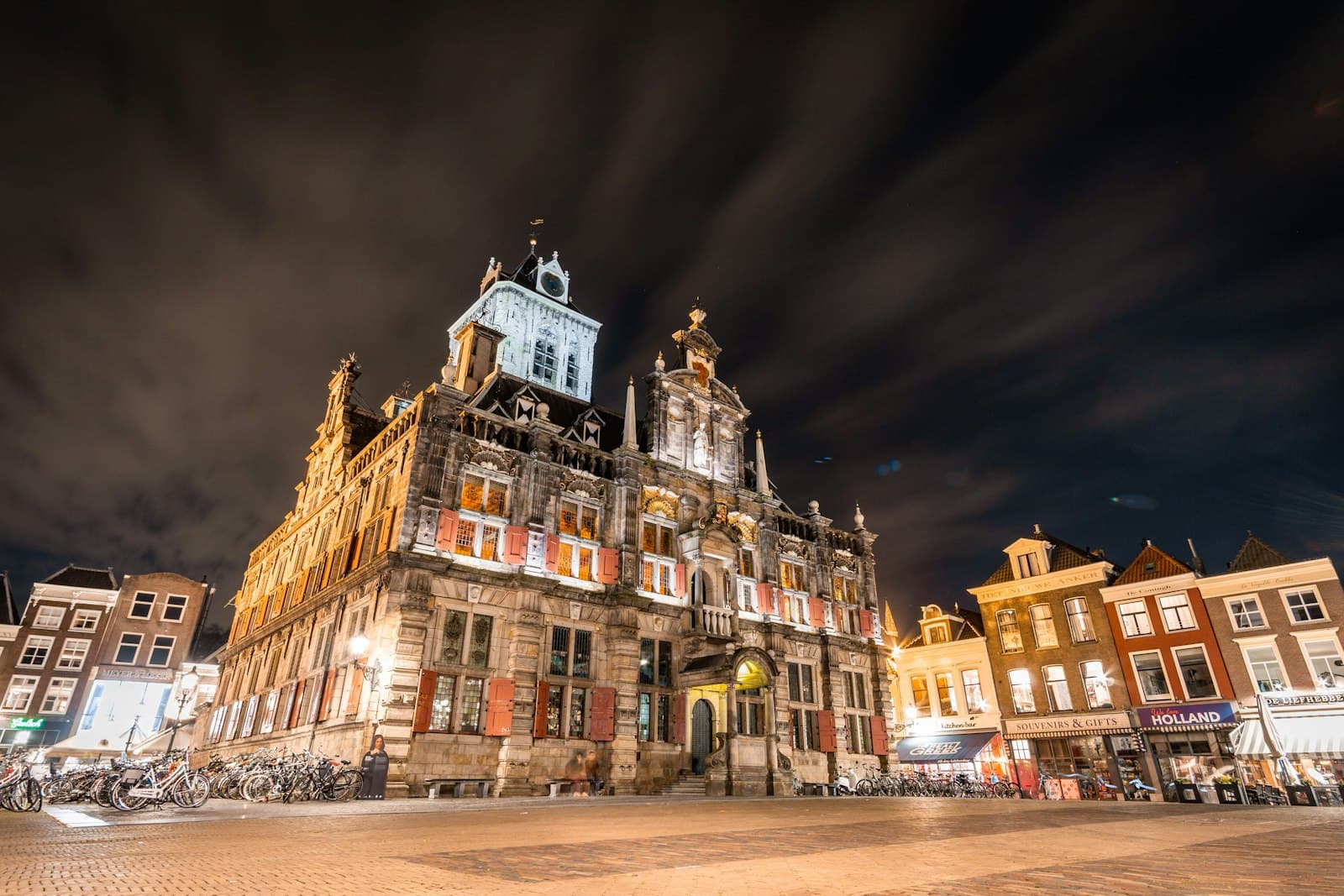
The Renaissance town hall on the Markt, built around a medieval stone tower that once held the city prison and the assassin himself.
- 5
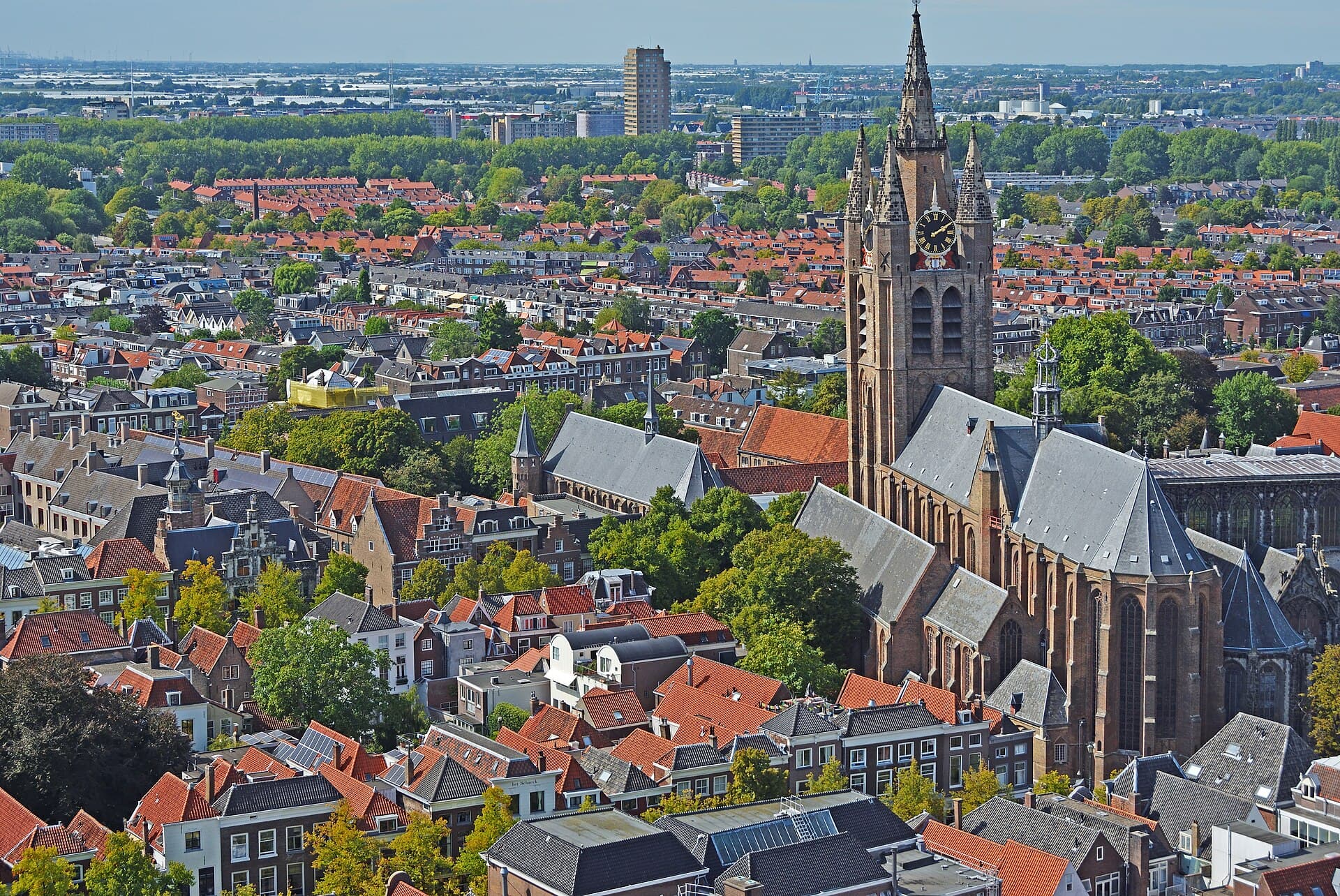
Nieuwe Kerk: The Mausoleum of William of Orange
The towering Gothic church on the Markt that holds the ornate tomb of William of Orange, the martyr's monument around which a dynasty gathered.
- 6
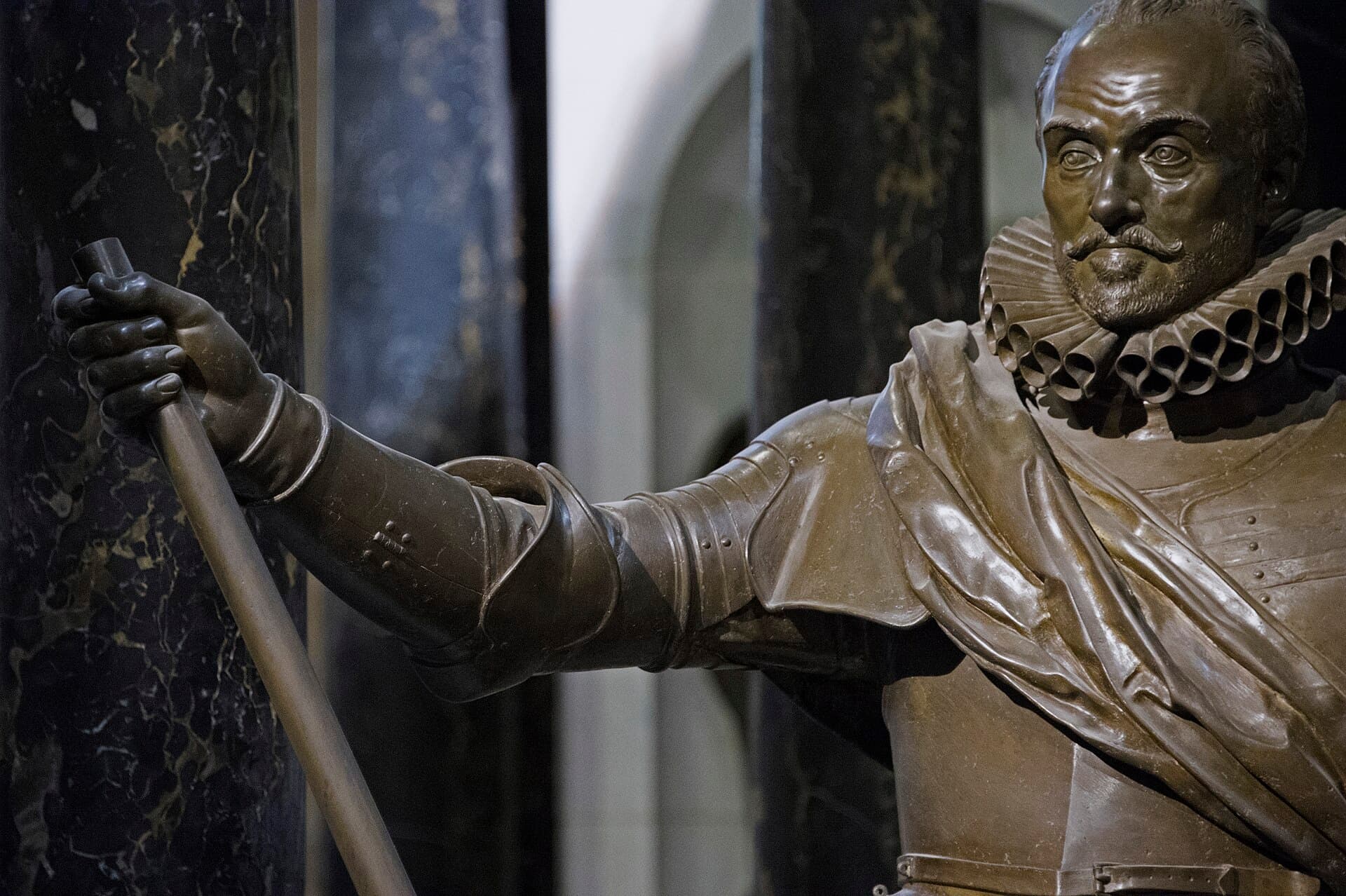
The Royal Crypt: A Rebel Becomes a Dynasty
The burial vault beneath the Nieuwe Kerk where the House of Orange-Nassau has been laid to rest since William, the tour's closing reflection on legacy.
Details
Best Time to Visit
Late morning to mid-afternoon on a weekday, when the Markt is lively but the churches are calm and light fills the Nieuwe Kerk. Thursday brings the general market to the square, which is atmospheric but crowded. Because the Prinsenhof museum is closed for renovation, you can plan the walk purely around exterior stops and the two churches, which keep steady daytime hours. Aim to reach the Nieuwe Kerk before its final admission, as ticketed entry closes well before dusk.
Pro Tips
- •Buy the combined ticket for the Oude Kerk and Nieuwe Kerk, and add the tower climb if you want the view; it is a single purchase that covers both churches.
- •The Prinsenhof museum is closed for a major renovation until around twenty twenty-seven, so treat stop one as an exterior visit and do not expect to go inside.
- •Climb the Nieuwe Kerk tower early in your visit if legs allow; the stairs are steep and narrow and it is easier before you have walked the full route.
- •The whole loop is only about one and a half kilometres on level ground, so linger. Sit on the Markt between the two poles of church and town hall and let the geography of the story sink in.
- •Keep small change or a contactless card ready for church admission, and check the day's final entry time before you set out so the tomb does not close on you.
Safety & Precautions
- •Delft is a canal city, and many canal edges and wharves have no railings; watch your footing near the water, especially while reading signs or looking up at facades.
- •Cyclists and the occasional service vehicle move fast and nearly silently through the centre; look both ways before stepping off a curb and do not stand in bike lanes to take photos.
- •The historic centre is paved in uneven cobbles, and the Nieuwe Kerk tower has steep, narrow, winding stairs; wear stable shoes and take the climb slowly.
- •Bridges, wharves, and cobbles turn slippery when wet, and the churches ask for quiet and modest dress; keep your voice low inside, and be prepared for timed tickets and short queues at busier moments.
Travel advisory: Exercise Increased Caution (Level 2).
Gallery
Related Reading
Go deeper on what you'll see, hear, and walk through.
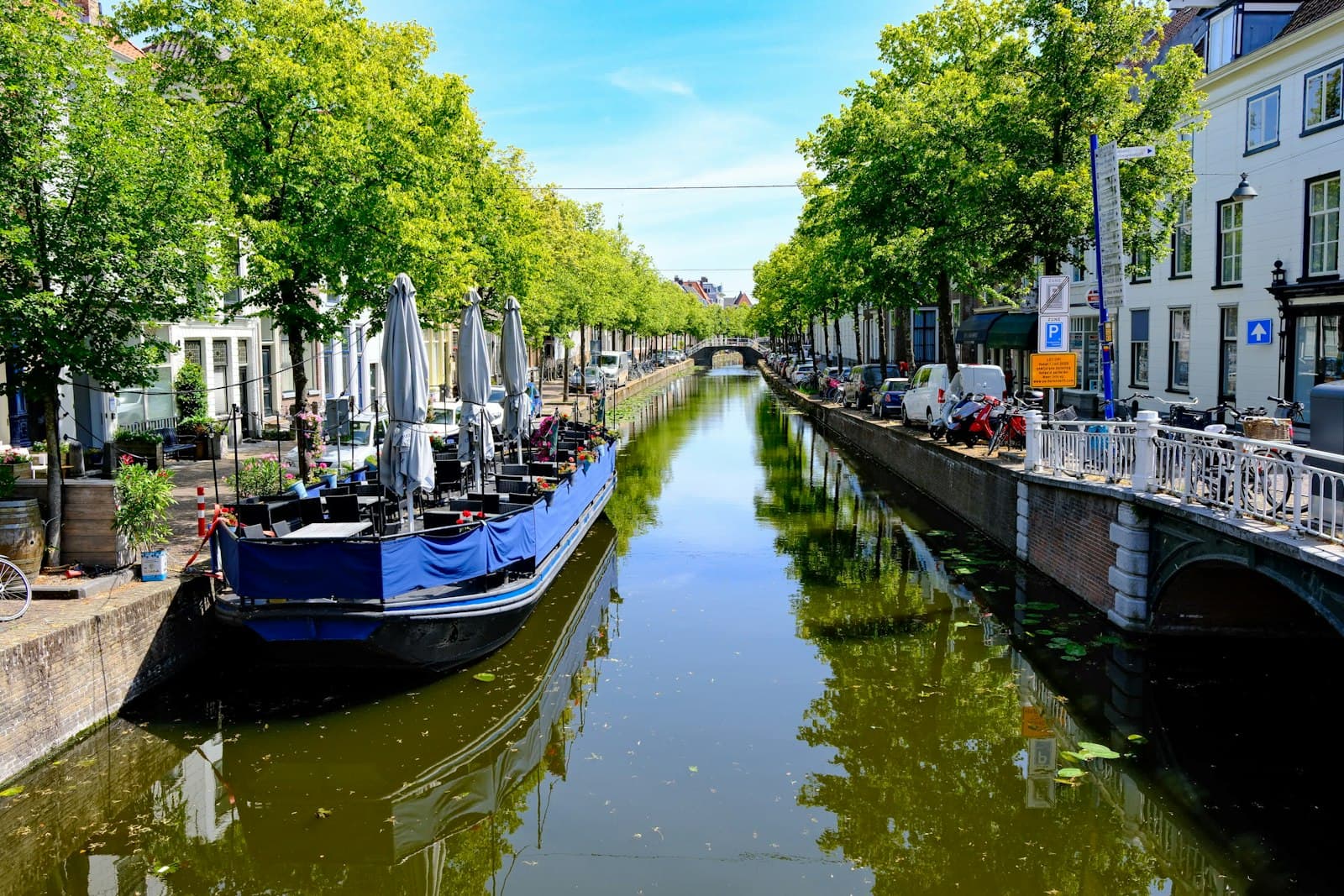
Overview
Best Self-Guided Walking Tours in Delft (2026)
3 min
Overview
Delft Travel Guide: Days, Transport, Safety, and Costs
6 min
Overview
One Day in Delft: A Walkable Itinerary
7 min
Thematic
The Small Town That Made Big History: Delft's Light, Its Martyr, and Its Blue
8 min
Companion
The Prinsenhof in Delft: Where a Single Shot Founded a Nation
7 min
Deep dive
Nieuwe Kerk, Delft: The Church That Turned a Rebel Into a Dynasty
6 min
Read
What to Eat in Delft: Herring, Stroopwafels, and How to Order Like a Local
7 min
Read the walk
The full story of Prinsenhof: The Shot That Made a Nation, in words. Prefer to listen? Play it narrated, from home or on location.
Introduction
Some countries can point to a battlefield as their birthplace. The Netherlands can point to a stairwell in Delft. In this small canal city, William of Orange, the leader of the revolt against Spanish rule, made his headquarters inside a former convent, and here, in the year fifteen eighty-four, he was shot dead on the stairs. His killer hoped to end the rebellion. Instead he created the martyr around whom a republic formed, and William's tomb became the resting place of the whole royal House of Orange-Nassau. This walk reads Delft as the cradle of the Netherlands, where a rebellion turned into a country. Over six stops and about three-quarters of a kilometre of level walking, taking around ninety minutes to two hours at your own unhurried pace, you will move from the scene of the crime to its consequence and then to its meaning. You set out at the Prinsenhof, the former convent where the shot was fired. From there you cross to the statue of William in the garden square, out to the great market square that served as the civic stage of the revolt, over to the town hall where the assassin was jailed, and finally into the Nieuwe Kerk, where the murdered rebel lies beneath a royal crypt. Along the way I will tell you what is documented history and what is national tradition, and I will say plainly which is which. Skip any stop that does not pull at you. When you arrive at the Prinsenhof on the Sint-Agathaplein, begin with stop one.
1. Prinsenhof: The Shot on the Stairs
Stand in front of the Prinsenhof and look at an ordinary brick building that holds one of the most consequential moments in Dutch history. This was originally the Sint-Agathaklooster, a klooster, meaning convent, dedicated to Saint Agatha. When William of Orange needed a base for his revolt against the King of Spain, he took these rooms as his residence and court, living and working here from the year fifteen seventy-two until his death. On the tenth of July, fifteen eighty-four, a man named Balthasar Gerards was waiting. He was a Catholic supporter of Spain, drawn by the bounty that King Philip the Second had placed on William's life. As William moved on the staircase, Gerards fired, and William died of his wounds. The museum here preserves the bullet holes in the stairwell wall, kept behind glass, so that visitors can stand before the exact spot where a nation's founding wound was made. A word about the present. The museum is closed for a major renovation and is not expected to reopen for a couple of years, so treat this as heritage you view from the outside, not a door to walk through today. What matters here is not the interior but the fact of the place. One staircase, one shot, and a leader who had become the face of an entire uprising was gone. Gerards was captured almost at once. What he could not have known is that his act would not close the story. It would open it. Take a moment with the plain wall in front of you, and then we will meet the man himself.
2. William of Orange: Father of the Fatherland
Here, in the quiet of the Sint-Agathaplein, the plein, meaning square, beside the Prinsenhof, stands a bronze figure of Willem van Oranje, William of Orange. This is the man the Netherlands remembers as the Father of the Fatherland. Let me tell you who he actually was, and then let me be honest about the phrase. He was born on the twenty-fourth of April, fifteen thirty-three, at Dillenburg Castle, and he died here in Delft on the tenth of July, fifteen eighty-four, at the age of fifty-one. He led the revolt of the Low Countries against Philip the Second of Spain, the conflict that became the Eighty Years' War. In Dutch he carries two names: Willem van Oranje, and Willem de Zwijger, William the Silent. Now the honest part. The title Father of the Fatherland, in Dutch Vader des Vaderlands, is a national epithet, a tradition the Netherlands grew around him. It was not a title he held during his life. It is how the nation chose to remember him afterward, built on the documented fact that he led the early revolt and paid for it with his life. The Dutch national anthem, the Wilhelmus, still sings in his voice, and this statue's base carries a line from it. The figure you see is modern. It was made by the sculptor Auke Hettema and unveiled by Queen Beatrix in the year two thousand three, funded through a private bequest. So you are looking at a recent monument to a very old memory. That gap, between the man who died on a staircase and the founding father a country needed him to be, is the real subject of this walk.
3. The Markt: Stage of the Eighty Years' War
You are now on the Markt, the markt, meaning market square, the civic heart of Delft. The great Nieuwe Kerk closes one end, the town hall the other, and between them ran the public life of a rebel city. This is the place to widen the lens from one man to the war he started. The…
Full narration for this stop unlocks with the tour.
4. The Stadhuis and the Prisoner in the Steen
Turn to the town hall, the Stadhuis, meaning town hall, facing the church across the length of the Markt. Set that geography in your mind for a moment: civil power at one end of the square, church power at the other, staring each other down across the cobbles. The building you…
Full narration for this stop unlocks with the tour.
5. Nieuwe Kerk: The Mausoleum of William of Orange
Step toward the Nieuwe Kerk, the kerk, meaning church, that anchors the eastern end of the Markt. This Gothic church was built between the year fourteen hundred and fourteen ninety-six by the master builder Jacob van der Borch, who also worked on the great cathedral tower in…
Full narration for this stop unlocks with the tour.
6. The Royal Crypt: A Rebel Becomes a Dynasty
You are still inside the Nieuwe Kerk, but now think about what lies below. Beneath this church is the royal crypt of the House of Orange-Nassau, the burial vault of the Dutch royal family. It has been their resting place ever since William of Orange was interred here in fifteen…
Full narration for this stop unlocks with the tour.