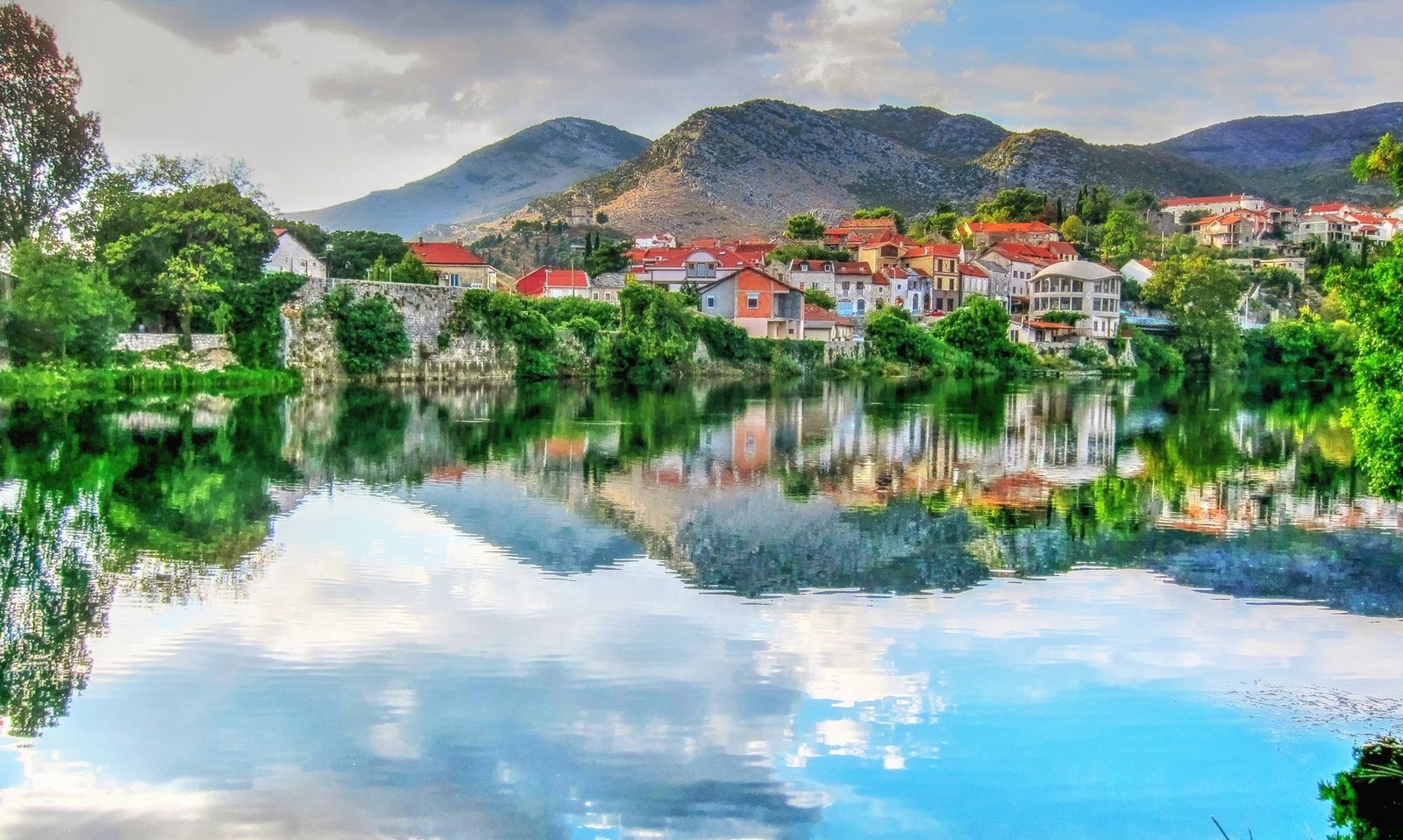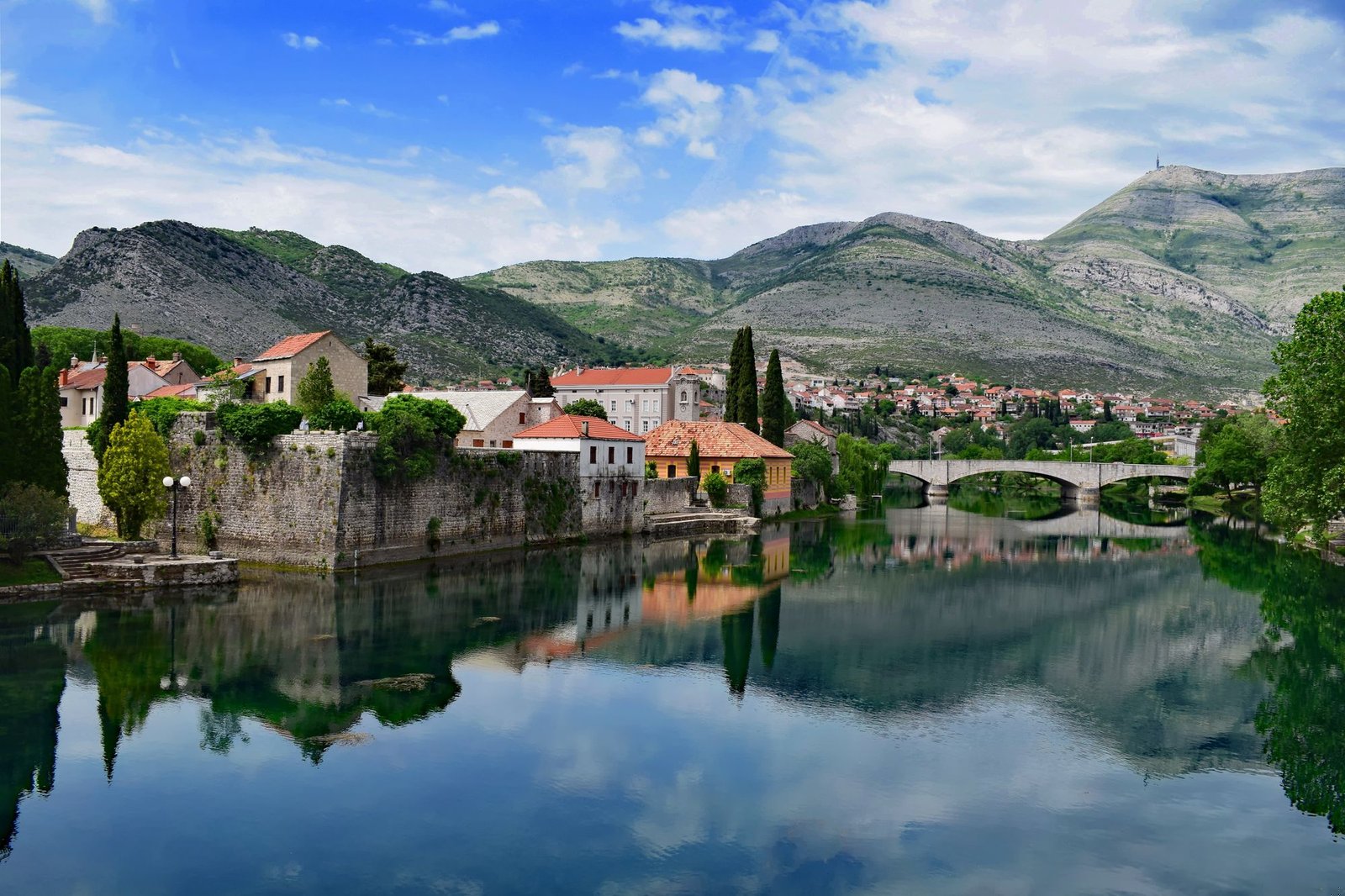
The Kastel, Trebinje's Ottoman walled quarter begun in 1714, was built by Dubrovnik masons and local labour over the river's deepest whirlpool, and that mix of hands is the clearest way to read it. Trebinje has always sat between the Adriatic coast and the Ottoman interior. Its old town is that position made into stone: an Ottoman fortress, raised on Ottoman orders, by craftsmen from the Christian republic just over the hills.
A fortress for a new frontier
The walls answer a specific moment. In the wars with the Holy League at the end of the seventeenth century, the Ottomans lost the coastal towns of Herceg Novi and Risan to Venice. The frontier moved inland, and Herzegovina had to be reorganised around new strongpoints. Trebinje, on the road up from the coast, became one of them.
The man who made it a fortress was Osman-pasa Resulbegovic, founder of a family that would shape the town for generations. Work began in 1714 and was briefly interrupted by a war with Venice. The following year a moat, a hendek, was dug around the quarter and connected to the Trebisnjica. For about two centuries the river itself guarded the town, until the moat was filled in by 1932 on a doctor's advice against disease. The drawbridge that crossed it is gone too; only the line of the walls remembers where the water ran.
The whirlpool underneath
Hear a stop from this walk
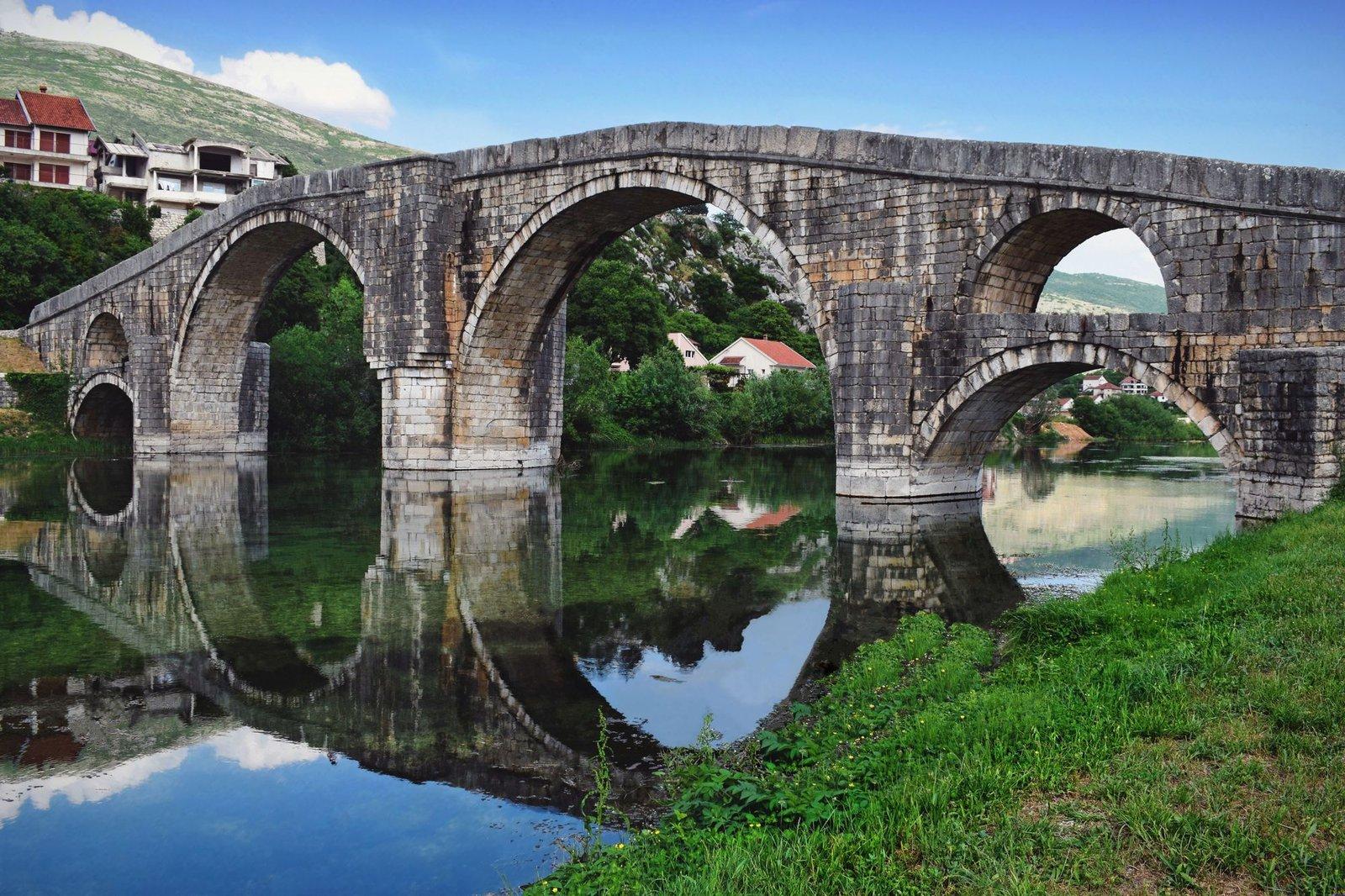
The Arslanagic Bridge: Moved Stone by Stone
Choose your viewpoint on the bank and look at where the walls stand. The quarter sits on the right bank above the deepest part of the river, a spot remembered as Ban Vir. A vir is a whirlpool. The ban was a legendary local lord said to have drowned in it. The tourism authority places an older medieval fortress on the same site, and the name carries that memory forward. The Ottomans built where earlier rulers had built, over water dangerous enough to need a legend.
Hands from both directions
The detail worth holding is the workforce. The masters came from Dubrovnik, the coastal republic that traded through this valley. The labour came from the surrounding country, from places such as Ljubinje, Cernica and Niksic. So the Ottoman walls of Trebinje were, quite literally, imported from the sea and from the hills at once. The same pattern runs through the buildings inside: the town's two historic mosques are also recorded as the work of builders brought from Dubrovnik, and their lines carry Mediterranean touches.
The quarter began roughly triangular and rounded out over time, reaching its final form within the first four decades of the eighteenth century. Inside the walls stand the Sultan Ahmed Mosque of 1719, the larger Osman Pasha Mosque of 1726, destroyed in the early 1990s and rebuilt between 2001 and 2005, and the sahat-kula, the clock tower, from the same burst of building. The Kastel is now a National Monument of Bosnia and Herzegovina.
How to read it on foot
Pass through the gate and notice the change of scale. The square outside belongs to the planned Austro-Hungarian town laid out after 1878, with wide spaces under plane trees. Inside, lanes narrow, stone closes in and doorways drop low. That contrast is the whole point of the stop: two empires, two ideas of a town, a wall's thickness apart.
Look at the masonry rather than for any particular shop or cafe. The durable things here are the walls, the two mosques, the clock tower and the stone houses of the Resulbegovic era. It is still a lived-in neighbourhood, so move through it gently, and treat the mosques as the working places of prayer they are.
The Kastel is stop 3 of Historic Center: Crossroads of Empires, a self-guided walk you can take at your own pace from the plane trees of Trg slobode to the Arslanagic Bridge. For the whole route, read the tour companion, and see all routes on the Trebinje page.
Sources
- Herzegovina Tourism Region, Trebinje Old Town: the Holy League wars and the loss of Herceg Novi and Risan, Osman-pasa Resulbegovic, the 1714 start interrupted by war with Venice, Dubrovnik craftsmen, labour from Ljubinje, Cernica and Niksic, the moat dug the following year, the Ban Vir legend.
- Visit Srpska, Osman-Pasha's Mosque: the 1726 mosque as Osman-pasa Resulbegovic's endowment.
- Roamer's audited tour transcript: the triangular plan, the 1932 filling of the moat, the drawbridge, the 1719 and 1726 mosques, the clock tower and the National Monument status.
Ready to experience it?

Historic Center: Crossroads of Empires
85 min · 2.5 km · easy
More from Trebinje
Explore more at your own pace.