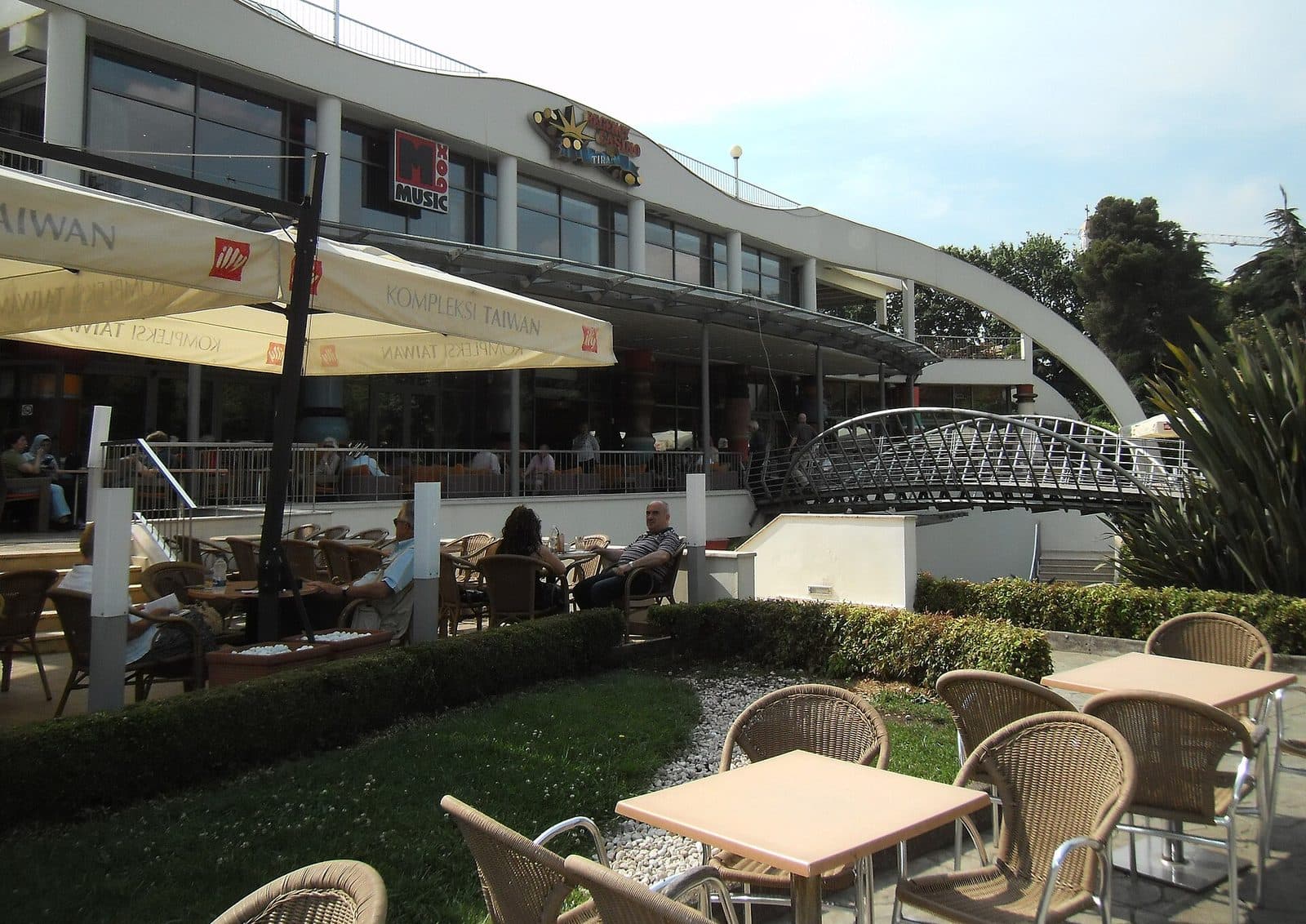
The Grey to Great tour walks you through the visible evidence. The painted apartment blocks, the renovated bazaar, the new public squares, the cloud installation on the boulevard, the reborn pyramid. This is the longer story of how the visible evidence got there. There is one figure at the centre of it, and to understand Tirana you have to understand him. Edi Rama is the only painter in European history who has run a national capital and a country. The fact that he ended up doing both, in that order, is partly accidental and partly the result of a thesis he has been refining for twenty-five years about what a city is for.
The city that needed to be repainted
To understand what Rama was responding to, you have to picture Tirana in the late 1990s. The communist regime had ended in 1991, in the square where the bronze statue of Hoxha was pulled down with cables. The transition to a market economy that followed was chaotic in ways that even Albanians remember as exceptional. In 1997, the country's economy collapsed when a series of fraudulent pyramid investment schemes failed simultaneously. Two-thirds of the Albanian population had invested in them. The collapse was followed by months of civil unrest in which over two thousand people died. Government armouries were looted. The state effectively ceased to function in much of the country. Tirana itself remained relatively stable, but the city emerged from 1997 visibly exhausted.
The physical fabric of the capital reflected the exhaustion. Forty-six years of communism had left every apartment block in Tirana unpainted. Not faded. Unpainted, as in never painted in the first place. The buildings were grey concrete with the original construction marks still on them. The streets were unpaved in many neighbourhoods. Illegal construction had exploded in the 1990s, with families adding floors and rooms to existing buildings without permits, and entire shantytowns growing on the city's outskirts. The Lana River, which runs through the centre, was effectively an open sewer. Skanderbeg Square was a traffic-choked roundabout.
This is what Rama inherited when he was elected mayor in October 2000. He was forty-five years old. He had no political experience. He was a professional painter who had exhibited in galleries in Paris, Brussels, and Berlin. He had served briefly as Minister of Culture in a previous Socialist government but had spent most of his career as an artist. He won the mayoral election partly because his opponent was associated with the corrupt establishment that had produced 1997, and partly because Tirana, at the end of the decade, was ready to vote for someone unconventional.
The first bucket of paint
Hear a stop from this walk
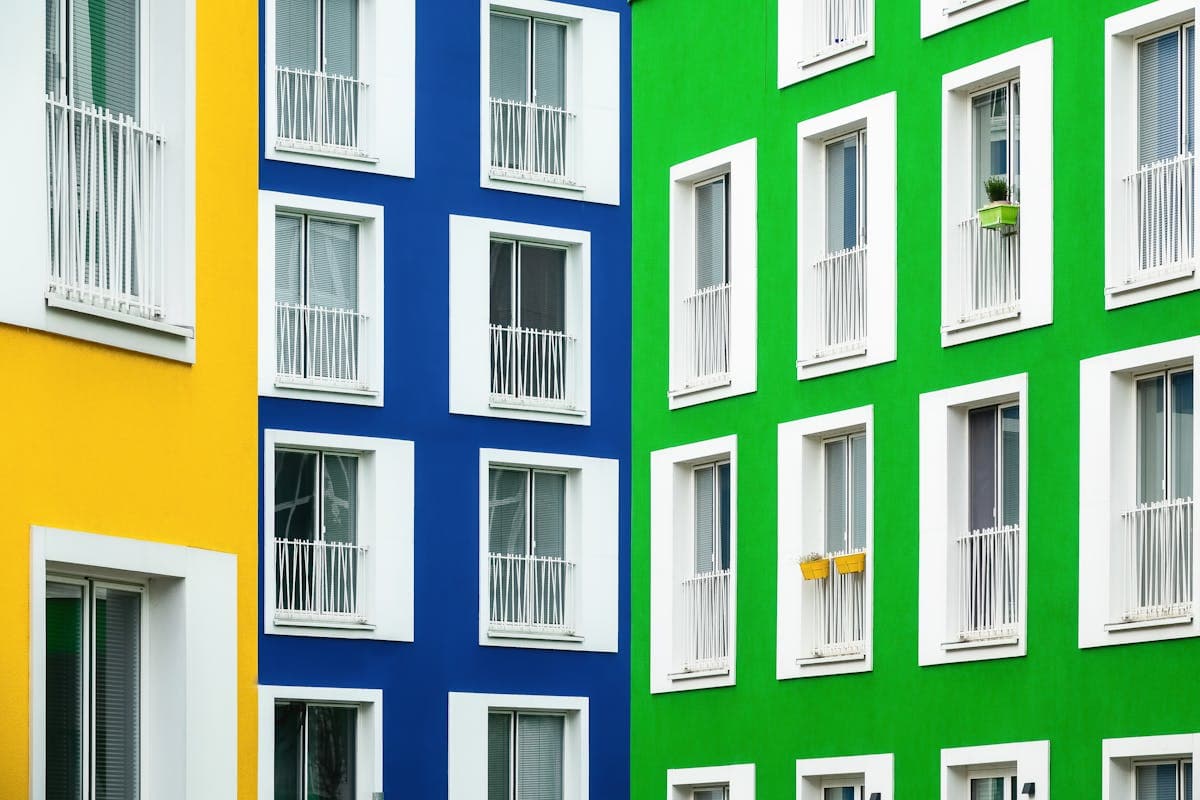
Painted Buildings on Rruga e Kavajes
The story Rama tells about the painting program is by now well-worn, partly because he has told it himself many times in interviews and TED talks, and partly because the early municipal records corroborate the broad outline. He decided, sometime in 2003, that the first thing he could do that would not require waiting for funding or permits was repaint a single grey apartment building. He picked one. He had it painted bright orange.
The reaction was immediate. Crowds gathered. Traffic stopped. People who had walked past that building for decades without looking up suddenly could not stop staring. The municipal phone lines filled with calls. Some were angry. Most were curious. A poll conducted shortly afterward reported that eighty percent of residents wanted more buildings painted. Rama kept going.
What followed, over the next several years, is the visual signature of contemporary Tirana. Buildings on Rruga e Kavajës in geometric patterns of orange, turquoise, and pink. Buildings along the Lana River corridor in cascading stripes. Buildings near the Pyramid in dotted gradients. Buildings near the bazaar in colour blocks. Rama invited artists, architecture students, and children to design facades. There was no consistent palette, no centralised design committee, no master plan. The chaos of the colour was the point.
The opposition came from inside and outside Albania. EU officials, who controlled the reconstruction funding Rama would otherwise have been able to use for other municipal priorities, were horrified. The colours, they argued, did not meet European standards. The funding should be spent on infrastructure, on sewers, on roads, on what could be measured. Rama reportedly responded that Tirana's citizens needed hope before they needed standards. He kept painting.
The clearest contemporary documentation of his thinking is the TED talk he gave in 2012, "Take Back Your City with Paint." In it, he argues that the colour program produced measurable effects beyond visual change. Tax compliance went up in painted neighbourhoods. Littering decreased. Reported crime rates fell. Shop owners voluntarily renovated their storefronts. Rama's claim was that the colour functioned as a kind of social permission. The buildings became canvases that residents felt responsible for. The neighbourhood became a place worth caring about. The infrastructure investments that followed, the paved streets, the cleaned river, the public squares, were easier to fund and execute because the residents had started to trust that improvement was possible.
The strongest sceptical reading of these claims, and there is a serious one, is that Rama's metrics are unverified municipal data from his own administration and that the gains in compliance, civic engagement, and reduced crime would have happened anyway during the broader 2000s Albanian economic recovery. The strongest sympathetic reading is that the painting program, even if its direct effects are hard to measure, changed the international perception of the city in a way that made everything else possible. Foreign investors began returning. International architects began accepting commissions. Tirana started to appear in design magazines and travel sections. The visible transformation made the invisible transformations easier.
What is not in dispute is that Rama served eleven years as mayor, won the inaugural World Mayor Prize in 2004, won re-election twice, and built a political base out of Tirana that he eventually used to become Prime Minister of Albania in 2013. He is still in office. The painting program is now twenty-three years old. Some of the original facades have weathered and been repainted. Others have not. The chaos remains the visual signature.
The harder structural work
The painting is the part of the transformation that everyone notices and that gets photographed. The structural work behind it is less visible and more important.
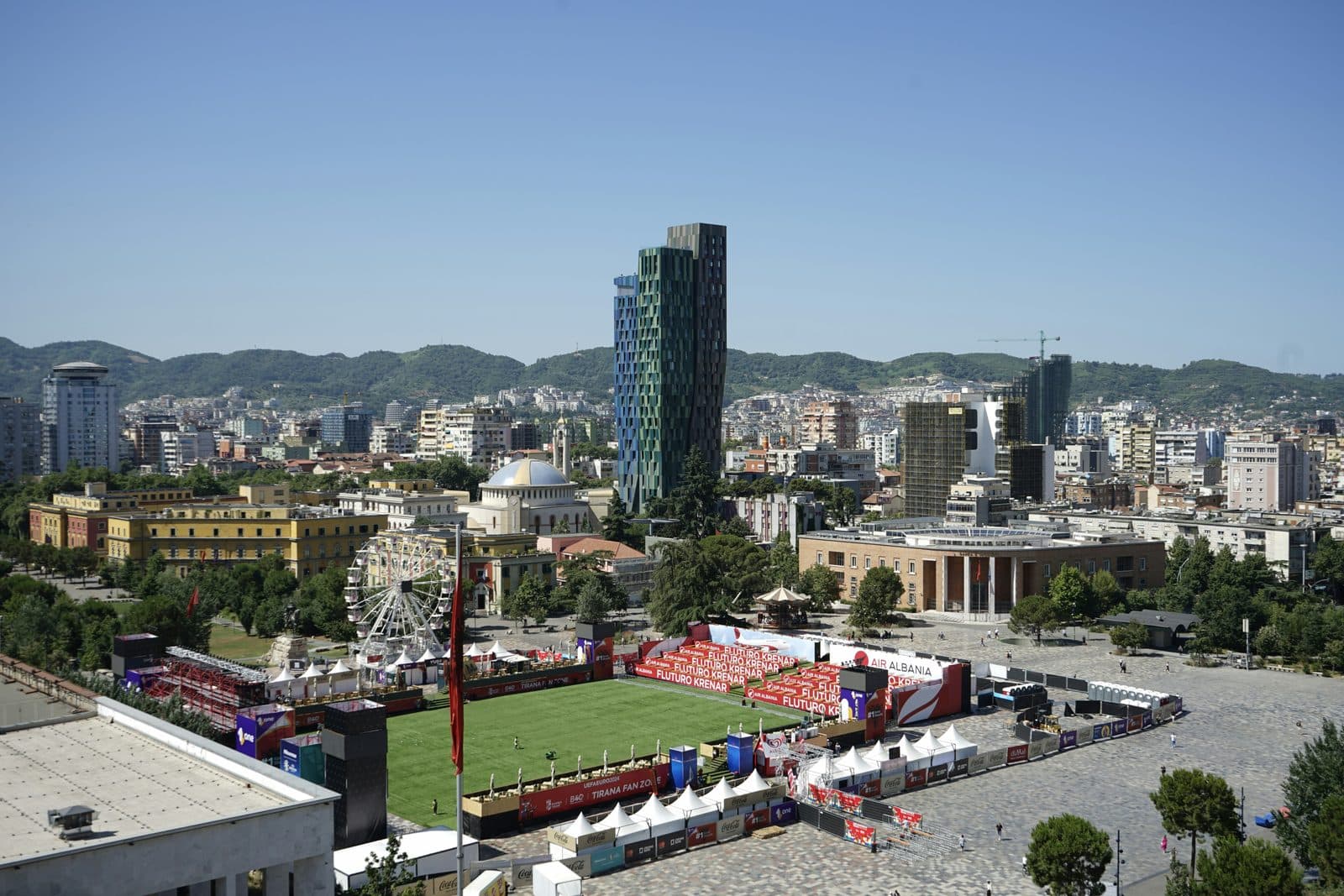
Skanderbeg Square is the clearest example. The redesign by the Belgian firm 51N4E, working with the Albanian artist Anri Sala and other collaborators, won an international competition in 2008. The proposal was radical. Empty the square. Take everything out, the fountains, the monuments, the flowerbeds, the traffic. Pave the whole thing with stones from every region of Albania. Slope it gently toward a slight rise in the centre. Run thin channels of water down the slope as fountains. The square would be a geological map of the country, assembled underfoot. The construction took years and reopened in 2017. In 2018 it won the European Prize for Urban Public Space. The jury called it "an exercise in radical simplicity." The square is now one of Europe's most-photographed public spaces and the spine of Tirana's pedestrian life.
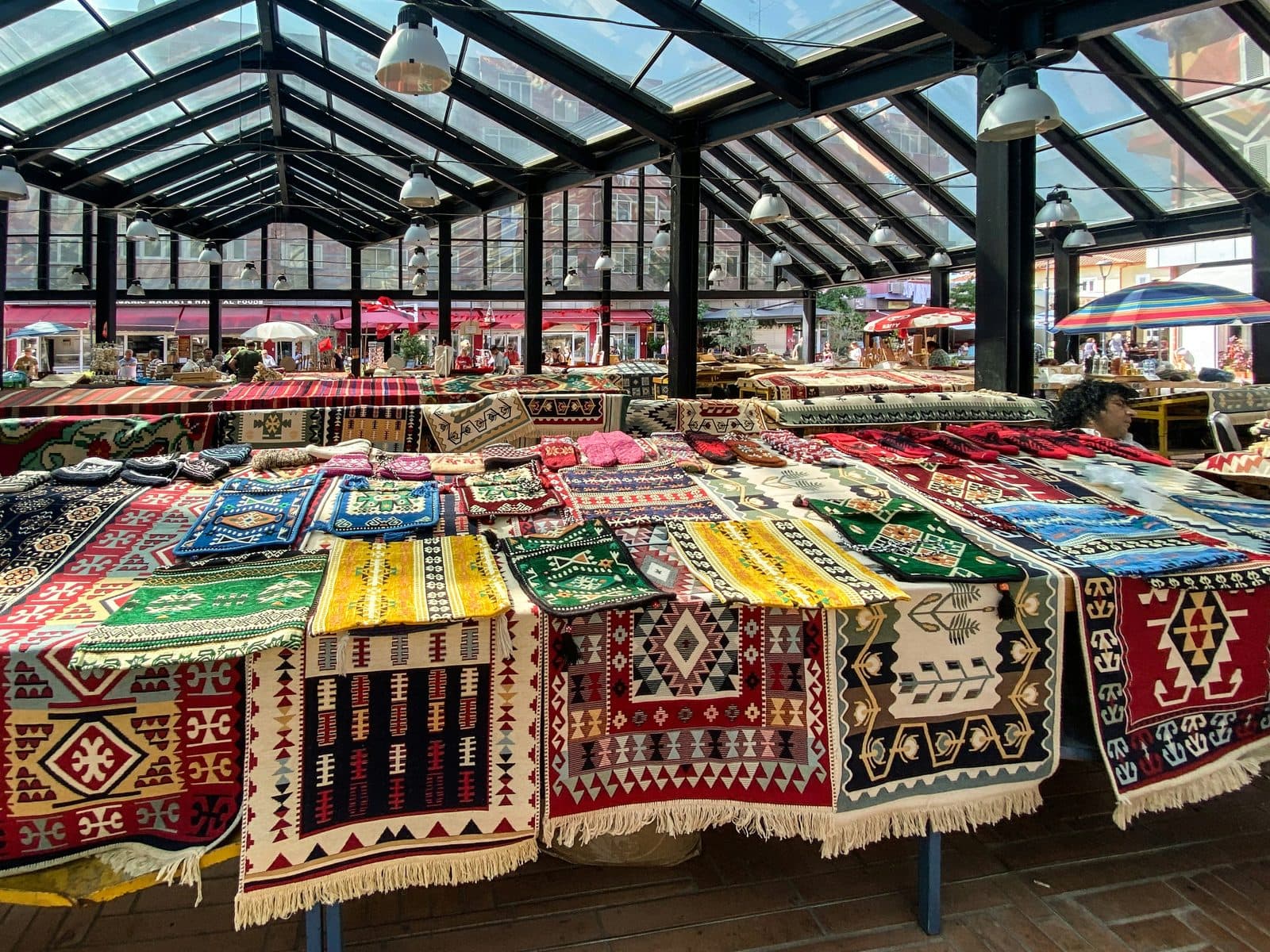
The New Bazaar renovation, also completed in 2017, was funded by the Albanian-American Development Foundation and designed by the Albanian firm Atelier 4. They restored fifteen heritage buildings rather than demolishing them, added a modern glass-and-steel market hall with a roof echoing the traditional rooftops of old Tirana houses, and painted the surrounding facades in vivid colours that match the building-painting aesthetic of Rruga e Kavajës. The bazaar now has about a hundred and thirty vendors and is the city's daily food centre.
The Reja installation by the Japanese architect Sou Fujimoto, placed on the boulevard in front of the National Art Gallery in 2016, is a steel lattice that covers three hundred and fifty square metres and rises seven metres. It is a cloud. It hosts film screenings, concerts, and casual gathering. The boulevard it sits on was designed by Mussolini's architect Gherardo Bosio in 1941 and was the Fascist Viale dell'Impero, then the communist parade route. A Japanese cloud sitting on a Fascist boulevard is the kind of juxtaposition Tirana now produces routinely. It is the visual grammar of the transformation.
The Pyramid renovation by MVRDV, completed in 2023, is the most architecturally ambitious of the projects. The Dutch firm did not demolish the dictator's monument or restore it. They covered the brutalist concrete shell in sixteen cascading exterior staircases that anyone can climb. They preserved one section of smooth concrete so people can still slide down it, a nod to the teenagers who used the ruin as a giant slide for thirty years. Inside, the building now houses TUMO Tirana, a free after-school programme in coding, animation, filmmaking, and design for ages twelve to eighteen. Over seven hundred Albanian teenagers attend. The project won the 2024 BIG SEE Grand Prix.
What the transformation actually means
The transformation has now been running long enough that you can read it as a thesis, not just as a sequence of projects. The thesis is about what a city can do when it decides that its past is not the obstacle to its future but the material it works with.
Other post-communist capitals have made different choices. Warsaw rebuilt its medieval core after the war as a kind of restorative gesture and has spent the subsequent decades treating its communist-era architecture as embarrassment to be removed. Berlin has been more selective, preserving fragments of the Wall, the Stasi Museum, and Treptower Park, but mostly building over the regime's traces. Bucharest has the Palace of the Parliament as a vast unresolved object that nobody can quite agree what to do with.
Tirana's answer is that the buildings stay and the meanings change. The boulevard built by Fascists for military parades is now a pedestrian promenade with a Japanese cloud on it. The square built for communist demonstrations is now Europe's most-acclaimed public space, paved with stones from every Albanian region. The bazaar nearly killed by state control is now the city's food heart, surrounded by Caribbean colours. The pyramid built to glorify a dictator is now a free school for the dictator's great-grandchildren's generation. The neighbourhood that was sealed off for the communist elite is now the bar district where the dictator's villa hosts artists.
The reuse is the message. Tirana has been arguing, for twenty-five years and counting, that what a city does with its history is more important than what it does with new construction. The painted buildings were the first move. The renovated public spaces were the second. The reborn pyramid is the most recent. Each project added to the same argument: that the city's past is something to be worked with, not erased.
Rama is still in office as Prime Minister. The municipal apparatus that drove the transformation continues under his political successor, Erion Veliaj, who was mayor from 2015 until his arrest in February 2025 on corruption charges. The Veliaj indictment has cast a shadow over some of the more recent projects, particularly questions about how construction contracts and demolition orders were issued. But the architectural transformation predates the controversies and outlasts them. The painted buildings are still painted. The Pyramid is still climbed. The square is still walked. The argument the city has been making since 2000 is, by now, structural.
The transformation is what makes Tirana legible. Once you understand the painter became the mayor and the mayor stayed long enough to repaint the city, the rest of what you see makes sense. The chaos is intentional. The colour is the policy. The reuse is the philosophy.
Ready to experience it?
Grey to Great
75 min · 2.55 km · easy
More from Tirana
Explore more at your own pace.
Best Self-Guided Walking Tours in Tirana (2026)
One Day in Tirana: A Walkable Capital Itinerary (2026)
The City That Did Not Forget: How to See Tirana
Tirana Travel Guide: How Many Days, Getting Around, Is It Safe (2026)
What to Eat in Tirana: An Albanian Food Guide (2026)