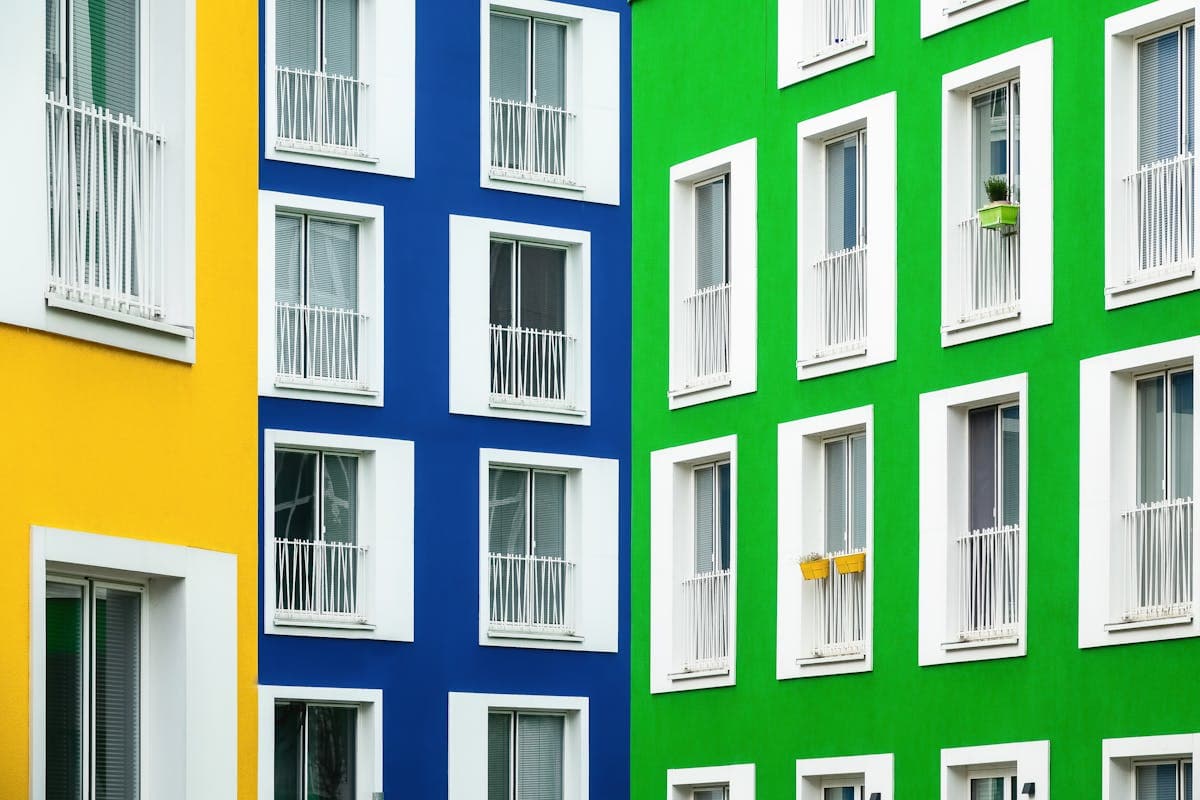
Walk through the most dramatic urban transformation in modern Europe — from grey communist apartment blocks to painted facades, a dictator's pyramid turned into a coding school, and a forbidden neighborhood reborn as a cocktail district. Every stop has a before and an after.
Start · National History Museum Mosaic
DirectionsStops
- 1
National History Museum Mosaic
The last official version of Albania's story that the communist state ever approved — a 565 square meter mosaic of heroic propaganda on the museum facade.
- 2
Skanderbeg Square
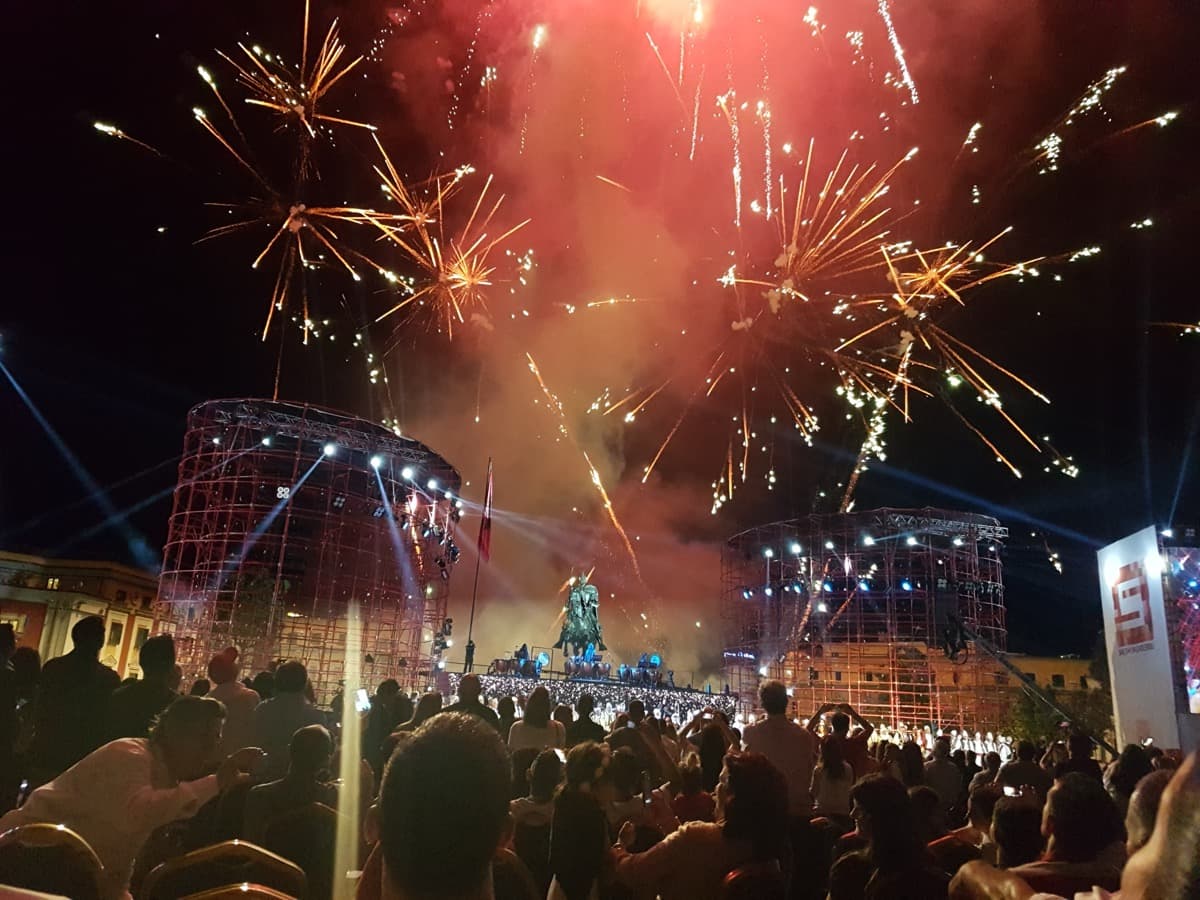
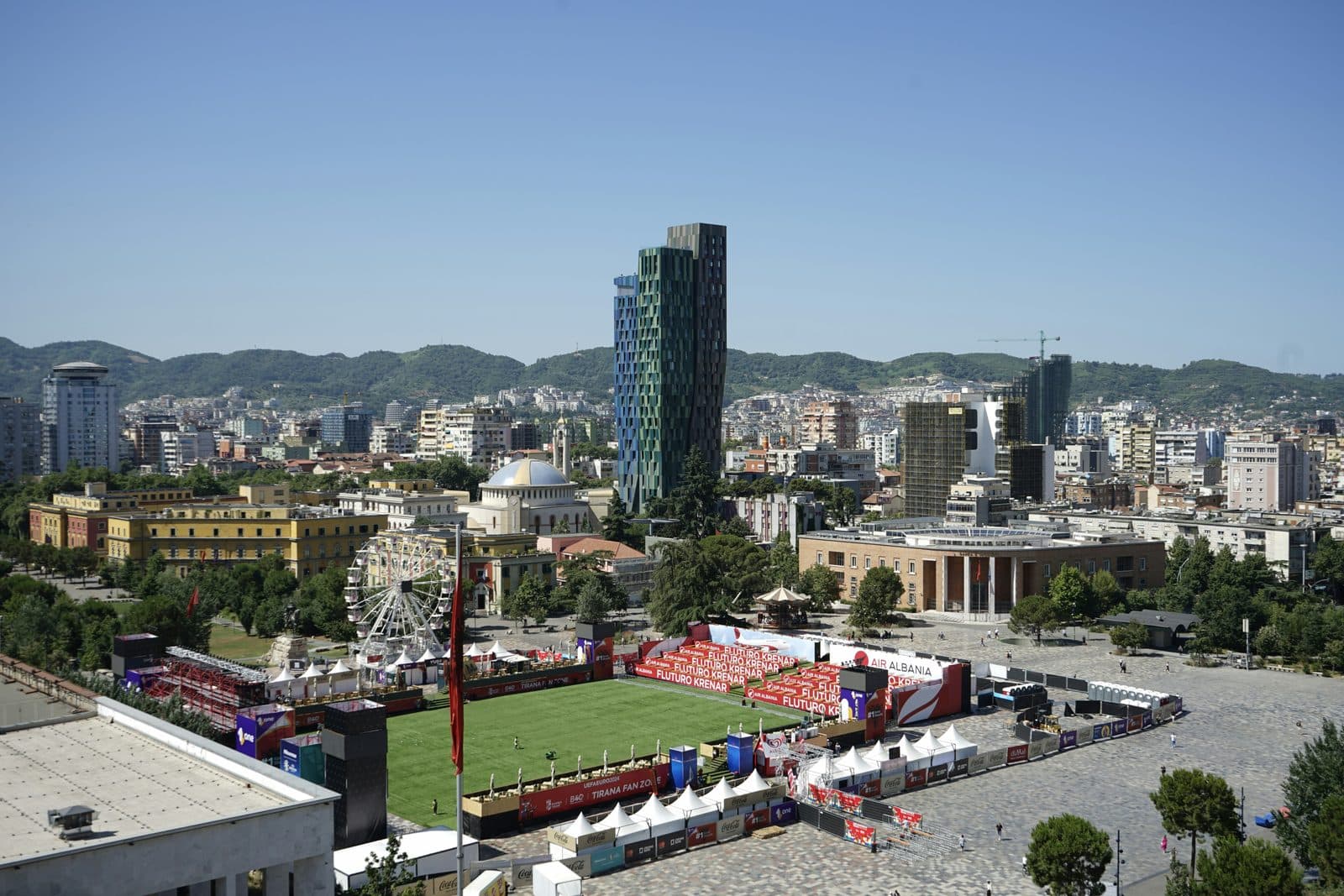
Once a chaotic traffic roundabout and communist parade ground, now one of Europe's most acclaimed public spaces — paved with stones from every region of Albania.
- 3
Pazari i Ri (New Bazaar)
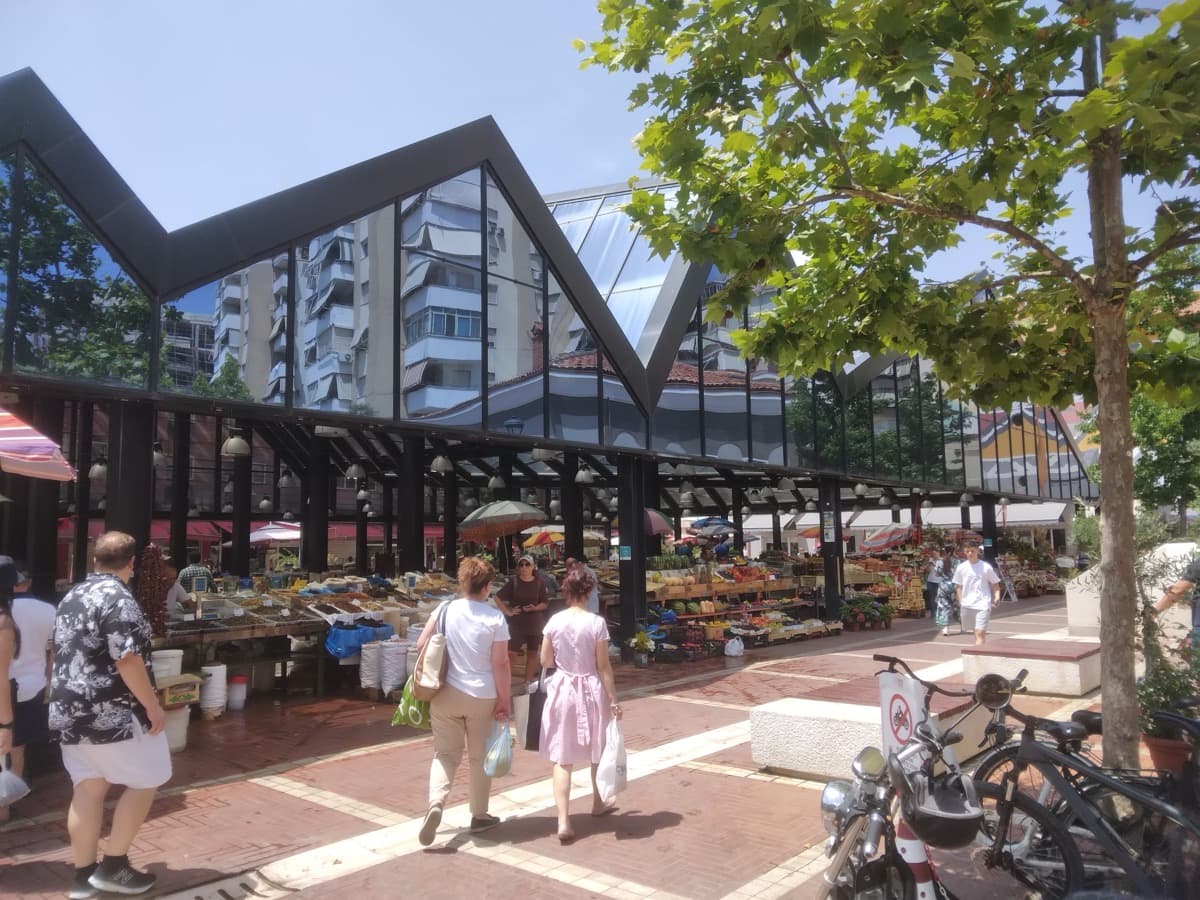
An Ottoman-era market reborn — fifteen heritage buildings restored, a modern glass-and-steel hall added, and facades painted in Caribbean-bright colors.
- 4
Painted Buildings on Rruga e Kavajes
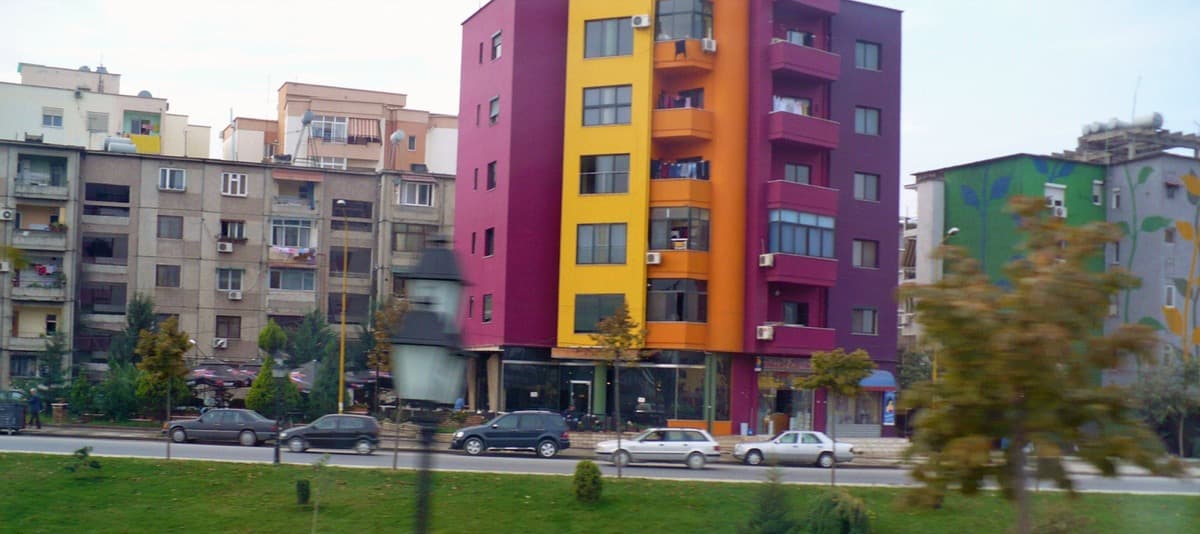
The communist-era apartment blocks that an artist-turned-mayor transformed with bold geometric paint — the most audacious act of civic transformation in any European city.
- 5
Reja (The Cloud)
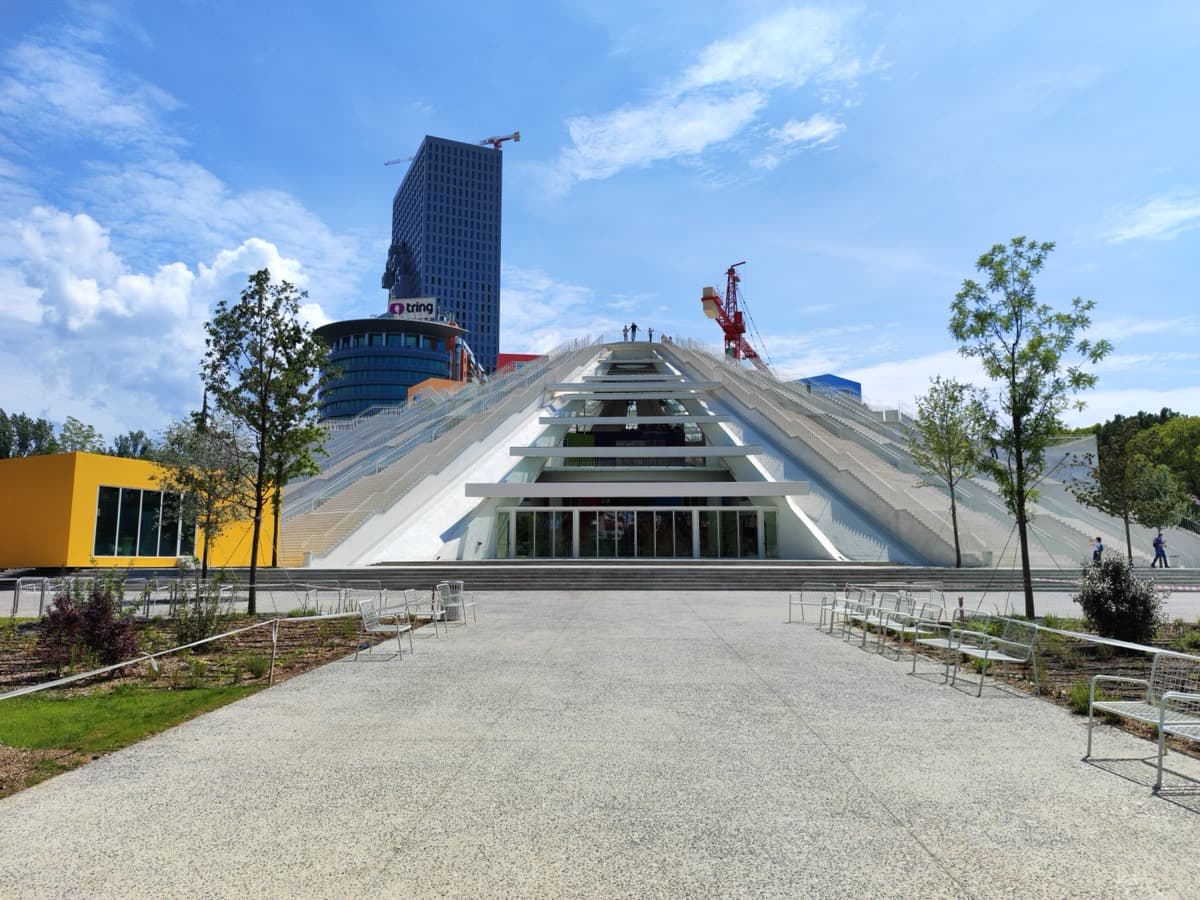
A semi-transparent steel lattice by Japanese architect Sou Fujimoto — a cloud of light and air placed on a boulevard built to project the weight of empire.
- 6
The Pyramid of Tirana
A dictator's daughter built a monument to her father. It became a ruin. Now it is a free coding school for teenagers — the greatest before-and-after story in Europe.
- 7
Blloku & Postbllok
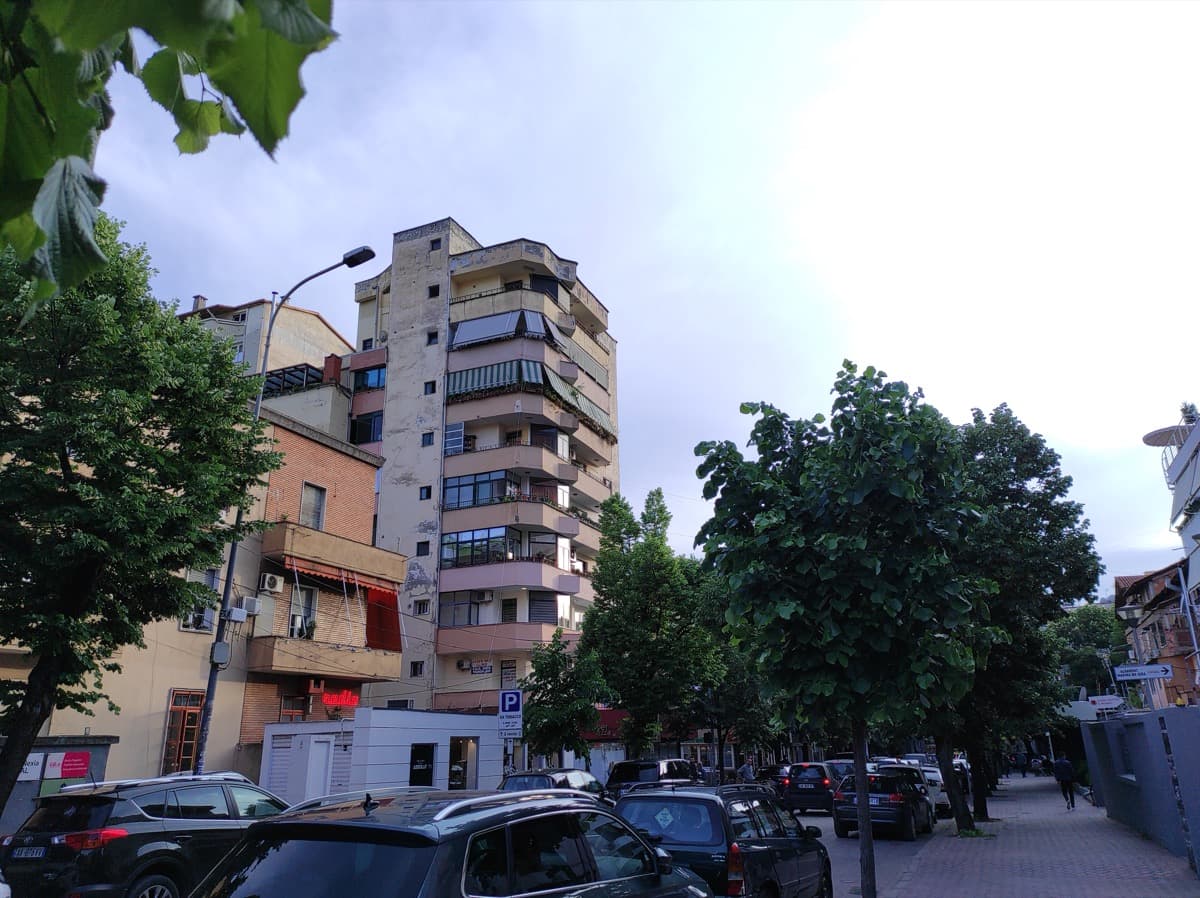
A neighborhood that was forbidden to every ordinary Albanian citizen within living memory — now the trendiest street in the country, entered through a memorial made of prison pillars and a piece of the Berlin Wall.
Details
Best Time to Visit
Late afternoon between 4:00 and 6:00 PM offers the best light for photographing the painted facades and colorful bazaar — golden hour makes the colors pop. The Pyramid is spectacular at sunset. Skanderbeg Square is at its most photogenic in the hour before dusk. Blloku comes alive in the early evening with cafe terraces filling up, making for a perfect tour ending.
Pro Tips
- •Bring your camera — this is the most photogenic tour in Tirana. The painted buildings, the bazaar facades, the Pyramid staircases, and the Reja installation are all highly visual stops that reward photography.
- •Climb the Pyramid exterior after listening to the audio — the staircases are free and open, and the view from the top gives you a panorama of the entire tour route.
- •Budget extra time at Pazari i Ri if you want to eat — the market restaurants serve excellent cheap food (byrek, grilled meats, fresh salads) and this makes a natural mid-tour refueling stop.
- •End the tour with a drink in Blloku — the neighborhood has dozens of excellent cafes and cocktail bars. Sitting in a former forbidden zone with a coffee is the perfect way to absorb what you have just heard.
Safety & Precautions
- •The Pyramid staircases have no guardrails on some sections. Exercise caution when climbing, especially with children. The smooth sliding section can be slippery when wet.
- •Rruga e Kavajes is a busy street with vehicle traffic. Stay on the sidewalks when photographing the painted buildings and be aware of traffic when looking up at facades.
- •Summer temperatures in Tirana can exceed 35 degrees Celsius. The boulevard section between Reja and the Pyramid has limited shade. Carry water and wear sun protection if walking in midday heat.
Travel advisory: Exercise Increased Caution (Level 2).
Gallery
Related Reading
Go deeper on what you'll see, hear, and walk through.
Read the walk
The full story of Grey to Great, in words. Prefer to listen? Play it narrated, from home or on location.
Introduction
Tirana is a working laboratory for what a post-communist city can do with paint, ambition, and an artist as mayor. The laboratory has been open for twenty-five years, and the result is the most colorful city in Europe.
Thirty-five years ago, this place was one of the greyest, most lifeless capital cities on the continent. Rows of identical concrete apartment blocks, unpainted, crumbling. No private cars, no neon, no shop fronts. A city sealed off from the world for forty-six years, where religion was banned, where leaving the country was punishable by death, and where seven hundred and fifty thousand concrete bunkers dotted the landscape because the dictator was convinced the entire planet was about to invade.
Now look at the colors, the cafes, the cranes on the skyline. Tirana today has more cafes per capita than Rome. Its main square just won one of Europe's top architecture prizes. A dictator's pyramid is now a free coding school for teenagers. The whole transformation started with a single bucket of orange paint.
This tour tells the story of how Tirana went from grey to great. Not through politicians or policies, though there is one politician in this story, and he is unlike any you have ever heard of, but through architecture, design, color, and sheer civic audacity.
The walk is seven stops, about two point five kilometres and seventy-five minutes, moving south through the center from Skanderbeg Square to the Blloku neighbourhood. It starts at the National History Museum mosaic and closes in Blloku, the quarter that was forbidden to ordinary Albanians within living memory. When you arrive at the mosaic, begin with stop one.
1. National History Museum Mosaic
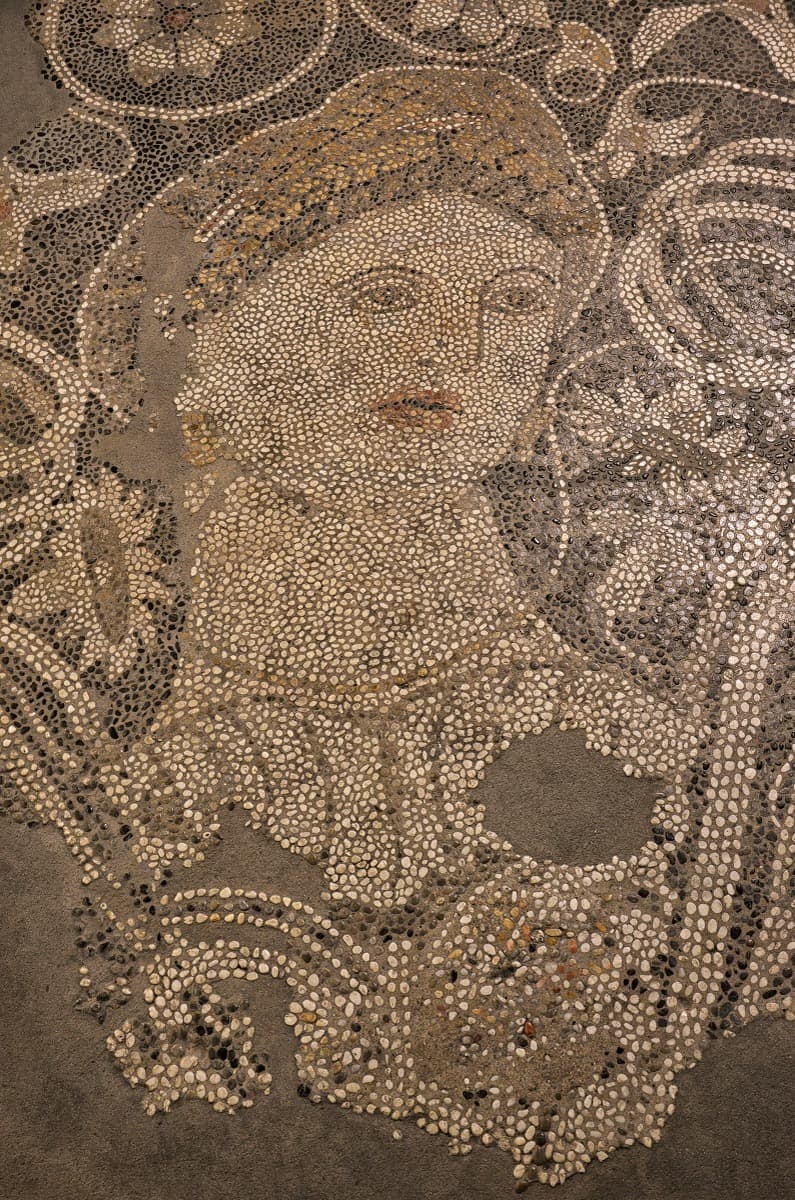
Welcome to the National History Museum mosaic, your first stop on this tour. Look up at the building in front of you. That enormous mural stretching across the entire facade, five hundred and sixty-five square meters of painted mosaic, is called "The Albanians." It was completed in 1981 by five Albanian artists, and it is the last official version of Albania's story that the communist state ever approved.
Read it like a sentence, left to right. Illyrian warriors. Medieval fighters. Skanderbeg on horseback. Partisan heroes with rifles raised. Workers, peasants, soldiers, intellectuals, all marching forward together into a glorious socialist future. Everyone is strong. Everyone is determined. Everyone is moving in the same direction. It is beautiful, it is dramatic, and it is a complete fabrication.
By 1981, when this mosaic was unveiled, Albania was the poorest country in Europe. Average monthly income was fifteen dollars. Religion had been banned for fourteen years. One in every hundred citizens was a secret police officer. Twenty percent of the population were informants. The glorious socialist future depicted on this wall was a lie, and everyone standing in front of it knew it.
But here is what makes this stop matter for our tour. This mosaic is the "before." It is the last image Tirana's communist rulers wanted you to see, heroic, monolithic, marching in lockstep. Everything you will see for the rest of this walk is the "after." Color instead of grey. Plurality instead of uniformity. Mess and energy and life instead of this rigid, single-direction march.
Notice something else. The mosaic has no color in it, well, it does, but it is the color of ideology. Reds, golds, earth tones. State-approved color. The palette of propaganda. Compare it to what you are about to see across this city, the wild pinks and oranges and turquoises that an artist-turned-mayor threw onto apartment blocks twenty years later. The difference between state color and human color is the difference between control and freedom.
Take a photo of this mosaic. You will want it later, when you are standing in front of the painted buildings on Kavajes Street, because the contrast will hit you like a freight train.
Now turn around and walk into the square behind you. Because the square itself is the first great transformation.
2. Skanderbeg Square
Welcome to Skanderbeg Square. You are standing in what may be the most dramatic public square transformation in modern Europe. And to understand why, you need to picture what this place looked like before.
Until 2017, Skanderbeg Square was a chaotic traffic roundabout. Cars, buses, and trucks circled a patchy green space in the center. The pavement was cracked. The Soviet-era layout, designed for military parades and displays of state power, had been clumsily adapted for a city that suddenly had private cars after 1991 but no idea how to manage them. It was loud, polluted, and hostile to pedestrians. Tourists crossed it quickly. Locals avoided it entirely.
Then came the competition. In 2008, the Belgian architecture firm 51N4E, working with Albanian artist Anri Sala, won an international design contest with a proposal so radical it was almost absurd. Their idea: empty the square. Take everything out. No fountains, no monuments, no flowerbeds, no fences. Just a vast, gently sloping pedestrian surface, forty thousand square meters of open stone. And then the detail that makes it extraordinary: they paved the entire square with stones sourced from every region of Albania. One hundred and thirty thousand tiles, cut from thirty different types of native stone. The square is literally a geological map of the country.
Look down at the ground beneath your feet. Each of those paving stones came from a different corner of Albania, limestone from the coast, granite from the northern mountains, marble from the south. You are walking on the country.
The square slopes gently toward a small rise in the center, where fountains send thin streams of water trickling down the incline. The effect is subtle, you might not even notice it, but it gives the space a natural flow. People drift toward the center. Children play in the water channels. On summer evenings, the entire square becomes an open-air living room.
In 2018, Skanderbeg Square won the European Prize for Urban Public Space. The jury said it was "an exercise in radical simplicity." From Soviet parade ground to Europe's most acclaimed public space in a single redesign. That is the kind of transformation Tirana specializes in.
Look around at the buildings encircling you, the museum mosaic behind you, the Et'hem Bey Mosque to the southeast, the Palace of Culture to the east, government buildings to the south. Every era of Tirana is represented in this ring. The square itself belongs to none of them. It belongs to everyone.
That is the point.
3. Pazari i Ri (New Bazaar)
Welcome to Pazari i Ri, the New Bazaar. Look at the buildings surrounding this market. Orange, pink, yellow, green, terracotta, the facades are painted in colors so vivid they look like they belong in a Caribbean fishing village, not a Balkan capital. This is Pazari i Ri, the New Bazaar, and what you are looking at is one of the most successful market renovations in Europe.
The "New" in New Bazaar is relative. This site has been a market since the Ottoman period, a trading hub where farmers from the surrounding hills brought produce to sell. For centuries, it was the economic heartbeat of Tirana. Then communism happened. Under the Hoxha regime, private commerce was abolished. The bazaar survived, barely, as a state-controlled market where government-approved vendors sold government-approved goods at government-approved prices. By the 1990s, after communism fell, it was neglected, crumbling, and half-abandoned. A place locals avoided.
The transformation came in 2017. The Albanian-American Development Foundation funded a renovation designed by Atelier 4, a local architecture firm. They did something clever: instead of demolishing and rebuilding, they restored the existing structures, fifteen buildings classified as cultural heritage, and added a modern glass-and-steel market hall with a roof shaped like the traditional rooftops of old Tirana houses. Then they painted the facades in those extraordinary colors.
Walk through the market. One hundred and thirty vendors sell fresh produce, cheeses, olives, spices, honey, and meats. The surrounding streets are lined with small restaurants where you can eat grilled meats, fresh salads, and byrek, Albania's flaky phyllo pastry, for a few euros. On summer evenings, the whole area becomes an open-air dining room.
But here is the real story. This is not just a pretty market. This is what happens when a city decides to invest in its public spaces instead of demolishing them. The bazaar could have been bulldozed for a shopping mall. Instead, it was restored with respect for its Ottoman bones, given a modern roof, and painted in colors that announce to anyone walking in: this city is alive again.
Look up at the facades around you and take a photo. These colors are not random, they are part of a citywide transformation that started with one man and a bucket of paint. And that man is the subject of our next stop.
When you are ready, walk west. We are heading to Rruga e Kavajes to see the buildings that started it all.
4. Painted Buildings on Rruga e Kavajes
Welcome to Rruga e Kavajës. Now look up. Look at the buildings around you. Those enormous geometric patterns, orange triangles, turquoise rectangles, pink circles, stripes of canary yellow, covering the facades of communist-era apartment blocks. That is not street art. That is…
Full narration for this stop unlocks with the tour.
5. Reja (The Cloud)
Welcome to Reja, the Cloud. The structure in front of you looks like a cloud that settled onto the boulevard and forgot to leave. That is exactly the point. This is Reja, Albanian for "cloud", an installation by the Japanese architect Sou Fujimoto, placed here in 2016 in front…
Full narration for this stop unlocks with the tour.
6. The Pyramid of Tirana
Welcome to the Pyramid of Tirana. The building in front of you has lived more lives than any structure in Europe. And every single one of those lives tells you something about what Albania was becoming. In 1988, three years after the dictator Enver Hoxha died, his daughter…
Full narration for this stop unlocks with the tour.
7. Blloku & Postbllok
Welcome to Blloku, your final stop on this tour. Before you walk into the neighborhood ahead of you, stop for a moment at this memorial. The Postbllok installation, opened in 2013, is made of three elements. Those concrete pillars are from Spac Prison, a forced labor camp in the…
Full narration for this stop unlocks with the tour.