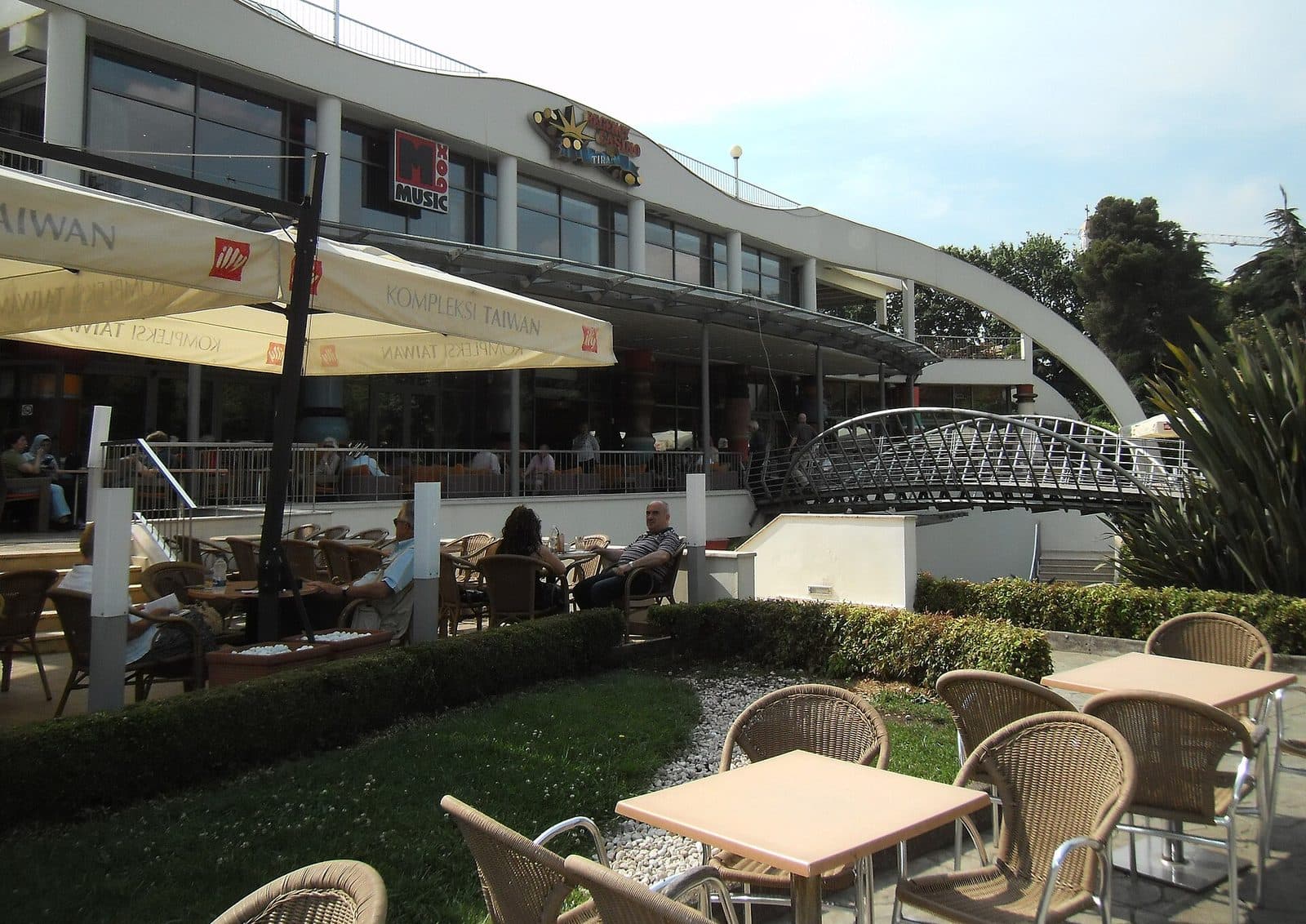
The Behind the Concrete Curtain tour walks you past the buildings. This is the longer history behind them. Each of the seven stops on that tour is a single moment in a forty-six-year arc that most outside histories of the Cold War skip over, because Albania was small, isolated, and not strategically important to the powers that wrote those histories. The skip is a mistake. Albania was where communism went furthest. Understanding what that looked like, in concrete and in human lives, is what makes the Pyramid and the painted facades you see today legible.
How Hoxha took power
Enver Hoxha was thirty-six years old when he became the head of the Albanian Communist Party in 1941. He had been a schoolteacher in Korçë in southern Albania, dismissed for refusing to join the Italian-controlled Fascist Party after the 1939 invasion. He spent the war years in the partisan resistance, building a communist movement out of a country that had almost no industrial working class to speak of. Albania in 1941 was about ninety percent rural. There were almost no factories. The Marxist categories that organised communist movements elsewhere in Europe did not really apply.
What Hoxha had instead was Yugoslav backing, a tight inner circle of cadres who had trained together in the resistance, and the willingness to be the most ruthless faction in a country where multiple armed groups were competing for the post-war future. The non-communist resistance, the Balli Kombëtar, was outmanoeuvred. The royalists were marginalised. By November 1944, the communists held Tirana. By January 1946, Albania was a People's Republic. Hoxha would rule it until his death in 1985, forty-one years later, the longest tenure of any European communist leader.
The early years borrowed heavily from the Soviet model. Stalin was the explicit reference. When Yugoslavia and the Soviet Union split in 1948, Hoxha sided with Stalin and turned against Tito. Yugoslav advisors were expelled. Yugoslav-leaning Albanian communists were purged. The pattern, ally with the most extreme available patron, then break with them, was established. Hoxha would repeat it three more times.
In 1956, when Khrushchev gave his secret speech denouncing Stalin, Hoxha refused to follow. Albania was the only Eastern European state to publicly stay loyal to Stalin's memory. By 1961, the break with Moscow was complete. The Albanian press began describing the Soviet Union as a "revisionist" power that had betrayed socialism. The Soviet submarine base at Pasha Liman was seized. Albania pivoted to China.
The Chinese alliance lasted until 1978. When Mao died and Deng Xiaoping began opening China to the West, Hoxha decided that the Chinese too had betrayed the cause. The Sino-Albanian alliance was severed. From 1978 until communism fell in 1991, Albania had no allies. No trade partners of any consequence. No foreign aid. By any honest measure, it was the most isolated country on the planet.
This is the political backbone the tour walks through. Every stop sits inside this isolation.
The bunkers, in numbers
Hear a stop from this walk
The Pyramid of Tirana
The bunker program is the single most visible legacy of the regime, and the numbers are worth dwelling on because they capture something specific about how the regime understood threat. Estimates of the total bunker count vary between one hundred seventy-three thousand and seven hundred and fifty thousand. The higher figure, sometimes quoted as one bunker for every four Albanians, is the most commonly cited and refers to all bunkers built between roughly 1967 and 1986, including small one-person pillboxes scattered across mountain passes and beaches.
The bunkers came in standardised models. The QZ small pillbox, designed to hold one or two soldiers with rifles. The PZ medium bunker, holding a heavy machine gun and a crew of four to five. The command bunkers, multi-room reinforced structures intended to function during a nuclear strike. The largest, BunkArt 1 inside Mount Dajti, was a five-level underground facility built between 1972 and 1978 to shelter the political elite during a nuclear war. BunkArt 2, the stop on the tour beneath the Ministry of Internal Affairs, was the sister facility for the Sigurimi.
The construction consumed roughly two percent of GDP per year for two decades. Estimates suggest the bunkers used more concrete than France's Maginot Line. They were never used. No country invaded Albania during the years they were built. The dictator's official position was that this proved they worked as deterrence. The more credible reading is that the bunker program functioned domestically. It made the country impossible to flee, and it converted the population into permanent civil defence labour, building, maintaining, and drilling at structures that occupied physical and psychic space.
The bunkers are still everywhere. You will see them on the tour, the dome of BunkArt 2 sitting in the middle of a busy street, the bunker dome incorporated into the Postbllok memorial. You can also see them on the drive in from the airport, on every beach in the country, in front yards in the suburbs. They are too heavy to remove cheaply. Some have been converted into mushroom farms, bars, museums, and small homes. Most just sit, slowly being absorbed by vegetation. The regime is gone. The concrete remains.
The Sigurimi
The secret police of Albania was the Drejtoria e Sigurimit të Shtetit, the State Security Directorate, founded in March 1944, before the communist takeover was complete. It was modelled initially on the Soviet NKVD, then evolved its own techniques. At its peak it employed approximately thirty thousand officers for a population of three million, which is roughly one officer for every hundred citizens. The Stasi in East Germany, for comparison, had a ratio of about one officer to one hundred and sixty. The Sigurimi was denser.
What made the Sigurimi distinctive was not the size of the staff but the depth of the informant network. The standard estimate is that twenty percent of the adult population served as informants at some point during the regime. The methods of recruitment included threats, blackmail, and ideological appeal. People informed on coworkers, neighbours, family. The structural effect was the slow dissolution of social trust. Public surveys taken in the early 1990s estimated that interpersonal trust in Albania had fallen to about three percent, down from somewhere near twenty-four percent before the war. That number is what the surveillance state produced as its main output. Not security. Distrust.
The House of Leaves, the third stop on the tour, was where the wiretapping happened. The villa was built in 1931 as Tirana's first private maternity clinic. The Gestapo used it briefly during the German occupation in 1943 and 1944. From 1944 until 1991, the Sigurimi ran its eavesdropping operation from these thirty-one rooms. Phones were tapped. Conversations transcribed. Letters intercepted and copied. Bugs were hidden in furniture and personal belongings. The villa appeared on no official maps. The ivy that covered it, the leaves of its name, was deliberate camouflage. The museum that opened there in 2017 displays the actual equipment. The interrogation rooms are small. The intimacy of the space is what the museum is for.
The Sigurimi files survived 1991 mostly intact, despite efforts to destroy them in the final months. They are now held by the Authority for Information on Former State Security Documents in Tirana, modelled on the German Stasi Records Agency. Any Albanian citizen can request their file. The process of doing so is voluntarily slow. Many choose not to. The knowledge that there is a file, and that you do not know who was on it, has its own weight.
What the regime cost in human terms
The Postbllok memorial, the sixth stop on the tour, exists to make this concrete. The numbers behind it are these. Roughly eighteen thousand people were executed for political offences during the regime. Between thirty-four thousand and one hundred thousand were imprisoned for political reasons, depending on which figures you trust. Around six thousand died in detention. The Spaç prison, a forced labour camp in the northern mountains, operated from 1968 to 1990. Political prisoners mined copper and chromium in conditions designed to break them. The prison saw a rare uprising in 1973. The leaders were executed.
Fatos Lubonja, who created the Postbllok memorial with the artist Ardian Isufi, was arrested at seventeen for keeping a private diary that criticised the regime. He spent seventeen years in prison and labour camps, including Spaç. He is now one of Albania's most prominent public intellectuals. The pillars at Postbllok are from the actual Spaç prison buildings. The bunker dome is identical to the seven hundred and fifty thousand others. The Berlin Wall fragment was donated by Berlin as a symbol of shared liberation. Three objects in a small triangle of grass at the edge of a boulevard, and they hold the entire weight of what the regime did to people.
What the Pyramid means
The fifth stop on the tour is the most layered object in the country. The Pyramid of Tirana opened on October the fourteenth, 1988, three years after Hoxha's death, as a museum to his life. It was designed by Pranvera Hoxha, the dictator's daughter, who was an architect, and her husband Klement Kolaneci. The Albanian Communist Party intended the building to be eternal. The white marble cladding gleamed. The interior was filled with the dictator's personal effects, his books, his photographs, his propaganda.
The Pyramid lasted three years as Hoxha's monument. After 1991 it became a conference centre, then a nightclub, then was looted during the 1997 civil unrest that followed the collapse of Albania's actual financial pyramid schemes, a coincidence of names that has produced bitter Albanian humour for thirty years. NATO used the Pyramid as a logistics base during the Kosovo War in 1999. Then it was a TV broadcast centre. Then it was abandoned, marble stripped, windows smashed. For about fifteen years, teenagers used the sloping sides as a giant slide.
The MVRDV renovation in 2023 did the thing nobody had been able to agree on for two decades. It neither demolished the Pyramid nor restored it. It transformed it. Sixteen cascading staircases now climb the slopes. Inside is TUMO Tirana, a free after-school programme in coding, animation, filmmaking, and design for ages twelve to eighteen. Over seven hundred Albanian teenagers attend. The dictator's daughter's monument to her father is now a place where Albanian kids learn to build the future he tried to prevent.
The Pyramid is the climax of the tour because it carries every theme of the regime in one structure. Paranoia, megalomania, expense, the cult of personality, the inability of the regime to even die properly. And the response, which is not erasure but reinvention. Tirana could have demolished the Pyramid. Other cities would have. Tirana built sixteen staircases on it and filled the inside with kids.
That is the answer the city has been writing to its past, in concrete and paint and code, since 1991.
Ready to experience it?
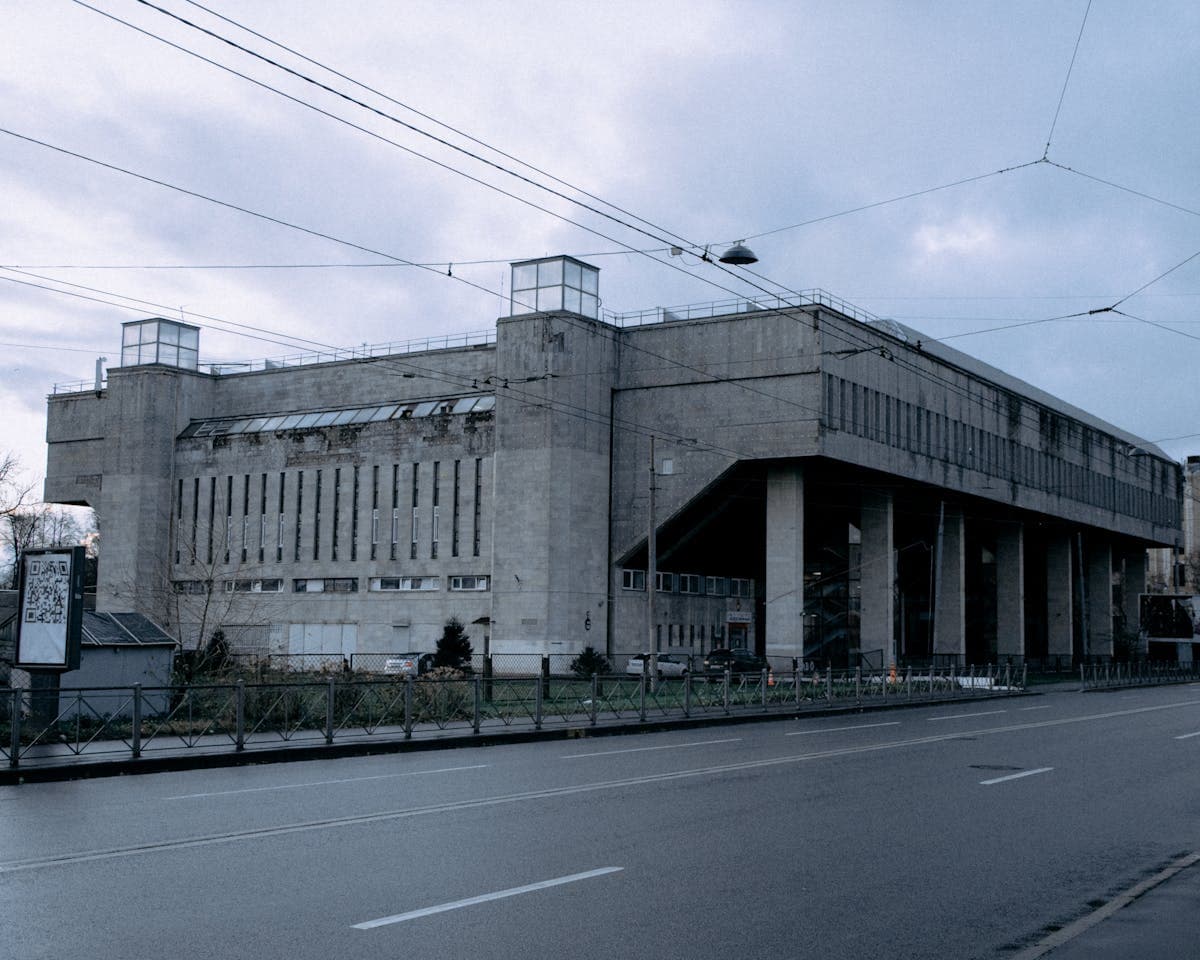
Behind the Concrete Curtain
75 min · 1.3 km · easy
More from Tirana
Explore more at your own pace.
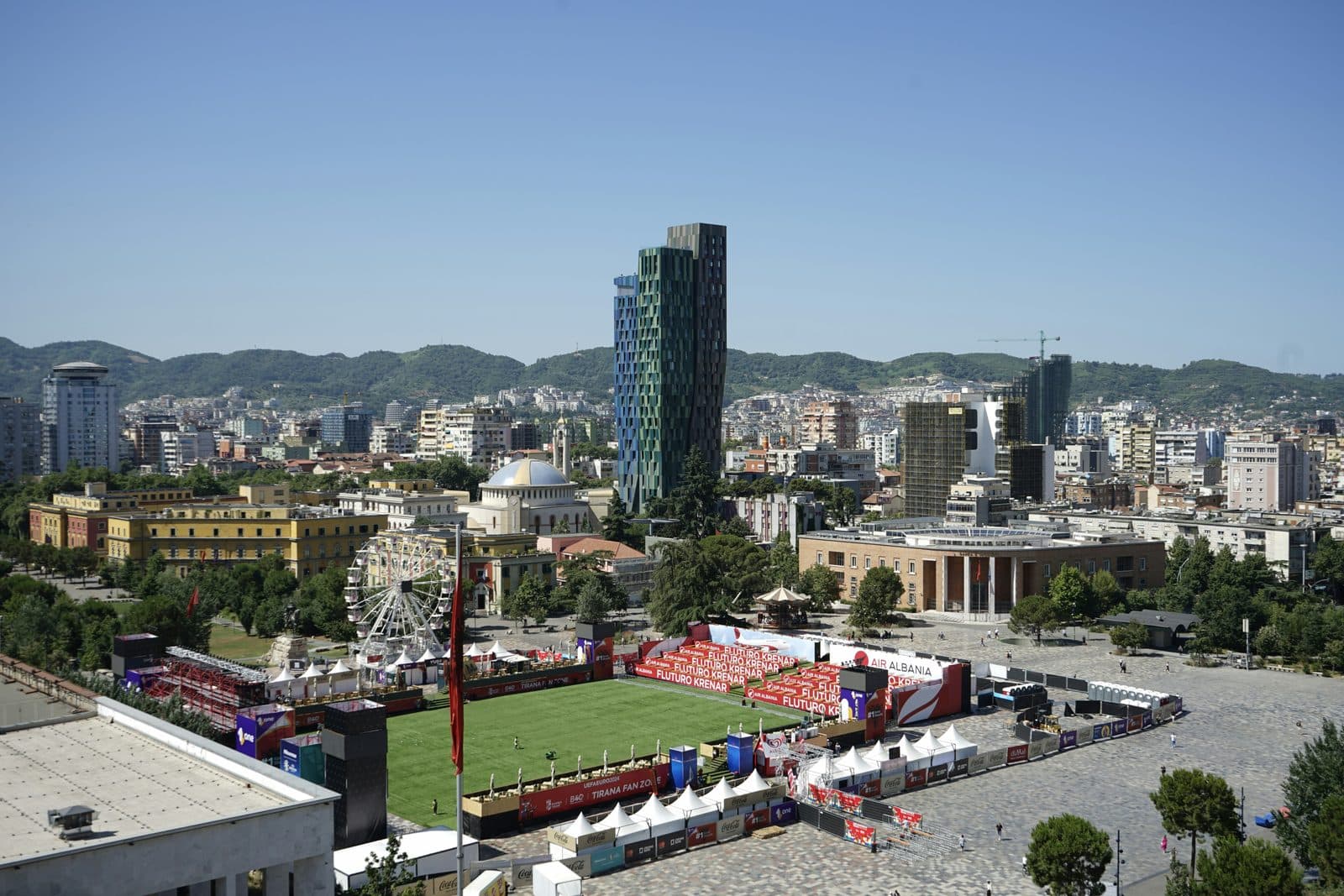
Best Self-Guided Walking Tours in Tirana (2026)
One Day in Tirana: A Walkable Capital Itinerary (2026)
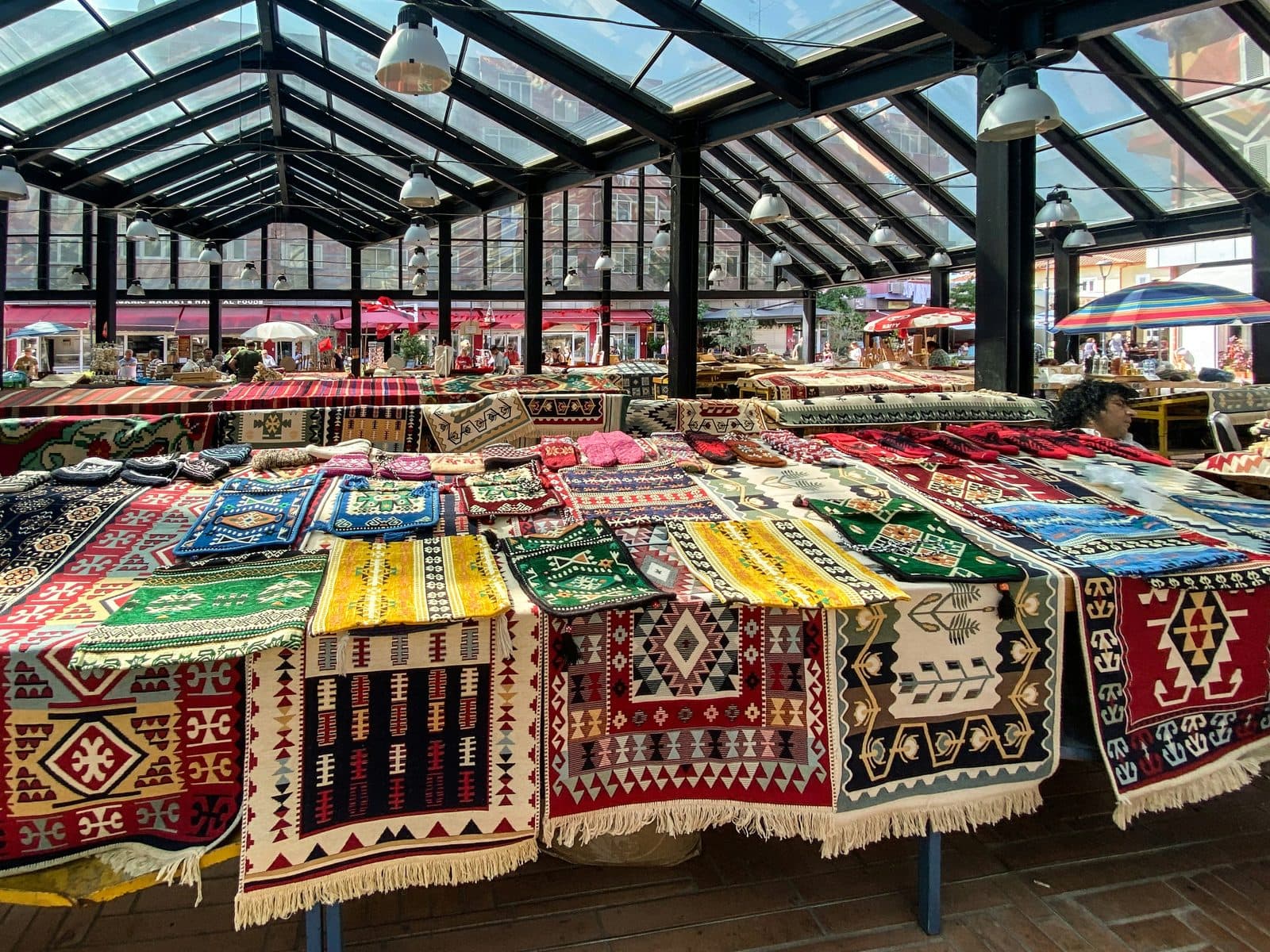
The City That Did Not Forget: How to See Tirana
Tirana Travel Guide: How Many Days, Getting Around, Is It Safe (2026)
What to Eat in Tirana: An Albanian Food Guide (2026)