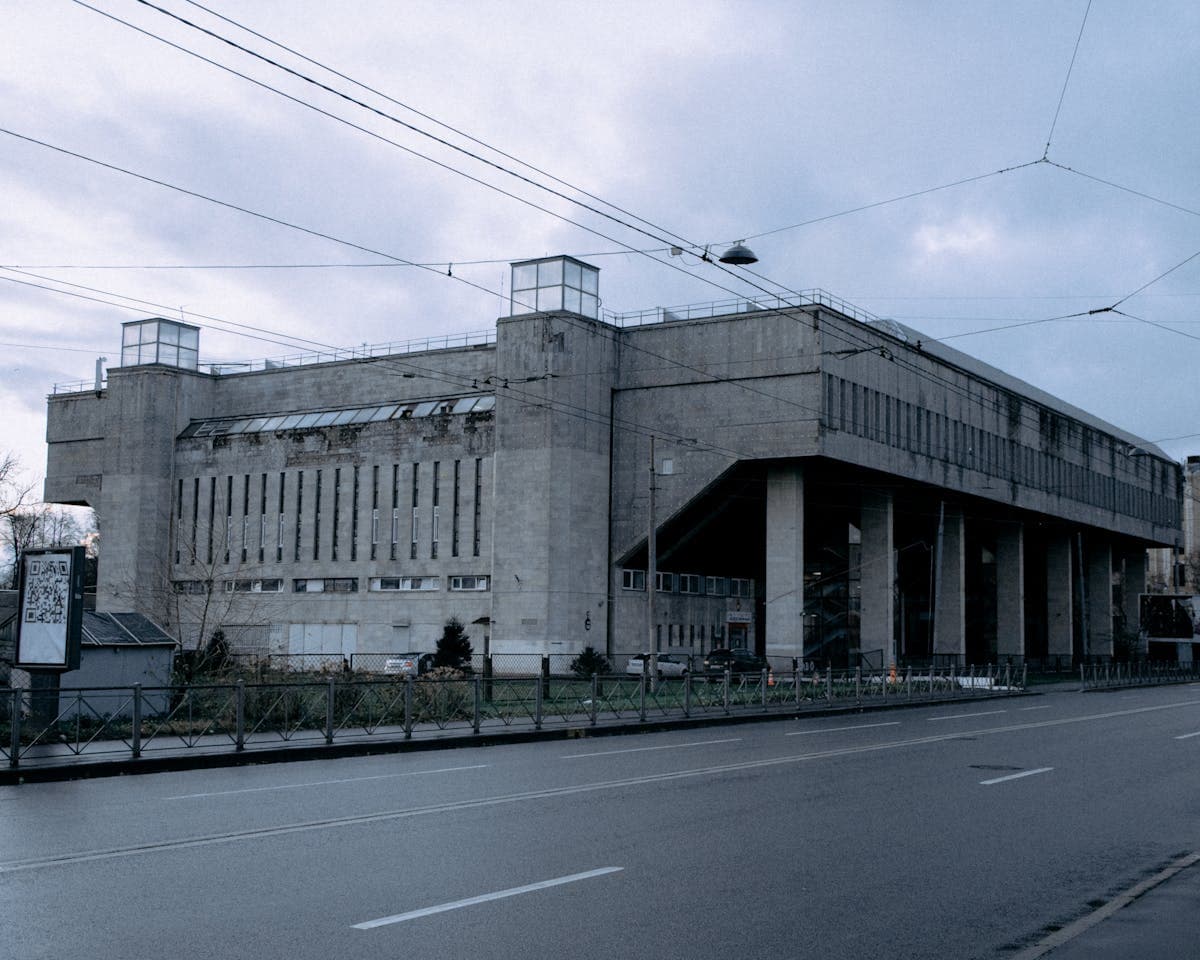
Walk through the bunkers, surveillance headquarters, and forbidden neighborhoods of Europe's most extreme communist regime -- then watch Tirana prove that no concrete is permanent.
Start · Skanderbeg Square
DirectionsStops
- 1
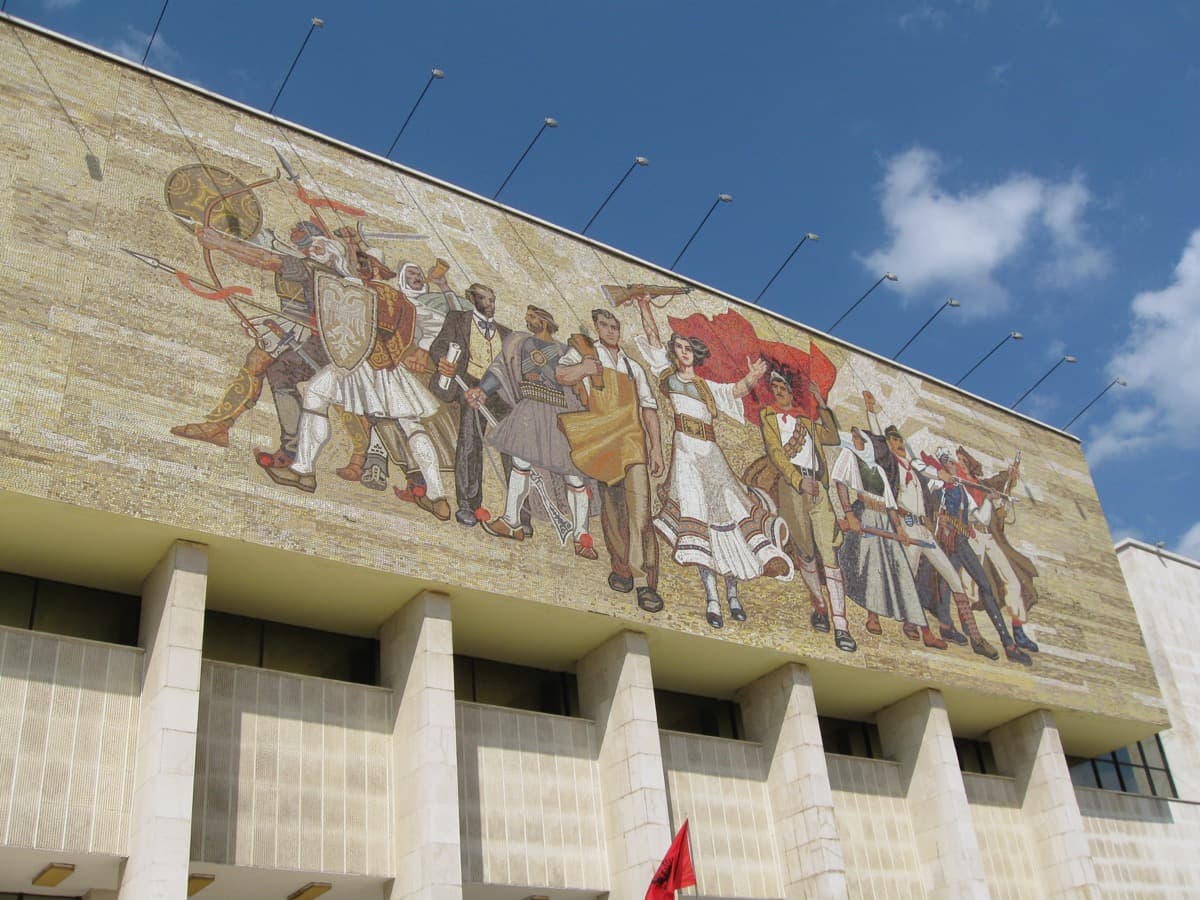
Skanderbeg Square
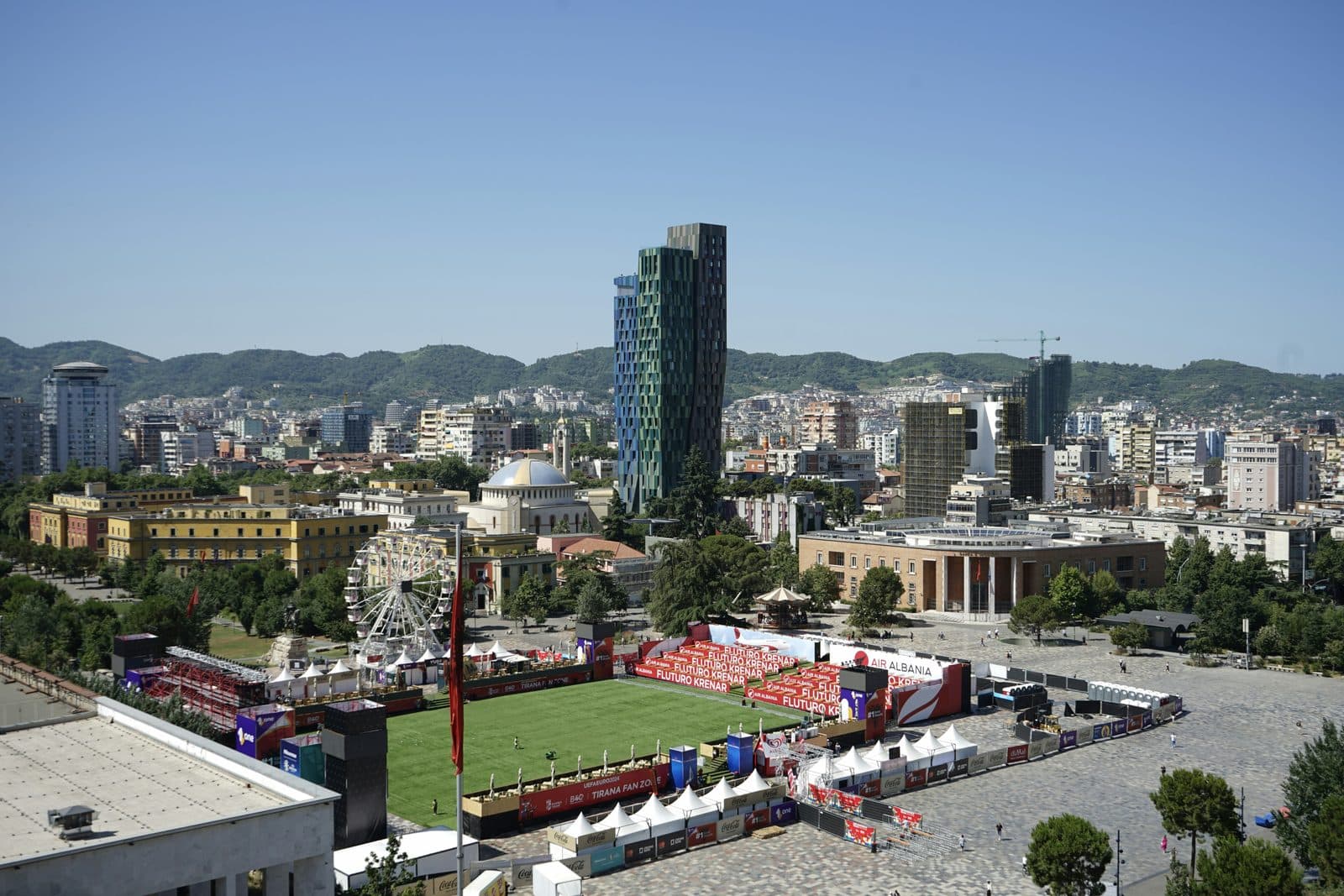
The largest pedestrian square in the Balkans -- where Hoxha's statue was toppled in 1991 and where Albania's democratic identity was born.
- 2
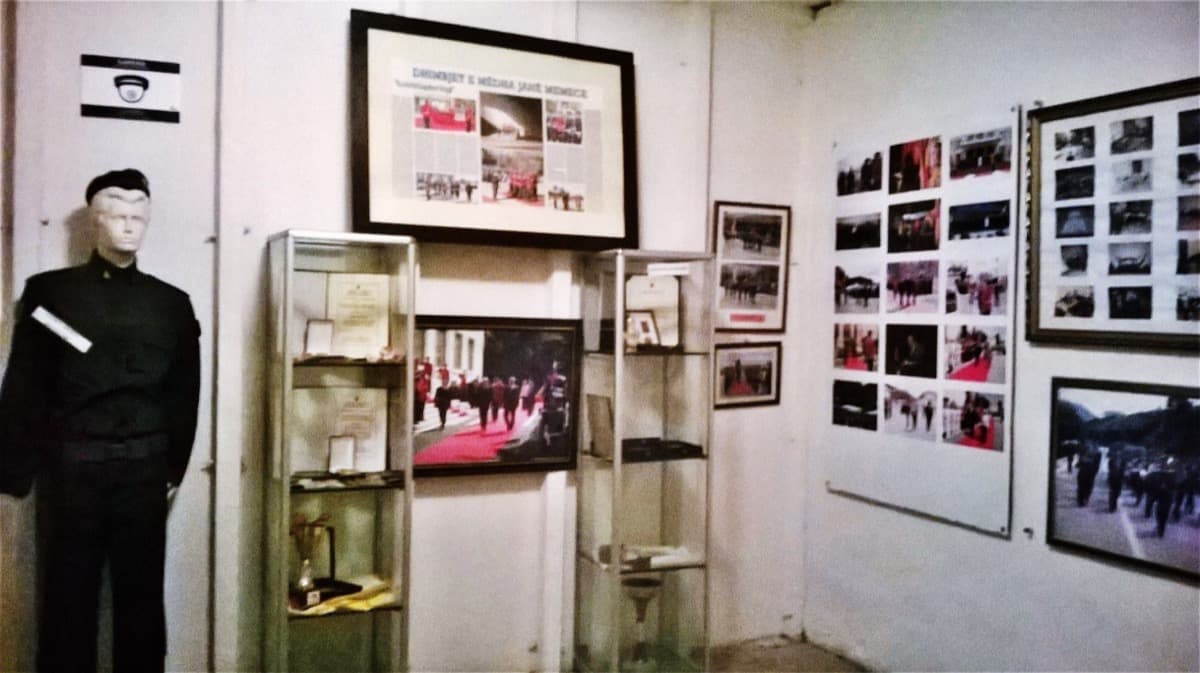
BunkArt 2
A nuclear bunker hidden beneath the pavement -- now a museum documenting the Sigurimi secret police and their pervasive surveillance of three million citizens.
- 3
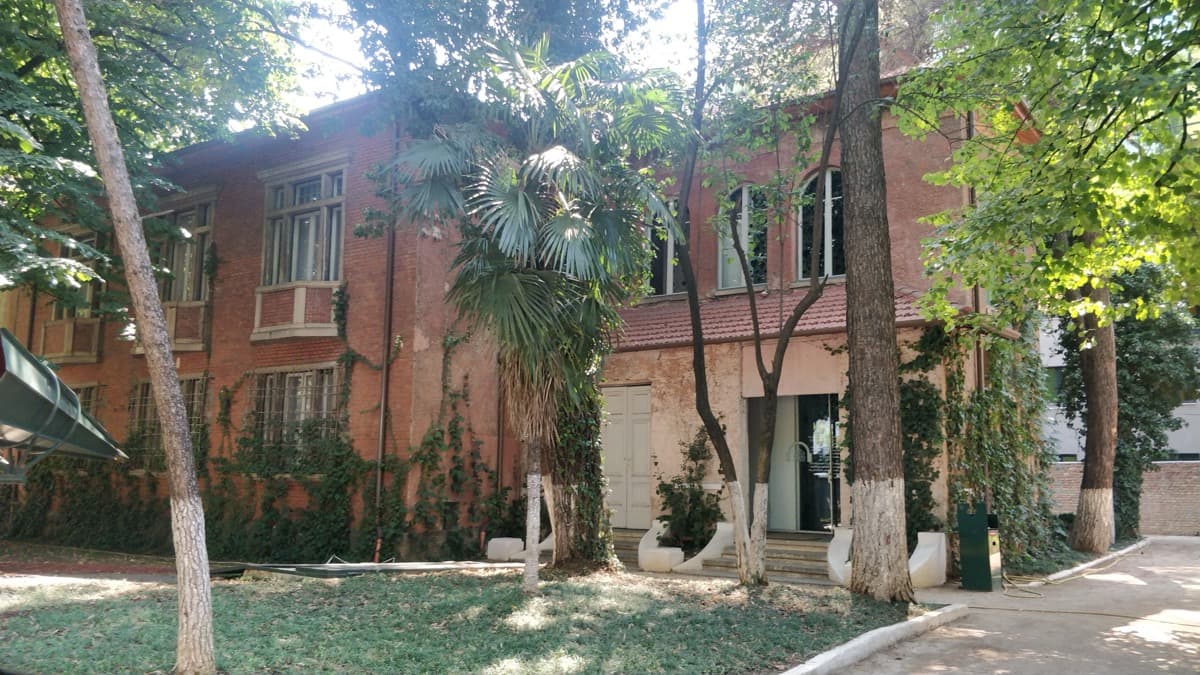
House of Leaves
An ivy-covered villa that served as the Sigurimi's wiretapping headquarters for 47 years -- now the Museum of Secret Surveillance and winner of the Council of Europe Museum Prize.
- 4
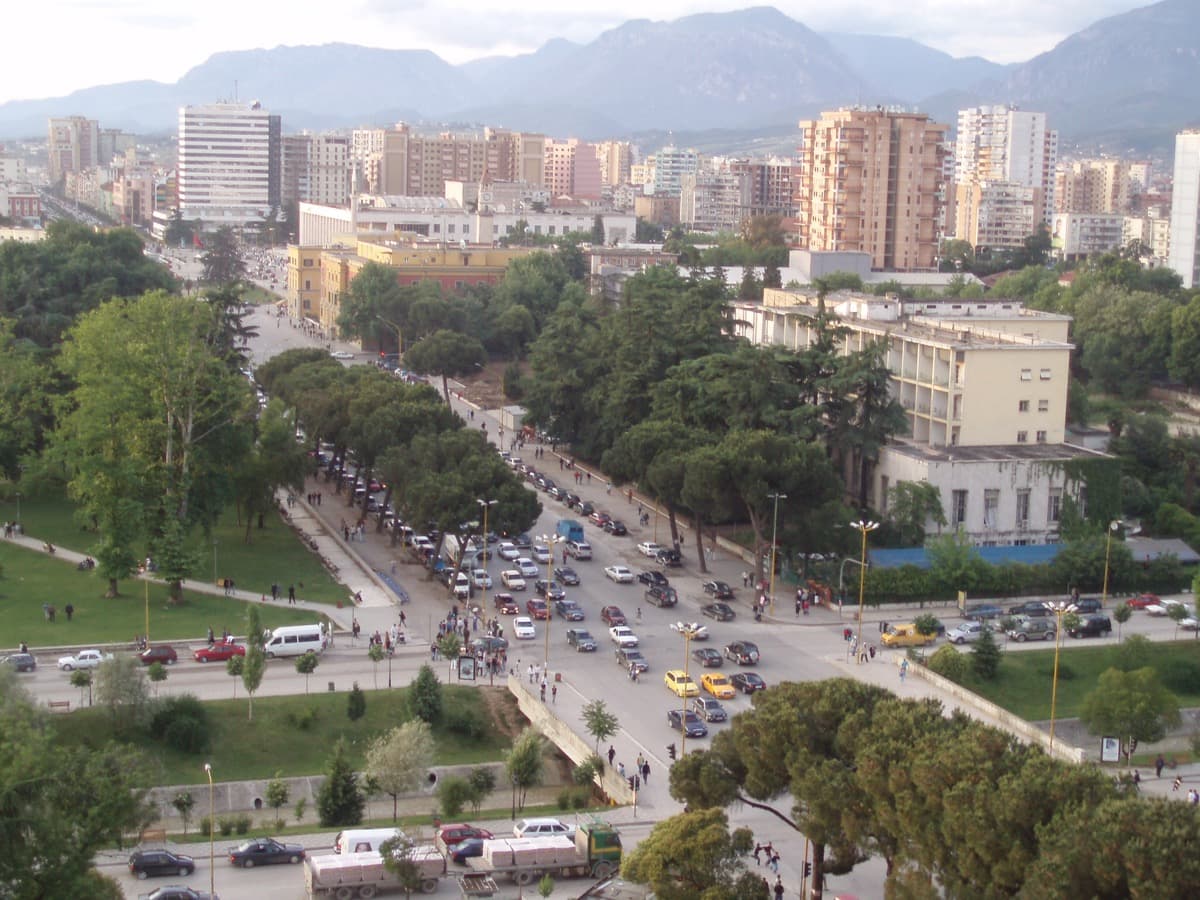
Boulevard Deshmoret e Kombit
A six-lane ceremonial axis designed by Mussolini's architects, adopted by the communists for military parades, and now transformed into a democratic promenade.
- 5
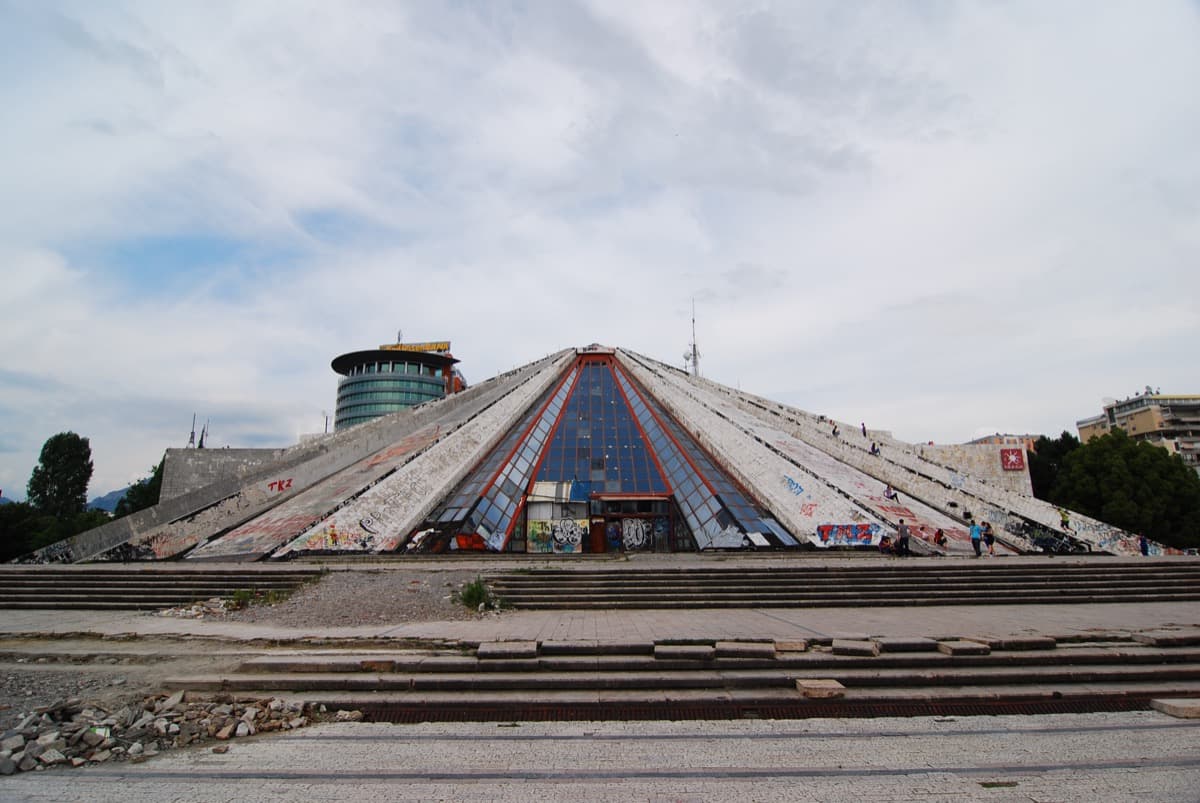
The Pyramid of Tirana
A dictator's daughter designed it as her father's eternal monument. Now it is a free tech education center where teenagers learn to code -- Tirana's most potent symbol of reinvention.
- 6
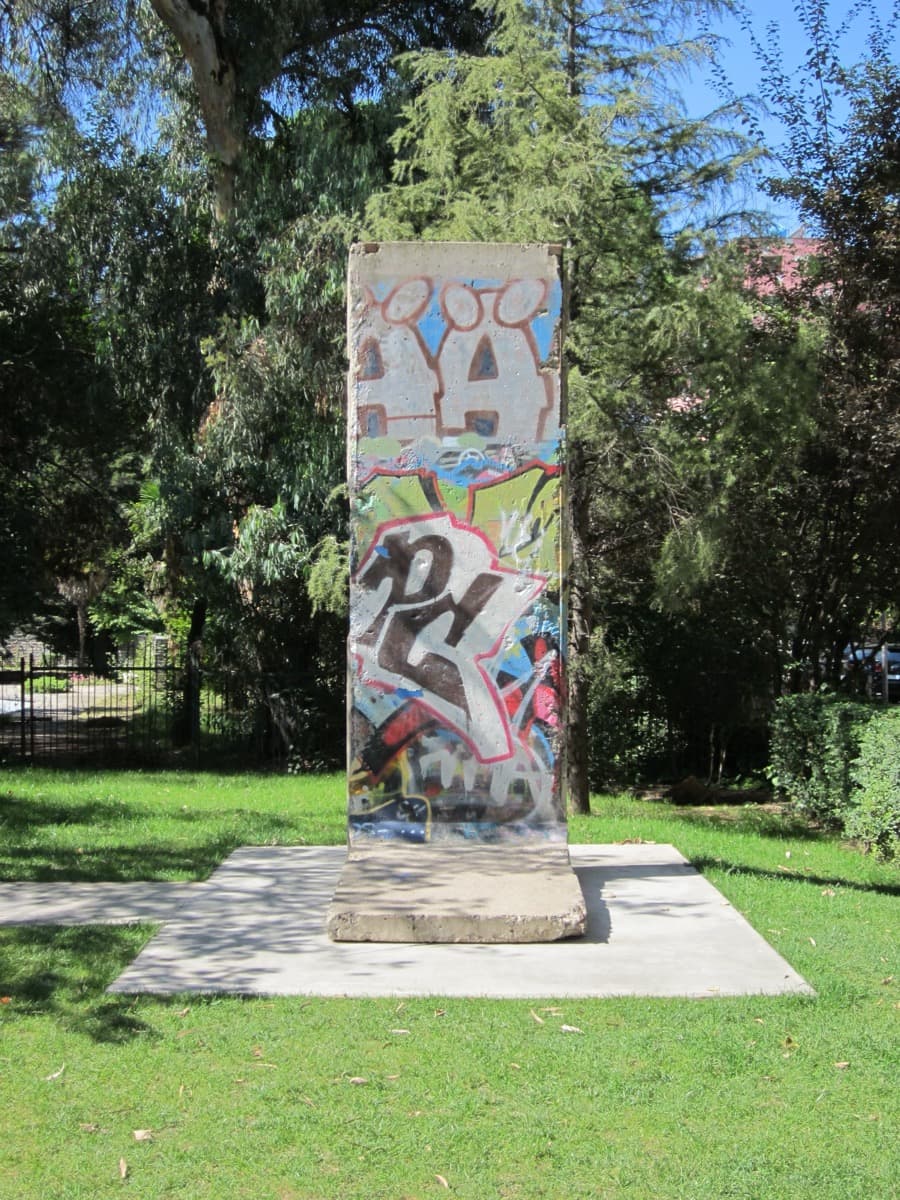
Postbllok Memorial
Three objects -- prison pillars, a bunker dome, and a piece of the Berlin Wall -- mark the entrance to Albania's forbidden quarter and honor the victims of communist repression.
- 7
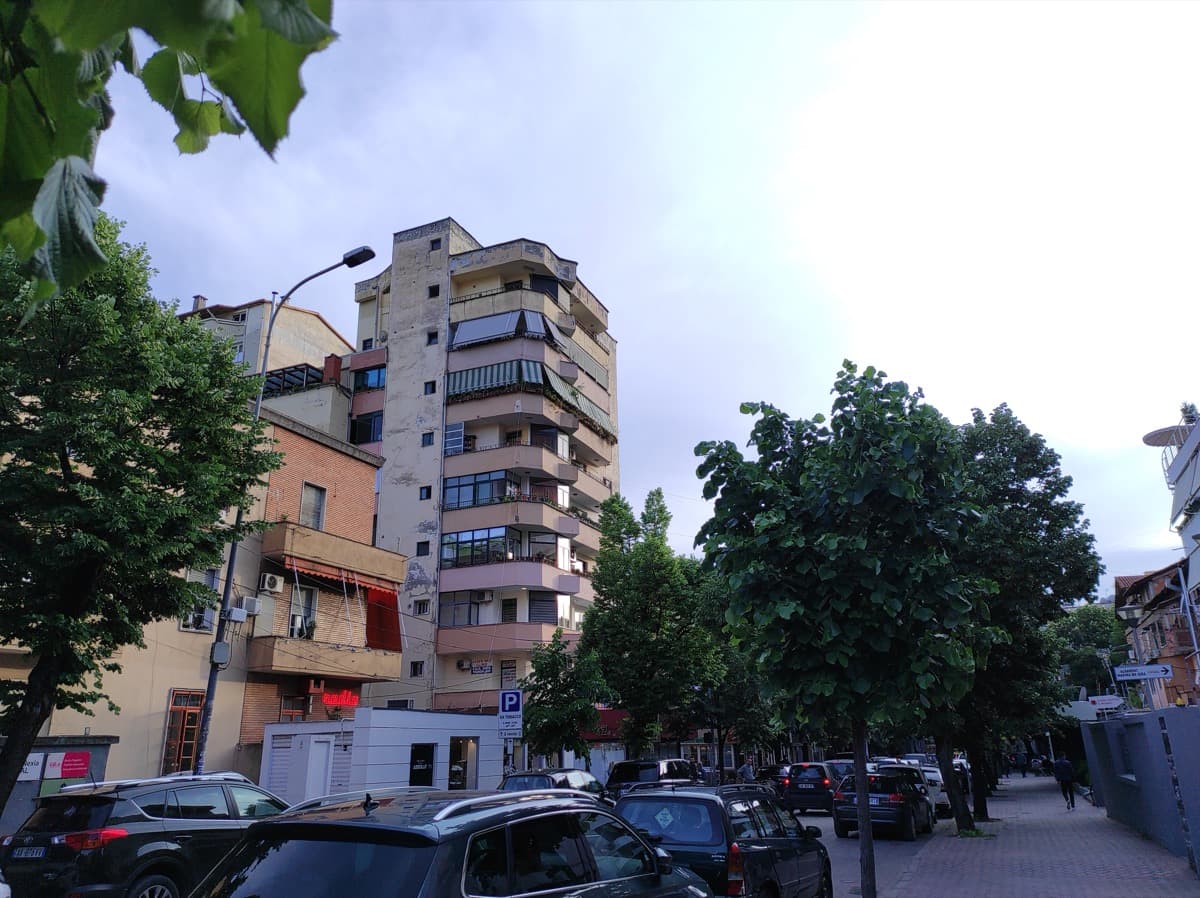
Blloku & Hoxha's Villa
The communist elite's sealed compound -- forbidden to ordinary Albanians for four decades -- is now Tirana's trendiest neighborhood, with the dictator's villa reimagined as an artists' residence.
Details
Best Time to Visit
Weekday mornings between 9:00 and 11:00 AM offer the best balance -- the square is alive but not crowded, BunkArt 2 has no queue, and the boulevard is quiet enough for comfortable listening. Late afternoon (4:00-6:00 PM) is also excellent, with golden light on the Pyramid and Blloku coming alive for the evening. Avoid midday in summer -- Tirana regularly exceeds 35 degrees Celsius and the boulevard has limited shade.
Pro Tips
- •Start at Skanderbeg Square in the morning when the light is soft and the mosaic on the National History Museum catches the sun -- the Socialist Realist figures almost seem to glow.
- •If you plan to enter BunkArt 2 or the House of Leaves, budget an extra 45-60 minutes each. Both are excellent museums, but the audio tour works without entering either -- all stops are designed around exterior viewing.
- •Climb the Pyramid steps -- it takes about ten minutes and the panoramic view from the top is the best way to see all of Tirana's layers at once: minarets, communist apartment blocks, painted facades, and construction cranes.
- •End the tour with a drink in Blloku. Sitting in a cafe in the dictator's former forbidden zone is the most Tirana thing you can do. Try a macchiato -- Albanian coffee culture is one of Europe's best-kept secrets.
Safety & Precautions
- •Boulevard Deshmoret e Kombit is a six-lane road -- use the signalised pedestrian crossings and watch for traffic, which can be aggressive by Western European standards.
- •In summer (June-August), temperatures can exceed 35 degrees Celsius. Carry water, wear sun protection, and consider the morning time slot to avoid the worst heat.
- •The Pyramid steps can be slippery when wet -- exercise caution in rain or after recent rain. There are no guardrails on the upper sections.
Travel advisory: Exercise Increased Caution (Level 2).
Gallery
Related Reading
Go deeper on what you'll see, hear, and walk through.
Read the walk
The full story of Behind the Concrete Curtain, in words. Prefer to listen? Play it narrated, from home or on location.
Introduction
Every other post-communist capital tried to forget. Tirana did not. The bunkers are still here, converted into museums and cafes. The surveillance headquarters is now a museum you can walk through. The dictator's pyramid is a tech center where teenagers learn to code.
Between 1944 and 1991, Albania was sealed shut. Not partially open like Yugoslavia, not reforming like Poland. Sealed. The borders were mined, the beaches fortified, the mountains lined with seven hundred and fifty thousand bunkers, one for every four citizens. The dictator who built them, Enver Hoxha, was so paranoid that he broke alliances with every country that tried to befriend him. First Yugoslavia, then the Soviet Union, then China. By 1978, Albania had no allies, no trade partners, no foreign aid. Average income was fifteen dollars a month, the most isolated country on the planet.
What makes Tirana different is that it is not hiding from that history. The neighbourhood sealed off for the communist elite is now the trendiest bar district in the Balkans. Tirana does not demolish its past. It repurposes it. That act of transformation, not erasure but reinvention, is what makes this city unlike anywhere else in Europe.
The walk is seven stops, about one point three kilometres and seventy-five minutes, moving south through the heart of that story. It starts at Skanderbeg Square, where a hundred thousand people toppled Hoxha's statue in 1991, and closes in Blloku, the forbidden quarter where ordinary Albanians could not set foot for four decades.
This is not a tour about buildings. It is about what happens when paranoia becomes architecture, and what happens when a city decides it is done being afraid. When you arrive at Skanderbeg Square, begin with stop one.
1. Skanderbeg Square
Welcome to Skanderbeg Square, your first stop on this tour. You are standing in the largest pedestrian square in the Balkans, forty thousand square metres of open stone, paved with rocks sourced from every region of Albania. It is beautiful now. Calm, open, democratic. But this is where the regime ended, and the way it ended was not calm at all.
On the twentieth of February, 1991, a crowd gathered here that would change Albanian history. For days, students at the University of Tirana had been on hunger strike, demanding that Hoxha's name be removed from their school. Seven hundred and twenty-six of them. The authorities refused. So on that February afternoon, the students came here, and the city came with them. A hundred thousand people filled this square. Someone attached steel cables to the giant bronze statue of Enver Hoxha that stood right about where you are now, between the National Museum and the National Bank. They hitched the cables to trucks and tractors. And they pulled.
The statue did not come down easily. It took time, pulling, cheering, pulling again. But when the ten-metre bronze dictator finally hit the ground, the crowd dragged it through the streets to the university quarter. Forty-one years of one-man rule, ended by a cable and a crowd. February twentieth is now Albania's official day of remembrance for the victims of communism.
Look around you. The square you see today was redesigned in 2017 by the Belgian firm 51N4E. Before that, it was a traffic-choked roundabout, cars, buses, noise. The communist version was a parade ground for military displays. The new design stripped it back to open stone. Those paving stones are not random. Each one comes from a different Albanian municipality. The square is literally a map of the country, assembled underfoot.
Now face the National History Museum on the north-west side. See that enormous mosaic above the entrance? That is "The Albanians", five hundred and sixty-five square metres of Socialist Realist art, completed in 1981. Heroic partisans, workers with raised fists, soldiers marching forward. It is one of the last major pieces of communist propaganda art still on public display in a European capital. Nobody has taken it down. Nobody has covered it up. It just hangs there, telling a version of history that the people in this square rejected thirty-five years ago.
Two minutes from here, there is a bunker hiding in plain sight. Look for the concrete dome.
2. BunkArt 2
Welcome to BunkArt 2. That concrete mushroom sticking out of the pavement is not a sculpture. It is a nuclear bunker. And beneath it, five levels underground, is the story of how a government spied on, terrorized, and controlled three million people for nearly half a century.
BunkArt 2 was built for the Ministry of Internal Affairs, the branch of government that ran the Sigurimi, Albania's secret police. While the much larger BunkArt 1 out on Mount Dajti was designed to shelter the political elite during a nuclear attack, this bunker was the nerve centre of domestic repression. Interrogation rooms. Decontamination chambers. Communication equipment. Prison cells. All of it underground, hidden beneath a city that walked over it every day without knowing.
The Sigurimi was one of the most pervasive secret police forces in history. The numbers are staggering. Thirty thousand officers for a population of three million, that is one officer for every hundred citizens. But the officers were only the beginning. An estimated twenty percent of the entire population served as informants. Brothers reported on brothers. Colleagues reported on colleagues. One man who accessed his secret file after 1991 discovered that twenty people had been spying on him. One of them was a close friend. Another was his former mother-in-law, who had written that he was "a person of bourgeois beliefs."
Think about what that does to a society. Trust, the basic social glue between human beings, was systematically dissolved. Before communism, surveys estimated Albanian interpersonal trust at around twenty-four percent. By the time Hoxha was finished, it had fallen to three percent. Three percent. That means that in a room of thirty people, only one would trust anyone else in the room. An entire country trained to be afraid of its neighbors.
The bunker you can enter here contains twenty-four rooms across multiple levels. The exhibits include original surveillance equipment, intercepted letters, recordings, and the personal stories of people who were watched, arrested, and imprisoned for crimes as minor as listening to foreign radio or telling a joke about the Party. If you have an hour, it is worth going inside. If not, just stand here and consider this: the pavement beneath your feet was always thin. The state was always listening, just a few metres below.
The building where they did the listening is a five-minute walk from here. Head through the park.
3. House of Leaves
Welcome to the House of Leaves. The building in front of you is covered in climbing ivy, which is why locals call it the House of Leaves. But the name carries a darker meaning. Leaves, as in pages. Pages of the files that the Sigurimi kept on Albanian citizens in rooms just beyond that green facade.
This villa has lived more lives than any building in Tirana. It was built in 1931 as the city's first private maternity clinic, a place of new beginnings. During the Second World War, the Gestapo requisitioned it. When the communists took power in 1944, the Sigurimi moved in and turned it into the headquarters of their wiretapping operation. For the next forty-seven years, this is where the regime listened to Albania. Telephones were tapped. Conversations were transcribed. Letters were intercepted and copied. Bugs were hidden in furniture, in walls, in personal belongings. The villa's thirty-one rooms were filled with listening equipment, darkrooms for developing surveillance photographs, and archives of intercepted communications.
What makes this museum extraordinary is not just the history but the physical intimacy of the space. These are small rooms. You can stand in the exact spot where an operator sat with headphones, transcribing a private conversation between a husband and wife. You can see the equipment they used, clunky, hand-built devices that look almost comically primitive but were devastatingly effective. The Sigurimi did not need high technology. They had something more powerful: a population conditioned to distrust each other.
In 2017, the villa was opened as the Museum of Secret Surveillance. In 2020, it won the Council of Europe Museum Prize, a recognition that this small building in a small Balkan capital tells a story of universal significance. Surveillance, paranoia, the erosion of trust, these are not Albanian problems. They are human problems. The House of Leaves just shows you what happens when they reach their logical endpoint.
One detail that stays with visitors: the building was so secret during the communist era that it appeared on no official maps. It was literally invisible. The ivy that covered its walls was not decorative, it was camouflage. The regime hid the building where it hid everything else: in plain sight.
If you go inside, give yourself forty-five minutes. If you are continuing the tour, head south to the boulevard. You are about to walk the avenue that every Albanian dictator, from Mussolini's architects to Hoxha's commissars, used to project power. The Pyramid is at the end of it.
4. Boulevard Deshmoret e Kombit
Welcome to the Boulevard Dëshmorët e Kombit. You are standing on the most politically loaded street in Albania. Bulevardi Deshmoret e Kombit, Martyrs of the Nation Boulevard, is a six-lane, one-kilometre-long ceremonial axis that runs from Skanderbeg Square south to the…
Full narration for this stop unlocks with the tour.
5. The Pyramid of Tirana
Welcome to the Pyramid of Tirana. The building in front of you is the single most potent symbol of what happened to Albania, and what Albania did about it. The Pyramid of Tirana was designed by Pranvera Hoxha, the dictator's daughter, and her husband Klement Kolaneci. It opened…
Full narration for this stop unlocks with the tour.
6. Postbllok Memorial
Welcome to the Postbllok Memorial. This small installation is easy to miss. It sits on the edge of the boulevard, near the entrance to the Blloku neighborhood, and most people walk right past it. Do not walk past it. This is where Tirana reckons with what the regime actually did…
Full narration for this stop unlocks with the tour.
7. Blloku & Hoxha's Villa
Welcome to Blloku, your final stop on this tour. Look around you. Cocktail bars. Brunch spots. Vintage clothing shops. A gelato place. Someone is playing music from a terrace. This is Blloku, Tirana's trendiest neighborhood, and until 1991, setting foot here would have landed…
Full narration for this stop unlocks with the tour.