Behind the Concrete Curtain
75 min · 1.3 km · easy
Every other post-communist capital tried to forget. Warsaw rebuilt its medieval centre brick by brick on top of a city that had been deliberately ground into rubble. Berlin tore down most of the Wall within months and now sells small grey fragments to tourists. Bucharest's Palace of the Parliament, the largest civilian building in Europe, was renamed and rebranded so often that most Romanians under thirty cannot remember why it was built. Forgetting was the strategy. The buildings of the regime were embarrassing, the secret police files were dangerous, the statues were ugly, and the easiest thing to do was clear them away and start over.
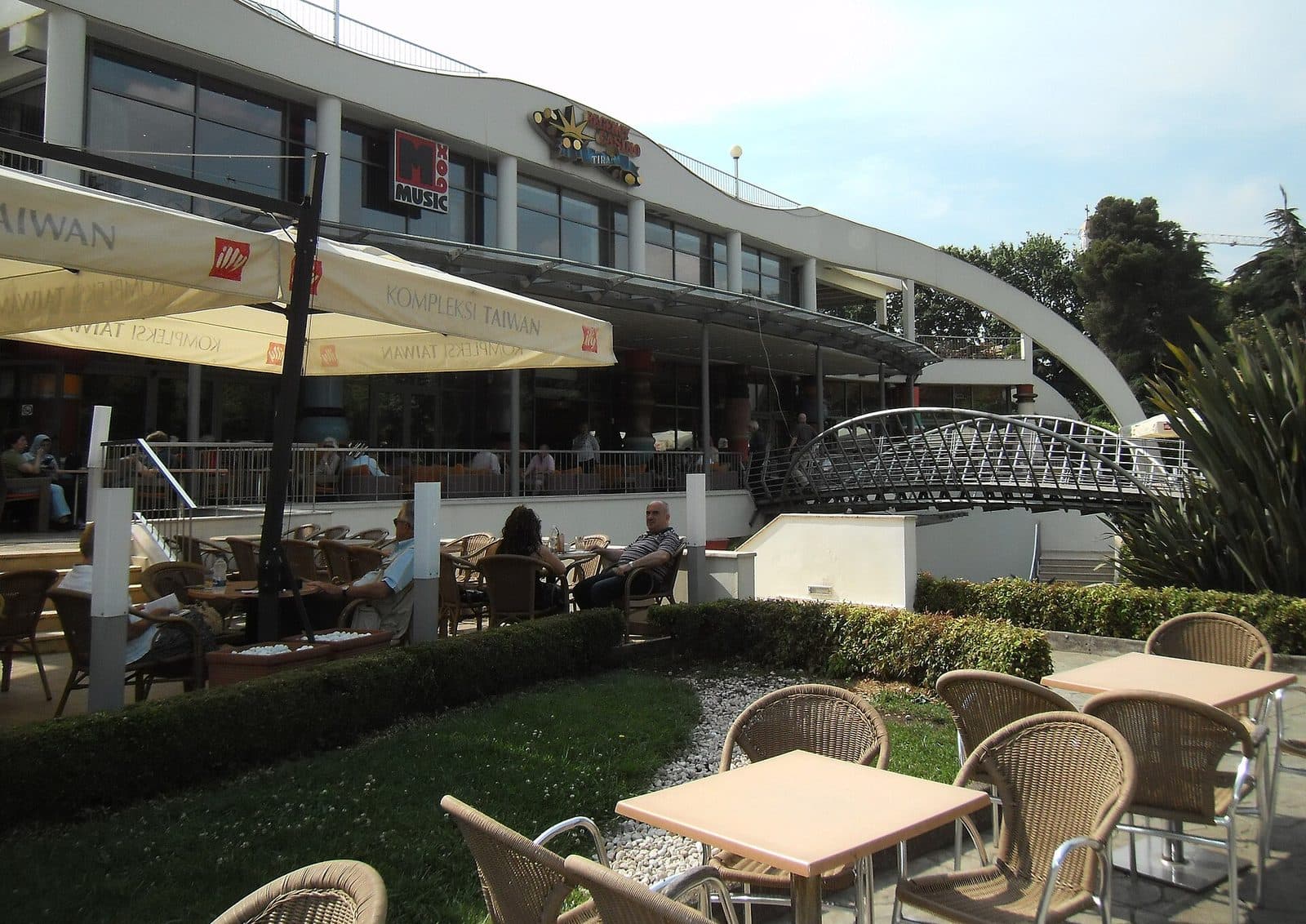
Tirana did not do this. The bunkers are still here. The surveillance headquarters is open to the public as a museum. The nuclear bunker under the Ministry of Internal Affairs is a tourist attraction with a gift shop. The dictator's pyramid, designed by his daughter as his eternal monument, is now a free coding school for teenagers. The neighbourhood that was sealed off for the communist elite, where ordinary Albanians could not set foot for forty years, is the trendiest bar district in the Balkans. The mosaic on the National History Museum, five hundred and sixty-five square metres of Socialist Realist propaganda showing heroic partisans marching toward a future that never arrived, has never been taken down. It still faces the main square.
This is the lens that organises everything in the city. Tirana repurposes. It does not erase.
What Albania actually was
To understand why this matters, you have to understand how extreme the regime that preceded today's Tirana actually was. Between 1944 and 1991, Albania was sealed. Not partly closed like Yugoslavia, which had its own passports and beach tourism. Not reforming like Poland, which had Solidarity by the 1980s. Sealed. Enver Hoxha, the dictator who ruled for forty-one years, broke with every ally that tried to befriend him. First Yugoslavia, then the Soviet Union, then China. By 1978, Albania had no allies, no trade partners, no foreign aid. Religion was banned outright in 1967, the first officially atheist state in history. Private cars were forbidden. Leaving the country was punishable by death. Average monthly income was fifteen dollars.
The regime built bunkers. Roughly seven hundred and fifty thousand of them, for a population of three million. One bunker for every four citizens. The program consumed more concrete than France's Maginot Line and cost about two percent of GDP every year for two decades. The official explanation was defence against foreign invasion. The real function was to make the country physically impossible to flee and psychologically impossible to imagine outside of. The bunkers are still everywhere, on beaches, in front yards, in fields. You can stand on Tirana's main boulevard and see two of them within a hundred metres.
The Sigurimi, the secret police, employed about thirty thousand officers for those three million people. One officer for every hundred citizens. But the officers were only the start. An estimated twenty percent of the population served as informants. People reported on neighbours, siblings, spouses, in-laws. One man who accessed his file after 1991 found that twenty different people had spied on him, including a close friend and his former mother-in-law, who had written that he held "bourgeois beliefs." Surveys estimate that Albanian interpersonal trust collapsed from twenty-four percent before communism to three percent by 1990.
This is the substrate the city was built on. When you walk through Tirana today, you are walking on top of one of the most thorough systems of social paranoia ever constructed.
What changed, and how it changed
Hear a stop from this walk
The Pyramid of Tirana
The regime ended on February the twentieth, 1991, in Skanderbeg Square. Students from the University of Tirana had been on hunger strike for days demanding that Hoxha's name be removed from their school. The authorities refused. A hundred thousand people came to the square anyway, attached steel cables to the ten-metre bronze statue of Hoxha standing between the National Museum and the National Bank, and pulled. It took time. The statue did not fall easily. But when it did, the crowd dragged it through the streets toward the university quarter, and forty-one years of one-man rule ended with a cable and a crowd.
What happened next is the part most outside observers missed, because most outside observers stopped paying attention to Albania in 1991 and only checked back in around 2015 when the cafe scene started to register. In the intervening years, Tirana transformed itself, and the transformation has a name. Edi Rama.
Rama was a painter. He had exhibited internationally, in galleries across Europe. He had no political experience when he became mayor of Tirana in 2000. What he had was a thesis. Grey was killing the city. Forty-six years of communism had left every apartment block in the capital unpainted, unornamented, identical. Tirana looked like one enormous architectural prison. Rama's first act was to paint a single grey apartment building bright orange. Not pastel. Bright. Crowds gathered. Traffic stopped. EU officials, who controlled the reconstruction money, were horrified and said the colours did not meet European standards. Eighty percent of residents polled said they wanted more.
So Rama kept going. He painted Rruga e Kavajës in geometric patterns. He invited artists and children to design facades. He served eleven years as mayor, won the inaugural World Mayor Prize in 2004, became Prime Minister in 2013, and is still in office. His TED talk, "Take Back Your City with Paint," has been watched millions of times. In it, he claims that tax compliance went up after the painting started, that crime decreased, that civic engagement measurably improved before any other municipal investment had been made. The claims have been disputed and partly verified. What is not disputed is that the colours are now woven into the city's image of itself. Tirana looks the way it does because a painter decided it should.
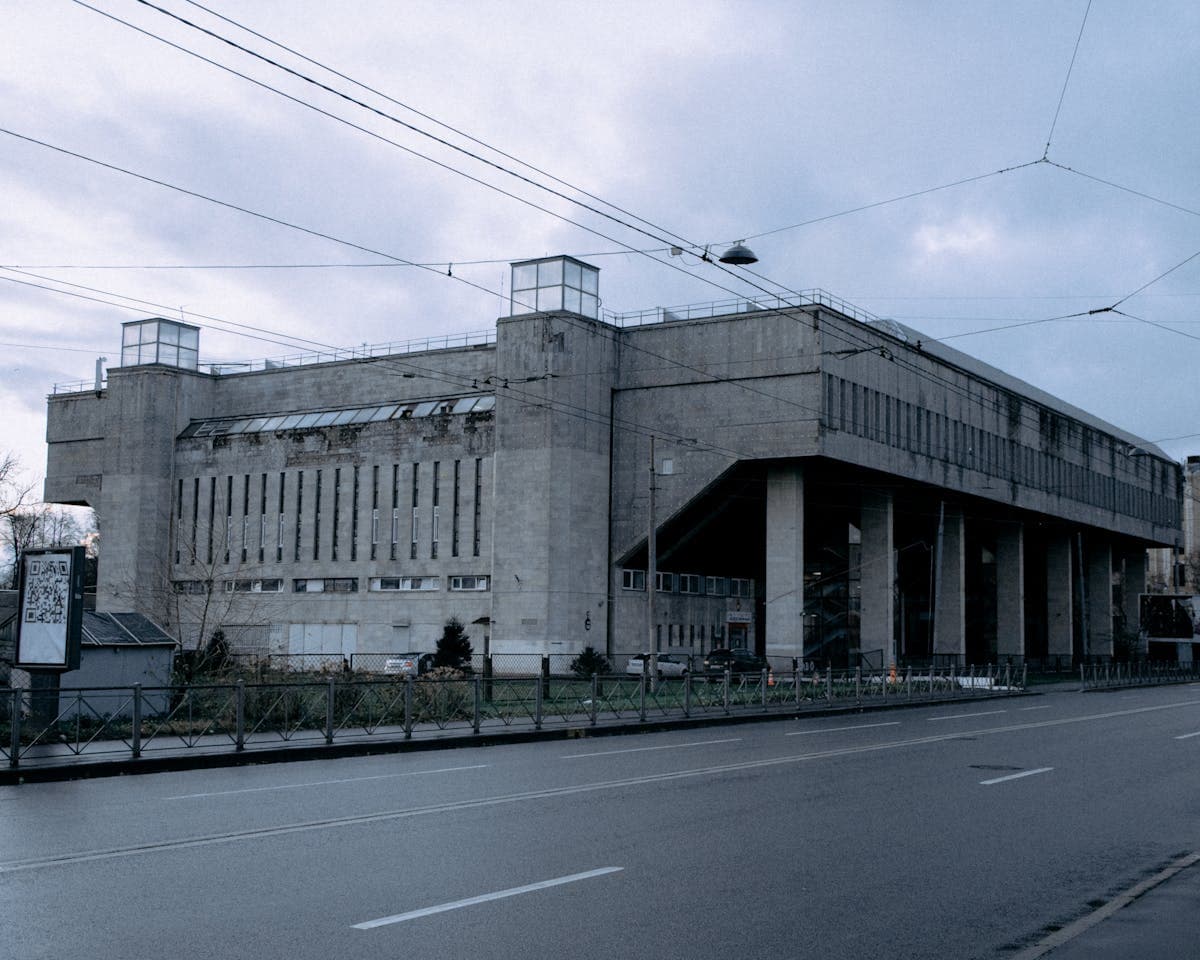
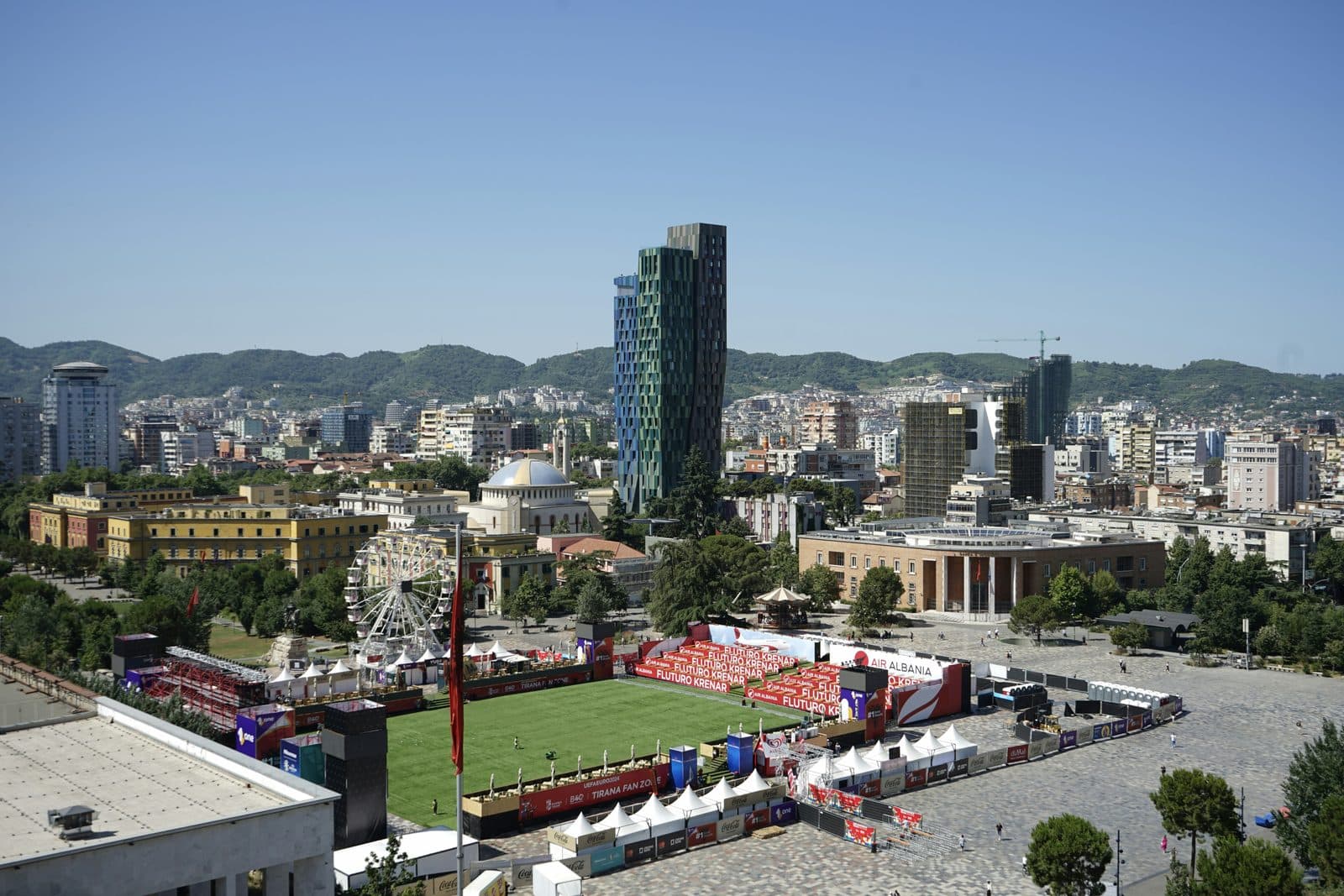
The painting was the visible part. The harder transformation was structural. Skanderbeg Square, which was a traffic-choked roundabout until 2017, is now a forty-thousand-square-metre pedestrian plaza paved with stones from every region of the country. It won the 2018 European Prize for Urban Public Space. The New Bazaar, half-abandoned in the 1990s, was renovated in 2017 and its surrounding buildings painted in Caribbean colours. The Pyramid of Tirana, designed by Hoxha's daughter as her father's monument, sat as a ruin for thirty years before the Dutch firm MVRDV completed its renovation in 2023, covering the brutalist concrete shell in cascading staircases and filling the inside with free after-school programs for teenagers. The before-and-after is not a metaphor. It is the actual experience of walking the city.
How to see all of this
The contrast between Tirana past and Tirana present is so compressed that most visitors miss half of it on the first pass. The bunkers and the cocktail bars are sometimes literally on the same block. There are three ways to organise the visit, each of which is its own tour.
The first is the past itself, the regime as architecture. Skanderbeg Square, where the statue fell. BunkArt 2, the nuclear bunker beneath the Ministry of Internal Affairs, now five levels of secret-police exhibits. The House of Leaves, the ivy-covered villa where the Sigurimi wiretapped the country for forty-seven years, now a museum that won the Council of Europe Museum Prize in 2020. The Boulevard Dëshmorët e Kombit, designed by Mussolini's architects in 1941, repurposed by the communists for military parades. The Pyramid. The Postbllok memorial. Blloku. Each of these is a piece of evidence about what the regime actually did to people.
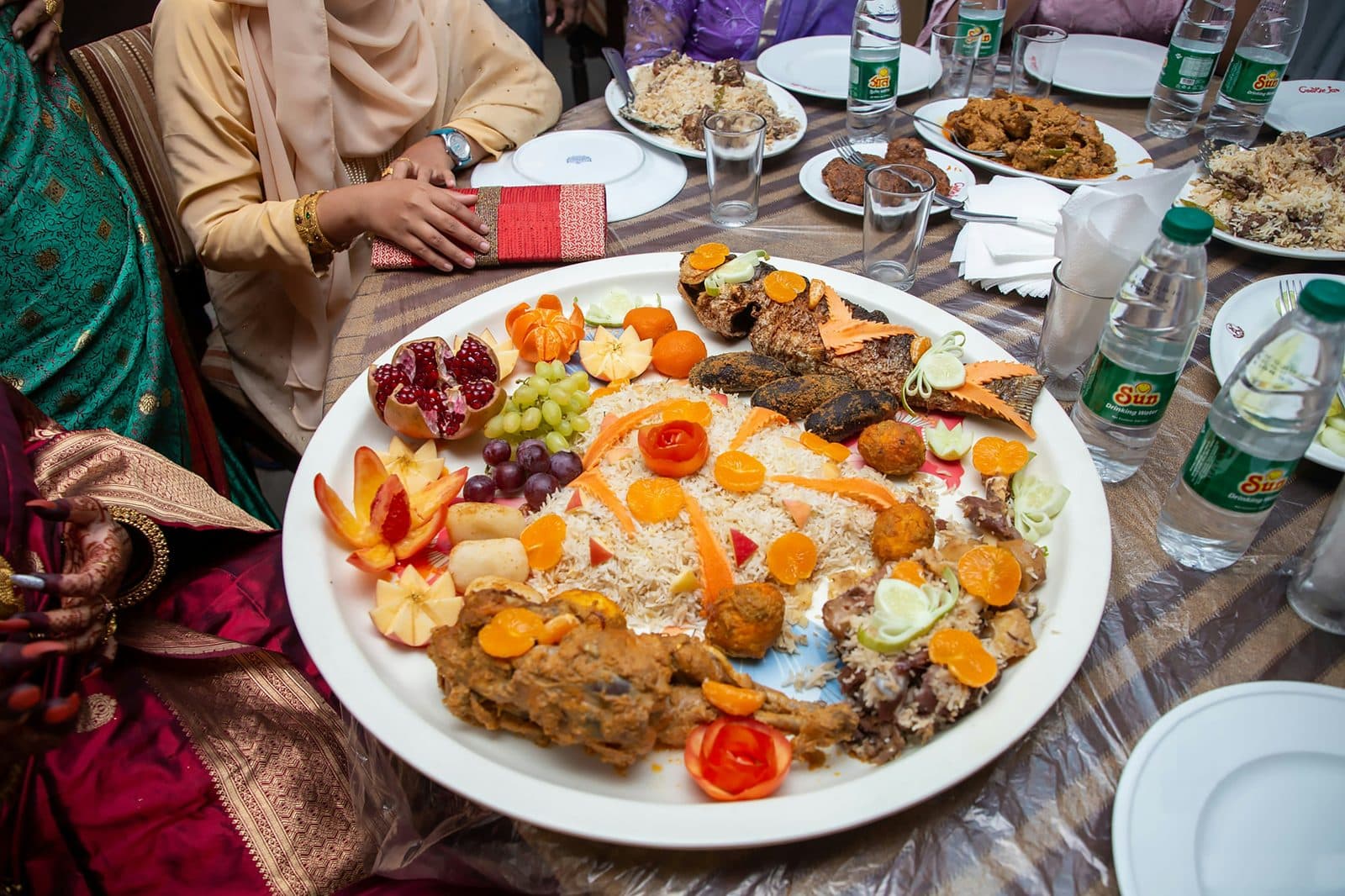
The second is the food. Albanian cuisine survived communism by being too humble to register on the regime's radar. Forty-six years of sealed borders meant no fast food, no imports, no foreign cookbooks. Albanian grandmothers cooked what their grandmothers had cooked, and when the borders opened, the traditions were still intact. Byrek, the flaky filo pastry that every Albanian eats for breakfast. Qofte, charcoal-grilled meatballs at a place called Te Met Kodra that has had a two-item menu since 1957. Tave kosi, lamb baked in a yogurt and egg custard, considered the national dish. Turkish coffee in a copper xhezve, sipped slowly, the only correct speed. Raki, the clear fruit brandy that Albanians call the handshake you drink. The food is one of the cheapest in Europe and one of the most distinctive, and almost nobody outside the Balkans has eaten it.
The third is the transformation itself, the painted facades, the renovated public spaces, the reborn pyramid. This is the part of Tirana that has won the European prizes and gotten the architecture magazines to pay attention. The buildings on Rruga e Kavajës, the staircases climbing the Pyramid, the Reja installation by Sou Fujimoto that floats like a cloud on the boulevard that Mussolini built, these are all worth slowing down for. They are also the parts of the city that look unlike anywhere else.
The three tours overlap by design, because the city overlaps with itself. You can stand at the Pyramid and see the boulevard the Fascists built and the painted apartment blocks behind it. You can drink a flat white in Blloku in a building where the secret police once listened to wiretaps. You can eat a qofte at a counter that opened during the worst years of the regime and is still run by the same family. Tirana stacks its history vertically. The trick to seeing it is to stop trying to separate the eras and start watching how they sit on top of each other.
Why this matters beyond Tirana
Other cities have done bits of what Tirana has done. Berlin preserved the Wall in fragments. Budapest kept Memento Park, where the communist statues are stored like a quarantine zone. Bucharest occasionally opens the Ceaușescu palace for tours. But no other capital made the transformation itself into the city's brand. No other capital decided that the dictator's pyramid should become a coding school, that the surveillance villa should become a Council of Europe prize-winning museum, that the forbidden neighbourhood should become the bar district where the dictator's villa is now an artists' residence called Vila 31.
The pattern is the message. Tirana's answer to its own past is that the architecture of paranoia is not destroyed, it is given a new job. The buildings stay. The meanings change. Once you have spent two days in the city, you will see this everywhere. It is the lens that makes the otherwise overwhelming layering of Tirana legible. The grey is still there underneath the colours. The colours are louder than the grey, but only just.
You have been warned. Albania is not the next Croatia. It is something stranger and more interesting than that.
Frequently asked questions
- How many self-guided walking tours are there in Tirana?
- Roamer currently has 3 self-guided audio walking tours in Tirana. Every tour is free to start: the introduction and first stop play in full, and every later stop plays a short preview before you decide to buy.
- How much does a self-guided walking tour in Tirana cost?
- Each tour is free to preview and $4.99 for lifetime access. If you want more than one, a 7-day pass is $12.99 and a 30-day pass covering every tour is $19.99, which works out to well under a dollar a day.
- Can I do the Tirana tours offline?
- Yes. Tours can be downloaded in advance in the Roamer app and played with no signal, which is useful when you are travelling without mobile data.
- How long are the Tirana walking tours?
- They run about 75 to 105 minutes, covering 1.1 to 2.5 km on foot, with up to 7 stops on the longest route. You set the pace and can pause any time.
Ready to experience it?
Behind the Concrete Curtain
75 min · 1.3 km · easy
More from Tirana
Explore more at your own pace.
Best Self-Guided Walking Tours in Tirana (2026)
One Day in Tirana: A Walkable Capital Itinerary (2026)
Tirana Travel Guide: How Many Days, Getting Around, Is It Safe (2026)
What to Eat in Tirana: An Albanian Food Guide (2026)
Behind the Concrete Curtain: What Hoxha's Albania Actually Looked Like