The Mexican war of independence began on September 16, 1810, in the town of Dolores, fifty kilometres north of San Miguel. The man who rang the church bell that morning, Father Miguel Hidalgo, has the holiday named after him. The country still celebrates the Grito, the cry, that he is supposed to have given from the steps of his church. There are statues of him everywhere.
The plan, however, was not Hidalgo's. The plan was Ignacio Allende's, and it had been Allende's for at least five years before the bell rang in Dolores. Hidalgo improvised the start because the conspirators had been discovered and the rest of the schedule was no longer safe. The actual revolution had been organized in San Miguel, around the table of a forty-one-year-old militia captain in his family's house on the corner of the Jardín, where this tour begins.
Understanding why requires understanding the town. San Miguel in 1810 was not a sleepy colonial backwater. It was a working hub of the Bajío silver economy, the agricultural and industrial corridor between Querétaro and Guanajuato that was producing roughly two-thirds of the world's silver. Allende's family was rich on that silver, and they were no longer willing to pay the taxes that came with it.
Who Allende actually was
Ignacio José de Allende y Unzaga was born in this town on January 21, 1769. His family's house, which his father ordered built around 1769, stands on the south-west corner of the Jardín. The Allendes were criollos, the term the Spanish empire used for people of pure Spanish ancestry born in the Americas. The distinction mattered legally. Criollos could own property, run businesses, marry into Spanish families, and hold positions in the militia, but they could not, with rare exceptions, hold the senior posts in the colonial administration or the church. Those went to peninsulares, Spaniards born in Spain.
By the late 1700s the criollo families of the Bajío were the wealthiest people in the Americas not running countries. They funded the silver mines. They funded the textile mills like the one that would much later become La Aurora. They funded the baroque churches whose facades the artisans of the next century would carve. They paid the taxes that kept the Spanish crown solvent. And they were systematically excluded from running the empire they were paying for.
The Allendes were prominent within this class but not unique. Ignacio's father was a prosperous merchant. The family owned hacienda land outside town and held social rank inside it. Ignacio himself was educated locally, was bilingual in Spanish and church Latin, and joined the colonial militia in 1795 as an officer cadet. By 1808 he was a captain in the Queen's Provincial Dragoons, the cavalry regiment stationed in San Miguel. He had served in the campaigns against the British in the Gulf of Mexico in the early 1800s. He was, by every measure that mattered, a loyal officer of the Spanish crown.
He was also, by 1808, planning to overthrow it.
What 1808 did to the criollos
Hear a stop from this walk
Bellas Artes: A Convent, a Dome and an Unfinished Mural
The accelerant for the conspiracy was a European war. In 1808 Napoleon Bonaparte invaded Spain, deposed King Ferdinand the Seventh, and installed his own brother on the Spanish throne. The colonial administration in Mexico City split between those who recognized the Bonaparte regime, those who insisted on continued loyalty to the deposed Ferdinand, and those who saw the entire crisis as an opening.
The criollo military officers, Allende among them, were in the last camp. They argued that if the Spanish king was no longer truly the king, then the legitimacy of the Mexican colony fell to the colony's own institutions, which is to say, to them. A small group of officers and merchants began meeting in 1809 in Querétaro under cover of a literary society, hosted by the corregidor Miguel Domínguez and his wife Josefa Ortiz de Domínguez. The conspiracy's central planners were Allende, his fellow officer Juan Aldama, who lent his name to what is now San Miguel's gallery street, and Mariano Abasolo. Hidalgo, the priest in Dolores, was recruited later for his standing among the indigenous and mestizo population of the rural Bajío.
The plan, as it stood by August of 1810, was an armed uprising scheduled to begin on October 2 with a coordinated declaration in San Miguel, Querétaro, and several mining towns. Allende was to lead the military operation. Hidalgo was to provide the popular mobilization. The criollo merchants were to provide the funding. The plan was, in essence, to take the colonial administration by force and install a criollo government that ruled in the name of the deposed king but actually answered to no one in Spain.
What went wrong
The plot was betrayed. On September 13, a junior conspirator in Querétaro went to the colonial authorities. By September 14, the corregidor's wife, Josefa Ortiz, had warned Allende, who was in Querétaro at the time, that the conspirators were about to be arrested. Allende rode immediately to Dolores. The decision was made on the morning of September 16, in the rectory of Hidalgo's church, to launch the uprising four weeks early before the Spanish could arrest them in their beds. Hidalgo rang the bell, made the speech that nobody recorded precisely, and a column of campesinos armed mostly with farm implements set out from Dolores toward San Miguel.
They reached San Miguel that night. By the next morning the town was held by the rebels and the Spanish officials had fled. Allende's home regiment, the Dragoons of the Queen, joined the rebellion. The conspirators marched on Guanajuato, the regional silver capital. The siege of the Alhóndiga de Granaditas, the grain warehouse where the Spanish residents had barricaded themselves, ended on September 28 in a bloodbath that killed several hundred Spanish civilians.
That massacre is what broke the strategic plan. The criollo merchants who had been counting on a clean military coup found themselves leading a peasant army that had just killed Spanish women and children. The wealthy classes in Mexico City, who might otherwise have joined the revolution, instead closed ranks with the colonial authorities. The war that the conspirators had imagined would last three months turned into eleven years.
What Allende lived to see
Allende and Hidalgo fell out almost immediately after Guanajuato. Allende wanted a disciplined military campaign and clean rules of engagement. Hidalgo could not control the army that had attached itself to him and seemed unwilling to try. After the rebel defeat at the Battle of Calderón Bridge in January 1811, the leaders attempted to escape north to seek arms in the United States. They were betrayed near Acatita de Baján in March 1811, captured, and taken to Chihuahua. Allende was court-martialled and executed by firing squad on June 26, 1811. He was forty-two.
His head, along with Hidalgo's and those of two other principal conspirators, was placed in an iron cage and hung from the corner of the Alhóndiga in Guanajuato, the same building whose siege had broken the original strategy. The heads remained there for ten years, until Mexican independence was finally achieved in 1821 by a different coalition under a different criollo officer, Agustín de Iturbide. In 1825 the four heads were ceremonially removed, brought to Mexico City, and eventually re-interred in the Column of Independence on Reforma. The town of San Felipe became San Felipe Torres Mochas. The town of Dolores became Dolores Hidalgo. And in 1826, the town of San Miguel el Grande became San Miguel de Allende.
The Casa de Allende, on the corner of the Jardín at the first stop, opened as a museum in 1990 and is run as a history museum by INAH, the federal heritage institute. Foreign visitors pay 145 pesos; opening days vary, so check before you go.
Why this town
It is fair to ask why the conspiracy formed here and not in Mexico City. Three reasons converge.
First, the wealth concentration. The Bajío criollos controlled the empire's most productive silver economy and had the most to gain from controlling it directly. Mexico City had political power, but the money was here.
Second, the military presence. San Miguel was the home base of the Queen's Dragoons. Allende's day job gave him a regiment to recruit from. The plan was not theoretical; the troops were already assembled.
Third, the distance from oversight. Mexico City had the Inquisition, the viceroy's court, the senior peninsular administrators, and a dense network of informants. San Miguel had none of these at full strength. Conspirators could meet here without attracting the attention they would have attracted three hundred kilometres south. The town was rich enough to matter and small enough to plot in.
When you walk this tour, eleven stops and about 2.7 km in a loop from the Jardín, the buildings line up as a sequence. The square where, after independence was declared, the first town council of independent Mexico was set up. The family home on its corner. The Plaza Cívica, the town's first main square, where a plaque on the old school where, INAH records, Allende studied says the first Spanish prisoners were held there in September 1810, and where his statue now stands. And the Canal house at the end, back on the Jardín, whose family organised a secret junta in 1808 that sometimes met under its roof.
The revolution was planned here because it could be. Then it was named after the man whose house held the meetings. That is the simplest reading of the tour, and it is also the most accurate one.
Mexico eSIM· 10% off with ROAMER10
Ready to experience it?
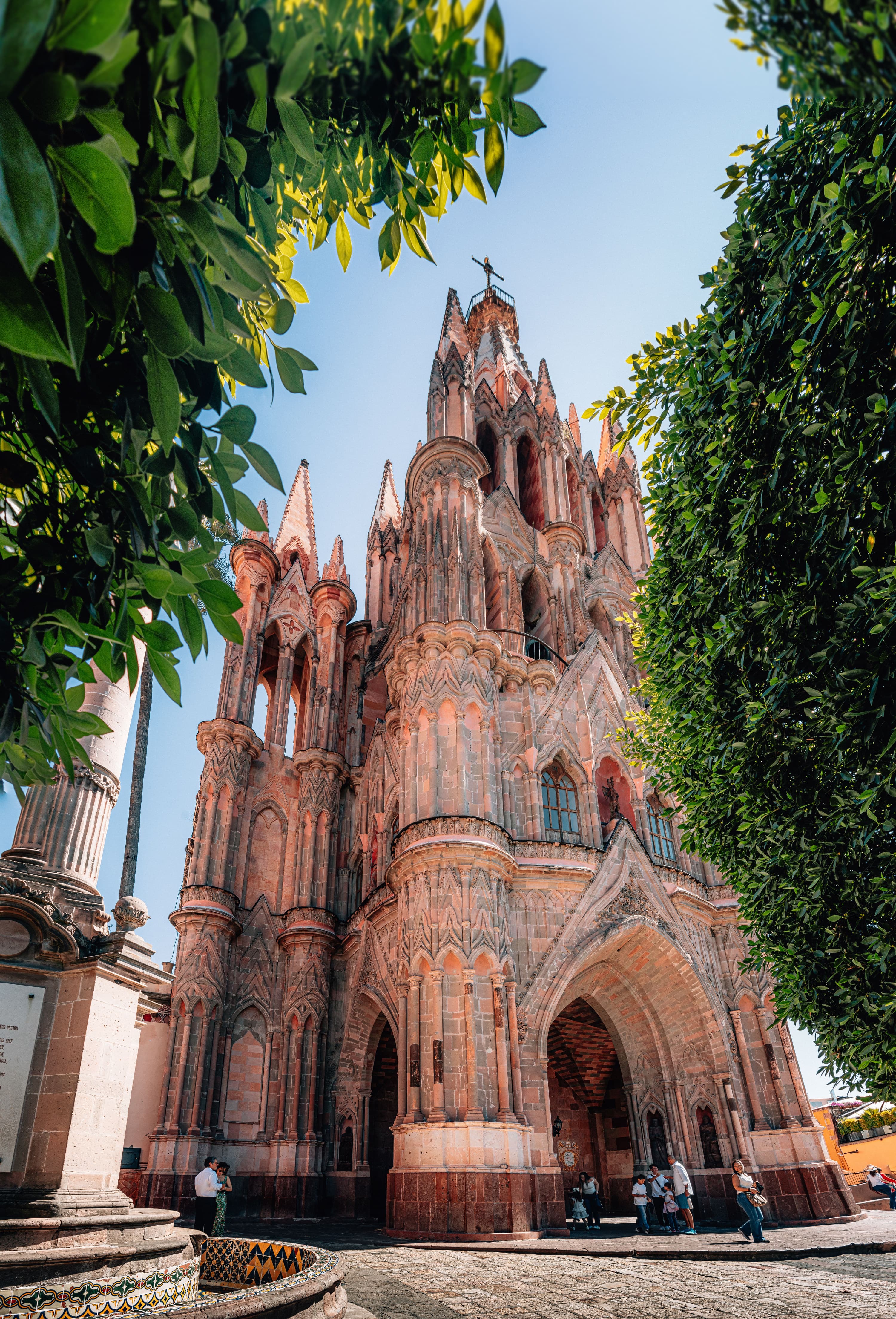
Historic Center: San Miguel in Pink Stone
90 min · 2.7 km · easy
More from San Miguel
Explore more at your own pace.
How San Miguel Became an American Town in Mexico
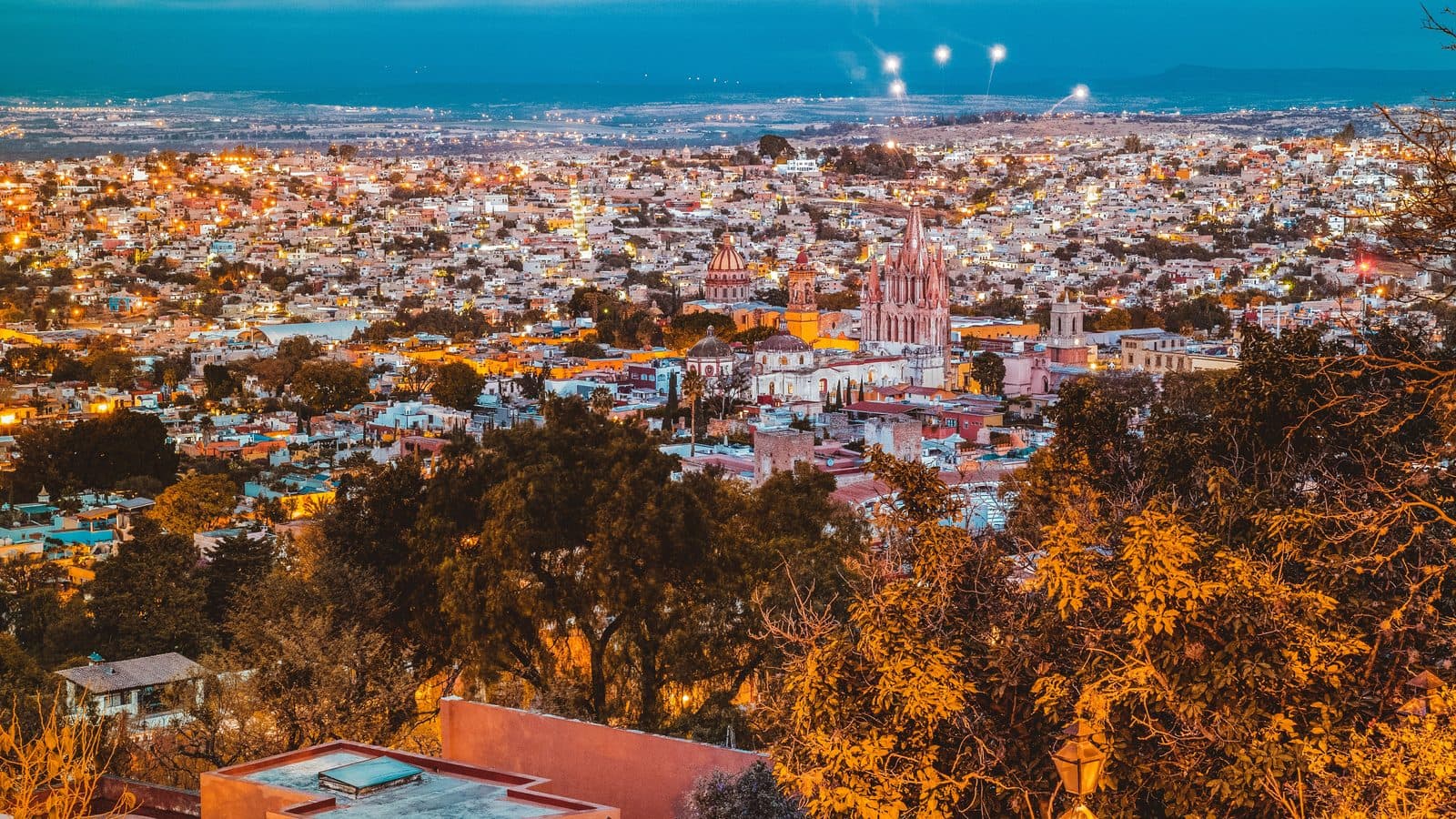
One Day in San Miguel de Allende: A Walkable Itinerary (2026)
San Miguel de Allende Travel Guide: How Many Days, Getting Around, When to Go (2026)
What to Eat in San Miguel de Allende: A Food Guide (2026)
How San Miguel Stayed an Art Colony When Every Other Mexican Town Became a Souvenir