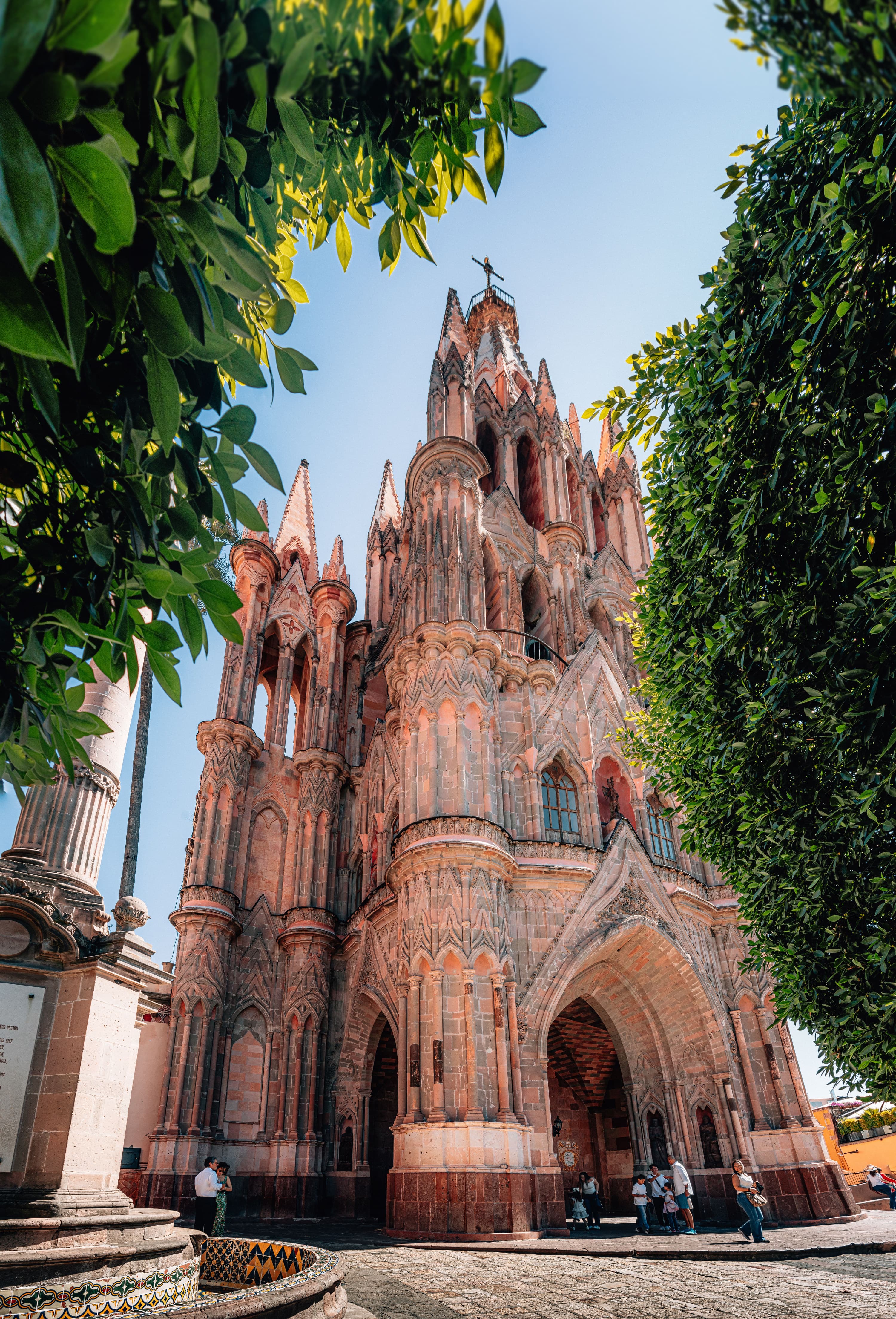
Eleven stops through San Miguel de Allende's historic center, from the Jardín and the Parroquia down to the spring where the town began and back. Learn to read its pink stone, ochre walls and domes.
Start · Jardín Principal: The Square That Turned Round
DirectionsStops
- 1
Jardín Principal: The Square That Turned Round
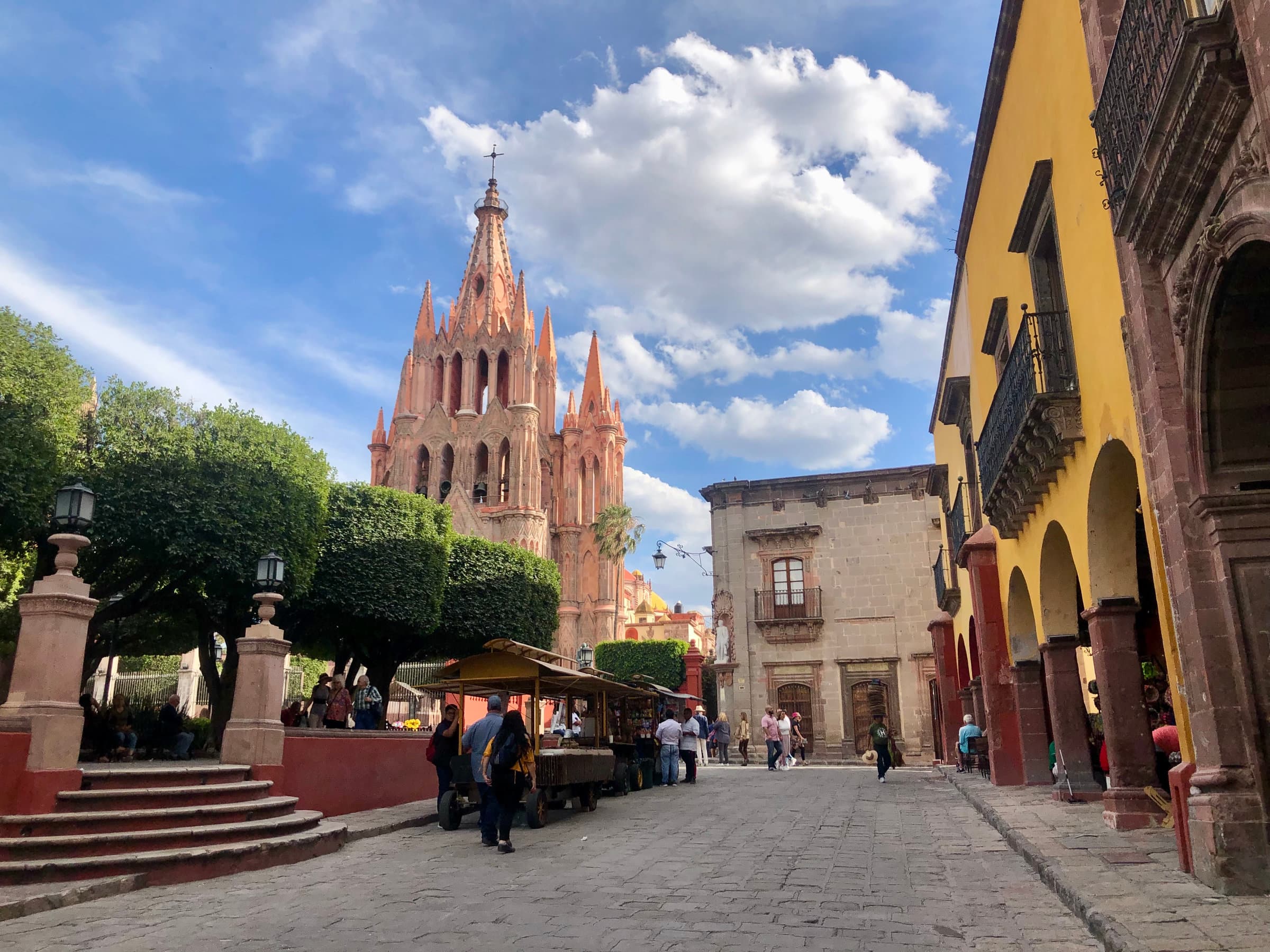
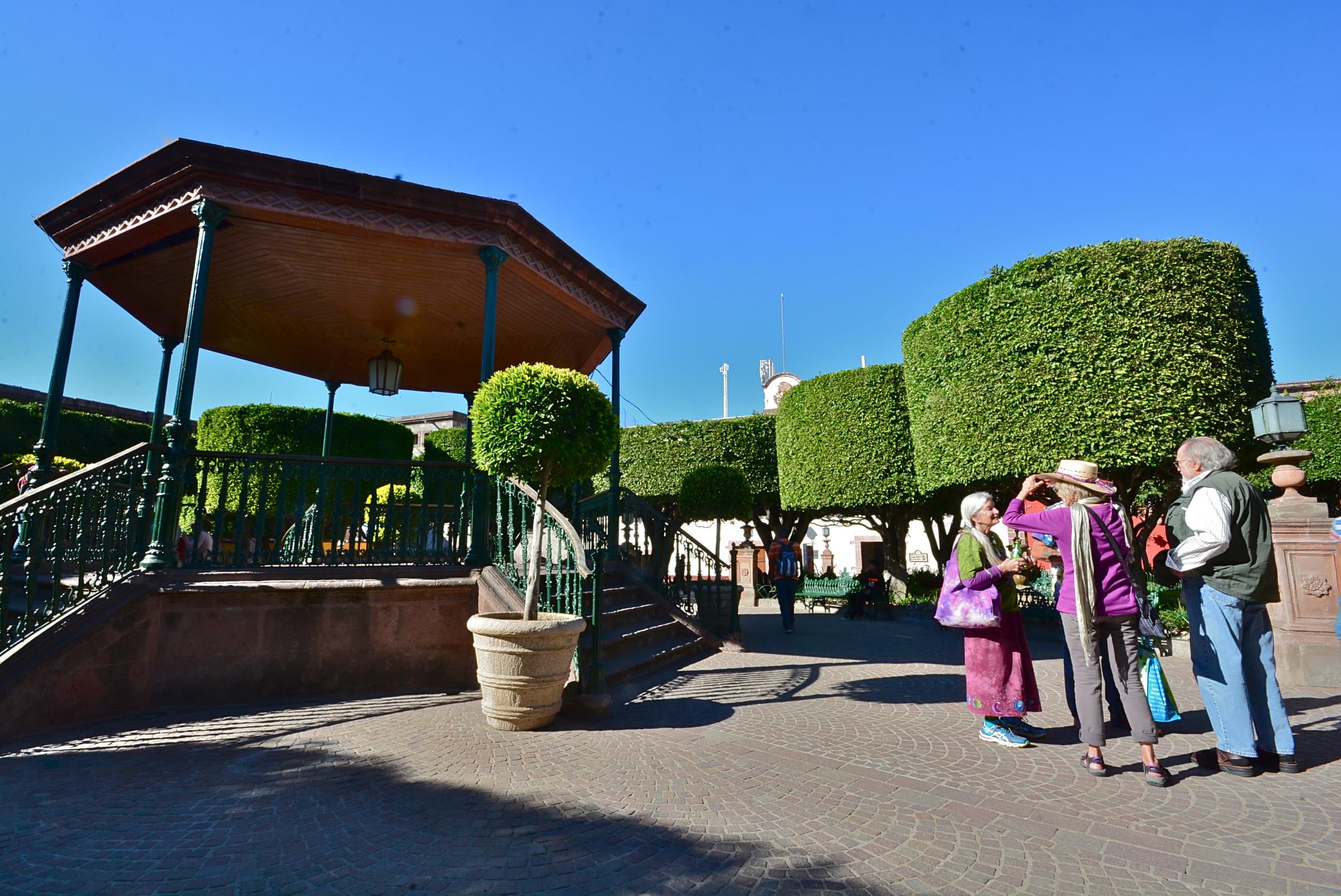
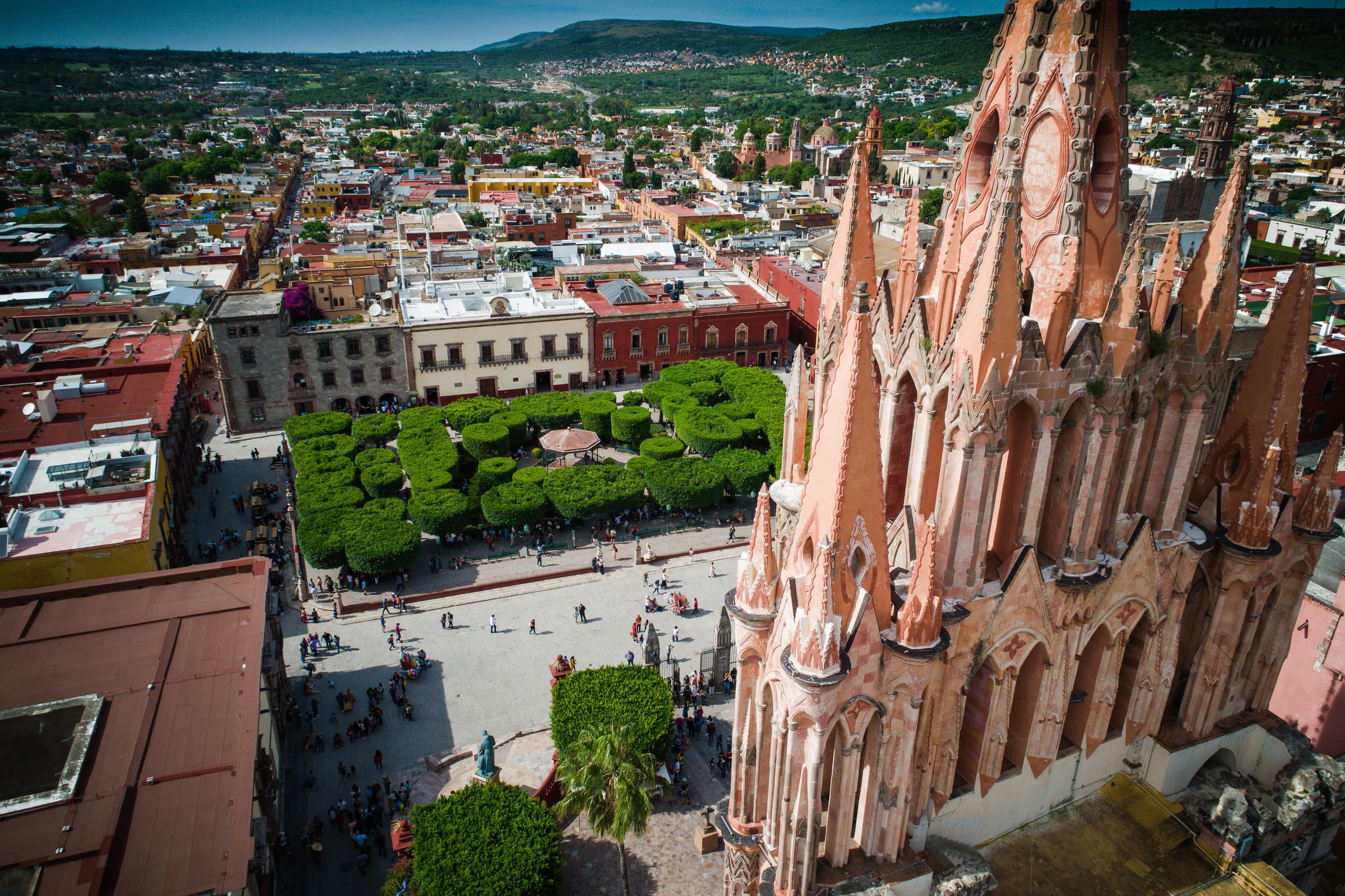
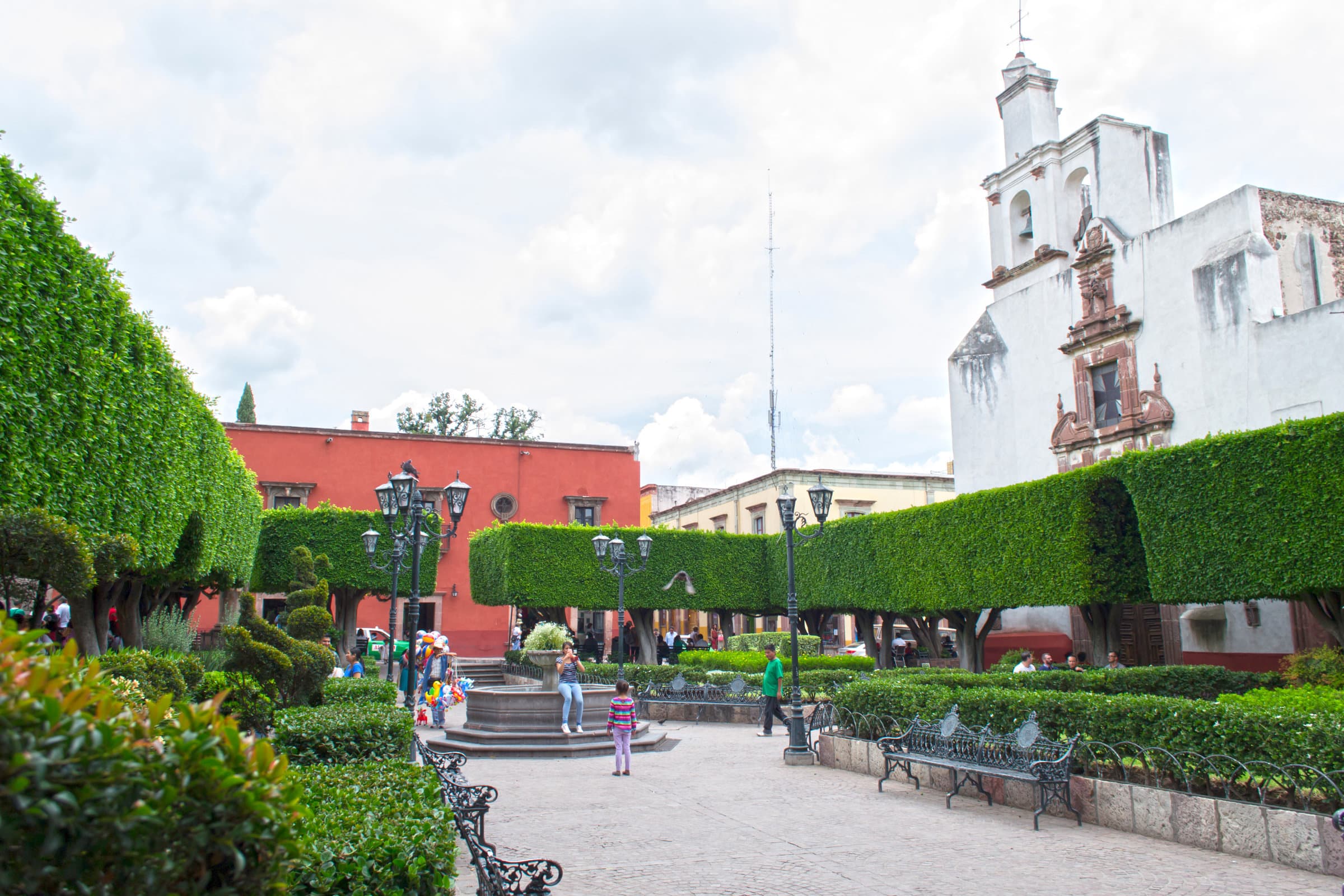
The main square and its clipped laurels, facing the pink Parroquia. Why the square faces the church, whose house stands on the corner, and the rules behind the colours.
- 2
Parroquia: A Gothic Front Drawn in the Sand
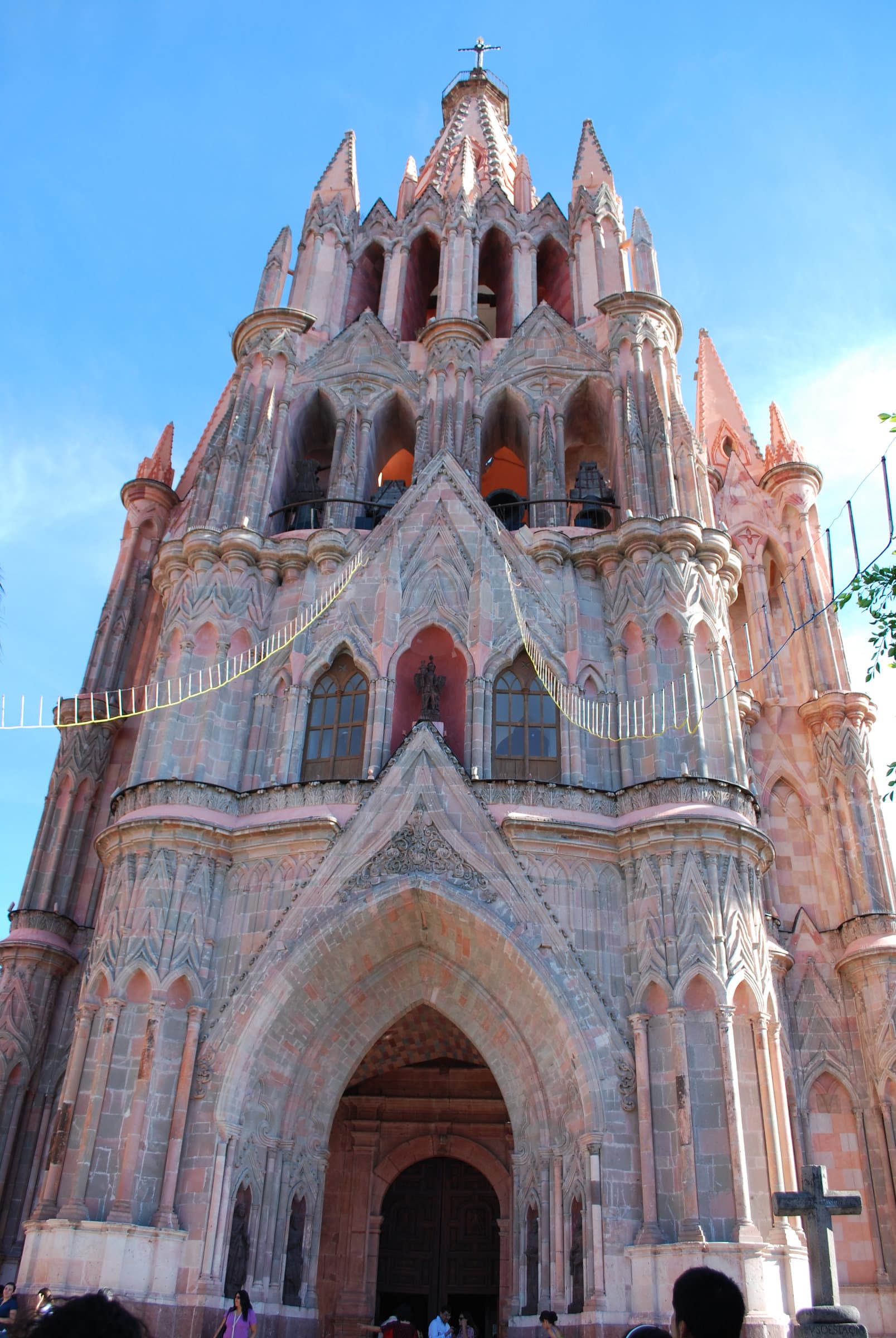
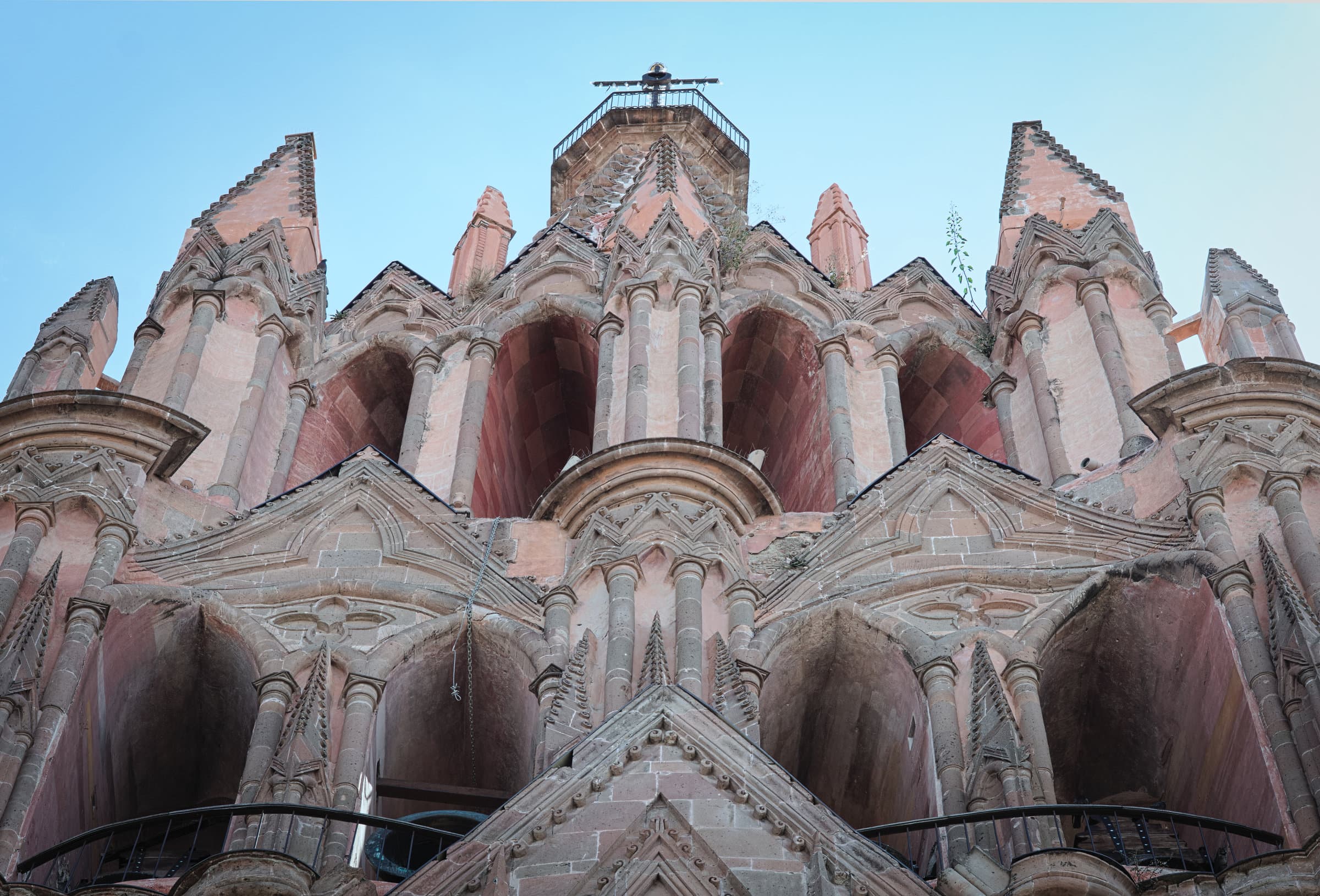
The pink stone front that made San Miguel famous, raised from the 1880s by a self-taught local mason on an older church. What is legend, what is record, and what is brick.
- 3
Calle Aldama: Reading a San Miguel Wall
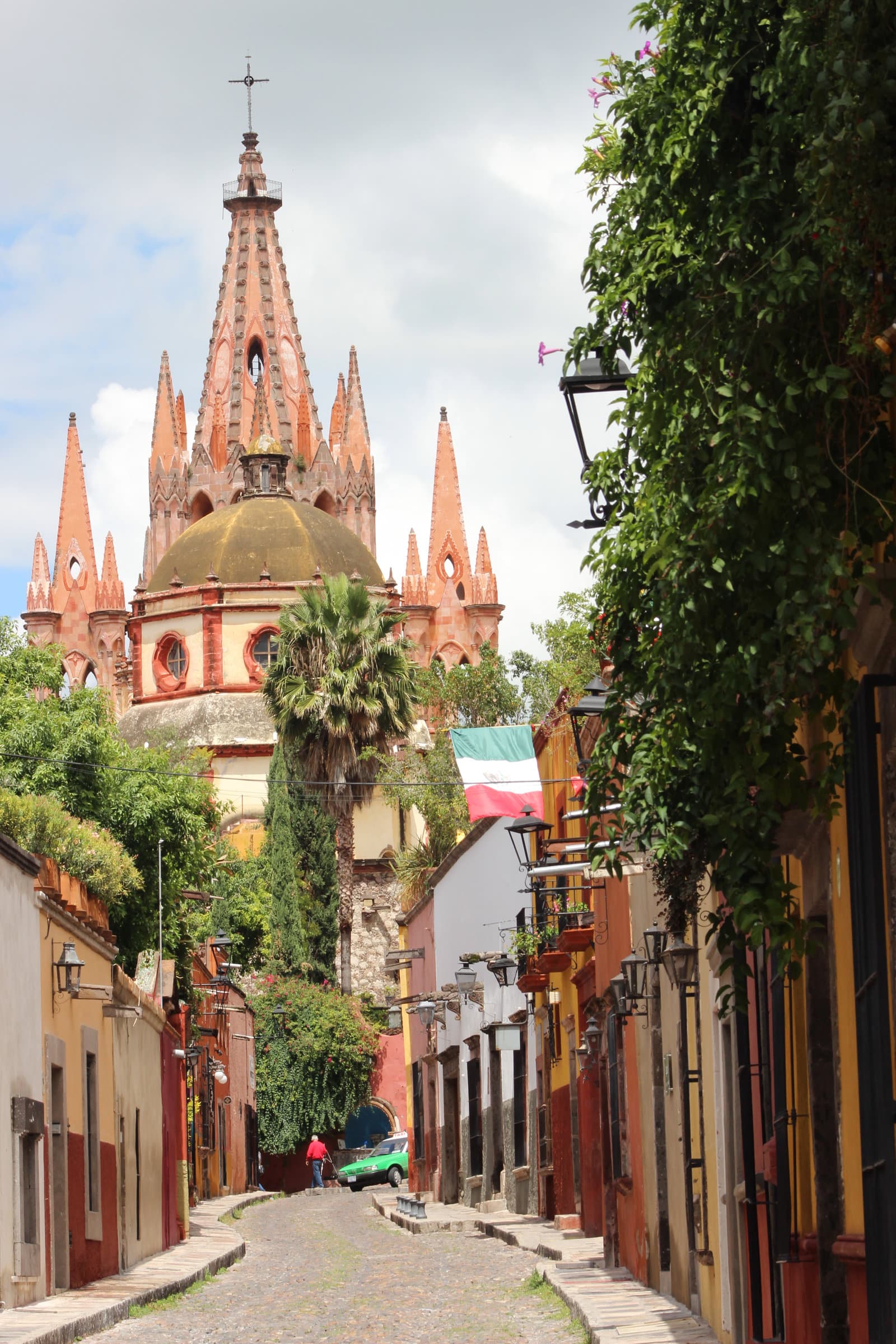
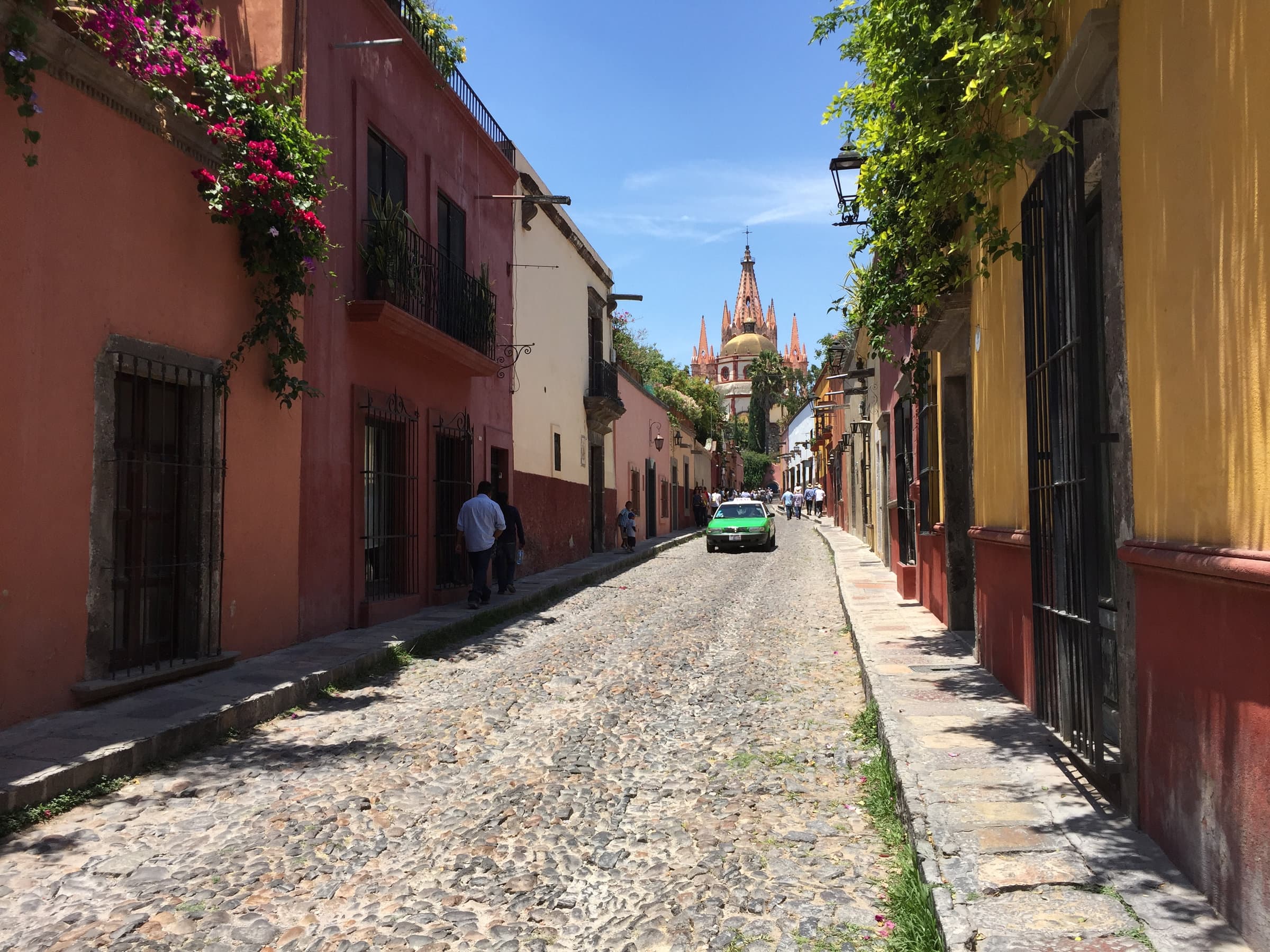
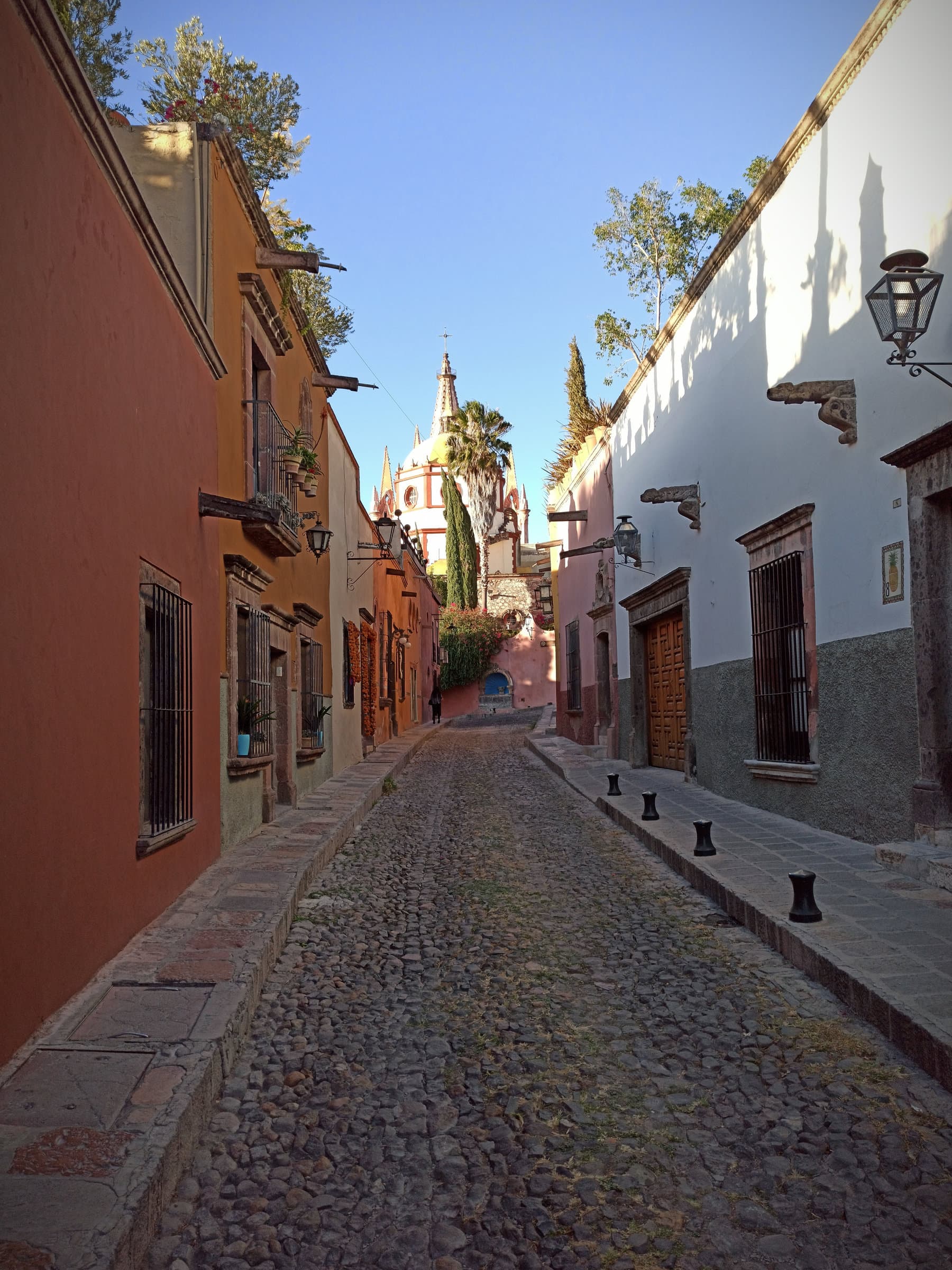
A straight cobbled street aimed at the Parroquia's dome and spire. The place to learn the town's building rules: tall narrow openings, one colour per house, flat roofs.
- 4
Parque Juárez: Orchards Made Into a Garden
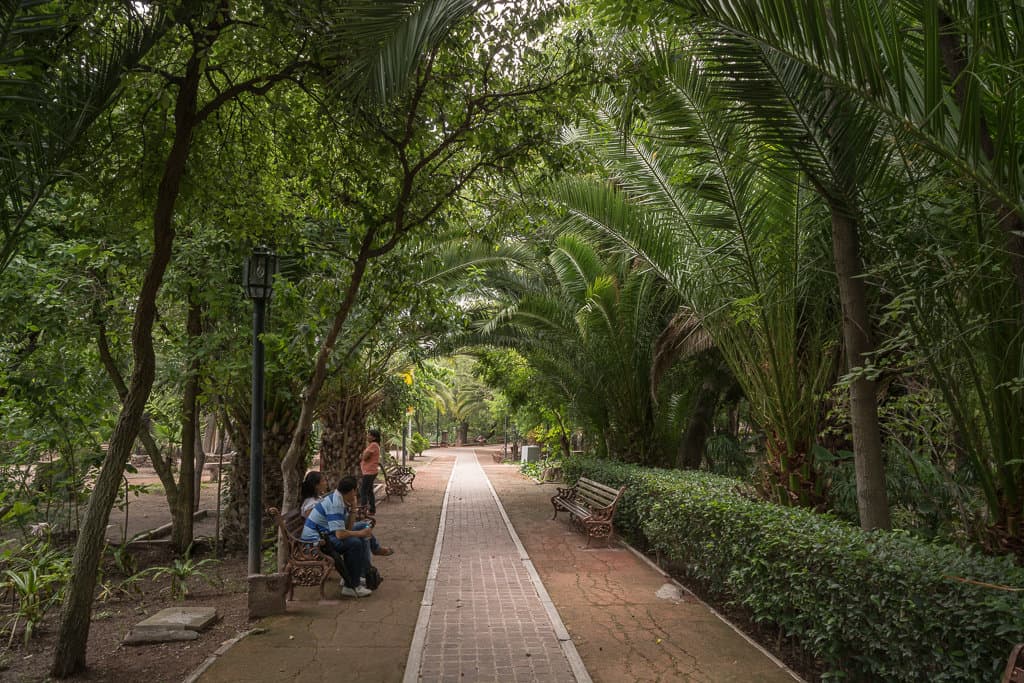
A shady park laid out around 1904 on orchards watered from the springs above, with old bridges over a stream bed, fountains and tall trees. A good place to sit.
- 5
El Chorro: The Spring Where the Town Began
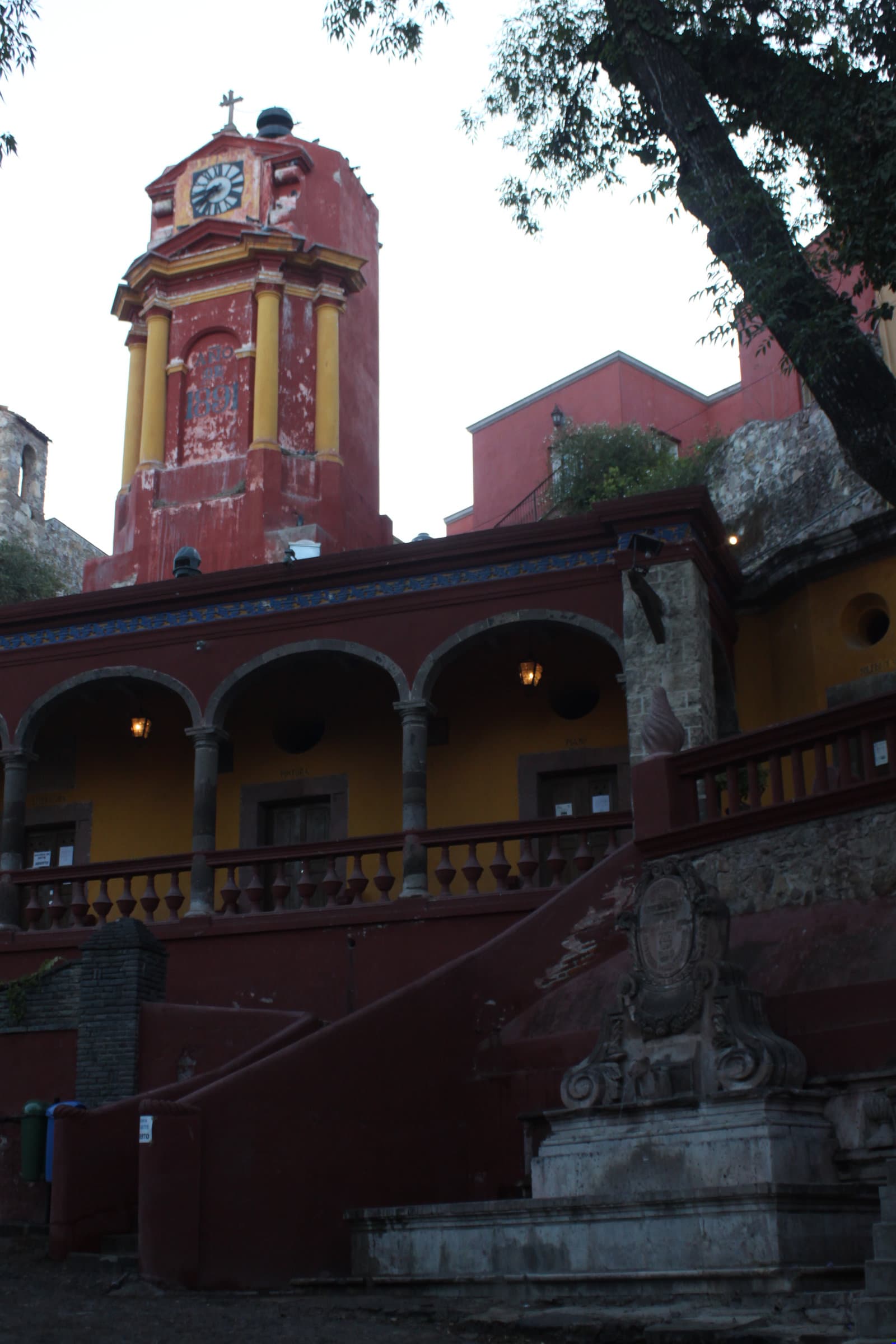
Stone wash basins below the spring that decided where San Miguel would stand. Grooved scrubbing stones, a tower dated 1891 over the old water tank, and a legend about dogs.
- 6
San Francisco: A Carved Front Beside a Plain Chapel
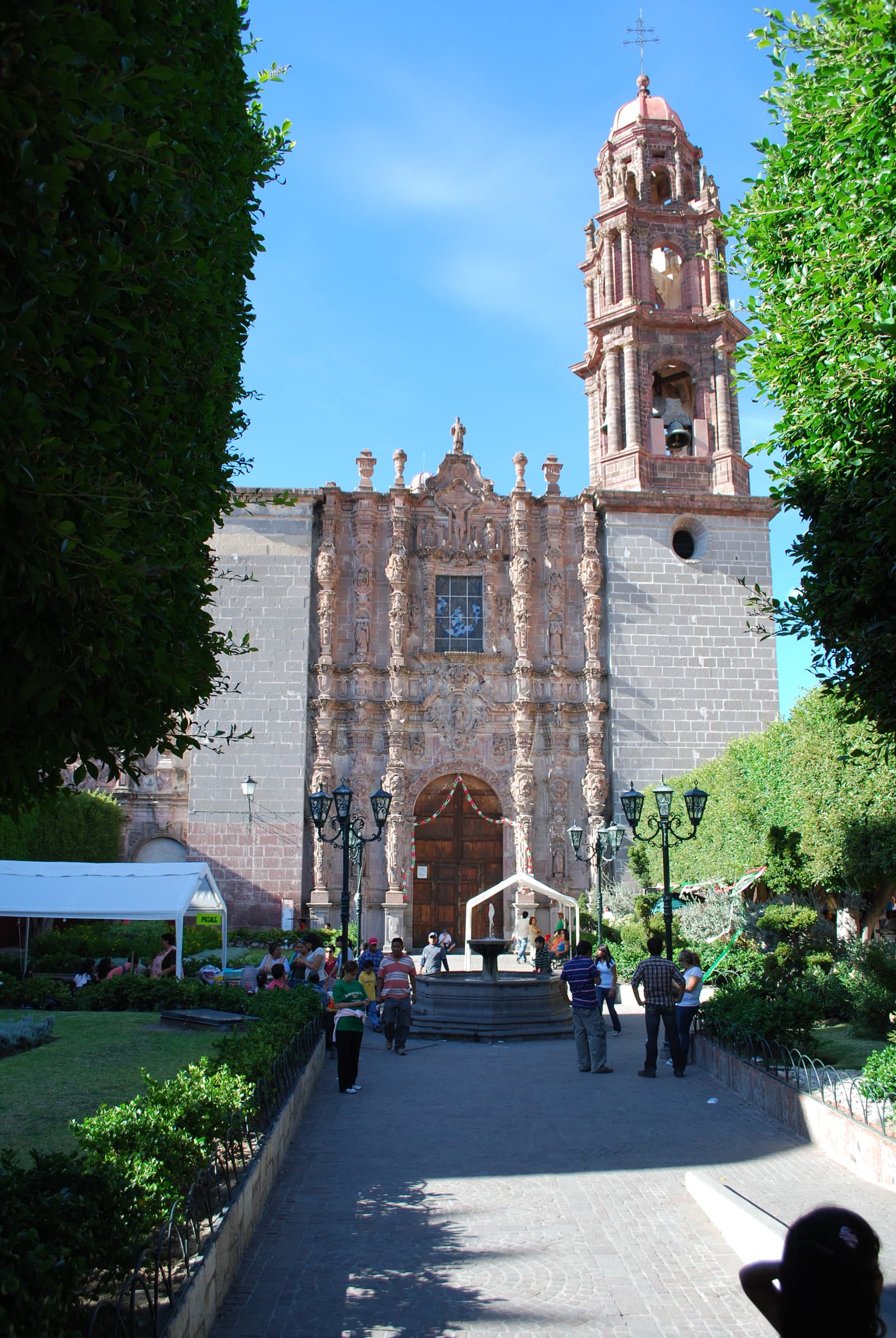
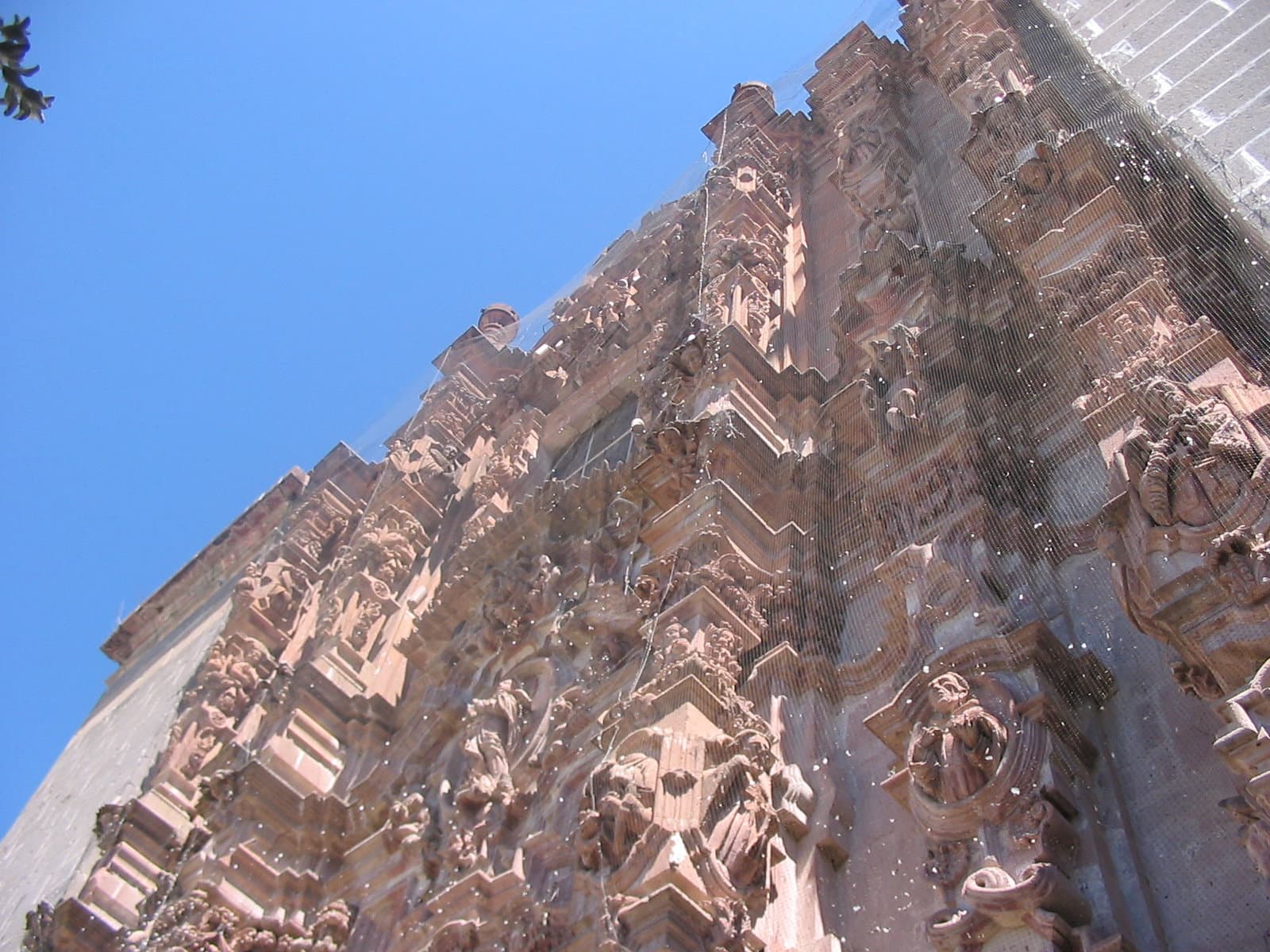
Two church fronts nearly a century apart on one small plaza: a richly carved front finished in 1799, and a plain white chapel dedicated in 1713.
- 7
Plaza Cívica: The First Main Square
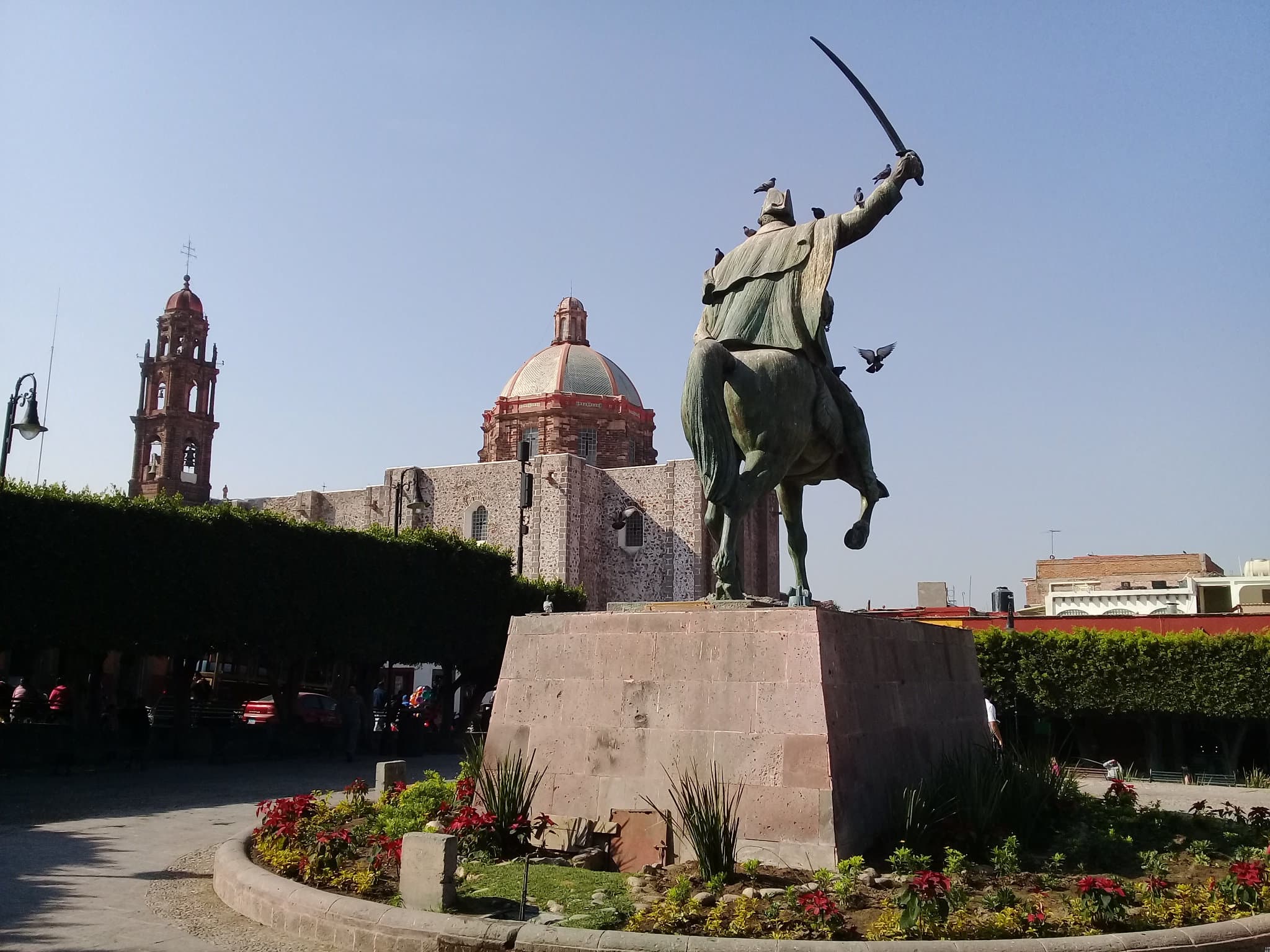
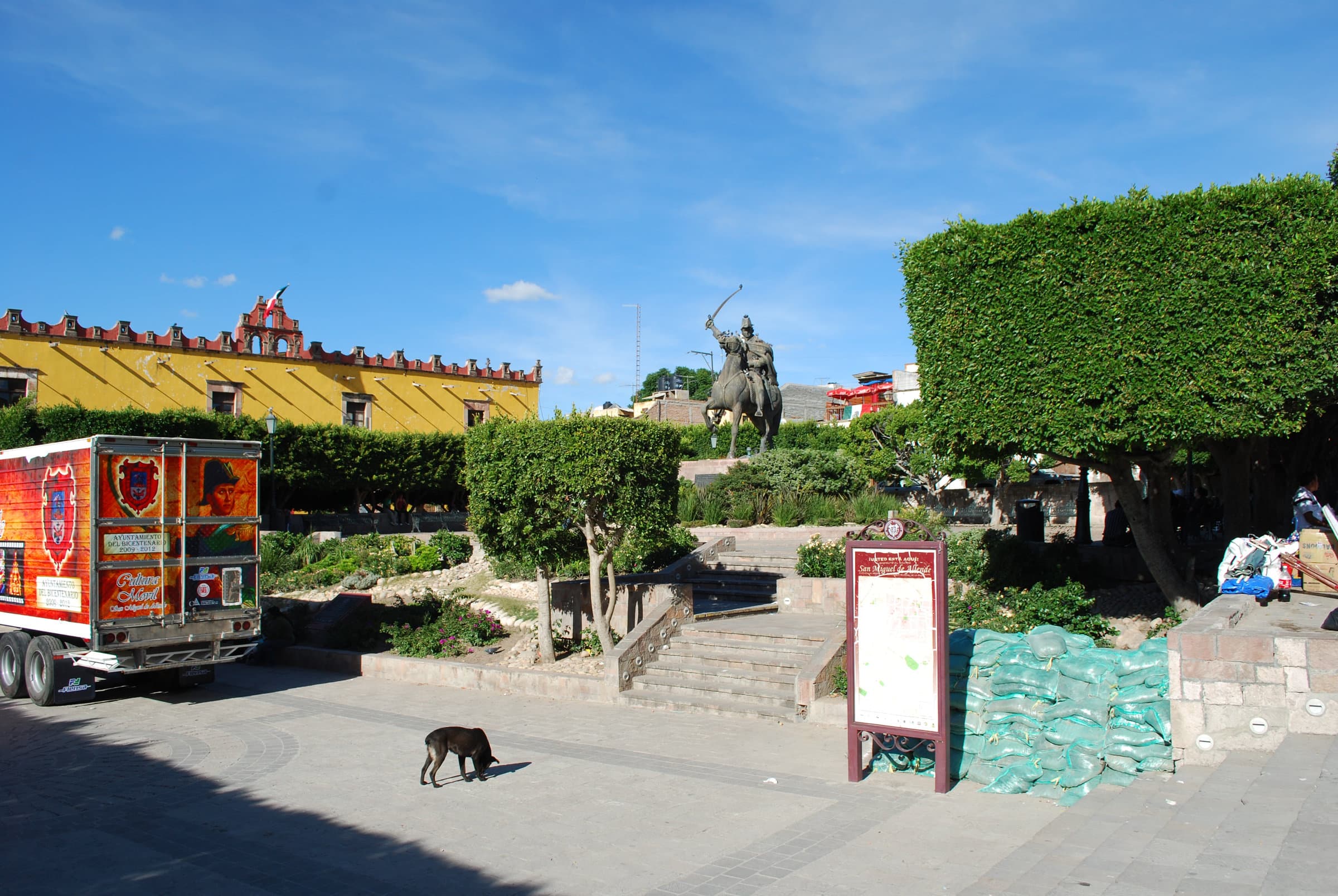
The town's first main square, laid out in 1555, later a market for eighty years, now home to an equestrian statue of Allende and the old college where he studied.
- 8
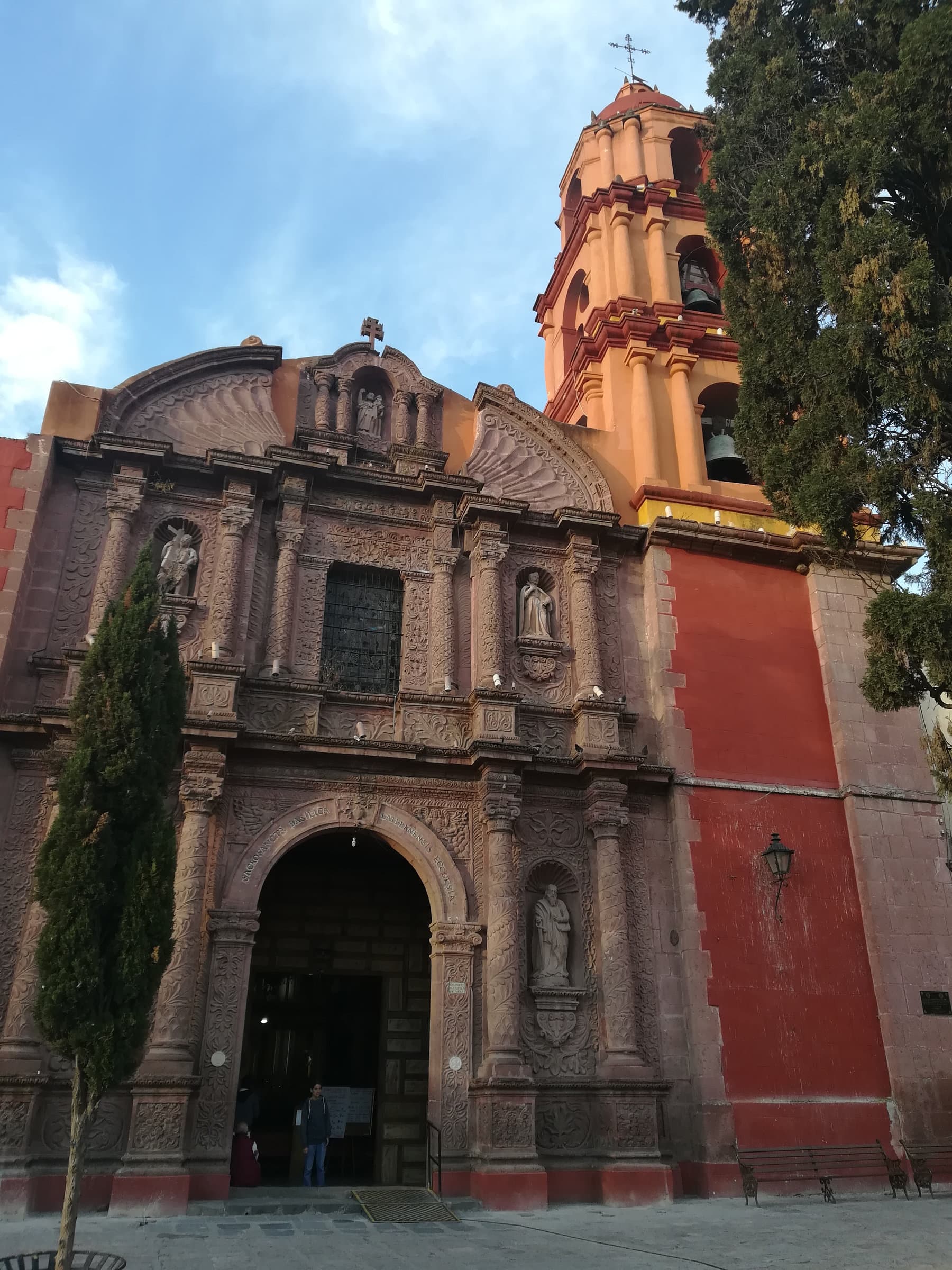
Oratorio and La Salud: Two Ways to Make a Front
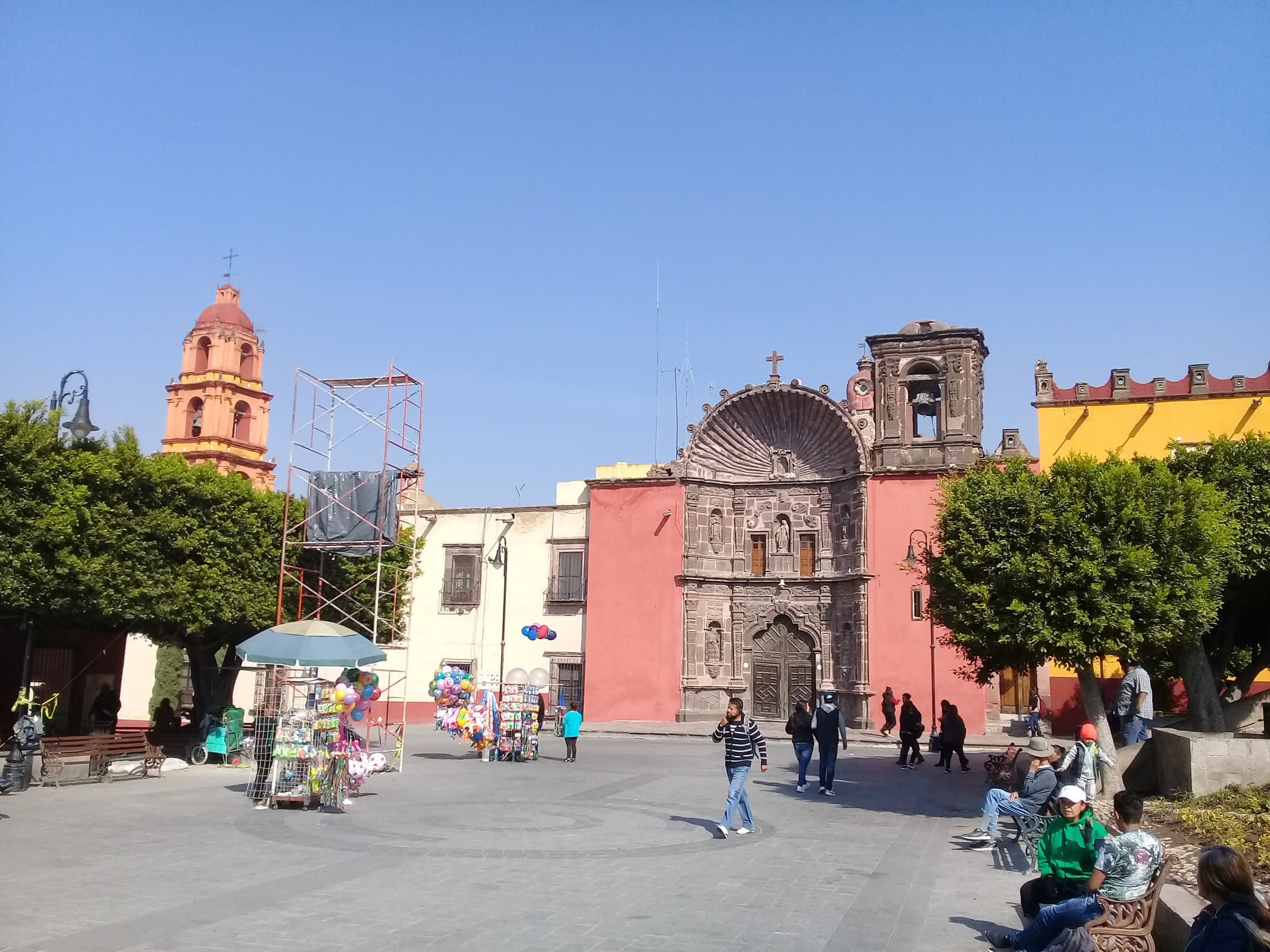
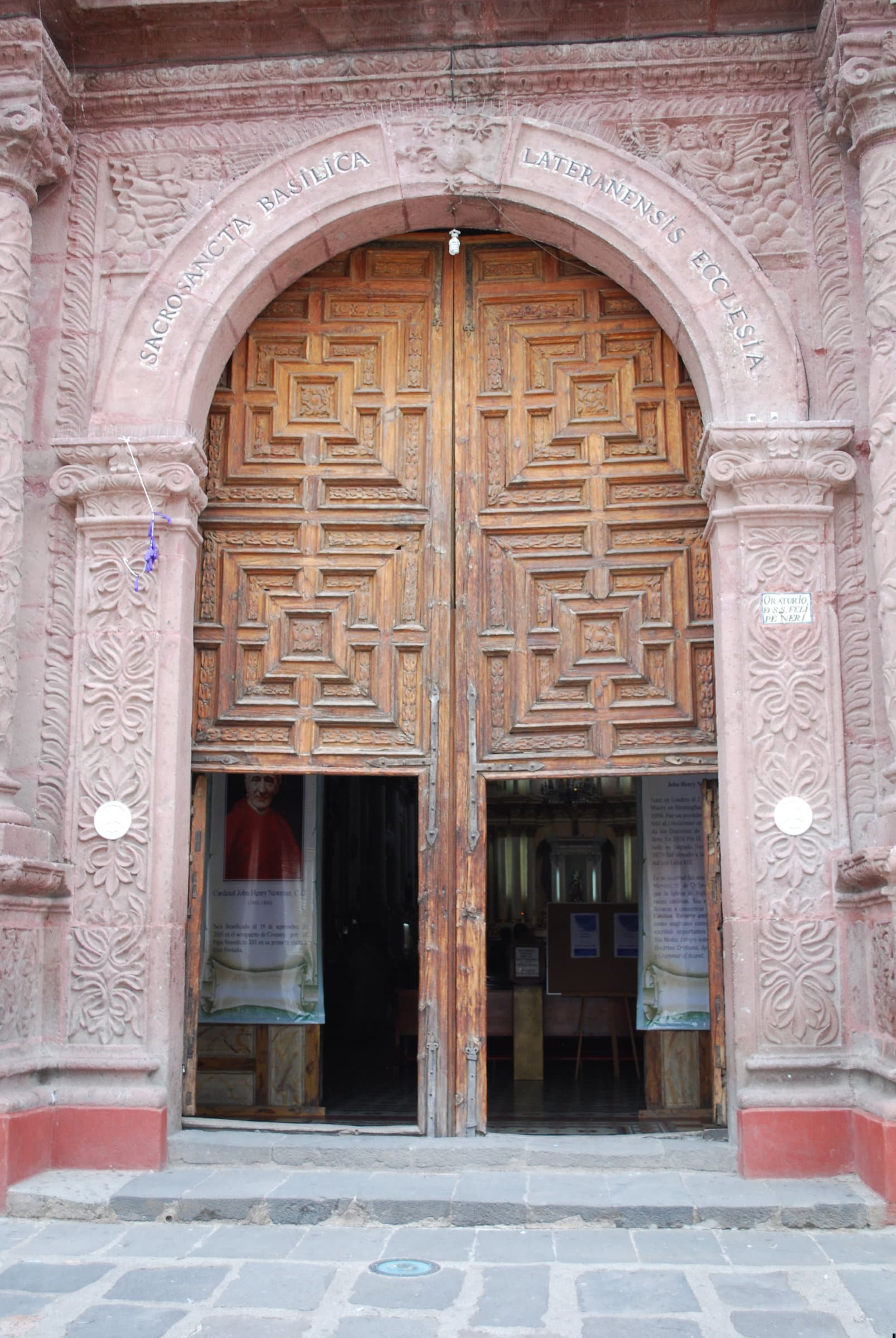
Two church fronts side by side: the Oratorio's carved pink stone, kept from an older chapel, and La Salud's white wall under a giant carved stone shell.
- 9
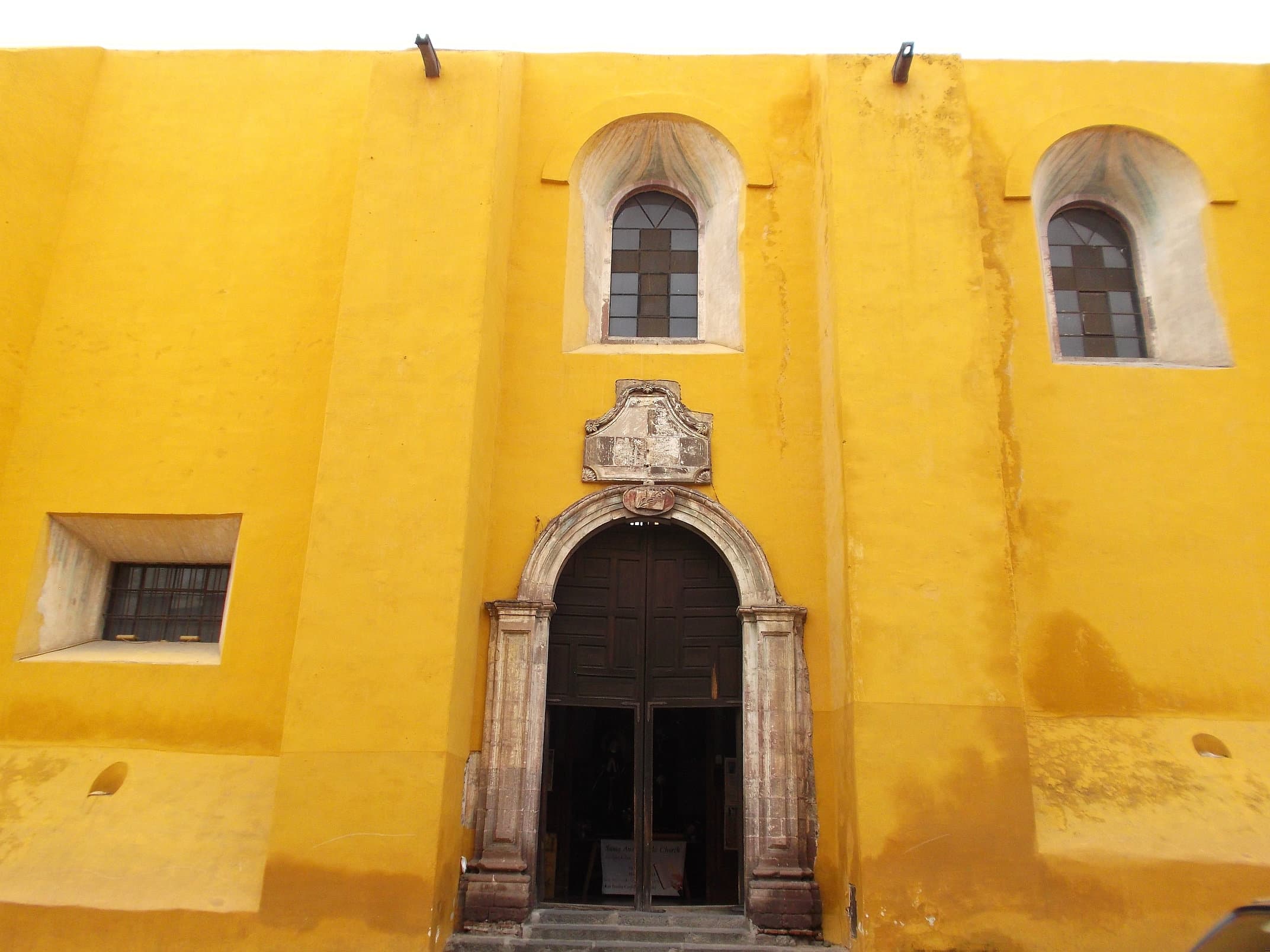
Santa Ana and the Library: One Building, Three Lives
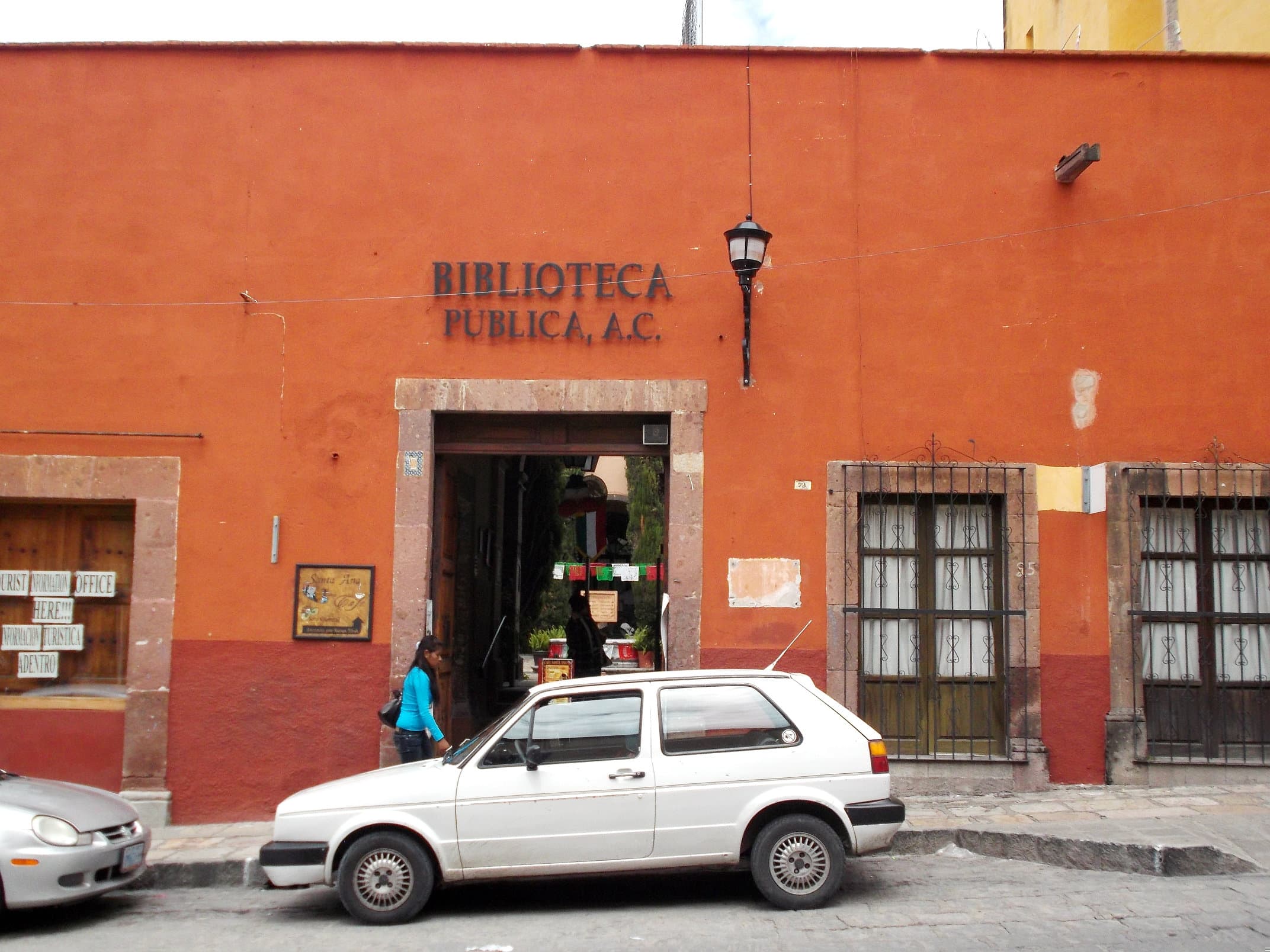
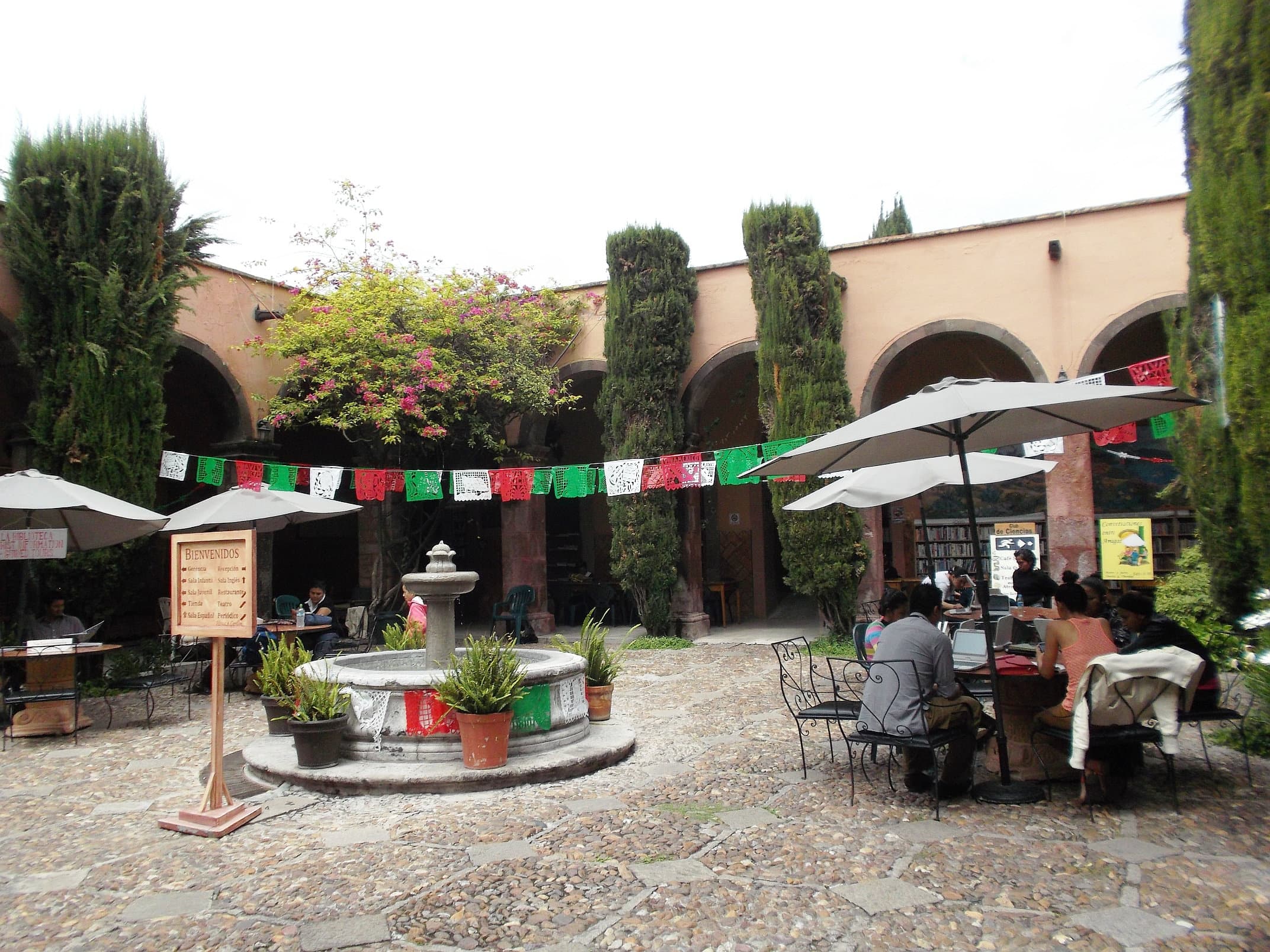
A small plain church and, beside it, a house for poor women that became a market and then, since 1958, the town's public library, started by a Canadian resident.
- 10
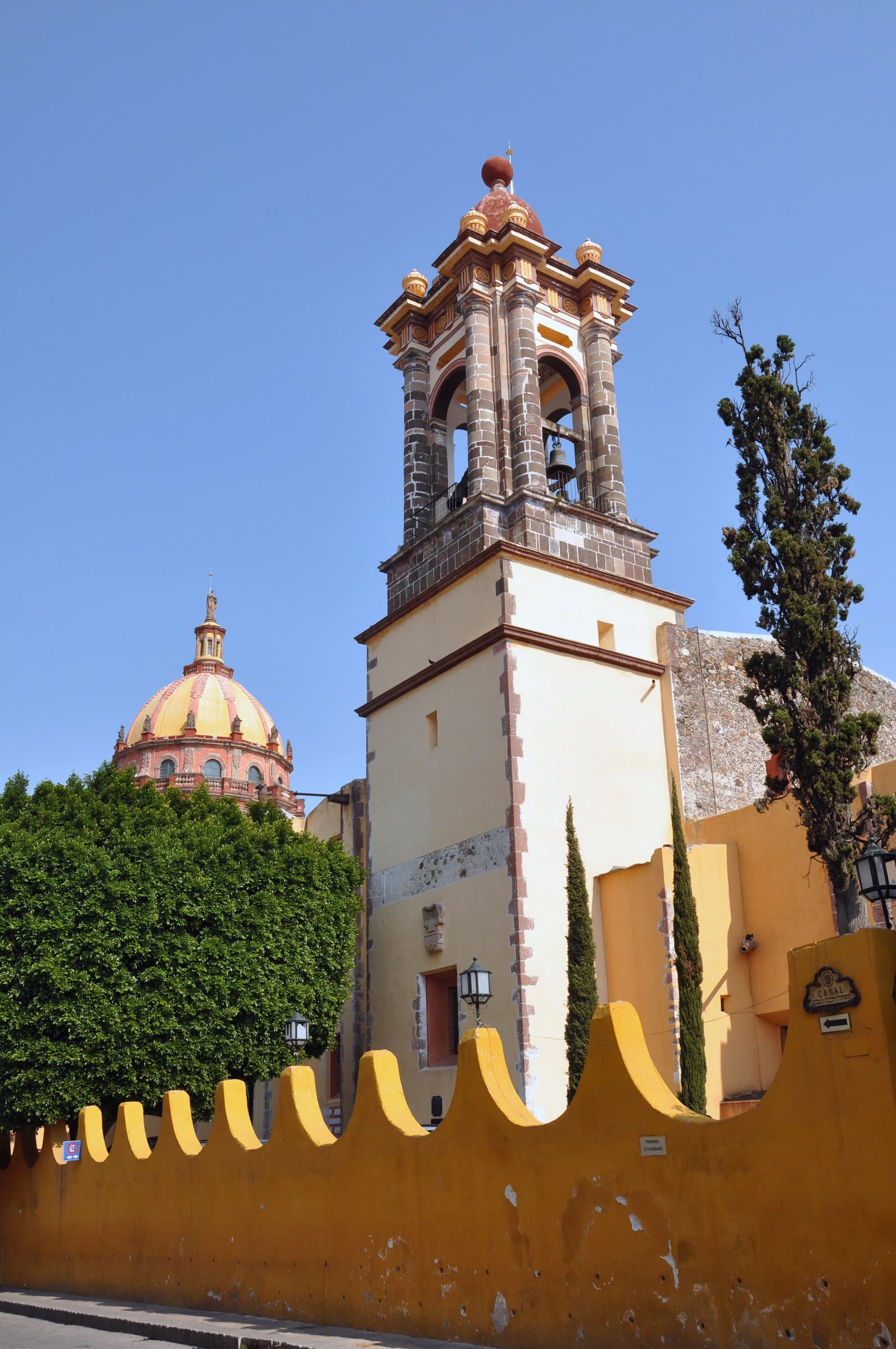
Bellas Artes: A Convent, a Dome and an Unfinished Mural
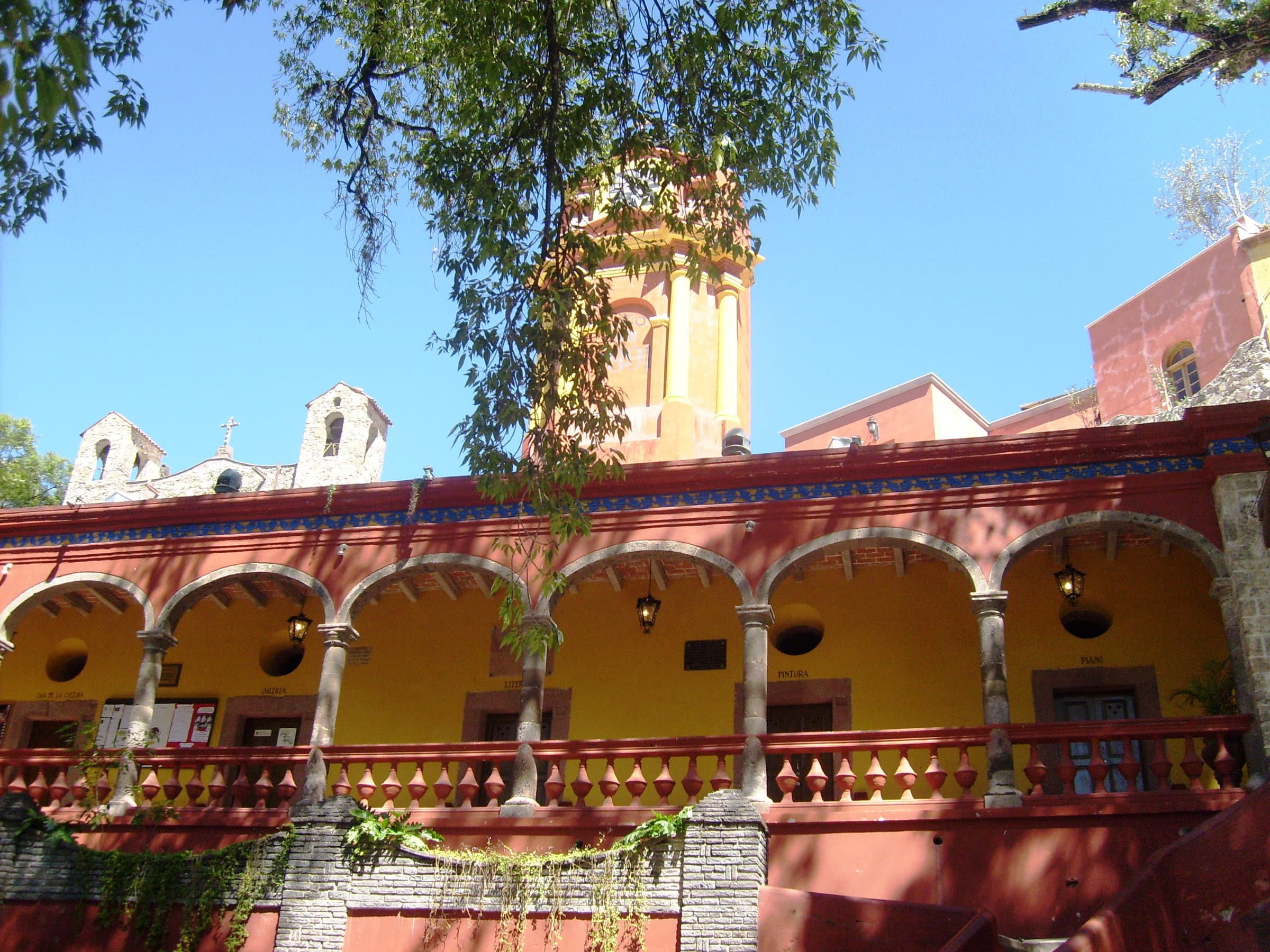
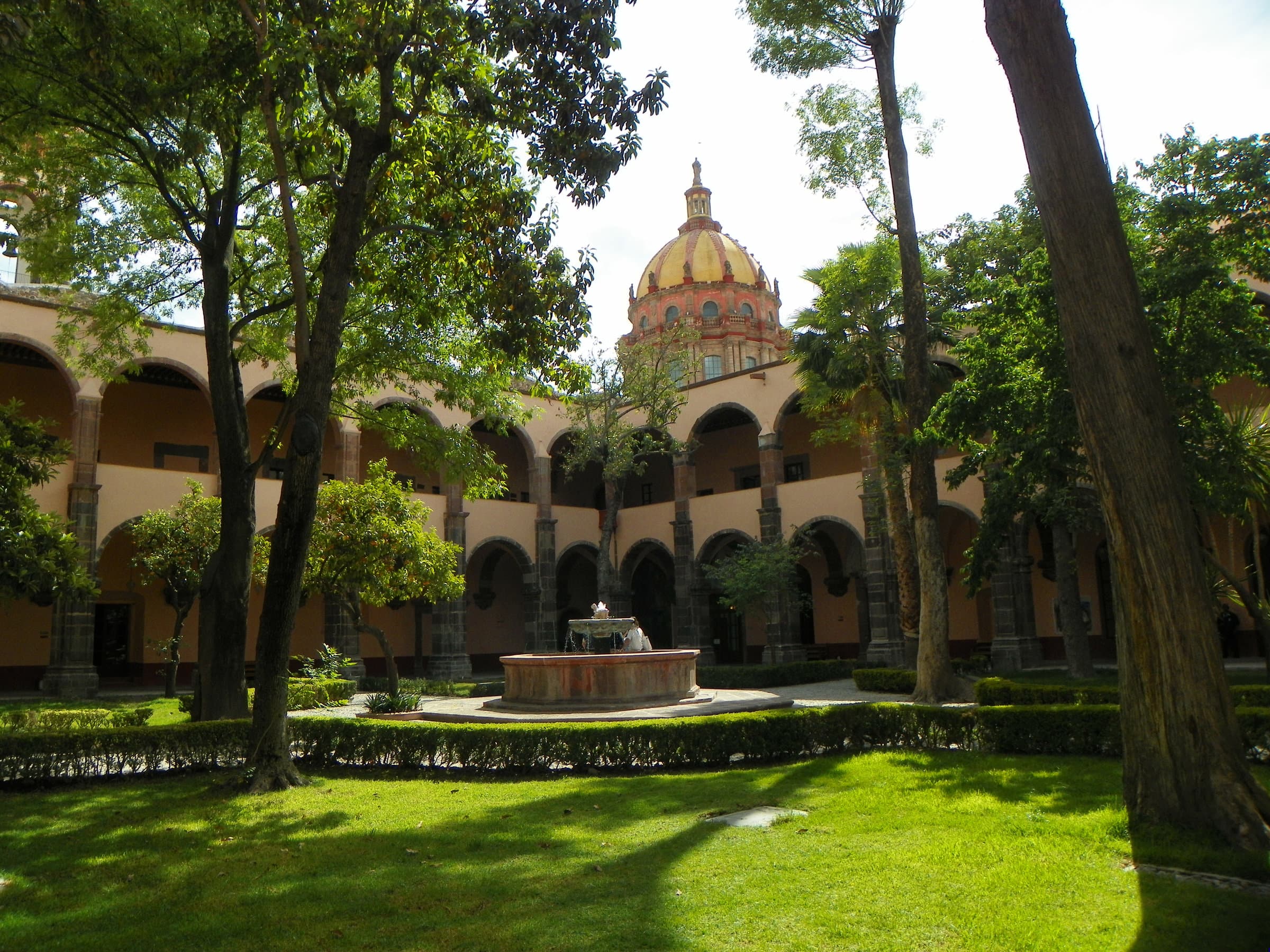
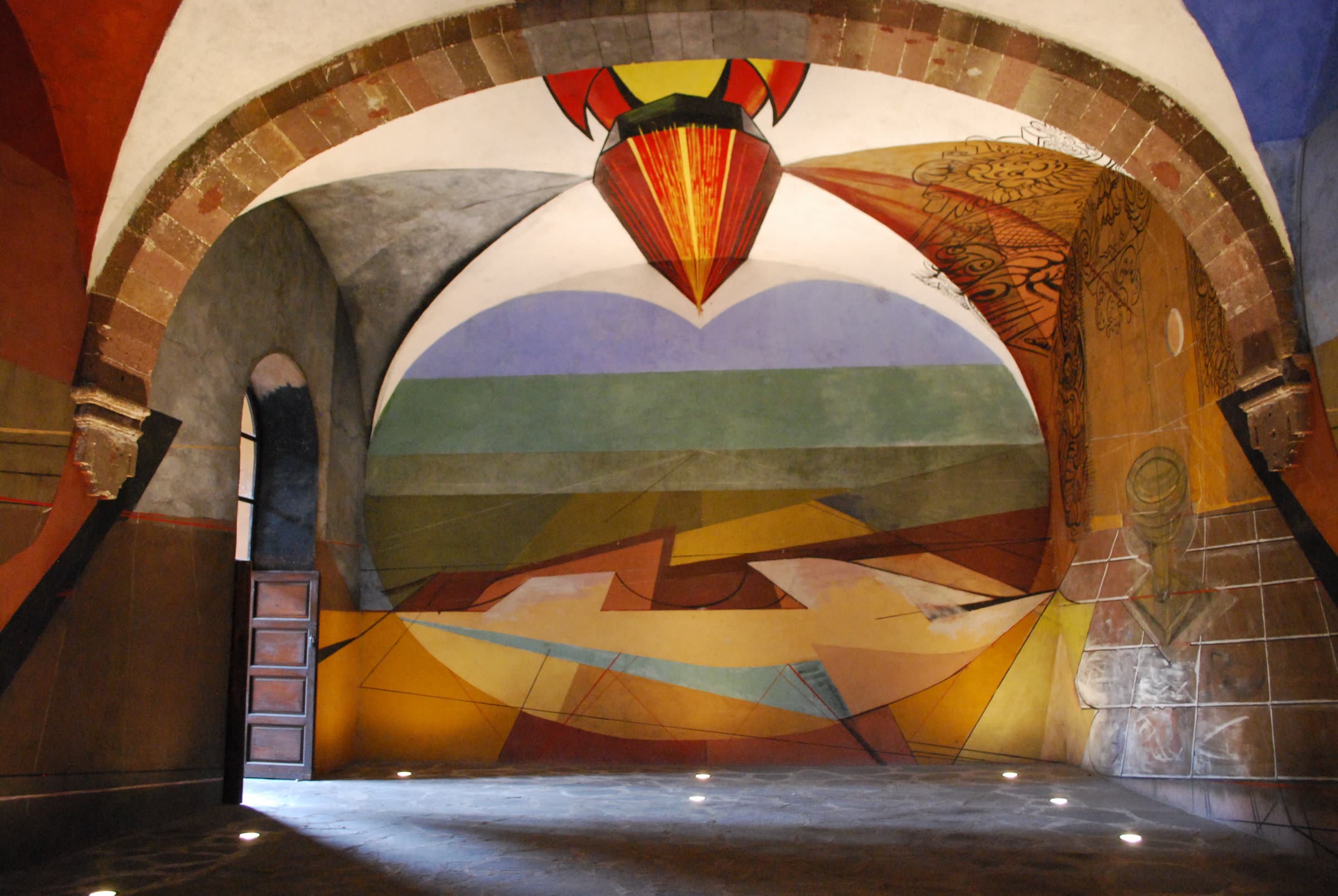
A convent opened in 1765, now a free arts centre with a garden cloister and an unfinished mural by Siqueiros, beside the great dome of Las Monjas.
- 11
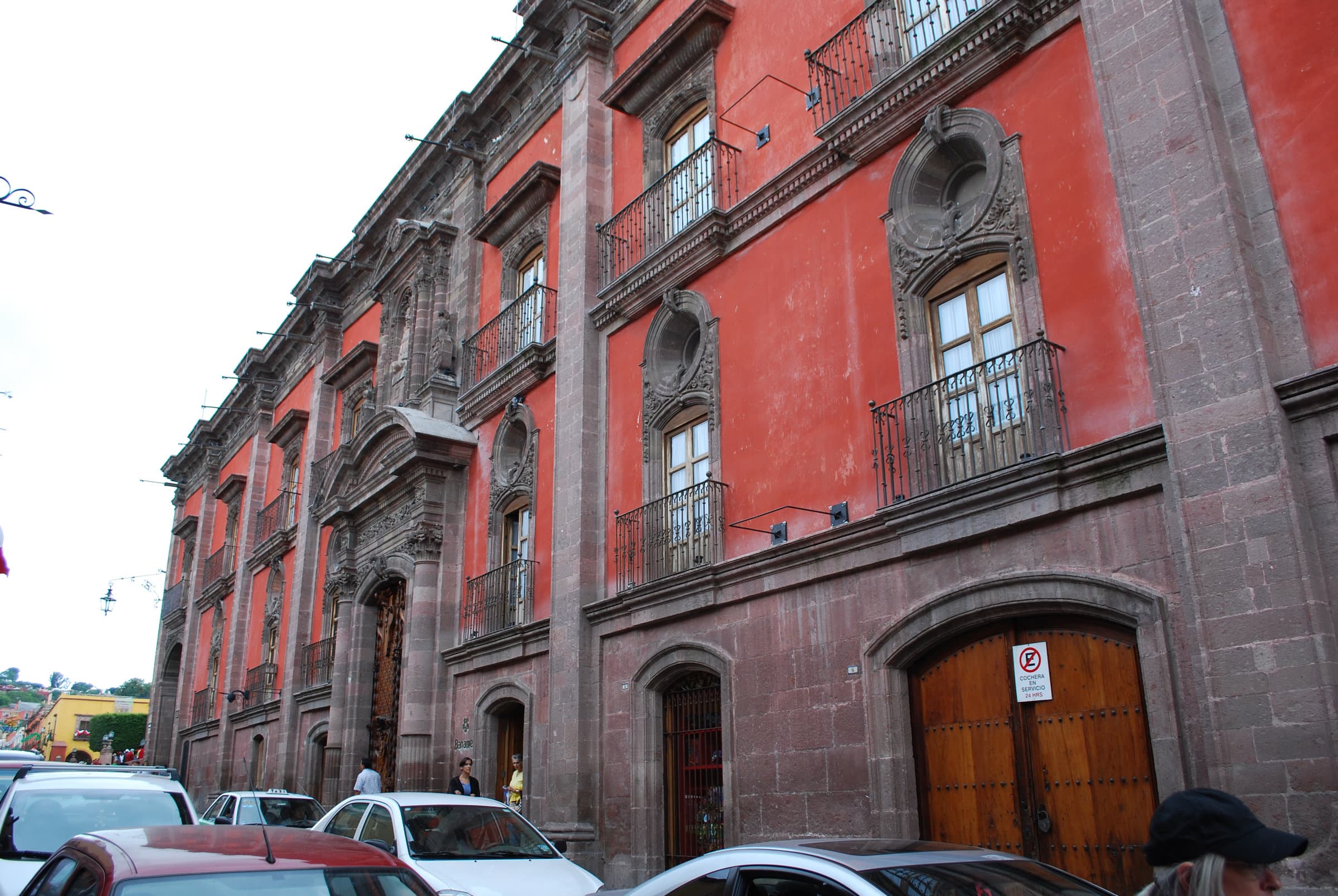
Canal House: A Front Read From Top to Bottom
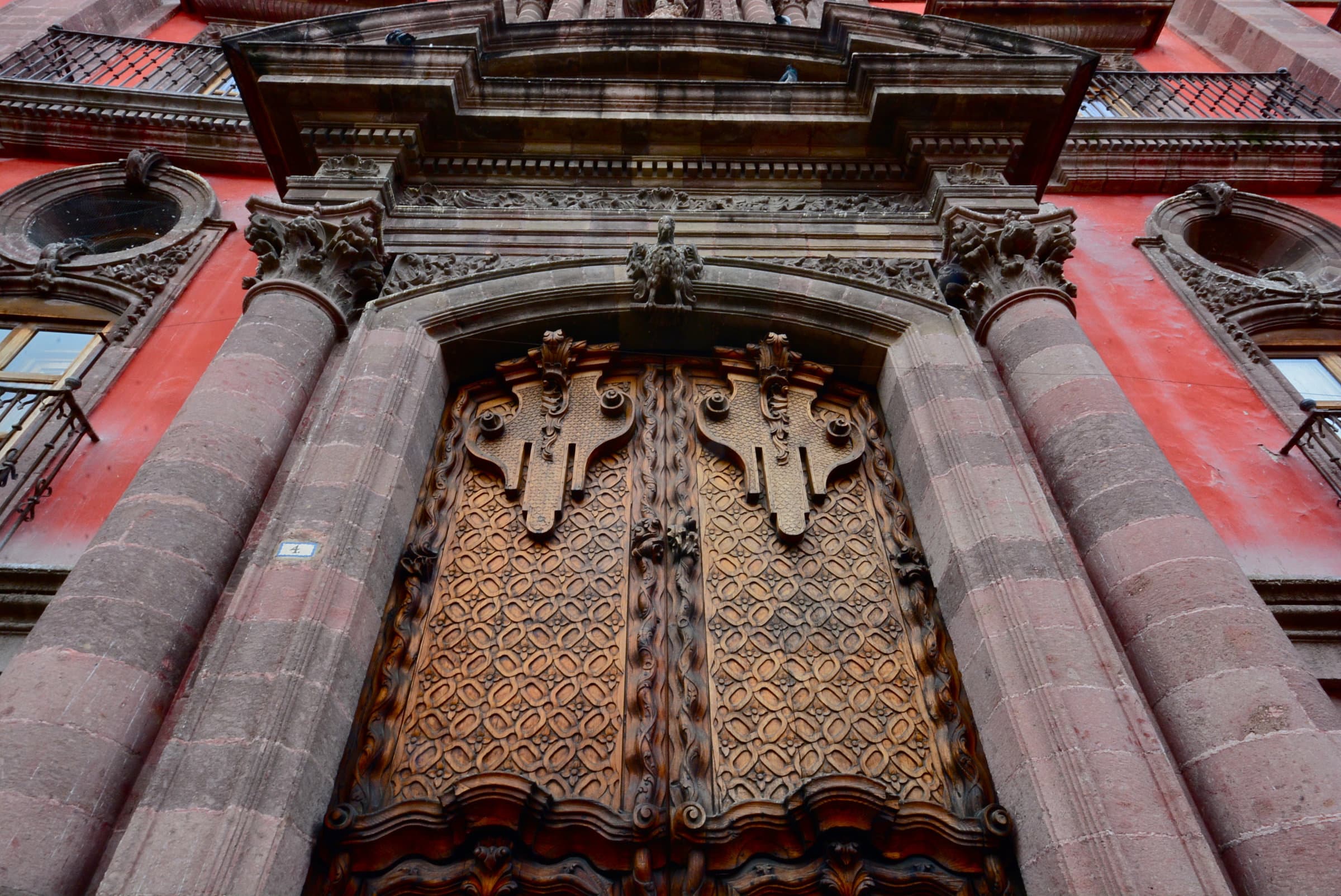
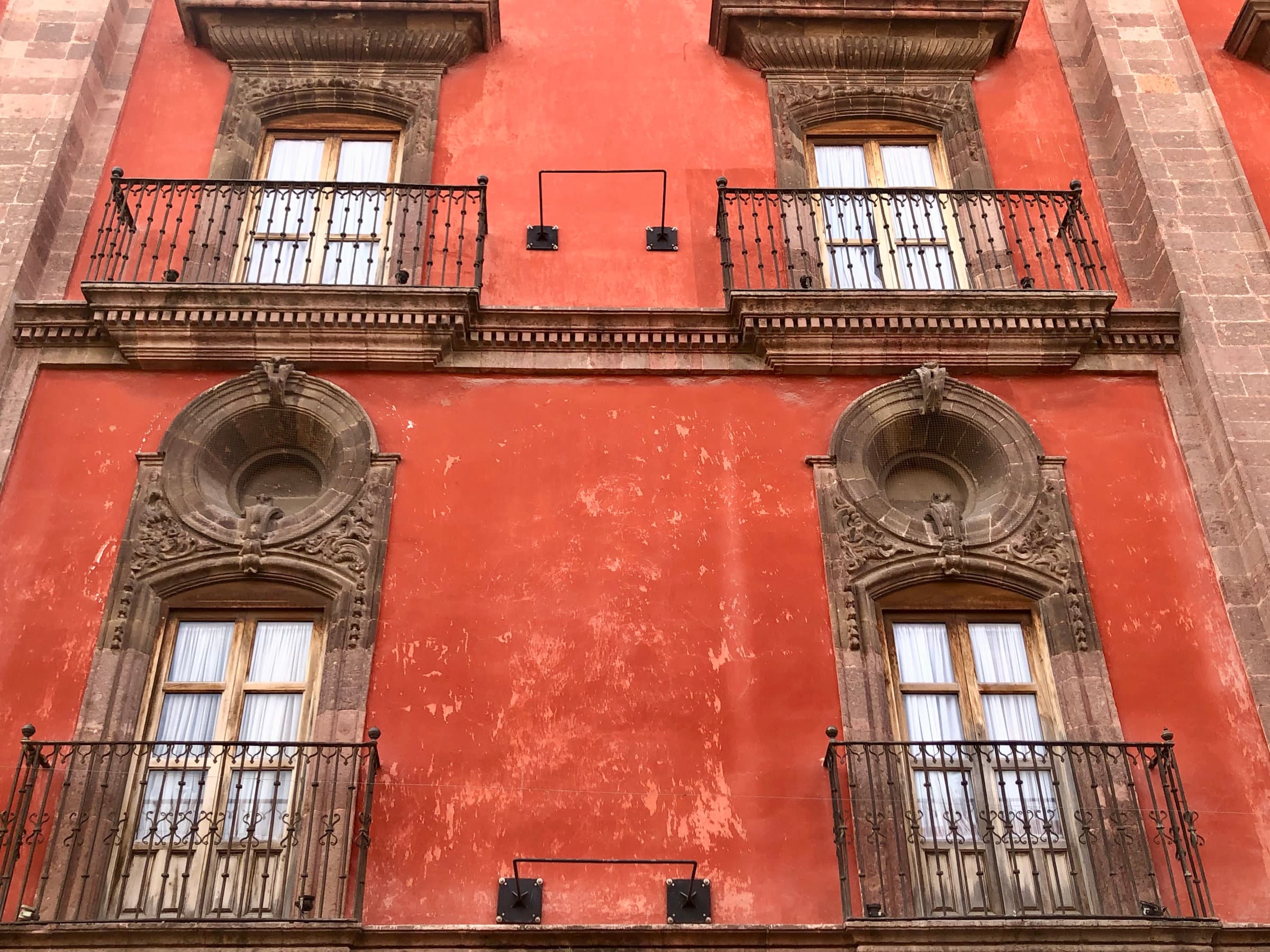
The Canal family's grand house on the corner of the square, built around 1800, read from its saint in a niche down to a carved door that was once painted in colours.
Details
Best Time to Visit
Morning, between about nine and noon, is best: the Parroquia is open (it closes roughly 2 pm to 4 pm) and the streets are quieter. Its pink front faces north, so it is evenly lit rather than sunlit for most of the year. Bellas Artes and the Canal house open Tuesday to Sunday from 10:00 to 18:00, so avoid Mondays if you want to go inside. The dry season, October to April, is the most comfortable; afternoon showers are common from June to September. Hours checked 26 September 2026.
Pro Tips
- •The Parroquia is open 7:00 to 14:00 and 16:00 to 21:00 (parish website). Come in the morning to find the doors open. Checked 26 September 2026.
- •Bellas Artes (stop 10) is free, Tuesday to Sunday 10:00 to 18:00 (INBAL). The unfinished Siqueiros mural is in a vaulted room off the cloister. Checked 26 September 2026.
- •The Canal house (stop 11) is free, Tuesday to Sunday 10:00 to 18:00, with free guided visits at 10:30, 12:30 and 16:30 (Fomento Cultural Banamex). Checked 26 September 2026.
- •The Casa de Allende museum (stop 1) is run by INAH and charges foreign visitors 145 pesos. INAH's own pages disagree on opening days, so check before you go.
- •The public library (stop 9) is open Monday to Friday 10:00 to 17:00 and Saturday 10:00 to 14:00. Checked 26 September 2026.
- •The craft market lane and the food market are just past the old college on Plaza Cívica (stops 7 and 8): a good place to browse tin, brass, glass and papier-mâché.
- •Each stop's details card has a Google Maps and Street View link, plus price, hours and the official link where a place charges or keeps hours.
Safety & Precautions
- •Streets are cobbled with rough, uncut stones and pavements are narrow. Wear shoes with a good grip, and step aside for cars on the shared lanes.
- •The one real climb is from Parque Juárez up to El Chorro, about twenty metres on a steep cobbled lane. Take it slowly at this altitude (about 1,900 m).
- •Churches on the route are working churches. If a service is on, visit quietly from the back or come back later.
- •Carry water and sun protection: the highland sun is strong even when the air is cool.
- •Walk it in daylight. Parque Juárez has no published opening hours; if its gates are shut, walk round its edge on Calle Diezmo Viejo to reach El Chorro.
Travel advisory: Exercise Increased Caution (Level 2).
Gallery
Read the walk
The full story of Historic Center: San Miguel in Pink Stone, in words. Prefer to listen? Play it narrated, from home or on location.
Introduction
San Miguel de Allende sits on a hillside in the state of Guanajuato, in the highlands of central Mexico. Over the old town rises one pink stone church, and around it is a town that looks all of a piece: walls washed in ochre and terracotta, tall narrow doorways, flat roofs, and domes only where there is a church.
That calm is partly inheritance and partly rule. Some of it is three centuries of building in the local pink and grey stone. Some of it is written into the town's building code today. San Miguel has been a world heritage site since two thousand and eight, listed for the way its styles, from baroque to a Gothic front of the late eighteen hundreds, sit together on a street plan from the fifteen hundreds.
Over eleven stops and just under three kilometres, this walk takes about an hour and a half. It starts in the main square, drops down a cobbled street to a park and the spring where the town began, then comes back through churches, plazas and a market to finish where it started. When you reach the Jardín, the main square, begin with stop one.
The paving is uneven and there is one short climb, so take your time. And as you walk, read the walls.
1. Jardín Principal: The Square That Turned Round
Welcome to San Miguel de Allende, and to its main square, the Jardín. Find a spot under the clipped laurel trees where you can see the pink church across the street. That is the Parroquia, the parish church, and you will get close to it at the next stop.
The square did not always face it. The town's first main square was a few blocks away, at a plaza you will reach later. This space was the churchyard square. When the parish church was rebuilt from the late sixteen hundreds, it faced this way, and over the seventeen hundreds the town hall and the richest families moved here. The garden look, with its paths and trees, came late in the eighteen hundreds.
Now find the big corner house across the lane from the church, on the corner of the square nearest it: a grey stone front, with each balcony framed in pink stone. Look closely and you will see that no two frames are carved alike. This was the house of the Allende family. Ignacio Allende, born in San Miguel in seventeen sixty-nine, was one of the leaders of the rising of eighteen ten that began Mexico's war of independence. In eighteen twenty-six the town was made a city and given his name. The house is now a museum of his life, and it is ticketed; price and hours are on this stop's card.
Now look at the walls all round the square. Ochre, terracotta, earth reds, nothing bright. You will look hard for a neon sign, and the shop signs are small and matt. That is not only taste. In the historic centre, the town's rules require lime-wash in ochres, earth tones and terracottas, and signs in no more than three matt colours. Keep an eye out for those rules as you walk.
Follow the route across the street to the churchyard gate.
2. Parroquia: A Gothic Front Drawn in the Sand
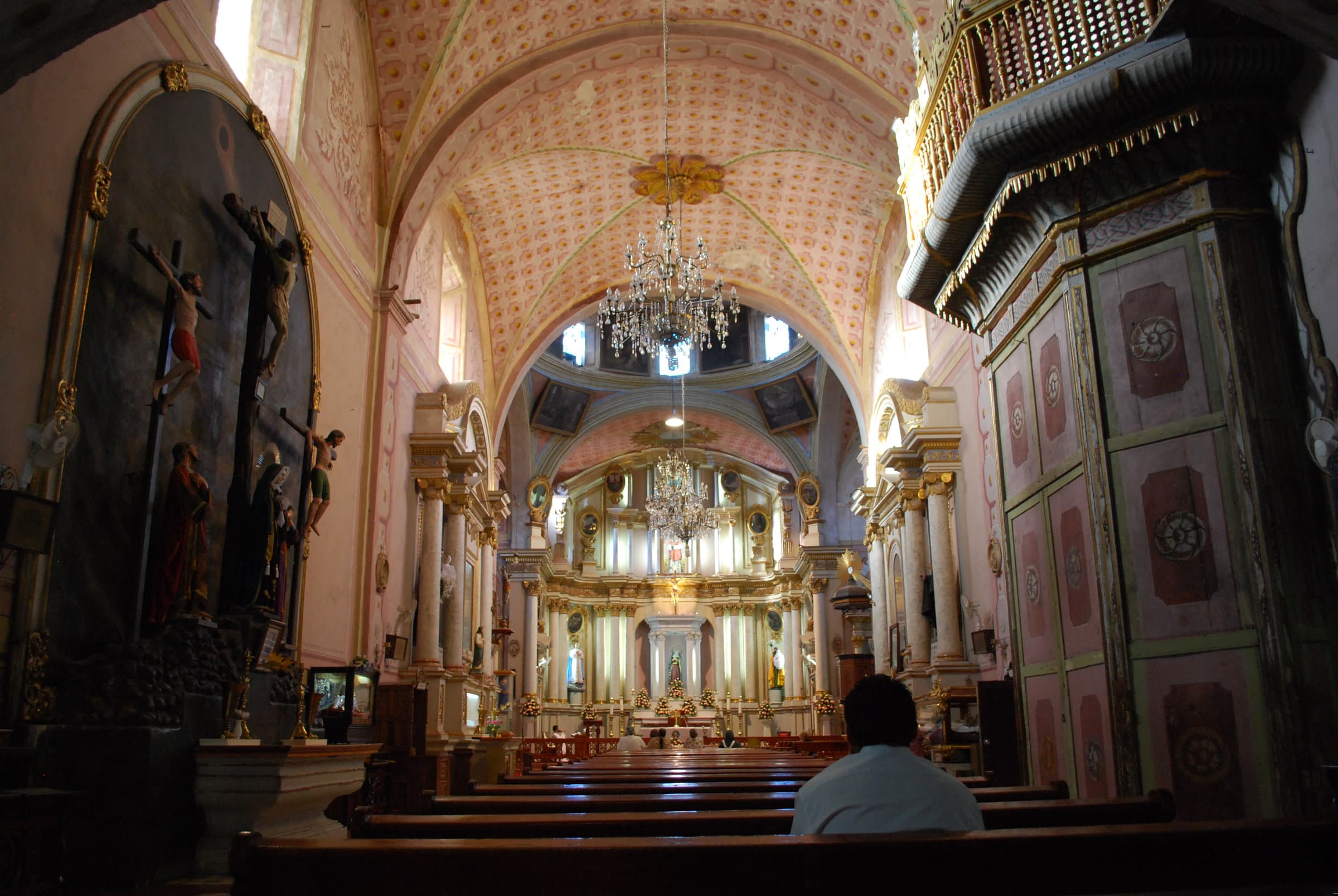
Stop at the churchyard gate and face the pink front. If the gate is open, step inside for a closer look. This is the Parroquia de San Miguel Arcángel. It is a parish church, not a cathedral, though you will often hear it called one.
Look up at the pointed arches, the pinnacles, and the spire climbing in stages. It looks like a Gothic church from northern Europe. It is not quite that. The church behind this front was built from the late sixteen hundreds, and in eighteen eighty a local mason, Zeferino Gutiérrez, began a new face for it. It was standing, finished, by the turn of the century. Let your eye travel from the lace-like front back to the plainer walls and dome behind it. A new face, fitted to an old body.
He was not a trained architect. An American writer who met him wrote, in nineteen oh one, that he was self-taught, that he learned Gothic from stray drawings and engravings that came his way, and that he marked out his plans for his workmen with a sharp stick in the sand. Later tellings turned those engravings into postcards of Cologne Cathedral. That part is legend. The true coincidence is that Cologne Cathedral was finally finished in eighteen eighty, the year this front was begun.
It is not all stone, either. The heritage records list exposed brick among its materials, worked in with the carved pink stone.
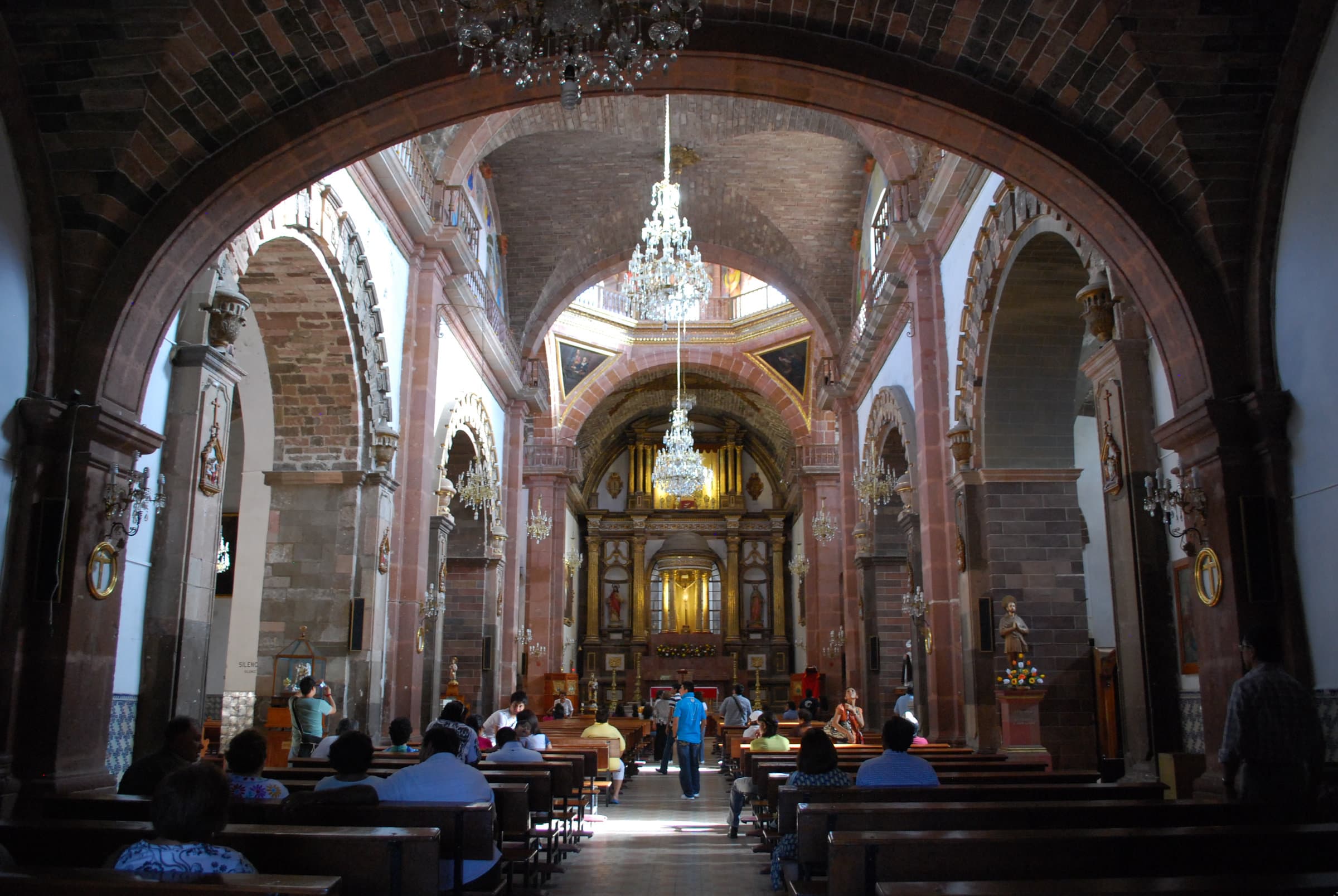
If the doors are open, step into the porch. Under the new front, remains of the plain doorway of the older church can still be seen. The church is free and in use, and it closes for a couple of hours in the early afternoon. If a service is on, stay at the back.
Follow the route down the lane beside the church. Next, the same church from behind.
3. Calle Aldama: Reading a San Miguel Wall
This is Calle Aldama. Stop here, then turn round and look back up the street.
That is the Parroquia again, this time from behind: the dome of the older church, and the pink spire rising over it. The street runs almost dead straight toward it, so the church closes the view. It is one of the most photographed streets in town, so take your picture, and then use it to learn to read a San Miguel wall.
Start with the doors and windows. Almost every opening is taller than it is wide, and there is much more wall than window. That is required: the town's rules say openings must run vertically and wall must dominate. Each house front is kept as one unit: one colour, one finish, its woodwork and ironwork as a set.
Now the colour. The walls are lime-washed, and repairs in the historic centre must use a traditional plaster: lime slaked on site, washed sand, and the sap of the prickly-pear cactus. The colour is lime paint on lime plaster, which is part of why it looks soft and chalky.
Look down. The paving is rough, uncut stones, laid the traditional way. Then look up at the rooflines. They are flat. Houses in the historic centre are not allowed domes or vaults, because those belong to churches. So from here on, whenever you see a dome over the rooftops, you are looking at a church.
Follow the route on down the street, the way you were walking. At the bottom is a park laid out on old orchards.
4. Parque Juárez: Orchards Made Into a Garden
This is Parque Juárez, and it is a good place to sit for a minute.
A little over a century ago this was not a park. It was orchards and vegetable plots, watered from the springs on the hill above. Around nineteen oh four the town turned them into a formal garden in the French style, the fashion of the day. It belongs to the same decades of dressing up as the Parroquia's Gothic front, when San Miguel wanted to look modern.
Look for the stream bed that runs through the park, and the old bridges across it. The water runs mostly after rain now. A few years ago the town restored the bridges and the fountains and rebuilt the stream's walls, so what flows through is cleaner than it was.
Look at the trees, too. These tall trees are one reason the park stays cool. In summer, egrets roost in them, and you may see white birds high in the branches. Around you are paths, fountains, benches, a playground and basketball courts where local kids play. It is a park people use, not a showpiece.
The park is free. Follow the route out of the park toward the steep lane up to El Chorro, the spring where the town began. It is the one real climb of the walk.
5. El Chorro: The Spring Where the Town Began
You have reached El Chorro. Catch your breath, and look at the rows of stone basins here. This is where San Miguel began. In fifteen forty-two a Franciscan friar set up a village in this part of town, sheltered by the rocks above and supplied by springs coming out of the hill.…
Full narration for this stop unlocks with the tour.
6. San Francisco: A Carved Front Beside a Plain Chapel
This is the little plaza of San Francisco, with its fountain and clipped laurels. Stand by the fountain and face the tall carved church front and its tower. That is San Francisco, begun in seventeen seventy-nine and opened in seventeen ninety-nine. The records even list the…
Full narration for this stop unlocks with the tour.
7. Plaza Cívica: The First Main Square
You are in Plaza Cívica. Find the horseman at its centre. This was the town's first main square. When the Spanish town was founded in fifteen fifty-five, to guard the royal road north to the silver mines, this was its heart. The town hall and the great families later moved to…
Full narration for this stop unlocks with the tour.
8. Oratorio and La Salud: Two Ways to Make a Front
Stop at this corner, between two squares, where two church fronts stand close together. You have seen a front made of carving and a front made of plain wall. Here are two more ways to do it. The church with the carved pink stone front and saints in niches is the Oratorio of San…
Full narration for this stop unlocks with the tour.
9. Santa Ana and the Library: One Building, Three Lives
Stop on this street, facing the small, plain church of Santa Ana and the long building beside it. Compare the church with the carved Oratorio you just left. This one is simple, and that suits what stood beside it. The building next door began in the seventeen hundreds as a…
Full narration for this stop unlocks with the tour.
10. Bellas Artes: A Convent, a Dome and an Unfinished Mural
The long building on this street was built as a convent, the Royal Convent of the Conception. It opened in seventeen sixty-five, paid for from the inheritance of a young nun of the wealthy Canal family. Today it is an arts centre, and everyone in town calls it Bellas Artes. It…
Full narration for this stop unlocks with the tour.
11. Canal House: A Front Read From Top to Bottom
Stop here and look across the street at the grand house on the corner of the square, the one with a statue in a niche high on its front. This is the house of the Canal family, the wealthy family behind the baths at El Chorro, the gilded chapel in the Oratorio and the convent you…
Full narration for this stop unlocks with the tour.