Puebla: 18 Baroque Churches in 15 Blocks
100 min · 2.5 km · easy
Most Mexican cities sit on top of older ones. Mexico City covers Tenochtitlán. Mérida covers T'hó. Oaxaca covers Huaxyacac. Cuernavaca covers Cuauhnáhuac. The Spanish strategy across New Spain was to conquer a Mesoamerican capital, knock down its temples, and build a cathedral on the same plaza, using the same stones. The new city inherited the old city's bones.
Puebla broke that pattern. In 1531, the Spanish bishop Julián Garcés laid out a new city on an empty plain between Tlaxcala and Cholula, on ground that had no significant pre-Hispanic settlement to either preserve or destroy. The motive was practical and ideological. Spain wanted a model colonial town where Spanish farmers, not indigenous serfs, would work the land. It wanted to test whether a New World city could be designed on paper and built to spec. And it wanted a halfway station on the road between Mexico City and the Atlantic port of Veracruz, because every Spanish ship full of silver or wine or olive oil had to cross those four hundred kilometres twice a year.
The experiment in equitable land tenure collapsed within a generation. The pattern of the city did not. Puebla today is the cleanest surviving example of what colonial Spain wanted Mexico to look like, and the consequences of that planning decision are still visible in nearly everything Puebla makes.
The grid and the towers
Walk the historic centre and the geometry is striking. The streets run on a strict orthogonal grid, oriented to the cardinal points, blocks of nearly uniform size. The plaza is on the central square, the cathedral on one side of it, the city hall on another. There is no inherited Mesoamerican axis pulling the layout off-true the way it does in Oaxaca or Mexico City. The grid is what the Spanish theorists of the period wrote down on paper, and it was executed on the ground.
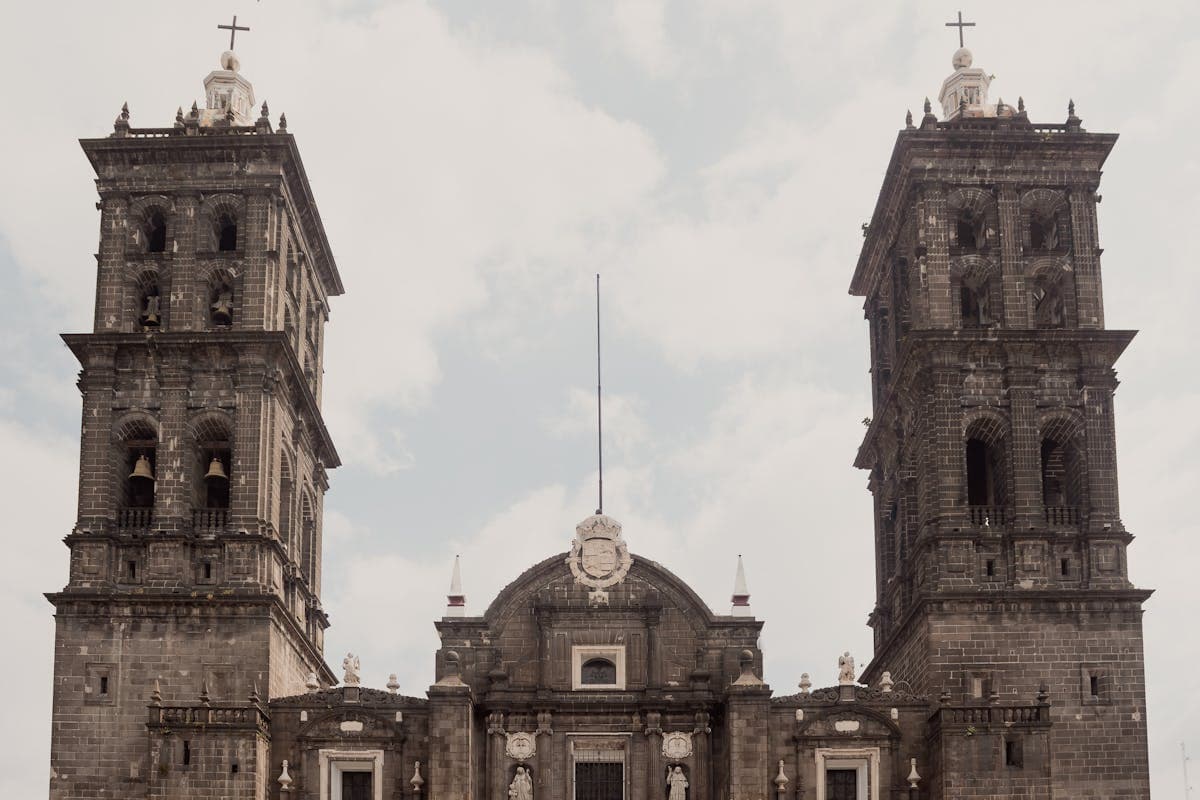
The cathedral sits where you would expect it. What is unusual is how fast it was finished. Most colonial cathedrals in the Americas took centuries. Construction would start, funding would dry up, the bishop would die, the towers would be left half-built for fifty years. Puebla's cathedral was built between 1575 and 1649, a focused seventy-four-year project, and its twin towers reach nearly seventy metres, the tallest of any colonial church in Mexico. The man who drove it to completion was Bishop Juan de Palafox y Mendoza, who arrived in 1640 already holding three of the most powerful positions in New Spain at once.
Palafox is the closest thing colonial Puebla has to a defining figure, and he is buried in the cathedral's crypt. He also founded the Biblioteca Palafoxiana, the first public library in the Americas, by donating his personal collection of five thousand books in 1646 with one condition attached: anyone, not just clergy, had to be allowed to read them. The library survives, in its 1773 reading hall on the second floor of a colonial seminary, three storeys of carved wooden shelves holding around forty-five thousand volumes. UNESCO designated it a Memory of the World in 2005.
Eighteen baroque churches in fifteen blocks
Hear a stop from this walk
Biblioteca Palafoxiana
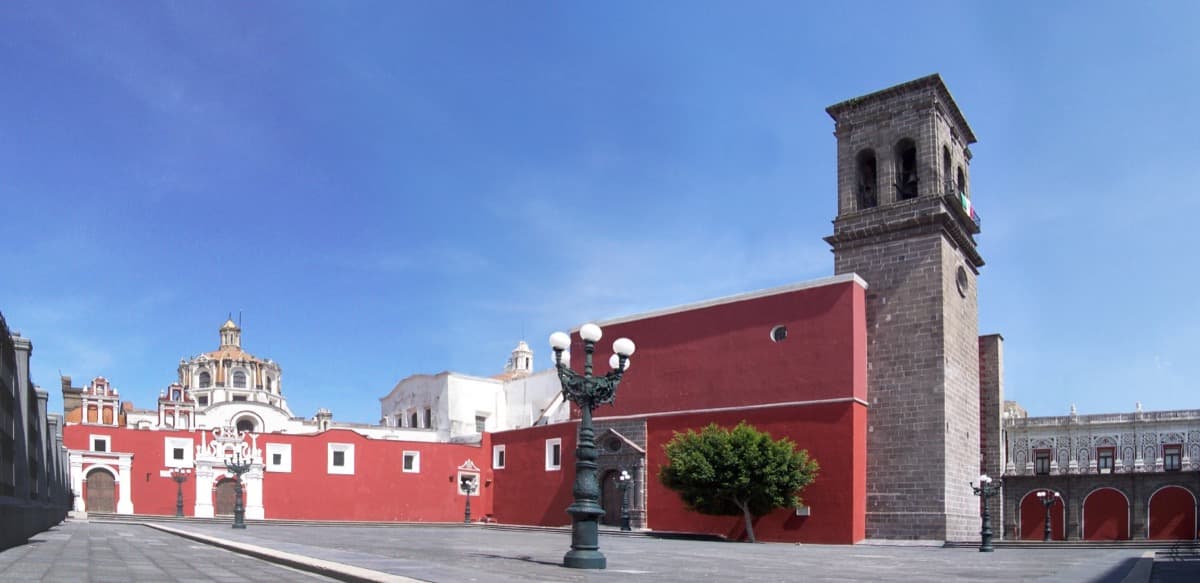
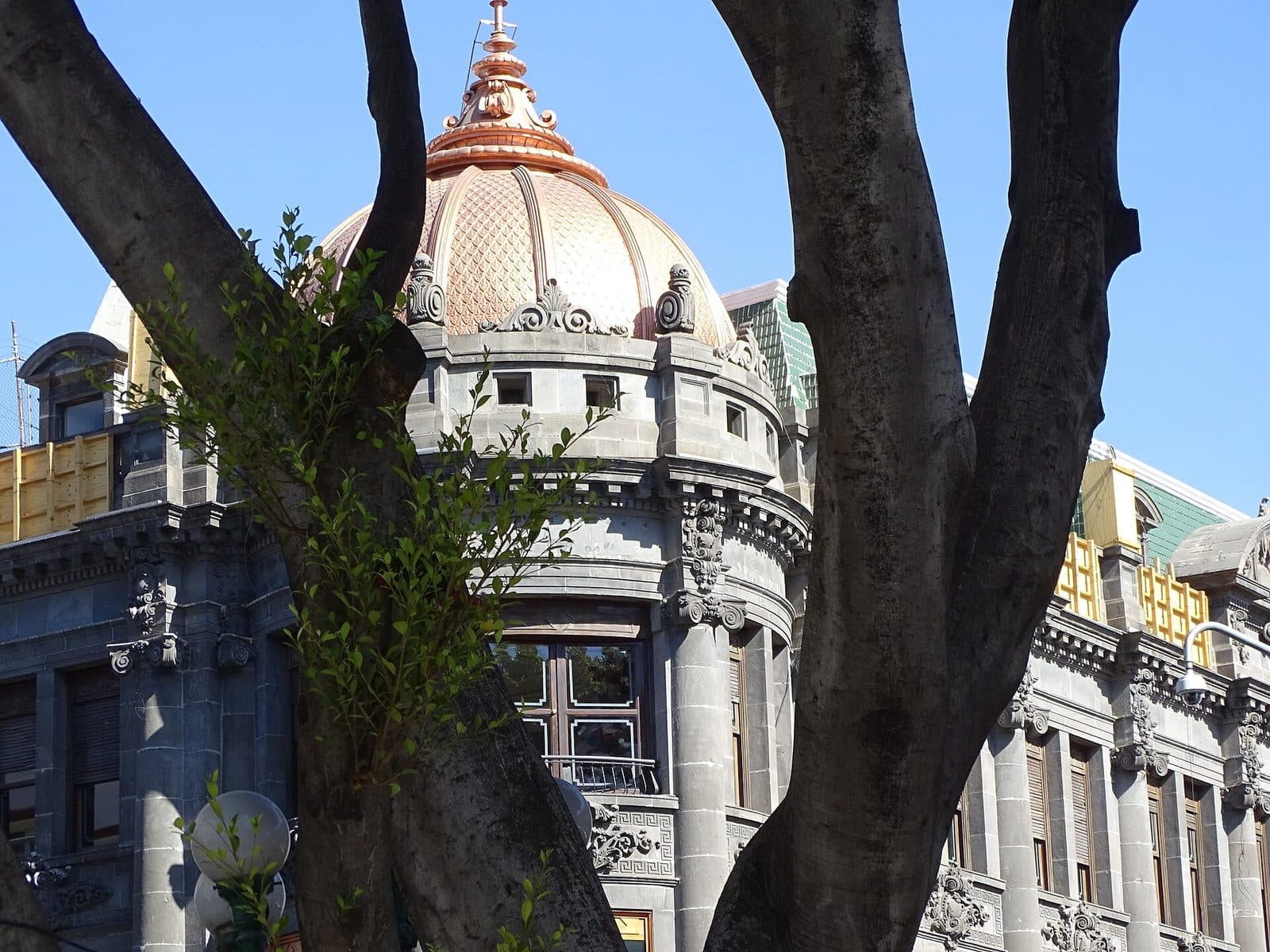
The cathedral is restrained. Most of the other churches are not. The historic centre holds approximately eighteen baroque churches inside a fifteen-block radius, the densest concentration in Mexico, and they share something that the imported Spanish baroque elsewhere in the country does not have: they were not built by Spaniards. They were built by Poblano craftsmen who had been making Talavera tiles for the Spanish for two centuries by the time the great church-building boom of the late seventeenth century arrived.
Those craftsmen had absorbed European decorative grammar and improvised on it in their own kitchens and homes. When the religious orders started commissioning churches at scale, the people executing the work brought their own sensibilities to it. The result has its own name, Barroco Poblano, and it is more gilded, more tiled, more colour-saturated than the baroque you find in Spain or in the rest of New Spain. The summit of that style is the Capilla del Rosario inside the Templo de Santo Domingo, inaugurated in 1690, an interior so densely covered in gilded stucco that a Dominican chronicler immediately called it the eighth wonder of the world. No one has bothered to seriously argue otherwise in the three centuries since.
The walking tour that traces these churches in sequence is Roamer's Puebla: 18 Baroque Churches in 15 Blocks. It starts at the Zócalo and ends at the Iglesia de San Francisco, where the mummified body of a Franciscan friar named Sebastián de Aparicio has been on public view since the 1780s.
Talavera, the tile that named a tradition
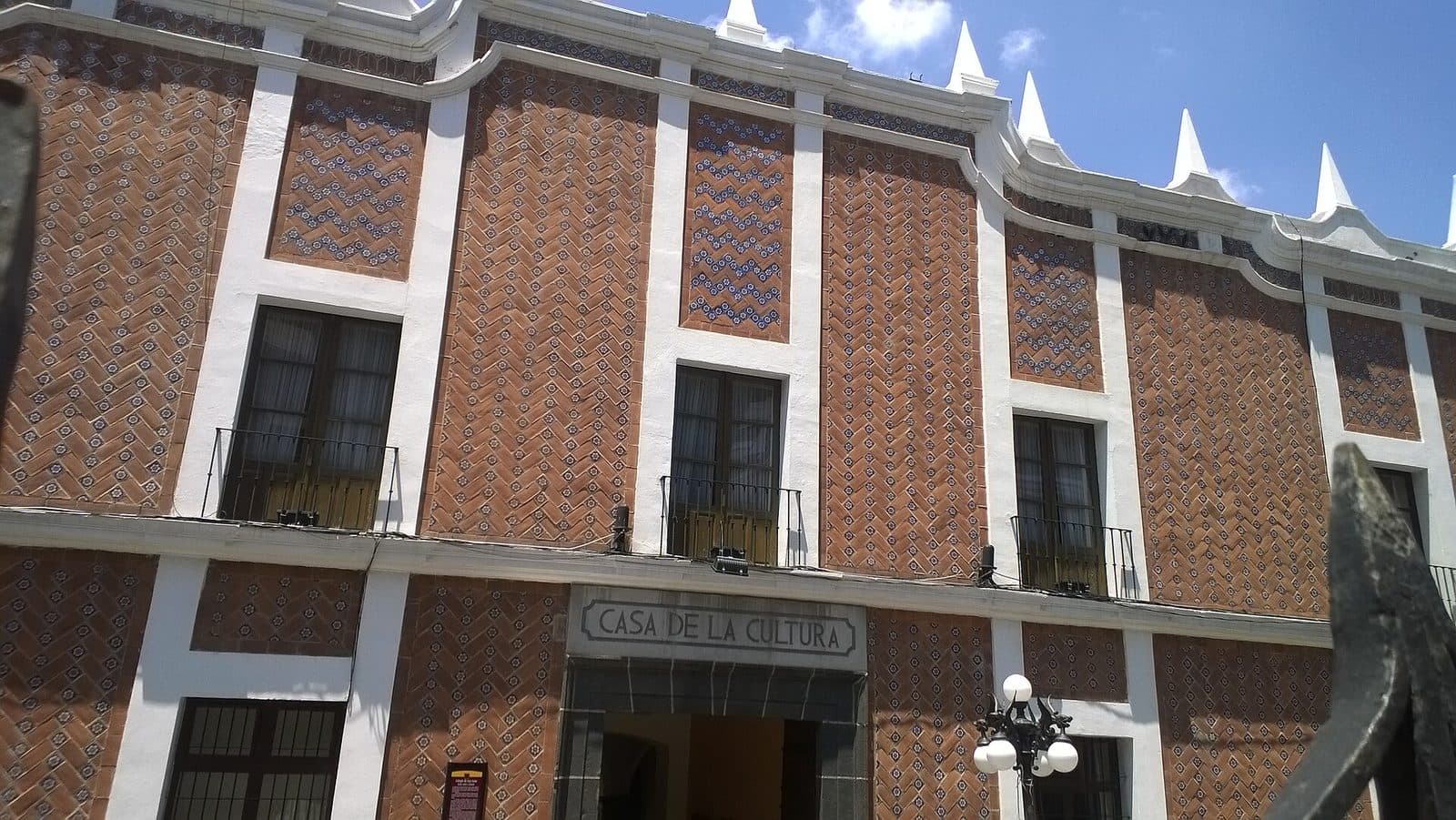
The tile tradition is older than most of the churches. Spanish potters arrived in Puebla in the late sixteenth century, bringing the tin-glazed earthenware technique that Spain itself had absorbed from centuries of Moorish rule. The local clay was excellent. The local labour was already skilled at ceramics. Within a generation, a fusion product emerged: blue-and-white, sometimes polychrome, hand-painted, twice-fired pottery that took on a Mexican identity while keeping European quality standards.
In 1653 the colonial government wrote down a set of ordinances governing Talavera production: permitted clays, permitted pigments, the four-year apprenticeship a potter had to serve before he could sign his own work. The system held for two hundred years. In the year 2000 the modern Mexican government renewed something like it, establishing a denomination of origin that restricts the name "Talavera" to ceramics produced in Puebla and nearby Tlaxcala using the traditional process. UNESCO recognised the craft as Intangible Cultural Heritage of Humanity in 2019.
The oldest certified workshop still operating, Uriarte Talavera, has been firing kilns since 1824. Painters there still use brushes made from cat hair because the long guard hairs hold pigment better than synthetics. A single tile takes up to four months from raw clay to finished product. The technique is unbroken, which is rarer than the objects themselves.
Mole and the convent kitchens
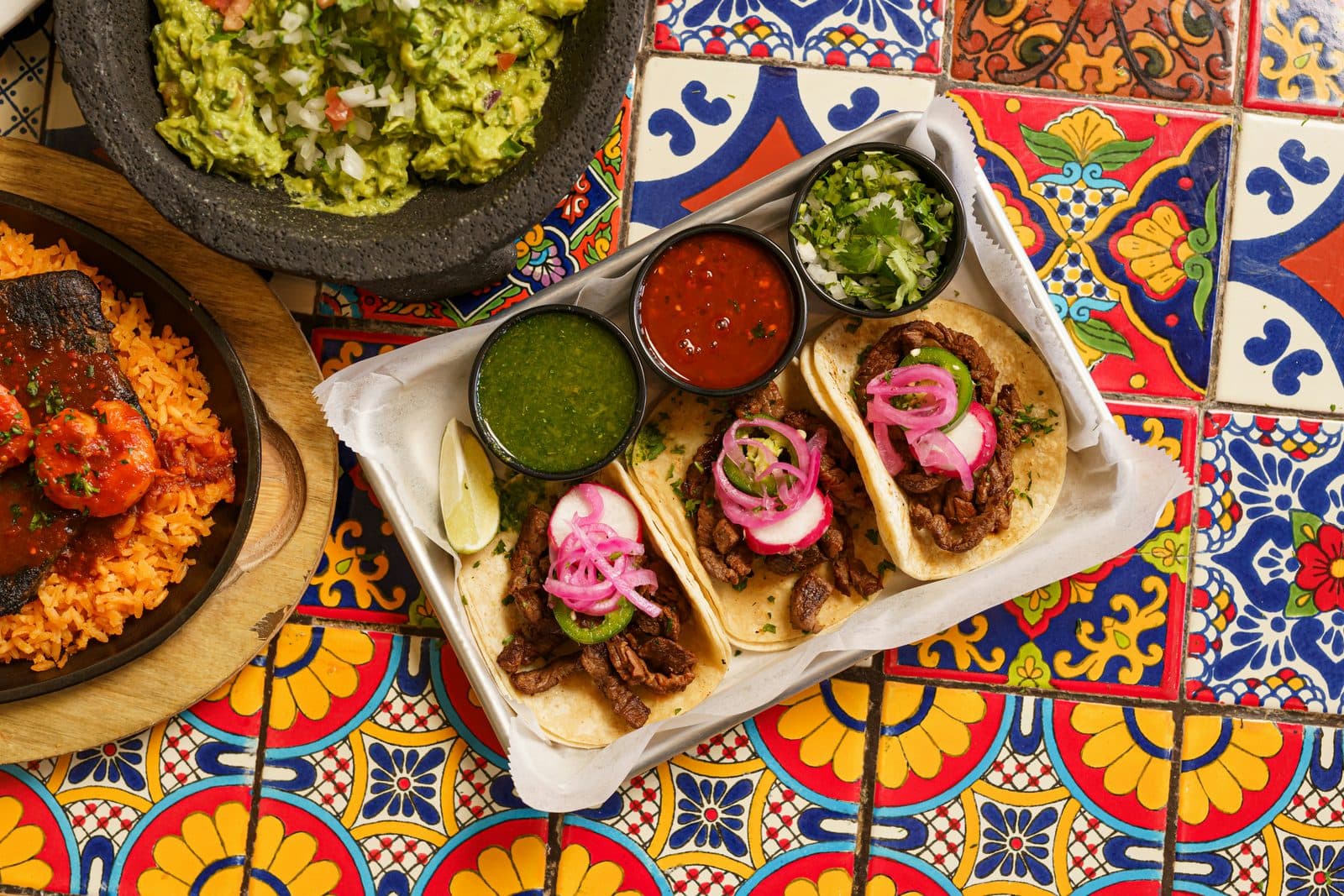
The third thing Puebla invented, alongside the planned grid and the tile, is what most of the rest of Mexico now considers its national sauce. The traditional origin story places mole poblano in the kitchen of the Convento de Santa Rosa sometime in the seventeenth century. A bishop was arriving unannounced for dinner. The nuns had nothing prepared. They scraped together what was in the kitchen, chiles, chocolate, almonds, plantains, garlic, bread, sesame, twenty-something other ingredients, and ground them into a sauce thick enough to coat a turkey.
The literal-truth of that anecdote is shaky. The structural truth is not. Mole emerged from the colonial convents because the convents were one of the few places in New Spain where ingredients from both hemispheres met in the same pantry. Spanish almonds and Mexican cacao. Mediterranean olive oil and local avocados. European wheat and indigenous corn. Asian spices that had arrived through the Manila Galleon trade. The convents had the ingredients, the labour, and the obsessive cooks. What they produced was a culinary expression of the same fusion logic that produced Talavera and Barroco Poblano: European technique, New World materials, baroque excess.
Roamer's second Puebla tour, Puebla: Mole as a Paradox, traces this lineage through the Calle de los Dulces, the Uriarte workshop, El Parián, and the Mercado El Carmen where construction workers still order their daily cemita standing at the counter.
The battle on 5 May
The other thing Puebla is famous for is a date. On 5 May 1862, a Mexican force of around four thousand men under General Ignacio Zaragoza defeated a French invading army of roughly six thousand at the hilltop forts of Loreto and Guadalupe, just east of the city. Mexico was not actually being invaded by France over a culinary dispute. France was attempting to install Maximilian von Habsburg as Emperor of Mexico, with British and Spanish support, because Mexico had stopped paying its foreign debts. The French eventually took Mexico City anyway, in 1863. Maximilian was installed, and shot in 1867.
But Cinco de Mayo, the day of that single Pueblan victory, became a national holiday in Mexico, and a much bigger holiday in the Mexican-American community north of the border. The actual Mexican independence holiday is on 16 September. Cinco de Mayo is more famous outside Mexico because it travelled with Mexican migrants, and because it commemorates exactly the kind of underdog victory that translates well. The forts are still on the hill. Both have been converted to museums. The official anniversary is observed locally as a regional, not strictly national, holiday.
What the planning gave Puebla
Five centuries on, the things that make Puebla legible as a city are the things the planners in 1531 set out to manufacture. A clean grid that the historic centre still walks well. A church-building infrastructure that produced eighteen masterpieces in fifteen blocks. A tile tradition that absorbed European technique into Mexican identity. A culinary tradition formed in convents that had access to ingredients no other Mexican city did. A battle, eventually, that became the moment outsiders learned to point to the city on a map.
UNESCO inscribed the historic centre as a World Heritage site in 1987. The two Roamer walking tours cover the two halves of what that inscription is protecting. The first one is about the architecture. The second one is about everything that came out of the kitchens.
Frequently asked questions
- How many self-guided walking tours are there in Puebla?
- Roamer currently has 2 self-guided audio walking tours in Puebla. Every tour is free to start: the introduction and first stop play in full, and every later stop plays a short preview before you decide to buy.
- How much does a self-guided walking tour in Puebla cost?
- Each tour is free to preview and $4.99 for lifetime access. If you want more than one, a 7-day pass is $12.99 and a 30-day pass covering every tour is $19.99, which works out to well under a dollar a day.
- Can I do the Puebla tours offline?
- Yes. Tours can be downloaded in advance in the Roamer app and played with no signal, which is useful when you are travelling without mobile data.
- How long are the Puebla walking tours?
- They run about 100 to 105 minutes, covering 2.5 to 3.0 km on foot, with up to 8 stops on the longest route. You set the pace and can pause any time.
Mexico eSIM· 10% off with ROAMER10
Ready to experience it?
Puebla: 18 Baroque Churches in 15 Blocks
100 min · 2.5 km · easy
More from Puebla
Explore more at your own pace.
Best Self-Guided Walking Tours in Puebla (2026)
One Day in Puebla: A Walkable Centro Histórico Itinerary (2026)
Puebla Travel Guide: How Many Days, Getting Around, When to Go (2026)
What to Eat in Puebla: A Food Guide (2026)
Barroco Poblano: Why Puebla's Churches Don't Look Like Spain's