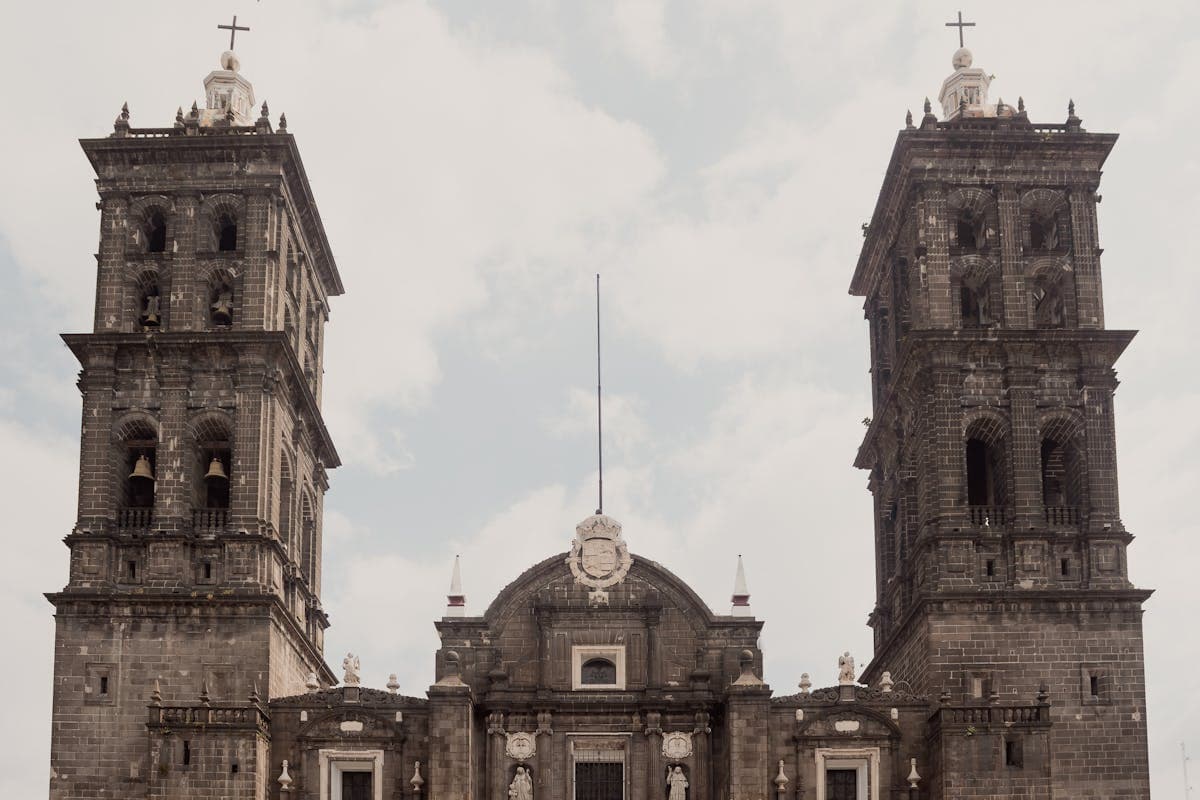
From the angel-topped fountain of the Zocalo to the mummified friar of San Francisco — walk through five centuries of colonial splendor in Mexico's most church-dense city.
Start · Zocalo & San Miguel Fountain
DirectionsStops
- 1
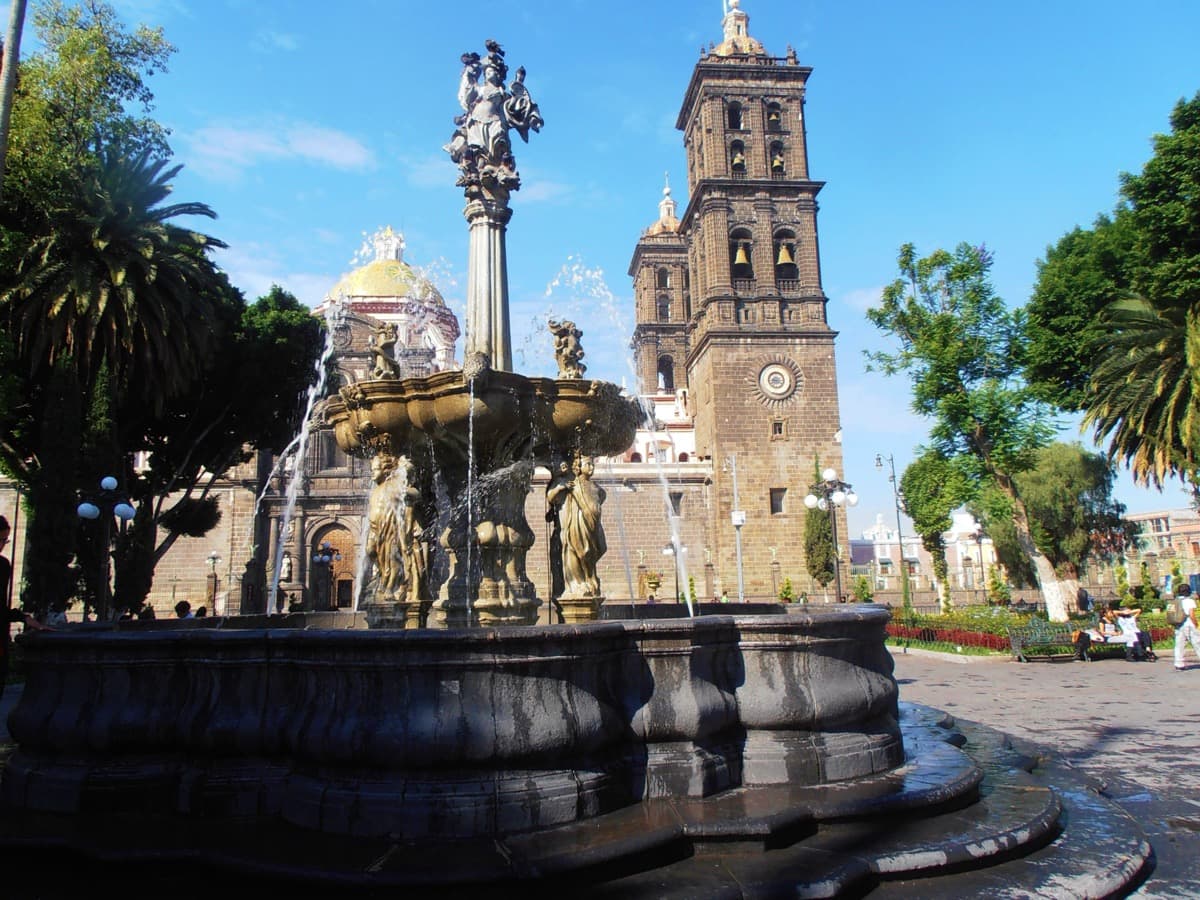
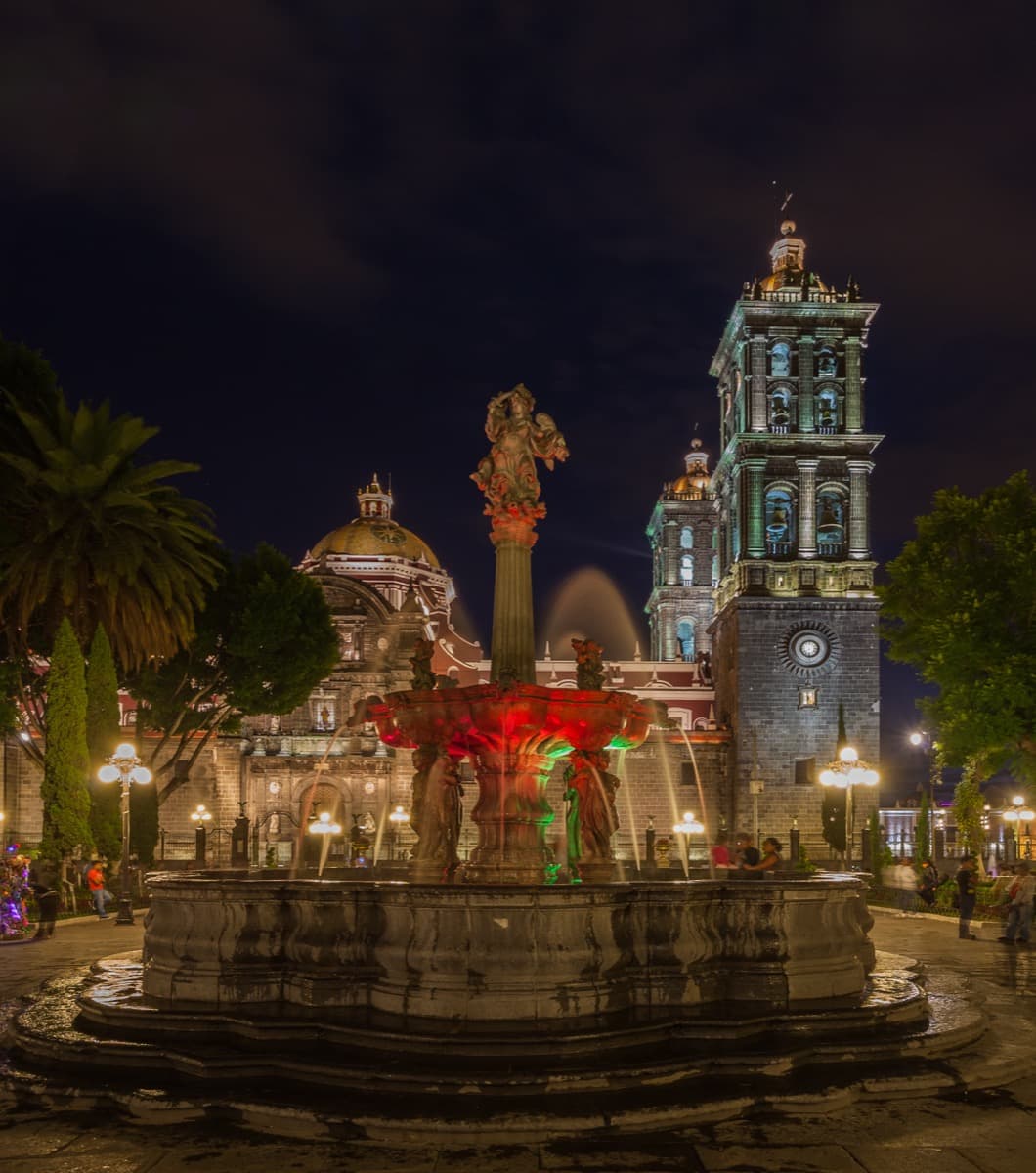
Zocalo & San Miguel Fountain
The beating heart of Puebla since 1531, anchored by a wrought-iron angel fountain surrounded by four classical muse statues.
- 2
Catedral de Puebla
Mexico's tallest colonial church towers, built between 1575 and 1649, blending Renaissance, Herreresque, and early baroque styles.
- 3
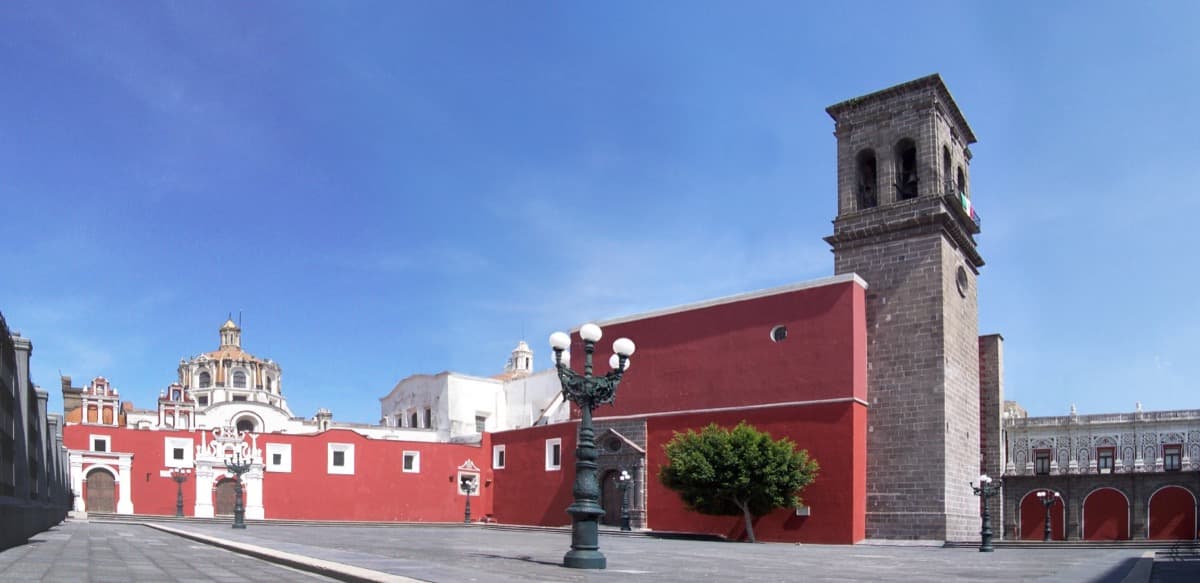
Biblioteca Palafoxiana
The first public library in the Americas (1646), housing 45,000 volumes and designated a UNESCO Memory of the World site.
- 4
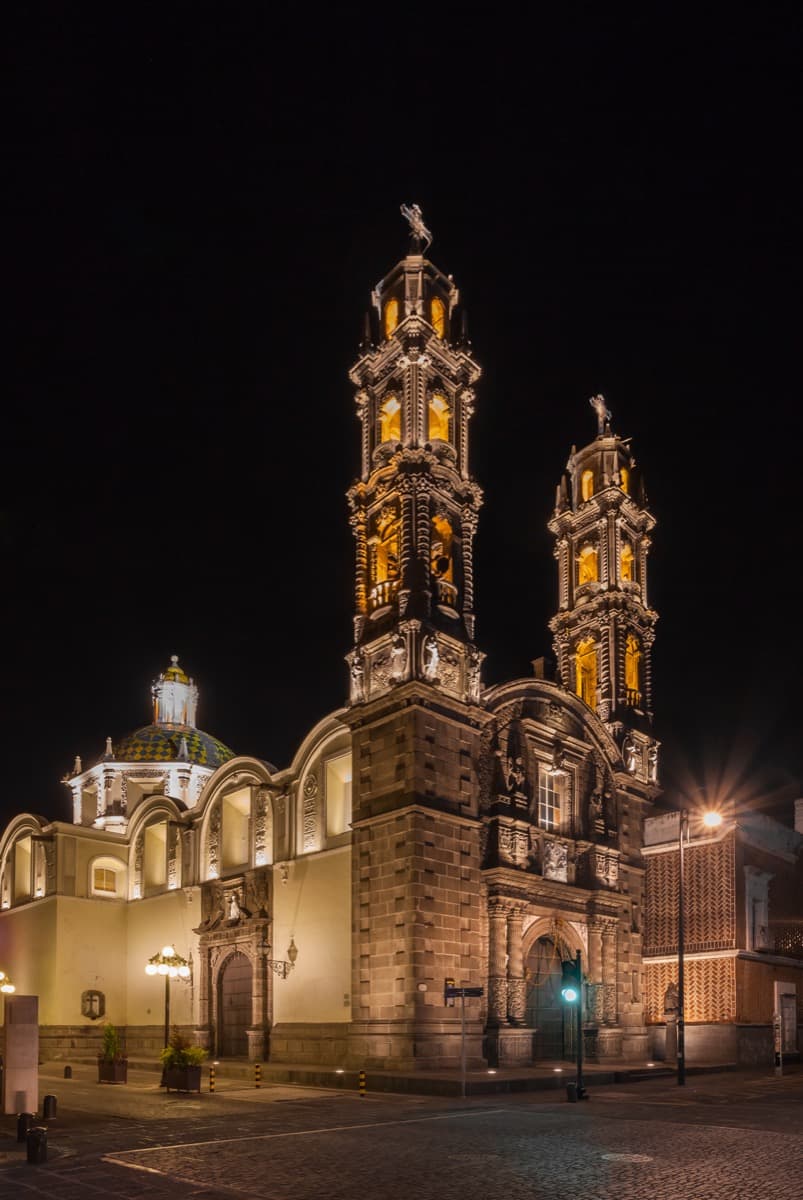
Casa de los Munecos
An 18th-century baroque mansion covered in satirical Talavera figurines that openly mocked the city's powerful councilmen.
- 5
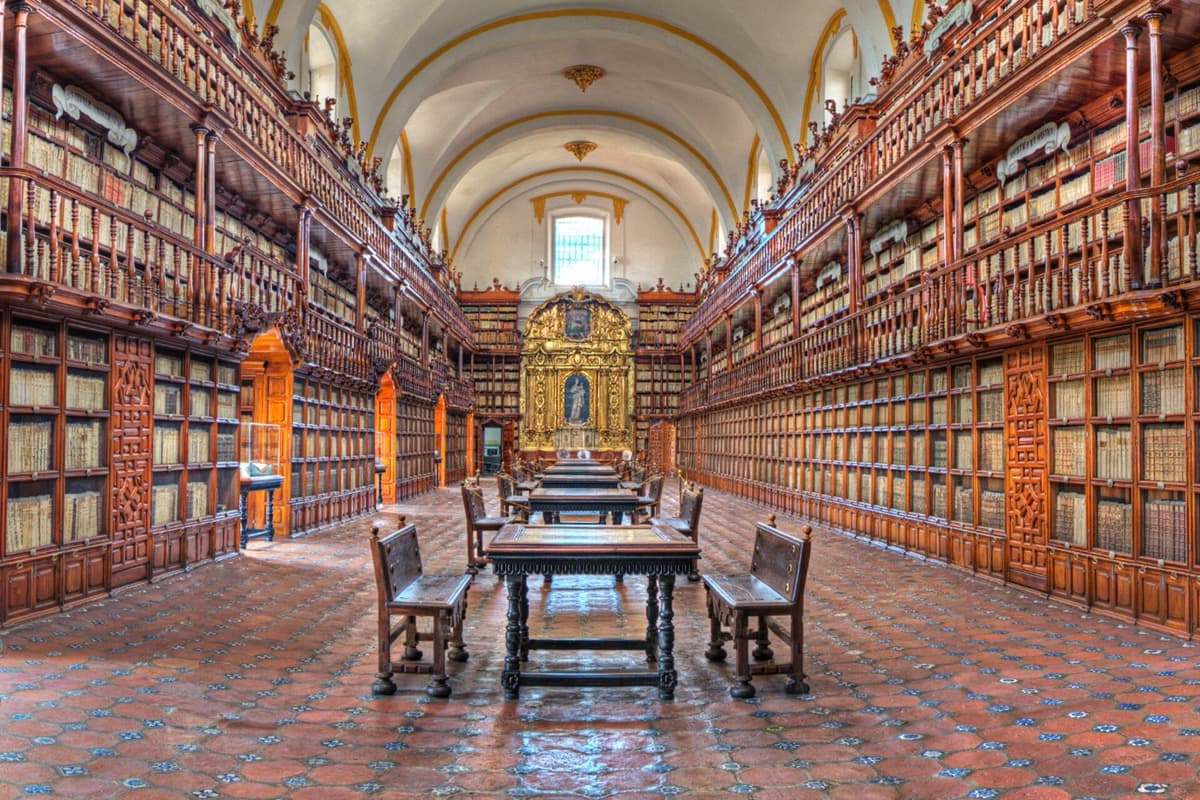
Templo de Santo Domingo & Capilla del Rosario
The 'Eighth Wonder of the World' — a gold-leaf chapel of staggering opulence hidden inside a Dominican church.
- 6
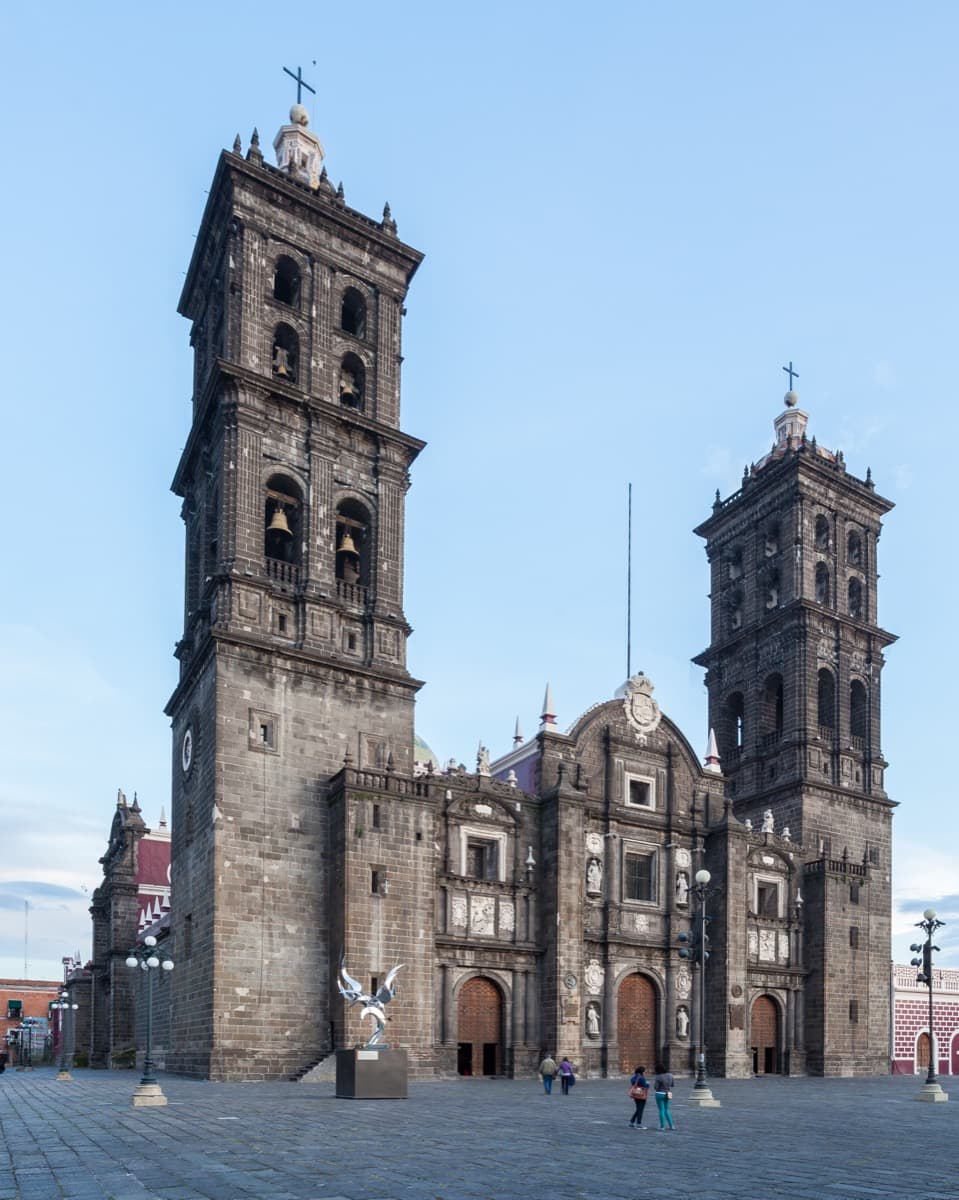
Iglesia de San Cristobal
A 1687 baroque jewel with intricately carved towers, Marian reliefs, and one of Puebla's most ornate carved domes.
- 7
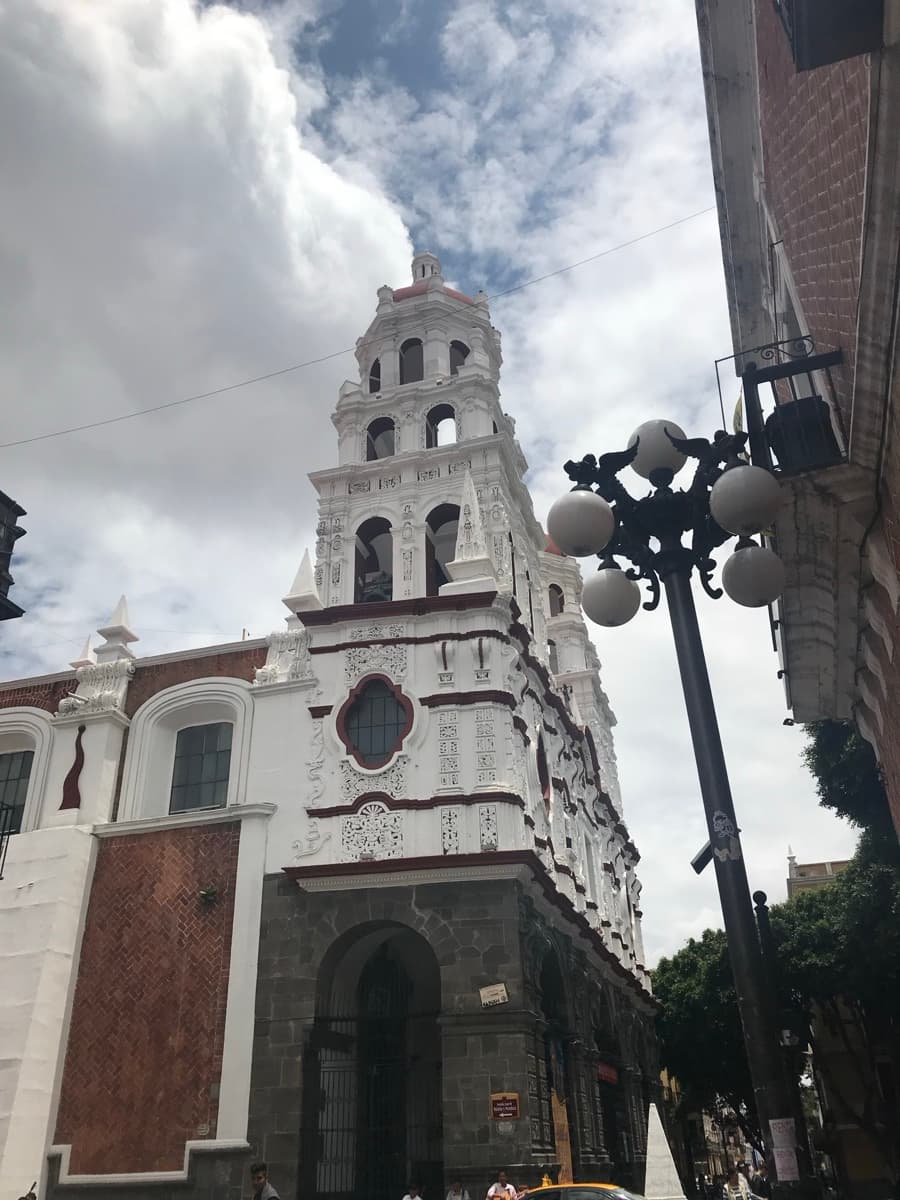
Templo de la Compania de Jesus
A 16th-century Jesuit church rumored to hold the burial of the legendary China Poblana — Puebla's most mythologized woman.
- 8
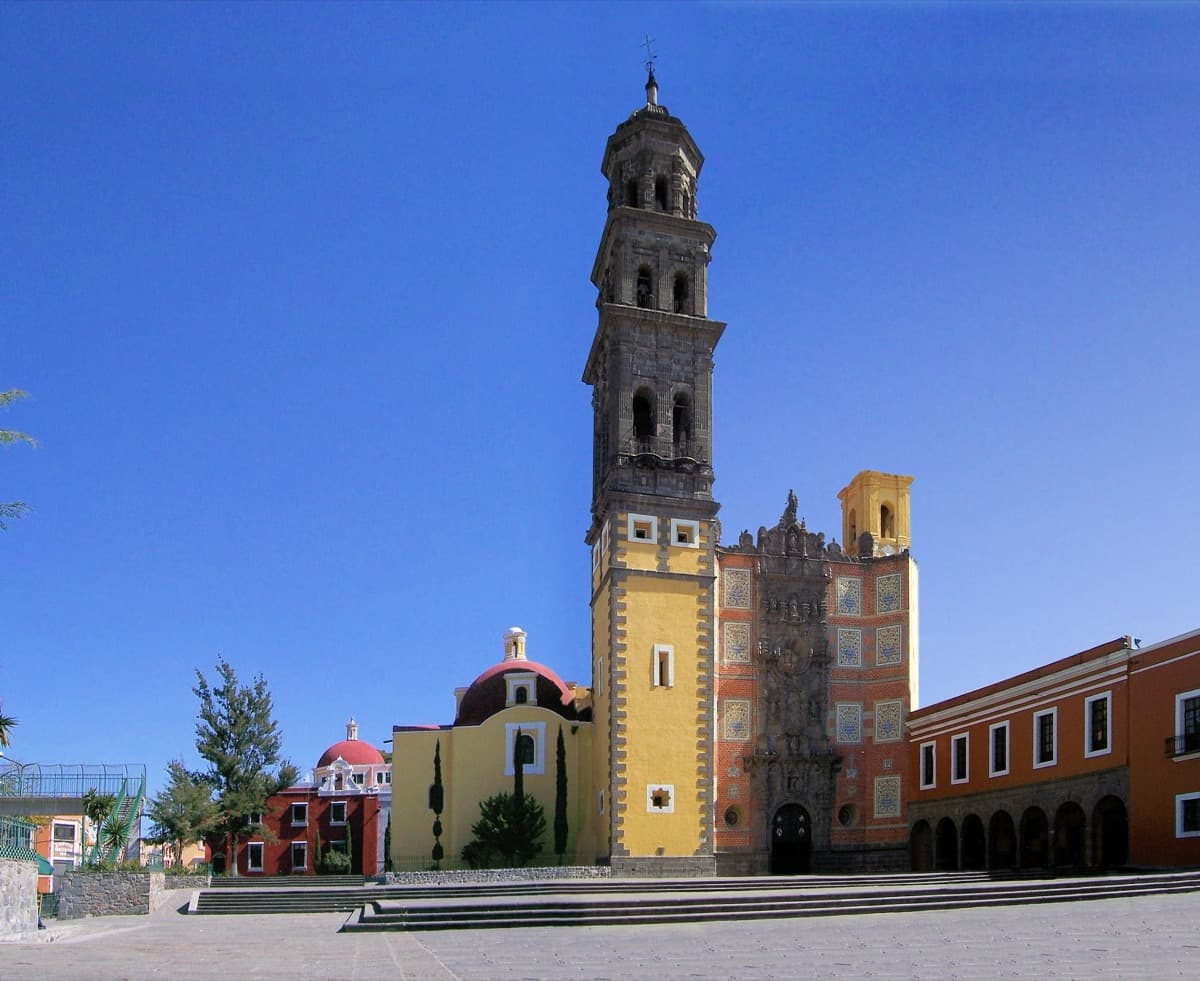
Iglesia de San Francisco
Puebla's oldest church (1535), blending European and Indigenous artistry, and home to the incorrupt body of Fray Sebastian de Aparicio.
Details
Best Time to Visit
Weekday mornings between 9:00 and 11:00 AM are ideal — the churches are open, the light is warm on the baroque facades, and the midday crowds haven't arrived. Most churches close briefly between 1:00 and 3:00 PM, so plan accordingly. Avoid Sundays if you want quiet — the cathedral and Santo Domingo are packed with worshippers.
Pro Tips
- •Start at the Zocalo and follow the stops in order — the route is designed to minimize backtracking across Puebla's grid streets.
- •The Capilla del Rosario inside Santo Domingo is the highlight — arrive before 11:00 AM for the best light through the dome windows.
- •Bring small bills. Some churches request a modest donation (10-20 pesos) for entry or photography permits.
- •Puebla's altitude of 2,150 meters is lower than Mexico City, so altitude sickness is rarely an issue — but stay hydrated.
- •Try a cemita poblana — Puebla's signature sandwich — at any stand near the Zocalo for a filling mid-tour break.
- •Photography is usually allowed in churches but flash is prohibited. The Capilla del Rosario is best photographed with a phone on night mode.
Safety & Precautions
- •Watch your belongings in the crowded Zocalo and around Santo Domingo. Petty pickpocketing can occur in tourist areas.
- •Church floors can be slippery, especially in the older buildings. Wear shoes with good grip.
- •Some churches have narrow, steep staircases to choir lofts or bell towers. Use caution if you choose to climb.
- •Puebla's sun is strong at altitude even when temperatures feel mild. Wear sunscreen and a hat for the outdoor stretches between stops.
Travel advisory: Exercise Increased Caution (Level 2).
Gallery
Related Reading
Go deeper on what you'll see, hear, and walk through.
Read the walk
The full story of Puebla: 18 Baroque Churches in 15 Blocks, in words. Prefer to listen? Play it narrated, from home or on location.
Introduction
Eighteen baroque churches inside fifteen blocks. Most major Mexican cities have one or two baroque masterpieces. Puebla has eighteen, packed into the densest concentration of baroque architecture in the country.
What makes them different from imported Spanish baroque is who built them. Puebla's indigenous craftsmen had been making Talavera tiles for two centuries by the time the great church-building boom of the seventeenth century began. They knew European decorative techniques and they had been improvising on them in their own kitchens and homes since the fifteen hundreds. When the religious orders started commissioning churches at scale, the craftsmen who built them were not Spanish architects. They were Poblano craftsmen who had absorbed Spanish technique and decorated as themselves. The result has its own name, Barroco Poblano, and it is gilded, tiled, color-saturated, and unmistakable.
Over eight stops you will walk through the Zócalo, the Cathedral with the tallest colonial church towers in Mexico, the oldest public library in the Americas, the Casa de los Muñecos with its tiled facade, the Capilla del Rosario inside Santo Domingo (often called the eighth wonder of the world by Mexican guidebooks for its gilded interior), three more churches, and end at San Francisco where the order that did the indigenous evangelisation made its anchor.
Puebla's historic centre is a UNESCO World Heritage site. The route is about two and a half kilometres on flat colonial-grid streets at two thousand one hundred and thirty-five metres altitude, roughly one hundred minutes of walking. Most stops are free; the Biblioteca Palafoxiana and a few churches charge small entry fees. When you arrive at the Zócalo, begin with stop one.
1. Zocalo & San Miguel Fountain
Welcome to the Zócalo, your first stop on this tour. You're standing in the Zocalo of Puebla, one of the grandest main squares in all of Mexico, and the place where the story of this city begins. In 1531, Spanish settlers arrived at this empty plain between the indigenous kingdoms of Tlaxcala and Cholula and began laying out a city from nothing. This plaza was the first thing they built, the central node around which everything else would grow.
Look at the fountain in the center. That's the Fuente de San Miguel, installed in 1777 and topped by a bronze figure of the Archangel Michael. The four figures around the base represent classical muses, allegories of the arts and sciences that the Spanish colonists aspired to cultivate in their new city. The wrought-iron railings were added in the nineteenth century, when the plaza was transformed from a bustling marketplace into the formal garden you see today.
Now look at the arcades, the portales, that line the sides of the square. These covered walkways have sheltered merchants, politicians, and gossips for nearly five hundred years. The Portales are still the social center of the city. On any evening you'll find families eating cemitas under the arches, musicians setting up for an impromptu performance, and elderly men reading newspapers at cafe tables that haven't moved in decades.
What makes this Zocalo unusual is its orientation. Most colonial plazas in Mexico have the cathedral on one side facing directly onto the square. Here, the cathedral sits on the south side but is slightly offset, its main entrance actually faces away from the plaza, toward the street. Some historians believe this was a deliberate choice by Bishop Juan de Palafox y Mendoza, who wanted worshippers to approach the cathedral through a separate, more contemplative space.
2. Catedral de Puebla
Welcome to the Catedral de Puebla. Look up. Those two towers flanking the cathedral reach nearly seventy meters into the sky, the tallest colonial church towers in all of Mexico. And unlike many colonial cathedrals that took centuries to finish, Puebla's was completed in a remarkably focused seventy-four years, between 1575 and 1649. That kind of speed was almost unheard of in the New World.
The man who drove the project to completion was Bishop Juan de Palafox y Mendoza, one of the most extraordinary figures in Mexican colonial history. Palafox arrived in Puebla in 1640 and was simultaneously appointed bishop, viceroy of New Spain, and archbishop of Mexico, a concentration of power that made him the most influential person on the continent. He poured resources into finishing this cathedral, consecrating it on April 18th, 1649, in a ceremony that lasted nine days.
Step inside and let your eyes adjust. The interior is a masterclass in restrained grandeur. Unlike the riotously gilded churches you'll see later on this tour, the cathedral's aesthetic leans toward the Herreresque style, named after Juan de Herrera, the architect of El Escorial in Spain. It's elegant, geometric, and serious. The main altarpiece, designed by Manuel Tolsa in 1797, is neoclassical, all clean lines and marble, a deliberate rejection of the baroque excess that had dominated Mexican churches for two centuries.
The choir stalls are worth lingering over. Carved from fine wood in the 1720s, they depict saints, bishops, and angels with a level of detail that rivals anything in European cathedrals. And beneath the nave, in the crypt, rest the remains of several bishops of Puebla, including Palafox himself, the man whose vision and iron will gave this cathedral its towers.
3. Biblioteca Palafoxiana
Welcome to the Biblioteca Palafoxiana. You're about to enter the oldest public library in the Americas. In 1646, Bishop Juan de Palafox y Mendoza donated his personal collection of five thousand books to the seminaries of Puebla with one condition, that they be made available to anyone who wished to read them, not just clergy. That single act created the Biblioteca Palafoxiana, and it changed the intellectual history of the continent.
Climb the stairs and step into the main reading hall. The room you're standing in was built in 1773 to house the growing collection, and it has barely changed since. Three levels of carved wooden shelves rise to the vaulted ceiling, holding approximately forty-five thousand volumes that span five centuries of human knowledge. The oldest book here dates to 1493, just one year after Columbus reached the Americas.
Look at the shelving arrangement. The books are organized by subject in a system that reflects the intellectual priorities of colonial Mexico: theology on the lower shelves, philosophy and science in the middle, and history and literature at the top. The logic was hierarchical, divine knowledge closest to earth, human knowledge reaching toward heaven.
In 2005, UNESCO designated the Palafoxiana a Memory of the World, recognizing it as a collection of universal significance. The books include works in Latin, Spanish, Greek, Hebrew, Nahuatl, and Chinese, a reminder that colonial Puebla was a genuinely cosmopolitan city, connected by trade routes that stretched from Manila to Seville.
Palafox himself never saw this room, he was recalled to Spain in 1649 and died in Osma in 1659. But his library outlived him by nearly four centuries, and it remains one of the most beautiful rooms in the Americas.
4. Casa de los Munecos
Welcome to Casa de los Muñecos. Look up at this facade and count the figures. Those colorful Talavera tile panels depicting strangely proportioned human figures aren't decorative whimsy, they're an eighteenth-century political cartoon baked into the side of a building. Welcome…
Full narration for this stop unlocks with the tour.
5. Templo de Santo Domingo & Capilla del Rosario
Welcome to the Templo de Santo Domingo and the Capilla del Rosario. You're about to walk into what may be the most visually overwhelming room in all of the Americas. The Templo de Santo Domingo is impressive enough from the outside, but the real treasure is hidden inside, the…
Full narration for this stop unlocks with the tour.
6. Iglesia de San Cristobal
Welcome to the Iglesia de San Cristóbal. After the sensory overload of the Rosary Chapel, the Iglesia de San Cristobal might seem modest, but give it a moment. This church, completed in 1687, is one of the finest examples of Pueblan baroque architecture, and its details reward…
Full narration for this stop unlocks with the tour.
7. Templo de la Compania de Jesus
Welcome to the Templo de la Compañía de Jesús. This is the Templo de la Compania de Jesus, and beneath the floor of this church lies one of the most mysterious women in Mexican history. Her name was Catarina de San Juan, but the world knows her as the China Poblana, and her…
Full narration for this stop unlocks with the tour.
8. Iglesia de San Francisco
Welcome to the Iglesia de San Francisco, your final stop on this tour. You've arrived at the oldest church in Puebla, and one of the oldest in all of mainland Mexico. The Iglesia de San Francisco was founded in 1535, just four years after the city itself, by Franciscan friars…
Full narration for this stop unlocks with the tour.