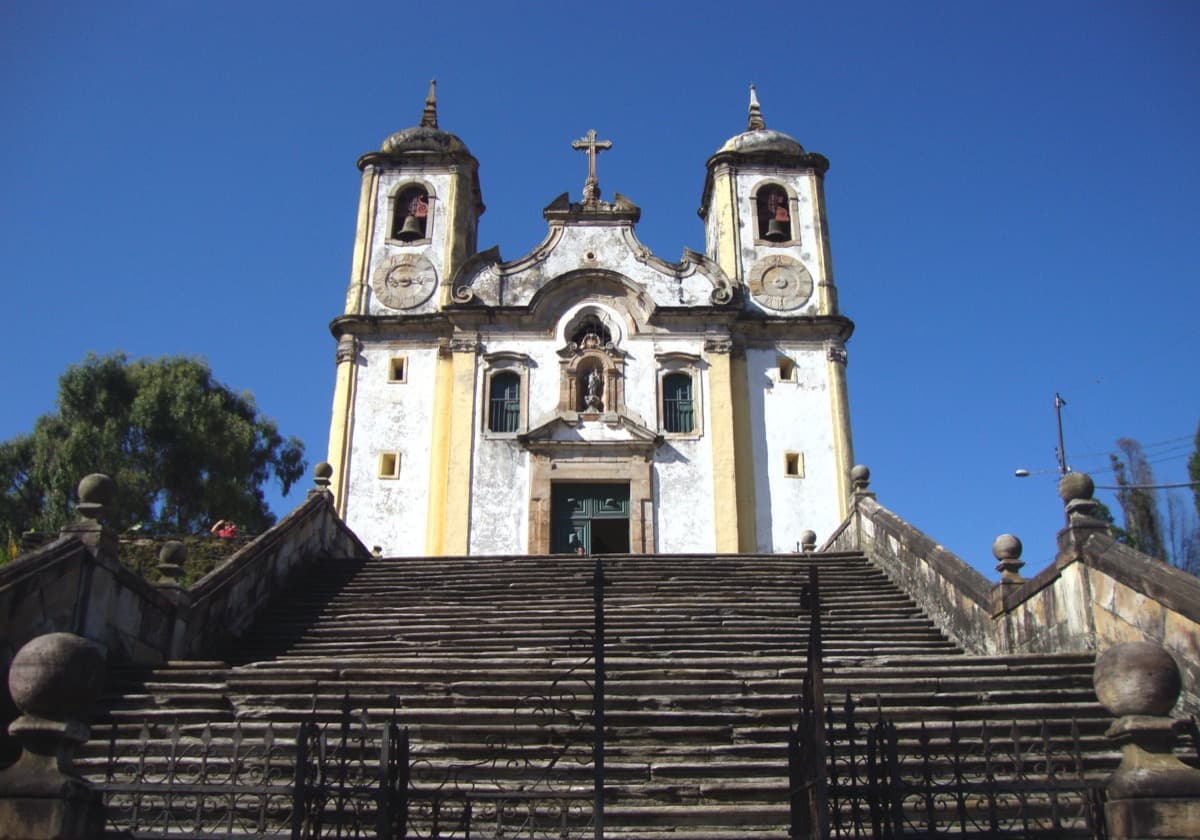
On the highest hill above Ouro Preto, in the state of Minas Gerais, Brazil, a church was raised over roughly five decades by a Black brotherhood the colonial empire tried to keep separate. It answers that exclusion with three things you can still see: a Black saint at its center, a Black pope in its main chapel, and the hand of Aleijadinho on its facade. The Igreja de Santa Efigenia dos Pretos is the building at the top of a hard climb, and it is the reply a barred people gave to a rule imposed on them.
To understand why this church matters, you have to understand what it was built against. In colonial Vila Rica, the name Ouro Preto carried in its richest years, social and religious life ran through the lay confraternities, powerful brotherhoods that organized worship, charity, and status. The most powerful of these were closed to Black members. So the enslaved and freed Black population formed their own, the Brotherhood of Our Lady of the Rosary of Black Men, constituted in 1715. Shut out of the town's confraternities, they built their own institutional world. Santa Efigenia grew out of that brotherhood, and the choice of patron was itself a statement: Santa Efigenia, a Black saint the congregation venerated, at the center of a building they controlled.
Built over roughly five decades
The construction span is the fact that gives this place its weight. Work began around 1733, carried forward under Antonio Coelho da Fonseca from about 1734, and reached completion near 1785, with the facade and its staircase finished between 1777 and 1785. That is roughly fifty years of building, a slow arc for a church of this scale.
Oral tradition holds that the congregation could work on it only at night, because their days already belonged to forced labor. It is worth being precise here, and the tour this article accompanies is careful about the line. That nighttime-building story is something the town repeats, not a documented schedule. What is documented is the long span itself, and the span fits the story. A community whose labor was owned by others, building beauty on borrowed hours over half a century, is consistent with the fifty years the records do confirm. The honest version keeps the certainty and the legend in separate hands, and lets both stand.
Documented hands, including Aleijadinho
Hear a stop from this walk
Igreja de Santa Efigenia dos Pretos: The Church They Built for Themselves
For all that the enslaved left almost no records of their own, this church has documented artists attached to it, and they are among the most celebrated names in Brazilian art. The soapstone image set into the facade was carved by Antonio Francisco Lisboa, the sculptor known as Aleijadinho, whose work defines the high point of the Minas Gerais baroque. His father, Manuel Francisco Lisboa, inspected the timber for the church. The carver Francisco Xavier de Brito worked in the same tradition. The attribution of the facade image to Aleijadinho is one that Brazilian scholarship treats as widely held while noting it is not settled beyond debate, which is the honest way to carry it.
The result is a building where the finest artistic labor of the region met a congregation the empire wanted kept out of sight. The two soapstone sundials on the facade are considered the oldest in the city, small technical touches that mark how much care went into a church raised without anyone's permission.
The Black pope in the chapel
Step inside and look toward the main chapel for the detail that makes the theology of this place plain. There is a representation of a Black pope, an image of the sacred that looks like the people who knelt before it. In a colonial society organized around the exclusion of Black members from the powerful brotherhoods, a Black pope carved into the most sacred zone of a church is not decoration. It is a claim about who belongs at the center of the faith, made by the very people the town's institutions pushed to the edge.
Local legend threads the whole enterprise back to Chico Rei, the African said to have been a king in Congo who, by oral tradition, bought his own freedom and a gold mine and helped fund the freedom of others, and to the Day of Kings celebrations held each January. That legend belongs to the neighboring mine, and it is legend, not filed fact. What is certain stands around you in stone. This church received federal heritage protection in 1939. It was restored between 2008 and 2014, reopening on the tenth of May, 2014. The wider historic center of Ouro Preto was inscribed as a UNESCO World Heritage Site in 1980, and buildings like this one are part of why.
Why it belongs at the top of the hill
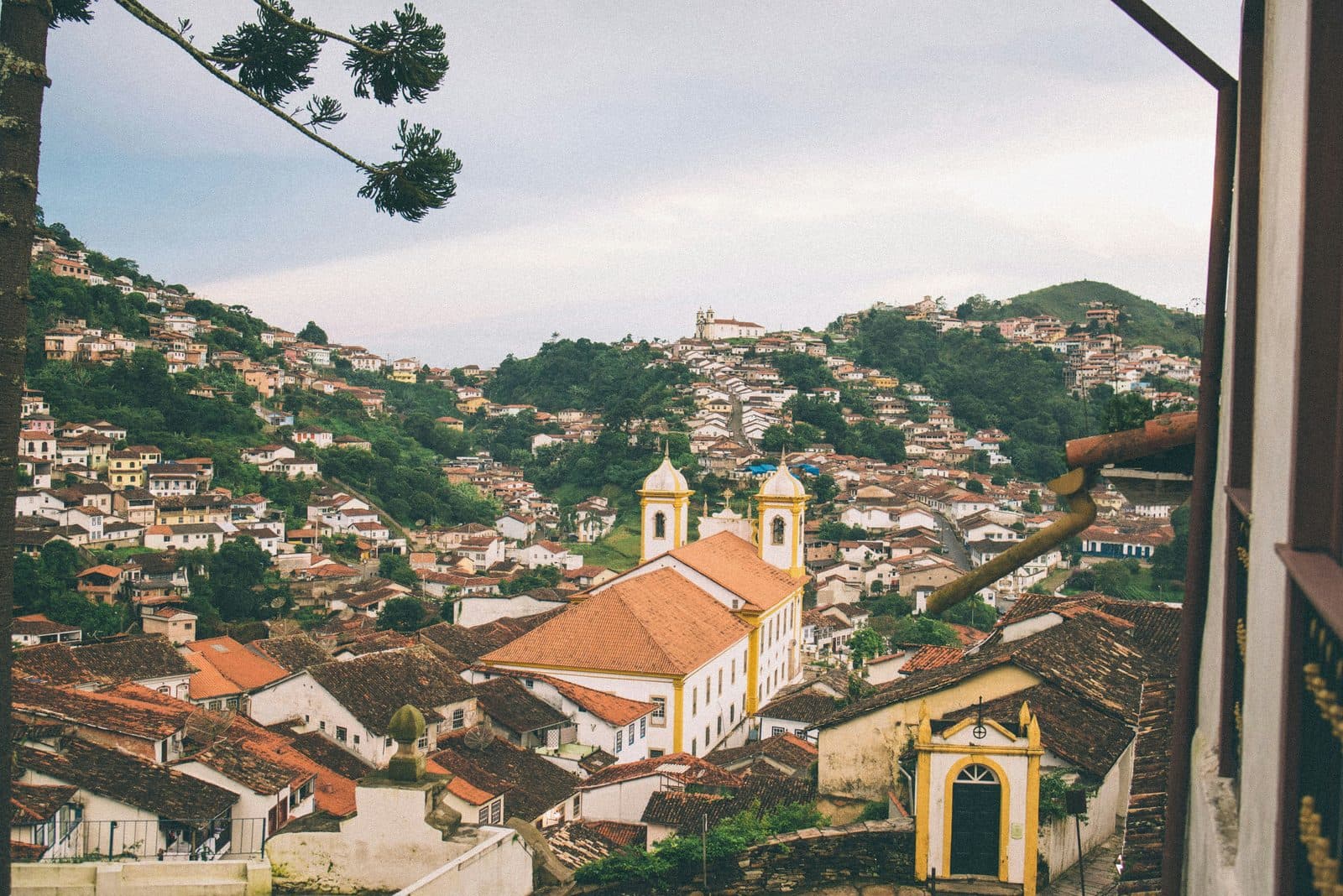
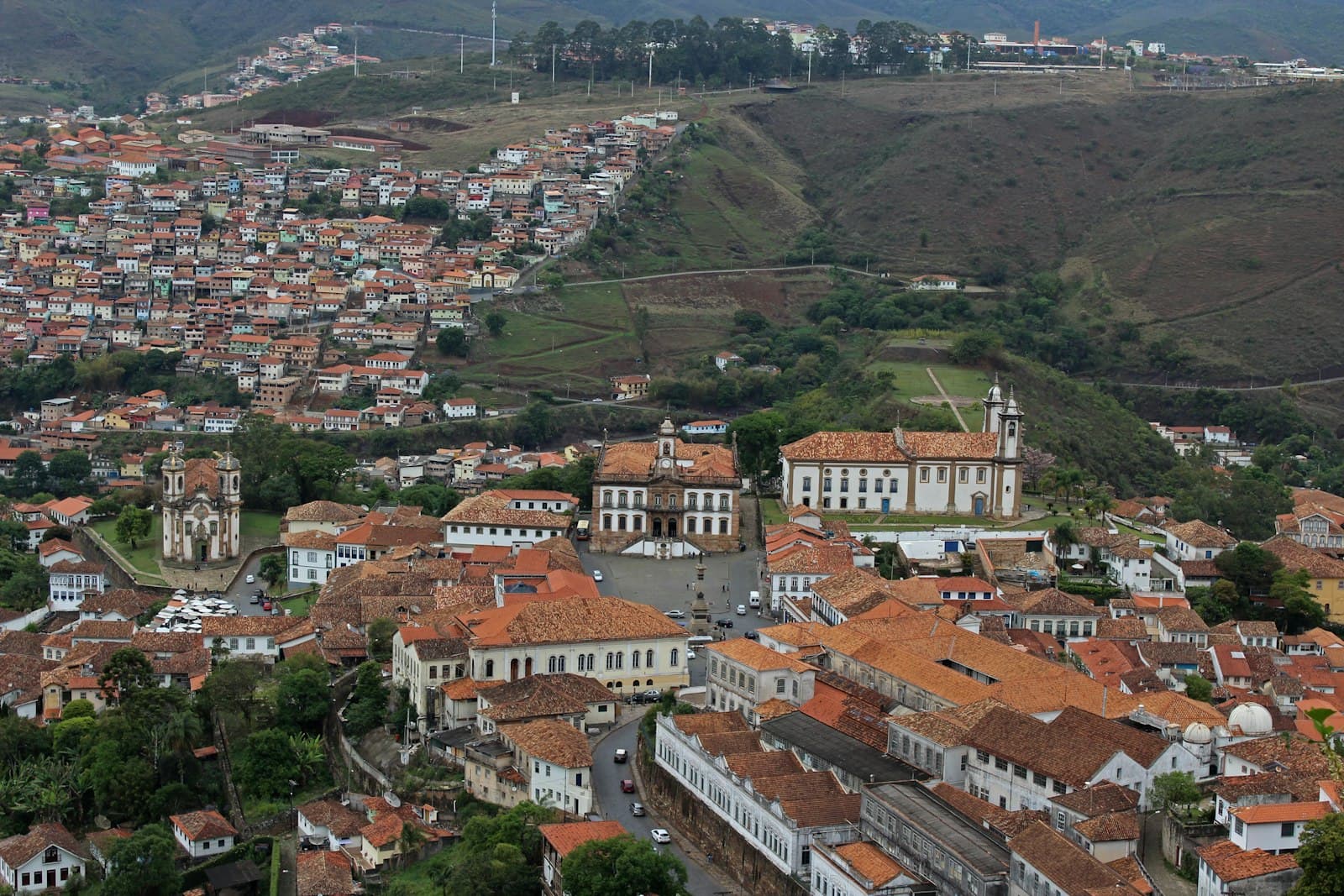
The location is not accidental to the meaning. Santa Efigenia sits near the highest point in Ouro Preto, in the Antonio Dias parish, and from its terrace the whole town opens below: the gilded spires, the celebrated names, the postcard of colonial Brazil. Down in that valley are the churches everyone photographs, including the Igreja de Sao Francisco de Assis designed by Aleijadinho, and the church where Aleijadinho himself is buried.
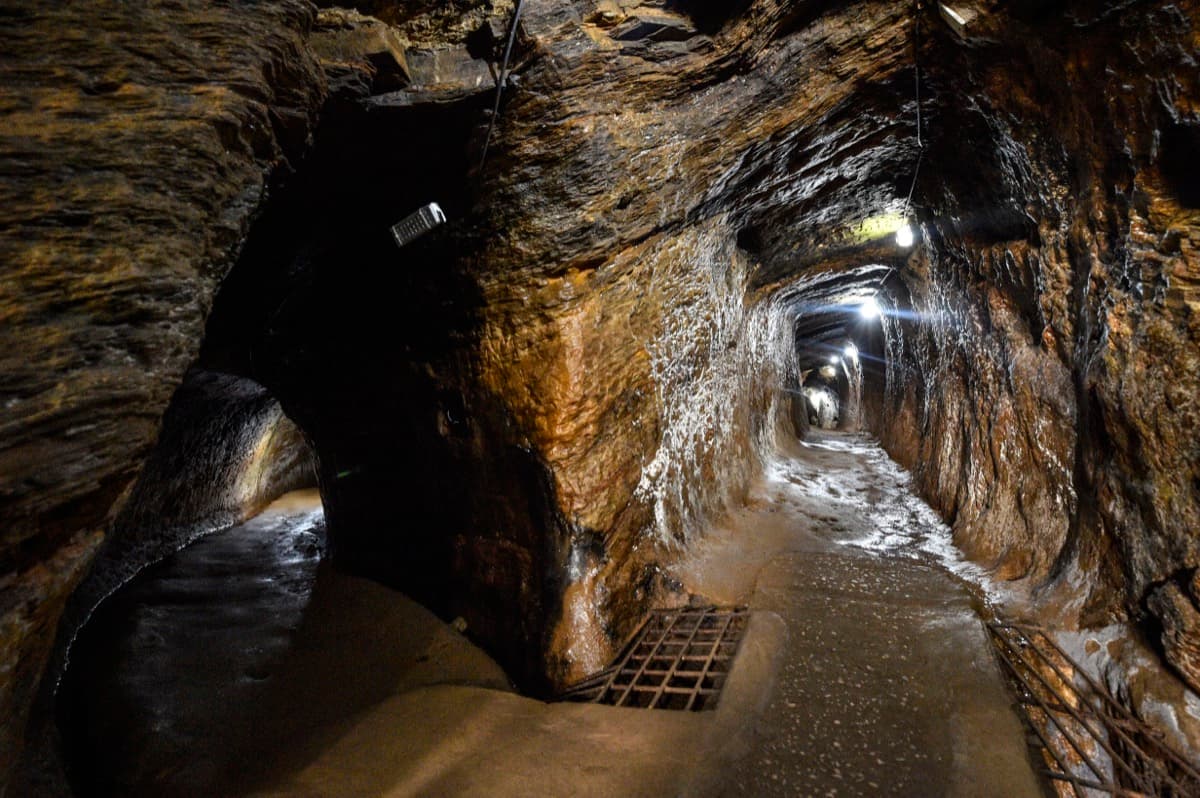
The gold that lines those famous altars came out of tunnels worked by enslaved hands. The steep cobbled slopes below were paved by enslaved labor. The water the town drank was carried uphill by hand. And the church at the top, the one with the finest view in town, is the one the barred community built for itself. You reach it after a real climb, and the effort in your legs is part of the point. Beauty in Ouro Preto did not float down from the baroque imagination. It was carried up, stone by stone.
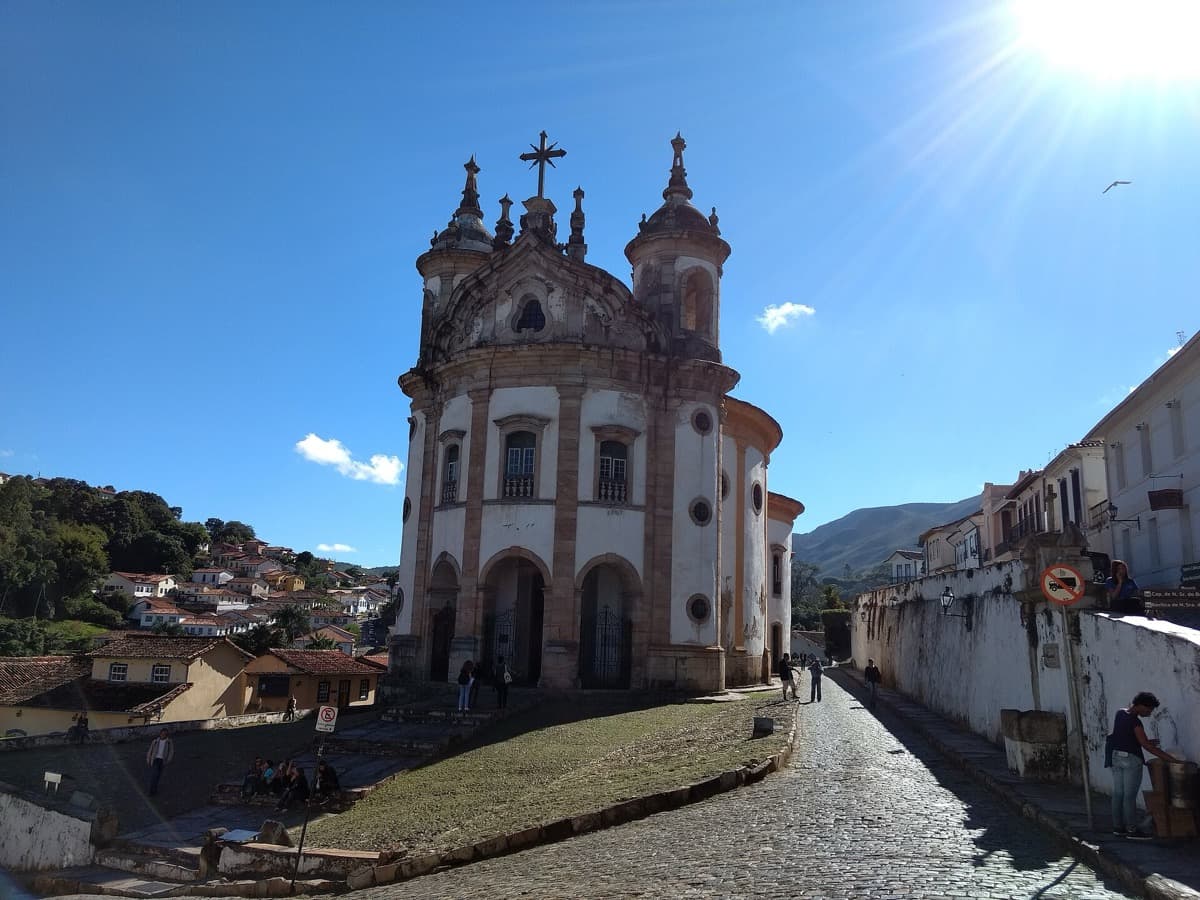
If you want to walk the full climb that leads here, starting at the oval brotherhood church downhill and rising through the mine and the cobbled slope, the route runs through the eastern hills of Ouro Preto.
Sources
- Church of Our Lady of the Rosary of Black Men (Ouro Preto), Wikipedia: background on the Rosary brotherhood constituted in 1715 and its exclusion from the town's main confraternities.
- Igreja Matriz de Santa Efigenia, Wikipedia (Portuguese): construction span 1733 to 1785, the role of Antonio Coelho da Fonseca, the 1939 IPHAN protection, the 2008 to 2014 restoration, and Aleijadinho's soapstone facade image.
- Igreja de Santa Efigenia, ipatrimonio.org: the Black pope in the main chapel, the soapstone sundials considered the oldest in the city, and the church's ties to Afro-Brazilian worship.
- Historic Town of Ouro Preto, UNESCO World Heritage Centre: the 1980 World Heritage inscription of the historic center.
Brazil eSIM· 10% off with ROAMER10
Ready to experience it?
Black Gold: The Enslaved City
85 min · 2.4 km · hard
More from Ouro Preto
Explore more at your own pace.
One Day in Ouro Preto: A Walkable Baroque Itinerary (2026)
Ouro Preto Travel Guide: How Many Days, Getting There, When to Go (2026)
The Town Gold Built and Broke: How to Read Ouro Preto
What to Eat in Ouro Preto: A Minas Gerais Food Guide (2026)
Basilica do Pilar: The Gold-Drenched Church at the Heart of Ouro Preto