The Ten Bells stands on the corner of Commercial Street and Fournier Street in Spitalfields, across from Christ Church. Historic England lists the building at Grade II as a mid-nineteenth-century pub, though its entry repeats a founding date of 1666 that it does not source. The Survey of London finds a new messuage and warehouses built on the site by John Sabatier by 1758, and does not date the pub itself. Inside the Commercial Street entrance, Historic England records a coloured nineteenth-century tiled plaque of an eighteenth- or nineteenth-century street scene.
The reason almost everyone knows the building is the autumn of 1888.
The Ripper autumn
Between 31 August and 9 November 1888, five women were murdered in Whitechapel and Spitalfields: Mary Ann Nichols, Annie Chapman, Elizabeth Stride, Catherine Eddowes and Mary Jane Kelly. The killer was never identified. The women are better known by the killer's invented name than by their own, and that imbalance is what this article is about.
What the record says about the Ten Bells
Hear a stop from this walk
Whitechapel Bell Foundry: The Sign Above the Door
The Ten Bells is not in the inquest record for any of the five women. The Times of 10 September 1888 reported that no corroboration could be gained of a statement that Annie Chapman had been served in a public house at Spitalfields Market that morning. At her inquest her lodging-house deputy said she went out as far as the Ringers' public house at the top of Dorset Street.
For Mary Jane Kelly, the pub comes from a newspaper statement. A woman named Elizabeth Foster told a Press Association reporter that she and Kelly drank in the Ten Bells on the Thursday evening, and that Kelly went out about five minutes past seven. It was printed in Freeman's Journal on 13 November 1888. It is a newspaper statement, not inquest testimony, and the Times reports on the Kelly inquest do not name the pub. All that can fairly be said is that a newspaper reported at the time that a friend had been drinking with Kelly in the Ten Bells that evening.
So the Ten Bells does not have the verifiable place in the chronology that its reputation suggests. It is a pub near the streets where the women lived and died, with one secondhand sighting attached to it. The pub's tiles, which people are told the victims saw, date from the nineteenth century in general terms; no source we could open ties them to 1888.
A pub and its reputation
The pub's own history pages say it was renamed The Jack the Ripper in the 1970s and took the old name back later. Those are the pub's own dates, we could not match them to an independent source, and the details of any campaign over the name came to us only in secondhand summaries, so we do not repeat them here. What is certain is the shape of the thing: a Victorian pub, a murder case that has been studied for well over a century, and a district where visitors arrive wanting to see where it happened.
The books and walking tours that grew around the case have, for the most part, told it as the story of the man. The historian Hallie Rubenhold, in The Five, goes back to the inquests and other records of the women and argues that the evidence that Stride, Eddowes and Kelly worked as prostitutes is thin or absent, and that Nichols and Chapman were poor women in work and out of it. Other writers on the case dispute her. That argument is a good reason to name the women, not an occupation.
What to look at on the walk
The Spitalfields and Brick Lane walk passes the corner but does not go into the pub, and it does not tell the Ripper story as a story about the man. Stand on Fournier Street with Hawksmoor's spire above you and the pub across the road. The walk's Hanbury Street and Wentworth Street stops name the women instead and use only what the inquests recorded: where they slept, where they were last seen, and where they were found.
Outside the Ten Bells, the thing to look at is the building you can see: a stuccoed mid-nineteenth-century corner pub facing a church built in the 1720s. The Ten Bells does not narrate itself. It persists, and the people who walk past it choose what to make of it.
Ready to experience it?
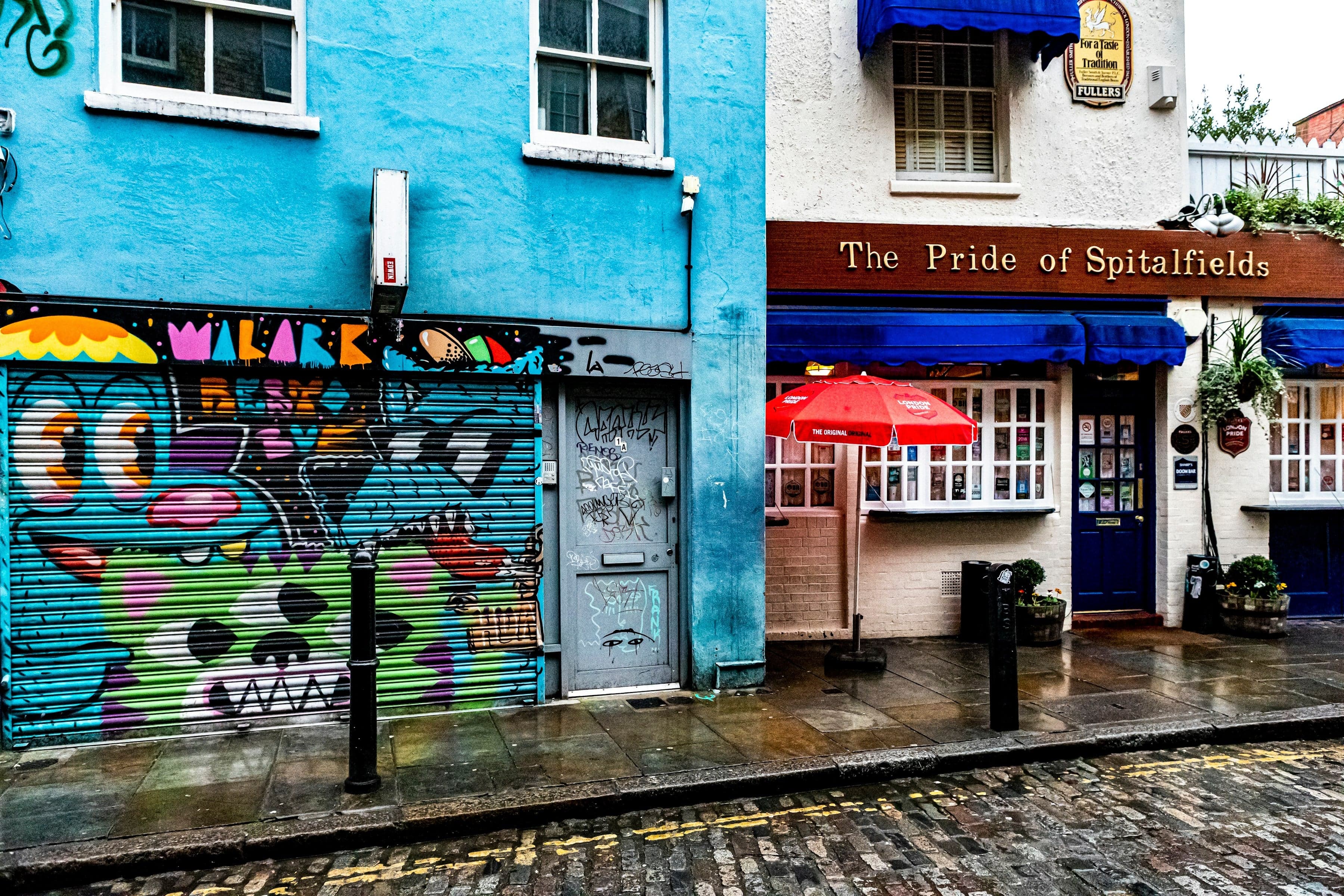
Spitalfields and Brick Lane: Outside the City Gate
75 min · 1.7 km · easy
More from London
Explore more at your own pace.
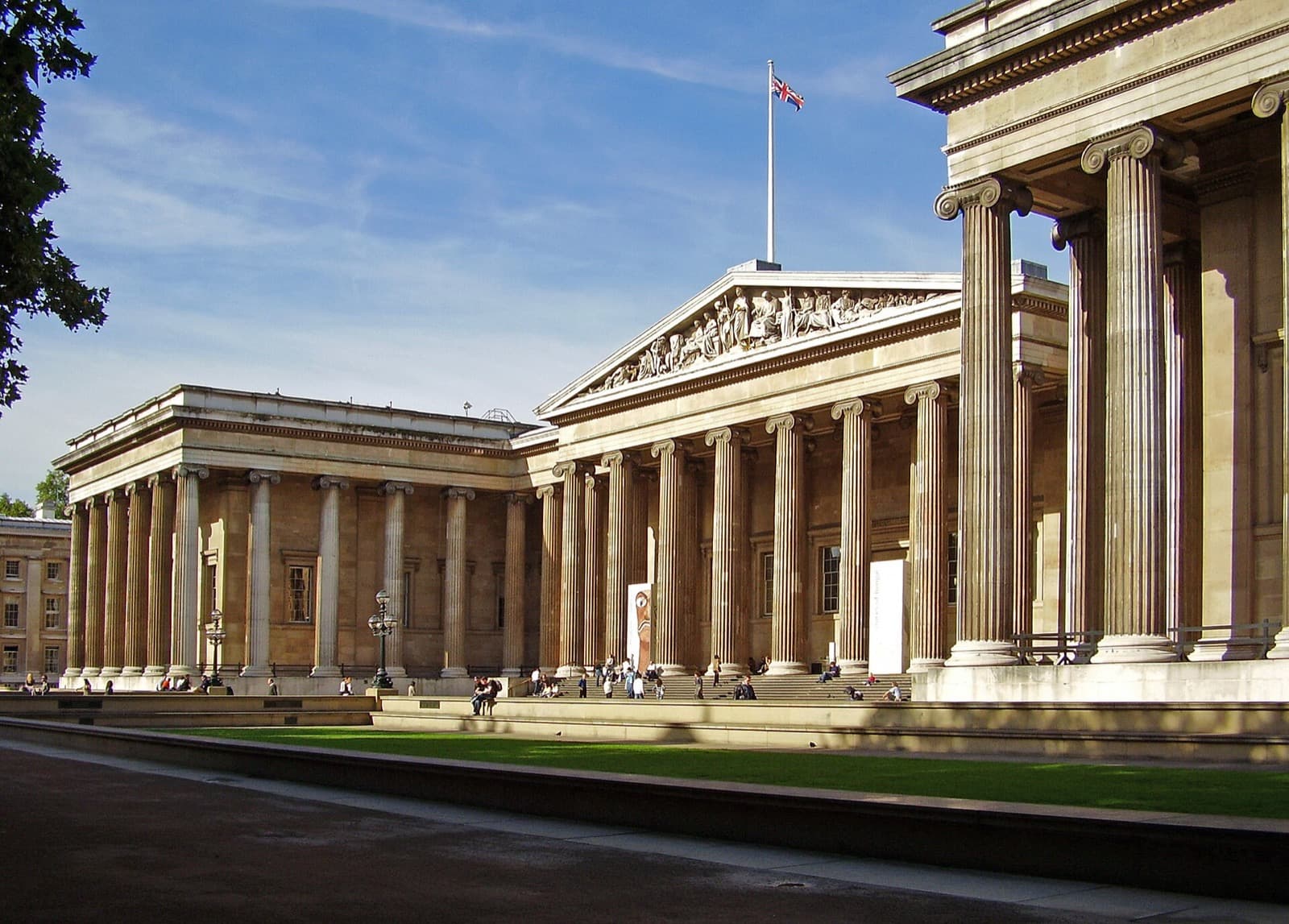
British Museum: What to See, Floor by Floor
The Arnolfini Portrait: The Mirror, the Meaning and the Myths
The Fighting Temeraire: Turner's Last Voyage of a Trafalgar Ship
The Lewis Chessmen: Kings, Queens and Berserkers in Room 40
The Parthenon Sculptures: What Is in Room 18 and How It Got There