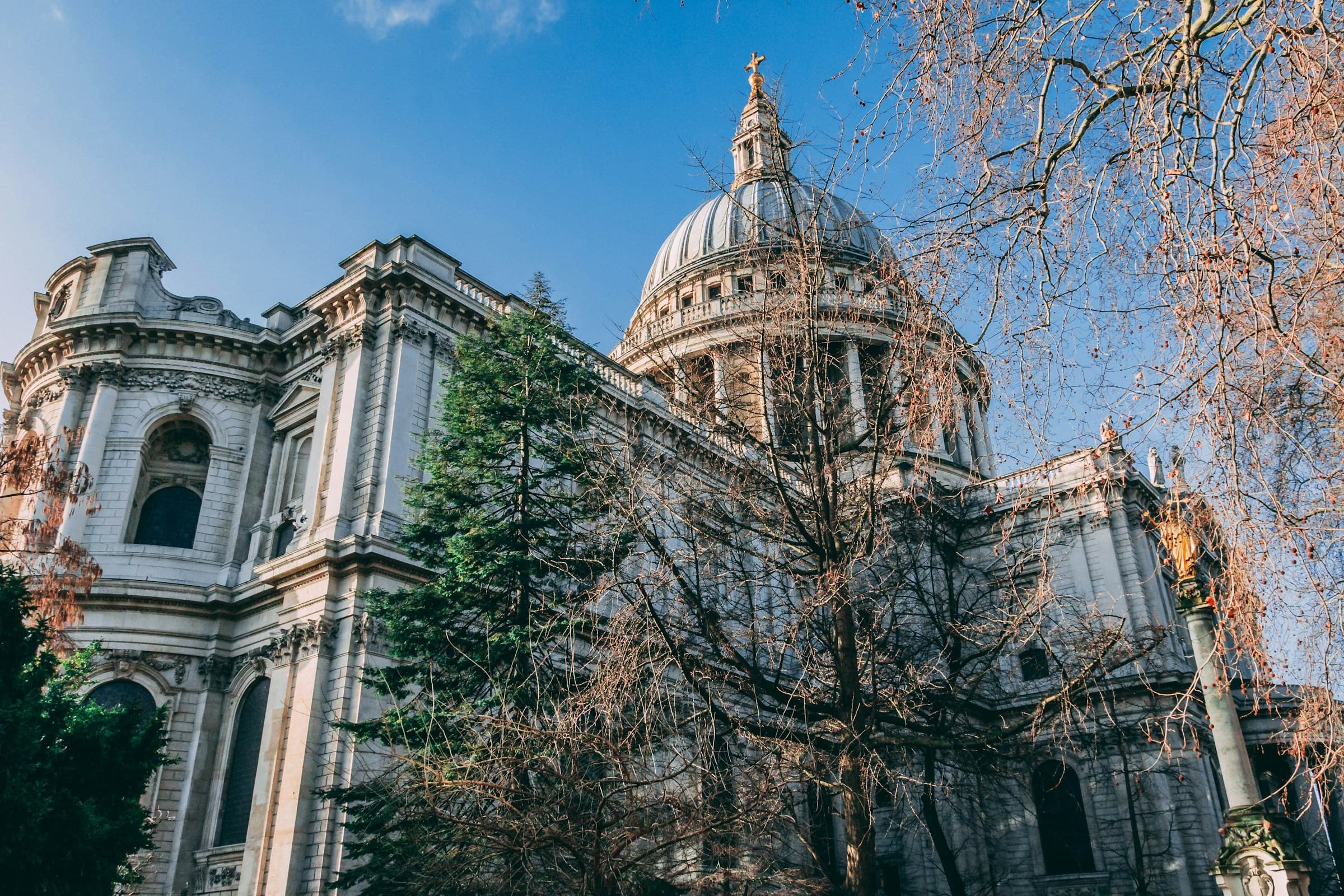
Stand at the bottom of Ludgate Hill and look up. The dome above you is one of the great domes of Europe, and almost everything about it is a piece of deliberate engineering. What looks finished in one stroke is the result of two near-destructions, three hundred years apart, and an architect who spent much of his working life watching it rise.
What was here before
There has been a cathedral on this hill since the Saxon centuries, and the medieval one that Wren replaced was one of the largest churches in Europe. Old St Paul's had a spire, not a dome. The cathedral's own history says that spire was a whole 38 metres taller than the cross on top of the cathedral you see now. It was fired by lightning on 4 June 1561, and no source we found shows it rebuilt. By the early seventeenth century the cathedral was in poor condition, and Inigo Jones was hired in 1633 to refurbish the west front, adding a classical portico to the Gothic body.
In September 1666 the Great Fire reached the cathedral on the Tuesday, 4 September, the third day. The cathedral's timeline describes a piece of burning wood landing on the roof around 8pm, a roof covered in boards and in scaffolding from restoration work Wren himself had been carrying out. John Evelyn watched it go: the stones of St Paul's "flew like grenados", and the lead roof "flowed like a stream down Ludgate Hill". The old cathedral was beyond saving.
Wren's commission
Hear a stop from this walk
St Paul's Cathedral: The Dome the City Keeps in View
Christopher Wren was thirty-three when the Fire began, which makes him a man who had come to architecture late. He was born on 20 October 1632, trained as an astronomer, and by the cathedral's account only took up architecture in his early thirties, with his first commissions in 1663. He was appointed architect to St Paul's on 13 November 1673 and knighted the next day. By the time the first stone went down on 21 June 1675 he was forty-two.
The design went through several versions before the one that was built. The Great Fire gave Wren a blank canvas the size of a city, but his grand plan for the City was mostly rejected, and the cathedral was one of the few of his large ideas that went ahead.
Construction took thirty-five years. The cathedral was consecrated in 1697, when the first service was held in the quire. In October 1708 it was topped out, and the last stone was laid on the lantern by Wren's son Christopher, born the year construction began, together with the master mason Edward Strong. On Christmas Day 1711 Parliament declared the cathedral complete. Historic England dates the building 1675 to 1710. Wren died on 25 February 1723, past ninety. The inscription in the crypt, Lector, si monumentum requiris, circumspice, says it for him: reader, if you seek his monument, look around you.
The dome
A dome of this size cannot be one thing. The inner dome you see from inside the cathedral and the outer dome you see from the street are different shapes doing different jobs, and the structure between them is out of sight. We do not state the weights, tonnages or the exact arrangement of that hidden structure here, because the sources we could open for this article do not settle them. What you can see for yourself is the result: a dome that reads clearly from every approach, and a silhouette that the City has protected ever since.
The view that is protected
Since 1938 the City of London Corporation has operated a policy known as the St Paul's Heights to protect important local views of the cathedral from the South Bank, the Thames bridges and certain points to the north, west and east. It was devised in the 1930s by W. Godfrey Allen, the Surveyor to the Fabric, and was at first a gentleman's agreement. Setback limits apply to frontages on Fleet Street, Ludgate Hill, Watling Street and Cannon Street. That is why the street wall facing the cathedral on Ludgate Hill is low, and why some of the towers you have walked past lean away from the cathedral's line of sight. (The policy text we read is the City's 2012 document, so check the current rule if you need the detail.)
The Blitz, 29 December 1940
On the night of 29 December 1940 the Luftwaffe raided the City. The cathedral's own timeline says that twenty-eight small explosive devices fell on and around it, hitting the dome and destroying the nearby Chapter House. Photographs from the next morning show whole blocks of the City reduced to rubble, and the cathedral still standing among them.
The best-known picture of that morning is Herbert Mason's photograph of the dome rising out of the smoke. The cathedral notes that it was in fact heavily retouched in the studio. It became the iconic image of the Blitz all the same, which tells you what the dome had come to mean. The popular account credits volunteers who kept watch on the roof with putting out fires before they could take hold, but the sources we could check do not give the names, the numbers or the sequence, so we leave those out.
What the hill has seen
Wren's cathedral has stood on this hill since the early eighteenth century. It outlasted the buildings around it in the 1940 raid, and it now stands in a City that has rebuilt around it more than once, still at the head of Ludgate Hill, still the view the City's planners keep clear.
The City of London walk ends at St Paul's on Ludgate Hill, after the Monument, Guildhall Yard, St Mary-le-Bow and Temple Bar, so you arrive having read the plan the cathedral sits inside.
Ready to experience it?
City of London: The Plan That Outlived the Fire
100 min · 2.8 km · easy
More from London
Explore more at your own pace.
British Museum: What to See, Floor by Floor
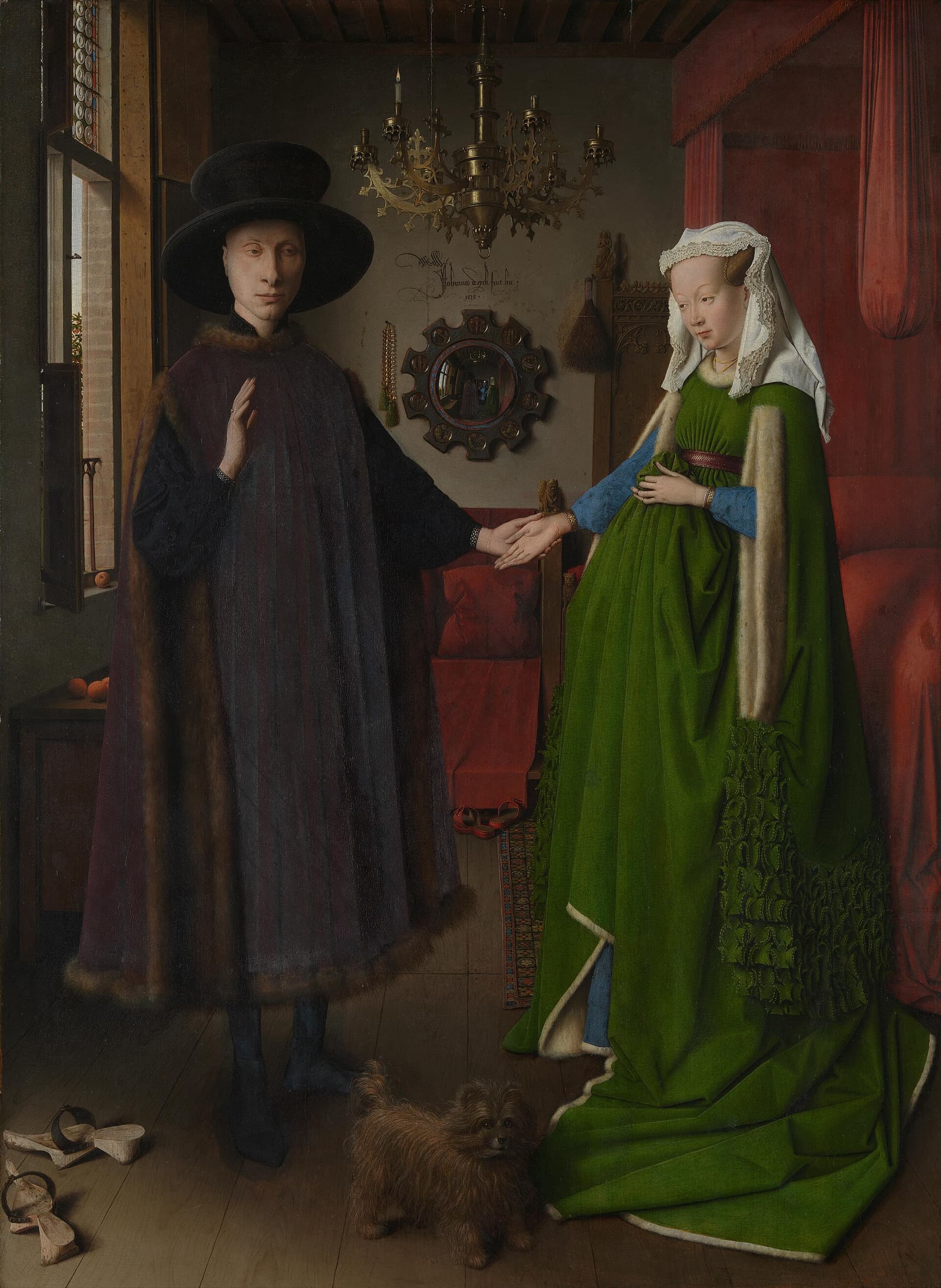
The Arnolfini Portrait: The Mirror, the Meaning and the Myths
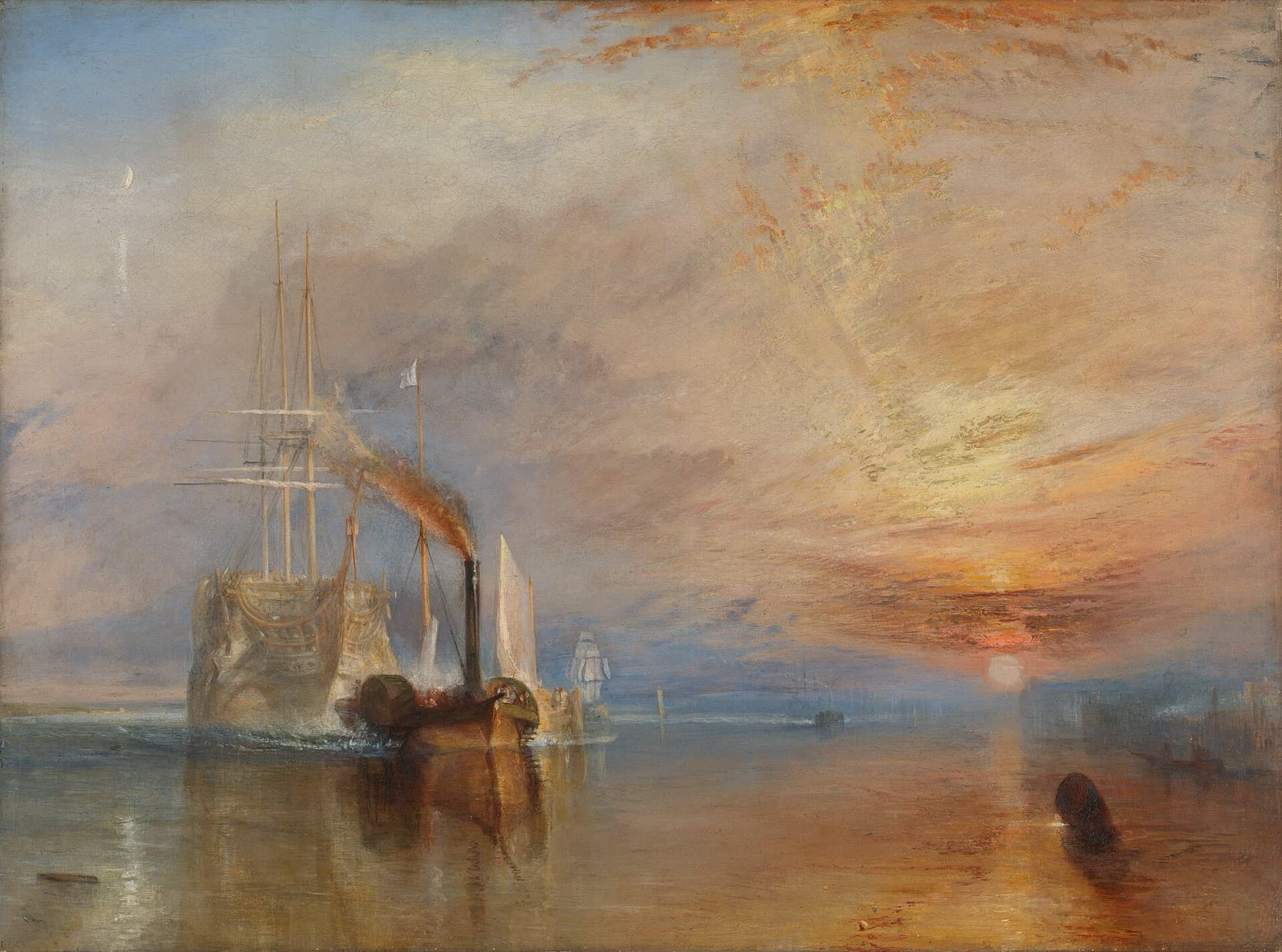
The Fighting Temeraire: Turner's Last Voyage of a Trafalgar Ship

The Lewis Chessmen: Kings, Queens and Berserkers in Room 40
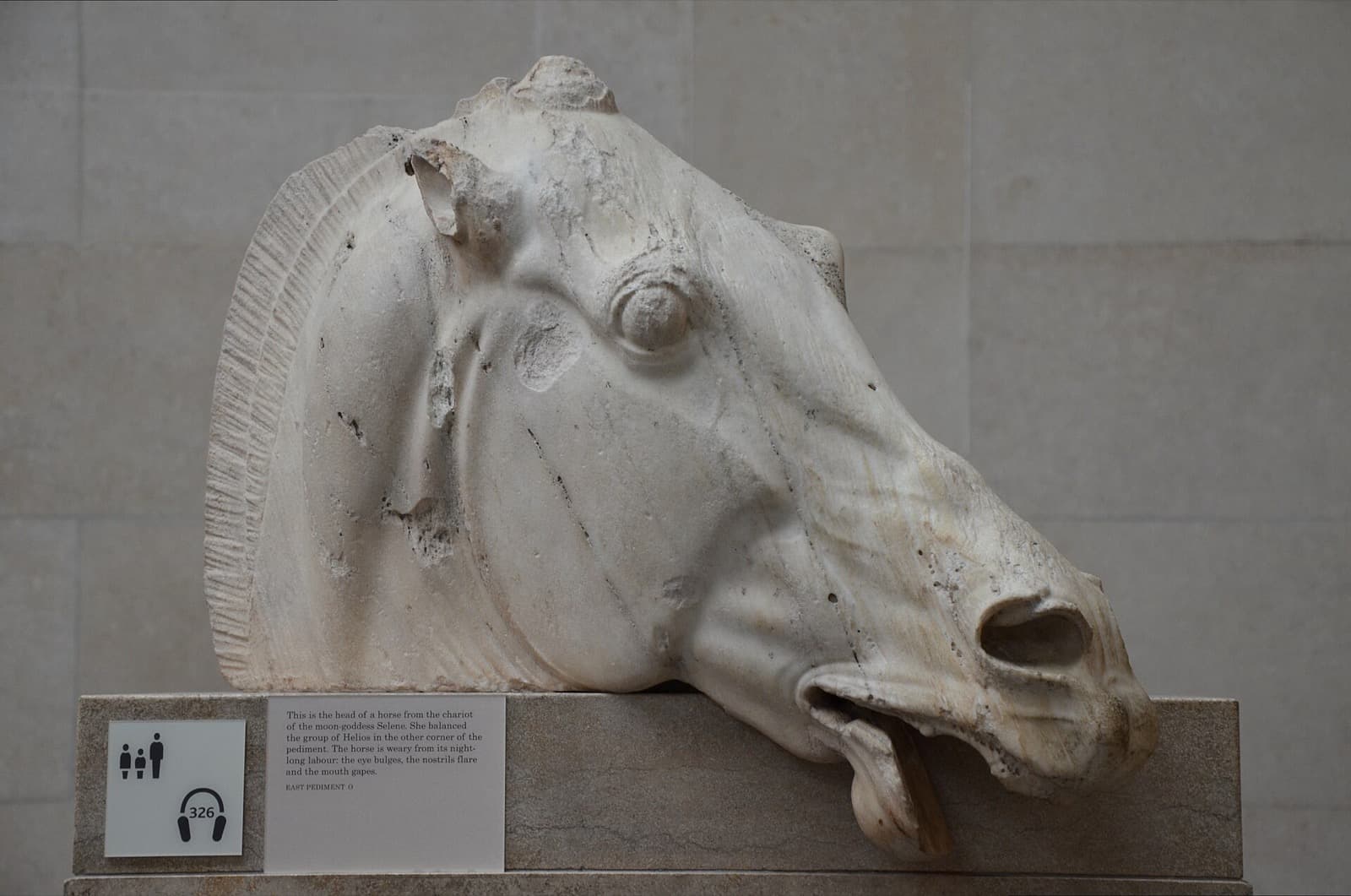
The Parthenon Sculptures: What Is in Room 18 and How It Got There