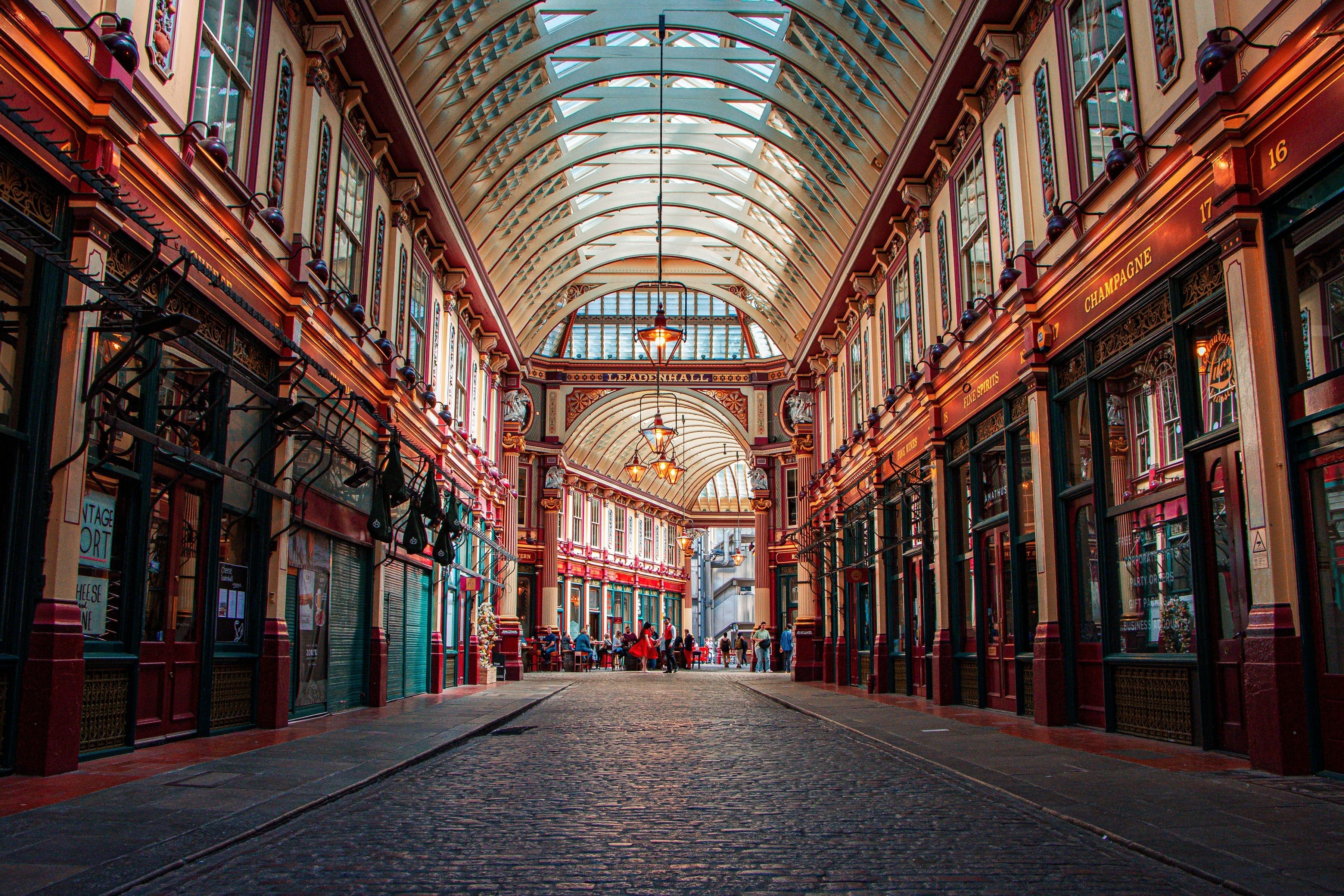
From the Roman wall at Tower Hill past Pepys's church, the Monument, Leadenhall Market, Lloyd's and Bank to the Guildhall's Roman arena, Cheapside, Temple Bar and St Paul's, reading the old plan under a rebuilt City.
Start · Tower Hill: The Roman Wall at the City's Edge
DirectionsStops
- 1
Tower Hill: The Roman Wall at the City's Edge
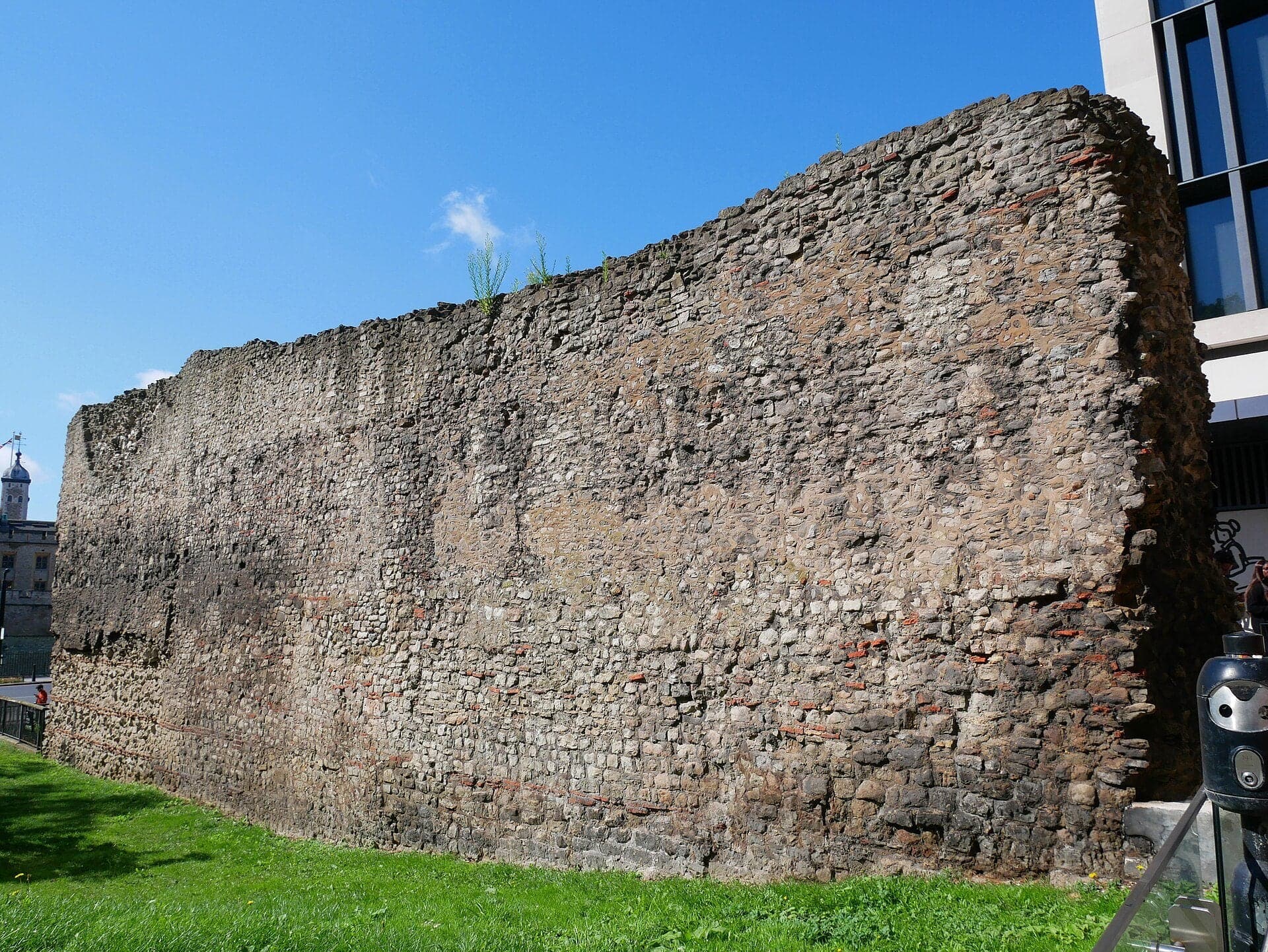
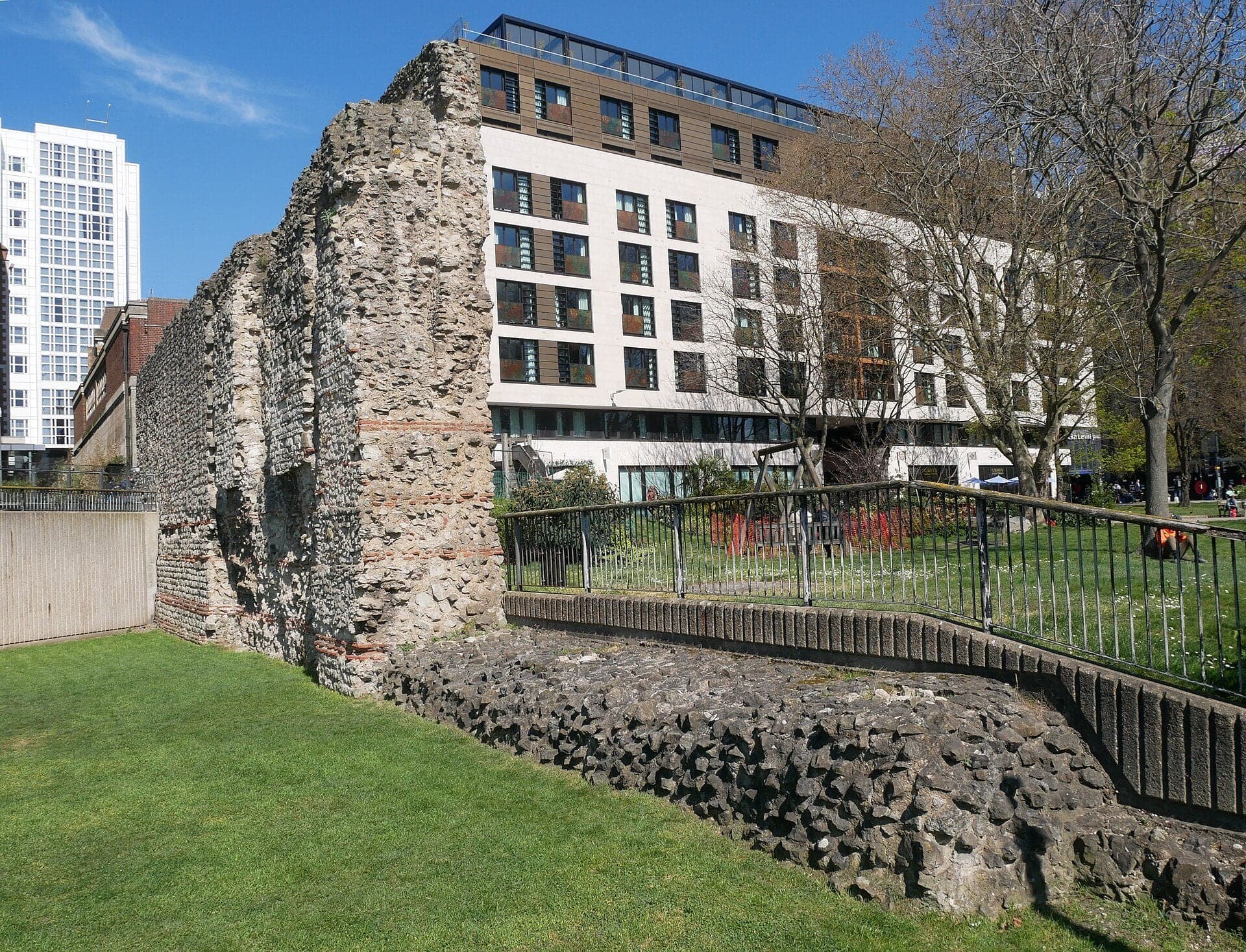
Roman wall at the City's edge. Built from about AD 200, its lower courses are Roman and its upper ones medieval, with the Tower of London across the road.
- 2
All Hallows by the Tower: Pepys in the Steeple
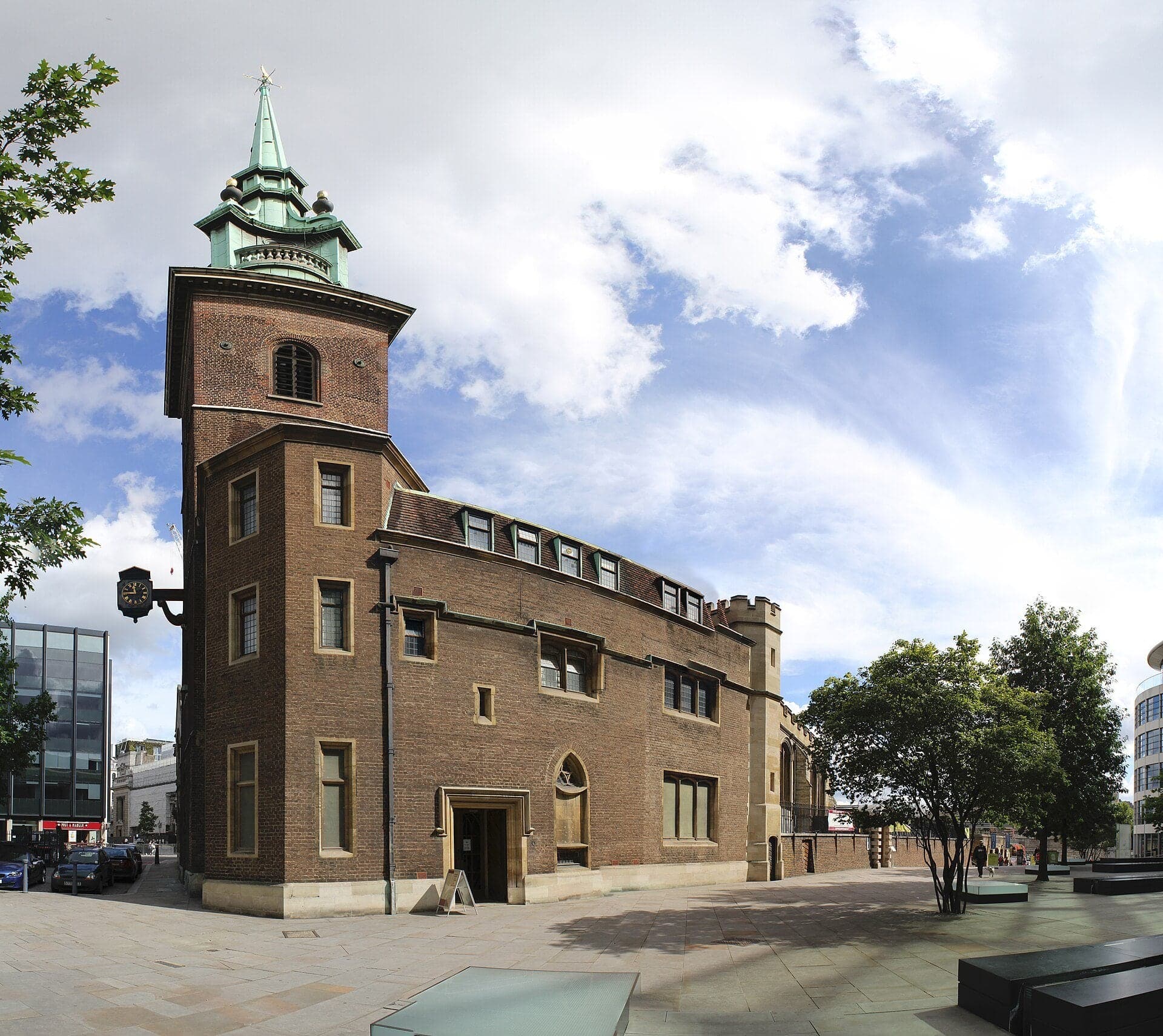
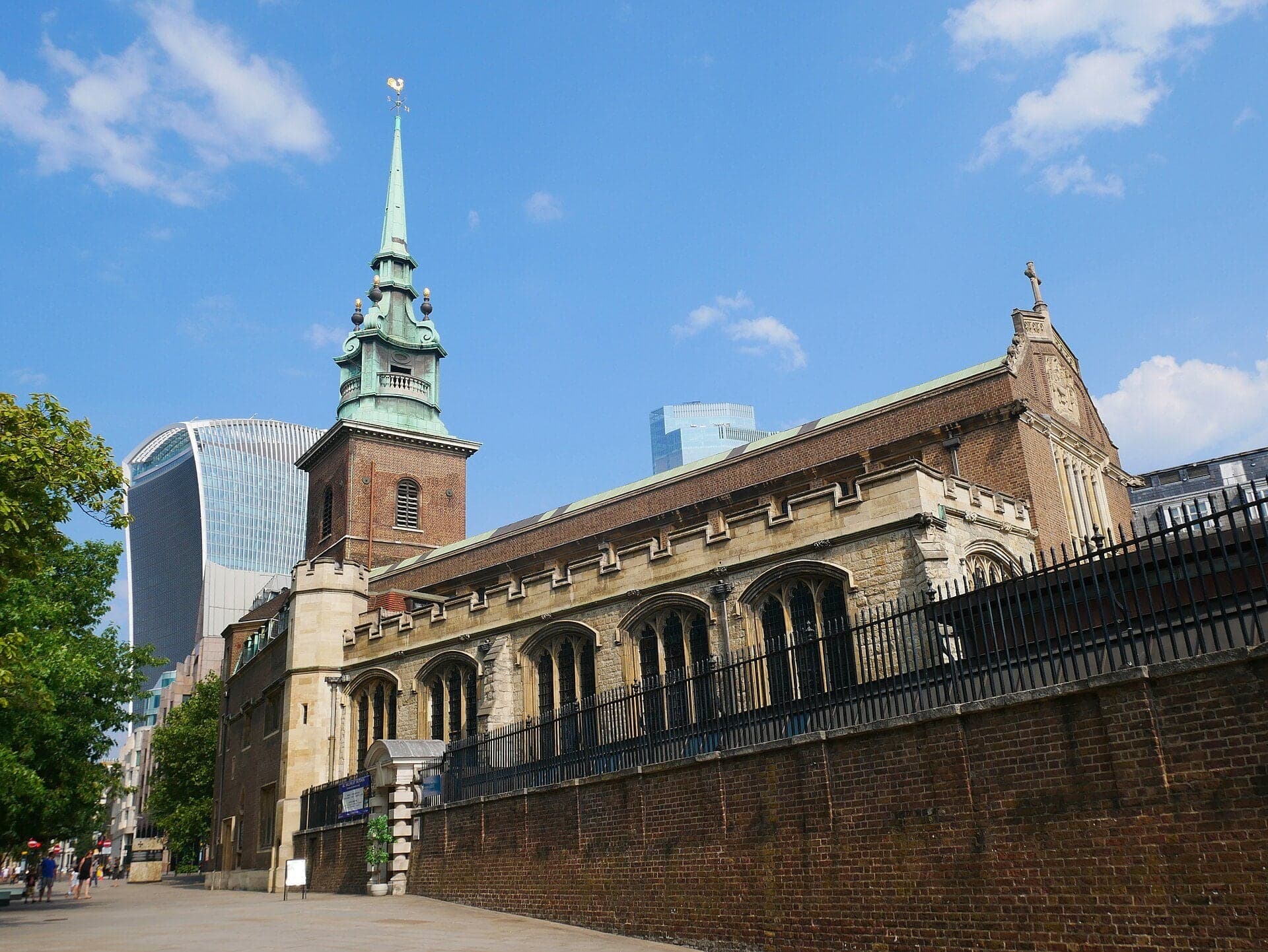
The steeple Pepys climbed in 1666. All Hallows calls itself the oldest church in the City, and its brick tower of 1658 to 1659 watched the Great Fire stop at its porch.
- 3
St Dunstan in the East: A Church Become a Garden
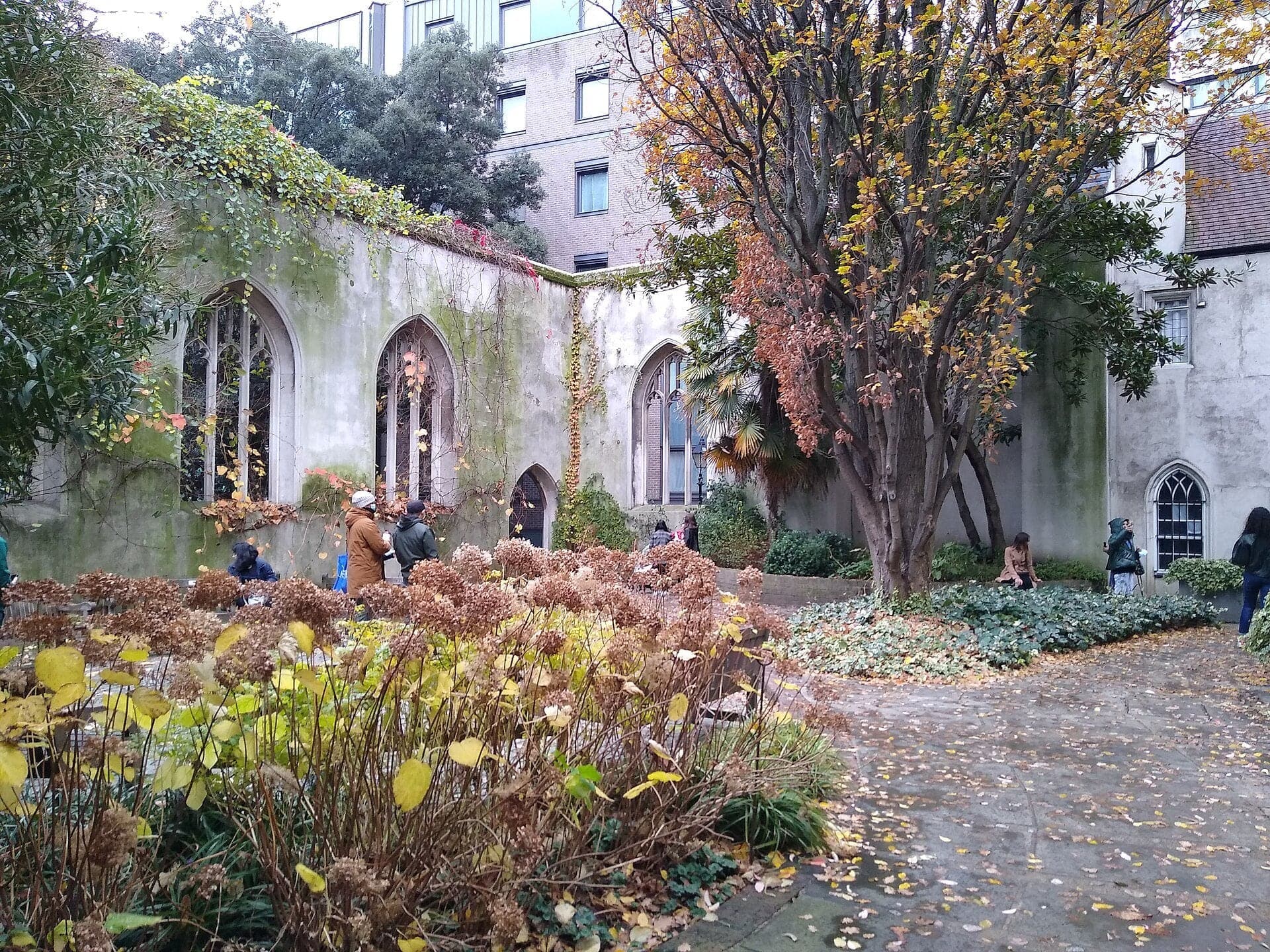
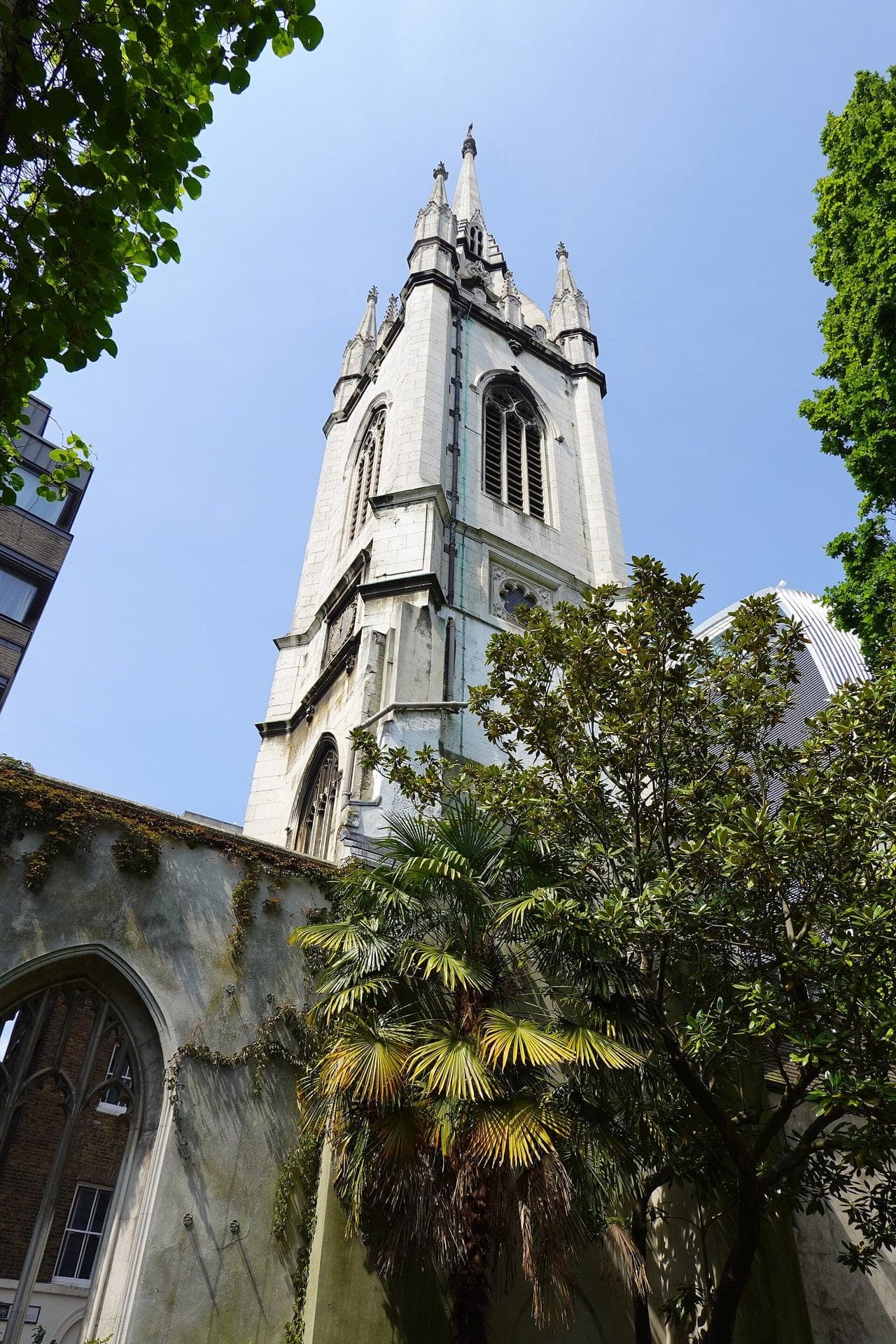
A bombed church turned garden. Wren's Portland stone tower and spire stand over Gothic walls rebuilt from 1817 and left roofless by the Blitz in 1941.
- 4
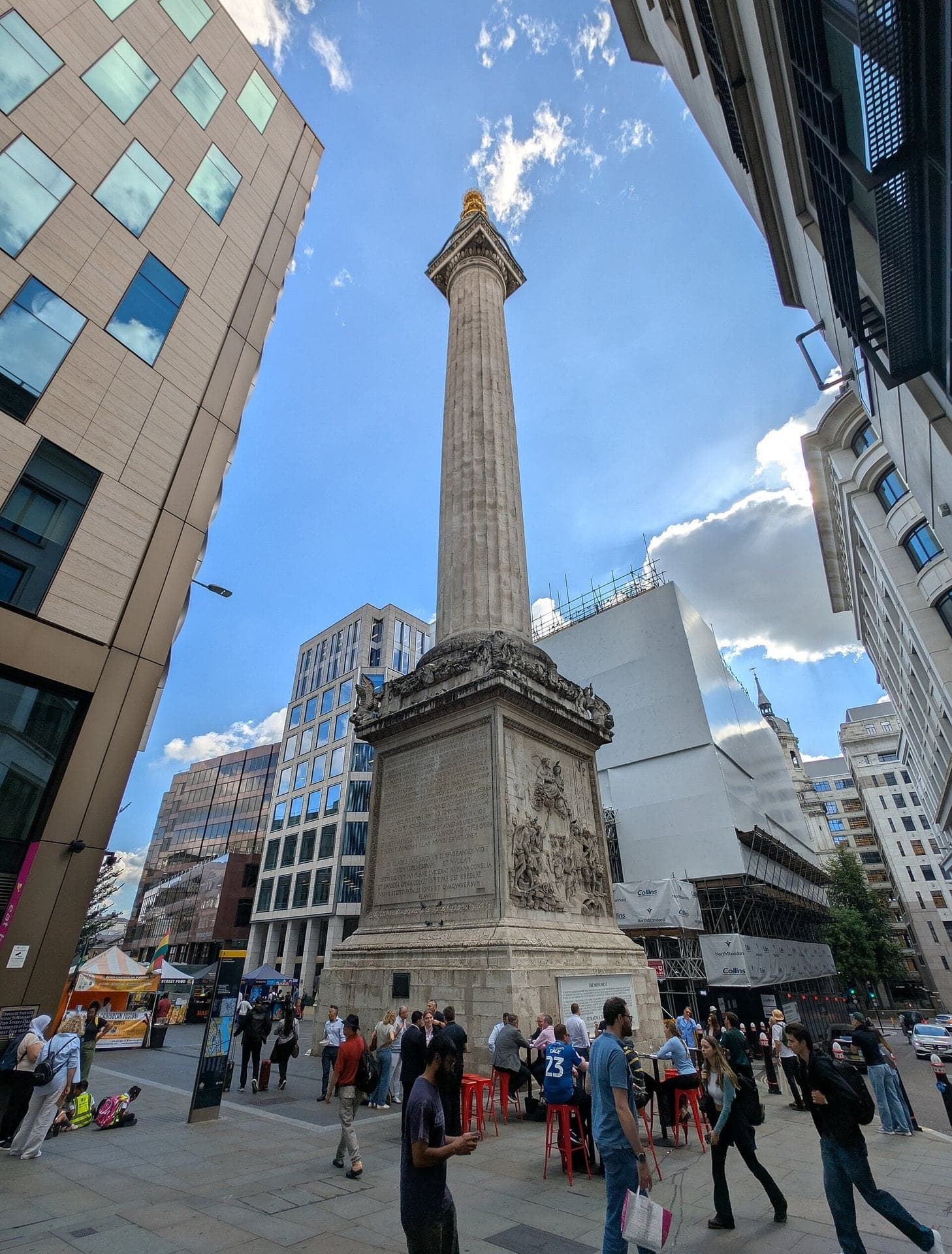
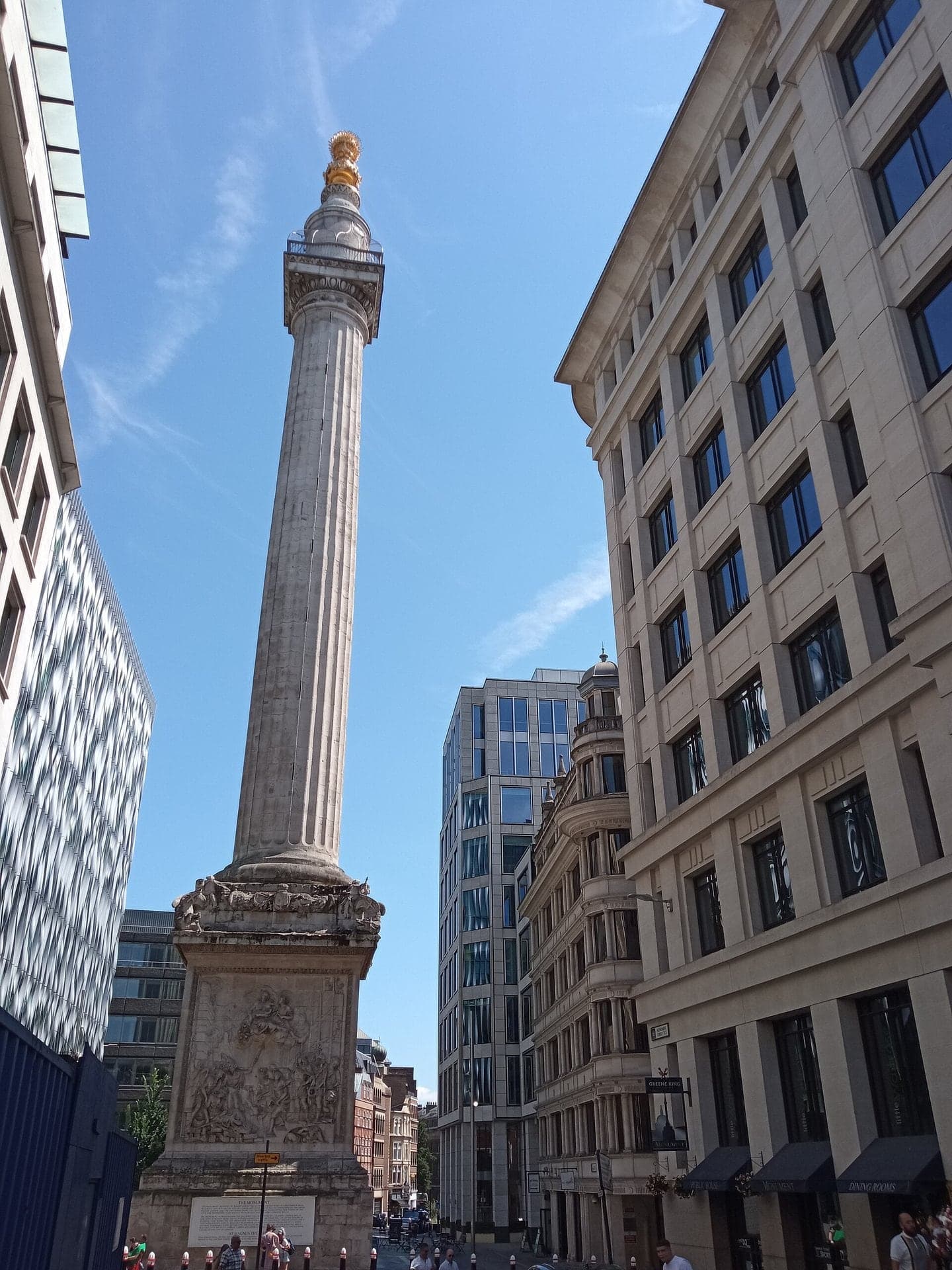
The Monument: A Column That Measures the Fire
A 202 foot column of Portland stone. Robert Hooke and Christopher Wren's Monument, finished in 1677, stands 202 feet high and, by its own measurement, 202 feet from where the Great Fire began on Pudding Lane.
- 5
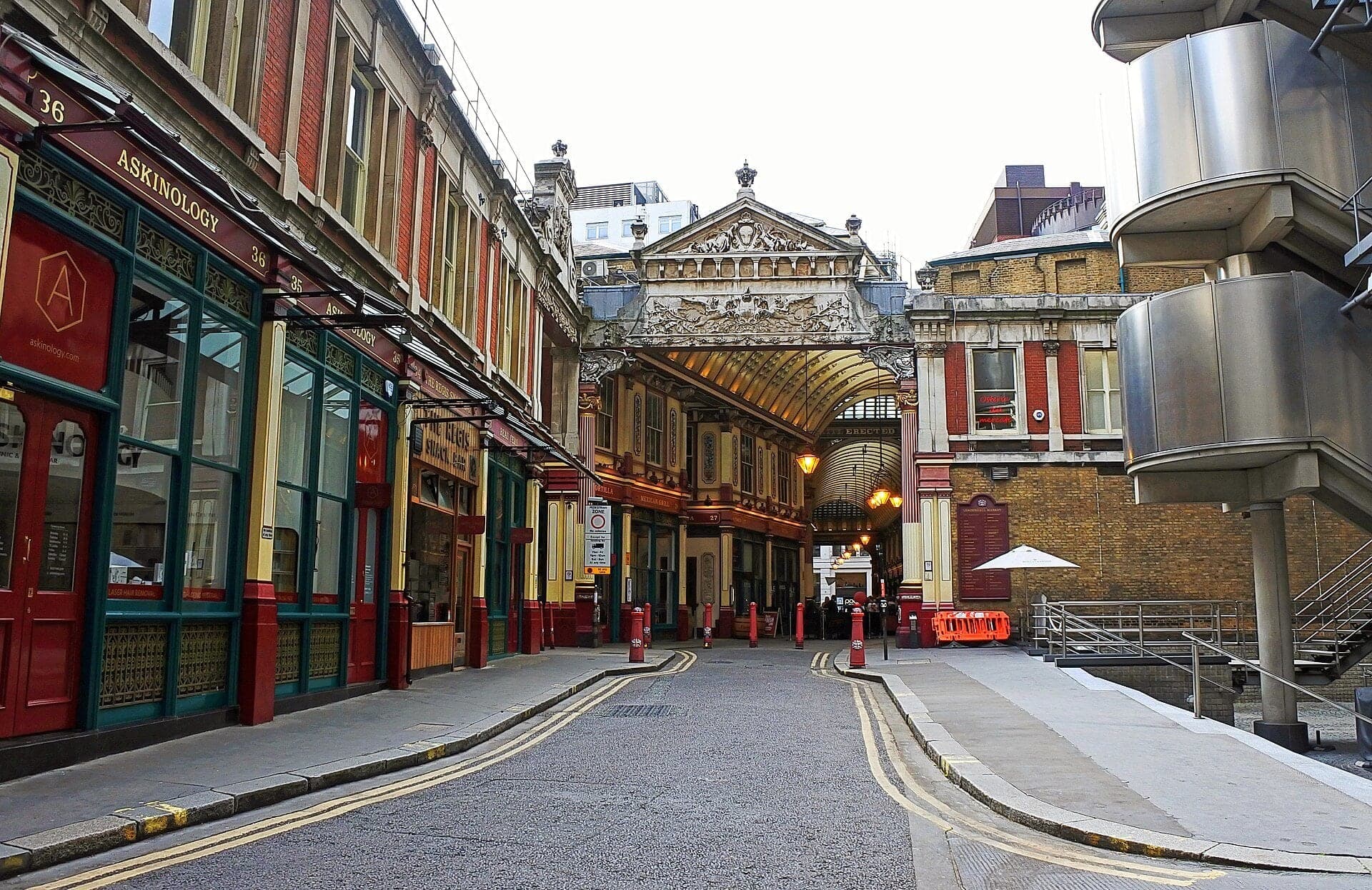
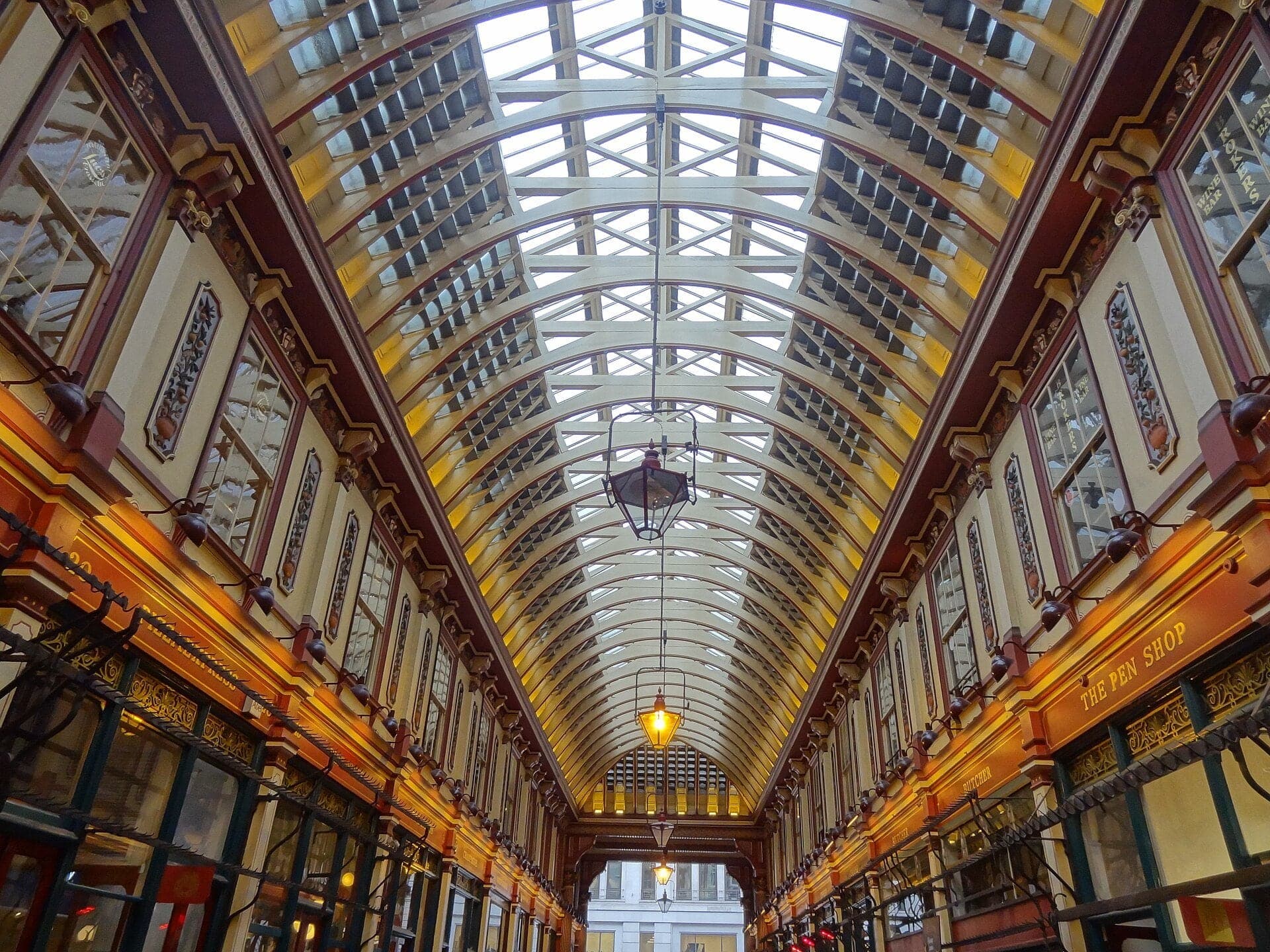
Leadenhall Market: Victorian Iron on a Roman Forum
A Victorian arcade over Roman London. Horace Jones's red brick and stone front of 1881 opens onto crooked lanes that follow medieval rights of way, above the site of the Roman forum and basilica.
- 6
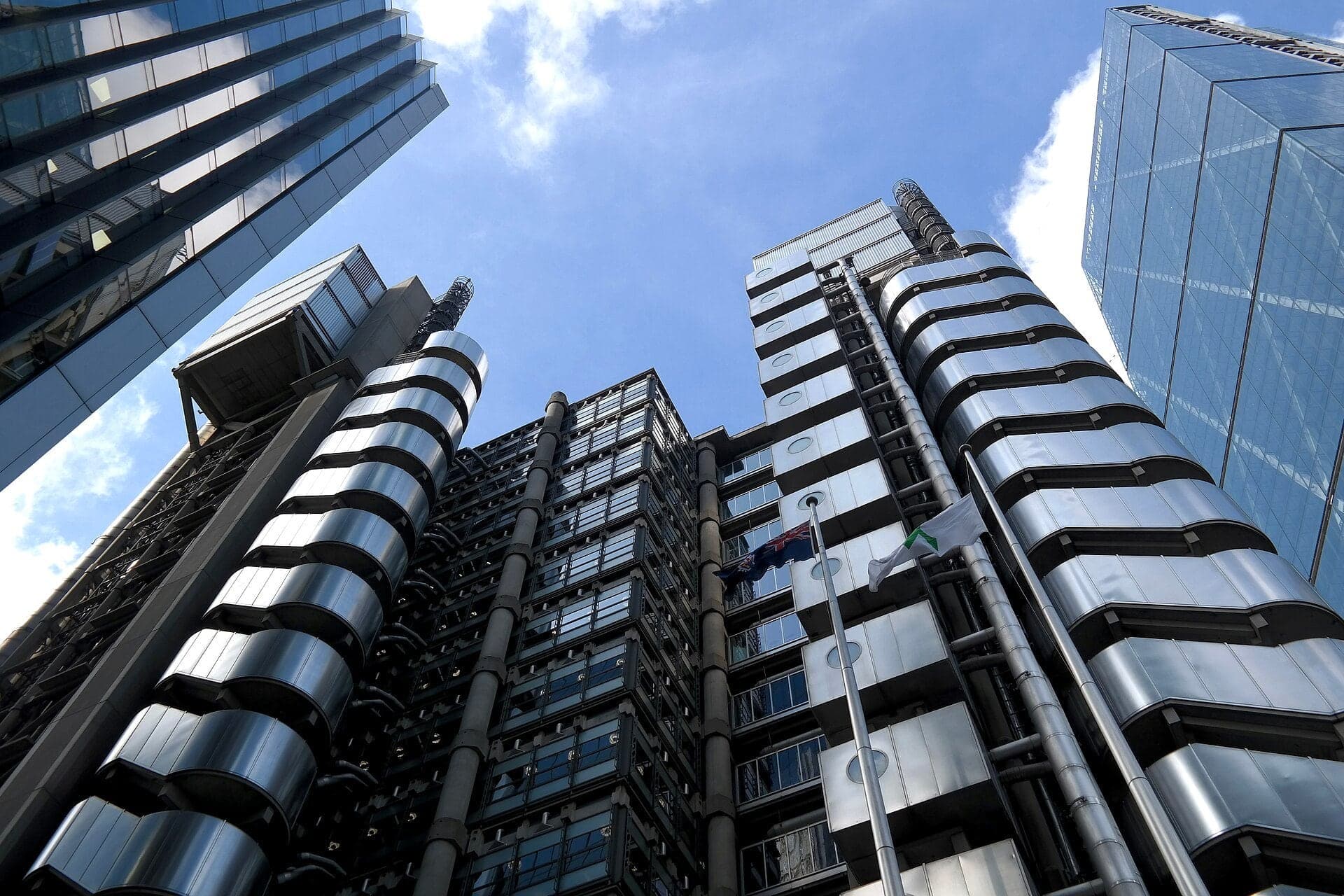
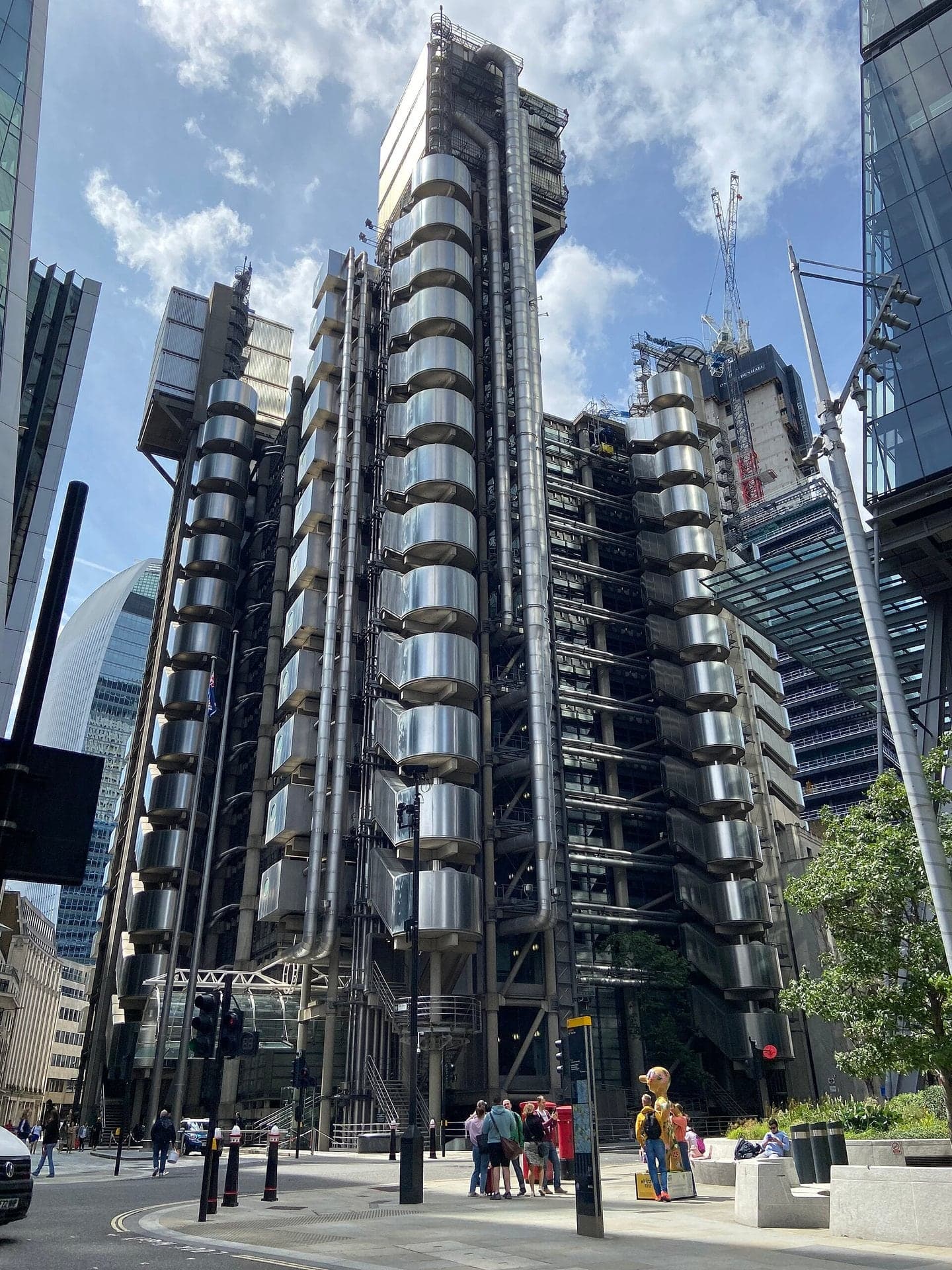
Lloyd's of London: Steel Chosen by the Fire Rules
A building wearing its lifts outside. Richard Rogers's 1986 building took its steel and concrete from fire rules, and the Leadenhall Building beside it leans to keep St Paul's in view.
- 7
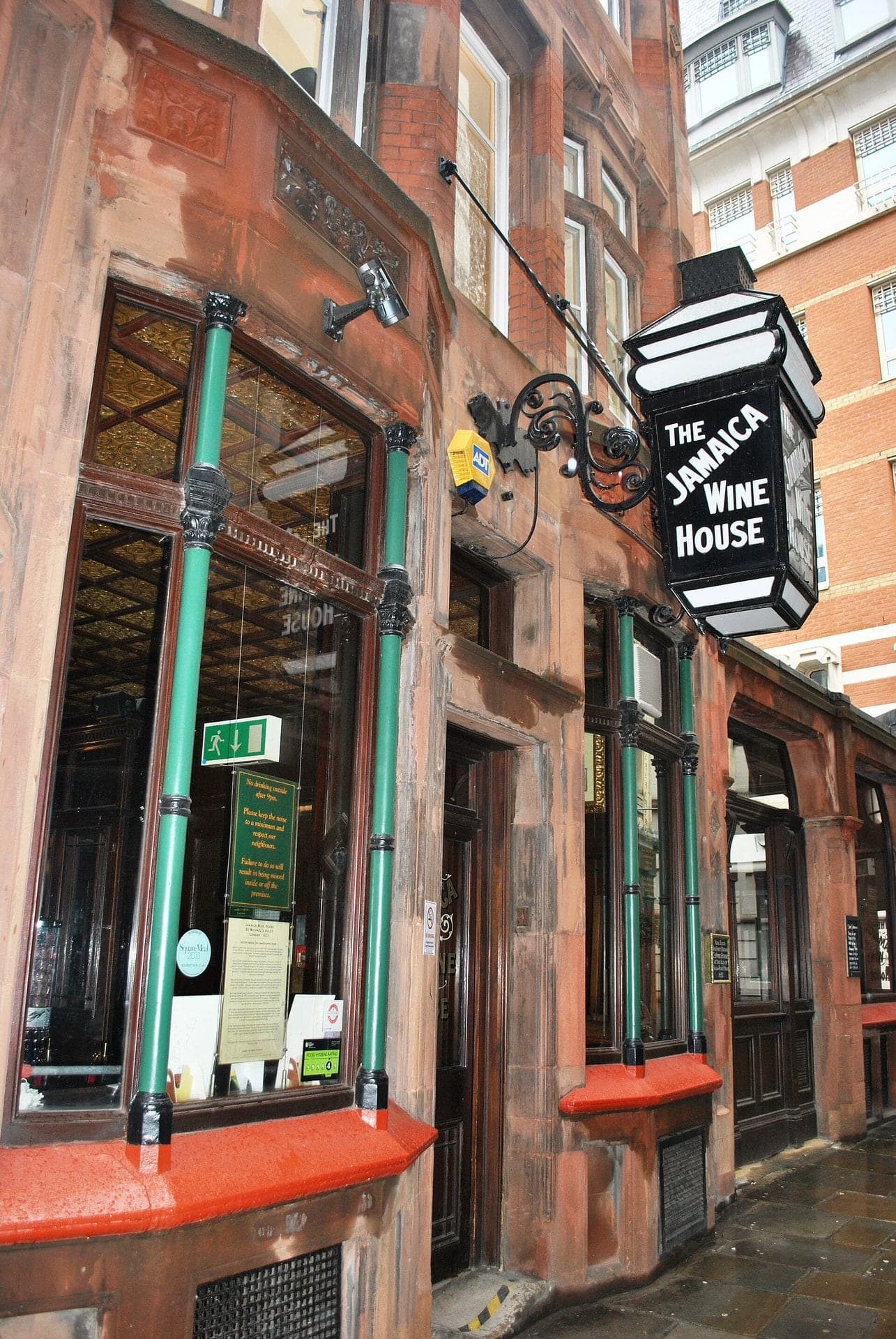
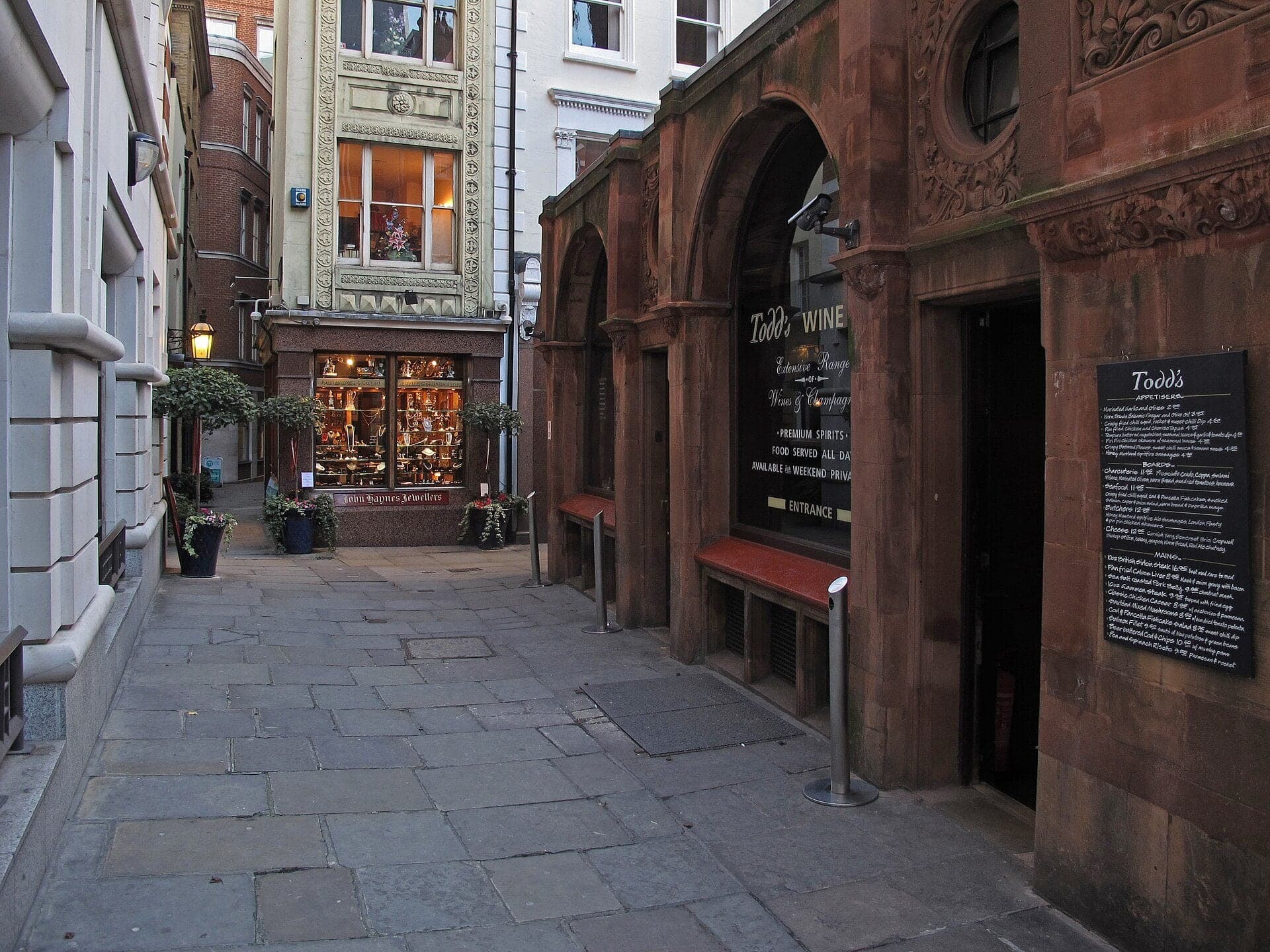
St Michael's Alley: The Coffee House Plaque
A narrow alley with a coffee plaque. The plaque dates it to 1652; the Victorian Jamaica Wine House stands at its end, linked to St Michael's church by a block dated 1868.
- 8
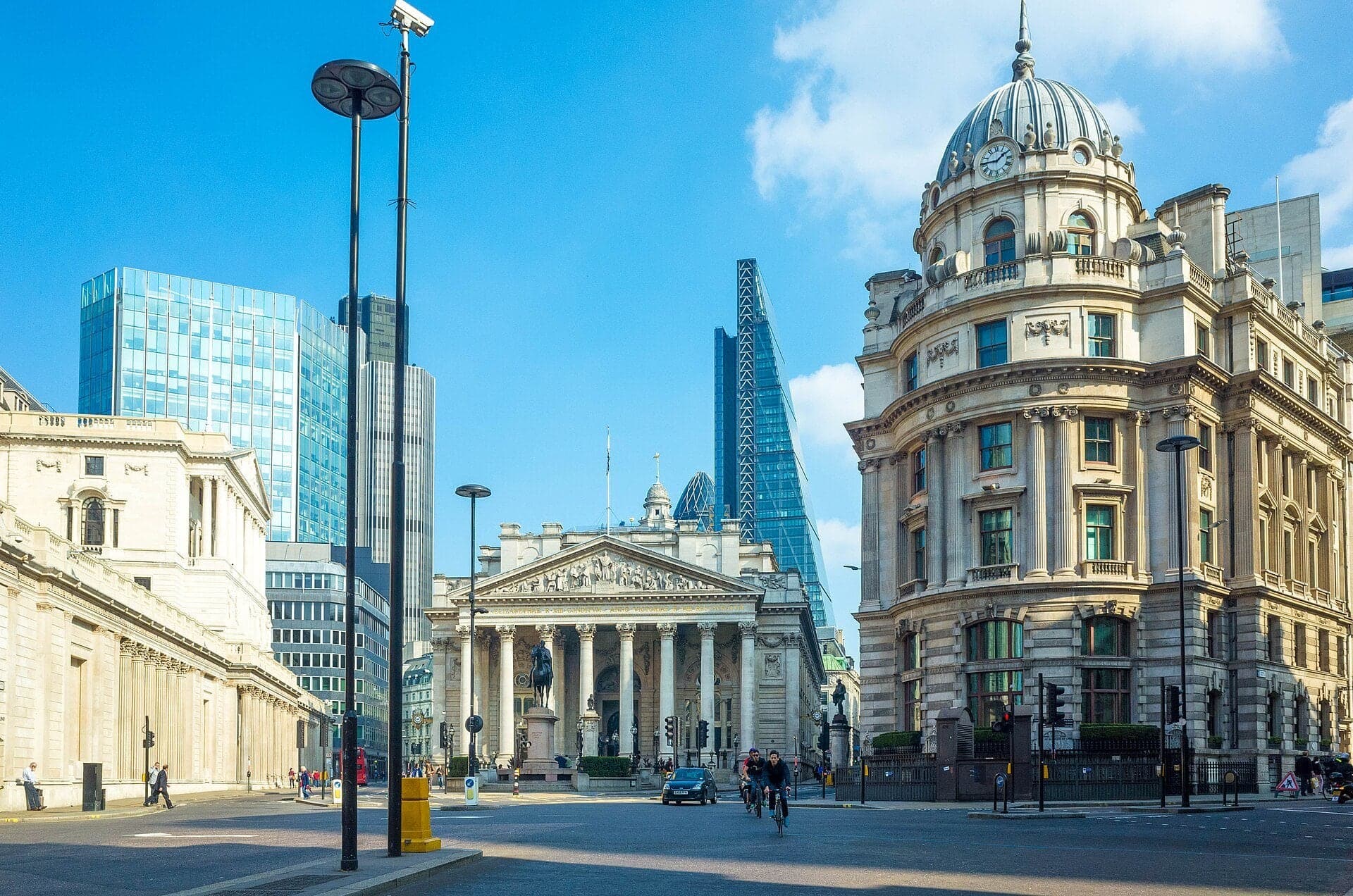
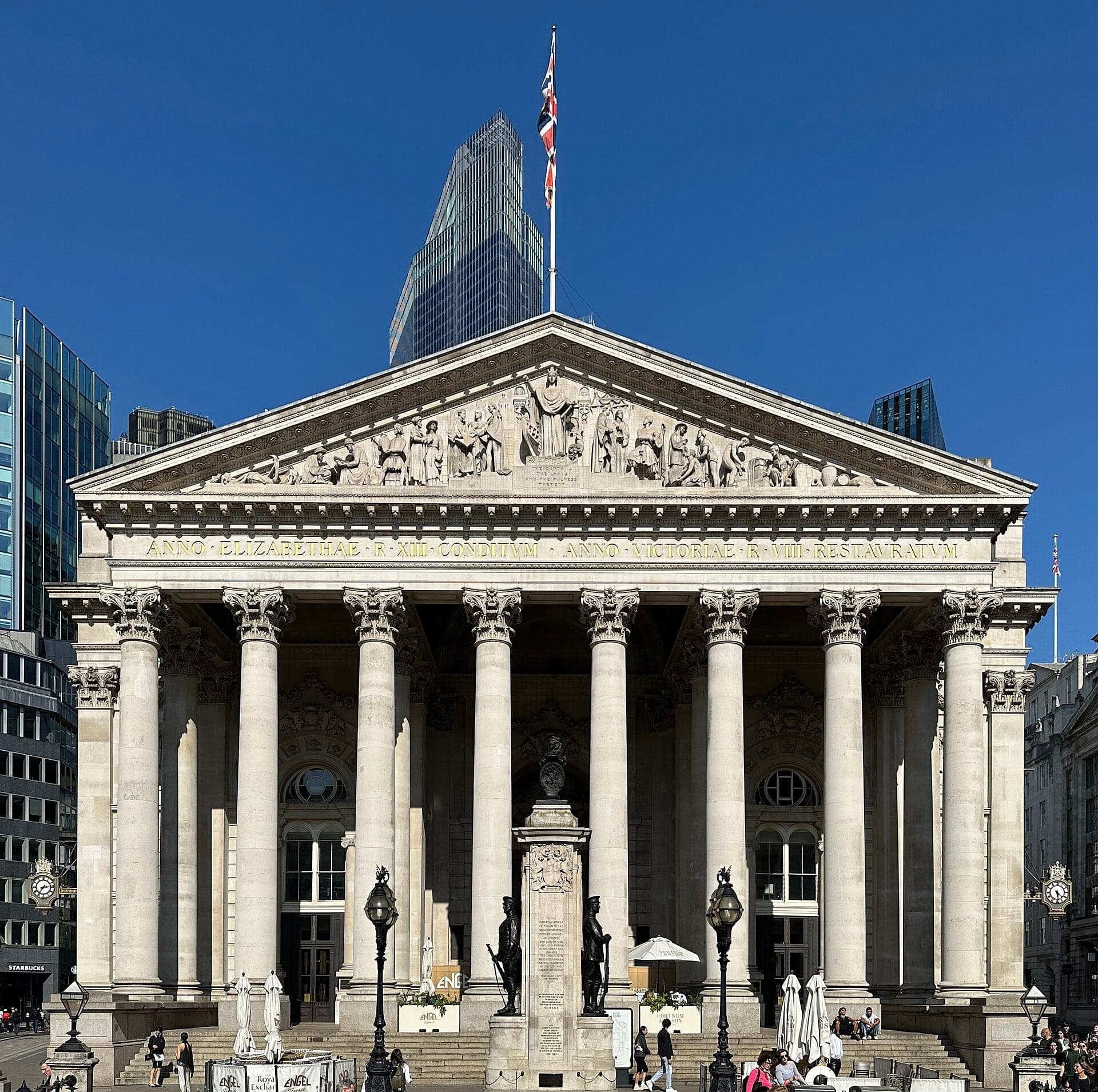
Bank Junction: Three Stone Faces of Money
Three stone buildings of money. The Royal Exchange of 1844, the Bank of England behind its thick old screen wall and the Mansion House all face this junction in Portland stone.
- 9
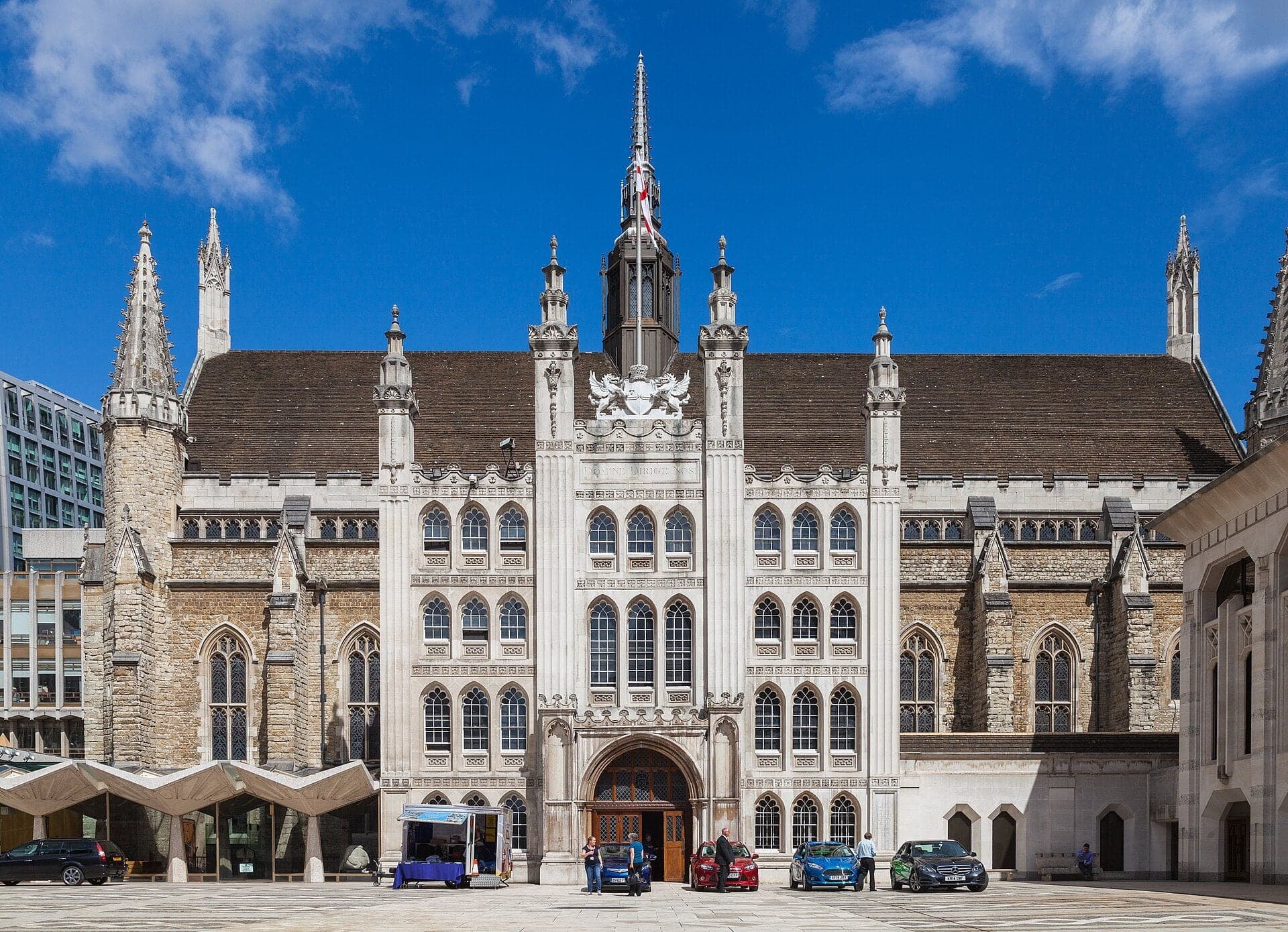
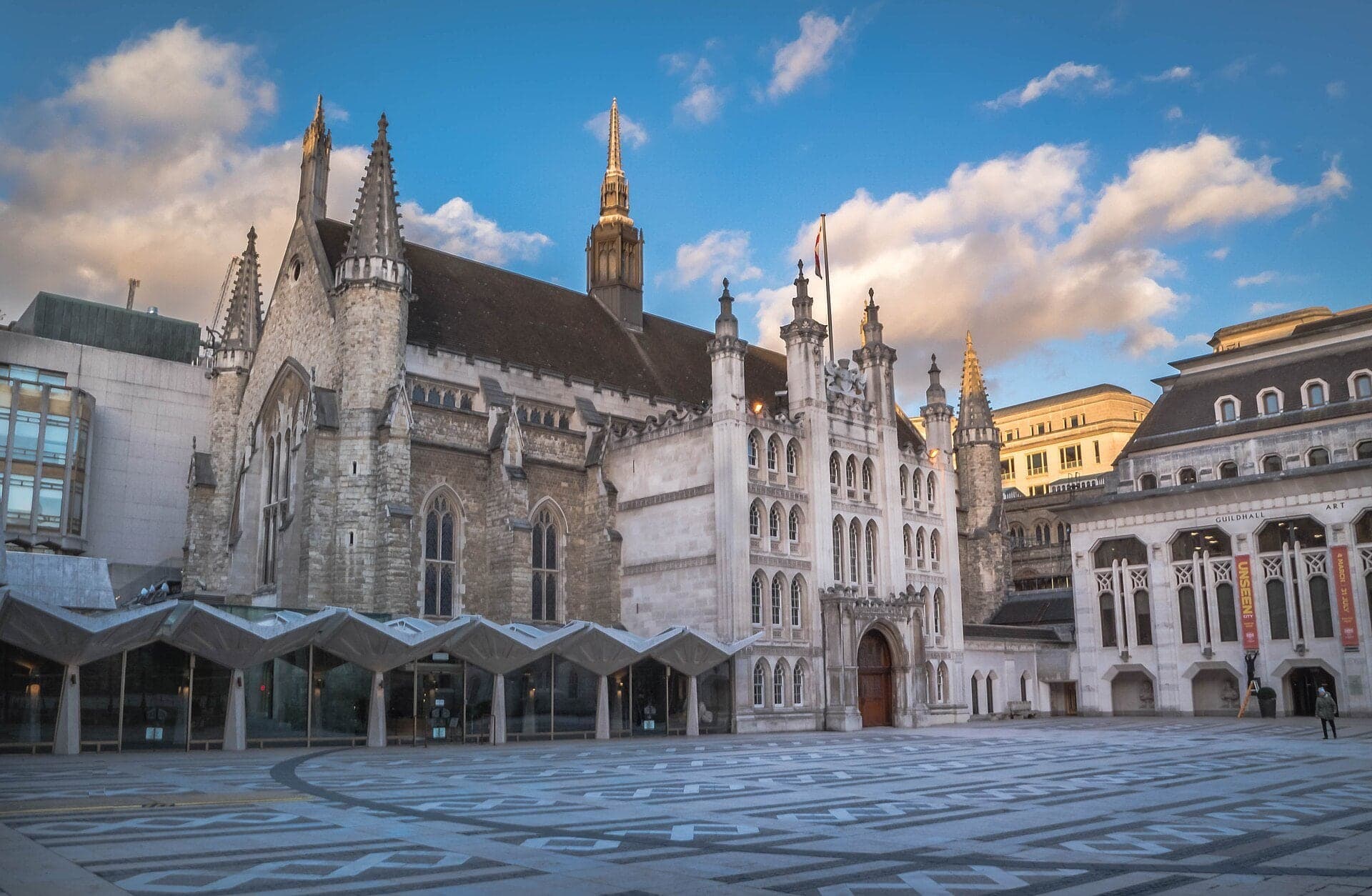
Guildhall Yard: A Roman Arena in the Paving
A Roman arena traced in paving. The Guildhall, begun in 1411 and still the City's town hall, lines up with the buried arena, found only in 1988.
- 10
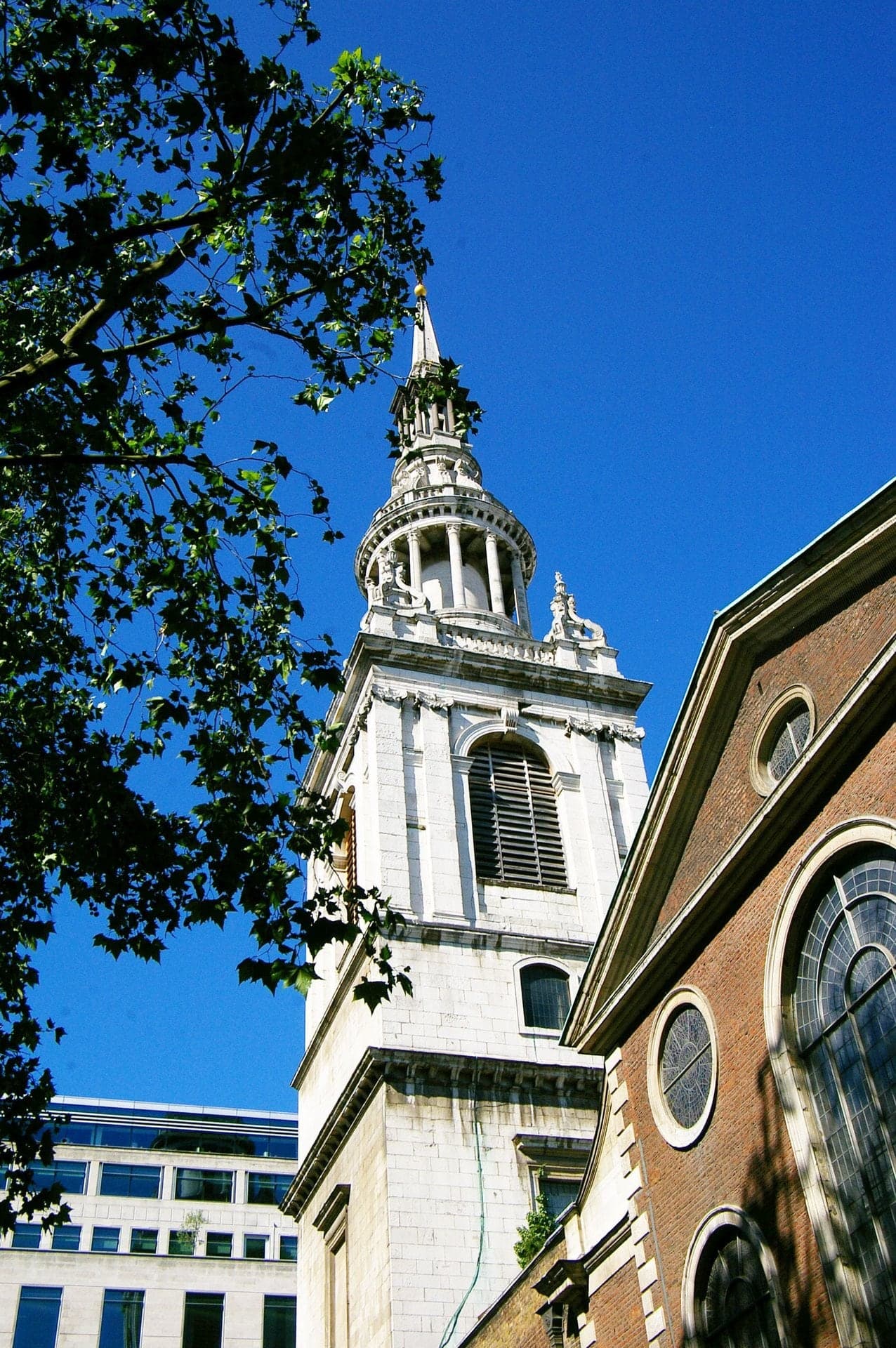
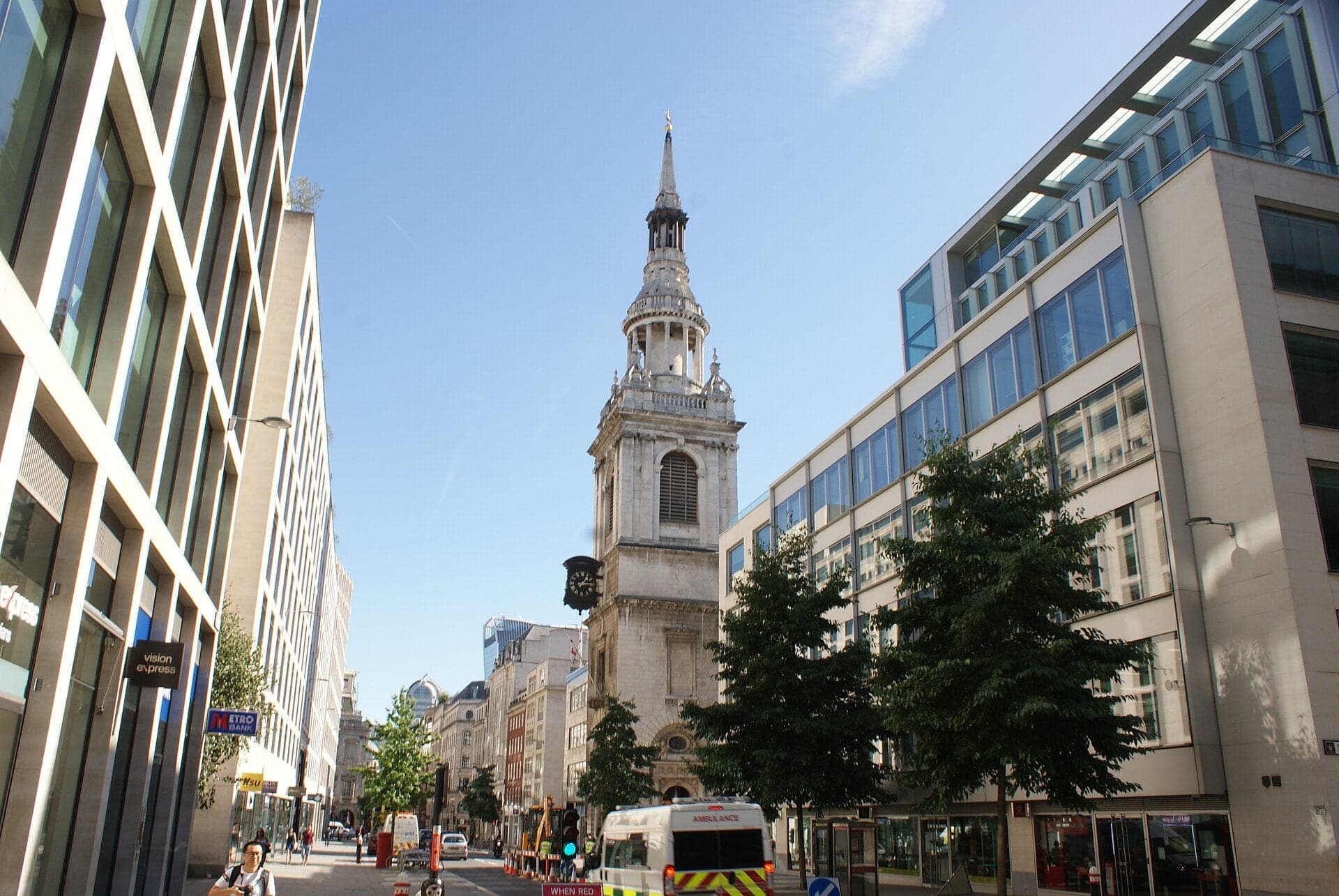
St Mary-le-Bow: Wren's Steeple over Cheapside
Wren's tall steeple over Cheapside, the medieval City's market street. St Mary-le-Bow was rebuilt from 1670 over a twelfth-century crypt, and its bells give London's Cockneys their traditional test.
- 11
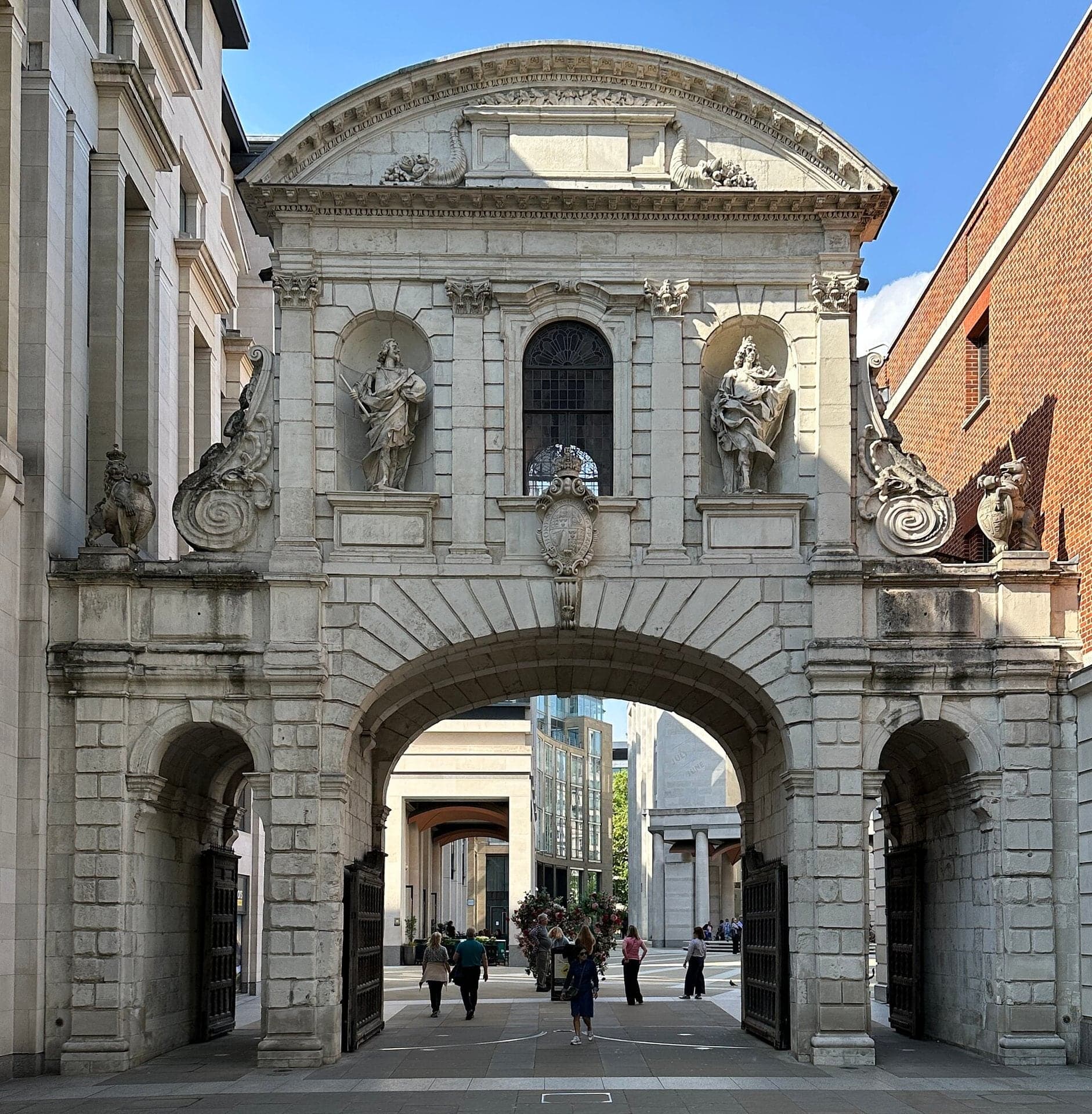
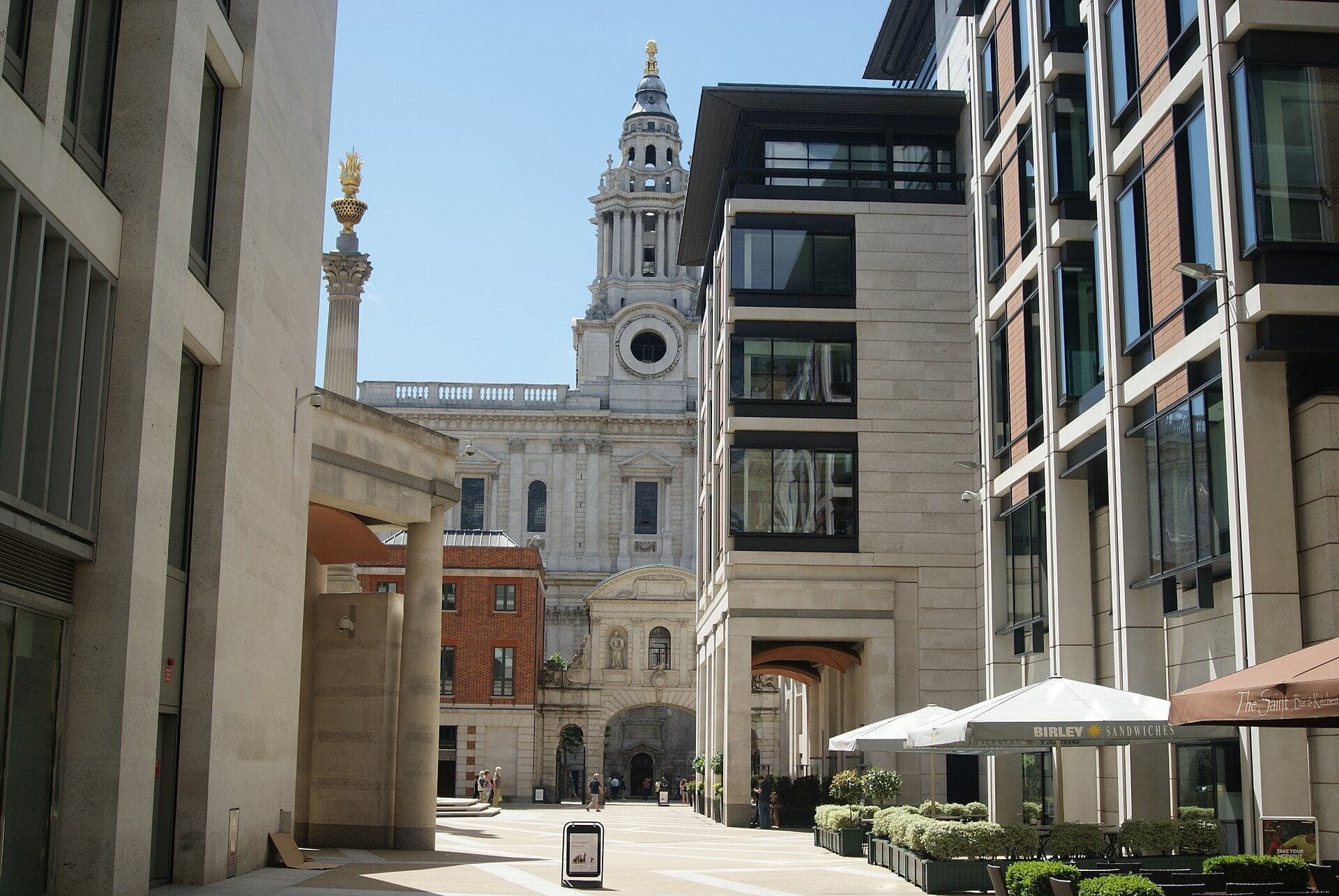
Temple Bar: The Gate That Moved
The old west gate rebuilt in 2004, rebuilt here in 2004. Built in 1670 to 1672 at Fleet Street, it spent over a century in a Hertfordshire park before returning beside St Paul's.
- 12
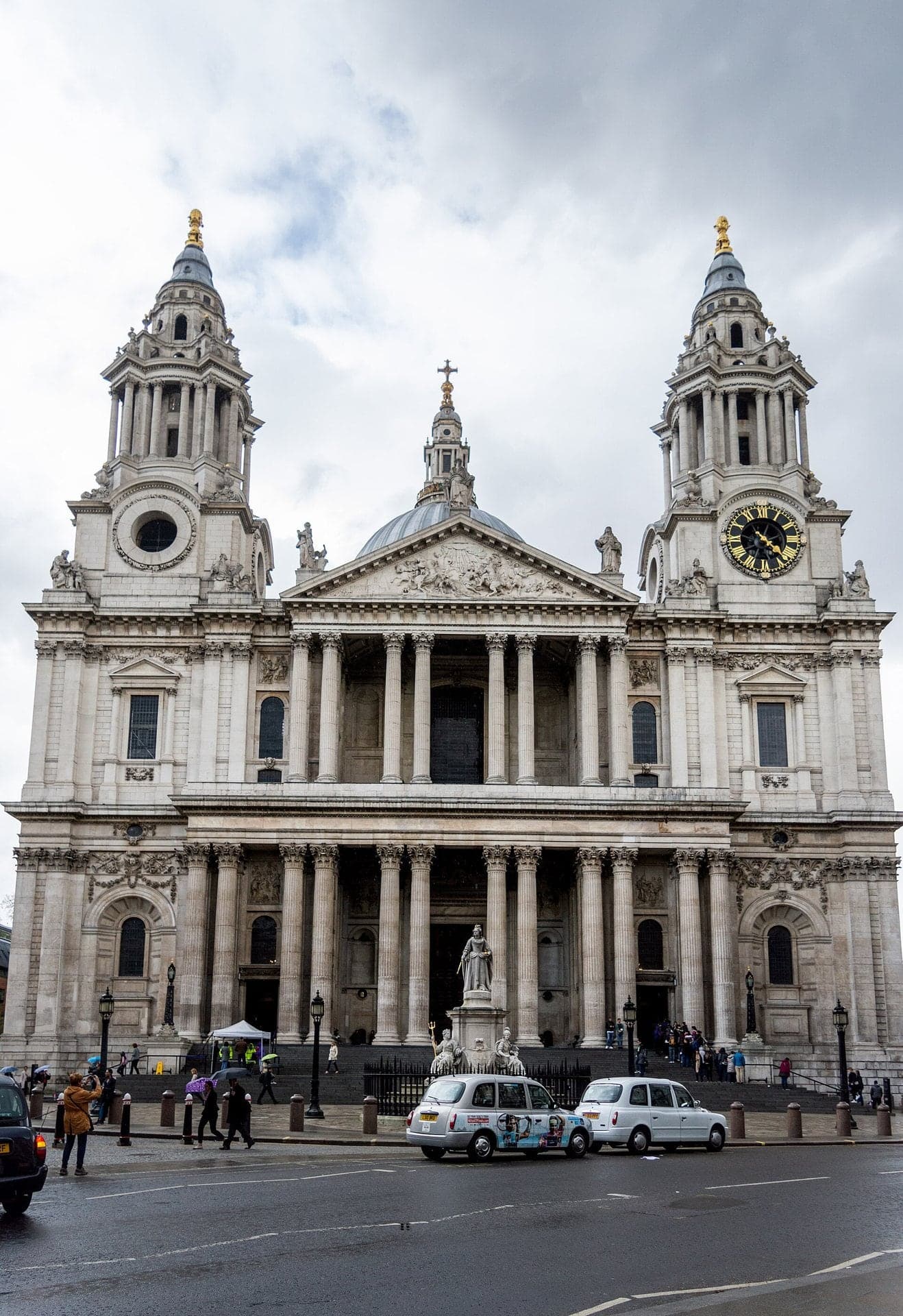
St Paul's Cathedral: The Dome the City Keeps in View
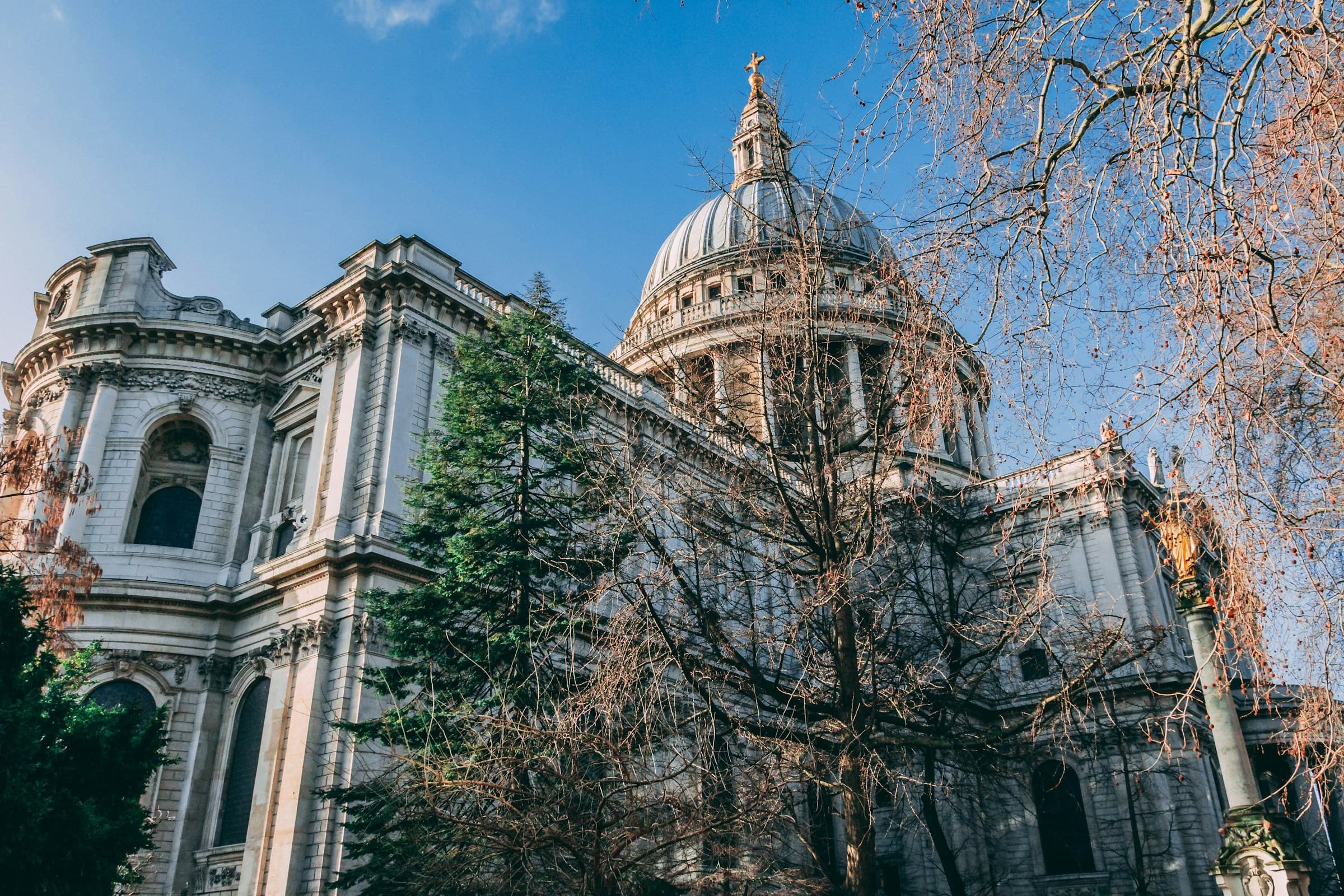
Wren's cathedral and its dome. St Paul's replaced a Gothic cathedral with a tall spire, begun in 1675 and declared complete in 1711, and its sightlines still shape the City's towers.
Details
Best Time to Visit
A weekday, Monday to Friday, starting between about 9.30am and 1pm. The City is a working district: on weekdays All Hallows (from 8am), the Guildhall Art Gallery and the Bank of England Museum are open, and St Paul's opens for sightseeing Monday to Saturday from about 8.30am with last entry usually at 4pm. Leadenhall Market's lanes are crowded from about noon to 2pm. At weekends the streets are quiet and pleasant to walk, but many doors are shut. The Monument's climb closes from 1pm to 2pm for lunch. Allow extra time if you plan to climb the Monument or visit St Paul's.
Pro Tips
- •Getting to the start: Tower Hill Underground (Circle and District lines) is beside stop 1; Tower Gateway DLR and Fenchurch Street rail are a few minutes away. The walk ends near St Paul's (Central line), with Blackfriars and Mansion House (District and Circle) a little further. Checked 7 October 2026.
- •The Monument (stop 4): open daily 9.30am to 1pm and 2pm to 6pm, last entry 12.30pm and 5.30pm; tickets on the day at the door only; adult £7.00, child (5 to 15) £3.50, under 5s free, concessions £5.30, valid until 31 March 2027. 311 steps, no lift. Checked 7 October 2026.
- •St Paul's Cathedral (stop 12): sightseeing Monday to Saturday, usually 8.30am to last entry 4pm; adult £27, senior and student £24, child £10.50, family £64.50. On Sundays until 25 October 2026 only the Dome Galleries are open for sightseeing. Services are free to attend. Checked 7 October 2026 at stpauls.co.uk.
- •All Hallows by the Tower (stop 2): free, Monday to Friday 8am to 5pm, Saturday and Sunday 10am to 5pm, closed on bank holidays; its undercroft museum holds a Roman pavement. Opening can vary with staff availability. Checked 7 October 2026.
- •Guildhall Art Gallery and the Roman amphitheatre (stop 9): free, booking a general admission ticket is encouraged; free tours Tuesday to Sunday at 12.15pm and 1.15pm. Closed all day Wednesday 21 October, Monday 16 November and Monday 7 December 2026, with shorter hours on Friday 13 and Saturday 14 November. Checked 7 October 2026.
- •Bank of England Museum (stop 8, entrance on Bartholomew Lane): free, Monday to Friday 10am to 5pm, last entry 4.30pm, open until 8pm on the third Thursday of the month; closed weekends and bank holidays, and from 3pm on Friday 27 November 2026. Checked 7 October 2026.
- •The Tower of London (stop 1) is a ticketed Historic Royal Palaces site. Prices and hours change through the year: check hrp.org.uk before you go, and allow at least half a day.
- •St Dunstan in the East's garden (stop 3) is free and is listed as open from 8am to 7pm, or dusk if earlier; closed on 1 January and 25 and 26 December. The stop works from the lane outside the railings. Checked 7 October 2026.
- •Step-free: the route uses a short flight of steps on the forecourt in front of the Royal Exchange (stop 8); a level way round the same forecourt avoids them. The Monument's climb is not suitable for wheelchair users.
Safety & Precautions
- •Gracechurch Street (between stops 5 and 6) is crossed at Corbet Court, where there are no traffic lights; buses use the street, so wait for a clear gap, or walk up to the lights at Cornhill and back.
- •St Dunstan's Hill (stop 3) is a cobbled lane with local traffic and no separate pavement; keep to the side. The stop is a short walk down the lane and back.
- •St Michael's Alley (stop 7) is narrow and unlit, and quiet after dark. Do not take the courtyards beyond the pub: they are private.
- •Leadenhall Market's covered lanes are a public way but very busy at lunchtime, and GPS can drift under the roof. If they are crowded or closed, walk round by Gracechurch Street and Leadenhall Street.
- •The Lord Mayor's Show is held on the second Saturday in November, which in 2026 is Saturday 14 November: expect Bank, Cheapside and the streets around St Paul's to be closed to walkers that day.
- •The City always has building sites. Hoardings and scaffolding along Gresham Street, Lothbury, Cheapside or elsewhere can narrow pavements or hide a view; follow any signed diversions.
- •Paternoster Square (between stops 10 and 12) is privately owned public space and can be closed for events; if it is, follow St Paul's Churchyard round the cathedral to Ludgate Hill.
- •Ludgate Hill (stop 12) has narrow pavements and crowds near the cathedral steps; stand back from the kerb.
- •Do not go into St Paul's or the City churches to sightsee during a service.
Travel advisory: Exercise Increased Caution (Level 2).
Gallery
Related Reading
Go deeper on what you'll see, hear, and walk through.
Overview
A Pub's Age Is a Claim: Three London Pubs and What the Records Say
4 min
Overview
London Travel Guide: How Many Days, Getting Around, When to Go (2026)
5 min
Overview
One Day in London: A Walkable Central Itinerary (2026)
7 min
Overview
Reading London's Layers: How to See a City That Refuses to Erase Itself
8 min
Thematic
Best History Walking Tours in London (2026)
2 min
Thematic
What to Eat in London: A Food Guide (2026)
5 min
Companion
The Square Mile: Why the City of London Kept Its Own Rules
6 min
Deep dive
St Paul's Cathedral: Rebuilt After the Fire, Standing After the Blitz
5 min
Read the walk
The full story of City of London: The Plan That Outlived the Fire, in words. Prefer to listen? Play it narrated, from home or on location.
Introduction
London, the capital of England and the United Kingdom, has an older city folded inside it. The City of London, the Square Mile, stands where Roman Londinium stood, and it still keeps its own local government. Its oldest document is a charter of ten sixty-seven from William the Conqueror, promising Londoners their old laws and customs. About eight thousand six hundred people lived here at the last census; more than six hundred thousand come here to work.
The City has burned, been bombed and been rebuilt again and again: in timber, then in brick and stone, then in steel and glass. What it kept through all of that is its plan. The line of a Roman wall, Roman roads, a Roman arena, medieval market lanes: they are still there in the streets, and the newest towers still bend around one old dome.
Three people come back along the way. Samuel Pepys, a naval clerk whose diary recorded the Great Fire of sixteen sixty-six. Christopher Wren, who rebuilt the City's churches and its cathedral. And Robert Hooke, who designed the Monument to the fire with Wren.
The walk is twelve stops over about two point eight kilometres, a mile and three quarters, and takes about an hour and forty minutes. It runs from the Roman wall at Tower Hill, past the Monument, Leadenhall Market and Bank, to the Guildhall, Cheapside and Saint Paul's Cathedral.
1. Tower Hill: The Roman Wall at the City's Edge
Welcome to Tower Hill, and to the edge of the City of London. Across the wide road, behind railings and trees, rise the outer walls and towers of the Tower of London. It is ticketed, and well worth a visit of its own on another day.
This walk begins with an older wall. Past the station building, beside a statue of a Roman emperor, stands a tall stretch of stone wall. It is free and open in daylight, so walk over to it now, past the station, and come back to this spot before you set off. Look at its face: grey, roughly squared stone, and every few courses a flat band of thin red tiles. The stone is Kentish ragstone, quarried near Maidstone, about seventy miles away. English Heritage, which looks after this stretch, estimates that the wall took thirty-five thousand cubic metres of it.
The Romans wrapped Londinium in this wall from about the year two hundred, some eighteen hundred years ago. It ran for roughly two and a half miles. Here it rises nearly eleven metres, but only the lower four metres, the part with the red tile bands, are Roman. The upper stones are medieval. For fifteen hundred years London was a walled city, and this is one of the most substantial pieces of that wall still standing.
Keep the pattern in mind: grey stone, red tile, a line drawn round a town. The wall is mostly gone, but the City still lives inside its outline, and some of its streets still run where Roman streets ran.
The statue is a copy of a Roman figure believed to be the Emperor Trajan, who ruled about a century before the wall was built.
Follow the route, crossing at the lights, to a church with a red brick tower.
2. All Hallows by the Tower: Pepys in the Steeple
Walk on along Byward Street and stop across the road from the church with the red brick tower. This is All Hallows by the Tower. The church calls itself the oldest in the City, founded by the Abbey of Barking in six seventy-five, and Historic England dates its oldest surviving walls to the late seventh or eighth century, built of reused Roman material. It is free to go in, and closed on bank holidays. Below it is a small museum with a Roman pavement found in nineteen twenty-six.
Look at the tower. Plain red brick, a wooden cornice, and a copper-covered steeple rising from a round stone balustrade. The brick tower went up in sixteen fifty-eight and fifty-nine. The steeple on top is newer: bombs in the Second World War left only the tower and the walls, and the church was rebuilt and rededicated in nineteen fifty-seven.
Samuel Pepys lived close by. In his diary this is the church at the bottom of our lane. On Sunday the second of September, sixteen sixty-six, a fire broke out in a bakehouse on Pudding Lane. By the Wednesday, the fifth, it had reached this church. It burned the dial and part of the porch, and was stopped here, by the blowing up of houses and the help of workmen sent up from the King's yards.
That morning Pepys climbed to the top of this brick tower. He wrote that he saw "the saddest sight of desolation that I ever saw": fires everywhere, oil cellars and brimstone burning. He grew afraid to stay long, and came down again as fast as he could.
Remember the brick. After the fire, brick and stone were about to become the law.
Follow the route, crossing at the lights, to a ruined church in a garden.
3. St Dunstan in the East: A Church Become a Garden
Walk on down the cobbled lane, Saint Dunstan's Hill, and stop by the garden railings. This is Saint Dunstan in the East, a church that became a garden. The City says a church stood here by about eleven hundred. The Great Fire badly damaged it in sixteen sixty-six, and Christopher Wren, whose work you will follow all the way to Saint Paul's, repaired it and gave it a new tower, around seventeen hundred.
Look up at that tower. It is Portland stone, the pale grey-white limestone you will see again on the Monument, on Wren's churches and on the cathedral. Its style is Gothic, with buttresses rising to corner turrets, and at the very top the stone spire stands on open arches.
Now the walls around the garden, with their empty pointed windows. They are not Wren's. The body of the church beside his tower was rebuilt in Gothic style from eighteen seventeen, by a later architect. Then in nineteen forty-one the Blitz left only those walls standing. Wren's tower and steeple came through and were restored after the war, and around nineteen seventy the City turned the roofless shell into a public garden.
So one small corner holds a medieval church, the fire of sixteen sixty-six, Wren's stone, a nineteenth-century rebuilding and the Blitz, each leaving its layer. The garden is free; if the gates are open, step in. It usually closes in the early evening.
Then walk back up the lane to the main road, and follow the route to the Monument.
4. The Monument: A Column That Measures the Fire
Walk on to the top of Fish Street Hill, where a tall stone column comes into view down the slope, and stop there. That is the Monument to the Great Fire. Its climb is ticketed, and worth it: three hundred and eleven spiral steps to a platform about forty-nine metres up. The details are on this stop's card.
After the fire, Parliament ordered a column of brass or stone, as near as conveniently could be to the place where the fire began. Robert Hooke and Christopher Wren designed it together: a fluted column of Portland stone with a gilded top, finished in sixteen seventy-seven. By the Monument's own measurement it is a measuring stick, two hundred and two feet tall, sixty-one metres, and two hundred and two feet from where the fire started. That was the King's baker's house in Pudding Lane, the narrow lane you crossed on Eastcheap a moment ago. One historian, working from a City survey of sixteen seventy-nine, found that the measured distance ends near the back of the baker's plot, which is probably where his oven stood.
The fire broke out early on Sunday the second of September and burned for about four days. On the Wednesday, the morning Pepys climbed the tower of All Hallows, it was at last being stopped. The Monument counts thirteen thousand two hundred houses and eighty-seven churches lost.
Then came a new law: every outside wall in brick or stone, and named streets widened. Even so, the City mostly kept its old plan. This hill is part of it. The City's own appraisal says the Roman forum sat on a road network from the first London Bridge, aligned on Fish Street Hill and Gracechurch Street.
Hooke also meant the column to double as a giant telescope, with a small laboratory beneath. Wind and traffic shook the column too much.
Follow the route, crossing at the lights, up Gracechurch Street.
5. Leadenhall Market: Victorian Iron on a Roman Forum
Walk on up Gracechurch Street and stop across from a front of red brick and pale stone, with two tall gabled pavilions and a high arched entrance between them. That arch leads into Leadenhall Market. The front dates from eighteen eighty-one: red brick and Portland stone, shaped…
Full narration for this stop unlocks with the tour.
6. Lloyd's of London: Steel Chosen by the Fire Rules
Walk on out of the market to the pavement of Leadenhall Street, and stop there. Now look up, over the lower buildings, at two towers that could only be modern. One is wrapped in steel: staircases, pipes and glass lifts, all on the outside. That is Lloyd's of London, the…
Full narration for this stop unlocks with the tour.
7. St Michael's Alley: The Coffee House Plaque
Walk on down the narrow alley and stop near the pub at its end. This is Saint Michael's Alley, one of the tight old lanes behind Cornhill. The pub ahead is the Jamaica Wine House, a Victorian building in red brick and red stone, with slim Gothic columns dividing its angled bay…
Full narration for this stop unlocks with the tour.
8. Bank Junction: Three Stone Faces of Money
Walk on past the columns of the Royal Exchange and stop by the bronze statue of the Duke of Wellington on horseback. This is Bank, and three buildings of money stand round one open space, all faced in pale Portland stone. Turn to the temple front with eight columns and a tower.…
Full narration for this stop unlocks with the tour.
9. Guildhall Yard: A Roman Arena in the Paving
Walk on into the open, paved yard and stop by the corner of the church, where the yard opens out toward the long stone front of the Guildhall. The Guildhall is the City's own town hall, and this one was begun in fourteen eleven. In the Great Fire its roof burned, but its stone…
Full narration for this stop unlocks with the tour.
10. St Mary-le-Bow: Wren's Steeple over Cheapside
Walk on along Cheapside and stop where the tall steeple across the street comes into full view. This is Saint Mary-le-Bow. Look up at it: a square tower, a large clock on a bracket over the street, a belfry, and on top a steeple of columns in two tiers, one ring of columns…
Full narration for this stop unlocks with the tour.
11. Temple Bar: The Gate That Moved
Walk on to the white stone gateway, go through its central arch, and stop just beyond it. Then turn round to face it. This is Temple Bar, and it has travelled. Look at it: a wide arch in the middle for carriages, a smaller arch on each side for people on foot, and above them,…
Full narration for this stop unlocks with the tour.
12. St Paul's Cathedral: The Dome the City Keeps in View
Stop on the pavement at the top of Ludgate Hill, before the corner of Ave Maria Lane, and turn round to face the cathedral: its two front towers, and the dome rising behind them. This is Saint Paul's. It is ticketed, and worth it, with stairs up to galleries in the dome.…
Full narration for this stop unlocks with the tour.
- The section of the Roman-era London Wall at Tower Hill in the London Borough of Tower Hamlets. As seen from the northeast. — Ethan Doyle White, CC BY-SA 4.0 · source
- A southwest view of the surviving portion of London Wall at Tower Hill. — Doyle of London, CC BY-SA 4.0 · source
- Church of All Hallows by the Tower — Katie Chan, CC BY-SA 3.0 · source
- The view of All Hallows-by-the-Tower from the southeast. — Ethan Doyle White, CC BY-SA 4.0 · source
- St Dunstan in the East — David, CC BY 2.0 · source
- Monument to the Great Fire of London (monument in London, United Kingdom) — Michael Rowe, CC BY-SA 4.0 · source
- Leadenhall Market. Seen from the Lime Street entrance, the Lloyds Building on the right. — Dun.can, CC BY 2.0 · source
- Leadenhall Market — LFreebury, CC BY-SA 4.0 · source
- Looking up Lloyd's building in City of London in September 2024 — Choinowski, CC BY-SA 4.0 · source
- Jamaica Wine House — Elisa.rolle, CC BY-SA 4.0 · source
- St Michaels Alley. One of the many passages in the area around St St Michaels, Cornhill and George Yard. Ahead is Castle Court. The building — Roger Jones, CC BY-SA 2.0 · source
- Bank Junction, City of London, with a view towards "The Cheesegrater". — chas B, CC BY 2.0 · source
- Royal Exchange at Bank Junction, City of London — APK, CC BY 4.0 · source
- Guildhall, London, England — Diego Delso, CC BY-SA 4.0 · source
- stop-9b-v1.jpg — Emperorzurg123, CC BY-SA 4.0 · source
- Tower, St Mary-le-Bow, Cheapside, City of London — Julian Osley, CC BY-SA 2.0 · source
- View of St. Mary-le-Bow Church from Cheapside #2 — Robert Lamb, CC BY-SA 2.0 · source
- Temple Bar Gate in Paternoster Square, City of London — APK, CC BY 4.0 · source
- View of Temple Bar and part of St Paul's Cathedral from Paternoster Square — Robert Lamb, CC BY-SA 2.0 · source
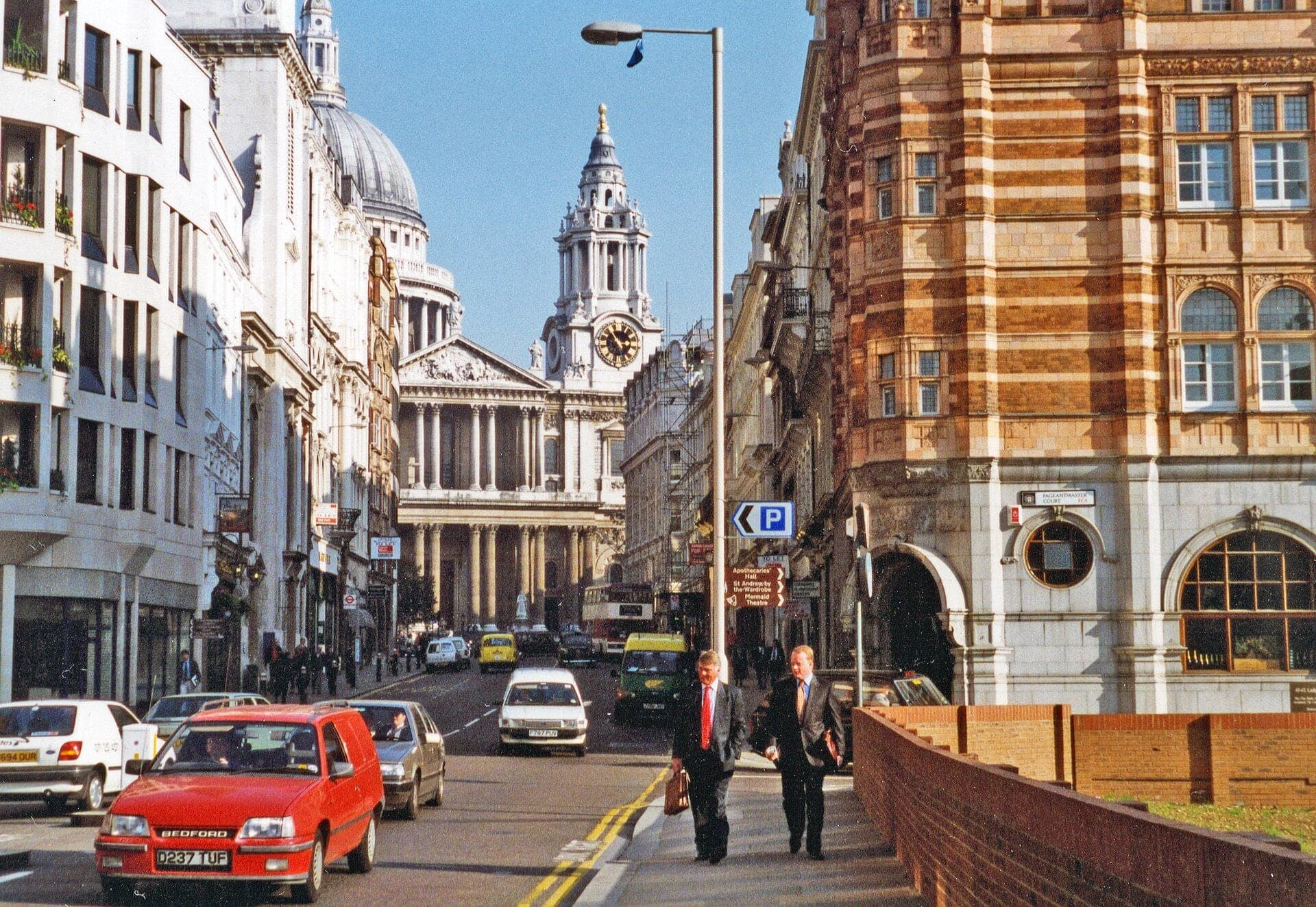
- West facade of St. Paul's Cathedral, seen from from Ludgate Hill, London. — Tristan Surtel, CC BY-SA 4.0 · source
- Approaching St Pauls Cathedral on Ludgate Hill, 1994 — Ben Brooksbank, CC BY-SA 2.0 · source
Images may be cropped or resized. Other photos via Unsplash and Pexels.