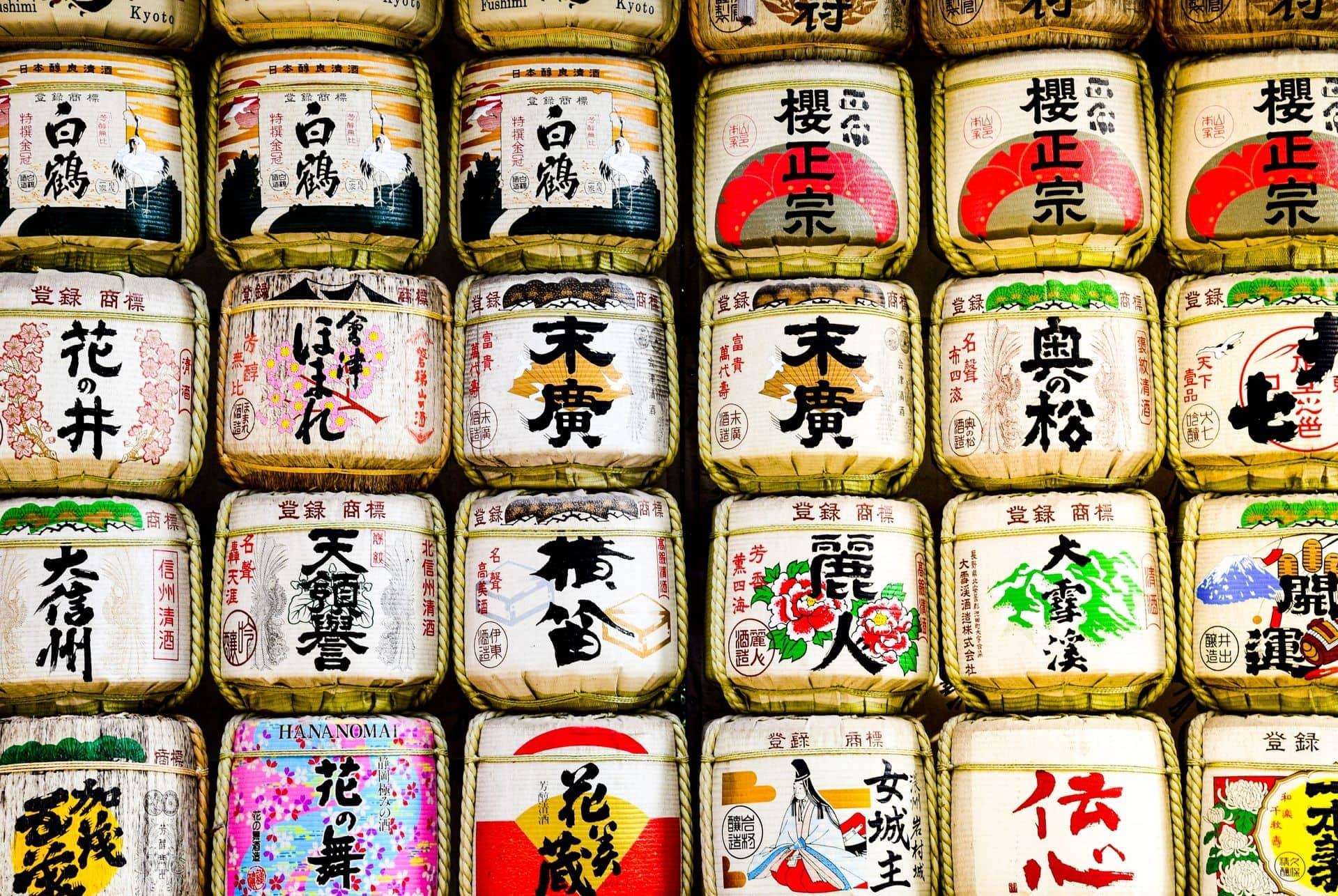
From the Yoyogi Gate through Meiji Jingu's planted forest: the North Pond and lawn, the 1921 Treasure House, the west approach, the main hall, the 1920 South Gate, the great torii, the sake and wine barrels and Kuma Kengo's museum, ending inside the Harajuku entrance.
Start · Yoyogi Gate: A Forest Planted by Hand
DirectionsStops
- 1
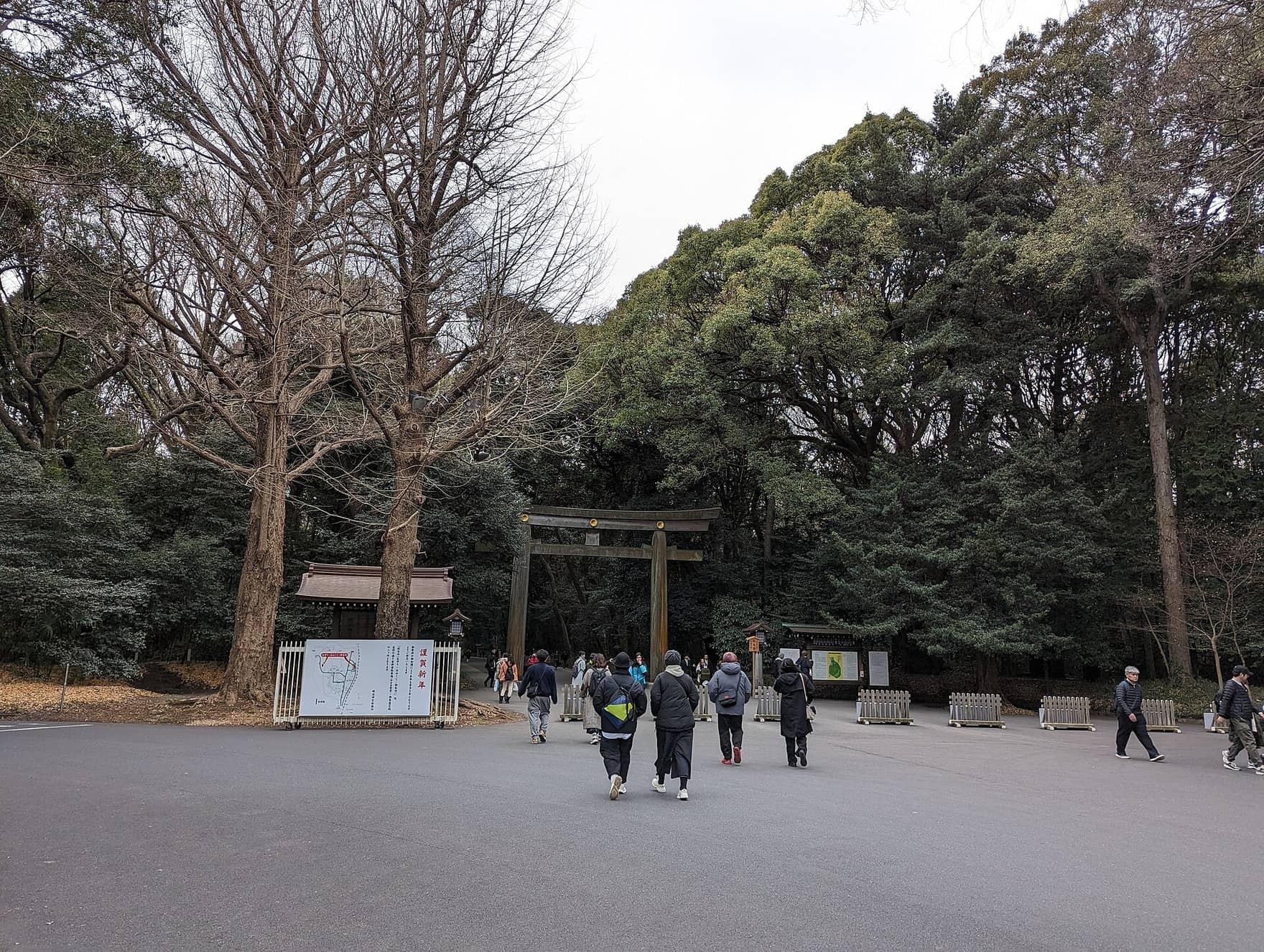
Yoyogi Gate: A Forest Planted by Hand
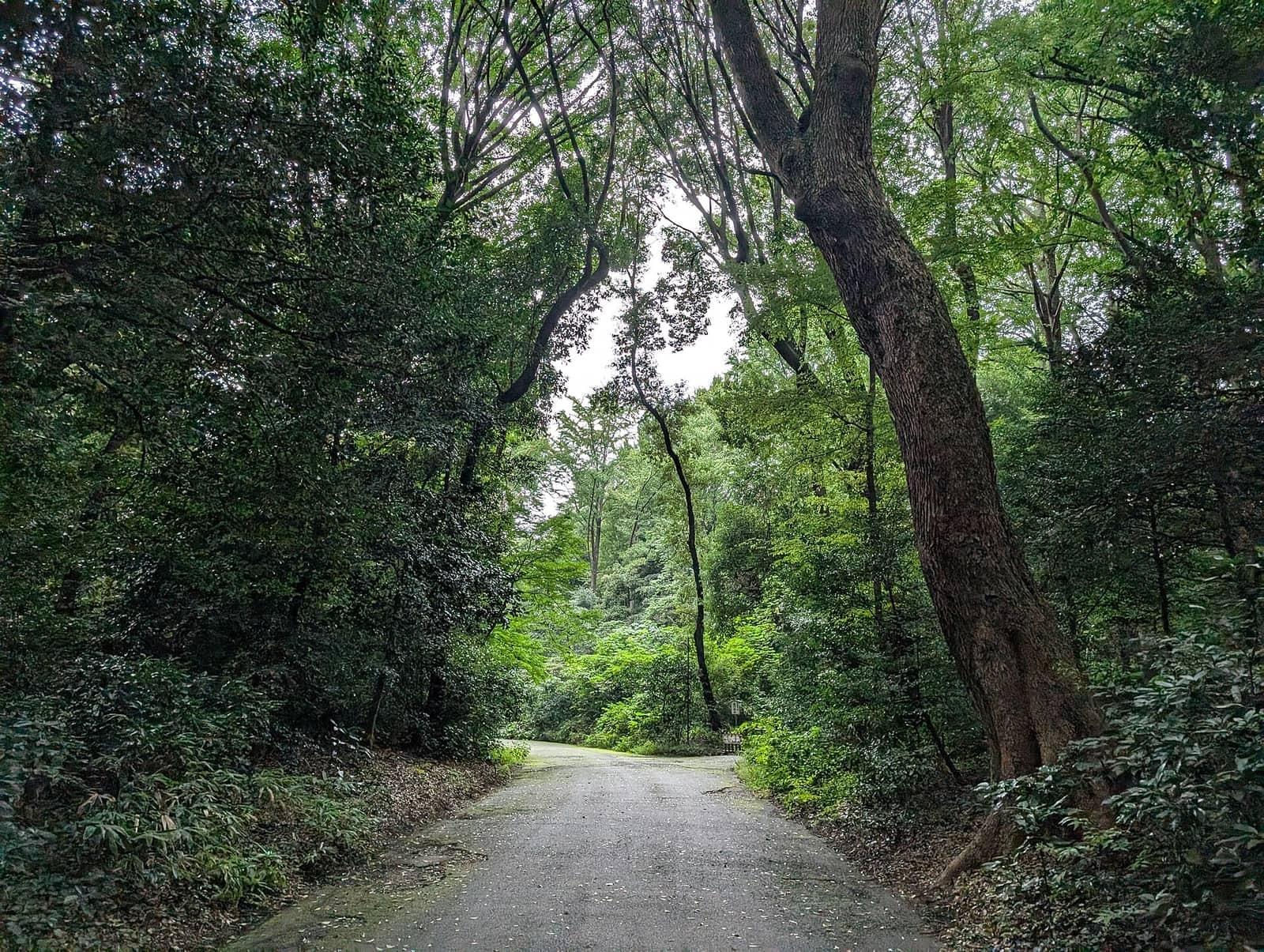
A shrine forest planted by hand. The north entrance of Meiji Jingu, where fields and waste ground were turned into a forest of about 100,000 donated trees between about 1915 and 1920.
- 2
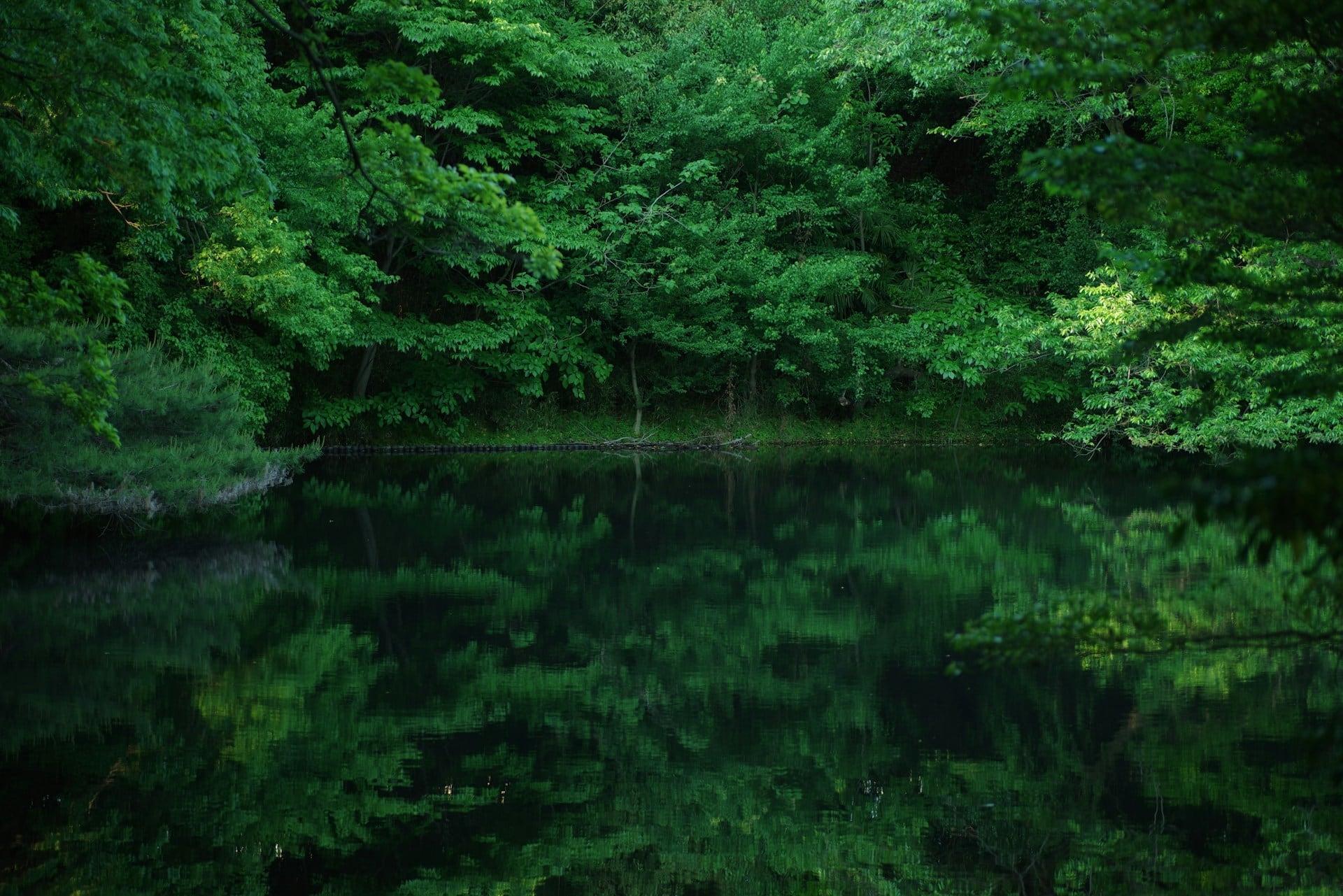
Kita-ike and the Lawn: The Forest Opens
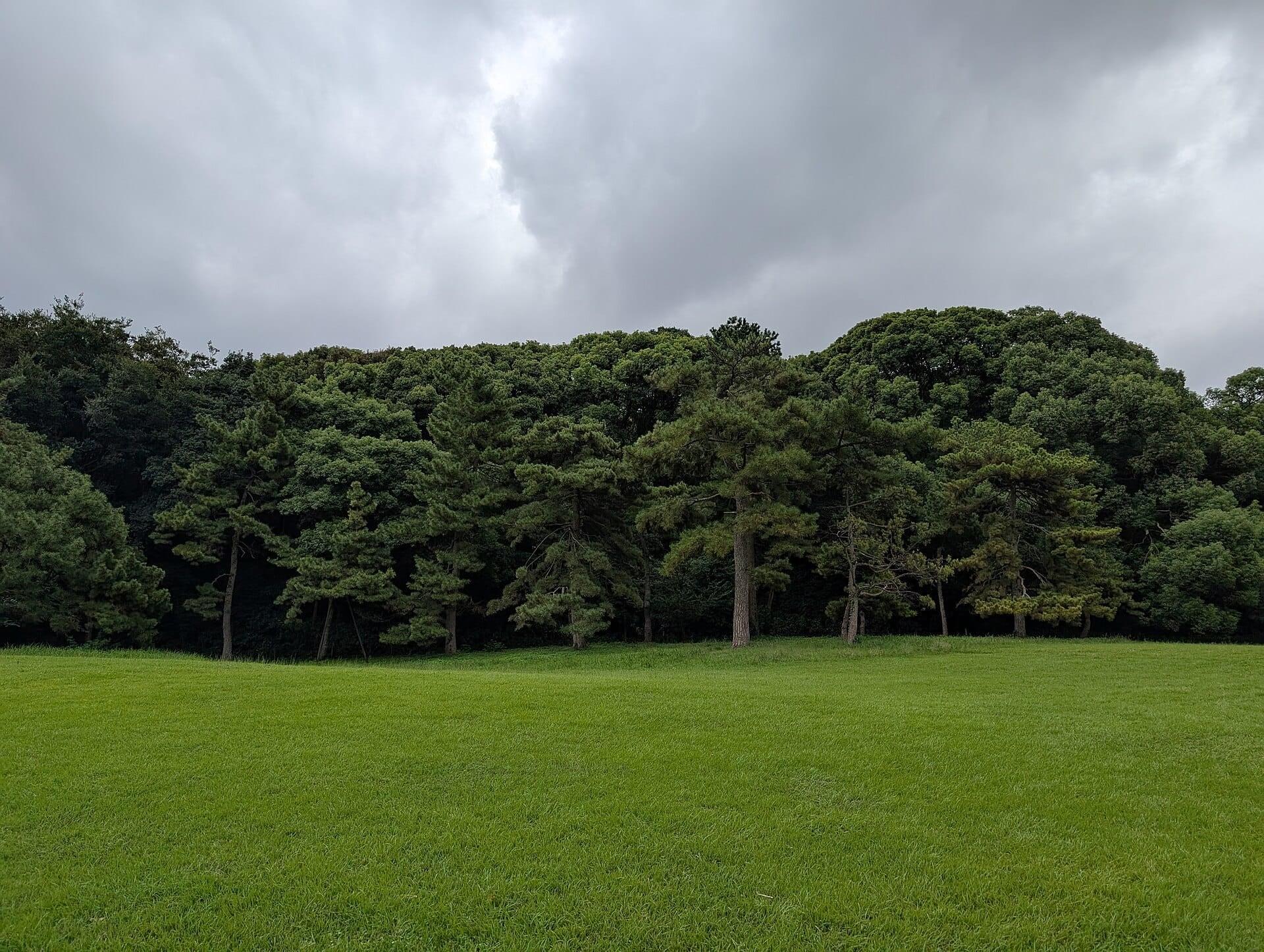
The forest opens onto a lawn. The North Pond and the Shibachi lawn, with Shinjuku's towers over the trees, and the pond where the great torii's log was soaked.
- 3
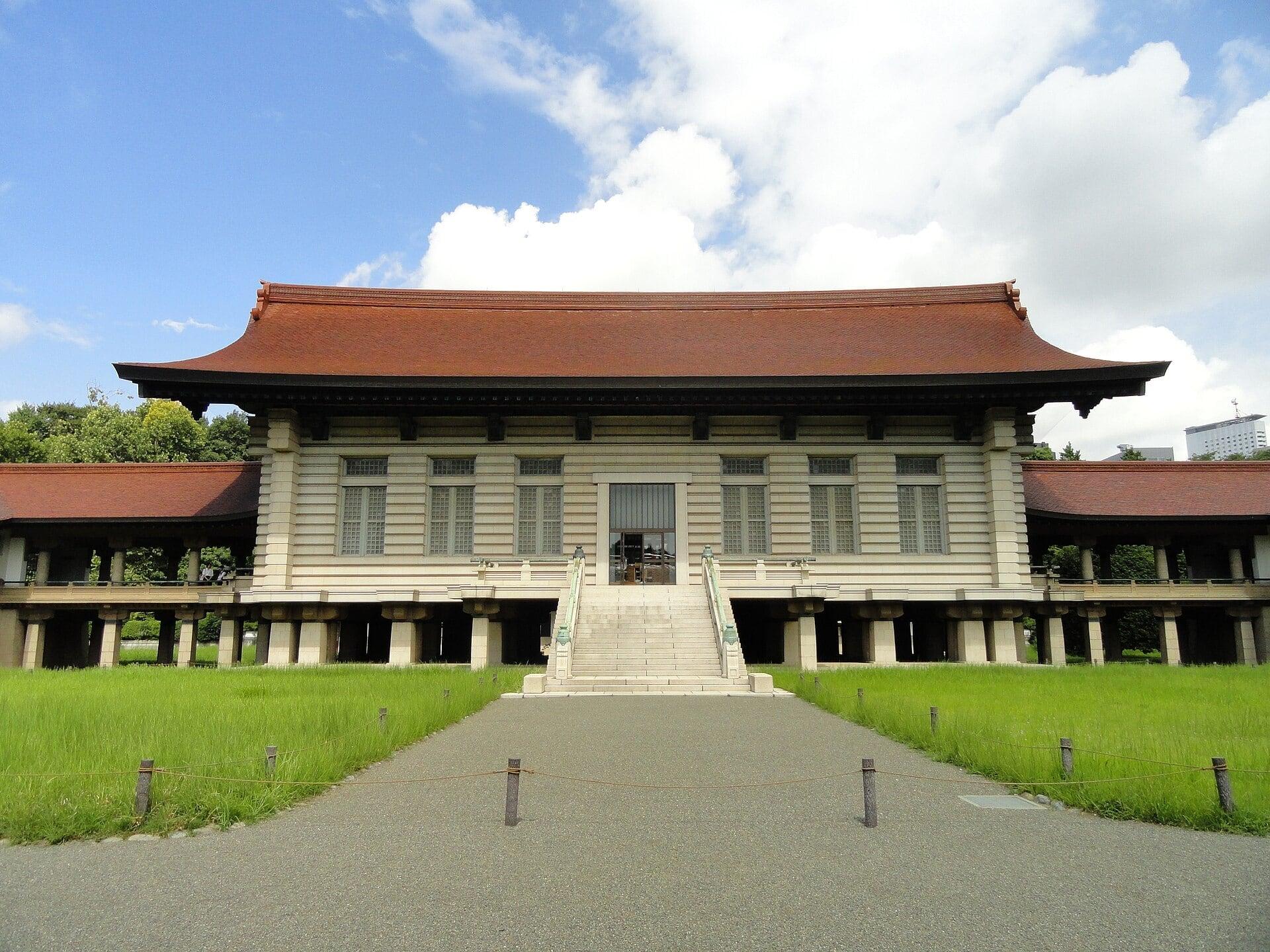
Treasure House: Concrete Dressed as Timber
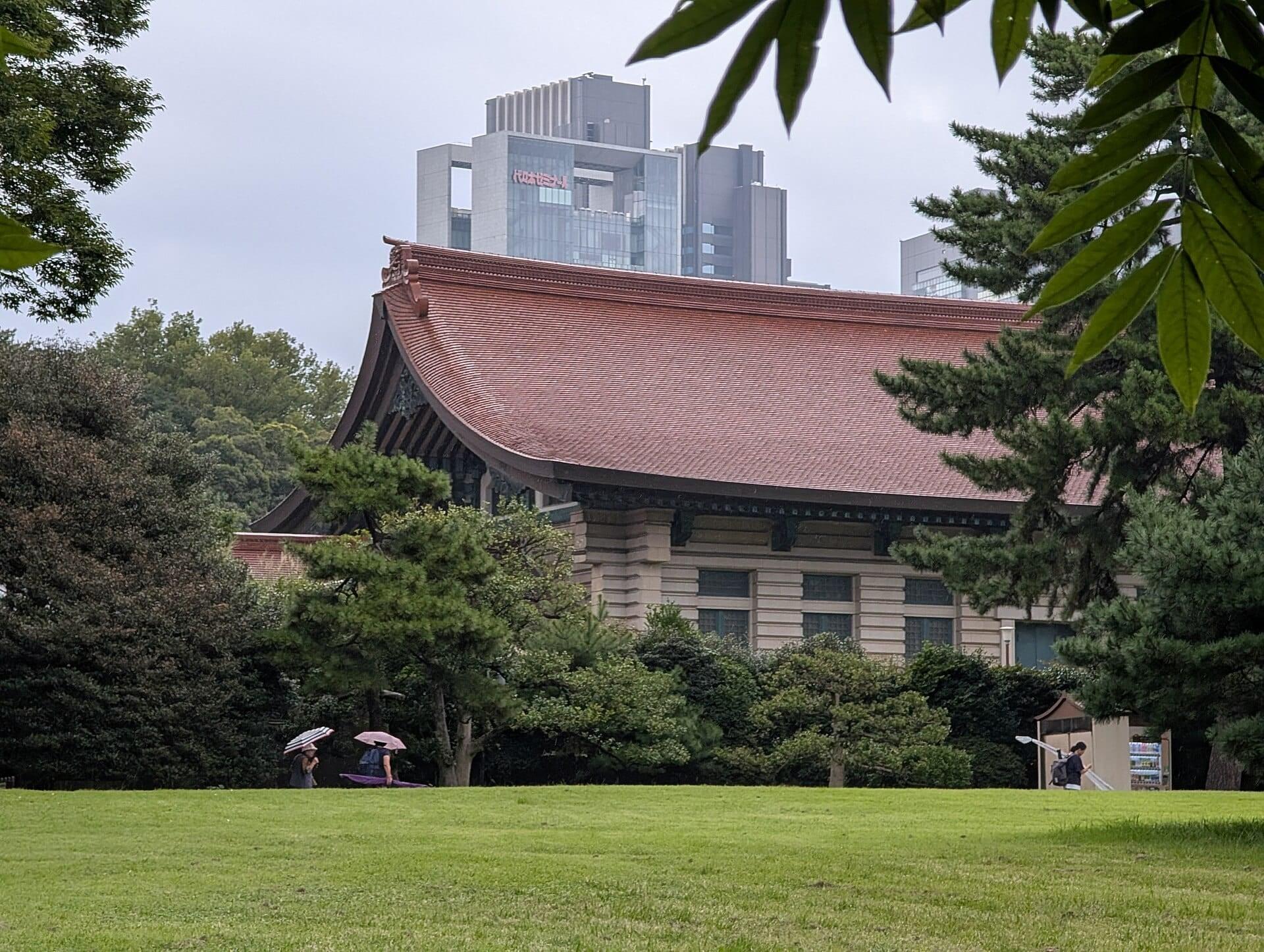
A 1921 storehouse built against fire. The Treasure House, a reinforced-concrete building dressed in the style of an ancient log storehouse, is a national Important Cultural Property.
- 4
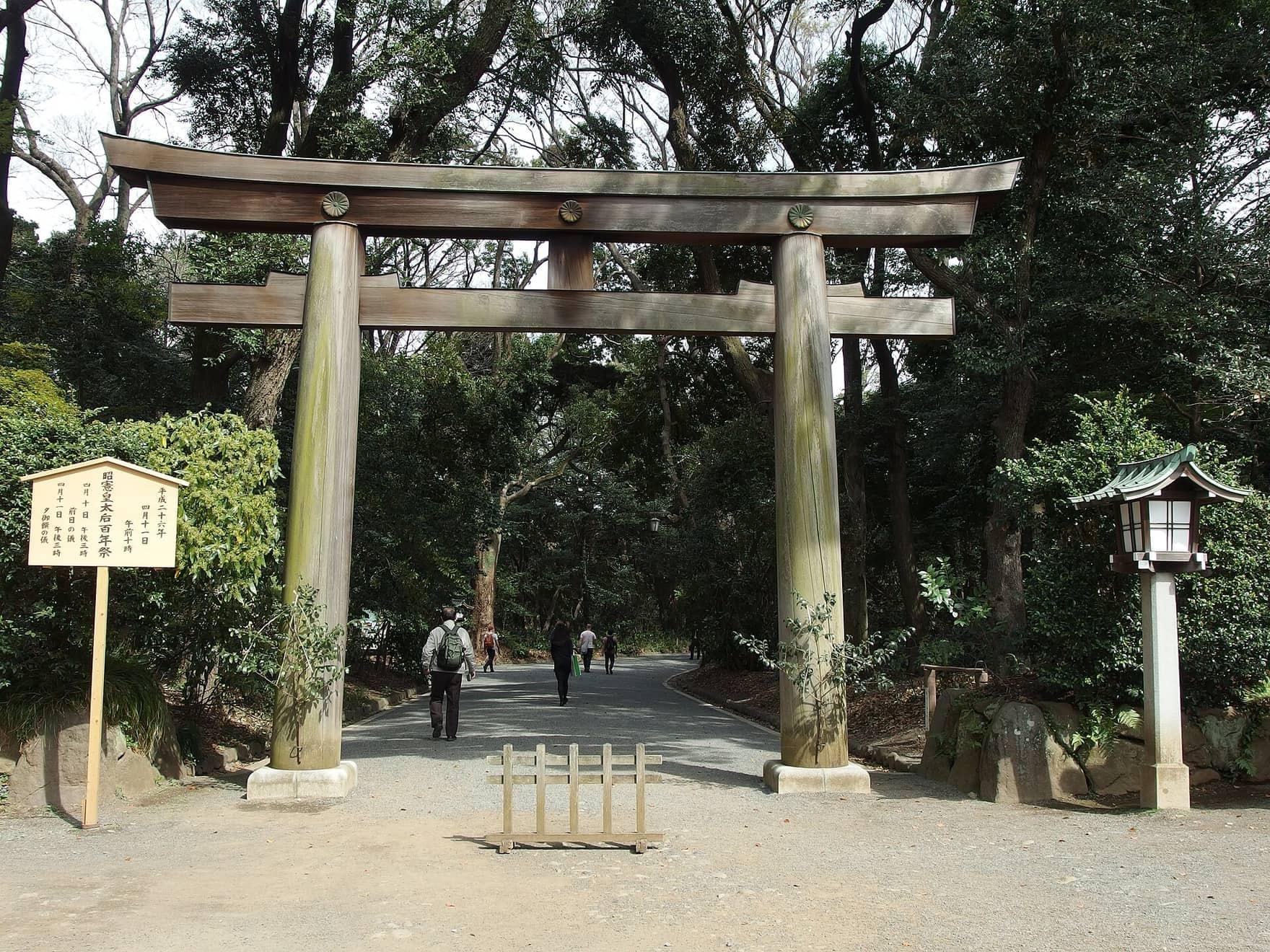
Nishi-sando: Trees for a Smoky City
Trees chosen for a polluted city. On the west approach, the plan of Honda Seiroku's foresters: broadleaf evergreens that could stand Tokyo's pollution, planted to take over in time.
- 5
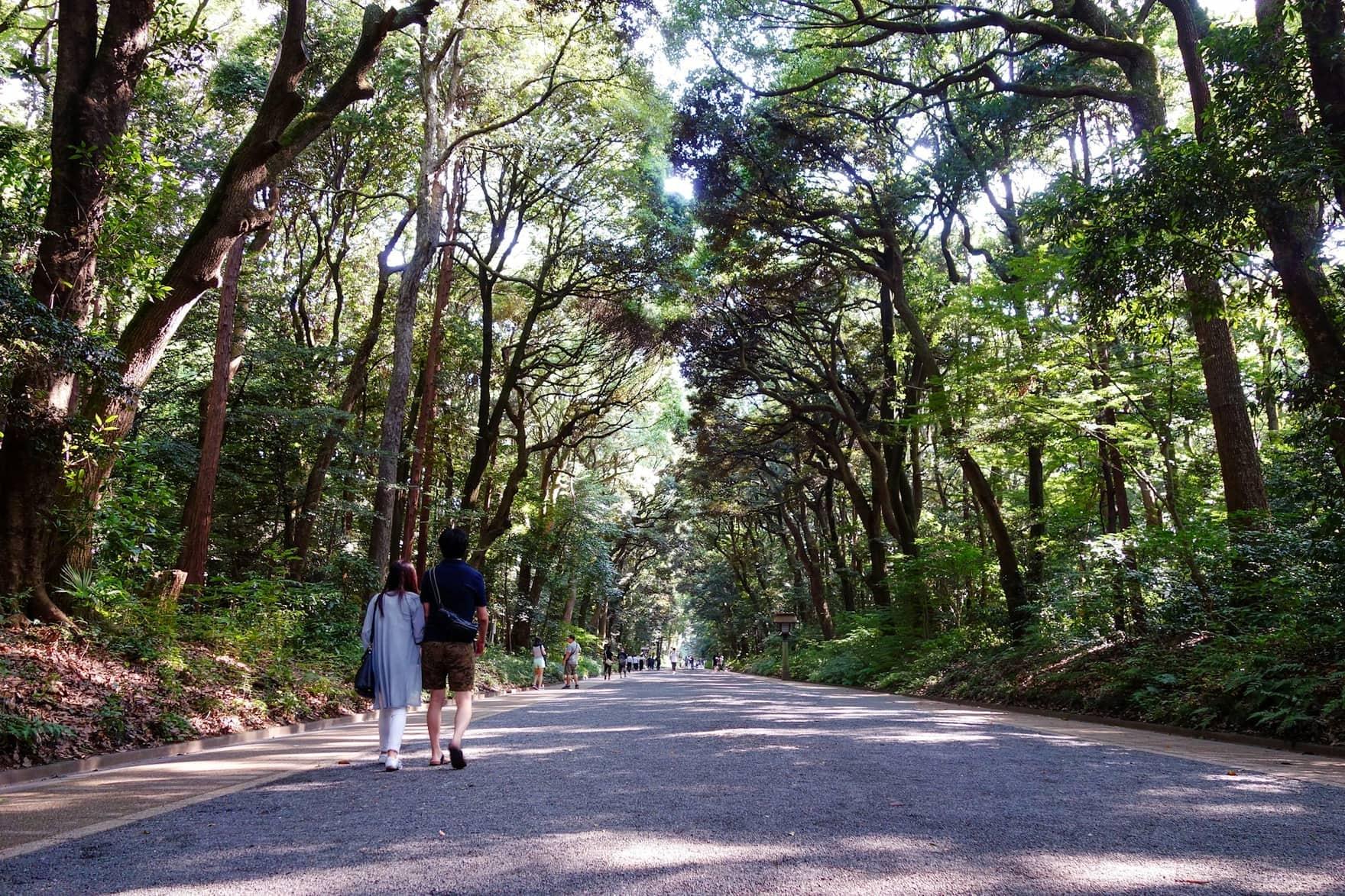
Nishi-sando Forest: A Hundred Years On
The forest has thinned itself out. At the end of the west approach, about 120,000 trees became about 36,000 far larger ones, and the broadleaves may have helped the forest through 1945.
- 6
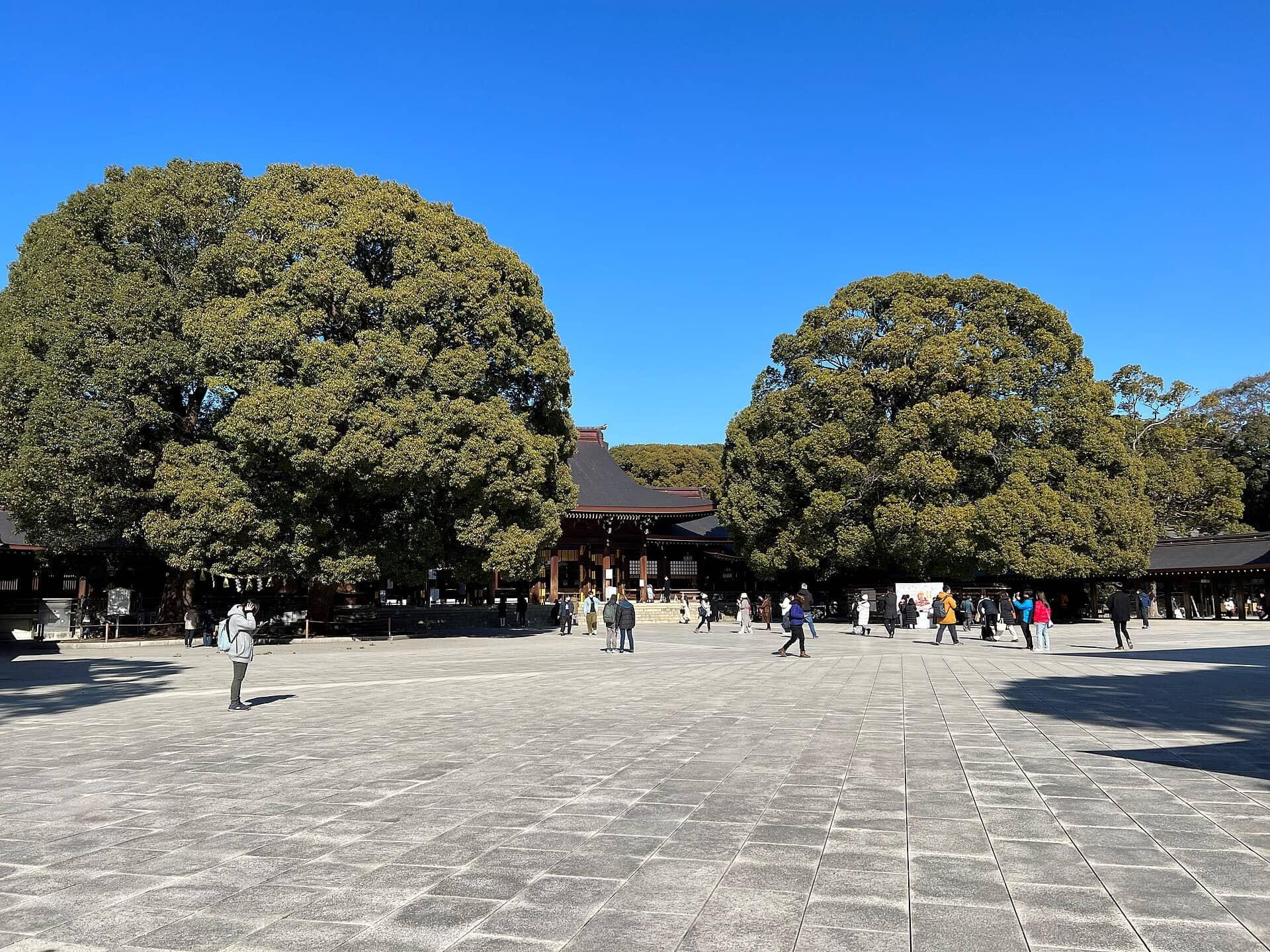
Main Hall Courtyard: Rebuilt in Copper
The main hall was rebuilt in 1958. In the courtyard, two camphors planted in 1920 stand before a cypress hall whose copper roofs replaced the bark roofs lost in 1945.
- 7
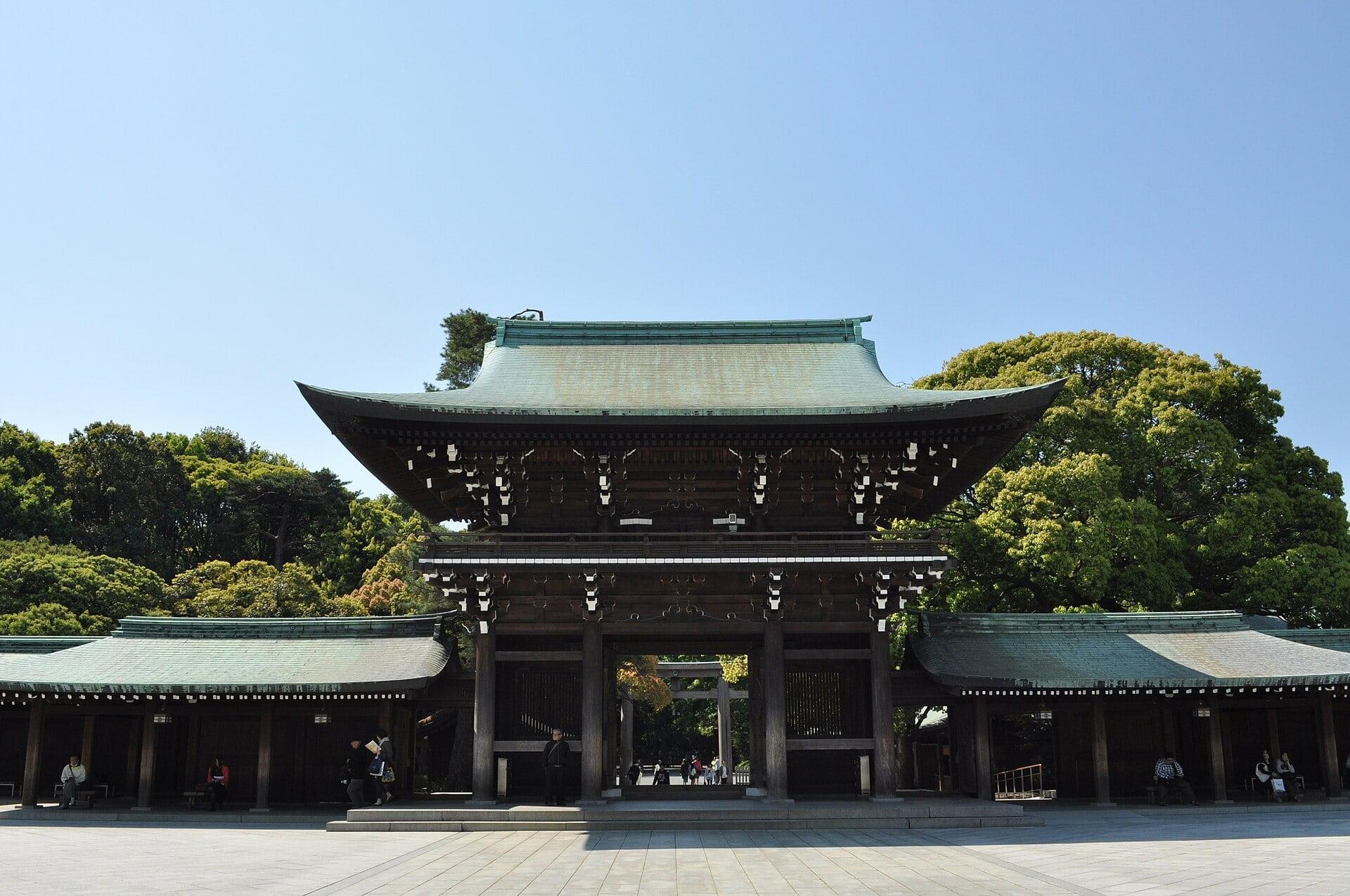
South Gate: The 1920 Survivor
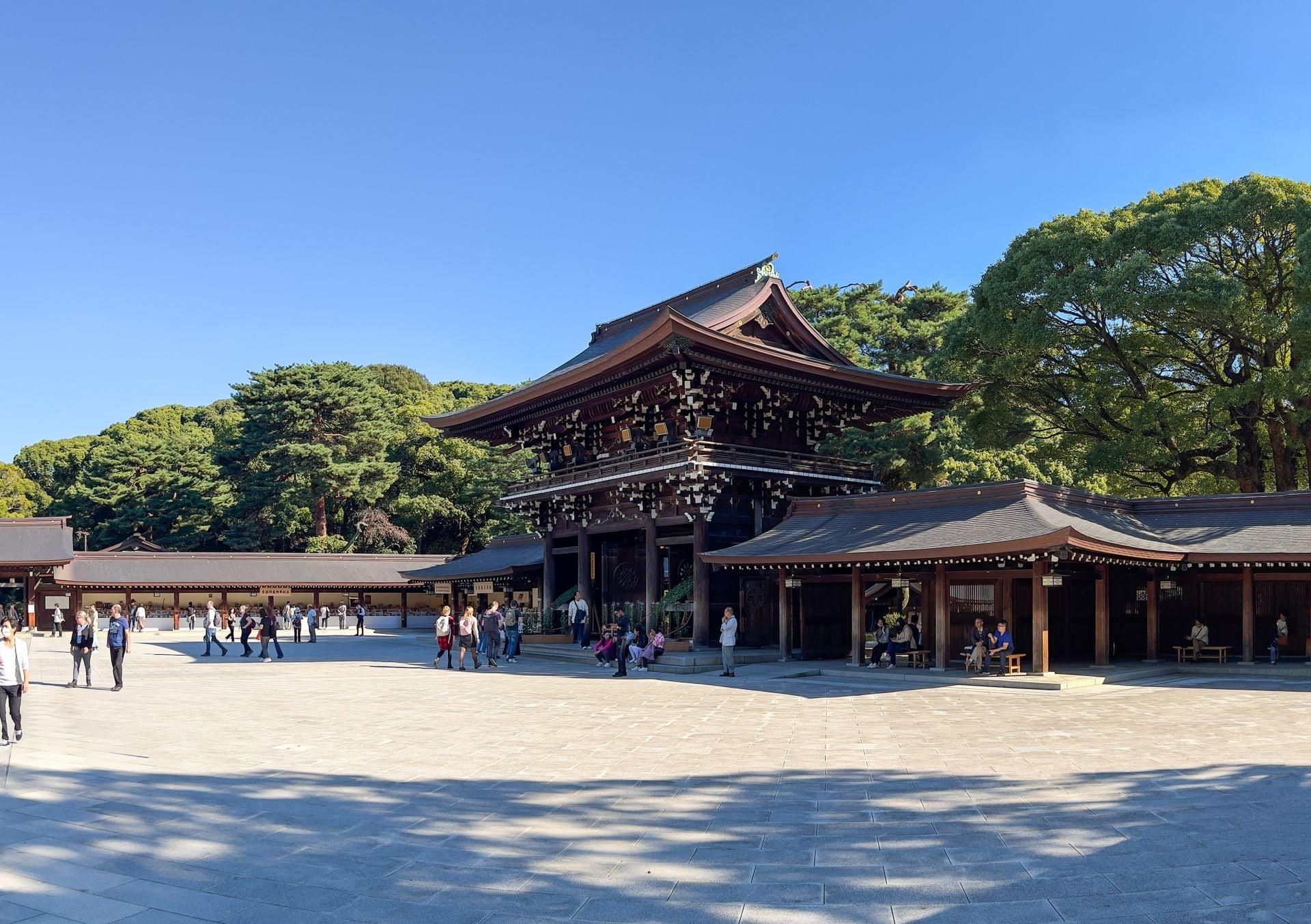
This gate came through 1945. The two-storey South Gate of 1920, one of the few structures here to survive the air raids, with heart-shaped fire-warding motifs on its fittings.
- 8
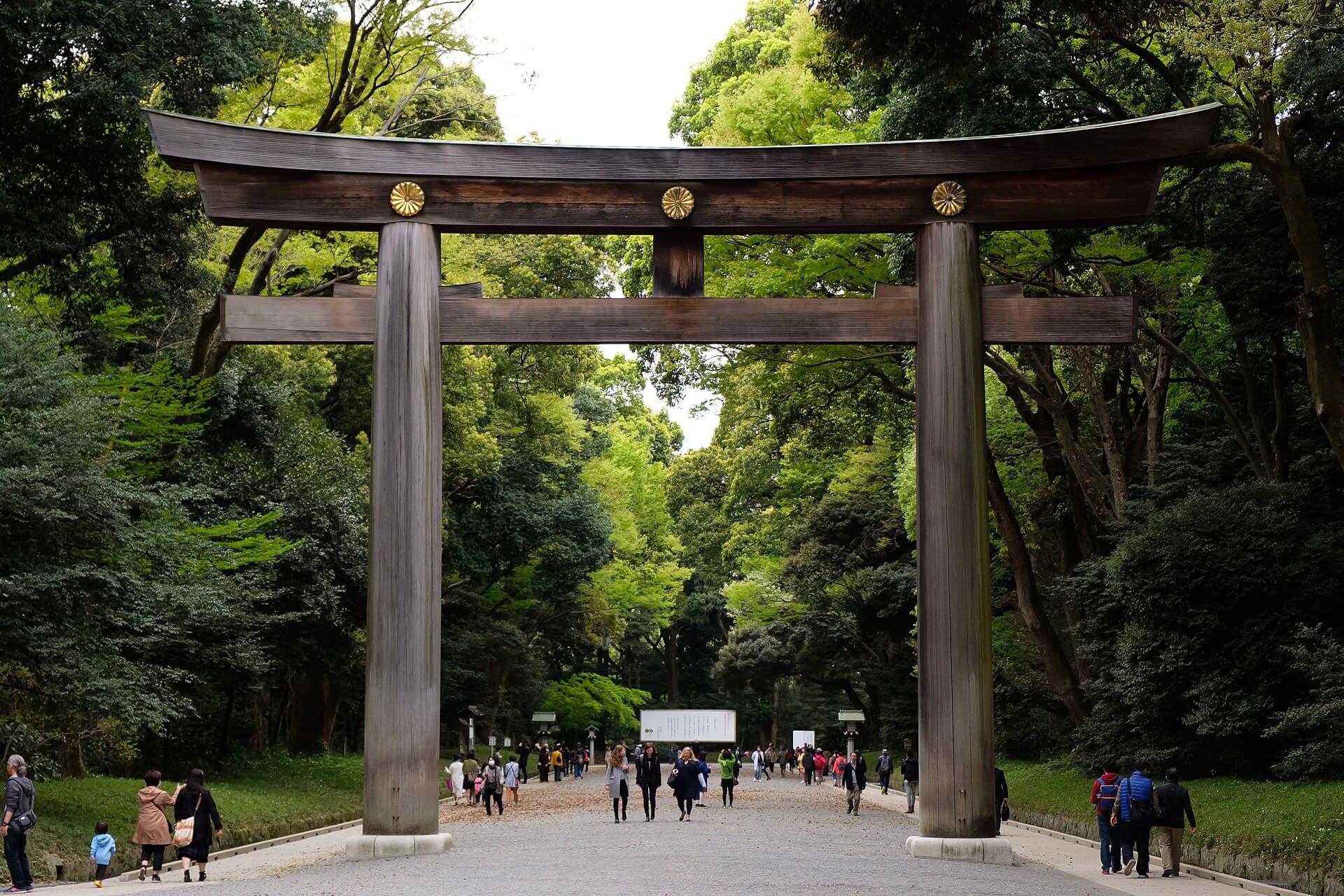
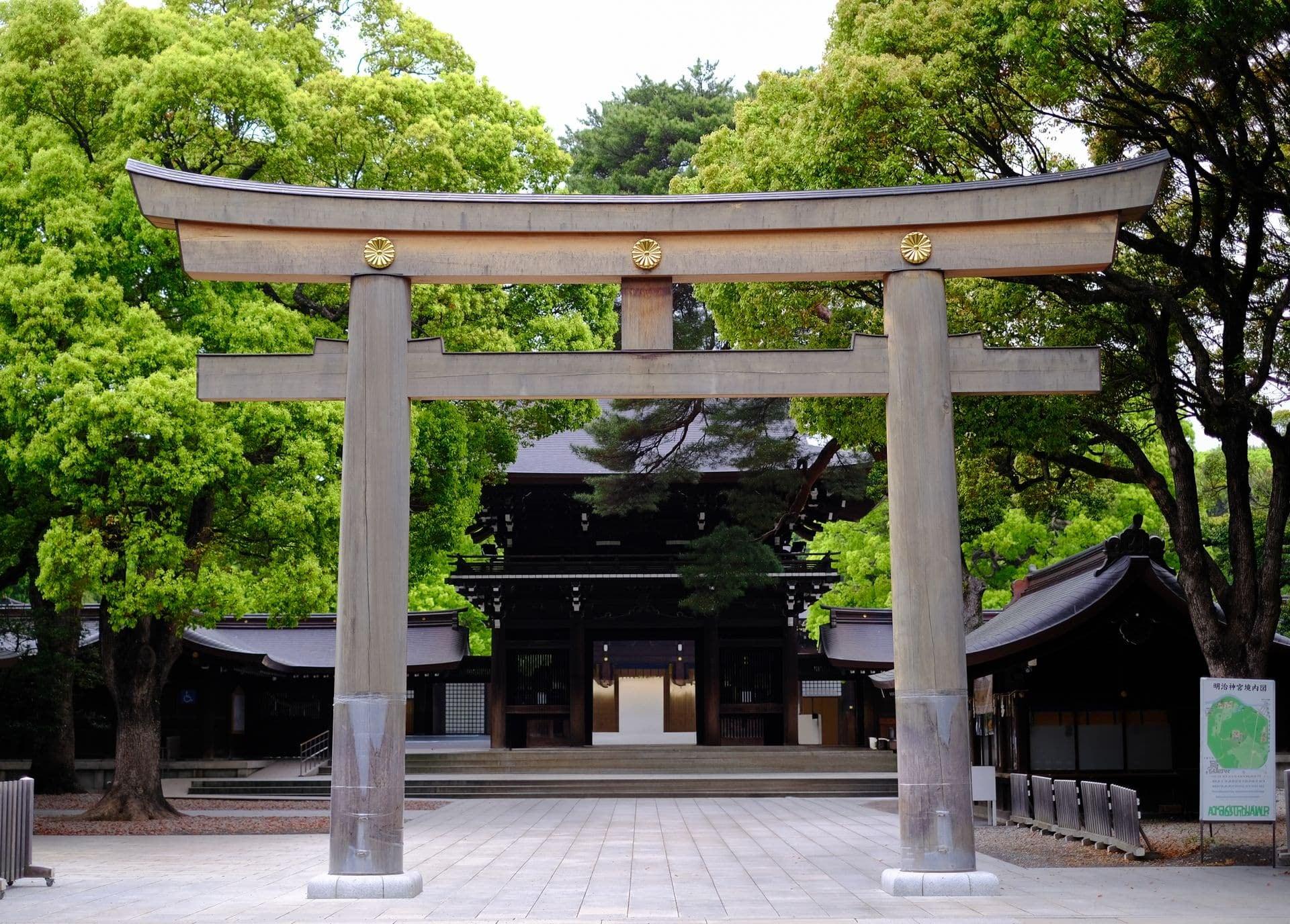
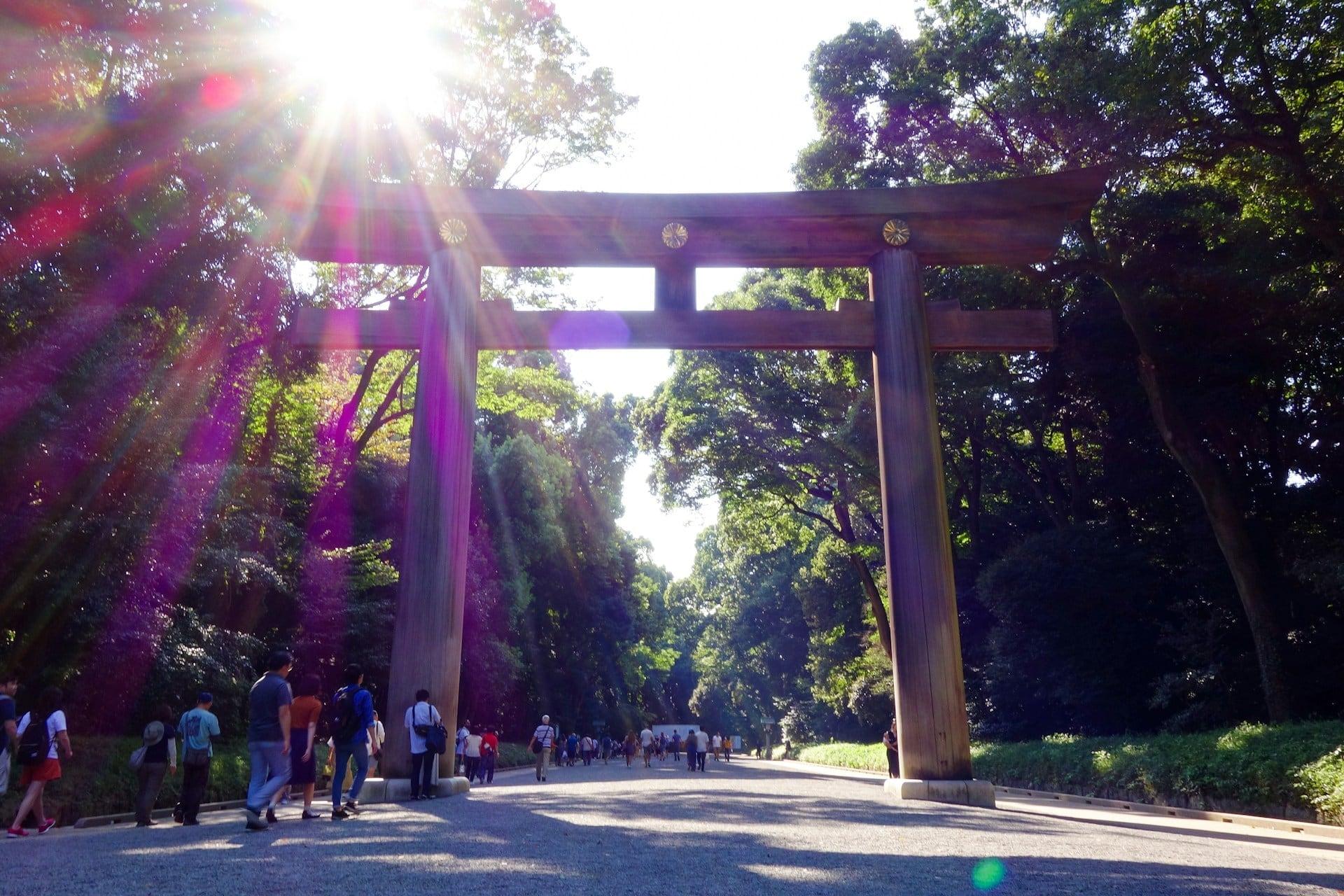
Otorii: A Gate from a Taiwan Mountain
The great torii's timber came from Taiwan. The Otorii of 1975, which the shrine calls the largest wooden torii of its style in Japan, replaced one struck by lightning in 1966.
- 9
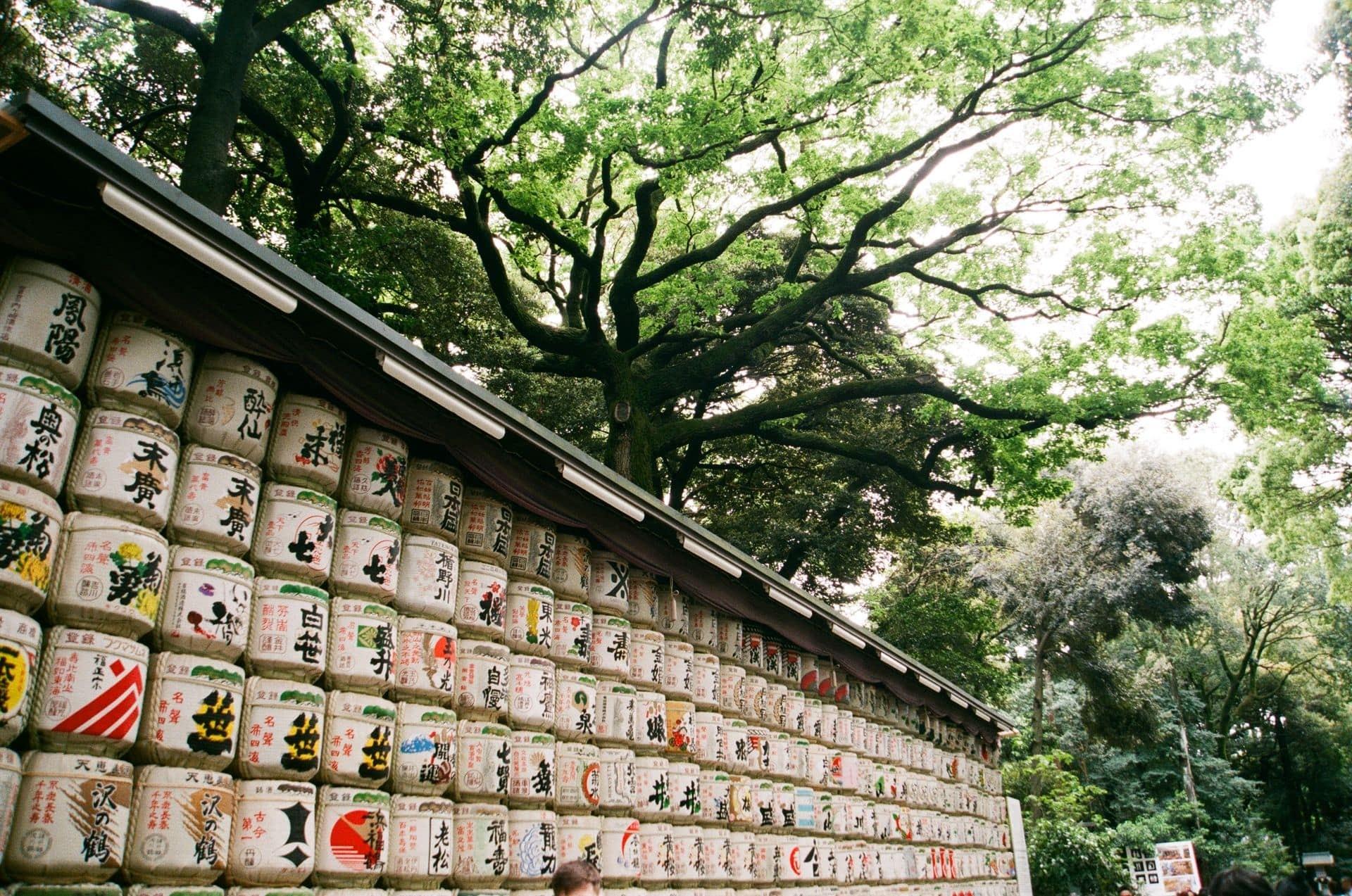
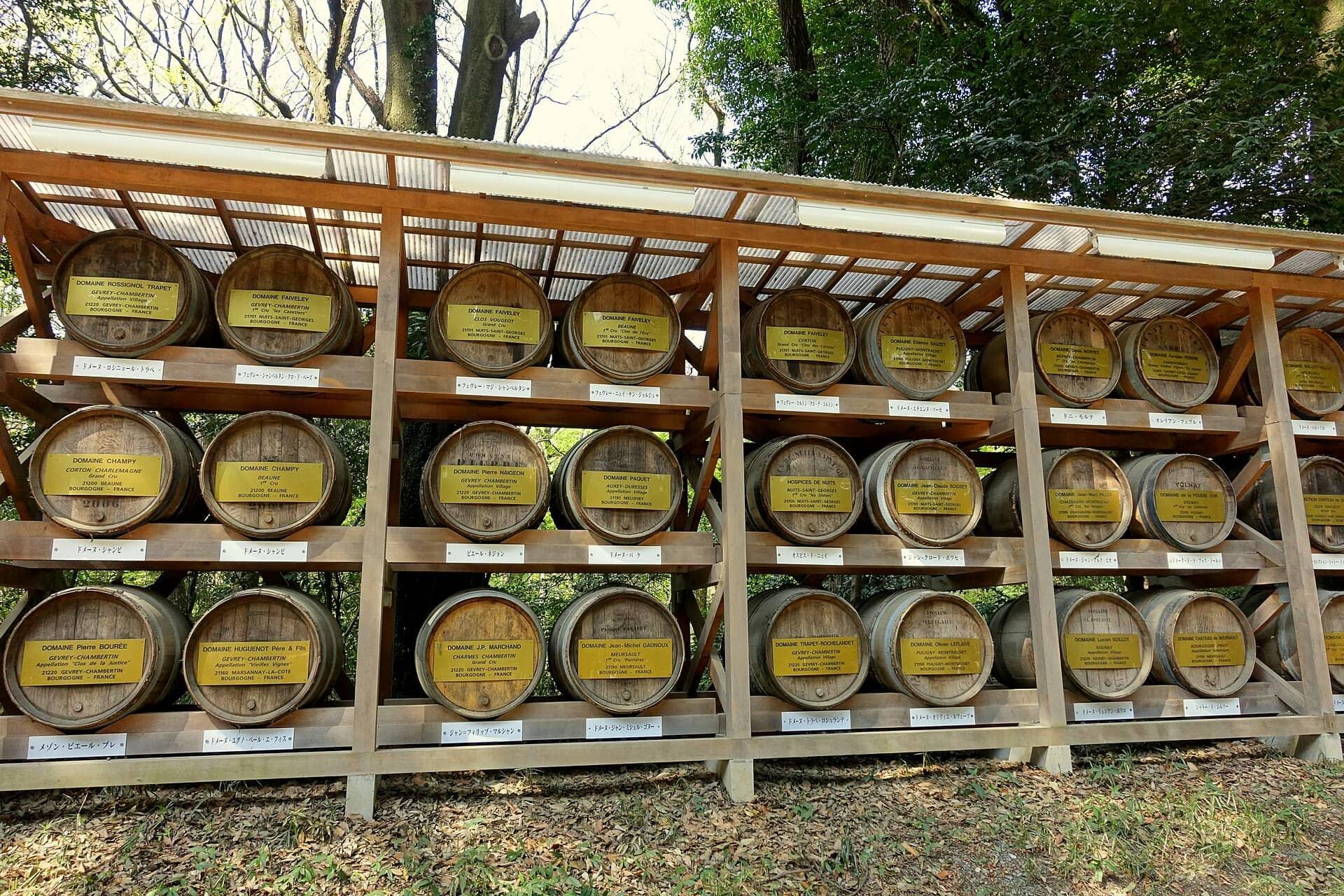
Sake and Wine Barrels: Gifts to the Shrine
Brewers and Burgundy send barrels. Sake barrels offered every year by Japan's brewers face wine barrels from Burgundy, given since 2006, across the south approach.
- 10
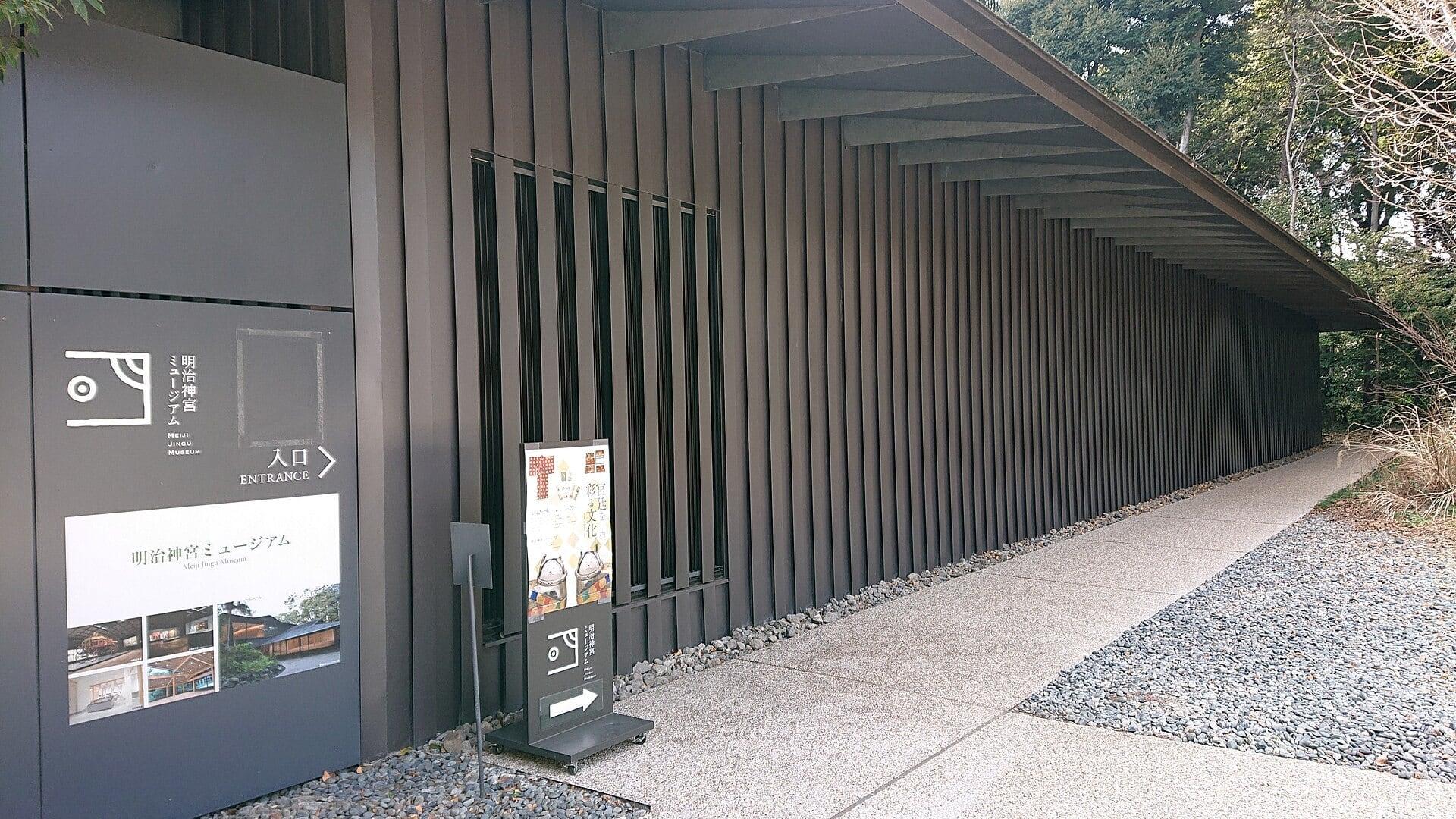
Meiji Jingu Museum: Low Under the Trees
A 2019 museum kept low and quiet. Kuma Kengo's museum for the shrine's centenary, two storeys under long, gently pitched roofs, now holds the emperor's and empress's belongings.
- 11
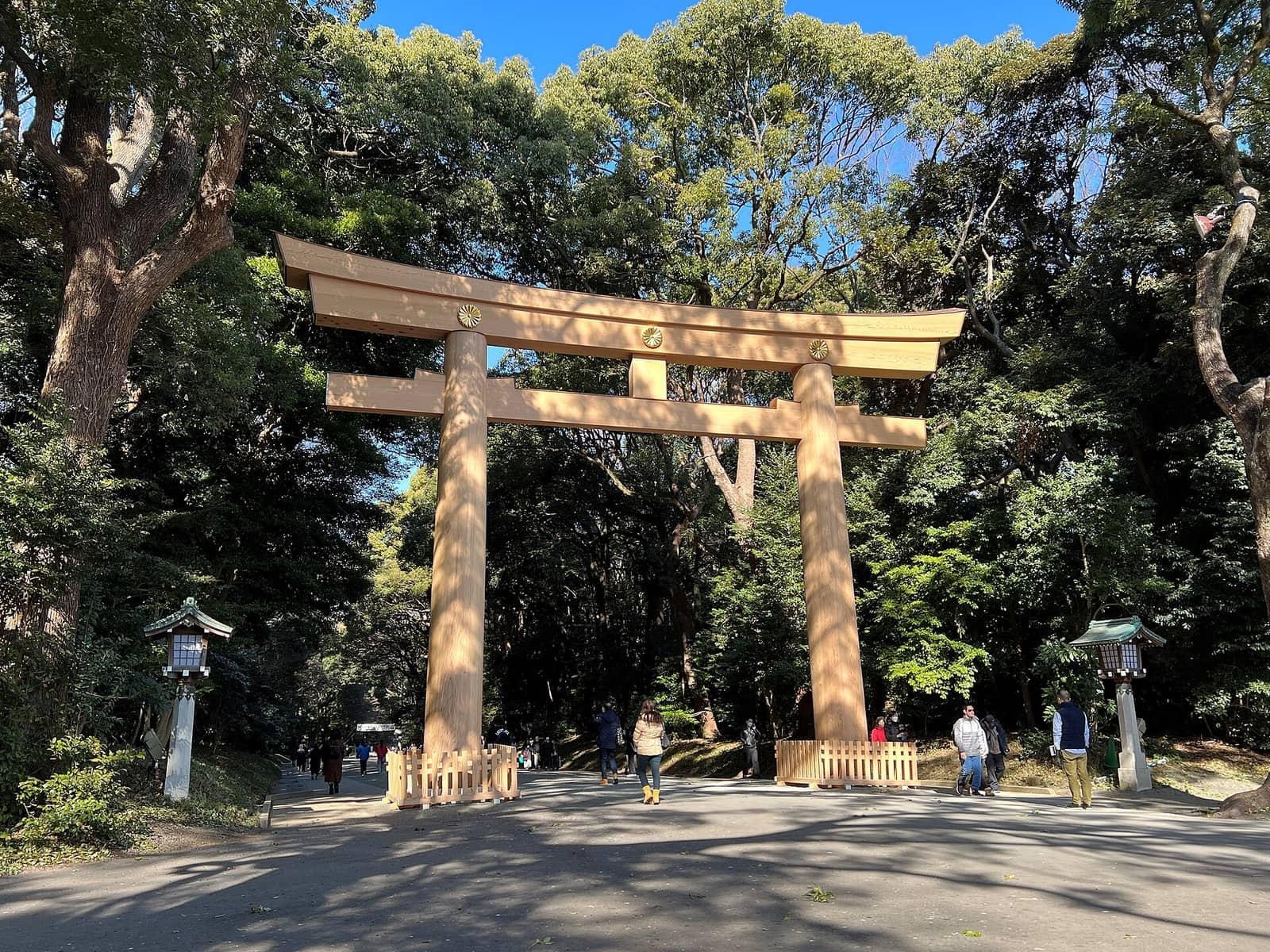
First Torii: Out to the City
The first torii faces the city. The last stop, just inside the Harajuku entrance, where the forest ends a few steps from Jingu-bashi and the station.
Details
Best Time to Visit
Morning, soon after the gates open at sunrise: the north half (stops 1 to 5) is quiet, while the barrels, the museum path and the Harajuku end fill from late morning to mid-afternoon and at weekends. The gates close at sunset (November 16:10, December 16:00, June 18:30), so start at the Yoyogi Gate by about 14:30 in November, 14:20 in December and 16:45 in June. Avoid the New Year holidays, when several million people make their first shrine visit of the year. The museum is closed on Thursdays. Checked 8 November 2026.
Pro Tips
- •Getting to the start: the Yoyogi Gate, Meiji Jingu's north entrance, about 8 minutes on foot from Kita-sando (Fukutoshin line, F14) or JR and Toei Yoyogi stations. Checked 8 November 2026.
- •On foot from Kita-sando: the way in passes under the elevated expressway and the JR bridge and crosses at the signals of the Kita-sando-iriguchi junction (use the signal, not the unmarked crossing beside it); the last stretch to the gate runs on the road edge with no sidewalk. Follow the station signs to Meiji Jingu's Yoyogi entrance.
- •Getting away from the end: walk out through the Harajuku entrance to Jingu-bashi. JR Harajuku station (Yamanote line, Omotesando west gate) and Tokyo Metro Meiji-jingumae (Harajuku) station, exit 2 (Chiyoda and Fukutoshin lines), are a few minutes on foot. Checked 8 November 2026.
- •Meiji Jingu Museum (stop 10): adults 1,000 JPY, high school students and younger 900 JPY, preschool children free; 10:00 to 16:30, last entry 30 minutes before; closed Thursdays (open when Thursday is a public holiday) and during exhibition changes. Checked 8 November 2026.
- •Gyoen, the inner garden (gate off the main approach between stops 7 and 8): 500 JPY; March to October 9:00 to 16:30, November to February 9:00 to 16:00, June 8:00 to 17:00 (weekends to 18:00), open every day. It holds the iris field and Kiyomasa's Well, a natural spring. Checked 8 November 2026.
- •The Treasure House (stop 3) opens only in announced periods and was closed on 8 November 2026; check the shrine's site. The shrine grounds themselves are free.
- •There is nowhere to store suitcases inside the grounds. The Mori no Terrace cafe is in front of the Harajuku torii and Forest Terrace is on the south approach: eat and drink only in designated places.
Safety & Precautions
- •The whole walk is inside gates that open at sunrise and close at sunset (November 16:10, December 16:00, June 18:30): there is no way round outside. If you arrive too late, our Omotesando and Harajuku walk starts by the Yoyogi National Gymnasium, a couple of minutes from Jingu-bashi, and runs on public streets outside the gates.
- •From stop 1 to stop 2, and for part of the way from stop 3 to stop 4, the route runs on the shrine's asphalt service lanes, with no sidewalk: shrine vehicles use them (cars enter only by the Yoyogi Gate). Keep to the edge.
- •Almost the whole route is gravel, slow and noisy underfoot and hard for wheels and strollers. There are no steps; the climb is about 16 meters in all, in gentle slopes.
- •GPS drifts under the forest canopy, especially at stops 1, 4, 5 and 7: if a stop does not start on its own, start it by hand.
- •The shrine asks visitors to stay out of the woods and not to take or bring in plants, nuts, branches, soil, insects or animals; no running or sport without permission, no smoking, eating or drinking outside designated places, no alcohol on the lawn, no drones.
- •No photos or video in front of the main hall where people pray, or of the amulet office. Filming for news, movies or promotion, and hired professional photo shoots, need the shrine's permission.
- •The shrine publishes only the gate times; whether the main hall's courtyard closes earlier than the outer gates was not confirmed on 8 November 2026. If its gates are shut, a gravel path outside the courtyard walls leads from stop 5 to the South Gate (stop 7).
- •Rituals and processions may cross the courtyard and the approaches: give them room. Cover skin against insect bites, as the shrine advises.
- •At New Year several million people visit, and one-way systems and closed paths change the route. The south approach (stops 9 to 11) and the Harajuku entrance are crowded late morning to mid-afternoon and at weekends.
Travel advisory: Exercise Normal Precautions (Level 1).
Gallery
Related Reading
Go deeper on what you'll see, hear, and walk through.
Overview
One Day in Tokyo: A Walkable Itinerary Across Three Faces (2026)
6 min
Overview
Tokyo Travel Guide: How Many Days, Getting Around, When to Go (2026)
5 min
Thematic
Best Nature Walking Tours in Tokyo (2026)
2 min
Companion
Meiji Jingu: The Forest That Was Built to Outlive Its Builders
6 min
Deep dive
Meiji Jingu's Treasure House: Concrete Dressed as a Timber Storehouse
5 min
Read the walk
The full story of Meiji Jingu: A Forest Built to Outlive Its Builders, in words. Prefer to listen? Play it narrated, from home or on location.
Introduction
Tokyo, Japan's capital, keeps a forest in the middle of Shibuya, and people planted it by hand. A little over a hundred years ago this ground was mostly fields. From about nineteen fifteen to nineteen twenty, about a hundred thousand trees were given from all over the country and planted around a new shrine, Meiji Jingu, the shrine of the Emperor Meiji.
The planners were not making a park. They were making a forest meant to look after itself long after they had gone, and this walk goes looking for the proof.
Three people shape what you will see. The Emperor Meiji, whose spirit the shrine honors. Honda Seiroku, the forestry scholar who led the planners. And the architect Kuma Kengo, who designed the shrine's museum.
The walk is eleven stops over about two kilometers, a mile and a quarter, and takes about eighty minutes, almost all on gravel, with gentle slopes and no steps. There are no roads to cross inside, but the first stretches use the shrine's service lanes, so keep to the edge for its vehicles. The gates open at sunrise and close at sunset, at ten past four in November and half past six in June, so in November and December start by about two. It runs from the Yoyogi Gate, the north entrance, to the first torii inside the Harajuku entrance, steps from the station. When you arrive at Yoyogi Gate, begin with stop one.
1. Yoyogi Gate: A Forest Planted by Hand
Welcome to the Yoyogi Gate, the north entrance of Meiji Jingu, where this walk begins. Come in past the little guardhouse and stop where two ways lead into the trees: an asphalt lane running into the forest, and a wide gravel approach running away under a torii, a shrine gate.
Look at the wall of trees. It looks like old woodland. It is not. The shrine puts it plainly: this is a forest made by human hands. Before the shrine, this whole area was an imperial estate called Minami-Toshima, and apart from one garden it was mostly fields, a landscape the shrine compares to waste ground.
Then, from about nineteen fifteen, it was planted. About a hundred thousand trees were offered from across Japan and the lands it ruled at the time, from Sakhalin in the north to Taiwan in the south. Young volunteers did much of the work; the shrine counts their turns of labor, day by day, at about a hundred and ten thousand. On the first of November nineteen twenty, the shrine was founded among the young trees.
Meiji Jingu honors the spirits of the Emperor Meiji, who died in nineteen twelve, and his empress, who died in nineteen fourteen. Their graves are in Kyoto. This is a shrine, a place of worship where people come to pray, not a tomb.
The rule for the forest is the shrine's own: nothing is taken out, and fallen trees are left to return to the soil. So please stay on the paths and take nothing, not a leaf, not a nut.
Follow the route along the asphalt lane into the forest, and keep to its edge: shrine vehicles use it, and the shrine asks drivers to go slowly because raccoon dogs, tanuki, sometimes dash out. Next is a pond, and the one place where the forest opens up.
2. Kita-ike and the Lawn: The Forest Opens
Walk on to where the lane meets the pond and stop by the little arched bridge. This is the Kita-ike, the North Pond, and beyond it the shrine's lawn, the Shibachi, the one wide opening in the whole forest.
Look out across the pond to the trees beyond it. On a clear day the towers of Shinjuku rise above them, and the shrine itself points out the contrast: a city of high glass on one side, and between you and it a forest only about a century old.
On the water, look for ducks. The shrine says several kinds come here, mandarin ducks among them.
Every March, around the doll festival, the pond has a ritual of its own. Paper dolls that dissolve in water are set afloat on it, and the shrine explains that impurity passes into the paper doll and is washed away.
Now keep this pond in mind, because it plays a part in the biggest object on this walk. In August nineteen seventy one a giant cypress log arrived at the shrine from Taiwan, cut for a new great torii. The shrine laid it in this pond to soak, and four years later the torii was finished. You will walk through it later.
The lawn is open for sitting on in good weather. The shrine asks one thing here: no alcohol.
Follow the route over the arched bridge and along the edge of the lawn. Next is a storehouse built to survive fire.
3. Treasure House: Concrete Dressed as Timber
Walk on along the gravel path at the edge of the lawn. With the open lawn behind you, look across the forecourt toward the trees, where a long, pale stone front shows through them. That is the Treasure House, the Homotsuden. It opens only for announced periods and it is closed now, so this stop is its front from the path, partly hidden by trees.
It was finished at the end of October nineteen twenty one, a year after the shrine, to keep the Emperor Meiji's own belongings: his everyday desk, his writing things, the books he liked to read, the carriage he rode in.
Here is the trick of it. The shrine's halls were wood, and wood burns. So the storehouse for their treasures was built entirely of reinforced concrete, against earthquake and fire, and faced in granite. Then it was dressed as something much older: its design follows the log storehouse style of the Shosoin, the imperial treasure house at Nara. A concrete building in the costume of a timber one. The national heritage register counts it among the very first Japanese-style buildings in the country made wholly of reinforced concrete, and in twenty eleven it was named an Important Cultural Property.
The halls beyond the forest burned in the air raid of April nineteen forty five. This is still the nineteen twenty one building. Its treasures have since moved to the museum near the end of this walk.
Follow the route back onto the shrine's service lane beside the lawn, again keeping to the edge for shrine vehicles, and then down a gravel path. Next is the west approach, where the forest closes in.
4. Nishi-sando: Trees for a Smoky City
Walk on down the wide gravel approach, away from the lawn and into the trees, and stop where a small paved path joins it. This is the Nishi-sando, the west approach, one of the ways to the main hall.
Look at the trees along it. Not the tall cedars of shrines like Ise, but broad, dark, evergreen leaves. That was a decision, and it was argued over.
The forest was planned by a team of forestry scholars led by Honda Seiroku, who was also behind Hibiya Park. When the forest was planned, the shrine writes, pollution was already spreading in Tokyo, and the city's big old trees were dying one after another. So the planners asked what would still grow here a hundred years on, and decided that only broadleaf evergreens would: shii, kashi and kusu, that is, chinquapin, evergreen oak and camphor.
They could not plant a finished forest, so they drew it in stages. They kept the red pines and woods already standing here and planted among them. As the plan is usually told, fast pines would stand on top at first, with slower evergreen broadleaves underneath, meant to take over as the pines died out. A forest designed to change its own cast. You are walking into that plan.
One custom as you go. The middle of a shrine approach, the shrine says, has long been held to be the path of the kami, the gods, and people take care not to walk down the center. Keep to the side.
Follow the route down the approach, a long stretch, all under the trees. Next is the end of the west approach, to see how the plan turned out.
5. Nishi-sando Forest: A Hundred Years On
Walk on to the end of the west approach and stop at the junction by the map board, where a path turns off toward the main hall. Look up. This is what a hundred years did. At the start, counting the trees already here, the inner grounds held about a hundred and twenty thousand…
Full narration for this stop unlocks with the tour.
6. Main Hall Courtyard: Rebuilt in Copper
Come through the West Gate into the main hall's courtyard, and stop on the paved path a little way in, to the side and well clear of the line of people walking up to pray. Turn to face the main hall, the largest building in this courtyard. In front of it stand two big camphor…
Full narration for this stop unlocks with the tour.
7. South Gate: The 1920 Survivor
You have just come through the South Gate. Stop on the wide gravel, then turn and look back at it. This is the Minami Shinmon, the South Gate, which the shrine calls the most important of the three gates into the main hall's courtyard, and the only one with two stories. It is…
Full narration for this stop unlocks with the tour.
8. Otorii: A Gate from a Taiwan Mountain
Walk on along the main approach until the great torii fills the way ahead, and stop to the side, where you can see it whole. This is the Otorii, the Great Torii. It is twelve meters high and seventeen meters wide, and its pillars are more than a meter across. The shrine says it…
Full narration for this stop unlocks with the tour.
9. Sake and Wine Barrels: Gifts to the Shrine
Walk on down the south approach and stop between the two displays of barrels, at the side, out of the stream of people. On one side, straw-wrapped sake barrels. Facing them across the gravel, wine barrels from Burgundy. The sake barrels are offered to the shrine every year by…
Full narration for this stop unlocks with the tour.
10. Meiji Jingu Museum: Low Under the Trees
Walk on down the approach and stop where a short path opens toward a low building among the trees. That is the Meiji Jingu Museum, opened in October twenty nineteen for the shrine's hundredth anniversary. It is ticketed and closed on Thursdays, and the details are on this stop's…
Full narration for this stop unlocks with the tour.
11. First Torii: Out to the City
Walk on under the torii and stop on the gravel just beyond it. Then turn and look back at it. This is the first torii, the first of three on the south approach for anyone coming in from Harajuku, and the last for you. Look at the top beam. Three crests decorate it,…
Full narration for this stop unlocks with the tour.
- Meiji Jingu Shrine @ Yoyogi Park — Guilhem Vellut from Annecy, France, CC BY 2.0 · source
- 明治神宮の画像 — 経済特区, CC BY-SA 4.0 · source
Images may be cropped or resized. Other photos via Unsplash and Pexels.