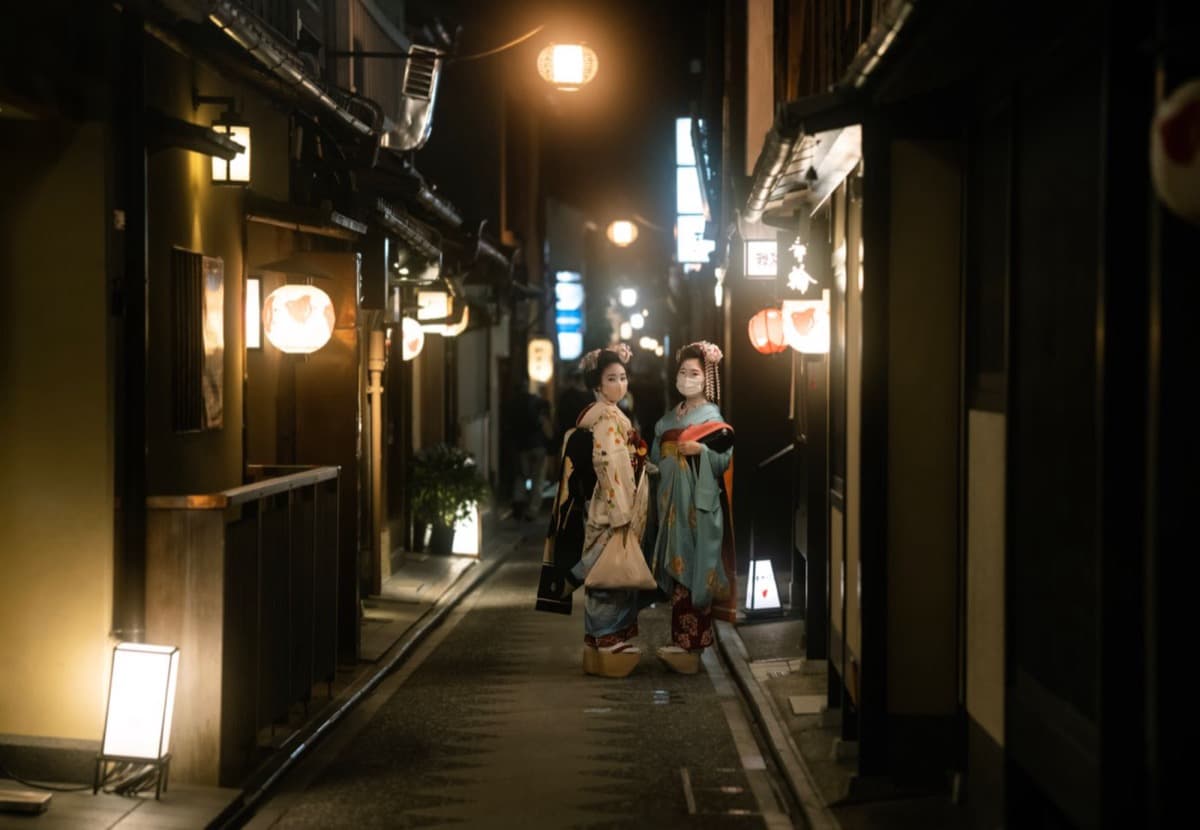
Walk the last inhabited fragment of the ukiyo, Japan's old floating world, and learn to read Gion's shut wooden doors instead of chasing the photograph everyone else is after.
Start · Yasaka Shrine West Gate: The Shrine That Named Gion
DirectionsStops
- 1
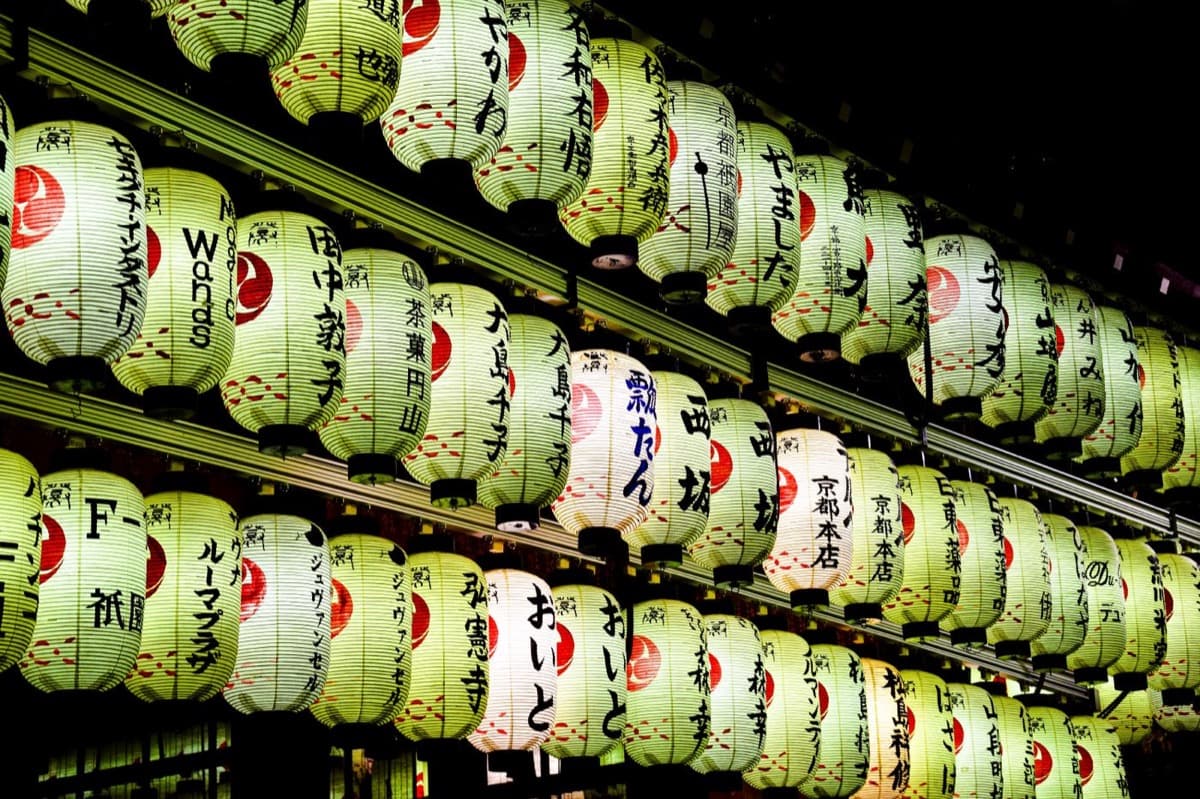
Yasaka Shrine West Gate: The Shrine That Named Gion
The vermilion two-story gate at the head of Shijo-dori, the shrine whose old name became the district's.
- 2
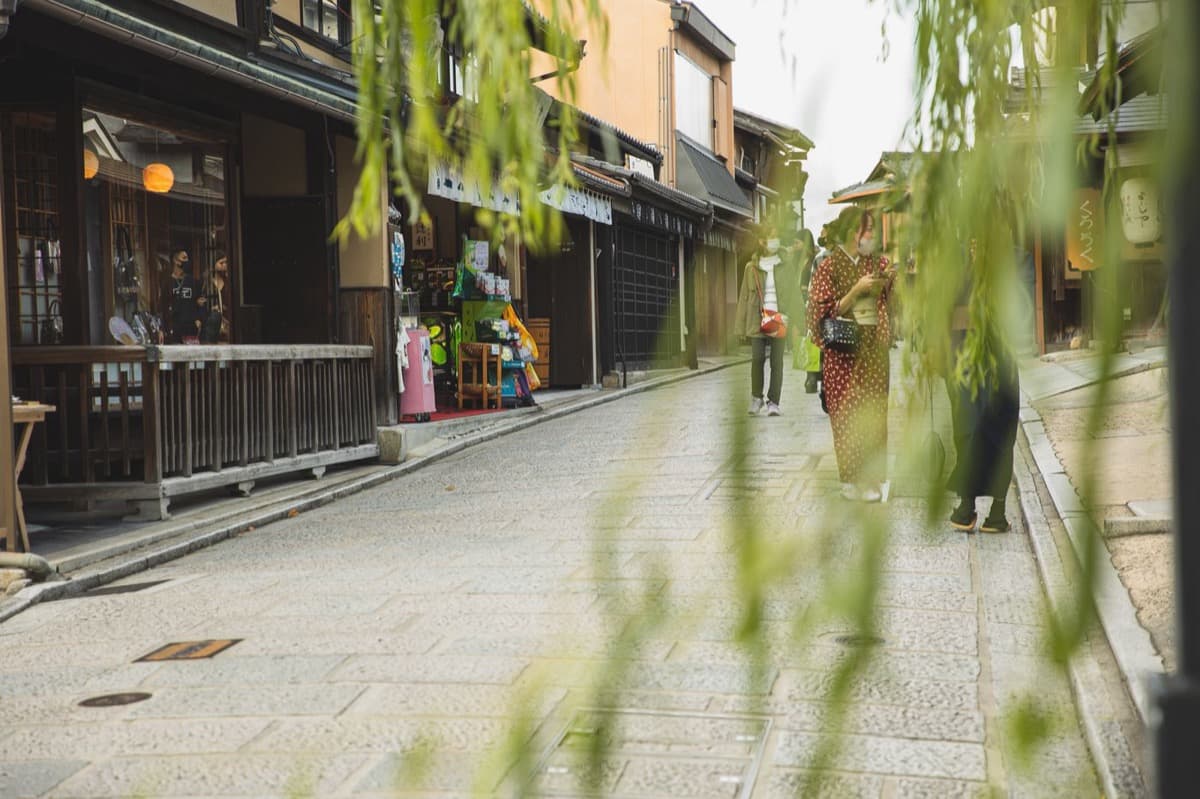
Hanamikoji: The Street Behind the Lattice
Gion Kobu's main street of wooden machiya, where the real working world sits just behind the wooden slats.
- 3
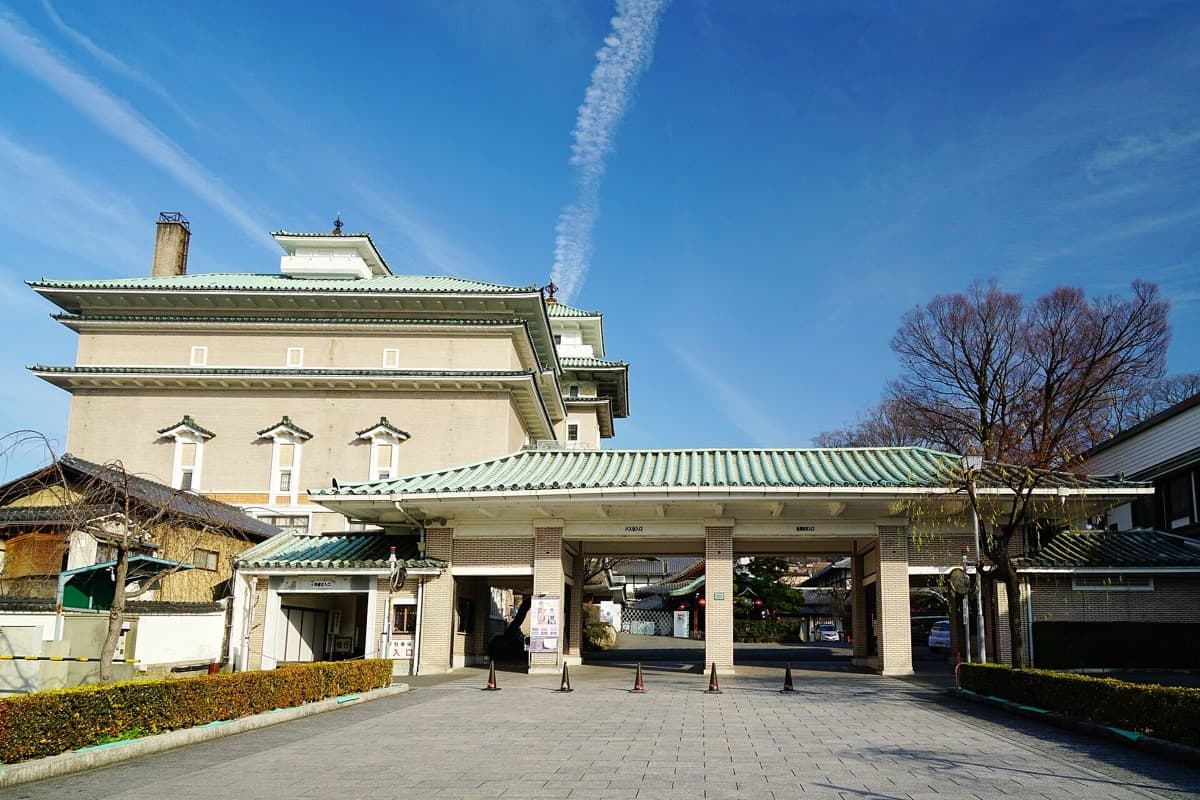
Gion Kobu Kaburenjo: The One Public Window
The theatre at the foot of Hanamikoji where Gion Kobu's spring dances open the private craft to public view.
- 4
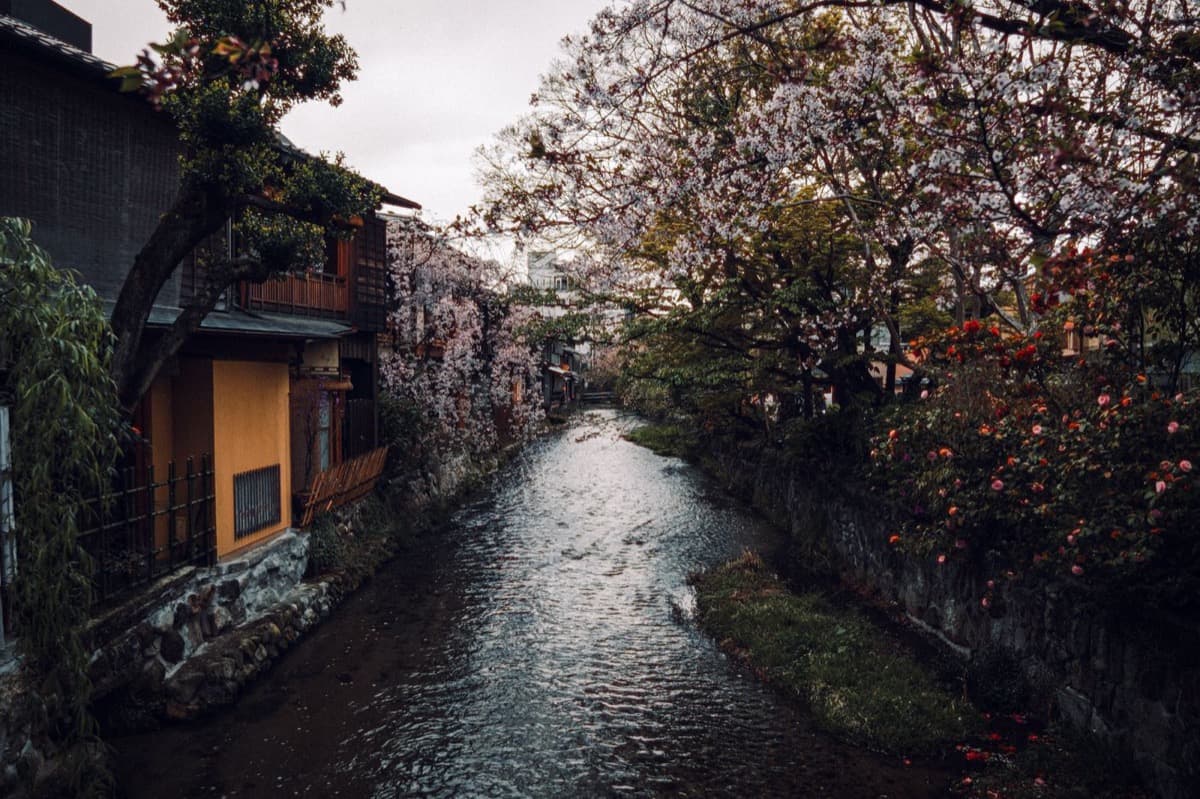
Gion Shirakawa and Tatsumi Bridge: The Photographed Lane
A willow-lined canal lane in the Gion Shinbashi preservation district, with a small shrine that geiko revere.
- 5
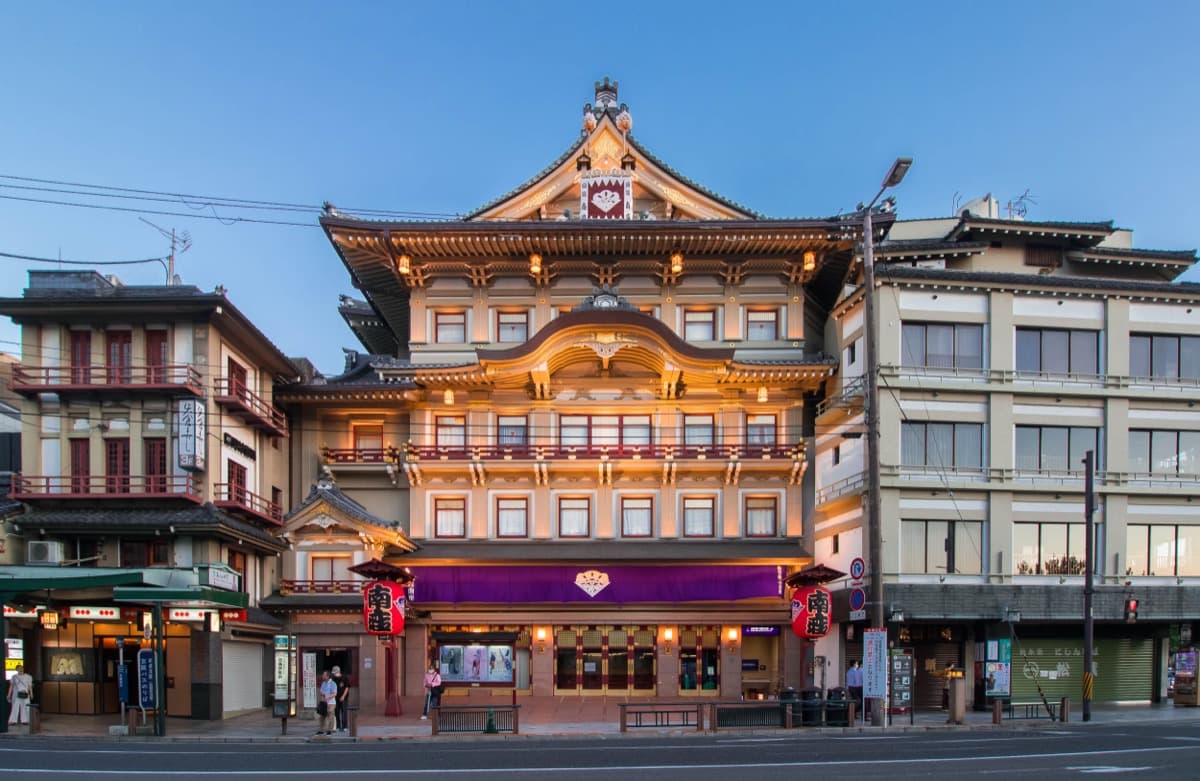
Minami-za: Where the Floating World Was Born
Kyoto's principal kabuki theatre, steps from the riverbed where kabuki itself is said to have begun.
- 6
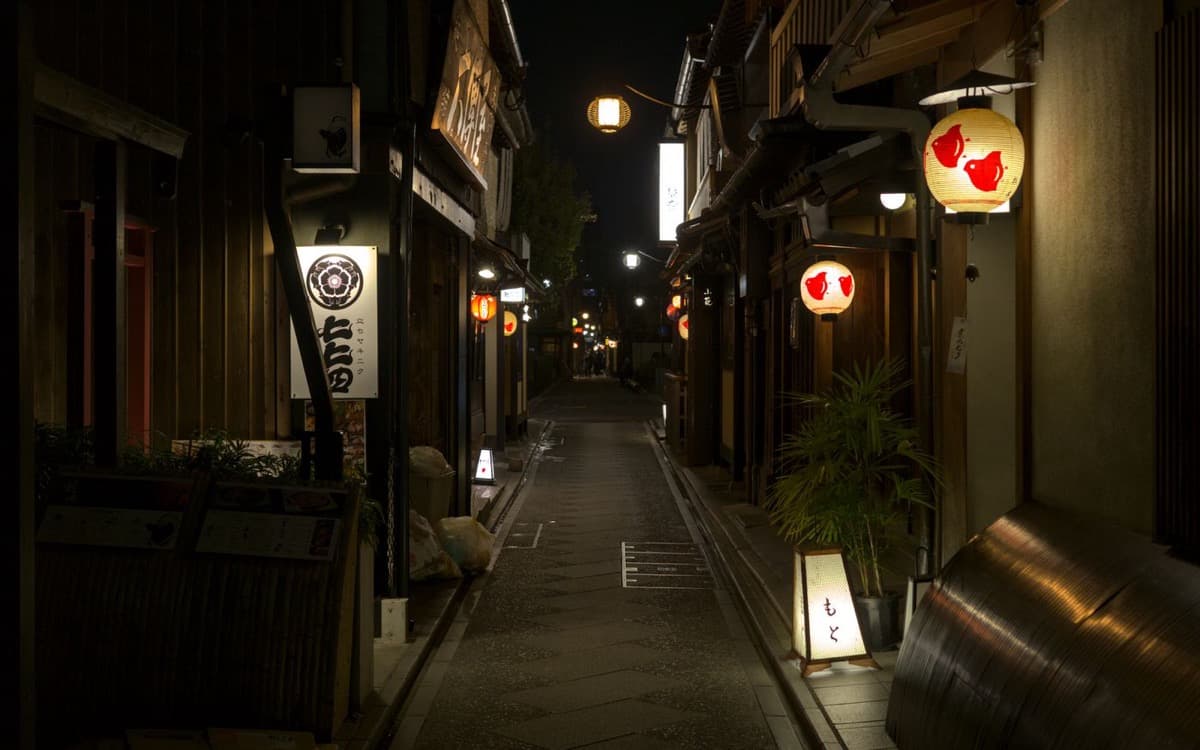
Pontocho: The Floating World by the River
A single lantern-lit alley of teahouses and restaurants along the Kamo, closing the walk where the tradition still lives.
Details
Best Time to Visit
Early morning or the hour before dusk. Come around eight to nine in the morning for near-empty lanes and soft light on the Shirakawa canal, or in the late afternoon toward dusk when the lanterns of Hanamikoji and Pontocho begin to glow and geiko and maiko occasionally cross the streets on their way to evening engagements. Spring, for the April Miyako Odori and the cherry blossom along the canal, and autumn, for the maples, are the loveliest and by far the most crowded seasons.
Pro Tips
- •Walk it east to west, starting at Yasaka Shrine and drifting downhill toward the Kamo River, so the route ends beside the water in Pontocho with the light low.
- •Photography is banned on the private alleys off Hanamikoji, with a ten-thousand-yen fine. Keep your camera for the public streets and the open Shirakawa canal lane, and never photograph a geiko or maiko without clear consent.
- •If you want to actually see the craft rather than chase a glimpse of it, plan around the April Miyako Odori at the Gion Kobu Kaburenjo, or catch a shorter cultural showcase at the adjoining Gion Corner.
- •Carry cash and an IC transit card. Many small teahouses and older shops in Gion and Pontocho do not take cards, and the IC card makes buses and trains around Kyoto effortless.
- •The whole walk is gentle and mostly flat, easily done at your own pace in an hour or stretched to an afternoon. Wear comfortable shoes for cobblestones, and pause wherever a lane pulls you in.
- •Treat a closed teahouse door as normal, not as a barrier aimed at you. The ochaya work by introduction, and the quiet is the point of the district.
Safety & Precautions
- •Gion is a working residential neighborhood. Do not chase, crowd, or photograph geiko and maiko, and stay off the marked private alleys where photography is prohibited and fined.
- •Kyoto summers are hot and very humid. If you walk this in July or August, carry water, use the shade of the machiya streets, and slow your pace.
- •During cherry-blossom season in spring and the autumn foliage weeks, the Shirakawa canal and Hanamikoji become extremely crowded. Go early in the morning to move freely and get clear views.
- •Shrine precincts are free and largely open, but ticketed performances and interior sites keep set hours and seasonal schedules. Check the Miyako Odori and Minami-za dates before counting on them.
Travel advisory: Exercise Normal Precautions (Level 1).
Gallery
Related Reading
Go deeper on what you'll see, hear, and walk through.
Overview
Best Self-Guided Walking Tours in Kyoto (2026)
3 min
Overview
Kyoto Travel Guide: How Many Days, Getting Around, When to Go (2026)
4 min
Overview
One Day in Kyoto: A Walkable South-East Itinerary (2026)
5 min
Thematic
Best Culture Walking Tours in Kyoto (2026)
2 min
Thematic
What to Eat in Kyoto: A Food Guide (2026)
4 min
Deep dive
Minami-za and the Riverbed Where Kabuki Was Born
6 min
Read the walk
The full story of Gion: The Floating World, in words. Prefer to listen? Play it narrated, from home or on location.
Introduction
Before you take a single step in Gion, here is the idea that will change what you see. Gion is the last inhabited fragment of the ukiyo, the floating world, the name Edo-era Japan gave to its licensed districts of pleasure and entertainment, places built for a night that would never quite hold still. Most of those worlds are gone. This one is still lived in. Behind the wooden lattice on these streets, a real apprenticeship still runs, where Kyoto trains geiko, the full artists, and their younger maiko. It is a working craft, not a show staged for the street. Here is the tension you will feel the whole way. Around you, people are hunting a photograph, usually of a woman hurrying to work, while the actual life of Gion happens where you cannot follow it, behind the lattice and inside teahouses that open by introduction only. This walk will not teach you to force that door. It will teach you to read it, the way residents do, so a shut door feels like understanding rather than a wall. This is Kyoto, in Japan, and the route drifts westward and gently downhill toward the river. Do it entirely at your own pace. The stops are short and each stands on its own, so linger where you are curious and skip what you are not. Over six stops and about seventy minutes you will cover roughly two kilometres, from the shrine that gave Gion its name to a lantern-lit alley one room wide beside the water. When you arrive at Yasaka Shrine, begin with stop one.
1. Yasaka Shrine West Gate: The Shrine That Named Gion
You are standing beneath the West Gate of Yasaka Shrine, the two-story vermilion gate at the top of Shijo-dori. This is where Gion begins, and it is also where Gion gets its name. Here is the part most visitors have backwards. The district is named after the shrine, not the other way around. This place was originally called Gion Shrine, and the neighborhood grew up as its approach town, the strip of teahouses and lodging that served people coming to worship. The shrine dates its founding to the seventh century. Construction began in the year six hundred and fifty-six. Its chief deity is Susanoo-no-Mikoto, worshipped here with his consort Kushinadahime and their eight offspring deities. Look toward the main hall behind the gate. It was rebuilt in sixteen fifty-four under the fourth Tokugawa shogun, Ietsuna, in a style called Gion-zukuri, where the worship hall and the inner sanctuary shelter together under one enormous cypress-bark roof. In twenty twenty that hall was designated a National Treasure of Japan. There is one more origin worth carrying with you. In the year eight hundred and sixty-nine, an epidemic swept the capital, and people answered it with a purification ritual using sixty-six pikes, one for each of Japan's sixty-six provinces at the time. That ritual grew into the Gion Matsuri, the festival held every July with its towering float processions. So hold this frame as you walk west. Gion was born as the approach to a shrine that fought a plague with ritual, and it became a licensed quarter of teahouses and entertainment, a surviving piece of the floating world. Everything ahead is a variation on that single inheritance.
2. Hanamikoji: The Street Behind the Lattice
You are standing on Hanamikoji-dori, the main street of Gion Kobu, the district's premier hanamachi. Look at the buildings. These are machiya, traditional wooden townhouses, and their fronts are covered by fine vertical slats called koshi. That lattice is the whole story of this stop. It lets the people inside see out while keeping your eye from seeing in. Behind it are ochaya, the teahouses where evening engagements happen, and ryotei, the fine dining houses. This is a working residential and entertainment quarter, and the important word is working. If you glimpse a geiko or a maiko here, she is not performing for the street. She is on her way to an appointment, moving quickly, and the whole point of her craft happens in a room you were not invited into. A note on language, because Kyoto has its own. Here the full artist is called a geiko, and the apprentice who lives and trains with her is a maiko. The house the apprentice lives in is the okiya. The teahouse where she is engaged is the ochaya, and those have traditionally worked by introduction only. Now the practical part. More than twenty private roads branch off this street. They are access to people's homes and lodging houses, and on October twenty-fifth, twenty nineteen, Gion banned photography on those private alleys, with a fine of ten thousand yen. The public street you are on stayed open to walk. So read it this way. The closed door is not rudeness aimed at you. It is a neighborhood protecting the ordinary privacy of the people who live and work behind the lattice.
3. Gion Kobu Kaburenjo: The One Public Window
You are standing before the Gion Kobu Kaburenjo, the theatre of this district's geiko and maiko. If Hanamikoji was about the closed door, this building is the one door that opens. The apprenticeship you have been reading on the street is real, structured, and long, years of…
Full narration for this stop unlocks with the tour.
4. Gion Shirakawa and Tatsumi Bridge: The Photographed Lane
You are standing beside the Shirakawa canal, in the quarter called Gion Shinbashi. This is the postcard. A cobbled lane, willows leaning over the water, machiya fronts crowding right up to the stone edge, and in spring, cherry, with Japanese maple turning later in the year. This…
Full narration for this stop unlocks with the tour.
5. Minami-za: Where the Floating World Was Born
You are standing at the east end of the Shijo bridge, in front of Minami-za, Kyoto's principal kabuki theatre, run by the Shochiku company. Its facade is grand, and its story reaches back to the very beginning of this art. Minami-za was founded in sixteen ten, as Shijo…
Full narration for this stop unlocks with the tour.
6. Pontocho: The Floating World by the River
You have crossed the river, and you are standing at the mouth of Pontocho, a single narrow alley one block west of the Kamo. It runs from Shijo up to Sanjo, and it is barely wide enough for two people to pass. This is where the walk ends, and it is the right place to end it,…
Full narration for this stop unlocks with the tour.