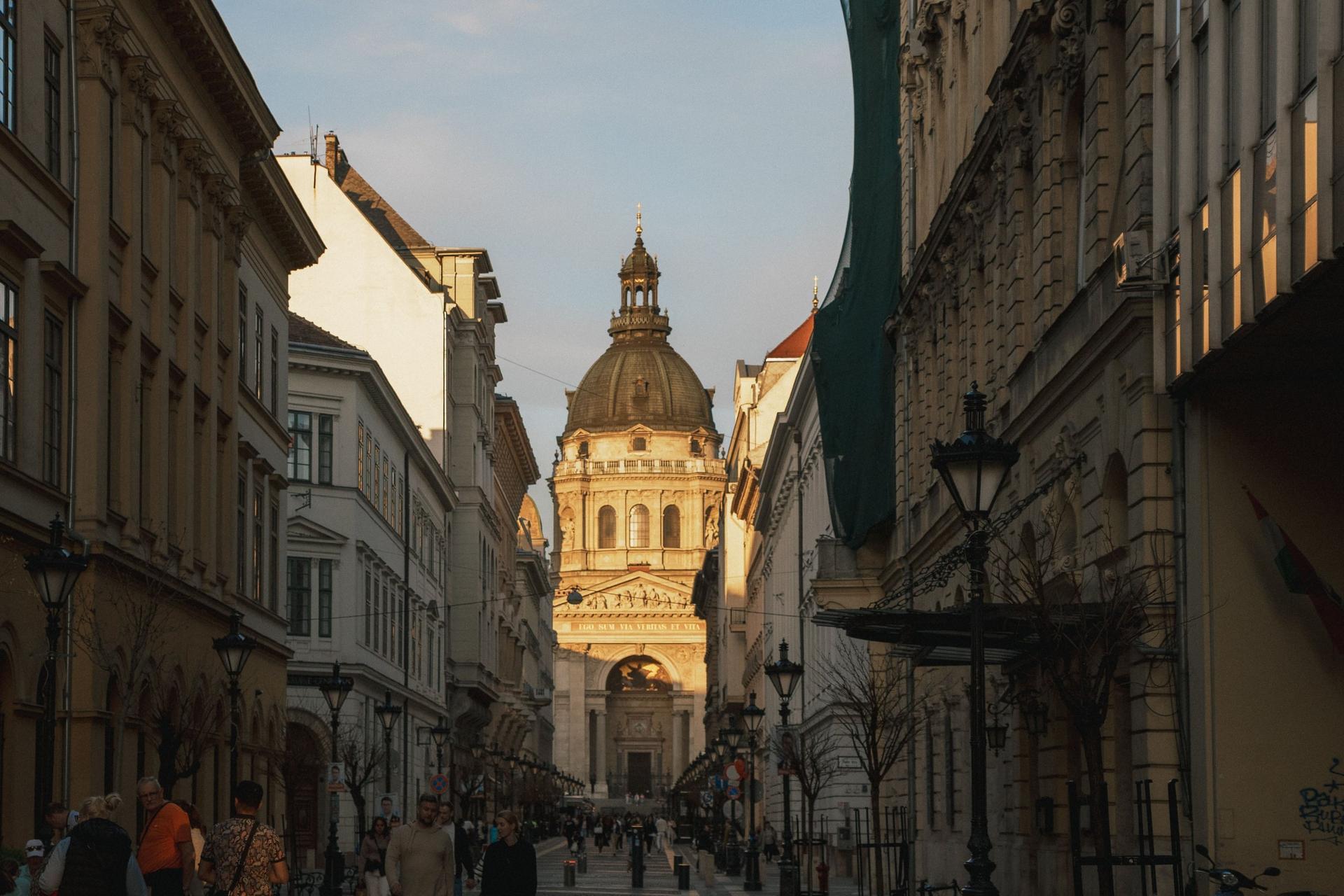
From the Shoes on the Danube up to the Parliament's river front and main front, across Kossuth Lajos tér, through Lipótváros to Liberty Square and St Stephen's Basilica, all from outside on free public ground.
Start · Shoes on the Danube
DirectionsStops
- 1
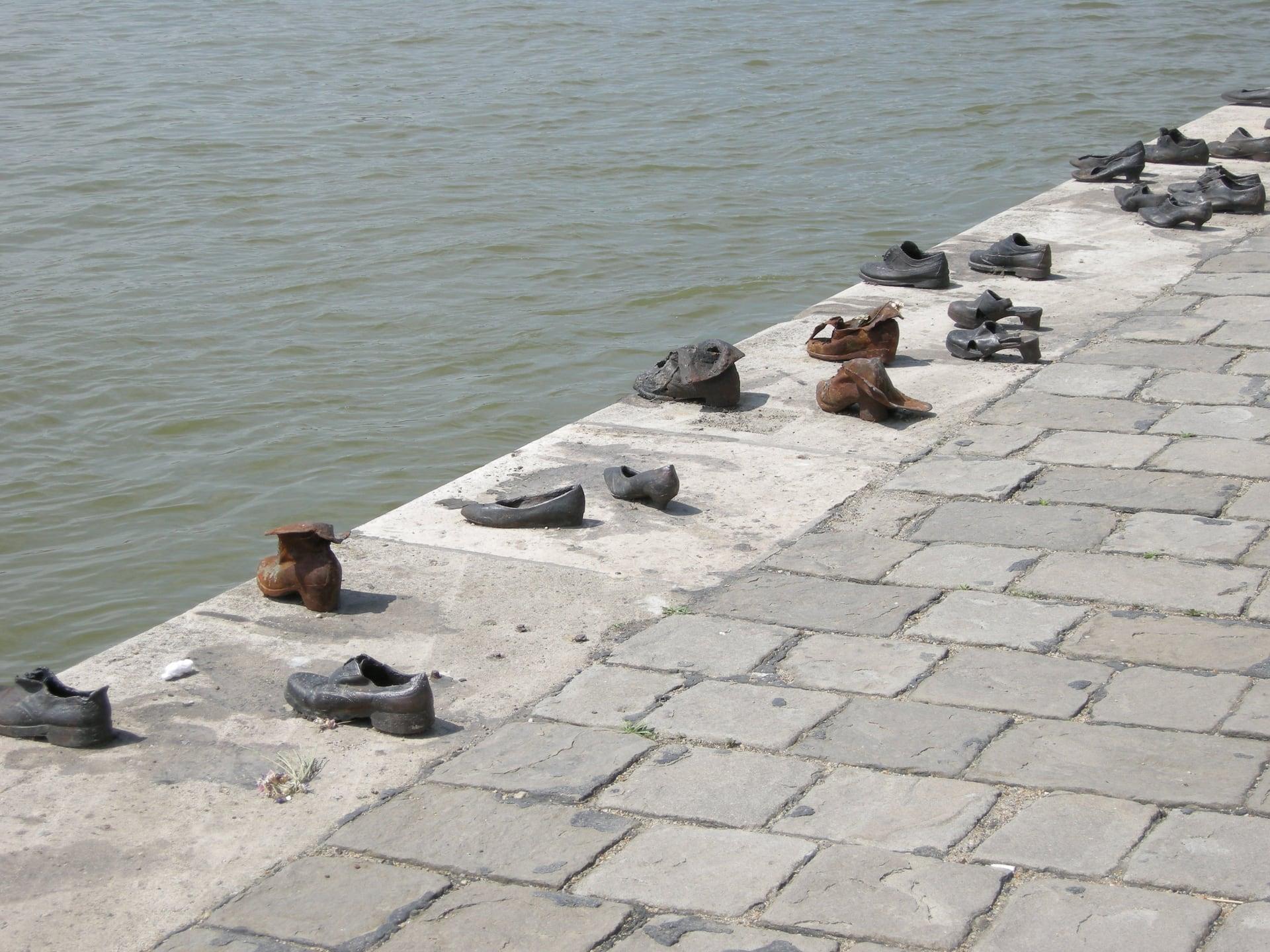
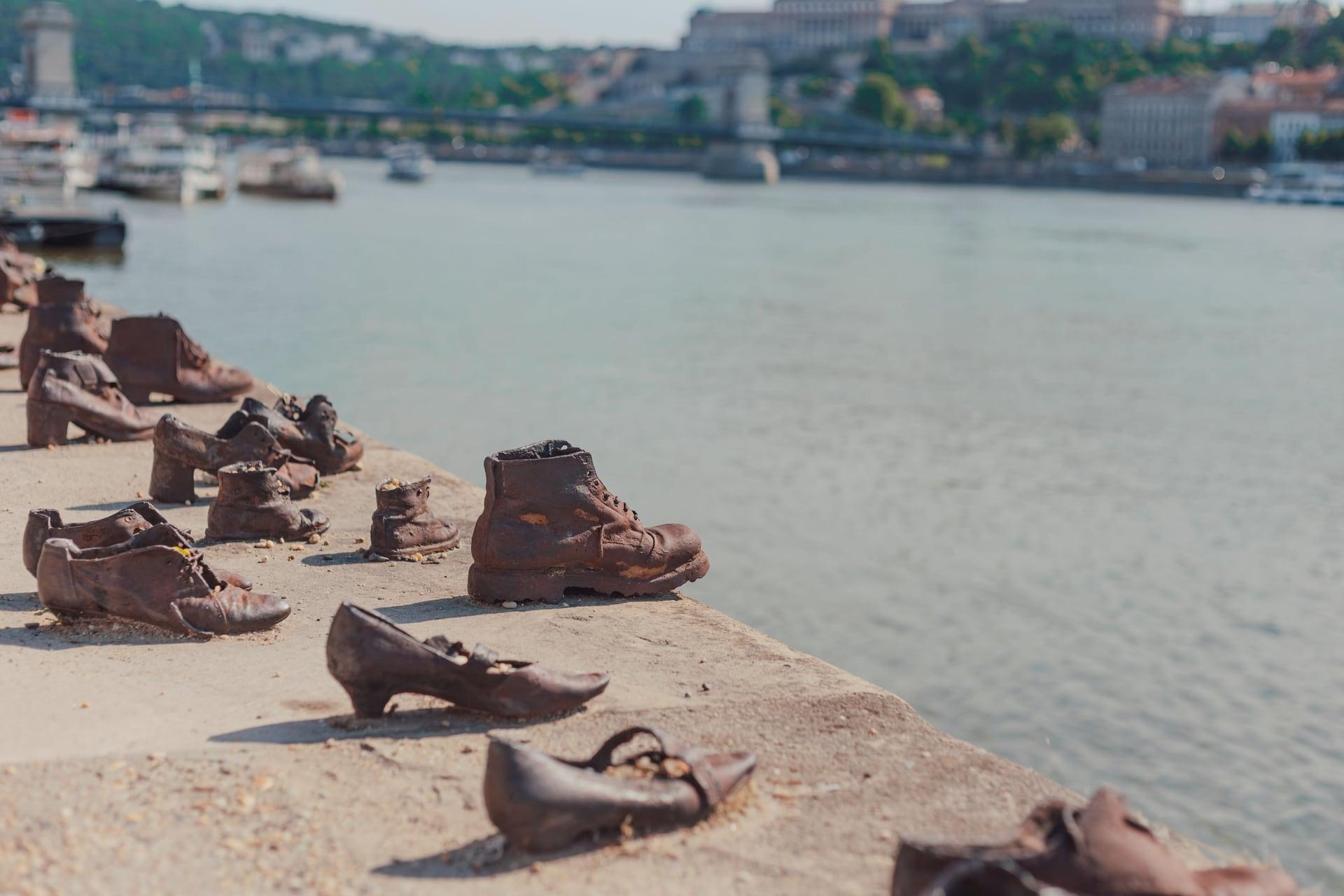
Shoes on the Danube
Sixty pairs of iron shoes at the river's edge. The 2005 memorial to Jewish victims shot into the Danube by Arrow Cross militiamen.
- 2
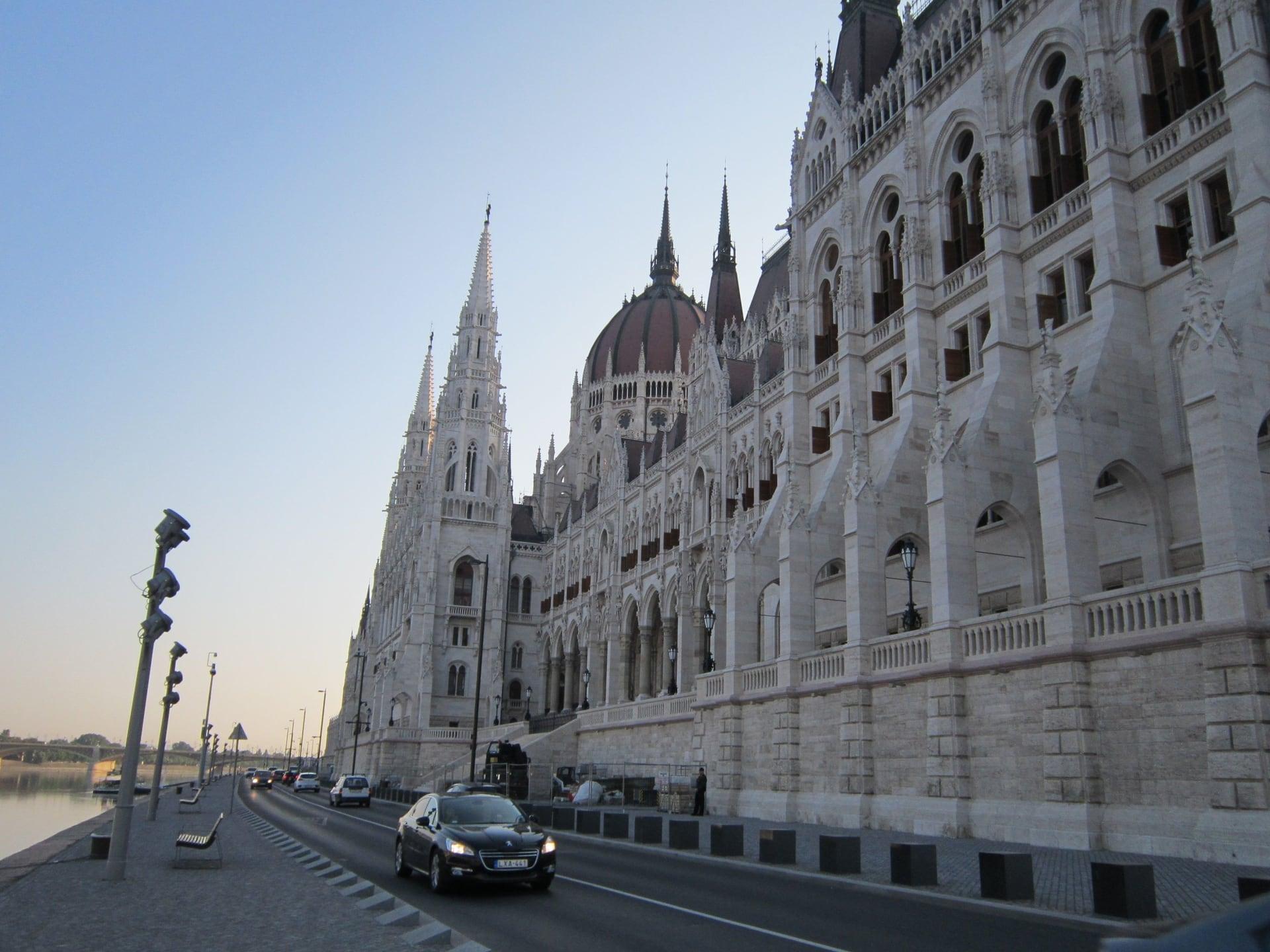
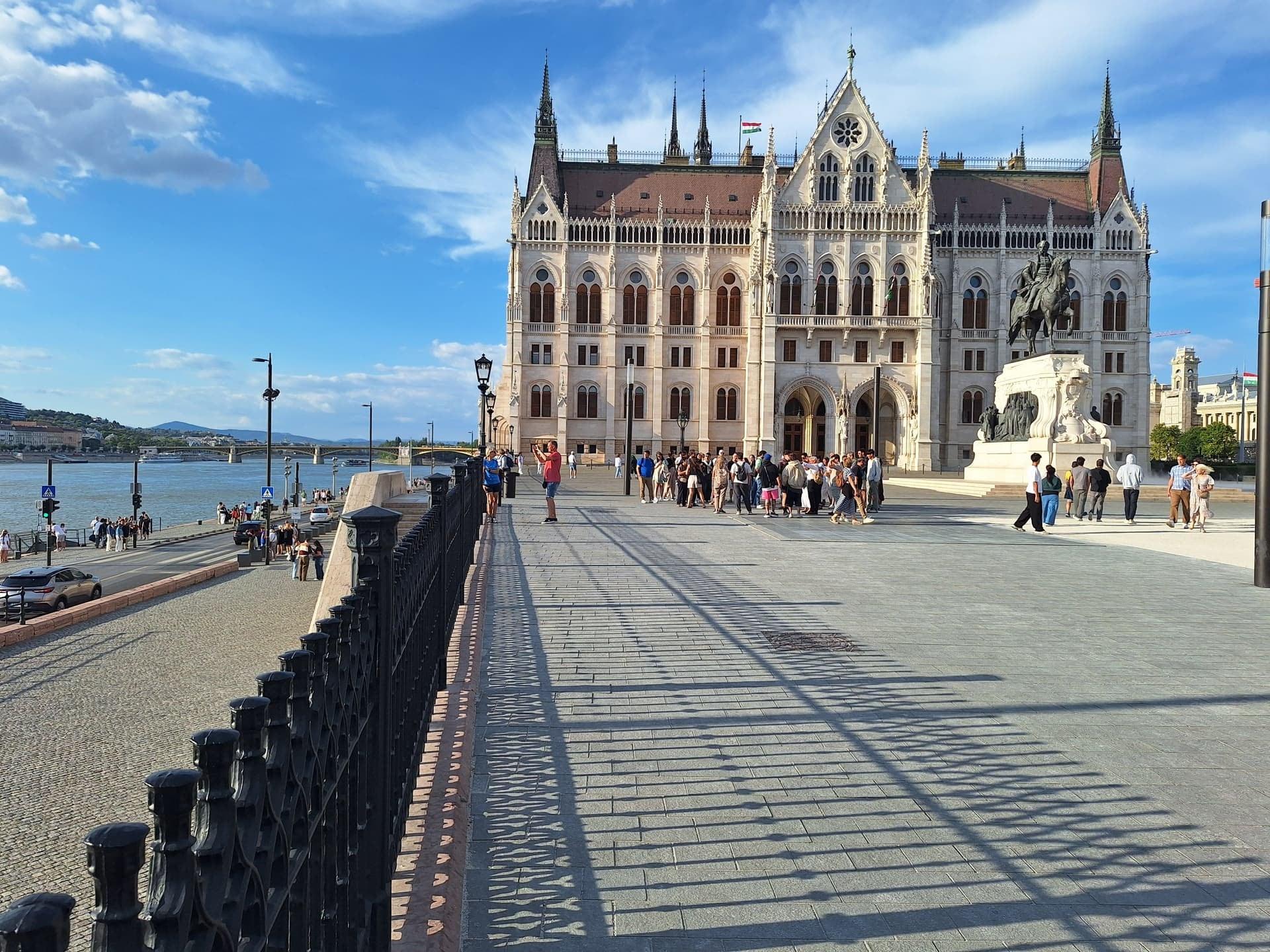
Parliament River Front
The Parliament side on from the river. A front of well over 250 meters, and a square restored to its pre-1944 look.
- 3
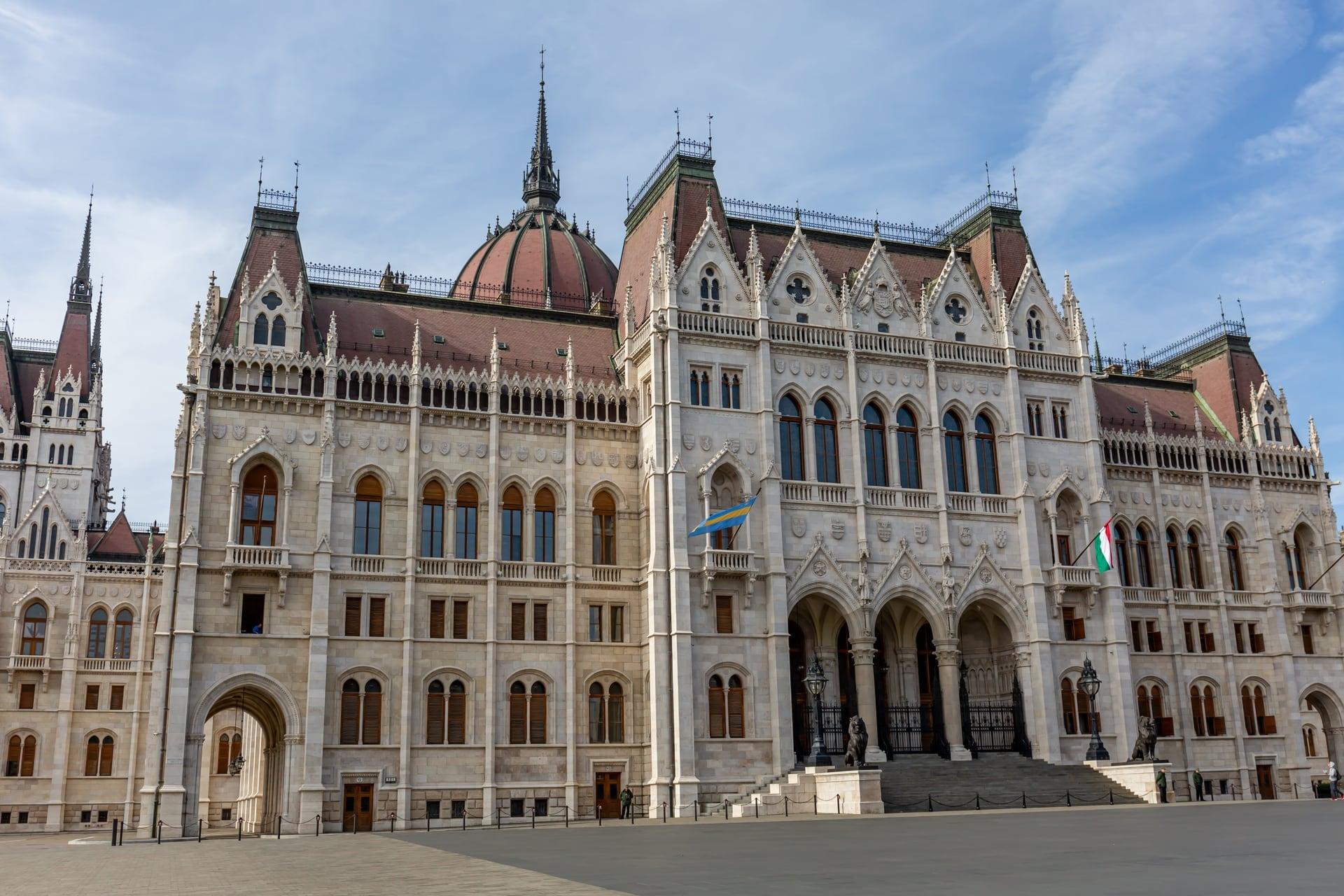
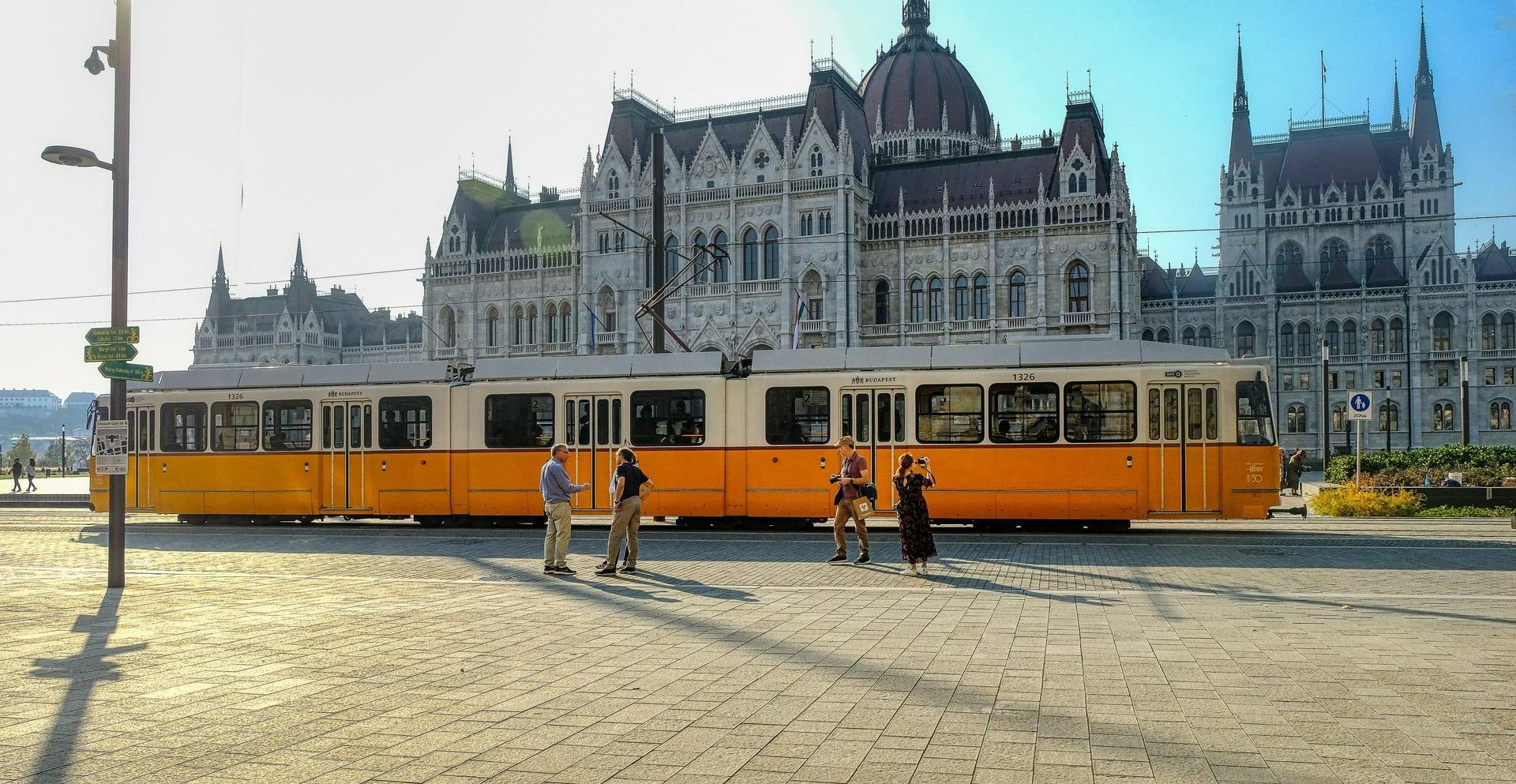
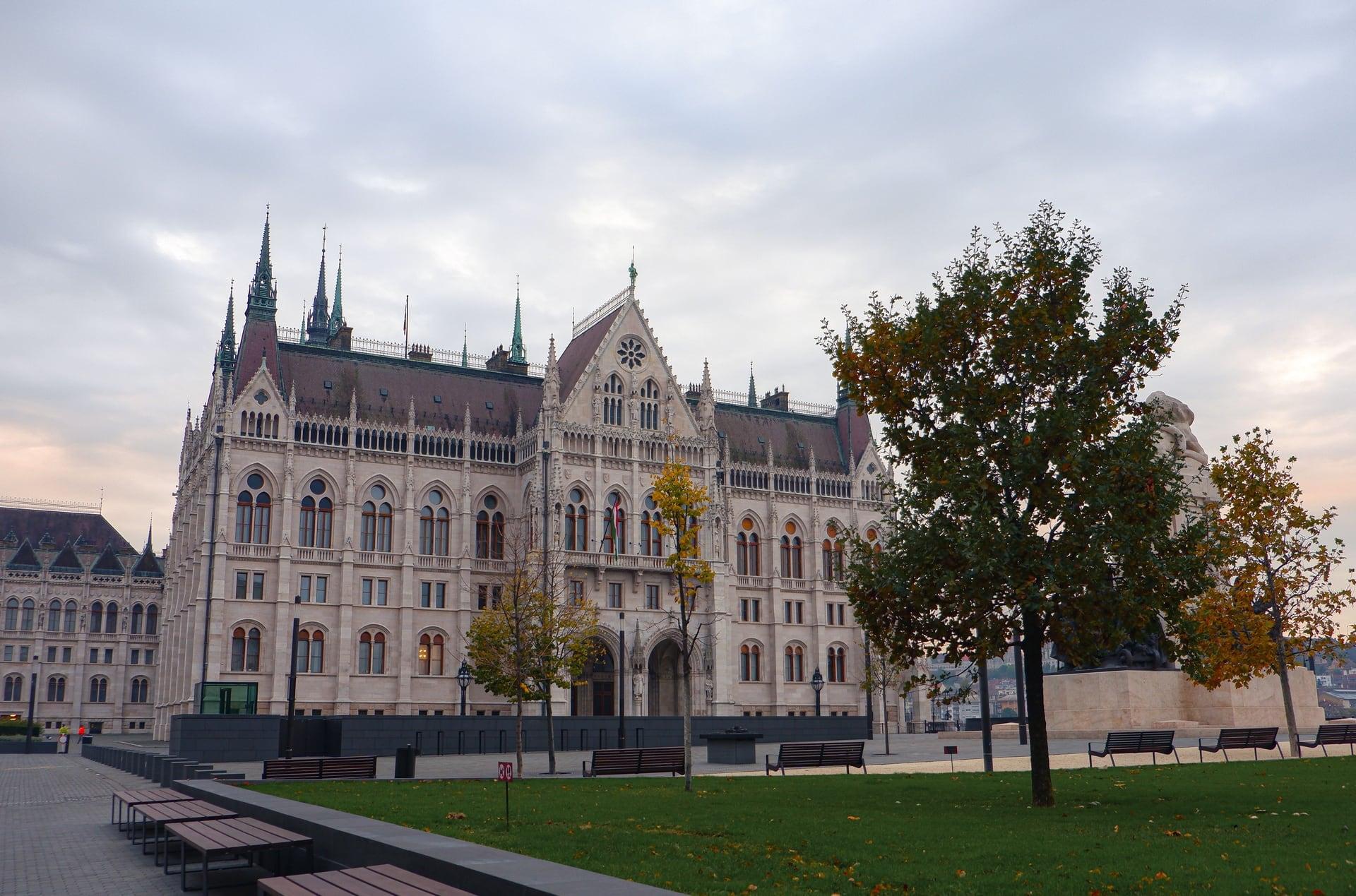
Parliament Main Front
Imre Steindl's front seen from the open plaza. A design chosen from nineteen entries, its architect dead weeks before the handover.
- 4
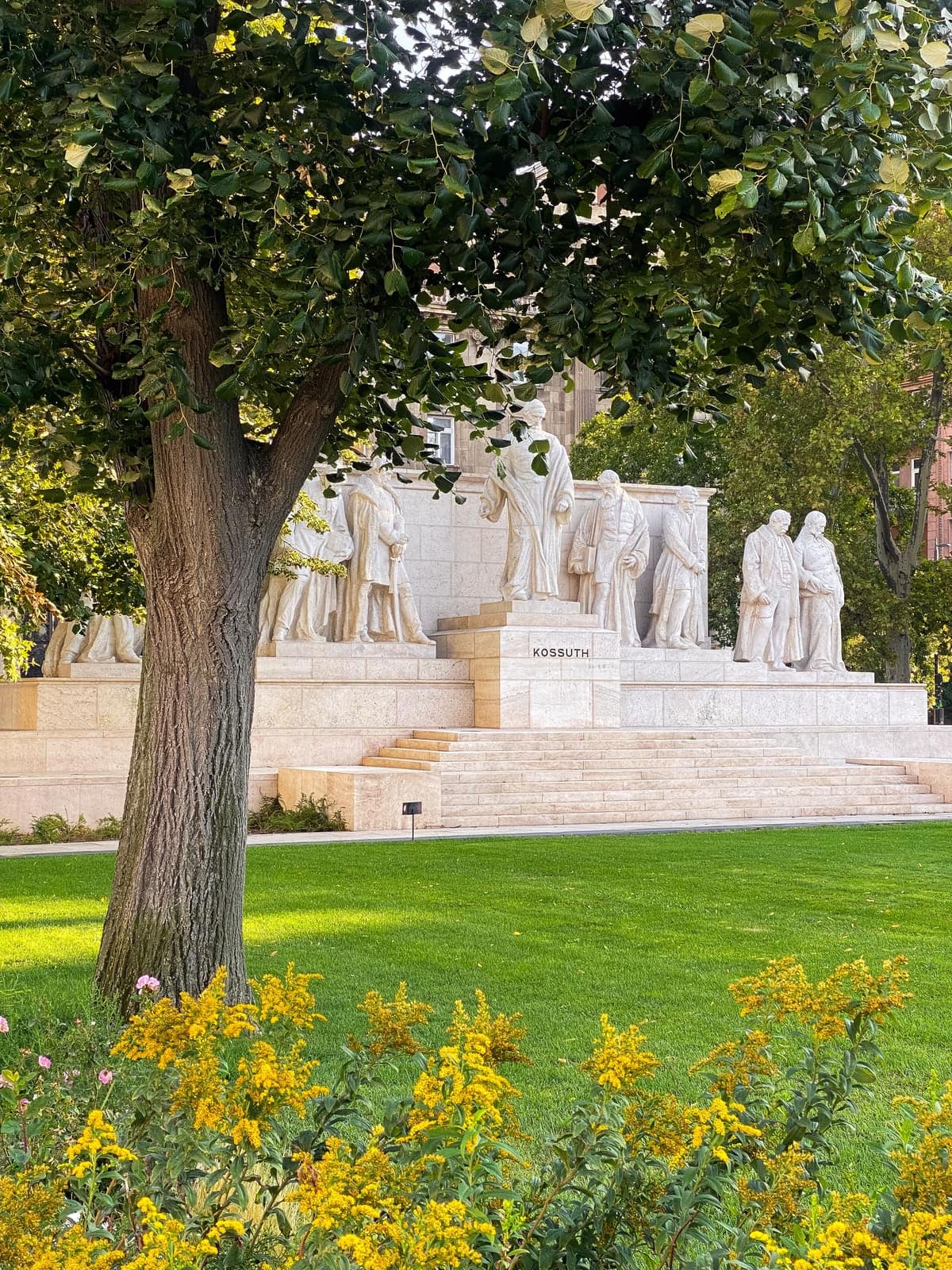
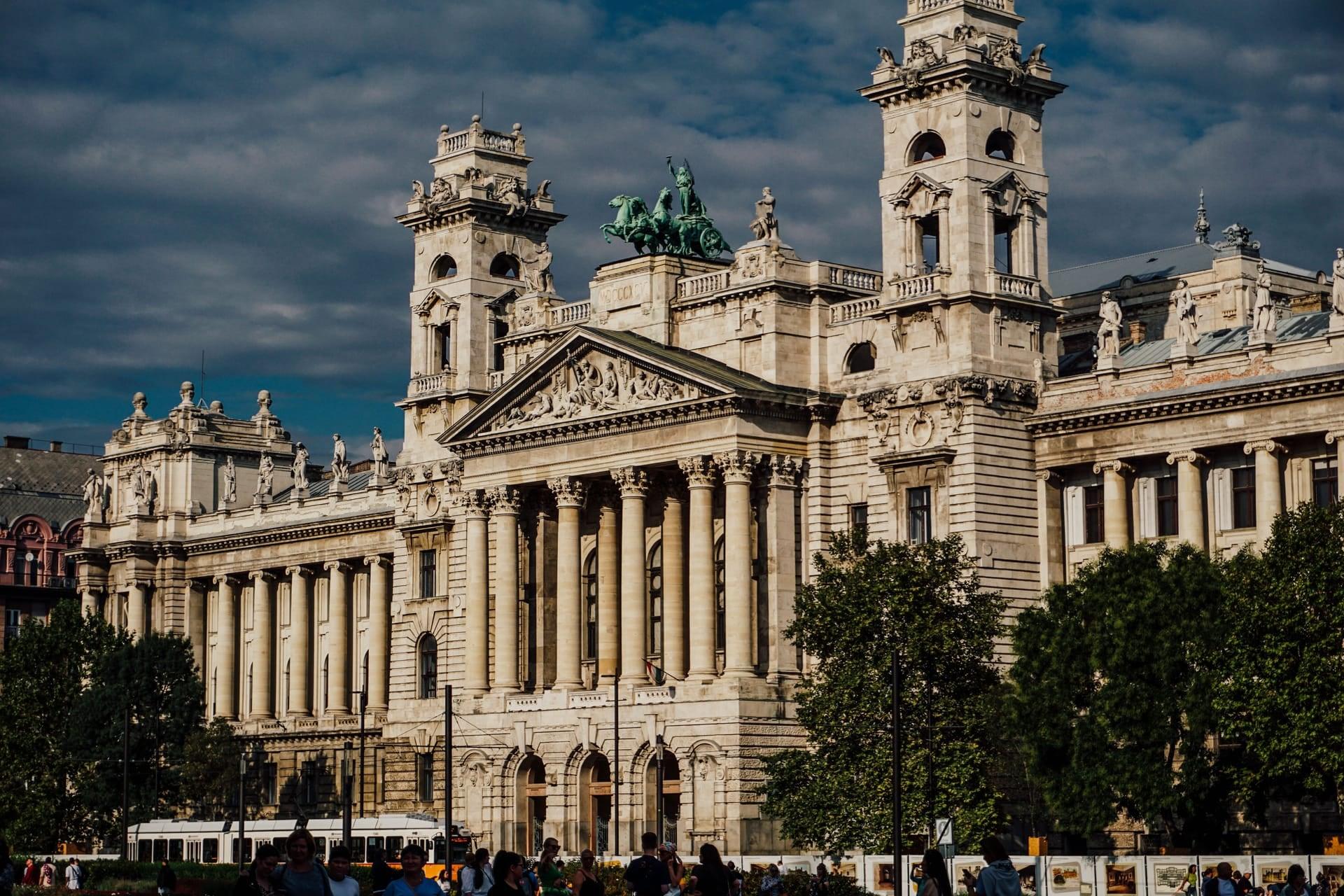
Kossuth Monument
A monument removed under communism, recreated in 2014. Across the tram tracks, the Palace of Justice and its chariot.
- 5
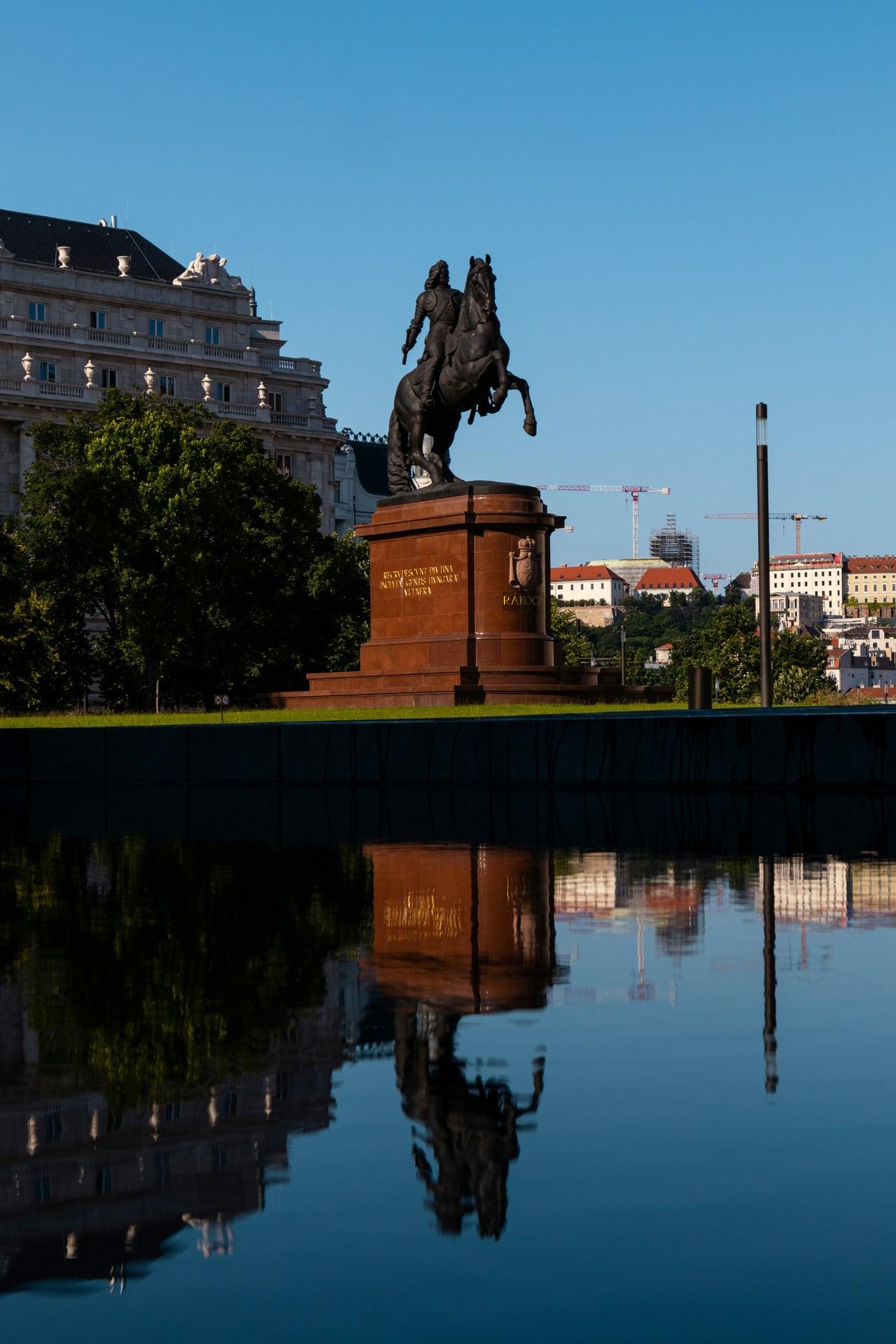
1956 on Kossuth tér
Where demonstrators were fired on in October 1956. The memorial bronze balls are behind construction hoarding until about 2028.
- 6
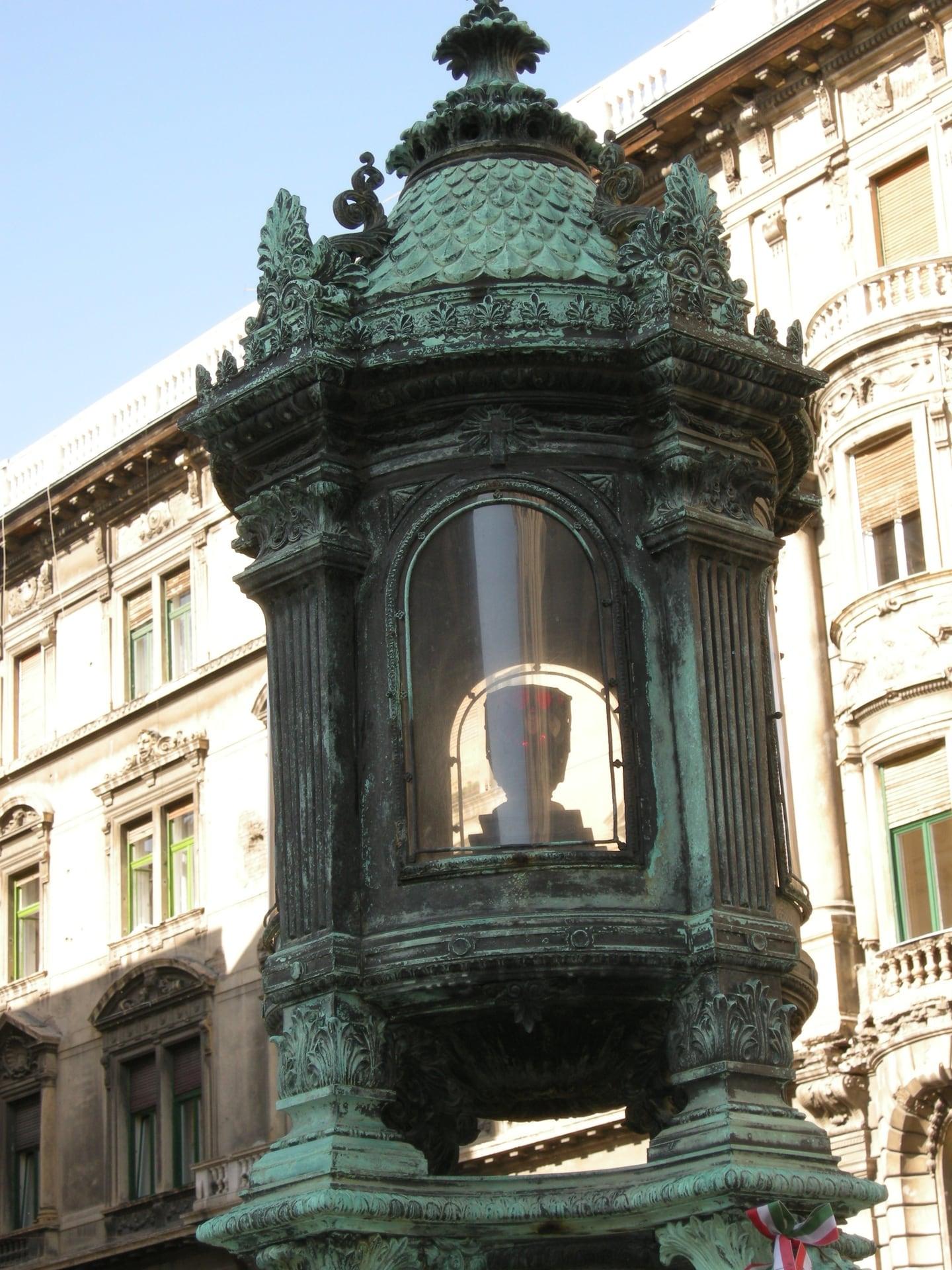
Batthyány Eternal Lamp
A red lamp where a prime minister was shot. Lajos Batthyány died at a barracks wall on 6 October 1849.
- 7
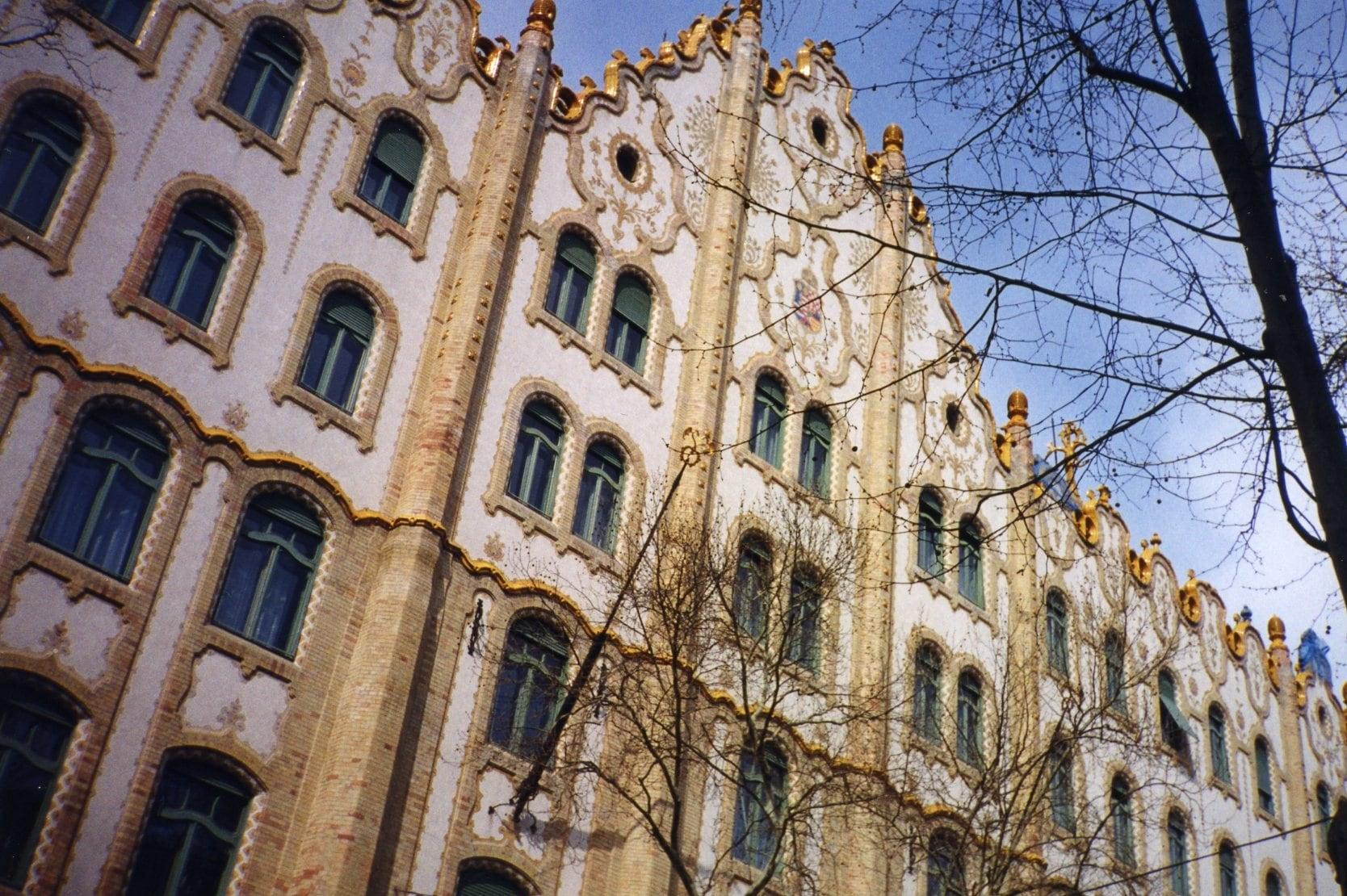
Postal Savings Bank
Ödön Lechner's bank with its show on the roof. Zsolnay majolica, dragon ornaments, glazed tiles and busy bees, finished about 1901.
- 8
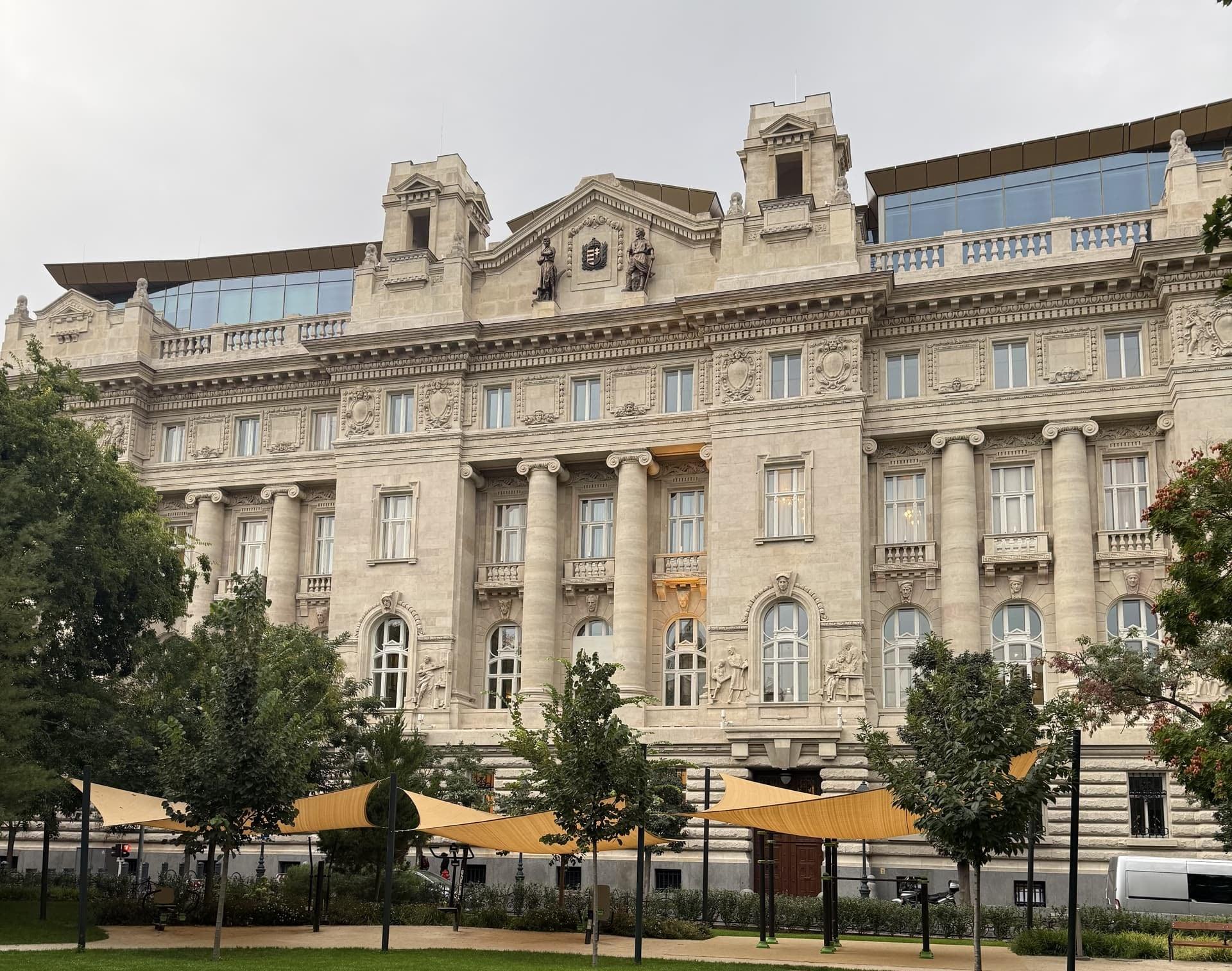
Szabadság tér
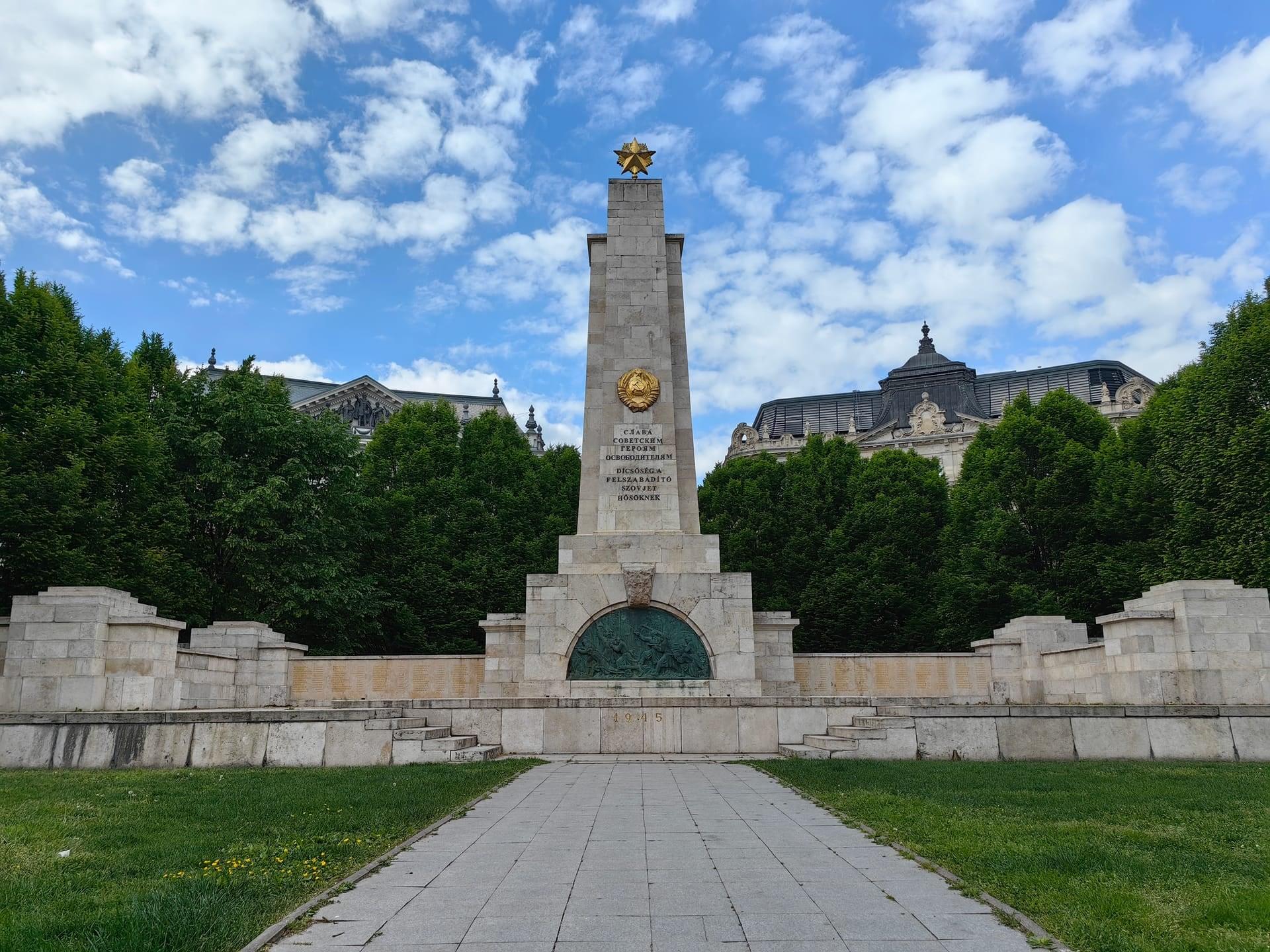
Liberty Square laid out where the barracks stood. Two palaces by one architect, and a Soviet obelisk kept for diplomatic reasons.
- 9
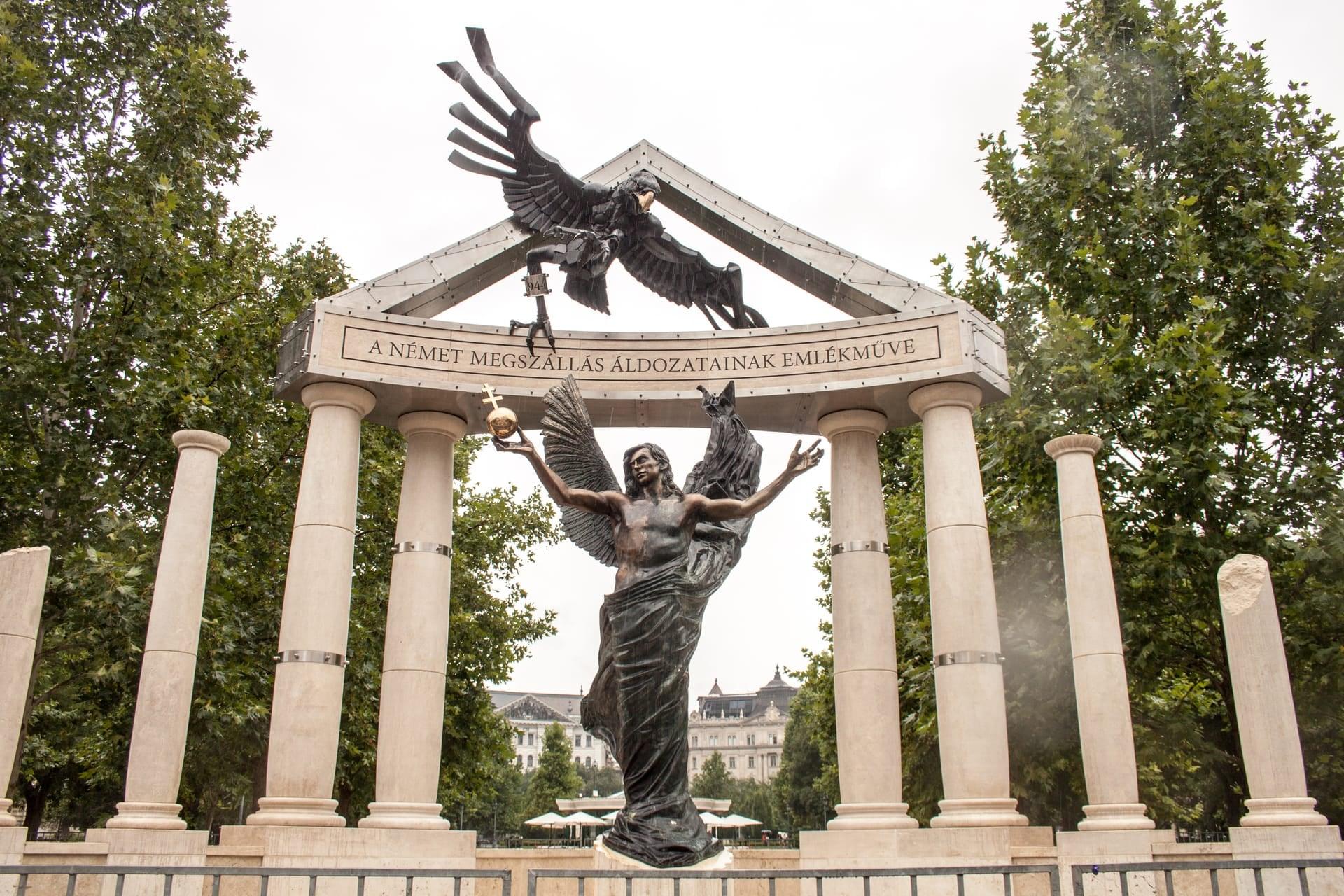
Occupation Memorial
A 2014 memorial and the citizens' answer to it. Two ways of telling 1944, set up a few steps apart, both described here.
- 10
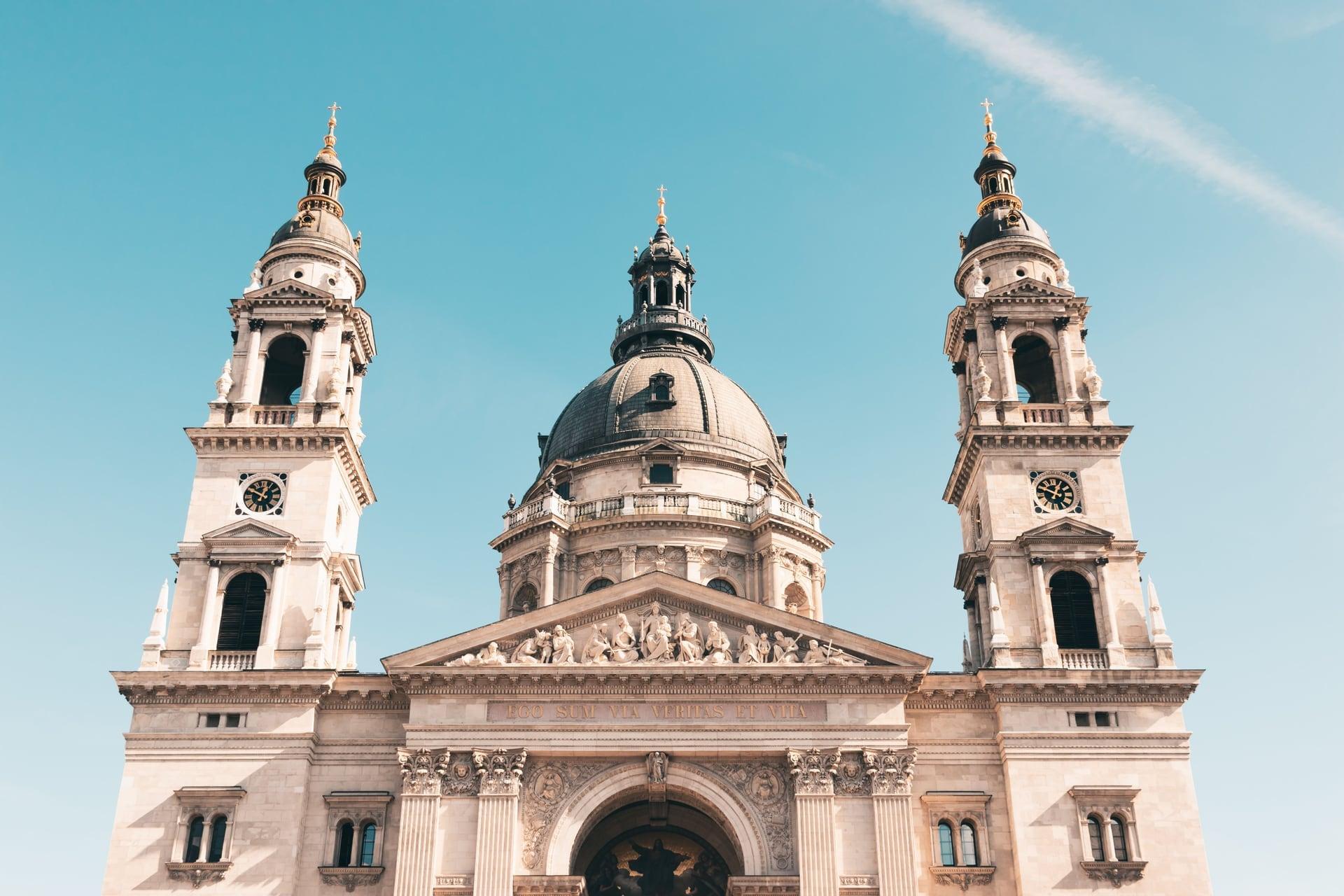
St Stephen's Basilica
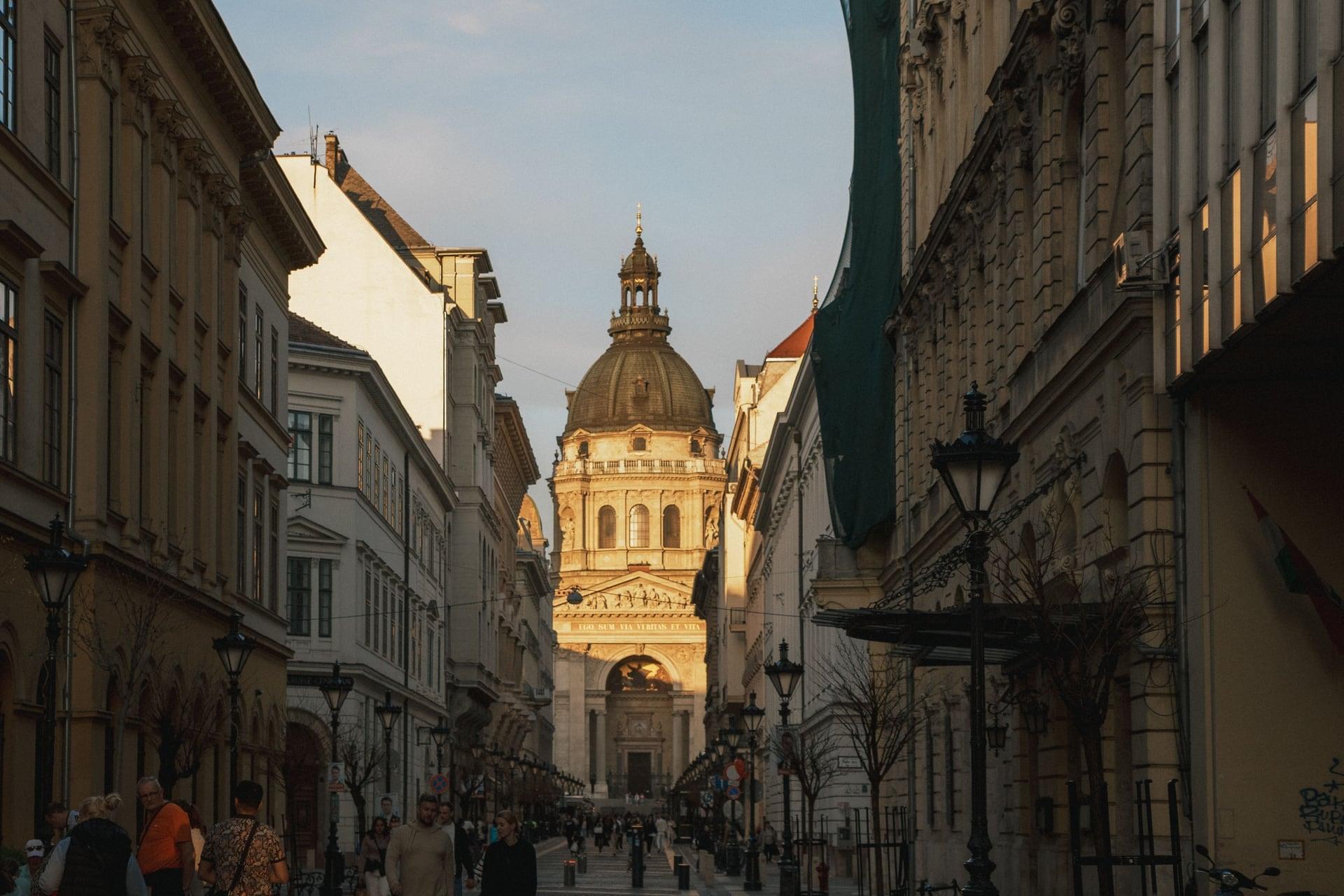
Pest's great church born of the 1838 flood. Begun in 1851, its dome fell in 1868; it was consecrated on 19 November 1905.
Details
Best Time to Visit
Any day and any hour: every stop is on open public ground and works after dark. For the Basilica's interior, arrive Monday to Saturday before 17:15 or Sunday from 12:30, when tickets are sold; the dome terrace sells tickets until 18:30. In early November sunset is at about 16:15 (computed, not an official almanac), and the riverside start is unlit water's edge, so take the Shoes in daylight if you can. The Parliament's river front is busiest at sunset. From about 13 November 2026 to 1 January 2027 the Advent Christmas market fills Szent István tér, with crowds in the evenings. Kossuth Lajos tér can close for state ceremonies, such as on national holidays. Checked 9 November 2026.
Pro Tips
- •Getting to the start: metro line M2 to Kossuth Lajos tér, exit to the square's south side, then about 330 meters across the square's south-west corner, down the steps, over the riverside road at the push-button signal and about 160 meters along the river to the Shoes. Tram 2 stops at Kossuth Lajos tér M (on the square) and Kossuth Lajos tér (Széchenyi rakpart), on the land side of the road about 40 meters from the Shoes but reachable only by the same signal. Stop names as mapped in OpenStreetMap; confirm at bkk.hu. The M2 station is mapped as not wheelchair accessible. Checked 9 November 2026.
- •Step-free: after the push-button signal (between stops 1 and 2), skip the 22 steps up to the square. Keep along the sidewalk on the square's side of the road to the square's corner by the tram tracks, then walk up onto the square to stop 2: about 150 meters longer, no steps. Curb ramps at that corner are not mapped. The rest of the walk is level.
- •Inside the Parliament: this walk stays outside. The interior can be seen only on a ticketed guided tour, booked through the Parliament's visitor center, which is under the north end of Kossuth Lajos tér. Check tour times, languages and prices at parlament.hu before you plan one in. Checked 9 November 2026.
- •The 1956 underground memorial and exhibition beneath Kossuth Lajos tér, entered near the square's south corner (passed between stops 2 and 3), is free; it has closed in some past winters, so check its hours at parlament.hu before going. Checked 9 November 2026.
- •St Stephen's Basilica (stop 10): a ticket is needed for every visitor, and the dome's Panorama Terrace and Treasury are ticketed too; hours and the dress rule are on the stop's card. Ticket prices are on the Basilica's official site, bazilikabudapest.hu. Checked 9 November 2026.
- •Leaving from the end: metro M1 Bajcsy-Zsilinszky út is about 250 meters from Szent István tér, M1, M2 and M3 at Deák Ferenc tér about 450 meters, and M3 Arany János utca about 400 meters (OpenStreetMap; confirm at bkk.hu). The Historic Center walk begins at Széchenyi István tér, at the Chain Bridge's Pest end, about 5 minutes away on foot. Checked 9 November 2026.
Safety & Precautions
- •Cross the riverside road (Id. Antall József rakpart) only at the push-button signal at Kossuth Lajos tér: press the button and wait for the green. There is no other way on or off the riverside strip near the start.
- •Between stops 5 and 6 the route crosses tram 2's tracks on Kossuth Lajos tér at a tram crossing with no signal: look both ways. Later legs cross quiet side streets (Kozma Ferenc utca, Honvéd utca, Aulich utca, Hold utca, Kiss Ernő utca, Arany János utca) at corners with no marked crossing, and the street at the south end of Szabadság tér at an unmarked crossing.
- •The Shoes on the Danube are a memorial: do not sit on the embankment edge or stand among the shoes, and do not pose for photographs with them. The riverside strip is narrow and shared with cyclists and groups; there is no railing at the water's edge.
- •Kossuth Lajos tér: the strip in front of the Parliament is fenced and guarded by police, who direct visitors; stay on the public plaza and paths. The square can close for state ceremonies, such as on national holidays. Drones are forbidden over the square and the Parliament's buildings.
- •Stop 9: if the counter-memorial's objects are on the paving, do not step on or move them. The United States Embassy on Szabadság tér is guarded; do not linger at its fence.
- •Hold utca and the streets around the Postal Savings Bank are narrow between tall blocks, so GPS can drift; follow the street names on the map. From mid November the Basilica's Advent market crowds Szent István tér in the evenings.
Travel advisory: Exercise Normal Precautions (Level 1).
Gallery
Related Reading
Go deeper on what you'll see, hear, and walk through.
Read the walk
The full story of Parliament: A Square That Keeps Changing Its Mind, in words. Prefer to listen? Play it narrated, from home or on location.
Introduction
Budapest built its Parliament to face the river, and on the square in front of it Hungary keeps changing its mind about what to remember. Monuments here have been taken down and brought back. Bullet hits have been marked in bronze. On one square a memorial and a citizens' protest have stood a few steps apart, each answering the other.
This walk follows that habit through Lipótváros, Leopold Town, the district behind the Parliament. It opens quietly, at a Holocaust memorial on the river. Then it climbs onto the square to see the Parliament whole, side and front, and stops where a crowd was fired on in October nineteen fifty six. It follows the ground of a vanished Habsburg barracks to a red lamp, looks up at a bank that wears its decoration on the roof, crosses Liberty Square, and ends at Saint Stephen's Basilica, a church that rose from a flood.
The walk has ten stops, about two point three kilometers, a mile and a half, and about seventy five minutes. Pest is flat. There is one flight of twenty two steps up from the river, with a step-free way round. Cross the riverside road only at the push-button signal, and watch for trams on the square. Every stop is on free public ground, seen from outside, and the square can close on state occasions. When you arrive at the Shoes on the Danube, begin with stop one.
1. Shoes on the Danube
Welcome to the Shoes on the Danube, where this walk begins. Stop on the sidewalk a few steps short of the shoes, well back from the stone edge, and let them come into view.
Along the edge of the embankment stand sixty pairs of shoes, cast in iron, in the styles people wore at the time. They were made by a film director and a sculptor, and set here on the sixteenth of April, two thousand and five. That date is Hungary's Holocaust memorial day.
Here is what they remember. In nineteen forty four, Hungary's antisemitic Arrow Cross movement came to power in Hungary. Its gunmen were Hungarian. During their terror, in the words of Hungary's National Heritage Institute, innocent Jewish people were shot into the Danube by the hundreds. The United States Holocaust Memorial Museum estimates that the Arrow Cross took as many as twenty thousand Jews from the ghetto and shot them along the banks of the river.
There are small plaques, and there are the shoes, left empty at the water.
This is a place of mourning. Please do not sit on the edge, do not stand among the shoes, and do not pose for photographs with them. The strip is narrow and shared with cyclists, so keep to the inner side.
Across the river rises the Castle Hill of Buda.
Follow the route along the riverside sidewalk, the water beside you, to the crossing with the push button at the foot of the square. Press it, and wait for the green before you cross. On the far side, twenty two steps climb to the square. For a way without steps, about a hundred and fifty meters longer, keep along the sidewalk on the square's side of the road to its corner by the tram tracks, then walk up onto the square. Next, the Parliament from the river side.
2. Parliament River Front
Climb the steps up from the riverside road and stop at the top, near the bronze horseman. Then turn to face the river, and let your eye run along the building beside you.
This is the Parliament from the side it shows the water. Its river front runs on for well over two hundred and fifty meters: a long wall of pointed windows, pinnacles and spires, with the great dome tower rising from the middle. Seen from here, side on, it is easy to understand why it faces the Danube. It is laid out to be read from the water and from the hills of Buda across the river, the view you had from stop one. So the building has two faces. This one, for the river and the far bank, and a main front on the square, for arrival, which comes next.
UNESCO inscribed the banks of the Danube here as part of Budapest's World Heritage site in nineteen eighty seven. It describes the Parliament as an outstanding example of a great official building, on a par with those of London, Munich, Vienna and Athens.
The square at your back has been made to look old on purpose. In two thousand and eleven, Parliament decided to give the square back its artistic look from before nineteen forty four, with the work due by the end of May, two thousand and fourteen. The bronze rider beside you is Hungary's first prime minister of the Dual Monarchy era. A poet's statue along the terrace was moved some way along the bank too, to a place the heritage institute says suits his lines about the Danube better.
Follow the route along the edge of the square, beside the fence of the Parliament's guarded strip. On the way you pass steps leading down to a free underground memorial to nineteen fifty six. Next, the Parliament's main front.
3. Parliament Main Front
Walk on to the corner of the open paved plaza, with the national flag on its tall mast out on the paving, and turn to face the building.
This is the Parliament's main front, the side it shows the city. The central entrance is ahead of you, and above it the dome tower rises ninety six meters, by the Parliament's own figure. The strip right in front of the doors is fenced and guarded; the plaza where you stand is open to everyone.
The building is the work of Imre Steindl. In eighteen eighty three a competition drew nineteen designs, and his was the one chosen to build. Work began in eighteen eighty five. Parliament wanted to sit in its new house for the country's millennium in eighteen ninety six, so the plans and the schedule were changed to make that possible. Parliament first sat here in October nineteen oh two, about seventeen years after work began, and about forty kilograms of gold went into the decoration. UNESCO gives slightly different years, eighteen eighty four to nineteen oh four. Steindl did not see it finished. He died on the thirty first of August, nineteen oh two, weeks before it was handed over.
Look at how the front is built around that single tower. The wings step away to either side, and the long river front runs behind. Everything leads the eye back to the dome over the entrance.
Guides like to say that the Basilica's dome, at the end of this walk, rises to the same ninety six meters, and they link the number to eight ninety six, the year Hungarians traditionally give for their arrival. That is a story, not a rule.
Follow the route up the walk beside the fence, along the front toward the building's north wing. Next, a monument that was taken away and brought back.
4. Kossuth Monument
Stop on the path at the end of the lawn, beside the large bronze group. This is the Kossuth Monument, and in a sense it has stood here twice. Hungary's National Heritage Institute describes it as a group showing the members of the country's first responsible government. The…
Full narration for this stop unlocks with the tour.
5. 1956 on Kossuth tér
Stop on the walkway, with the tram tracks between you and the long building behind the construction fence. On the twenty fifth of October, nineteen fifty six, during the revolution, people were demonstrating on this square against the communist regime, in front of the…
Full narration for this stop unlocks with the tour.
6. Batthyány Eternal Lamp
Come out at the small island where five streets meet, and stop on its footway. The lamp you have just passed is behind you, on its stone base behind a low railing. Turn back to face it. The streets around you cover the ground of a building that has gone. From seventeen eighty…
Full narration for this stop unlocks with the tour.
7. Postal Savings Bank
Turn around and look back the way you came, along this short pedestrian street, at the building across its end. This is the Postal Savings Bank, finished around nineteen oh one and protected as a monument. It was designed by Ödön Lechner with a partner, after a first…
Full narration for this stop unlocks with the tour.
8. Szabadság tér
Walk into the park on the long footway, and stop where it meets the walk running up the middle of the square. The footway you are standing on runs between two big palaces, one at each end of it. This is Szabadság tér, Liberty Square, and it stands on the ground of the barracks…
Full narration for this stop unlocks with the tour.
9. Occupation Memorial
Come down onto the paved plaza and stop near its far edge. Then turn around, and face back toward the park you have just crossed, to the memorial at this end of the square. In July two thousand and fourteen, a memorial went up here under police protection. It was never formally…
Full narration for this stop unlocks with the tour.
10. St Stephen's Basilica
Walk out into Szent István tér and stop in the open square, with the Basilica's front ahead of you: two towers, and the dome rising behind them. This church began with a flood. In eighteen thirty eight the Danube flooded Pest and ruined this district's first church. Many people…
Full narration for this stop unlocks with the tour.