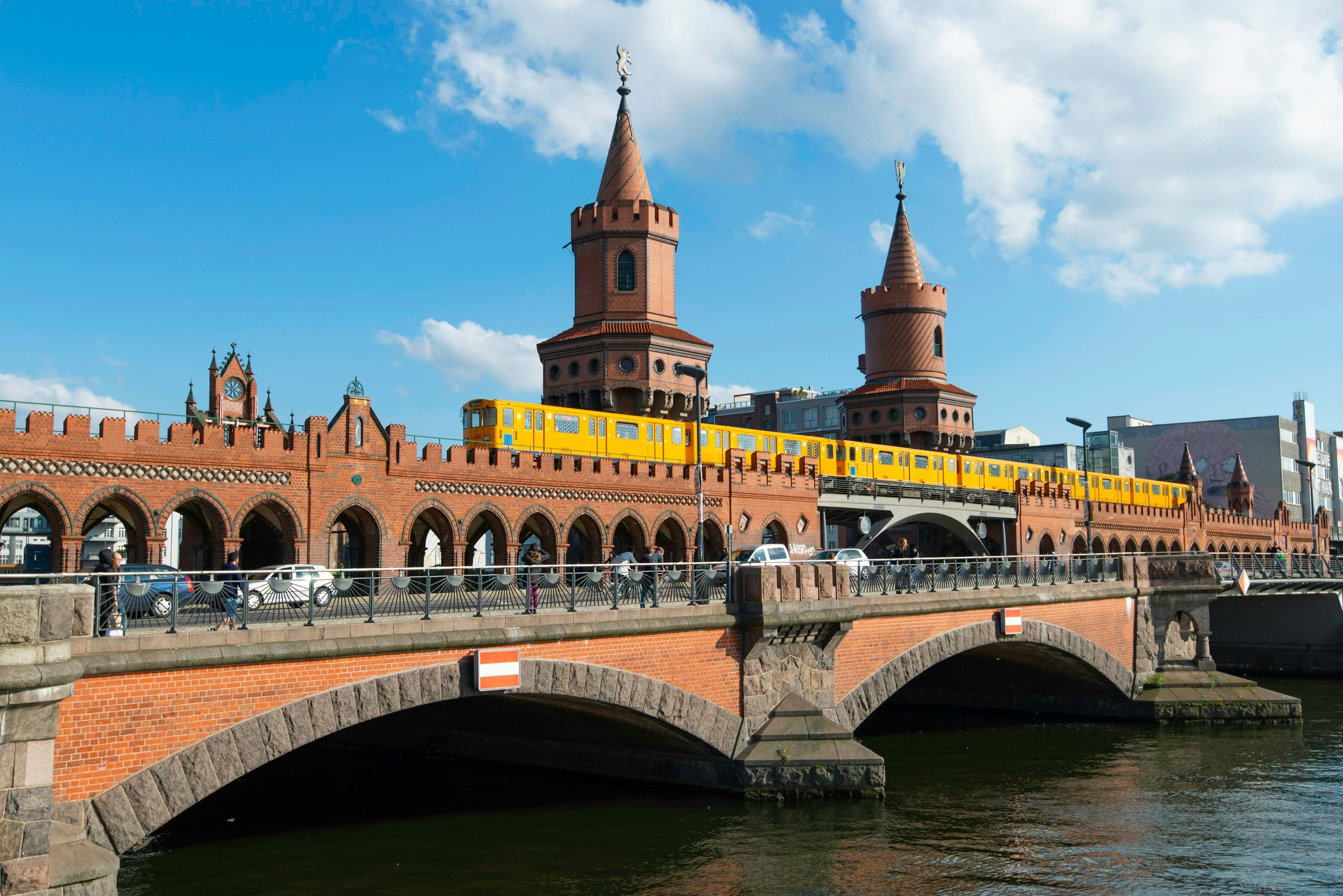
Walk behind the longest surviving stretch of the Berlin Wall in the riverside park, then along its painted face past Noir's heads, the Trabant and the Kiss, over the Oberbaumbrücke to Schlesisches Tor.
Start · Park an der Spree: Behind the Wall
DirectionsStops
- 1
Park an der Spree: Behind the Wall
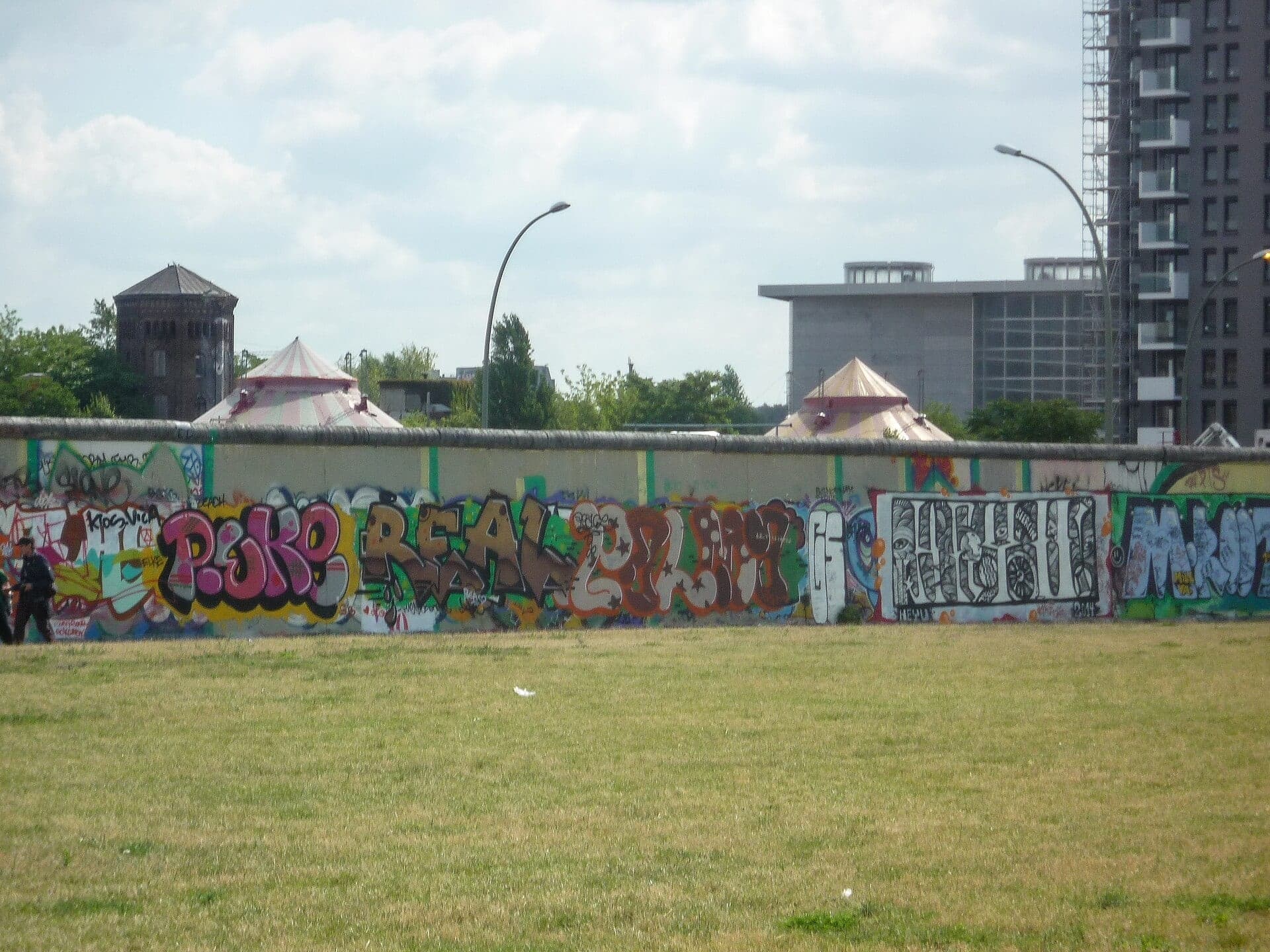
Begin behind the Wall in the border strip. Here the Spree itself was the border, and the long smooth wall beside the path was the inner wall, built to face East Berlin.
- 2
Patrol Path: The River Was the Border
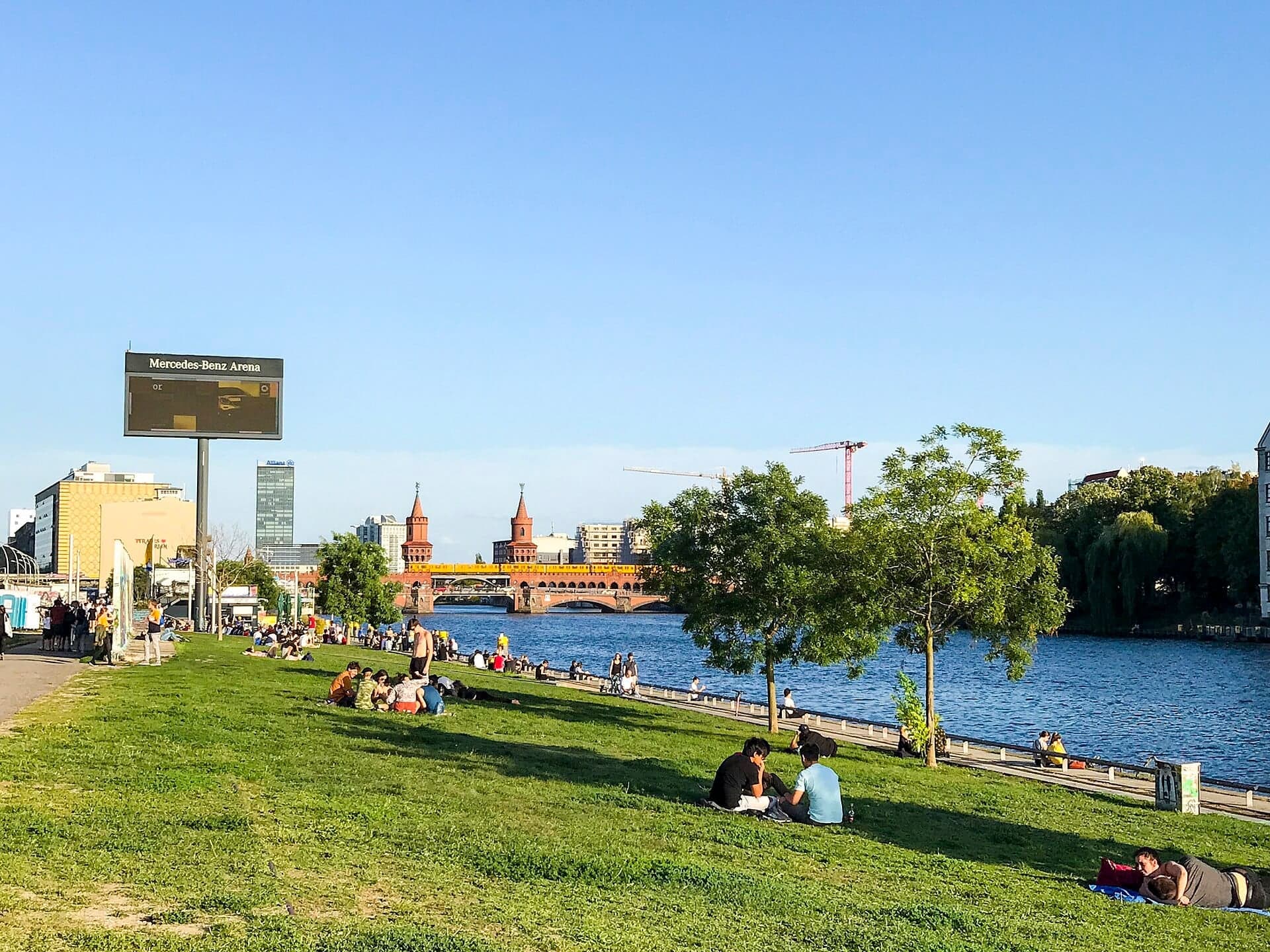
Follow the riverside path where guards once walked. East German border troops watched the Spree from boats, and the bank was cleared for a clear view and a clear line of fire.
- 3
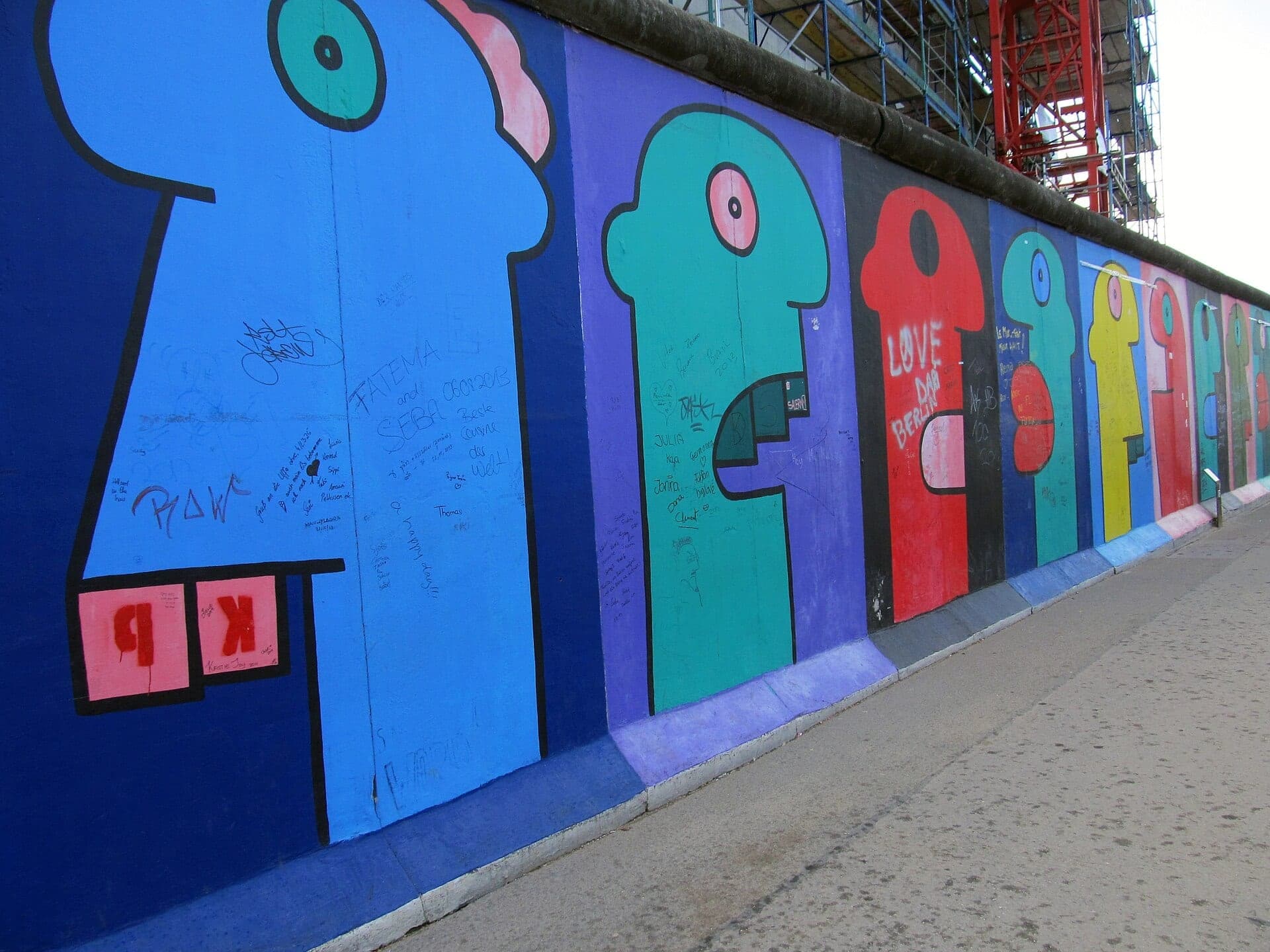
Thierry Noir: Heads on the Other Side
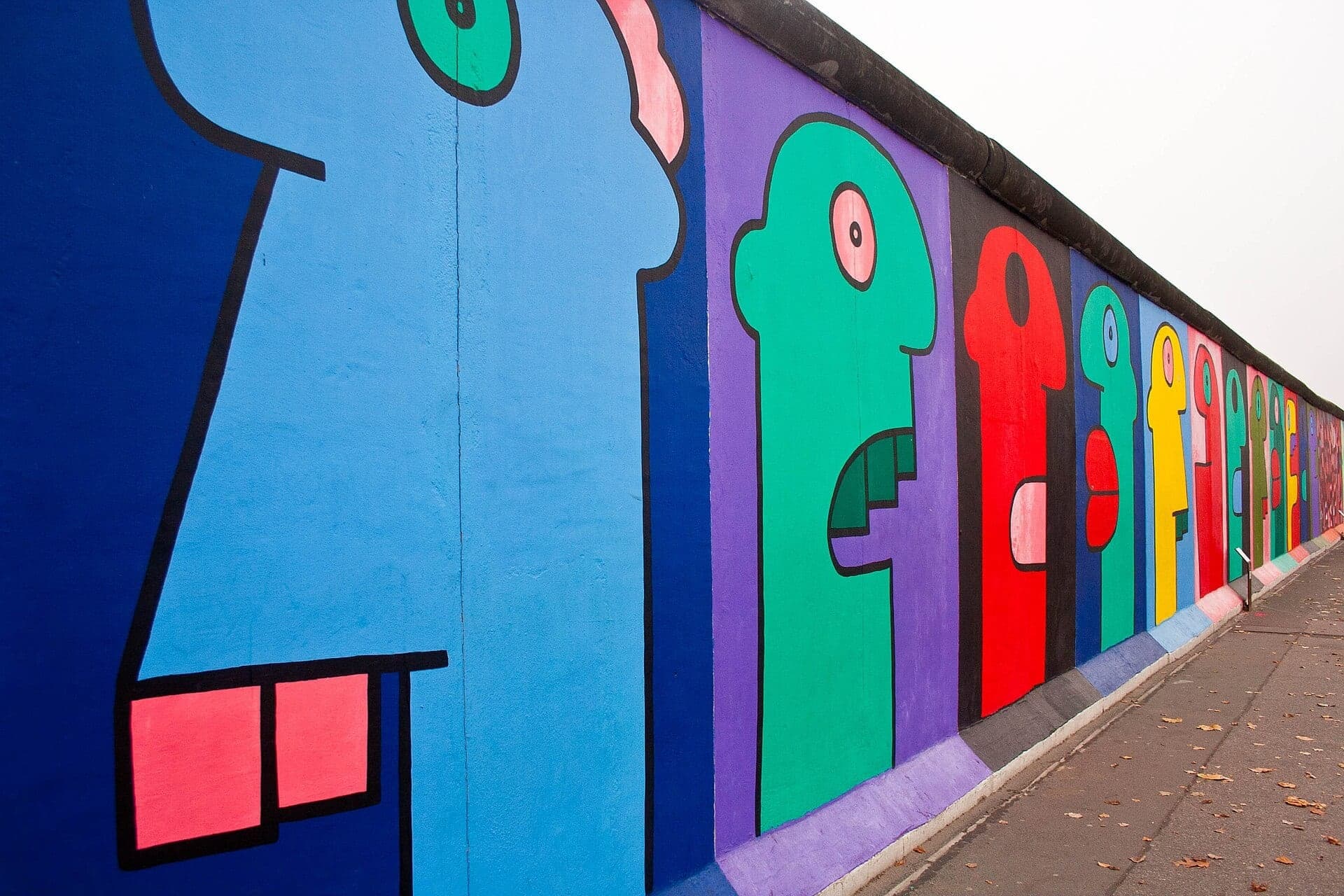
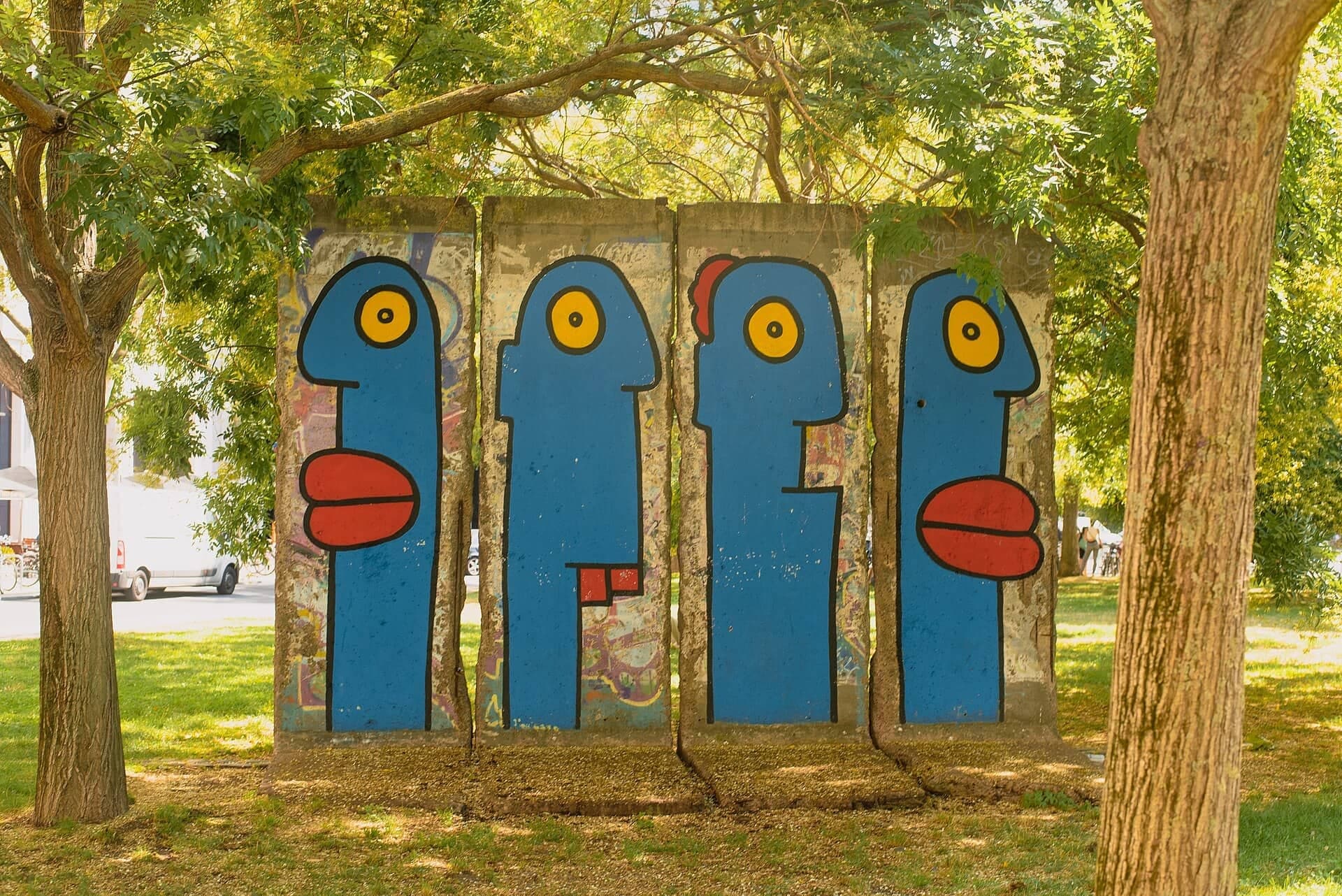
Thierry Noir's heads on the painted face. The French artist who had painted the western face of the Wall for years painted this eastern face in 1990, beside a gap in the gallery.
- 4
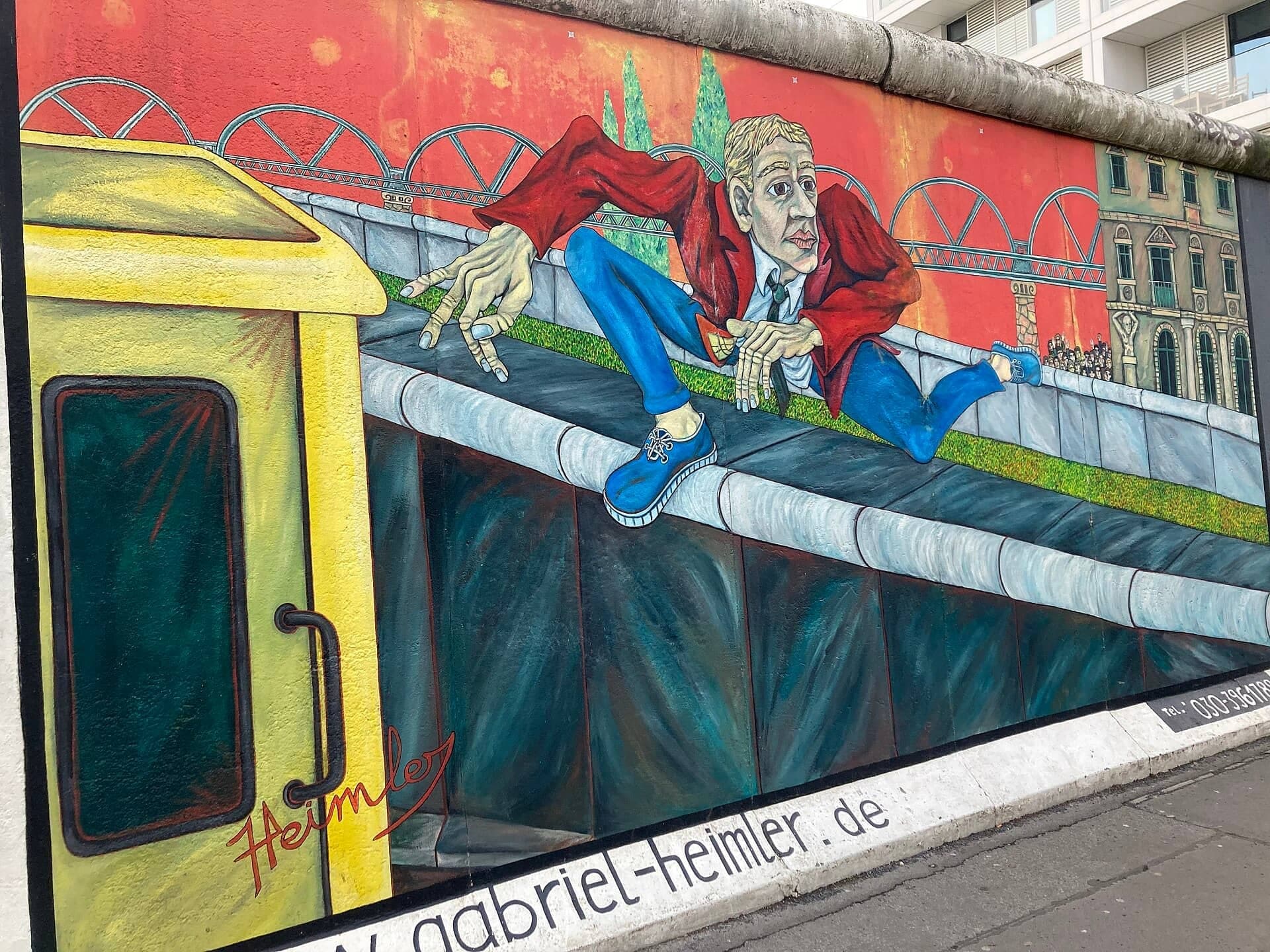
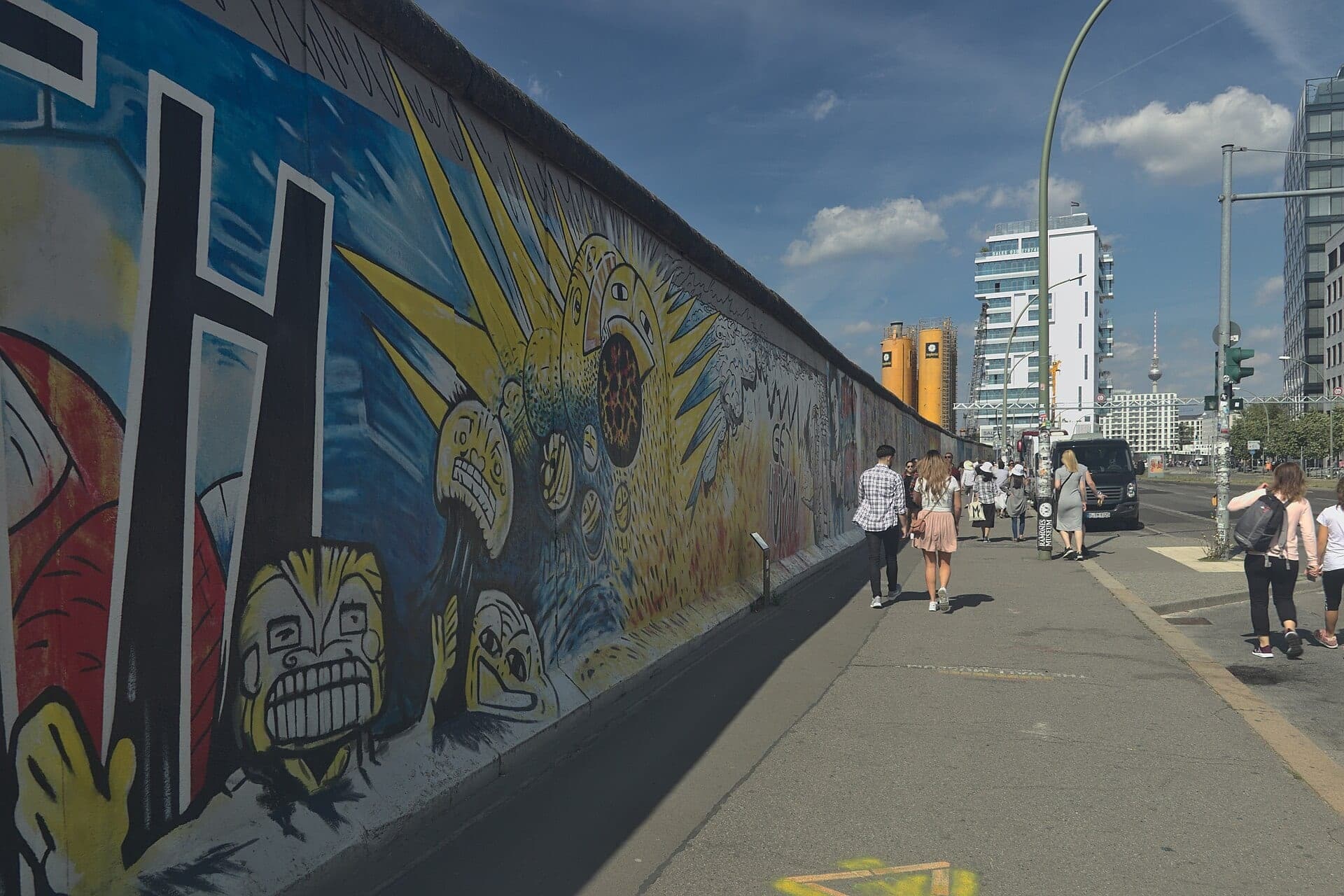
Wall Jumper: A Gallery Painted Twice
The Wall Jumper and a gallery painted twice. In 1990, 118 artists painted 106 pictures on bare concrete; in 2009 the paint was blasted off and most of them painted their work again.
- 5
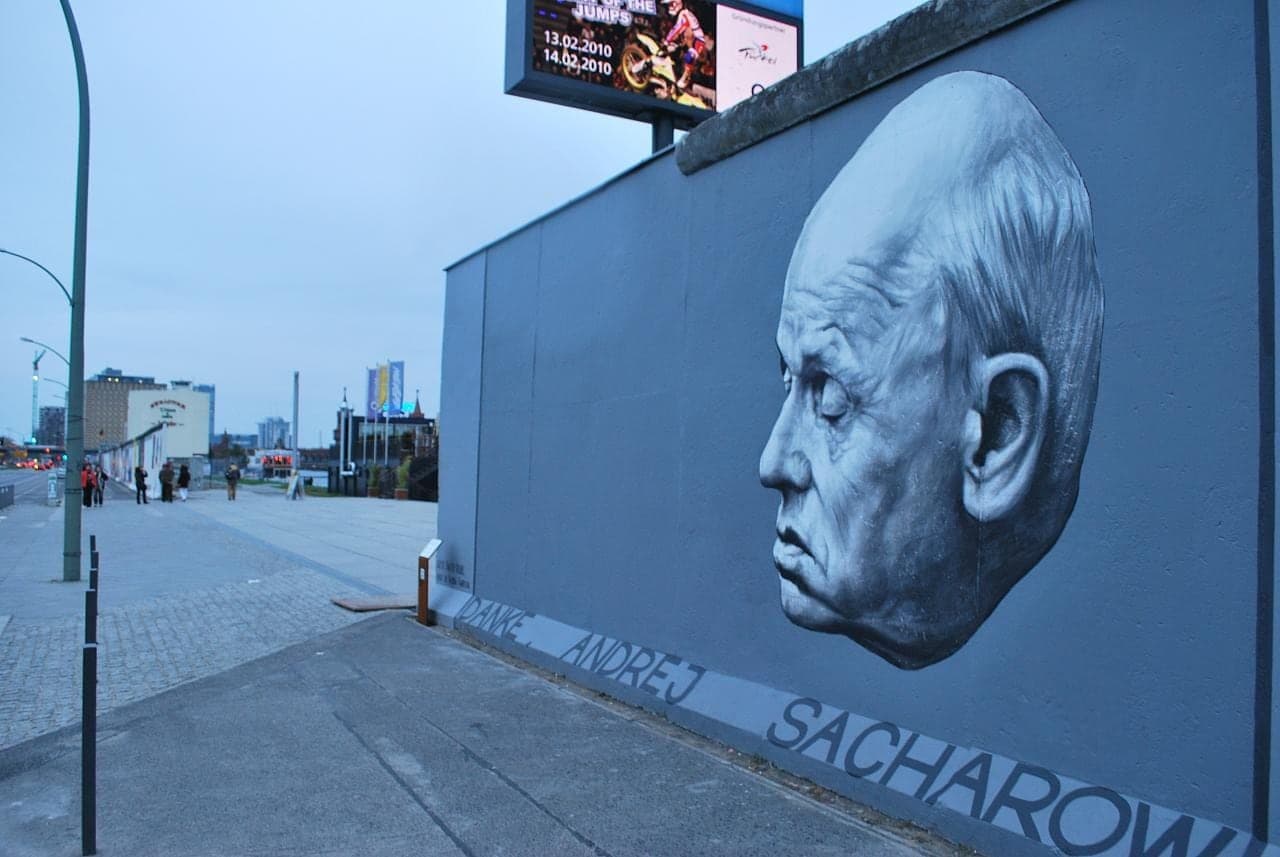
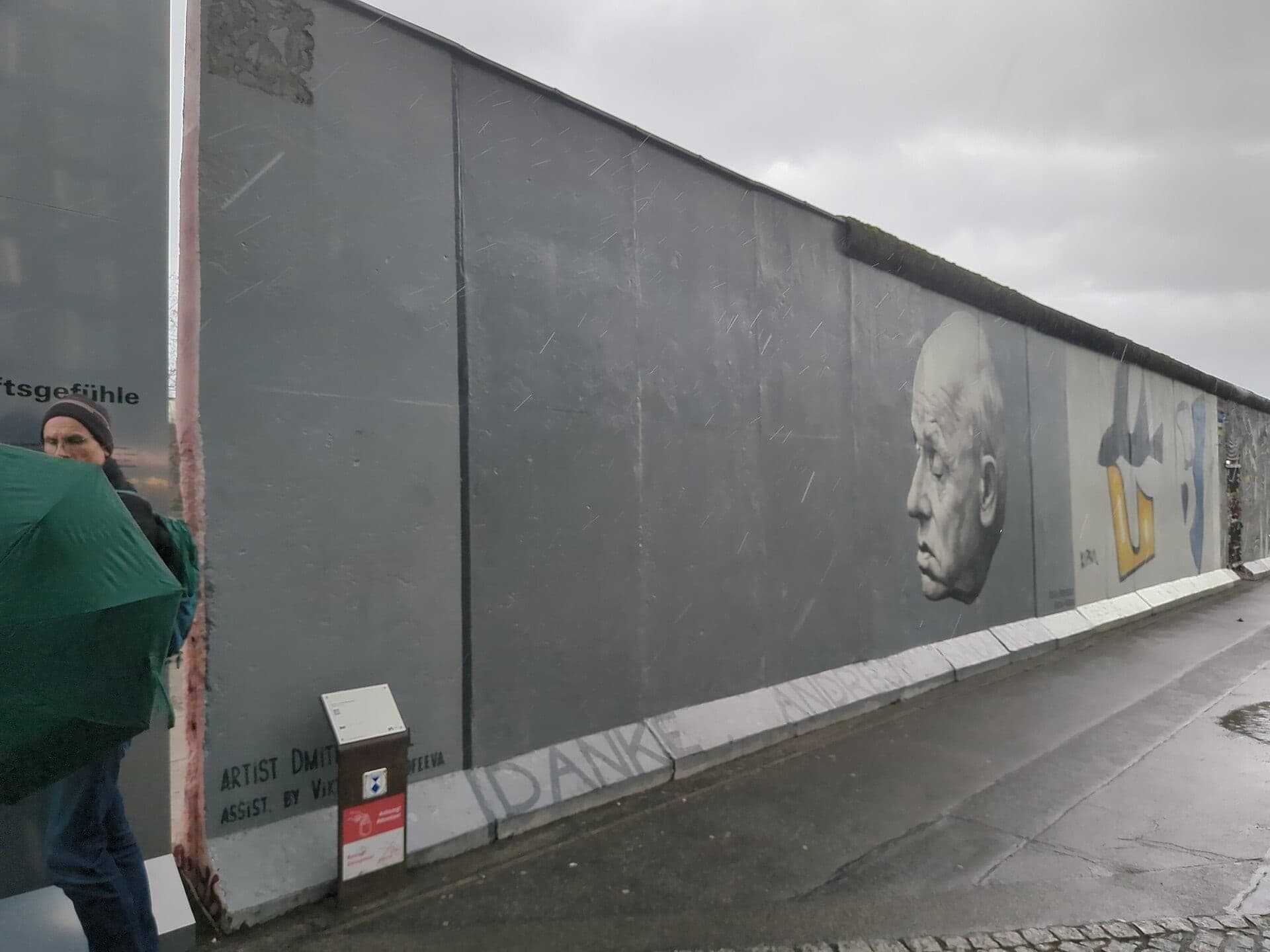
Thank You, Andrei Sakharov: The Gatehouse
Dmitry Vrubel's tribute and the old gatehouse. Beside the panel, a small house built into the border wall in 1977 is now the gallery's information point.
- 6
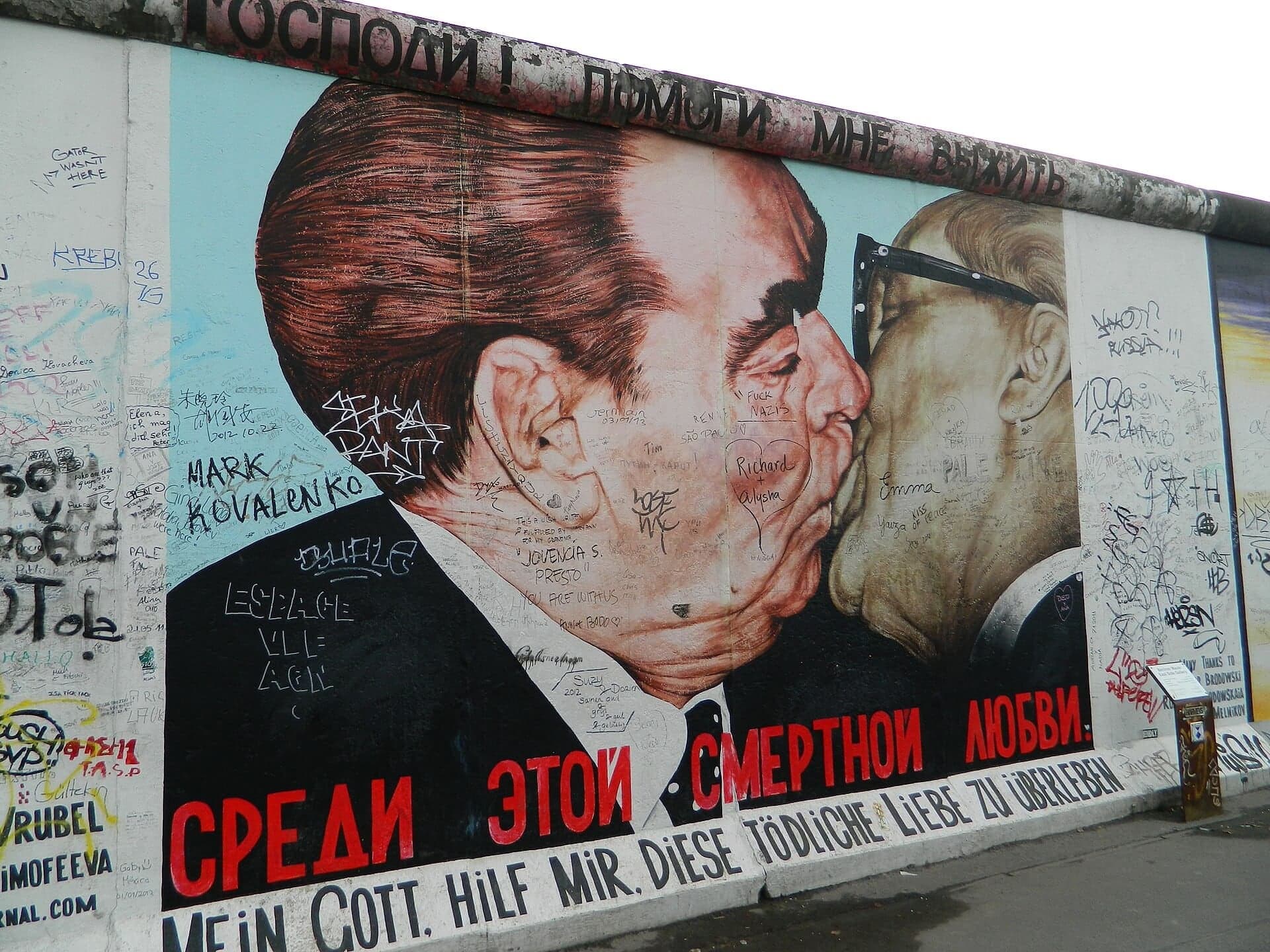
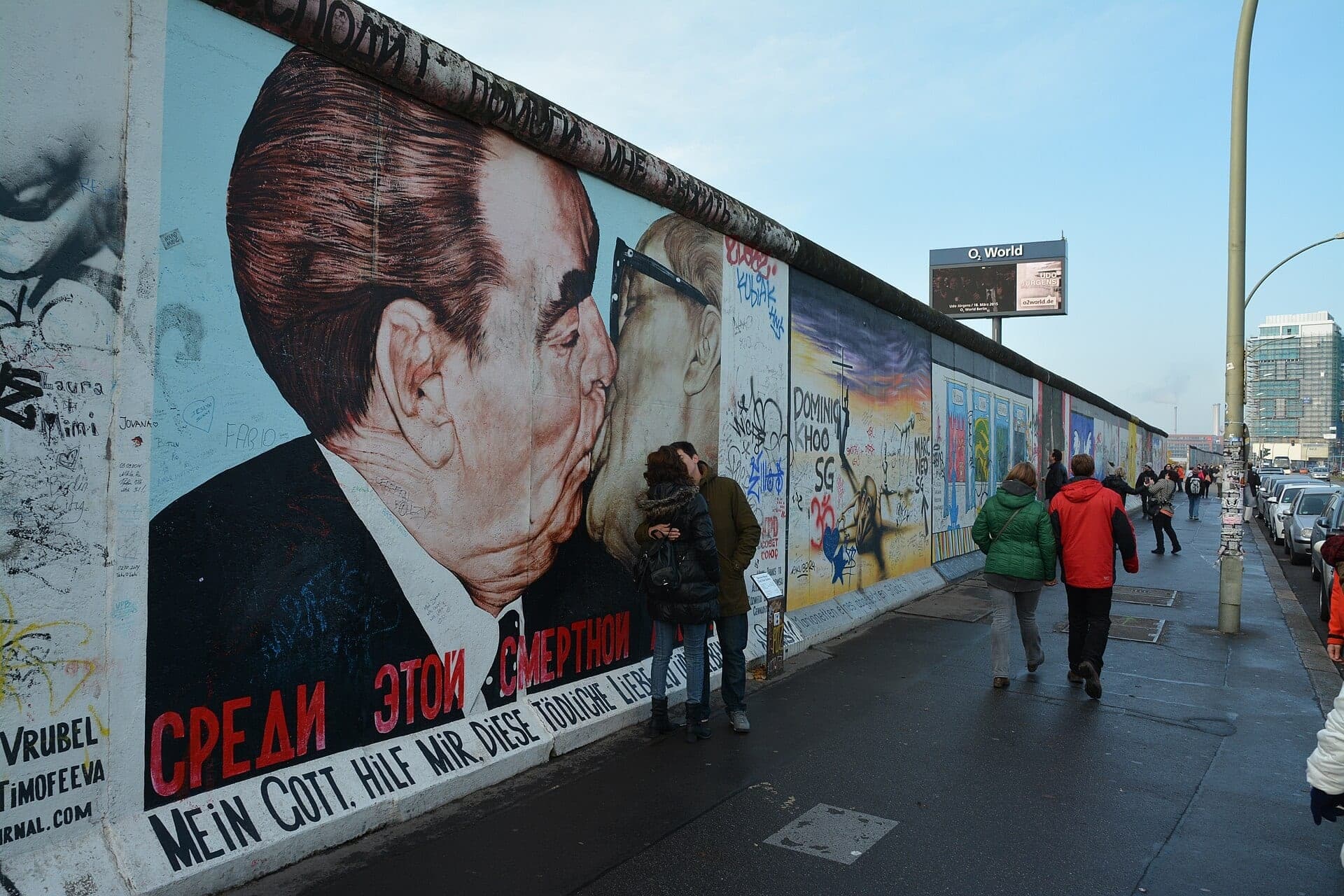
Brotherly Kiss: A Photo Painted Twice
The fraternal kiss of Brezhnev and Honecker. Dmitry Vrubel painted it from a 1979 press photograph in 1990, and painted it again himself after the 2009 restoration.
- 7
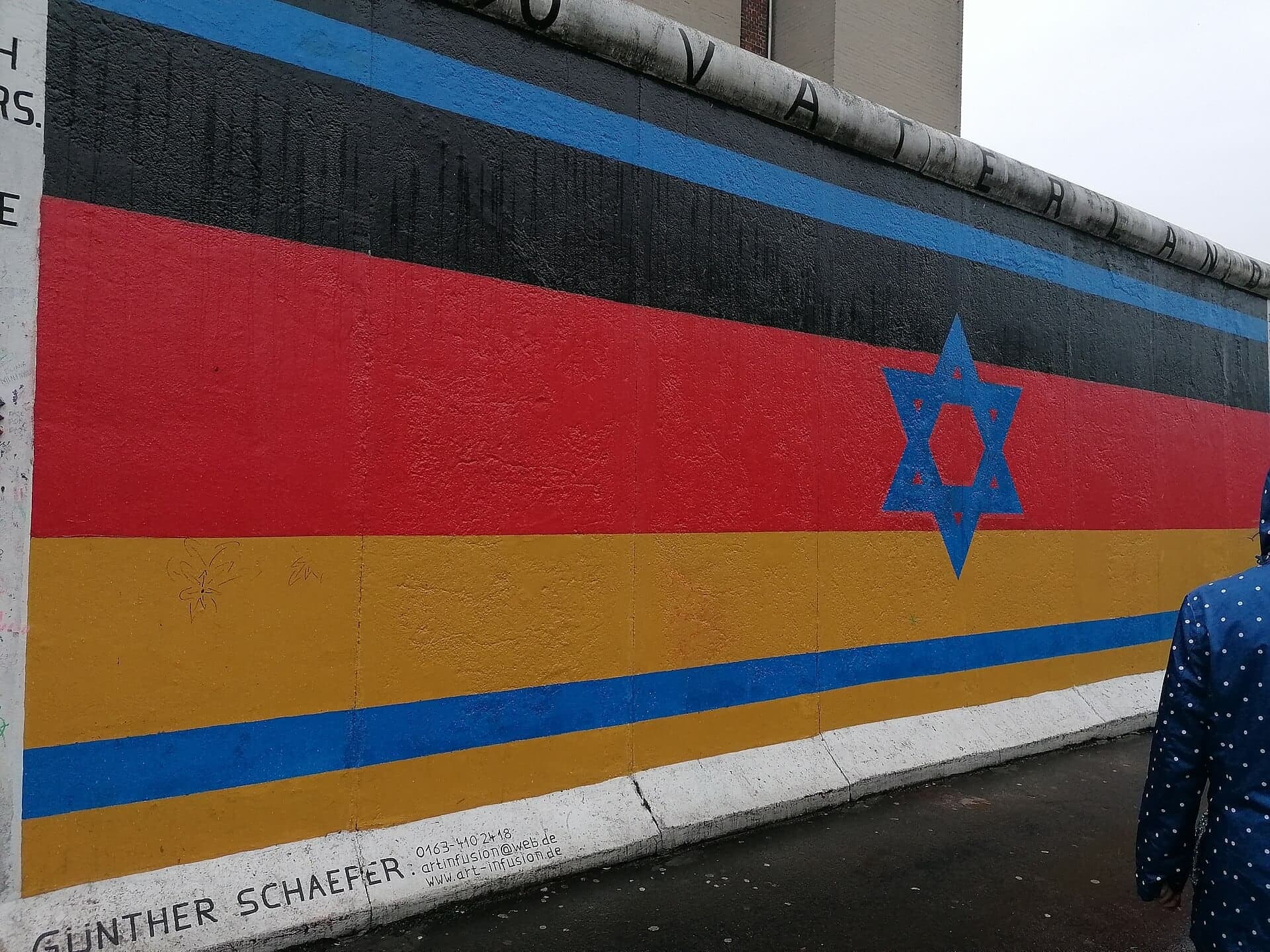
Last Panels: Toward the Bridge
The last panels before the bridge. Two paintings here were the test pieces for trial restorations in 2000; just beyond the panels stand the towers of the Oberbaumbrücke.
- 8
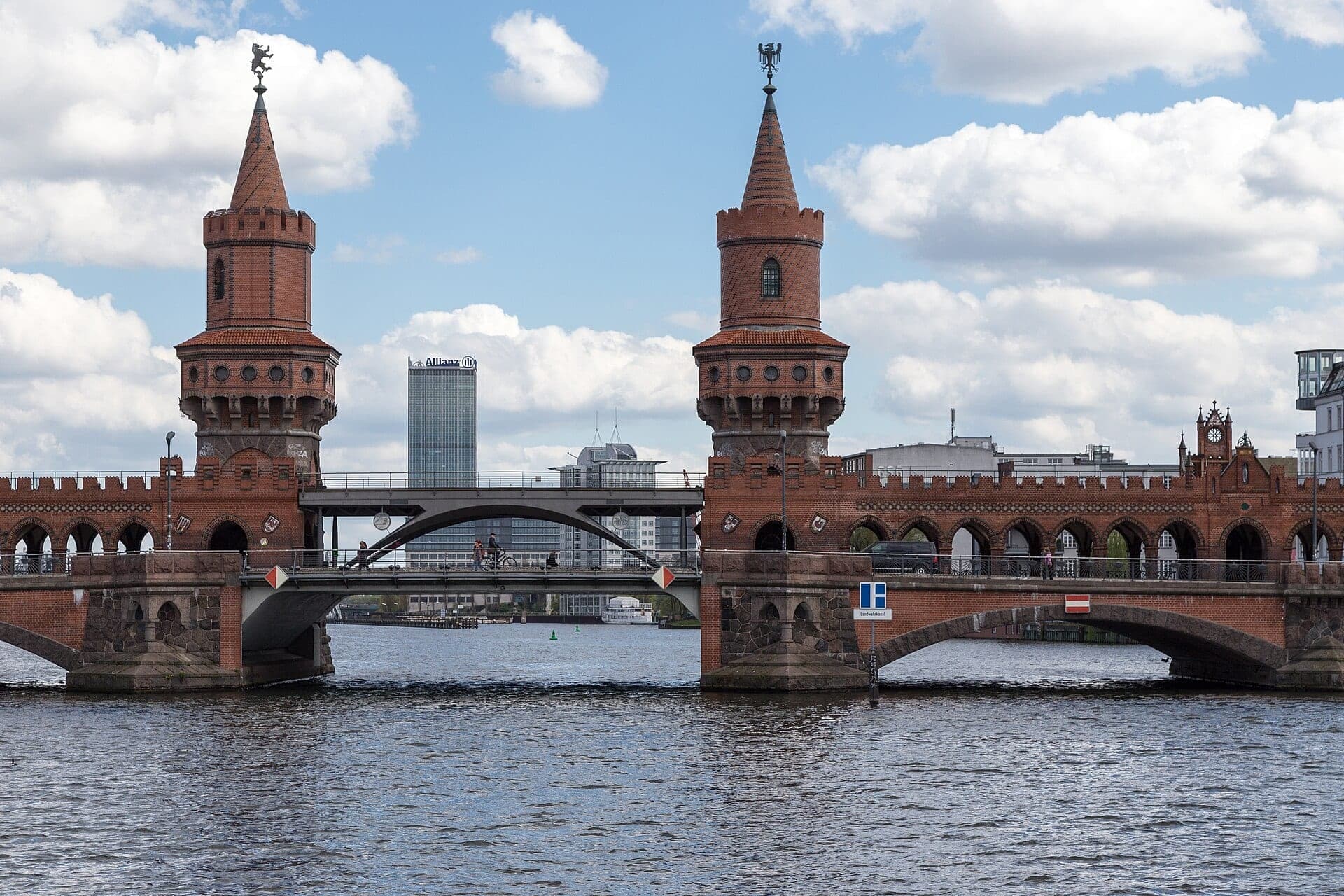
Oberbaumbrücke: A Gate Built Twice
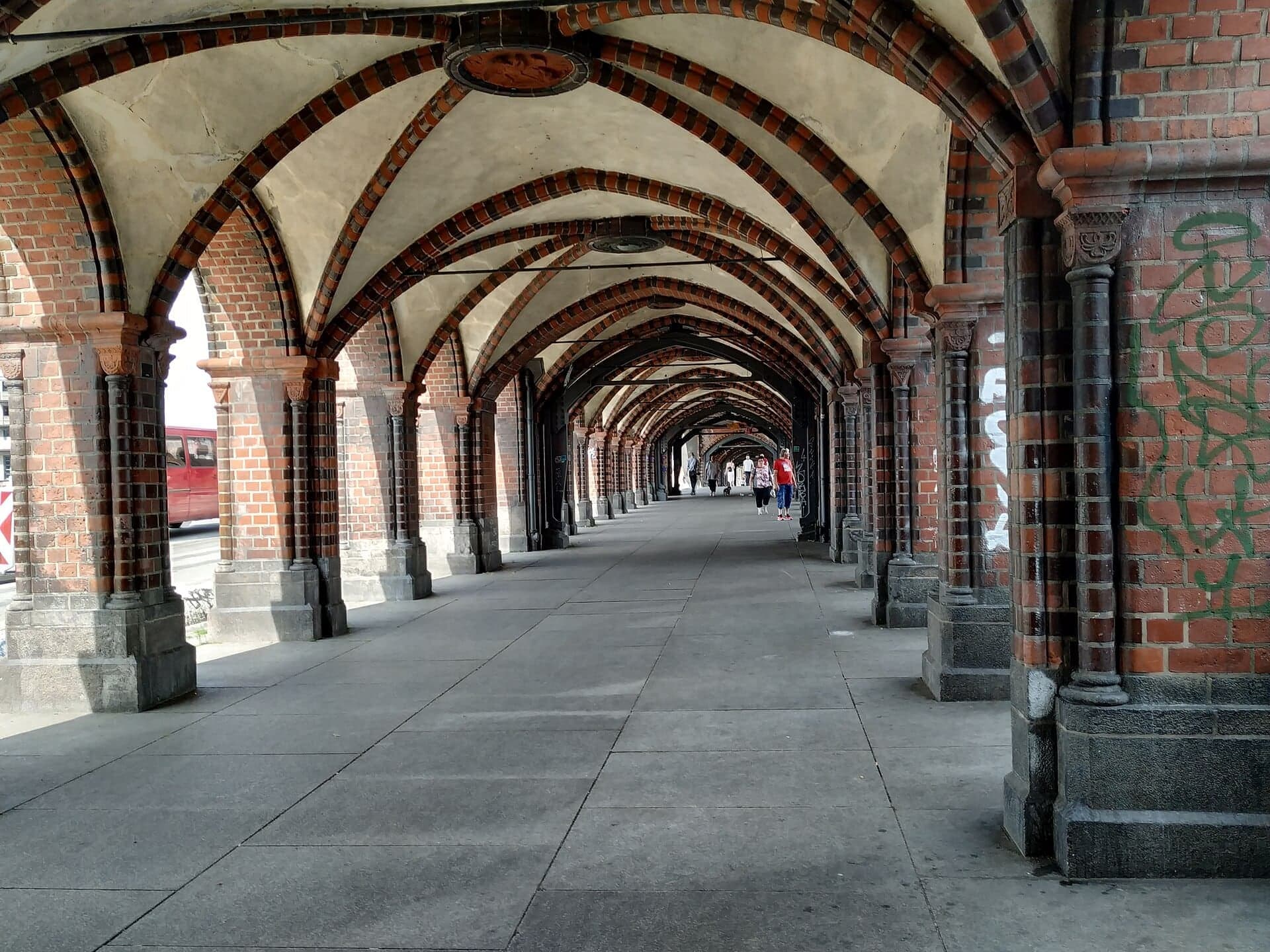
The brick gate bridge over the border river. Opened in 1896 and carrying trains from 1902, it lost its middle in 1945 and its towers in 1967, and was rebuilt by 1995.
- 9
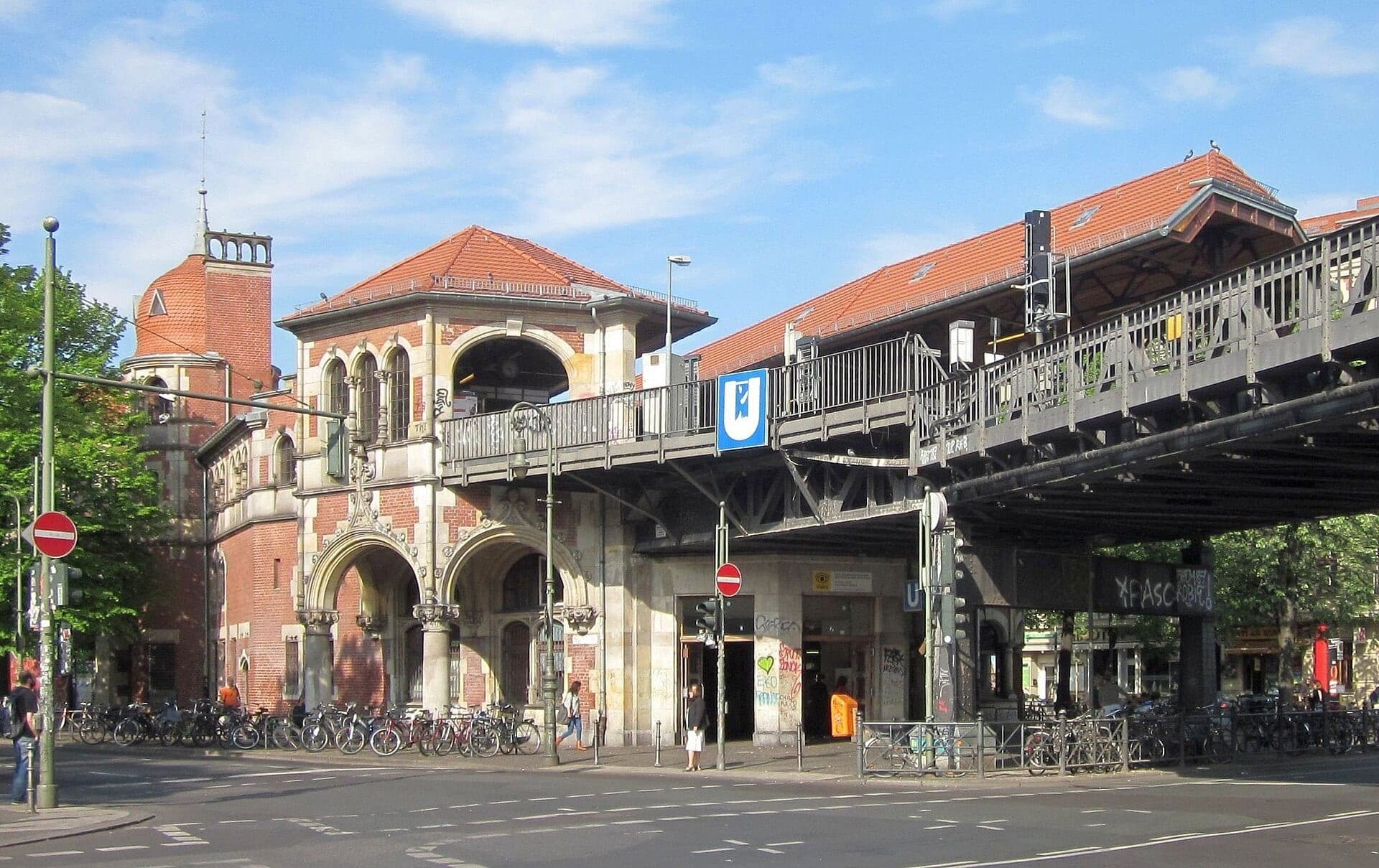
Schlesisches Tor: The Gate in the Name
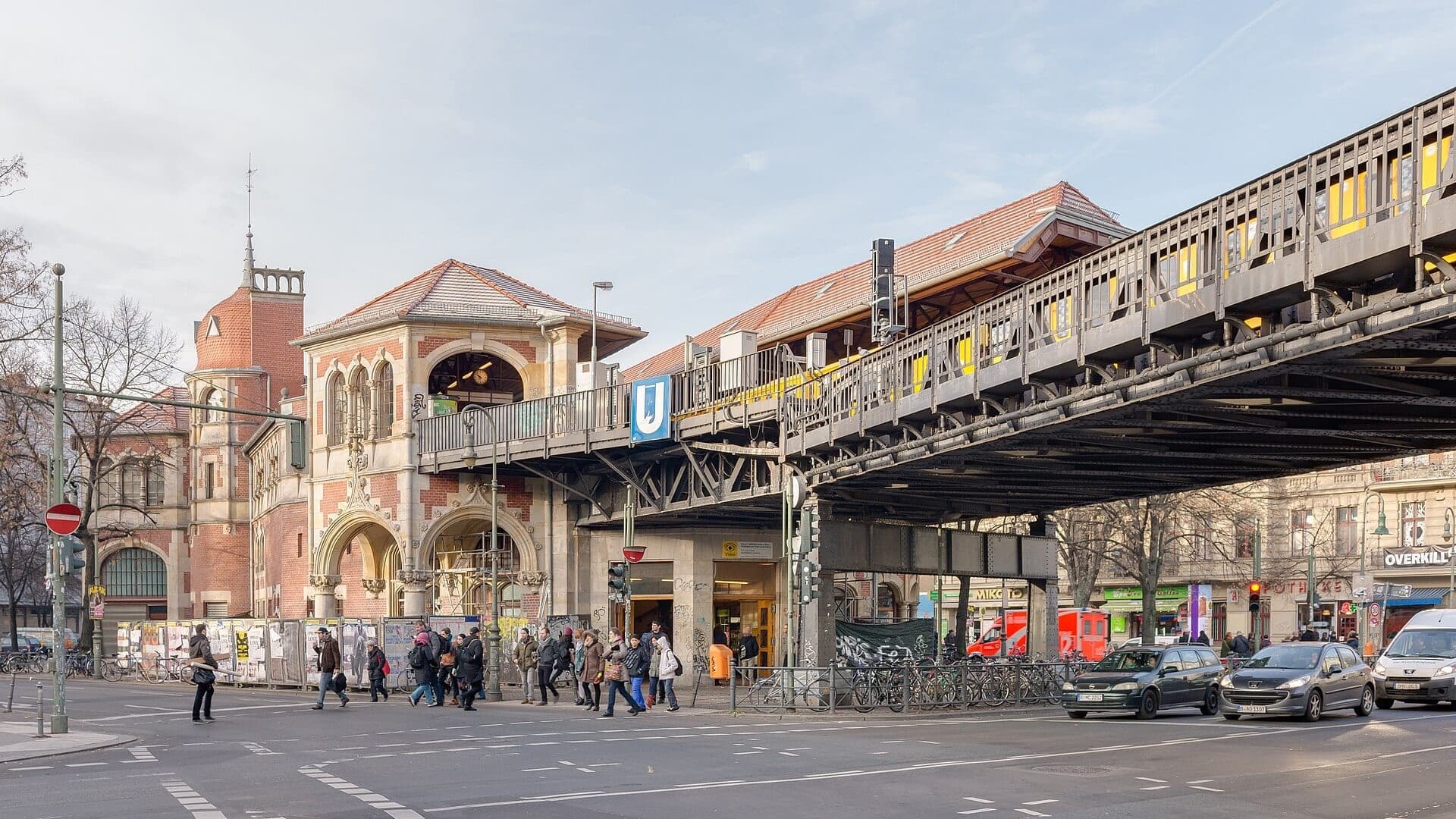
A brick station named for a lost gate. The 1901 station on Berlin's first elevated line was for years the end of the line, a few hundred meters short of the border river.
Details
Best Time to Visit
Daytime, any day: the gallery is open around the clock and free, but the park paths and the information point are best by day (information point daily 10:00 to 17:00, closed on Fridays from November, closed 24 December 2026 to 2 January 2027). The Kiss and the Trabant are the busiest panels; a morning start is usually quieter. The street face is open sky in every season; the park's trees are in leaf into October. At dusk, Thorsten Goldberg's light work Rock, Paper, Scissors shows in the bridge's steelwork (berlin.de; not checked on the ground); the clocks go back on 25 October. Checked 9 October 2026.
Pro Tips
- •Getting to the start: S Ostbahnhof (S3, S5, S7, S9; buses 140, 142, 147, 240) is the nearest station. Leave by the Stralauer Platz side, cross Mühlenstrasse at the lights at Stralauer Platz, and enter the Park an der Spree at its north-west end, beside the 1961 hollow-block wall. Do not start at Warschauer Strasse: it is at the other end of the gallery, about a kilometer and a half away. Checked 9 October 2026 at bvg.de.
- •The walk ends at U Schlesisches Tor (U1 and U3). The lift reaches only the platform toward Uhlandstrasse. Warschauer Strasse, for the S-Bahn, is two minutes back over the bridge on the U1. Checked 9 October 2026 at bvg.de.
- •The East Side Gallery information point, in the old gatehouse by the Sakharov panel (stop 5, Mühlenstrasse 73), is free, open daily 10:00 to 17:00, closed on Fridays from November and from 24 December 2026 to 2 January 2027. It has the only toilet on the walk; there are no lockers. Checked 9 October 2026 at stiftung-berliner-mauer.de.
- •The park's step-free entrance from Mühlenstrasse at Brommystrasse was opened by the Berlin Wall Foundation in August 2023. Wheelchair users can use the upper park paths but not the path along the bank, the foundation says. Checked 9 October 2026.
- •The Berlin Wall Foundation runs free Live Speaking guides at the gallery on some weekend afternoons (on some Saturday and Sunday afternoons; see the foundation's program): you may meet one at the Kiss or the information point. Checked 9 October 2026 at stiftung-berliner-mauer.de.
- •The Molecule Man, a 30 m aluminum sculpture in the river, is about a kilometer upstream of the Oberbaumbrücke. berlin.de says it is easy to see from the bridges and from Stralauer Allee. This walk keeps to the bridge's downstream footway, so look across the roadway and upstream through the open middle span, or cross to the upstream footway, under the arcade, for a clearer view.
- •Bus 300 stops at East Side Gallery and Tamara-Danz-Strasse, in the middle of the gallery, if you want to shorten the walk.
Safety & Precautions
- •The route leaves the park through a narrow opening in the wall between stops 2 and 3. If it is closed or gated, walk back along the park path to Stralauer Platz and follow the sidewalk on the painted side of the wall; stop 3 is just past the opening on that sidewalk.
- •The sidewalk along Mühlenstrasse is narrow in places, with fast traffic a few meters away, and vehicles cross it at several driveway gates. Step back toward the curb to see a panel, never into the road.
- •The Kiss (stop 6), the Trabant near stop 3 and the bus stop by the Sakharov panel (stop 5) are crowded: watch your bags and keep clear of the bus queue.
- •A cycle track runs beside the last stretch of sidewalk before the bridge, and cyclists use the bridge footways: keep to the wall side and look before you step out.
- •After the bridge, three crossings in the Kreuzberg bridgehead have no traffic lights (the May-Ayim-Ufer slip road, then Bevernstrasse twice, by its corner with Oberbaumstrasse): look both ways. The crossings of Köpenicker and Schlesische Strasse and of Skalitzer Strasse have lights, with a cycle track to cross between them.
- •The gallery is a listed monument: writing or painting on it is illegal.
- •Subway trains pass over the bridge every few minutes and are loud; pause the audio if you miss a line.
- •Schlesisches Tor is a nightlife corner after dark, and the park is quiet at night: this is a daytime walk.
Travel advisory: Exercise Increased Caution (Level 2).
Gallery
Related Reading
Go deeper on what you'll see, hear, and walk through.
Read the walk
The full story of East Side Gallery: The Side Nobody Could Touch, in words. Prefer to listen? Play it narrated, from home or on location.
Introduction
Berlin, the capital of Germany, kept one long piece of its Wall standing on the bank of the river Spree. It is about one point three kilometers long, the longest stretch of the Wall that survives, and in nineteen ninety artists from around the world covered it in paintings. They called it the East Side Gallery.
The name is a clue. This wall faced East Berlin. Here the river itself was the border, and the painted face of the wall was the side that East Germans had never been allowed to touch. The walk starts behind the wall, in the old border strip by the river, comes out to the painted side, and follows the paintings to a brick bridge, then across it into Kreuzberg, which was West Berlin.
Three people come up along the way. Thierry Noir, a French painter who had covered the western face of the Wall in cartoon heads for years before he painted this one. Dmitry Vrubel, a painter from Moscow whose kiss between two Communist leaders is the gallery's most photographed picture. And Otto Stahn, the architect of the towered bridge at the end.
The walk has nine stops over about one and a half kilometers, about a mile, and takes about sixty minutes. It is flat and free, on park paths and sidewalks, and it touches on deaths at the border. It starts near Ostbahnhof station and ends at Schlesisches Tor subway station.
1. Park an der Spree: Behind the Wall
Welcome to the Park an der Spree, the riverside park behind the East Side Gallery. Walk on a little way along the path and stop.
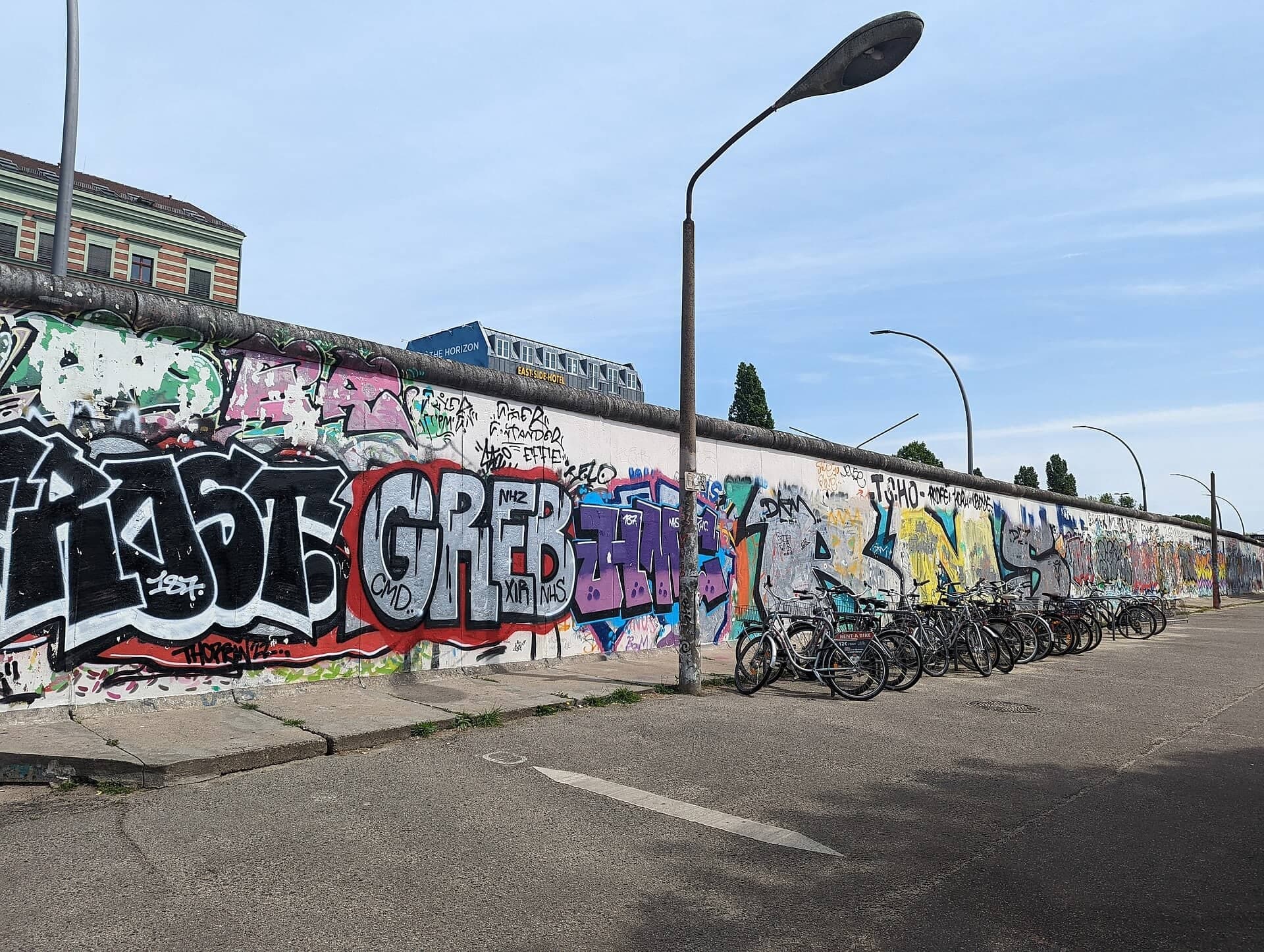
The long wall across the grass, on the side away from the river, is the East Side Gallery: about one point three kilometers of the Berlin Wall, the longest stretch that still stands. And this is its back. The famous paintings are on the far side, facing the street.
That is the first surprise of this place. Here, the Spree was the border. The whole width of the river belonged to East Berlin, and West Berlin began at the far bank, in Kreuzberg. So there was no outer wall on the water: the river did that job. This wall was the inner one. It faced East Berlin, and it closed off the strip of riverbank that this park fills today.
Look at the slabs: smooth, even, about three and a half meters high. Elsewhere, an inner wall was usually concrete panels stacked between steel posts. These smooth slabs are the type that normally faced West Berlin, put here on purpose. The street on the other side was what East Germany called a protocol route, the road its official visitors were driven along into the city. The wall they saw had to look tidy.
At this end of the park, near the Stralauer Platz entrance, a much rougher piece survives: an older factory wall built up with hollow blocks in nineteen sixty-one, with shards of glass along the top. It is one of the few pieces left of the very first Wall.
In East Germany, painting the Wall, or even touching it, was forbidden. This side, facing the river, was kept whitewashed. Follow the route along the park path.
2. Patrol Path: The River Was the Border
Walk on along the path and stop where you have an open view of the river.
Look out over the water. This was the border, and it was guarded from the water: East German border troops patrolled the Spree in boats. On this bank, between the wall and the river, stood fences, a row of lamps and a watchtower. In the nineteen seventies the buildings along the bank were cleared away, and by nineteen seventy-seven the whole riverside had been flattened, all but one large warehouse, to give the guards an unobstructed view and a clear line of fire.
Paths like this one, where border guards once walked, are now a promenade by the water. A guard on this bank stood between the wall and the river, with a clear view of both.
From this bank, people tried to escape by swimming the river to Kreuzberg. Some were shot by border guards. Others died in the water, of cold or of exhaustion.
Now the strip is a park. In two thousand eighteen the city handed the park and the wall to the Berlin Wall Foundation, which looks after them both.
Follow the route on along the park path. Ahead, the route goes through a narrow opening in the wall, out to the street side. If that opening is closed, walk back along this path to Stralauer Platz and follow the sidewalk along the painted side of the wall instead.
3. Thierry Noir: Heads on the Other Side
Walk on to the street side of the wall, just past the opening, and stop by the first paintings.
This is the face everybody comes to see. It looked toward East Berlin, under guard, so through the nineteen eighties it stayed bare and gray, while the western face of the Wall, across the city, filled up with paint.
Look along the wall for big, bright heads in profile, one after another. They are by Thierry Noir, a French artist born in Lyon, who moved to West Berlin in nineteen eighty-two. From nineteen eighty-four he painted the western face of the Wall in Kreuzberg almost every day, with exactly these heads. In nineteen ninety he came round to this side and painted the eastern face too. His heads here are called Tribute to the Young Generation, one of the longest works in the gallery. Next to them is a second panel of his, an abstract one. He later covered it in heads too, then in two thousand nine went back to the original.
Back past the opening, toward Ostbahnhof, look for a Trabant, the little East German car, bursting through the wall. In nineteen ninety it was called Test the Best. In two thousand nine its painter renamed it Test the Rest, as a protest at how the city was treating the gallery. Right beside it is Hands, a field of outstretched hands. It is the only mural on this wall that still carries its paint from nineteen ninety.
The gaps tell a story too. Openings were cut for roads to new buildings in the old border strip, and some panels were moved into the park. In two thousand thirteen, when a mural came out for a road to a new apartment tower, the public outcry stopped the road from being widened, and the city turned down further building on the gallery.
Follow the route along the painted face.
4. Wall Jumper: A Gallery Painted Twice
Walk on along the painted face and stop a few steps before a man in mid-leap over the wall. This is The Wall Jumper. The figure is jumping the Wall from West to East. Its painter was born in Paris, holds French and Hungarian nationality, and had lived in both halves of the…
Full narration for this stop unlocks with the tour.
5. Thank You, Andrei Sakharov: The Gatehouse
Walk on to a painting called Thank You, Andrei Sakharov, just before a wide gap in the wall, and stop. This is a bus stop, so keep clear of the queue, and step back toward the curb to see the whole panel. The painter is Dmitry Vrubel, born in Moscow in nineteen sixty, who moved…
Full narration for this stop unlocks with the tour.
6. Brotherly Kiss: A Photo Painted Twice
Walk on to the painting of two men kissing, and stop there. It is the busiest panel on the wall, so mind your bag. Step back toward the curb, never into the road, to see it whole. The men are Leonid Brezhnev, the Soviet leader, and Erich Honecker, the leader of East Germany. On…
Full narration for this stop unlocks with the tour.
7. Last Panels: Toward the Bridge
Walk on along the last stretch of panels, and stop. The gallery does not end here. The paintings run on a little further toward the bridge. Two of them, near you, have a story of their own. One is called Fatherland. The other, a little further on, is The Seven Stages of…
Full narration for this stop unlocks with the tour.
8. Oberbaumbrücke: A Gate Built Twice
Walk on to the middle of the bridge, where the brickwork gives way to a span of steel, and stop at the railing. This is the Oberbaumbrücke. Its name goes back to a wooden bridge of the seventeen twenties, whose river passage was closed at night with a log: the Oberbaum. The…
Full narration for this stop unlocks with the tour.
9. Schlesisches Tor: The Gate in the Name
Walk on to the red brick station in the middle of the square, and stop where you can see its front. This is Schlesisches Tor, which means the Silesian Gate. A gate in Berlin's old customs wall stood here until the wall was pulled down, in the eighteen sixties. The gate is gone,…
Full narration for this stop unlocks with the tour.
- Rückseite der East Side Gallery im Abschnitt „Park an der Spree“, Berlin-Friedrichshain. Im Hintergrund kann man den Wasserturm am Postbahnh — HerrAdams, CC BY-SA 4.0 · source
- 2018-08-12 DE Berlin-Friedrichshain-Kreuzberg, East Side Gallery — Paul Korecky, CC BY-SA 2.0 · source
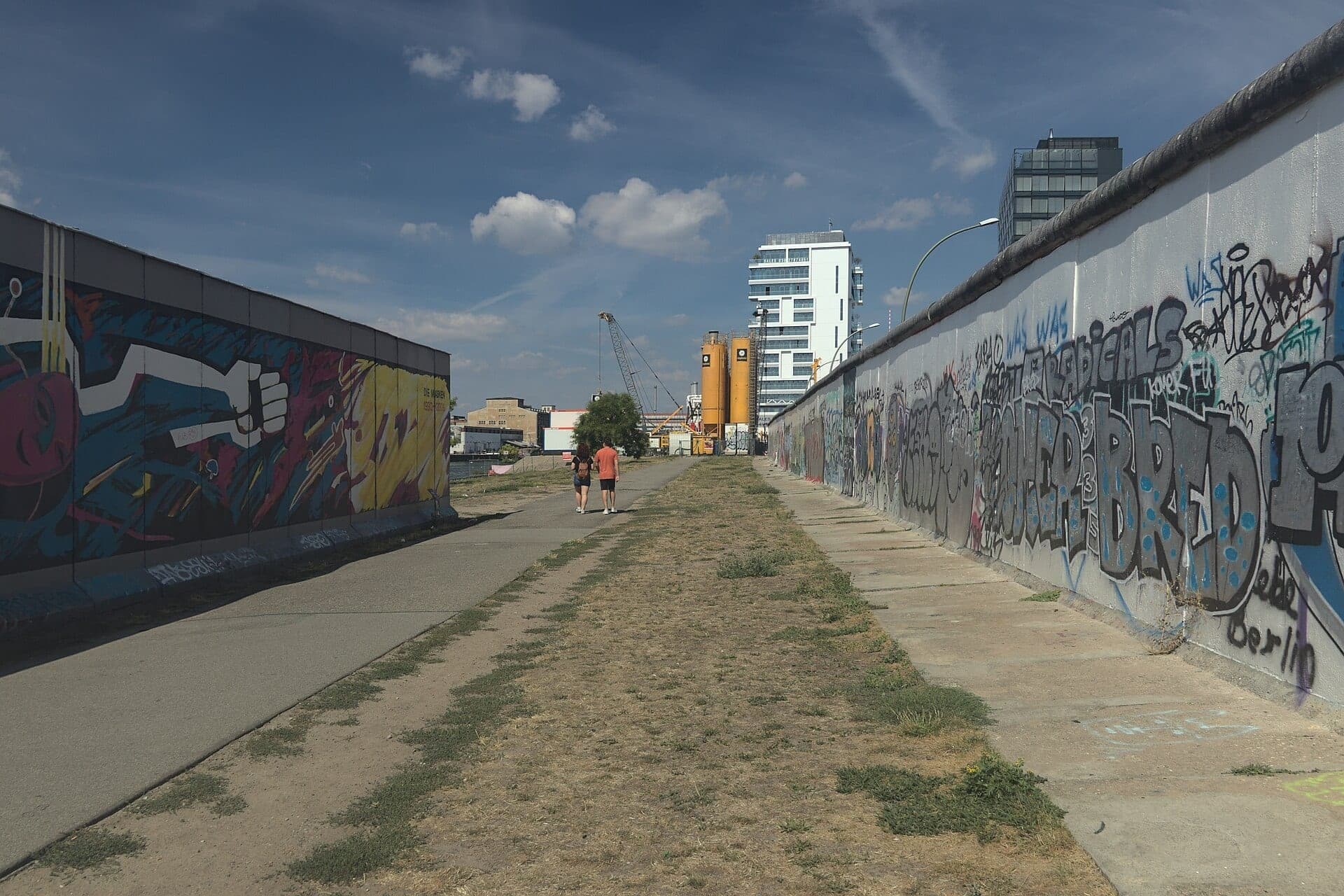
- Bank of River Spree at East Side Gallery. — Indrajit Das, CC BY-SA 4.0 · source
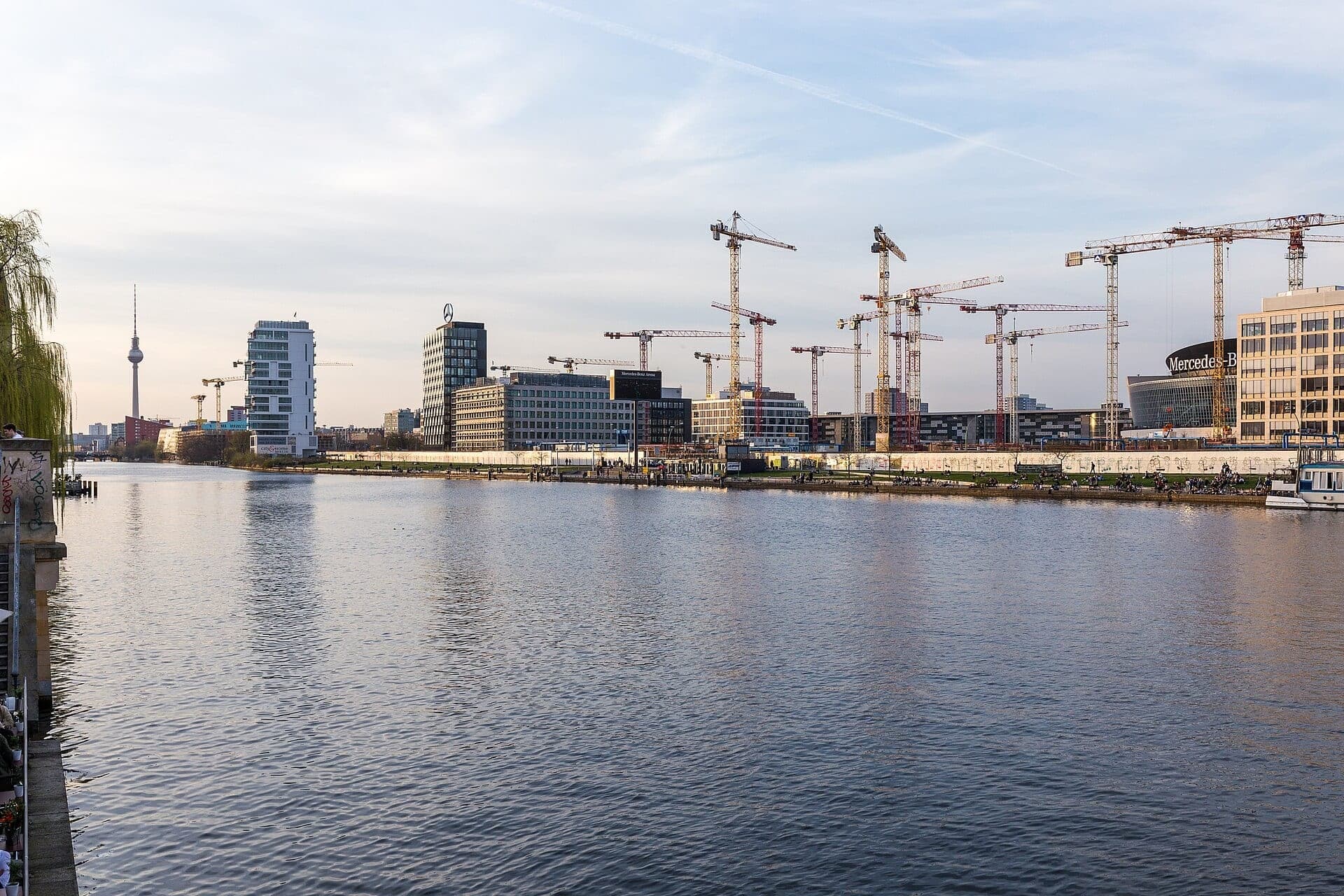
- View over river Spree towards East Side Gallery in Berlin-Kreuzberg. — Ansgar Koreng, CC BY-SA 4.0 · source
- Mural by Thierry Noir, entitled "Hommage To The Young Generation". Painted on remnants of the Berlin Wall at the East Side Gallery, Berlin. — Paul VanDerWerf from Brunswick, Maine, USA, CC BY 2.0 · source
- "Hommage an die Junge Generation" by Thierry Noir, East Side Gallery, Berlin, April 2014. — Warko, CC BY-SA 4.0 · source
- Gabriel Heimler - Mauerspringer — Schokifaktor, CC BY 4.0 · source
- 2018-08-12 DE Berlin-Friedrichshain-Kreuzberg, Mühlenstraße, East Side Gallery — Paul Korecky, CC BY-SA 2.0 · source
- East Side gallery, Berlin, Germany. Andrej Sacharow (Andrei Sakharov, 1921-1989) was a Soviet nuclear physicist, dissident and human rights — Ana Raquel S. Hernandes, CC BY-SA 2.0 · source
- East Side Gallery, Vorderseite am 26. Januar 2025 — This image is a work by Wikipedia and Wikimedia Commons user C.Suthorn. When reusing, credit me as described in the Licensing information below. I would appreciate being notified (wikimail, talk page, email, Social Media) if you use my work outside Wikimedia., CC BY-SA 4.0 · source
- Berlin Wall - East Side Gallery - Dmitri Vladimirovich Vrubel — Freepenguin, CC BY-SA 3.0 · source
- Wandbild Nr. 5 der East Side Gallery von Günther Schäfer Vaterland — Chaddy, CC BY-SA 4.0 · source
- East Side Gallery in Berlin — Daniel from Glasgow, United Kingdom, CC BY 2.0 · source
- Central section of the Oberbaum Bridge in Berlin (2016) — JoachimKohler-HB, CC BY-SA 4.0 · source
- Fußgängerweg unter den U-Bahn-Gleisen auf der Oberbaumbrücke in Friedrichshain-Kreuzberg — Geoprofi Lars, CC BY-SA 4.0 · source
- The Station Schlesisches Tor of the underground line 1 (here an elevated line) at the corner of Skalitzer Straße and Schlesische Straße (on — Jörg Zägel, CC BY-SA 3.0 · source
- Schlesisches Tor U-bahn station, Berlin. — Arild Vågen, CC BY-SA 3.0 · source
Images may be cropped or resized. Other photos via Unsplash and Pexels.