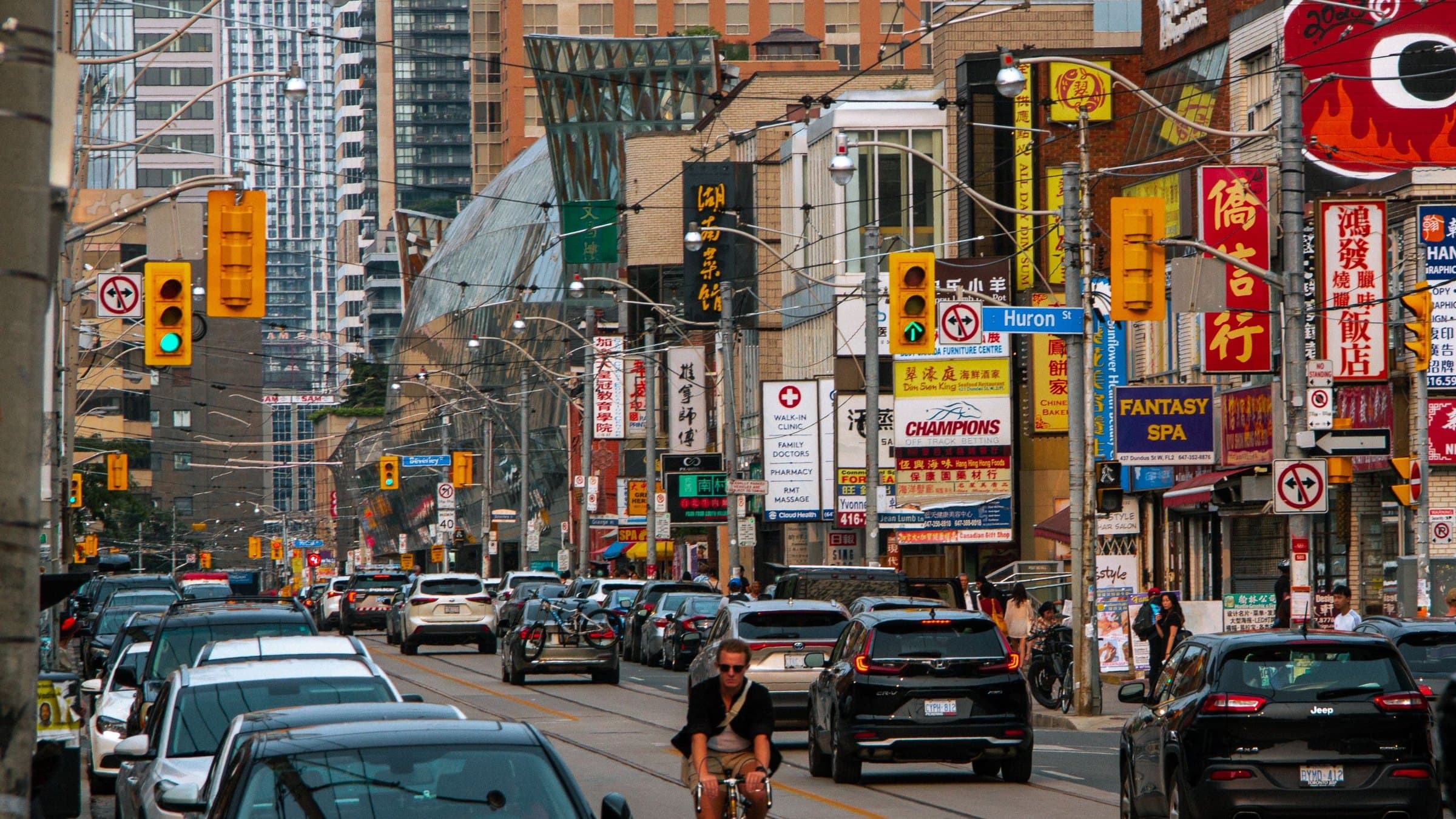
Kensington Market and Chinatown: From House-Front Shops to Gehry's Glass
4.25·11 Stops·85 minutes·1.8 km
Walk from a domed synagogue past Bellevue Square into Kensington Market's house-front shops, down wide Spadina into Chinatown, then along Dundas past Gehry's glass Art Gallery of Ontario and OCAD's box on stilts to the Grange behind it.
Start · Kiever Synagogue: Twin Domes on Denison Square
DirectionsStops
- 1
Kiever Synagogue: Twin Domes on Denison Square
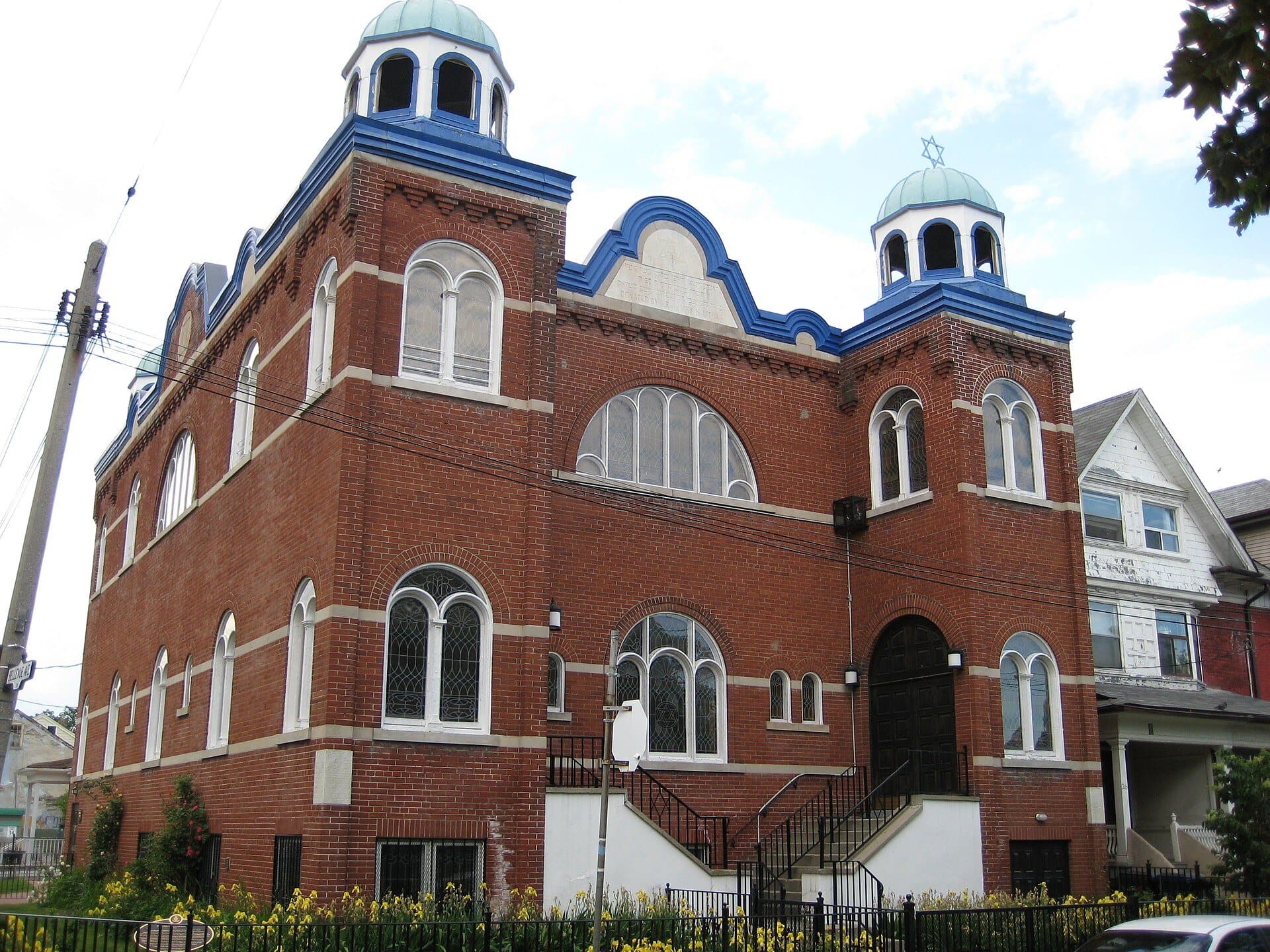
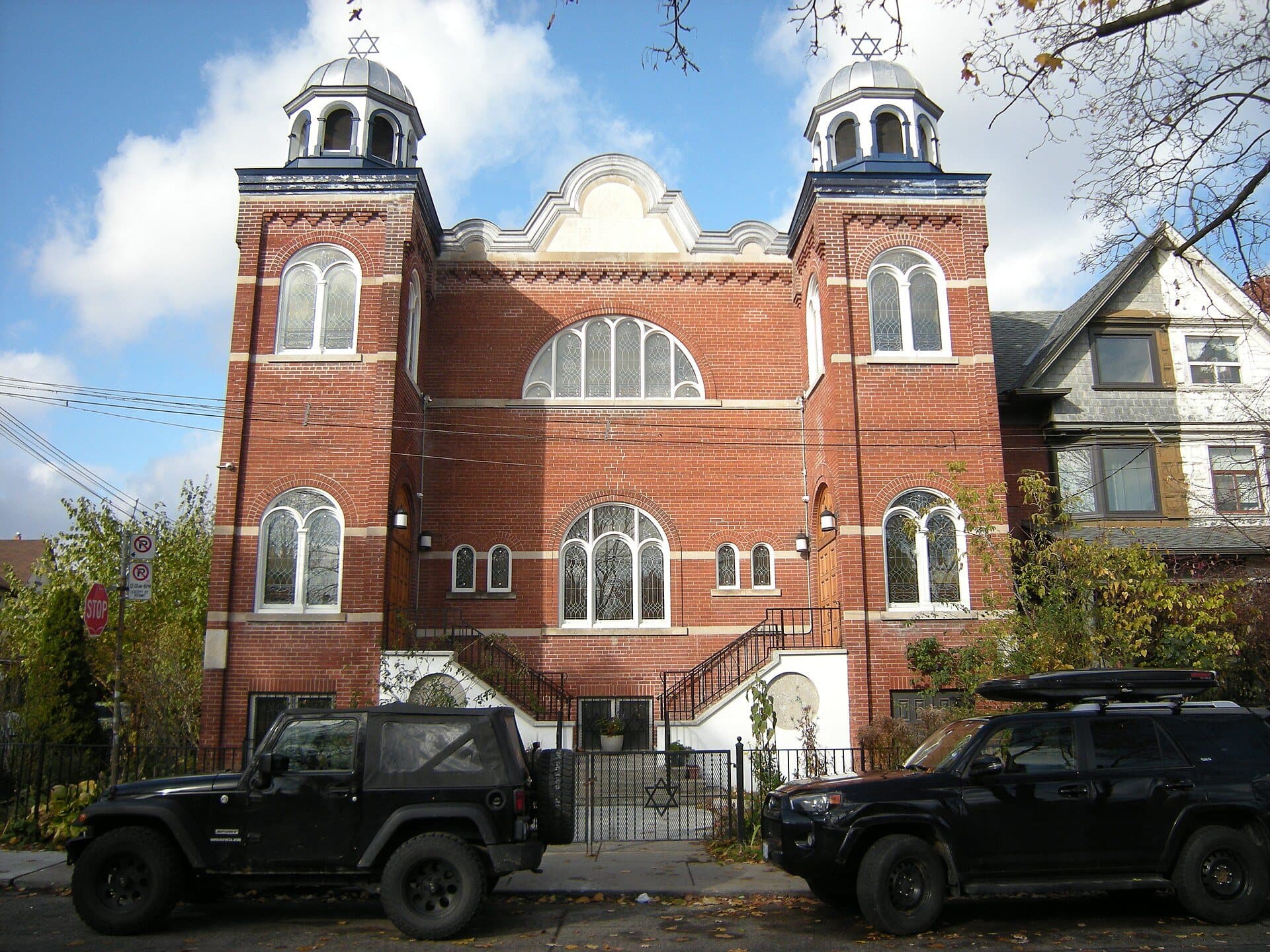
A twin-domed synagogue built in 1927. Its round arches, two domes and separate doors for men and women still frame a working Orthodox congregation.
- 2
Bellevue Square: An Estate Left as a Park
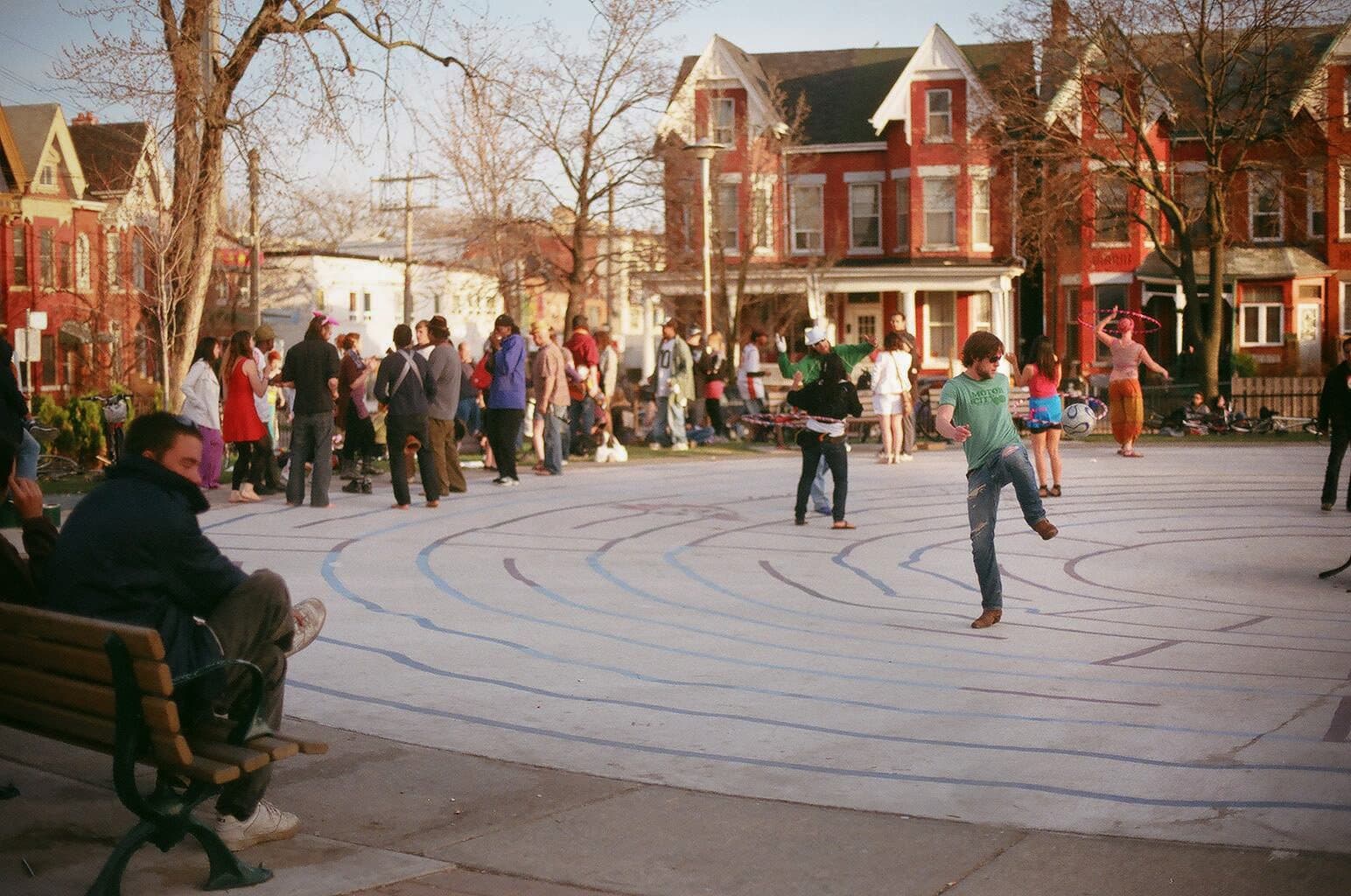
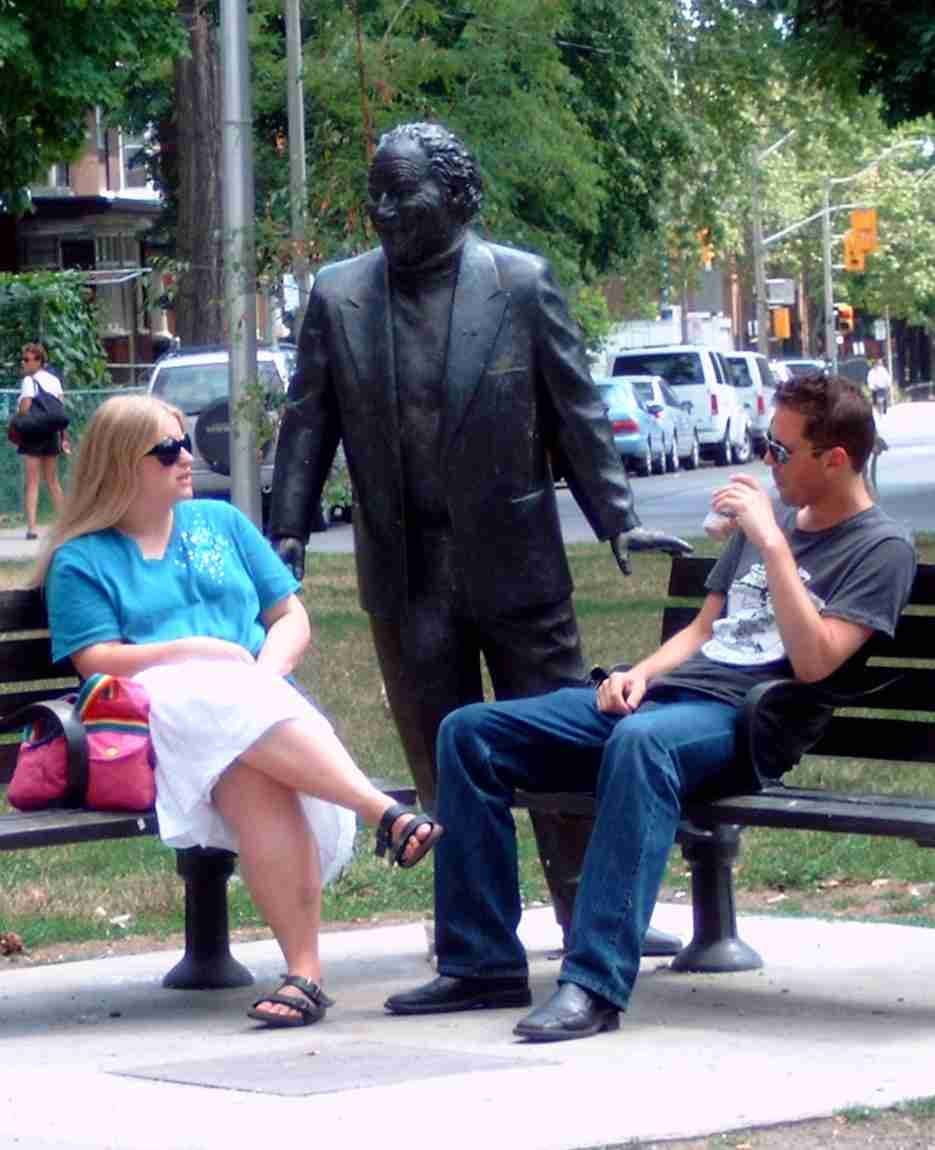
An estate's leftover lawn became this square. A bronze of Al Waxman, television's King of Kensington, stands between two benches near where you walked in.
- 3
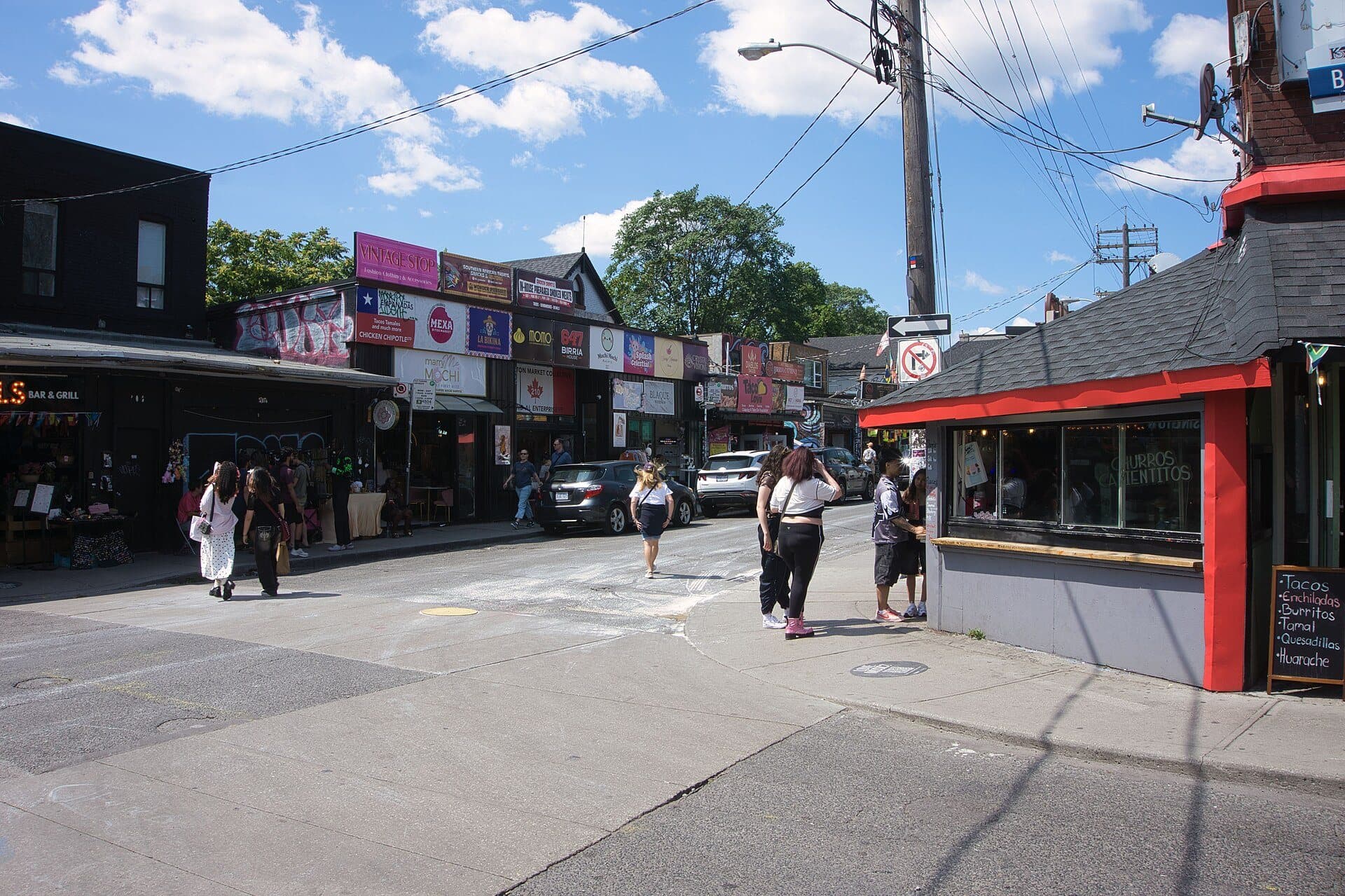
Augusta Avenue: Shops Over the Front Yards
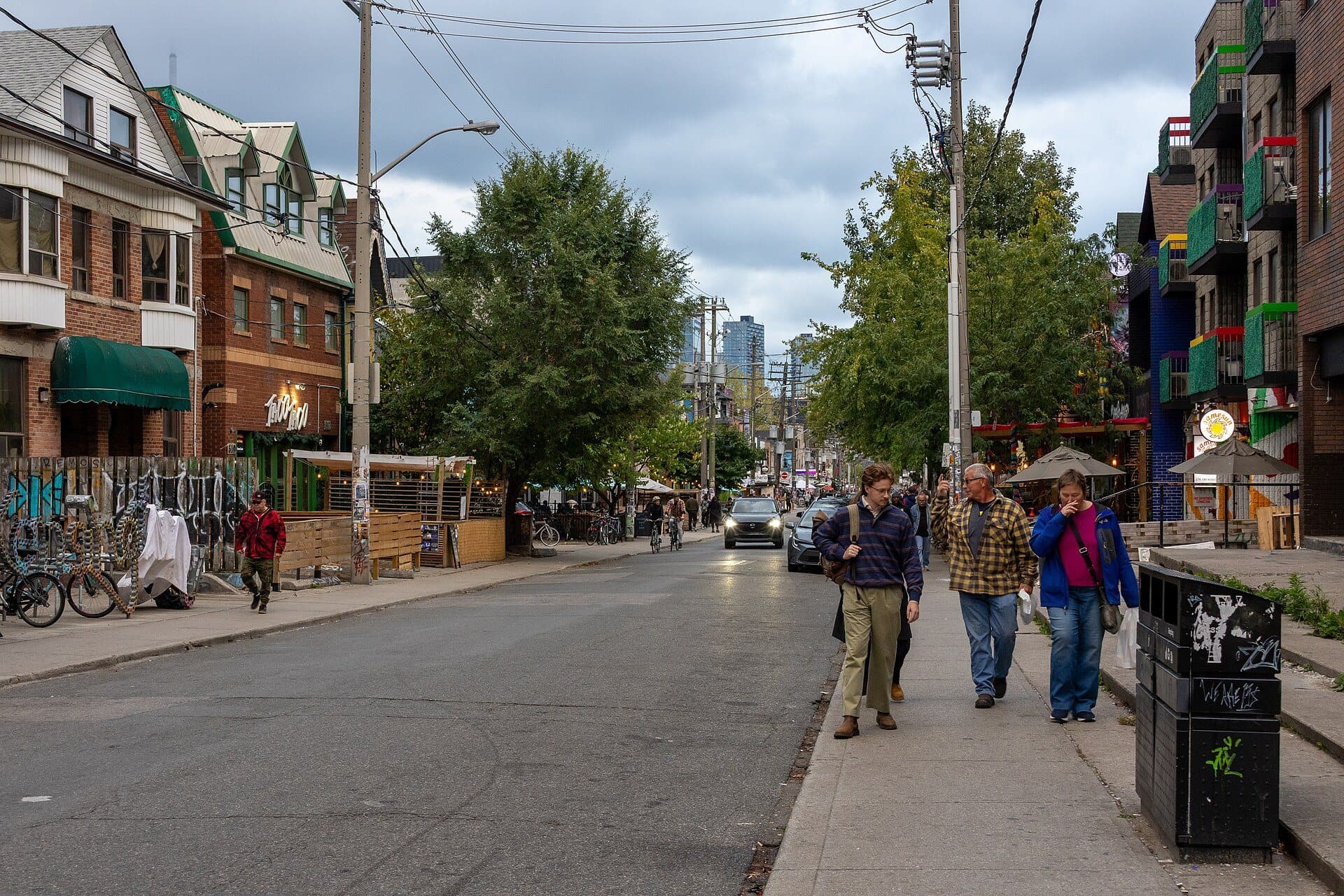
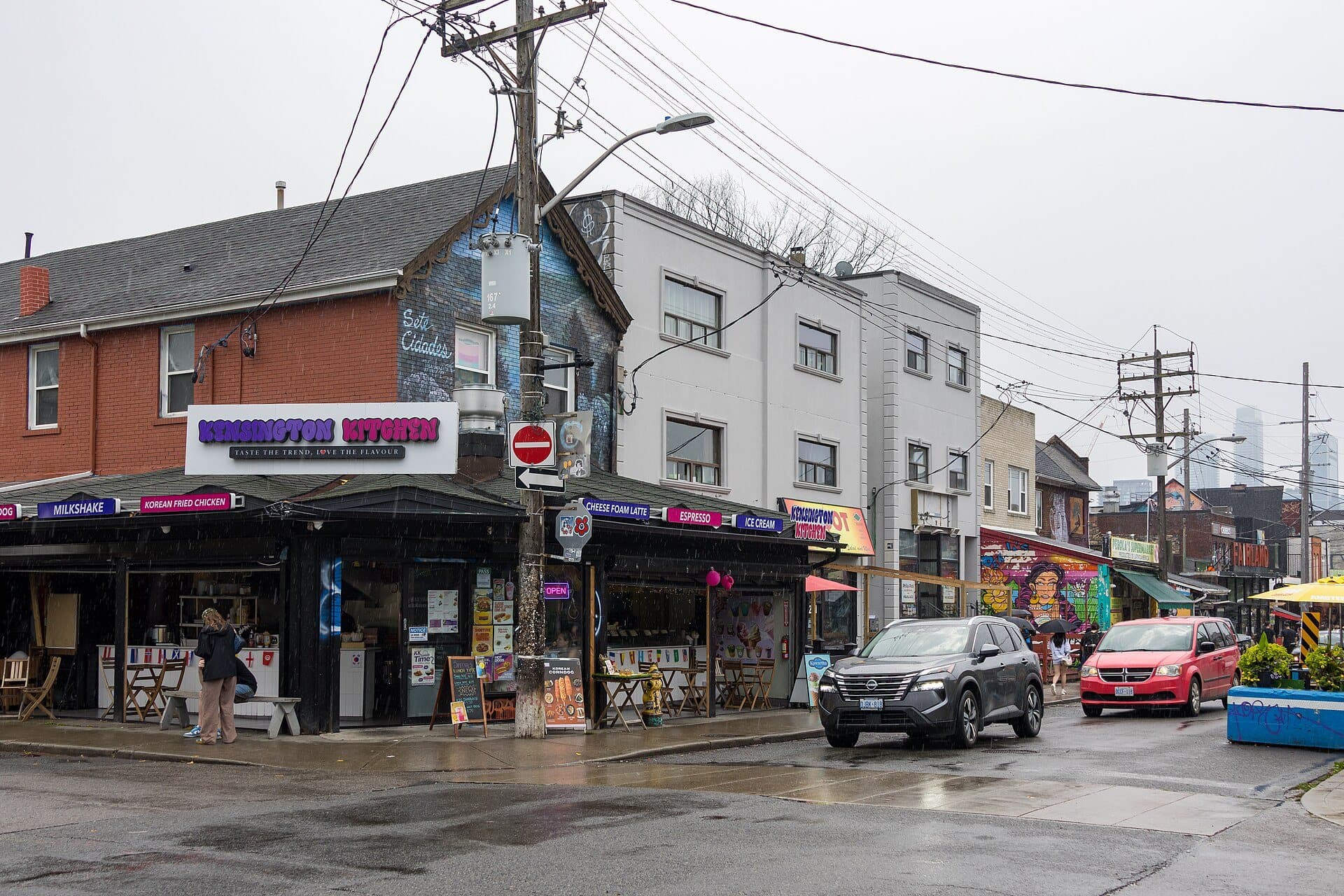
Houses that grew shops over their front yards. Look up for the old house, down for the shop, and you can read the whole market.
- 4
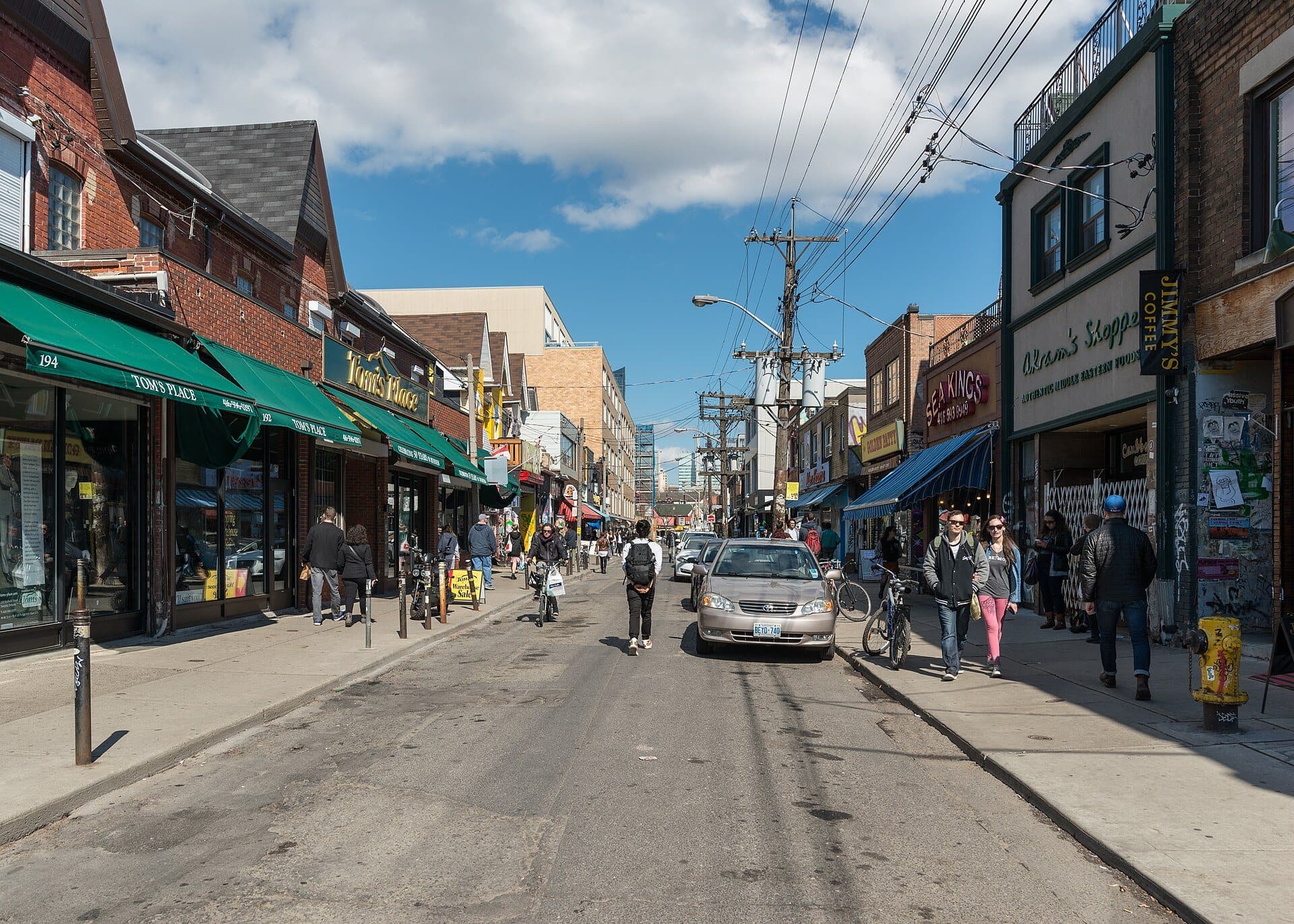
Baldwin Street: Where the Market Began
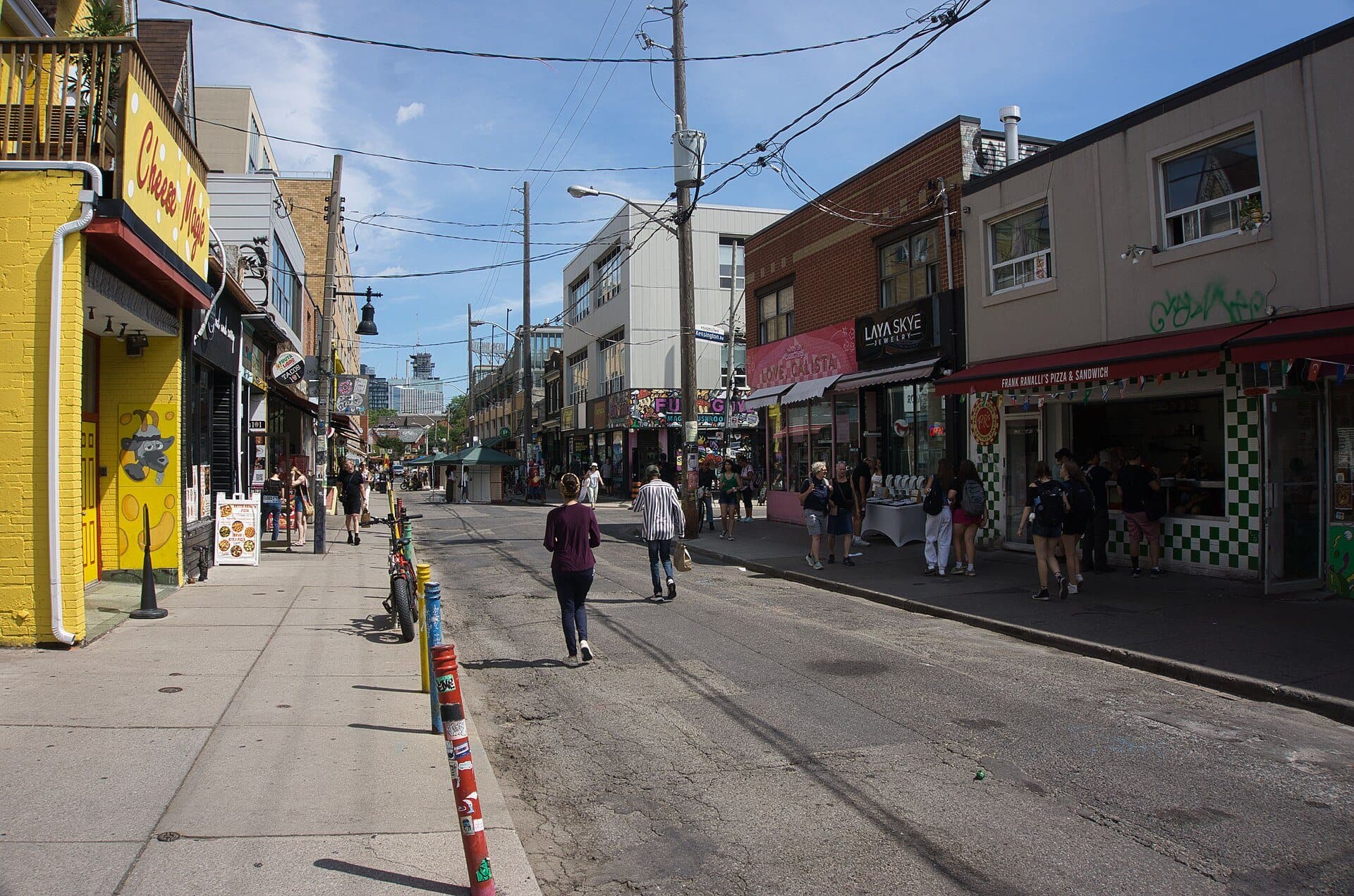
The market had taken root here by 1918. Small converted houses with shopfronts still line its busiest food block.
- 5
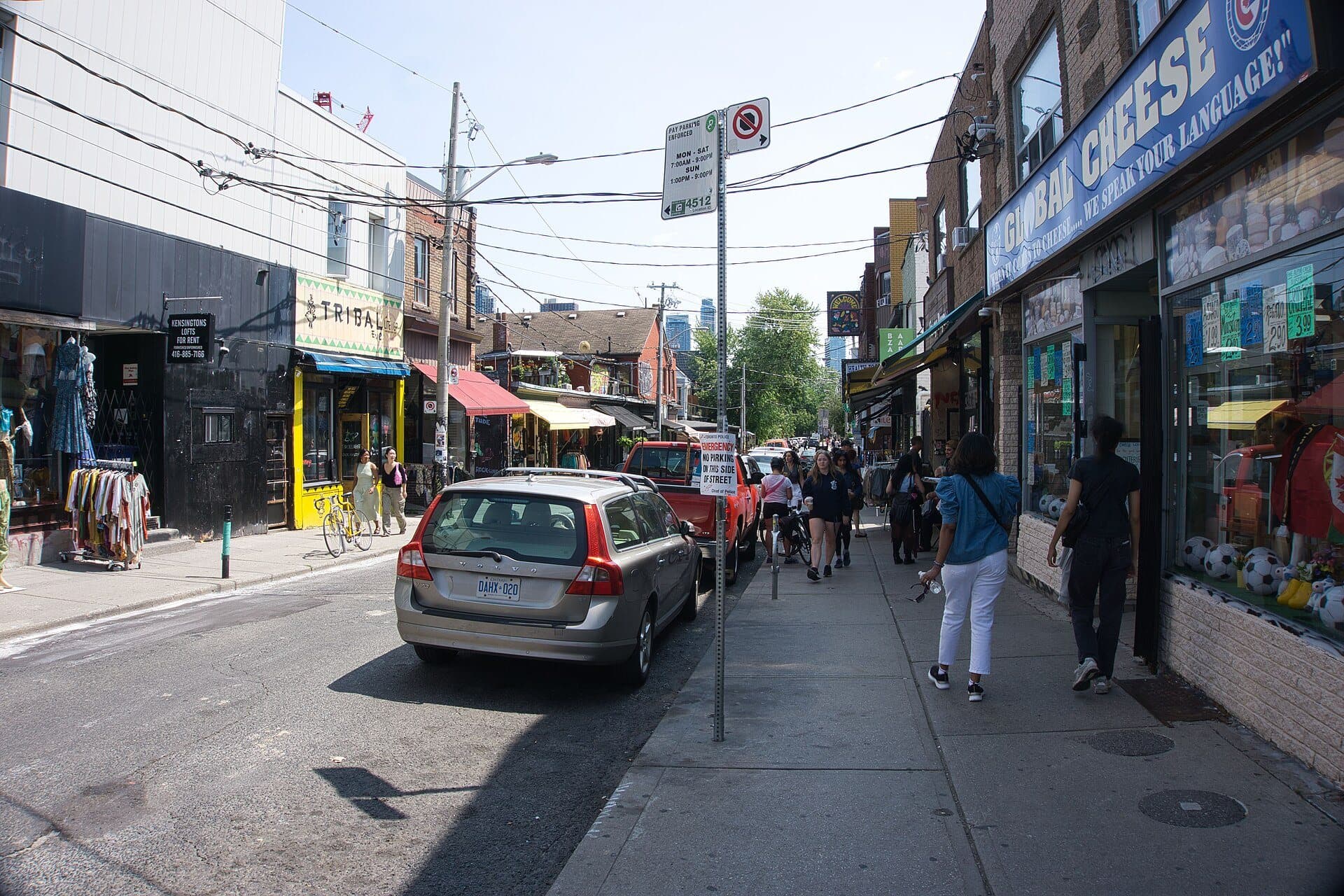
Kensington Avenue: Gables Above the Shopfronts
Old gabled houses hide behind the shopfronts. Across the street, Roots Records opened in 1978 as the market's first Caribbean business.
- 6
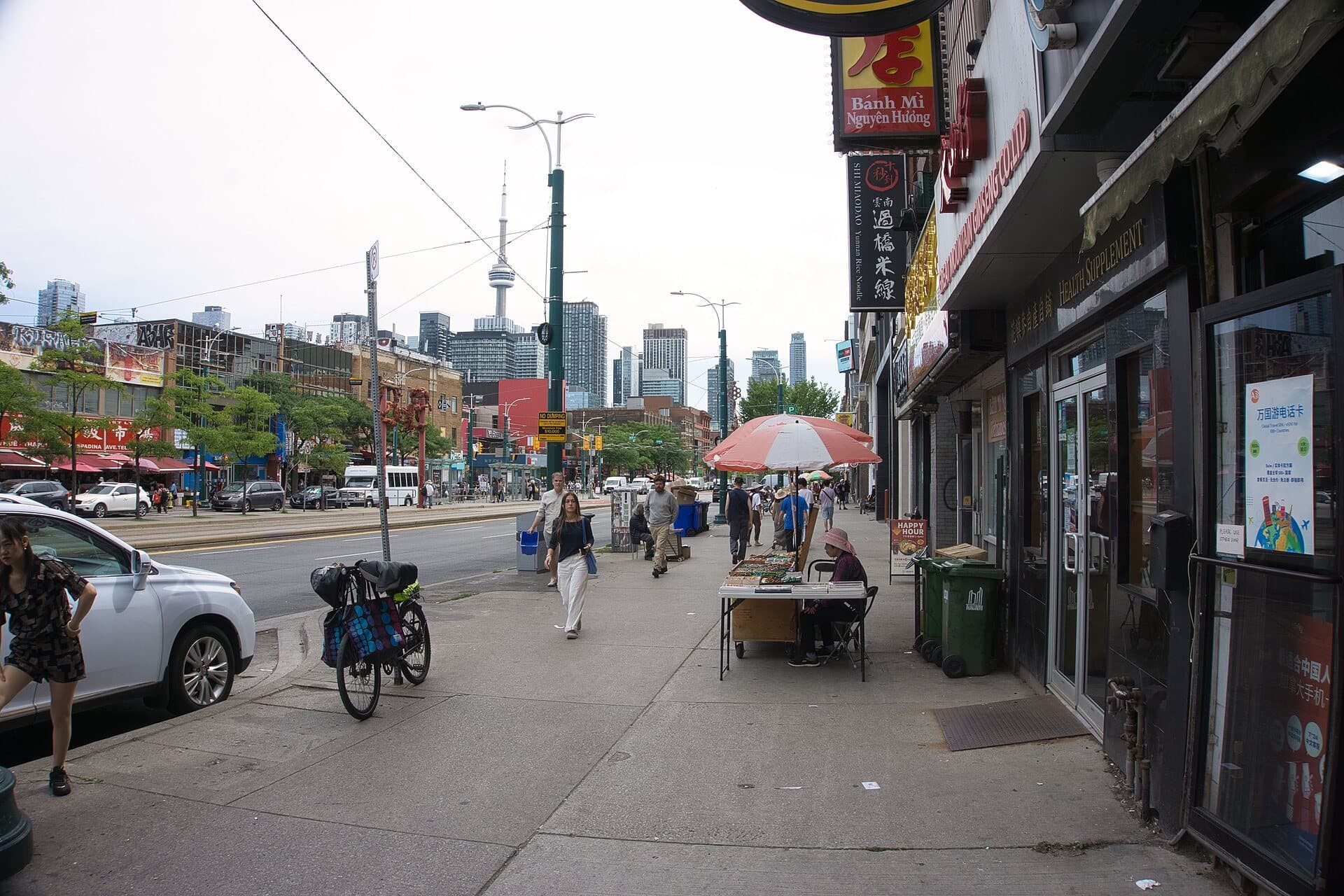
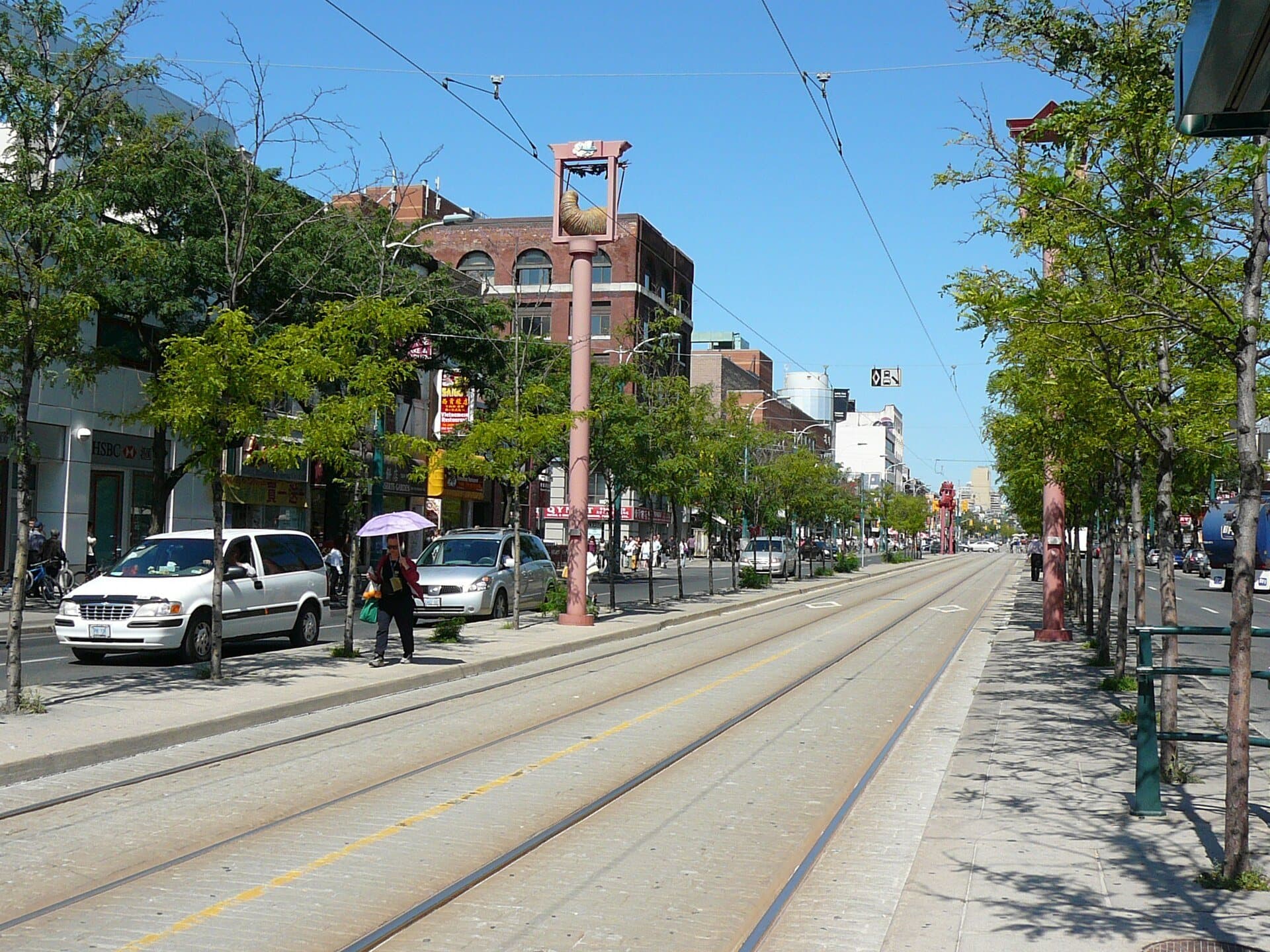
Spadina Avenue: The Double-Width Street
Laid out on purpose as a double-width road. It was cut so a house on the hill could see ships on the bay, and streetcars returned to its middle in 1997.
- 7
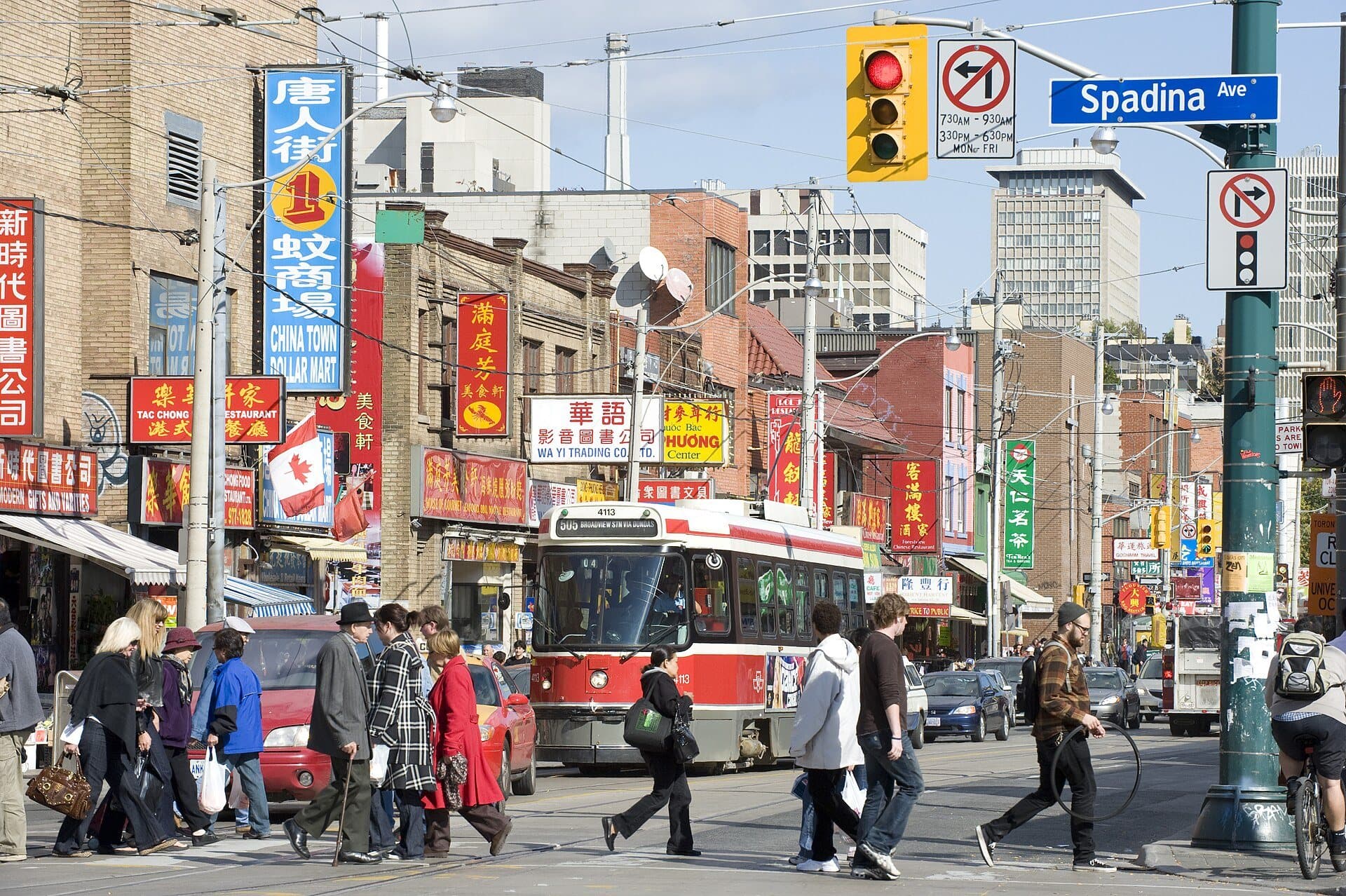
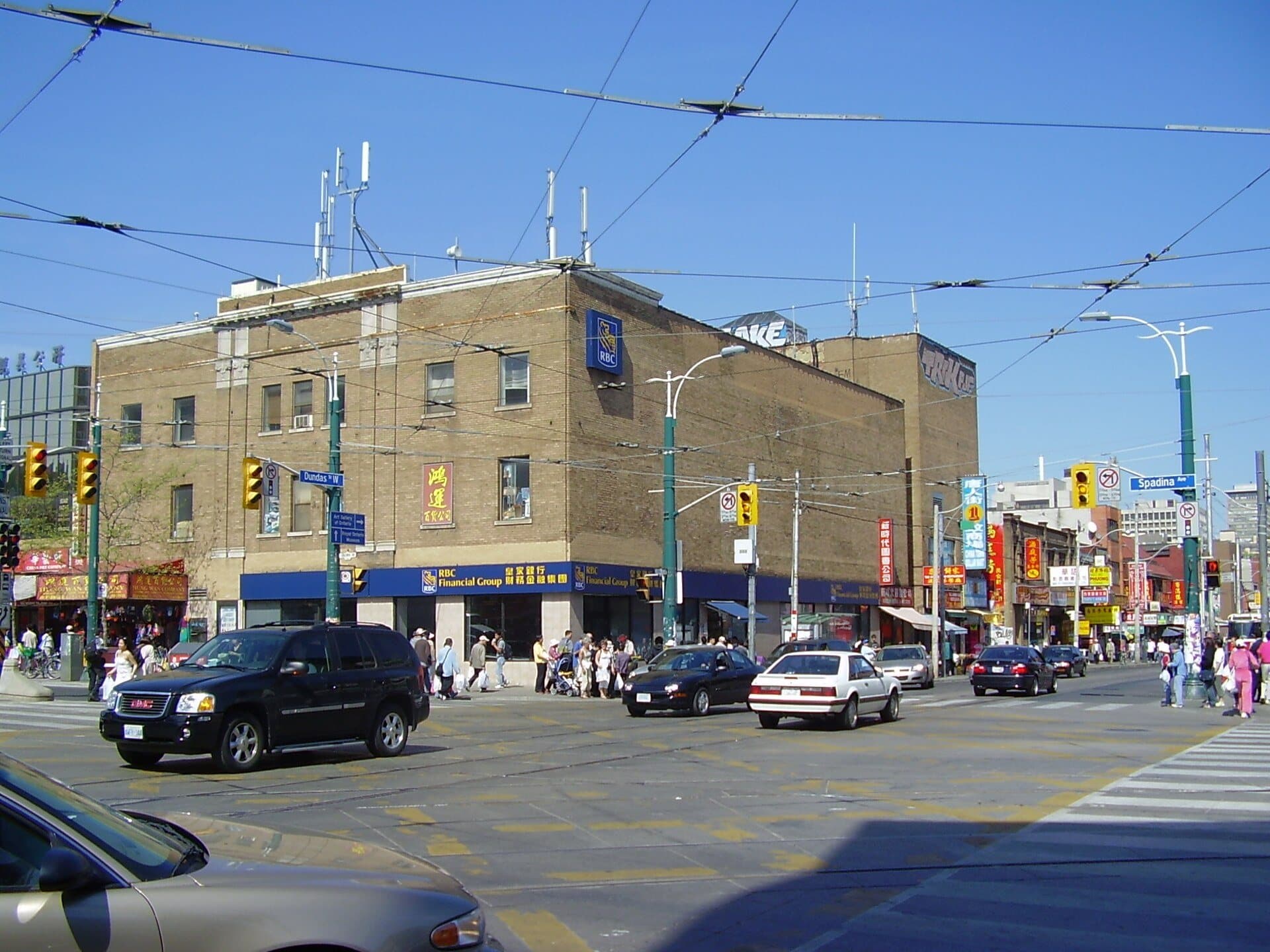
Dundas and Spadina: Chinatown's Crossroads
The corner where the second Chinatown grew. It took shape here after most of the first was demolished for City Hall in the 1950s and 1960s.
- 8
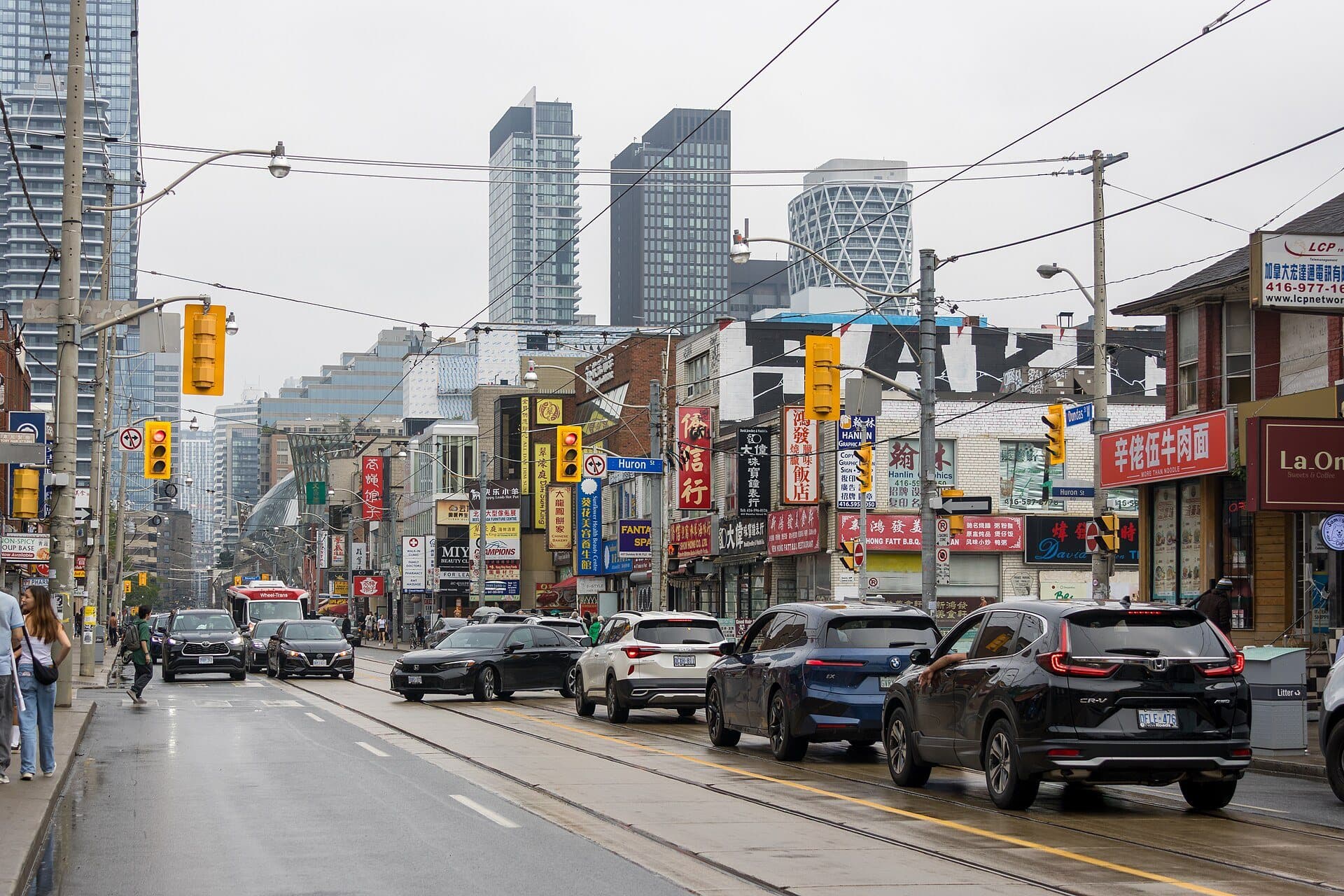
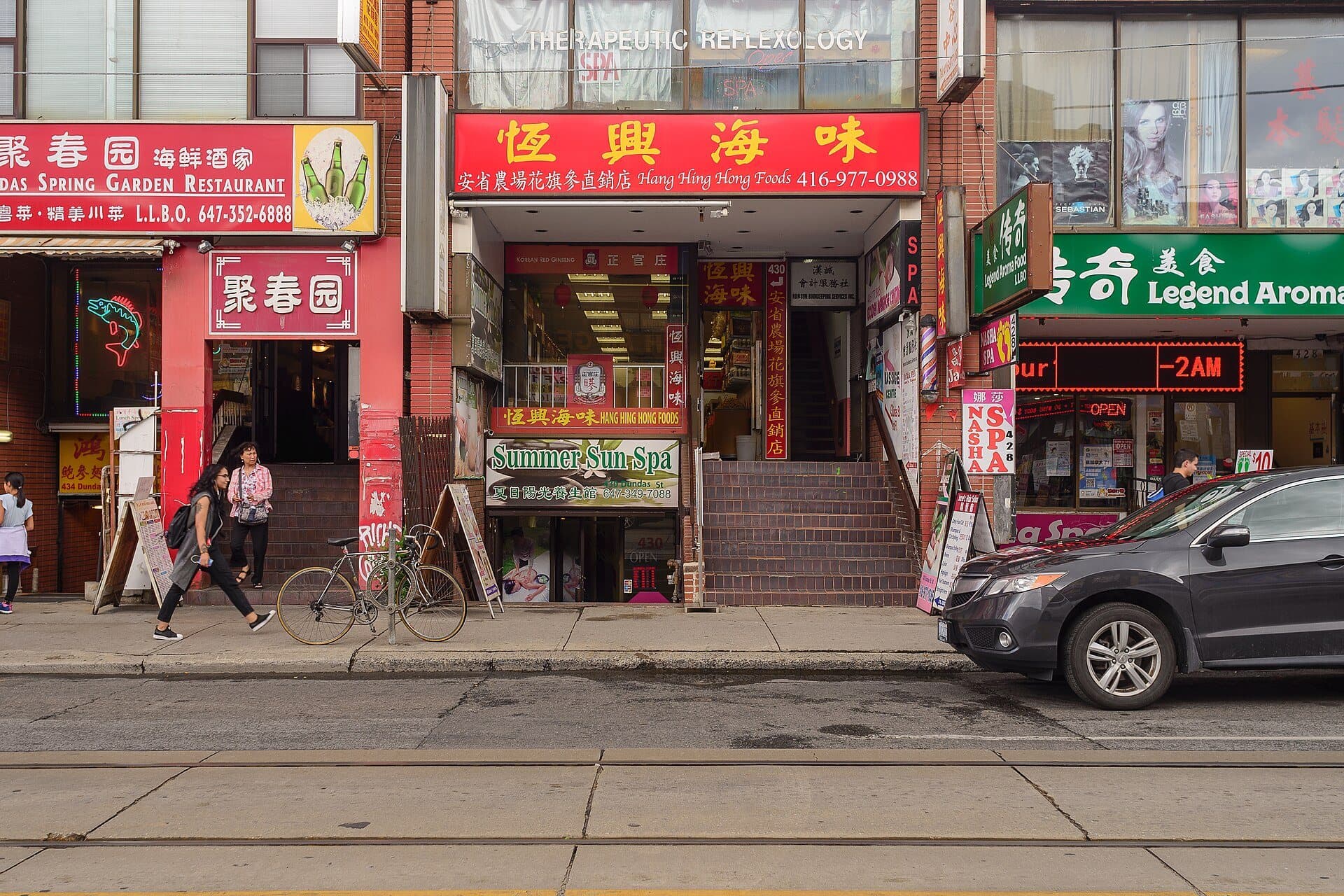
Dundas Street West: Where Chinatown Ends
Here Chinatown thins out toward the gallery. A lane here is named for Jean Lumb, who helped lead the 1969 fight to save the first Chinatown.
- 9
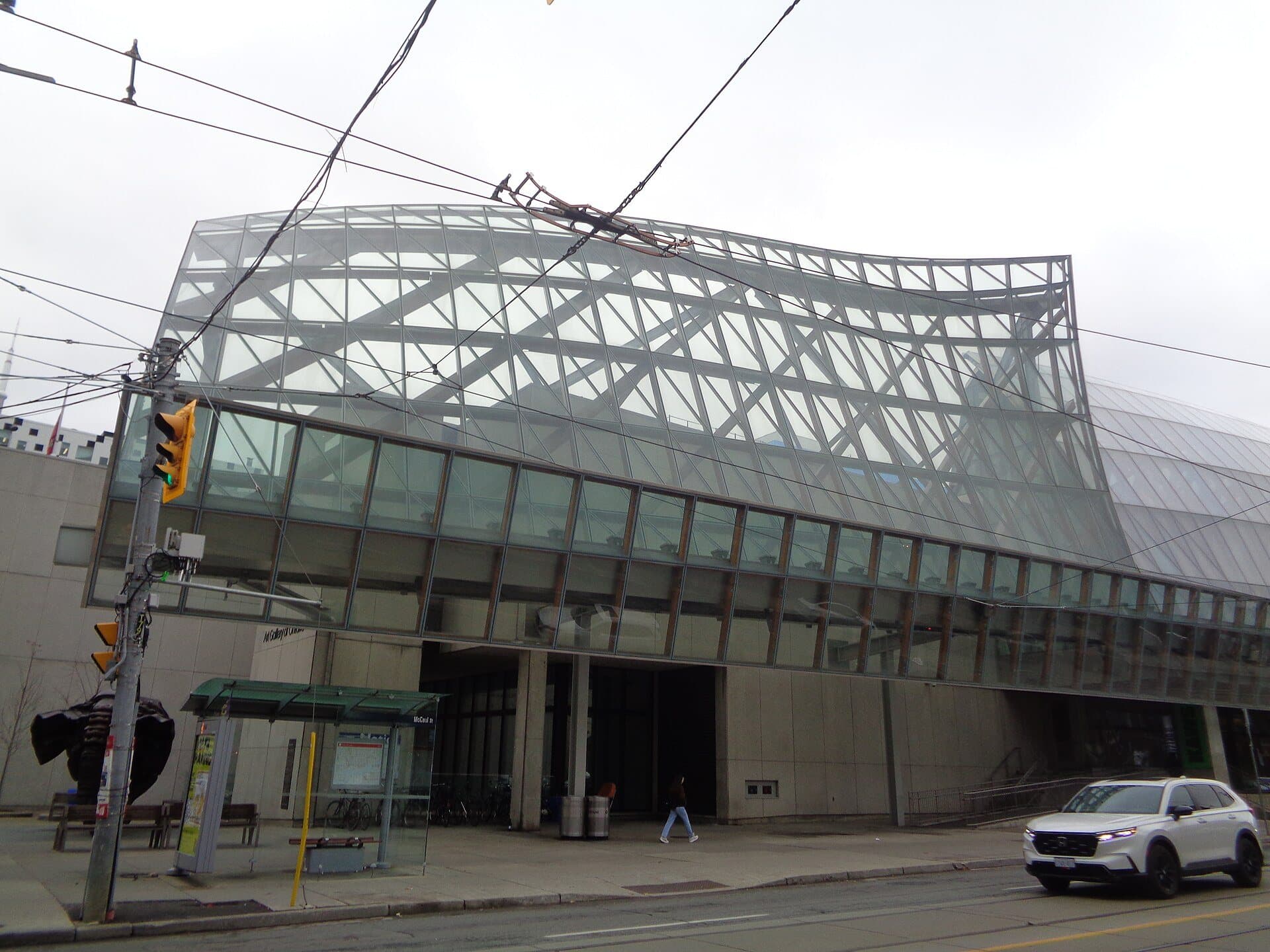
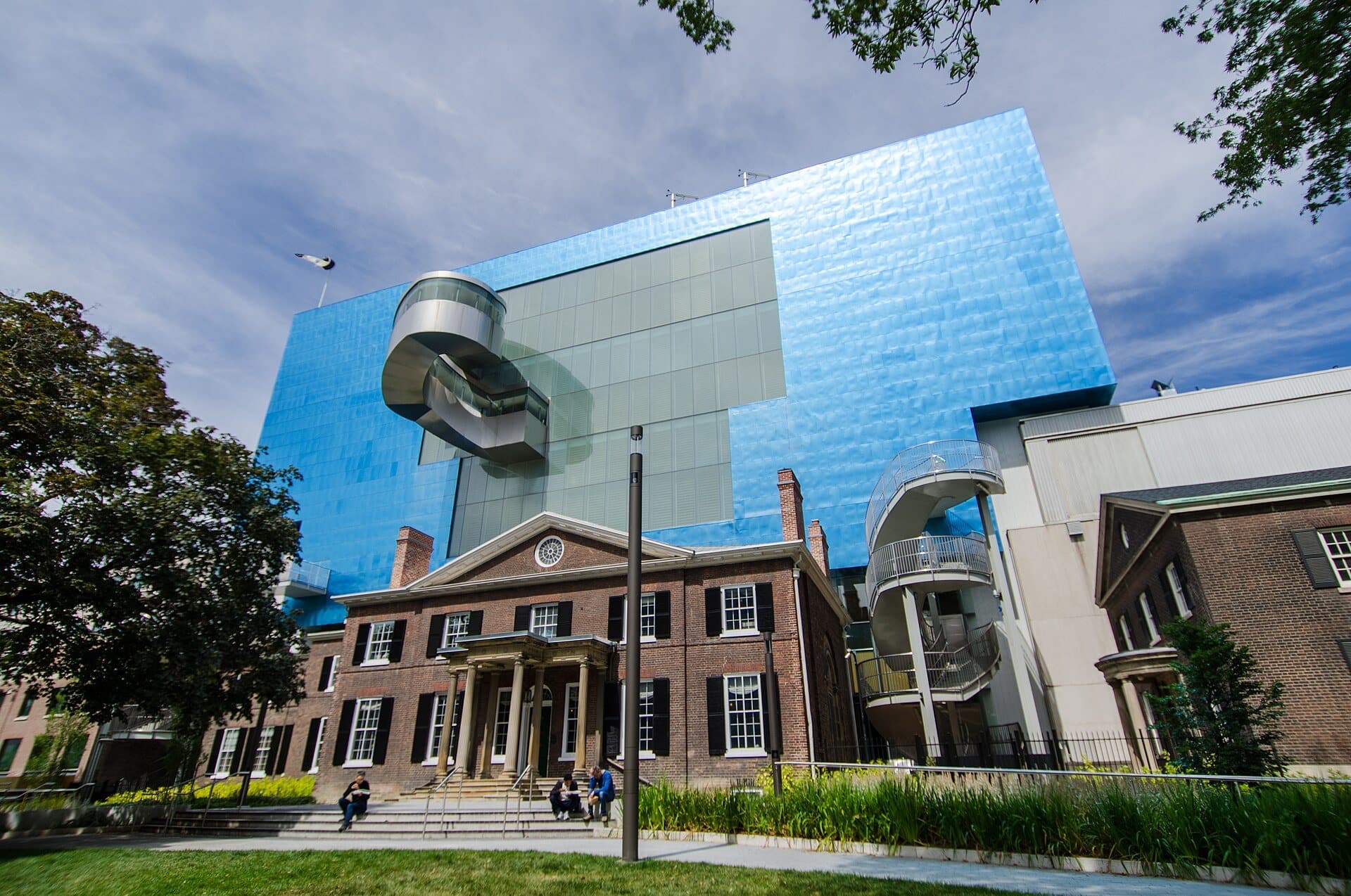
Art Gallery of Ontario: Gehry's Glass on Dundas
Gehry wrapped the gallery in glass and fir. He was born in Toronto in 1929, and his remade gallery reopened in November 2008.
- 10
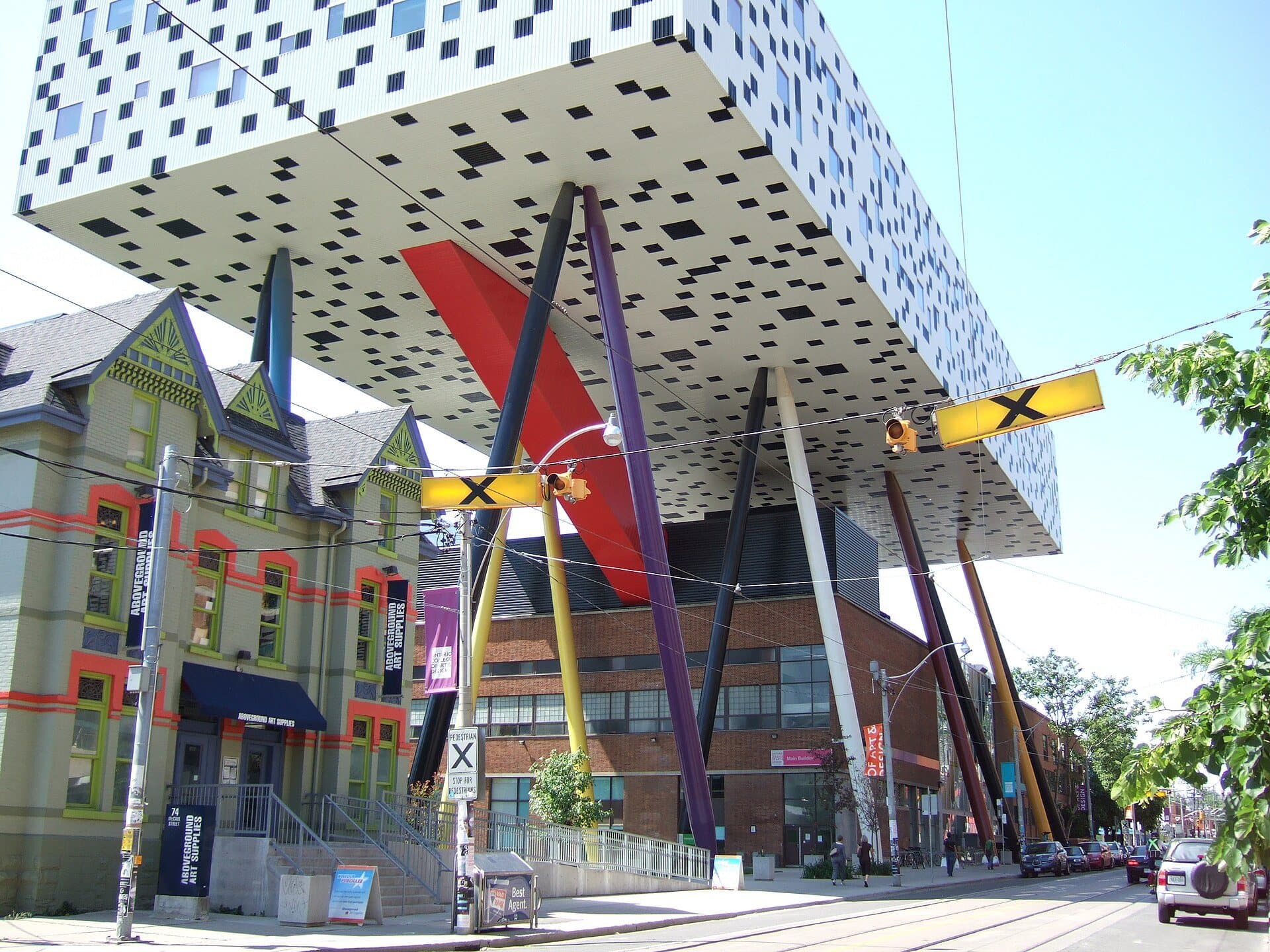
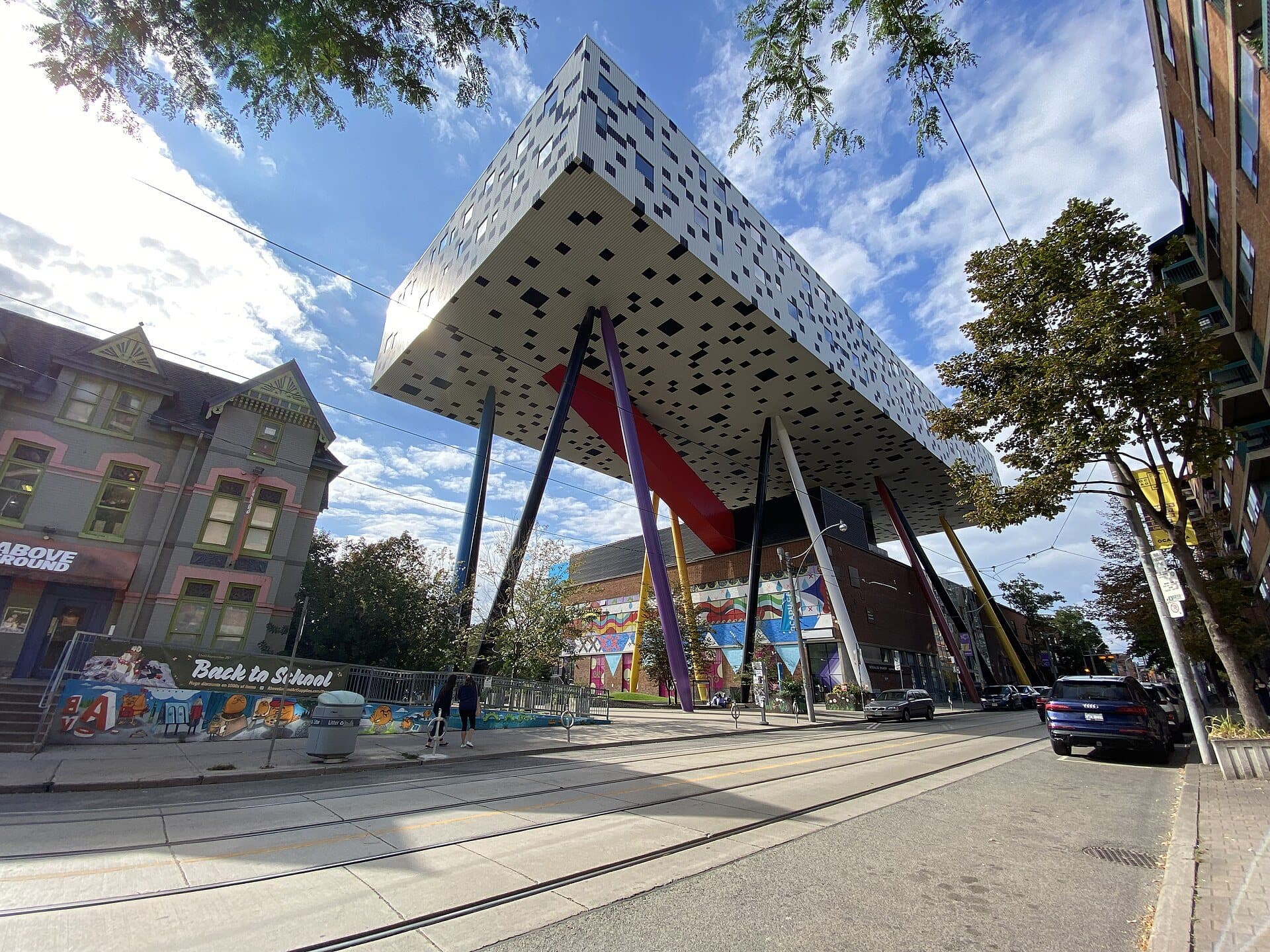
OCAD's Sharp Centre: The Tabletop on Stilts
A black-and-white box about nine storeys up. Will Alsop's Sharp Centre for Design opened in 2004 on twelve brightly painted steel legs.
- 11
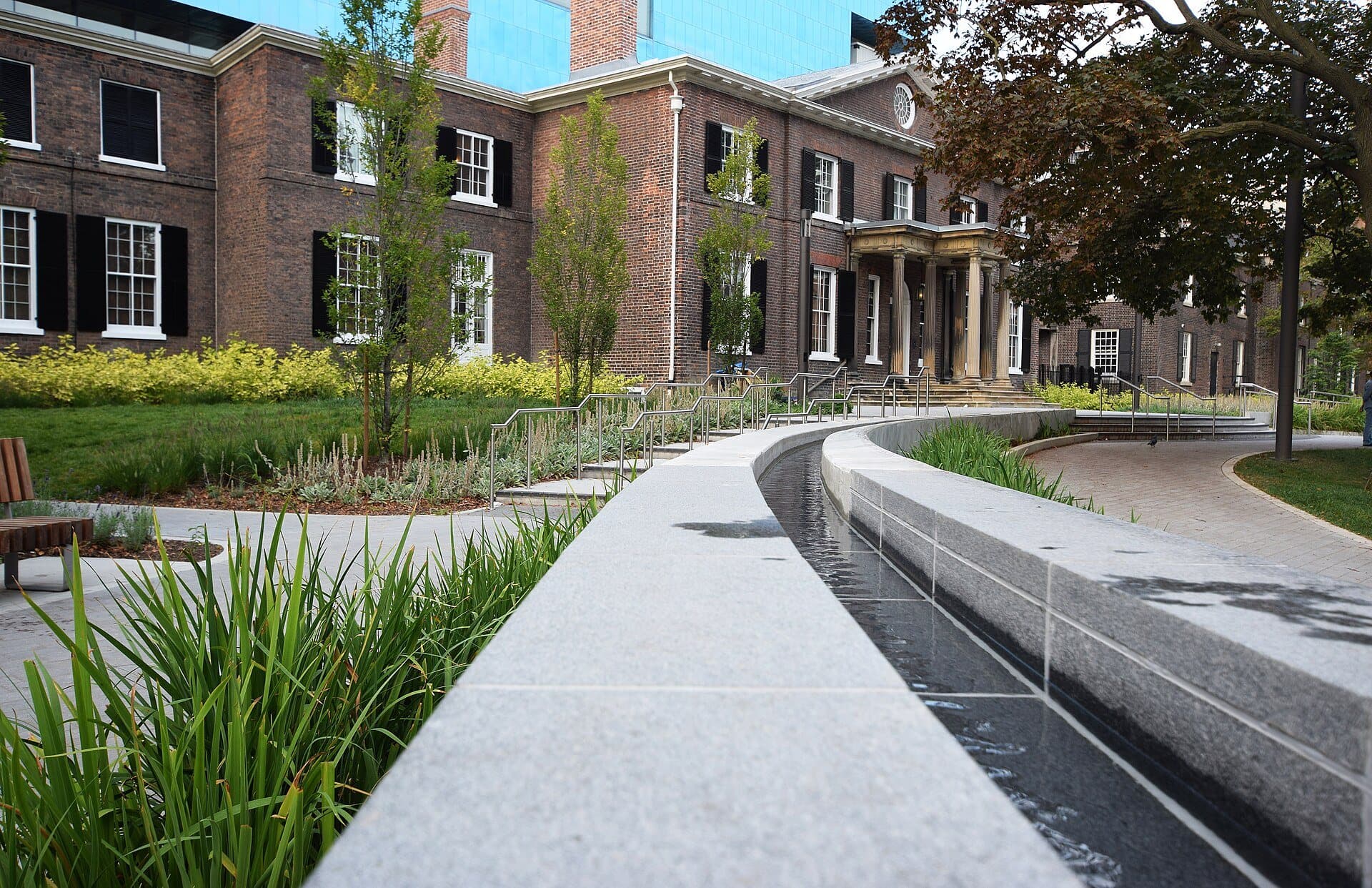
Grange Park and the Grange: The Gallery's First Home
A red-brick house finished by 1820, with Gehry's titanium-and-glass wing rising behind it. It became the art museum's first permanent home in 1913, and an art school shared it too.
Details
Best Time to Visit
Daytime, any day except Monday if you want to go into the Art Gallery of Ontario, which the walk passes near the end (it is closed Mondays). Late morning to mid-afternoon is when the market's shops are open and busiest; weekends are the liveliest and the most crowded. The two parks on the route close overnight. On Pedestrian Sundays (the next is Sunday 25 October 2026, noon to 7 p.m.) the market streets are closed to cars and packed.
Pro Tips
- •Come hungry: the walk passes Augusta Avenue's and Baldwin Street's food shops early, and Chinatown's restaurants later.
- •Kensington Avenue's vintage shops are on its south block, between St Andrew Street and Dundas, just off the route. The same block holds a row of bay-and-gable houses from 1876 to about 1889 that the City moved to protect in 2025.
- •Pedestrian Sundays keep cars off the market streets on the last Sunday of the month in season; the last 2026 date is Sunday 25 October, noon to 7 p.m. (checked 2 October 2026).
- •The Art Gallery of Ontario is free on the first Wednesday of each month from 6 to 9 p.m. with a timed ticket booked online, and Ontario residents under 25 get in free with a free AGO Annual Pass. Checked 2 October 2026; confirm on ago.ca.
- •From Dundas and Spadina you can walk south down Spadina toward Queen Street West for Graffiti Alley, a long lane of street art south of Queen between Spadina and Portland. It is not part of this walk.
- •Casa Loma is a separate, ticketed visit north of downtown and not on this walk; check its own website for hours.
- •On Sunday 4 October 2026, from 7 a.m. to 1 p.m., 505 Dundas streetcars are diverted for a charity run, with no service on part of Dundas (reported 1 October 2026).
Safety & Precautions
- •The Kiever Synagogue is an active Orthodox synagogue: view it from the opposite pavement, do not photograph worshippers, and expect people on the steps on Saturday mornings and on holidays.
- •Kensington's pavements are narrow and busy, especially at weekends; watch for cars and cyclists on the market streets, where some crossings are unmarked.
- •Cross Spadina, Dundas, Beverley and McCaul (at Dundas) only at the lights. The McCaul Street crossing at Grange Road, by the Sharp Centre's south end, is a zebra crossing with no lights: make sure traffic has stopped before you step out.
- •Bellevue Square and Grange Park are City parks and are closed from 12:01 a.m. to 5:30 a.m.
- •A new Art Gallery of Ontario wing was under construction between the gallery and OCAD in 2026, with fencing visible from Grange Park and McCaul Street.
- •Most buildings on the walk are homes, shops, places of worship or university buildings: stay on the pavement and respect private property.
Travel advisory: Exercise Normal Precautions (Level 1).
Gallery
Related Reading
Go deeper on what you'll see, hear, and walk through.
Overview
Best Self-Guided Walking Tours in Toronto (2026)
4 min
Overview
How to See Toronto: A City Built by Adding On
6 min
Overview
One Day in Toronto: A Walkable Downtown Itinerary (2026)
5 min
Overview
Toronto Travel Guide: How Many Days, Getting Around, When to Go (2026)
5 min
Thematic
Casa Loma: E.J. Lennox's Castle on the Hill
3 min
Thematic
Queen West: How a Street Changes Hands
4 min
Thematic
The Castle Built on Light Bulbs: Sir Henry Pellatt and the Fight Over Public Power
3 min
Thematic
The Drake Hotel: How a Queen West Flophouse Became a Symbol
3 min
Thematic
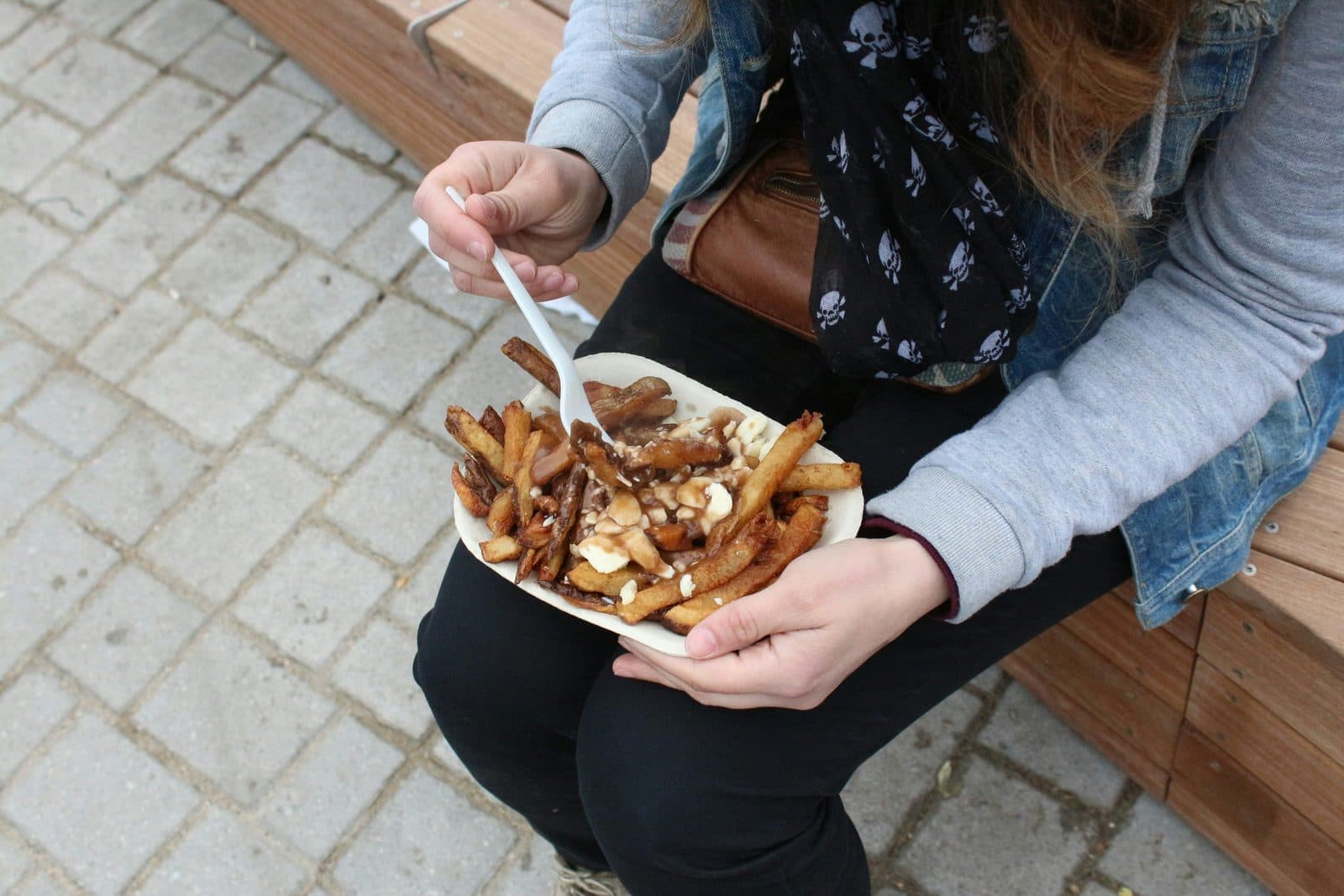
What to Eat in Toronto: A Food Guide (2026)
4 min
Companion
Kensington Market: How the Houses Became Shops, and Where the First Chinatown Went
6 min
Deep dive
The Kiever Synagogue: Twin Domes on Denison Square
4 min
Read the walk
The full story of Kensington Market and Chinatown: From House-Front Shops to Gehry's Glass, in words. Prefer to listen? Play it narrated, from home or on location.
Introduction
Toronto, in Canada, keeps one of its oldest immigrant neighbourhoods just west of downtown. Kensington Market is a tangle of narrow streets where houses grew shops over their front yards and each new community took over from the last. Beside it, along Spadina Avenue and Dundas Street, is Chinatown, and a few blocks on stand two of the boldest buildings in the city: an art school's box on stilts, and a long glass front for the Art Gallery of Ontario.
On almost every street here, people added to old buildings rather than knocking them down: a shop built over a front yard, a gallery moved into a family house, a new building lifted over an old one on legs.
Over eleven stops and about two kilometres, the walk starts at a domed synagogue, crosses a park square, loops through the market's food streets, goes down the wide avenue of Spadina to Chinatown's busiest corner, then follows Dundas east past the art gallery and the box on stilts to end in a quiet park behind the gallery. It takes about an hour and a half at an easy pace, longer if you stop to eat.
Three people come up along the way: Al Waxman, the actor who played the King of Kensington; Jean Lumb, a restaurateur who fought to save Toronto's first Chinatown; and Frank Gehry, the architect whose grandparents lived a few blocks from the gallery he remade.
1. Kiever Synagogue: Twin Domes on Denison Square
Welcome to Kensington Market. The walk begins on Denison Square, on the park side of the street, across from a red-brick synagogue with two towers, each one topped by a small dome and a Star of David. Stand opposite its front, where you can take in the whole building.
This is the Kiever Synagogue, finished in nineteen twenty-seven. Its congregation was formed in nineteen twelve by Orthodox Jewish immigrants who, as the Heritage Toronto plaque puts it, had fled oppression in Kiev province, then a Russian province in Ukraine. They were people from one home region who chose to pray together. They met first in the Ward, the crowded immigrant district east of University Avenue. By nineteen seventeen they had moved into a house on this corner, and ten years later this building took its place.
Now read the front. Its Jewish architect blended two old styles: Romanesque, which gives you the round arches, and Byzantine, which gives you the domes. Look at the windows. The Ontario Jewish Archives counts four different styles of arch on this building, so see how many you can find. Two staircases climb to separate doors, because men and women came in by different entrances and sat apart. Inside, out of sight, the sanctuary is turned east, toward Jerusalem, and a dome above the reading desk helps carry the cantor's voice.
The building has been protected under the Ontario Heritage Act since nineteen seventy-nine and has been restored since the nineteen eighties. It is still a working Orthodox synagogue, one of a few historic synagogues left in this area, long after the neighbourhood stopped being the centre of Toronto's Jewish community. Please keep to this side of the street, especially on Saturday mornings, when people gather on the steps.
Follow the route into the park behind you. Next, Bellevue Square.
2. Bellevue Square: An Estate Left as a Park
Walk on along the path to the middle of the square and stop there.
This square is what is left of a country estate. From eighteen fifteen this land belonged to the Denison family, and their house, called Belle Vue, stood in the middle of the property. It was pulled down in eighteen ninety-nine, but a piece of the estate stayed open, and the family's heirs gave it to the City as a park. Its name survives in this square and in Bellevue Avenue, the street that runs beside the synagogue.
Kensington was carved out of three estates: the Denisons' land here, the Baldwin family's land toward Spadina Avenue, and a third estate on the far side. Each family cut its land into lots with little regard, the City's heritage plan says, for what the neighbours were doing. So no two blocks are the same size, and the streets do not line up. You will feel those jogs and bends in the next few minutes.
On your way in, near the corner where you entered, you passed a life-size bronze of a man standing between two park benches. That is Al Waxman, born in Toronto in nineteen thirty-five. From nineteen seventy-five to nineteen eighty he starred in King of Kensington, a CBC comedy set in this market, as a man who ran a variety store here. After he died, in January two thousand and one, the merchants of Kensington Market commissioned the statue.
In two thousand and six this whole market was made a National Historic Site of Canada, for its network of narrow streets and alleys and for being home, in Parks Canada's words, to numerous successive waves of ethnocultural communities. The plaque is on the side of the square near Augusta Avenue.
Follow the route out of the square and up Augusta Avenue. Next, the market itself.
3. Augusta Avenue: Shops Over the Front Yards
Walk on up Augusta Avenue, between the produce and food shops, and stop partway along the block.
This is the move that makes Kensington. Look up first. Above many of the shops the house is still there: a pitched roof, a gable, an upstairs window or two. Then look down. At street level the house has been pushed forward over its old front yard, with a one-storey shop built right out to the pavement. The City's heritage plan describes these as garage-like additions, built from whatever practical materials came to hand and reaching out into the street. Canopies and awnings reach further still. Up for the house, down for the shop. Keep that rule in mind.
How could anyone do this? There was no zoning. Toronto passed its first zoning by-law only in June nineteen fifty-two, so a family could turn its front room into a store, and its front yard into a shop, with no zoning rule in the way.
The first to turn these houses into shops were Jewish families. From the nineteen forties the Jewish community gradually moved north, along Bathurst Street to North York, and Hungarian and Portuguese families moved in. Many of the canopies and enclosures in front of these shops went up in that period, according to the City, and this street became known as the street of the Portuguese. The City's plan notes that Jewish property owners were more likely than most to rent to Black, Asian and other newcomers. Through the nineteen seventies and eighties people arrived from China, Korea, Vietnam, Latin America and Jamaica, and in the nineties from Southeast Asia and Africa too.
Ahead, the street jogs where it meets Baldwin Street: one of the bends left by those three estates.
Follow the route onto Baldwin Street. Next, where the market began.
4. Baldwin Street: Where the Market Began
Walk on along Baldwin Street, through its busiest food block, and stop partway down.
By nineteen eighteen, the City's heritage plan says, a weekly market had grown up along this street and Kensington Avenue, the street at the end of the block. Not all of it was in shops. Peddlers sold fruit, dry goods and rags at the curb or from push carts. The houses here were small, on narrow lots, and cheap, which made them ideal for the job. Turned into stores, they gave immigrant families business space they could afford.
Use the rule from Augusta. Look across the street. Up top, a row of small houses, their gables and upstairs windows still showing. Down below, shopfronts pushed out to the pavement. The City chose this row, numbers one seventy-eight to one ninety-four Baldwin, as its own example of the market's small storefronts, narrow lots and patterns of adapting buildings. Murals and brightly painted fronts are part of the look too; the plan calls them a common sight.
The name on the street sign belongs to the family who owned this stretch of land. Baldwin, like Spadina, the big avenue ahead, comes from the Baldwins, and a doctor in that family, William Warren Baldwin, will come up again at Spadina.
By the nineteen fifties people had started calling this whole district Kensington Market. On Pedestrian Sundays, when cars are kept out, this street fills from wall to wall.
Follow the route round the corner and down Kensington Avenue. Next, the gables behind the shopfronts.
5. Kensington Avenue: Gables Above the Shopfronts
Walk on down Kensington Avenue and stop on this side of the street, a little way along, facing the shops opposite. Kensington Avenue was built as a street of houses, and many of them were a Toronto type called bay-and-gable. The front is split in two: the door in one half, and…
Full narration for this stop unlocks with the tour.
6. Spadina Avenue: The Double-Width Street
Walk on to Spadina Avenue and a few steps down its pavement, and stop where you can take in the whole width of the street. On Saint Andrew Street you passed the Anshei Minsk synagogue, finished in nineteen thirty. Like the Kiever, its congregation was formed in nineteen twelve…
Full narration for this stop unlocks with the tour.
7. Dundas and Spadina: Chinatown's Crossroads
Walk on to the corner of Dundas Street and stop at the lights, before you cross. This is Dundas and Spadina, the heart of Toronto's Chinatown, and it is not the city's first Chinatown. A Chinese laundry opened on Adelaide Street as early as eighteen seventy-eight. By the…
Full narration for this stop unlocks with the tour.
8. Dundas Street West: Where Chinatown Ends
Walk on along this side of Dundas and stop by the mouth of a lane that runs off the street. This is where Chinatown thins out. Watch the signs: the Chinese lettering grows sparse, and ahead the trees of a park and the bulk of a big gallery come into view. The lane beside you…
Full narration for this stop unlocks with the tour.
9. Art Gallery of Ontario: Gehry's Glass on Dundas
Walk on along this side of Dundas and stop opposite the middle of the long glass front across the road, on your right. This is the Art Gallery of Ontario. It is ticketed and well worth going in, and the details are on this stop's card, but this stop works from the…
Full narration for this stop unlocks with the tour.
10. OCAD's Sharp Centre: The Tabletop on Stilts
Walk on down this side of McCaul and stop when you are level with the tall coloured legs across the street. Then look up. Up there is a long box, black-and-white, its white skin spotted with black, held about nine storeys above the ground on twelve slanting steel legs painted…
Full narration for this stop unlocks with the tour.
11. Grange Park and the Grange: The Gallery's First Home
Walk on and stop where the paths meet, a red-brick house across the lawn ahead. That house is the Grange. Its foundations were laid in eighteen seventeen and it was finished by eighteen twenty. The City's heritage report calls it the oldest brick house in the city, built in the…
Full narration for this stop unlocks with the tour.