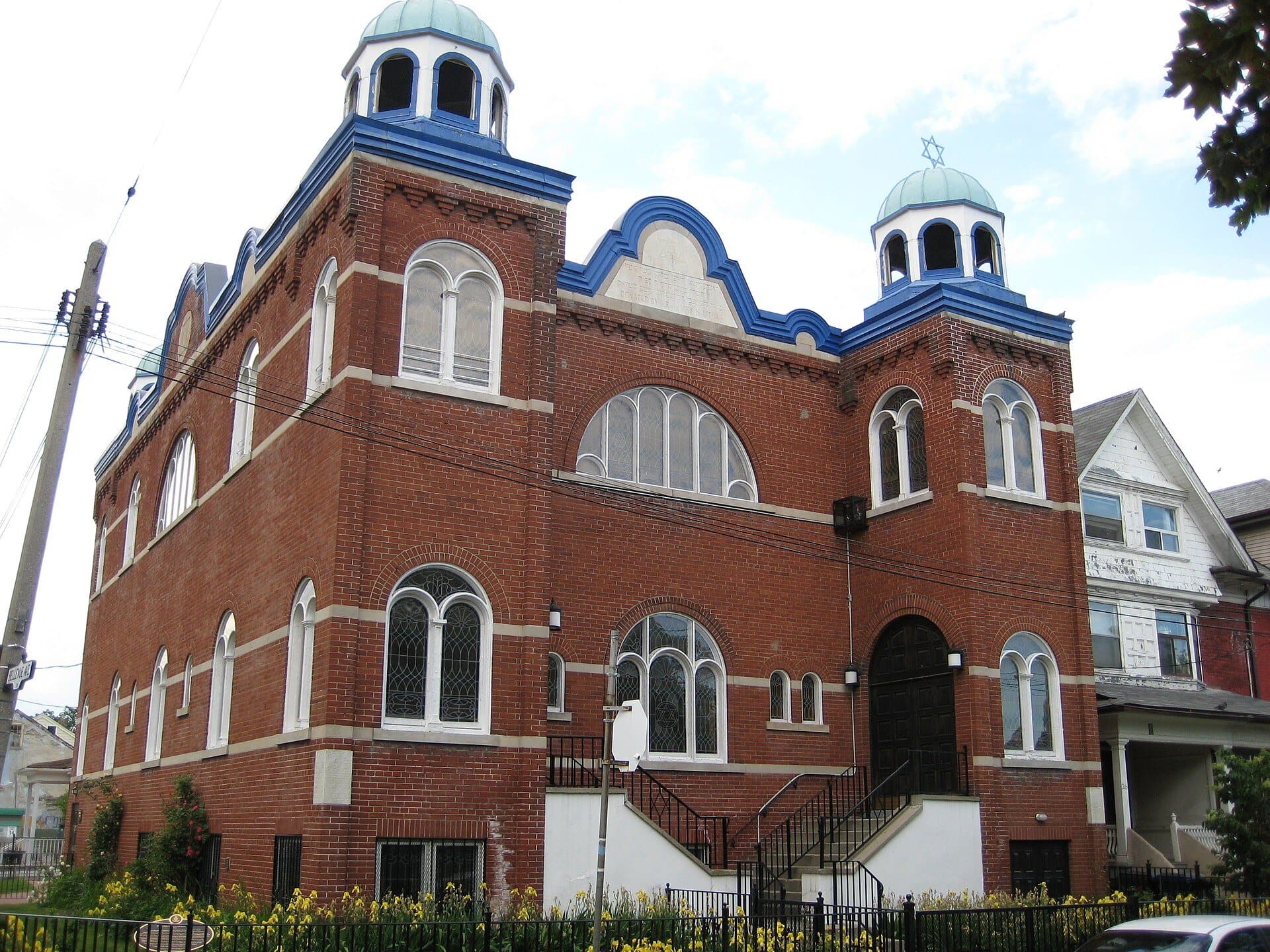
The Kiever Synagogue stands at 25 Bellevue Avenue, at the corner of Denison Square, across the street from the park. Two towers, each topped by a small dome and a Star of David. Round-arched windows. Two staircases climbing to two separate doors. It is the first stop on the Kensington walk, and it is still a working Orthodox synagogue.
A congregation from one home region
The building's formal name is the First Russian Congregation of Rodfei Sholem Anshei Kiev. The Heritage Toronto plaque describes its founders as a small congregation of Orthodox Jewish immigrants who had fled oppression in Kiev province, then a Russian province in Ukraine.
The City of Toronto's heritage plan for Kensington explains the type. The Kiever and its neighbour, the Anshei Minsk on St Andrew Street, were both formed in 1912 in the landsmanshaft tradition: congregations of people from the same town or region who chose to pray together. The Kiever's members met first in the Ward, the crowded immigrant district east of University Avenue. By 1917 they had moved into a house on this corner, and ten years later the present building took its place.
The shift west was part of a larger movement. By 1909, the City's plan says, only a third of Toronto's Jewish population still lived in the Ward, and about two thirds lived in the area bounded by Spadina, Palmerston, Queen and College, which takes in Kensington.
Reading the front
Hear a stop from this walk
Grange Park and the Grange: The Gallery's First Home
The architect was Benjamin Swartz, whom the plaque calls a Jewish architect. The Ontario Jewish Archives dates his design to 1923, and the building was finished in 1927. The plaque describes the style as a blend of Romanesque and Byzantine: Romanesque gives the round arches, Byzantine the domes.
Stand on the park side of the street, opposite the front, and the design explains itself:
- Twin domed towers, each crowned with a Star of David.
- Four different styles of arch in the windows, by the Archives' count. See how many you can find.
- Two opposing staircases leading up to separate entrances, because men and women came in by different doors and sat apart.
Inside, out of sight, the sanctuary faces east toward Jerusalem, and a dome over the bimah, the reading desk, helps carry the cantor's voice. The sanctuary held up to 400 congregants. Murals of biblical animals and zodiac signs were painted inside in 1934 and 1935.
Protected and restored
The building has been protected under the Ontario Heritage Act since 1979, and, in the plaque's words, it has been restored since the 1980s. The conservation firm ERA Architects lists repairs to the three rooftop cupolas, restoration of the wood windows and stained glass, masonry repairs and new front steps. The synagogue also sits inside the Kensington Market National Historic Site, designated by Parks Canada in 2006.
The plaque's own summary is the right way to put its survival: the Kiever is now one of a few historic synagogues still in this area, long after the neighbourhood ceased to be the centre of Toronto's Jewish community. From the 1940s, the City's plan records, the Jewish community gradually moved north along Bathurst Street to North York. The Kiever stayed, and so did the Anshei Minsk, which the walk passes on St Andrew Street on the way to Spadina.
Visiting
The Kiever is an active Modern Orthodox synagogue, and the walk treats it from the outside. Shabbat morning service is at 9:30 a.m.; the congregation's site says Friday night services are not being held until further notice. Keep to the park side of the street, especially on Saturday mornings and the High Holidays, when people gather on the steps, and do not photograph worshippers.
On the walk
The Kiever is stop one of the Kensington Market and Chinatown walk, eleven stops over about 1.8 kilometres from Denison Square to Grange Park, about 85 minutes at an easy pace. The walk goes on through Bellevue Square and the market's food streets, down Spadina into Chinatown, along Dundas past Frank Gehry's glass front for the Art Gallery of Ontario, and ends at the Grange behind it. For the market's longer story, read Kensington Market: How the Houses Became Shops.
Ready to experience it?
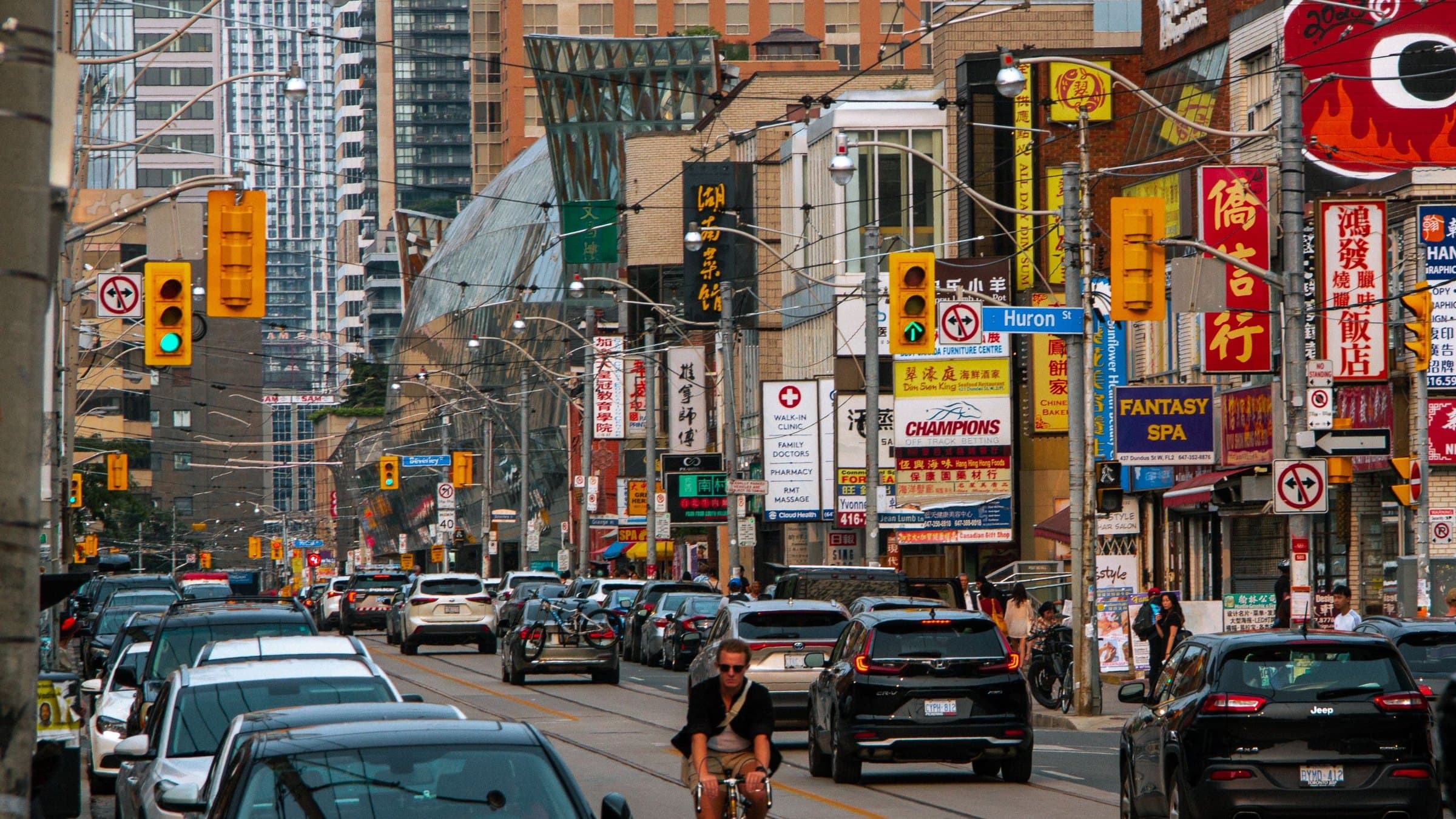
Kensington Market and Chinatown: From House-Front Shops to Gehry's Glass
85 min · 1.8 km · easy
More from Toronto
Explore more at your own pace.
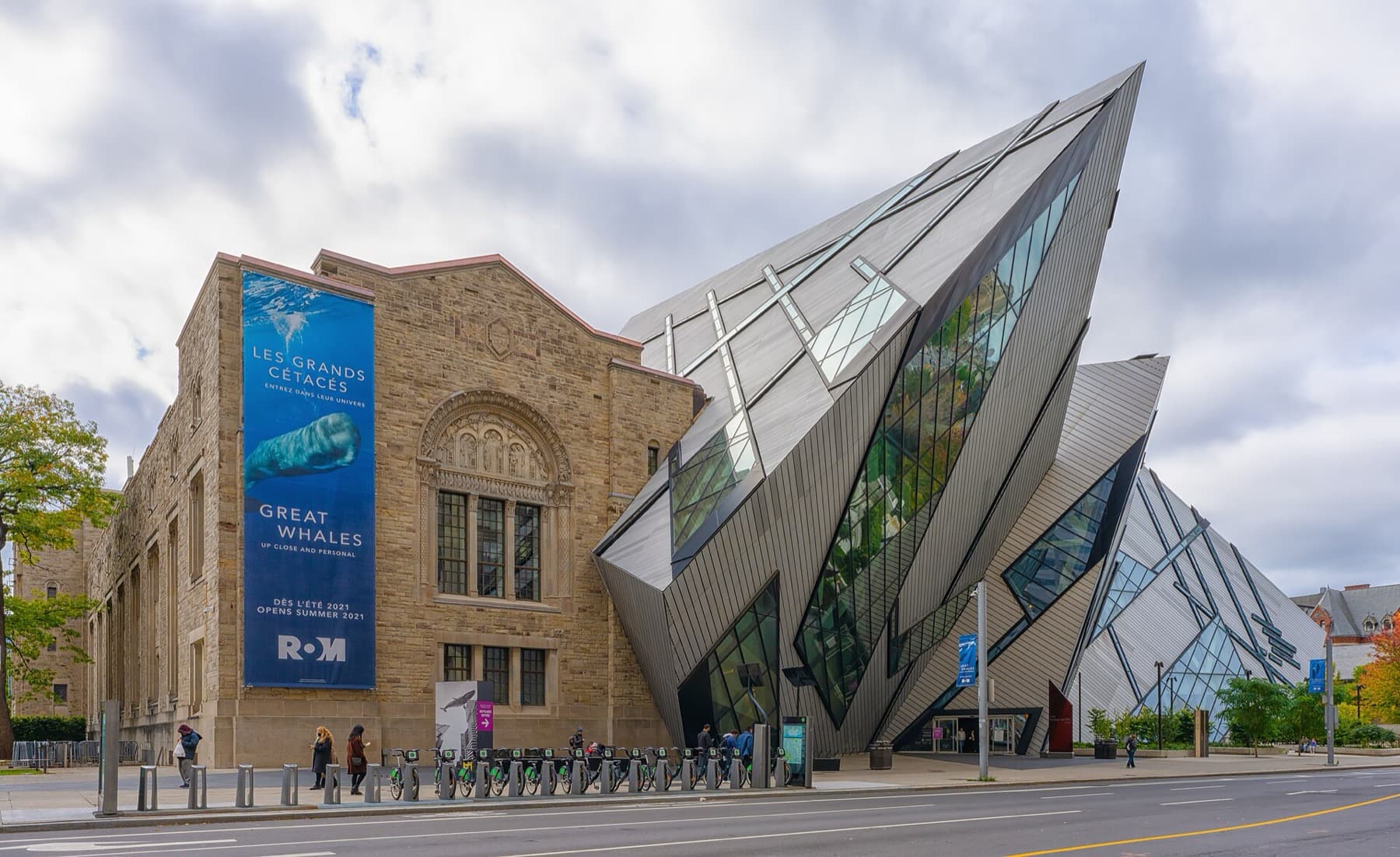
Royal Ontario Museum: What to See, Floor by Floor
The ROM Crystal: Daniel Libeskind's Shard on Bloor Street
The ROM's Totem Poles: Crest Poles Built Into the Building
Zuul: The ROM's Armoured Dinosaur, Skin and All
Garrison Creek: The Buried River Under Trinity Bellwoods