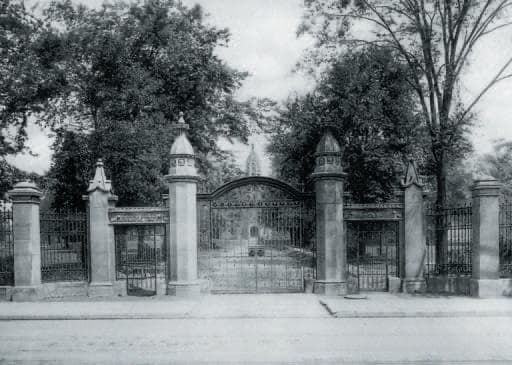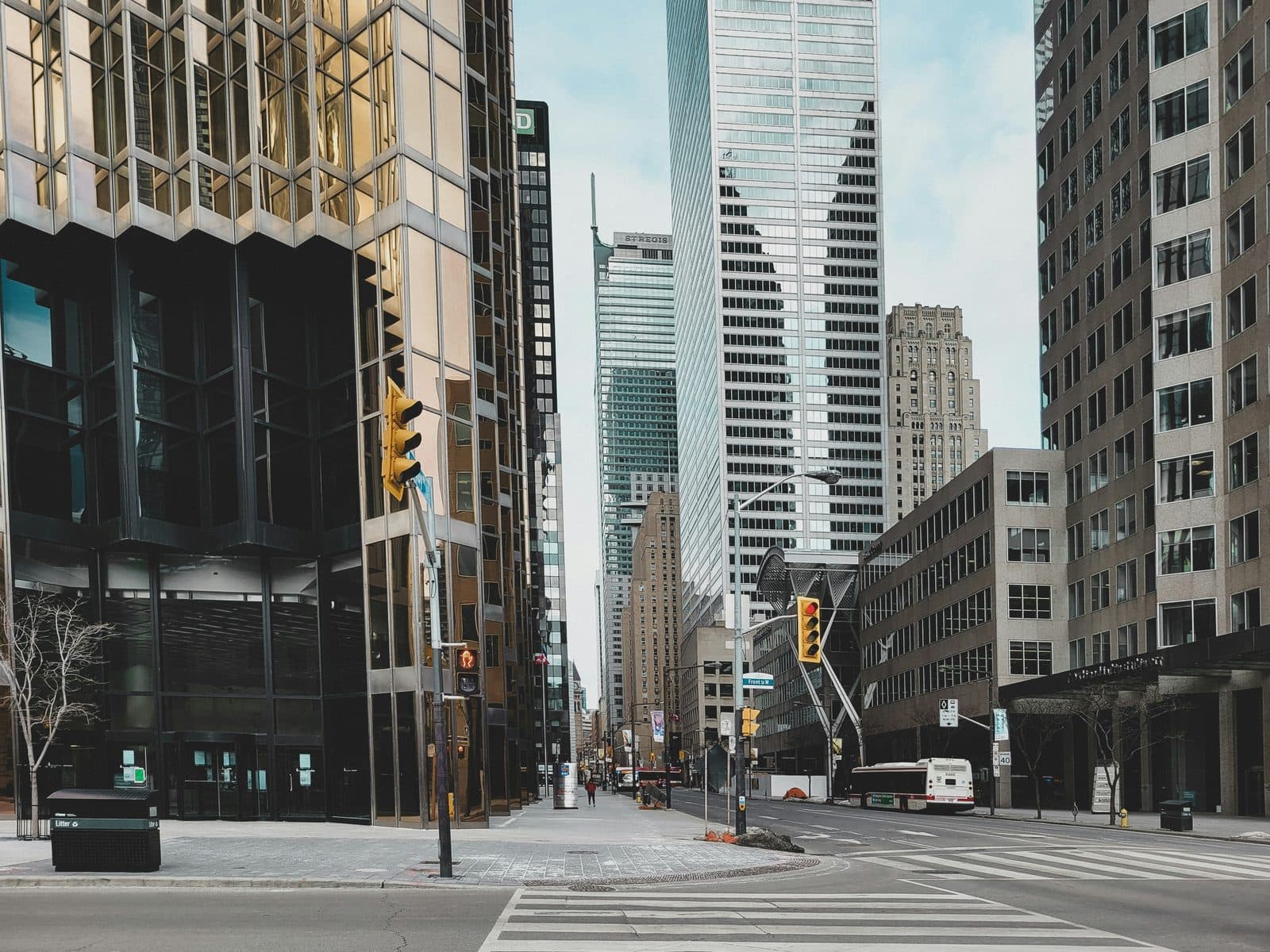
Walk down Augusta Avenue and look up. Above many of the shops, the house is still there: a pitched roof, a gable, an upstairs window. Then look down. At street level the house has been pushed forward over its old front yard, with a one-storey shop built out to the pavement. Up for the house, down for the shop. That one move explains most of Kensington Market.
Three estates and streets that do not line up
The land west of Spadina was three estates. The City of Toronto's heritage plan names them: Dr William Warren Baldwin's land from 1822, George Taylor Denison's from 1815, with his house called Belle Vue, and George Crookshank's from 1817. Each family cut its land into lots with little regard for how the neighbours were planning theirs. The result, in the plan's words, is no two blocks the same size and streets that do not align. Walk the market and you feel the jogs and bends.
Denison's house was pulled down in 1899, and part of the estate stayed open as Bellevue Square, given to the City by his heirs. Baldwin laid out Spadina Avenue as the main road through his land, about 40 metres wide and later widened to about 48, which is why it is twice as wide as anything around it.
From the 1850s to around 1900 the City describes the area as a predominantly British, working-class neighbourhood. Many of its houses were a Toronto type called bay-and-gable: the door in one half of the front, and in the other a bay window under a pointed gable.
How a house becomes a shop
Hear a stop from this walk
Grange Park and the Grange: The Gallery's First Home
The Jewish community moved in from the Ward, the crowded immigrant district east of University Avenue. By 1909, the City's plan says, only a third of Toronto's Jewish population still lived in the Ward; about two thirds lived in the area bounded by Spadina, Palmerston, Queen and College.
By 1918 a weekly market had emerged along Kensington Avenue and Baldwin Street. Not all of it was in shops: peddlers sold fruit, dry goods and rags at the curb or from push carts. The houses were small, on narrow lots and cheap, and there was no zoning. Toronto passed its first zoning by-law only in June 1952. So a family could turn its front room into a store, and its front yard into a shop, with no rule in the way. In August 1937 a Toronto newspaper called it the city's liveliest market, with squawking chickens and vegetables in crates across the sidewalks.
From the 1940s the Jewish community gradually moved north along Bathurst Street to North York, and by the 1950s the district was being called Kensington Market. Hungarian and Portuguese families moved in, and many of the canopies and enclosures in front of the shops went up in that period. Augusta Avenue became known as the street of the Portuguese. The City's plan also notes that Jewish property owners were more likely to rent to Black, Asian and other non-white and immigrant newcomers, which helps explain why community after community settled here.
Through the 1970s and 1980s people arrived from China, Korea, Vietnam, Latin America and Jamaica, and in the 1990s from Southeast Asia and Africa too. In 1978 the Jamaican reggae musician Stranger Cole opened Roots Records at 58 Kensington Avenue, which the City records as the first Caribbean business in the market. In 2021 a community land trust bought the building at number 54.
The plan that was cancelled
The market nearly went. In the 1960s the City drew up a plan to redevelop the area. It was cancelled in 1967, influenced in part, the City says, by strong community opposition; only two municipal parking lots were built. In 2006 Parks Canada designated Kensington Market a National Historic Site, for its network of narrow streets and alleys and for being home to numerous successive waves of ethnocultural communities. City Council voted in 2025 to make it a heritage conservation district, but the designation was appealed, and the City's own reports in 2026 said it was not yet in force.
The Chinatown that is the second one
Toronto's Chinese history begins earlier and further east. Simon Fraser University's history records a Chinese laundry on Adelaide Street as early as 1878. By the 1920s a Chinatown had grown up between Queen and Dundas, east of University Avenue.
For a generation, federal law kept that community from growing. The Chinese Immigration Act, known in the community as the Exclusion Act, became law on 1 July 1923. In the 24 years it stood, Parks Canada says, Canada admitted somewhere between 12 and 50 Chinese immigrants. It was repealed on 14 May 1947.
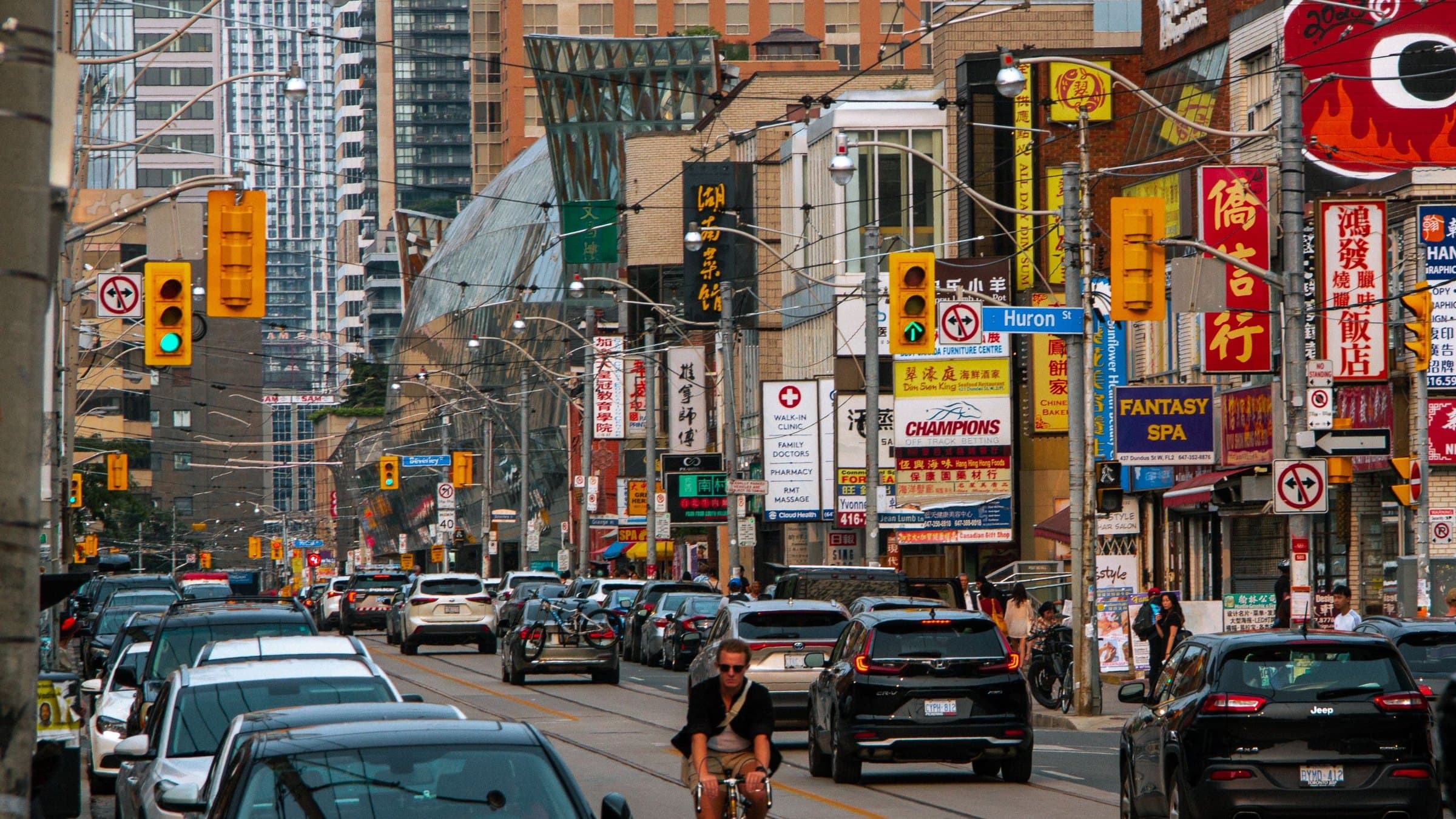
Then, in the 1950s and 1960s, the City expropriated land for its new City Hall and Nathan Phillips Square, and most of the first Chinatown was demolished. Businesses moved west along Dundas, beyond University Avenue, and through the 1960s and 1970s a new concentration grew up along Spadina between College and Dundas. That is the Chinatown you walk through today, and the City's plan describes its boundary with Kensington as porous.
Jean Lumb
Jean Lumb was born Jean Wong in British Columbia in 1919 and came to Toronto in 1935. The Ontario Heritage Trust's plaque says she was soon running a profitable fruit store, and by 1959 co-owned the well-reputed Kwong Chow restaurant with her husband, Doyle Lumb. In the 1950s she lobbied successfully for the removal of discriminatory immigration rules.
In March 1969 community leaders, Lumb among them, formed the Save Chinatown Committee to keep the remaining part of the first Chinatown, around Elizabeth Street. Canada's History magazine reports that on 16 June 1969 more than 350 Chinese Canadians attended a City Council meeting, where a council committee and Mayor William Dennison backed keeping Chinatown where it was. In 1976 Lumb became the first Chinese Canadian woman, and the first restaurateur, appointed to the Order of Canada. In 2019 a lane off Dundas Street West, east of Huron Street, was named Jean Lumb Lane.
What she fought for was the older Chinatown, about a kilometre east of the lane. The Spadina Chinatown grew as people moved west.
On the walk
The Kensington Market and Chinatown walk covers this ground in eleven stops over about 1.8 kilometres, about 85 minutes at an easy pace. It starts at the Kiever Synagogue on Denison Square, crosses Bellevue Square past the statue of Al Waxman, star of the CBC comedy King of Kensington, loops through Augusta Avenue, Baldwin Street and Kensington Avenue, goes down Spadina to Dundas, stops by Jean Lumb Lane, passes Frank Gehry's glass front for the Art Gallery of Ontario and OCAD's box on stilts, and ends at the Grange in the park behind the gallery. For food along the way, see What to Eat in Toronto.
Ready to experience it?
Kensington Market and Chinatown: From House-Front Shops to Gehry's Glass
85 min · 1.8 km · easy
More from Toronto
Explore more at your own pace.
Royal Ontario Museum: What to See, Floor by Floor
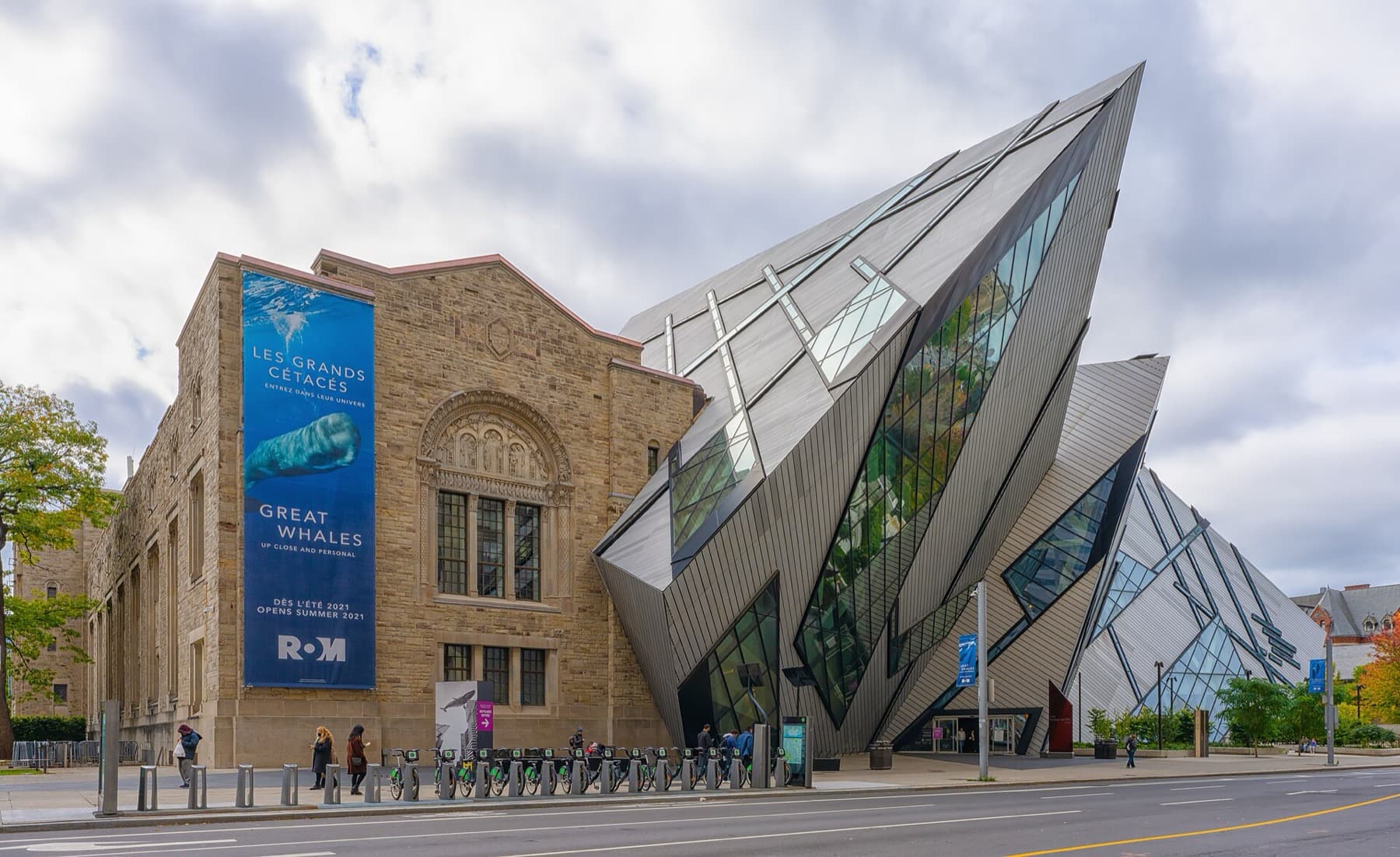
The ROM Crystal: Daniel Libeskind's Shard on Bloor Street
The ROM's Totem Poles: Crest Poles Built Into the Building
Zuul: The ROM's Armoured Dinosaur, Skin and All
Garrison Creek: The Buried River Under Trinity Bellwoods