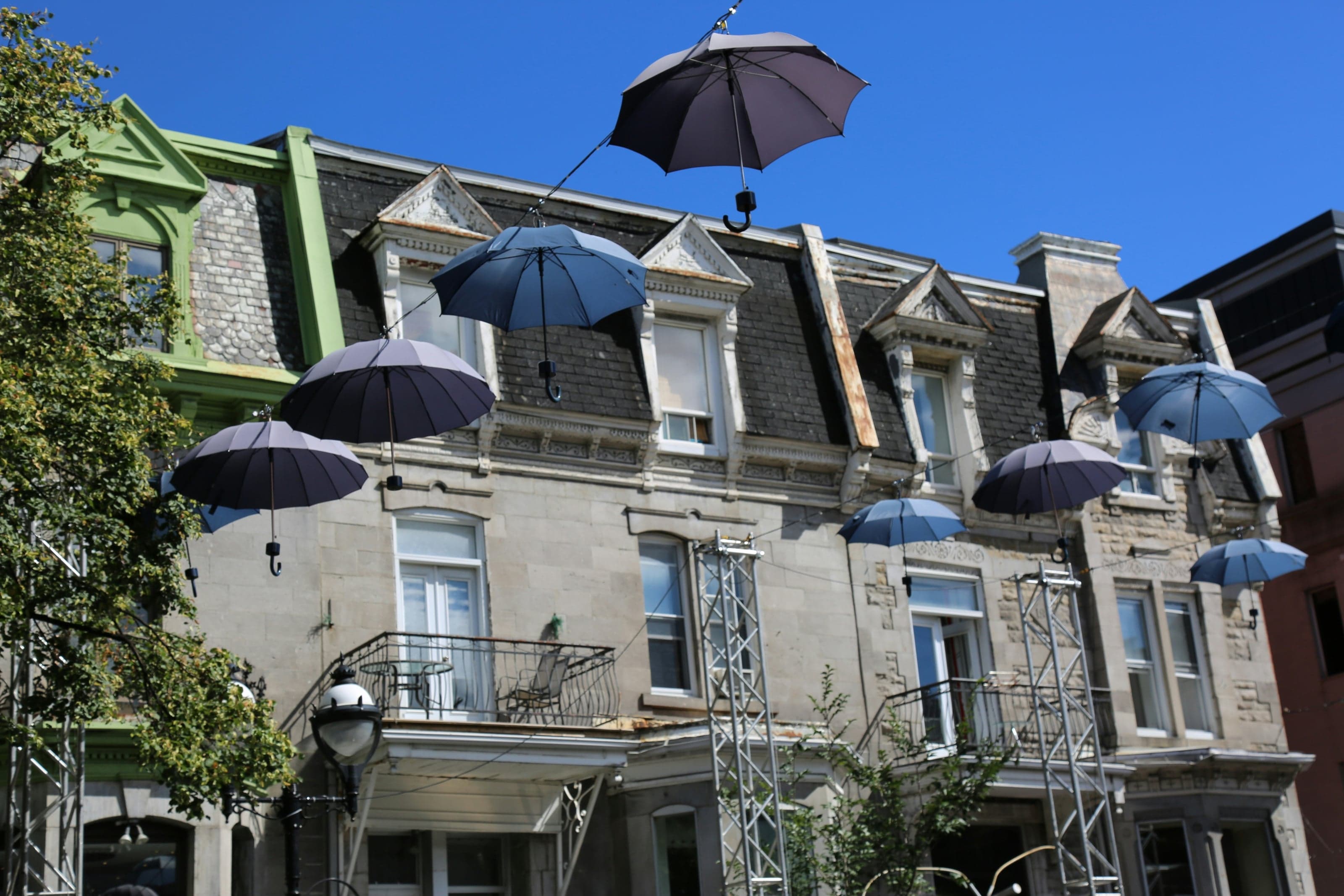
Walk from a poets' square up the Main into the Mile End, reading the outside staircases on the way, past smoked meat, a Portuguese park and Leonard Cohen's door, to a wood-fired bagel oven.
Start · Carré Saint-Louis: A Reservoir Turned Poets' Square
DirectionsStops
- 1
Carré Saint-Louis: A Reservoir Turned Poets' Square
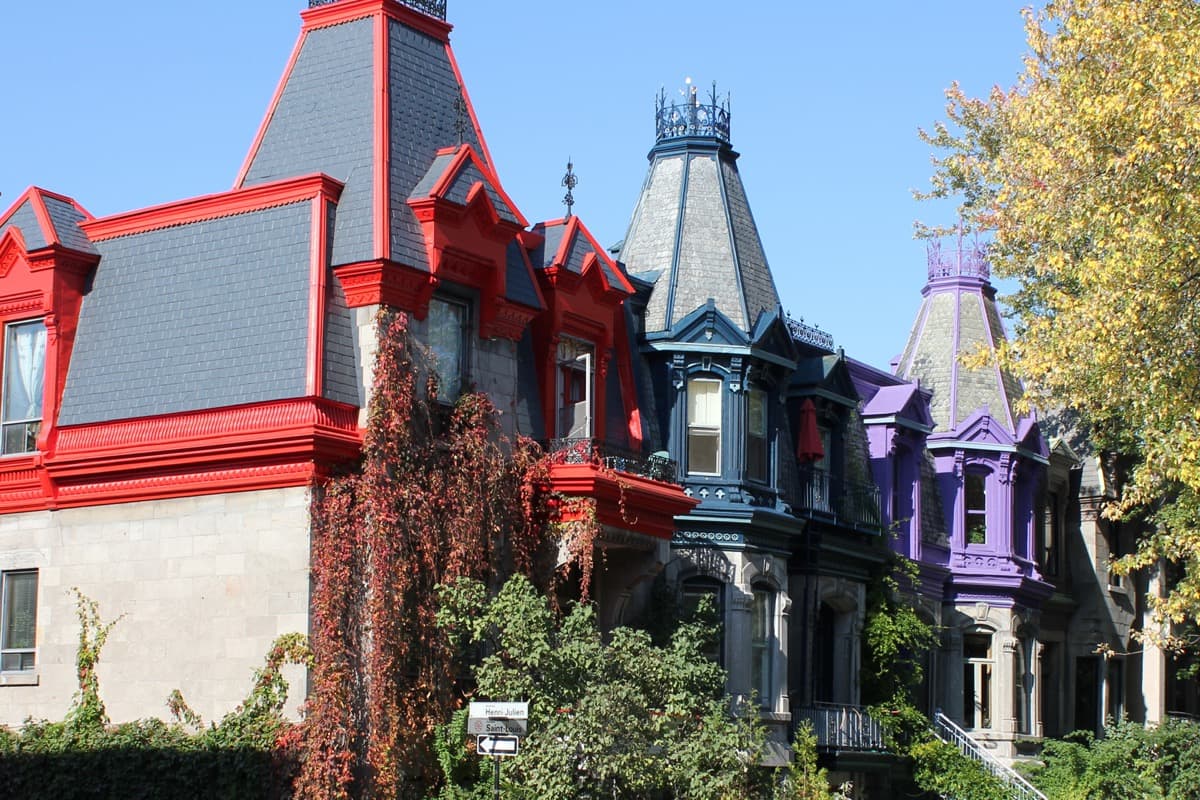
Grand stone houses ring this leafy square. Their front stairs are iron-railed, and the square began as a water reservoir before it became a home for poets.
- 2
Prince-Arthur at the Main: Where East Turns West
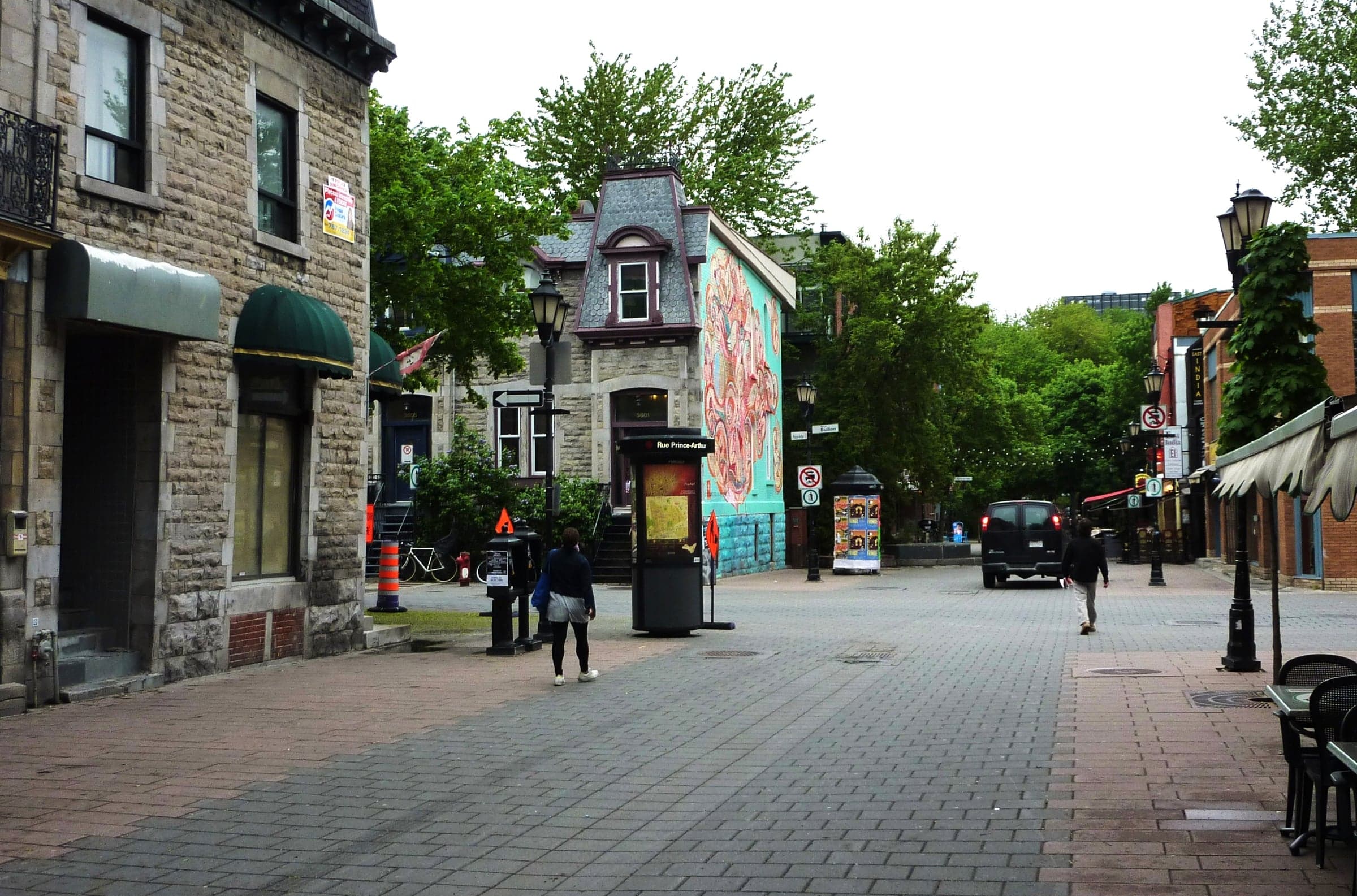
The street signs change from East to West here. Boulevard Saint-Laurent, the Main, has divided east from west since 1792 and has long welcomed newcomers.
- 3
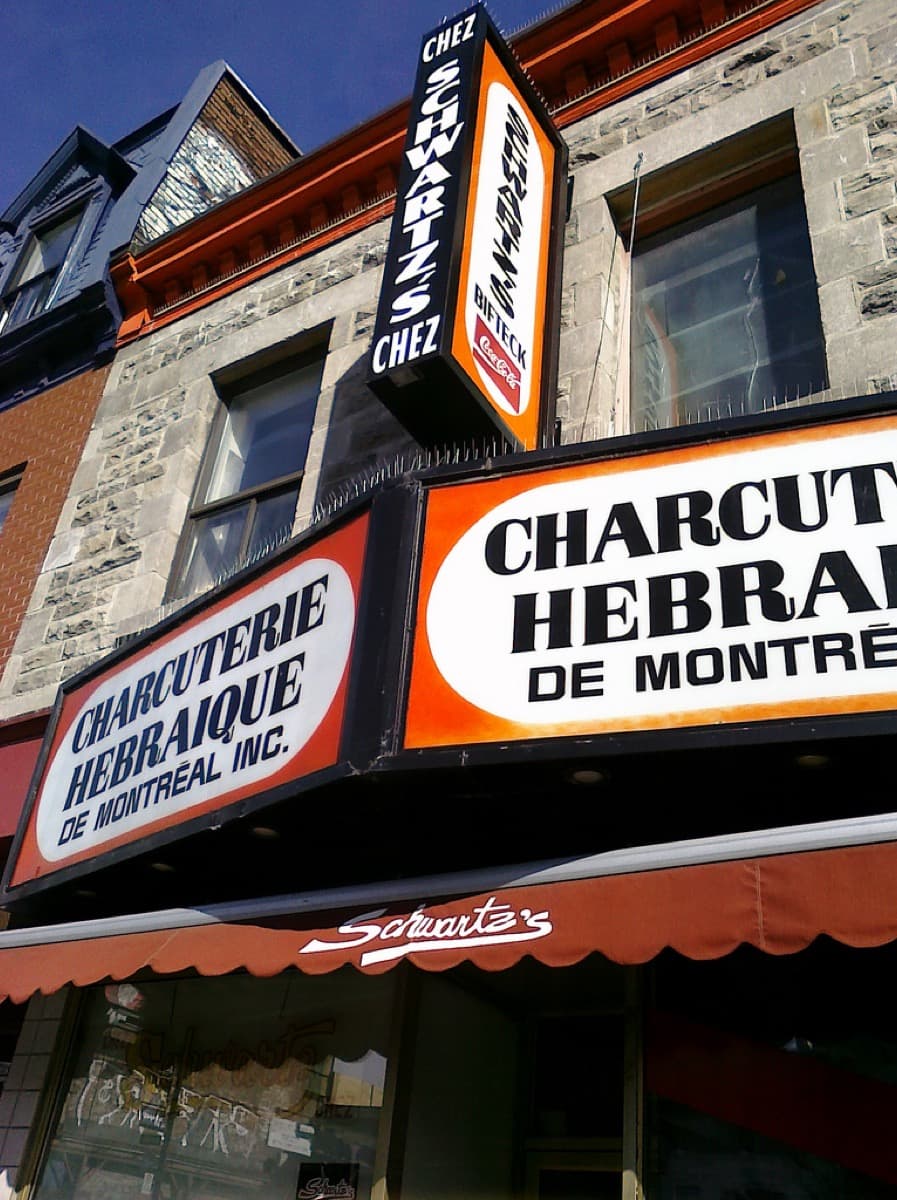
Schwartz's: Smoked Meat Since 1928
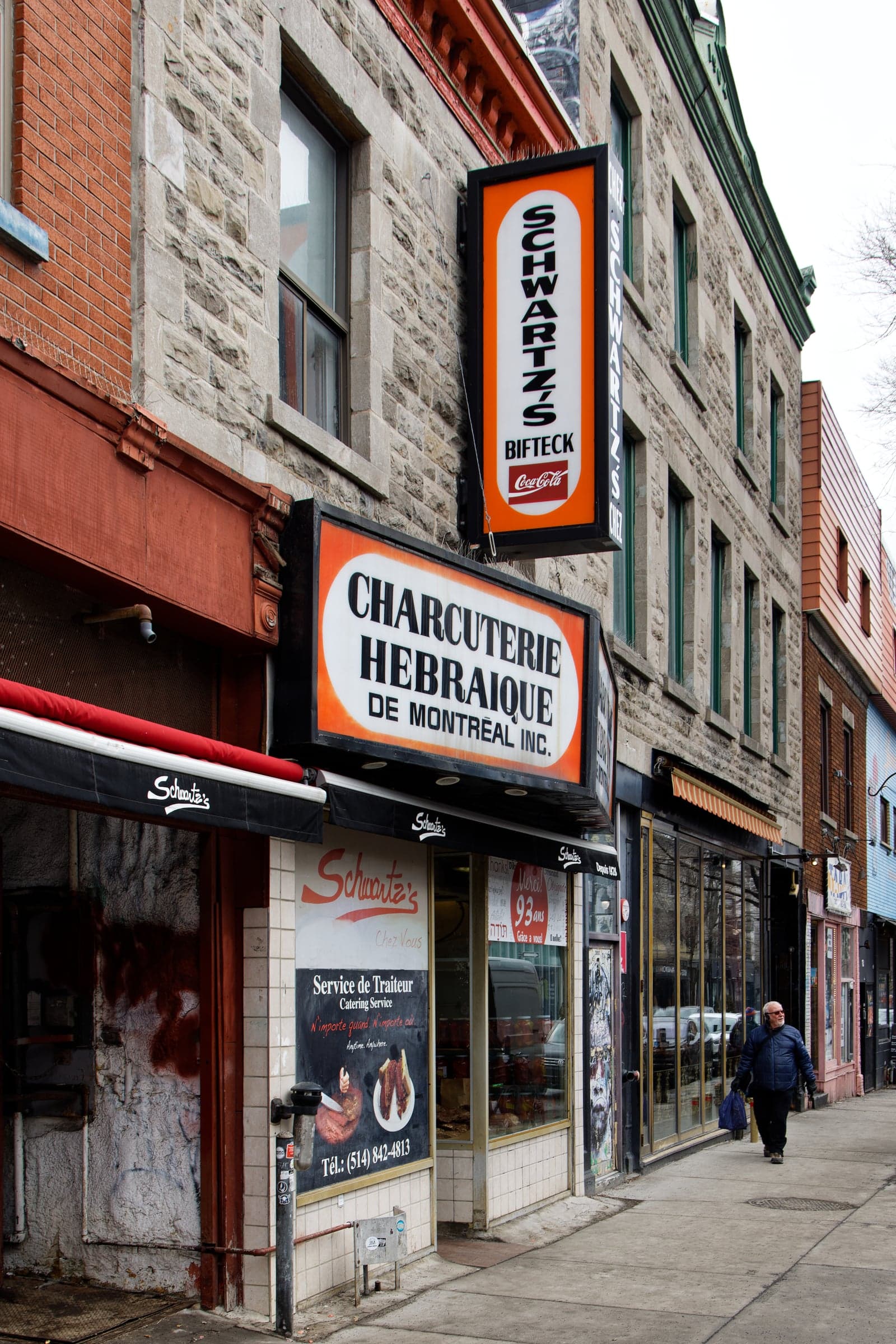
A narrow deli with a tall red sign. Its smoked meat spends ten days in spices, and Leonard Cohen looks down from a wall nearby.
- 4
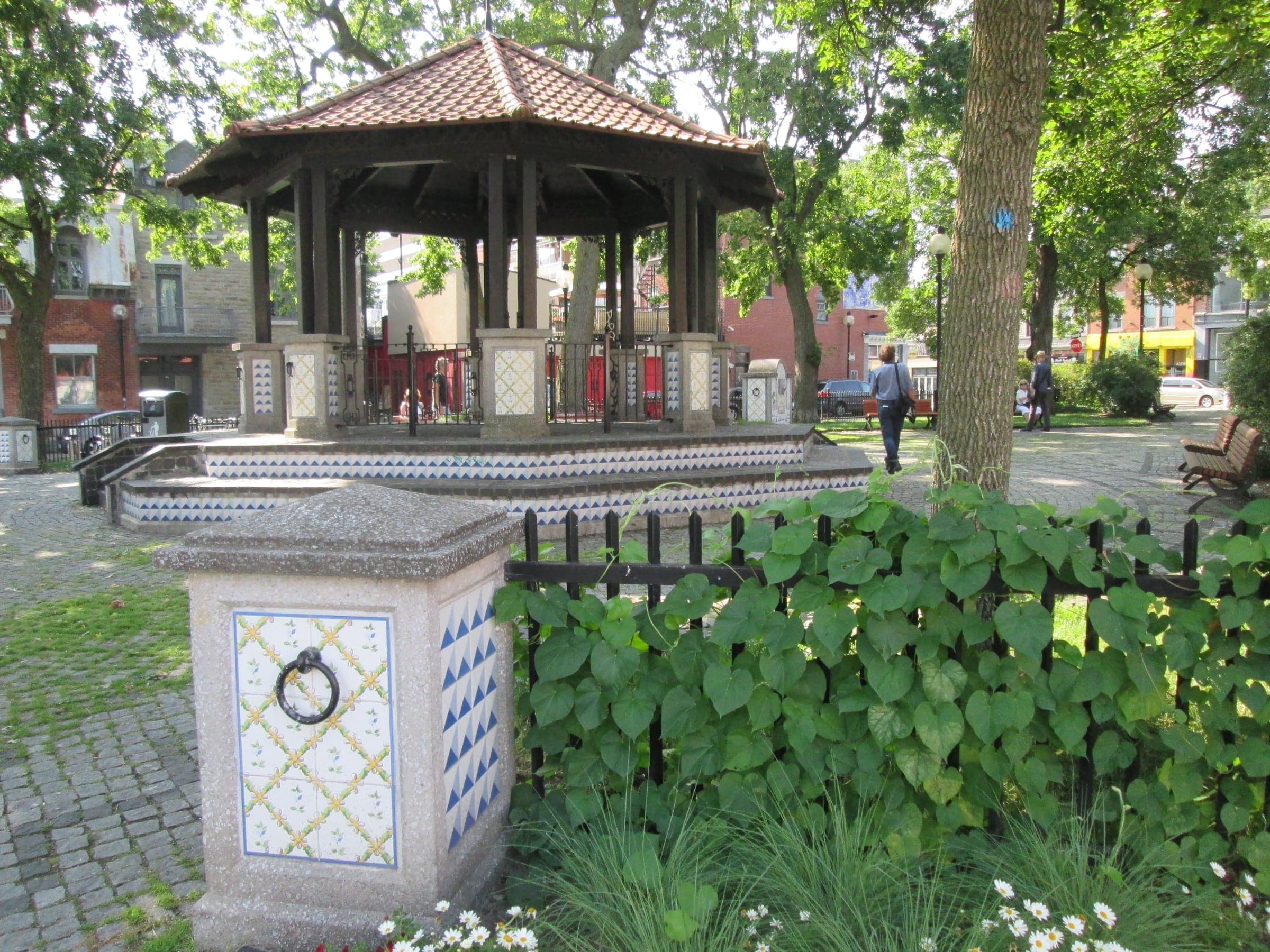
Parc du Portugal: Blue Tiles and Leonard Cohen's Door
A rooster tops this little park's kiosk. Blue-and-white tiles face its pillars, and Leonard Cohen's former home, now a private house, stands across the little street.
- 5
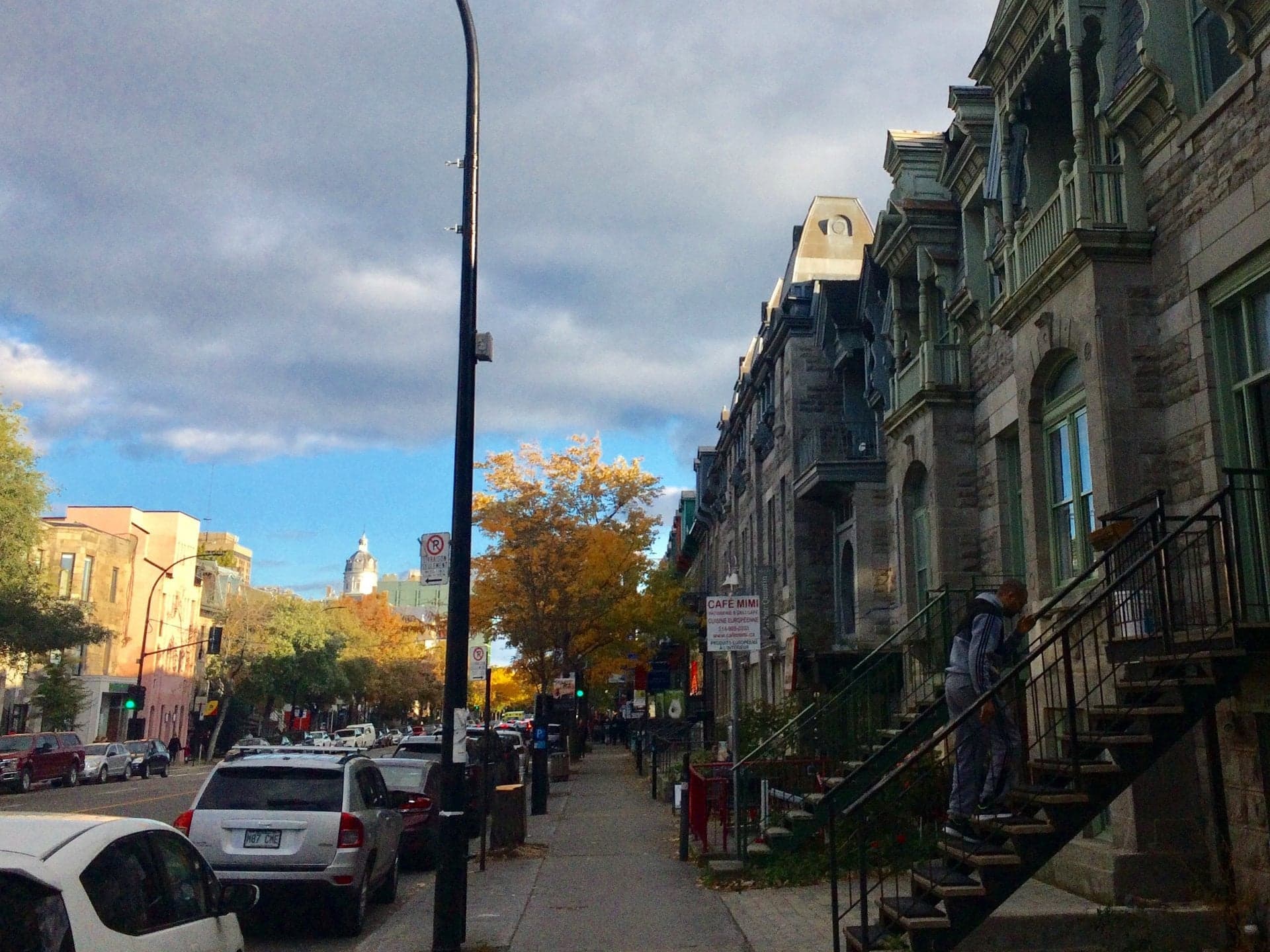
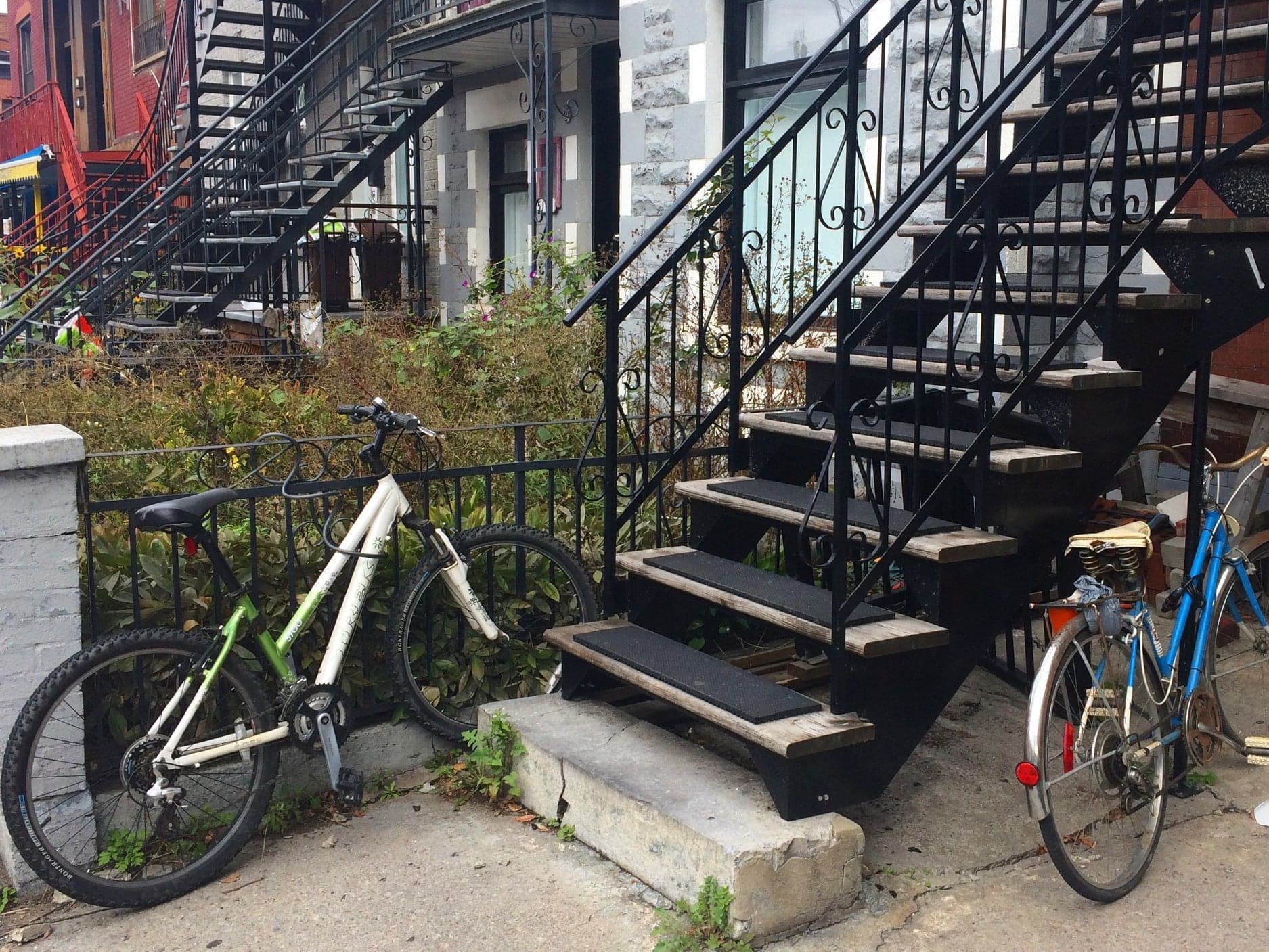
Rue Clark: Montreal's Outside Staircases
Wood and iron stairs climb these triplex fronts. The City says the classic Montreal triplex took shape on these streets.
- 6
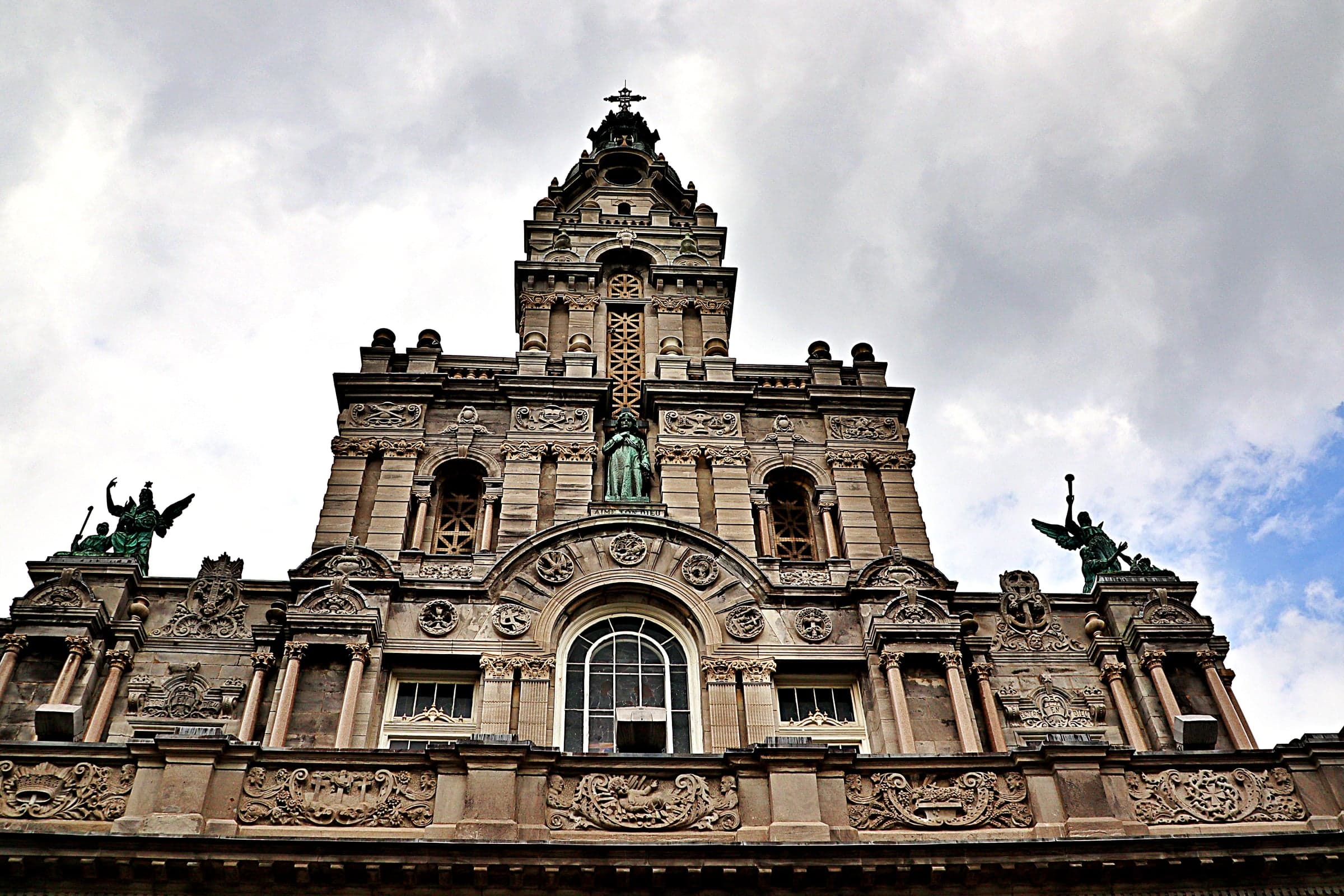
Parc Lahaie: A Village Church and a Castle Town Hall
This park was the old town's heart. A theatrical stone church front faces it, and a turreted former town hall stands nearby.
- 7
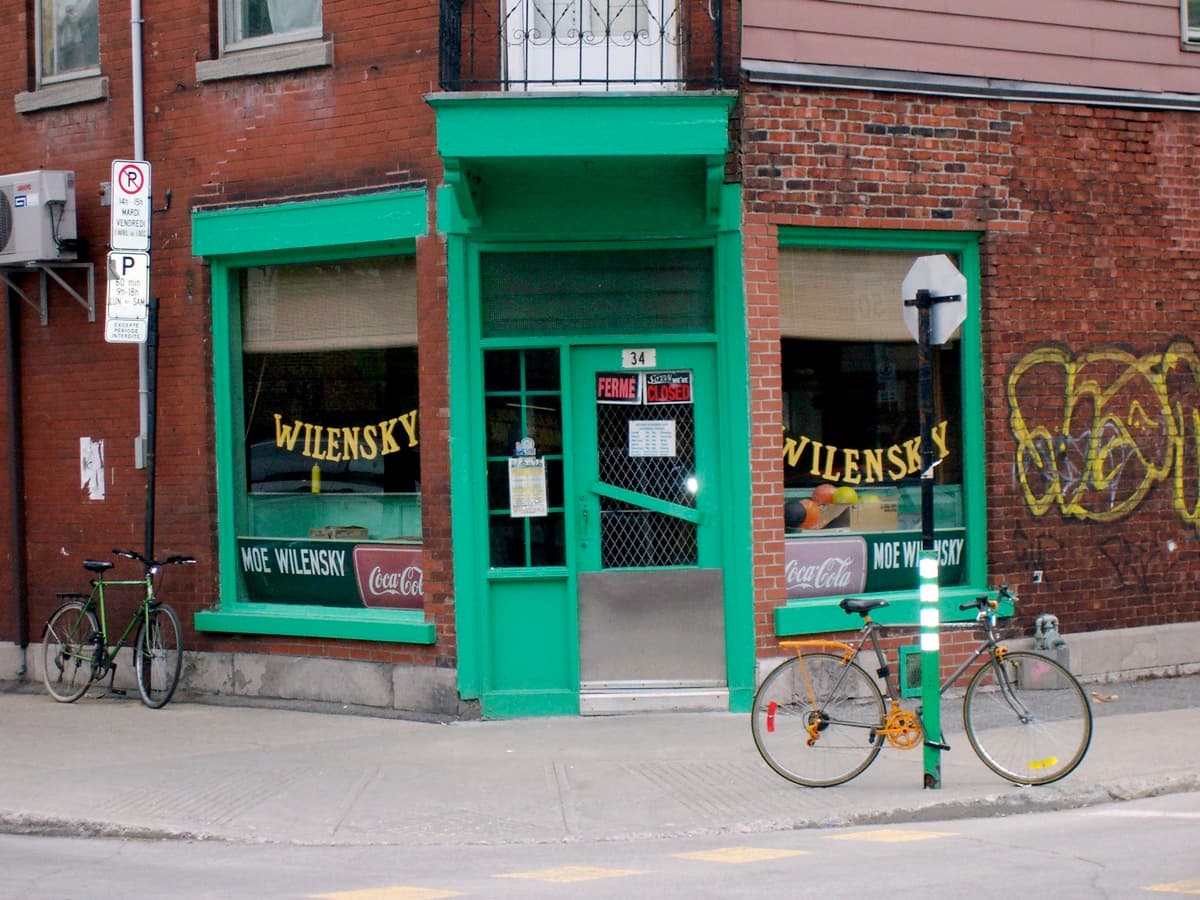
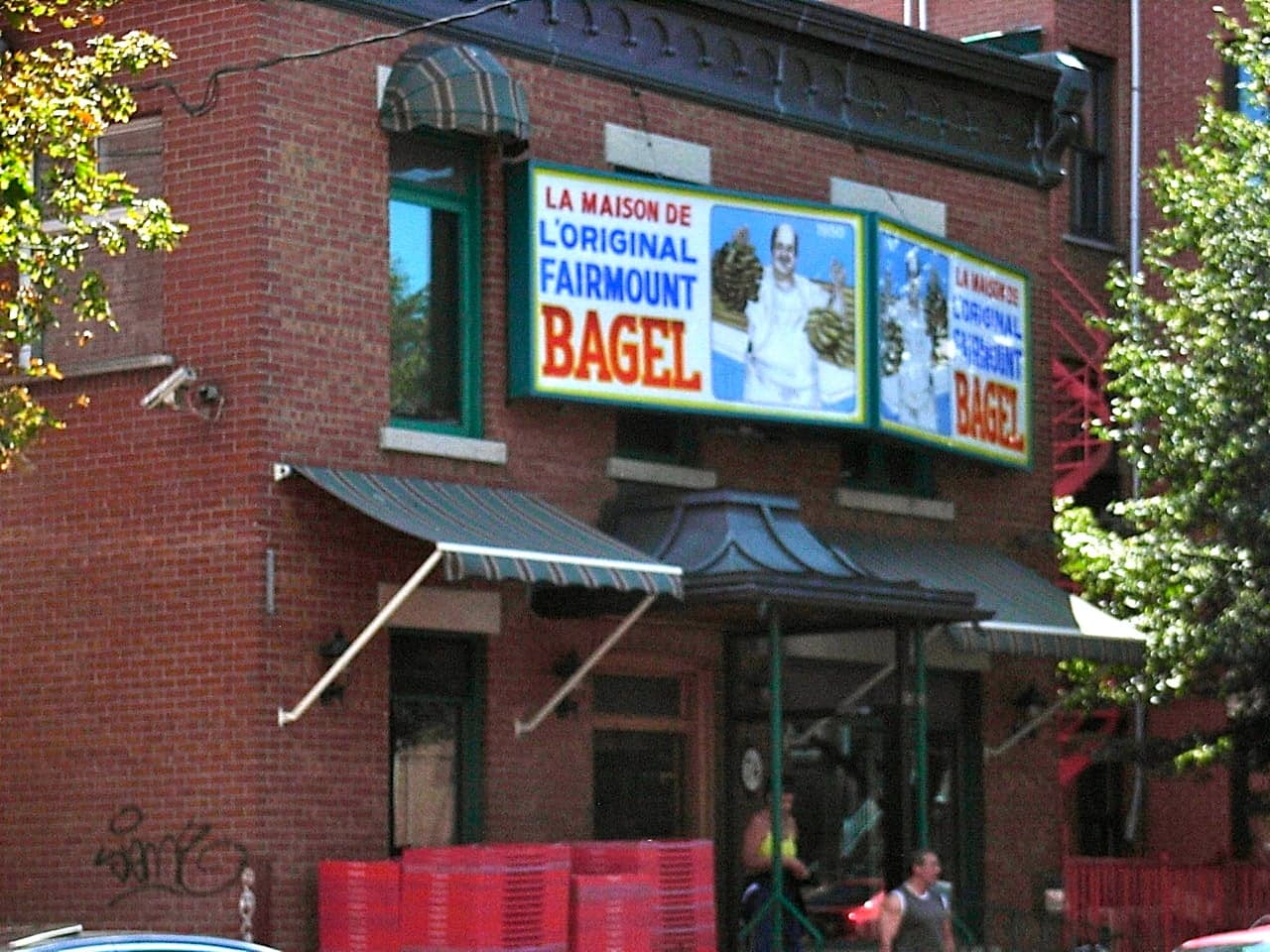
Fairmount and Clark: Wilensky's and Fairmount Bagel
A lunch counter and a bagel bakery meet here. They stand a few doors apart on Avenue Fairmount, with Rue Clark between them, and both are Mile End institutions.
- 8
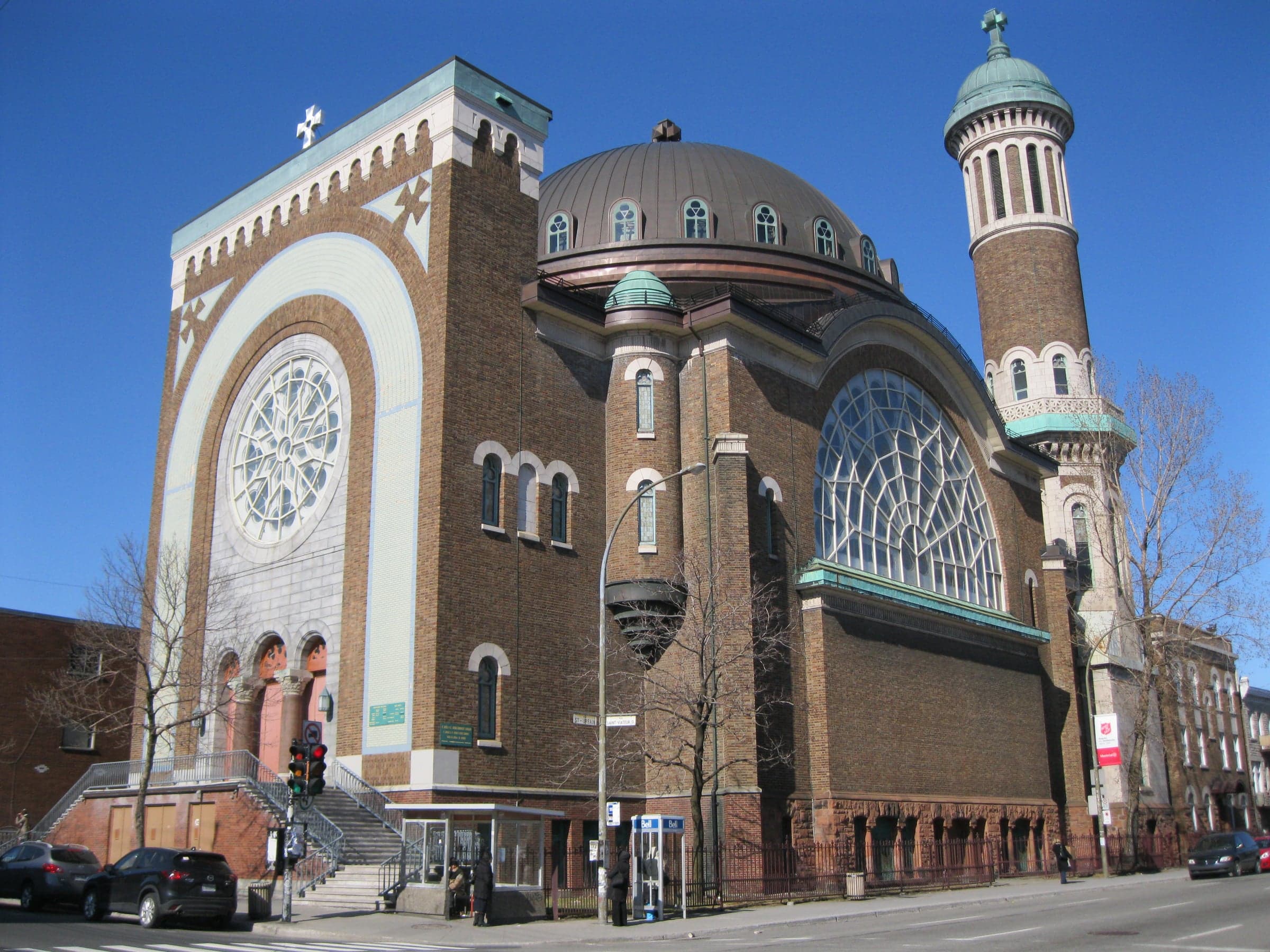
St. Michael's and St. Anthony's: A Byzantine Dome in Mile End
A broad dome and a tall round tower. The brick church was built in 1914 and 1915 for an Irish parish and now shares its roof with Polish worshippers.
- 9
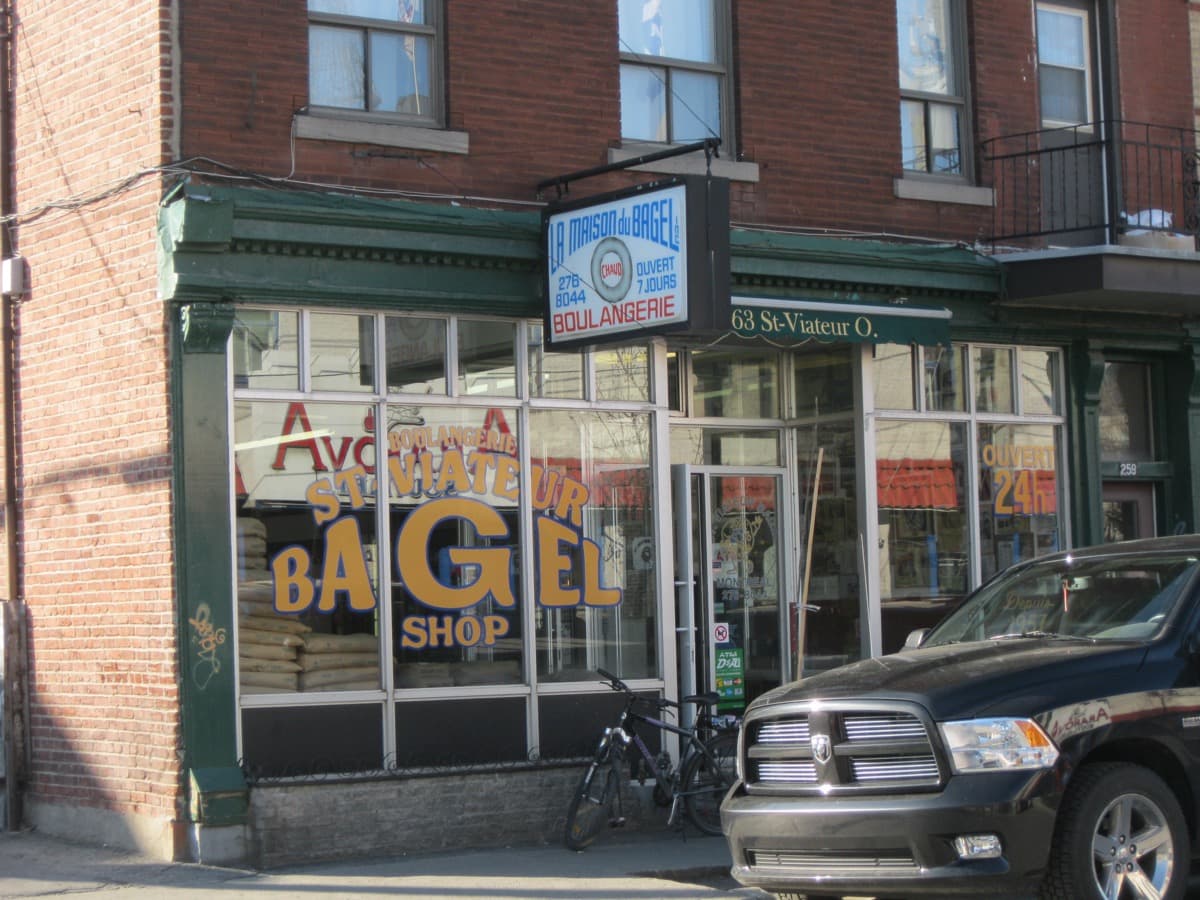
St-Viateur Bagel: Honey Water and a Wood Fire
The walk ends at a wood-fired bagel bakery. It dates itself to 1957, and its bagels are rolled by hand and boiled in honey water.
Details
Best Time to Visit
Any day in daylight works; a late-morning start brings you to the bagel ovens around lunchtime. Spring to autumn is the most comfortable; in winter the outside stairs are icy and the walk is shorter on light. During the MURAL festival in early June the Main is closed to cars and crowded.
Pro Tips
- •Come hungry and eat along the way: smoked meat at Schwartz's, the Special at Wilensky's, and a bagel from each of the two bakeries to compare.
- •Schwartz's takes no reservations; if the line is long, walk on and come back later.
- •Wilensky's and Fairmount Bagel keep their own hours, so check them before you set out. St-Viateur Bagel on Saint-Viateur was open daily from 6 a.m. to midnight when checked on 30 September 2026.
Safety & Precautions
- •The staircases, Leonard Cohen's former house and the rows of plexes are private homes: stay on the sidewalk, do not climb the stairs or sit on the steps, and do not photograph residents.
- •Boulevard Saint-Laurent and the avenues are busy. The route crosses the boulevard only at traffic lights; take care too at the quieter side-street crossings, some of which are unmarked.
- •The churches are active parishes; if you go in, keep quiet during services.
Travel advisory: Exercise Normal Precautions (Level 1).
Gallery
Related Reading
Go deeper on what you'll see, hear, and walk through.
Overview
Best Self-Guided Walking Tours in Montreal (2026)
3 min
Overview
Montreal Travel Guide: How Many Days, Getting Around, When to Go (2026)
5 min
Overview
One Day in Montreal: A Walkable Itinerary (2026)
5 min
Thematic
Best History Walking Tours in Montreal (2026)
2 min
Thematic
The Deli and the Bagel: Mile End's Jewish Food Map
4 min
Thematic
Two Cities on One Island: How to Read Montreal Along the Main
5 min
Thematic
What to Eat in Montreal: A Food Guide (2026)
4 min
Companion
Richler's Mile End: Moe's Cigar Store and the Bagel Ovens
4 min
Companion
The Anglophone City Inside the French One: A Companion to the Plateau and Mile End Walk
5 min
Read the walk
The full story of Plateau and Mile End: Outside Staircases, Smoked Meat and Bagels, in words. Prefer to listen? Play it narrated, from home or on location.
Introduction
This walk goes through two Montreal neighbourhoods, the Plateau and the Mile End, in Quebec, Canada, and it is built around something most visitors walk straight past. The houses here wear their staircases on the outside: wood and iron stairs climbing the fronts of brick and stone houses, with a separate front door for every flat. By the end you will be able to read a street by its stairs.
Over nine stops and about three and a half kilometres, the walk starts in a leafy square of grand stone houses, crosses Boulevard Saint-Laurent, the street Montrealers call the Main, and follows it uphill past a smoked meat counter, a Portuguese park and a songwriter's front door. Then it turns into the Mile End, once a small town of its own, with a castle for a town hall, a church with a tower like a minaret, a lunch counter, and two bakeries that still bake bagels in wood-fired ovens.
It takes about an hour and a half at an easy pace, longer if you stop to eat, and you should. The streets climb gently at first, then flatten out.
Three people come up along the way: a young poet, a songwriter, and a baker. Keep your eyes on the stairs, and save your appetite for the end.
1. Carré Saint-Louis: A Reservoir Turned Poets' Square
Welcome to Carré Saint-Louis, and welcome to the Plateau. Walk on toward the fountain in the middle of the square and stop on the path beside it.
Before this was a square, it was a water tank. The city built a reservoir here, at the top of a slope, and opened it in eighteen fifty-one. The next summer a great fire swept through Montreal, and this reservoir was empty, drained for cleaning. Within a generation it was out of use. It served as a skating rink, and by eighteen eighty it had become this square, with paths, trees and the fountain in front of you. That fountain is cast iron, and it came from a catalogue: the city ordered it from an ironworks in New York.
Now look at the houses around the square. Stone fronts, slate roofs with dormer windows, painted trim, bay windows, small front gardens behind low fences. And the stairs: tall front staircases with iron railings, climbing from the garden to a raised front door. French-speaking Montreal families with money built these, and the City's own heritage study calls this probably the wealthiest corner of the borough. Keep these stairs in mind. They are the grand version of something you will see all day.
This is also a poets' square. At the end where the pedestrian street leaves the square, there is a bronze bust of Émile Nelligan, made from his best-known photograph. He grew up just up Avenue Laval, the street along this end of the square. Between eighteen ninety-six and eighteen ninety-nine, still a teenager, he wrote more than a hundred and sixty poems. In the summer of eighteen ninety-nine, at nineteen, he was committed, and he never came home. His poems came out as a book in nineteen oh four. At the other end of the square, facing Rue Saint-Denis, stands a monument from nineteen oh six to another poet.
Follow the route. Next, the pedestrian street takes you to the Main.
2. Prince-Arthur at the Main: Where East Turns West
Walk on to the end of this pedestrian street and stop where it meets the big, busy boulevard. That is Boulevard Saint-Laurent, and Montrealers call it the Main.
Find a street sign. The street you have just walked down is Prince-Arthur East, written Est on the sign. Across the boulevard it carries on as Prince-Arthur West, written Ouest. The same thing happens to the cross streets all along the Main. This is where east turns into west, and where the house numbers start counting.
The line is old. In seventeen ninety-two this street became the official line between the east and west halves of the city, and around then people started calling it the Main. East of it lived mostly French-speaking working families. West of it, the wealthier English-speaking districts climbed the slopes of the mountain. That split was about money and language rather than law.
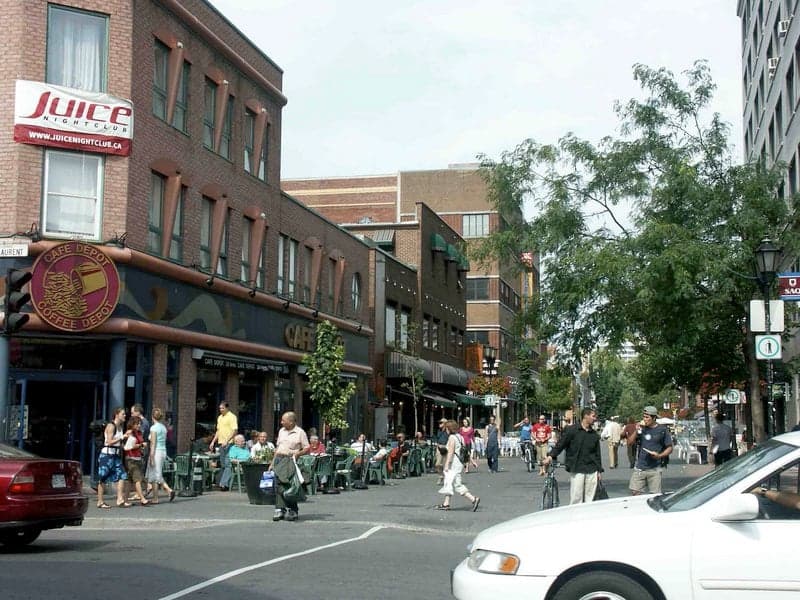
Now look along the boulevard. Two and three storeys, mostly masonry, stone fronts with brick side walls, shops at street level. The buildings come in odd widths, because nobody ever laid out tidy lots here; the street filled in piece by piece. The tram came in eighteen ninety-two, garment factories opened along the boulevard, and each new group arriving in Montreal came here for work: Chinese, Jewish, Italian and Portuguese families, one wave after another. Yiddish-speaking Jews from Eastern Europe set the tone of the Main until the nineteen fifties.
In nineteen ninety-six Canada made the Main a national historic site, as the immigrants' corridor. The City's heritage study notes it was the first time in Canada that the intangible side of heritage was the point.
Glance at the big painted walls on the side streets too: most come from a mural festival that repaints walls here every June.
Follow the route across the boulevard at the lights and up the Main. Next, a smoked meat counter that has been there since nineteen twenty-eight.
3. Schwartz's: Smoked Meat Since 1928
Keep to this side of the boulevard and walk on until you are opposite a narrow shopfront with a tall vertical sign reading Schwartz's, and usually a line at the door. Stop across from it.
Schwartz's has been cutting smoked meat on this block since nineteen twenty-eight. Its founder was a Jewish immigrant from Romania who had worked as a delivery man for other delis, and decided to open his own.
Look at the front. The tall sign is orange-red. Under it is a white panel with a red border that says, in French, Hebrew delicatessen of Montreal: a Jewish deli with a French sign, on the French side of the Main. The shop is only a few steps wide, squeezed into a row of three-storey stone and brick buildings, exactly the uneven lots you just heard about.
The owners publish their method, and it takes the better part of two weeks. The meat sits in a spice blend for ten days, is smoked overnight, then steamed all day, and it is sliced by hand for each order. If you eat once on this walk, make it here. There are no reservations, so the line is part of the deal.
Now look up the boulevard, past the next corner. On the side wall of a tall building on the far side is a portrait of Leonard Cohen, about nine storeys high. Cohen was a Montreal poet and songwriter, and his home is our next stop. It was painted in the summer of twenty seventeen, drawn entirely by hand with a paint marker on a long pole, over about a hundred and seventy hours. From this sidewalk the face can be hidden behind the buildings. If you cannot see it, walk on until you are level with Rue Napoléon, across the boulevard, and look down it.
Follow the route up this side and back across at the lights. Next, a small park with a rooster on its roof.
4. Parc du Portugal: Blue Tiles and Leonard Cohen's Door
Walk on along the narrow street beside the little park and stop about halfway along, with the wooden kiosk in the park beside you. Look at the top of the kiosk: a rooster, the symbol of Portugal. The roof is terracotta tile, and the pillars are faced with blue-and-white painted…
Full narration for this stop unlocks with the tour.
5. Rue Clark: Montreal's Outside Staircases
Walk on up Rue Clark, away from the busy avenue, and stop where the rows of three-storey houses begin. Here are the staircases. Look along the block for three-storey fronts in brick or stone, flat roofs with a cornice along the top, a strip of garden in front, and wood and iron…
Full narration for this stop unlocks with the tour.
6. Parc Lahaie: A Village Church and a Castle Town Hall
Walk on through the little park and stop at the edge of the church forecourt, near the round stone fountain basin. You are at the heart of what was once a separate town, Saint-Louis du Mile End. This park sits at its old centre: around it and along the boulevard stand the…
Full narration for this stop unlocks with the tour.
7. Fairmount and Clark: Wilensky's and Fairmount Bagel
Walk on to the corner of Avenue Fairmount and stop there, by the small corner shop with Wilensky lettered in its windows. This is Wilensky's, a lunch counter that has been on this corner since nineteen fifty-two, and in the same family since nineteen thirty-two. It began as a…
Full narration for this stop unlocks with the tour.
8. St. Michael's and St. Anthony's: A Byzantine Dome in Mile End
Walk on to the corner of Rue Saint-Urbain and stop there, before you cross. The big brick church with the dome stands on the far corner. Look up. This is Saint Michael's and Saint Anthony's, and it looks like no other church on this walk. A broad dome sits on a ring of small…
Full narration for this stop unlocks with the tour.
9. St-Viateur Bagel: Honey Water and a Wood Fire
Walk on along Saint-Viateur to the shop with the Saint-Viateur Bagel lettering in its window, and stop at the glass. Look inside. The shop publishes its method, and if the window is clear you can follow it: dough rolled by hand on a hardwood counter, the rings simmered in honey…
Full narration for this stop unlocks with the tour.