A short loop through São Paulo's lantern-lit Asian quarter that reads a single district twice: once as the gallows field and burial ground it was born as, and once as the joyful immigrant home it became. The paving under the red lanterns is a cemetery, and most people walking it never know.
Start · Praça da Liberdade: The Square With Two Names
DirectionsStops
- 1
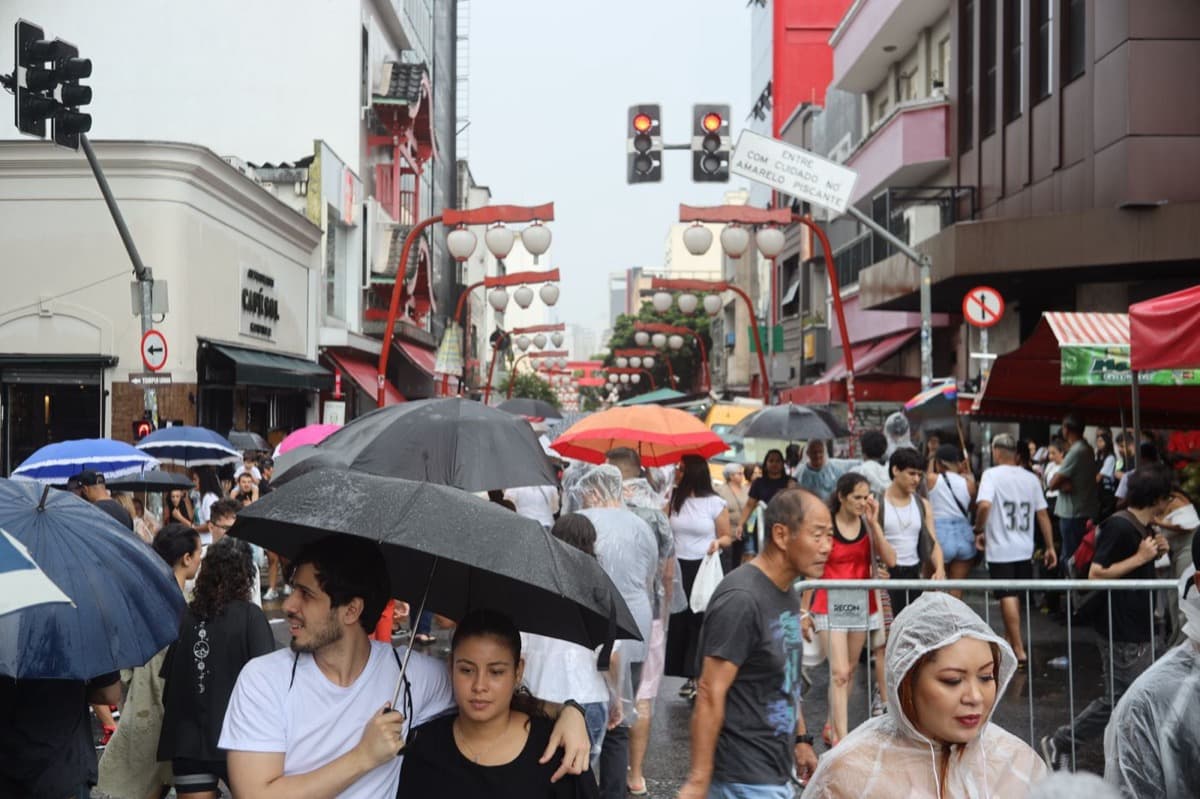
Praça da Liberdade: The Square With Two Names
The lantern-lit heart of the Asian quarter, and the old execution ground that gave the district its ironic name.
- 2
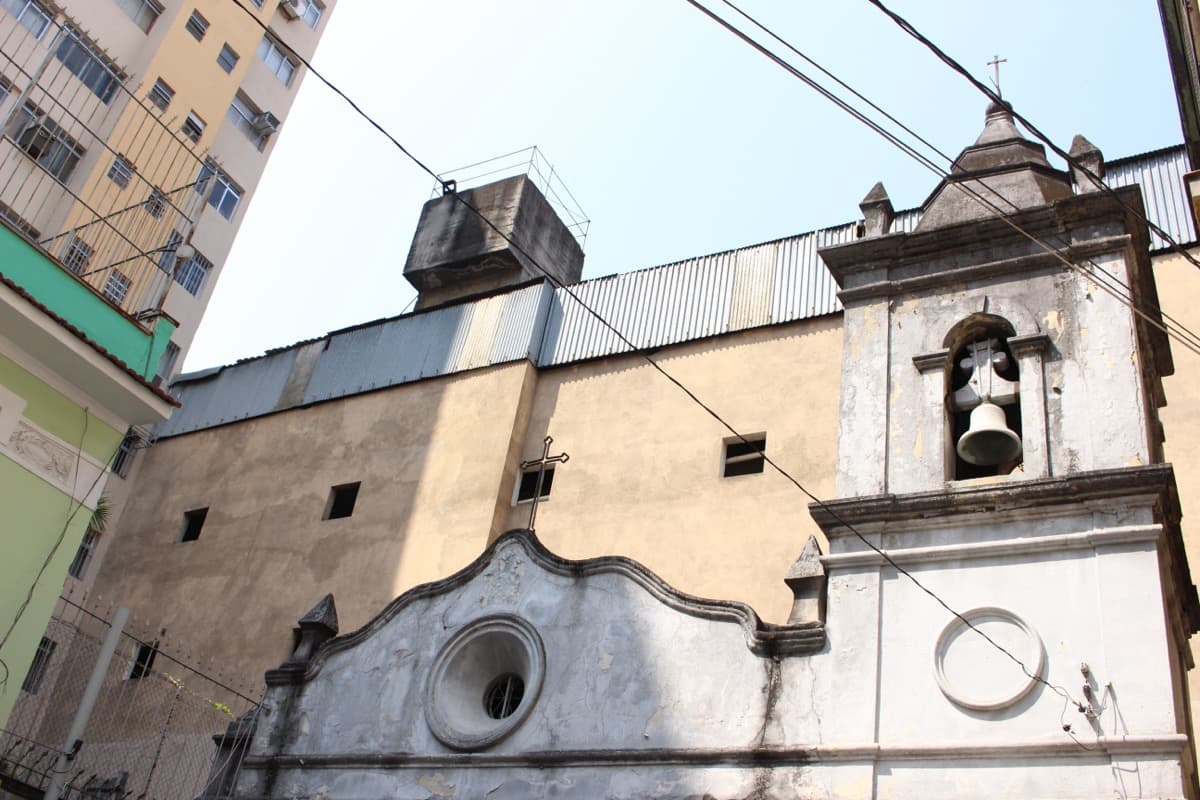
Capela dos Aflitos: The Buried Ground and the Legend of Chaguinhas
A small colonial chapel beside the site of São Paulo's first public cemetery, where the enslaved and executed were buried, and where a Black soldier's story became legend.
- 3
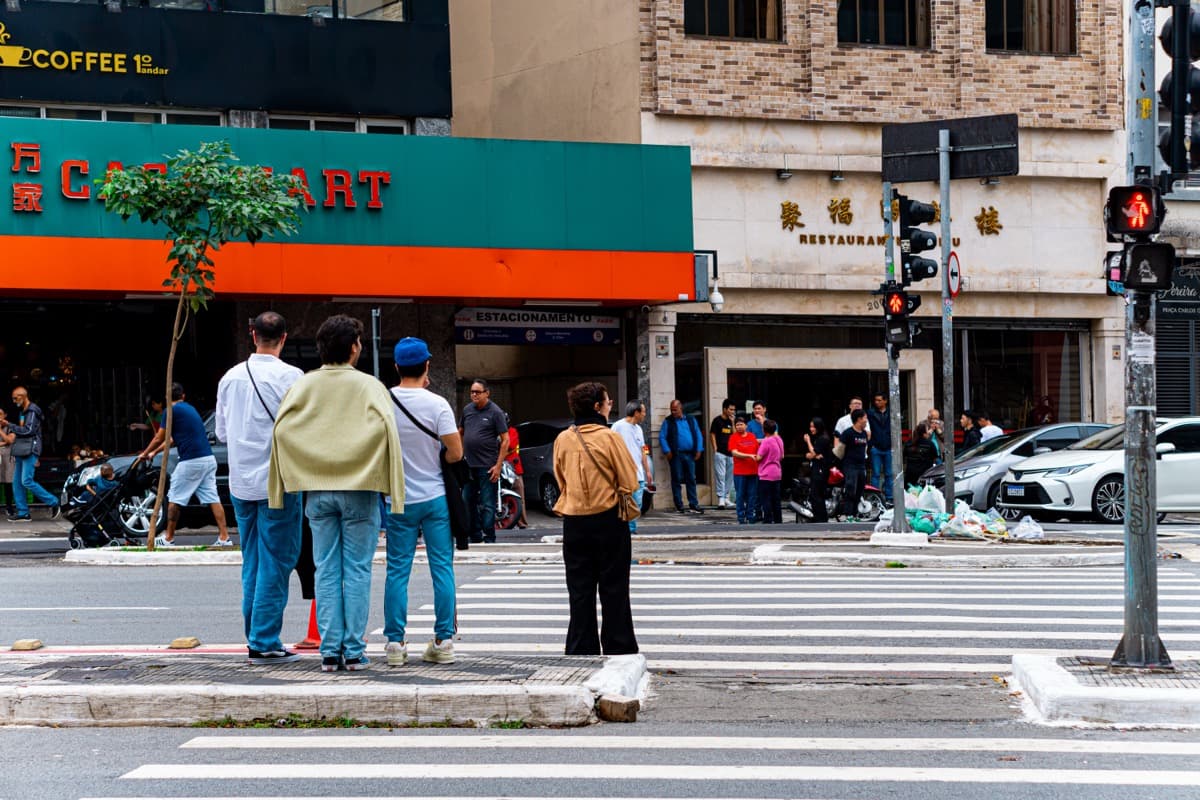
Rua Galvão Bueno: Crossing Into the Living Quarter
The district's main commercial street, where the walk leaves the death layer behind and enters the shared Asian-Brazilian heart of Liberdade.
- 4
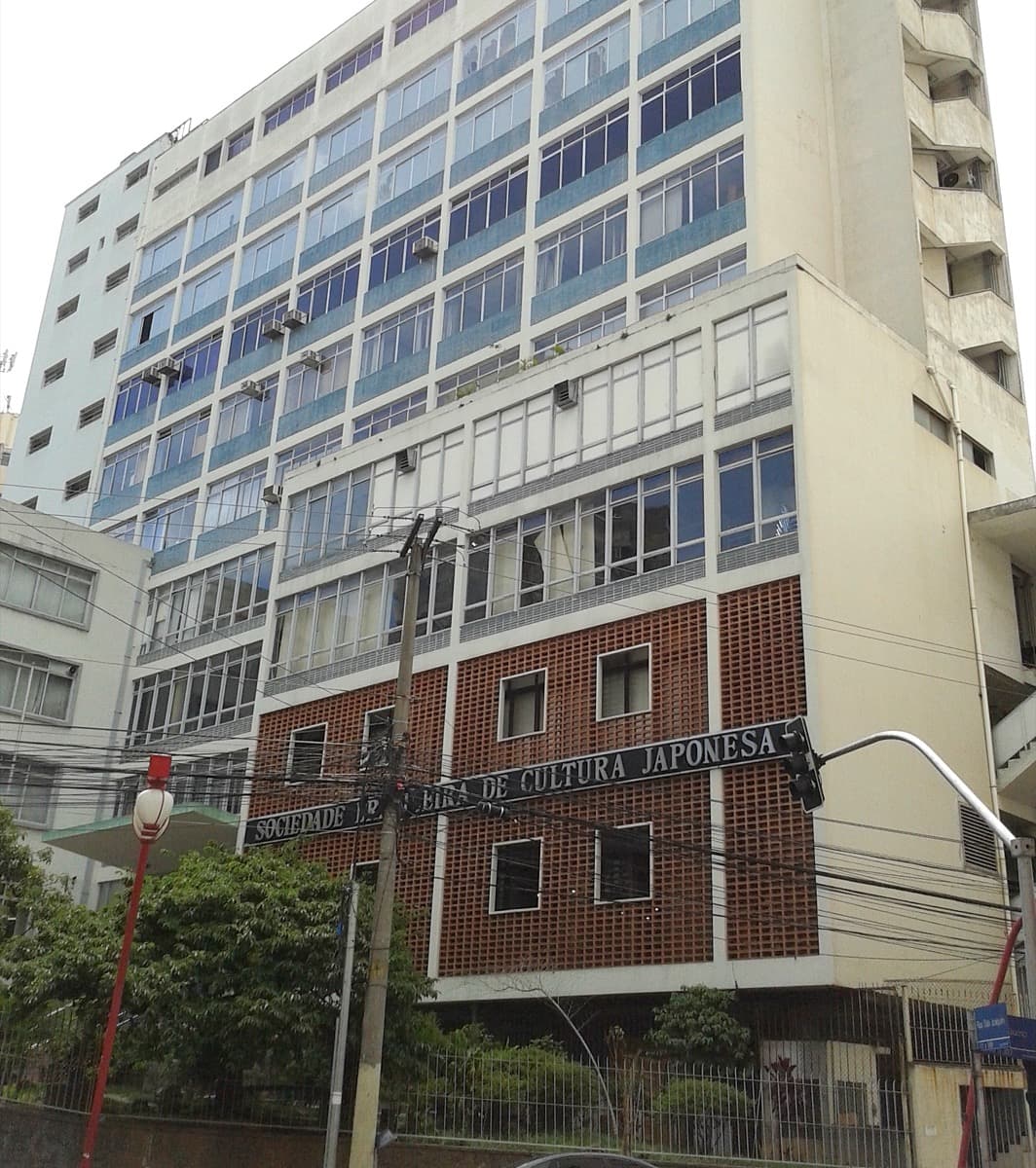
Museu Histórico da Imigração Japonesa no Brasil: The Arrival Story
The museum that preserves the origin of Brazil's Japanese community, from a single ship's landing to the families who settled these streets.
- 5
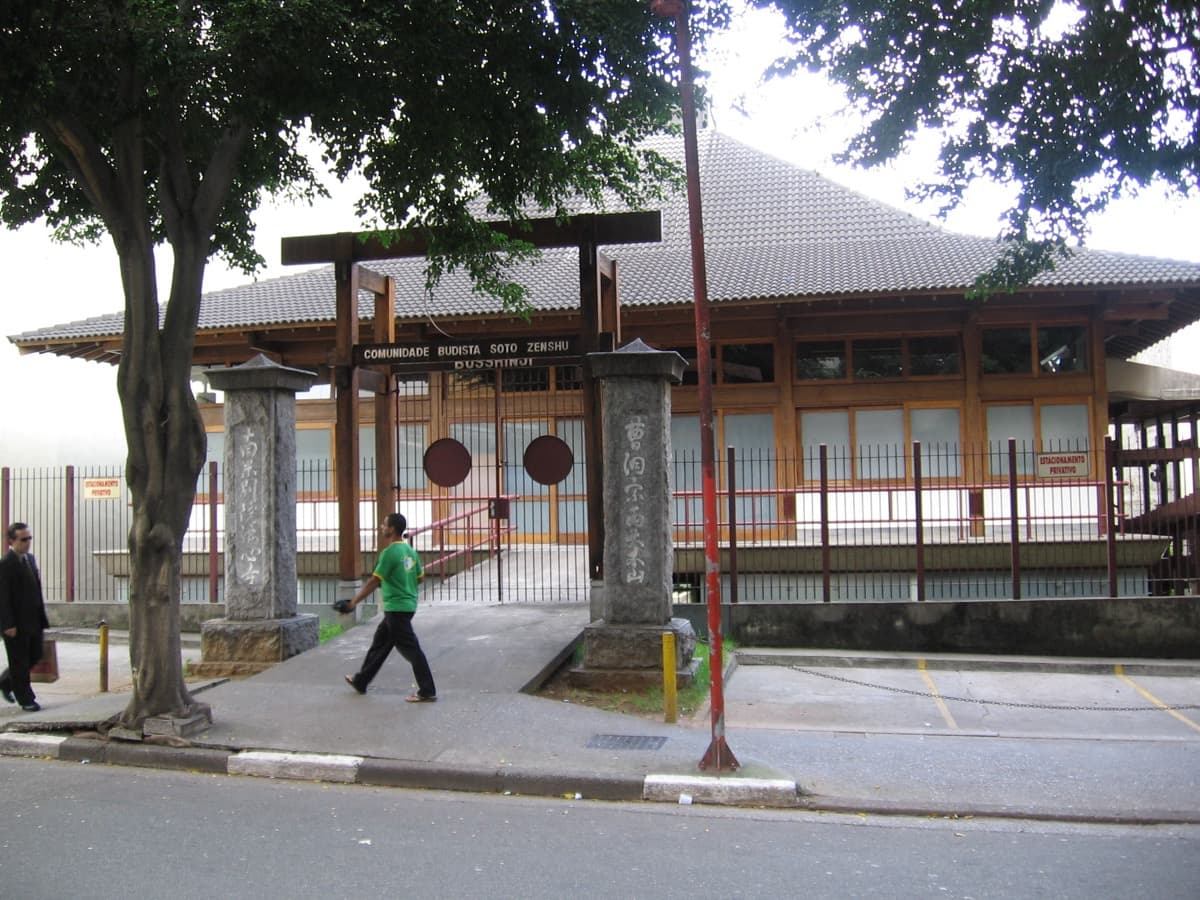
Templo Busshinji: Where Belonging Put Down Roots
The South American seat of Soto Zen Buddhism, where the immigrant community's inner life found an institutional home.
- 6
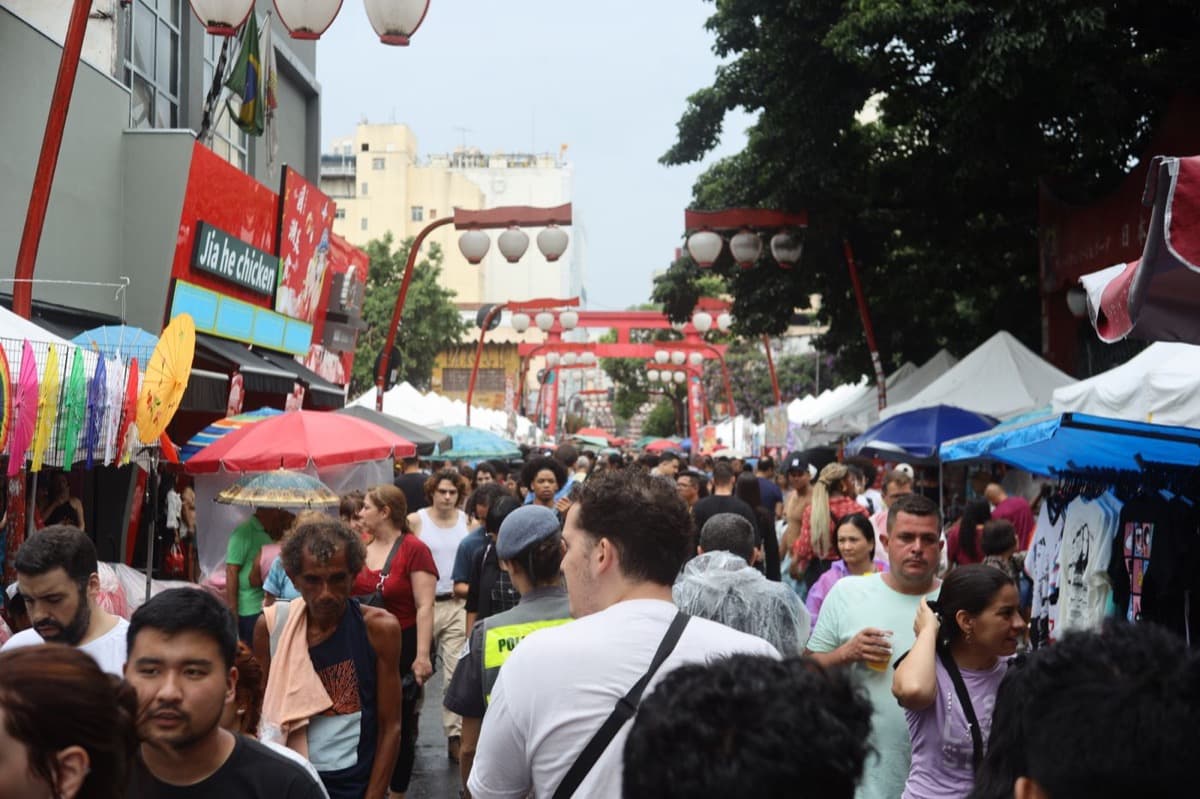
Feira da Liberdade: The Gallows Ground, Now a Table
The weekend craft-and-food fair on and around the central square, where the old execution ground has become a place of gathering.
Details
Best Time to Visit
Come on a Saturday or Sunday to catch the Feira da Liberdade, which fills the square from about nine in the morning until six in the evening and shows the old execution ground at its most alive. Late morning is ideal: the fair is in full swing, the museum and temple are open, and the light is good for the lanterns. If you prefer quiet over festival, a weekday visit gives you an unhurried chapel, museum, and temple, though the square will feel comparatively empty and the fair will be gone.
Pro Tips
- •Visit on a weekend if you want the full contrast the walk is built on: the fair only runs Saturday and Sunday, and it is the payoff of the loop.
- •The Japão-Liberdade metro station opens directly beneath the square, so you can arrive and leave at stop one and six without a long walk in.
- •The museum charges a modest paid admission and keeps its own hours on the upper floors of the Bunkyo building; check opening times before you climb up, and carry cash in case cards are not accepted.
- •Bring cash and small change for the fair, since many craft and food vendors do not take cards.
- •Templo Busshinji offers open zazen meditation; if a session is underway, enter quietly, follow the room's lead on shoes and silence, and treat it as a place of practice rather than a photo stop.
- •Take the loop slowly and let yourself skip any stop that does not hold you. The stops are short and self-contained, and the walk works even if you drop one.
Safety & Precautions
- •São Paulo can turn hot and humid, then rain hard with little warning. Carry water and sun protection for the open square and fair, and pack a compact umbrella or light rain layer.
- •The chapel and the temple are active places of worship and memory. Keep your voice low, dress modestly, ask before photographing people at prayer or leaving devotional requests, and remember this district holds a real history of slavery and execution that deserves respect.
- •This is a busy historic-centre neighborhood, especially crowded during the weekend fair. Keep your phone, wallet, and bag secured and close to your body, stay on busy well-lit streets, and be extra aware of your surroundings after dark.
- •Wear comfortable, closed shoes with grip. The loop descends and climbs between the square and Rua São Joaquim over uneven, sometimes slick paving, and the small alley by the chapel can be rough underfoot.
Travel advisory: Exercise Increased Caution (Level 2).
Gallery
Related Reading
Go deeper on what you'll see, hear, and walk through.
Overview
Best Self-Guided Walking Tours in São Paulo (2026)
3 min
Overview
One Day in São Paulo: A Walkable Central Itinerary (2026)
6 min
Overview
São Paulo Travel Guide: How Many Days, Getting Around, When to Go, Is It Safe (2026)
6 min
Thematic
What to Eat in São Paulo: A Food Guide (2026)
5 min
Deep dive
The Capela dos Aflitos: The Cemetery Under São Paulo's Japanese Quarter
6 min
Read the walk
The full story of Liberdade: From Gallows to the Japanese Quarter, in words. Prefer to listen? Play it narrated, from home or on location.
Introduction
Liberdade means freedom, and this district wears the word like a banner over its red lanterns. Yet the name was first a bitter irony, because the square at its heart was once a gallows field, and the earth beneath was a burial ground for the enslaved and the executed. This walk holds two truths at once. Liberdade is a genuinely warm, living quarter, the symbolic heart of the largest Japanese community outside Japan, here in São Paulo, Brazil. It is also, literally, built over graves. We will not collapse either truth into the other. This is a short loop of six stops, roughly two kilometres, that you can take at your own pace in around ninety minutes, longer if you linger in the museum or sit a while in the temple. You will begin at the square where two identities overlap. You will descend into the layer of the dead, cross into the living commercial spine, learn why the immigrants came and where their faith took root, and then return north to the same square, seen transformed. Move slowly. The stops are short, and any one of them can be skipped without losing the thread. Notice the small things as you go: the shape of the street lanterns, the smell of grilling food on a weekend, the quiet of an old chapel door. This is real history of slavery, execution, and resistance, and it deserves an unhurried, honest attention. When you arrive at Praça da Liberdade, begin with stop one.
1. Praça da Liberdade: The Square With Two Names
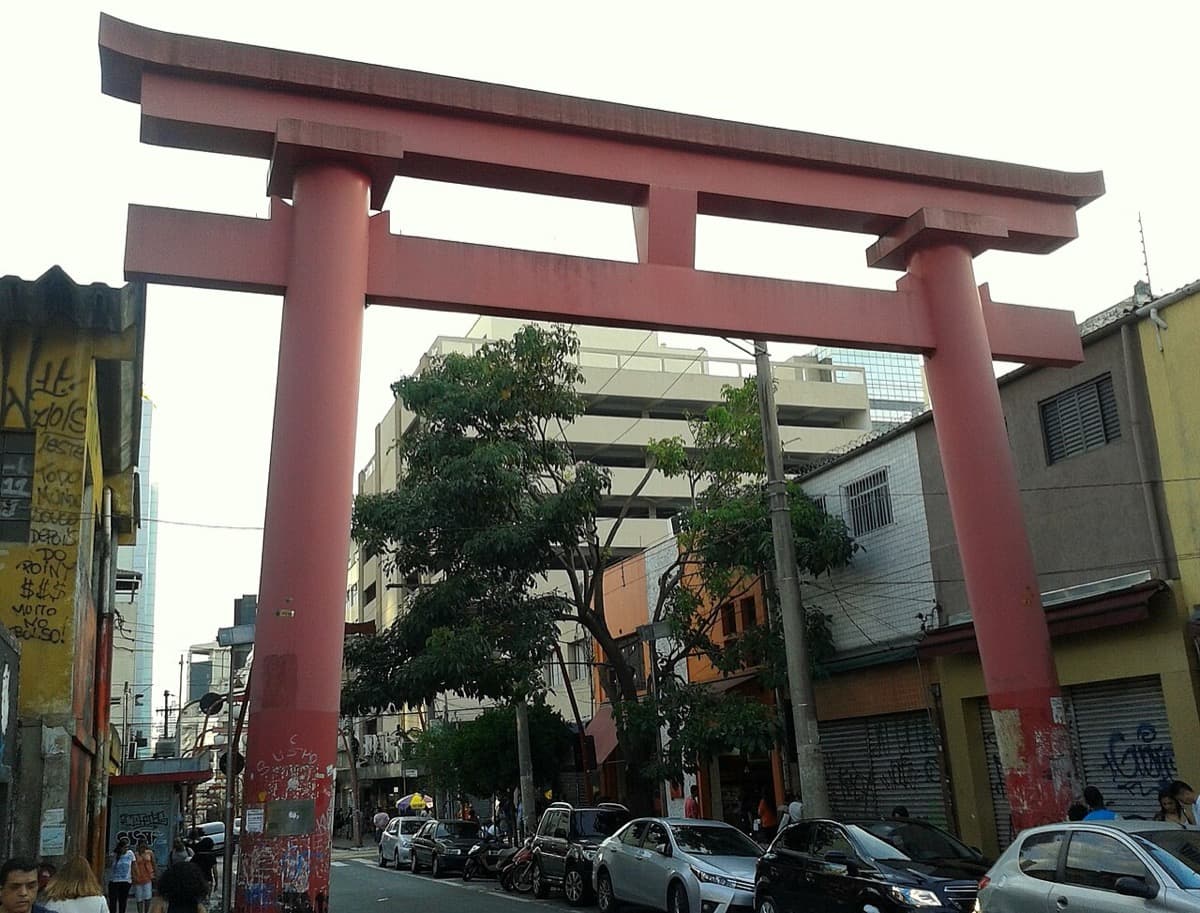
Stand in the square and look up. Red street lanterns shaped like lily-of-the-valley blossoms, the suzurantou introduced here in the nineteen seventies, hang from poles and arches, and they double as the street lighting. Nearby, on Rua Galvão Bueno, a red torii gate rises nine metres tall and has marked the entrance to Liberdade since nineteen seventy-four. Beneath your feet runs the metro, whose station, today called Japão-Liberdade, opened on February seventeenth, nineteen seventy-five, directly under this square. Everything here says arrival, community, welcome. Now the other name. Before this was Praça da Liberdade, it was the Largo da Forca, the Gallows Square. This field was reserved for the public execution of enslaved people and condemned convicts. Only in eighteen ninety-one, when the executions at the Campo da Forca had ceased, was the ground renamed Praça da Liberdade. That is the hidden layer of this walk, and it is the reason we begin here rather than end. The cheerful lantern-lit square you are standing in is the old execution ground. Keep the distinction clear as you go, because dates matter to honest memory. The first Japanese immigrants reached Brazil in nineteen oh eight, but they did not settle in this neighborhood until nineteen twelve, when families arriving from interior coffee farms found cheap rooms near the centre. So the story layered onto this square is not a single event but a long overwriting: a ground of death, slowly, deliberately, made into a ground of belonging. We will walk down into the death layer next, then cross into the life that grew over it.
2. Capela dos Aflitos: The Buried Ground and the Legend of Chaguinhas
Step into the quiet alley and you reach the death layer directly. Here stood the Cemitério dos Aflitos, described in the Portuguese-language record as São Paulo's first public cemetery. Its ground was laid around seventeen seventy-four, and burials began in seventeen seventy-nine. It was reserved for the people the city pushed to its margins: enslaved men and women, those who had been whipped, those who had been hanged, and the destitute. The cemetery closed after the Consolação cemetery opened in eighteen fifty-eight, and the site was demolished in eighteen eighty-three, its remains removed and its land subdivided and sold. That is precisely why a living quarter now sits over a burial ground. The Capela dos Aflitos, the chapel of Our Lady of the Afflicted, survives beside it as one of the few colonial-era religious structures left in the city, its cemetery consecrated in October of seventeen seventy-five and the chapel itself built in seventeen seventy-nine. Now the legend, and I will tell it to you as legend. Francisco José das Chagas, remembered as Chaguinhas, was a Black soldier from Santos, condemned for taking part in the Motim de Santos, the Santos revolt of eighteen twenty-one. He was executed here at the Largo da Forca. The story says the rope broke, and broke again, and that the crowd cried out Liberdade. Some hold that this cry gave the district its name. Others say people saw death itself as the only road to freedom. The record supports both readings and settles neither. A devotional tradition still lives: people knock three times on the chapel door and leave a written request for Chaguinhas.
3. Rua Galvão Bueno: Crossing Into the Living Quarter
This is the crossing. Rua Galvão Bueno is the commercial spine of Liberdade, and walking it is how you leave the layer of the dead and enter the layer of the living. The nine-metre red torii that marks the district entrance stands on this street, and the suzurantou lanterns run…
Full narration for this stop unlocks with the tour.
4. Museu Histórico da Imigração Japonesa no Brasil: The Arrival Story
High up in the Bunkyo building, on floors seven through nine, is the museum that answers the question this whole district raises: why did they come, and how did belonging begin? The Museu Histórico da Imigração Japonesa no Brasil was inaugurated on June eighteenth, nineteen…
Full narration for this stop unlocks with the tour.
5. Templo Busshinji: Where Belonging Put Down Roots
At Rua São Joaquim, number two eighty-five, the story turns inward. Templo Busshinji is the seat of Soto Zen Buddhism in South America, and it marks the moment the immigrant community's life became not only work and commerce but faith and continuity. The Soto Zen order's own…
Full narration for this stop unlocks with the tour.
6. Feira da Liberdade: The Gallows Ground, Now a Table
Now climb back north to where you began, to Praça da Liberdade, and see the same ground a second time. On a weekend you will not recognise it as anything but joy. Since nineteen seventy-five the Feira da Liberdade, the district's arts, crafts, and food fair, has filled the…
Full narration for this stop unlocks with the tour.