A one-kilometre descent through Salvador's historic center, from the ruby-set Dead Christ of the upper city to the golden church of Sao Francisco and down to the port on the Bay of All Saints, tracing the wealth of sugar and gold and the enslaved and freed hands that built its beauty.
Start · Igreja da Ordem Terceira do Carmo: The Ruby Christ
DirectionsStops
- 1
Igreja da Ordem Terceira do Carmo: The Ruby Christ
The highest church of the walk, home to a cedar Dead Christ whose wounds are set with roughly two thousand fragments of ruby, by tradition carved by an Afro-Brazilian sculptor.
- 2
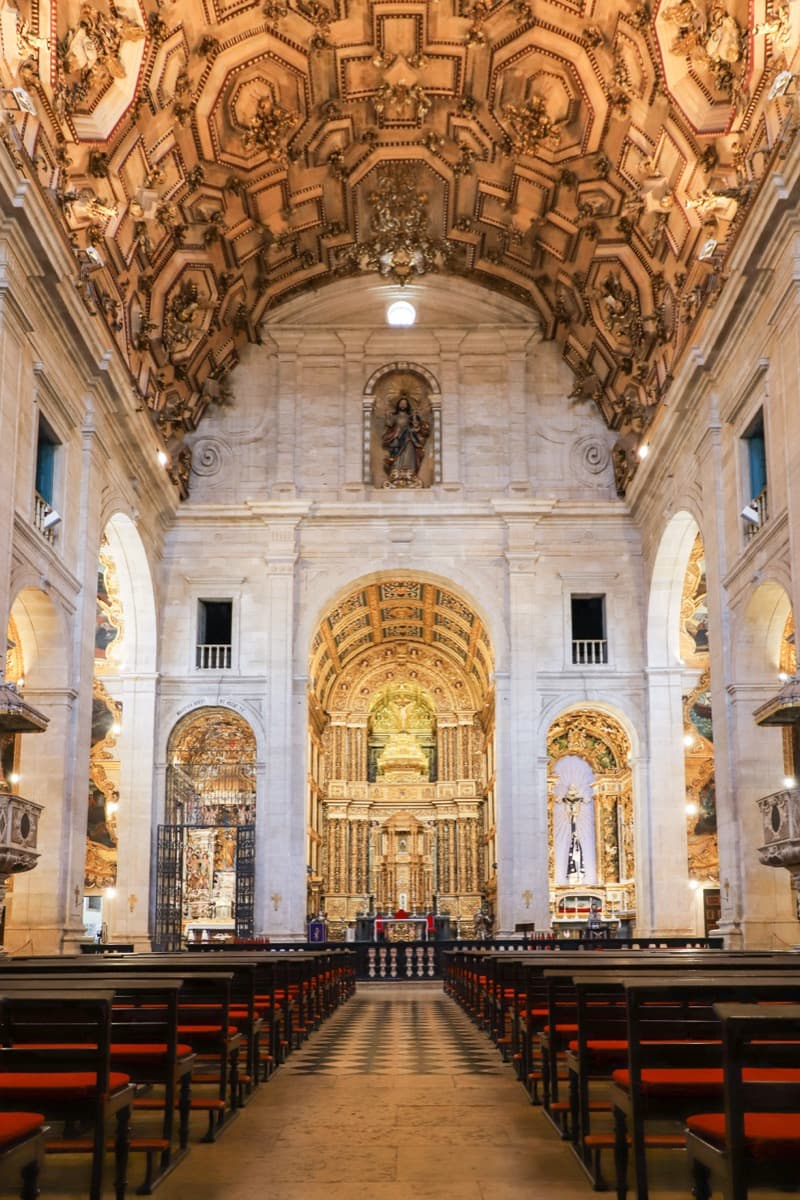
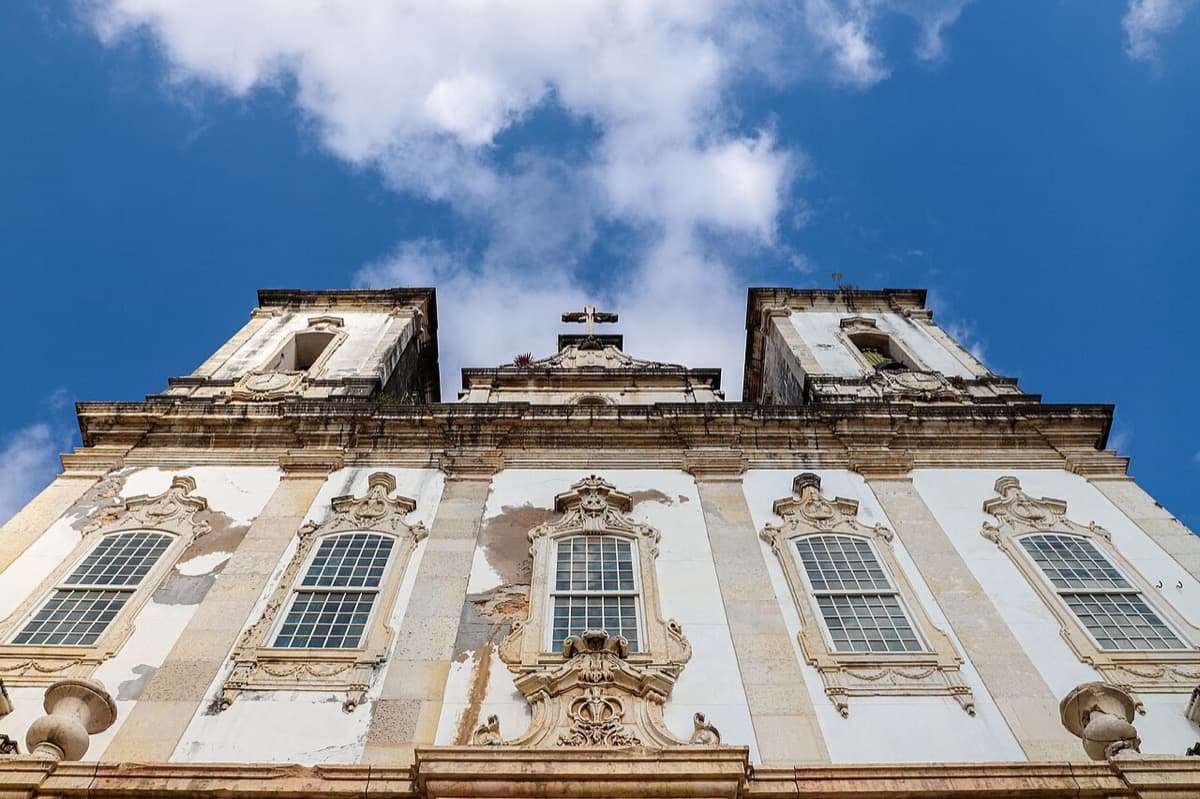
Catedral Basilica de Salvador: Stone Shipped Across an Ocean
The former Jesuit church on the Terreiro de Jesus, built of light Lioz limestone quarried in Portugal and shipped whole across the Atlantic.
- 3
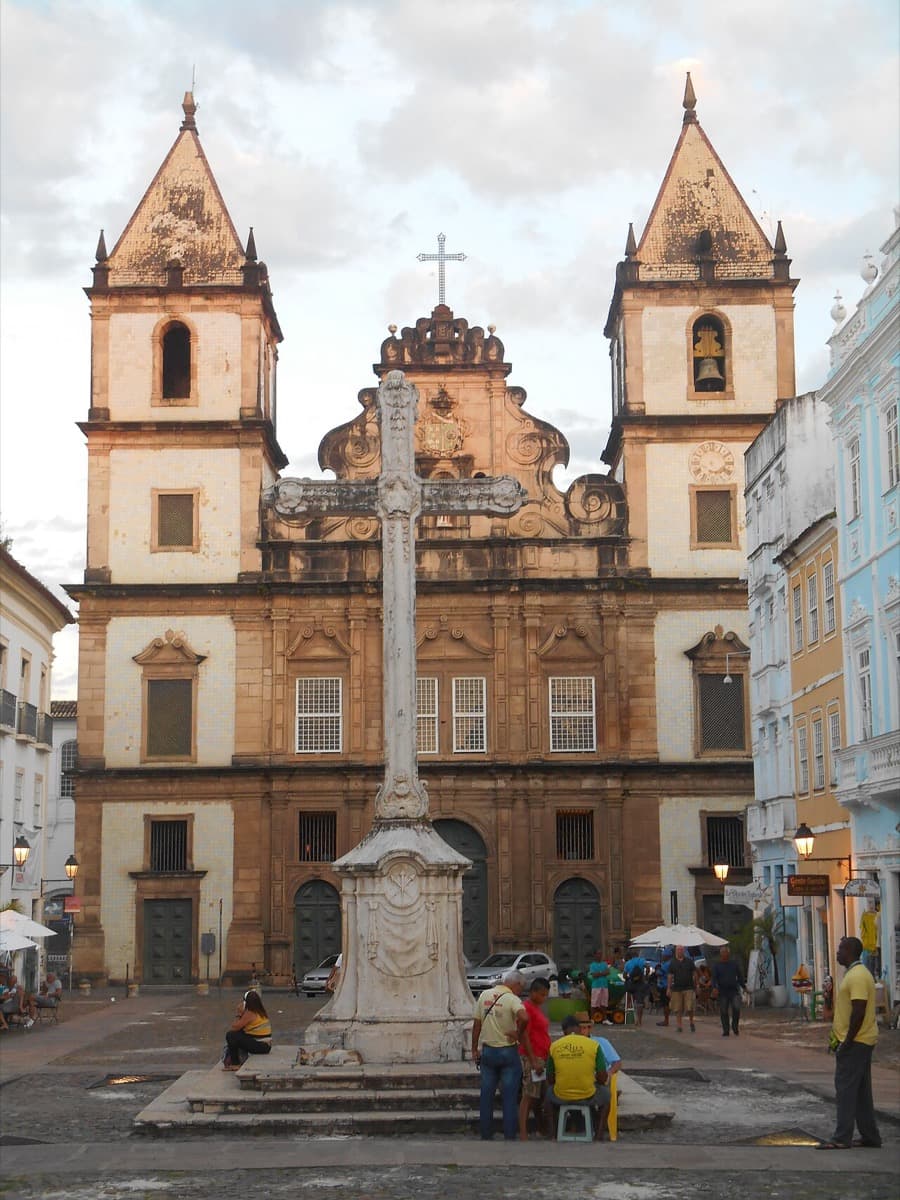
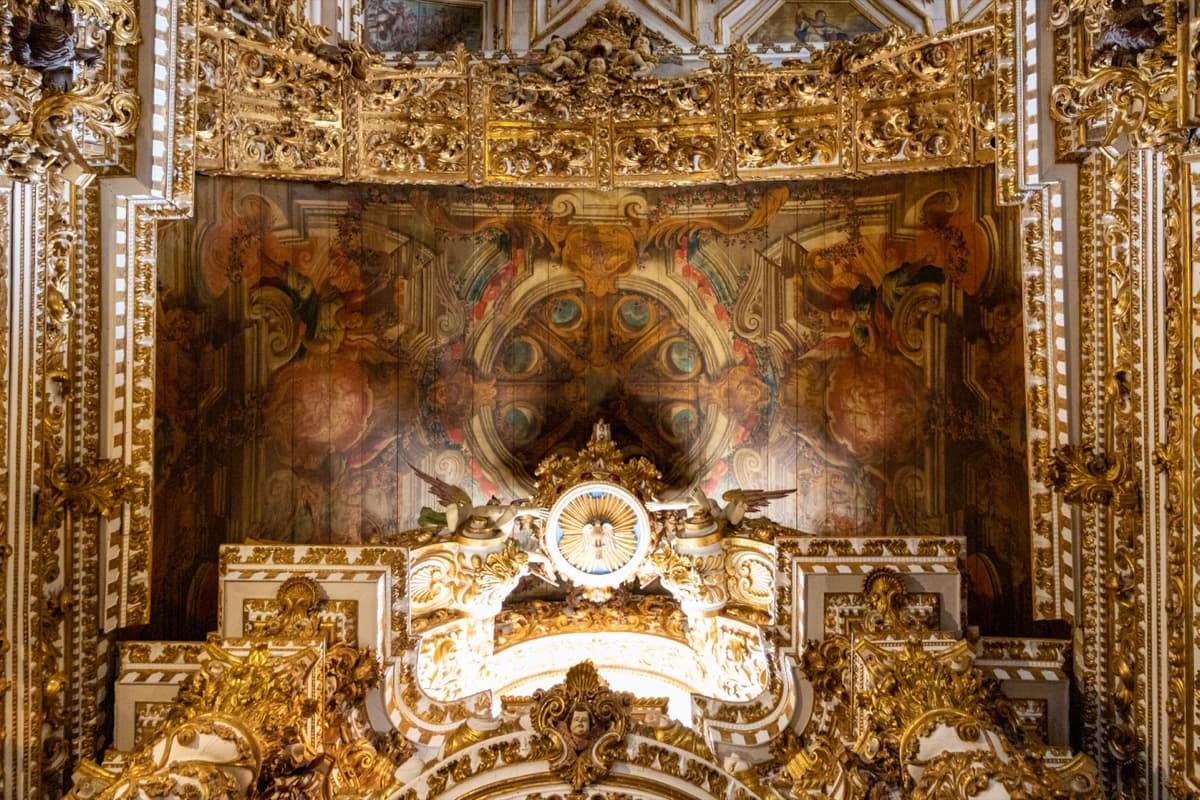
Igreja e Convento de Sao Francisco: The Golden Climax
One of the richest gilded interiors in the Americas, where nearly every surface is carved wood sheathed in gold leaf, alongside a cloister of tens of thousands of Portuguese tiles.
- 4
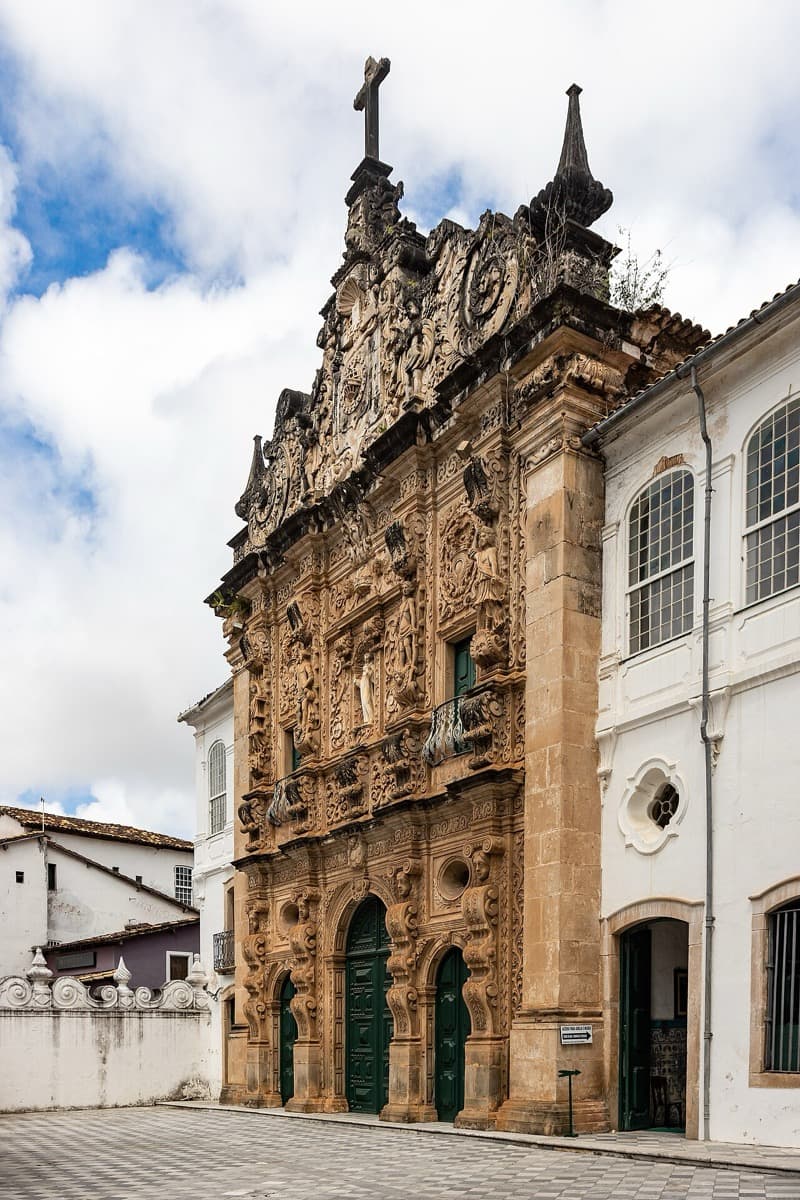
Igreja da Ordem Terceira de Sao Francisco: The Facade That Was Buried
A lacelike Plateresque stone facade described as unique in Brazil, hidden under plaster for generations and rediscovered by electricians in nineteen thirty-two.
- 5
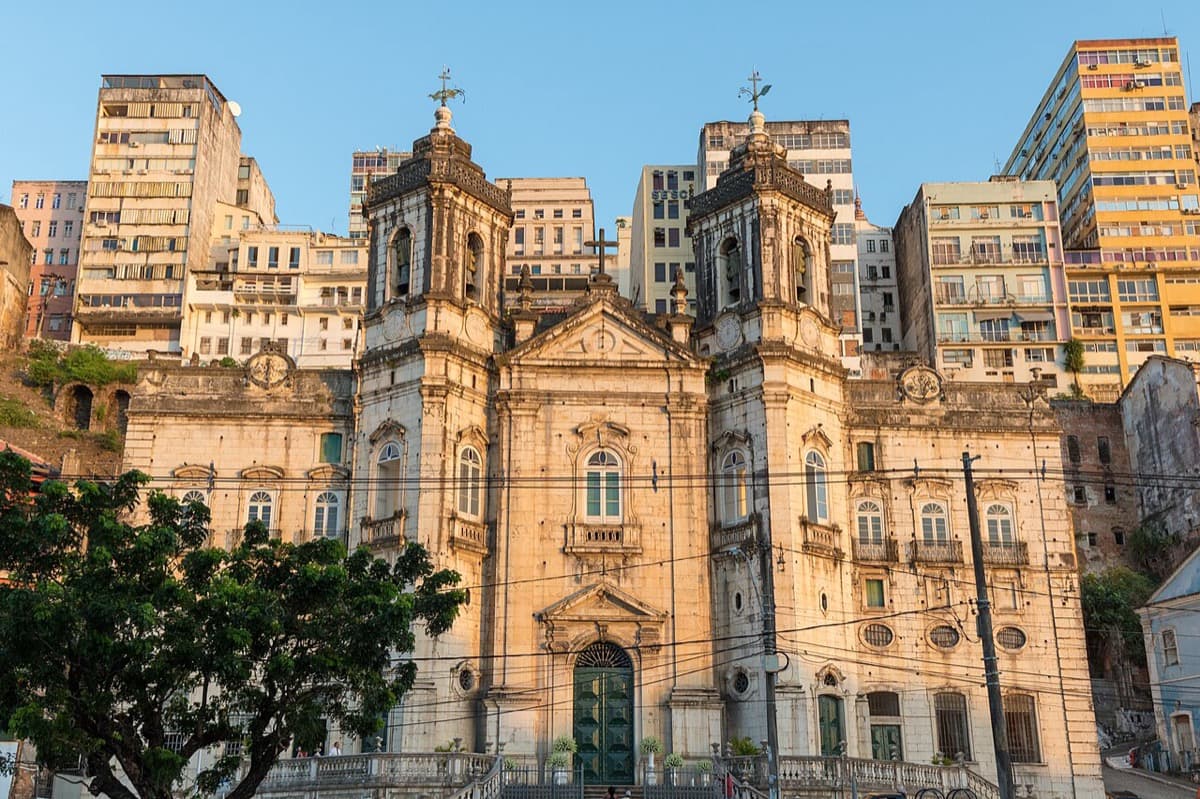
Igreja de Nossa Senhora da Conceicao da Praia: Assembled Like a Jigsaw
The lower-city basilica of Bahia's patroness, cut and prefabricated in Portugal, shipped in numbered stones, and reassembled beside the working port.
- 6
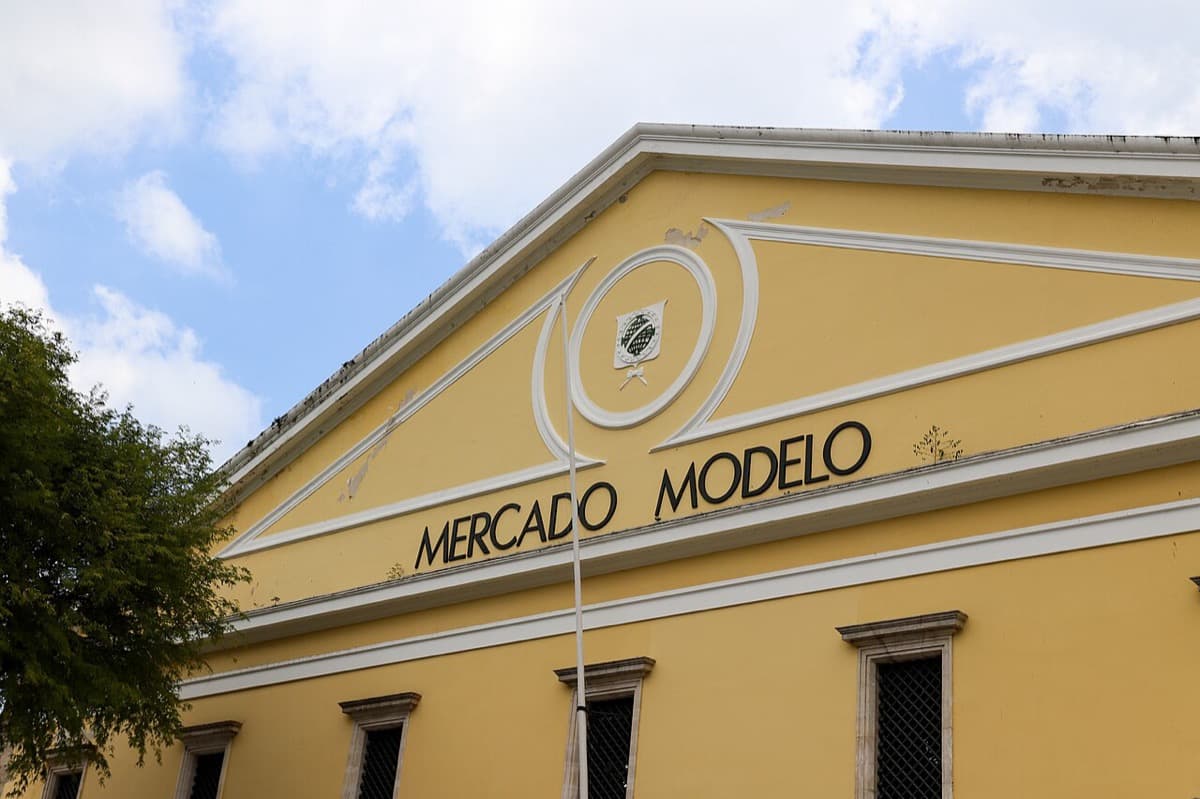
Mercado Modelo and the Lower City: At the Water
The former customs house beside the Bay of All Saints, where the walk ends at the port through which sugar, gold, and enslaved Africans all passed.
Details
Best Time to Visit
Start in the morning, ideally between eight and ten, when the upper-city churches open, the cobbles are still cool, and the light is soft over the Bay of All Saints for the final descent. Weekday mornings are the calmest, and because many churches close for a midday break, an early start protects your access to the interiors. Save the steep climbs and descents for the cooler hours rather than the peak heat of the afternoon.
Pro Tips
- •Confirm opening hours before you go, since several churches close for a midday break and some charge a small fee for the sacred-art interiors.
- •Carry small cash in reais for church entry fees, because card machines are not always available.
- •Do the walk downhill as described, from the Carmo church to the port, so gravity is with you on the steep cobbles.
- •Take the Lacerda Elevator for the drop to the lower city rather than the steep connecting lanes; it is cheap, quick, and part of the story.
- •Photography rules vary by church and flash is often forbidden near gilded and painted surfaces, so look for posted signs and ask if you are unsure.
- •Build in unhurried time at the golden Sao Francisco interior and its tiled cloister; it rewards slow looking more than any other stop.
Safety & Precautions
- •Salvador is hot and intensely sunny for much of the year, so bring water, a hat, and sunscreen, and rest in the shade between the steep climbs.
- •Sudden tropical downpours are common and the cobbles turn slick fast, so pack a light rain layer and wear shoes with good grip.
- •These are active places of worship, and across the city there are living Afro-Brazilian traditions including Candomble; dress modestly in churches, keep your voice low, and never photograph people or ceremonies without asking.
- •Keep valuables out of sight and stay aware in the quieter lanes of the historic center, especially away from the busier squares and after dark, and walk with a companion when you can.
Travel advisory: Exercise Increased Caution (Level 2).
Gallery
Related Reading
Go deeper on what you'll see, hear, and walk through.
Overview
Best Self-Guided Walking Tours in Salvador (2026)
3 min
Overview
One Day in Salvador: A Walkable Old-City and Bay Itinerary (2026)
5 min
Overview
Salvador Travel Guide: How Many Days, Getting Around, When to Go, Is It Safe (2026)
6 min
Deep dive
Inside São Francisco: Salvador's Golden Church and Its 55,000 Tiles
6 min
Read the walk
The full story of Pelourinho: Gold, Sugar, and the Gilded Baroque, in words. Prefer to listen? Play it narrated, from home or on location.
Introduction
Salvador, Brazil, was the country's first colonial capital, founded in fifteen forty-nine on a ridge above the Bay of All Saints. For two centuries the sugar of Bahia and, later, the gold of Brazil's interior flowed through this bay, and much of that wealth was poured into stone and gold leaf here in the historic center that UNESCO inscribed as a World Heritage Site in nineteen eighty-five. This walk follows the money downhill. Over roughly three kilometres and about ninety minutes, across six stops, you descend from the highest gilded churches of the upper city to the working port at the water's edge. You set your own pace, and every stop is short enough to skip if you would rather linger somewhere else.
The thesis is a paradox you can almost hold in your hand. The richest baroque interiors in the Americas were carved, gilded, and quarried into place largely by the hands of enslaved and freed Afro-Brazilian people who were never enriched by them. Each church offers a beauty you are meant to admire and a question worth carrying: whose hands made this, and what did they receive for it? The gold accumulates as you climb the story uphill, and the human cost lands as you reach the bay through which the sugar, the gold, and the enslaved all passed.
Wear shoes that grip, because the cobbles are steep and often slick. Bring water and sun cover, and give yourself time to stand still. When you arrive at the Igreja da Ordem Terceira do Carmo, begin with stop one.
1. Igreja da Ordem Terceira do Carmo: The Ruby Christ
You are standing at the highest church of the walk, up the Ladeira do Carmo above Pelourinho. The building you see was raised between seventeen eighty-eight and eighteen sixty, after a Holy Week fire in seventeen eighty-seven destroyed the temple that stood here before. Its treasure survived that fire because it was kept next door, at the first-order Carmo church. That treasure is the Cristo Morto, the Dead Christ: a figure carved from cedar and laid out in death, whose wounds and drops of blood are set with roughly two thousand fragments of ruby. Stand close, and the light catches the blood as if it were still wet.
By tradition the Cristo Morto is the work of Francisco das Chagas, an Afro-Brazilian sculptor remembered by the nickname o Cabra and called the Aleijadinho baiano, the Aleijadinho of Bahia. What the documents confirm is narrower and just as telling: in seventeen fifty-eight the lay brotherhood here contracted Chagas to carve three images of Christ. His life is thinly recorded, which is itself part of the story. The hand that shaped one of Salvador's most venerated images belonged to an Afro-Brazilian man whose biography the archives barely kept.
Hold that thought as you head down toward the gold. This is the paradox in miniature. A brotherhood's church, a body carved with astonishing tenderness, rubies for blood, and behind it a maker the record almost forgot. Everything below you was built on the same arrangement: extraordinary beauty, and the uncredited hands that made it.
2. Catedral Basilica de Salvador: Stone Shipped Across an Ocean
You have reached the Terreiro de Jesus, the ceremonial square, and the great pale church facing it was once the heart of the Jesuit order in Brazil. Its cornerstone was laid in sixteen fifty-seven, the structure was completed by sixteen seventy-two, the frontispiece finished in sixteen seventy-nine, and the steeples in sixteen ninety-four. Look closely at the stone. It is Lioz, a light-colored limestone quarried in Portugal, cut there, and shipped across the Atlantic to be raised here. In a colony surrounded by its own rock, the material of worship was imported whole from the mother country. Wealth arrived as ballast in the holds of ships.
Historians describe this as one of the finest examples of Mannerism in the Portuguese empire, closely resembling the Jesuit church of Coimbra. Inside, a barrel-vaulted ceiling carries the Jesuit monogram, the letters I H S, at its center, and the sacristy holds jacaranda woodwork, gilded cabinets, and seventeenth-century Portuguese tiles. It is restrained beside what waits downhill, and deliberately so.
This was the Jesuit college as well as the church, the intellectual engine of the colony. Its severe elegance says something about the paradox you are tracing. Even here, before the gold overwhelms you, the sophistication on display was paid for by an economy of sugar and enslaved labor spread across the plantations of the Bay of All Saints. The stone came from Portugal. The fortune that raised it did not.
3. Igreja e Convento de Sao Francisco: The Golden Climax
This is the golden climax of the walk, the Church and Convent of Sao Francisco on the Largo do Cruzeiro. The present convent was begun in sixteen eighty-six, the church itself built between seventeen oh-eight and seventeen twenty-three, and its interior decoration carried on…
Full narration for this stop unlocks with the tour.
4. Igreja da Ordem Terceira de Sao Francisco: The Facade That Was Buried
A few steps from the golden church stands its quieter neighbor, the Igreja da Ordem Terceira de Sao Francisco, the church of the Third Order. Its cornerstone was laid on the first of January, seventeen oh-two, and the structure was completed by June of seventeen oh-three. Look…
Full narration for this stop unlocks with the tour.
5. Igreja de Nossa Senhora da Conceicao da Praia: Assembled Like a Jigsaw
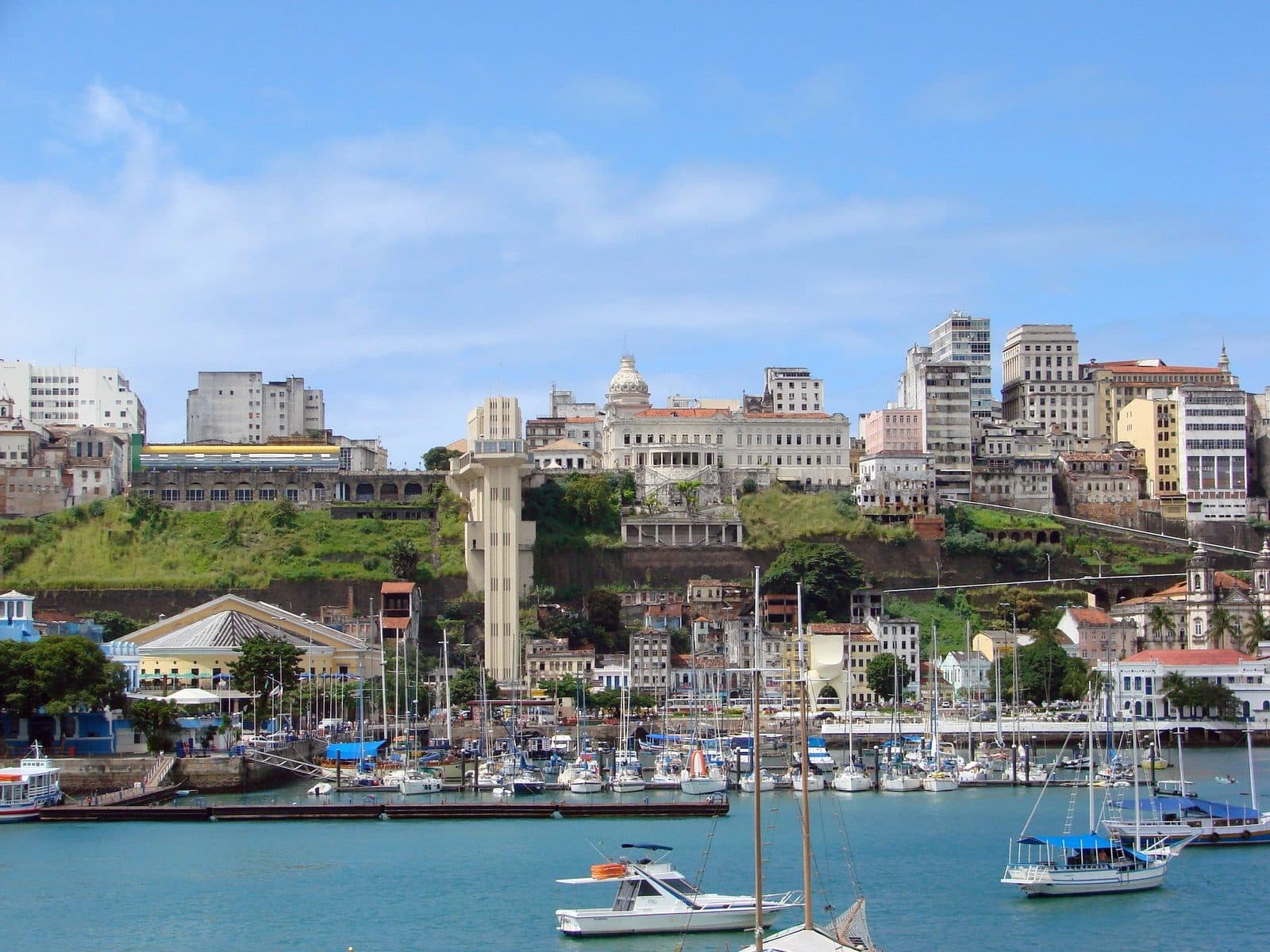
To reach this church you leave the upper city and descend. The Lacerda Elevator drops you about seventy-two meters from the ridge to the lower city, the Cidade Baixa, where the working port meets the churches. This is the Basilica of Nossa Senhora da Conceicao da Praia,…
Full narration for this stop unlocks with the tour.
6. Mercado Modelo and the Lower City: At the Water
You have arrived at the water, at the Mercado Modelo, and this is where the walk ends and the story lands. The building itself is the former customs house of Salvador, the Casa da Alfandega, a neoclassical structure built in eighteen sixty and eighteen sixty-one. The handicraft…
Full narration for this stop unlocks with the tour.