
A loop round Hoan Kiem Lake from Ngoc Son's gate and the Pen Tower, past the Ly Thai To statue, Hoa Phong Tower and the Turtle Tower, out to Ba Da Pagoda, St Joseph's Cathedral and Ly Quoc Su Pagoda, and back to the north shore facing the temple.
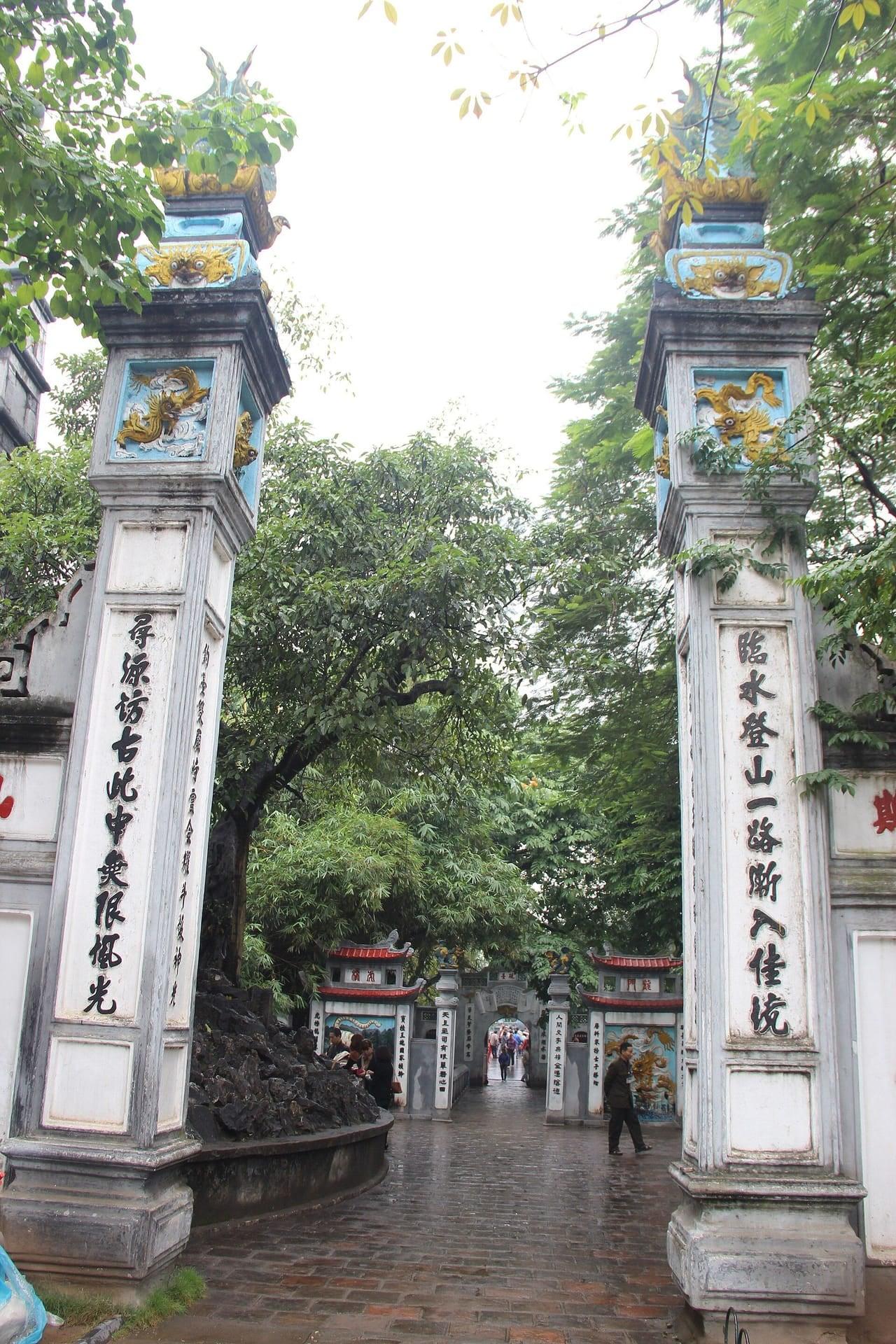
Start · Ngoc Son Gate: Writing on the Blue Sky
DirectionsStops
- 1

Ngoc Son Gate: Writing on the Blue Sky
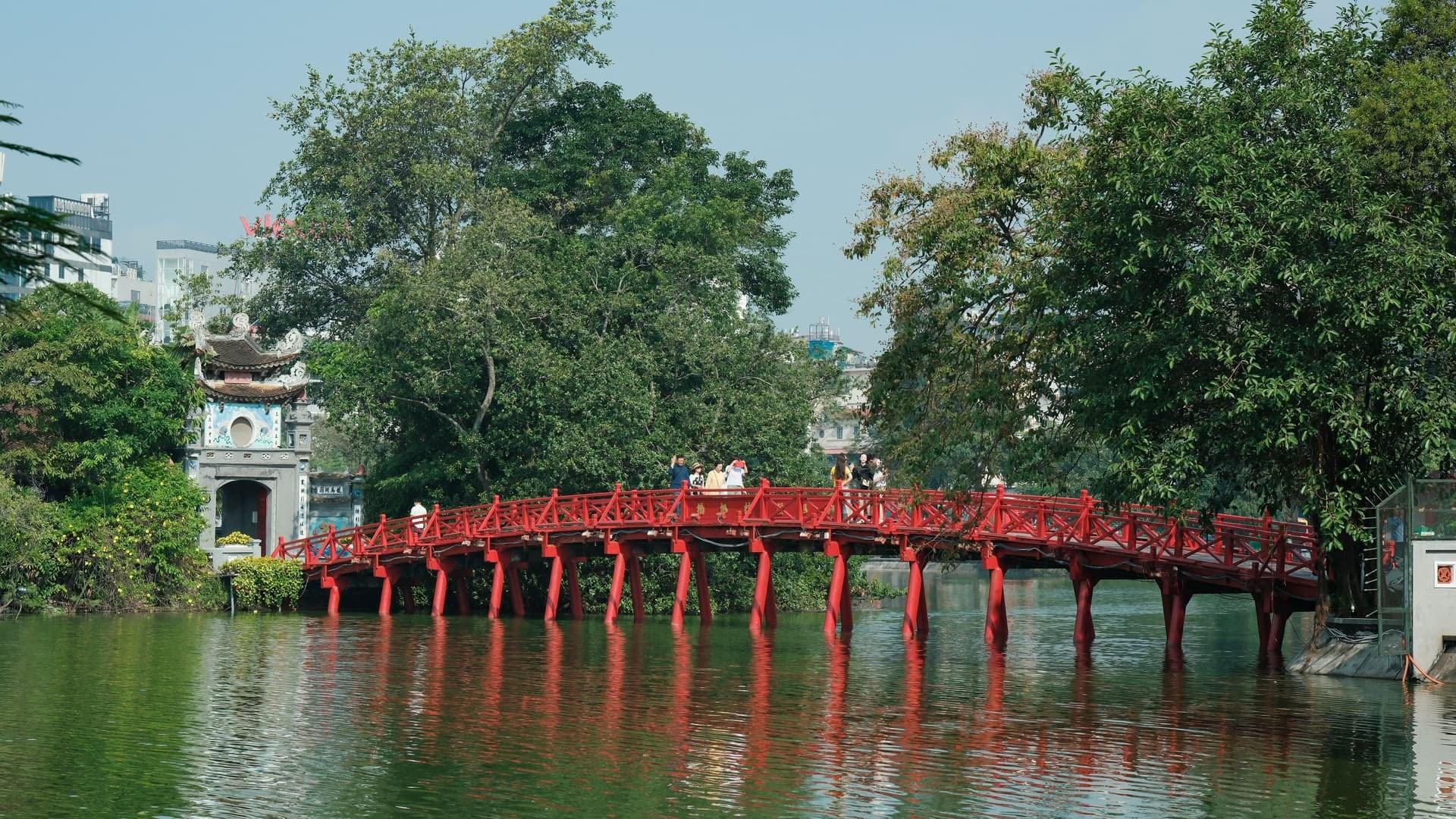
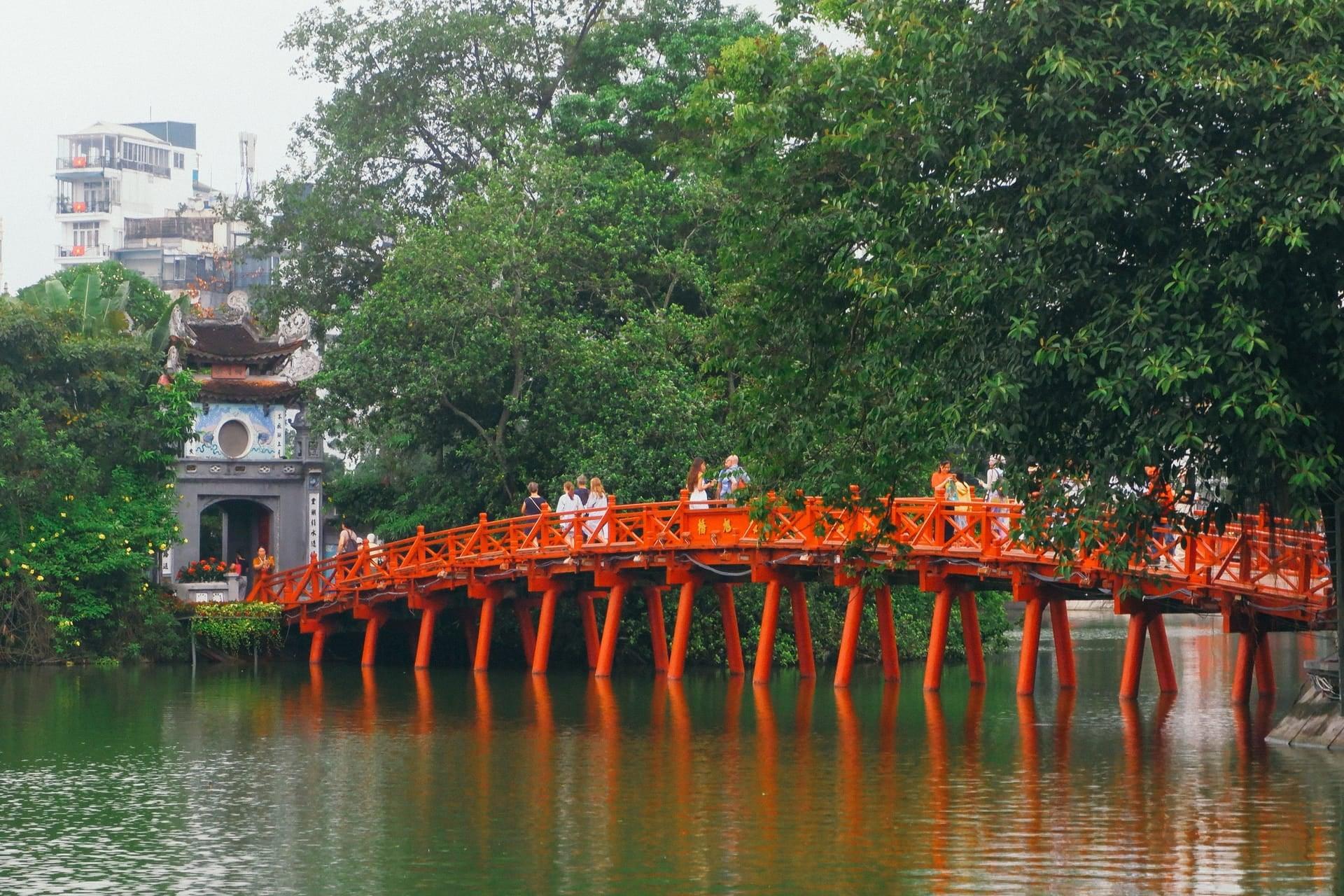
A scholar's gateway to the temple. The Pen Tower, the Ink Slab gate and the red The Huc Bridge to Ngoc Son Temple on its island, seen from the Dinh Tien Hoang sidewalk.
- 2

East Shore: The Last Turtle
The legend's animal was real. The east shore's lakeside garden, with open water toward the Turtle Tower, where the last of the lake's giant turtles lived.
- 3

Ly Thai To Statue: The Founder of Thang Long
The king who founded the capital. A bronze statue of King Ly Thai To, who made this river plain his capital in 1010 and named it Thang Long.
- 4

Hoa Phong Tower: A Tower Without Its Pagoda
A tower whose pagoda is gone. The three-storey brick Hoa Phong Tower on the lake's east shore, the last piece of Bao An Pagoda, with the Post Office's clock across the road.
- 5

South Shore: Where the Grid Began
The whole lake from its tip. The lake's southern end, looking north up its length past the Turtle Tower to Ngoc Son, with the French Quarter's first street behind.
- 6

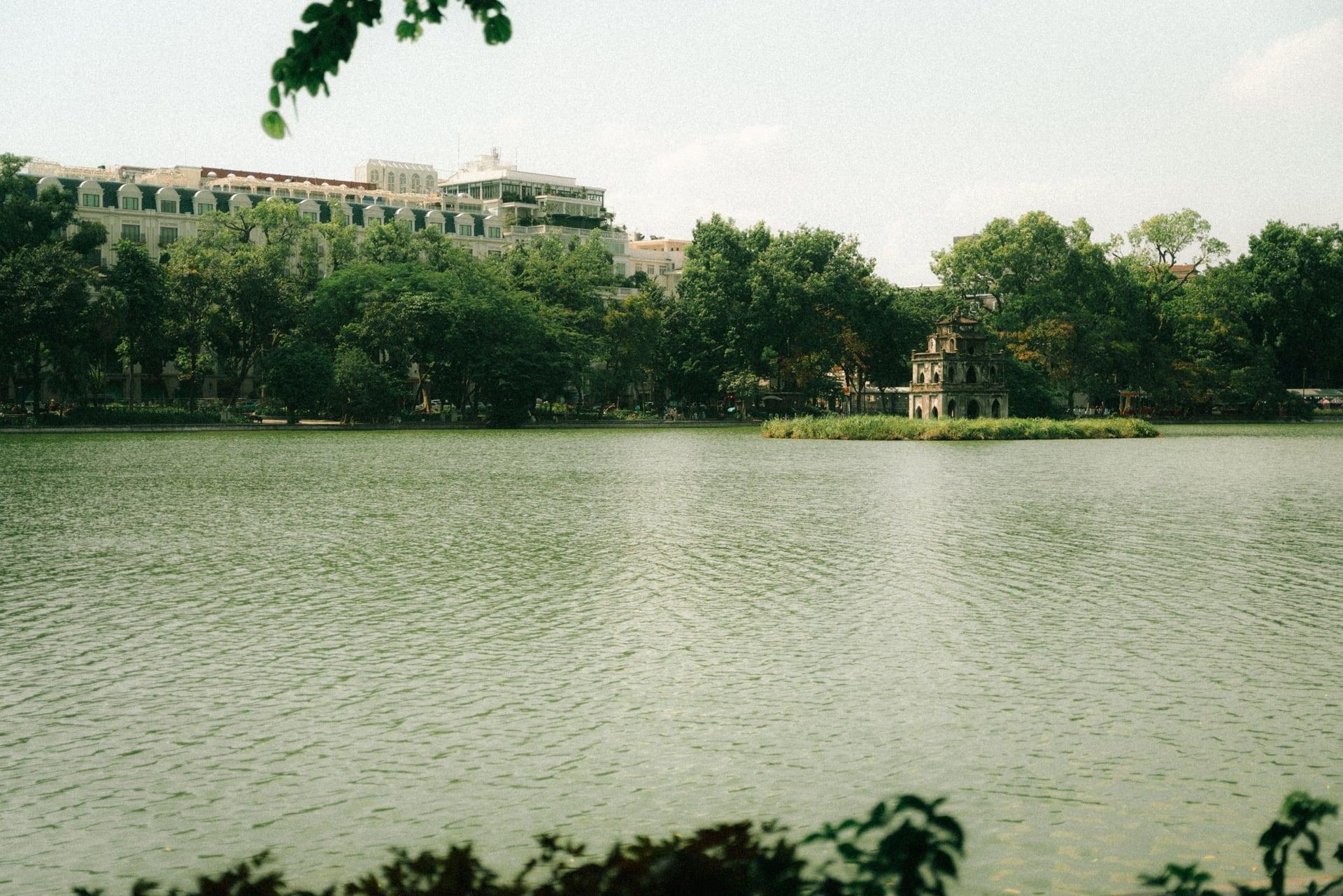
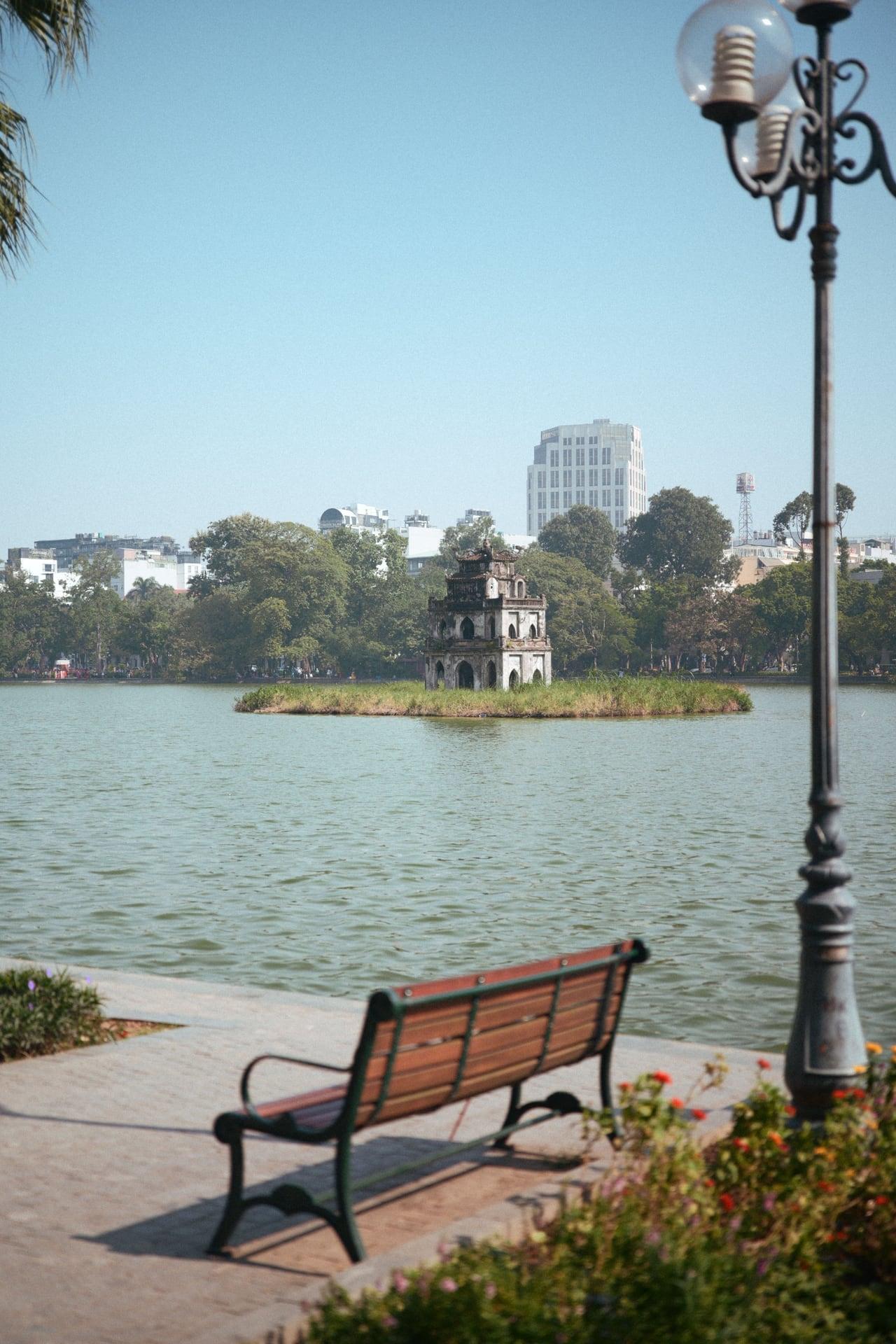
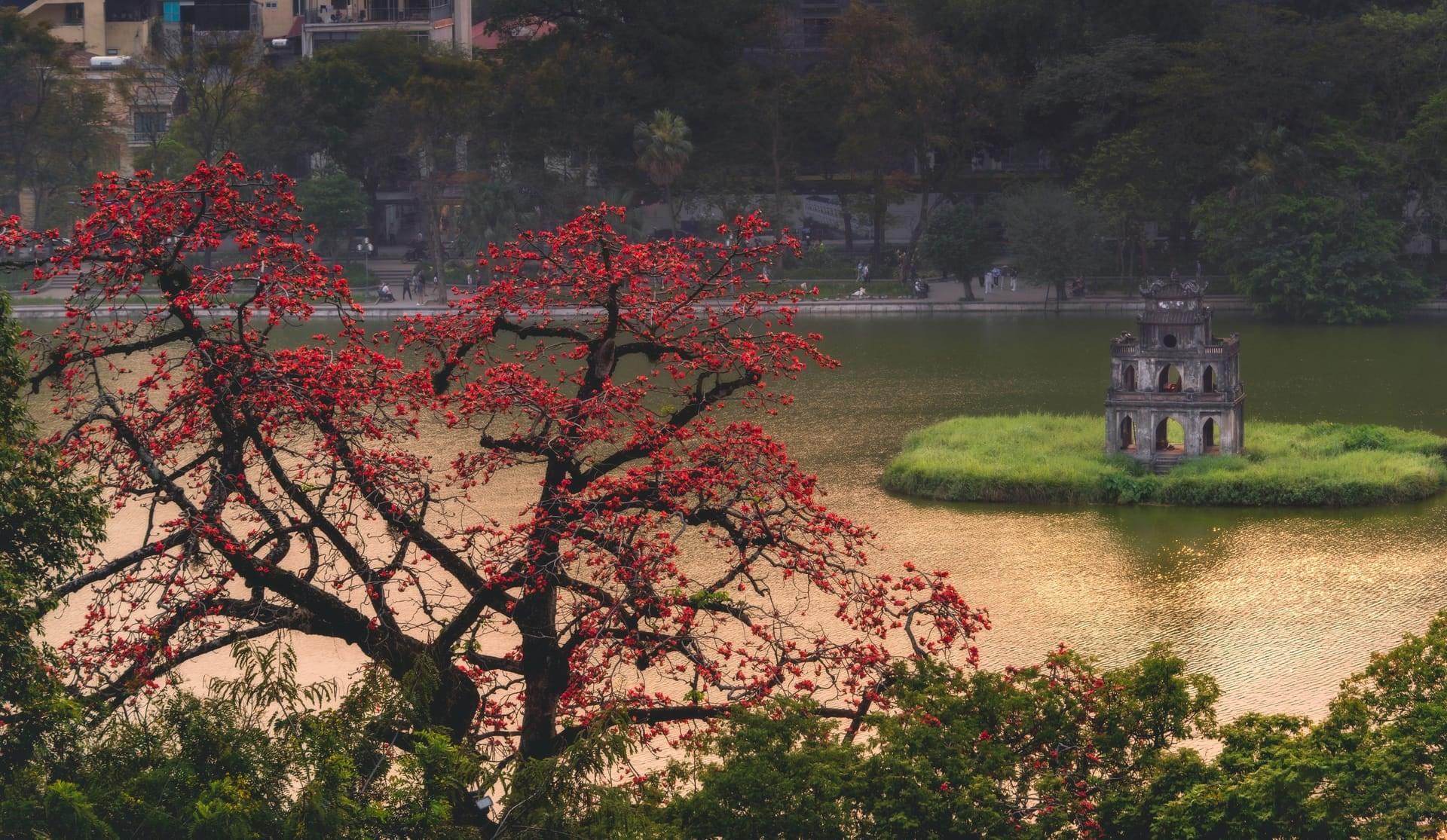
Turtle Tower: The Returned Sword
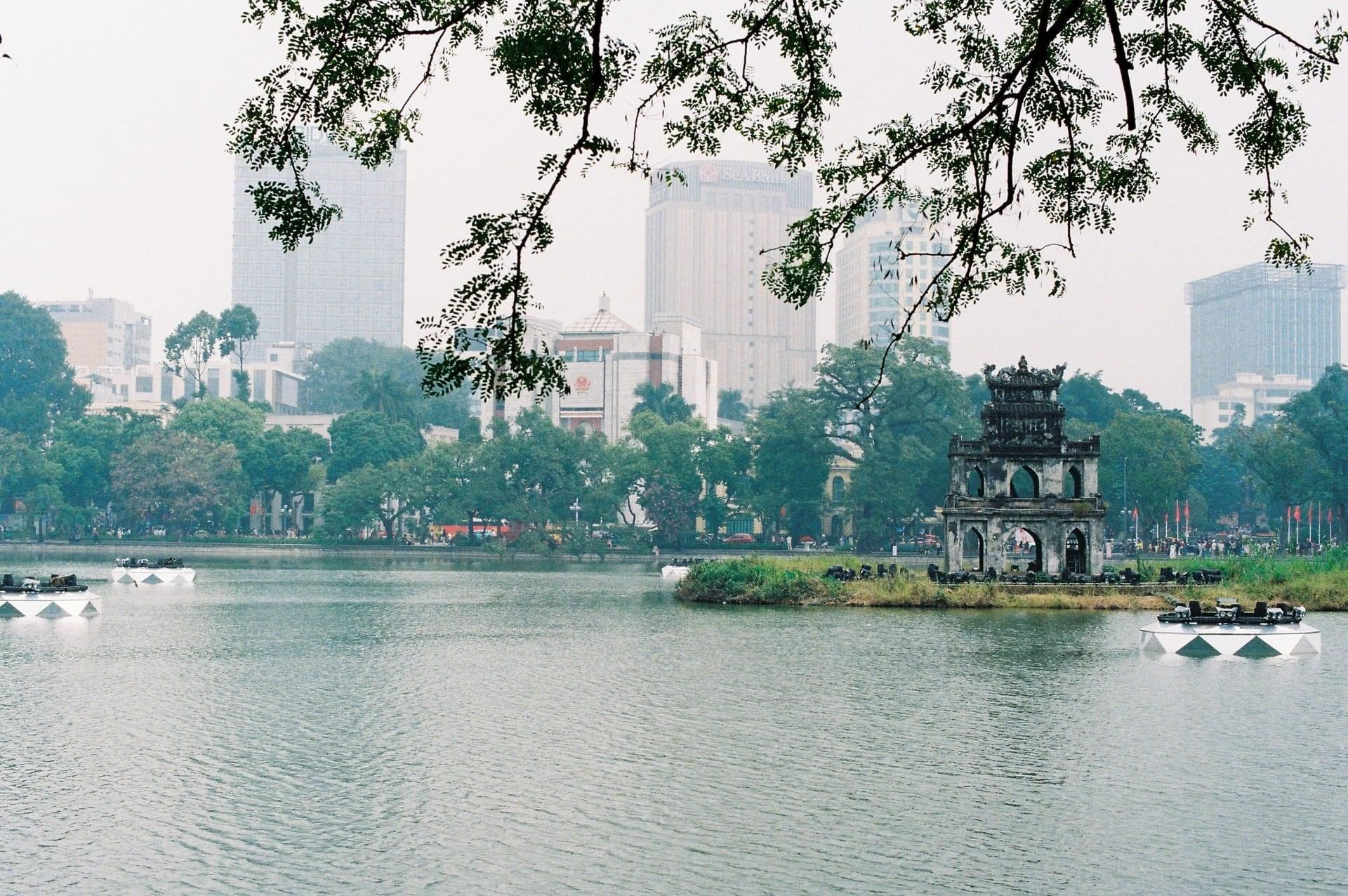
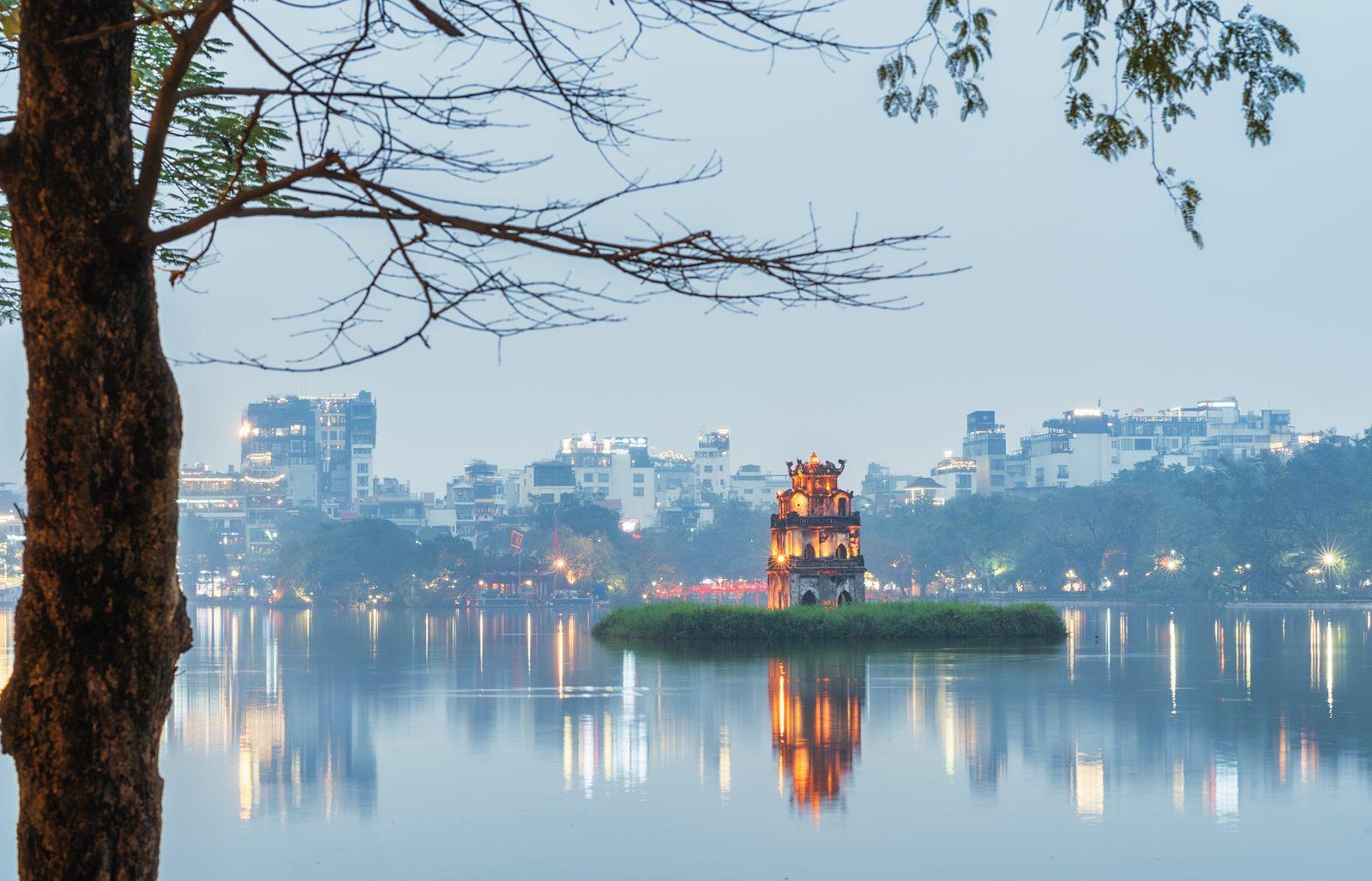
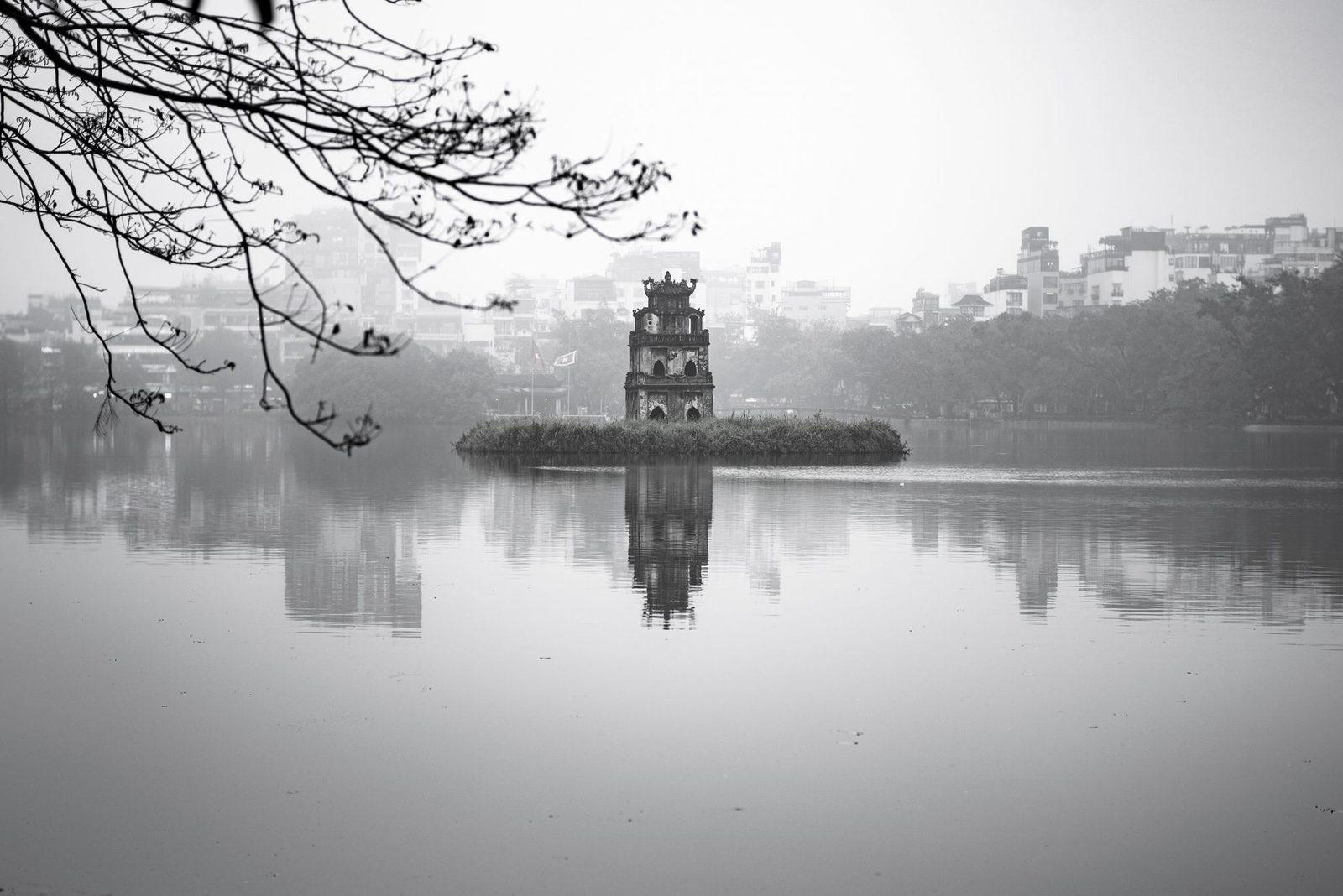
Where the lake gets its name. The Turtle Tower on its islet in the middle of the lake, seen across the water from the west-shore path.
- 7

Le Thai To Memorial: The King in Bronze
The legend's king in bronze. The 1894 statue of King Le Thai To on a stone column above the memorial garden's wall, across Le Thai To Street from the lake.
- 8

Bao Khanh Corner: The Lake's Other Names
Where the city comes to stroll. The lake's north-west corner at Bao Khanh Street, with Ngoc Son's island and red bridge across the water.
- 9

Ba Da Pagoda: A Temple Down a Lane
A working pagoda behind a lane. Ba Da Pagoda's gate at the mouth of its lane off Nha Tho Street, the seat of Hanoi's Buddhist association.
- 10

St Joseph's Cathedral: The Mission Church
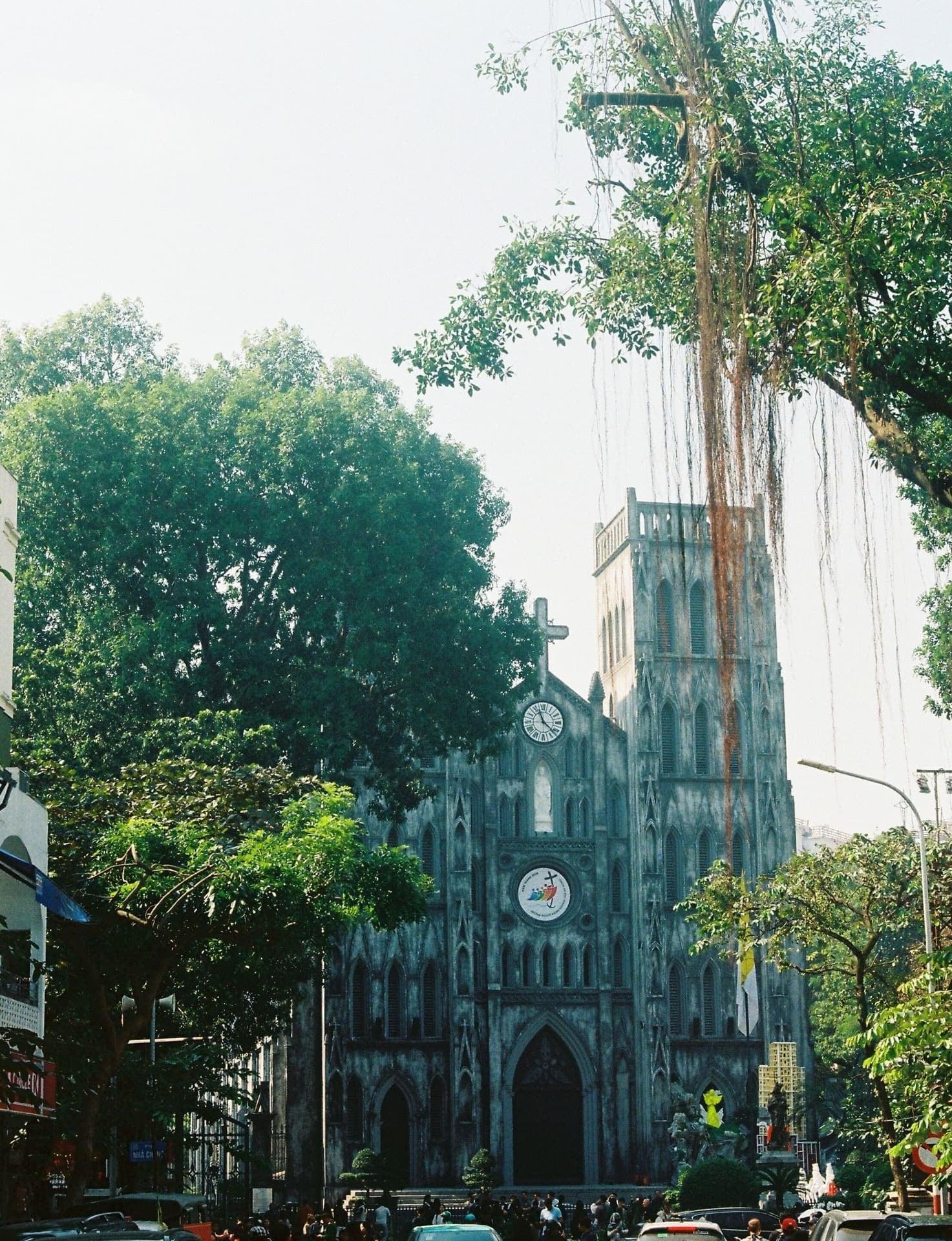
A mission church on old ground. St Joseph's Cathedral, Hanoi's Catholic cathedral, from the public square in front of its twin towers.
- 11

Ly Quoc Su Pagoda: The National Preceptor
A healer monk of the Ly court. Ly Quoc Su Pagoda's gate and forecourt on narrow Ly Quoc Su Street, round the corner from the cathedral.
- 12

Hang Trong Street: Named for Drums
A trade name outside the guild grid. The corner where Hang Trong Street opens off Hang Gai and runs straight down toward the lake.
- 13

Thuy Ta Corner: The Whole Lake
The lake as the city's hinge. The lake's north-west corner by the lakeside pavilion, looking down its length to the Turtle Tower.
- 14

North Shore: The Temple Across the Water
The temple seen whole at last. Ngoc Son Temple's roofs on their island across the water from the north shore, near where the loop began.
Details
Best Time to Visit
Morning, when the lake is calm and people exercise along the shore, or late afternoon into dusk, when the shore is lit (the promenade is lit, OSM lit=yes) and the cathedral square fills with cafes. Sunset is about 17:17 in mid-November and mid-December, 17:34 in mid-January and 17:54 in mid-February (computed). Friday 19:00 to Sunday 24:00 the roads round the lake have been a walking street (since September 2016): easier crossings, big crowds. Ngoc Son Temple is ticketed (50,000 VND) with no official hours published; the pagodas keep no published hours and the cathedral opens for mass; the walk works from public ground when every gate is shut. December to February is cool and often gray, with fine drizzle. Checked 11 November 2026.
Pro Tips
- •Start at Ngoc Son Gate, the Pen Tower on Dinh Tien Hoang Street at the lake's north-east shore. Taxi: ask for Ngoc Son Temple. Friday to Sunday evenings, get out at the car-free zone's edge and walk.
- •No metro reaches the lake in 2026 (Line 2A's Cat Linh station is about 2.5 km west). City buses ring the lake and are free inside Ring Road 1 until 30 June 2027 (VOV, 2 July 2026). On foot, most Old Quarter and French Quarter hotels are 10 to 15 minutes away. Checked 11 November 2026.
- •To visit Ngoc Son Temple and the turtles: buy a ticket at the gate (stop 1), 50,000 VND (Hanoi People's Council, 6 December 2023). You can go in at the start or come back after stop 14, which ends 140 m from the gate.
- •If you prefer lights to zebras on the first crossing (stop 2 to 3), walk on about 100 m to the signals by the Post Office and come up past the Post Office to the statue.
- •St Joseph's Cathedral (stop 10): the doors open for mass; no official schedule could be reached on 11 November 2026, so check the board at the gate. The square in front is public at all hours.
- •Our Old Quarter walk starts across the road from stop 14 at Dong Kinh Nghia Thuc Square; our French Quarter walk starts at the lake's southern tip (stop 5).
Safety & Precautions
- •Ten road crossings: eight have no signal (zebras at Dinh Tien Hoang opposite the statue, Le Thach Street's mouth, Le Thai To and Bao Khanh by stop 8, Hang Trong into Nha Tho, the two short zebras at Le Thai To's northern end, and the unmarked mouth of Hang Trong), two have lights (Dinh Tien Hoang at the Post Office; Luong Van Can on Hang Gai). Traffic drives on the right, motorbikes come both ways: cross slowly and steadily, never run, stop or step back.
- •In the cathedral quarter (stops 9 to 13, about 570 m) the sidewalks are parked up: walk at the street's edge on the side the route keeps (Nha Tho's pagoda side, Ly Quoc Su's pagoda side, Hang Bong's south side, Hang Gai's lake side), and watch for motorbikes riding against the traffic.
- •One low step up onto the Ly Thai To statue's plaza (leg 2 to 3). Otherwise flat; paving and tiles get slippery in drizzle.
- •Phone and bag snatching by passing motorbikes happens in tourist areas, worse around Tet (Government of Canada travel advisory, updated 19 October 2026): hold your phone on the side away from the traffic.
- •Until 2 December 2026 a temporary raised walkway ('Silk Ribbon of Memory', from 8 October 2026; Tien Phong) stands in the west-shore garden near stops 5 and 6. If the shore path is fenced, walk the lakeside sidewalk of Le Thai To Street and stand at the shore end of the nearest garden path. Checked 11 November 2026.
- •Hanoi Creative Design Festival, 13 to 29 November 2026, opening on the new square east of the lake (across Dinh Tien Hoang from stops 1 and 2): crowds and possible closures on the east shore. A reconstruction of the lake area was approved on 28 October 2026 with completion targeted for 2029 (CafeF, 9 November 2026): check before you go. Checked 11 November 2026.
- •Weekend walking street, Friday 19:00 to Sunday 24:00: crowded at stops 1, 8, 13 and 14; it has been suspended (13 to 20 March 2026) and extended for holidays at short notice. Official ceremonies at the Ly Thai To statue can close its plaza for an hour: see it from the park's edge.
- •Tet 2027 falls on Saturday 6 February 2027: shops close for several days and the lake's events and pedestrian hours can change.
- •Pagodas and the cathedral are places of worship: cover shoulders and knees, keep quiet, do not photograph people at prayer, and ask before photographing anyone. Weather and air: December to February is cool and gray; winter air pollution can be hazardous and change quickly, so check a live air-quality reading on the day.
Travel advisory: Exercise Normal Precautions (Level 1).
Gallery
Related Reading
Go deeper on what you'll see, hear, and walk through.

Overview
Hanoi Travel Guide: How Many Days, Getting Around, When to Go (2026)
8 min

Overview
How to See Hanoi: A Capital Built on Top of Itself
5 min

Overview
One Day in Hanoi: A Walkable Old-Quarter-to-Lake Itinerary (2026)
8 min
Thematic
Best Culture Walking Tours in Hanoi (2026)
2 min
Companion
Hoan Kiem Lake: The Returned Sword and the City Around It
6 min
Deep dive
The Turtles of Hoan Kiem Lake: A Legend, and the Last One
3 min
Read the walk
The full story of Hoan Kiem Lake: The Lake of the Returned Sword, in words. Prefer to listen? Play it narrated, from home or on location.
Introduction
Hoan Kiem Lake is the still middle of Hanoi, a long green lake with a temple on an island at one end and a small tower on an islet in the middle. Its name means the Lake of the Returned Sword, after a legend about a king and a turtle. This walk goes once round the water, then out into the lanes behind the west shore, to two old pagodas and the city's cathedral, and back.
There are fourteen stops over about two point six kilometers, about one point six miles, and it takes about ninety minutes. It is flat, with one low step.
There are ten road crossings, and only two have lights. You will hear how to cross at the first one. In the lanes by the cathedral the sidewalks are full of parked motorbikes, so for a while you walk at the street's edge.
Ngoc Son Temple, on the island, is ticketed, and the cathedral opens its doors for mass. The pagodas are working places of worship: cover your shoulders and knees if you go in. Nothing on the walk needs a gate to be open, and the lakeside path is lit after dark. From Friday evening to Sunday night the roads round the lake have been closed to traffic, and the shore fills with people. Around Tet, the lunar new year, plans can change at short notice.
From December to February the days are cool and often gray, with a fine drizzle that makes the paving slippery. Check the air quality on the day.
The walk ends on the lake's north shore, across the water from the temple, and across the road from where our Old Quarter walk begins. When you arrive at Ngoc Son Gate, begin with stop one.
1. Ngoc Son Gate: Writing on the Blue Sky
This is the gateway to Ngoc Son Temple, on its island at the north end of the lake. The bridge and the temple are ticketed, fifty thousand dong at the gate, and the walk does not need them: everything at this stop is in view from the sidewalk.
Begin with the stone tower on its rocky mound. It is a writing brush, five stories of stone with a pen tip pointing at the sky. This is Thap But, the Pen Tower. Carved on it are three characters, Ta Thanh Thien: Writing on the Blue Sky.
Next to it, the arched gate carries a stone ink slab on its top, the stone a scholar ground his ink on. Brush and ink, at the door of a temple to a god of literature and examinations. This gateway was a scholar's idea. A scholar official led the fund raising and the rebuilding of the temple around eighteen sixty.
Beyond the gate, the red bridge curves out over the water to the island. It is The Huc Bridge, a name the same history translates as Light of Dawn. Its far end is guarded by a gate tower called the Moon Viewing Tower.
In twenty thirteen the lake and this temple together were ranked a special national relic. You will come back to this island at the end of the walk, from the other shore, and hear what is inside.
It is busy at this gate all day. Let people through to the ticket office, and ask before you photograph anyone.
Follow the route south along the lakeside path, with the water on your right.
2. East Shore: The Last Turtle
Stop here on the lakeside path and turn to face the water.
Far off across the lake, a small pale tower stands on an islet. That is the Turtle Tower, and the lake's name comes from a legend about a turtle. You will hear the legend there. Here, the part that is not a legend.
There really were turtles in this lake, giant softshell turtles, some of them about two meters long. The last one died in this lake on the nineteenth of January, twenty sixteen, in the afternoon. Its age was estimated at about two hundred years, and the cause given was old age.
The city did not let it go. With help from German experts, the turtle was preserved, and on the sixteenth of March, twenty nineteen, it went on display in Ngoc Son Temple, the temple you just passed. It is more than two meters long and over a meter wide. Next to it lies an older one, caught in the lake in nineteen sixty seven.
So the turtle of the legend had real cousins in this water, and you can still see the last of them, a short walk back along the shore.
Joggers and photographers use this path all day. Keep to one side.
Follow the route on along the shore, then across Dinh Tien Hoang at the zebra opposite the park. There is no signal there, and drivers rarely stop, so here is how to cross in Hanoi. Traffic drives on the right, but motorbikes come from both directions. Wait for a gap, then cross slowly, at a steady pace. Never run, never stop suddenly, and never step back, so riders can judge your path. If you would rather cross at lights, there are lights about a hundred meters further on, by the Post Office. On the far side, a low step takes you up onto the plaza.
3. Ly Thai To Statue: The Founder of Thang Long
Come up onto the plaza and stop on its axis, with the statue in front of you.
The bronze figure is King Ly Thai To, and he stands facing the lake. In ten ten he moved his capital here, to the plain by the Red River, and named it Thang Long. The name means rising dragon. The remains of its citadel are a World Heritage site today.
The statue is much newer than the city. It was cast in bronze to a design that won a competition in two thousand two, and unveiled in two thousand four. With its base it stands a little over ten meters tall.
This garden has changed names with the century. It was laid out in the French period, and from eighteen eighty nine to nineteen forty five a French statue of liberty stood in it. It has had four names, and since two thousand four it has carried the king's.
On anniversaries, official ceremonies are held at the statue, and the plaza can be closed for an hour or so. If it is, see the king from the edge of the park.
Follow the route out of the park's far corner, toward the Post Office's clock tower. It crosses the mouth of Le Thach Street at a zebra, runs down past the Post Office, and crosses back to the lake at the lights. Wait for the signal there.
4. Hoa Phong Tower: A Tower Without Its Pagoda
Back across the road, stop on the lakeside lawn beside the old brick tower.
This is Hoa Phong Tower. Three stories of weathered brick, square, with an opening on each side and a gourd shaped top. The name is read as favorable winds.
It is a tower without its temple. It belonged to Bao An Pagoda, a large Buddhist temple raised here from eighteen forty two, when the governor of Hanoi collected the money for it. It took four years to build, and this tower used bricks from the famous ceramic village of Bat Trang.
Then the French came. In the late eighteen hundreds, as they built their new streets and offices along this shore, the pagoda was cleared, and then its gate. This tower is the last of it.
Turn round and look across the road. The clock tower there is the Post Office. The first post office on this spot was built in the eighteen nineties; the building you see, with its four faced clock, went up after the country's reunification. So this one corner holds three layers of the city: the pagoda's tower, the colonial street that replaced the pagoda, and the modern building on that street.
Follow the route on along the shore, round the lake's southern tip.
5. South Shore: Where the Grid Began
Stop at the lake's southern tip, with the whole lake in front of you.
From here you see it end to end. The Turtle Tower on its islet in the middle, and far off, at the north end, the trees of Ngoc Son's island. Old accounts say the lake once reached further south than this.
Now listen to the traffic behind you. That busy junction is where Hang Khay meets Trang Tien. In the eighteen eighties the French began to build their own city out from the lake, east and south toward the river, and Trang Tien, under an earlier French name, was the main street that quarter grew along. Behind you is a planned grid of boulevards and villas, and in front of you, round this lake and north of it, the older Vietnamese city.
So you are standing on a seam. Our French Quarter walk starts here and goes that way, into the grid.
On weekend evenings the roads round the lake close to traffic, and this tip becomes one of the busiest corners of the walking street.
Follow the route up the west shore, with the water on your right. The next stop faces the Turtle Tower.
6. Turtle Tower: The Returned Sword
Stop where the path comes closest to the islet, with the Turtle Tower out on the water to your right. This is Thap Rua, the Turtle Tower. A small tower of pale stucco and brick, in four tiers, with pointed arched openings, on a tree covered islet about eighty meters out. The…
Full narration for this stop unlocks with the tour.
7. Le Thai To Memorial: The King in Bronze
Stop on the shore path and turn away from the water. Across the road, above a garden wall, a bronze king stands on a slender stone column, facing the lake. This is King Le Thai To, Le Loi of the legend you just heard. The street in front of you carries his royal name too. The…
Full narration for this stop unlocks with the tour.
8. Bao Khanh Corner: The Lake's Other Names
Stop at the corner, with the water on your right and Ngoc Son's island and its red bridge across it. The lake has had more than one name. You have heard Luc Thuy, Green Water, and Hoan Kiem, the Returned Sword. In everyday speech many Hanoians just say Ho Guom: Sword…
Full narration for this stop unlocks with the tour.
9. Ba Da Pagoda: A Temple Down a Lane
Stop at the mouth of the narrow lane that opens off Nha Tho Street, and turn to face down it. At its end is a gate, and beyond it the low roofs of a pagoda. This is Ba Da Pagoda. Its formal name is Linh Quang, and in everyday speech Ba Da, which by its name means the Lady…
Full narration for this stop unlocks with the tour.
10. St Joseph's Cathedral: The Mission Church
Stop in the square in front of the cathedral, facing its two towers. If you want the towers whole, step back toward the street. This is St Joseph's Cathedral, the mother church of Hanoi's Catholics. Two square bell towers, a rose window over the doors, a gray weathered front in…
Full narration for this stop unlocks with the tour.
11. Ly Quoc Su Pagoda: The National Preceptor
On your left, the gate at number fifty, with its open forecourt behind: this is Ly Quoc Su Pagoda. Stop at the street's edge outside it. The name is a title. Quoc Su means National Preceptor, the teacher of the realm, and Ly is the dynasty that founded Thang Long. The pagoda…
Full narration for this stop unlocks with the tour.
12. Hang Trong Street: Named for Drums
Stop on the corner, where Hang Trong Street opens beside you and runs straight toward the lake. Hanoi's street names often begin with Hang. It means goods, or wares, and the word after it says which. Trong means drum. By its name, this was the street of drums. The name has…
Full narration for this stop unlocks with the tour.
13. Thuy Ta Corner: The Whole Lake
Back at the water, stop on the shore path by the lakeside pavilion, and look down the length of the lake. The Turtle Tower sits in the middle. The temple island lies to your left, along this north shore. And at the far end, where you stood a while ago, the French city…
Full narration for this stop unlocks with the tour.
14. North Shore: The Temple Across the Water
Stop here on the north shore, with Ngoc Son's island across the water on your right. Now you see the temple whole: its roofs in the trees, the red bridge reaching it from the gate where you began. Inside are the things this walk has been circling. The temple honors a god of…
Full narration for this stop unlocks with the tour.
- Emperor Lê Thái Tổ Monument, Hoàn Kiếm, Hà Nội, Vietnam — Zack Knowles, CC BY-SA 3.0 · source
- Lý Quốc Sư Pagoda (李國師寺). — Nguyễn Thanh Quang, CC BY-SA 3.0 · source
- The crossroad of the Hàng Bông, Hàng Trống, Hàng Gai and Hàng Hòm streets in Hanoi. — Christophe95, CC BY-SA 4.0 · source
Images may be cropped or resized. Other photos via Unsplash and Pexels.