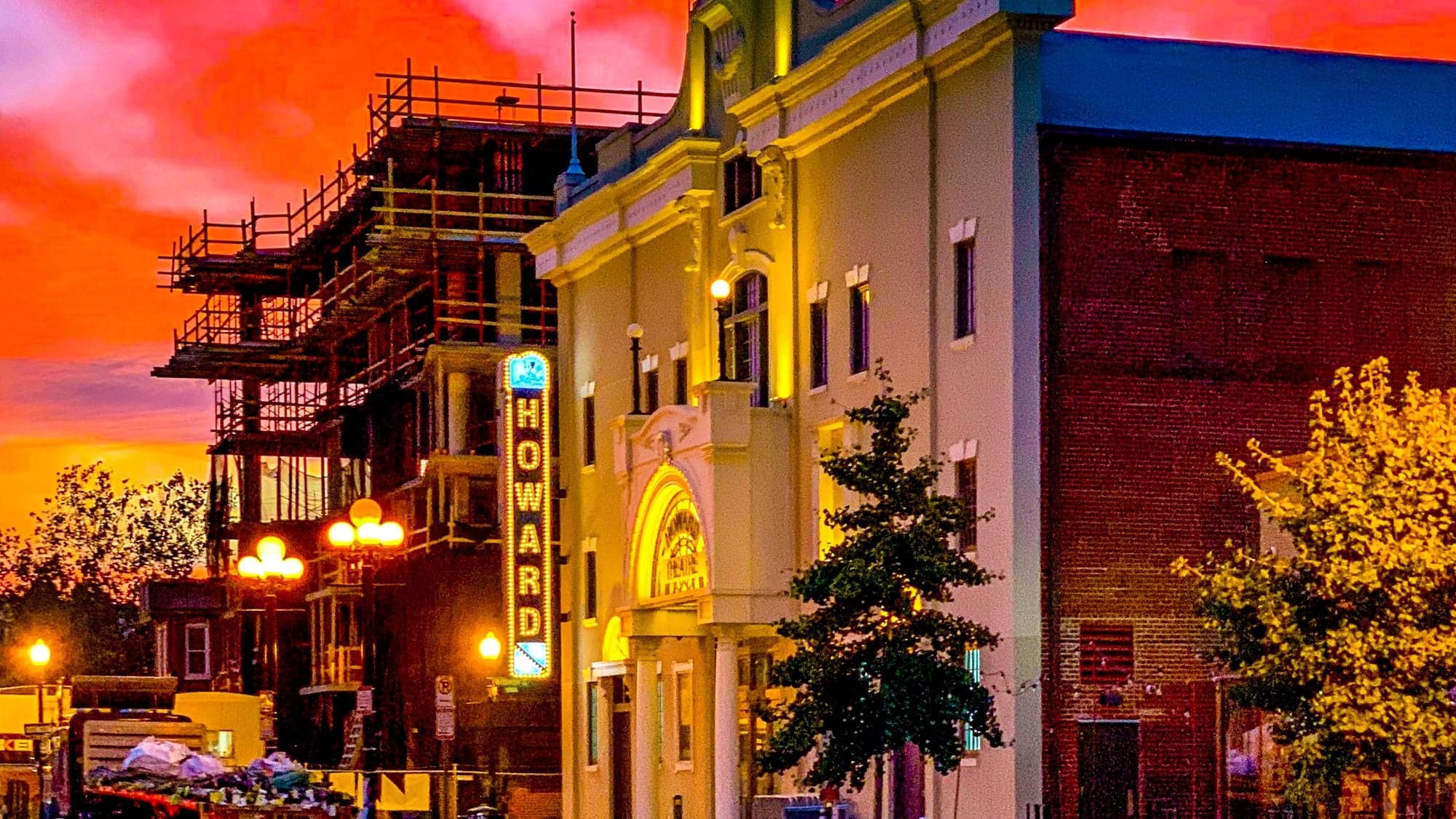
Four blocks in Northwest Washington were, between roughly nineteen hundred and nineteen sixty-eight, the cultural capital of Black America outside Harlem. Seven stops. One corridor's biography, read aloud, including what is currently happening on the same blocks.
Start · Howard University Main Gate: The Institution That Made the Corridor Possible
DirectionsStops
- 1
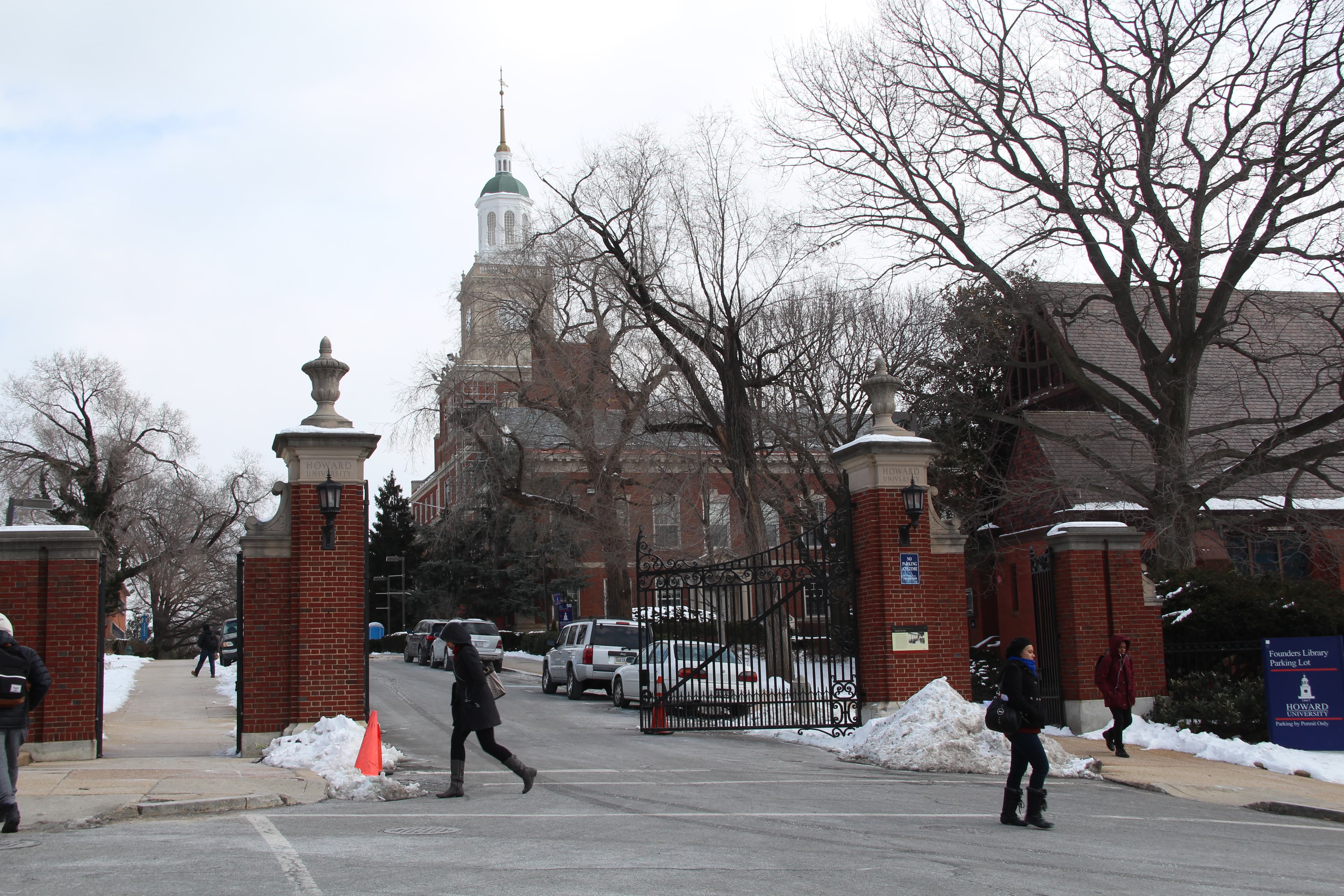
Howard University Main Gate: The Institution That Made the Corridor Possible
The Sixth Street and Howard Place gate to Howard University, chartered by Congress in 1867 and named for Oliver Otis Howard, the Civil War general and Freedmen's Bureau commissioner. The parent institution one block north of Black Broadway.
- 2
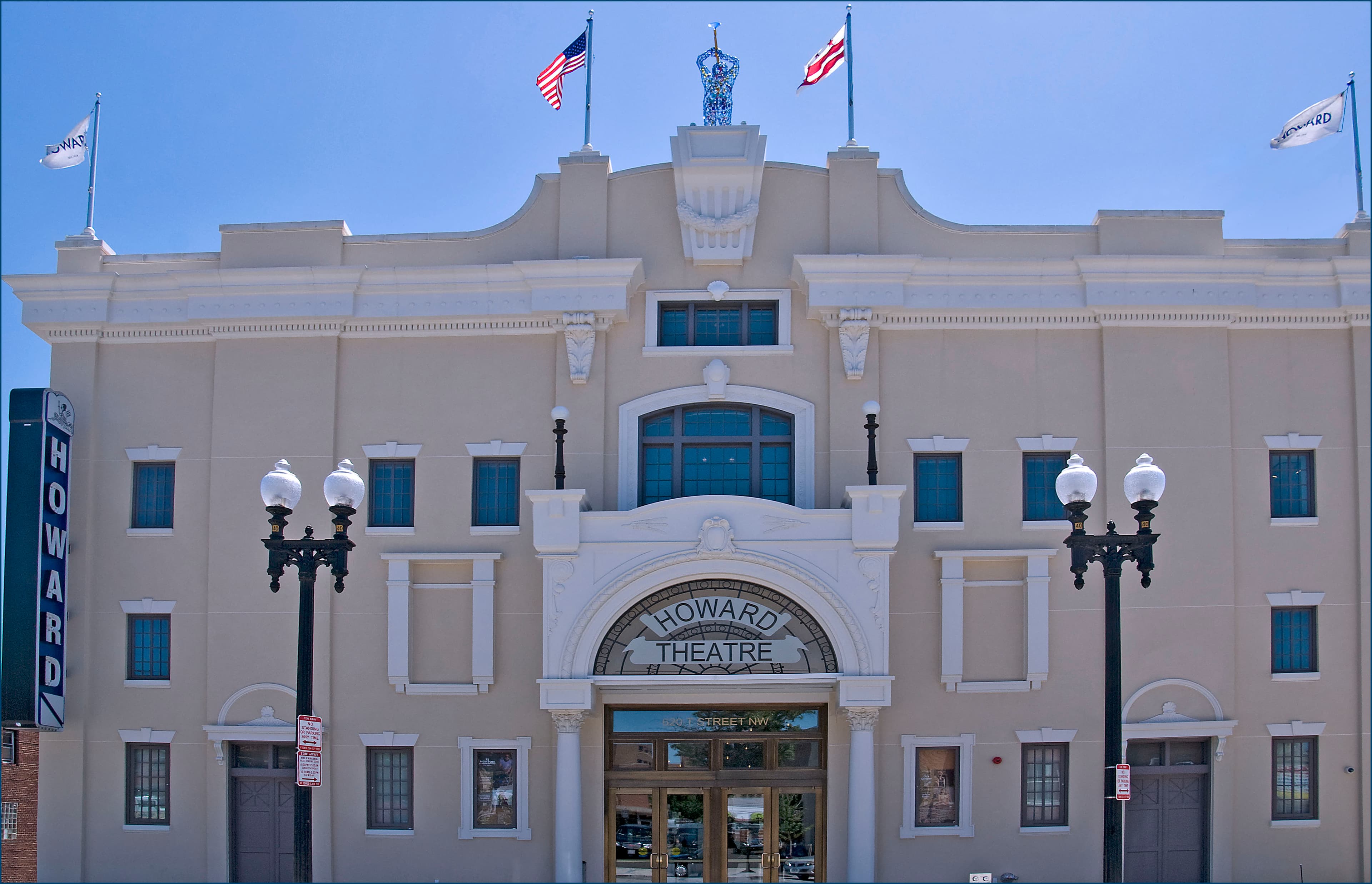
Howard Theatre: Built For Black Audiences, Not By Them
Six twenty T Street Northwest. Opened August 22, 1910, billed as the largest colored theatre in the world. Designed by J. Edward Storck for the white-owned National Amusement Company. The corridor's first major performance venue, but not its first Black-owned building.
- 3
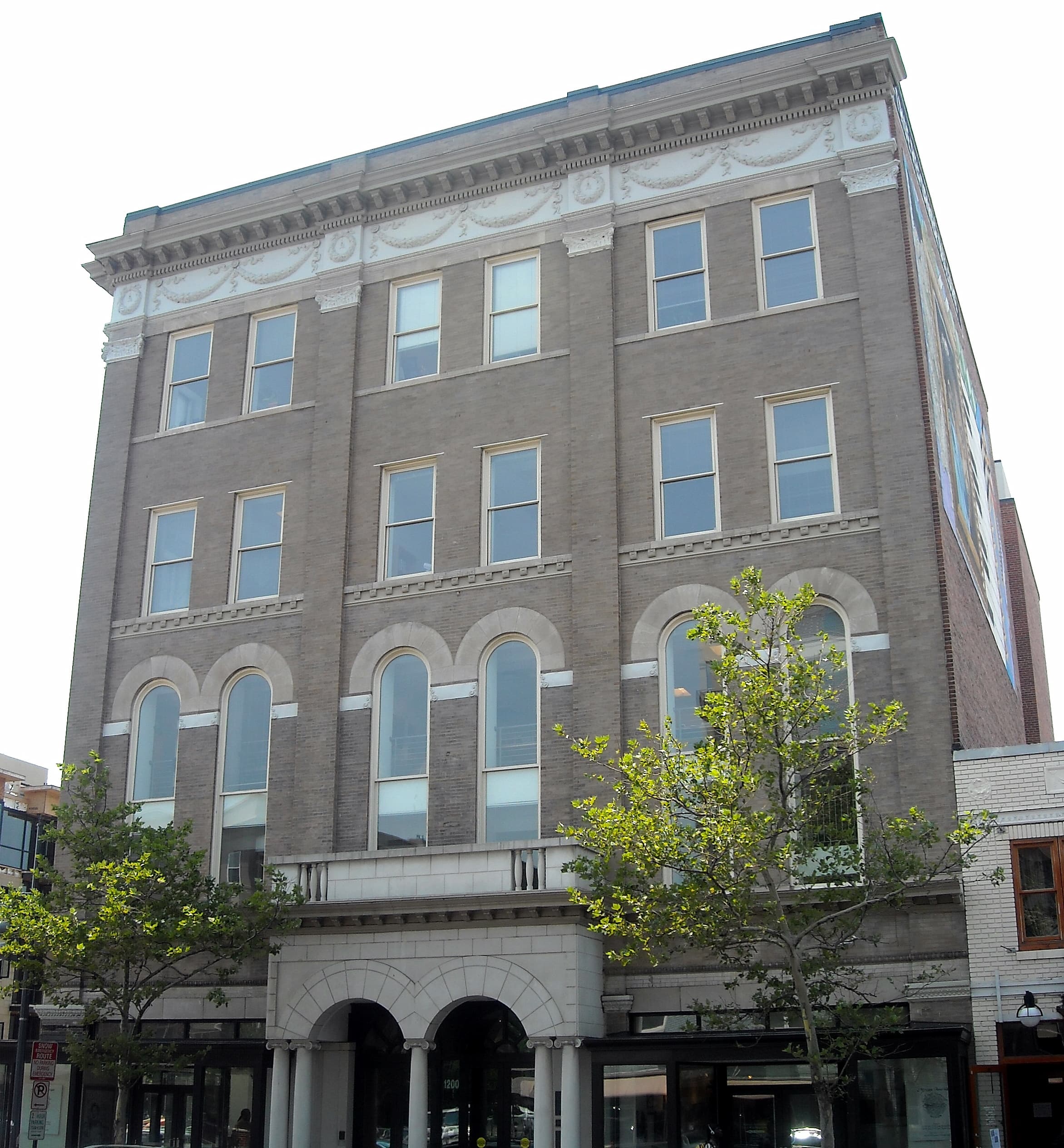
True Reformer Building: Designed, Financed, Built, and Owned
Twelve hundred U Street Northwest. Dedicated July 15, 1903. Designed by John A. Lankford, commissioned by the Grand United Order of True Reformers. The first building in the United States designed, financed, built, and owned by African Americans after Reconstruction. Where Duke Ellington played his first paid gig in 1917 for seventy-five cents.
- 4
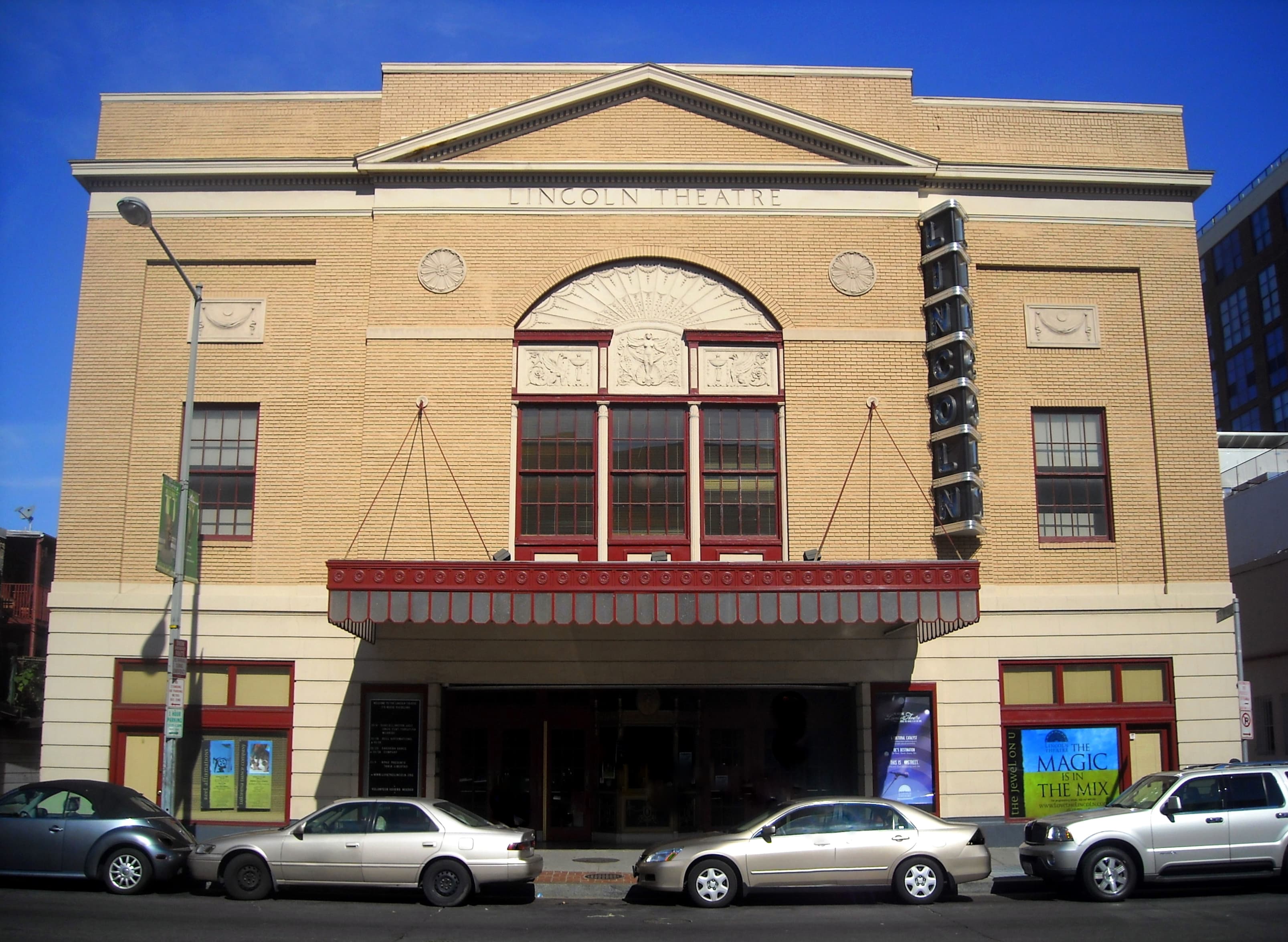
Lincoln Theatre: The Nineteen Twenties Peak and the Twenty-Six-Year Closure
Twelve fifteen U Street Northwest. Opened January 22, 1922. Designed by Reginald W. Geare in collaboration with Harry Crandall. The Lincoln Colonnade ballroom was the documented center of Black Broadway. Closed after the 1968 unrest, boarded up for years, restoration began 1989, reopened 1994.
- 5
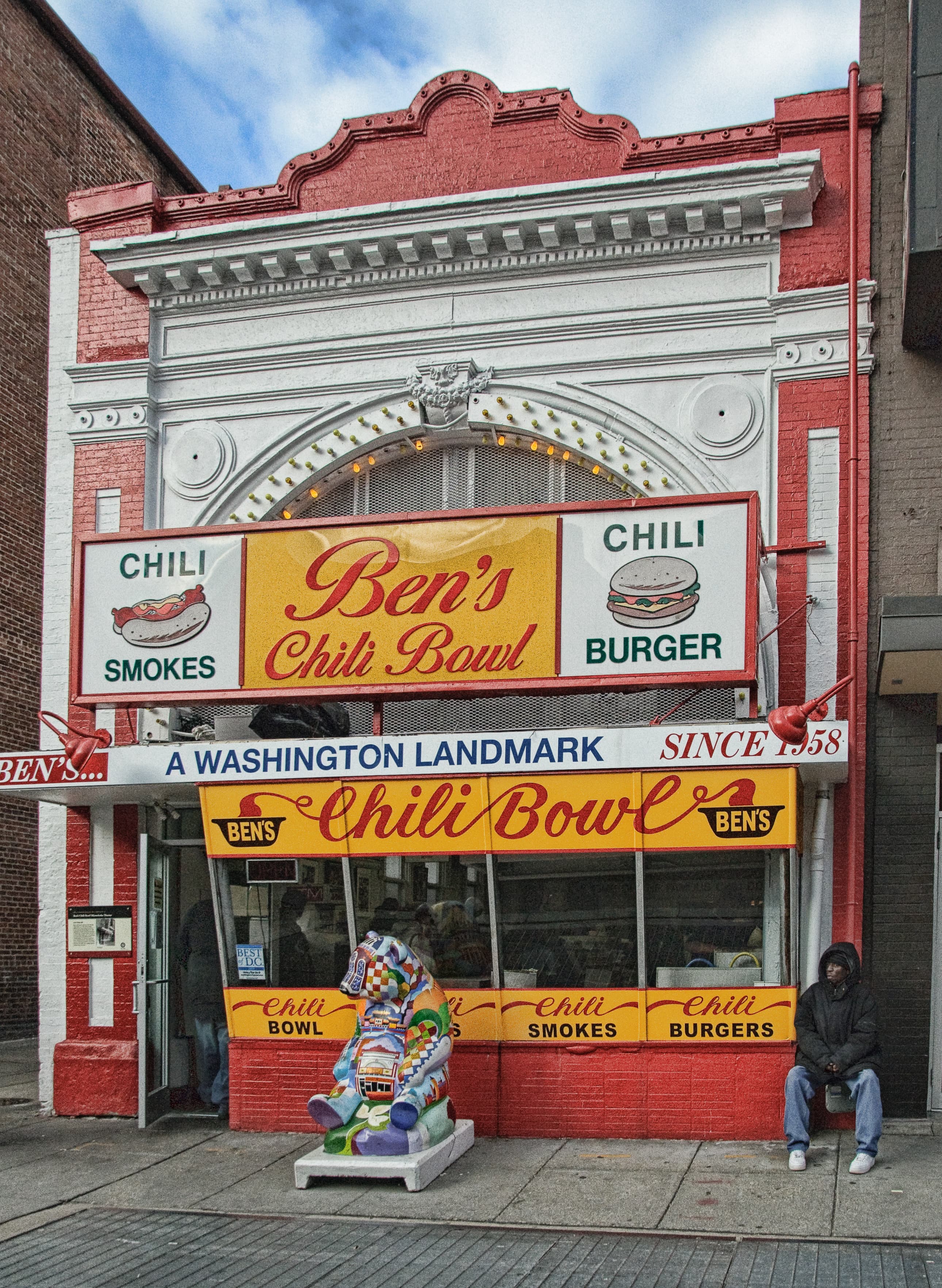
Ben's Chili Bowl: The Building That Stayed Open
Twelve thirteen U Street Northwest. Founded August 22, 1958, by Mahaboob Ben Ali, Trinidadian-born of Indo-Trinidadian heritage, and Virginia Rollins. Stayed open past curfew during the 1968 unrest at the request of Stokely Carmichael, feeding both police and Black activists; Soul Brother written on the window. The corridor's living survivor of the inflection.
- 6
Eighteen Oh-Five Thirteenth Street Northwest: The Corridor's Most Famous Son
The rowhouse where Edward Kennedy Ellington lived between roughly 1910 and 1914 as a child. Marked by a Cultural Tourism DC African American Heritage Trail plaque. The corridor's biography passes through Ellington's biography at this address.
- 7
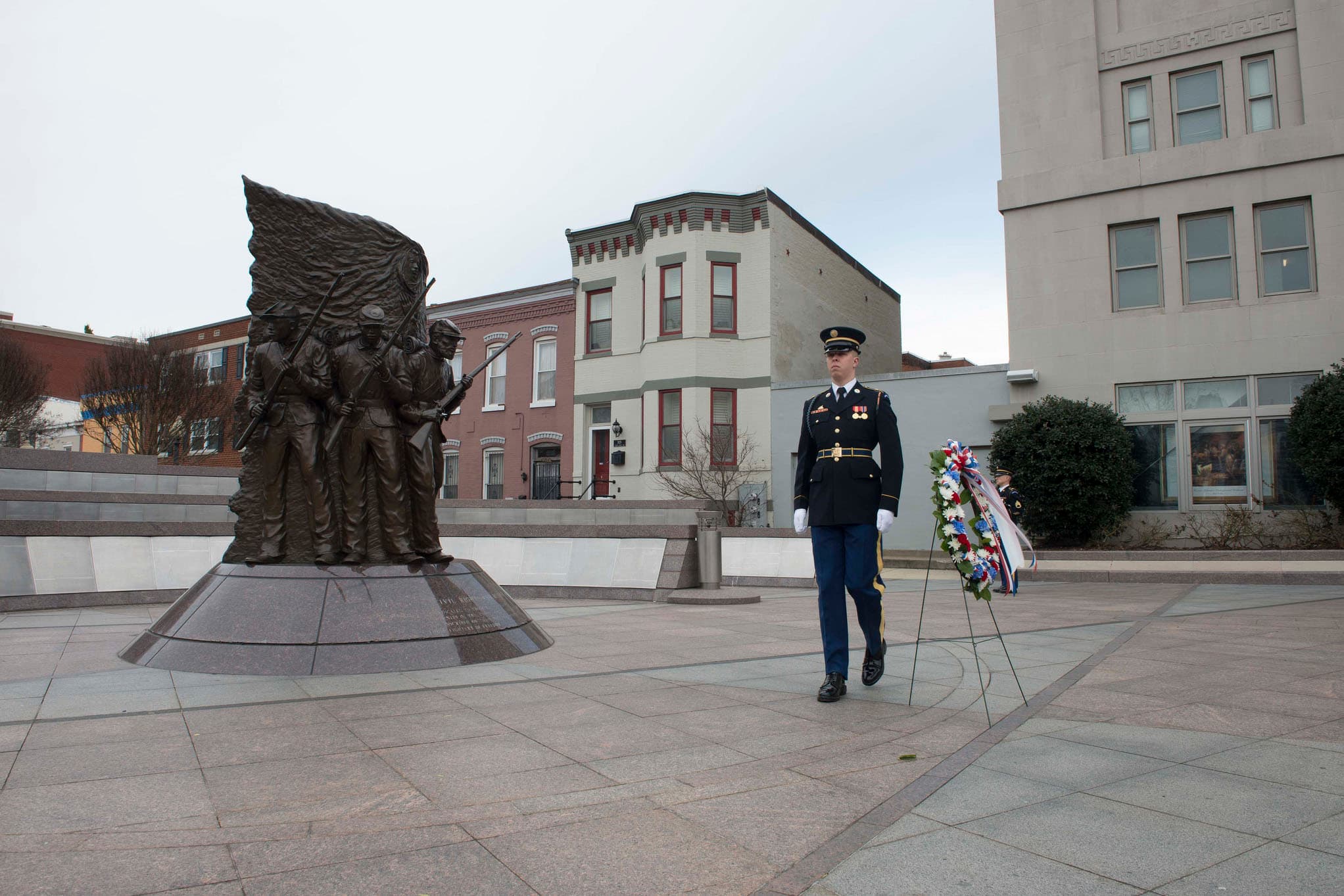
African American Civil War Memorial: The Corridor's Most Recent Witness
Vermont Avenue, Tenth Street, and U Street Northwest. Dedicated July 18, 1998. The central nine-foot bronze, The Spirit of Freedom, is by Ed Hamilton of Louisville, Kentucky. Honors approximately 209,145 African American USCT soldiers and other Union forces. Founded by Frank Smith. The corridor's most recent monumental anchor, and the closing beat for both frames.
Details
Best Time to Visit
Weekday mid-morning, Tuesday through Friday, nine to noon. U Street fills with restaurant and bar crowds from late afternoon onward; weekend evenings on the Lincoln Theatre and Ben's Chili Bowl block can be very loud, and the audio gets lost in the music spilling out of Twelfth and U bars. The Howard Theatre and Lincoln Theatre are active concert venues; if a show is loading in or out, the Seventh and T and Twelfth and U sidewalks can be crowded. Ben's Chili Bowl is busiest at lunch and late at night. The African American Civil War Memorial is a quiet plaza; mornings are best for sitting at the Wall of Honor. Howard University's main gate is most contemplative when classes are between sessions; the late-spring graduation week is festive but loud.
Pro Tips
- •Start at the Howard University main gate at Sixth and Howard Place. The Shaw-Howard University Metro station on the Yellow and Green lines is one block south on Seventh and R; walk north on Sixth Street to the gate piers
- •The corridor's signature drink is the Ben's Chili Bowl half-smoke, a quarter-pound half-pork half-beef smoked sausage on a steamed bun with chili. The Stop Five audio holds on the storefront; the half-smoke decision is yours on site
- •The True Reformer Building's painted Duke Ellington mural is on the south wall, facing Twelfth Street. From the Stop Three sidewalk on U Street, walk a few steps south on Twelfth to see the full portrait. The two thousand and nineteen restoration by G. Byron Peck is the version visible today
- •The Lincoln Theatre interior is a separate ticketed visit when a show is running. The audio anchors on the marquee outside; you do not need to enter to complete the stop
- •The Howard Theatre interior is also a ticketed visit and depends on the night's programming. The Stop Two audio anchors on the restored facade and the sidewalk historical marker
- •Blair Ruble's twenty ten book Washington's U Street: A Biography is the canonical scholarly source if you want to read forward from the tour. Chris Myers Asch and George Derek Musgrove's twenty seventeen Chocolate City is the canonical wider-DC source
- •The U Street Metro station is one block east of the Stop Seven Memorial plaza. If you are continuing north or south along the Green or Yellow line, this is the closest entry point
- •The Cultural Tourism DC African American Heritage Trail markers are physical bronze plaques set into the sidewalk at most stops; pause to read each one. The marker text is a separate institutional record that complements this audio
Safety & Precautions
- •U Street has cobble crosswalk inlays and active streetcar and traffic lanes at Fourteenth and U. Cross only at signals; the corridor's central intersection is busy at all hours
- •The Stop Five to Stop Six walking leg is the longest single leg of the tour, about five hundred meters south on Twelfth, east on T, south on Thirteenth. Watch traffic on Thirteenth Street, which carries fast through-traffic
- •Eighteen oh-five Thirteenth Street Northwest is a private residence. Stay on the public sidewalk on the opposite side of the street; do not approach the door or photograph the windows
- •The Howard University main gate and the True Reformer Building lobby may be accessible during business hours, but the audio describes both from the public sidewalk; respect any posted security or private-event signage
- •Ben's Chili Bowl, Lincoln Theatre, and the Howard Theatre are working institutions. Watch for loading zones, ticket-holder queues, and active concert load-in vehicles, particularly on Friday and Saturday evenings
Travel advisory: Exercise Normal Precautions (Level 1).
Gallery
Related Reading
Go deeper on what you'll see, hear, and walk through.
Overview
Best Self-Guided Walking Tours in Washington, DC (2026)
4 min
Overview
How to See Washington, DC: A City of Edits
12 min
Overview
One Day in Washington, DC: A Walkable Monuments-to-U-Street Itinerary (2026)
6 min
Overview
Washington, DC Travel Guide: How Many Days, Getting Around, When to Go (2026)
4 min
Thematic
What to Eat in Washington, DC: A Food Guide (2026)
4 min
Companion
U Street: The Corridor That Survived Its Inflection
11 min
Deep dive
The True Reformer Building: Designed, Financed, Built, and Owned
9 min
Read the walk
The full story of U Street: Black Broadway, Erased and Remembered, in words. Prefer to listen? Play it narrated, from home or on location.
Introduction
Sometime in the nineteen forties, a young singer named Pearl Bailey stood on a U Street stage. She had launched her career on this stretch, at Republic Gardens, at the Howard Theatre, at the Jungle Inn. She looked out at the four blocks she lived and worked on, and she gave them a name. She called them Black Broadway. The name stuck because the corridor had earned it. By the night of April fourth, nineteen sixty-eight, when news came in from Memphis that Doctor King had been shot, the name was already on its way to being a memory.
That is the tour. One corridor. One biography. From roughly nineteen hundred to nineteen sixty-eight, this was the cultural capital of Black America outside Harlem. The historian Blair Ruble wrote a book about it in twenty ten and called it, in the subtitle, a biography. That is how the walk reads the place. As one life.
The argument is one sentence. The corridor was a self-sustaining Black cultural and commercial life until the unrest after King's assassination burned much of what made it that. The post-two-thousand redevelopment rewrote who came back. Chris Myers Asch and George Derek Musgrove, in their twenty seventeen book Chocolate City, name the wider arc. The U Street census tract was seventy-seven percent Black in nineteen ninety, thirteen percent Black in twenty twenty. The institutions that defined the corridor's peak are still here on the corridor's own terms. The residential community that sustained them is largely not.
The walk is seven stops, about two point seven kilometres, and seventy-five minutes through the Shaw neighborhood of Washington.
When you arrive at the main gate of Howard University, begin with stop one.
1. Howard University Main Gate: The Institution That Made the Corridor Possible
You are at Stop One. The main gate of Howard University, Sixth Street and Howard Place Northwest. Stand on the sidewalk just outside the gate piers, looking up onto the campus. The brick tower of Founders Library rises ahead of you.
Howard University was chartered by the United States Congress on the second of March, eighteen sixty-seven. The university was named for Oliver Otis Howard, a Union Army general from Leeds, Maine, who served as commissioner of the Freedmen's Bureau. The first president was Charles B. Boynton, in eighteen sixty-seven. Howard himself led the university from eighteen sixty-nine to eighteen seventy-four. The federal charter and the federal land made the institution. The institution made the corridor.
This is the parent figure of the tour. Everything south of this gate, every building you will stand in front of for the next two kilometers, depends on the fact that an eighteen sixty-seven federal charter put a Black research university one block north of what would become, in the next sixty years, the densest Black cultural and commercial corridor in Washington. The Harlem Renaissance in New York has no equivalent. There is no Black research university one block north of one hundred twenty-fifth Street.
Blair Ruble, in his twenty ten biography of this corridor, traces the connection plainly. Howard's medical school, dental school, law school, school of music, school of theatre, all of them put graduates into the corridor that ran four blocks south. Charles Drew. Thurgood Marshall. Ralph Bunche. Toni Morrison taught here. The corridor that called itself Black Broadway in the nineteen forties had Howard University as its intellectual spine.
One piece of that spine is named at the next stop. In nineteen fifty-eight a Trinidadian immigrant who had been studying dentistry at Howard left his books to open a restaurant four blocks south. We will get to him at Stop Five.
Walk south on Sixth Street, about four hundred meters, then east on T Street. The Howard Theatre is at six twenty T.
2. Howard Theatre: Built For Black Audiences, Not By Them
You are at Stop Two. The Howard Theatre, six twenty T Street Northwest. Stand on the sidewalk across from the front of the building. The Beaux-Arts facade with the restored marquee is the twenty twelve renovation.
The Howard Theatre opened on the twenty-second of August, nineteen ten. The architect was J. Edward Storck. At opening it was billed as the largest colored theatre in the world. It seated about twelve hundred. The Howard opened four years before the Apollo Theater in Harlem opened in nineteen fourteen, and twenty-four years before the Apollo became a Black-audience venue in nineteen thirty-four. The Howard is the older institution.
Now read the part the visitor probably did not arrive understanding.
The Howard Theatre was built for Black audiences. It was not built by them. The founding owner was the National Amusement Company, a white-owned group. The first manager was Andrew Thomas. Management passed to the Black vaudevillian Sherman Dudley in nineteen twenty-two, and then to Abe Lichtman in nineteen twenty-six, and then to Shep Allen, who revived the venue after the Great Depression. The DC Preservation League's historic-sites catalog documents the ownership chain plainly.
This is the corridor's first lesson about itself. Segregation made Black audiences a separate market. White capital often built for that market before Black capital could. The first major theater on this corridor was a venue built for Black audiences inside a segregated economy. The first major building on this corridor that was designed, financed, and owned by Black people is one block west of you, and we walk there next.
At this building, the documented performers are a verified list. Duke Ellington headlined here in nineteen thirty-one. Pearl Bailey, Lena Horne, Sammy Davis Junior, Dinah Washington, Sarah Vaughan, Lionel Hampton, Billy Eckstine, James Brown, Stevie Wonder, The Supremes, Marvin Gaye, Mary Wells, Dionne Warwick. After nineteen sixty-eight the audience was no longer here. The Howard closed in nineteen seventy. It reopened briefly in nineteen seventy-five, closed again in nineteen eighty, and then sat dark for thirty-two years. The current marquee dates from the ninth of April, twenty twelve, after a roughly thirty-million-dollar renovation.
Walk south on Seventh Street to U Street, then west on U to Twelfth Street. About three hundred fifty meters. The five-story Italianate building on the southwest corner is your next stop.
3. True Reformer Building: Designed, Financed, Built, and Owned
You are at Stop Three. The True Reformer Building, twelve hundred U Street Northwest. Stand on the sidewalk at the southwest corner of Twelfth and U. The five-story Italianate facade is the building. On the south wall, the painted portrait of a young Duke Ellington at the piano is the restored two thousand and nineteen version of the nineteen ninety-seven mural by G. Byron Peck.
The True Reformer Building was dedicated on the fifteenth of July, nineteen oh-three. The architect was John Anderson Lankford. The commissioner was the Grand United Order of True Reformers, a Black fraternal order. Per the structured Wikipedia entry, this is the first building in the United States to be designed, financed, built, and owned by the African American community after Reconstruction. Listed on the National Register of Historic Places in nineteen eighty-nine.
This is the corridor's structural answer to the Howard Theatre. The Howard, two blocks east, was built for Black audiences by white capital. The True Reformer was built by Black capital. Both kinds of building made Black Broadway. The corridor was not single-source. It was both.
A word about the architect. John Anderson Lankford was born in Potosi, Missouri, in eighteen seventy-four. He moved to Washington in nineteen oh-two specifically to finish the design of this building. He was practicing in DC from that year. He became, formally, the first African-American architect registered in the District of Columbia, when the licensing system caught up with him in nineteen twenty-four. The building behind you was designed by a Black architect twenty-one years before that registration existed. The institutional precedent walked ahead of the institutional permission.
Now read one more piece of this address, because it threads forward.
In late nineteen seventeen, in the second-floor ballroom of this building, Room Ten, a teenage piano player from Thirteenth Street played his first paid gig with a group called The Duke's Serenaders. He took home seventy-five cents. He was eighteen years old. His name was Edward Kennedy Ellington. He had grown up four blocks from where you are standing. We end up at his childhood rowhouse at Stop Six.
Walk east on U Street, about one hundred twenty meters, to twelve fifteen U. The restored marquee on the north side of the street is the Lincoln Theatre.
4. Lincoln Theatre: The Nineteen Twenties Peak and the Twenty-Six-Year Closure
You are at Stop Four. The Lincoln Theatre, twelve fifteen U Street Northwest. Stand on the sidewalk in front of the marquee, on the north side of U Street between Twelfth and Thirteenth. The Lincoln Theatre opened on the twenty-second of January, nineteen twenty-two. The…
Full narration for this stop unlocks with the tour.
5. Ben's Chili Bowl: The Building That Stayed Open
You are at Stop Five. Ben's Chili Bowl, twelve thirteen U Street Northwest. Stand on the sidewalk in front of the painted exterior, ten meters east of where you were a moment ago. The portrait mural on the side of the building is the current institutional self-image. Past…
Full narration for this stop unlocks with the tour.
6. Eighteen Oh-Five Thirteenth Street Northwest: The Corridor's Most Famous Son
You are at Stop Six. Eighteen oh-five Thirteenth Street Northwest. Stand on the public sidewalk across the street from the rowhouse. Look at the front face of the building. The Cultural Tourism DC historical marker for the African American Heritage Trail is on the sidewalk in…
Full narration for this stop unlocks with the tour.
7. African American Civil War Memorial: The Corridor's Most Recent Witness
You are at Stop Seven. The African American Civil War Memorial. The plaza at the corner of Vermont Avenue, Tenth Street, and U Street Northwest. Stand near the central bronze figure. The sculpture is nine feet of bronze. The title is The Spirit of Freedom. The memorial was…
Full narration for this stop unlocks with the tour.