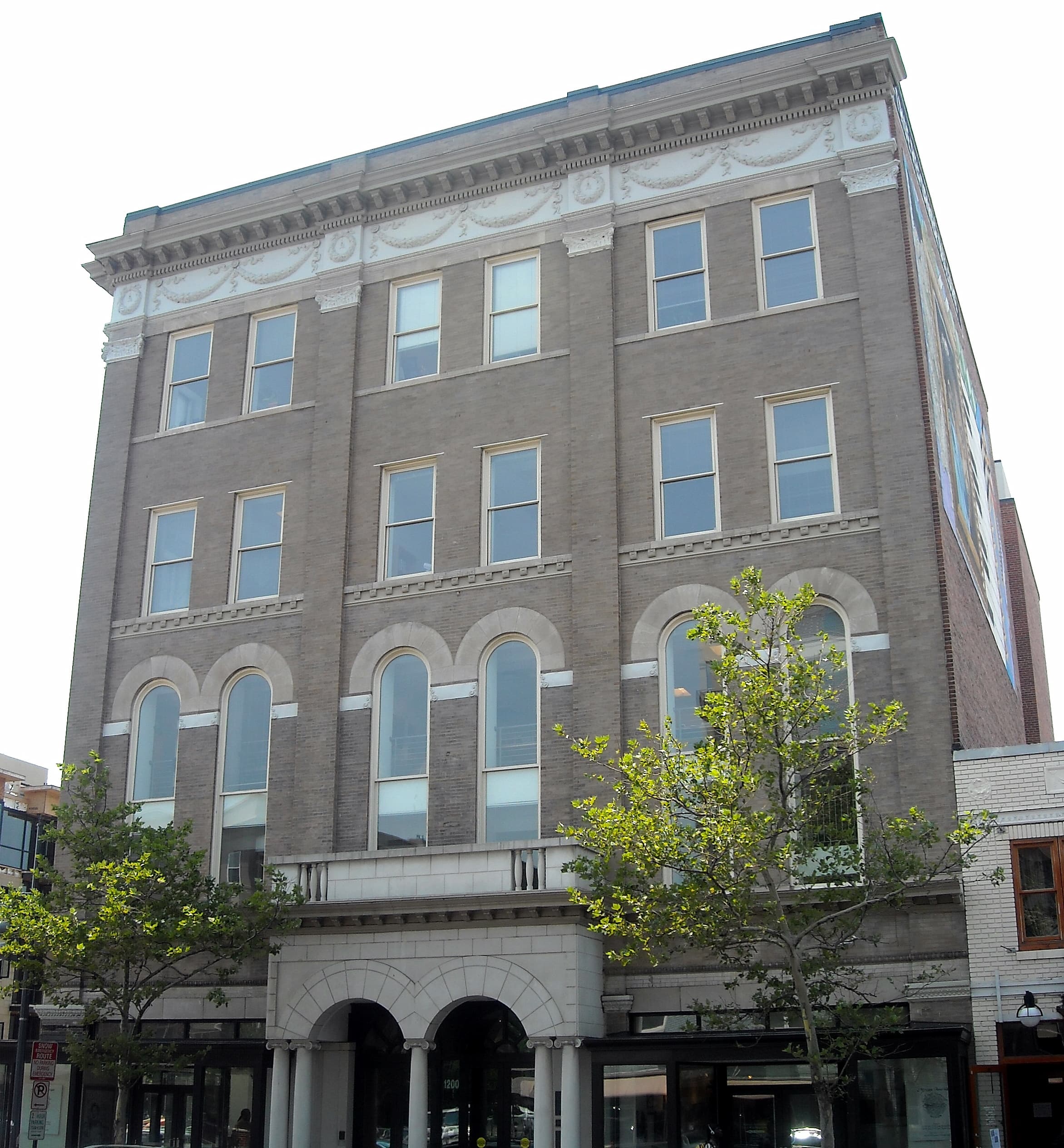
The True Reformer Building stands at twelve hundred U Street Northwest, on the southwest corner of Twelfth and U. According to the Wikipedia entry on the building, it is the first building in the United States designed, financed, built, and owned by the African American community after Reconstruction. The mural on the south wall, a young Duke Ellington at the piano, is the 2019 restoration of a 1997 mural by the DC artist G. Byron Peck. The mural is the building's most photographed face. The building behind the mural is the larger story.
The True Reformer Building was dedicated on the fifteenth of July, 1903. The four-part claim that follows the name matters. Each verb (designed, financed, built, owned) names a separate institutional barrier that, in the early twentieth century, kept Black Americans from controlling the buildings they used. The True Reformer crossed all four barriers at once.
What "designed, financed, built, and owned" actually meant in 1903
In the post-Reconstruction American South and in segregated Washington, a Black-occupied building was usually a white-owned building rented to Black tenants and Black-serving businesses. A Black congregation might worship in a building owned by a white absentee landlord. A Black newspaper might print in a leased shop owned by a white publishing trust. A Black social hall might rent rooms by the night from a hotel operator who never set foot in the rooms he was renting. The lease-then-occupy pattern was not exclusive to the South; it was the default for Black institutional life in segregated American cities.
"Designed by" meant: the architect on the drawings was Black. "Financed by" meant: the capital that paid for construction came from a Black-owned organization, not a white bank's loan. "Built by" meant: the construction labor that raised the building was Black labor. "Owned by" meant: the title to the property was held by a Black-owned organization, and the rents the building generated stayed inside the Black economy.
The True Reformer Building did all four in 1903. The architect was John Anderson Lankford, who would later be formally registered as the first African American architect in the District of Columbia in 1924, twenty-one years after he completed the True Reformer drawings. The financing came from the Grand United Order of True Reformers, a Black fraternal order and mutual-aid society. The construction was performed by Black contractors. The title was held by the True Reformers. The institutional precedent walked twenty-one years ahead of the institutional permission.
John Anderson Lankford and the architecture before the license
Hear a stop from this walk
African American Civil War Memorial: The Corridor's Most Recent Witness
Lankford was born in Potosi, Missouri, in 1874. He trained in Black-led institutions: Lincoln Institute in Missouri, then Tuskegee Institute in Alabama under Booker T. Washington (where Lankford served as the head of the mechanical industries department). He came to Washington in 1902 specifically to finish the design of the True Reformer Building. He stayed in DC after the project. He went on to design churches, lodge halls, and commercial buildings for African Methodist Episcopal congregations and Black fraternal orders across the South and the eastern seaboard.
The 1924 registration is the bureaucratic catch-up. The District of Columbia's architectural licensing system did not exist when Lankford was finishing the True Reformer; it was created in the 1920s. When the licensing board began registering architects, Lankford was the first Black professional to apply and be registered. The license was real, but the architectural practice it formalized had already been working in DC for two decades.
A building designed by an unlicensed African American architect in 1903 is a different kind of building from a building designed by a registered white architect in 1924. The True Reformer Building was built before the rules said Lankford was allowed to design it. The institutional permission to design buildings came to Black Americans on a delay. The architectural precedent did not wait.
The Grand United Order of True Reformers
The Grand United Order of True Reformers was founded in Richmond, Virginia, in the 1870s as a Black fraternal mutual-aid society. Its work was banking, life insurance, and burial benefits for Black members at a time when white-owned insurance companies refused to issue policies to Black applicants. By 1900 the True Reformers had grown into one of the largest Black-owned financial institutions in the United States. The True Reformers' Bank in Richmond was the first chartered Black-owned bank in the country (1888). The Washington chapter, the True Reformers' Council Number Nineteen, commissioned the U Street building as a Washington headquarters and community space.
The building was a multipurpose institution by design. The ground floor held commercial space. The upper floors held offices, meeting rooms, and a large second-floor ballroom that served as the social hall for the Washington Black community. The ballroom was rented for weddings, banquets, fraternal meetings, lectures, and (by the late 1910s) for the dance bands and small jazz combos that were forming on U Street.
The building was a fraternal-order project that also happened to be the largest Black-financed mixed-use building in the District. The same institutional logic that made the Black bank in Richmond possible (capital pooled by Black depositors, managed by Black officers, deployed for Black community needs) made the Washington building possible. The True Reformer was Reconstruction-era organizational thinking holding the line into the twentieth century.
Room Ten, and the eighteen-year-old piano player
In late 1917, the second-floor ballroom of the True Reformer Building, called Room Ten by the building's management, was the site of a small paid dance. The band that played the dance was a group called The Duke's Serenaders. The piano player and bandleader was eighteen years old. He had grown up four blocks south of where the building stands. He had spent his late childhood on Thirteenth Street, including a documented residence at eighteen oh-five Thirteenth Street Northwest. His name was Edward Kennedy Ellington.
He took home seventy-five cents from the gig.
The Wikipedia entry on Duke Ellington records the True Reformer gig as Ellington's first professional performance. The Public Welfare Foundation, which has occupied the building since 2001 as its headquarters, treats the Room Ten gig as the foundational moment of Ellington's professional career. The historical marker on the sidewalk in front of the building names the gig with the seventy-five-cent figure.
Seventy-five cents in late 1917 was approximately fifteen dollars in 2026 purchasing power. The figure is the smallest payment Ellington ever received as a professional musician. He would go on to lead one of the most influential orchestras in twentieth-century American music, record more than a thousand compositions, and become, by every standard measure, the most consequential bandleader of the swing era. The first dollar he earned doing it was not a dollar. It was three quarters, from a fraternal-order ballroom in a building designed by a Black architect on a U Street block that would, within a decade, be the cultural capital of Black America outside Harlem.
The building is the genealogy in physical form. The architecture that produced it (Black-designed, Black-financed, Black-built, Black-owned) was the architecture that could hold the eighteen-year-old Ellington's first paid performance and treat it as nothing exceptional. The True Reformer Hall did not exist to launch Edward Kennedy Ellington. It existed because the U Street Black community had built itself a building in which performances like his could happen as a matter of routine.
The building after the corridor's peak
The Grand United Order of True Reformers lost most of its capital base in the 1920s and dissolved through the Great Depression. The True Reformer Building passed through several owners across the twentieth century. It served as a Knights of Pythias hall, then as an office building, then as the headquarters of the Metropolitan AME Zion Church, then (after a long period of vacancy and decline through the post-1968 corridor collapse) as the home of the Public Welfare Foundation since 2001.
The building was listed on the National Register of Historic Places in 1989. Restoration work in the early 2000s stabilized the Italianate facade and the second-floor ballroom. The Ellington mural was painted on the south wall in 1997 by G. Byron Peck and restored in 2019.
The Public Welfare Foundation, a private national foundation that funds civil rights and criminal justice reform work, occupies the building as its national headquarters. The institutional continuity is unusual: a building built by a Black mutual-aid society in 1903 is, in 2026, the headquarters of a national foundation whose programs focus on Black-community legal and civil rights work. The work the building was designed to hold has not changed. The institution holding the work has.
What to look for
Stand on the sidewalk on the southwest corner of Twelfth and U, facing north toward the building's main facade. The five stories step up from the corner with classical regularity. Notice the rusticated stonework at street level, the arched windows on the upper floors, the cornice line that marks the parapet. This is the architecture Lankford brought to U Street from his Tuskegee training: classical, restrained, institutional in scale, recognizable as a serious public building rather than a commercial storefront.
Then walk south along Twelfth Street and turn to face the south wall. The G. Byron Peck mural is there: the young Ellington at a piano, a half-smile, his hands paused above the keys. The mural reads as a portrait of a man at the moment before the music begins. The man in the mural is, in the documented chronology of the building, an eighteen-year-old taking home seventy-five cents for his first paid gig.
Then look up at the second floor windows. Behind those windows, in late 1917, the music started.
The building is the institution. The institution is the building. The man on the wall is the institution's most famous son. The four-part claim (designed, financed, built, owned) is the institutional architecture that made his first paid performance routine. The True Reformer Building is what an answer to Reconstruction looked like, built on U Street in 1903, twenty-one years before the licensing system caught up with the architect who drew it.
Sources
- Wikipedia, True Reformer Building. https://en.wikipedia.org/wiki/True_Reformer_Building
- Wikipedia, John A. Lankford. https://en.wikipedia.org/wiki/John_A._Lankford
- Wikipedia, Duke Ellington. https://en.wikipedia.org/wiki/Duke_Ellington
- Wikipedia, Grand United Order of True Reformers. https://en.wikipedia.org/wiki/Grand_United_Order_of_True_Reformers
- Blair A. Ruble, Washington's U Street: A Biography (Woodrow Wilson Center Press / Johns Hopkins University Press, 2010).
- Public Welfare Foundation, True Reformer Building History. https://www.publicwelfare.org/about/history/
Ready to experience it?
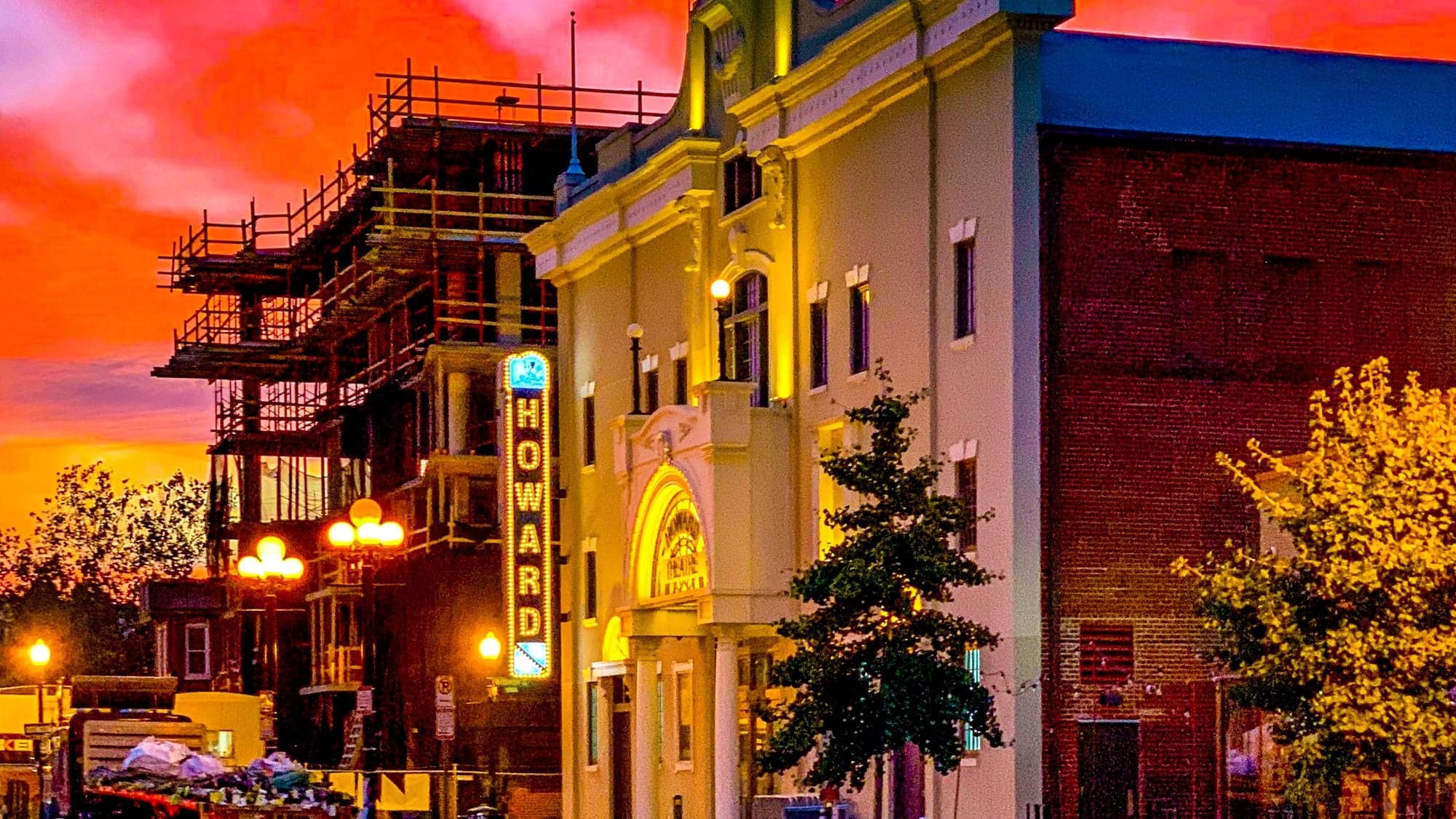
U Street: Black Broadway, Erased and Remembered
70 min · 2.72 km · easy
More from Washington Dc
Explore more at your own pace.
Best Self-Guided Walking Tours in Washington, DC (2026)
One Day in Washington, DC: A Walkable Monuments-to-U-Street Itinerary (2026)
Washington, DC Travel Guide: How Many Days, Getting Around, When to Go (2026)
Best History Walking Tours in Washington, DC (2026)
What to Eat in Washington, DC: A Food Guide (2026)