The National Mall: An Axis Designed by Committee
110 min · 7.12 km · moderate
Washington rewards planning more than travelers expect. So much of its best is free, the monuments, the Mall, the dozen-plus Smithsonian museums, but it is spread across a long axis with neighborhoods at the edges, and its two loveliest seasons are also its most crowded. This guide answers the practical questions travelers actually search, answer first, then the detail.
How many days do you need in Washington, DC?
Short answer: three days for most people.
- 2 days covers the National Mall, its monuments, and one or two Smithsonian museums if you are moving fast.
- 3 days adds Capitol Hill, U Street, and a fuller run of the free museums, without rushing.
- 4 to 5 days adds Georgetown, Arlington National Cemetery, the Tidal Basin memorials, and day trips at an unhurried pace.
The reason under-scheduling is the classic mistake: the free Smithsonian museums are genuinely enormous, and the Mall is a two-mile axis, so a day disappears faster than the map suggests. If you only have one day, follow our focused one day in Washington, DC route through the civic spine.
Getting around Washington, DC
Hear a stop from this walk
Vietnam Veterans Memorial: The Counter-Monument
The core is a joy on foot. The Mall, Capitol Hill, and Penn Quarter connect by walking, and walking is how our self-guided Washington, DC tours are built. For longer hops you use the Metro:
- Metro. DC subway is clean, simple, and reaches the Mall (Smithsonian and L'Enfant Plaza stations), Capitol Hill, U Street, and most visitor areas. It is the backbone of a car-free trip.
- SmarTrip. Pay with a rechargeable SmarTrip card, tapping on and off. You can load one on your phone or buy a physical card at any station; during cherry blossom season Metro sells limited-edition commemorative cards.
- On foot for the last stretch. The Mall is close to two miles end to end, so ride the Metro to a station near where you want to be, then walk the axis rather than trying to cover every distance on foot.
- Rideshare or taxi for late nights and trips outside the Metro network.
Best time to visit Washington, DC
The two best windows, and their trade-offs:
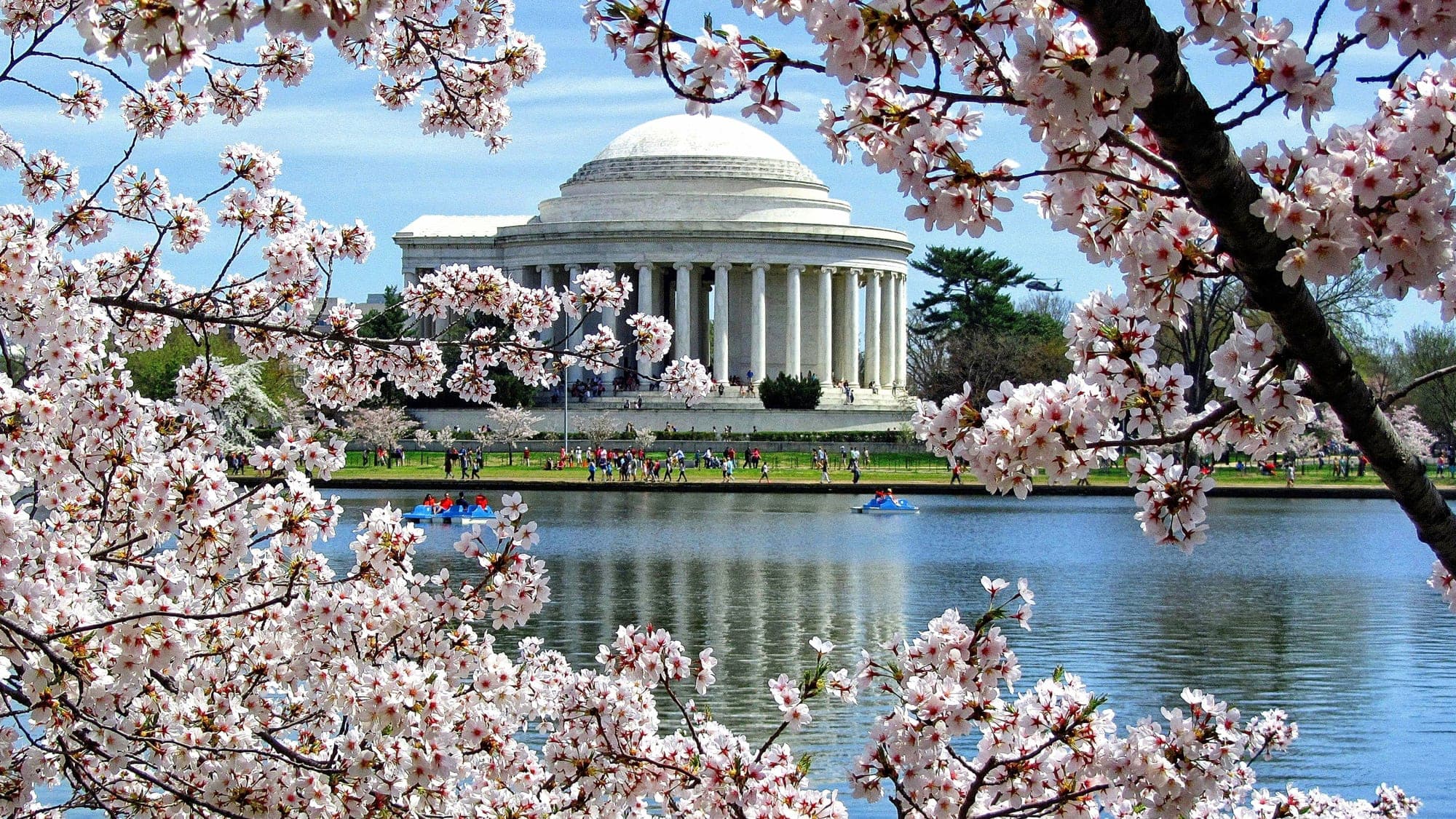
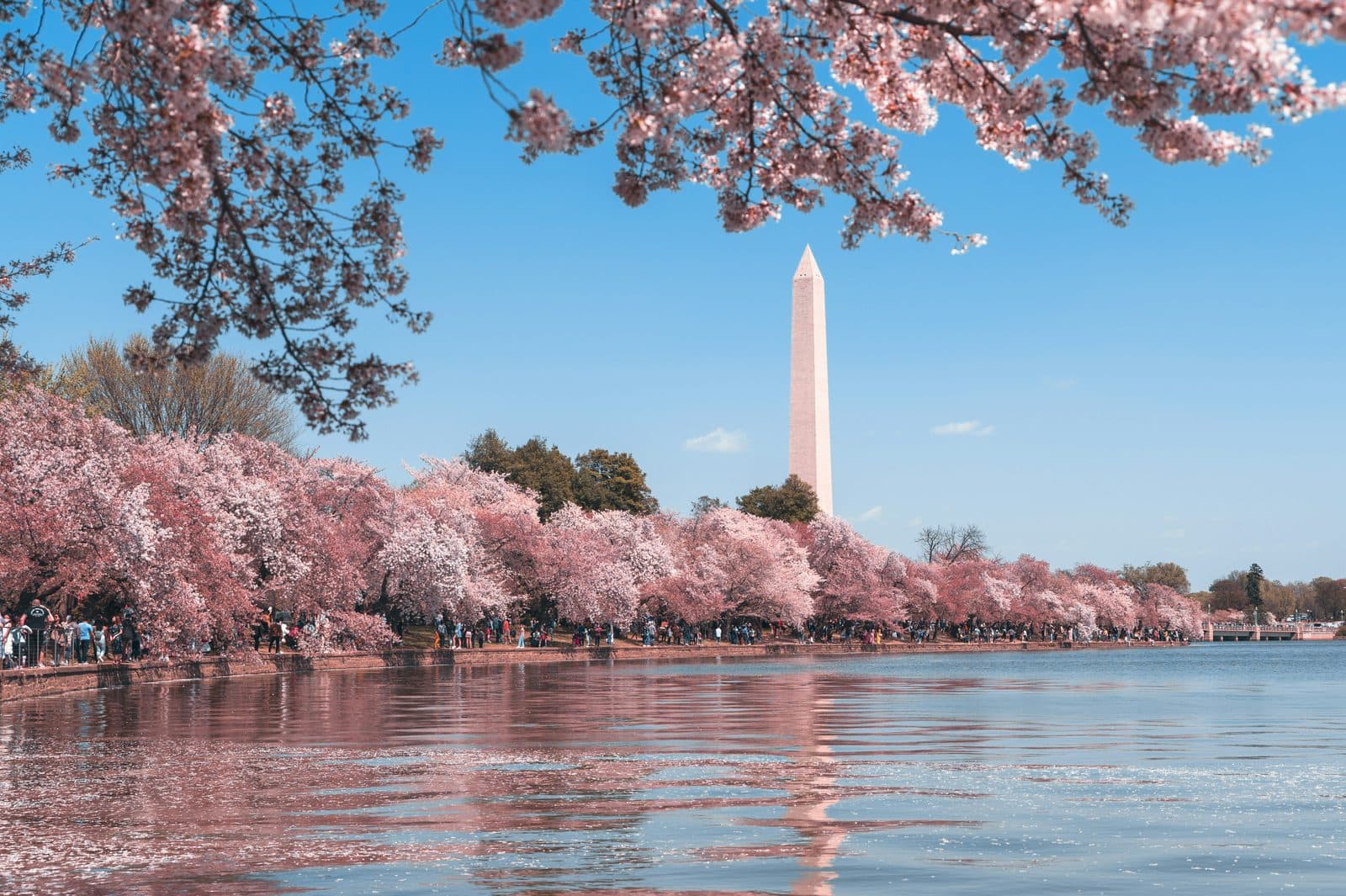
- Spring (cherry blossoms). The National Cherry Blossom Festival runs from late March into mid-April, with peak bloom in 2026 forecast between March 29 and April 1. It is the city at its most beautiful, and its most crowded and expensive.
- Autumn (late September to early November). Mild, clear, and far thinner crowds. For many travelers this is the sweet spot.
Avoid deep summer if you can: July and August are hot and famously humid, and the Mall offers little shade. Winter is cold but quiet, and the museums are indoors and free, which makes DC a strong cold-weather value.
Is Washington, DC safe?
The main visitor areas are safe. The National Mall, Capitol Hill, Penn Quarter, Georgetown, Dupont Circle, and U Street are well-trafficked and comfortable to walk, including for solo and female travelers, by day and generally into the evening. As in any large city, crime concentrates in some neighborhoods away from the tourist core, so ordinary precautions apply: favour well-lit, busy streets after dark, keep an eye on belongings on the Metro and in crowds, and take a rideshare late at night rather than walking through areas you do not know.
Washington, DC on a budget
This is the headline: Washington is one of the great bargain capitals, because so much of its best is free.
- Free to enter: all of the Smithsonian museums, more than a dozen on and around the Mall, including the National Air and Space Museum and the National Museum of American History, charge no admission. Neither do the monuments and memorials. That single fact makes DC cheaper than almost any comparable city.
- Eat cheap and well: a half-smoke at Ben's Chili Bowl, an Ethiopian platter in Shaw, a jumbo slice after dark. See what to eat in Washington, DC.
- Skip the car: a SmarTrip card plus walking covers almost everything.
- Skip the guide fee: Roamer self-guided audio tours are free to start, so you get expert narration without booking a start time or paying a tip.
Start planning your walk
Ready to route your days? Read our one day in Washington, DC itinerary, browse the best self-guided walking tours in Washington, DC, or see all Washington, DC tours. Every tour is free to start: the introduction and first stop play in full, and every later stop plays a short preview before an optional purchase. Tours can also be downloaded in advance for offline listening.
Frequently asked questions
- How many days do you need in Washington, DC?
- Three days is the sweet spot for most travelers. Two days covers the National Mall, its monuments, and one or two Smithsonian museums if you are on a tight schedule. Three days lets you add Capitol Hill, U Street, and a fuller run of museums without rushing. Four or five days adds Georgetown, Arlington, the Tidal Basin memorials, and day trips at a relaxed pace. Because the free museums are enormous and the Mall is long, under-scheduling is the common mistake.
- Is Washington, DC walkable, and how do you get around?
- The core is very walkable: the National Mall, Capitol Hill, and Penn Quarter connect on foot, and walking is how our self-guided tours are built. For longer hops, use the Metro, the clean and simple subway that reaches the Mall, Capitol Hill, U Street, and Georgetown-adjacent stops. Pay with a rechargeable SmarTrip card, tapping on and off. The Mall itself is close to two miles end to end, so plan to combine walking with a Metro ride or two rather than walking every distance.
- What is the best time of year to visit Washington, DC?
- Spring and autumn are the best windows. The National Cherry Blossom Festival runs late March into mid-April, with peak bloom in 2026 forecast between March 29 and April 1; it is gorgeous and the most crowded, most expensive time of year. Autumn, roughly late September through early November, brings mild weather and thinner crowds. Avoid the deep summer if you can: DC July and August are hot and famously humid. Winter is cold but quiet, and the museums are indoors and free.
- Is Washington, DC safe for tourists?
- The main tourist areas are safe by day and generally fine at night. The National Mall, Capitol Hill, Penn Quarter, Georgetown, Dupont Circle, and U Street are well-trafficked and patrolled, and they are comfortable for solo and female travelers with ordinary city sense. As in any large city, some neighborhoods away from the visitor core see more crime, so favour well-lit, busy streets after dark, keep an eye on belongings on the Metro and in crowds, and use a rideshare late at night rather than walking through unfamiliar areas.
- How can you see Washington, DC on a budget?
- Washington is one of the great bargain cities for travelers because so much of the best is free. All of the Smithsonian museums, more than a dozen on and around the Mall including Air and Space and American History, charge no admission, and neither do the monuments and memorials. That single fact can make DC cheaper than almost any comparable capital. Add a SmarTrip card, a bit of walking, and cheap eats like a half-smoke or an Ethiopian platter, and a rich day costs very little. Self-guided audio tours are free to start on Roamer, so you can add expert narration without hiring a guide.
- Do you need to book Smithsonian museums or the Capitol in advance?
- Most Smithsonian museums are walk-up and free, though a few of the most popular, like the National Museum of African American History and Culture, use free timed-entry passes in peak season, so check ahead. A tour of the US Capitol should be reserved in advance through the Visitor Center or your representative. The monuments and the Mall itself never require a ticket.
Ready to experience it?
The National Mall: An Axis Designed by Committee
110 min · 7.12 km · moderate
More from Washington Dc
Explore more at your own pace.
Best Self-Guided Walking Tours in Washington, DC (2026)
One Day in Washington, DC: A Walkable Monuments-to-U-Street Itinerary (2026)
Best History Walking Tours in Washington, DC (2026)

What to Eat in Washington, DC: A Food Guide (2026)
Capitol Hill: How a Neighborhood Survived Next to the Federal Government