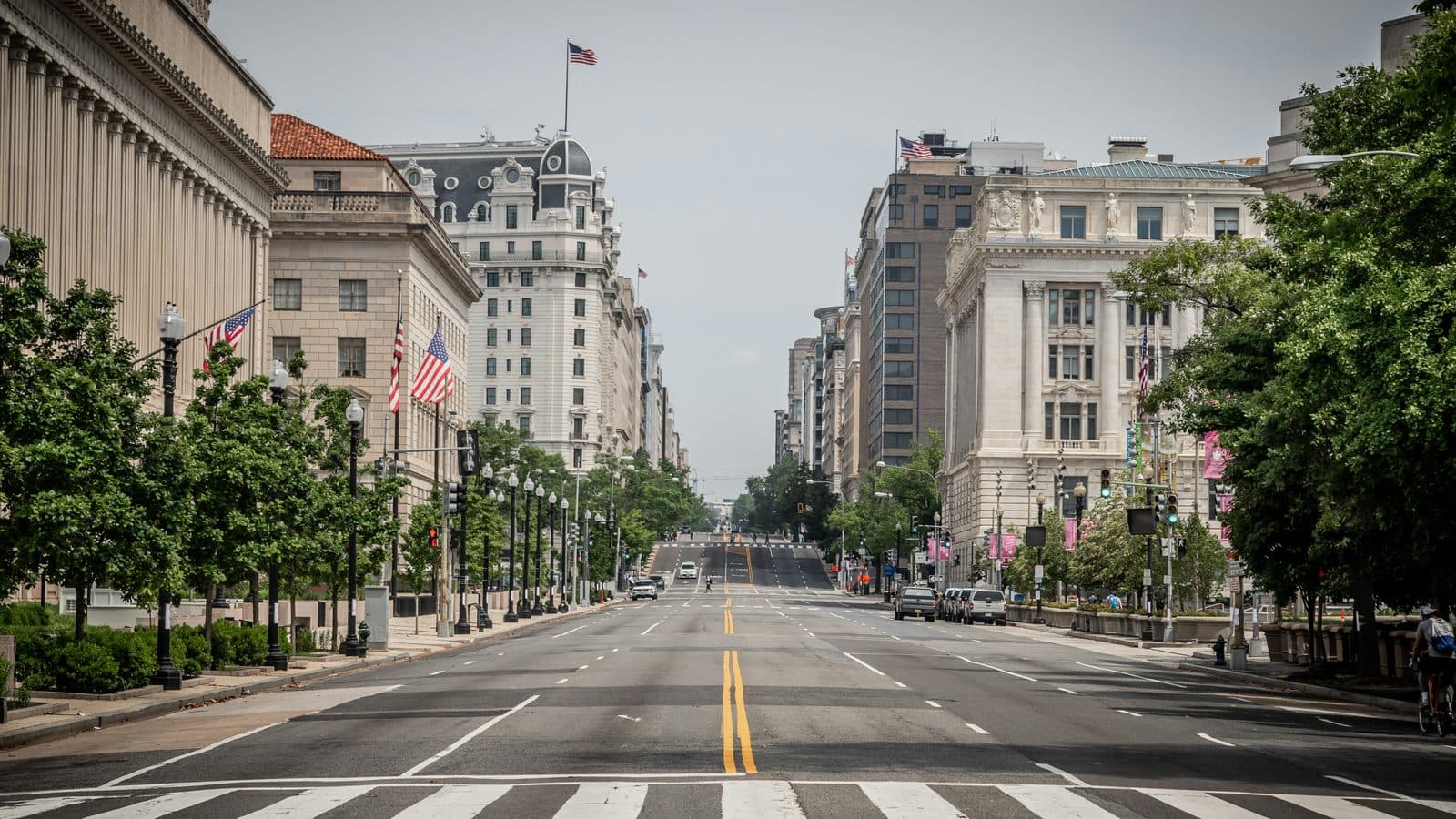
The federal axis the McMillan Plan locked in 1902 was a closed document. It has been writable since Easter 1939. Every Civil Rights inscription added since is an edit the original plan did not anticipate and could not have authorized. The Mall the commissioners drew had four anchor points, a central axis, and a grammar of figural classical temples on white stone. The first edit came twenty-three years after the last commissioner died.
This essay walks the second document. Each entry is a date. Each date is a moment when the federal axis was made to carry an argument the McMillan plan had not been written to hold.
Easter Sunday, April 9, 1939: Marian Anderson on the steps
The first inscription was a song.
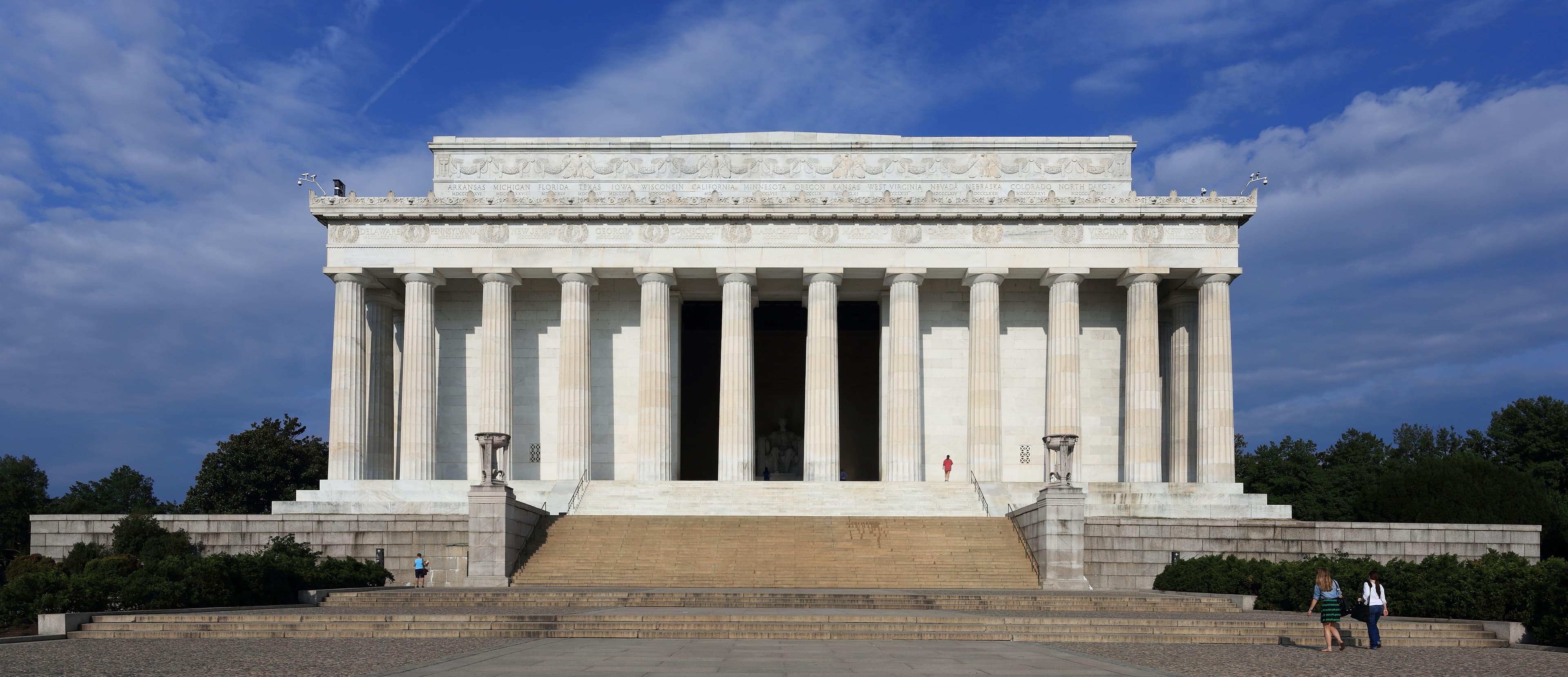
The contralto Marian Anderson had been scheduled to give a concert at Constitution Hall in early 1939. The hall was owned by the Daughters of the American Revolution. The DAR refused her the use of the hall before an integrated audience. The First Lady, Eleanor Roosevelt, resigned from the DAR in protest on February twenty-sixth, 1939, in her syndicated column My Day. The Secretary of the Interior, Harold Ickes, offered Anderson the steps of the Lincoln Memorial. She accepted.
Anderson sang on Easter Sunday, April ninth, 1939, before a crowd of approximately seventy-five thousand, with a national NBC radio audience estimated in the millions. Ickes introduced her with a line that would become canonical: Genius, like justice, is blind. Anderson opened with My Country, 'Tis of Thee. She sang for twenty-five minutes.
The McMillan commissioners had not designed the steps as a stage. They had been designed as the approach to a Greek temple. The 1939 concert turned the building into a public address space, with the temple's facade as the proscenium and the Reflecting Pool as the audience floor. After 1939, every subsequent national gathering on the Mall would orient toward the same steps.
August 28, 1963: the March on Washington
Hear a stop from this walk
Martin Luther King Jr. Memorial: The Stone of Hope
The second inscription was a speech.
A. Philip Randolph, head of the Brotherhood of Sleeping Car Porters, had been planning a march on Washington since 1941. The coalition called the Big Six was Randolph, Roy Wilkins of the NAACP, Whitney Young Junior of the National Urban League, John Lewis of SNCC, James Farmer of CORE, and Martin Luther King Junior of the SCLC. Bayard Rustin was the day's organizational mind. The full name was the March on Washington for Jobs and Freedom. Jobs first.
On August twenty-eighth, 1963, approximately two hundred and fifty thousand people gathered, on the National Park Service's official estimate. The figure is held forward in Drew Hansen's The Dream (HarperCollins, 2003) and Charles Euchner's Nobody Turn Me Around (Beacon, 2010).
The speakers' list ran ten names. King delivered the closing address. He had prepared a text, held now in the Stanford King Papers Project archive. The phrase I have a dream is not in the prepared text. Approximately twelve minutes in, Mahalia Jackson, seated behind King on the platform, leaned forward and said Tell them about the dream, Martin. The phrasing is documented in Hansen's book and in Clarence B. Jones's Behind the Dream (Palgrave Macmillan, 2011). Jones was King's lawyer and speechwriter, present on the platform. King pushed the prepared text aside and improvised. He had spoken on the dream theme in Detroit two months earlier. He had not spoken these specific lines.
That morning is the load-bearing edit on the second document. Every subsequent Civil Rights inscription on the Mall is a continuing answer to it.
July 18, 1998: the African American Civil War Memorial
The third inscription was a federal monument seven blocks north of the Mall.
The memorial at the corner of Vermont Avenue, Tenth Street, and U Street Northwest was dedicated on July eighteenth, 1998. The sculptor was Ed Hamilton of Louisville, Kentucky. The central nine-foot bronze is The Spirit of Freedom. The curved Wall of Honor around the plaza carries names by regiment.
Two hundred and nine thousand, one hundred and forty-five African American soldiers fought for the Union in the United States Colored Troops, established in 1863. The walls also carry the names of approximately seven thousand white officers, two thousand one hundred and forty-five Hispanic soldiers, and an estimated twenty thousand African American sailors. The Navy was not segregated; the Army was. Eighty-five years after the USCT was established, in 1948, Executive Order 9981 integrated the United States military.
The 1998 memorial stepped the parallel axis off the Mall and into a Black neighborhood. It is the only federal monument to USCT service.
August 22, 2003: the engraved step
The fourth inscription was carved into stone.
The National Park Service placed an engraving on the eighteenth step down from the Lincoln statue, on the marble landing where King stood in 1963. The text reads: I HAVE A DREAM / MARTIN LUTHER KING, JR. / THE MARCH ON WASHINGTON FOR JOBS AND FREEDOM / AUGUST 28, 1963. The dedication ceremony was on August twenty-second, 2003, six days before the fortieth anniversary of the speech. Secretary of the Interior Gale Norton hosted. Coretta Scott King attended and spoke.
Three layers on one step. The marble was laid in 1922. The speech was delivered in 1963. The engraving was cut in 2003. Forty years separate the speech from the federal inscription. The moment had to wait forty years for the federal government to lock it into the marble. The wait is part of the story.
The 2003 engraving is also the first formal Civil Rights inscription on the Lincoln Memorial. A stage is something the public made of a building the architects had not designed for that purpose. A monument is the federal government writing the public use into the building itself.
October 16, 2011: the MLK Memorial
The fifth inscription was a thirty-foot granite figure on the Tidal Basin.
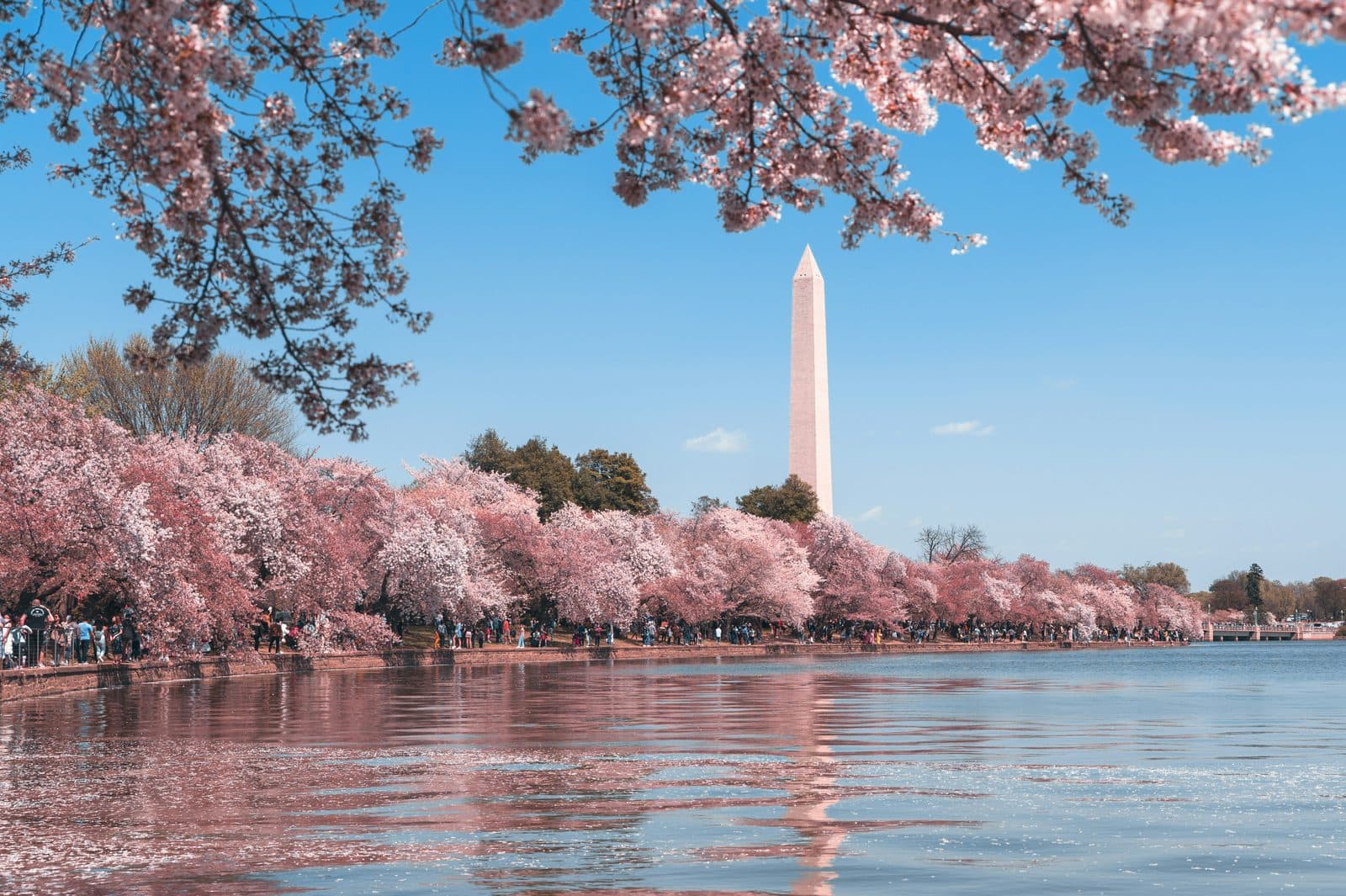
The Martin Luther King Junior Memorial is at 1964 Independence Avenue Southwest. The street number references the Civil Rights Act of 1964. Groundbreaking was on November thirteenth, 2006. The design firm was ROMA Design Group of San Francisco. The Stone of Hope was carved by Lei Yixin, a sculptor based in Changsha, China. The selection of a Chinese sculptor for an American Civil Rights memorial was contested in advance.
The dedication was originally scheduled for August twenty-eighth, 2011, the forty-eighth anniversary of the speech. Hurricane Irene closed the formal ceremony down. The dedication was rescheduled to October sixteenth, 2011. President Obama spoke.
The Memorial's conceit is taken from one line of the speech: With this faith, we will be able to hew out of the mountain of despair a stone of hope. The Mountain of Despair is the granite boulder split into two halves at the entrance. The Stone of Hope is the figure of King carved from a third boulder pushed forward from the Mountain. The speech, made architectural.
August 30, 2011 through August 2013: the Drum Major scar
The sixth inscription was a removal.
On the north face of the Stone of Hope, Lei Yixin had originally carved a line attributed to King: I was a drum major for justice, peace and righteousness. The line is a paraphrase. King's actual sermon, delivered at Ebenezer Baptist Church in Atlanta on February fourth, 1968, two months before his assassination, said this: Yes, if you want to say that I was a drum major, say that I was a drum major for justice. Say that I was a drum major for peace. I was a drum major for righteousness. And all of the other shallow things will not matter.
The abbreviation removed the conditional clause (if you want to say). It removed the self-deprecation (all of the other shallow things will not matter). It removed King's sermon's argument.
Maya Angelou had served as a consultant on the Memorial. On August thirtieth, 2011, eight days after the soft opening, Angelou criticized the inscription in the Washington Post in a column by Rachel Manteuffel. Angelou said the abbreviation minimized the man, and made King sound, in her phrase, like an arrogant twit. Secretary of the Interior Ken Salazar and National Park Service Director Jonathan Jarvis announced a correction plan on January thirteenth, 2012, after agreement with the King family and the Memorial Foundation. In August 2013, Lei Yixin returned to the site and sandblasted grooves across the carved letters. The abbreviated quote was removed. The full quote was not put back.
Walk to the north face of the Stone of Hope today and look at the grooves. The inscription's absence is now a permanent part of the Memorial. This is the most legible single moment of editorial correction on the federal axis. A federal monument was carved with a paraphrase. The paraphrase was criticized as a misrepresentation. The criticism was institutionalized. The text was sandblasted out. The replacement text was not added. The Memorial now carries a scar where its central inscription used to be. The scar is the record.
September 24, 2016: NMAAHC
The seventh inscription was a building.
The National Museum of African American History and Culture stands at 1400 Constitution Avenue Northwest. It was authorized by the National Museum of African American History and Culture Act, signed by President George W. Bush on December sixteenth, 2003. The Smithsonian named Lonnie G. Bunch the Third as founding director in 2005. The design competition was won in April 2009 by Freelon Adjaye Bond and SmithGroup.
The architectural team requires full attribution. David Adjaye was the design lead. Phil Freelon was the architect of record and led the thirty-two-member design team. J. Max Bond Junior, of Davis Brody Bond, was a principal on the executive-architect team that delivered roughly sixty percent of the design. Two of the four named architects did not live to see the museum open. Bond died on February eighteenth, 2009, two months before the team was announced as the competition winner. Freelon died on July ninth, 2019.
The bronze-coated lattice that wraps the building consists of three thousand six hundred panels. The lattice pattern draws on the ornamental ironwork of enslaved African American artisans in Charleston, Savannah, and New Orleans. The three-tiered corona references the top of a Yoruba caryatid figure by the Nigerian sculptor Olowe of Ise.
President Obama formally opened the museum on September twenty-fourth, 2016. The historical galleries are arranged vertically. Visitors descend first, to the slavery-era galleries below grade, then ascend through the Civil Rights era and the contemporary culture galleries. The architectural typology is inverted. In most museums, visitors ascend to what matters most. Here they descend, and then they climb.
June 5, 2020 and March 10, 2025: Black Lives Matter Plaza, painted and removed
The eighth inscription was applied to asphalt. The ninth was its erasure.
On June first, 2020, federal forces cleared protesters from Lafayette Square. The protesters had been responding to the police killing of George Floyd. Four days later, on June fifth, Mayor Muriel Bowser commissioned a mural. DC's Department of Public Works applied the words BLACK LIVES MATTER in thirty-five-foot yellow capital letters down two blocks of Sixteenth Street Northwest. The DC City Council voted in October 2020 to permanently rename the section Black Lives Matter Plaza Northwest.
The mural was a District of Columbia municipal artwork on a District street. The federal government did not authorize it.
On March fourth, 2025, Bowser announced the plaza's removal under pressure from the Trump administration and Representative Andrew Clyde of Georgia, whose House Resolution 1774 would have withheld federal funding from DC unless the mural was removed. DC crews began removal on March tenth, 2025.
The 2020 painting and the 2025 removal are part of the same inscription. The parallel axis can be written. It can also be erased. The most recent edit was a removal.
The pattern that emerges
Read the dates in sequence and the pattern is legible.
1939: a song. 1963: a speech. 1998: a federal monument north of the Mall. 2003: a federal engraving on the Mall. 2011: a federal architectural memorial on the Mall. 2013: a federal sandblasting on the Mall. 2016: a Smithsonian museum on the Mall. 2020: a District mural one block north of the White House. 2025: a District removal.
Each entry is the work of a different generation of editors. Each was contested at the time it was made. Each survived (or did not) the political institutions that had the authority to keep it or erase it. The federal axis has been writable for eighty-six years and counting. The plan the McMillan commissioners drew in 1902 did not anticipate any of the nine entries on the list.
The question Charles Euchner asks at the end of Nobody Turn Me Around is the question the parallel axis is still asking. Who edits the axis next. The answer is being negotiated now, in Smithsonian curatorial reviews and federal Capital Planning hearings that most visitors will never read. The next inscription is not yet on the list. It will be.
Ready to experience it?
The Other Axis: The Mall as Civil Rights Stage
120 min · 7.84 km · moderate
More from Washington Dc
Explore more at your own pace.
Best Self-Guided Walking Tours in Washington, DC (2026)
One Day in Washington, DC: A Walkable Monuments-to-U-Street Itinerary (2026)
Washington, DC Travel Guide: How Many Days, Getting Around, When to Go (2026)
Best History Walking Tours in Washington, DC (2026)

What to Eat in Washington, DC: A Food Guide (2026)