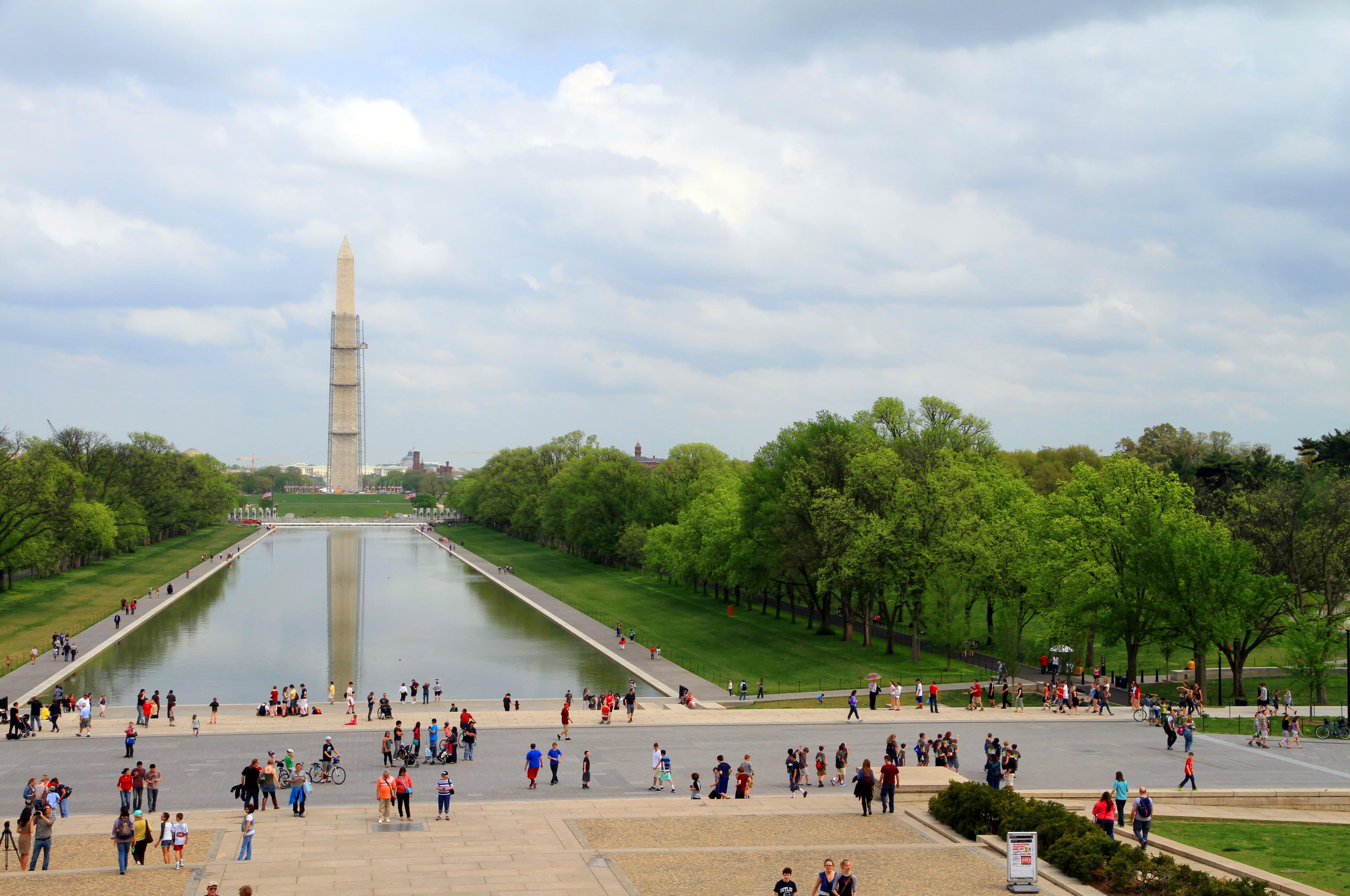
On August twenty-eighth, nineteen sixty-three, two hundred and fifty thousand people stood on the Mall and made the federal axis tell a story it had not been designed for. Every Civil Rights inscription on the Mall since is a continuing answer to that morning. The listener walks a parallel axis the founding-era city did not draw.
Start · Lincoln Memorial Steps: The Speech Site
DirectionsStops
- 1
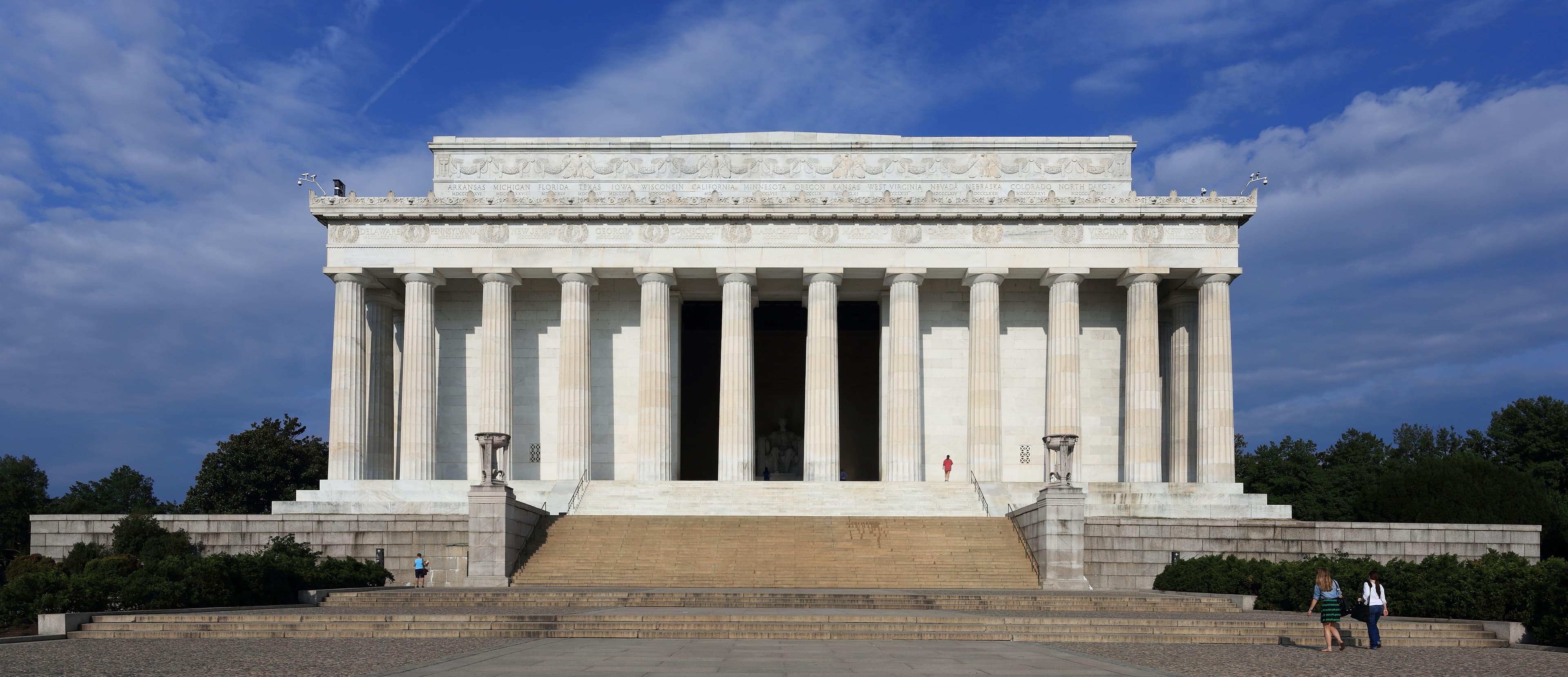
Lincoln Memorial Steps: The Speech Site
The landing eighteen steps below the Lincoln statue. The August 28, 1963 closing address by Martin Luther King Jr., with Mahalia Jackson's documented intervention. Marian Anderson's Easter 1939 concert as the foundational Civil Rights stage.
- 2
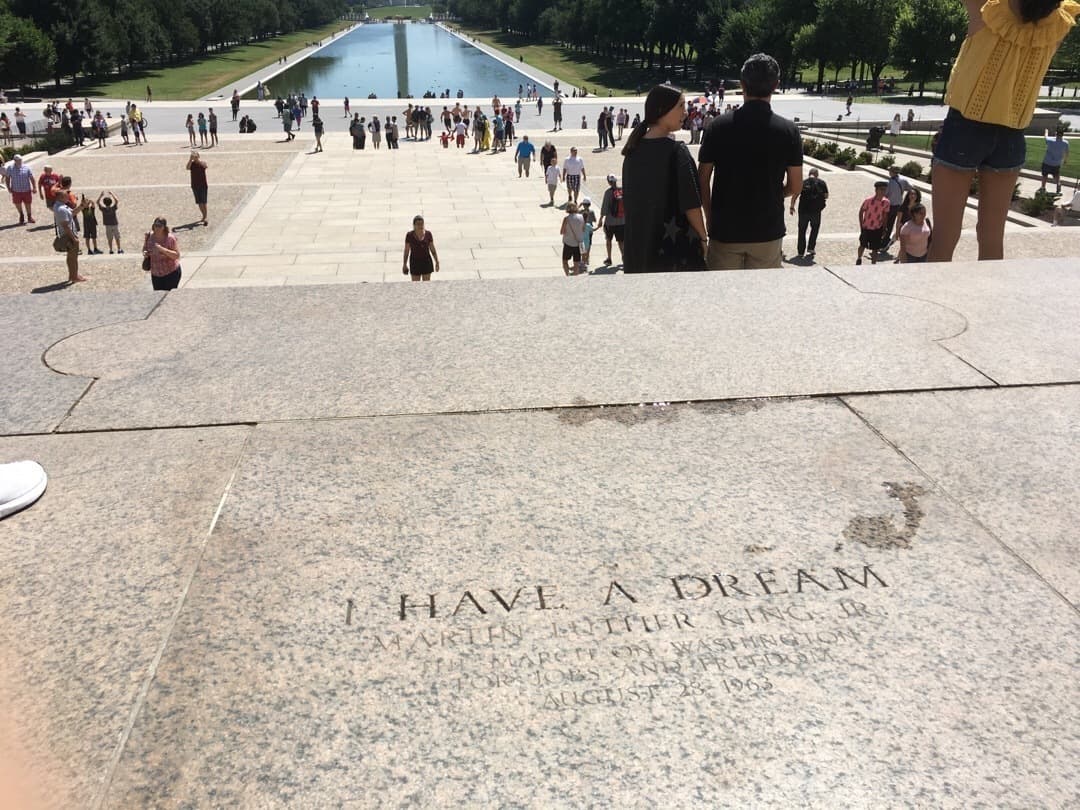
I Have A Dream Engraved Step
The marble landing engraved August 22, 2003 by the National Park Service. Coretta Scott King in attendance. The first formal Civil Rights inscription on the Lincoln Memorial.
- 3
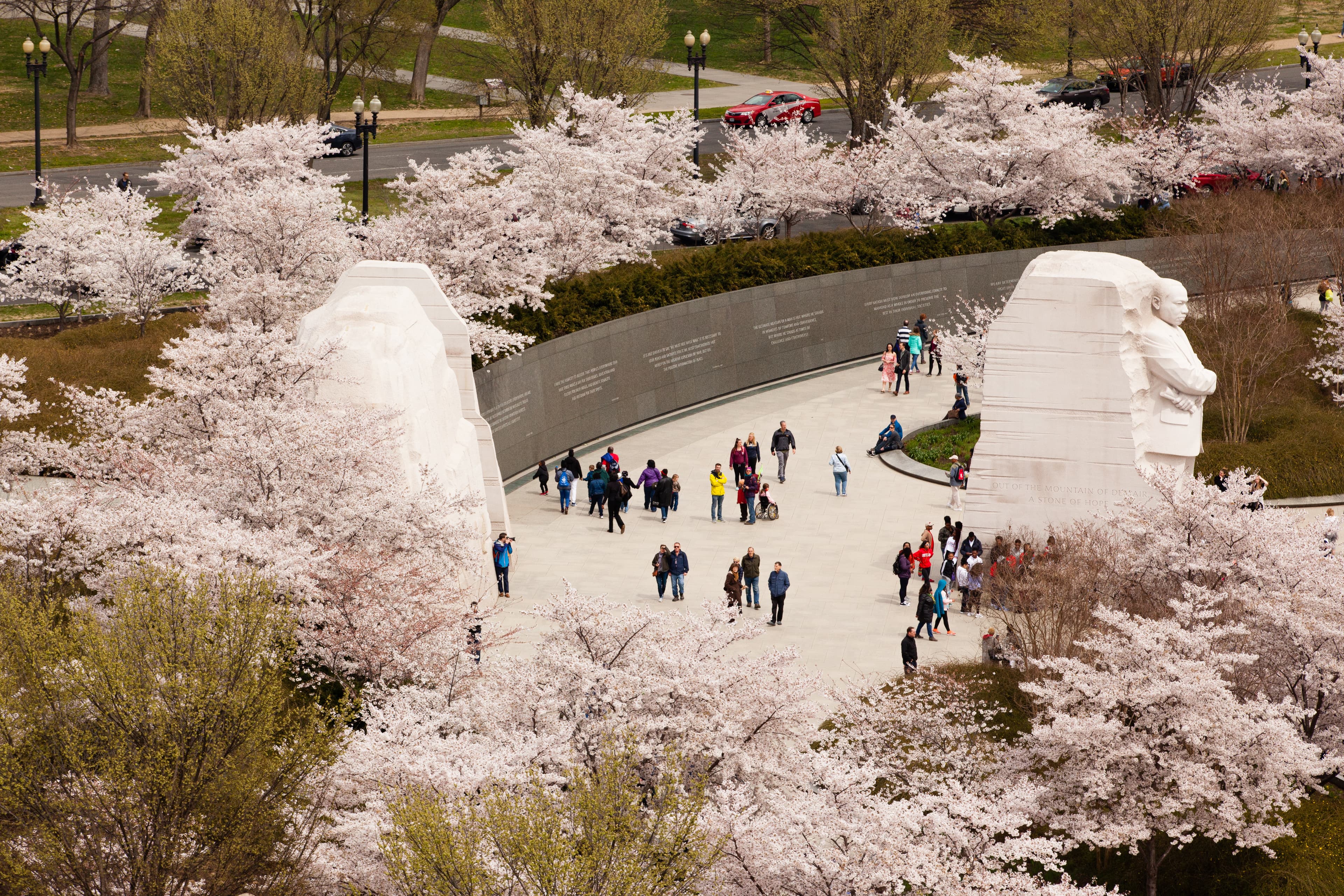
Martin Luther King Jr. Memorial: The Stone of Hope
Dedicated October 16, 2011 after Hurricane Irene postponed the original August 28 ceremony. ROMA Design Group, sculptor Lei Yixin. The Drum Major inscription was carved in 2011, criticized by Maya Angelou in the Washington Post August 30, 2011, and sandblasted off in August 2013.
- 4
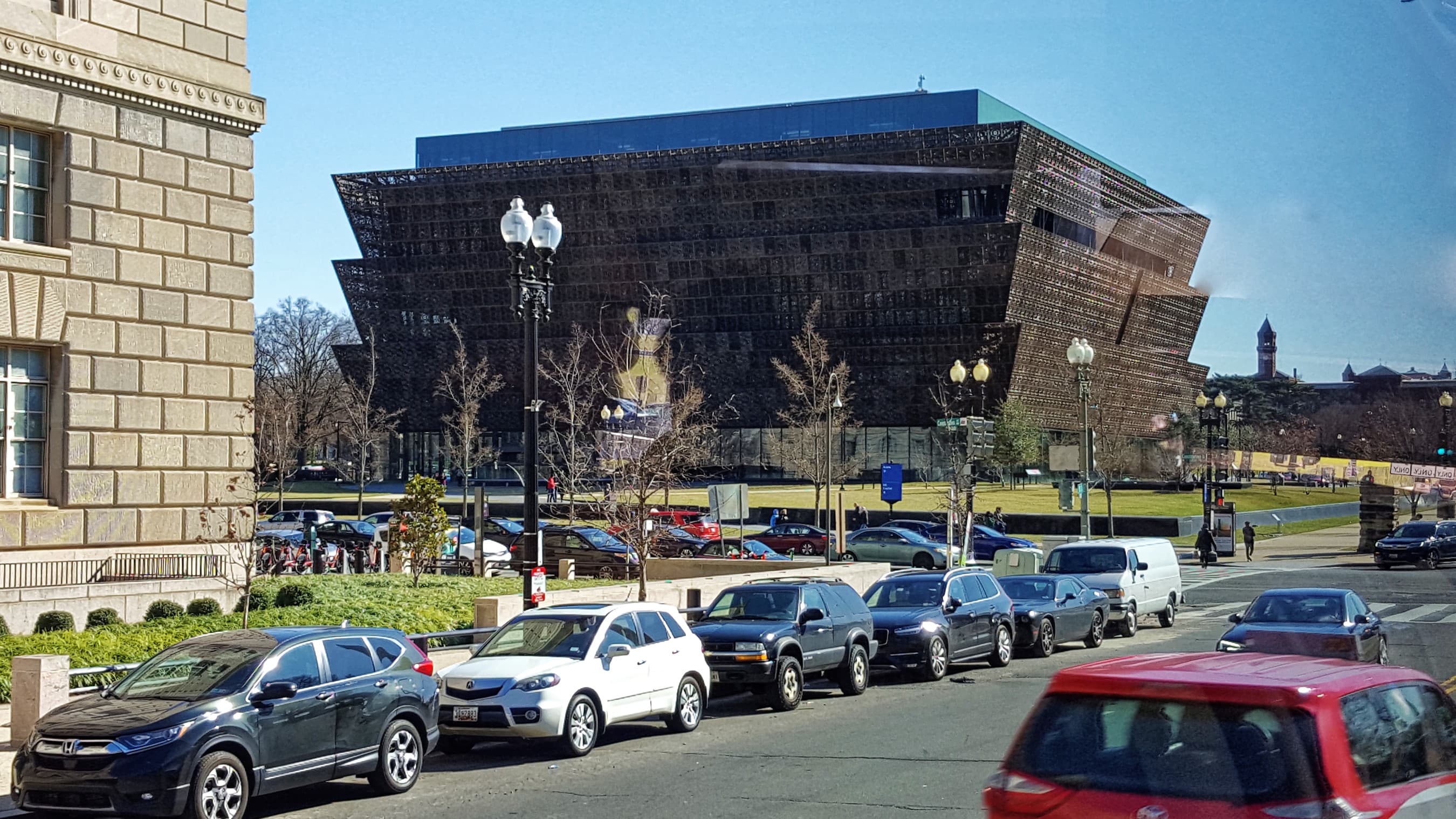
National Museum of African American History and Culture
Opened September 24, 2016. Authorized by Act of Congress signed by President George W. Bush December 16, 2003. Architect team Freelon Adjaye Bond / SmithGroup: David Adjaye design lead, Phil Freelon architect of record, J. Max Bond Jr. and Davis Brody Bond executive architects. Founding director Lonnie G. Bunch III.
- 5
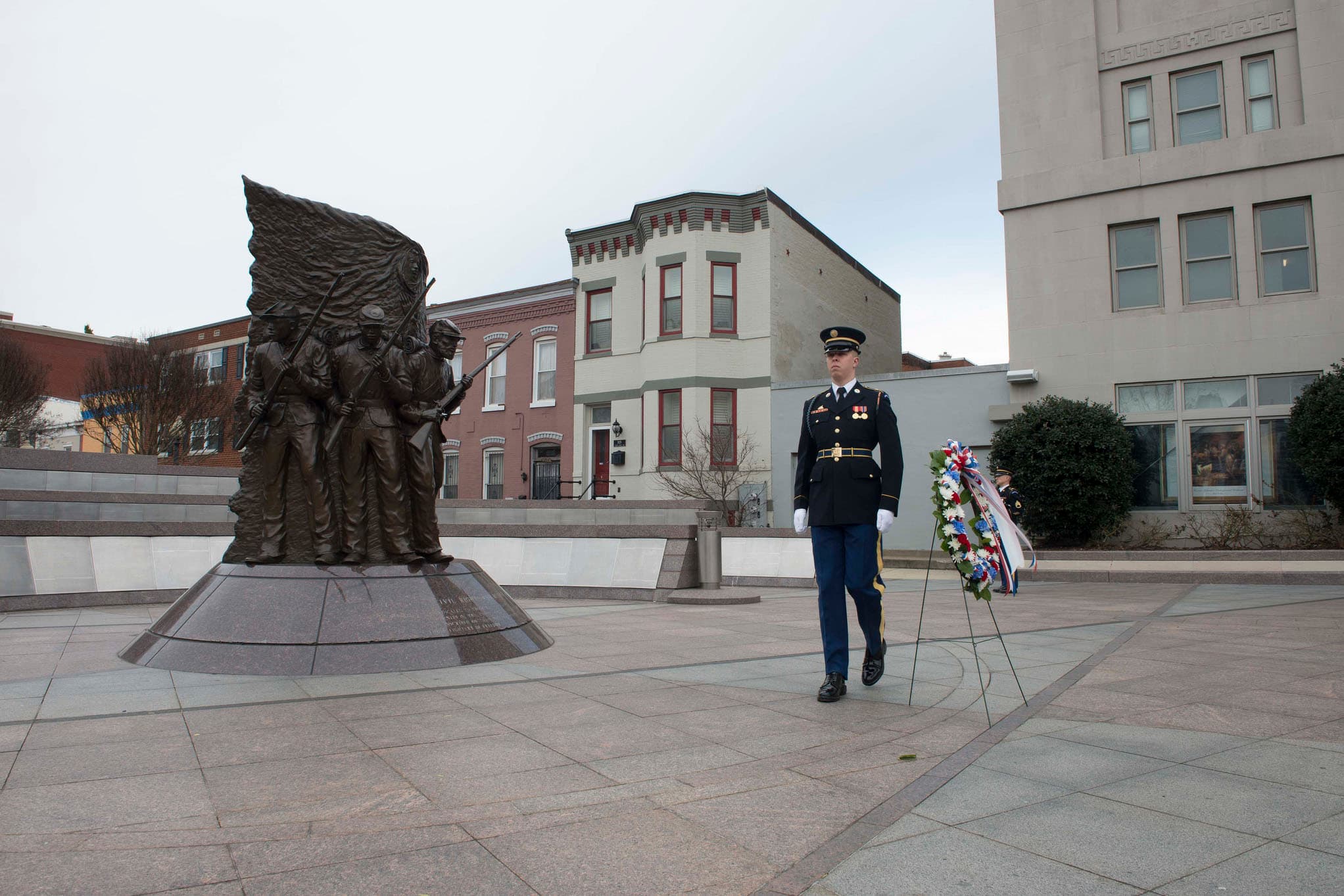
African American Civil War Memorial
Dedicated July 1998 at Vermont, 10th, and U Street NW. Sculptor Ed Hamilton of Louisville; The Spirit of Freedom, a 9-foot bronze. Curved panel walls inscribe 209,145 USCT names plus approximately 7,000 white officers, 2,145 Hispanic soldiers, and an estimated 20,000 African American sailors. The only federal monument to USCT service.
- 6
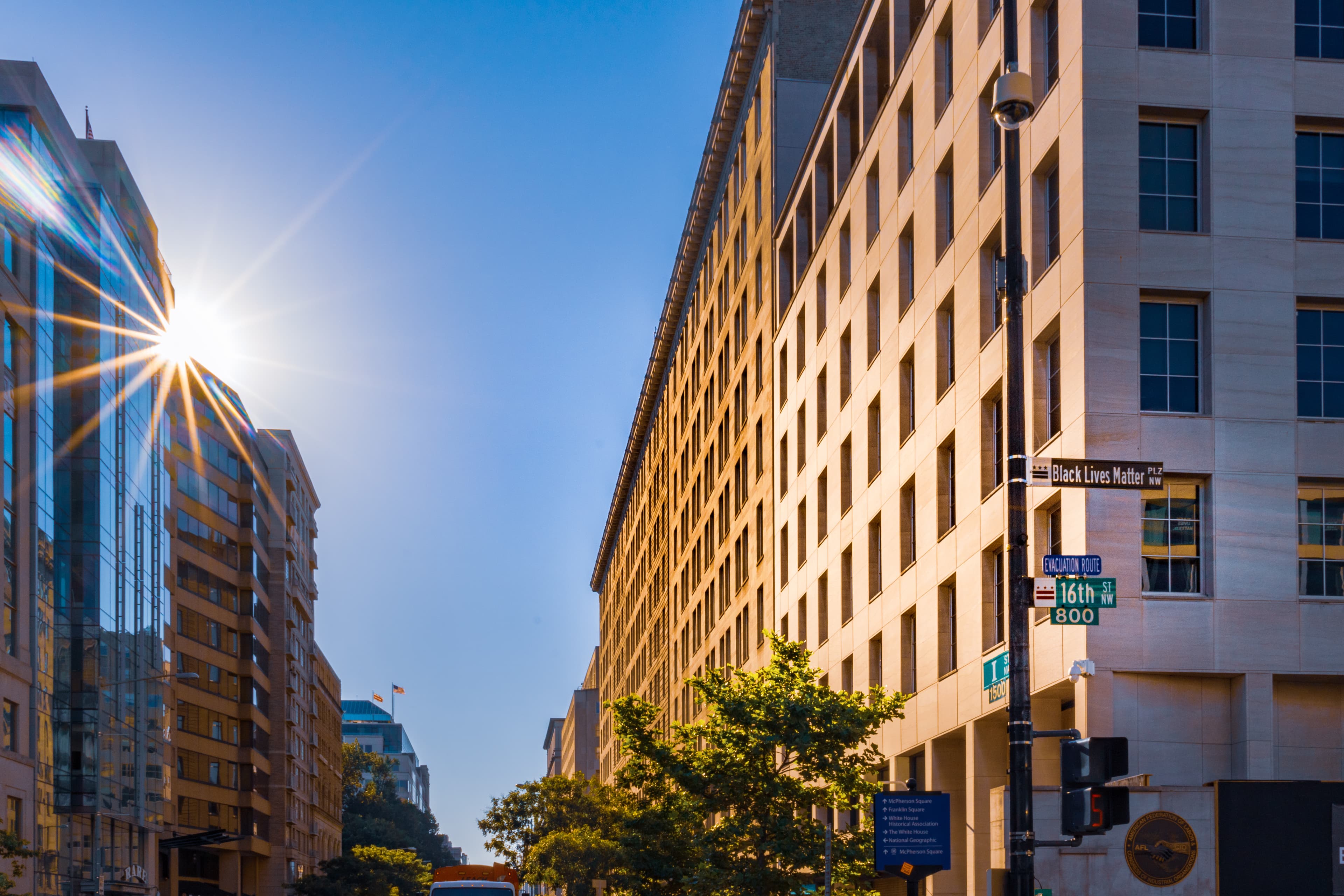
Black Lives Matter Plaza: The Absence
Painted June 5, 2020 by Mayor Muriel Bowser four days after federal forces cleared Lafayette Square on June 1, 2020. 35-foot yellow capital letters on two blocks of 16th Street NW. DC City Council renamed the section October 2020. Bowser announced removal March 4, 2025; crews began March 10, 2025. The tour reads the absence.
Details
Best Time to Visit
Weekdays, mid-morning to early afternoon, year-round. The Lincoln Memorial, MLK Memorial, and African American Civil War Memorial are accessible twenty-four hours a day, but the engraved step at Stop two reads best in daylight when the inscription is legible. NMAAHC at Stop four is open Wednesday through Monday, ten in the morning to five-thirty in the afternoon, closed Tuesday; the exterior architecture anchors the audio at any hour, but if you want the interior, book a timed-entry pass on the museum's website in advance. Spring (March to May) and autumn (September to November) keep the Tidal Basin walk between Stops two and three comfortable. The summer months can run hot on the Mall; carry water and pace the walk. August twenty-eighth itself, the anniversary of the speech, brings commemorative gatherings to the Lincoln Memorial steps; the tour reads against the crowd that day, which is a different experience worth choosing deliberately.
Pro Tips
- •Book a free timed-entry pass to NMAAHC before your walk if you want to enter the museum. Passes are released on nmaahc.si.edu at intervals and often book out same-day. The tour's Stop four audio anchors on the exterior of the south plaza, so the stop works without entry, but the interior is the Smithsonian's full institutional statement and worth the two to three hours.
- •Carry water. The Lincoln-to-MLK-to-NMAAHC segment is approximately two point two kilometres of continuous walking on exposed paths around the Tidal Basin and along the Mall. There is no shade on the Reflecting Pool side and limited shade at the Tidal Basin in summer.
- •The MLK Memorial at Stop three is most legible when you walk around to the north face of the Stone of Hope to see the sandblasted grooves where the Drum Major inscription was removed in August two thousand thirteen. The tour audio depends on you walking the full circumference; do not stop at the front face only.
- •Between Stop four (NMAAHC) and Stop five (African American Civil War Memorial), take the Green Line Metro from Smithsonian or L'Enfant Plaza to U Street. One stop. The walking distance is approximately three kilometres and the Metro keeps the total tour walking under four kilometres.
- •The African American Civil War Memorial Museum at one nine two five Vermont Avenue Northwest, across the street from Stop five, is open Tuesday through Saturday and is free. Allow thirty to forty-five minutes if you want the soldier-database lookup and the regimental record interpretation. Plan a Tuesday-to-Saturday walk to include it.
- •Stop six, the former Black Lives Matter Plaza, is on Sixteenth Street Northwest between H and K Streets, on the north side of Lafayette Square. The painted mural was removed in March two thousand twenty-five and the plaza is undergoing reconstruction; the tour reads the absence rather than the original painting. The site is appropriate as a final stop because of what it argues, not what it looks like.
- •For the speech itself, the Library of Congress and the WGBH Open Vault both host the recorded audio of the August twenty-eighth, nineteen sixty-three speech. Listening on the walk between Stops two and three, on the Tidal Basin path, layers the recording onto the geography it was delivered into.
Safety & Precautions
- •The Lincoln Memorial steps at Stops one and two are stone, and the marble is slippery when wet. Wear flat closed shoes. The descent from the speech-site landing to the plaza below is twenty plus steps.
- •The Tidal Basin path between Stop two and Stop three is paved but uneven in places, with tree roots and seasonal water encroachment. Walking the seven hundred metre stretch in flip-flops or heels is not advised.
- •The MLK Memorial at Stop three is busy at peak Mall hours; the entrance through the Mountain of Despair boulder split funnels visitors single-file. Allow extra dwell time if you visit on a weekend afternoon.
- •The Green Line Metro hop between Stops four and five is one stop, but Smithsonian Metro can be crowded on event days. Allow ten to fifteen minutes between leaving NMAAHC and arriving at U Street, depending on train frequency.
- •Stop six, the former Black Lives Matter Plaza, sits one block north of the White House security perimeter. Active uniformed presence on Sixteenth Street is normal. Stay on the pedestrian section of the two blocks; do not cross south into the closed-vehicle area near Lafayette Square.
Travel advisory: Exercise Normal Precautions (Level 1).
Gallery
Related Reading
Go deeper on what you'll see, hear, and walk through.
Overview
Best Self-Guided Walking Tours in Washington, DC (2026)
4 min
Overview
How to See Washington, DC: A City of Edits
12 min
Overview
One Day in Washington, DC: A Walkable Monuments-to-U-Street Itinerary (2026)
6 min
Thematic
Best History Walking Tours in Washington, DC (2026)
2 min
Companion
The Writable Axis: A Timeline of Civil Rights Edits to the National Mall
11 min
Deep dive
The Eighteenth Step: How a 1922 Monument Became a Civil Rights Stage
10 min
Read the walk
The full story of The Other Axis: The Mall as Civil Rights Stage, in words. Prefer to listen? Play it narrated, from home or on location.
Introduction
August twenty-eighth, nineteen sixty-three. Late morning at the Lincoln Memorial. A. Philip Randolph is on the platform. He has been planning a march on Washington since nineteen forty-one. Bayard Rustin is running the day. Two hundred and fifty thousand people are arrayed across the Reflecting Pool down to the Washington Monument. Martin Luther King Junior is the closing address.
About twelve minutes into his prepared remarks, with Mahalia Jackson seated behind him, Jackson leans forward and says, "Tell them about the dream, Martin." King pushes the prepared text aside and begins to improvise. The next six minutes of audio recording will become the most-cited American speech of the twentieth century. The step King stood on is eighteen steps below the statue of Abraham Lincoln. Everything else on this tour is what has been built around that morning.
The morning is documented in Drew Hansen's The Dream, two thousand three, and in Charles Euchner's Nobody Turn Me Around, two thousand ten. The National Museum of African American History and Culture, reached at Stop four, opened on the Mall in September two thousand sixteen as the Smithsonian's permanent institutional answer to the same morning. The walk is the parallel axis the institutions interpret site by site.
The walk is six stops, about three kilometres including one Metro hop on the Green Line between Stop four and Stop five, and one hundred minutes including stop dwell. The line was not drawn by one man. Roy Wilkins of the NAACP, Whitney Young Junior of the Urban League, John Lewis of SNCC, and James Farmer of CORE, alongside Randolph and King, formed the Big Six. Marian Anderson sang on these steps twenty-four years before King stood here. The morning belongs to all of them.
When you arrive at the Lincoln Memorial steps, begin with stop one.
1. Lincoln Memorial Steps: The Speech Site
You are standing on the landing eighteen steps below the Lincoln statue, facing east toward the Reflecting Pool and the Washington Monument. That is the direction the crowd faced on August twenty-eighth, nineteen sixty-three. Two hundred and fifty thousand people, on the National Park Service's official estimate, the figure Drew Hansen and Charles Euchner both carry through.
The march had a full name. The March on Washington for Jobs and Freedom. The full name matters. Jobs first, freedom second. The economic demand was load-bearing for the organizers.
The organizers were not King. A. Philip Randolph, head of the Brotherhood of Sleeping Car Porters, had been planning a march on Washington since nineteen forty-one. He chaired the day. Bayard Rustin, the organizational mind, ran the field operations. The coalition called the Big Six set the speakers' order. Roy Wilkins for the NAACP. Whitney Young Junior for the Urban League. John Lewis for SNCC, twenty-three years old that morning. James Farmer for CORE, who was in jail in Louisiana and could not attend. Randolph, and King last.
King had prepared a text. The text is held in the Stanford King Papers Project archive. The phrase I have a dream is not in it. Approximately twelve minutes in, Mahalia Jackson, seated behind King on the platform, leaned forward and said, Tell them about the dream, Martin. The phrasing is documented in Hansen's The Dream and in Clarence B. Jones's Behind the Dream, published in twenty eleven. Jones was King's lawyer and speechwriter, present on the platform that morning. King pushed the prepared text aside.
One thing to plant before we walk. The Lincoln Memorial was a Civil Rights stage twenty-four years before King stood here. On Easter Sunday, April ninth, nineteen thirty-nine, the contralto Marian Anderson sang on these steps before a crowd of approximately seventy-five thousand. The Daughters of the American Revolution had refused her the use of Constitution Hall before an integrated audience. Eleanor Roosevelt resigned from the DAR in protest. Secretary of the Interior Harold Ickes introduced Anderson. Anderson opened with My Country, 'Tis of Thee. The DAR Archives hold the nineteen thirty-nine correspondence.
The morning King delivered the closing address, he was standing on a stage Anderson had made.
Now look down. The marble at your feet is Stop two.
2. I Have A Dream Engraved Step
You are standing on the same physical step as Stop one. Look down. The engraving reads, I HAVE A DREAM. MARTIN LUTHER KING, JUNIOR. THE MARCH ON WASHINGTON FOR JOBS AND FREEDOM. AUGUST TWENTY-EIGHTH, NINETEEN SIXTY-THREE.
The National Park Service placed this engraving in two thousand three. The dedication ceremony was on August twenty-second, two thousand three, six days before the fortieth anniversary of the speech itself. The Department of the Interior press release from August twentieth that year names the host as Secretary of the Interior Gale Norton. Coretta Scott King attended and spoke. The peer-reviewed Histories of the National Mall project, run by George Mason University in partnership with the Park Service, holds the dedication record.
Now read what you are standing on.
Three layers of inscription on one step. The marble was laid as the eighteenth step down from the top landing as part of the Memorial in nineteen twenty-two. The speech was delivered from this step on August twenty-eighth, nineteen sixty-three. The engraving was cut into the marble on August twenty-second, two thousand three, forty years later, by an act of the federal government.
This is the first formal Civil Rights inscription on the Lincoln Memorial. It is the National Park Service's institutional answer to the morning. The moment had to wait forty years for the federal government to lock it into the marble. The wait is part of the story; the engraving is part of the story; the listener standing on both at the same time is the part this tour reads.
This is also the editorial discipline of this tour. The Lincoln Memorial as an architectural monument, the founding-era federal axis it terminates, the building's own history, all of that belongs to the National Mall tour. This tour reads the Lincoln Memorial as a stage. Two beats on the stage, the nineteen thirty-nine concert and the nineteen sixty-three speech, plus the two thousand three federal inscription that fixes the speech in marble. That is all.
Now turn and walk south along the Tidal Basin shoreline. Approximately seven hundred metres. You are walking toward a memorial whose central inscription is no longer there.
3. Martin Luther King Jr. Memorial: The Stone of Hope
You have arrived at the Martin Luther King Junior Memorial. You entered through a thirty-foot granite boulder split into two halves. That is the Mountain of Despair. The thirty-foot figure of King emerging from a second granite block ahead of you is the Stone of Hope. The…
Full narration for this stop unlocks with the tour.
4. National Museum of African American History and Culture
You are standing in front of the National Museum of African American History and Culture, at fourteen hundred Constitution Avenue Northwest. The bronze-coated lattice wrapping the building is three thousand six hundred panels, cast in aluminum and coated in bronze. The…
Full narration for this stop unlocks with the tour.
5. African American Civil War Memorial
You have arrived at the African American Civil War Memorial, at the corner of Vermont Avenue, Tenth Street, and U Street Northwest. The nine-foot bronze figure in front of you is The Spirit of Freedom, by the sculptor Ed Hamilton of Louisville, Kentucky. On one face: three Union…
Full narration for this stop unlocks with the tour.
6. Black Lives Matter Plaza: The Absence
You are standing on Sixteenth Street Northwest, between H Street and K Street, on the north side of Lafayette Square. Two blocks of pedestrian roadway. Look down. From June fifth, two thousand twenty, until March two thousand twenty-five, the words BLACK LIVES MATTER were…
Full narration for this stop unlocks with the tour.