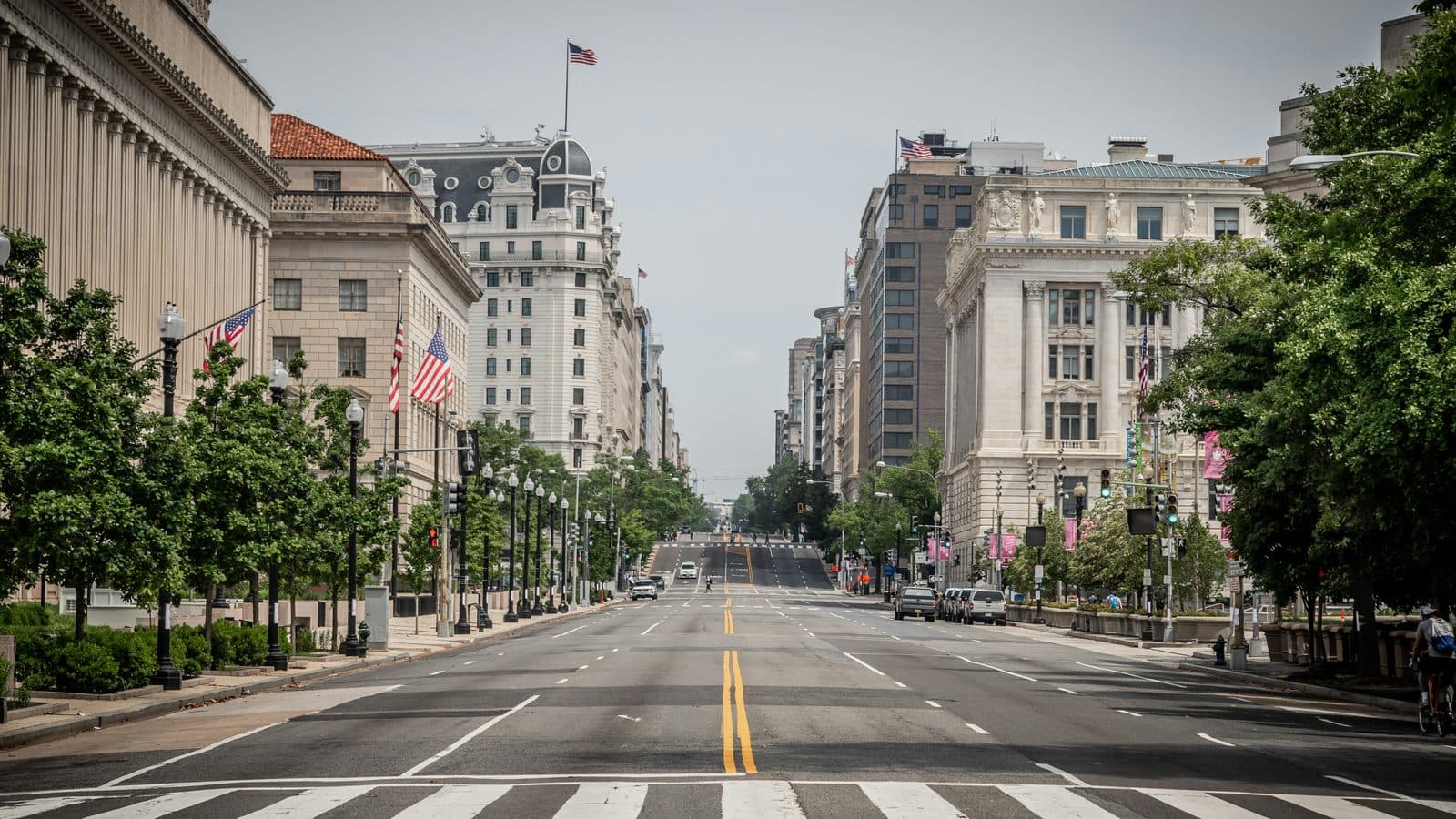
U Street's first life ended in the four days after April fourth, 1968. The second life began in the late 1990s. A way to think about the corridor is to hold both lives at the same time.
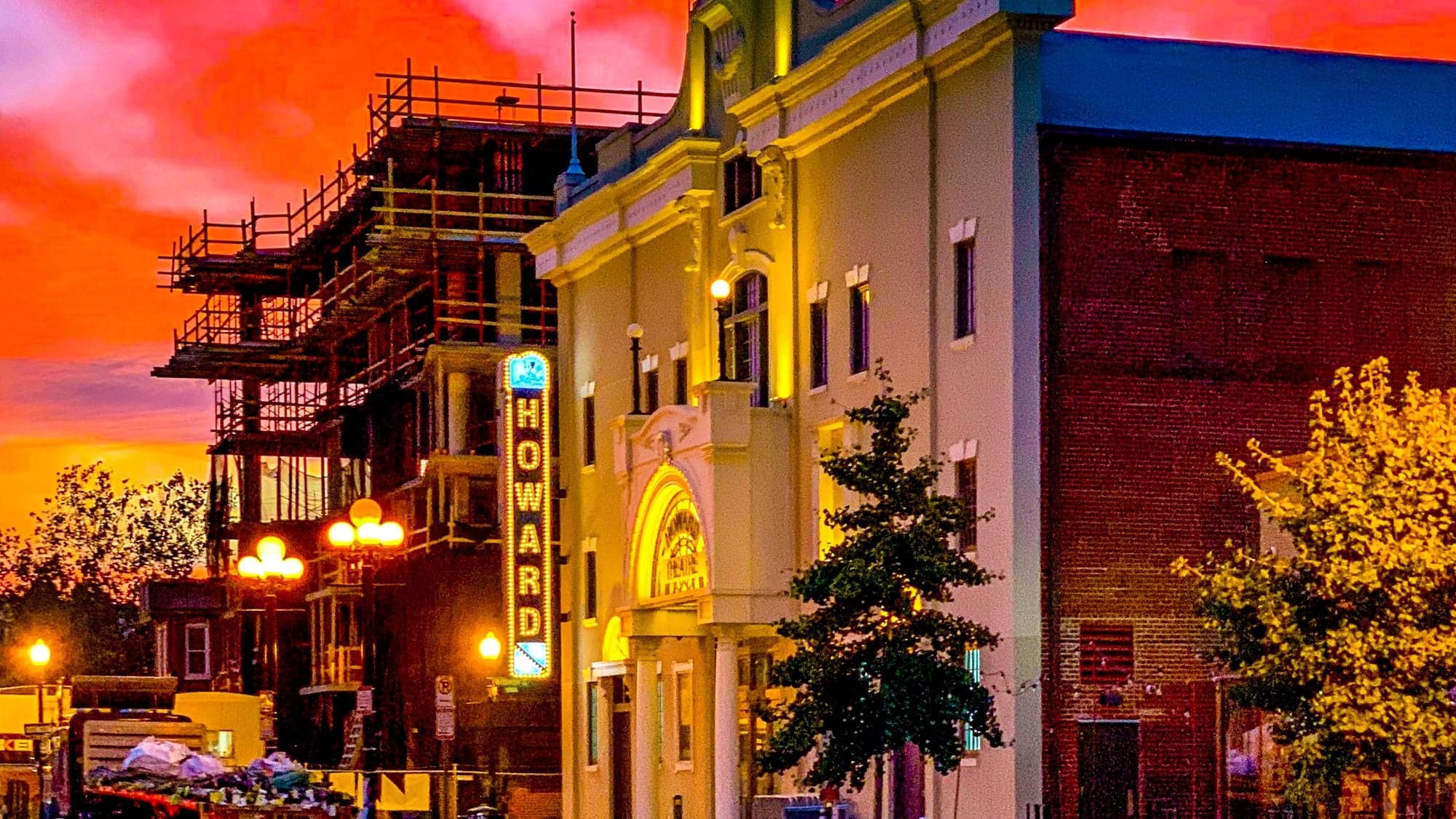
The first fact is that almost every institution that defined the corridor between roughly 1900 and 1968 is still here. Howard University is still here, one block north of where Black Broadway began. The True Reformer Building, dedicated in 1903, still stands at Twelfth and U. The Howard Theatre, opened 1910, is open again after its 2012 restoration. The Lincoln Theatre, opened 1922, has been operating again since 1994. Ben's Chili Bowl, opened 1958, never closed.
The second fact is that the residential community that built those institutions, sustained them, and filled their seats no longer lives on the corridor in significant numbers. The U Street census tract was seventy-seven percent Black in 1990. It was fifty-eight percent Black in 2000. It was twenty-two percent Black in 2010. It was thirteen percent Black in 2020. The figures are from the US Census Bureau. The shift is documented in Chris Myers Asch and George Derek Musgrove's 2017 book Chocolate City: A History of Race and Democracy in the Nation's Capital (UNC Press).
Both facts are true. The institutions are inherited. The residents are displaced. The historian Blair Ruble, in his 2010 book Washington's U Street: A Biography (Woodrow Wilson Center Press), uses the word biography for a reason. The corridor has had a life. The life has had chapters. The most recent chapter is being written by a different cast than the previous one.
How the corridor was built
Howard University is the parent institution. It was chartered by an Act of Congress on March second, 1867, and named for Oliver Otis Howard, the Union Army major general who served as commissioner of the Freedmen's Bureau. Howard himself led the university from 1869 to 1874. The first president had been Charles B. Boynton in 1867. The federal charter and the federal land made the institution. The institution made the corridor.
What Washington had that Harlem and Chicago's South Side did not have was a federally chartered, federally land-granted Black research university one block north of what would become, in the next sixty years, the densest Black cultural and commercial corridor in the city. The medical school, the dental school, the law school, the school of music, the school of theatre, all of them put graduates into the four blocks south of Howard's main gate. Charles R. Drew did graduate work at Howard. Thurgood Marshall came through the law school. Ralph Bunche taught here. Toni Morrison taught here. The corridor that called itself Black Broadway in the 1940s had Howard as its intellectual spine.
The cultural infrastructure was built by two different kinds of capital. The first kind was the True Reformer Building at 1200 U Street, dedicated July fifteenth, 1903. The architect was John A. Lankford. The commissioner was the Grand United Order of True Reformers, a Black fraternal order. Per the National Register of Historic Places listing (Ref No. 88003063), this is the first building in the United States designed, financed, built, and owned by African Americans after Reconstruction. Lankford moved to Washington from Potosi, Missouri, in 1902 to finish the building. In 1924, he became the first African-American architect formally registered in the District of Columbia. The institutional precedent walked ahead of the institutional permission by twenty-one years.
The second kind of capital built the Howard Theatre at Seventh and T. The Howard opened on August twenty-second, 1910, designed by J. Edward Storck and billed at opening as the largest colored theatre in the world. The first manager was Andrew Thomas. Management passed to the Black vaudevillian Sherman Dudley in 1922, then to Abe Lichtman in 1926, then to Shep Allen. The founding ownership was a white-owned group called the National Amusement Company. Segregation made Black audiences a separate market. White capital often built for that market before Black capital could. The Howard Theatre is the canonical example of the pattern.
Both kinds of building made Black Broadway. The corridor was not single-source. It was both. The Lincoln Theatre, opened January twenty-second, 1922, designed by Reginald W. Geare in collaboration with Harry Crandall, followed the Howard Theatre pattern. Crandall sold the theater to A.E. Lichtman in 1927. The attached ballroom, the Lincoln Colonnade, was, per the structured Wikipedia entry, the center of Washington's Black Broadway in the 1920s and 1930s. The documented performer lists at both theaters include Duke Ellington, Pearl Bailey, Louis Armstrong, Lionel Hampton, Ella Fitzgerald, Cab Calloway, Billie Holiday, Sarah Vaughan, Sammy Davis Junior, Dinah Washington, James Brown, and Marvin Gaye. The list is the corridor in its peak decades.
The corridor produced its own most famous son. Edward Kennedy Ellington was born on April twenty-ninth, 1899, at 2129 Ida Place (later Ward Place), a kilometre west of the corridor. He grew up on the corridor itself. He lived at multiple addresses on Thirteenth Street and the side streets between Twelfth and Sixteenth during his childhood and teenage years. He attended Armstrong Manual Training High School in Shaw. In late 1917, at age eighteen, he played his first paid gig in the second-floor ballroom of the True Reformer Building. He earned seventy-five cents. The group was called The Duke's Serenaders. Fourteen years later, in 1931, he headlined the Howard Theatre four blocks east. The corridor's biography passes through Ellington's biography at street level for two decades of his early life.
The night that ended the first life
Hear a stop from this walk
African American Civil War Memorial: The Corridor's Most Recent Witness
The corridor's first life ended on the evening of April fourth, 1968.
Doctor Martin Luther King Junior was shot at the Lorraine Motel in Memphis at six oh-one in the evening Central Time. By the time the news reached Washington in the early evening, crowds had gathered at the intersection of Fourteenth and U Streets, two blocks west of the Lincoln Theatre. The unrest lasted four days. Per the structured Wikipedia entry on the 1968 Washington unrest, citing US census and DC government records: thirteen deaths in the city. More than twelve hundred homes and businesses in the U Street neighborhood damaged. Many of the corridor's businesses were burned. The Howard Theatre closed shortly after. The Lincoln Theatre closed. The corridor's commercial life did not begin to recover for more than twenty years.
The building between the Lincoln Theatre and the corridor's stable institutions during those four days was the one that decided to stay open.
Ben's Chili Bowl opened on August twenty-second, 1958, at 1213 U Street, in a building that had been a silent-movie theater called the Minnehaha (built 1910) and then a billiards hall called Industrial Bank. The founder was Mahaboob Ali, known as Ben. He was born on June thirteenth, 1927, in San Juan, Trinidad and Tobago. He was Indo-Trinidadian, of Indian descent, in a Caribbean island with a substantial Indian-diaspora population. He had come to Washington to study dentistry at Howard. He left dentistry to open the chili bowl. His co-founder was Virginia Rollins, an African American woman born in Virginia. They married seven weeks after the restaurant opened. The DC institutional press refers to her as the matriarch of Ben's; she is documented by name across the institutional record.
On the evening of April fourth, 1968, Stokely Carmichael came to the restaurant. Carmichael, born Kwame Ture, was the activist and former chair of the Student Nonviolent Coordinating Committee (he had handed the SNCC chair to H. Rap Brown in 1967). He asked the Alis to stay open past the curfew, to feed police, firefighters, and Black activists through the four days of unrest. Ben Ali wrote two words on the window in white paint. Soul Brother. The fires went around this storefront.
Virginia Ali has said in interview, on the institutional record at the African American Heritage Trail and in subsequent Washington-press coverage, that Doctor King had been a regular customer at the restaurant when he was alive. He kept a satellite office a block away at Fourteenth and U. He sat in the restaurant and talked with her about a march he was planning. The march that drew approximately two hundred and fifty thousand people to the Lincoln Memorial on August twenty-eighth, 1963.
The first life of the corridor ends with that storefront staying open while the corridor around it burned. The fact carries the weight of an entire era.
How the second life began
The decades after 1968 were the corridor's interregnum. The Lincoln Theatre sat boarded up. The Howard Theatre closed in 1970, reopened briefly in 1975, closed again in 1980, and sat dark for thirty-two years. The True Reformer Building changed hands. The residential community that had built the corridor began to lose ground to redevelopment pressure as the city's overall population shifted and the Metro Green Line's planned U Street station, opened in 1991, brought new investment to the corridor.
The corridor's institutional recovery began in the late 1990s. The Lincoln Theatre's restoration began in 1989 and the theater reopened in 1994. The African American Civil War Memorial, at the corner of Vermont Avenue, Tenth Street, and U Street, was dedicated on July eighteenth, 1998. The sculptor was Ed Hamilton of Louisville, Kentucky. The central nine-foot bronze, The Spirit of Freedom, honors approximately two hundred and nine thousand, one hundred and forty-five African American soldiers who served in the United States Colored Troops, along with the names of approximately seven thousand white officers, two thousand one hundred and forty-five Hispanic soldiers, and an estimated twenty thousand African American sailors. The companion museum at 1925 Vermont Avenue Northwest, in the former Grimke School, was founded in 1999 by Frank Smith, the activist and former DC Council member who organized the memorial.
The Howard Theatre underwent an approximately thirty-million-dollar restoration and reopened on April ninth, 2012. The True Reformer Building has been owned and stewarded since 1999 by the Public Welfare Foundation. The G. Byron Peck mural of a young Duke Ellington at the piano, originally painted on the south wall of the True Reformer in 1997, was restored in 2019.
The institutional recovery was real. So was the residential displacement that ran alongside it.
Between 1997 and 2007, per the Asch and Musgrove account in Chocolate City, more than two thousand luxury condominium and apartment units were built on the U Street corridor. Federal public-housing redevelopment programs of the same period displaced longtime residents from properties south of the corridor. The new construction was priced for a higher-income demographic. The corridor's restaurants, bars, and music venues now serve a clientele that is younger, whiter, and less likely to have grown up in the neighborhood. The corridor's institutional life is alive. The corridor's residential community has been displaced.
Asch and Musgrove are clear about the connection. Both processes are part of the same story. The Metro investment, the federal preservation grants, the corridor's positioning as a nightlife destination, and the rezoning that allowed new construction together changed who lived next door to the recovering institutions. The institutions came back. The residents who had sustained the institutions in the previous generation largely did not.
What to hold when you walk it
Stand at Twelfth and U in front of the True Reformer Building. The five-story Italianate facade is the structural answer to one question: what did it look like when Black capital, Black design, and Black ownership built a major institutional building in segregated America? The same building now houses the Public Welfare Foundation. The block across the street is luxury condominiums.
Stand at 1213 U in front of Ben's Chili Bowl. The storefront that decided in April 1968 to feed both sides of a curfew is the same storefront feeding tourists today. The half-smoke is the same half-smoke. Virginia Ali, in her nineties, is still associated with the institution. The clientele in line for lunch is mostly visitors. Both states of the restaurant are true.
Stand at the African American Civil War Memorial at Vermont and U. The plaza dedicated in 1998 reads, with the wider frame, as the corridor's most recent monumental witness to its own biography. The memorial names soldiers who fought eighty-five years before the army integrated in 1948. The neighborhood that supported the corridor at the 1998 dedication is not the neighborhood that supports the corridor today.
The corridor that was. The corridor that is. The same buildings. A different community living next door to them. Pearl Bailey called these four blocks Black Broadway in the 1940s. The name held because the corridor earned it. Both lives of the corridor are part of its biography. The next chapter is being written now.
Ready to experience it?
U Street: Black Broadway, Erased and Remembered
70 min · 2.72 km · easy
More from Washington Dc
Explore more at your own pace.
Best Self-Guided Walking Tours in Washington, DC (2026)
One Day in Washington, DC: A Walkable Monuments-to-U-Street Itinerary (2026)
Washington, DC Travel Guide: How Many Days, Getting Around, When to Go (2026)
Best History Walking Tours in Washington, DC (2026)
What to Eat in Washington, DC: A Food Guide (2026)