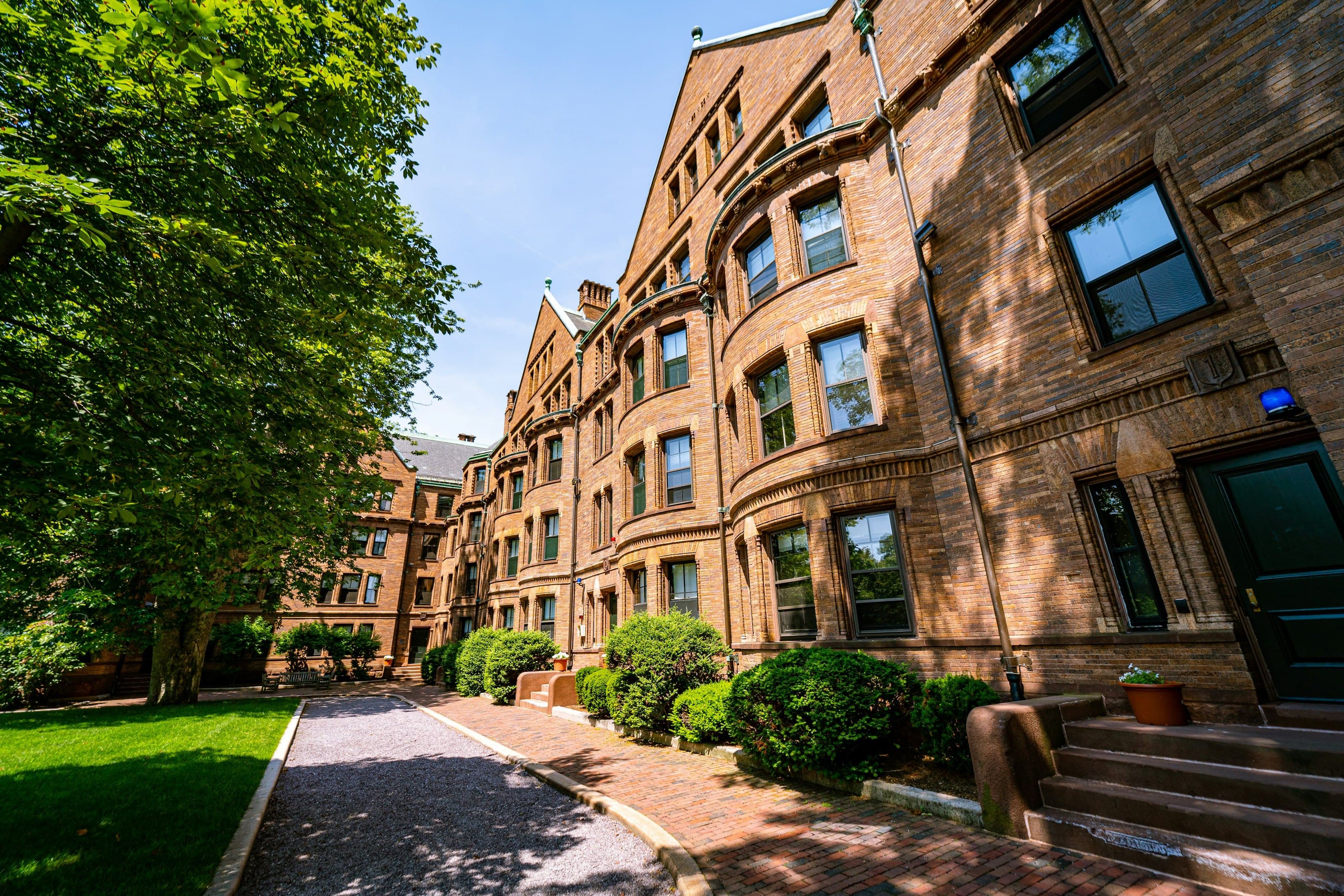
Walk from Harvard Square through Harvard Yard, past the John Harvard statue, Widener and Memorial Church, Le Corbusier's Carpenter Center, Memorial Hall, the Washington Elm, Christ Church and Radcliffe Yard to Longfellow House.
Start · Harvard Square: Where Town Meets Gown
DirectionsStops
- 1
Harvard Square: Where Town Meets Gown
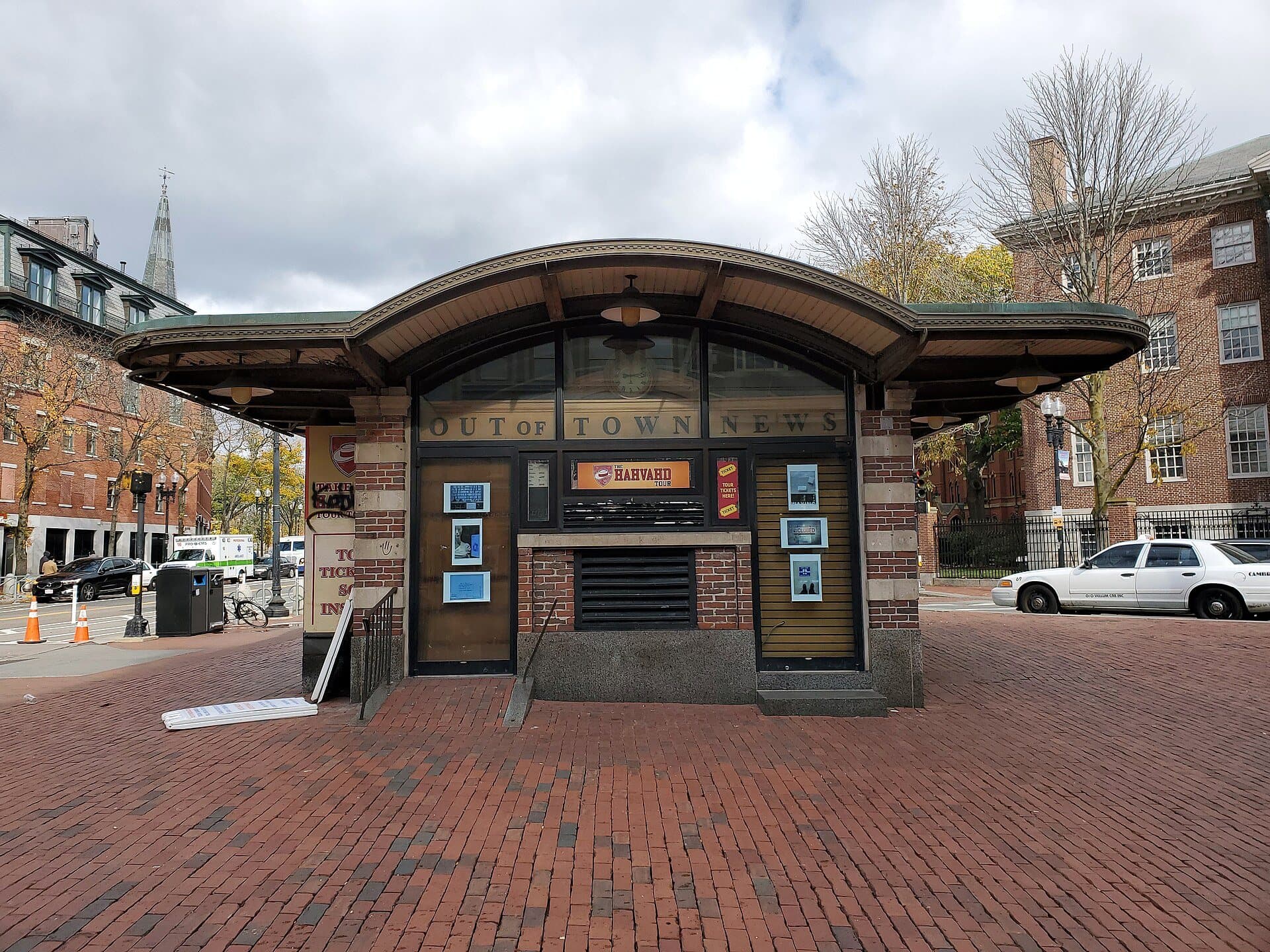
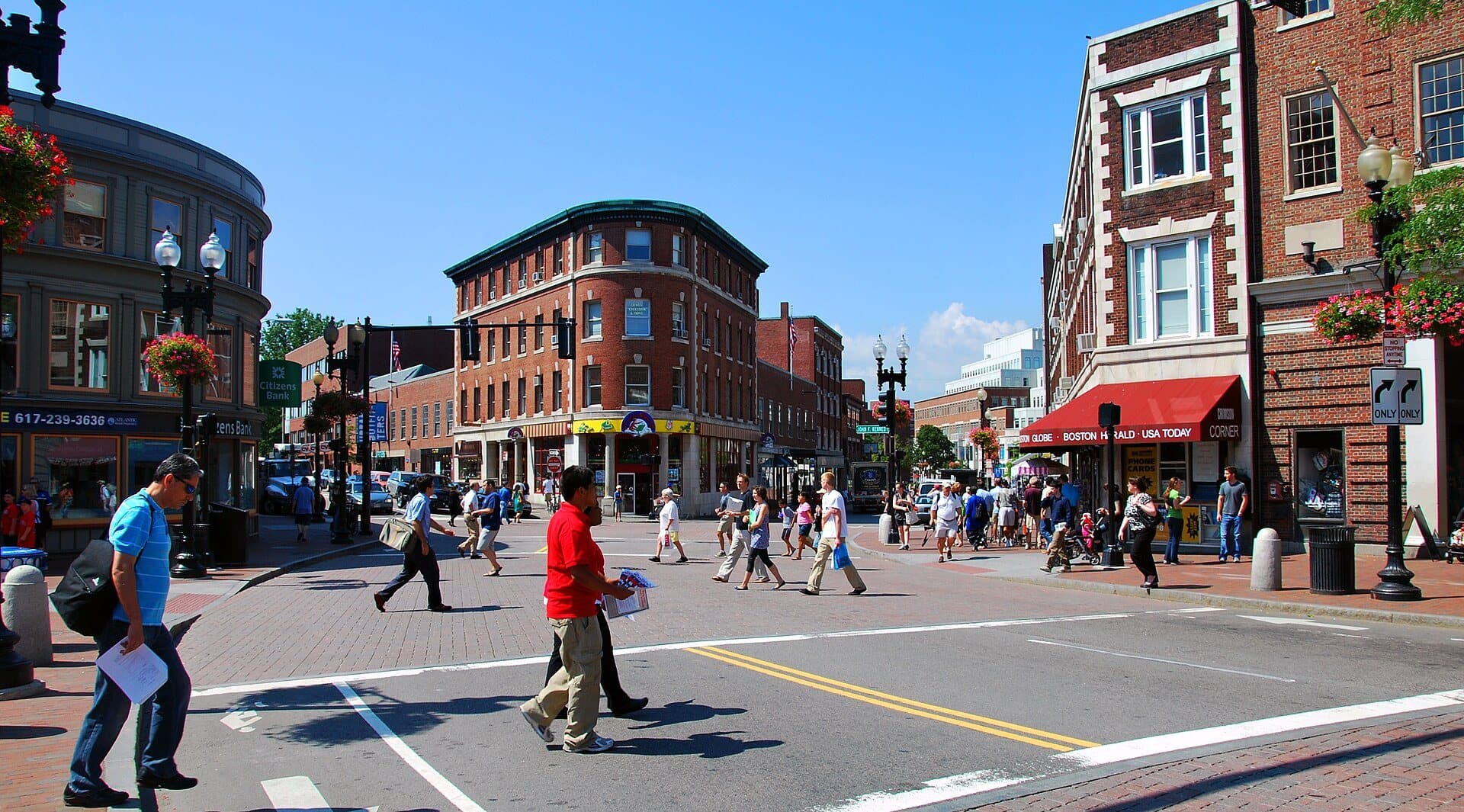
A copper-roofed kiosk marks the square. It is a former subway entrance at the bend in Massachusetts Avenue. Harvard Square is where the town's main road turns around the college fence.
- 2
Johnston Gate and Massachusetts Hall: New Brick, Old Hall
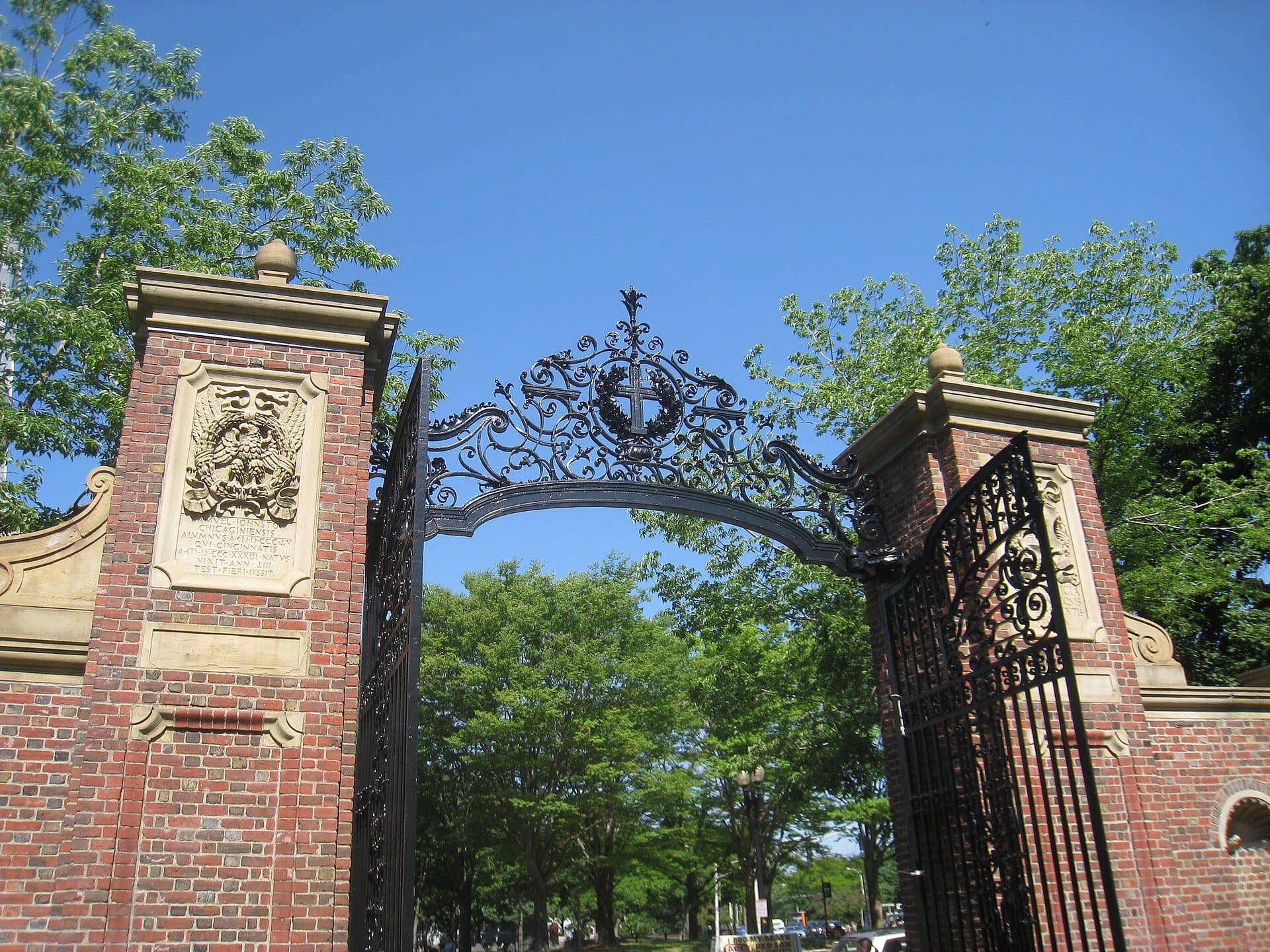
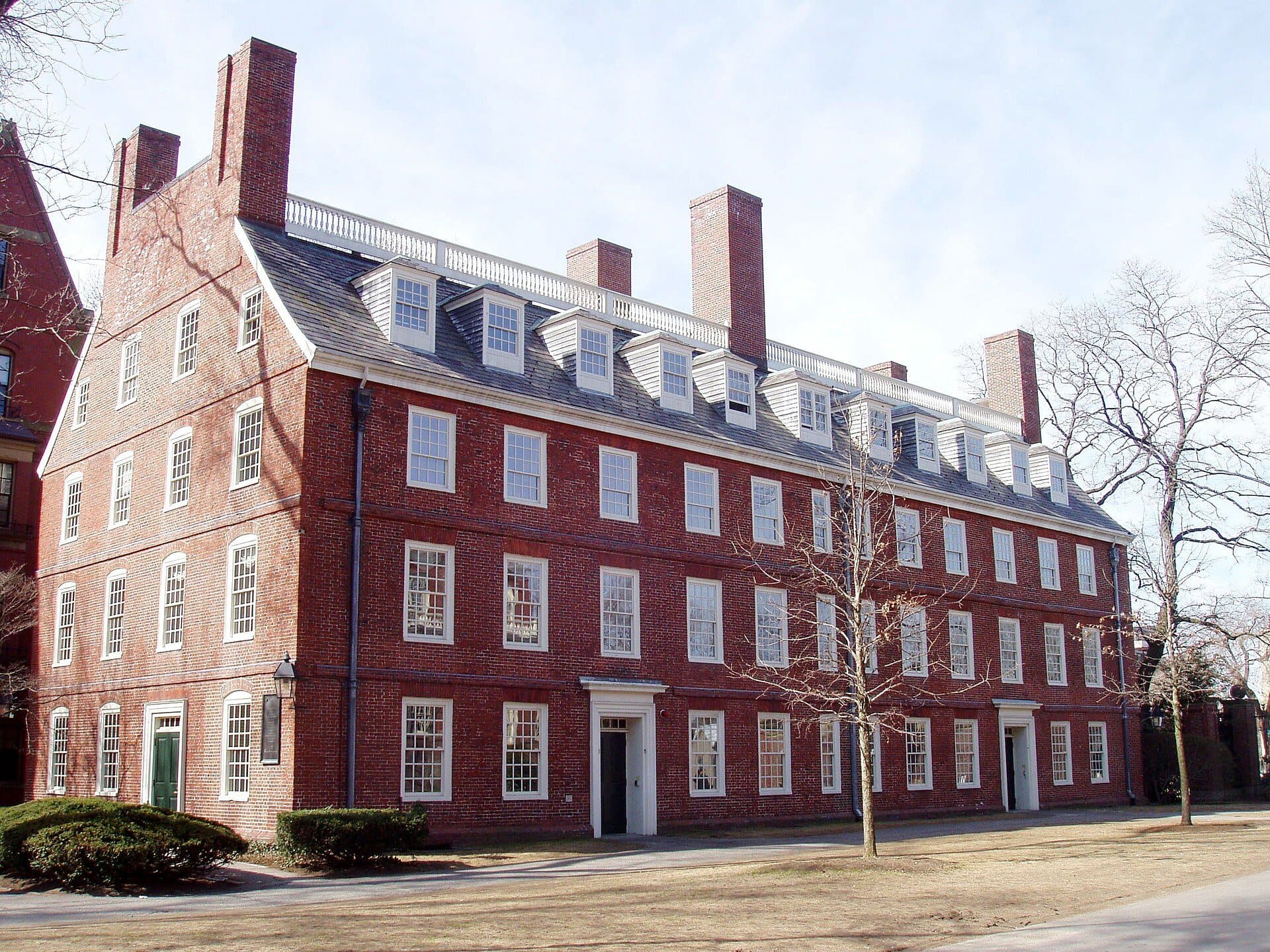
Harvard's oldest hall beside a newer gate. Massachusetts Hall dates from 1720; Johnston Gate from 1889, in brick made to look colonial.
- 3
John Harvard Statue: Three Mistakes in Bronze
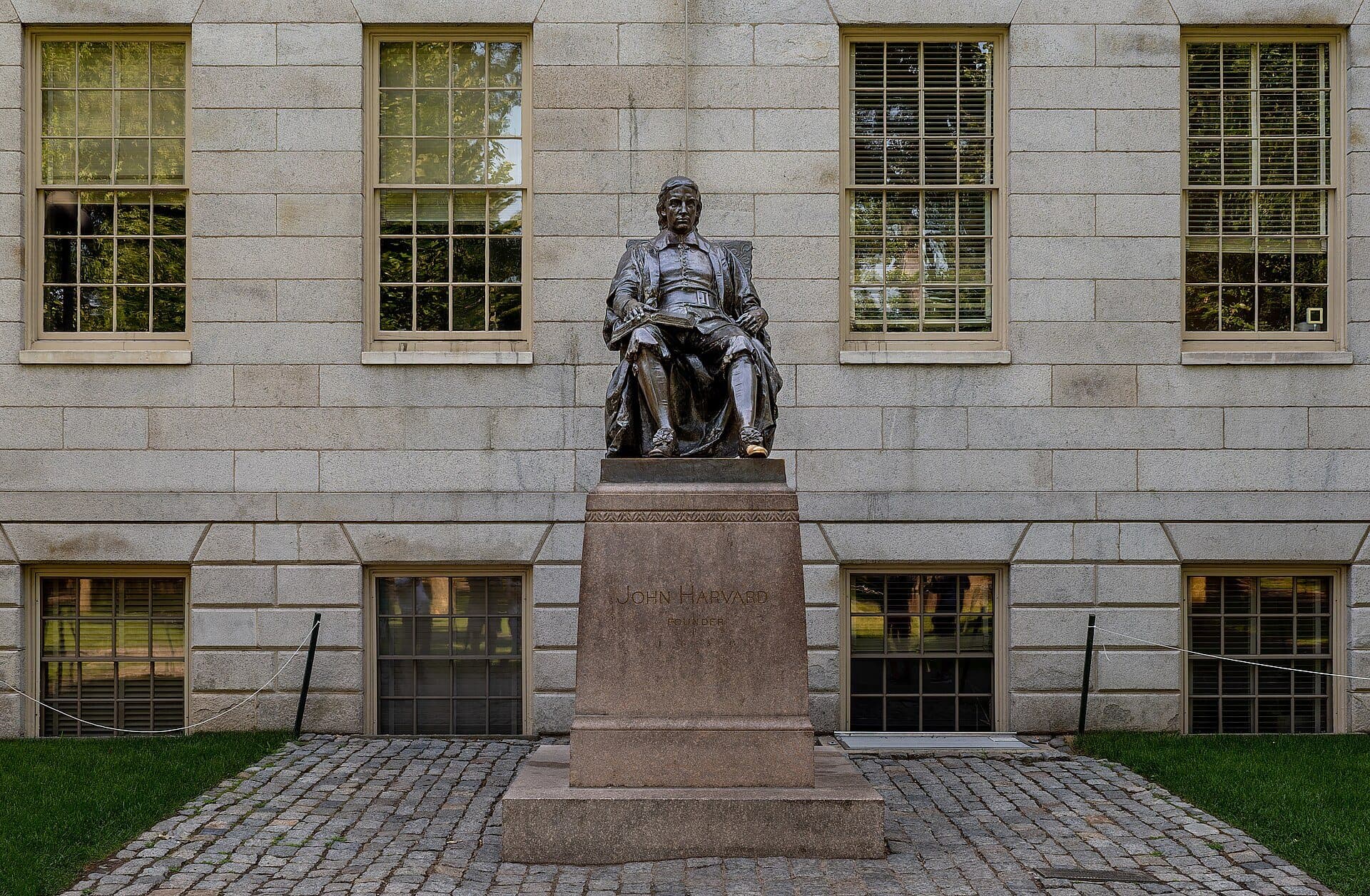
Harvard counts three errors on this statue. Behind it stands University Hall, the granite building that turned the campus inward.
- 4
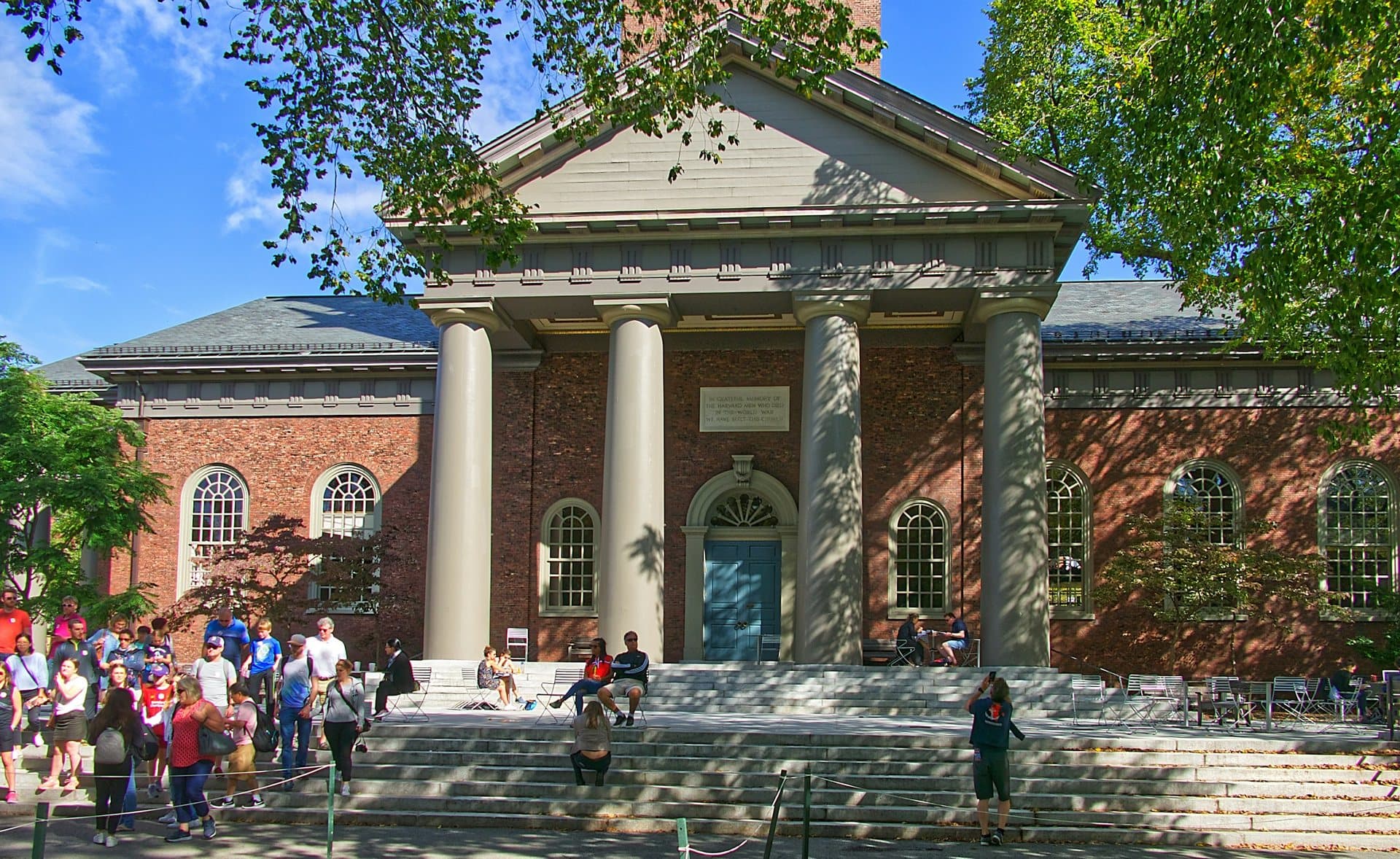
Tercentenary Theatre and Sever Hall: Library, Steeple and Carved Brick
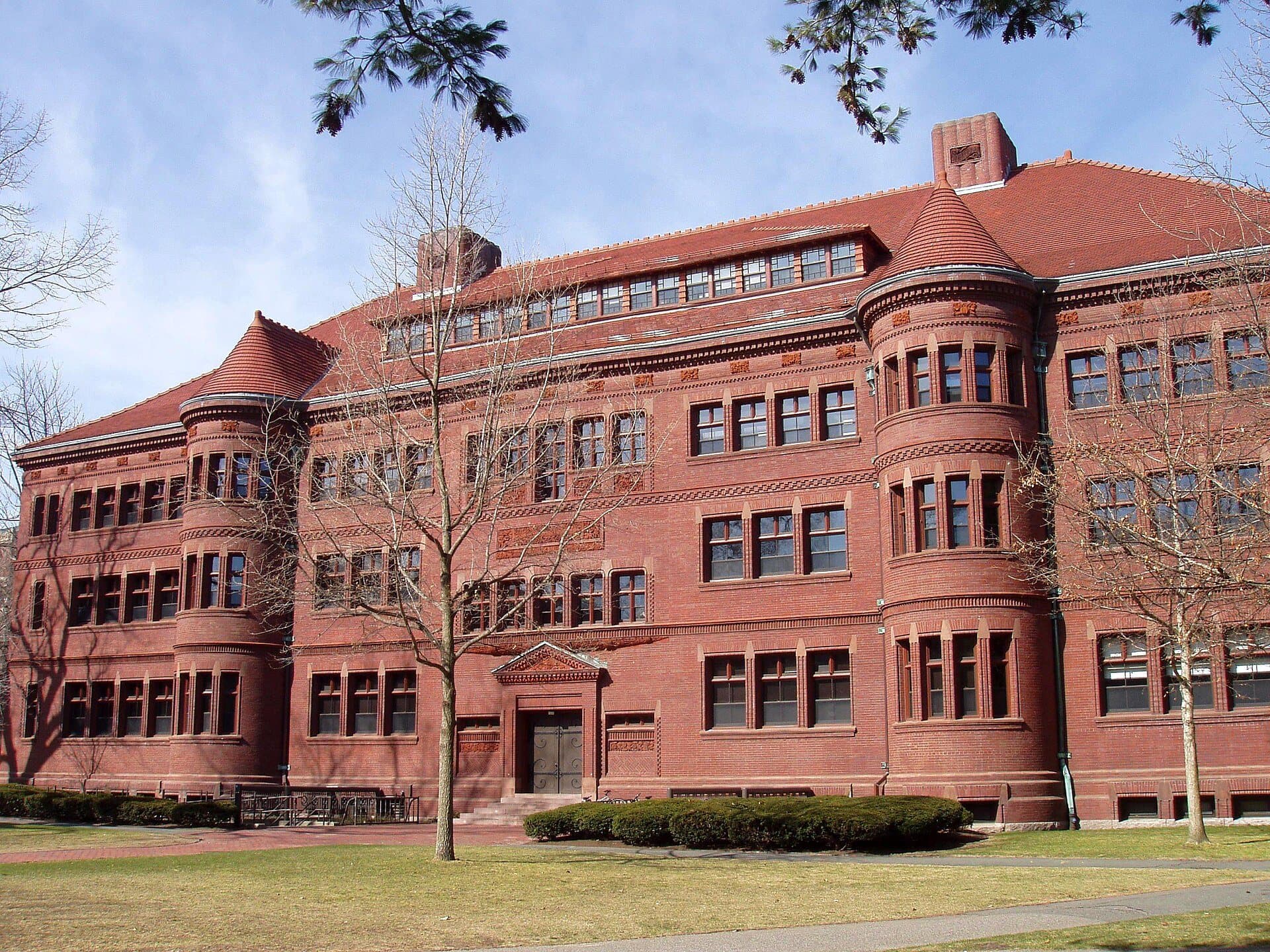
The lawn between Widener and Memorial Church. It is Harvard's ceremonial lawn. A steeple borrowed from Boston rises on one side, and Richardson's carved brick Sever Hall closes the far end.
- 5
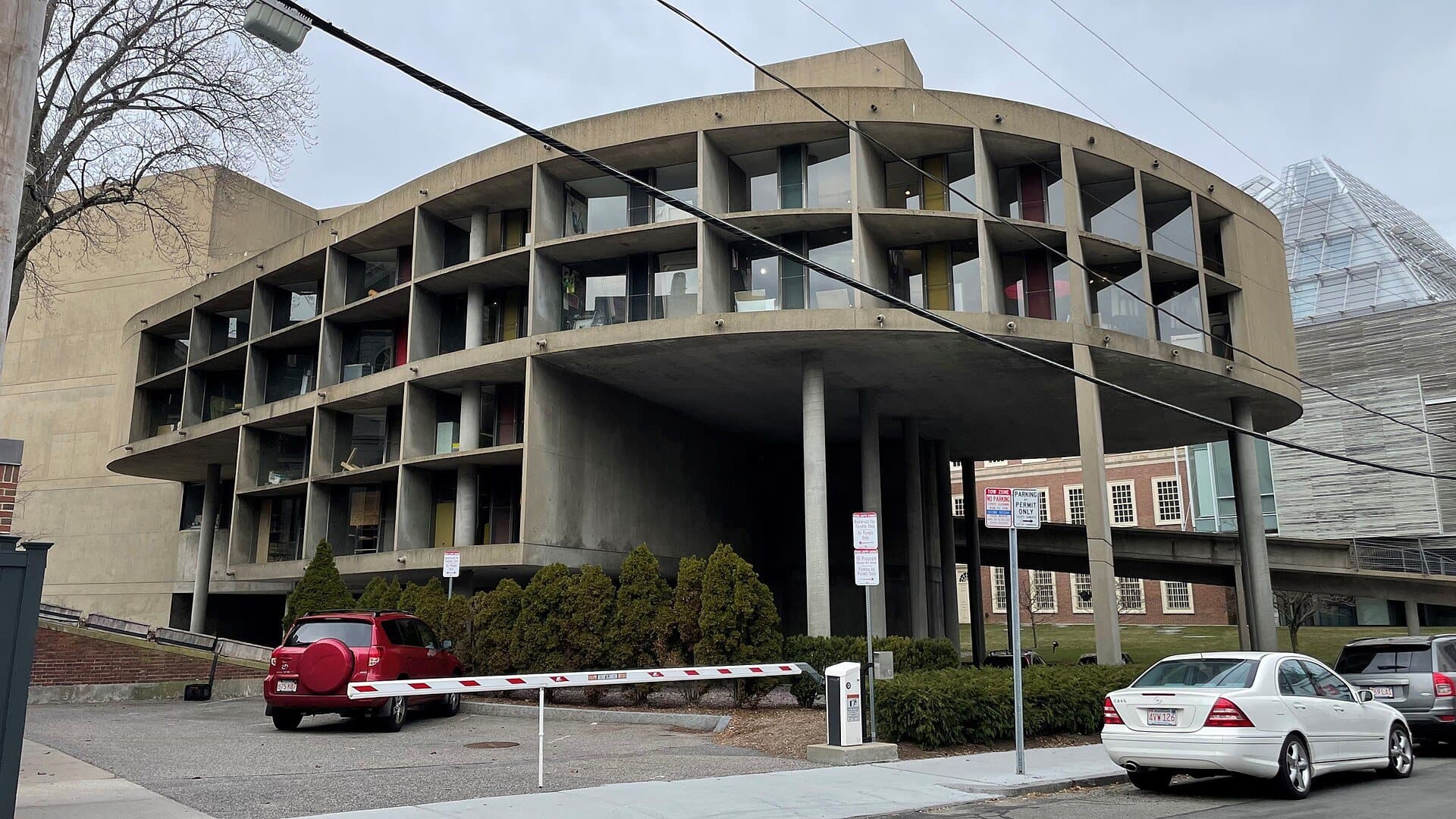
Carpenter Center: Le Corbusier Refuses the Brick
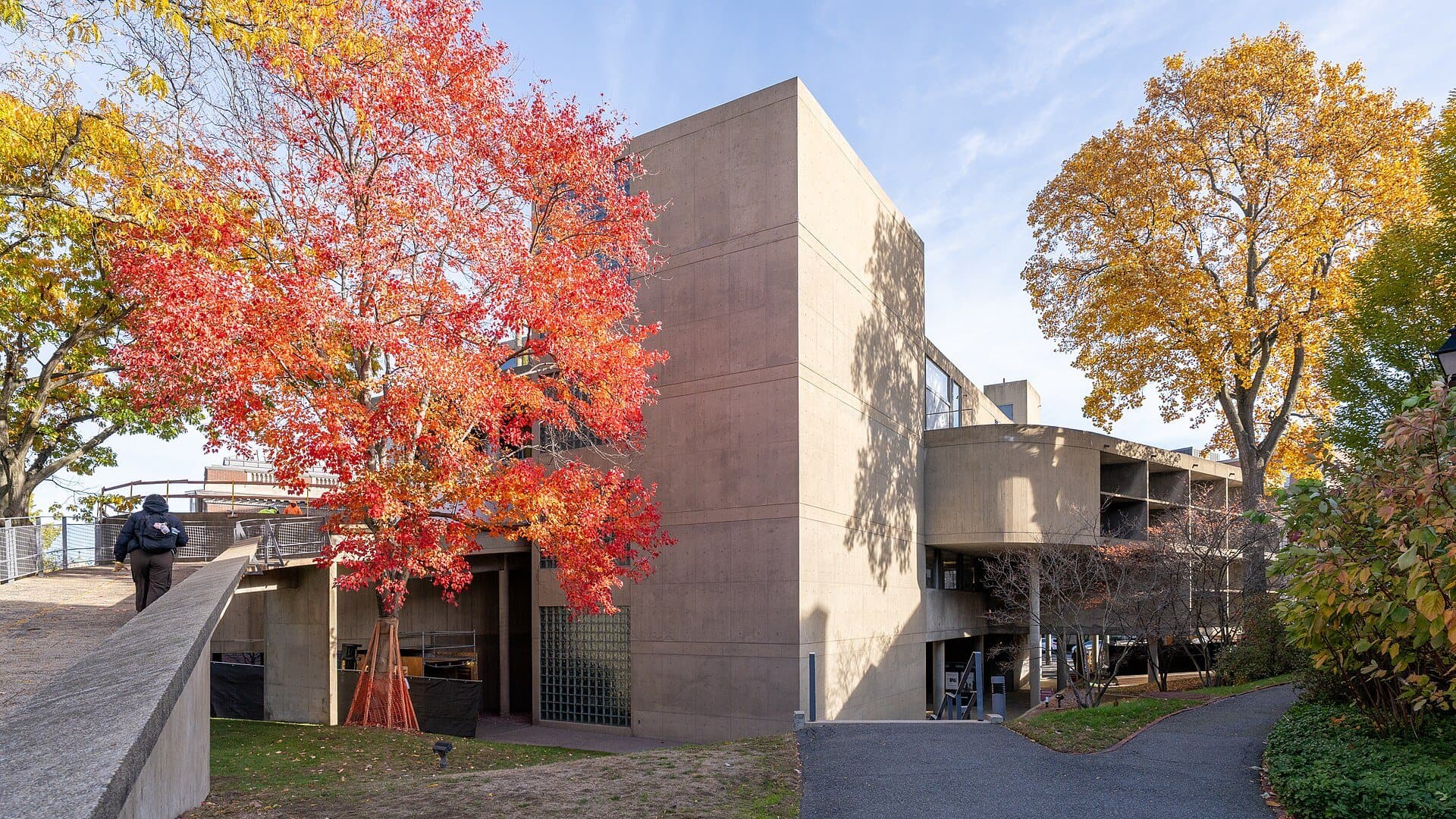
Le Corbusier's only North American building. It faces the Yard. Raw concrete, curving studios and a ramp through its middle break every rule of the brick campus.
- 6
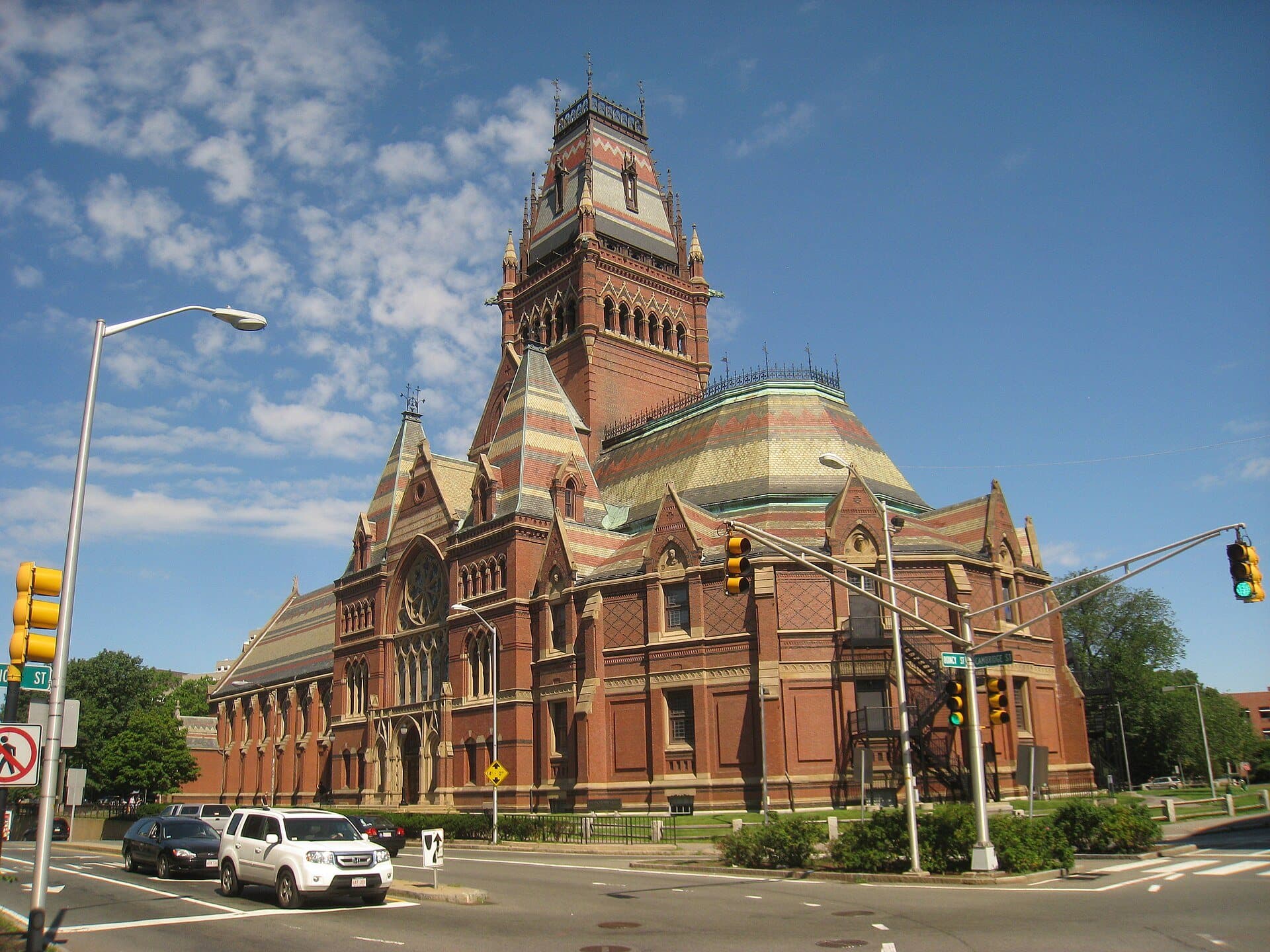
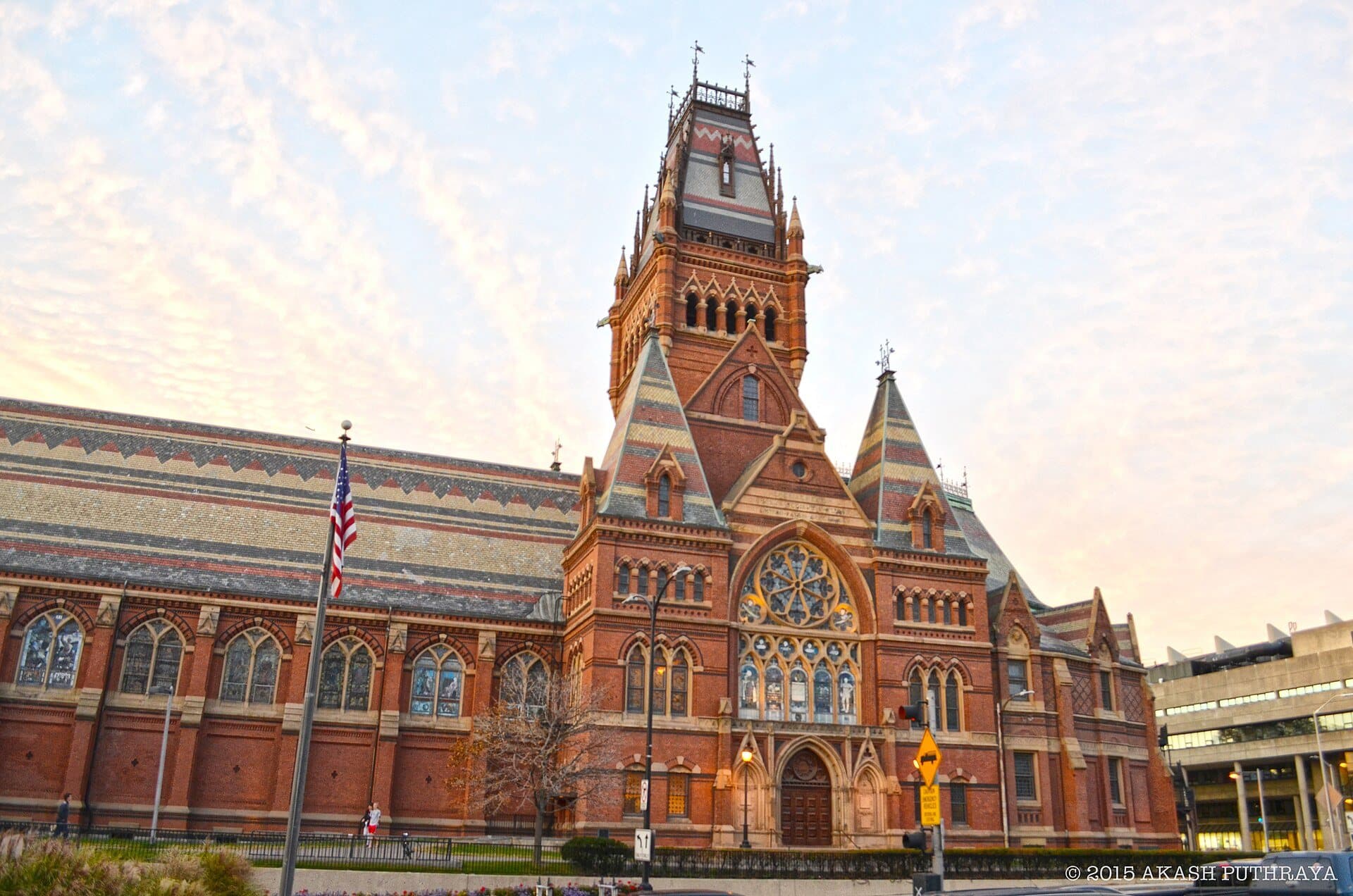
Memorial Hall: A Cathedral That Is Not a Church
A Civil War memorial built like a cathedral. Harvard's memorial is striped Gothic. It holds a dining hall, a theater and a hall of names, under a spire rebuilt in 1999.
- 7
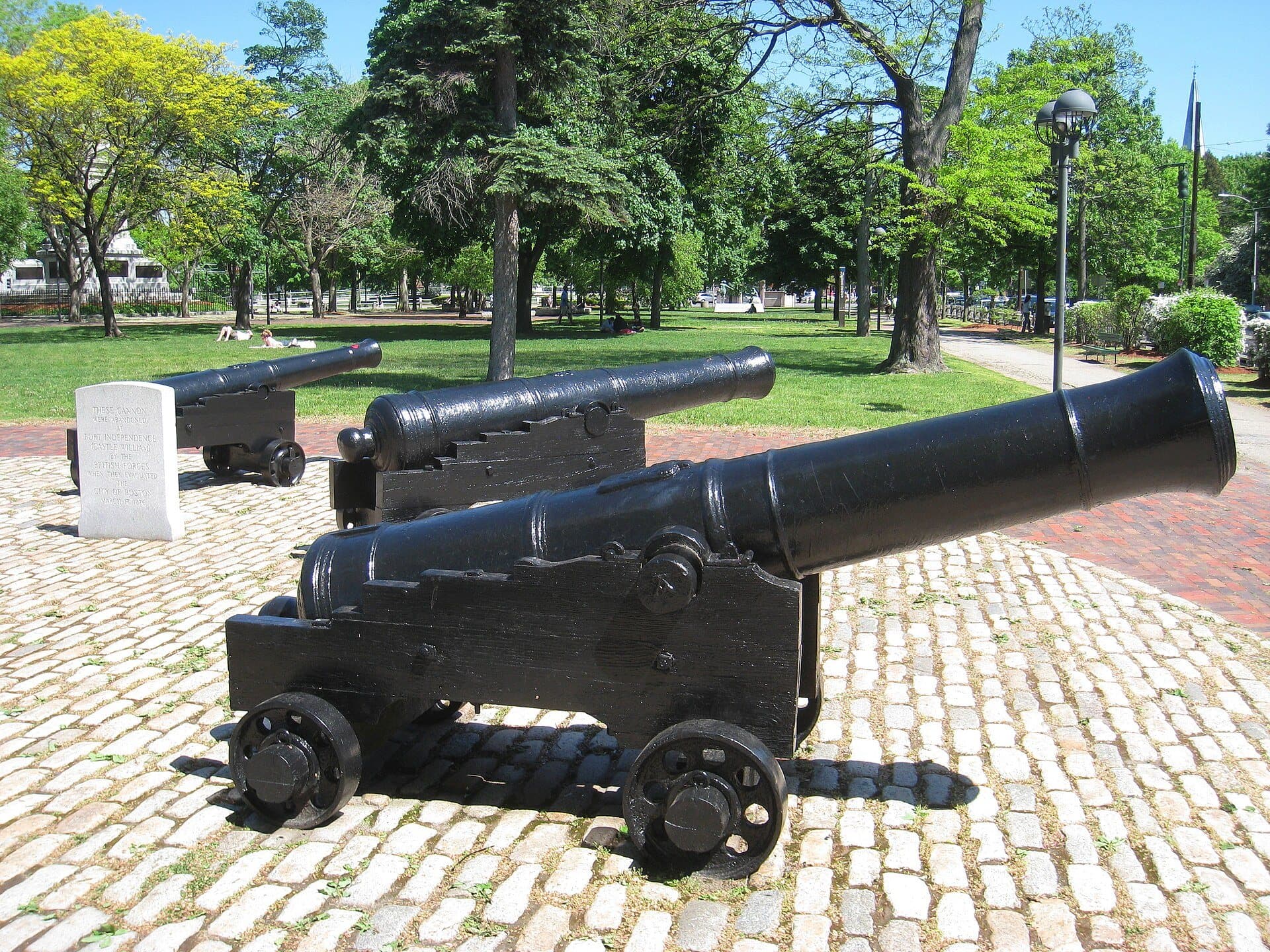
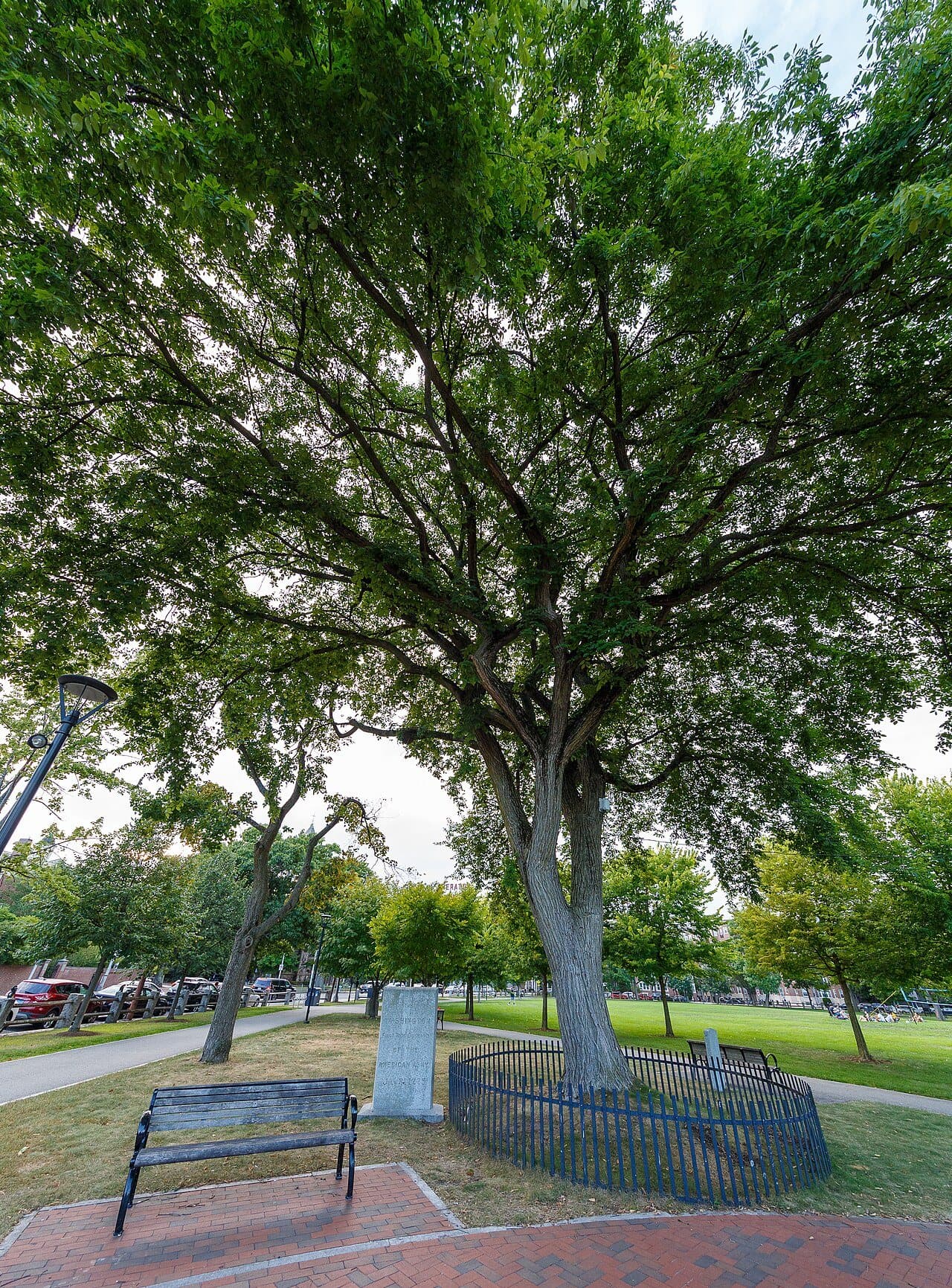
Cambridge Common and the Washington Elm: A Legend in Granite
A granite marker for the Washington Elm legend. It says Washington took command under an elm here. The record of that day tells a plainer story, and the tree today is a much younger one.
- 8
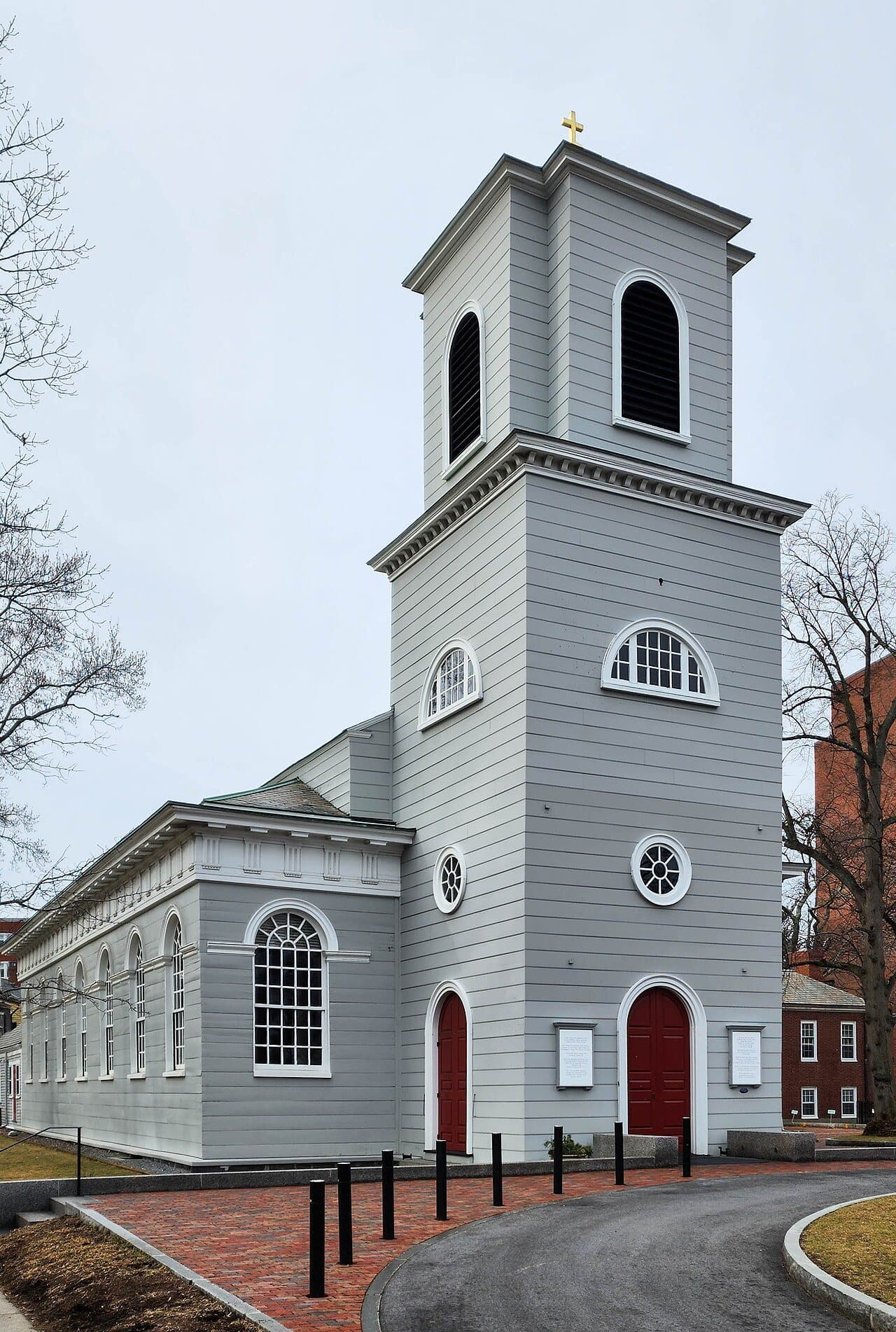
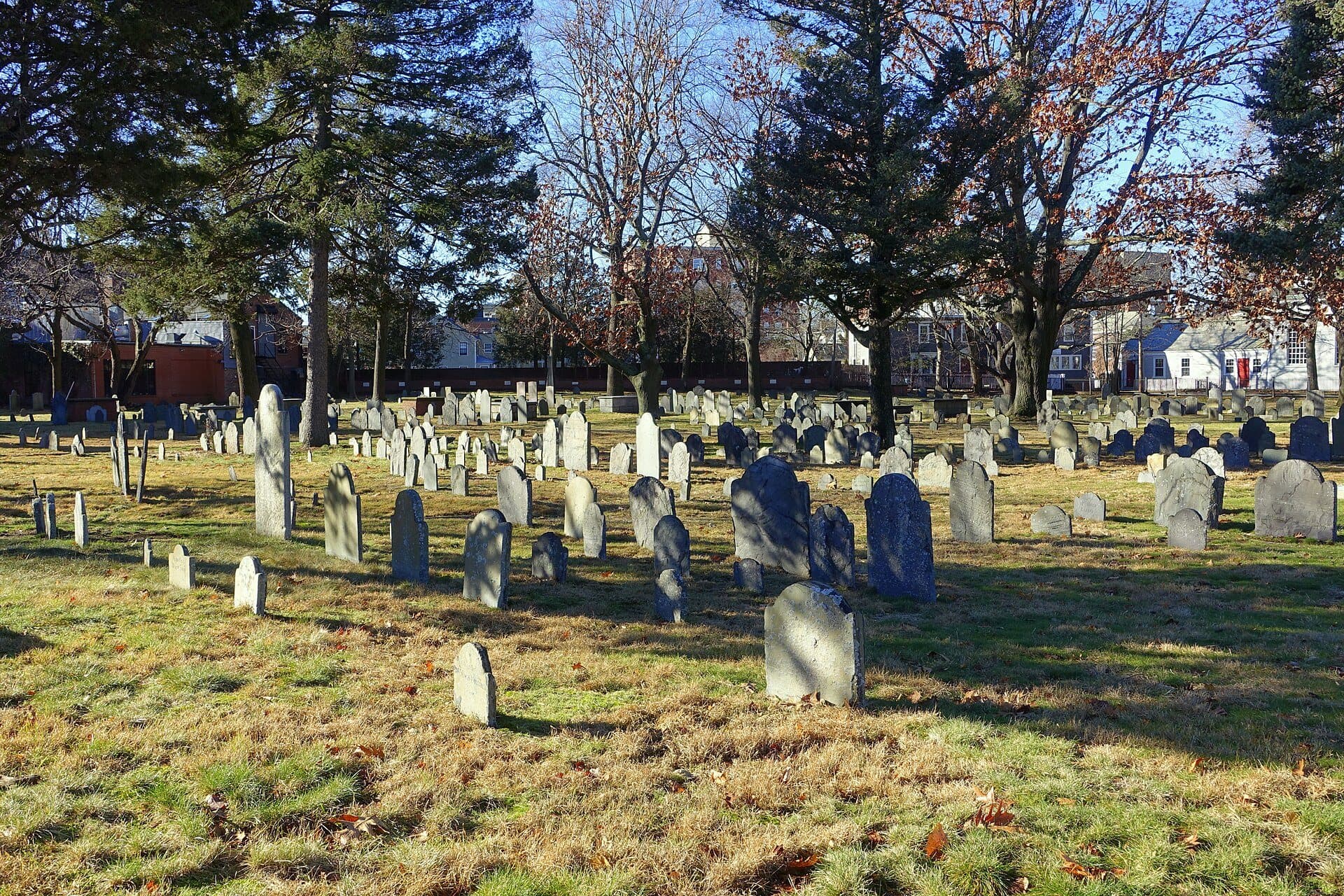
Christ Church and the Old Burying Ground: Wood Dressed as Stone
A wooden church built to look like stone. It is the oldest church in Cambridge. Beside it, slate headstones from the colonial town mark Harvard presidents and Black soldiers of the Revolution.
- 9
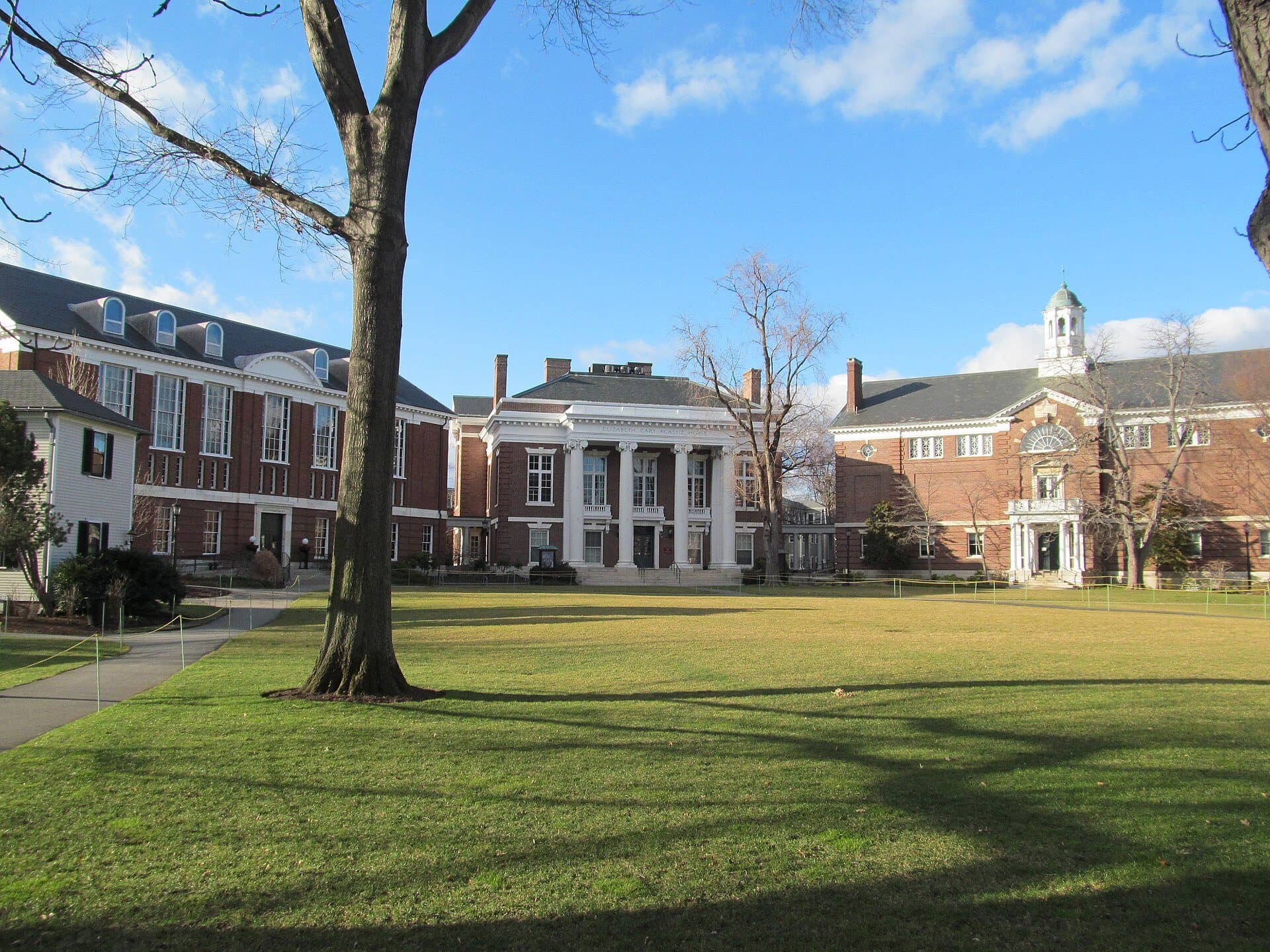
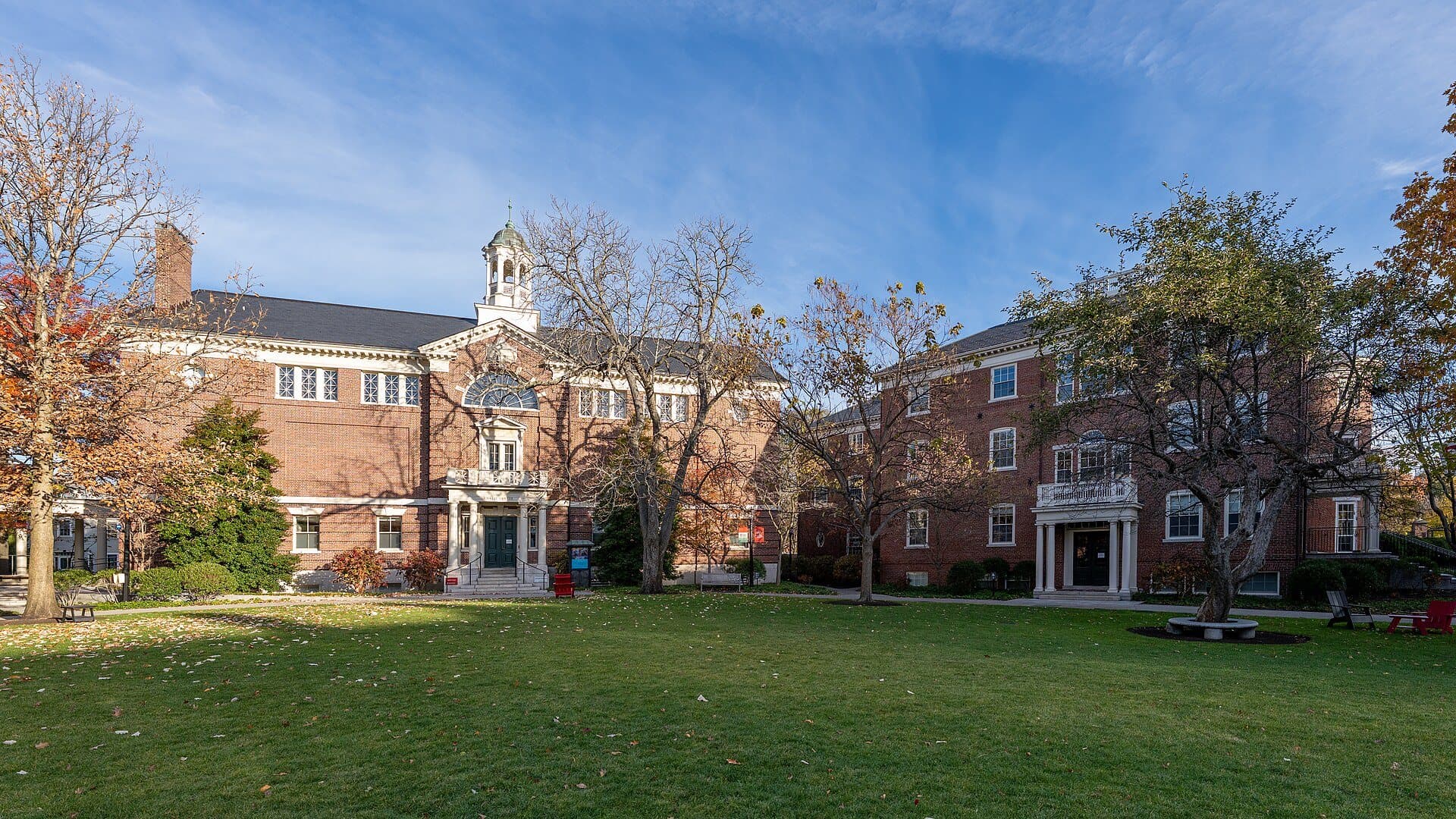
Radcliffe Yard: The Quad Harvard Copied
The women's college built a quad first. Its closed brick quadrangle came before Harvard's. Even here, a 1920s hall copies the granite University Hall in red brick.
- 10
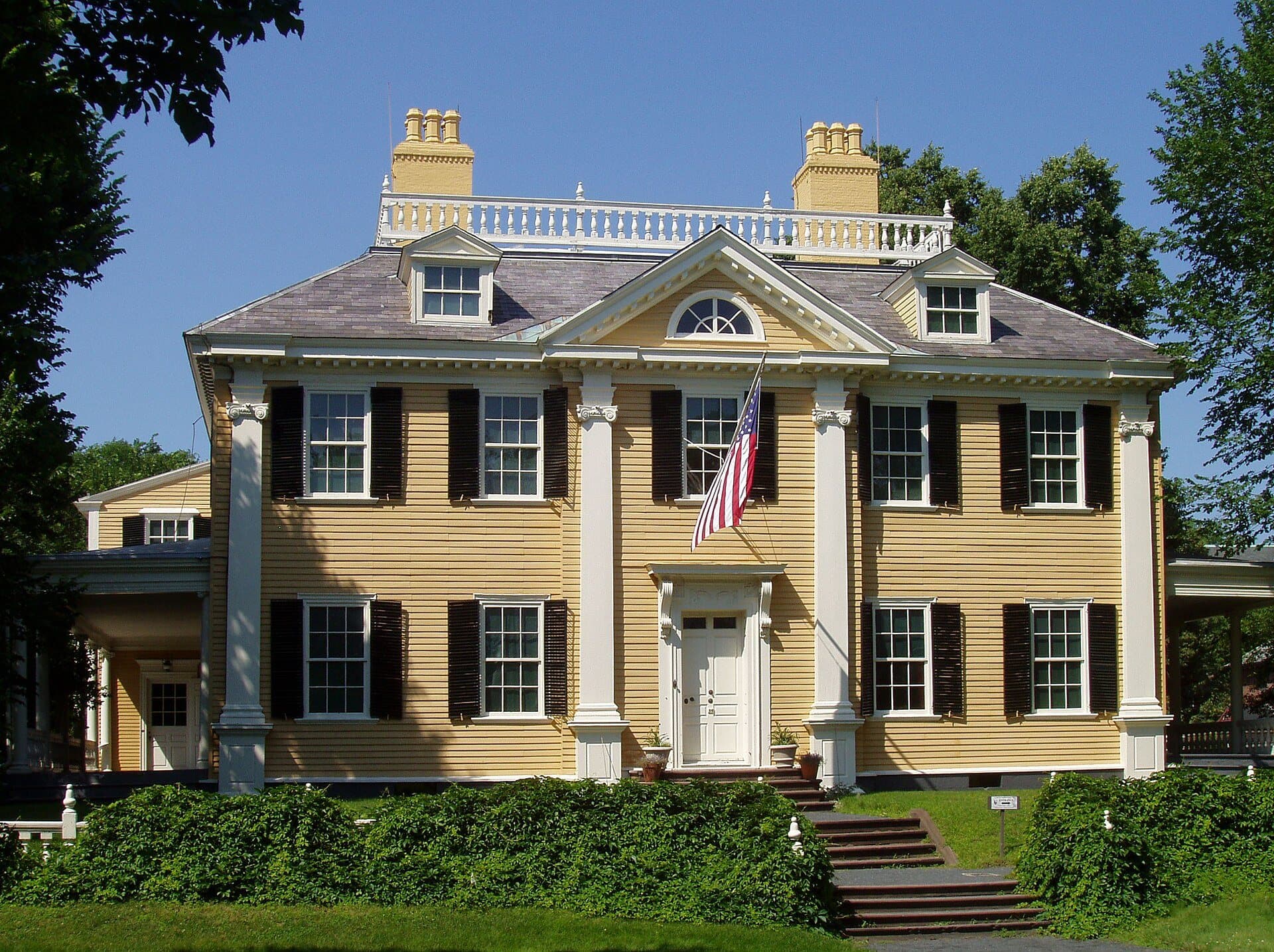
Longfellow House on Brattle Street: Tory Mansion, Headquarters, Poet's Home
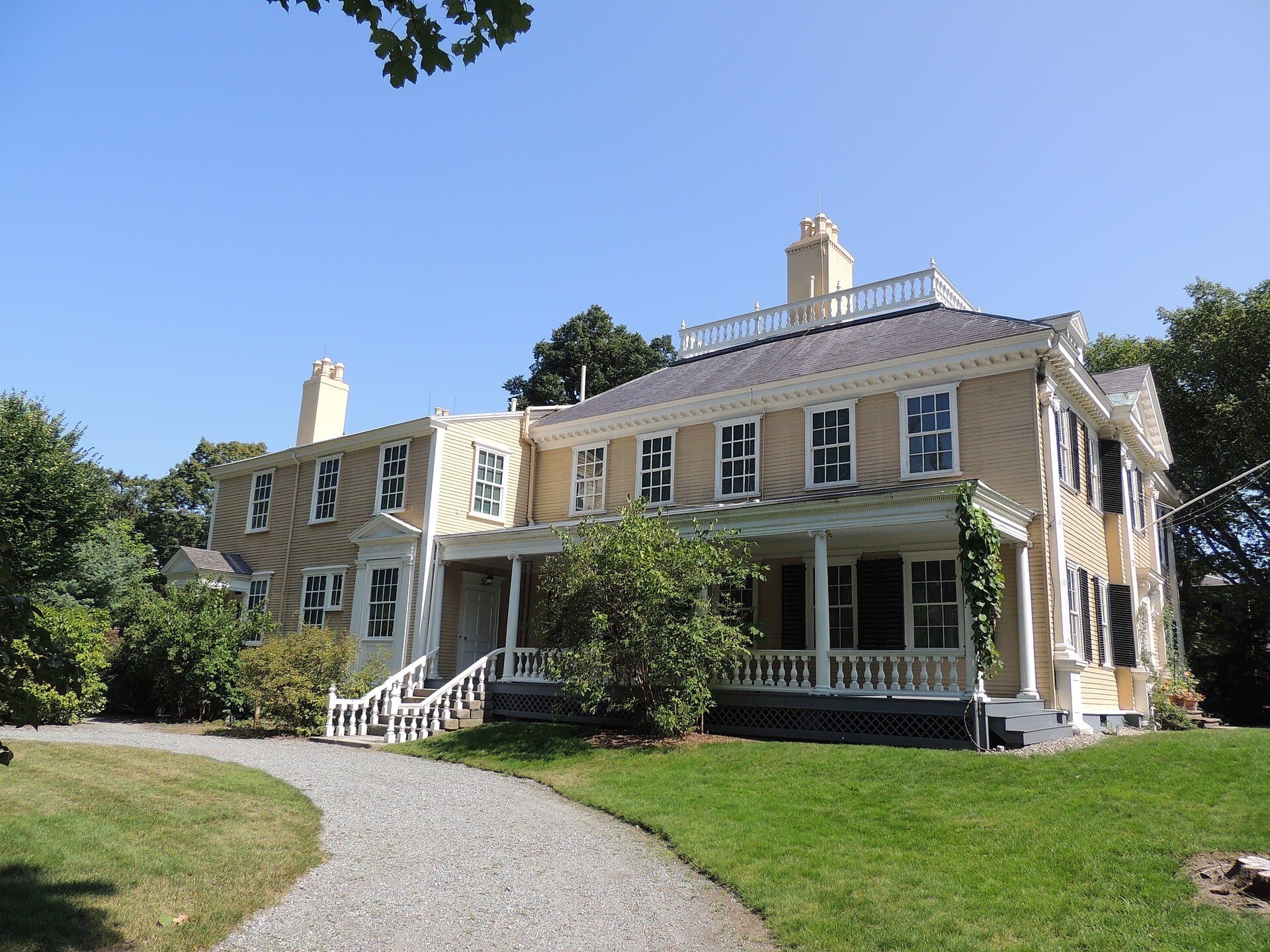
One Georgian house holds three American stories. It stands on Brattle Street. A loyalist planter built it, Washington made it his headquarters and Longfellow made it famous.
Details
Best Time to Visit
A weekday morning in term time is lively but calm, before the Yard fills with tour groups; Friday to Monday until 31 October 2026 lets you add a free ranger tour of Longfellow House. Late spring and autumn are loveliest under the Yard's trees. Avoid Commencement week and Alumni Day, when the Yard is closed to the public.
Pro Tips
- •Longfellow House tours are free but limited to twelve people: from 22 May to 31 October 2026 they run hourly 10 a.m. to 4 p.m., Friday to Monday; reserve by phone the same day from 9:30 a.m. at (617) 876-4491, or walk in. Checked 4 October 2026.
- •The Carpenter Center's ramp and galleries are free and open to the public, noon to 5 p.m., Tuesday to Sunday (24 Quincy Street). Checked 4 October 2026.
- •The Cambridge Kiosk in Harvard Square reopened in May 2025 as a free visitor information center.
- •Harvard Square station on the Red Line is about ten minutes' walk back along Brattle Street from the last stop.
- •The Old Burying Ground is open dawn to dusk; enter by the gate on Garden Street beside Christ Church to look for the carved slate headstones.
Safety & Precautions
- •Harvard Yard is open to walkers but can close to the public for Commencement, Alumni Day or a security event (it was ID-only during the 2024 encampment and on 27 March 2025). If a gate is locked, follow the fence instead: from the Massachusetts Avenue sidewalk you can see Massachusetts Hall and Harvard Hall through Johnston Gate, then walk along the fence to Quincy Street and north on its Yard-side sidewalk to the Carpenter Center. Stops 5 to 10 are outside the Yard.
- •The route leaves the Yard by Loeb House Gate on Quincy Street, open 6 a.m. to 7 p.m. After 7 p.m. leave by Sever Gate, directly behind Sever Hall (open 24 hours), and walk along Quincy Street to face the Carpenter Center. Harvard says gate openings are subject to change. Checked 4 October 2026 against Harvard's list of November 2025.
- •The Harvard Square plaza around the kiosk is a construction site through fall 2026, with crosswalk work due in spring 2027: stay on the sidewalks and never enter the fenced area. Checked 4 October 2026.
- •Never enter Harvard's buildings on this walk: Widener Library is for Harvard ID holders, Massachusetts Hall is offices and a dormitory, and Radcliffe Yard's buildings are offices.
- •Mason Street, where it meets Brattle Street, has no traffic lights; cross with care. Watch for cyclists on Cambridge Common's paths.
- •There are a few short flights of steps: inside the Yard on the way to Quincy Street, and up into Radcliffe Yard from Appian Way (a step-free entrance is on Brattle Street).
- •The Old Burying Ground is open dawn to dusk only; after dark, stay on the public path beside it.
Travel advisory: Exercise Normal Precautions (Level 1).
Gallery
Related Reading
Go deeper on what you'll see, hear, and walk through.
Overview
Best Self-Guided Walking Tours in Boston (2026)
4 min
Overview
Boston Travel Guide: How Many Days, Getting Around, When to Go (2026)
4 min
Overview
How to See Boston: A City of Lines
12 min
Overview
One Day in Boston: A Walkable Downtown Itinerary (2026)
8 min
Thematic
Best History Walking Tours in Boston (2026)
2 min
Companion
The City the College Is Inside Of: How Cambridge Out-Voted Its Universities Three Times
12 min
Deep dive
105 Brattle Street: Washington's Headquarters and Longfellow's House
9 min
Read the walk
The full story of Harvard Square and Harvard Yard: A Past Made to Measure, in words. Prefer to listen? Play it narrated, from home or on location.
Introduction
Cambridge, Massachusetts, sits just across the Charles River from Boston, in the United States. It is home to Harvard, the first college in the American colonies, founded in sixteen thirty-six. And it has a rare talent for building its own past. In Harvard Yard, a statue gets three facts wrong in four words. A gate from the eighteen eighties is built of brick made to look Puritan. A famous tree marks a ceremony that nobody put in print for sixty-two years. Right beside them stand buildings that really are as old as they look. The pleasure is telling which is which.
Over ten stops and about a mile and a third, a little over two kilometers, the route starts in Harvard Square, passes through Harvard Yard to the great lawn where Commencement is held, crosses to Memorial Hall and Cambridge Common, and ends on Brattle Street at Longfellow's house. Allow about ninety-five minutes.
Three people are worth knowing: Daniel Chester French, sculptor of the statue at the heart of the Yard; Le Corbusier, whose concrete building refuses to look old; and Henry Wadsworth Longfellow, the poet who turned the colonial past into legend.
If Harvard Yard is closed for an event, the tour notes give a way round along the fence.
When you arrive at Harvard Square, on the Yard side of Massachusetts Avenue, begin with stop one.
1. Harvard Square: Where Town Meets Gown
Welcome to Harvard Square, in Cambridge. This first stop is on the Yard side of Massachusetts Avenue, by the iron fence.
Across the avenue, in the middle of the Square, find the small building with the vaulted copper roof. It went up in the late nineteen twenties as an entrance to the subway. From nineteen eighty-three to twenty nineteen it was Out of Town News, the legendary newsstand. In May twenty twenty-five it reopened as the Cambridge Kiosk, a visitor information center and gathering space. The plaza around it has been fenced off for rebuilding into the autumn of twenty twenty-six; if the fence is still up, enjoy it from this side of the street.
Now look at the street itself. Massachusetts Avenue comes in from the east and, right here, turns sharply north. The town's main road bends around the college. This is where town meets gown, and the two have argued across it for a long time. In the nineteen sixties, students pushed for a livelier public square, and a small sunken arena called the Pit became its stage. In the early nineteen seventies, local people blocked the John F. Kennedy Library from being built near the Square, worried about what it would do to the city.
Then there is the fence. It looks as if it has stood here since the Puritans. It has not. Harvard's gates were built mostly between eighteen eighty-nine and nineteen thirty-six, twenty-five of them, and the fence and gates were widely imitated.
Keep that in mind as you go. Cambridge mixes the truly old with things made to look old on purpose, and the first test is just up this sidewalk.
Follow the route along the fence. Next, the oldest gate in the Yard, and the oldest building behind it.
2. Johnston Gate and Massachusetts Hall: New Brick, Old Hall
Walk on along the fence to Johnston Gate, the big gateway of rough red brick and black iron, go through it, and stop just inside.
Two brick buildings face each other here. The long one on your right, with the steep, double-pitched roof, pairs of chimneys at each end, and a clock on the end wall that faces the street, is Massachusetts Hall. It was finished in seventeen twenty, and it is Harvard's oldest surviving building. It was built as a dormitory. In seventeen seventy-five, six hundred and forty of George Washington's soldiers lived in it. Today the president of Harvard has offices here, and first-year students live on the upper floors.
The building opposite, on your left, with a pediment in the middle and a cupola on top, is Harvard Hall. The hall before it burned in seventeen sixty-four, and the early college library burned with it. One of John Harvard's own books is said to have survived because it was out on loan.
Notice the shape the two halls make. They frame a courtyard that opens outward, toward the street and the Common, like an Oxford college. The first Harvard faced the town.
Now look back at the gate. It looks as old as Massachusetts Hall. It is a hundred and sixty-nine years younger. It went up in eighteen eighty-nine, the first of the Yard's gates, paid for by a Chicago financier of the class of eighteen fifty-five who left ten thousand dollars in his will for a main entrance to the Yard. Look closely at the brick: coarse, uneven, darker in patches. It was made on purpose to imitate the hand-made bricks of the colonial period, and it became the campus look. You will see it everywhere from here on.
Follow the route across the Old Yard. Next, the statue everyone comes to touch.
3. John Harvard Statue: Three Mistakes in Bronze
Walk on across the Old Yard to the seated bronze figure in front of the pale granite building, and stop where you can read the pedestal.
This is John Harvard, by the sculptor Daniel Chester French, unveiled in October eighteen eighty-four. Read the inscription: John Harvard, Founder, sixteen thirty-eight. Harvard itself counts three mistakes in those words. He was not the founder: the college was created by a vote of the colony's General Court, and he never studied here. The year is wrong: the college was founded in sixteen thirty-six. And the face is not his. No authentic likeness of John Harvard exists, so French used a living student as his model.
What John Harvard really did was die young and generous. He was an Englishman, educated at Cambridge in England. When he died of consumption in sixteen thirty-eight, aged thirty, he left the new college half his estate and his library of more than four hundred books.
So the figure at the heart of the Yard is an invented Puritan, made almost two and a half centuries after the man died. It has even moved: it was first set up beside Memorial Hall, later on this walk, and came here in nineteen twenty-four.
Look at the toe, shining gold where hands rub it for luck.
Now look past him at University Hall. Compare it with the red brick at the gate. This is pale granite, with tall flat columns framing two doorways. Charles Bulfinch designed it, and it went up between eighteen thirteen and eighteen fifteen, the first stone building on the campus. It also turned the place around. The first halls faced the town. University Hall stands back and looks inward over this Yard, with a back as finished as its front, ready for the campus to come. From here on, Harvard faces in.
Follow the route past University Hall. Next, the great lawn behind it.
4. Tercentenary Theatre and Sever Hall: Library, Steeple and Carved Brick
Walk on into the wide lawn behind University Hall, among the trees, and stop where the paths cross. Stay a moment: there is a lot to see from here. This is Tercentenary Theatre, the lawn where Commencement is held. Find the broad flight of steps rising to a wall of giant…
Full narration for this stop unlocks with the tour.
5. Carpenter Center: Le Corbusier Refuses the Brick
Walk on along Quincy Street and stop on the Yard side, facing the building of bare gray concrete across the road. Count the bricks. There are none. This is the Carpenter Center for the Visual Arts, finished in nineteen sixty-three, and it is the only building in North America…
Full narration for this stop unlocks with the tour.
6. Memorial Hall: A Cathedral That Is Not a Church
Walk on across the open plaza until a huge building of striped brick and a tall pointed tower fills the view, and stop where the paths meet near its west end, with the hall on your right. This is Memorial Hall, and it looks like a cathedral. It is not a church. Read it from the…
Full narration for this stop unlocks with the tour.
7. Cambridge Common and the Washington Elm: A Legend in Granite
Walk on through Cambridge Common to its corner by Garden Street, where three old cannons sit near a young elm tree with a granite marker at its foot, and stop there. Cambridge Common, a National Historic Landmark, is the town's old pasture, cut down in seventeen twenty-four to…
Full narration for this stop unlocks with the tour.
8. Christ Church and the Old Burying Ground: Wood Dressed as Stone
Walk on along Garden Street, past the front of the wooden church with the low square tower, and stop where a path runs down between the church and the old graveyard. This is Christ Church, the oldest church in Cambridge, founded in seventeen fifty-nine by Church of England…
Full narration for this stop unlocks with the tour.
9. Radcliffe Yard: The Quad Harvard Copied
Walk on into Radcliffe Yard, the quiet lawn ringed with red brick, and stop on the path across the grass. In eighteen seventy-nine, women were barred from Harvard. A society led by Elizabeth Cary Agassiz began teaching them anyway, in rented rooms, and people called it the…
Full narration for this stop unlocks with the tour.
10. Longfellow House on Brattle Street: Tory Mansion, Headquarters, Poet's Home
Walk on along Brattle Street until a big clapboard house appears across its own raised lawn, with tall flat columns at its corners and a railing on the roof, and stop on the sidewalk in front of it. This is Longfellow House, a National Park Service site. In season, rangers lead…
Full narration for this stop unlocks with the tour.