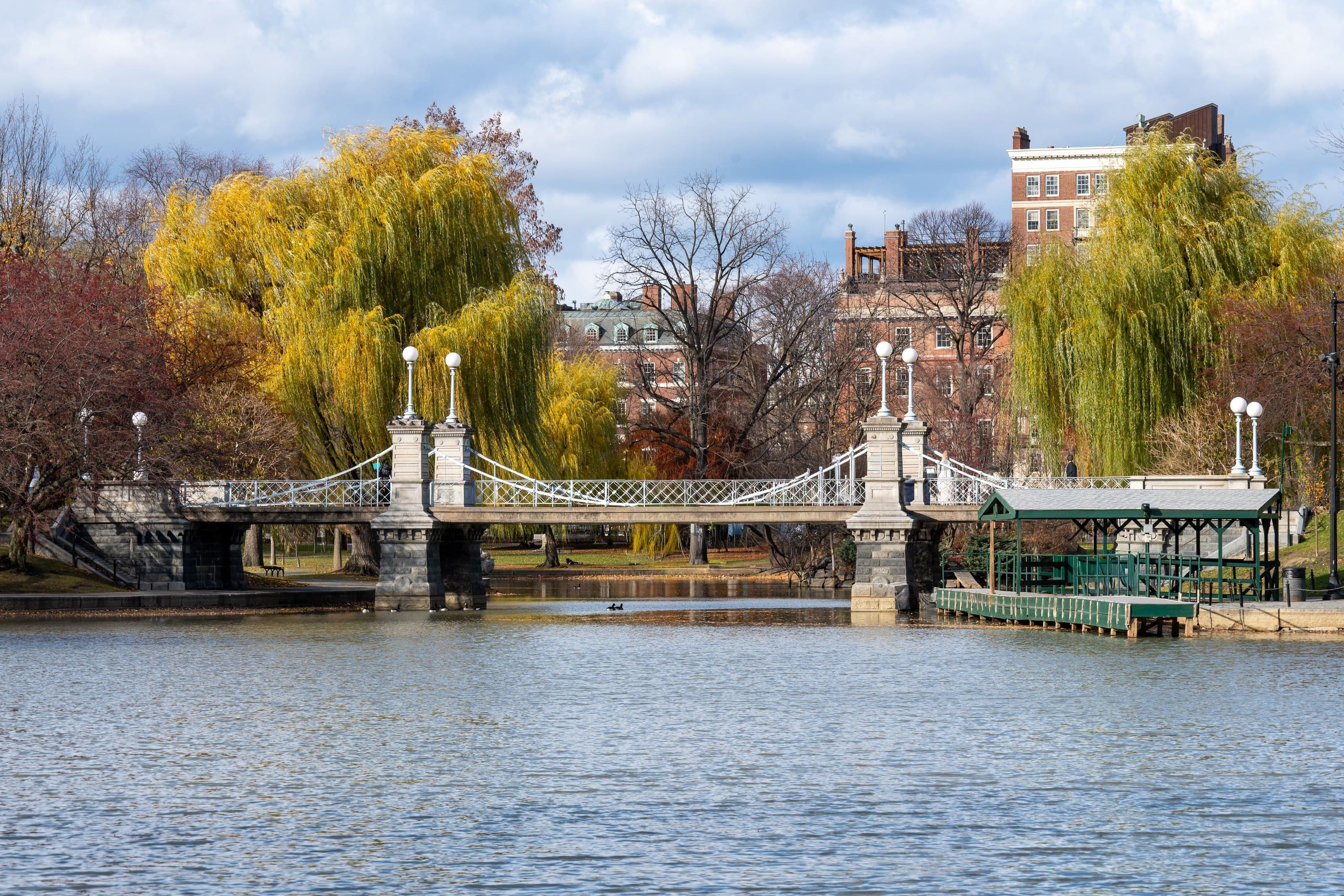
Walk down Beacon Hill past the Shaw memorial, Louisburg Square and Acorn Street, cross the Public Garden, and follow Commonwealth Avenue to Trinity Church and the Boston Public Library.
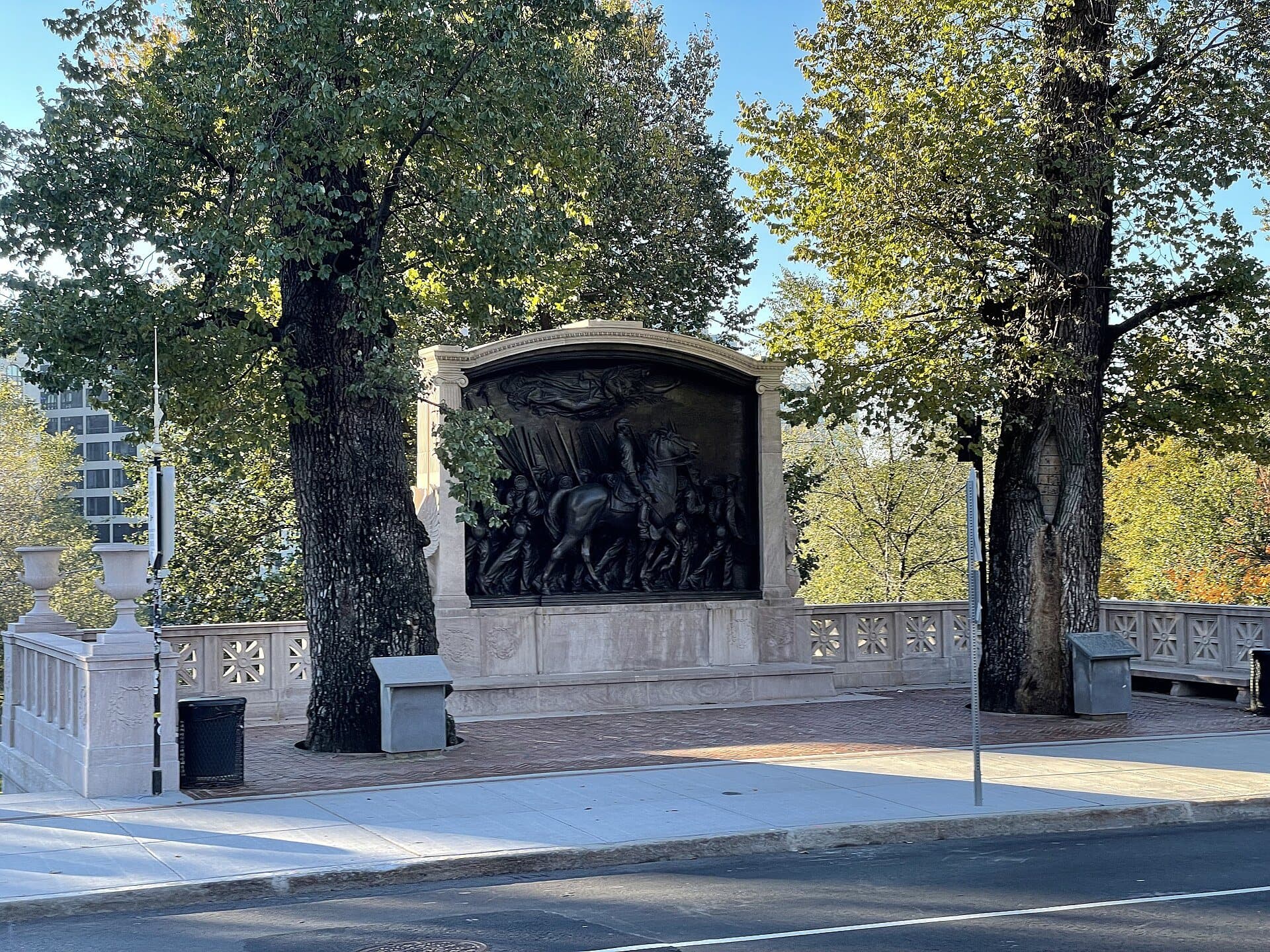
Start · Shaw Memorial: An Officer Among His Men
DirectionsStops
- 1
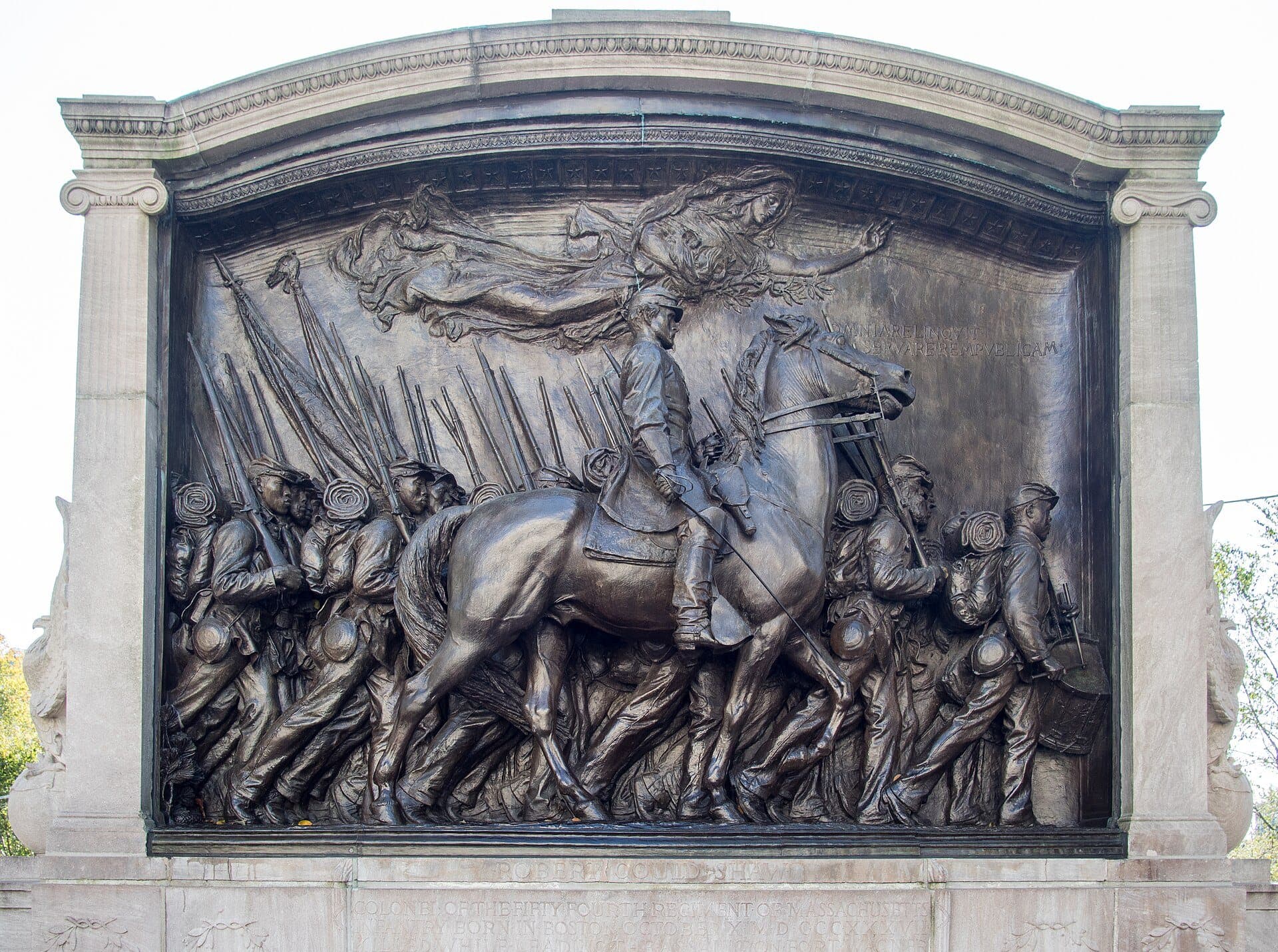
Shaw Memorial: An Officer Among His Men
Black soldiers marching off to war in bronze. The sculptor was Augustus Saint-Gaudens. Across the street, Bulfinch's gold-domed State House.
- 2
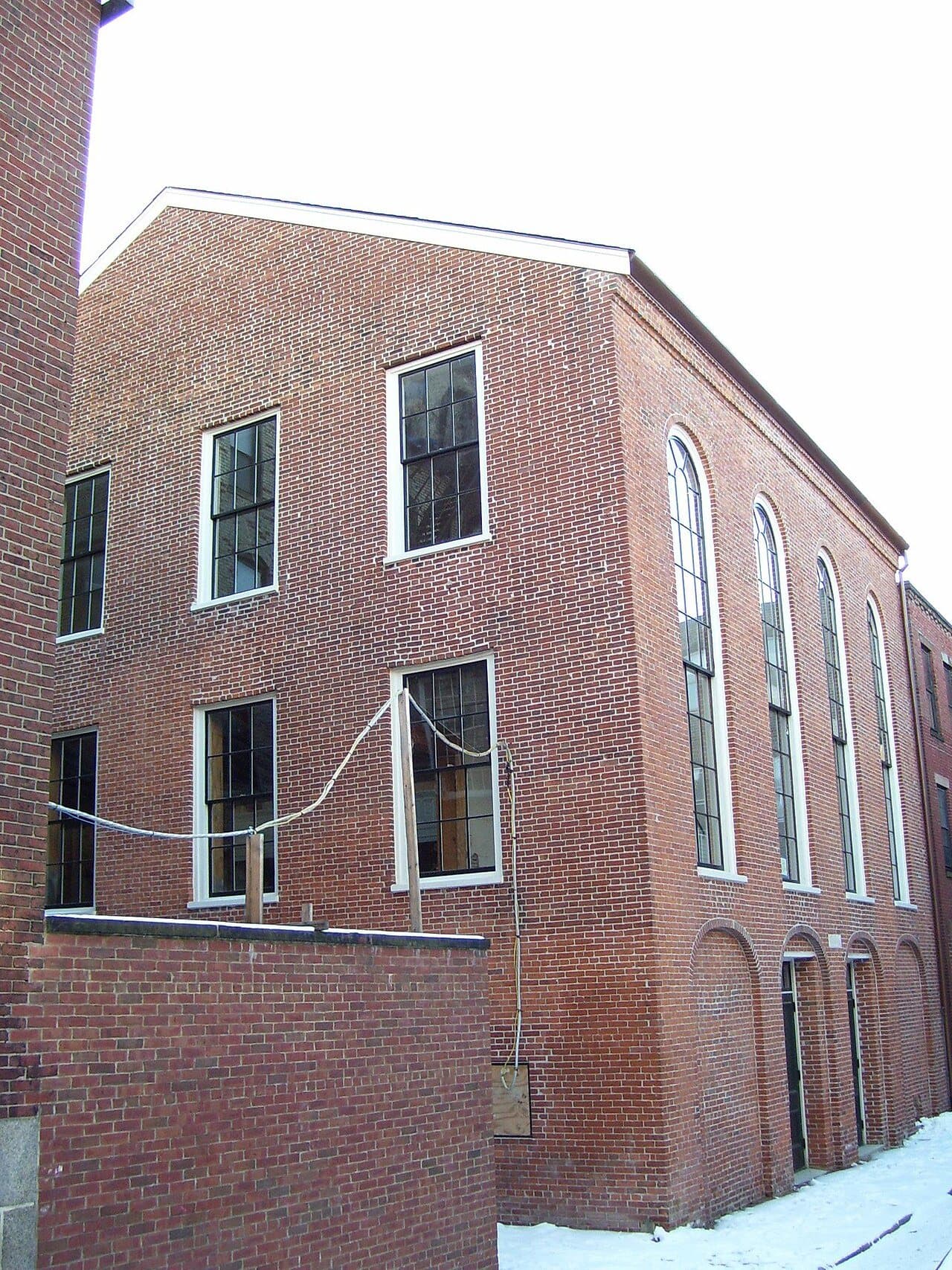
Smith Court: The African Meeting House
A church built by Black craftsmen in 1806, at the end of a quiet lane. Next door, the school at the heart of Boston's fight over segregated schools.
- 3
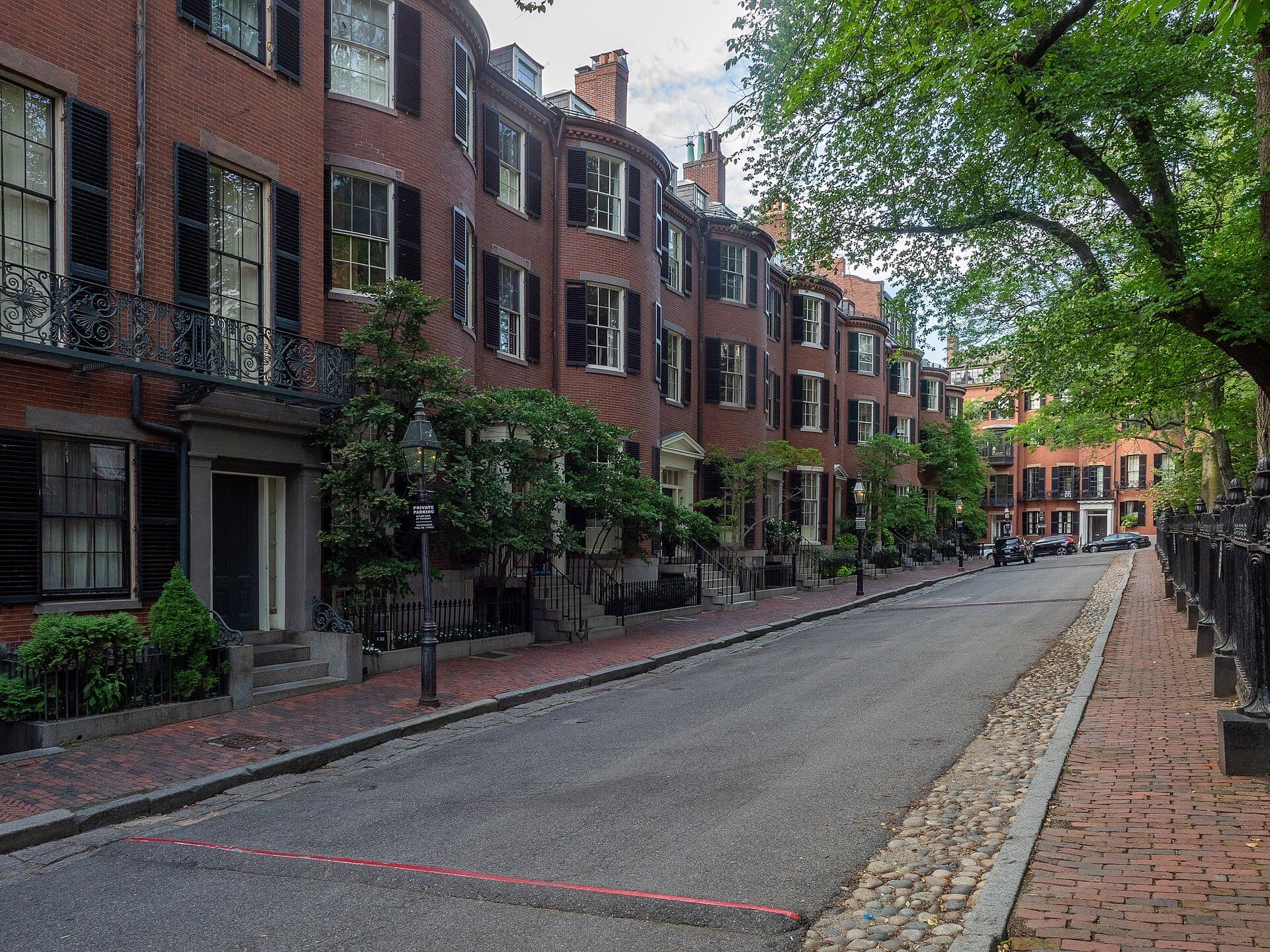
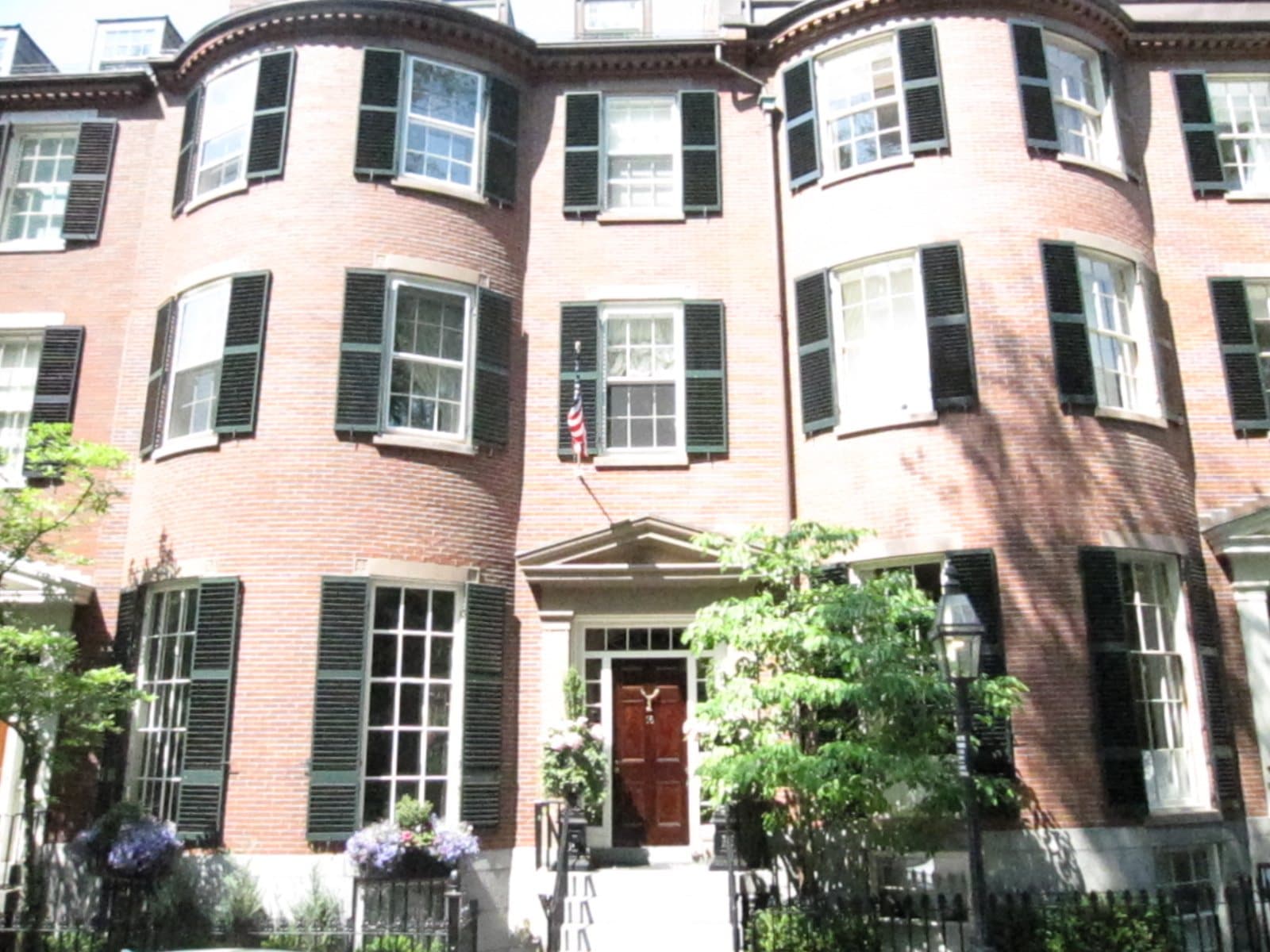
Louisburg Square: A Garden Its Neighbors Own
A garden owned by its neighbors since 1844. It stands on the hilltop the developers shaved in 1799.
- 4
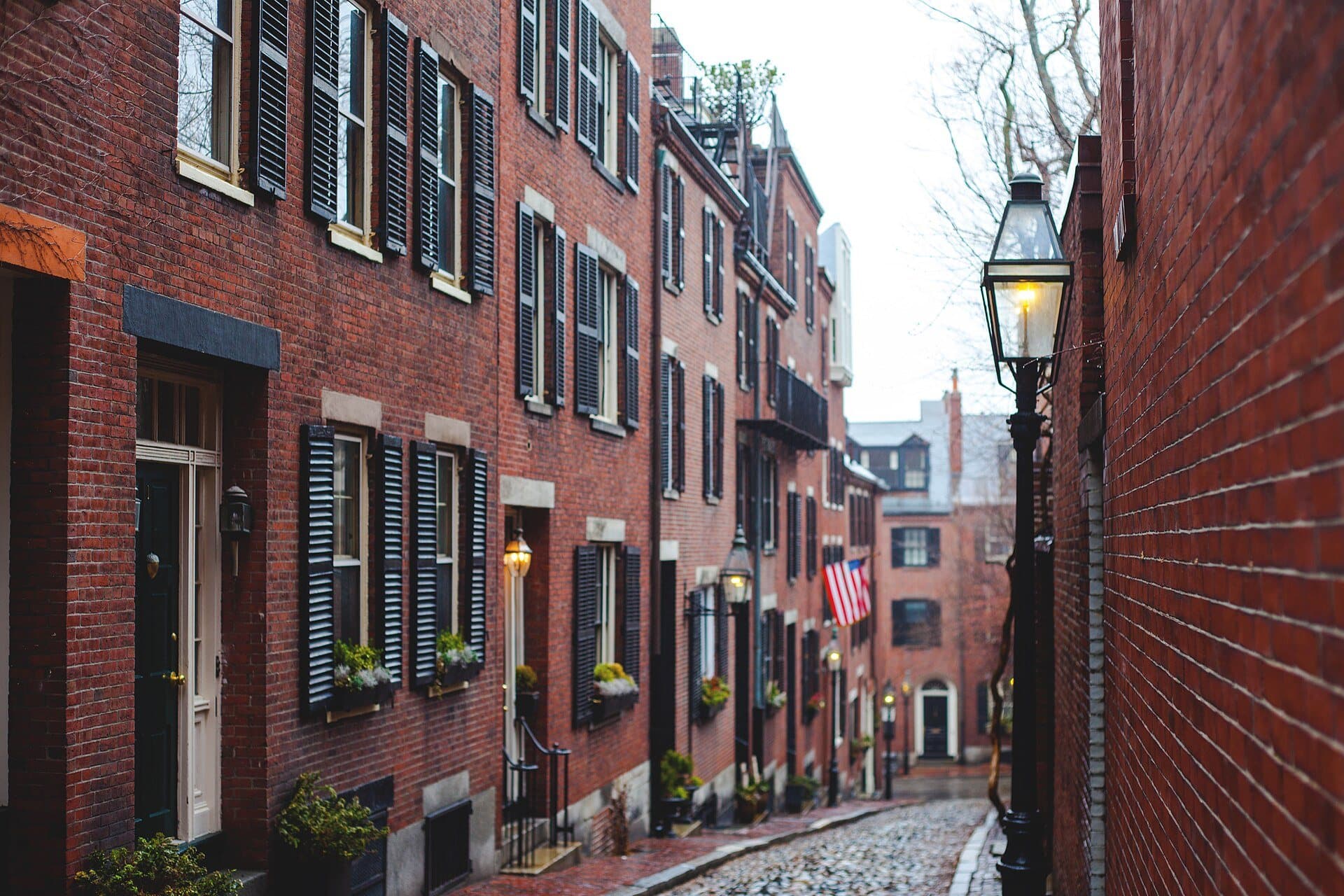
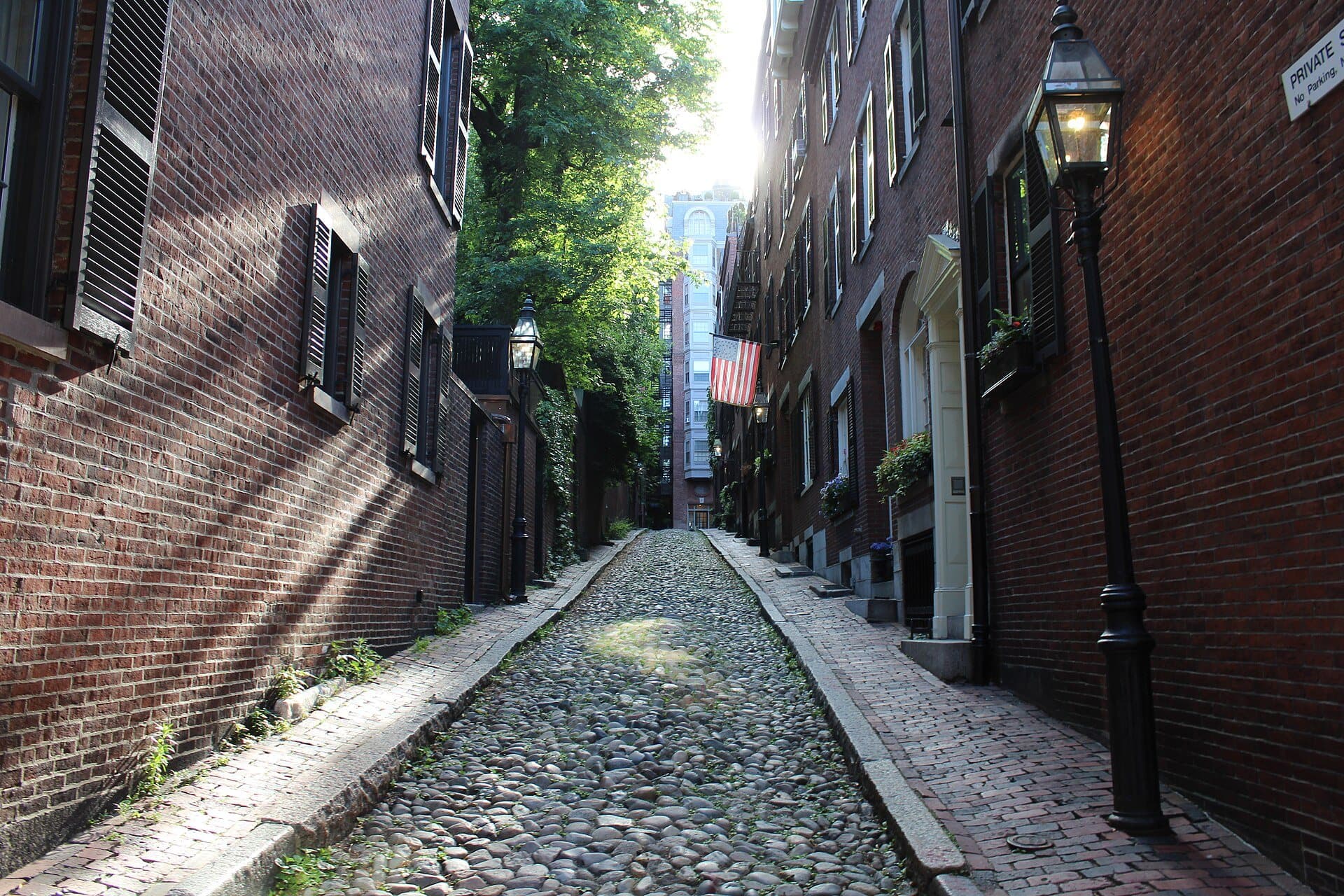
Acorn Street: A Lane of River Stones
A private lane paved with river stones. It lies on Beacon Hill, and the stones are rounded. Its residents own it and keep it this way.
- 5
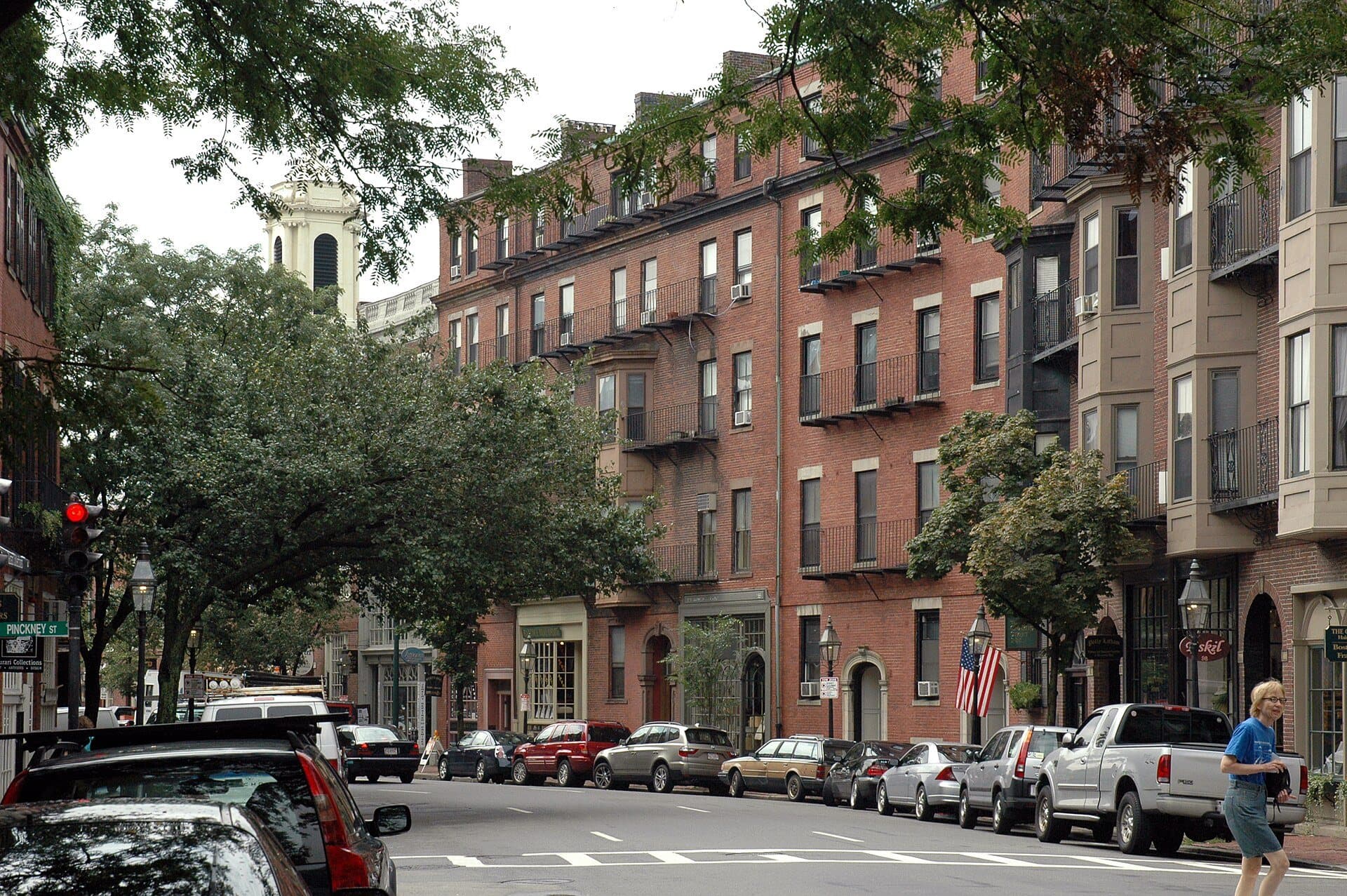
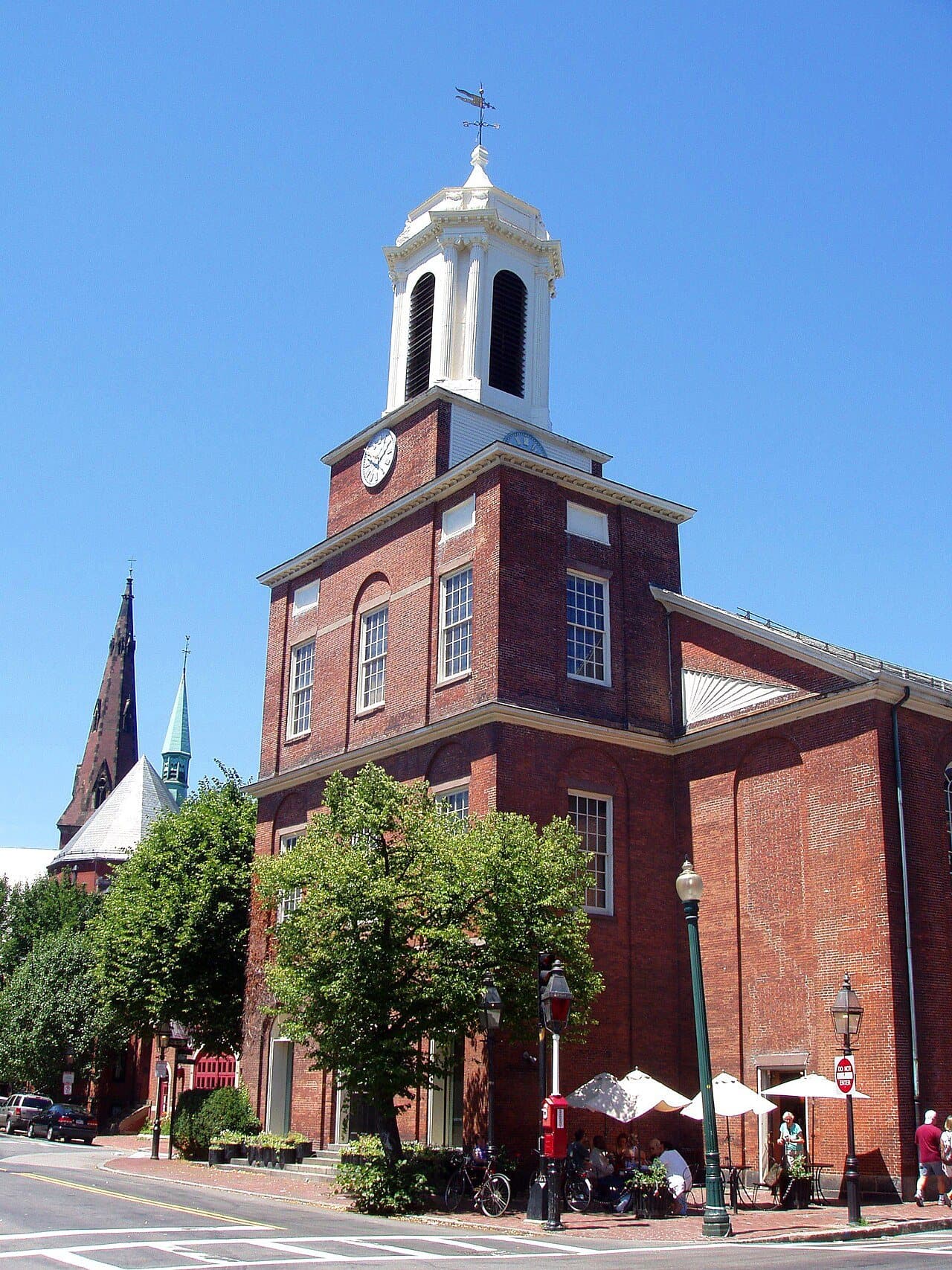
Charles Street: Where the River Stopped
The flat shopping street below the hill. It was once the river's edge. On the corner, a meeting house with a hard history.
- 6
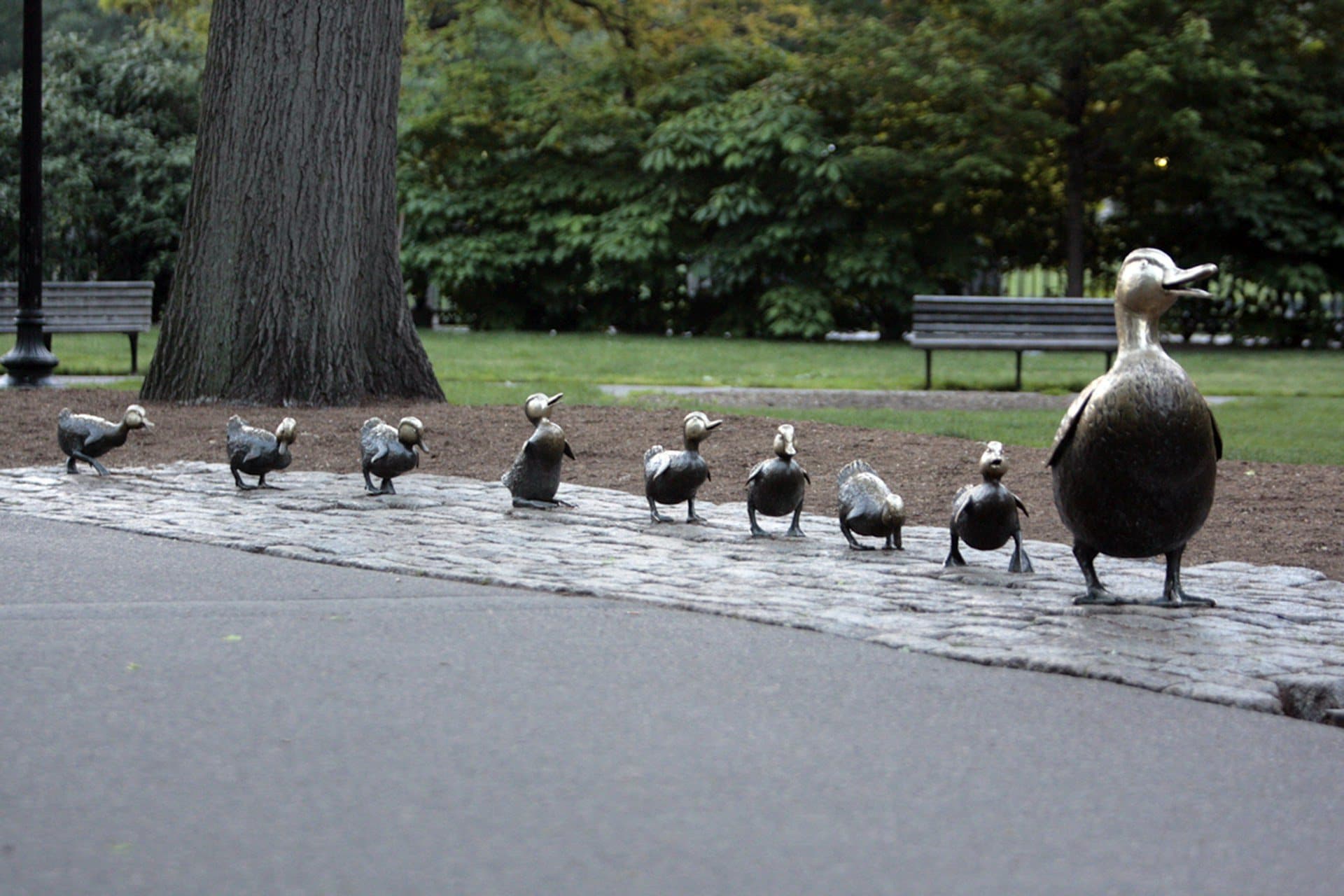
Make Way for Ducklings: Bronze on Made Ground
Bronze ducklings from a 1941 picture book. A mother duck leads eight of them. The garden around them was bought as newly made land in 1824.
- 7
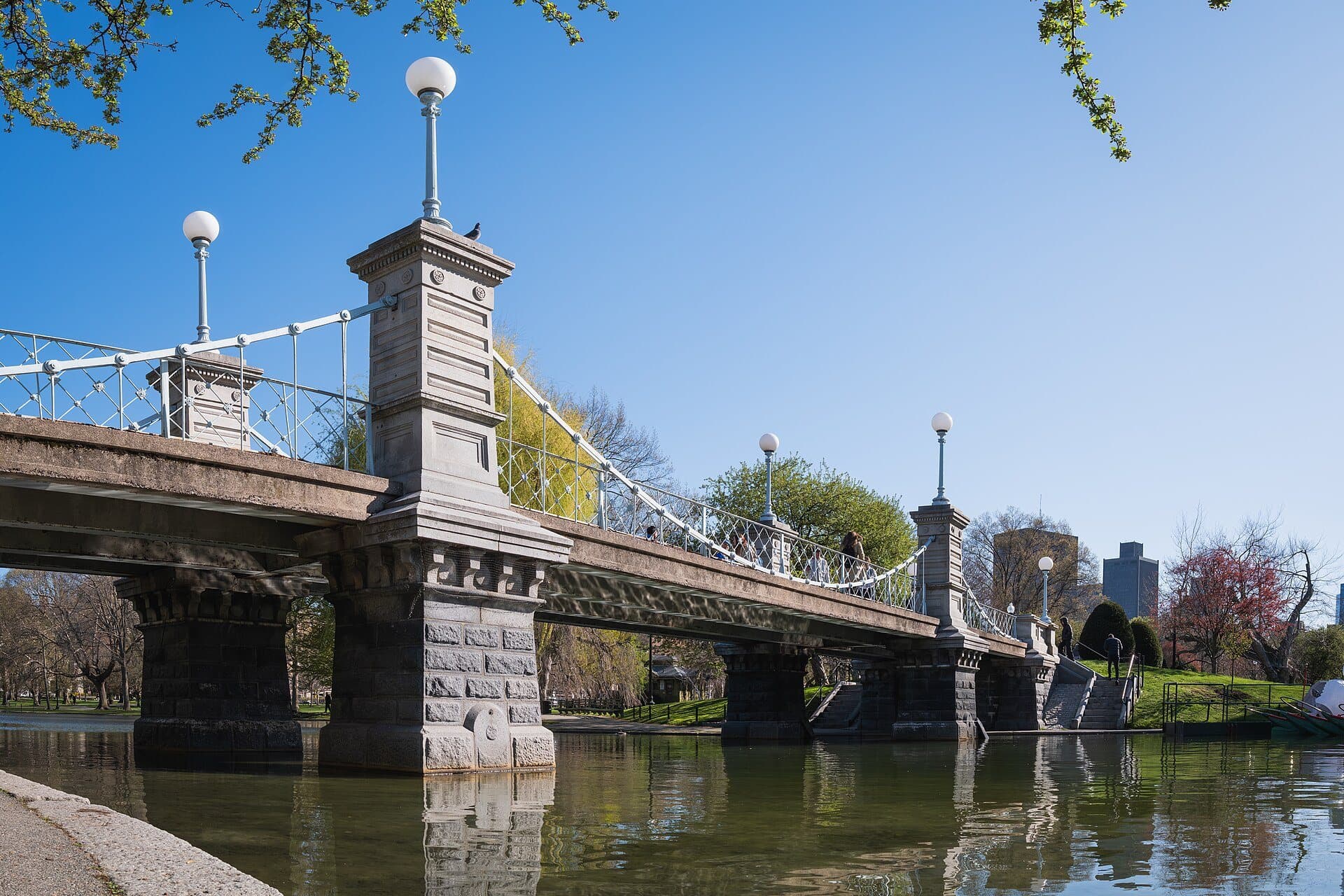
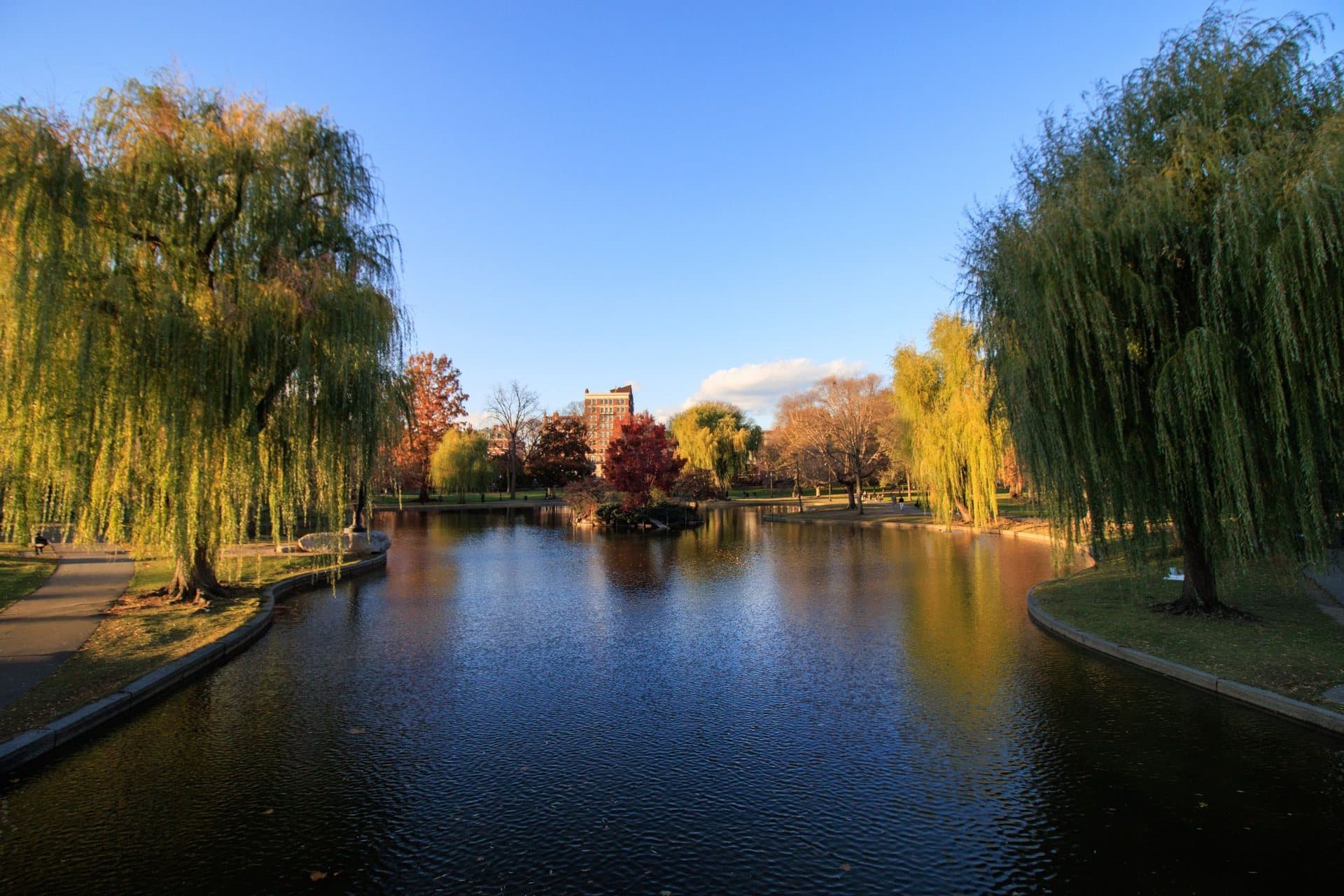
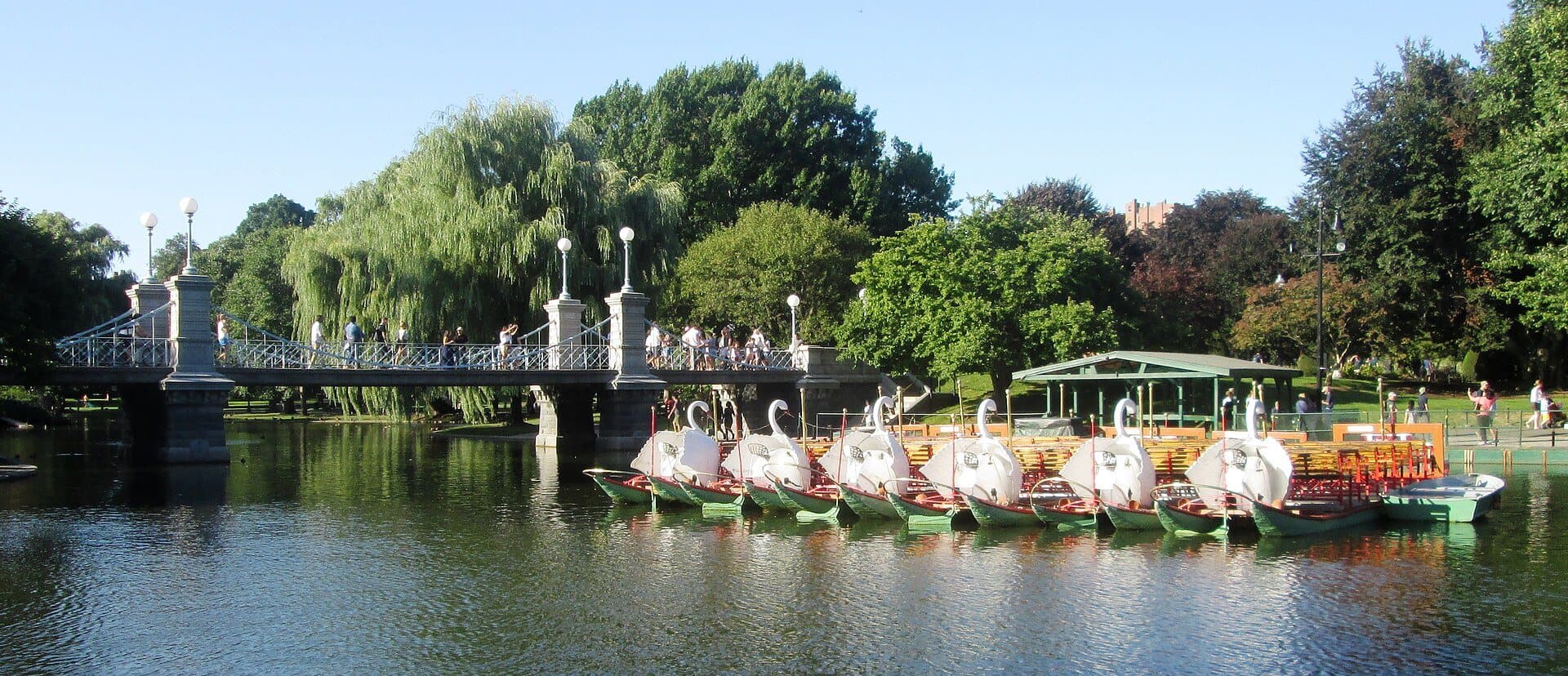
Public Garden Lagoon Bridge: Chains Over a Made Pond
A little 1860s suspension bridge over the lagoon. In season, the swan boats glide around the lagoon.
- 8
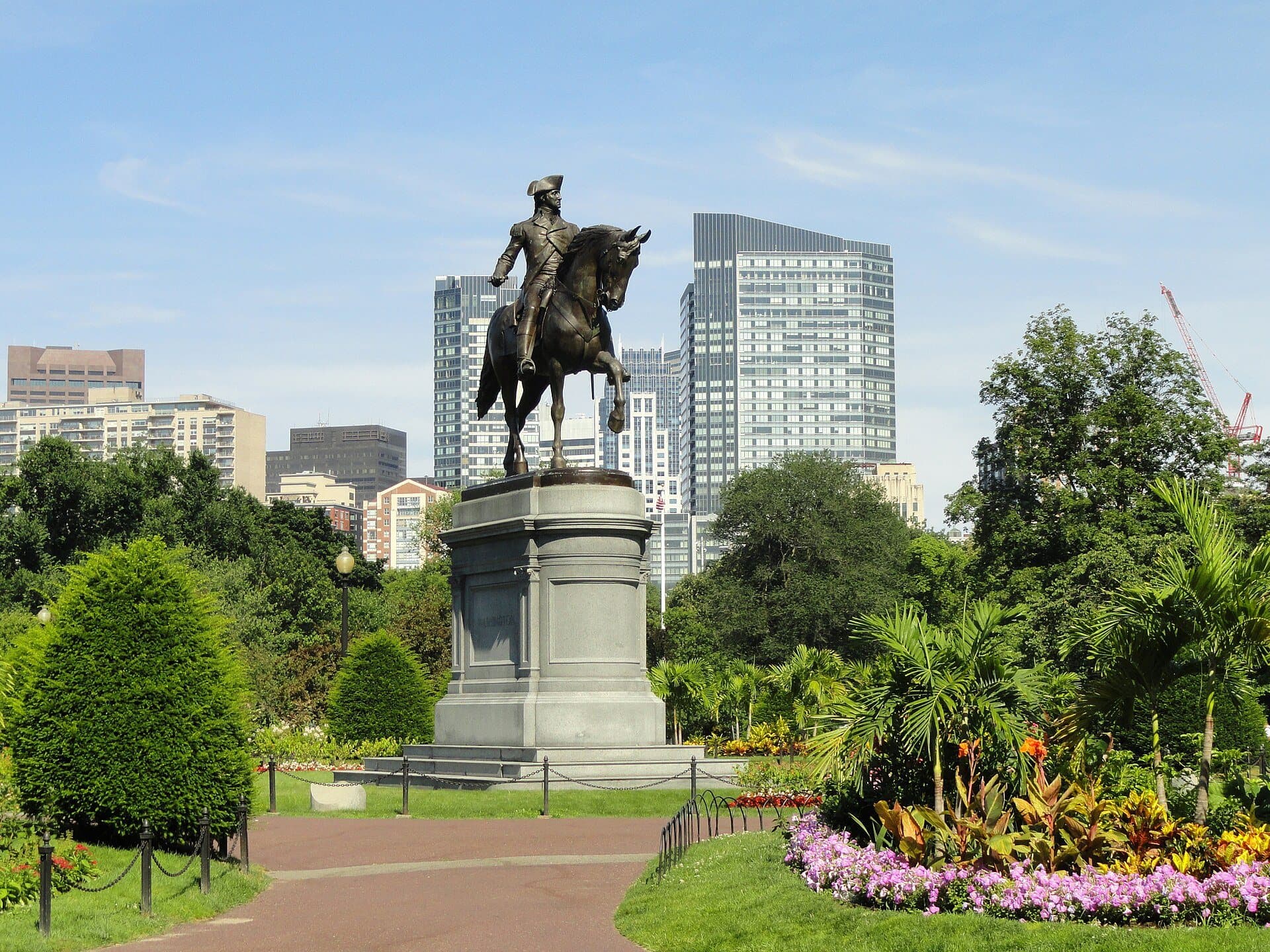
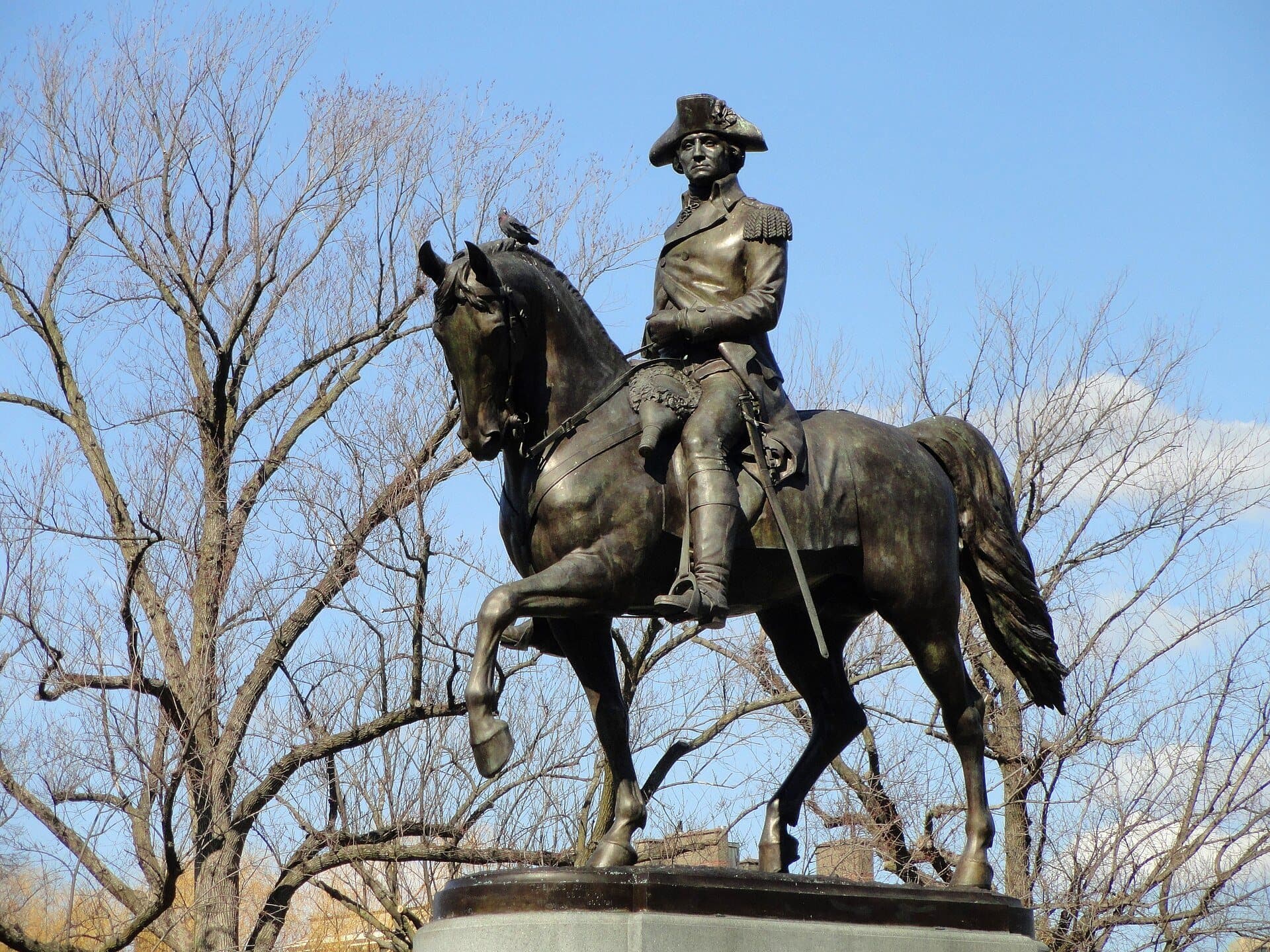
George Washington: The Gate to the Back Bay
Washington on horseback guards the Back Bay gate. The statue is bronze. Unveiled in 1869. Beyond the gate, a neighborhood filled in by train.
- 9
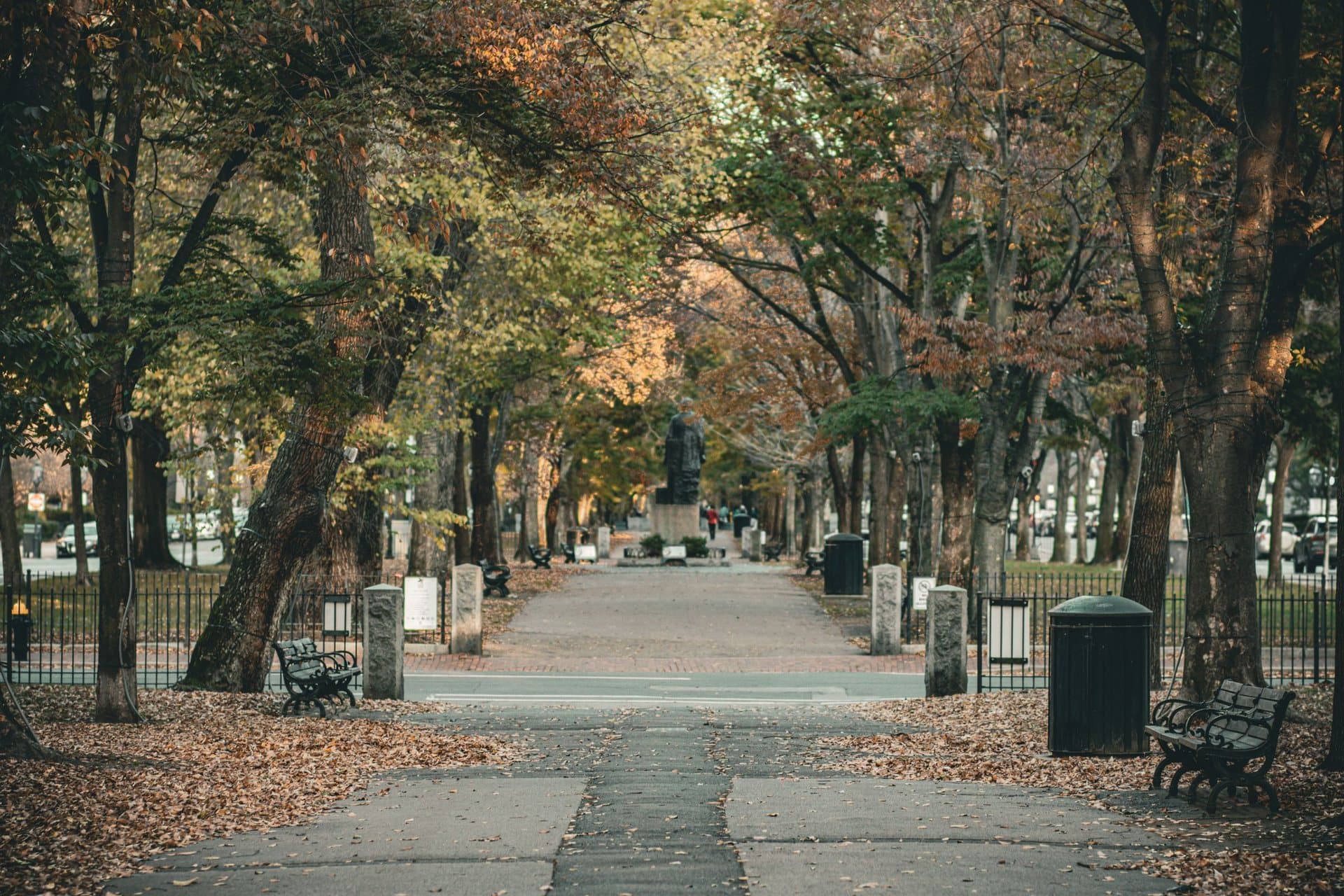
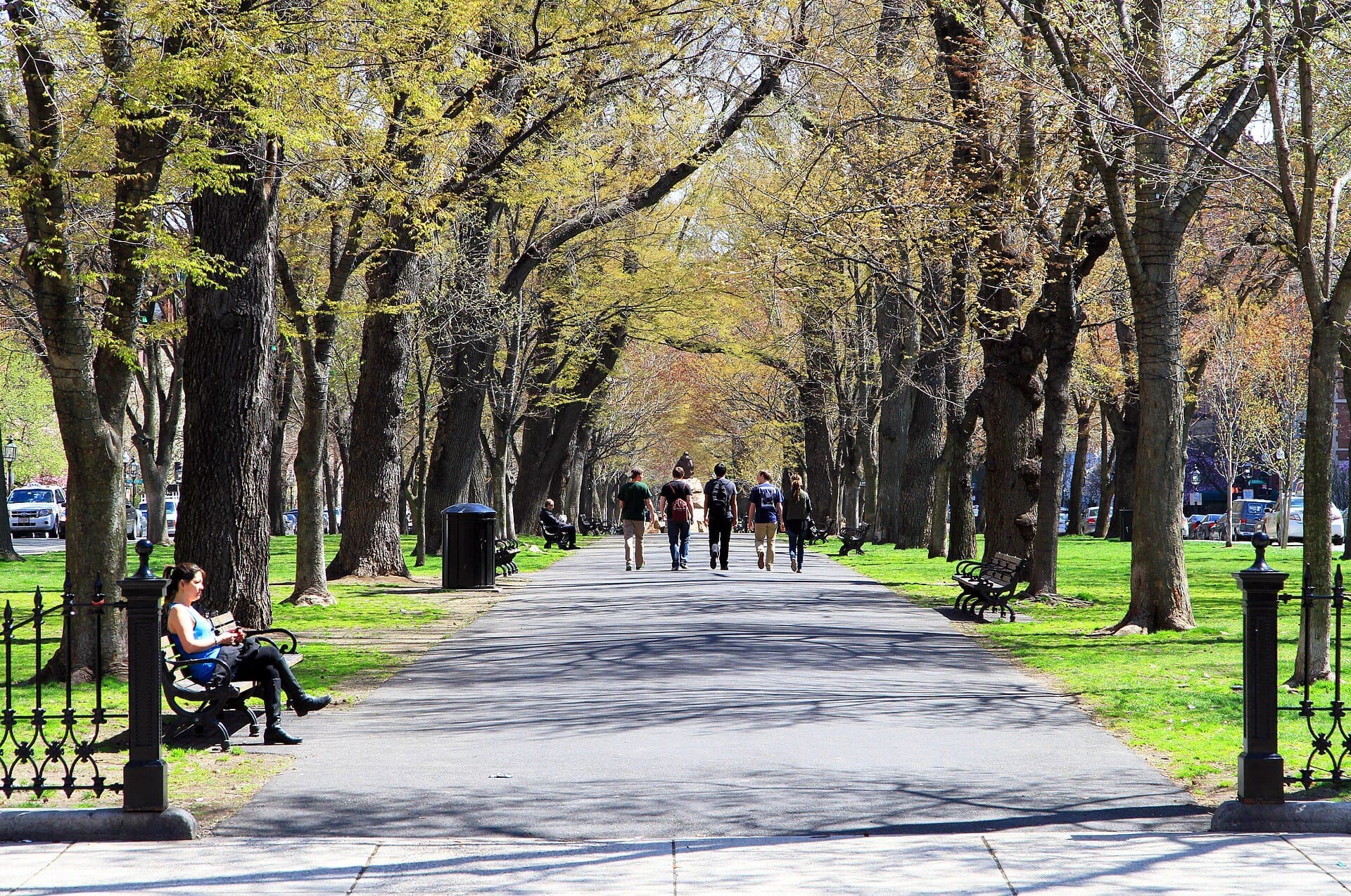
Commonwealth Avenue Mall: A Straight Line on New Land
A straight tree-lined promenade on filled land. Planned from 1858 as the Back Bay's grand axis.
- 10
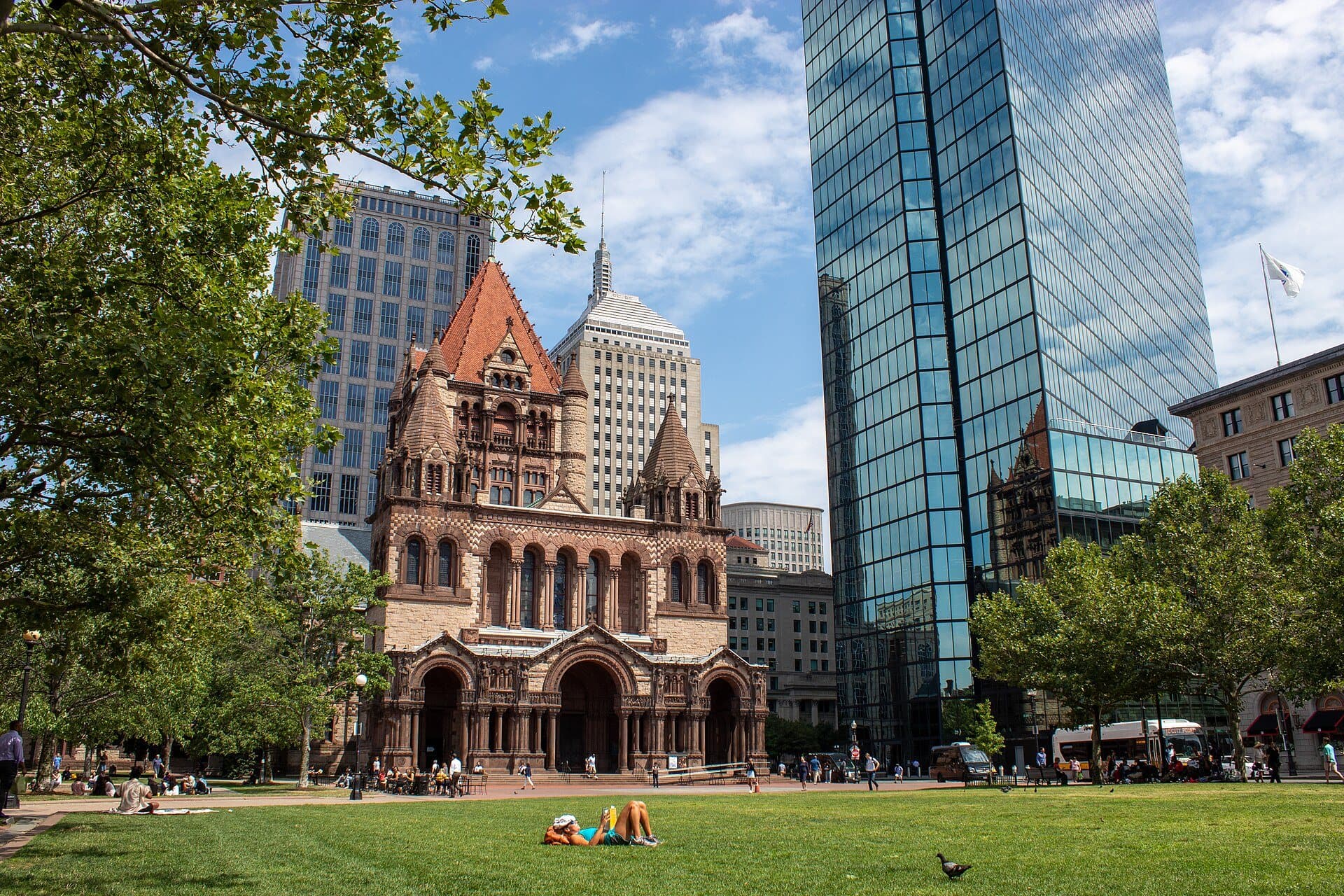
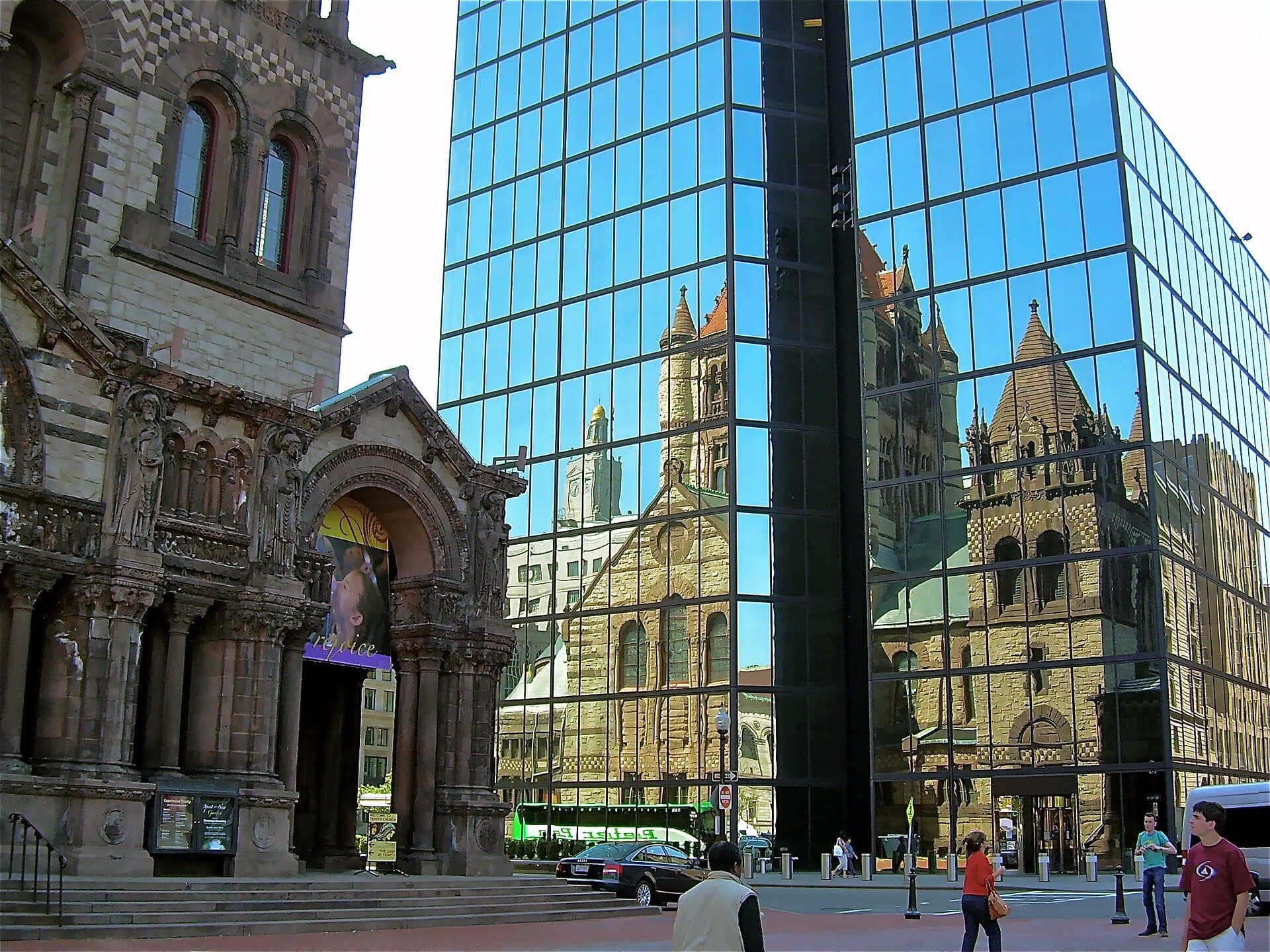
Trinity Church: Stone on a Marsh, Glass Behind
A stone church standing on wooden piles. They were driven into filled marsh. Behind it rises a tower of mirror glass.
- 11
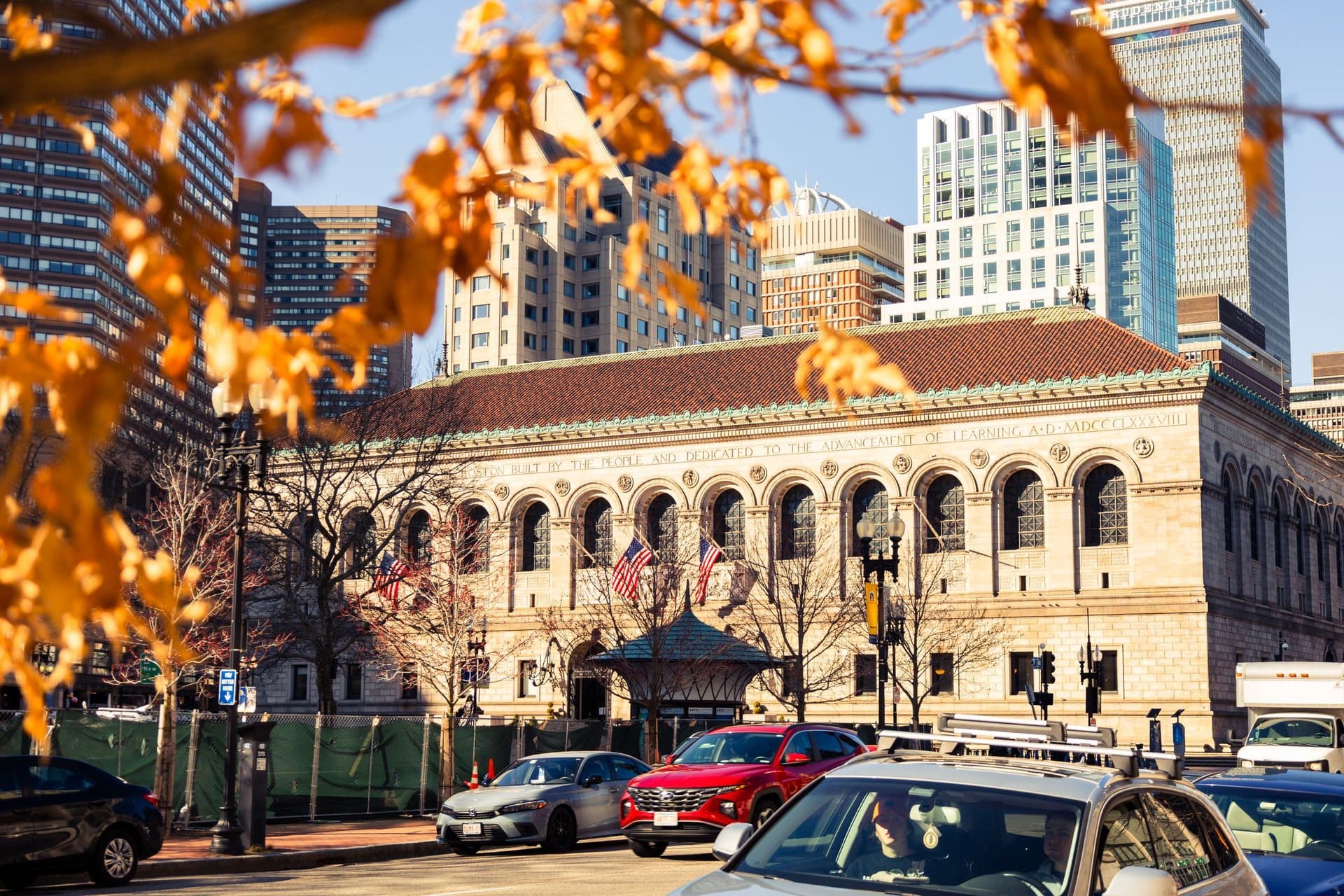
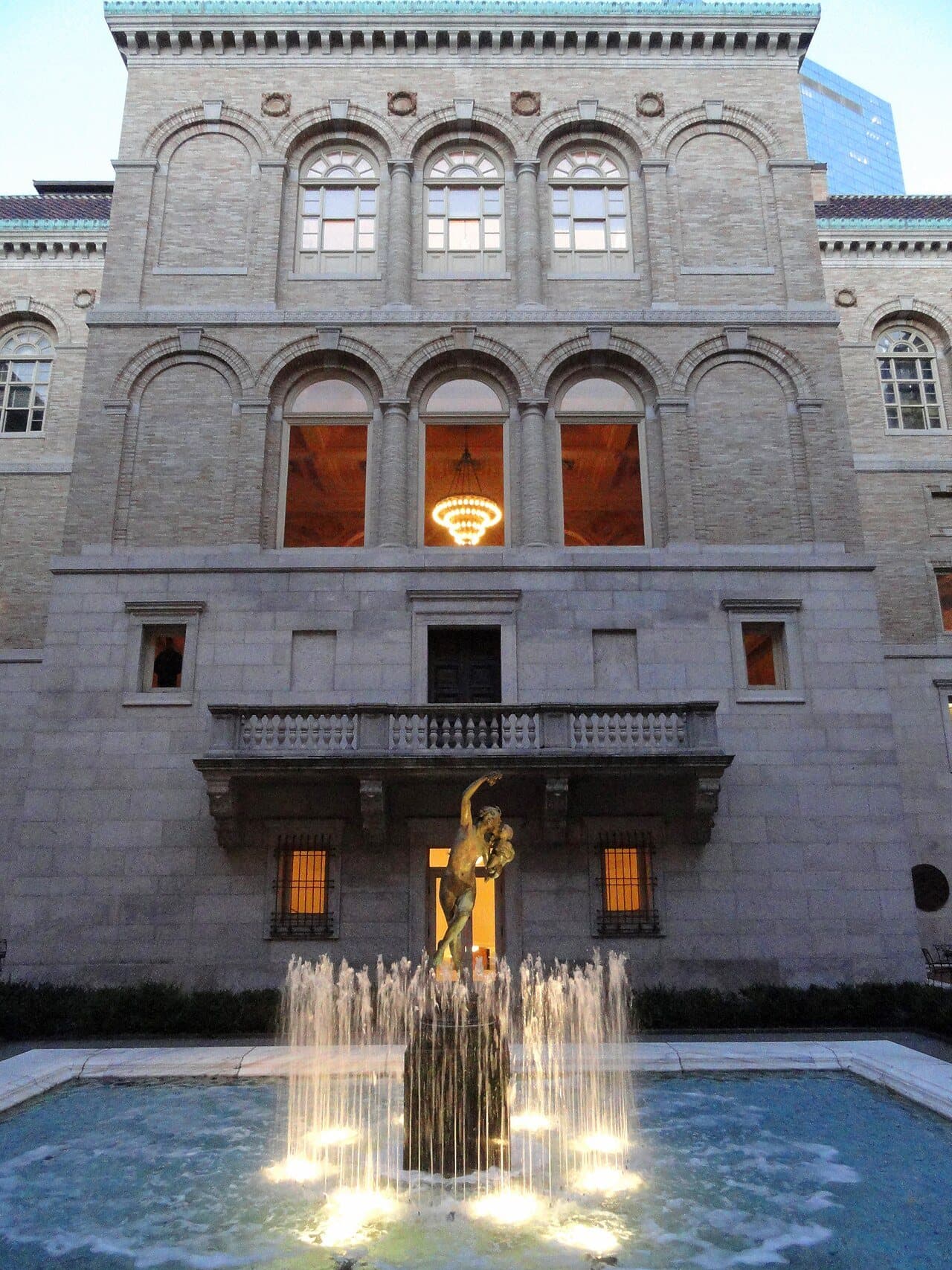
Boston Public Library: Free to All
A granite palace marked Free to All. The words are carved over the door. The sculptor of the Shaw memorial carved its seals.
Details
Best Time to Visit
A Thursday, Friday or Saturday between 10 a.m. and 4 p.m. lets you add the Museum of African American History, the Nichols House and Trinity Church. Early morning is quietest on Acorn Street and Louisburg Square. Spring to early September adds the swan boats; mid to late autumn brings color to the Public Garden and the Mall.
Pro Tips
- •The Nichols House Museum, a Bulfinch-attributed row house at 55 Mount Vernon Street, a few blocks east of Louisburg Square, is seen by guided tour only, Tuesday to Sunday (three floors, no elevator). Adults $16, seniors $13, students and educators $8, children 12 and under free. Checked 4 October 2026.
- •The Boston Public Library's Central Library is free: Monday to Thursday 9 a.m. to 8 p.m., Friday and Saturday 9 a.m. to 5 p.m., Sunday 11 a.m. to 5 p.m. (from the library's published hours, 25 September 2026). Go in for the courtyard.
- •In summer (in 2026, 23 May to 27 September) National Park Service rangers lead free walks of the Black Heritage Trail, Wednesday to Sunday at 10 a.m. and 1 p.m., with advance registration. The trail itself can be walked any time.
- •The Swan Boats run from mid April to early September (in 2026, 18 April to 7 September). Checked 4 October 2026.
- •For more green space, Olmsted's Emerald Necklace begins west of the library at the Back Bay Fens: a polluted tidal marsh he turned into parkland from 1878, now a freshwater fen with a rose garden and community Victory Gardens, the start of a seven-mile chain of parks to Franklin Park. Allow roughly fifteen to twenty minutes on foot along Boylston Street.
Safety & Precautions
- •Beacon Hill is steep in places, and Acorn Street is paved with rounded river stones that are uneven and slippery when wet. Wear flat shoes with grip; if you prefer to avoid the cobbles, walk round by Willow and Chestnut Streets.
- •Smith Court, Louisburg Square and Acorn Street are residential. Louisburg Square's garden and Acorn Street are private; keep off doorsteps, do not block doors, and keep your voice down.
- •Every house on the Black Heritage Trail except the two museum buildings on Smith Court is a private home and not open to visitors.
- •On the Commonwealth Avenue Mall the path crosses Berkeley and Clarendon Streets with no crosswalk on the Mall line. Cross only when traffic is held at the lights.
- •Main-road crossings on the route (Beacon Street at Joy and at Charles, Charles Street, Arlington Street, and on Dartmouth Street the Commonwealth Avenue roadway, Newbury and Boylston) are at signals; wait for them.
Travel advisory: Exercise Normal Precautions (Level 1).
Gallery
Related Reading
Go deeper on what you'll see, hear, and walk through.
Overview
Best Self-Guided Walking Tours in Boston (2026)
4 min
Overview
Boston Travel Guide: How Many Days, Getting Around, When to Go (2026)
4 min
Overview
How to See Boston: A City of Lines
12 min
Overview
One Day in Boston: A Walkable Downtown Itinerary (2026)
8 min
Thematic
Best History Walking Tours in Boston (2026)
2 min
Companion
The Line Along the Ridge: How Beacon Hill's Two Slopes Argued Out Antebellum America
11 min
Companion
The Other Olmsted: How Boston's Park System Is the Engineering Central Park Could Not Be
12 min
Deep dive
The African Meeting House: The Oldest Black Church Standing in America
10 min
Deep dive
Trinity Church: A Stone Church on a Buried Forest
10 min
Read the walk
The full story of Beacon Hill and Back Bay: The Ground Boston Made, in words. Prefer to listen? Play it narrated, from home or on location.
Introduction
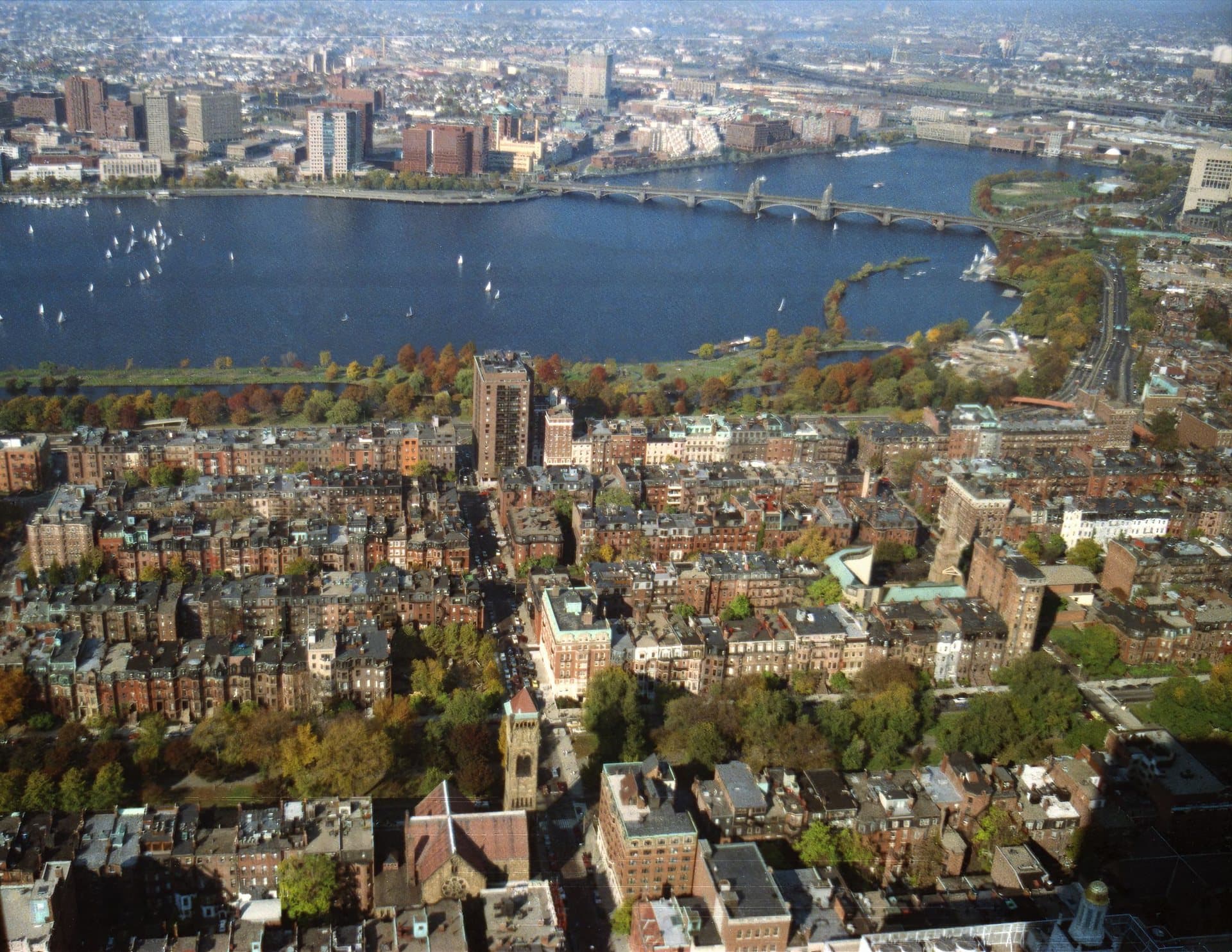
Boston, in Massachusetts, has a long habit of reshaping its own ground: cutting down its hills and filling in its water. This walk begins on Boston Common, the city's old ground, beside the gold-domed State House. It climbs over Beacon Hill, a slope that its developers shaved down in seventeen ninety-nine, tipping the gravel into the river. It comes down to Charles Street, the water's edge in eighteen oh six, crosses the Public Garden, laid out on reclaimed marsh, and ends in the Back Bay, a whole neighborhood raised on gravel brought in by train.
Along the way: a church built by Black craftsmen, a private square run by its neighbors, a lane of river stones, a family of bronze ducks, and Copley Square's stone church and public library.
Three names come back as you go. Charles Bulfinch designed the State House and helped develop the hill. The sculptor Augustus Saint-Gaudens made the bronze where the walk begins and carved stone where it ends. And the architect Henry Hobson Richardson gave Boston its great church of rough, colored stone, built on a marsh.
There are eleven stops over about two miles, three kilometers, and the walk takes about an hour and fifty minutes, with steep streets and cobbles on Beacon Hill. Two museum buildings and Trinity Church charge for entry; every stop works from outside. Stop one is the Shaw memorial on Beacon Street, across from the State House.
1. Shaw Memorial: An Officer Among His Men
Welcome to Beacon Hill, and to the Shaw memorial, the big bronze on the edge of Boston Common. Read it as a column on the march. In the middle, a young officer rides in profile. Beside and behind him, rank on rank of Black soldiers, rifles on their shoulders, a drummer out in front, and a winged figure floating above them all. The panel is about eleven feet by fourteen.
The rider is Robert Gould Shaw, the young White officer who led the Fifty-fourth Massachusetts Regiment. On the twenty-eighth of May, eighteen sixty-three, they marched past the State House on their way to South Carolina.
Shaw's family did not want him alone on a horse on a pedestal. They felt that kind of statue belonged to men of higher rank. So the sculptor, Augustus Saint-Gaudens, set him down among his men. It was meant to be a two-year commission. It took him nearly fourteen, and it was dedicated in eighteen ninety-seven.
Seven weeks after that march, on the eighteenth of July, the regiment stormed Fort Wagner. Shaw was killed leading the assault, and nearly half the regiment was killed, wounded or captured. The regiment's courage helped inspire more than a hundred and eighty thousand Black soldiers to enlist.
At first the memorial named only the White officers who fell. In nineteen eighty-two the names of the Black soldiers who died were added, on the back, facing the Common.
Now turn round to the gold dome across Beacon Street. That is the State House, designed by Charles Bulfinch and finished in seventeen ninety-eight. Paul Revere's company first covered the dome in copper; it was first gilded in eighteen seventy-four. From here the walk climbs over the hill, then comes down onto ground Boston made.
Follow the route along Beacon Street, and cross at the lights at Joy Street. Next, a church built by Black craftsmen in eighteen oh six.
2. Smith Court: The African Meeting House
Walk on a few steps into Smith Court, the narrow dead-end lane on your left just past the brick school on the corner, and stop where you can see to the end of it. Keep your voice low: these are people's homes. The two museum buildings here are ticketed and worth a visit, but the lane tells the story on its own.
The red brick building at the end, with small square panes on its gable end and tall arched windows down its side, is the African Meeting House. It was built in eighteen oh six, most of the labor done by Black craftsmen, and one African-born man raised fifteen hundred dollars toward it himself. It is considered the oldest Black church building still standing in America. In eighteen thirty-two William Lloyd Garrison founded the New England Anti-Slavery Society inside it.
The brick building on the corner of Joy Street is the Abiel Smith School. A White businessman left four thousand dollars to educate Black children, and in eighteen thirty-five this opened as a segregated public school. In eighteen forty-nine a Black father sued on behalf of his daughter. The campaign kept going, and in eighteen fifty-five Massachusetts outlawed segregated public schools.
Two neighbors in the clapboard house at number three, one of them a leader of that campaign, sheltered people escaping slavery. Two streets away, Lewis and Harriet Hayden's house sheltered scores more. In eighteen fifty Lewis Hayden barricaded his door against slave catchers, and in the war he recruited soldiers for the Fifty-fourth, the regiment in the bronze you just left.
Both buildings belong to the Museum of African American History, open Thursday to Sunday. The details are on this stop's card. Every other house on the Black Heritage Trail is private.
Follow the route back out to Joy Street and on over the top of the hill. Next, a private garden behind an iron fence.
3. Louisburg Square: A Garden Its Neighbors Own
Walk on into Louisburg Square, the long, quiet square of brick houses around a fenced garden, and stop on the sidewalk partway down.
Look through the iron fence: a narrow oval of grass and trees, with a small white marble statue at each end, Aristides the Just at one and Christopher Columbus at the other. Both arrived in eighteen fifty. The garden is private, owned jointly by the houses around it. In eighteen forty-four twenty-eight of them signed an agreement to look after the shared land together. The Massachusetts Historical Society, which keeps the records, says it is considered the earliest homeowners' association in America.
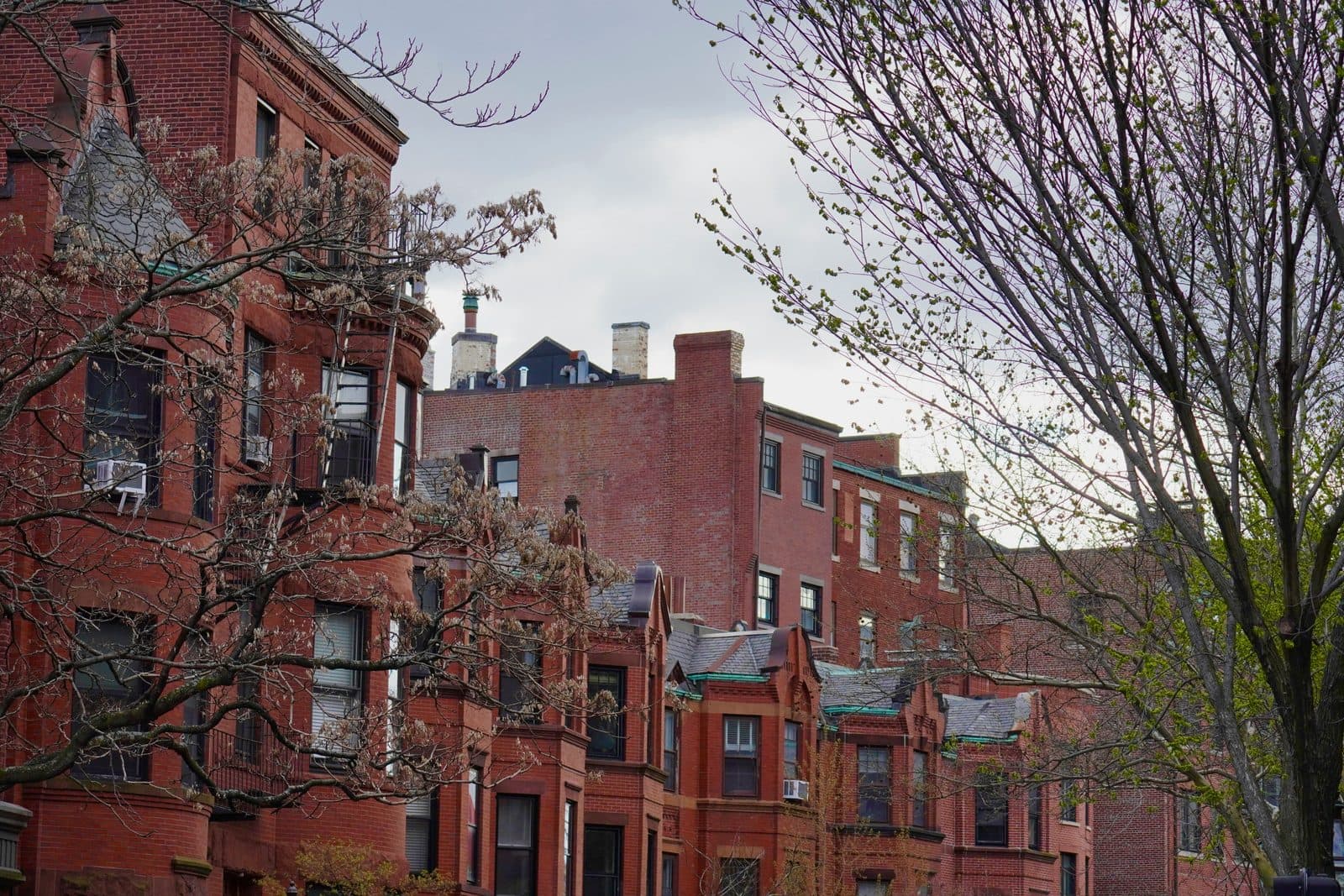
Now look across at the house fronts, all red brick, some flat, some swelling out in curved bays. They went up from eighteen thirty-four through the eighteen forties.
Why so late? The slope belonged to a group of developers formed in seventeen ninety-five, the Mount Vernon Proprietors, with Charles Bulfinch, the State House architect, among them. The hill's western peak ran between Pinckney Street, at the top of this square, and Mount Vernon Street, at the bottom. In seventeen ninety-nine the developers carved fifty to sixty feet off it and dumped the gravel into the Charles River, to make more land for themselves. Then this end of their land waited about thirty years to be laid out.
Down on Mount Vernon Street, the big houses on this side stand back behind yards. In eighteen oh one two of the developers agreed not to build closer than thirty feet to the street. A few blocks up Mount Vernon Street, off the route at number fifty-five, the Nichols House is a museum you can tour, ticketed.
Follow the route back up to the head of the square, across it, and down the other side. At the bottom, as you turn along Mount Vernon Street, the set-back houses are ahead of you. Next, a lane of river stones.
4. Acorn Street: A Lane of River Stones
Walk on to the top of Acorn Street, the narrow lane of rounded stones dropping away from Willow Street, and stop on the sidewalk at its head, clear of the doorways.
Social media has called this one of the most photographed streets in the country, and it is private. Acorn Street is not a city street. The people who live here own the ground in front of their houses to the middle of the lane, and they keep it up themselves, stones and all. The lane dates from eighteen twenty-three.
Look down at the paving. These are not squared granite blocks. They are rounded river stones, set close together, with flat stone strips along the edges, and black lamps above.
Look at the scale, too. Up the hill, the grand houses with front yards. Down here, small brick houses tight to the lane and garden walls with vines. The Nichols House Museum makes a point worth keeping in mind on this hill: the grand households depended on working people, many of them immigrants, who lived in servants' rooms in those houses and in tenements on the north slope, around Smith Court.
Please keep off the doorsteps; people live here. The stones are steep and slippery when wet.
Follow the route down Acorn Street, carefully, and on to the foot of the hill. Next, across Charles Street at the lights, the street where the river used to stop.
5. Charles Street: Where the River Stopped
Walk on across Charles Street at the lights, the flat street of shops at the foot of the hill, and stop on the corner there, at the foot of Mount Vernon Street. Notice what has happened under your feet. The slope is over. In eighteen oh six the Charles River came right up to…
Full narration for this stop unlocks with the tour.
6. Make Way for Ducklings: Bronze on Made Ground
Walk on into the Public Garden and stop beside the line of bronze ducks on the path. Mrs. Mallard leads, and her eight ducklings follow in single file. They come from Robert McCloskey's picture book of nineteen forty-one, Make Way for Ducklings, about a duck family that crosses…
Full narration for this stop unlocks with the tour.
7. Public Garden Lagoon Bridge: Chains Over a Made Pond
Walk on to the footbridge over the lagoon, and keep listening as you cross. If you caught it from the shore on the way here, you saw its side: granite piers, and iron chains slung between small pylons topped with lamps. It looks like a suspension bridge, and it began as one, in…
Full narration for this stop unlocks with the tour.
8. George Washington: The Gate to the Back Bay
Walk on toward the Arlington Street gate and stop on the path just past the big bronze horseman. Turn round to face him. George Washington sits upright on a calm horse, high on a granite pedestal. The sculptor Thomas Ball made it, and it was unveiled on the third of July,…
Full narration for this stop unlocks with the tour.
9. Commonwealth Avenue Mall: A Straight Line on New Land
Walk on along the Commonwealth Avenue Mall, the long walk between the trees, and stop near the end of the block, before Clarendon Street. Look straight down it. This is what the gravel trains made possible: a line drawn on new land with nothing old to bend around. The Mall runs…
Full narration for this stop unlocks with the tour.
10. Trinity Church: Stone on a Marsh, Glass Behind
Walk on into Copley Square and stop on the path where Trinity Church fills the view ahead, with a glass tower rising behind it. Trinity is ticketed, open Tuesday to Saturday, and its painted interior is worth it. The details are on this stop's card. Look at the stone. It is…
Full narration for this stop unlocks with the tour.
11. Boston Public Library: Free to All
Walk on to the Dartmouth Street edge of Copley Square and stop on the sidewalk. Turn to face the long, low granite palace across the street: the Boston Public Library. It is free to go in. Read the front. It is wider than it is tall: a plain lower story, then a row of tall…
Full narration for this stop unlocks with the tour.