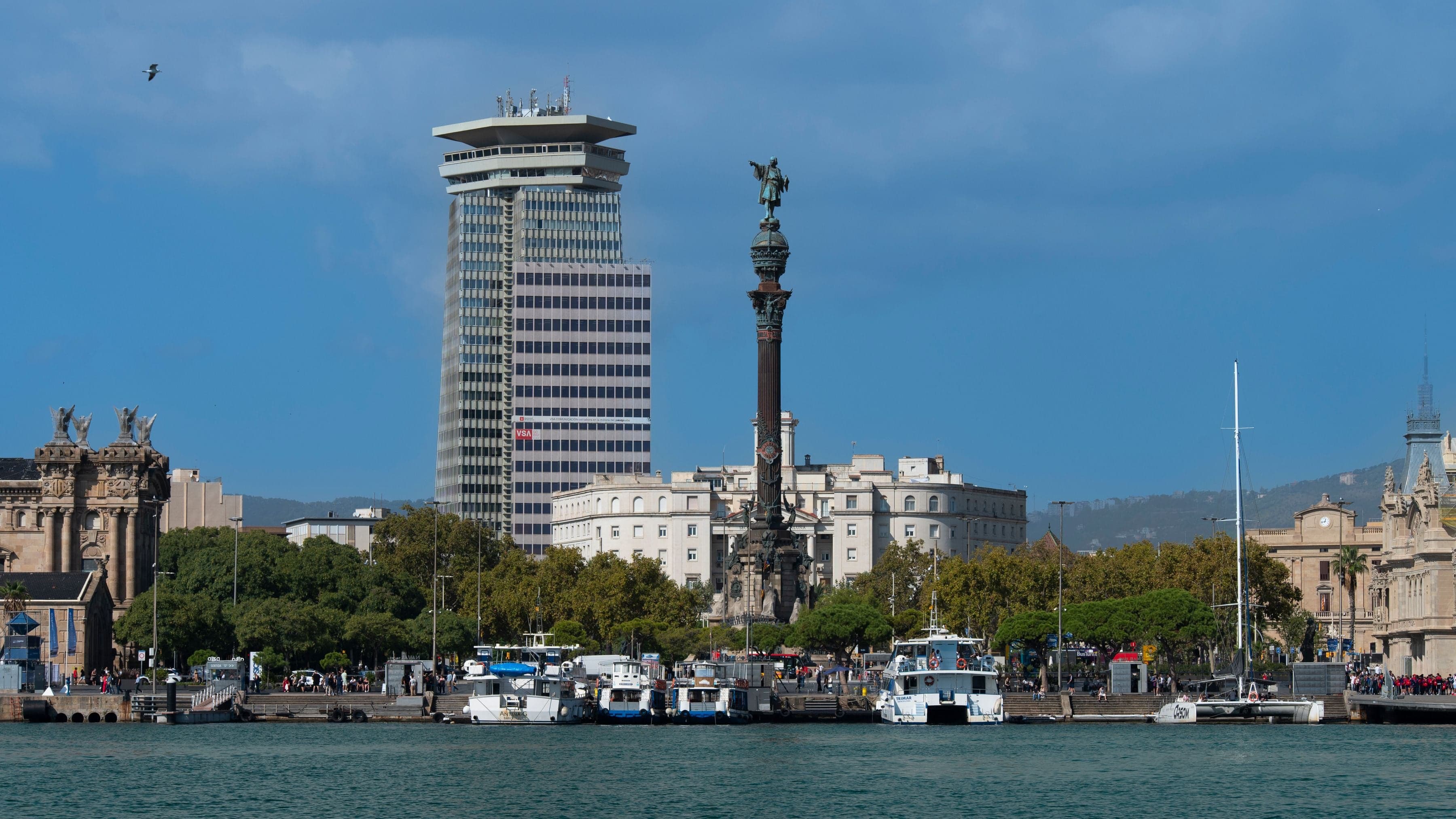
From the medieval Royal Shipyards past the Columbus Monument, the Llotja and Palau de Mar, through the 1753 Barceloneta grid and its market, to Rebecca Horn's Wounded Star on the beach.
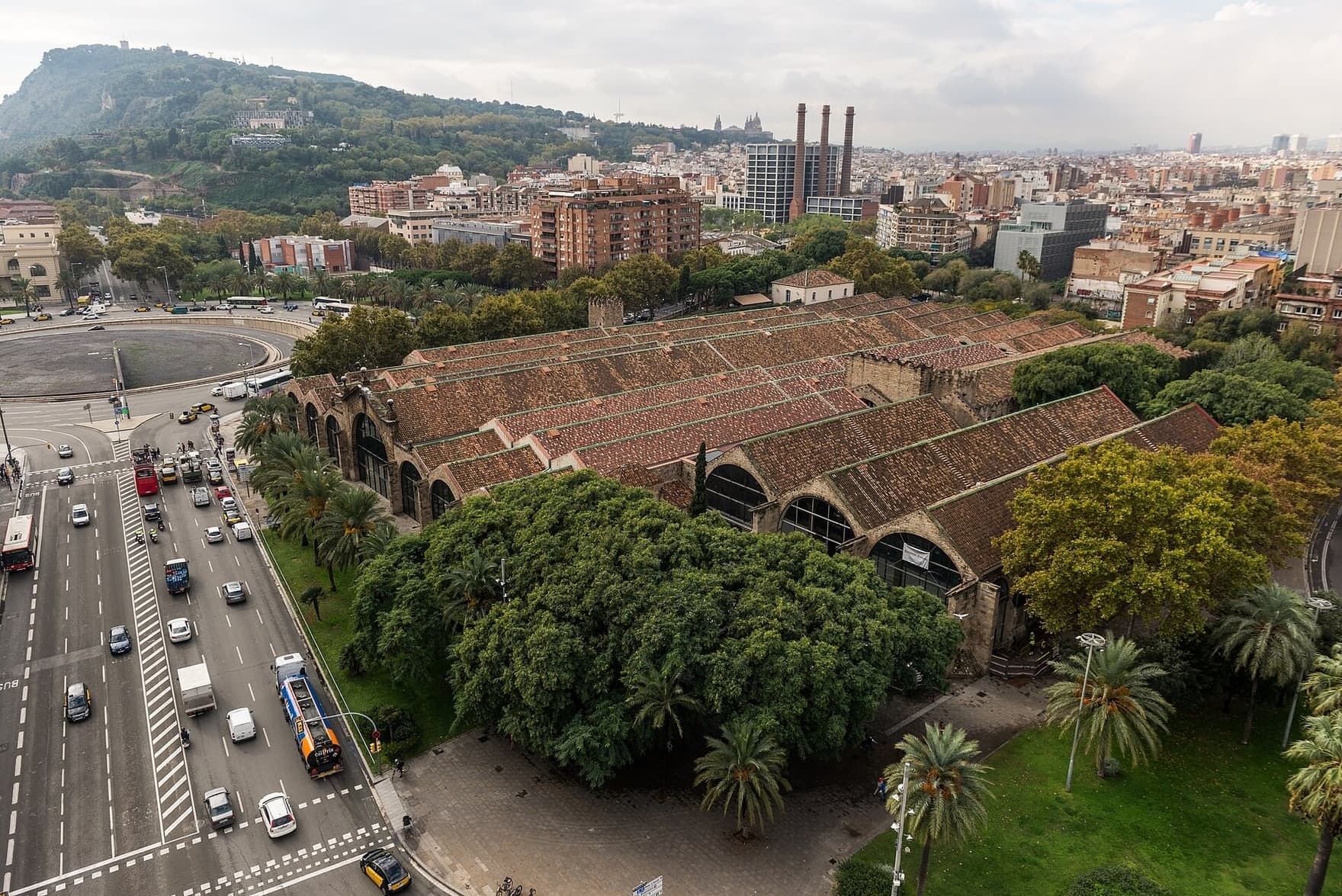
Start · Drassanes Reials: The Royal Shipyards
DirectionsStops
- 1
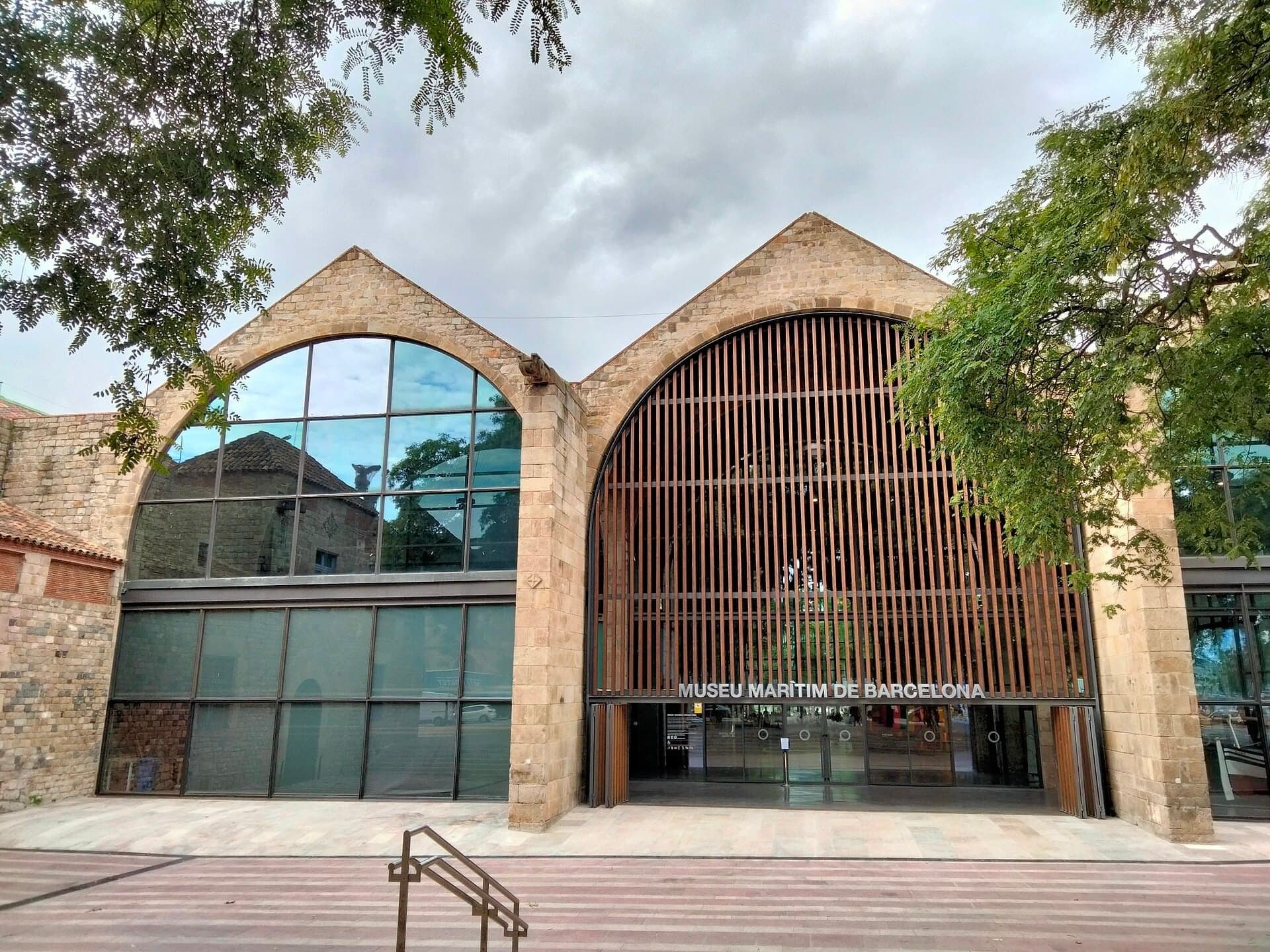
Drassanes Reials: The Royal Shipyards
The medieval royal shipyard where war galleys were built under stone arches. Today it holds the Maritime Museum, beside the last stretch of the city's medieval walls.
- 2
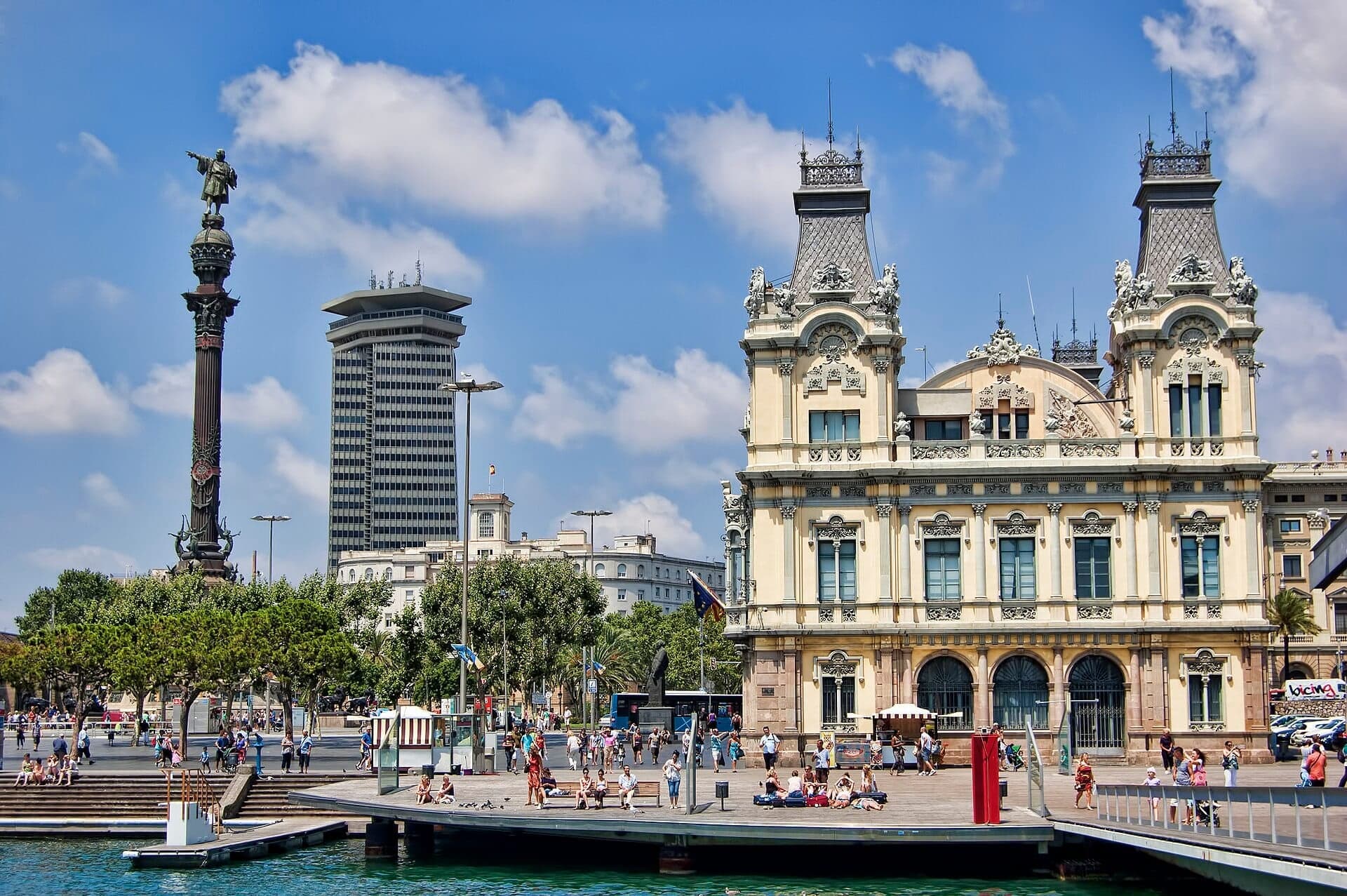
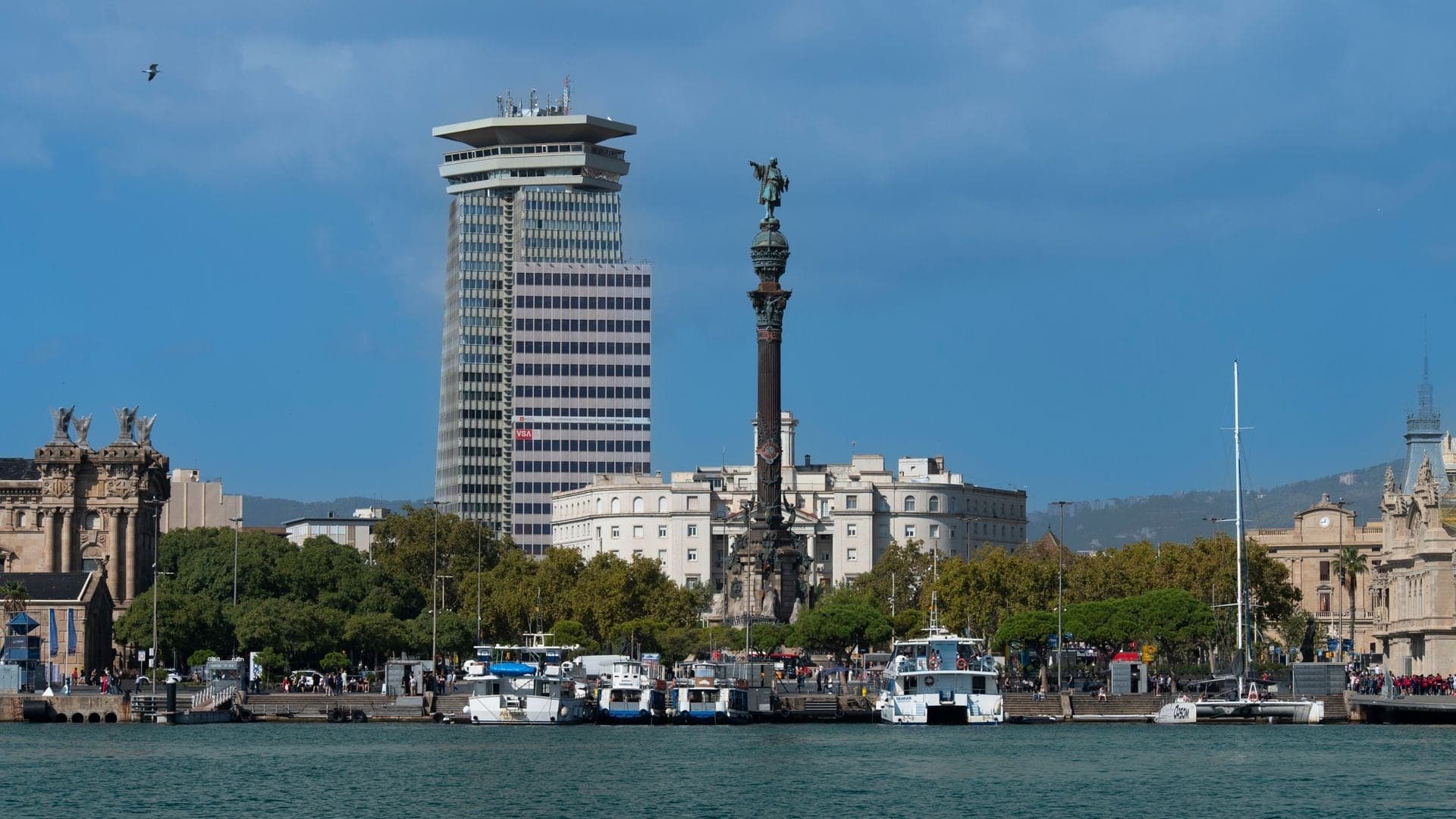
Columbus Monument: A Column of Catalan Iron
Nearly sixty metres of Barcelona-cast iron and bronze, unveiled for the 1888 Exposition. It closes La Rambla at the port, with a lift to a small viewing gallery.
- 3
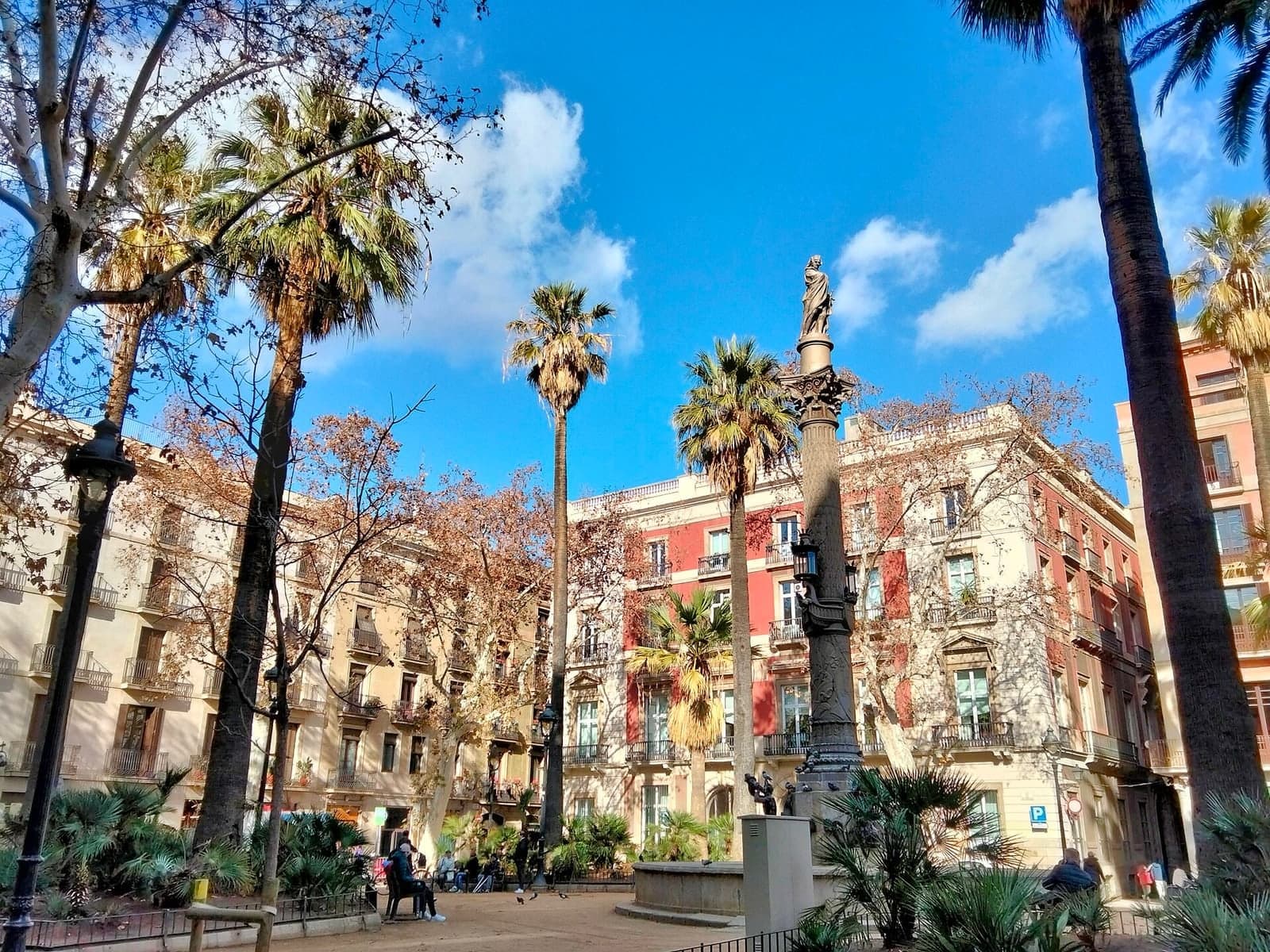
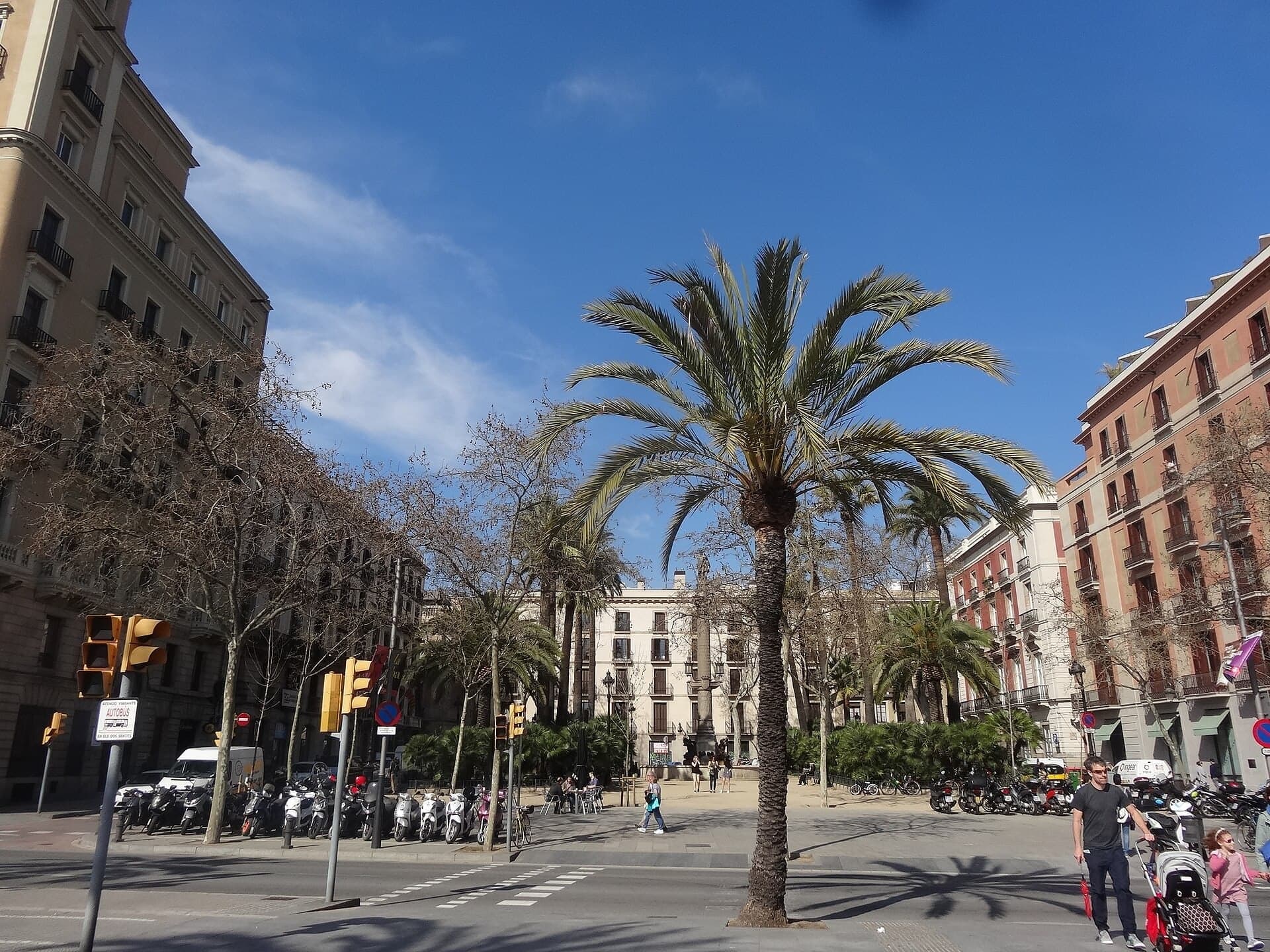
Plaça del Duc de Medinaceli: Iron and Palms
A palm garden around Barcelona's first big ornamental cast-iron column. It went up in 1851 for a medieval admiral, chosen at the last minute.
- 4
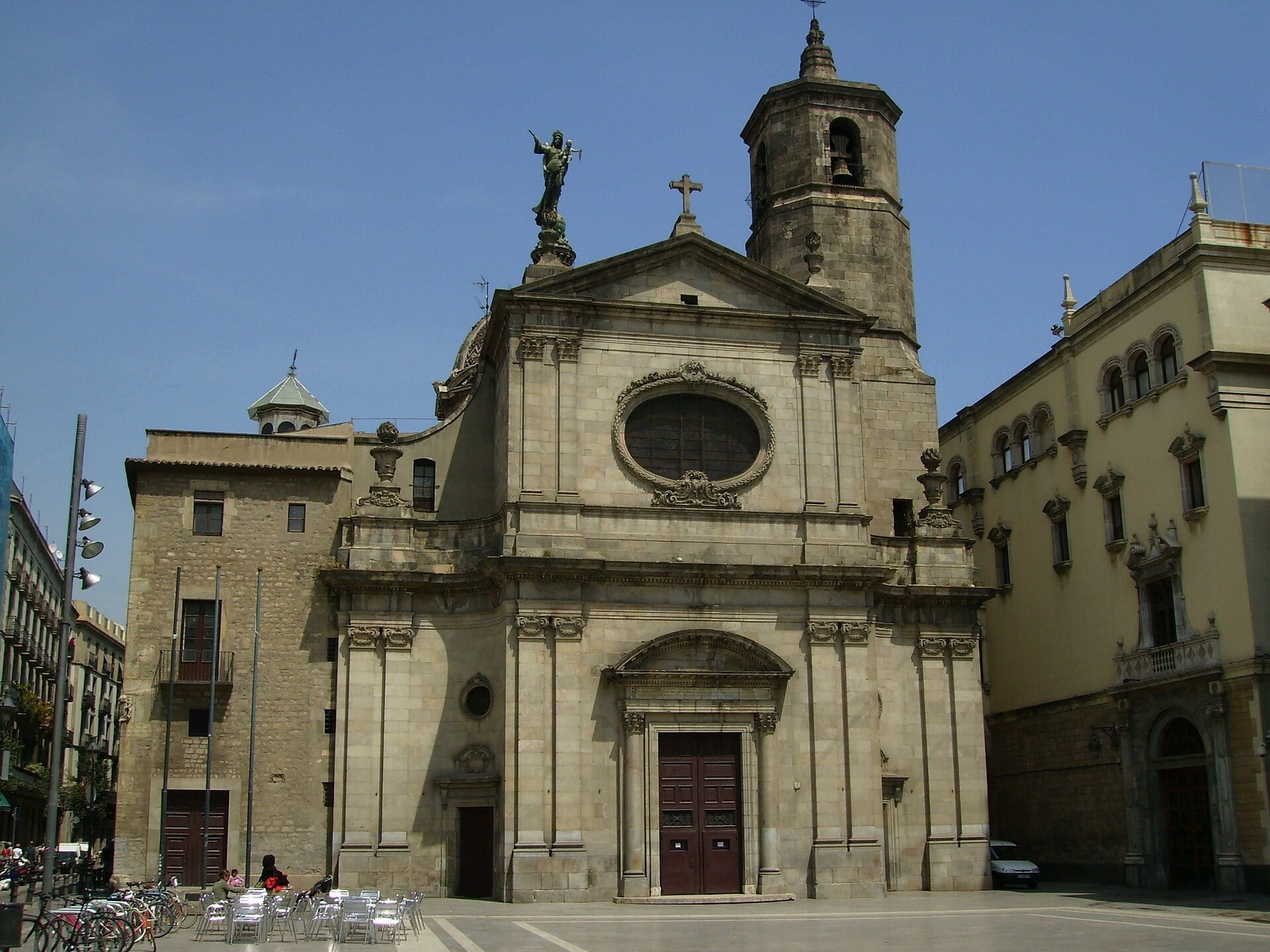
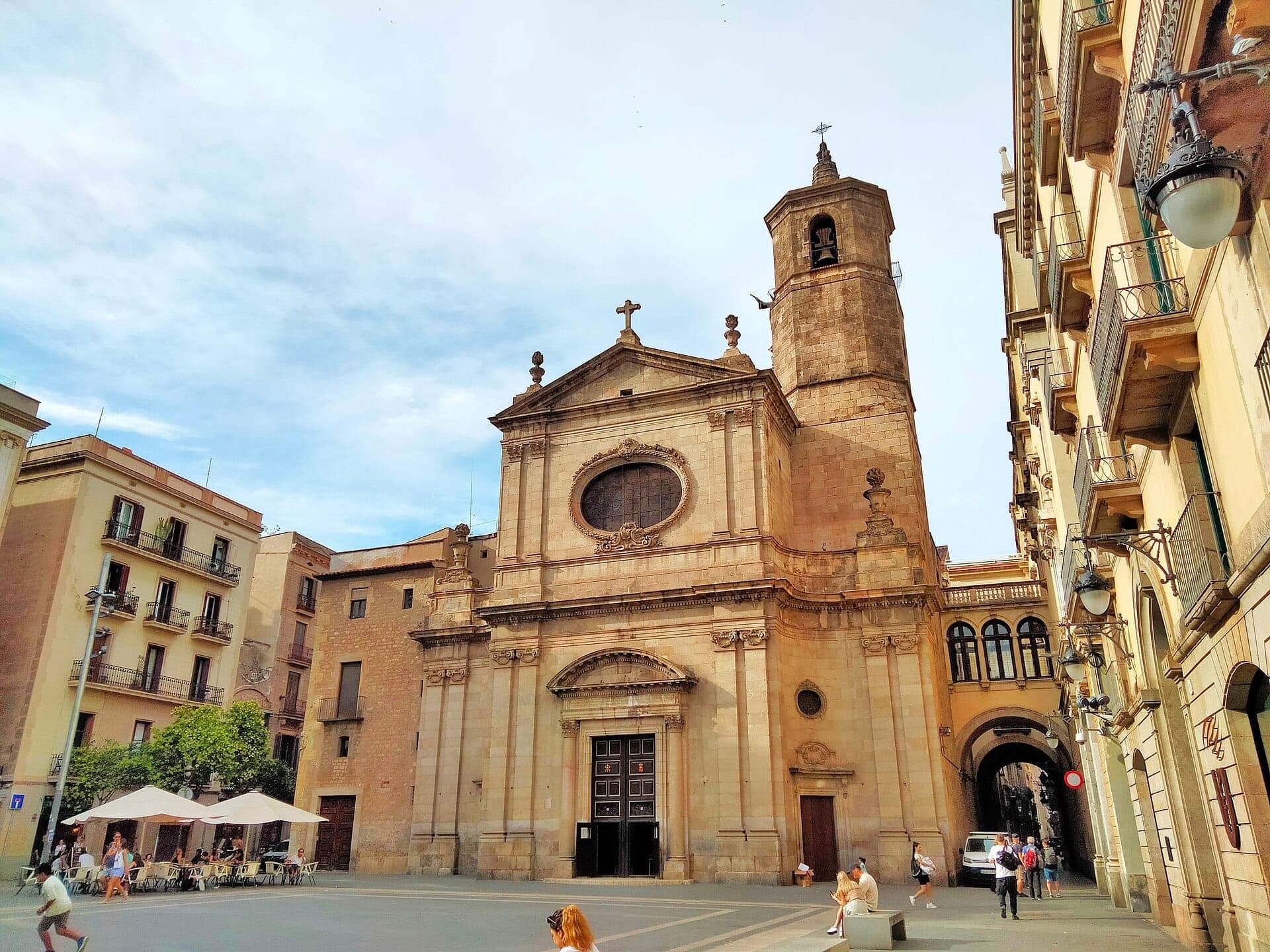
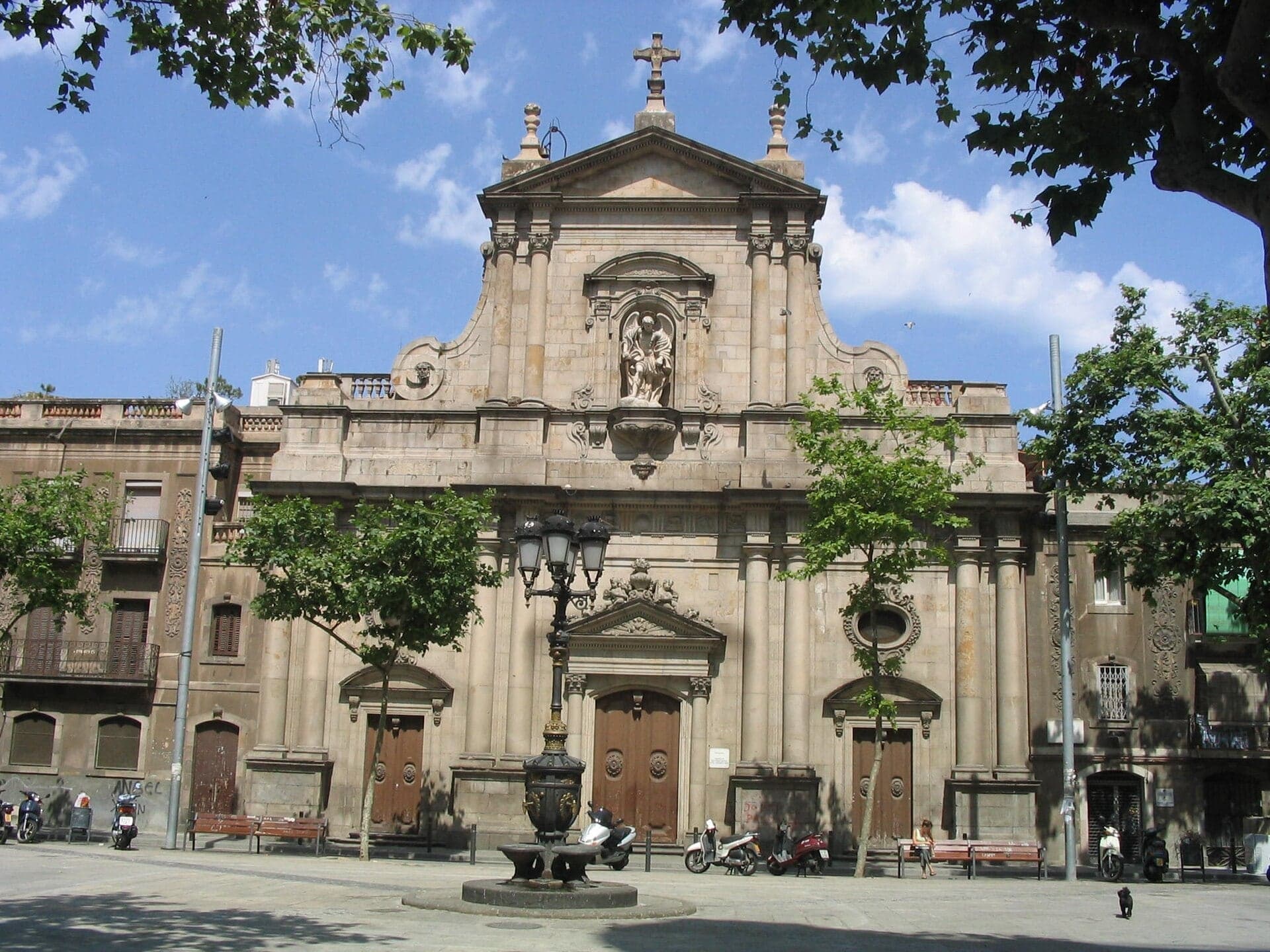
Plaça de la Mercè: The Patron Saint's Church
Barcelona's patron saint's basilica faces a square cut out in the 1980s. Its dome carries a five-tonne bronze Virgin, and the fountain's Neptune once watered ships.
- 5
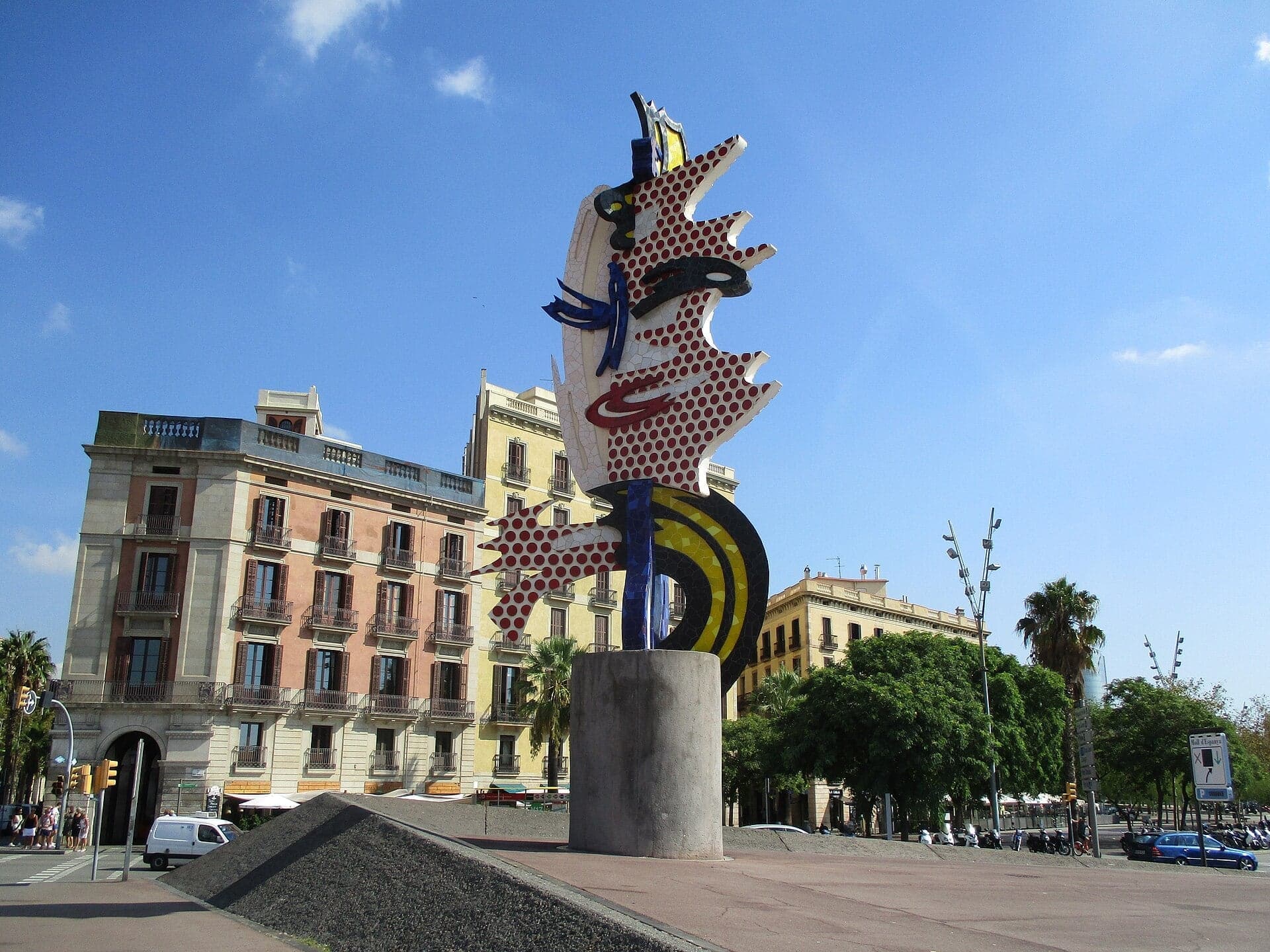
Barcelona Head: Pop Art in Broken Tile
Roy Lichtenstein's pop-art face in Catalan broken tile, unveiled in April 1992. It stands at the end of the old timber wharf, remade from 1987 with the Games in view.
- 6
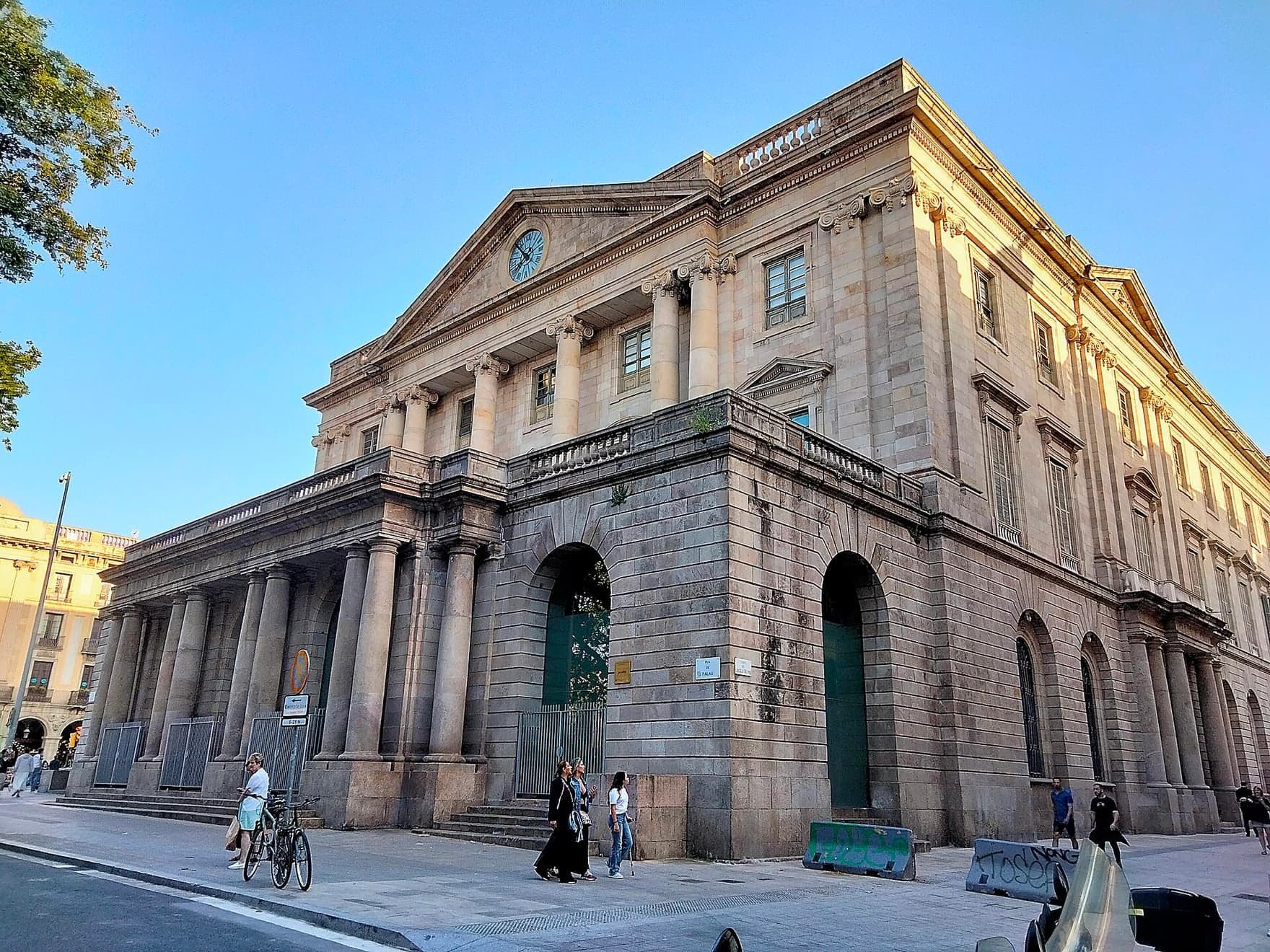
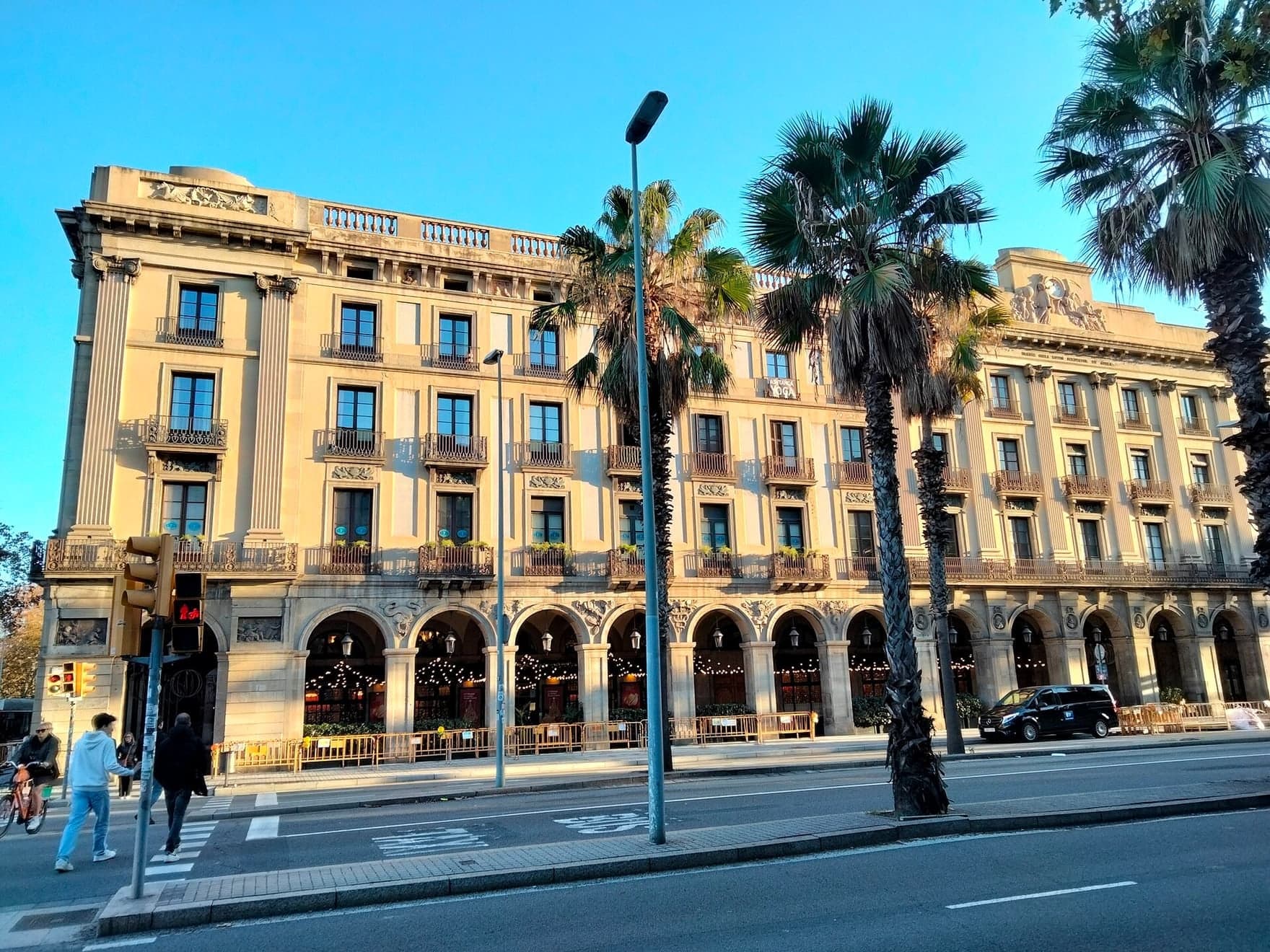
Llotja de Mar and Porxos d'en Xifré: Merchants' Corner
A Gothic hall in a classical coat faces the first rental flats. Across the road, the Xifré arcades carry Columbus fifty years before his column.
- 7
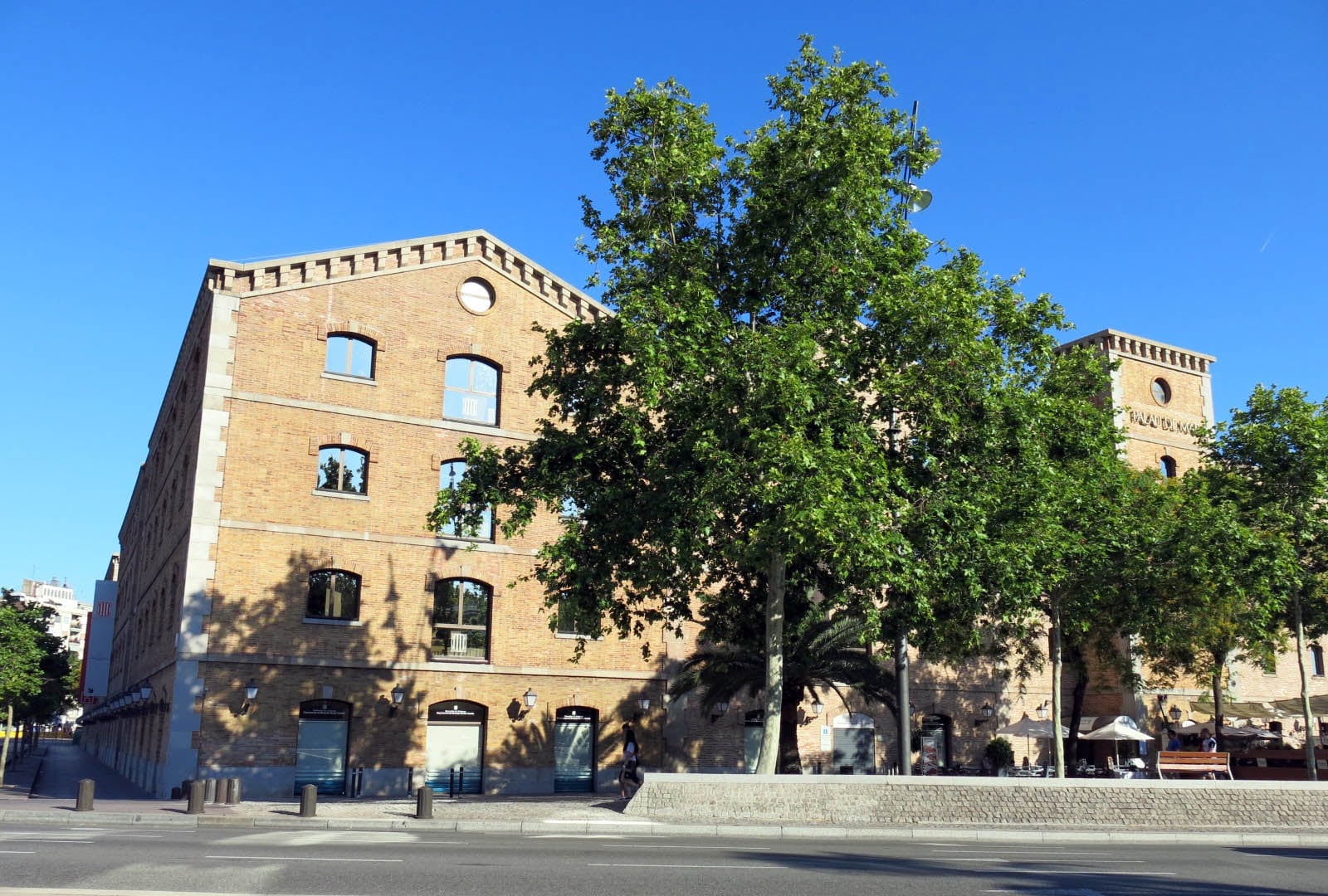
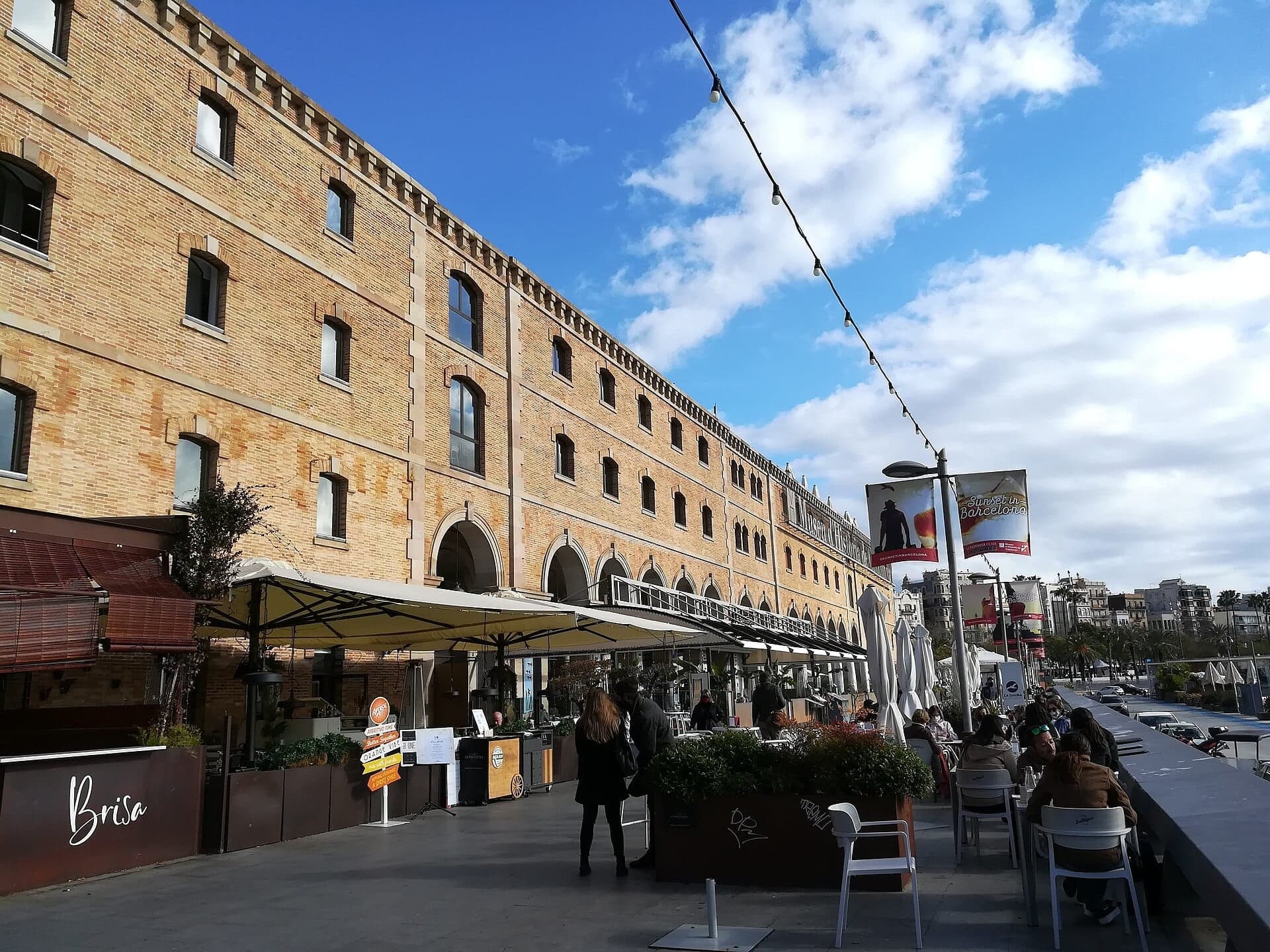
Palau de Mar: The Last Port Warehouse
The last building of Barcelona's industrial port, saved by a 1989 campaign. Its brick warehouses now hold the Museum of the History of Catalonia.
- 8
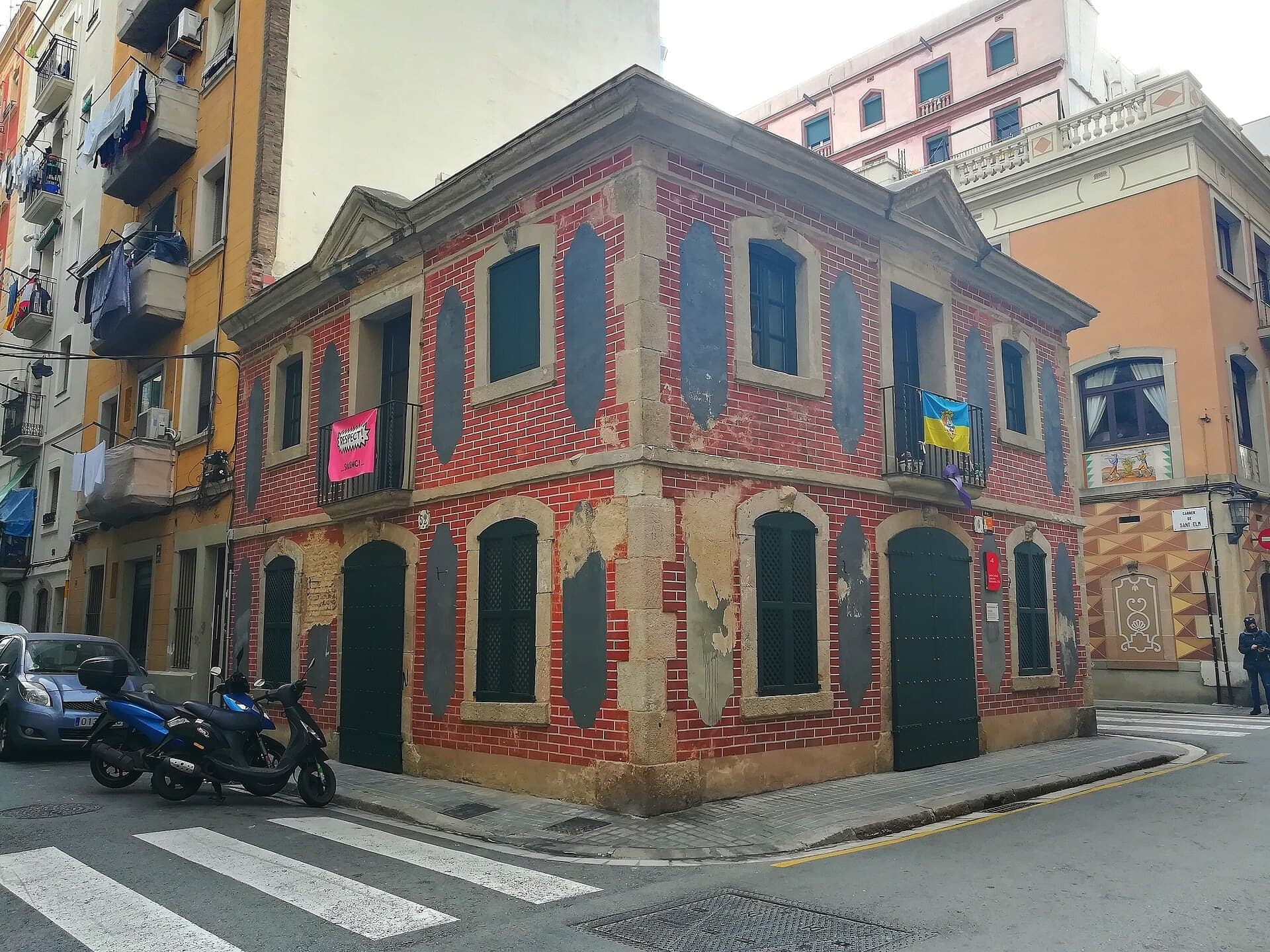
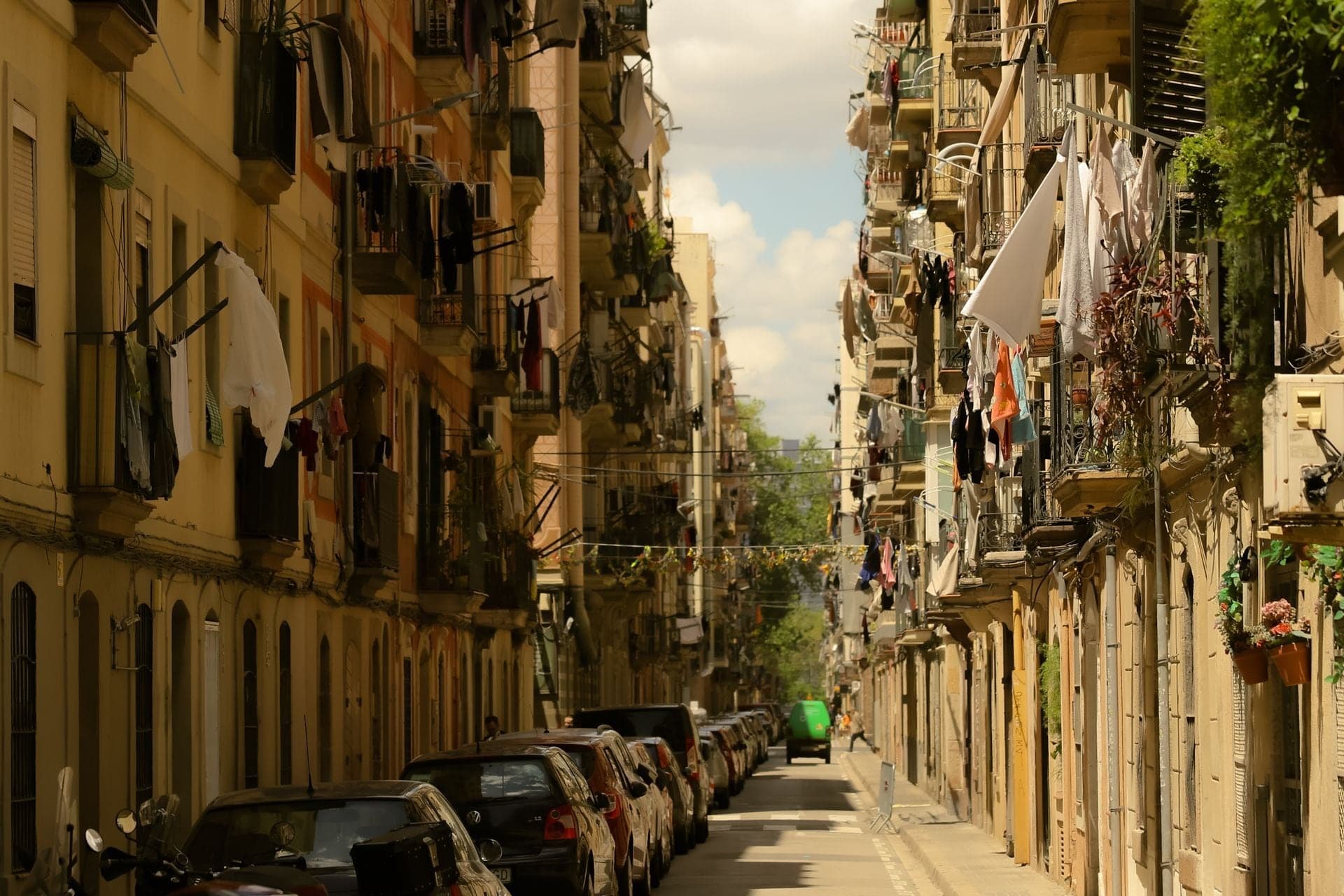
Carrer de Sant Carles: The House of 1761
The last original house of the 1753 Barceloneta with fronts on three streets, still at its first height. Finished in 1761 for a rope-maker, it is now a small free museum of the neighborhood.
- 9
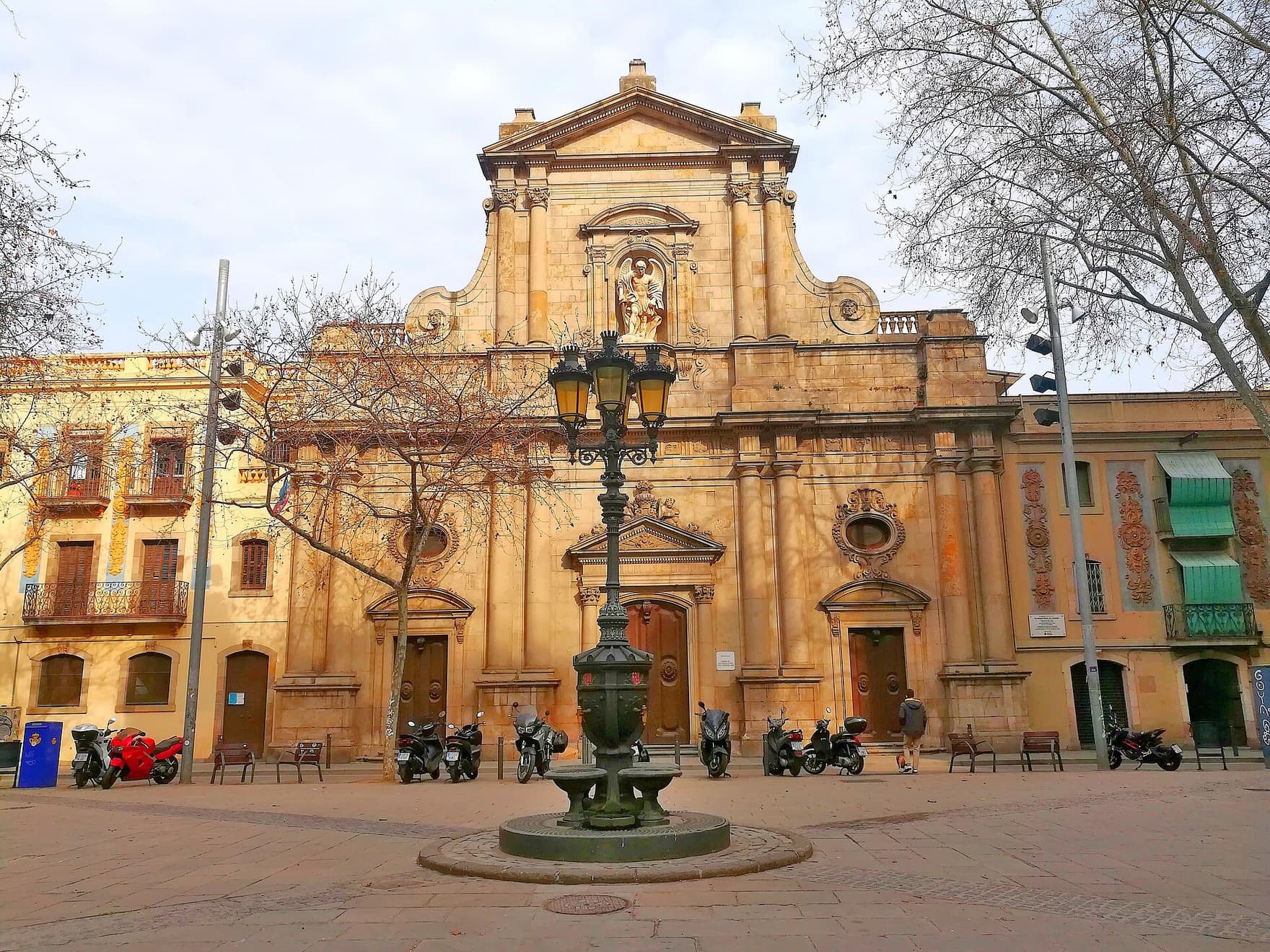
Sant Miquel del Port: The New Town's Church
The church was begun three months after the district's first stone. Burned in the Civil War, it has carried a new Saint Michael on its front since 1992.
- 10
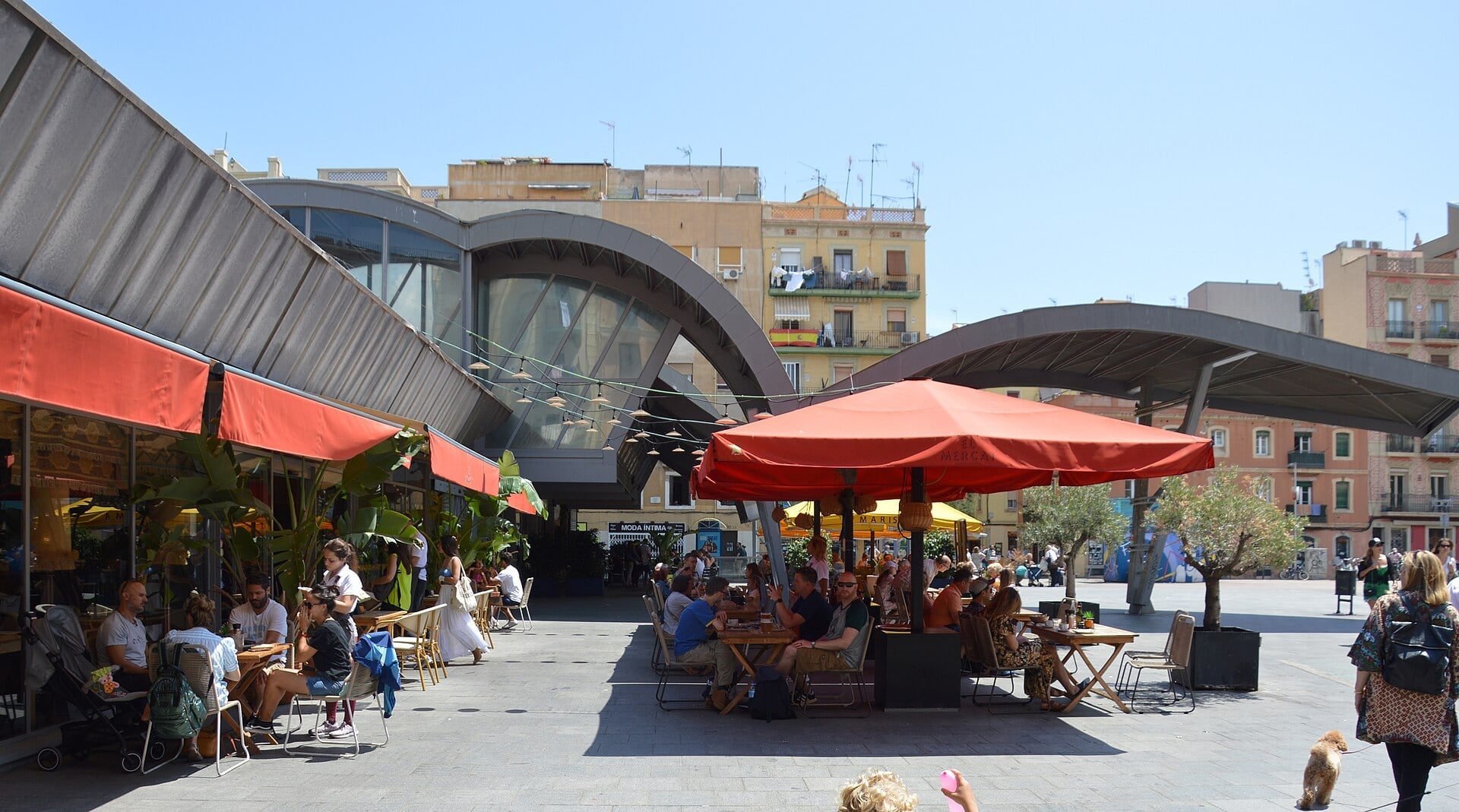
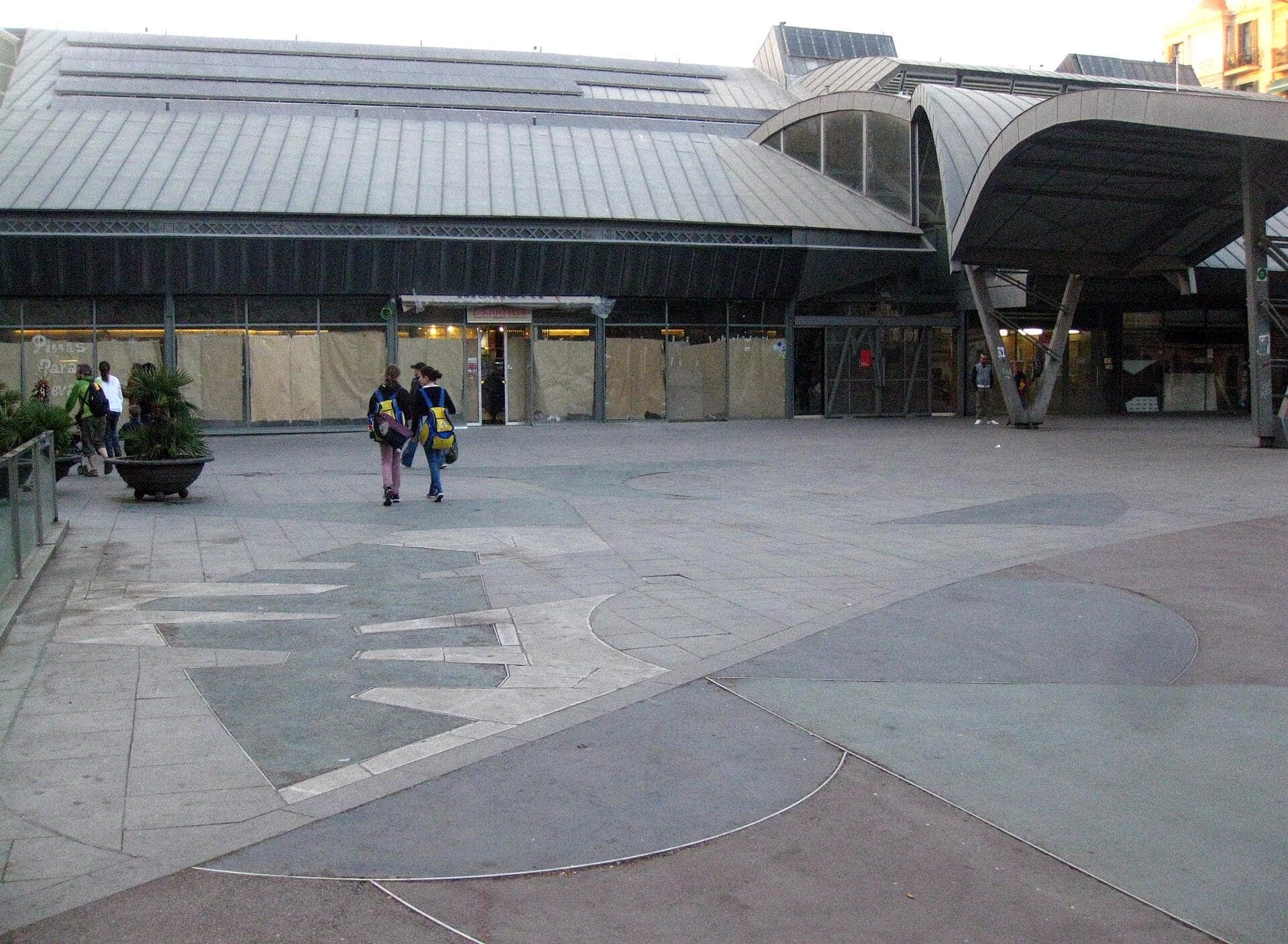
Mercat de la Barceloneta: Iron and Solar
An 1880s iron market hall under a solar-panelled zinc roof. Nearby corner stones still carry the block numbers of the 1753 plan.
- 11
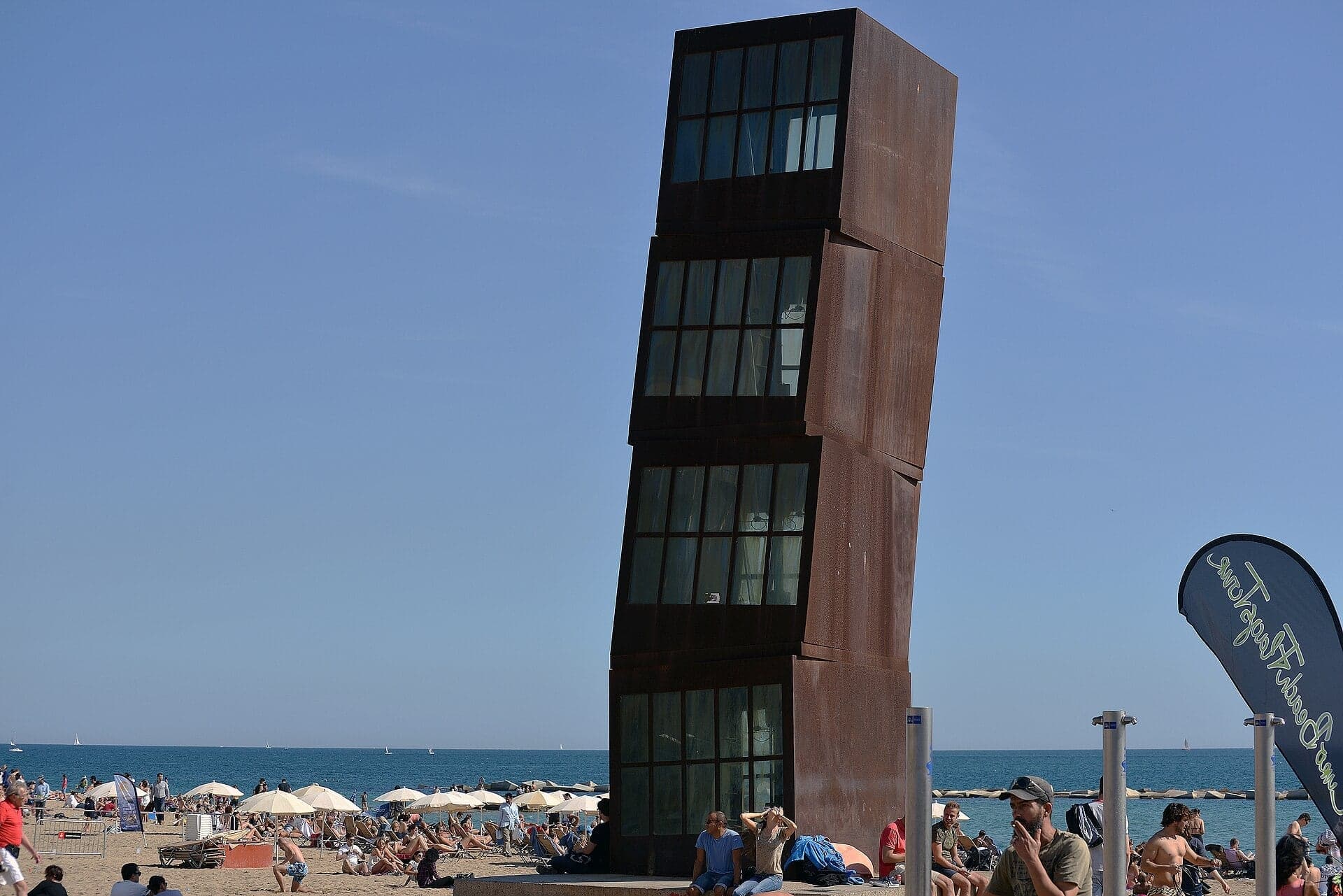
L'Estel Ferit: The Wounded Star
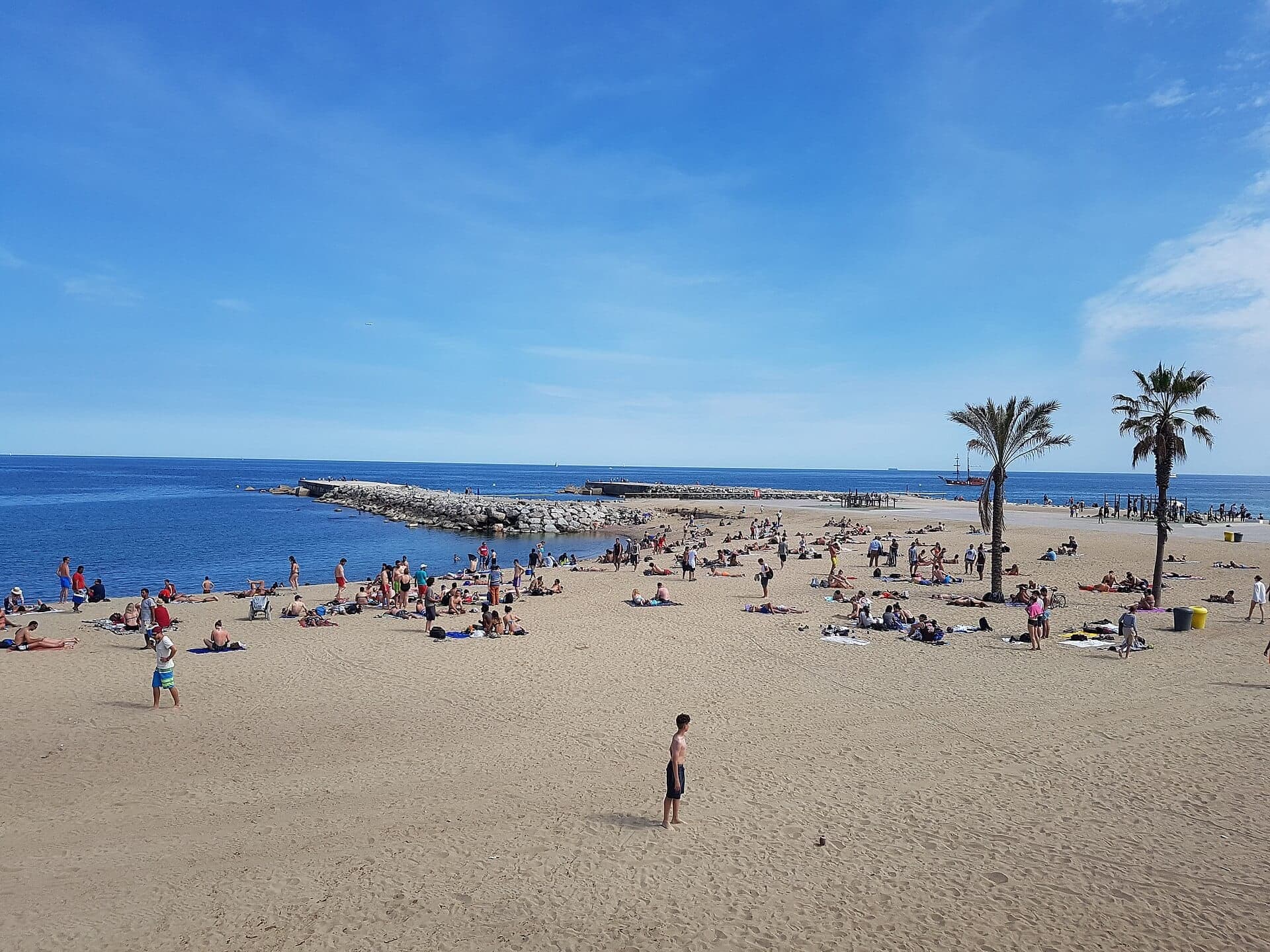
Rebecca Horn's stacked steel boxes remember the beach bars that stood here. Installed in July 1992, the sculpture outlasted them and was raised onto a new base when the beach was rebuilt.
Details
Best Time to Visit
A weekday morning, Tuesday to Saturday. The Columbus lift runs only 08:30 to 14:30, the Barceloneta market trades Monday to Saturday 08:00 to 15:00, the Casa de la Barceloneta 1761 is open Tuesday to Saturday mornings, and the Museum of the History of Catalonia is closed on most Mondays. The beach faces south-east, so the sea is brightest in the morning; the harbor promenade and the beach have little shade at midday in summer. Checked 12 October 2026.
Pro Tips
- •Getting to the start: Drassanes Metro (line 3, green) has an exit about 150 metres from stop 1; Paral·lel (lines 2 and 3, and the Montjuïc funicular) is about 400 metres away. The walk ends about 750 metres from Barceloneta Metro (line 4, yellow), which is also about 200 metres from Palau de Mar mid-walk. Buses 47, 59, D20, V15 and V19 serve Carrer de Sant Carles. Checked 12 October 2026.
- •Llotja de Mar (stop 6): the ground floor is open to walk in free, Monday to Sunday 11:00 to 17:00, whenever the building's events allow, with paid guided visits in quiet periods (summer, Christmas, Easter). Checked 12 October 2026 (Cambra de Comerç de Barcelona, 21 July 2026).
- •Casa de la Barceloneta 1761 (stop 8, Carrer de Sant Carles 6): free. Monday 16:00 to 20:00; Tuesday to Friday 10:00 to 13:30 and 16:00 to 20:00; Saturday 10:00 to 13:30. Its exhibition of traditional Barceloneta seafaring recipes runs to 31 October 2026. Checked 12 October 2026.
- •Mercat de la Barceloneta (stop 10): Monday to Saturday 08:00 to 15:00, closed Sundays. Checked 12 October 2026 (Barcelona.cat).
- •Jardí del Baluard, the garden on top of the shipyard's bastion (stop 1): open the first and third Sunday of each month, 11:00 to 14:00, closed in August. The Gate of Santa Madrona itself stays closed. Checked 12 October 2026 (Museu Marítim).
- •The Museu Marítim is free every Sunday from 15:00, and its entrance-hall exhibitions are always free; the free exhibition on the history of the building runs to 31 March 2027. Checked 12 October 2026.
- •The footbridge from the Columbus Monument out across the harbor, the Rambla de Mar, leads to a dead-end pier: worth it only as a there-and-back.
Safety & Precautions
- •Pickpockets work the foot of La Rambla around the Columbus Monument (stops 1 to 2) and the beach (stop 11). Keep bags closed and in front of you, and never leave things alone on the sand.
- •Between stops 1 and 2 the route crosses the foot of La Rambla, whose side lanes carry taxis and delivery vans; one of them has no light-controlled crossing. Then cross Passeig de Colom only at the lights by the column.
- •Between stops 4 and 5 the narrow old streets (Carrer Ample, Carrer de la Plata, Carrer de la Mercè, Carrer de Marquet) are shared with the occasional car. At the foot of Via Laietana use the two sets of lights, the near carriageway first and then the far one; do not cut straight across, there is no crossing there.
- •The lane through the middle of Palau de Mar (after stop 7) may be closed at night; if it is, walk round the building's end to Passeig de Joan de Borbó.
- •Passeig de Joan de Borbó (between stops 7 and 8) is a four-lane road crossed at the lights; its pavement is lined with restaurant terraces and their touts.
- •Between stops 10 and 11 the route crosses Carrer de Pepe Rubianes, a two-lane street, where there is no marked crossing: cross with care, or use the zebra crossing a short way along.
- •The Barceloneta (stops 8 to 11) is a residential neighborhood: keep voices down, keep out of doorways and entrances, and be discreet photographing people's homes.
- •La Rambla's remodelling continues uphill from the Columbus Monument until about early 2027; the stretch on this route was finished in July 2024. Checked 12 October 2026.
- •The harbor promenade and the beach have little shade; carry water in summer. Lifeguard season on the Barceloneta beaches ended on 13 September 2026. Checked 12 October 2026.
Travel advisory: Exercise Increased Caution (Level 2).
Gallery
Related Reading
Go deeper on what you'll see, hear, and walk through.
Read the walk
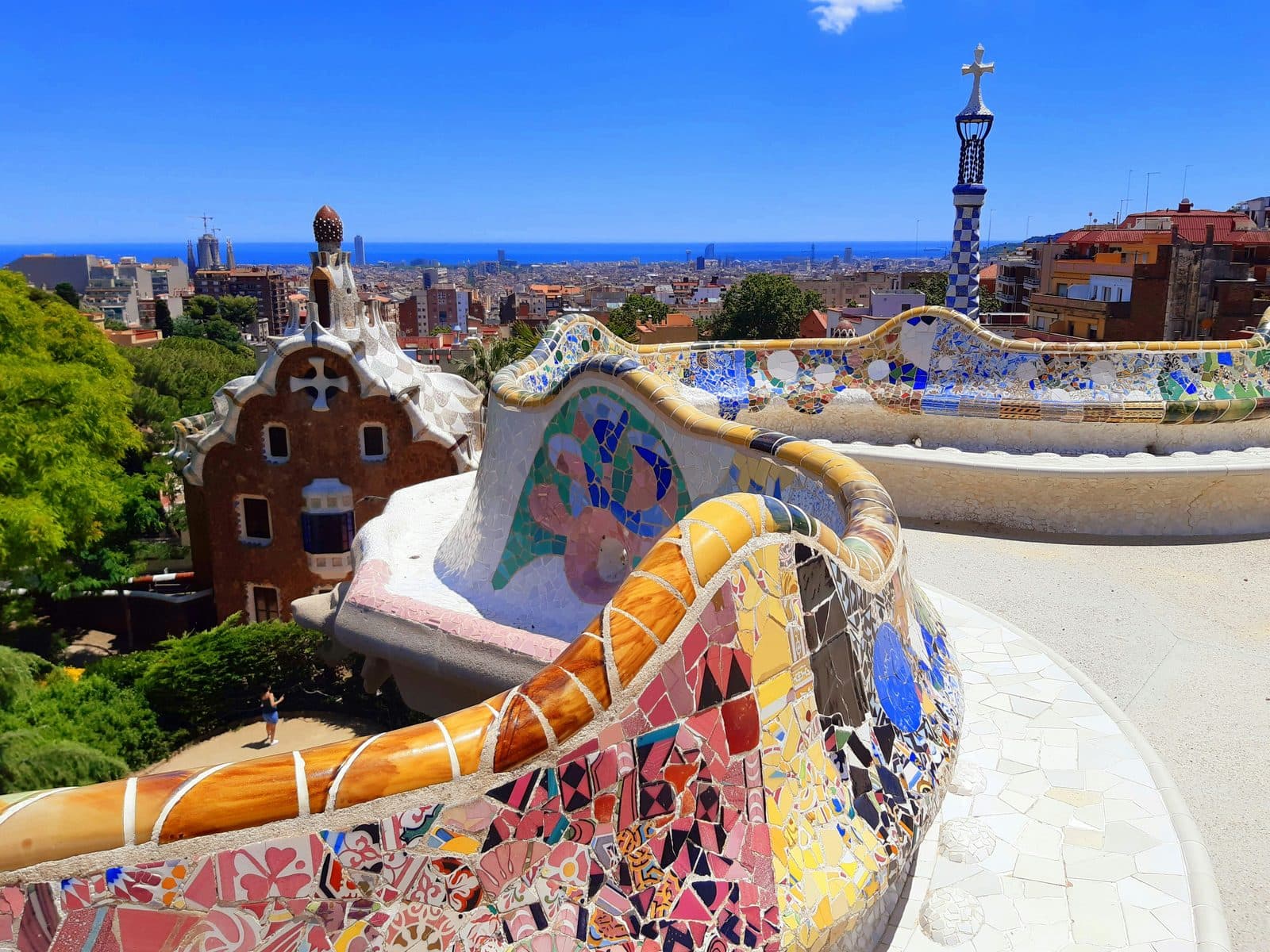
The full story of Barceloneta Beach and Port Vell: Walking on the Sea, in words. Prefer to listen? Play it narrated, from home or on location.
Introduction
Barcelona, the capital of Catalonia in Spain, has a waterfront that the sea and the city have been trading back and forth for seven hundred years. In thirteen oh two, storms were already breaking against the front of the royal shipyard where this walk begins. Later, the harbor's breakwater trapped so much sand that by the seventeen hundreds there was ground solid enough to build a whole new neighborhood on: the Barceloneta. And the beach where the walk ends was only cleared and rebuilt for everyone from the middle of the nineteen nineties.
So this walk follows the old edge of the sea, from a medieval navy yard, through a little town drawn up by an army engineer, to the sand.
Three people come back along the way. Christopher Columbus, who appears twice: on top of his column, and half a century earlier on a merchant's arcade. Juan Martín Cermeño, the military engineer who laid out the Barceloneta. And Rebecca Horn, the artist whose sculpture stands on the beach at the end.
The walk is eleven stops over just under three kilometres, about one point eight miles, and takes about an hour and a half. It is flat and step-free. The Maritime Museum, the lift inside the Columbus column and the Museum of the History of Catalonia are ticketed, and every stop works from outside. It begins beside the old shipyard, near Drassanes Metro, and ends on Barceloneta beach.
1. Drassanes Reials: The Royal Shipyards
Welcome to the Drassanes Reials, the Royal Shipyards. Stand on the pavement where you can see, across the street and the little square, a row of stone gables standing side by side. In summer the street trees may hide part of them.
This is a shipyard under roofs. It goes back to the thirteenth century, when the king of Aragon had it built to make and repair war galleys. Each of those gables is the end of a long hall of stone arches, big enough to build a ship inside and out of the weather. Today the halls hold the Maritime Museum. It is ticketed: inside is a full-size copy of the royal galley that was built in these yards and fought at Lepanto, in fifteen seventy-one. The details are on this stop's card.
In thirteen seventy-eight, the king, the city council and Catalonia's government signed an agreement to build the yard properly, together. The museum calls this the largest and most complete medieval shipyard to survive anywhere in the world.
Now picture the water. When the yard was built, the beach came right up to the far end of these halls. Documents from thirteen oh two, thirteen thirteen and thirteen twenty record storms damaging its sea front. From here to the end of the walk, most of what you will see stands on ground the sea once covered or battered.
The stretch of wall along the shipyard is the only piece of Barcelona's medieval walls kept when the rest came down, from eighteen fifty-four. In it is the Gate of Santa Madrona, the only one of the old city gates still standing.
Follow the route along the shipyard toward a very tall column by the sea. Cross the little street on the zebra, the avenue at the lights, the foot of La Rambla, where taxis use the side lanes, and the harbor road at the lights.
2. Columbus Monument: A Column of Catalan Iron
Stop here on the harbor-side pavement and turn round to face the way you came. The whole column stands in view at the end of the road, with the statue on top against the sky.
This is the Columbus Monument, unveiled for the Universal Exposition of eighteen eighty-eight at the foot of La Rambla, where the city's main street meets the port. It is nearly sixty metres of iron and bronze on a stone base. The column was cast here in Barcelona, in eight pieces, in under a year. The Columbus on top is bronze, about seven metres tall, and was once gilded. A lift inside the column runs up to a small viewing gallery under his feet: ticketed, and open in the mornings only. The details are on this stop's card.
Look at it as a boast. A historian of the city's monuments notes that in its day it was hailed as the tallest column in the world, built entirely of metal and fitted with a lift: proof of what Catalan industry could do.
Now the base. Around it, too far to read from here, are groups of Catalans who had a part in the voyages, seated figures for Catalonia, Aragon, Castile and León, and eight lions. The message was that Catalonia belonged in the story of the discovery.
And the pointing hand. People love to argue about where Columbus is pointing. The city itself calls it an urban legend and a guessing game; its public art catalogue says simply that the arm points toward the horizon, out to sea.
This corner and the beach where the walk ends are two of the busiest places in the city, and pickpockets work both. Keep bags closed and in front of you.
Follow the route along the harbor road and cross it at the lights. Next is a small garden of palms with another iron column, older and smaller.
3. Plaça del Duc de Medinaceli: Iron and Palms
Walk on into the garden and stop on the path under the palms, beside the tall iron column with a fountain at its foot. Look up first, then step back to see the figure on top.
This square was widened after a Franciscan convent beside it was lost in the fires of eighteen thirty-five. The Duke of Medinaceli gave the land that completed it, and so it carries his name.
The column is the reason to stop. It went up in eighteen fifty-one, and the city's public art catalogue says it was meant less as a memorial than as a show of what the new industrial materials could do. It was the first large ornamental piece of cast iron put up in Barcelona: column, decoration and figures, all cast in iron and painted, standing on stone from Montjuïc, the hill above the port. Thirty-seven years later, at the far end of this same harbor road, the city would raise the Columbus column. The same idea, much bigger.
The figure on top was the last thing to be decided. Columbus was one candidate. So was a man said to have run a steamship test in fifteen forty-three, a story debunked in eighteen forty-nine. The city chose Galceran Marquet, vice-admiral of the Catalan fleet made ready against Genoa in thirteen thirty-one. Who sculpted him is still argued over.
At the opening, on the twenty-ninth of June, eighteen fifty-one, the cloth over the statue snagged. A carpenter's son from a nearby street climbed the column to free it, and got the loudest applause of the day.
Enjoy the shade while you have it: there is not much of it later on, by the water.
Follow the route out of the garden into the old streets behind it. Next is the church of the city's patron saint.
4. Plaça de la Mercè: The Patron Saint's Church
Walk on into the open square and stop near the fountain, with the curved front of the church across the square and its dome rising behind.
This is the Basilica of the Mercè, Our Lady of Mercy, patron saint of Barcelona since sixteen eighty-seven. The city's big late-September festival, La Mercè, is named for her. The church was built between seventeen sixty-five and seventeen seventy-five on the site of a medieval one, and the city says this curved Baroque front is the only one of its kind in Barcelona. Look at how the whole front curves.
Now look up at the dome. It was finished for the Exposition of eighteen eighty-eight, the same year as the Columbus column. On top stands a bronze Virgin, holding her scepter out over the city. She is not the first. The church was burned in July nineteen thirty-six, and the bronze statue on the dome was melted down for military use. This one went up in nineteen fifty-nine, bigger than the first, and weighs about five tonnes.
The church is free to enter when it is open.
The square itself is newer than it looks. It was opened up in the early nineteen eighties by pulling down a whole block of houses, and in that block, from eighteen ninety-eight to nineteen oh four, lived the young Pablo Picasso.
And the fountain came from the waterfront. Its Neptune was first set up in eighteen twenty-six on the Barceloneta quay, as a place for ships to take on water, and was moved away when the port was modernized. We are heading for that quay.
Follow the route into the narrow old streets beyond the square. They are shared with the occasional car, so keep to the side. At the harbor road, cross at the lights in two stages, the near side first: there is no crossing in between.
5. Barcelona Head: Pop Art in Broken Tile
Walk on across the lights onto the paving and stop facing the giant face, close enough to see its colored tiles. This is the Barcelona Head, by the American pop artist Roy Lichtenstein. It was unveiled in April nineteen ninety-two, a few months before the Olympic Games. Look…
Full narration for this stop unlocks with the tour.
6. Llotja de Mar and Porxos d'en Xifré: Merchants' Corner
Walk on to the end of the arcades, at the corner, and stop there. Across the road stands a long, pale, classical building: the Llotja de Mar, the sea exchange. Palms in the middle of the road hide part of its long side. This was the merchants' building of a port city. It was…
Full narration for this stop unlocks with the tour.
7. Palau de Mar: The Last Port Warehouse
Walk on along the quay and stop where a passage opens through the middle of the long brick building, with the boats of the marina in front of you. The brick wings run away from you in both directions. This is Palau de Mar, the Palace of the Sea, though it was never a palace.…
Full narration for this stop unlocks with the tour.
8. Carrer de Sant Carles: The House of 1761
Walk on along this narrow street and stop on the pavement just past the corner, with a small, low house diagonally across the street. You are in the Barceloneta now, and this is a lived-in neighborhood: front doors open straight onto these streets, so keep voices down and…
Full narration for this stop unlocks with the tour.
9. Sant Miquel del Port: The New Town's Church
Walk on into the square under the trees and stop facing the church front on its far side. If the branches hide the top, walk to the edge of the trees. This is Sant Miquel del Port, Saint Michael of the Port, and it was one of the planned town's first buildings. Work began on…
Full narration for this stop unlocks with the tour.
10. Mercat de la Barceloneta: Iron and Solar
Walk on and stop on the plaza side of the street, with the market hall across the open square. This is the Barceloneta's market. It began in the open air, in a square nearby, and in the eighteen eighties the city built an iron hall, with a central nave and two side naves.…
Full narration for this stop unlocks with the tour.
11. L'Estel Ferit: The Wounded Star
Walk on out onto the paved promenade and stop where you can see a tall stack of steel boxes on the sand, with the sea behind it. This is L'Estel Ferit, the Wounded Star, by the artist Rebecca Horn, unveiled in July nineteen ninety-two. People here call it els cubs, the cubes.…
Full narration for this stop unlocks with the tour.
- Drassanes Reials, accés al Museu Marítim, pg. Josep Carner 26-30 (Barcelona) — Enric, CC BY-SA 4.0 · source
- Drassanes, Barcelona — Ralf Roletschek, GFDL · source
- Monument a Cristòfor Colom. Barcelona — Carme Ribes Moreno, CC BY-SA 3.0 · source
- Plaça del Duc de Medinaceli (Barcelona), amb el monument a Galceran Marquet — Enric, CC BY-SA 4.0 · source
- Plaça del Duc de Medinaceli — Jordiferrer, CC BY-SA 4.0 · source
- Basílica de la Mercè (Barcelona) — Enric, CC BY-SA 4.0 · source
- This is a photo of public art indexed in the cataloge Art Públic of Barcelona (Spain) under the code number — Galtzerdiak, CC BY-SA 4.0 · source
- Llotja de Mar, Pla de Palau 22 - c. Consolat de Mar 2-4 (Barcelona) — Enric, CC BY-SA 4.0 · source
- Cases d'en Xifré, passeig d'Isabel II 8-14 bis - Pla de Palau (Barcelona) — Enric, CC BY-SA 4.0 · source
- Magatzems generals del Dipòsit (Barcelona) — Enfo, CC BY-SA 3.0 · source
- Magatzems generals del Dipòsit (Barcelona) — Enric, CC BY-SA 4.0 · source
- Casa de la Barceloneta 1761, c. Sant Carles 6 - c. Sant Miquel 52 (Barcelona) — Enric, CC BY-SA 4.0 · source
- Església de Sant Miquel del Port (Barcelona) — Enric, CC BY-SA 4.0 · source
- Església de Sant Miquel del Port al barri de la Barceloneta, Barcelona. Edifici barroc de Juan Martín Cermeño (1753-55); (1863) — Acountries, CC BY-SA 3.0 · source
- This is a photo of public art indexed in the cataloge Art Públic of Barcelona (Spain) under the code number — Enfo, CC BY-SA 3.0 ES · source
- Walking along Passeig Marítim de la Barceloneta, a 1.25km promenade from La Barceloneta to Port Olímpic / L'Estel ferit, (The Wounded Shoo — Harvey Barrison from Massapequa, NY, USA, CC BY-SA 2.0 · source
- Platja de la Barceloneta. — CPG83, CC BY-SA 4.0 · source
Images may be cropped or resized. Other photos via Unsplash and Pexels.