The plaza is the first thing the tour notices and the last thing it forgets. Four hectares of paving. A grid of palm trees along the south edge. The Catedral Metropolitana on the north, the Palacio Nacional on the west, the Biblioteca Nacional on the south, the Portal de la Dalia on the east. Stand at any one of those buildings and look across, and the buildings on the far side feel further away than they should be. The plaza is too big for the city around it. That is not an accident. The plaza was sized first, and then the city was asked to live up to it.
The eight-stop walk through the historic center is structured around that asymmetry. Each stop is a building that the late nineteenth-century elite installed to populate the plaza with the trappings of a confident state. Read in sequence, the buildings are a single sustained argument.
The plaza as an argument
The current Plaza Gerardo Barrios dates from the 1880s reconstruction after the 1854 earthquake. The earthquake had leveled the previous central plaza along with most of the city. President Rafael Zaldívar, in office during a long stretch of the rebuild, approved an enlargement of the central plaza to roughly its current dimensions. The decision was politically loaded. El Salvador in the 1880s was the smallest country on the Central American isthmus and had been for half a century. The dominant regional power was Guatemala, with several times Salvadoran population and a larger central plaza in Guatemala City to match. Zaldívar's enlarged plaza was a statement that the capital of the smallest country would have civic infrastructure that matched any in the region.
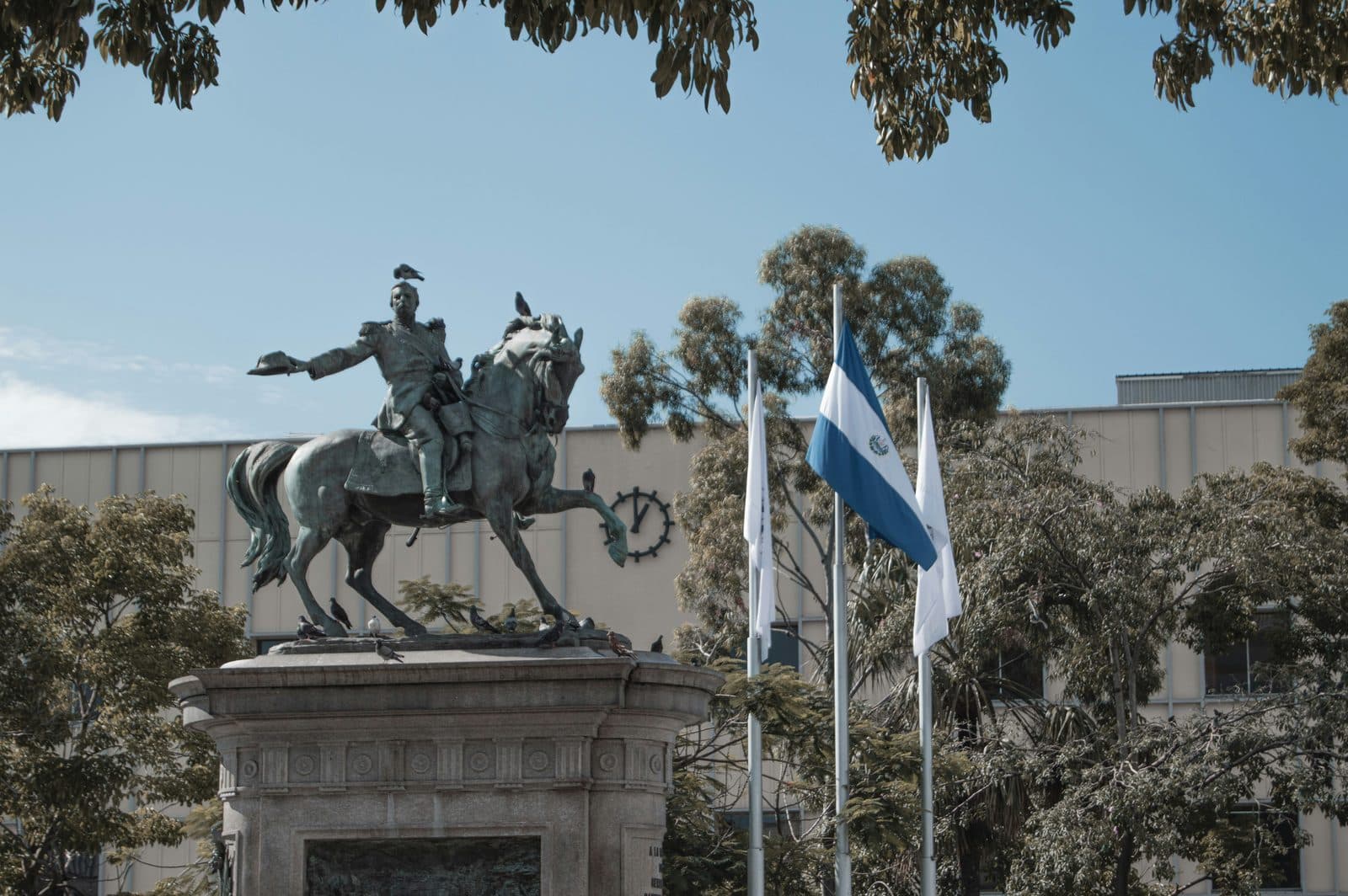
The equestrian statue of Gerardo Barrios that anchors the center of the plaza was unveiled in 1909. Barrios had been president three times in the 1850s and 1860s before being executed by a Honduran-Guatemalan invading force in 1865. The choice to make him the plaza's hero rather than one of the founding-era figures was deliberate. Barrios was the leader most associated with Salvadoran resistance to Guatemalan and Honduran power. Putting him in the center of the largest plaza in Central America was an act of national positioning.
The Palacio Nacional
Hear a stop from this walk
Iglesia El Rosario: The Rainbow in Concrete
The Palacio Nacional on the western side of the plaza was finished in 1911 after an earlier wooden palace burned down in 1889. The architect, Pascasio González Erazo, designed the building in a French Renaissance style with four interior patios named for Liberty, Justice, Labor, and Sovereignty. The structural frame is iron, shipped in pieces from a Belgian foundry around 1900 and assembled on site. The marble for the staircases came from Italy. The chandeliers came from Vienna.
The Palacio was the operational seat of the Salvadoran government for nearly a century before the legislature moved to a newer building in the 1970s. Today it functions as a museum and an event hall. The interior is worth the small entry fee. The Sala de los Próceres, on the second floor, contains portraits of every Salvadoran head of state. The Sala Roja, where the legislature met, retains the original red velvet and the gilded balcony. Both rooms preserve the visual register of what the coffee elite of 1900 thought a Latin American capital should look like.
The Cathedral and the unfinished promise
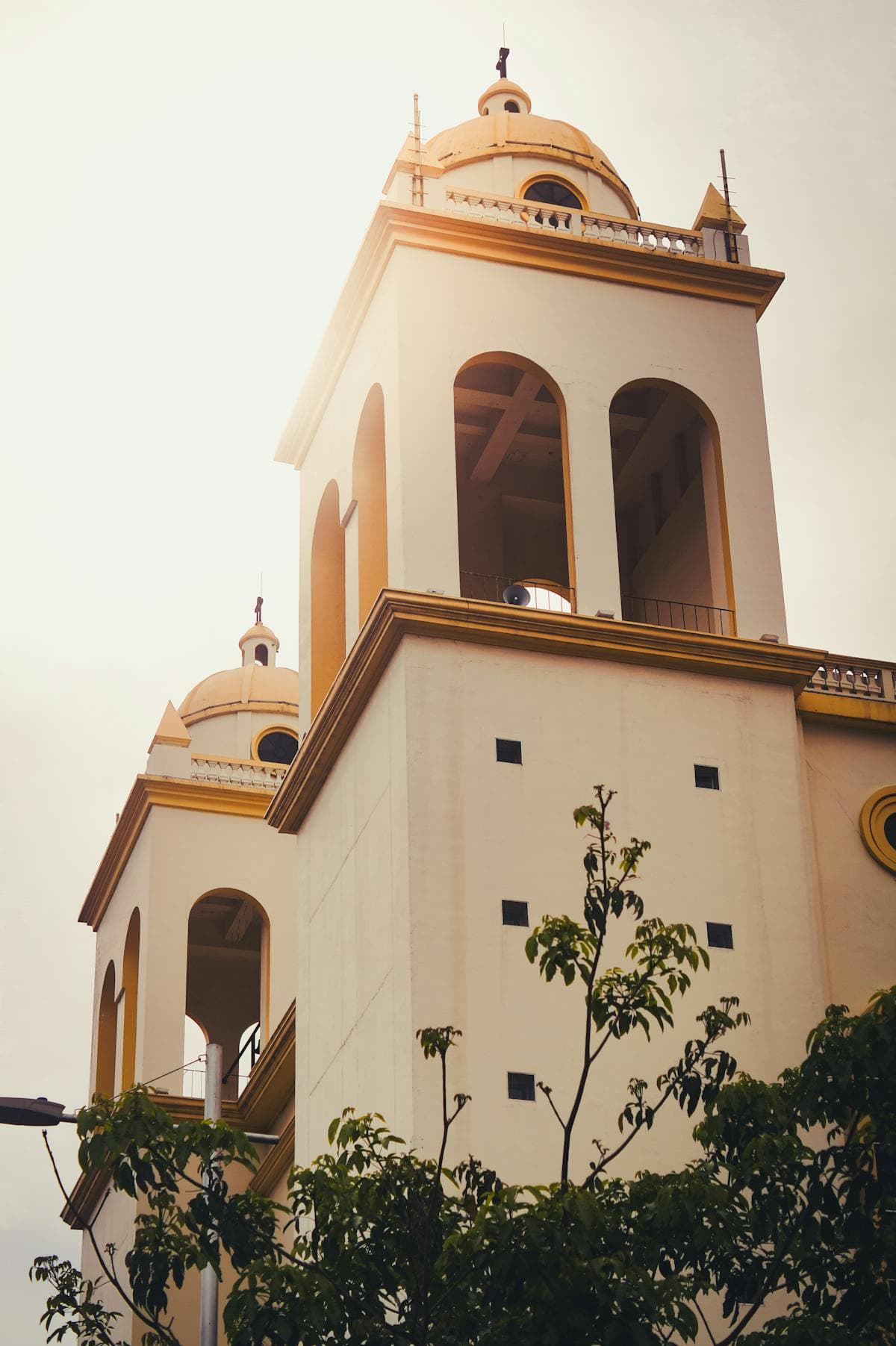
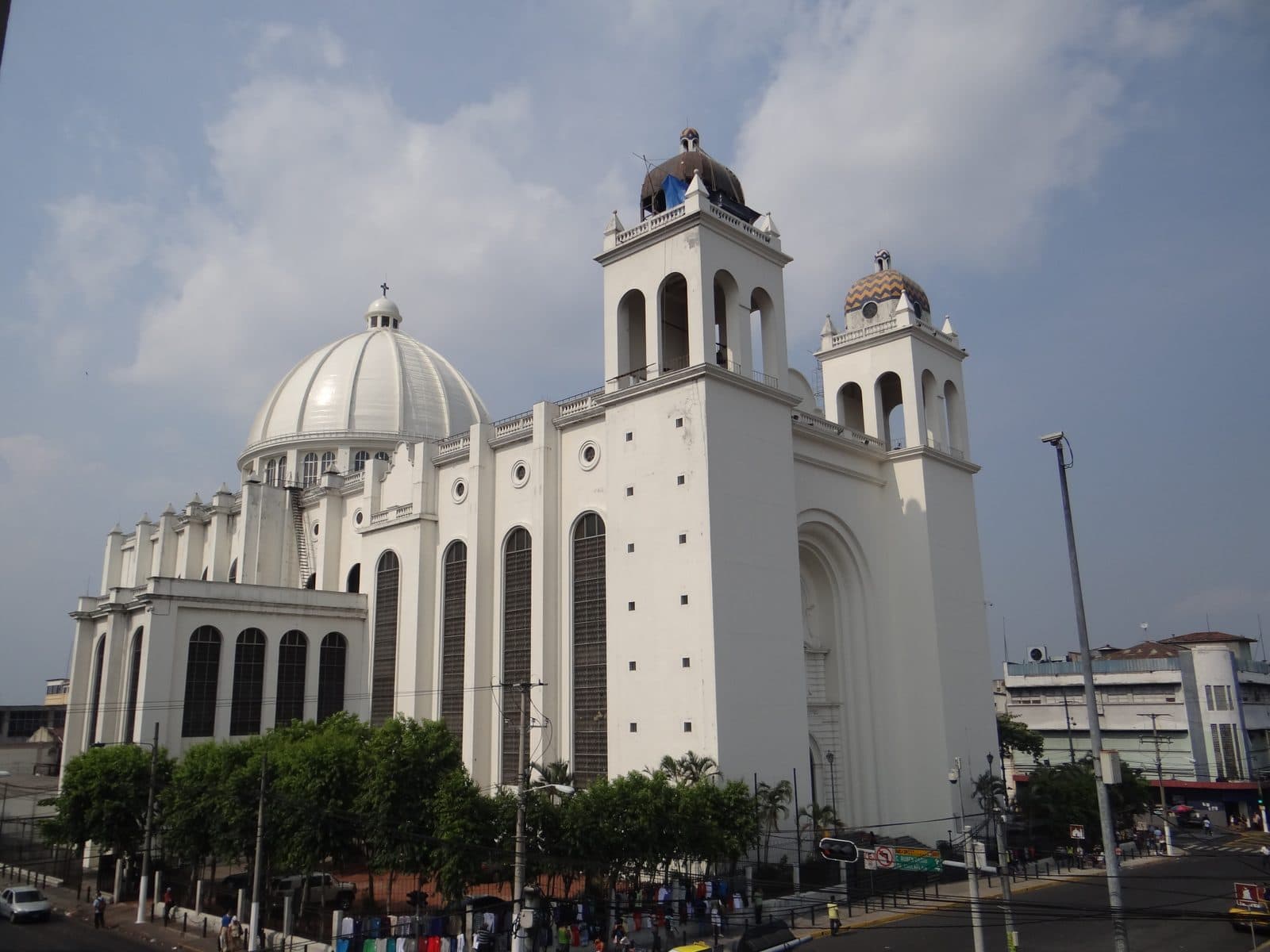
The Catedral Metropolitana on the north side of the plaza is the building most people remember from the historic center. It was begun in 1953 on the foundations of an earlier cathedral that had burned in 1951. Construction proceeded slowly through the 1960s, stalled through the 1970s, and was largely halted by the civil war. The current cathedral was inaugurated in stages through the 1990s but has never been fully completed inside.
The unfinished interior is not accidental. After Romero's assassination in 1980, his body was first buried in the cathedral's crypt. The funeral on March 30 ended in a massacre when soldiers and snipers opened fire on the mourners gathered in this plaza, killing dozens. The cathedral became a site of national mourning, and the Salvadoran church under successive archbishops made a deliberate decision to leave construction incomplete. The argument is simple: the country's accounting for its disappeared and murdered is not complete, and the building that holds Romero's tomb should remain incomplete as long as that accounting remains so.
The mosaic by Fernando Llort that adorned the exterior facade was added in 1997 and removed in 2011 by Archbishop Escobar Alas, an act that provoked national outrage. The current facade, replastered and painted, is a third version of the building's exterior. Like the rest of the historic center, the cathedral has been written and rewritten.
The Iglesia El Rosario
A short walk east from the plaza brings the tour to the strangest of its buildings. The Iglesia El Rosario, on Calle Arce and the edge of the historic core, was finished in 1971 by the sculptor Rubén Martínez and replaced an earlier colonial Dominican church demolished in the late 1960s. From the outside it is a curved concrete shell that most visitors mistake for a parking garage. From the inside it is one of the most photographed church interiors in the Americas. Coloured glass fragments are embedded directly into the concrete walls and ceiling, scattering rainbow light across the nave through the day.
El Rosario interrupts the historic center's argument in a productive way. The buildings on the plaza make a case for nineteenth-century European civic ambition. El Rosario makes a case for twentieth-century Latin American modernist confidence. The same Dominican order that ran the colonial El Rosario also became central to the liberation theology movement in El Salvador in the 1960s and 1970s, and the church's congregation included intellectuals and activists who were later targeted during the war. The radical architectural form and the radical theological tradition are not unrelated.
The Mercado Ex-Cuartel
The tour ends at the Mercado Ex-Cuartel, southeast of the historic center. The market occupies the buildings of the former Cuartel El Zapote, a nineteenth-century military barracks, hence the name. The conversion to a market happened gradually through the twentieth century and was formalized in the 1990s. The market today is the part of the historic center where the daily life of the city happens at full volume: pupusas at lunch, fresh juice stalls, hardware vendors, textile cooperatives selling huipiles from the western departments.
The walk from Plaza Barrios to the Mercado is the historic center's argument coming back down to ground level. The plaza is what the elite wanted the city to be. The market is the city the elite did not entirely succeed in displacing. Both are real. The historic center holds both. That is what makes the walk worth taking.
Ready to experience it?
Historic Center: The City That Keeps Coming Back
65 min · 1.1 km · easy
More from San Salvador
Explore more at your own pace.
Best Self-Guided Walking Tours in San Salvador (2026)
How to See San Salvador: A Capital That Aspired to Be a Capital
One Day in San Salvador: A Walkable Historic-Center Itinerary (2026)
San Salvador Travel Guide: How Many Days, Getting Around, Is It Safe (2026)
Best History Walking Tours in San Salvador (2026)