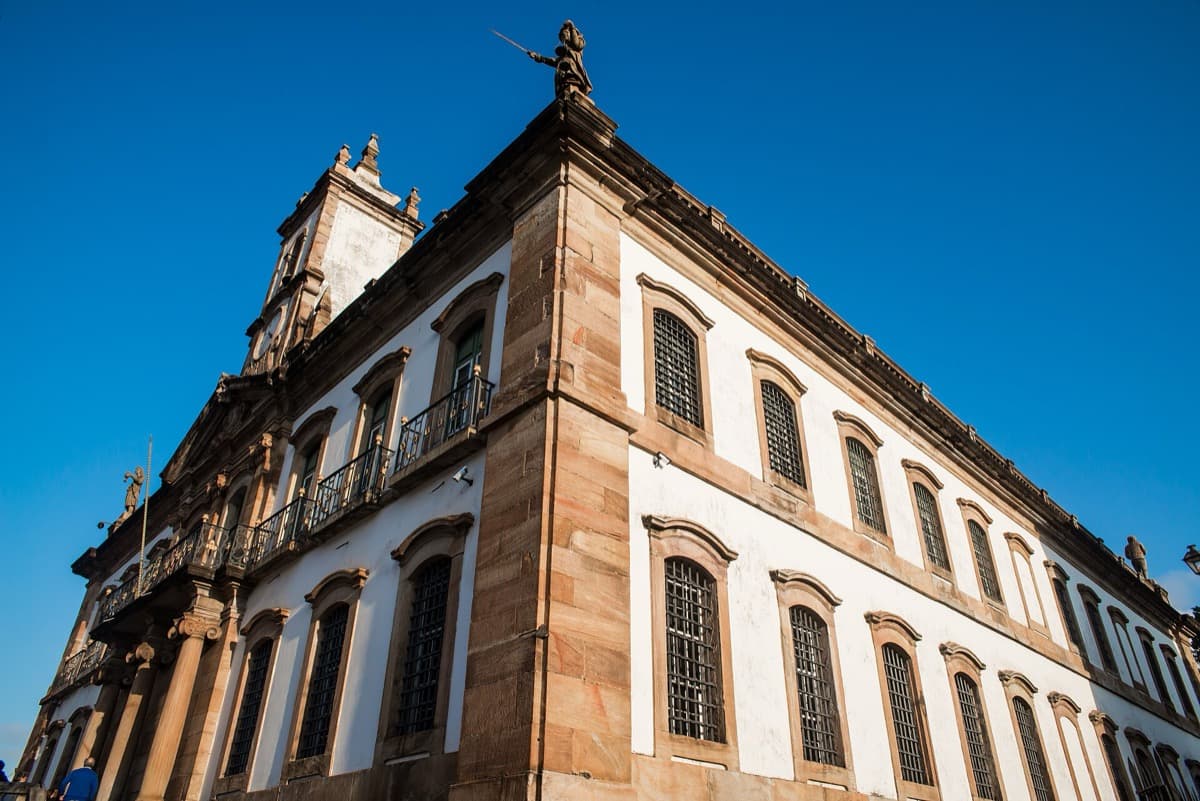
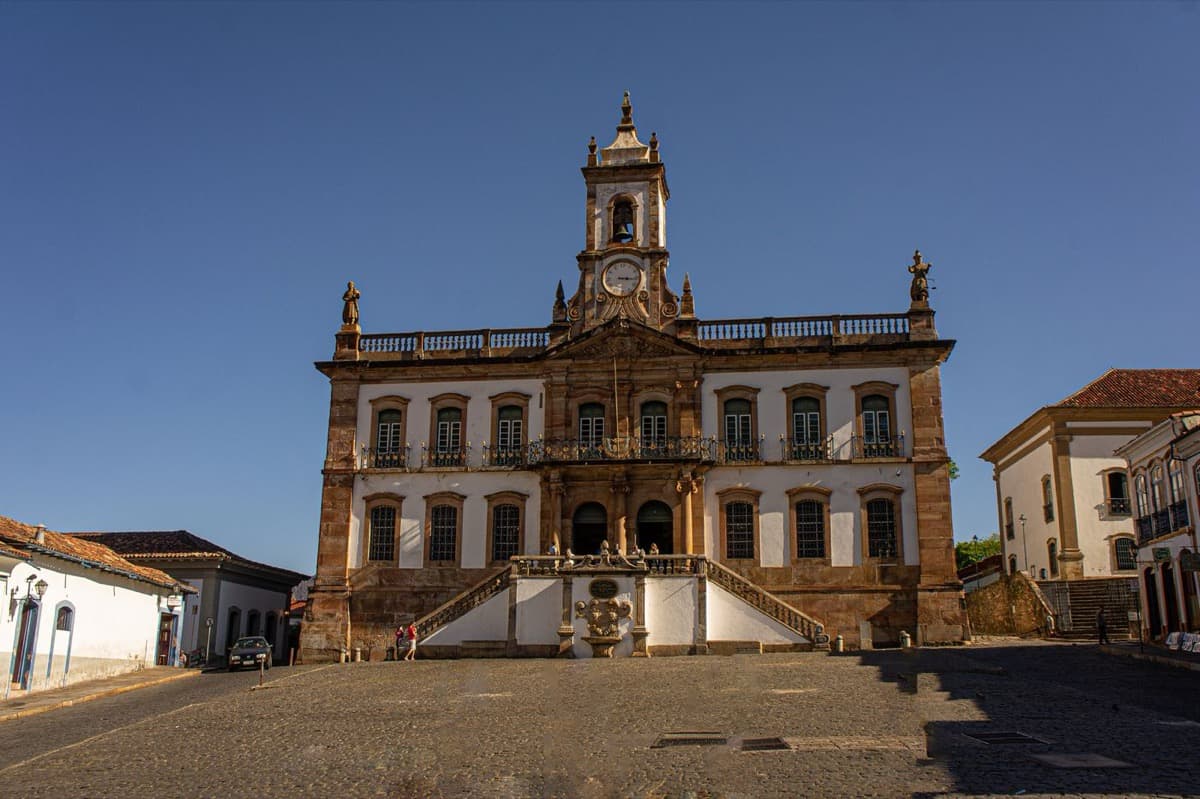
On the lower side of Praca Tiradentes in Ouro Preto stands a building that judged and jailed a group of conspirators and then, two centuries later, was rebuilt into a pantheon that entombs the same men as national founders. It is the Museu da Inconfidencia, and it began life as the Casa de Camara e Cadeia, the colonial town hall and jail. Understanding how that single structure turned from an instrument of colonial punishment into a shrine of national memory is the clearest way to understand the Inconfidencia Mineira, the failed 1789 independence plot that Brazil later chose as its founding legend.
One roof for administration and punishment
The building was commissioned under the governor Luis da Cunha Meneses and begun in 1785, and its construction stretched on for decades. It is a landmark of late Baroque colonial building, and its plan tells you a great deal about how power worked in Portuguese America. Under one roof, the colony kept its council chamber and its prison cells, its administration and its punishment. The people who governed the town and the people who jailed its offenders worked in the same walls. This was a common arrangement across Portuguese America, where the Casa de Camara e Cadeia combined the seat of local government with the lockup below it.
That double function matters, because it is where the story of the conspiracy meets architecture. The men of the Inconfidencia Mineira were not peasants. They were local elites, poets, priests, and officers who, in 1789, plotted to break the captaincy of Minas Gerais away from Portugal. Their grievance was fiscal. The crown taxed the region's gold through the quinto, the royal fifth, and threatened the derrama, a forced collection of taxes owed in arrears. When the plot was discovered, the machinery that decided the conspirators' fates ran through buildings exactly like this one.
The trial and the single execution
Hear a stop from this walk
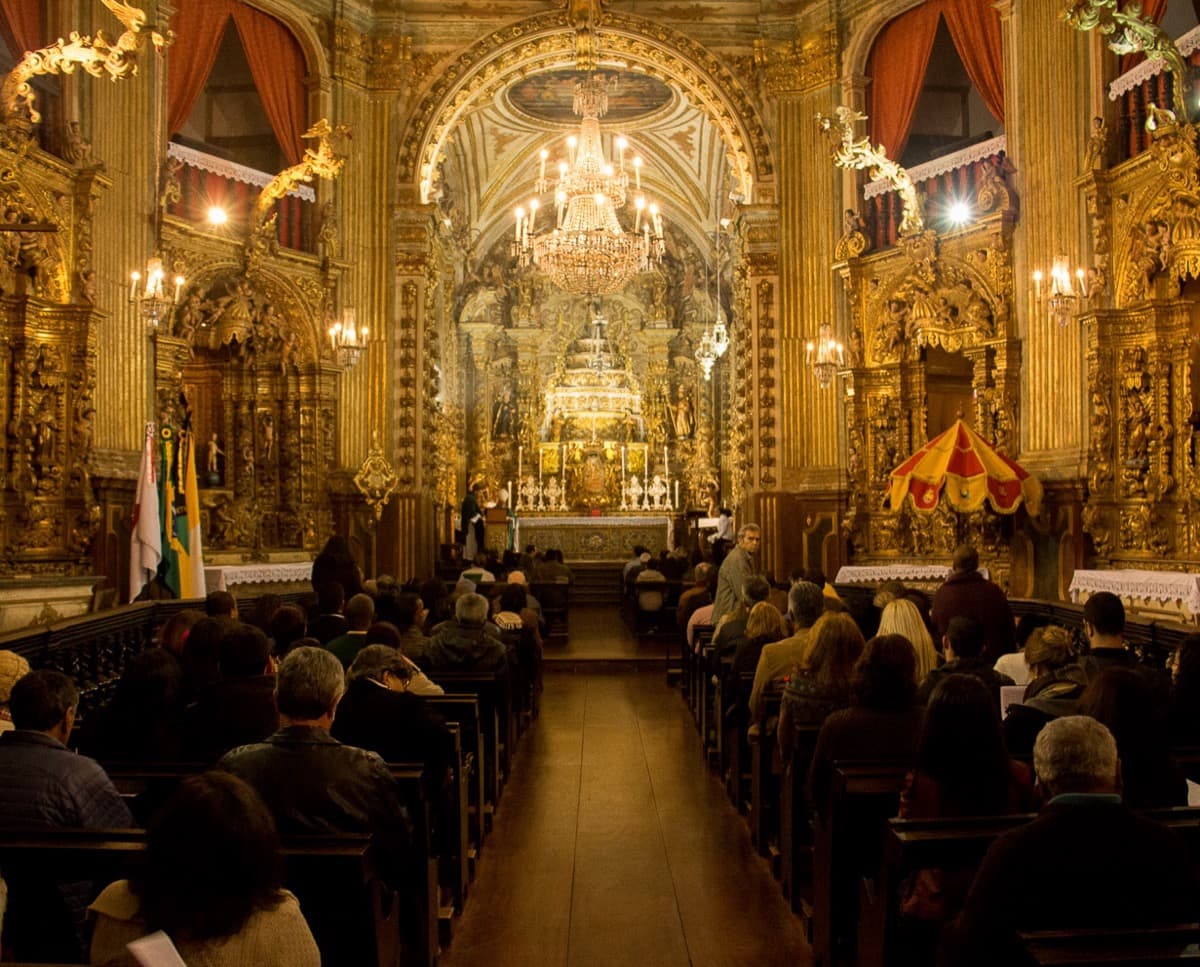
Igreja Matriz do Pilar: Inside the Gold
The judicial proceedings against the conspirators ran from 1789 to 1792. This is where colonial justice was administered and where prisoners were held while the crown deliberated. The verdicts were harsh, but the outcome is often misremembered. Of the twenty-four men condemned, Queen Maria the First commuted the death sentences to perpetual banishment, sparing every man except one. Joaquim Jose da Silva Xavier, the ensign remembered as Tiradentes, was the only conspirator executed. He was hanged in Rio de Janeiro on April 21, 1792, his body quartered, and only his severed head made the journey back to the square outside this building, where it was displayed as a warning.
For a century, that was the ending. Tiradentes was an executed traitor, and the other plotters were exiles who died far from home, most of them banished to Portuguese Africa. The building on the square went on doing the ordinary work of colonial and then provincial government. Nothing about it suggested a national shrine.
The turn: from prison to pantheon
Then the story reversed. Brazil's young republic, established in 1889, needed a founding martyr, and the failed conspirators were reimagined as its first patriots. The building that had judged and held them became the vessel for that new memory.
The museum dedicated to the conspiracy was established in 1938, created by federal decree that December. What happened next is the reason this stop is the sharpest turn in the whole Ouro Preto story. The remains of the exiled conspirators, who had died banished in Africa, were repatriated, and the first bones reached Brazil in 1937. A Pantheon was built to receive them. That Panteao dos Inconfidentes was inaugurated on April 21, 1942, the same calendar date attached both to the 1792 execution and to the monument later raised in the square. By the museum's own account, the Pantheon was created to hold the remains of thirteen of the twenty-four condemned inconfidentes, together with one empty tomb standing for those whose bodies were quartered and never recovered, like Tiradentes himself. Three more identified conspirators were added in 2011, but the original thirteen and the empty tomb are the heart of the monument. The museum was formally inaugurated on August 11, 1944, when its renovations were complete.
Sit with the sequence for a moment. The same walls that judged and jailed these men now enshrine them as founders. The prison became a pantheon. A building designed to punish dissent was converted, stone by stone and bone by bone, into a monument to the men it once condemned. There are few clearer physical expressions anywhere of how a nation edits its own past.
What you actually see today
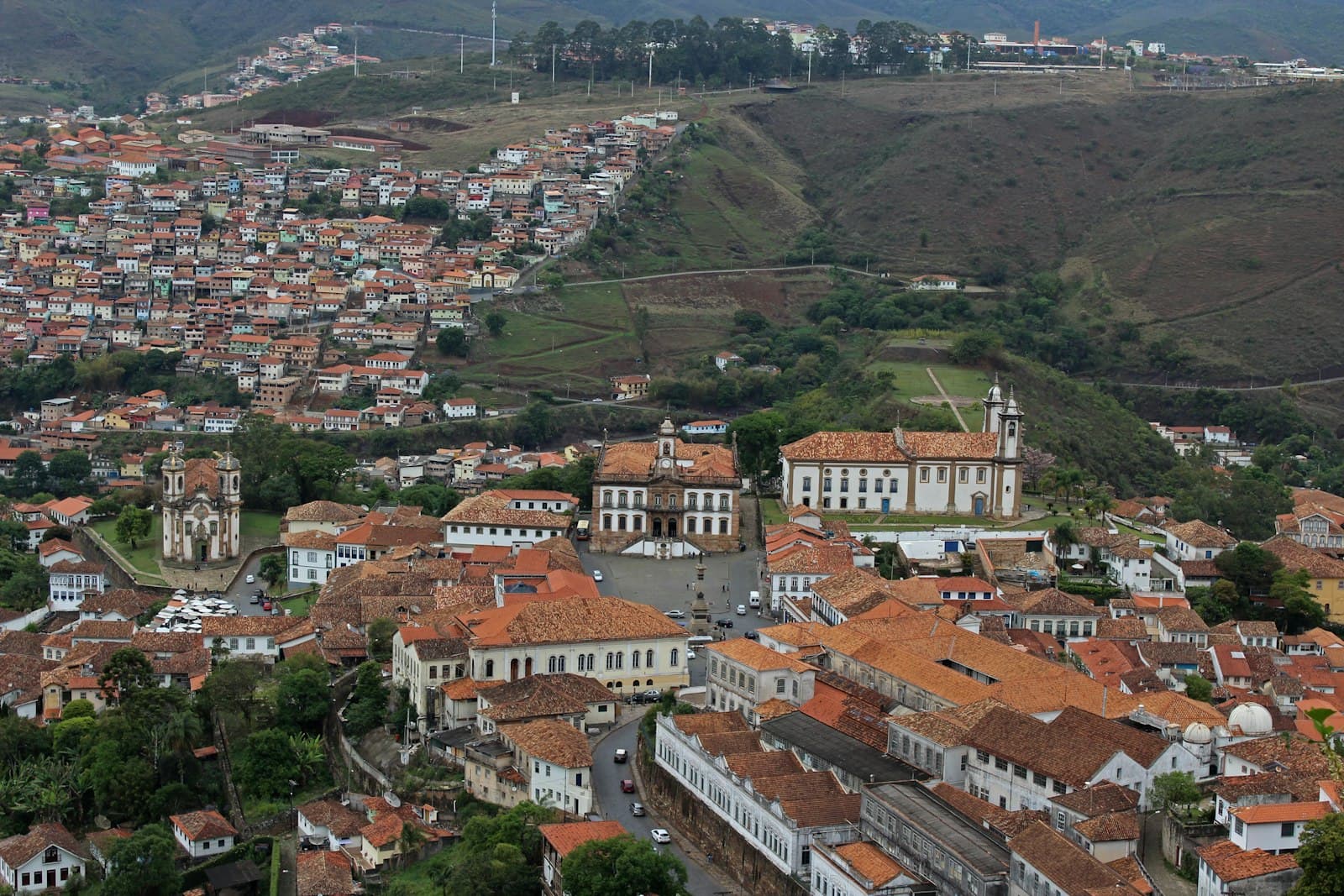
The museum's collection reaches well beyond the conspiracy. The institution documents the broader history of Minas Gerais, its sacred art, its everyday objects, and the mining society that produced both the gold and the grievance. The Baroque colonial building itself is worth slow attention: the proportions of the council chamber, the heaviness of the lower cells, the way the whole thing sits at the low edge of the square, looking up at the former governors' palace opposite.
The building carries several layers of official protection and status. It was recognized as national historic heritage in the mid-twentieth century and later designated among Brazil's national museums, a reflection of how central this address became to the country's account of its own origins. Admission is charged, and the museum keeps its own hours, so it is worth checking opening times before you arrive.
Standing where the story pivots
If you walk only one stop of the Inconfidencia story on the ground, this is the one that holds the whole arc. The monument in the square marks the reversal. The governors' palace explains the grievance. The treasury downhill counted the gold. But it is here, in the former Casa de Camara e Cadeia, that punishment and commemoration occupy the same rooms. You can stand in a place that condemned men to exile and death and then, within living memory, gathered their bones and called them the founders of a nation.
That is the reason the Museu da Inconfidencia anchors the walk through Ouro Preto. To see it in full, follow the route through the town it belongs to, from the square above down to the gilded church below, on the Brazil / Ouro Preto self-guided tour.
Sources
- Museu da Inconfidencia, official site (Ibram), Sobre o museu: creation by decree on December 20, 1938, formal opening on August 11, 1944, the Panteao dos Inconfidentes inaugurated April 21, 1942, the first repatriated remains arriving in 1937, and the building erected under Governor Luis da Cunha Meneses from 1785.
- Museu da Inconfidencia, Wikipedia (EN): the building as the former Casa de Camara e Cadeia jail, its establishment as a museum in 1938, and its status as a National Museum of Brazil.
- Tiradentes, Wikipedia (EN): the 1789 plot, the roughly three-year proceedings, the sole execution on April 21, 1792 with the body quartered, and Queen Maria the First's commutation of the other sentences to banishment.
- Instituto Brasileiro de Museus (Ibram) news: the Pantheon's fourteen plaques, thirteen occupied by repatriated inconfidentes with one left empty, and the three further inconfidentes added in 2011.
Brazil eSIM· 10% off with ROAMER10
Ready to experience it?
Praça Tiradentes: Gold and the Inconfidencia
80 min · 1.3 km · moderate
More from Ouro Preto
Explore more at your own pace.
One Day in Ouro Preto: A Walkable Baroque Itinerary (2026)
Ouro Preto Travel Guide: How Many Days, Getting There, When to Go (2026)
The Town Gold Built and Broke: How to Read Ouro Preto
What to Eat in Ouro Preto: A Minas Gerais Food Guide (2026)
Basilica do Pilar: The Gold-Drenched Church at the Heart of Ouro Preto