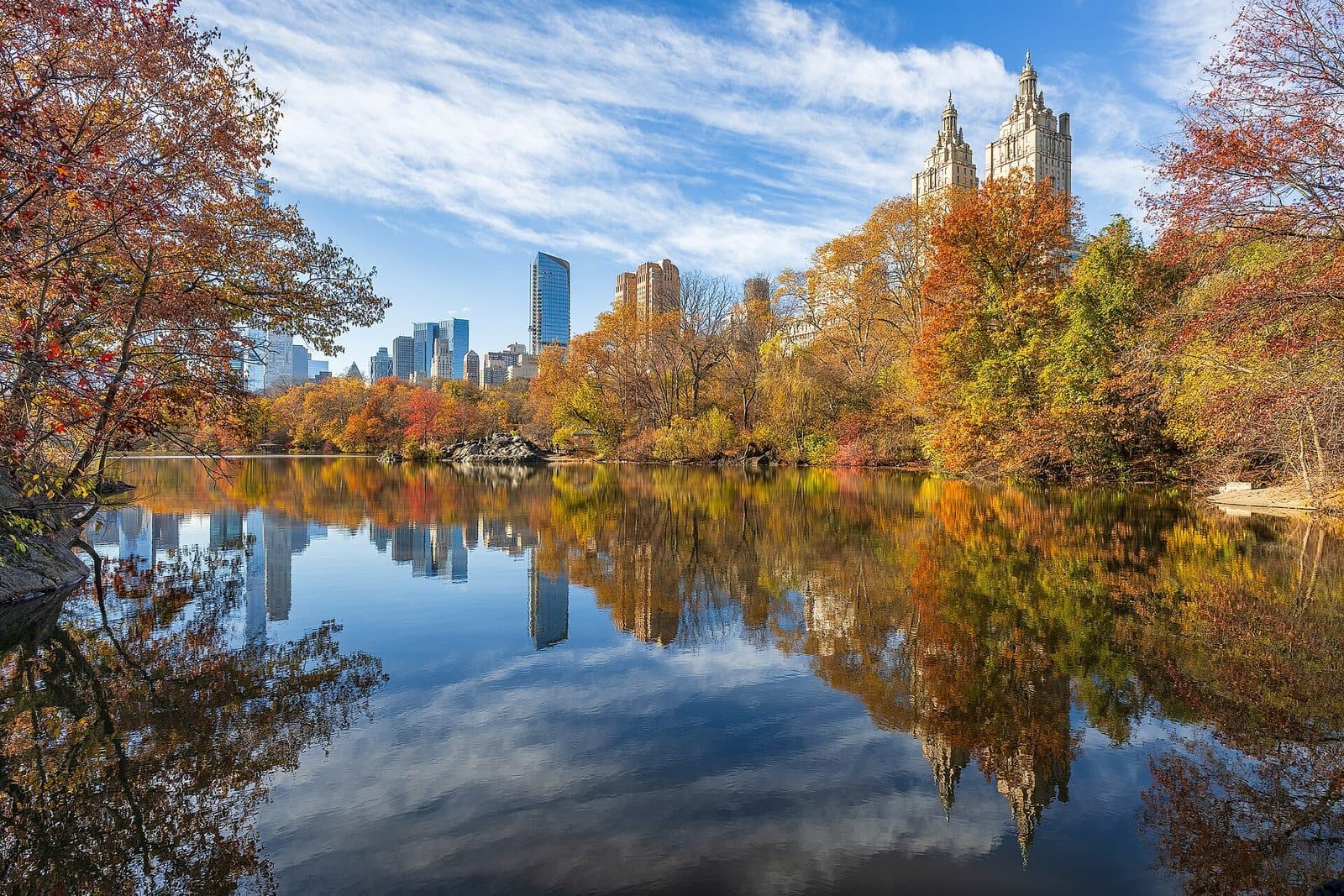
Walk in from Fifth Avenue at Grand Army Plaza and you cross a threshold. Behind you is the grid. Ahead are curving paths, a pond set below the street, rock outcrops and trees that look as if they grew where they pleased. The park feels like a piece of the old countryside the city decided to keep. It is the opposite. The Central Park Conservancy calls its 843 acres entirely human-made.
The Conservancy's numbers describe a construction project, not a preserved landscape. Construction began in 1858. Workers moved nearly five million cubic yards of stone, earth and topsoil, built 36 bridges and arches, and planted 500,000 trees, shrubs and vines, all by hand. About 476,000 cubic yards of rock were excavated and reset, much of it blasted away to make the park's four sunken crosstown roads. The park took about fifteen years to build and cost $14 million, against an original budget of $5 million.
The Greensward Plan
The design came from a competition. Of 33 entries, the winner, chosen on the twenty-eighth of April, 1858, was the last: the Greensward Plan by Frederick Law Olmsted, who was already the park's superintendent, and the architect Calvert Vaux. Greensward simply means grass-covered ground. The Conservancy says the two are credited with coining the term "landscape architecture".
The plan's cleverest ideas are about movement. The commissioners required four roads across the park; only the winning design hid all four completely out of view, in sunken transverse roads. Inside the park, walkers, carriages and riders got separate paths, so they never had to meet, and bridges carry one kind of traffic over another.
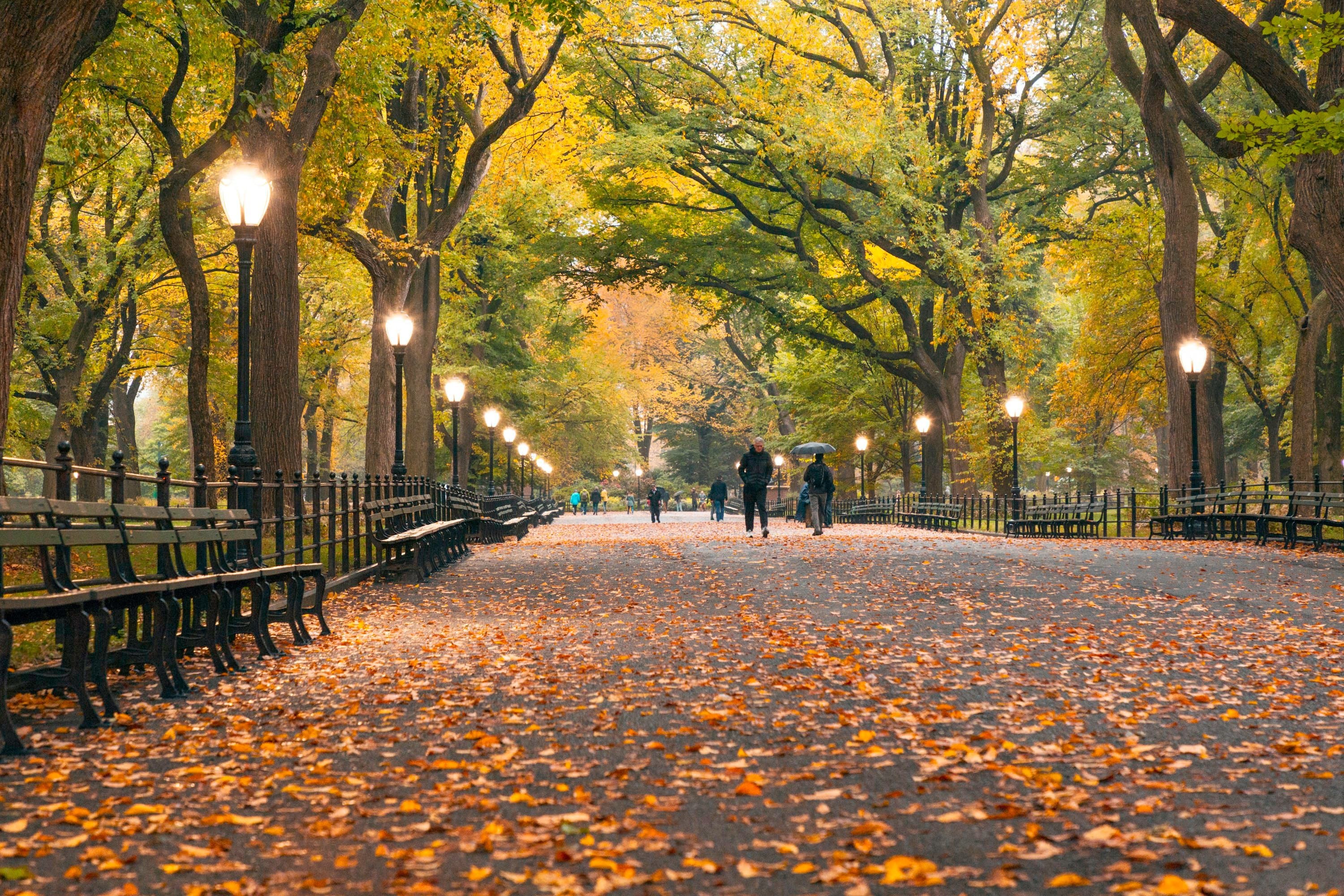
The plan mixed three kinds of landscape: pastoral, picturesque and formal. The formal one is a single feature, the Mall and Bethesda Terrace. The Mall is a wide, straight path, one of the few in the park, lined on each side by a double row of American elms that meet overhead. Olmsted and Vaux called it an open-air hall of reception. The Conservancy calls the elms one of the largest and last remaining collections of American elms in the world, and notes that the trees you see are the third planting, from the 1920s; the first two were likely killed by soil compaction from foot traffic. The Mall was planned so that its vista would end on a view of the Belvedere, the little castle on Vista Rock to the north.
At the end of the Mall, Bethesda Terrace takes walkers down under the drive to the Lake. Its fountain, the Angel of the Waters by Emma Stebbins, dedicated in 1873, is in the Conservancy's words the only artwork in the park's collection commissioned by its designers and administrators, and Stebbins was the first woman to receive a public art commission in New York City. The arcade ceiling of nearly sixteen thousand Minton tiles is, the Conservancy says, the only ceiling in the world made of encaustic tiles. The fountain is switched off for restoration from August 2026 for about a year.
The Ramble
Hear a stop from this walk
Seneca Village: Summit Rock and the Lost Neighbourhood
North of the Lake the park changes character. The Ramble is 36 acres of woodland, winding paths and rock, designed to look like the forests of upstate New York. Olmsted's term for it was a "wild garden", meant to affect the imagination with a sense of mystery. The Conservancy is precise about how wild it is: the designers kept the existing rock outcrops and hills and built or added everything else, including a meandering stream called the Gill, the plantings, rustic bridges and shelters, and a hidden network of pipes and drains. Clarence Cook, in one of the earliest guides to the park, in 1869, called the Ramble the greatest attraction the park contains. Today more than two hundred bird species visit it each year, and the park is an important stop on the Atlantic Flyway.
What the park replaced
The land Olmsted and Vaux were given was not empty. Between West 82nd and West 89th Streets, along what is now the park's western edge, stood Seneca Village. It began in 1825, when John and Elizabeth Whitehead divided their land into lots; Andrew Williams, a 25-year-old African American shoeshiner, bought the first three for $125. By 1855 it had about 225 residents, roughly two-thirds African American and one-third Irish immigrants, with over 50 homes, three churches, a school and burial grounds.
Owning property mattered: New York's law then required Black men to own at least $250 in property to vote, and the Conservancy records that in 1855 more than half of Seneca Village's Black households owned their land, five times the rate among all New Yorkers. It calls the village the largest community of African American property owners in New York.
In 1853 the state set the land aside for a park, and the city took it by eminent domain, with compensation that many residents argued undervalued their land. About 1,600 people across the whole park site were displaced, about 225 of them in Seneca Village, in a process that ended in the fall of 1857. Contemporary accounts dismissed the residents as poor squatters in shanties; the Conservancy calls that a common misperception, since most lived in two-storey homes and most children went to school. A 2011 excavation of the Wilson family home by archaeologists from Columbia University and the City University of New York turned up thousands of artifacts, from an iron tea kettle to a small shoe.
Today nothing built by the village is visible. What remains is the ground: Summit Rock, which the Conservancy calls the highest natural point in the park, stood in the village landscape, and Tanner's Spring at its foot was probably one of its main sources of water. A set of outdoor "Discover Seneca Village" signs, first installed in 2019, marks the story along the paths.
Walking it
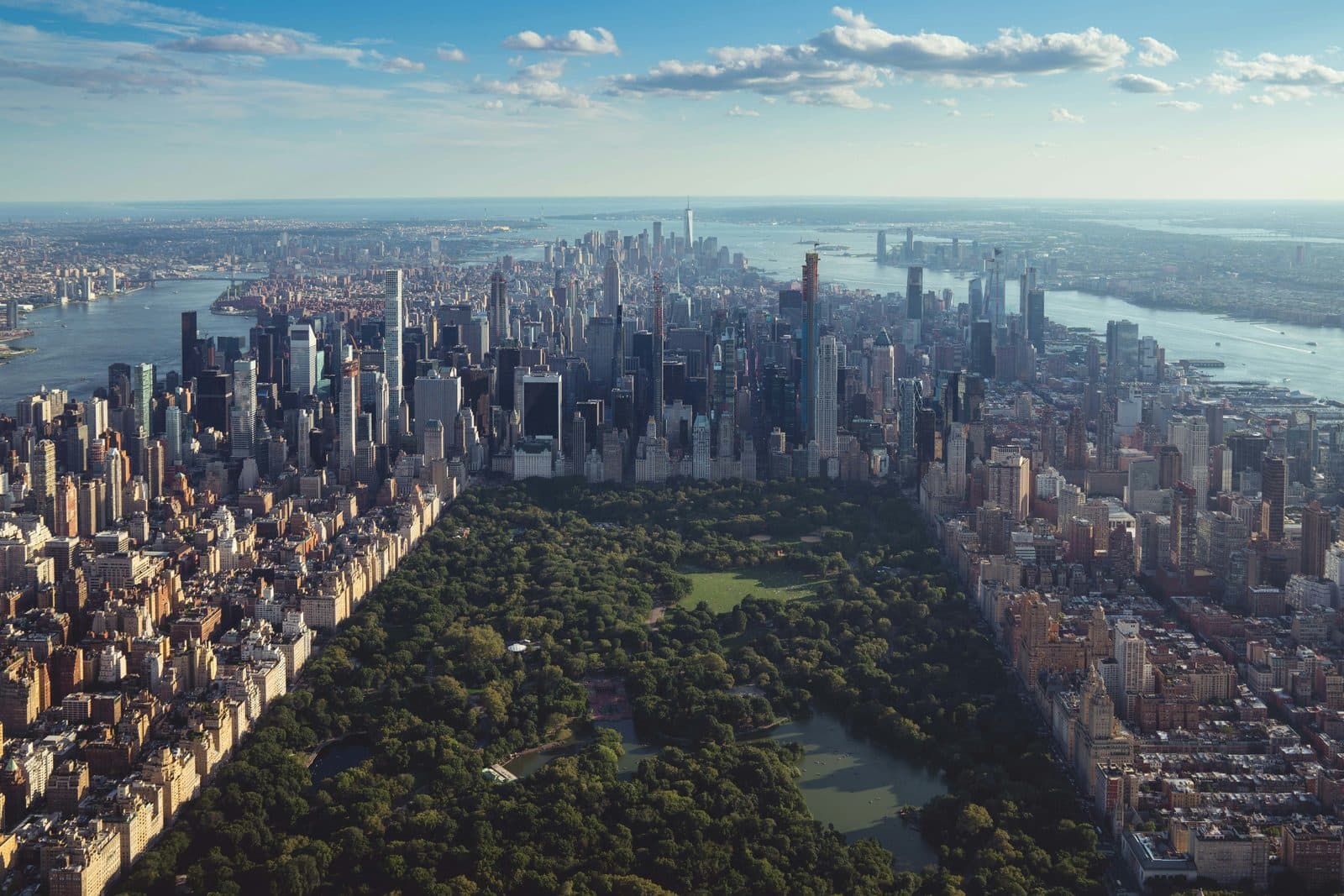
The Central Park walk reads all of this on foot: twelve stops and a little over four kilometres, about two hours, all free. It starts at Grand Army Plaza on Fifth Avenue, drops to the Pond under Gapstow Bridge with the thin towers of 57th Street rising over the trees, and continues past the Dairy, the Mall, Bethesda Terrace, Cherry Hill with its view of Bow Bridge, Strawberry Fields, the Ladies' Pavilion, the Ramble, Belvedere Castle and the Great Lawn, which was once a reservoir. It ends at Summit Rock, in what was Seneca Village. Once you have walked it, every lawn and lake in the park reads as something somebody decided to build.
Ready to experience it?
Central Park: A Wilderness Built by Hand
120 min · 4.2 km · easy
More from New York
Explore more at your own pace.
New York Travel Guide: How Many Days, Getting Around, When to Go
One Day in New York: A Walkable Itinerary That Actually Works
MoMA: What to See, Floor by Floor, and Where the Famous Paintings Hang

Monet's Water Lilies at MoMA: The Room, the Fire and the Pond
The Starry Night at MoMA: Where It Hangs and What to Look For