In 1900, on the trading floor of the New York Cordage Exchange, bond traders set the daily price for henequén sisal fibre shipped to New York from the Caribbean port of Sisal in the Yucatán. The price they set that day determined the income of perhaps two hundred Yucatecan families. Those families were about to become wealthier than they could plausibly spend.
This is the story Paseo de Montejo was built to tell, although it tells it without intending to. The boulevard, designed in the 1890s as a Yucatecan answer to the Champs-Élysées, is a several-kilometre architectural record of a thirty-five-year period of extreme regional wealth. The mansions on it were almost all built between 1890 and 1915. By 1920 the boom was over. The mansions stayed.
Walking the boulevard is the central activity of the Mérida: The Mansions Sisal Built tour. Understanding what built it is the work of this article.
The plant
Henequén is a kind of agave, Agave fourcroydes, that grows well in the thin limestone soil of the northern Yucatán. The fibre extracted from its long, spiked leaves is coarse, stiff, and excellent for rope and twine. It had been used by the Maya for centuries to make hammocks, nets, and bags. The Spanish identified it as a useful colonial crop in the eighteenth century. But henequén did not become economically transformative until a specific technology arrived in the United States in the 1870s.
The technology was the mechanical grain binder, invented to automate the binding of wheat sheaves on American Midwestern farms. The machine required twine, and the global demand for twine exploded in the 1880s as the binder spread across the wheat-growing regions of the United States, Canada, and Argentina. Henequén twine, made from Yucatecan fibre, was the cheapest and most plentiful option. The McCormick Harvesting Machine Company and later International Harvester became the dominant buyers. The supply chain ran from haciendas in the Yucatán to the port of Progreso, by ship to New Orleans or New York, and then by rail to the farm belts.
From roughly 1880 to 1915, the Yucatán produced approximately ninety percent of the world's sisal. The volume was extraordinary. At peak, the region exported over six hundred thousand tonnes of fibre per year. The wealth concentrated rapidly. By 1900, around two hundred families, the casta divina or "divine caste" as the local press half-ironically called them, controlled almost all of the haciendas and almost all of the export trade.
The architecture money buys when there is nowhere to put it
Hear a stop from this walk
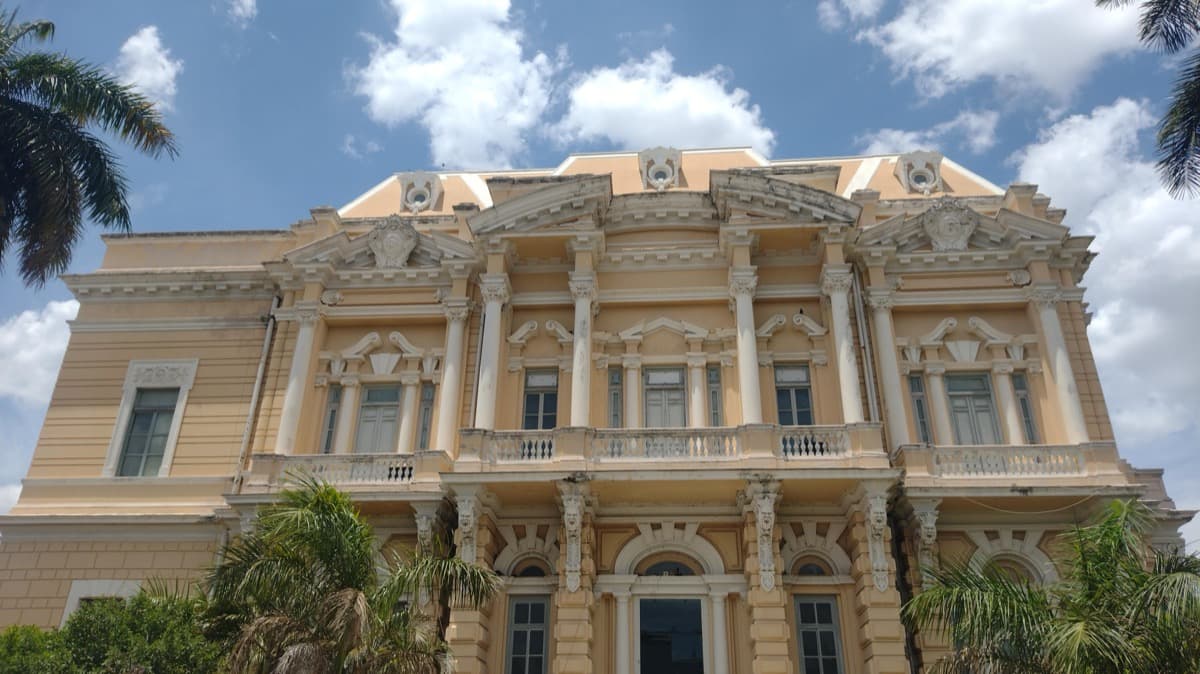
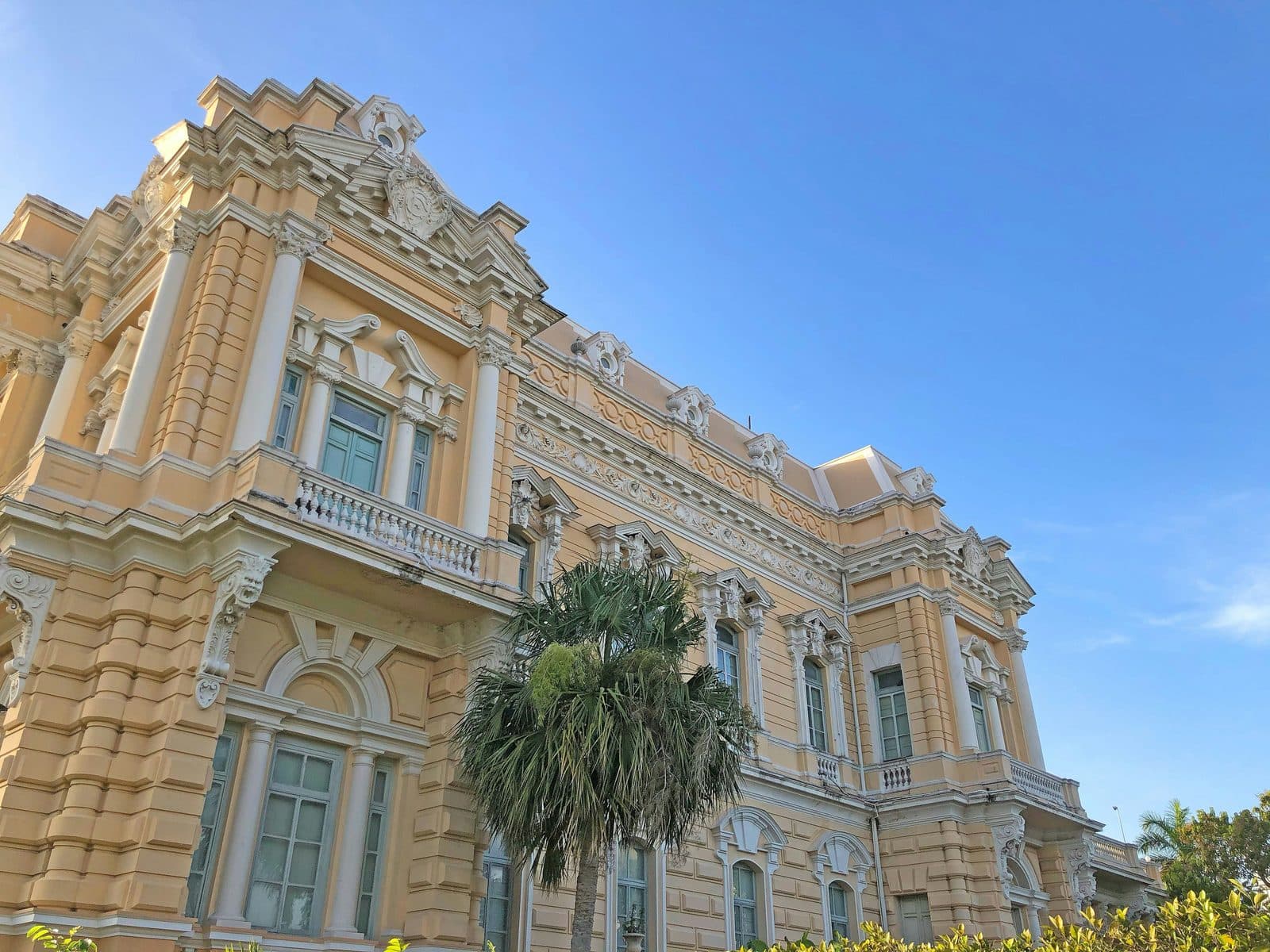
Palacio Cantón / Museo Regional de Antropología
Newly-rich elites in concentrated regional economies have a predictable problem. The local social structure does not yet contain a way to spend the money in a way that signals high status. There is no existing palace district. There is no established old-money class to marry into. The wealth has to manifest as something visible, fast, and unambiguous.
The Yucatecan henequén families solved the problem the way Gilded Age industrialists in New York were simultaneously solving it: they imported European architecture wholesale. They laid out a new boulevard north of the colonial centre, named it Paseo de Montejo after the city's founding conquistador, and commissioned mansions from European architects in the Beaux-Arts, French Renaissance, Italianate, and Art Nouveau styles. The Italian architect Enrico Deserti designed several of the most prominent buildings on the boulevard, including the Palacio Cantón and the Teatro Peón Contreras. The French architect Gustave Umbdenstock designed the Casas Gemelas, the Twin Houses, for the Cámara family, reportedly without ever visiting Mérida, working from descriptions and measurements sent by post.
The materials matched the architectural ambition. Italian Carrara marble was quarried in Tuscany, shipped across the Atlantic, transferred at Havana or Veracruz, docked at Progreso, and hauled to Mérida on a narrow-gauge railway that the henequén barons had built primarily to move fibre to port. The same railway that carried henequén out carried Carrara in. French wrought iron. Belgian stained glass. Catalan tile. Limoges porcelain. Baccarat crystal. Hand-painted Parisian wallpaper. Tiffany-style lamps from New York. The mansions of Paseo de Montejo are, in a literal sense, European interior decoration imported intact into a tropical limestone city.
Italian opera companies were brought to Mérida by ship to perform at the Teatro Peón Contreras, which opened in 1908 with a sweeping Carrara marble staircase carved from the same Tuscan quarries that supplied Michelangelo. The henequén barons wanted the cultural prestige of Europe delivered to their doorstep, and they had the money to make it travel.
What it was built on
The henequén economy was built on a labour system called peonaje por deudas, debt peonage. Maya workers on the haciendas were given advances against future wages that they could not repay. The debts were inheritable. The system bound workers and their children to a specific hacienda for generations. They were not formally enslaved, but the practical conditions were close. Maya families on the henequén haciendas were unable to leave, unable to refuse work, unable to negotiate wages, and unable in many cases to choose where their children would work.
The system was reported on, with considerable shock, by the American muckraker John Kenneth Turner in the 1908-1909 series that became the book Barbarous Mexico. Turner's reporting helped build international awareness of conditions on the haciendas. Inside Mexico, the labour system was challenged during the Mexican Revolution, which reached the Yucatán in stages between 1915 and the late 1920s. President Lázaro Cárdenas nationalised much of the henequén industry in the late 1930s and redistributed hacienda land to ejidos, communal farms. The debt peonage system did not survive these reforms, although other forms of rural poverty persisted.
What you are looking at when you stand in front of a Paseo de Montejo mansion in 2026 is the visible end of a wealth chain that ran from Maya hacienda labour through Yucatecan family fortunes to European craftsmen and architects. The chain is not particularly hidden, but it is also not always present in how the mansions are interpreted today. Quinta Montes Molina, the most fully restored of the surviving private mansions and the most popular tour site, presents the building as a beautiful Belle Époque interior. There is no exhibit panel on debt peonage. The omission is worth carrying with you while you admire the chandeliers.
What ended the boom
Two things broke the henequén economy in sequence.
The first was the Mexican Revolution, which reached the Yucatán in 1915 when General Salvador Alvarado, sent by Venustiano Carranza, occupied Mérida and began the dismantling of the hacienda system. Alvarado abolished debt peonage by decree, expropriated hacienda lands, and established a state monopoly on henequén export, the Comisión Reguladora del Mercado del Henequén, designed to prevent American buyers from dictating prices. The hacienda families fought back politically and economically, but the structural power of the casta divina was permanently weakened.
The second, more decisive, was synthetic fibre. The invention of nylon by DuPont in 1935 and the subsequent development of polypropylene and other synthetic ropes destroyed the global market for natural twine. By the 1950s, sisal had been replaced as the binder twine of choice across the world's wheat belts. Yucatecan henequén production collapsed. The region went from one of the wealthiest in Mexico to one of the poorest in less than a generation. Many of the mansions on Paseo de Montejo were sold or donated. Others were maintained on dwindling family fortunes through the rest of the twentieth century.
The boulevard survived because the buildings were too well-built and too prominent to demolish, and because new uses were found for many of them. The Palacio Cantón became the Museo Regional de Antropología, now one of Mexico's most important regional Maya collections. The Teatro Peón Contreras still hosts the Orquesta Sinfónica de Yucatán. The Casas Gemelas were converted to museums and cultural spaces. The Monumento a la Patria, the massive carved limestone monument by the Colombian sculptor Rómulo Rozo at the boulevard's northern roundabout, was built between 1945 and 1956, after the boom had collapsed but before the boulevard had been politically reframed. The monument is a remarkable piece of mid-twentieth-century neo-Maya sculpture and is worth twenty minutes of close looking on its own.
What the boulevard means now
Paseo de Montejo today is a working boulevard in a working city. It is not a museum street. The mansions are interspersed with banks, restaurants, hotels, offices, and the occasional surviving private residence. Sunday mornings, the boulevard closes to vehicle traffic and fills with cyclists, families, and joggers. Bici-share stations are placed at intervals. Sorbete vendors, the traditional Yucatecan tropical ice cream sellers, work the shaded sidewalks. The boulevard reads simultaneously as a Belle Époque artifact, a contemporary public space, and an open-air history lesson about what one agricultural commodity once did to a small region of southern Mexico.
The tour covers eight stops over about three and a half kilometres. The walking is flat. The heat is serious in any month, so the standard advice is to start early or in the late afternoon. Carry water. The mansion museums charge small entry fees that fund their preservation. The boulevard itself is free, and the architecture rewards slow looking even when the interiors are closed.
What you are walking through is the visible compression of a thirty-five-year economic story. Two hundred families. One plant. A few decades of conditions that produced more concentrated regional wealth, per capita, than almost anywhere in the western hemisphere. Then a synthetic chemistry breakthrough in Delaware, and most of it became impossible. The mansions are what remained when the conditions ended.
Mexico eSIM· 10% off with ROAMER10
Ready to experience it?
Mérida: The Mansions Sisal Built
100 min · 3.5 km · easy
More from Merida
Explore more at your own pace.
Best Self-Guided Walking Tours in Mérida (2026)
Mérida Travel Guide: How Many Days, Getting Around, When to Go, Is It Safe (2026)
One Day in Mérida: A Walkable Centro-to-Paseo Itinerary (2026)
What to Eat in Mérida: A Yucatecan Food Guide (2026)
Casa de Montejo: The Conquistador's House With Maya Heads Carved Above the Door