Walk the boulevard that henequen built — Paseo de Montejo, where Yucatán's fiber barons raised French palaces in the tropics with fortunes spun from 'green gold.'
Start · Parque de Santa Ana
DirectionsStops
- 1
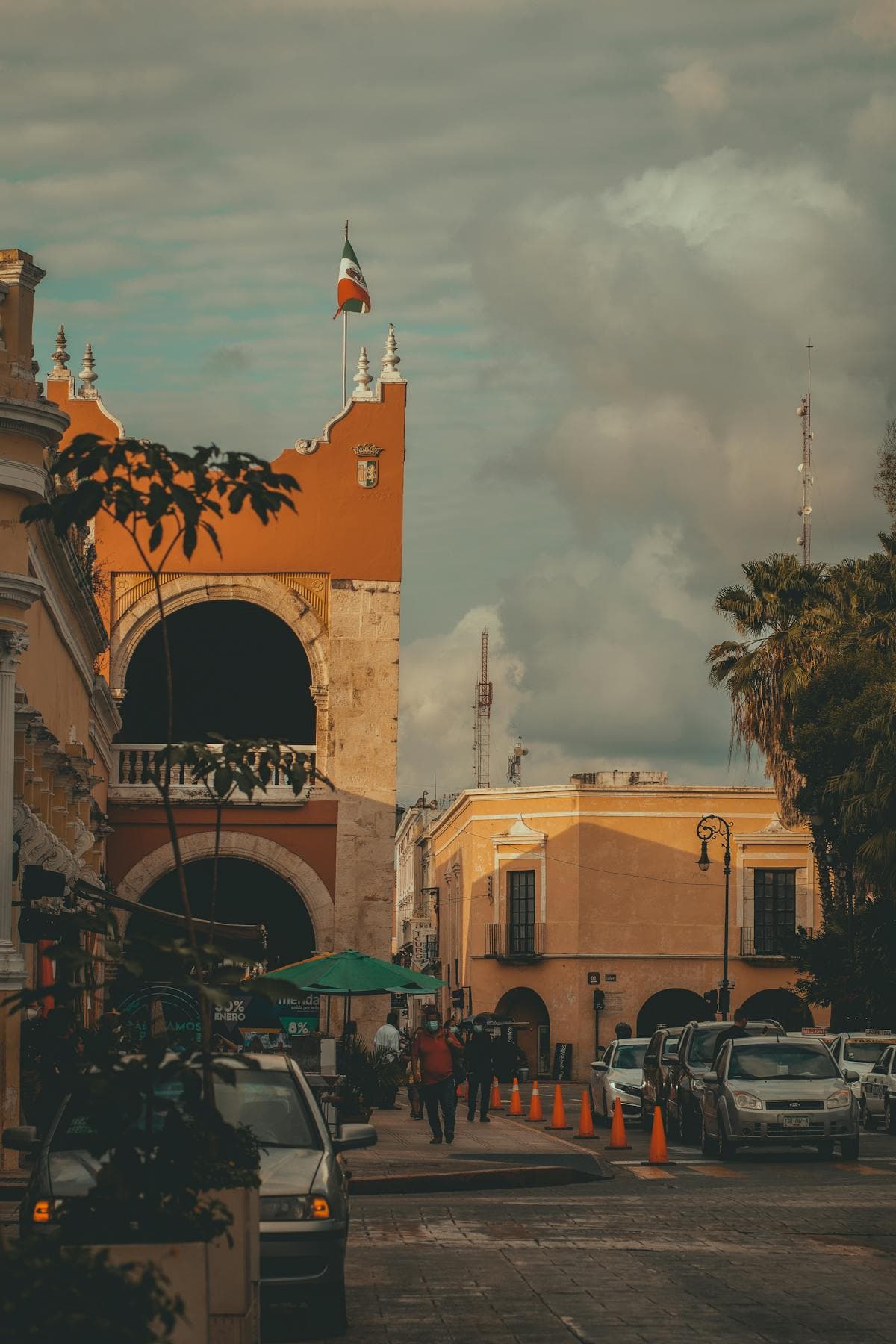
Parque de Santa Ana
A quiet barrio park with a 1729 church, marking the northern gateway where Paseo de Montejo begins its grand procession.
- 2
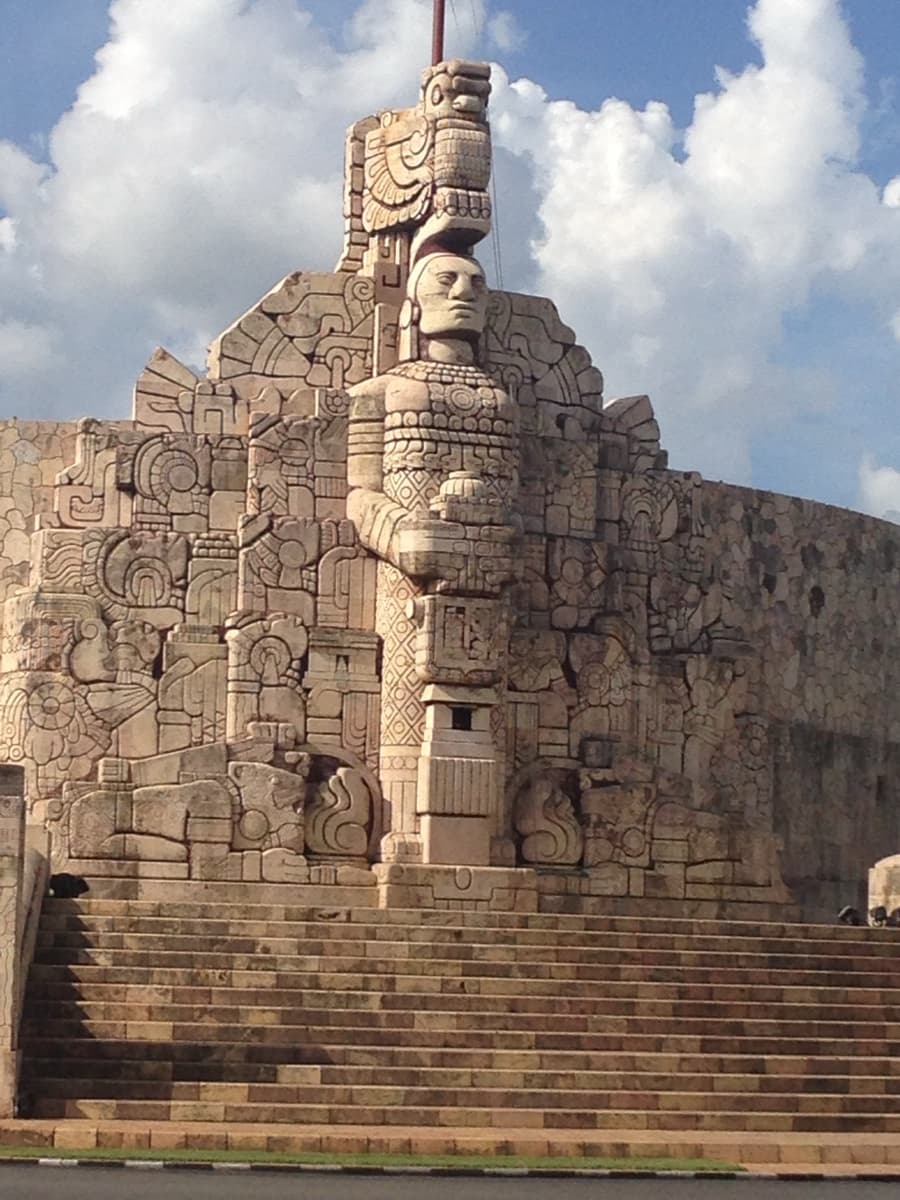
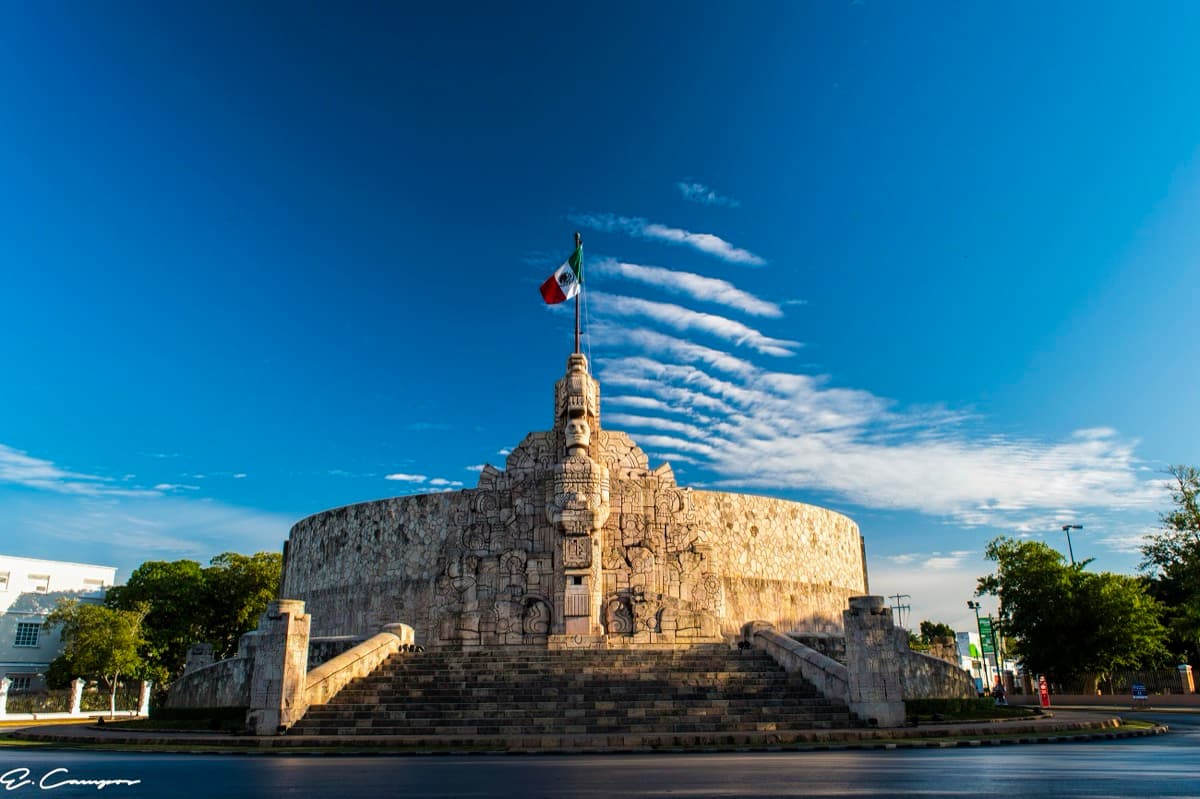
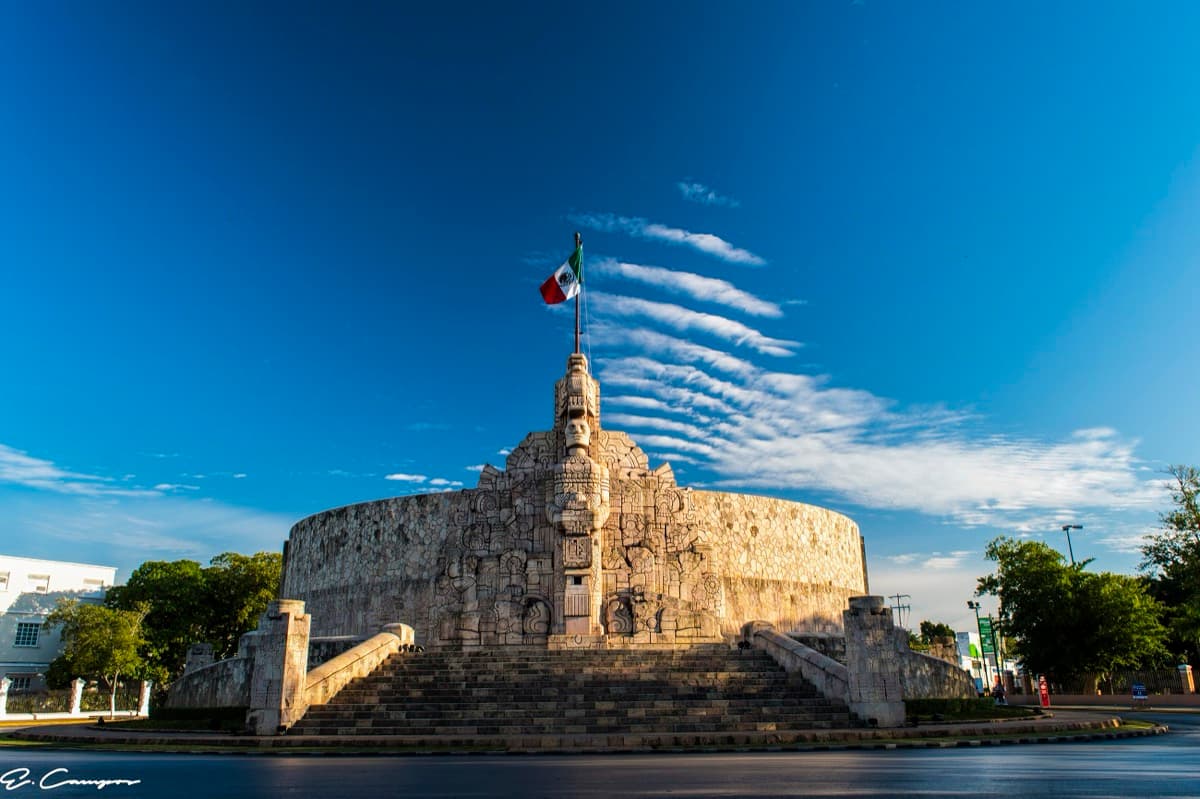
Monumento a la Patria
A monumental sculptural frieze by Colombian artist Rómulo Rozo (1956), depicting the full sweep of Mexican history in carved stone.
- 3
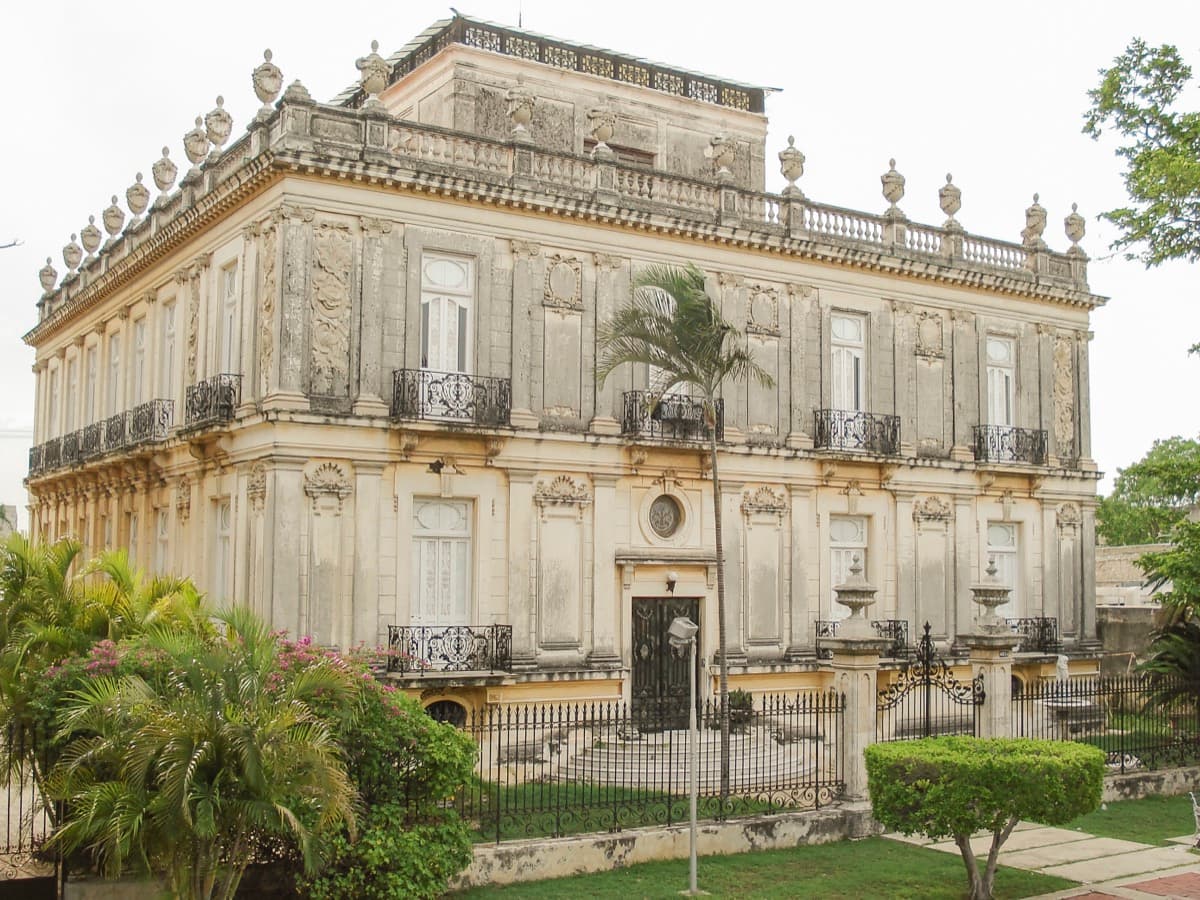
Casas Gemelas / Montejo 495 Casa Museo
The Twin Mansions (1907-1911), designed by a French architect — the first buildings in the Yucatán to have electricity.
- 4
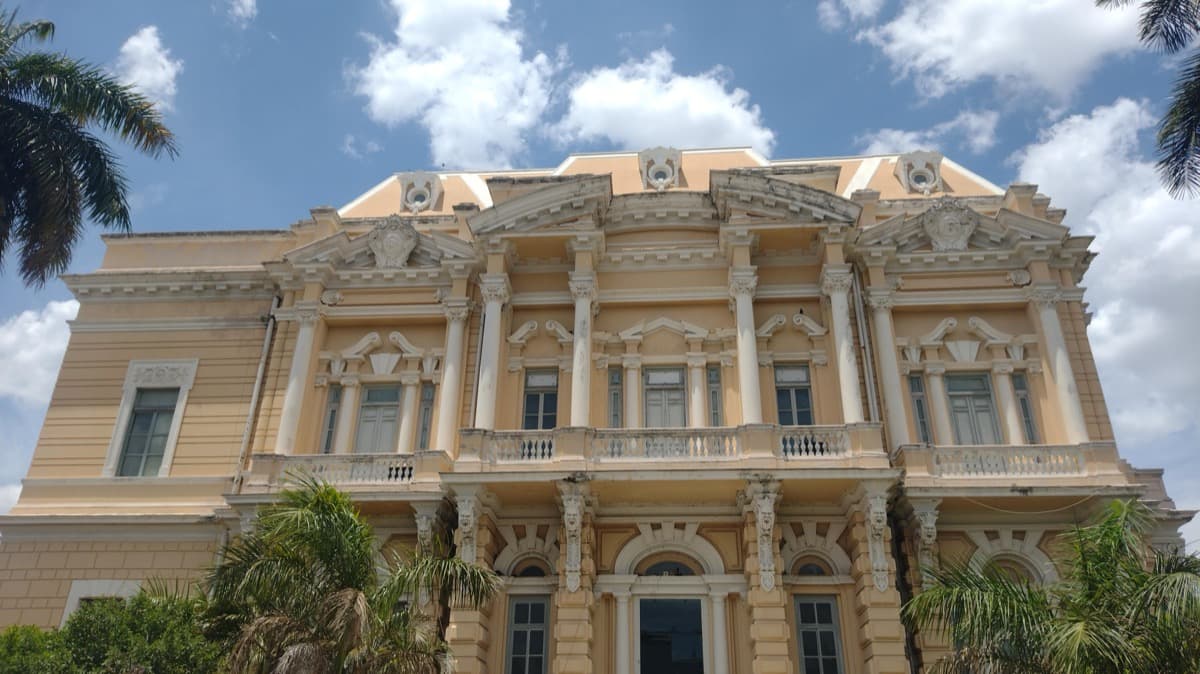
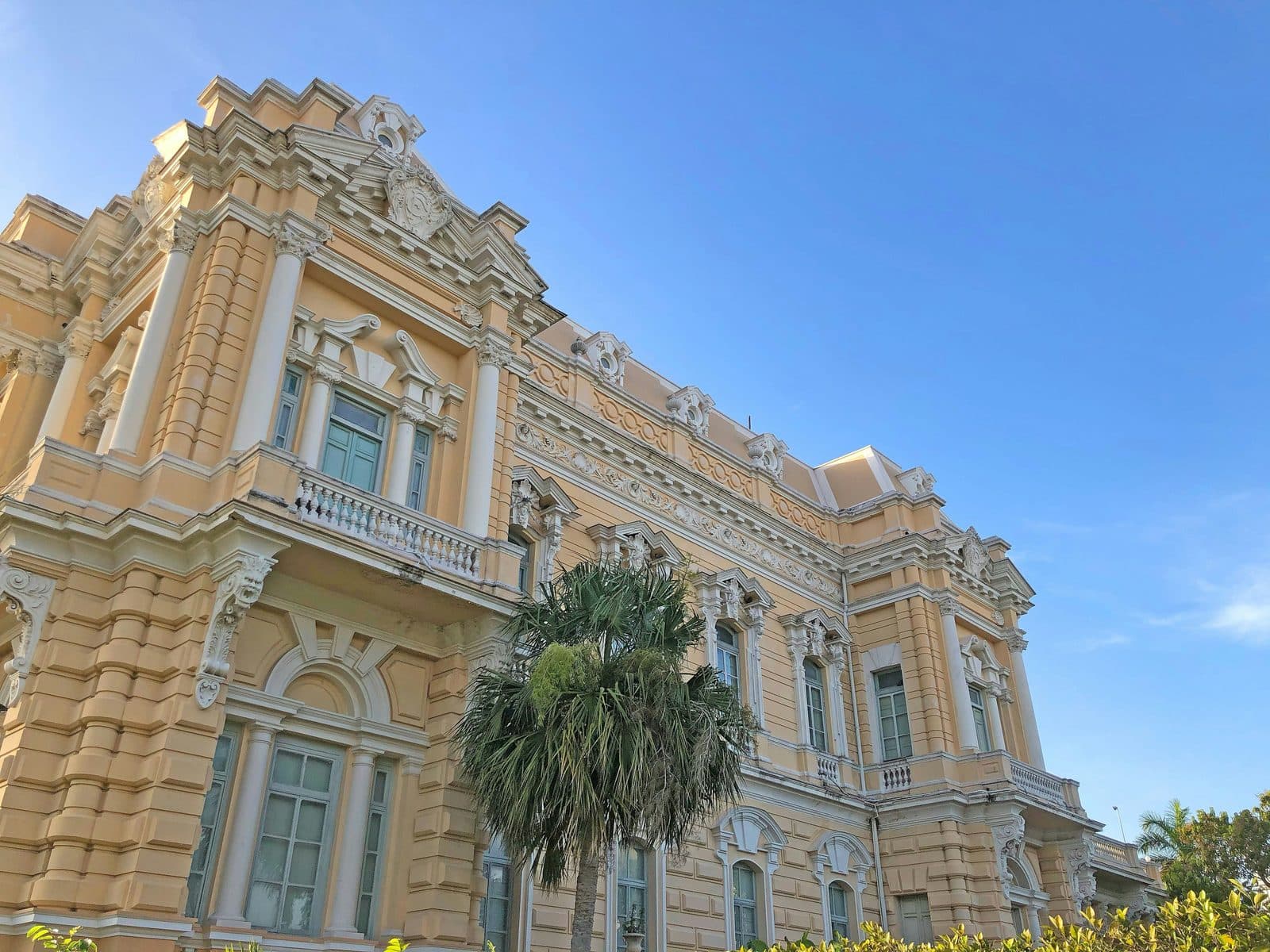
Palacio Cantón / Museo Regional de Antropología
A Beaux-Arts palace (1904-1911) by Italian architect Enrico Deserti, now housing Yucatán's finest collection of Maya anthropological artifacts.
- 5
Villa Amira / Centro Cultural Fernando Castro Pacheco
A 1928 post-Revolution mansion that now serves as a cultural center honoring the muralist whose work defines the Palacio de Gobierno.
- 6
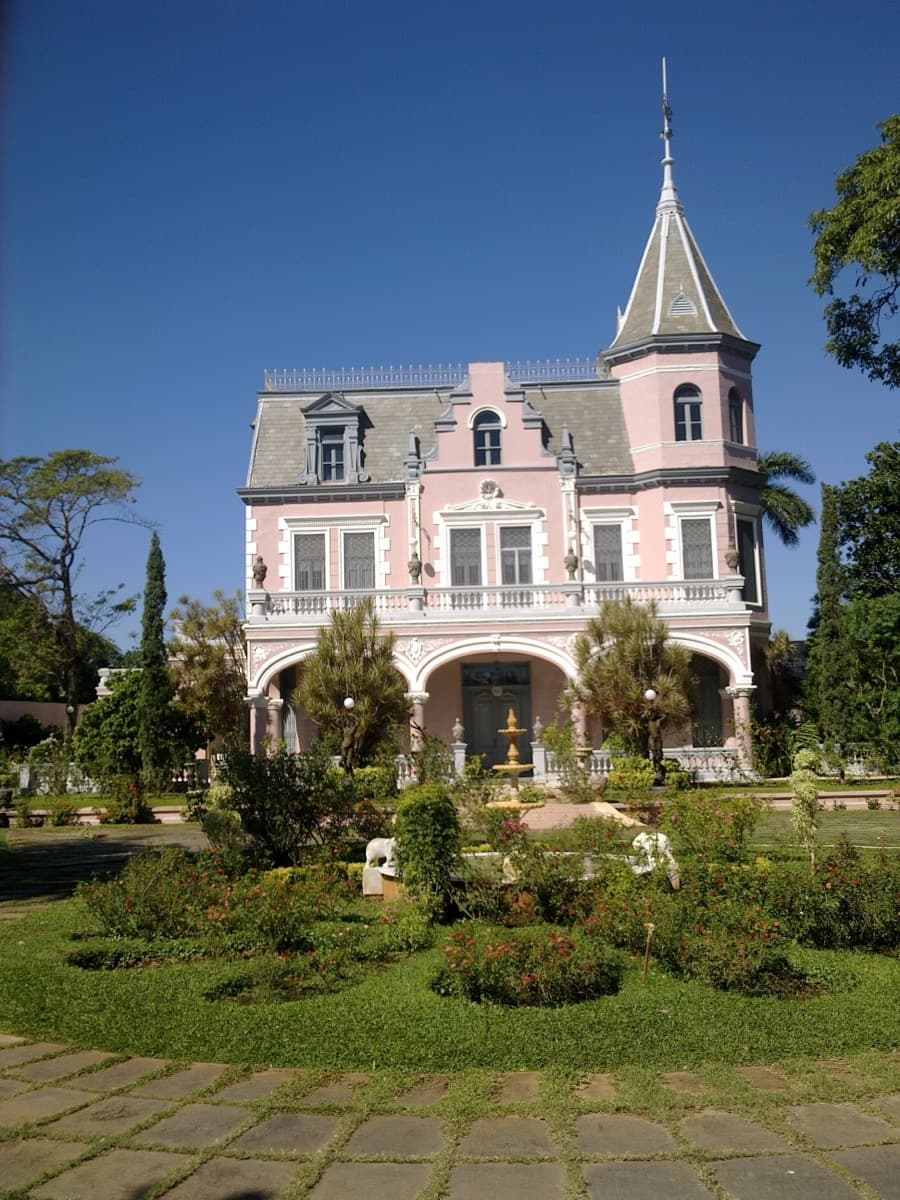
El Pinar
A pink French Renaissance mansion (1898-1904) with Art Nouveau flourishes, built entirely with European materials shipped across the Atlantic.
- 7
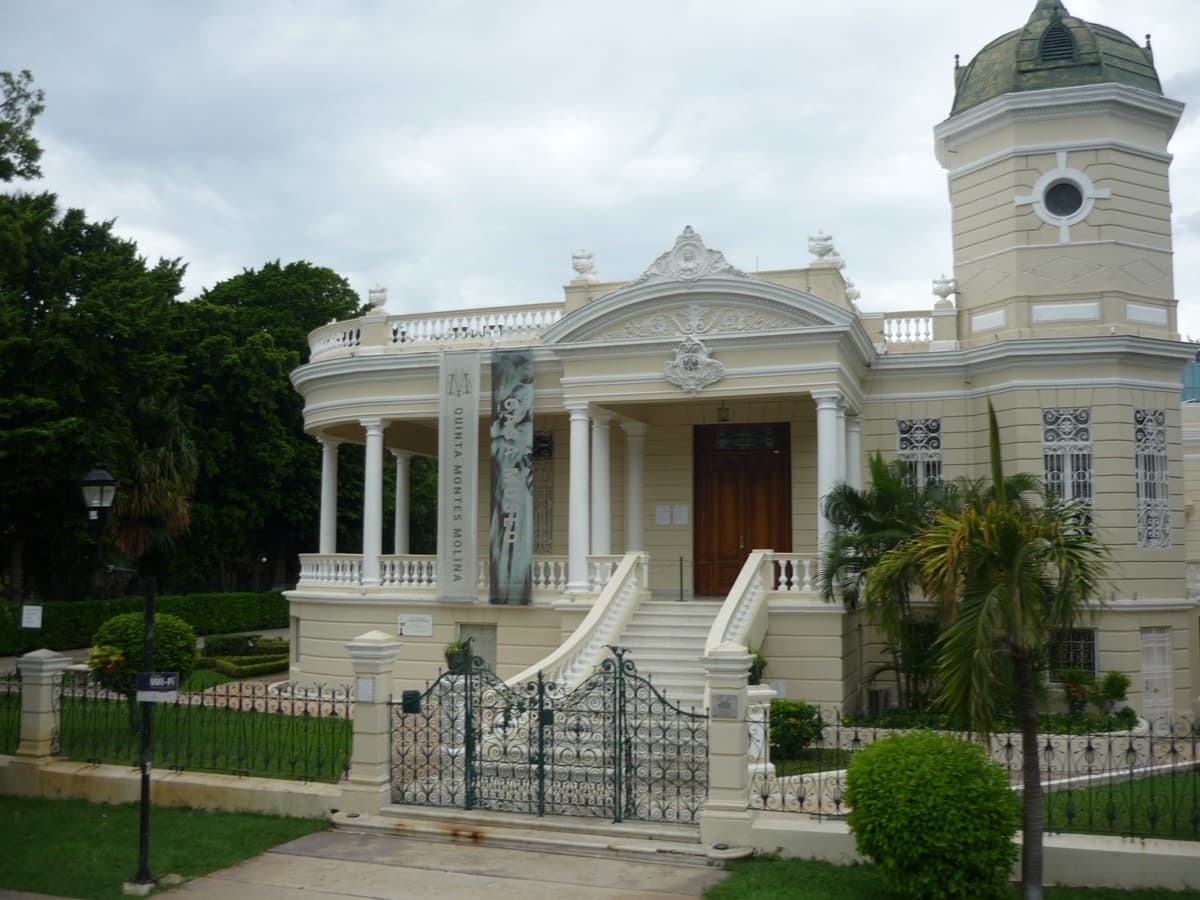
Quinta Montes Molina
A fully restored henequen-era mansion with original European furnishings — a time capsule of how the fiber barons lived.
- 8
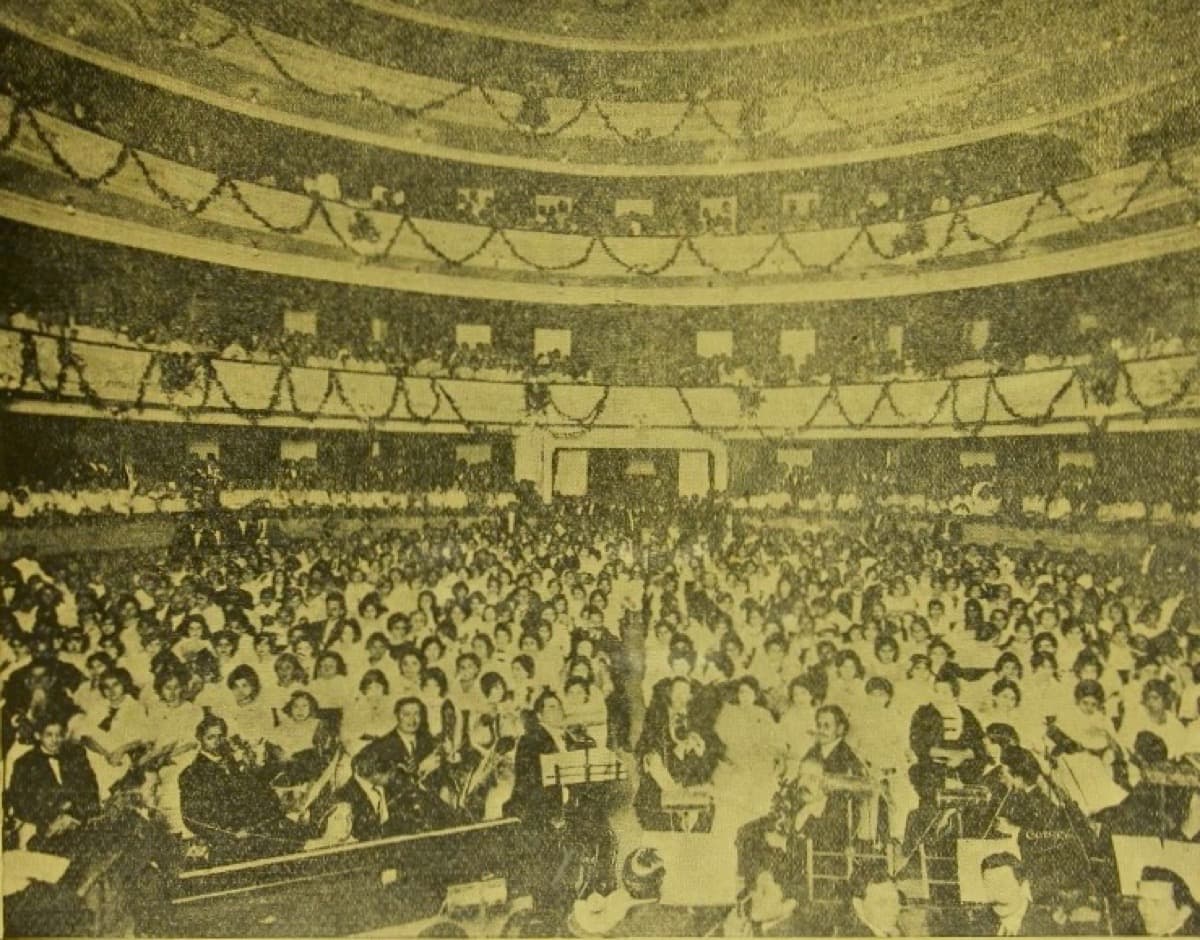
Teatro Peón Contreras
A 1908 Italian-designed opera house with a Carrara marble staircase and a thousand-seat hall — the crown jewel of henequen-era Mérida.
Details
Best Time to Visit
Early morning between 8:00 and 10:00 AM or late afternoon from 4:00 to 6:00 PM. Paseo de Montejo has limited shade, and midday temperatures in Mérida regularly exceed 35°C (95°F). Sunday mornings are excellent — Paseo de Montejo closes to traffic for cycling and pedestrians, and the mansions can be admired without dodging cars.
Pro Tips
- •Start early or go late afternoon. The Paseo de Montejo is a sun-exposed boulevard — walking it at noon in Mérida's heat is miserable. Morning light is best for photographing the mansions.
- •Visit Montejo 495 Casa Museo (the Casas Gemelas) and Quinta Montes Molina for interior tours — they are the only two mansions where you can see the original henequen-era furnishings.
- •On Sunday mornings, Paseo de Montejo becomes a car-free zone — bicycles, runners, and families fill the boulevard. Rent a bici from one of the city's bike-share stations.
- •The Palacio Cantón (anthropology museum) is worth at least an hour inside — the Maya collection is world-class and provides context for the entire Yucatán region.
- •Try sorbete from the street vendors along the Paseo — the traditional Yucatecan ice cream comes in local flavors like guanábana, mamey, and coconut.
- •End the tour at Teatro Peón Contreras and check if there is an evening performance — the Orquesta Sinfónica de Yucatán plays regularly and tickets are remarkably affordable.
Safety & Precautions
- •The Paseo de Montejo has limited shade. Bring a hat, sunscreen, and plenty of water. The three-and-a-half-kilometer walk is flat but can feel much longer in extreme heat.
- •Cross the Paseo carefully. It is a busy four-lane boulevard with fast-moving traffic. Use the pedestrian crossings, especially near the Monumento a la Patria roundabout.
- •Some of the mansions along the Paseo are now banks, offices, or private residences. Only Montejo 495 and Quinta Montes Molina are regularly open to the public as museums.
- •Keep valuables secure, especially cameras and phones. The Paseo is generally very safe, but petty opportunistic theft can occur in any busy tourist area.
Travel advisory: Exercise Increased Caution (Level 2).
Gallery
Related Reading
Go deeper on what you'll see, hear, and walk through.
Read the walk
The full story of Mérida: The Mansions Sisal Built, in words. Prefer to listen? Play it narrated, from home or on location.
Introduction
Nineteen hundred. The trading floor of the New York Cordage Exchange. Bond traders are setting the daily price for henequén sisal fiber, shipped from a port called Sisal in the Yucatán Peninsula. The price they set will determine, that day, the income of perhaps two hundred Yucatecan families. Those families are about to become richer than they can spend.
This is the story of green gold. Henequén is a kind of agave that grows in the limestone soil of Yucatán. Its fiber, twisted into rope and twine, was indispensable to the industrial economy of the late nineteenth and early twentieth centuries. From the eighteen eighties to the nineteen tens, Yucatán produced ninety percent of the world's sisal. The peninsula was wealthier per capita than the rest of Mexico combined. Two hundred families owned almost all of it.
Those two hundred families built mansions. They competed to build the most spectacular ones, on a boulevard called Paseo de Montejo, designed in the eighteen nineties as a Yucatecan answer to the Champs-Élysées. The mansions you will see were almost all built between eighteen ninety and nineteen fifteen. The boom ended around nineteen twenty, when synthetic twine and competing producers in the Philippines collapsed the global market. The mansions stayed.
Over eight stops the route walks Paseo de Montejo, the boom-era civic monument that contextualises its scale, four of the surviving mansions, and the cultural centre and theatre that completed the institutional ecosystem.
The route is about three and a half kilometres on flat ground, roughly one hundred minutes. Mérida is hot. Most stops are free to walk past; the mansion-museums charge small entry fees. When you arrive at Parque de Santa Ana, where the boulevard begins, start with stop one.
1. Parque de Santa Ana
Welcome to Parque de Santa Ana, your first stop on this tour. We begin at Parque de Santa Ana, a quiet neighborhood park that most tourists walk past without stopping. That is their loss. This little plaza, anchored by the Iglesia de Santa Ana dating to 1729, is one of the most authentic corners of Mérida's centro, a place where the city still feels like a Yucatecan town rather than a tourist destination.
The church is simple and elegant, a provincial baroque facade in white limestone, a modest bell tower, and an interior that has been in continuous use for nearly three centuries. Santa Ana was a barrio church, serving the families who lived in this neighborhood, and it still does. On Saturdays, wedding parties spill out of its doors and into the park.
But the reason we are starting here is the geography. Look south down Calle 60, and you can see the axis of Mérida's historic center stretching toward the Plaza Grande. Now turn and look north. You are standing at the base of Paseo de Montejo, the boulevard that the henequen barons built to separate their new wealth from the colonial old town.
The barrio of Santa Ana is the hinge between those two worlds. To the south, centuries of colonial and Maya history. To the north, the gilded age of green gold. When the henequen boom began in the 1880s, the wealthy families did not renovate the colonial center, they built an entirely new neighborhood, complete with European architects, wide tree-lined avenues, and mansions that would have looked at home on the boulevards of Paris or Brussels.
From here, we walk north into that world. The mansions are waiting.
2. Monumento a la Patria
Welcome to the Monumento a la Patria. Walk north along the Paseo and you will arrive at the Monumento a la Patria, the Monument to the Homeland, sitting in the center of a traffic roundabout at the boulevard's northern reach. This is one of the most ambitious public sculptures in Mexico, and it was made by a Colombian.
Rómulo Rozo was born in Chiquinquirá, Colombia, in 1899. He studied in Bogotá and Paris before moving to Mexico in 1931, where he became fascinated with pre-Columbian art and its potential to shape modern sculpture. The Mexican government commissioned him to create this monument in 1945, and he spent eleven years carving it. It was inaugurated on April 23rd, 1956.
The monument is a massive semicircular frieze carved from local limestone in a style Rozo called neo-Maya, a fusion of ancient Maya sculptural forms with Art Deco geometry. Walk slowly around it and you will read the entire history of Mexico carved in stone. The narrative begins with the founding of Tenochtitlan, the Aztec capital, and moves through the colonial period, independence, the Reform Wars, the Revolution of 1910, and into the modern era.
Over three hundred individual figures are carved into the frieze, each one rendered with remarkable detail. You will see Maya astronomers, Aztec warriors, Spanish missionaries, independence heroes, revolutionary generals, and workers building the modern nation. Rozo gave equal weight to indigenous and European contributions, a deliberate choice in a country where the mythology of mestizaje often erases indigenous specificity.
The monument was recently restored, and the carved details are crisp and legible. Take your time. There is more history in this single circle of stone than in most museums.
3. Casas Gemelas / Montejo 495 Casa Museo
Welcome to the Casas Gemelas and Casa Museo Montejo 495. Walk back south along the Paseo and look for two identical mansions standing side by side, the Casas Gemelas, the Twin Houses. Built between 1907 and 1911, these matching palaces were designed by the French architect Gustave Umbdenstock for the Cámara family, who were among the most powerful henequen dynasties in the Yucatán.
The story goes that the patriarch had the twin mansions built for two of his children, one for each, so they could live side by side in matching splendor. Whether that is literally true or slightly embellished, the result is extraordinary. The two houses are mirror images of each other, rendered in a French neoclassical style with ornate balconies, carved stone facades, wrought iron details, and interiors that were filled with European furniture, crystal, and porcelain.
These were among the first buildings in the entire Yucatán to have electricity. Think about what that meant in 1910. While Maya workers on the henequen haciendas were living in traditional thatched-roof houses without running water, the families in these mansions were flipping switches to illuminate rooms full of French furniture. The gap between the henequen workers and the henequen barons was not just economic, it was civilizational.
One of the twin houses now operates as Montejo 495 Casa Museo, a museum where you can walk through the restored rooms and see the original European furnishings, the imported floor tiles, the crystal chandeliers. It is a time capsule of the gilded age, preserved in tropical air. The museum offers a vivid window into how the henequen elite lived, and by implication, how differently the people who created their wealth lived.
4. Palacio Cantón / Museo Regional de Antropología
Welcome to the Palacio Cantón. Continue south and you will see the most imposing building on the Paseo, the Palacio Cantón. This Beaux-Arts palace was designed by the Italian architect Enrico Deserti and built between 1904 and 1911 for General Francisco Cantón Rosado, a military…
Full narration for this stop unlocks with the tour.
5. Villa Amira / Centro Cultural Fernando Castro Pacheco
Welcome to Villa Amira and the Centro Cultural Fernando Castro Pacheco. A short walk south brings you to Villa Amira, a mansion built in 1928, which means it was constructed after the henequen boom had peaked but before the industry collapsed entirely. This is a transitional…
Full narration for this stop unlocks with the tour.
6. El Pinar
Welcome to El Pinar. Look for the pink facade. El Pinar is one of the most photographed buildings on the Paseo de Montejo, and for good reason, it is a confection of French Renaissance architecture with Art Nouveau detailing, painted in a soft rose that glows in the Yucatecan…
Full narration for this stop unlocks with the tour.
7. Quinta Montes Molina
Welcome to Quinta Montes Molina. Just south of El Pinar, you will find Quinta Montes Molina, and this is the stop where the henequen story comes into sharpest focus. This mansion, originally called Villa Beatriz, has been fully restored with its original European furnishings…
Full narration for this stop unlocks with the tour.
8. Teatro Peón Contreras
Welcome to the Teatro Peón Contreras, your final stop on this tour. Our walk ends where grandeur meets gravity, at the Teatro José Peón Contreras, the most magnificent building in Mérida and the ultimate expression of what henequen money could buy. This theater was designed by…
Full narration for this stop unlocks with the tour.