In 1991 Medellín recorded 6,349 homicides. The city's population at the time was roughly 1.6 million. The per-capita murder rate that year was the highest ever measured in any city on earth. The body count was a daily news ticker. Carbomb explosions punctuated the calendar. The Medellín Cartel under Pablo Escobar was at the height of its terror campaign against the Colombian state, paying its sicarios a flat rate for every police officer killed.
Pablo Escobar was killed by Colombian police on a rooftop in the Los Olivos neighborhood on December 2, 1993. His death is often treated, in foreign coverage, as the moment Medellín turned the corner. It was not. What followed was a decade of paramilitary war, urban militia control of entire comunas, and a homicide rate that was still among the worst in the world. The cartel had not been defeated so much as fractured, and the pieces fought each other inside neighborhoods like Comuna 13 well into the 2000s.
What happened in Medellín after that, the part that has been studied in planning schools from Bogotá to Boston, is the slower story. It does not have a single dramatic protagonist. It has a paper trail. The city government, under a sequence of mayors, decided that the only durable response to half a century of violence was to put the best public infrastructure in the worst neighborhoods. They called the doctrine urbanismo social. Social urbanism. The phrase has been used loosely since, but in Medellín between roughly 2004 and 2011 it referred to a specific budgetary practice: take the iconic library, the world-class school, the architect-designed plaza, the gondola transit line, and locate them in the comunas that had spent the previous twenty years being the most dangerous parts of the city.
The mayor who wrote the doctrine
The mayor most associated with this approach is Sergio Fajardo, a mathematician by training who served from 2004 to 2007. Fajardo ran on an independent ticket, refusing both traditional parties. His campaign slogan was simple. The most beautiful buildings, he said, must go in the poorest communities. Once in office he kept the promise. Two of the cleanest examples are the Biblioteca España in the Santo Domingo barrio, designed by Bogotá architect Giancarlo Mazzanti as three black volumes anchored to a slope above the city, and the Parque Biblioteca León de Greiff in the La Ladera neighborhood. They are library buildings. They cost real money. They were built in barrios where the murder rate had recently been the highest in the metropolitan area, and they were placed there precisely for that reason.
The bet was psychological as much as material. The argument inside city hall was that residents of marginalized neighborhoods had learned, over decades, that the state had abandoned them. Police arrived only to raid. Hospitals were elsewhere. Schools were under-resourced. To break that pattern, the government needed to make a visible, unmistakable, permanent gesture in stone and steel. A library by a famous architect, placed in a comuna that had been a no-go zone, was that gesture. Not because anyone thought a library would single-handedly fix poverty. Because the library was evidence that the city's resources could flow uphill.
The metro cars and the gondolas
Hear a stop from this walk
Catedral Metropolitana
The infrastructural piece that made social urbanism geographically possible was the Metro. Colombia's only rapid transit system opened in 1995, deep into the cartel war. The trains were spotless. The Metro published a code of conduct, cultura Metro, that asked riders to give up seats, refrain from eating, stand to the right on escalators. Visitors from older Latin American cities found this jarring. A city in the middle of a homicide epidemic had built the cleanest metro on the continent and was insisting that its riders behave like Swiss commuters.
The decisive innovation came in 2004, when the city opened the first MetroCable. A gondola transit line, of the kind built for ski resorts, was integrated into the public transit system and stretched from the Acevedo metro station up the steep hillside to Santo Domingo. It was the first urban cable car in the world deployed as actual mass transit rather than tourist novelty. The line carried hillside residents who had previously spent more than an hour climbing dirt paths and stairs down to the valley, and brought them to a metro platform in fifteen minutes. The MetroCable was not built because cable cars are cool. It was built because the geography of Medellín is a narrow valley with mountain walls on both sides, the poor neighborhoods are stacked on those walls, and no road grade can carry a bus to them. The technology that solved the problem happened to look picturesque.
By 2008 the city had a second MetroCable line, Line K, reaching another hillside cluster. By 2010 a third. The same logic recurred. Pick the comuna that has spent the previous fifteen years being the most violent, build the most ambitious piece of transit infrastructure available, and run it for free in transfers from the metro.
The escalator argument
The Comuna 13 outdoor escalators, opened in late 2011, are the doctrine's most photographed moment. The hillside barrio of San Javier had been, by some measures, the most fought-over piece of Medellín during the war years. The Colombian army's Operation Orion in October 2002 was the largest urban military assault in the country's history, conducted with helicopters and armored vehicles, with hundreds of civilians caught in crossfire and an unknown number of forced disappearances. The neighborhood was reachable only by 350 concrete steps. The city installed a system of six covered escalators, 384 meters in total length, that turned a 35-minute climb into a six-minute ride.
The escalators cost a reported 6.7 million dollars. They serve roughly 12,000 residents daily. They run from morning until evening. They are free. They are also, more than any other single Medellín project, the example that has been reproduced in coverage from the New York Times to El País. The Pope visited. The escalators won design prizes. The neighborhood reorganized around them, with murals climbing the retaining walls and hip-hop crews performing on landings, and within a decade Comuna 13 was among the most visited tourist sites in Colombia.
The escalators are not a single solution. Riding them does not undo Operation Orion. The community is still excavating possible mass graves at La Escombrera, the rubble dump higher on the hillside where the disappeared are believed to be buried. Partial forensic work began in 2015 and continues. The escalators, in other words, were never a substitute for justice. They were a daily, mechanical, visible offering: the city saying that residents of this hillside were owed twelve more minutes of every day.
What is honest and what is not
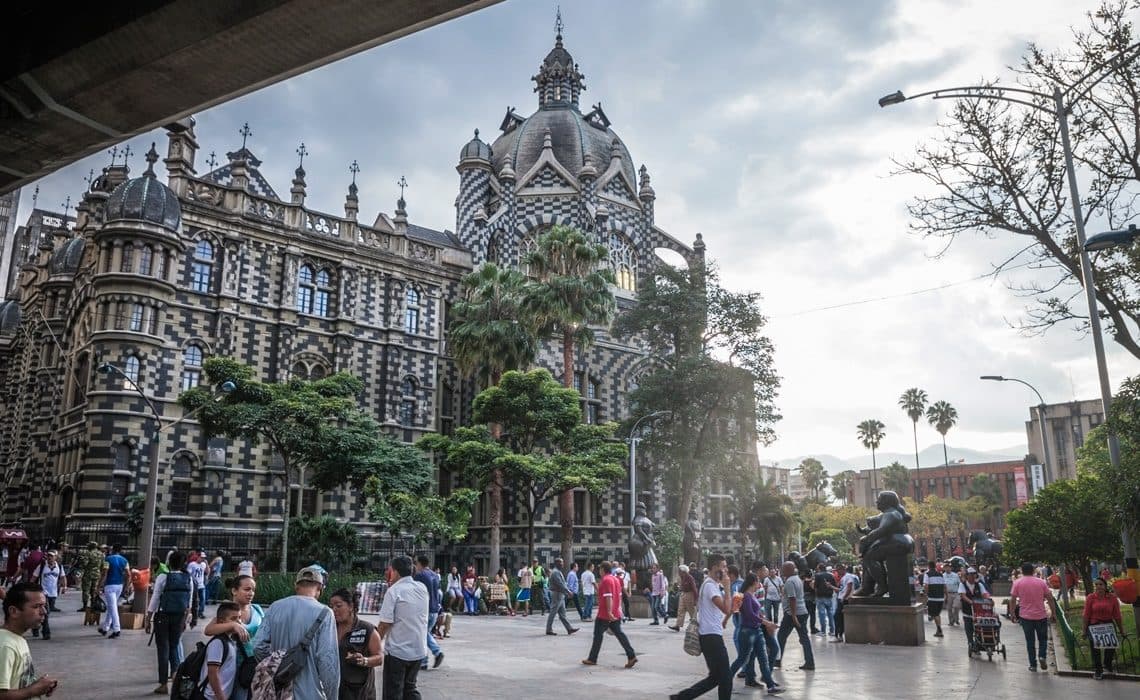
Medellín today has been the subject of so much enthusiastic foreign coverage that a corrective is now in order. The homicide rate is far lower than in the 1990s. It is also higher than in most major Latin American cities. Comuna 13 is celebrated by the tourist industry; the people who live there speak openly about gentrification, displacement, and the discomfort of having their kitchens treated as backdrops. The downtown commercial heart of the city, anchored by Plaza Botero and the cathedral, is safer than it was a decade ago and still has corners that tourist guides recommend avoiding after dark.
The honest reading is that the recovery is real, partial, contested, and ongoing. The city did something genuinely new in urban policy and the rest of the world has paid attention. The city also has unresolved grief, particularly around the disappeared, and that grief is not abstract. The mothers of Operation Orion are still alive. La Escombrera is still being dug.
If you spend a few days walking the city, you will encounter both. The bird sculpture in Parque de San Antonio, torn open by a 1995 cartel bomb, stands beside an identical undamaged bird that Fernando Botero donated as a memorial. The artist insisted the damaged one be left in place. That gesture is the city's house style. Build something new next to the wound. Do not cover the wound up.
The Comuna 13 tour and the Heart of the City tour are designed to be read together. One walks you through the system of social urbanism on its most famous slope. The other walks you through the downtown that funded it, named it, and is now slowly rebuilding around it. Each ends in the same place, which is not a happy ending or a tragedy but a city that has decided to keep both stories visible.
Frequently asked questions
- How many self-guided walking tours are there in Medellín?
- Roamer currently has 2 self-guided audio walking tours in Medellín. Every tour is free to start: the introduction and first stop play in full, and every later stop plays a short preview before you decide to buy.
- How much does a self-guided walking tour in Medellín cost?
- Each tour is free to preview and $4.99 for lifetime access. If you want more than one, a 7-day pass is $12.99 and a 30-day pass covering every tour is $19.99, which works out to well under a dollar a day.
- Can I do the Medellín tours offline?
- Yes. Tours can be downloaded in advance in the Roamer app and played with no signal, which is useful when you are travelling without mobile data.
- How long are the Medellín walking tours?
- They run about 90 to 95 minutes, covering 2.0 to 3.0 km on foot, with up to 7 stops on the longest route. You set the pace and can pause any time.
Colombia eSIM· 10% off with ROAMER10
Ready to experience it?
Medellín: The Botero City
95 min · 3 km · easy
More from Medellin
Explore more at your own pace.
Best Self-Guided Walking Tours in Medellín (2026)
Medellín Travel Guide: How Many Days, Getting Around, Is It Safe (2026)
One Day in Medellín: A Walkable Itinerary (2026)
What to Eat in Medellín: A Paisa Food Guide (2026)
The Escalator as Policy: Reading Comuna 13