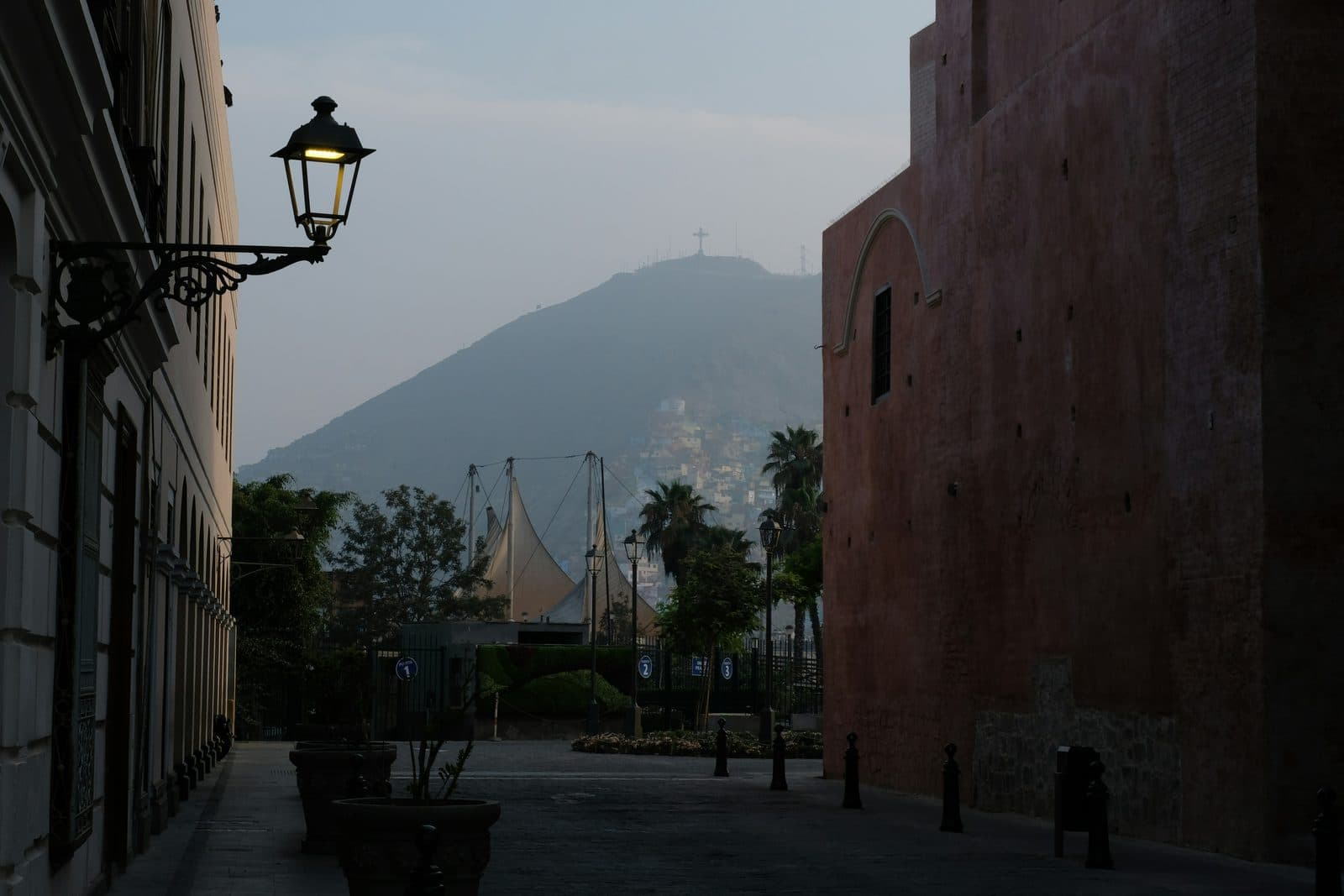
Barranco means ravine, and the ravine is the key to the place. This seaside district of Lima sits on top of a cliff above the Pacific, cut by a gully that runs down to the beach. Almost everything in its old core was built to solve one problem: how to get the city down to the sea, and the sea's fresh water up to the houses. The Barranco: The Bridge of Sighs and the Way Down to the Sea walk follows that problem through eleven stops.
The train and the tram
Lima came to Barranco by rail. A railway between Lima and the beach town of Chorrillos, running through Barranco, opened in 1858, and Barranco became a district of its own on 26 October 1874. By the end of the century Lima's families kept summer houses here, which Barranco calls ranchos: one-storey fronts with a central door, built of adobe, quincha (cane and mud), timber and clay tile. On 17 February 1904 President Manuel Candamo opened an electric tram that ran from Lima to Barranco first and then on to Chorrillos. It ran for sixty-one years, until a general strike stopped it in September 1965, and it never came back. Outside the free Museo de la Electricidad on Avenida Pedro de Osma, where the walk starts, stands an Italian-built Breda tram car, restored in 1997.
The fire of 1881
Hear a stop from this walk
Mirador Catalina Recavarren: The Edge of the Pacific
On 14 January 1881, after the Battle of San Juan in the War of the Pacific, the Chilean army reached Barranco and set much of it on fire: many of the ranchos, the old chapel of La Ermita and part of the Puente de los Suspiros. Most of what you see is the town that came back. The Parque Municipal, the town square, was inaugurated on 13 February 1898; the building beside it with the clock tower, opened in 1922 and long the town hall, has been the municipal library since 1976.
One house on Avenida Grau shows how far a summer house could go. The Casa Rosell, finished in 1912, is a rancho grown into a villa, with two great curving staircases that climb from a U-shaped forecourt to a broad balcony. Its walls of adobe, quincha, timber and mud have come through the earthquakes of 1940, 1966, 1970, 1974 and 2007.
Every way down
Juan de Arona, a Peruvian writer, described the town in a guide published in 1894, and his book is the best witness to how Barranco reached the water. On the cliff stood the Malecón de los Ingleses, a small square promenade with a white balustrade, built, he says, in 1891 on land given by a Briton, Juan Mattison, and paid for by the owners of the houses around it. It is named for the English and German families whose summer houses stood there. The balustrade has gone, and a cycle lane now runs along the cliff-top path. From there, in Arona's day, wooden stairs went down the ravine to the beach, with handrails made from old pieces of transatlantic telegraph cable.
At the sea end of the next street, Jirón Domeyer, a funicular opened on 28 July 1896. It was worked by water: tanks were filled and emptied so that two cars rose and fell together. The street carries the name of Federico Domeyer, a German who, Arona says, taught Barranco to use hydraulic rams to lift the pure water that seeps down through the cliff about fifty metres back up to the houses. Walkers on the beach could hear the rams thumping underground, like iron hearts. The bathing houses below, the Baños de Barranco, were demolished in 1971 to build the beach highway, and the funicular lost its purpose.
The oldest way down is the Bajada de Baños, the ravine path that fishermen used to reach the shore. Arona credits Barranco's chaplain, Manuel Andrés de la Fuente Chávez, and a mason named Sandoval with opening it: they stored up the water of the fountain at its head and released it as a flood that tore the ravine open. Mayor Pedro Herouard paved it in the early 1900s. The singer and songwriter Chabuca Granda, born in 1920, lived in a house on the Bajada until her teens.
The bridge and the edge
Across the ravine runs the Puente de los Suspiros, the Bridge of Sighs, inaugurated on 14 February 1876 to join its two sides. It was forty-four metres long then; part of it burned in 1881 and was repaired, and today it measures thirty-one to thirty-three metres, built of Oregon pine. It was known by the names of mayors until Chabuca Granda's 1960 song gave it the name it keeps, and the custom is to cross holding your breath and make a wish. The bridge closed in February 2026 and reopened on 21 August 2026 with a new deck, new handrails and lights that switch on at 6 pm. Her statue stands in the little square beside it, next to José Antonio de Lavalle on a Paso horse, the subject of her song "José Antonio".
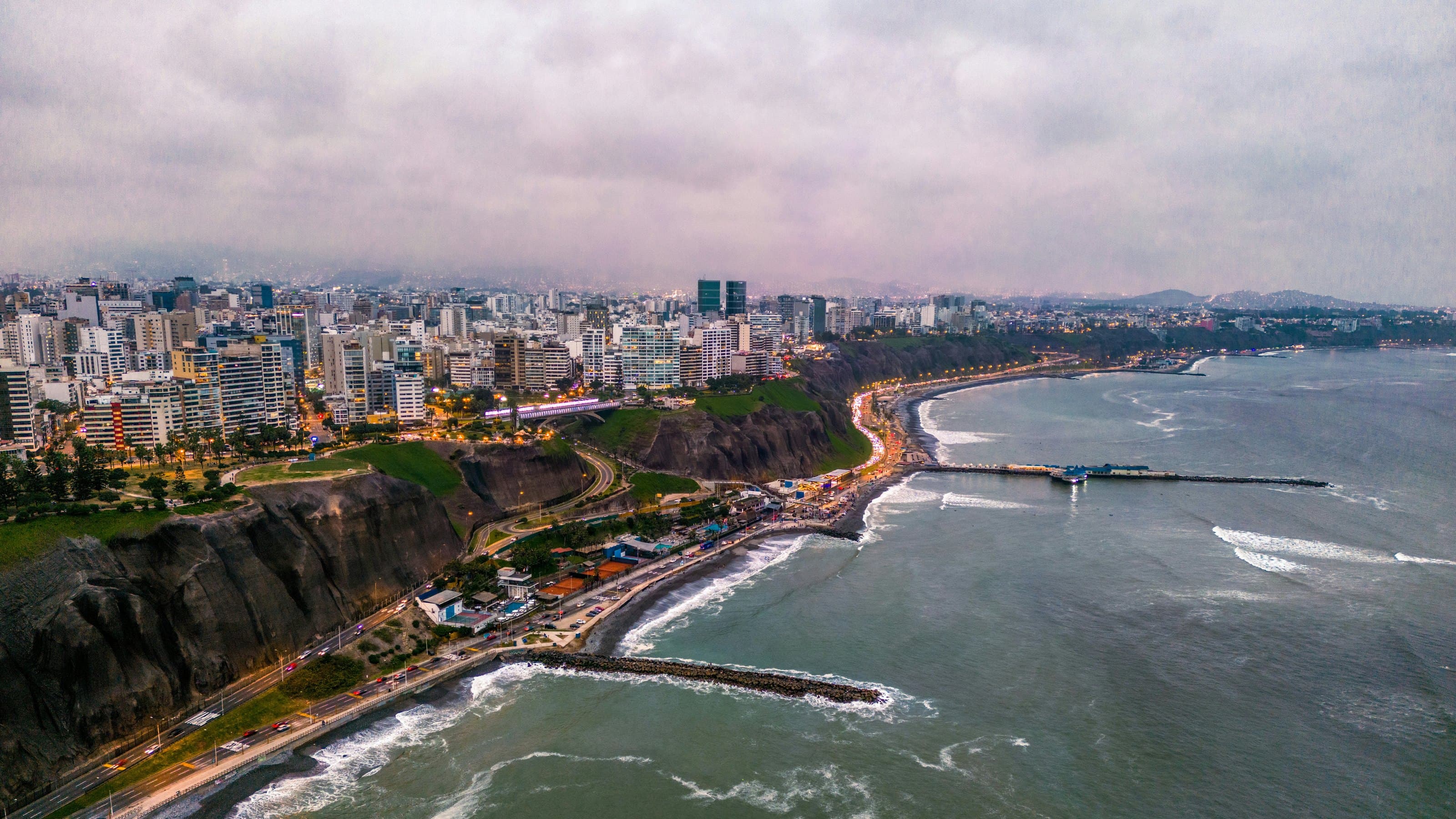
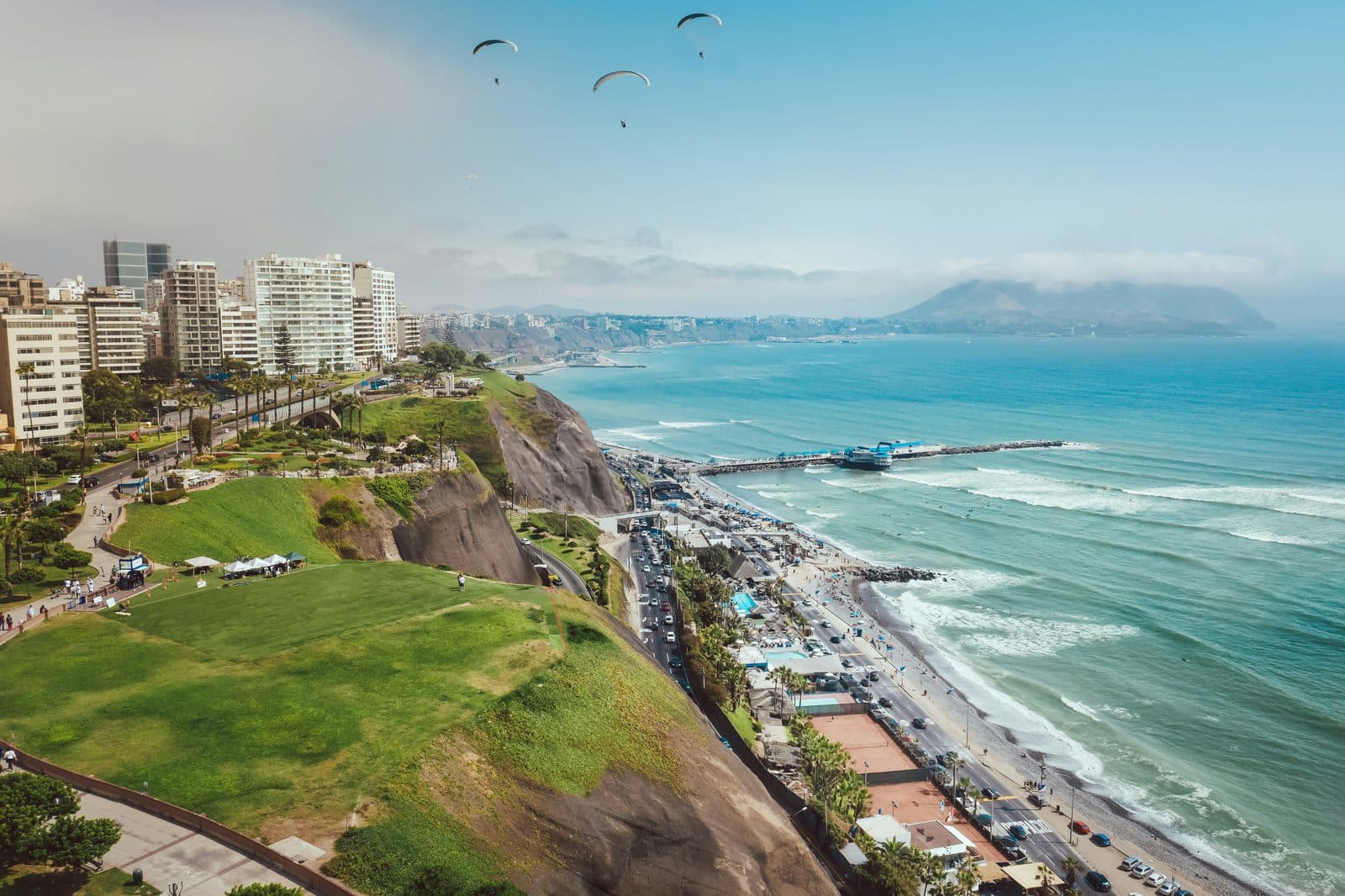
Beyond the bridge, La Ermita, the church above the ravine, carries Barranco's founding legend: fishermen lost in the fog saw a light on the cliff and, when they climbed up to it, found only a cross. The present church, built of quincha in a Gothic revival style, dates from 1901 and was closed after the earthquake of 1940; it has been a restoration worksite since 5 June 2026, with about 480 days of work planned. The walk ends behind it at the Mirador Catalina Recavarren, above cliffs of gravel and sand laid down by the Rímac River in the last Ice Age, up to about seventy metres high, with a view along the whole Costa Verde from the Morro Solar in Chorrillos to La Punta in Callao.
What it adds up to
The walk is eleven stops and about 1.8 kilometres, roughly sixty-five minutes, with two short flights of steps. Many visitors come to Barranco for its bars and murals; in 2015 the painter Jade Rivera won the district's first national mural contest. But the bones of the place are a summer town's engineering: a railway and a tram to reach it, a promenade to look at the sea, a funicular and a flood-cut path to get down to it, pumps to bring water up, and a bridge to cross the gap. Come in the late afternoon and finish on the cliff at sunset.
Ready to experience it?
Barranco: The Bridge of Sighs and the Way Down to the Sea
65 min · 1.8 km · easy
More from Lima
Explore more at your own pace.
Best Self-Guided Walking Tours in Lima (2026)
Lima Travel Guide: How Many Days, Getting Around, When to Go (2026)
One Day in Lima: A Coast-to-Colonial Itinerary (2026)
Best Culture Walking Tours in Lima (2026)

What to Eat in Lima: A Food Guide (2026)