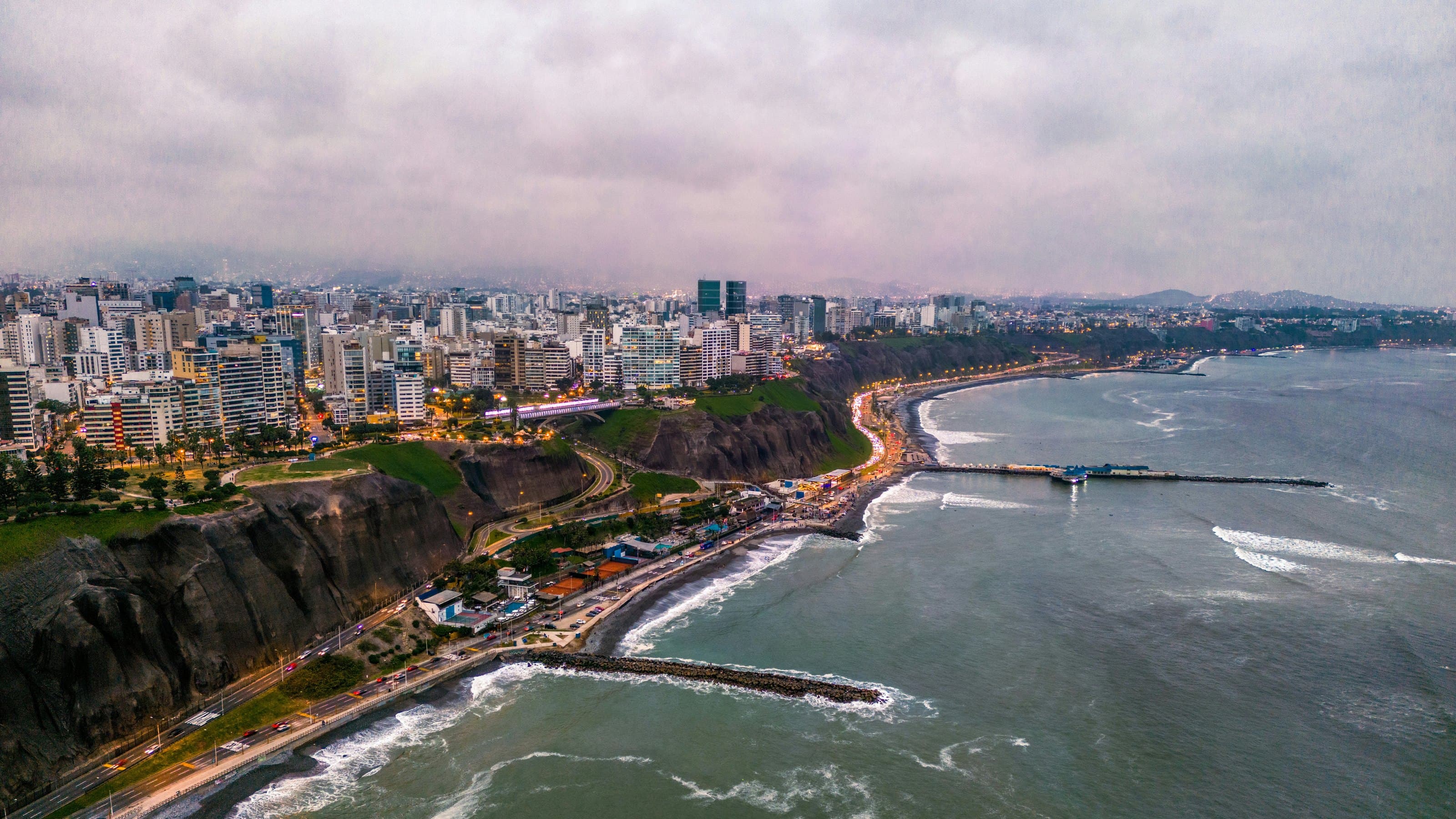
A loop through Lima's clifftop seaside district: the town square, a grand summer villa, an English promenade, a street of water pumps and a lost funicular, the ravine path, the Bridge of Sighs and a viewpoint over the Pacific.
Start · Museo de la Electricidad: The Tram to the Sea
DirectionsStops
- 1
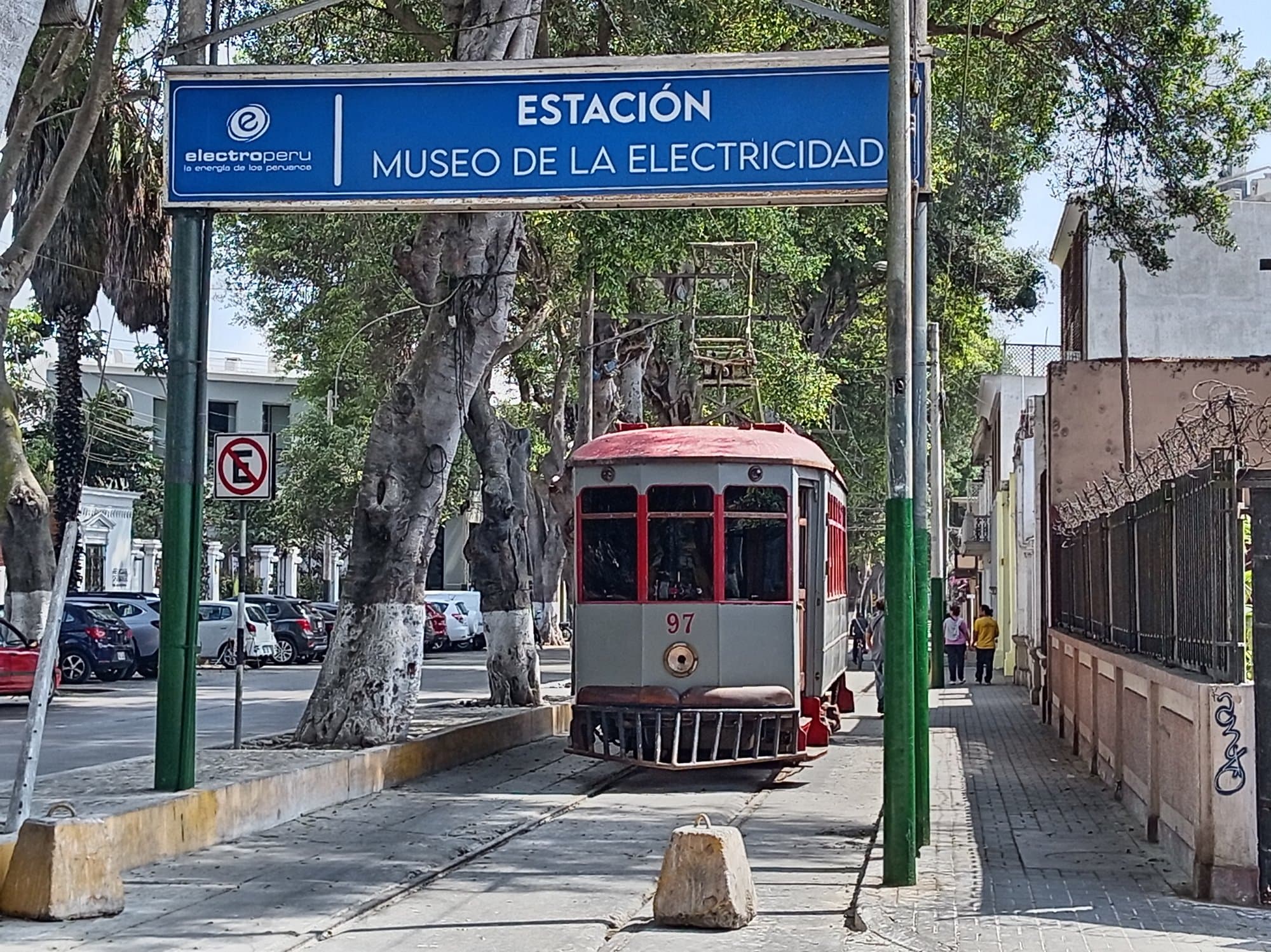
Museo de la Electricidad: The Tram to the Sea
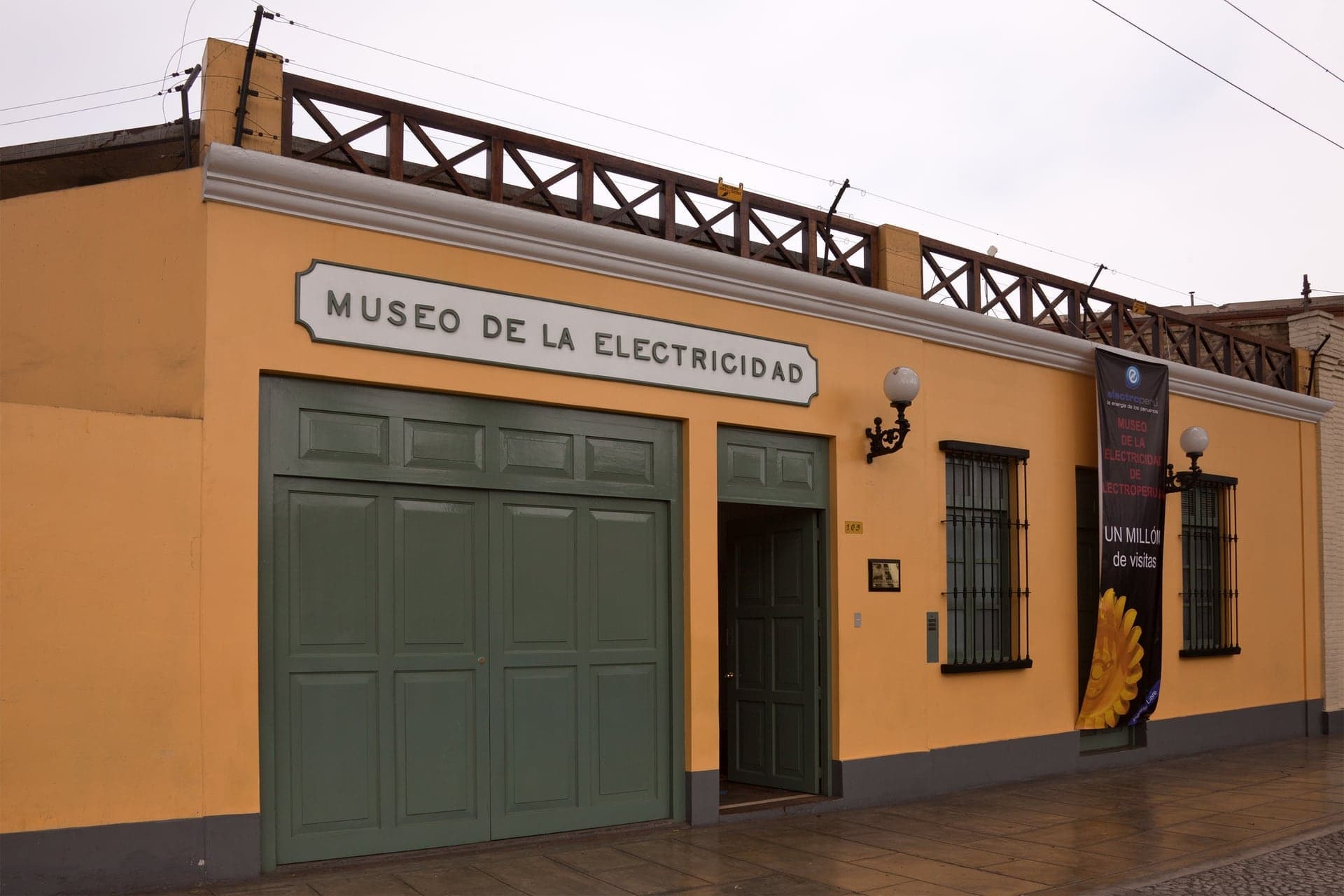
The museum of Barranco's trams to the sea, with an Italian-built tram car outside and a 1903 house next door.
- 2
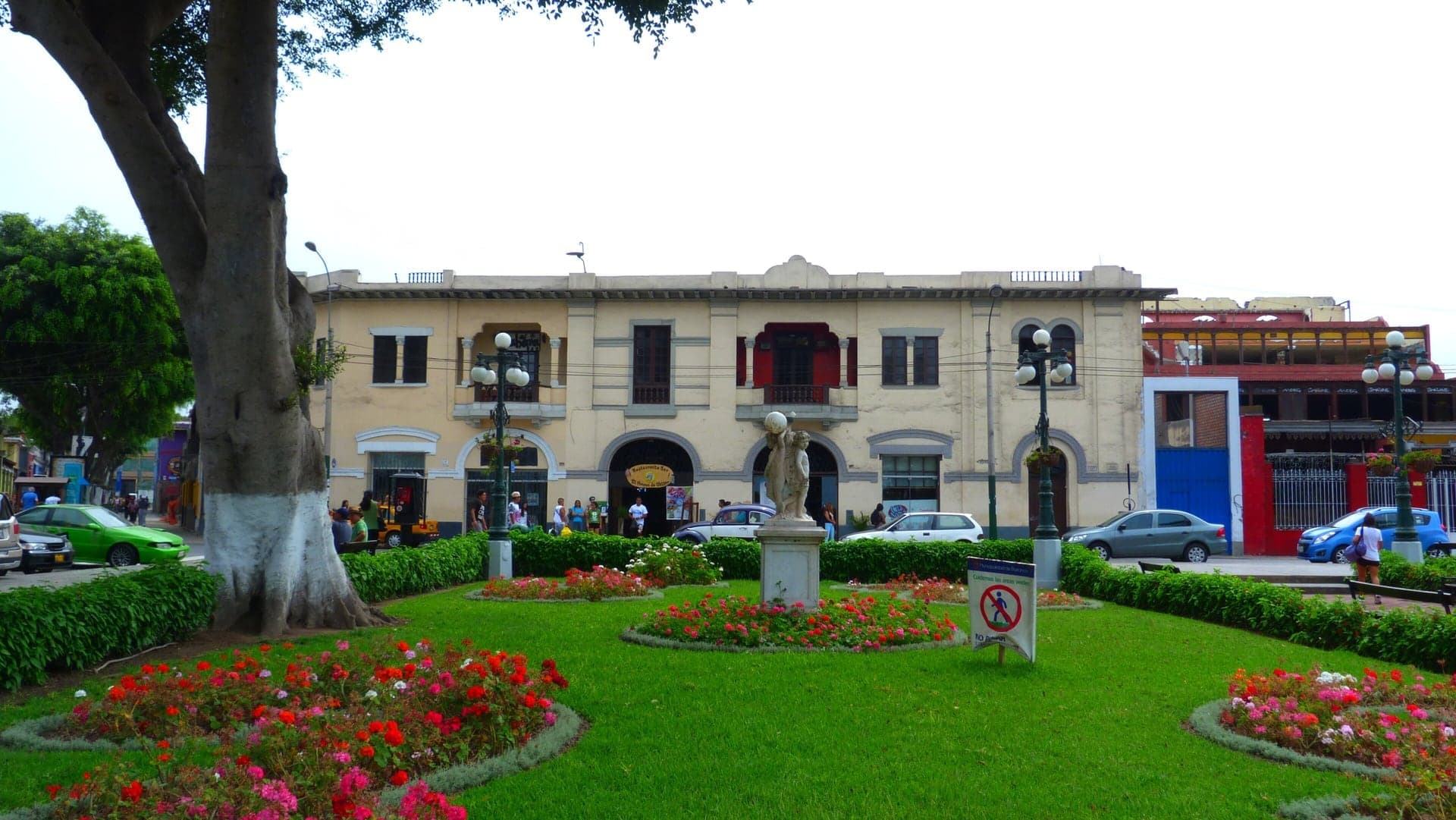
Parque Municipal: The Square Laid Out After the Fire
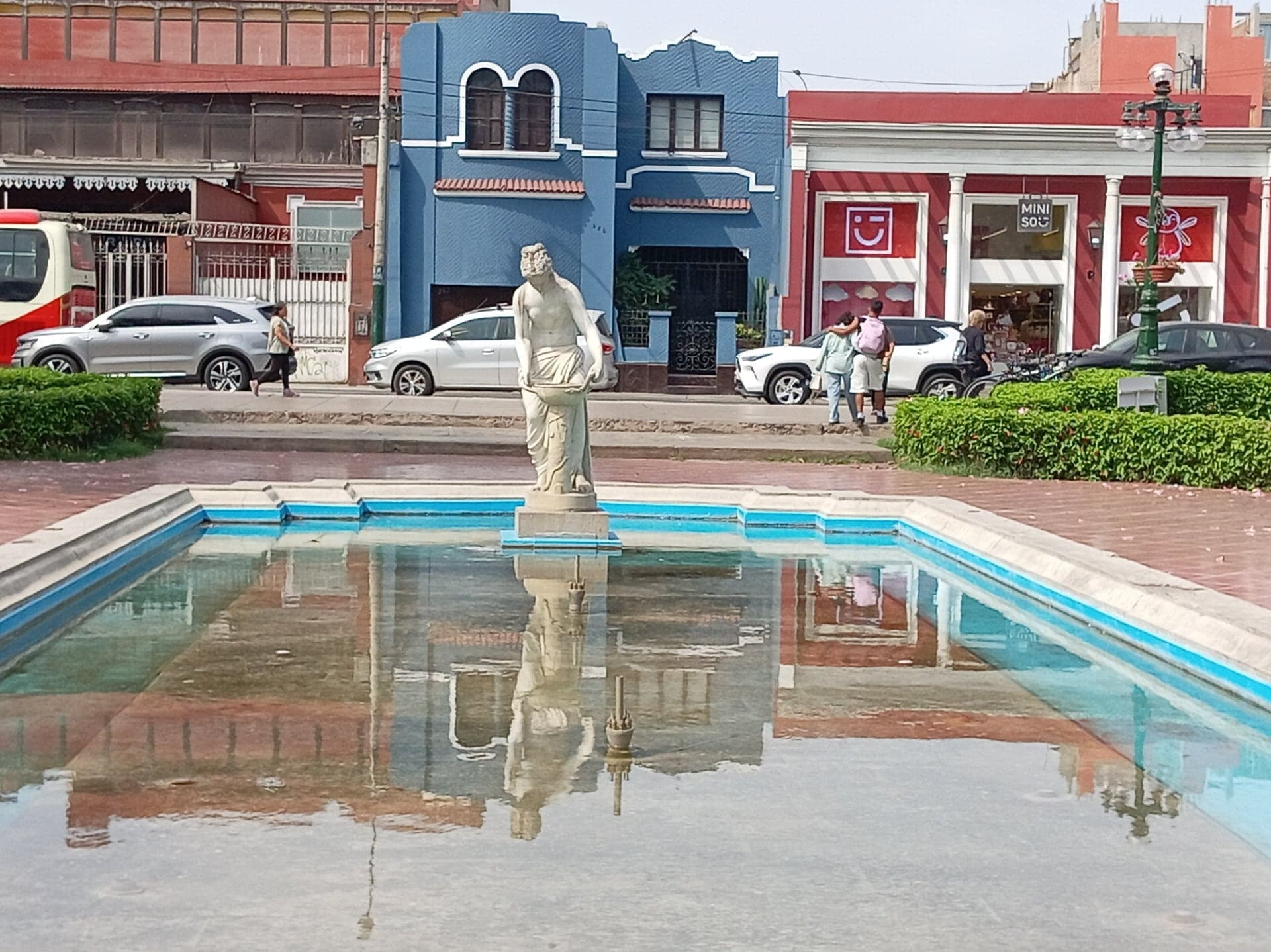
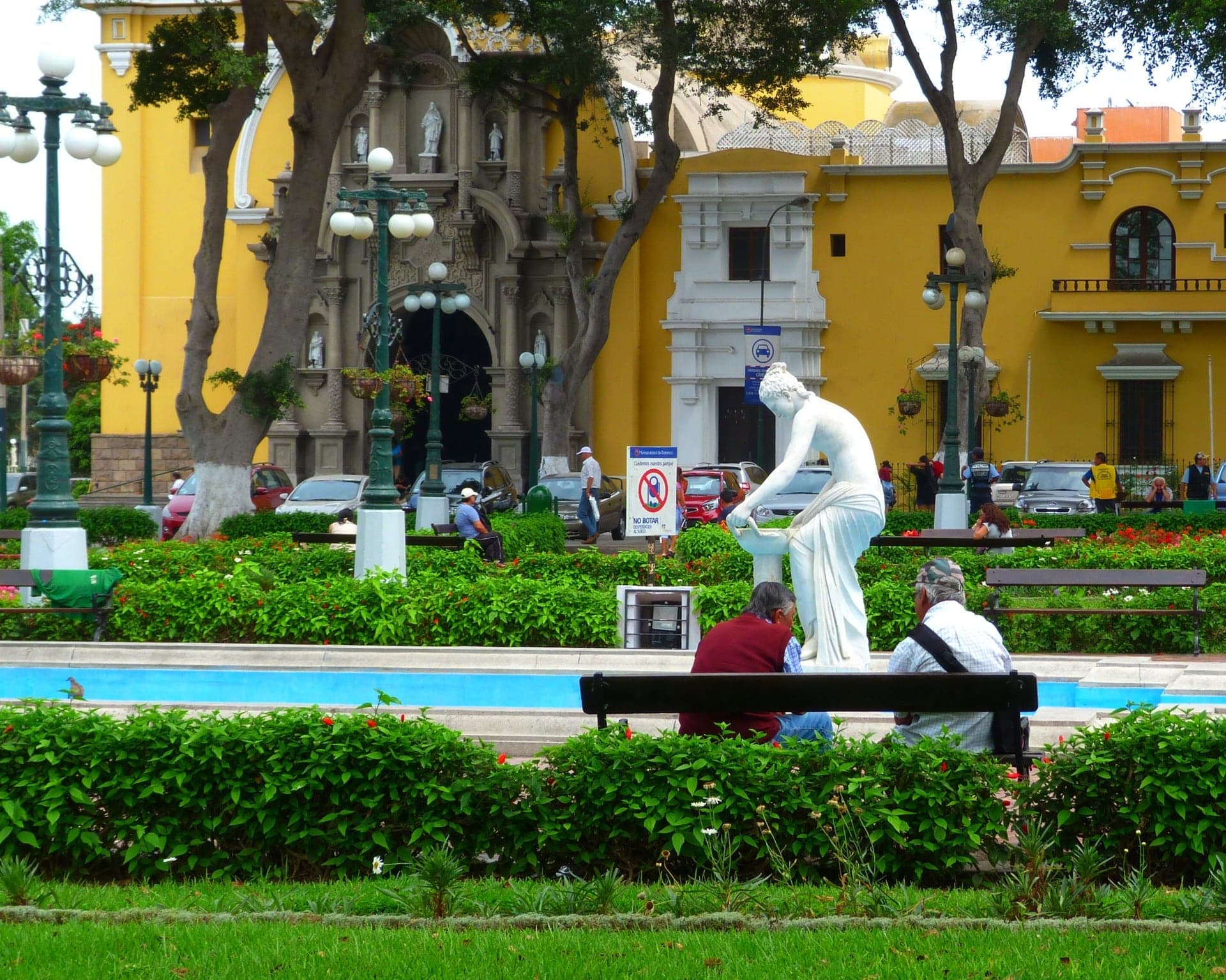
Barranco's meeting place since 1898. A fountain figure from Greek myth, a marble candelabra and the old town hall, now the library.
- 3
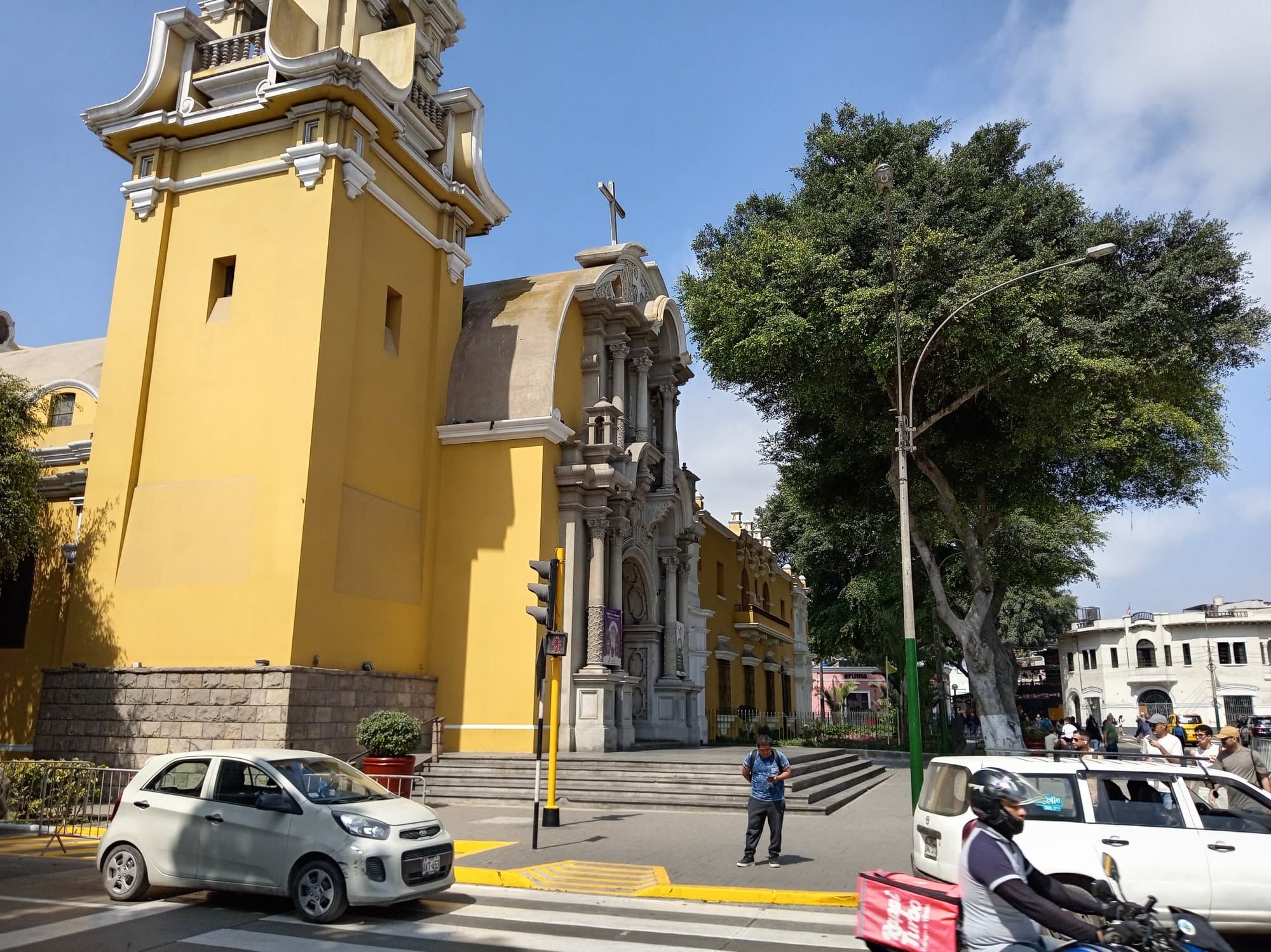
Iglesia Santísima Cruz: The Parish Church Built After the Earthquake
Barranco's parish church on the square, begun in 1944 and opened in 1963, with five statues on its neo-Baroque front.
- 4
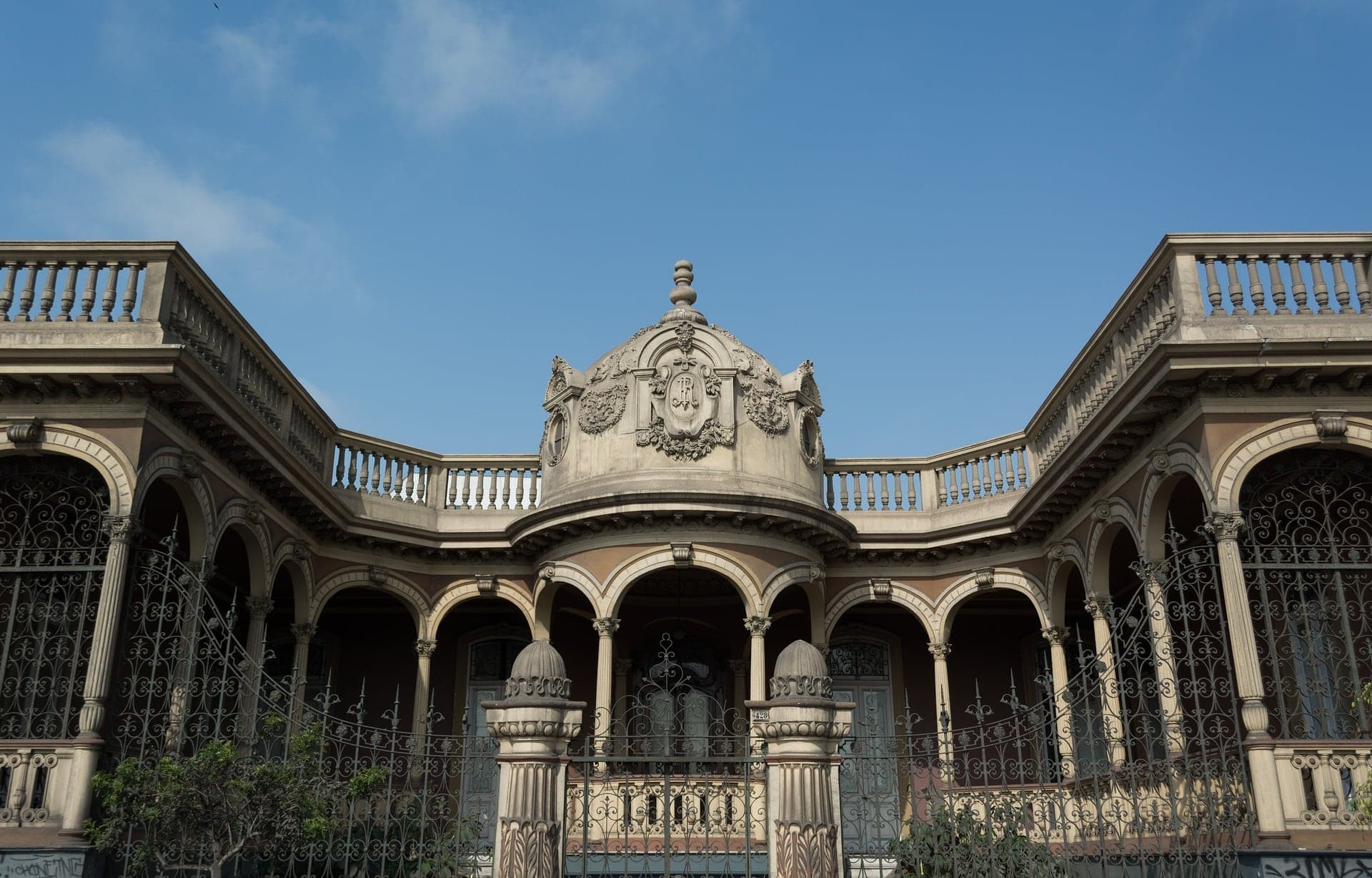
Casa Rosell: The Summer House That Became a Villa
A grand summer house finished in 1912, seen across the high street. Two curving staircases, a domed lookout and walls of cane and mud that have ridden out five earthquakes.
- 5
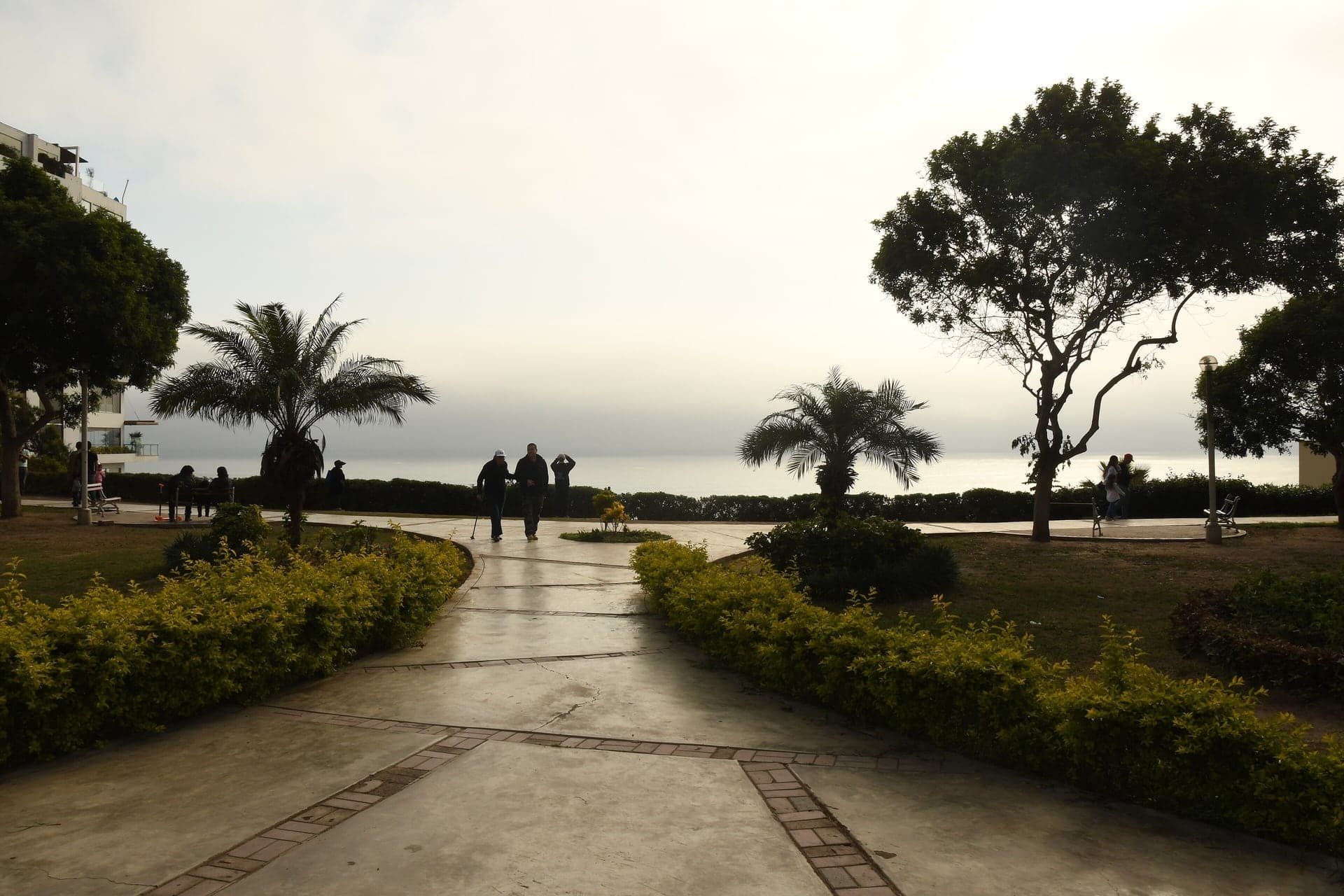
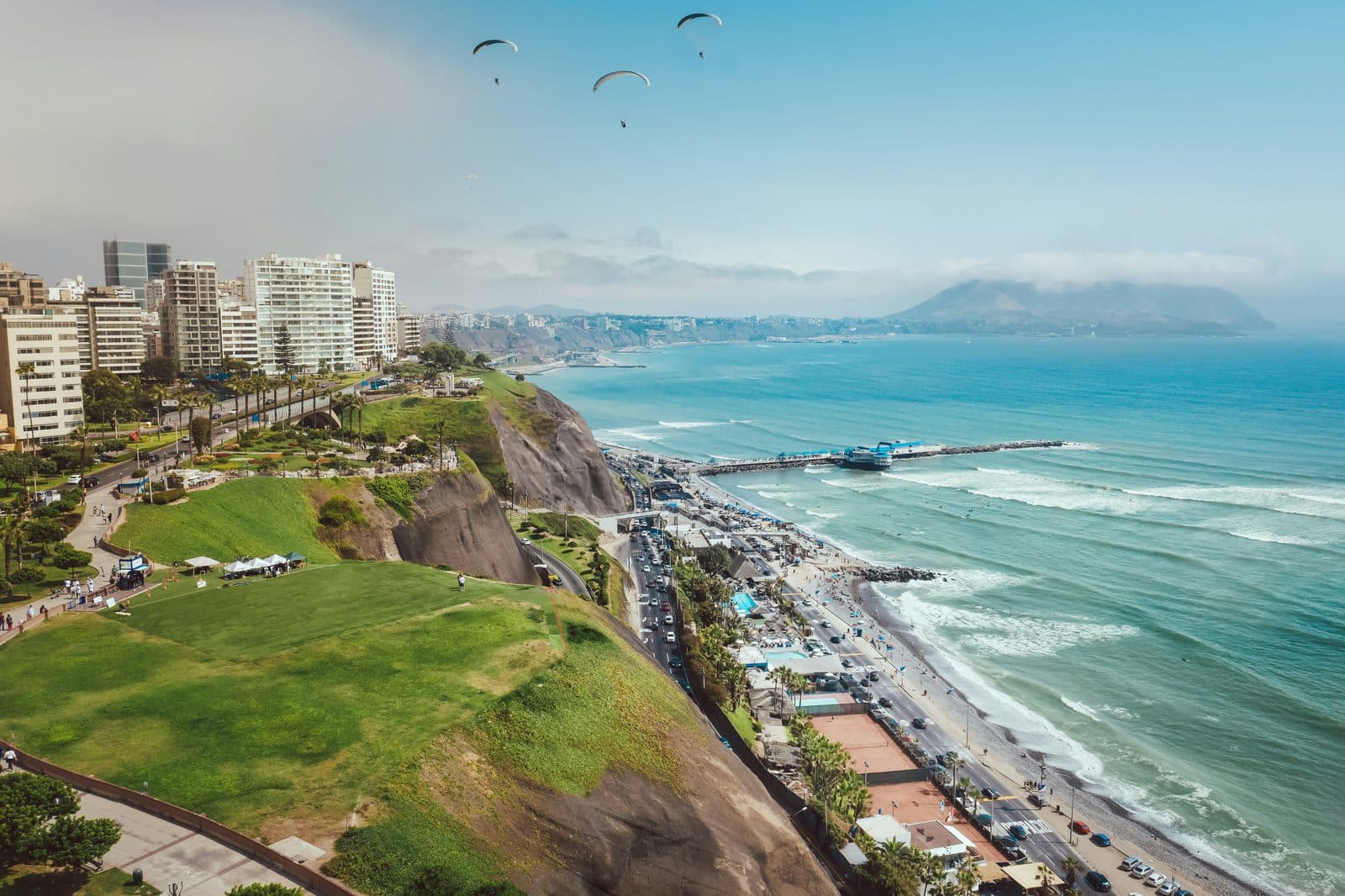
Malecón de los Ingleses: The English Promenade
A neighbors' clifftop park of the early 1890s. Named for the English and German families around it, it once led to wooden stairs down to the beach.
- 6
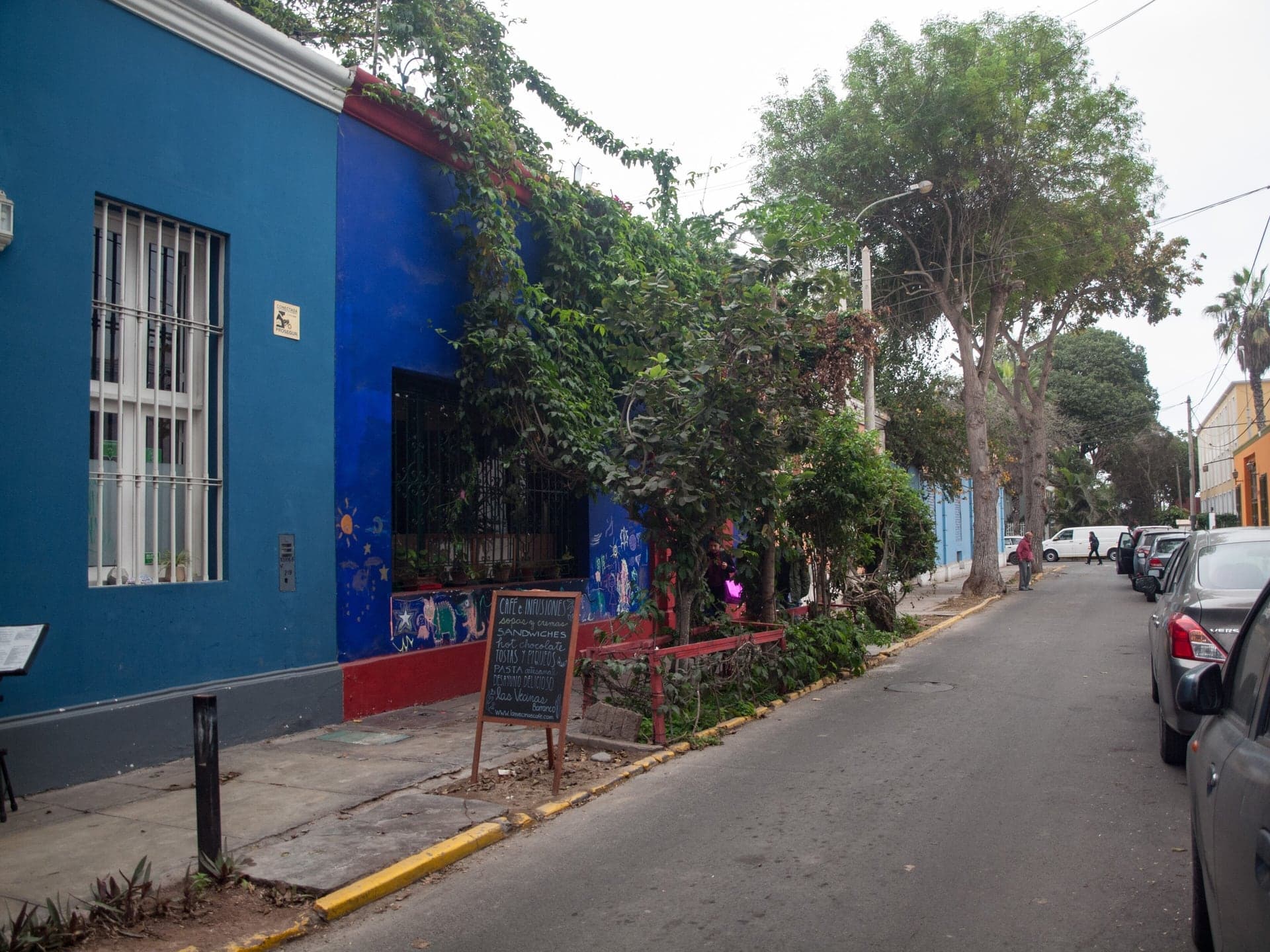
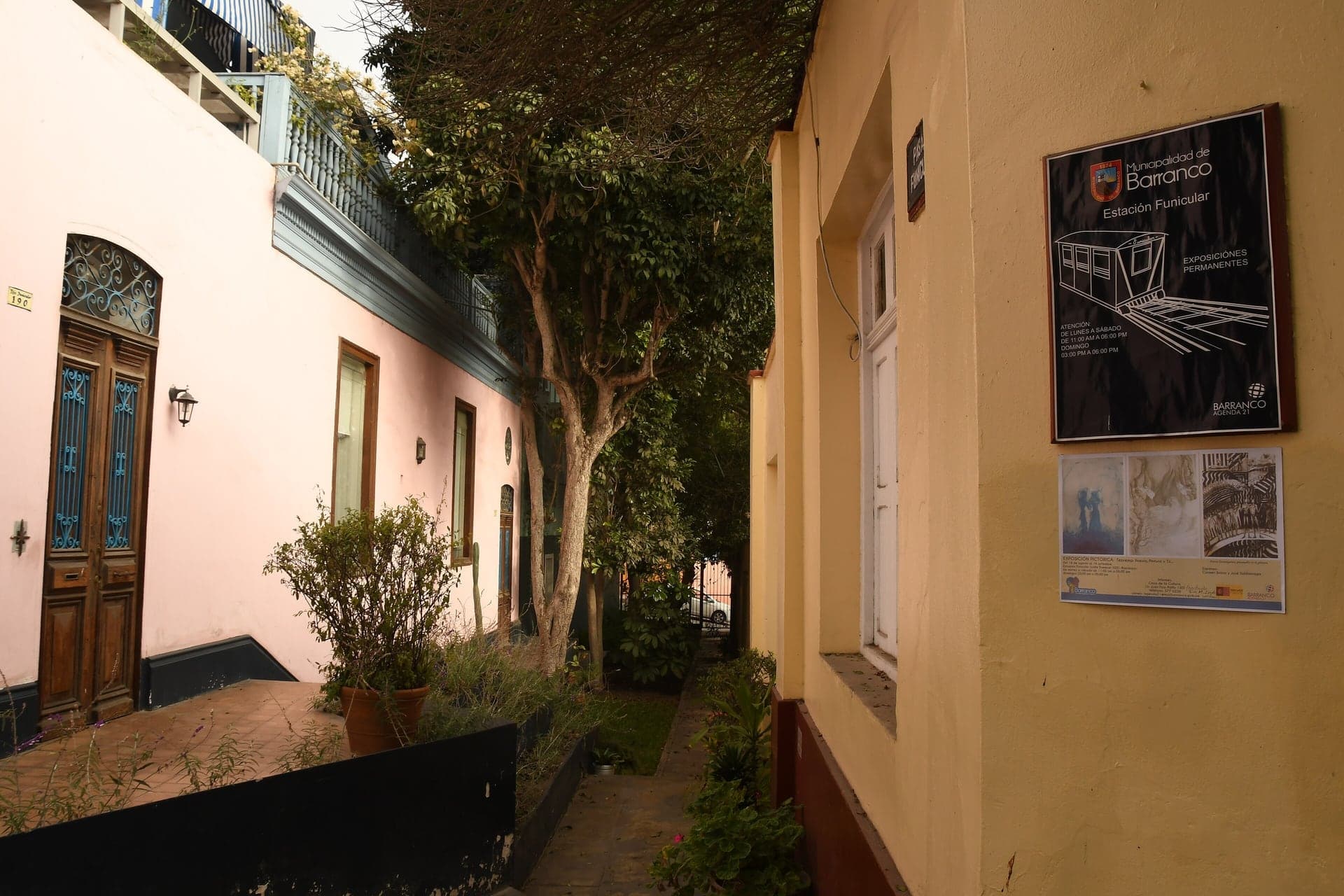
Jirón Domeyer: The Street of Iron Hearts
A protected street of old summer houses. At its sea end, a water-driven funicular once carried bathers down to the beach.
- 7
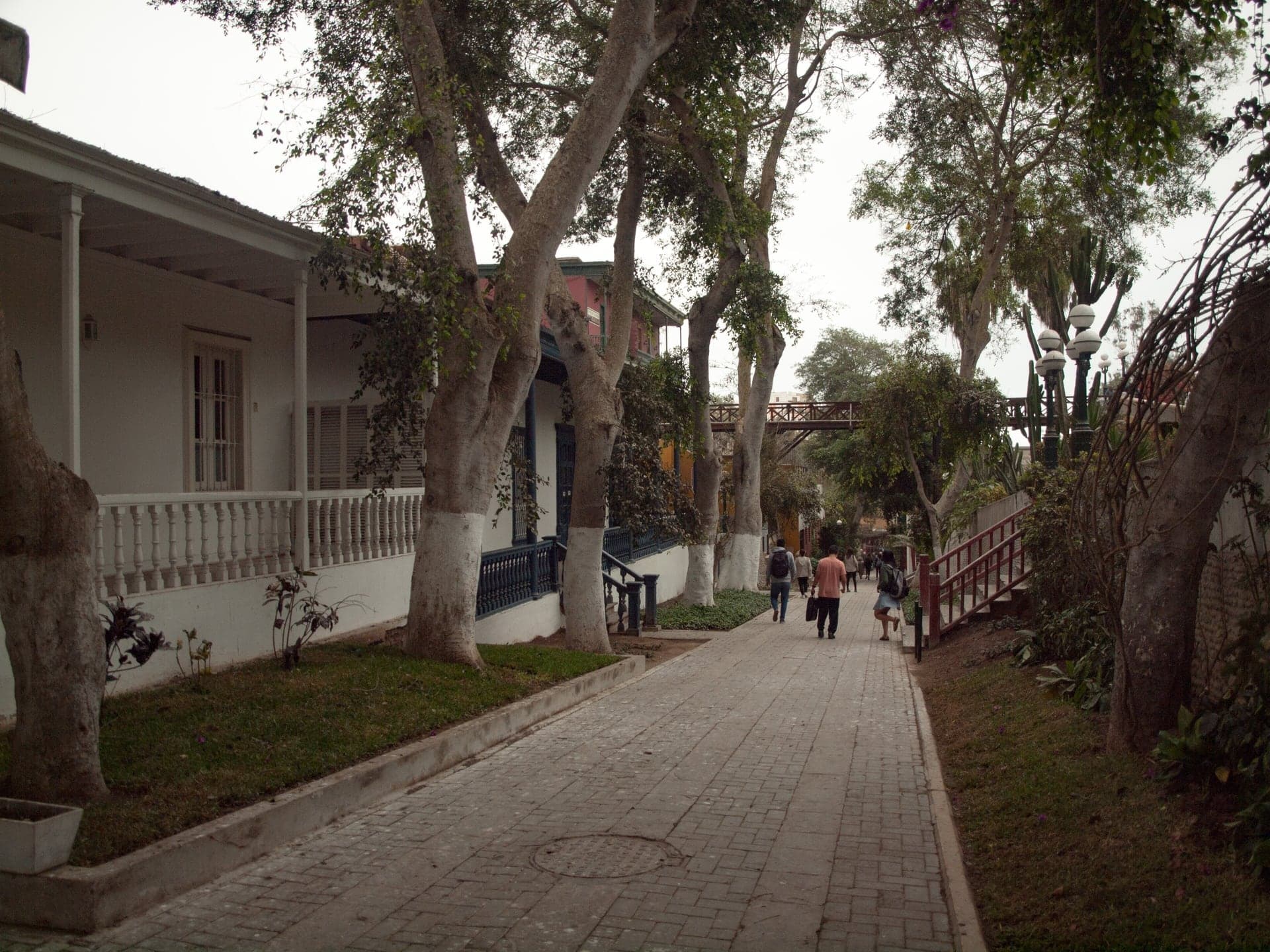
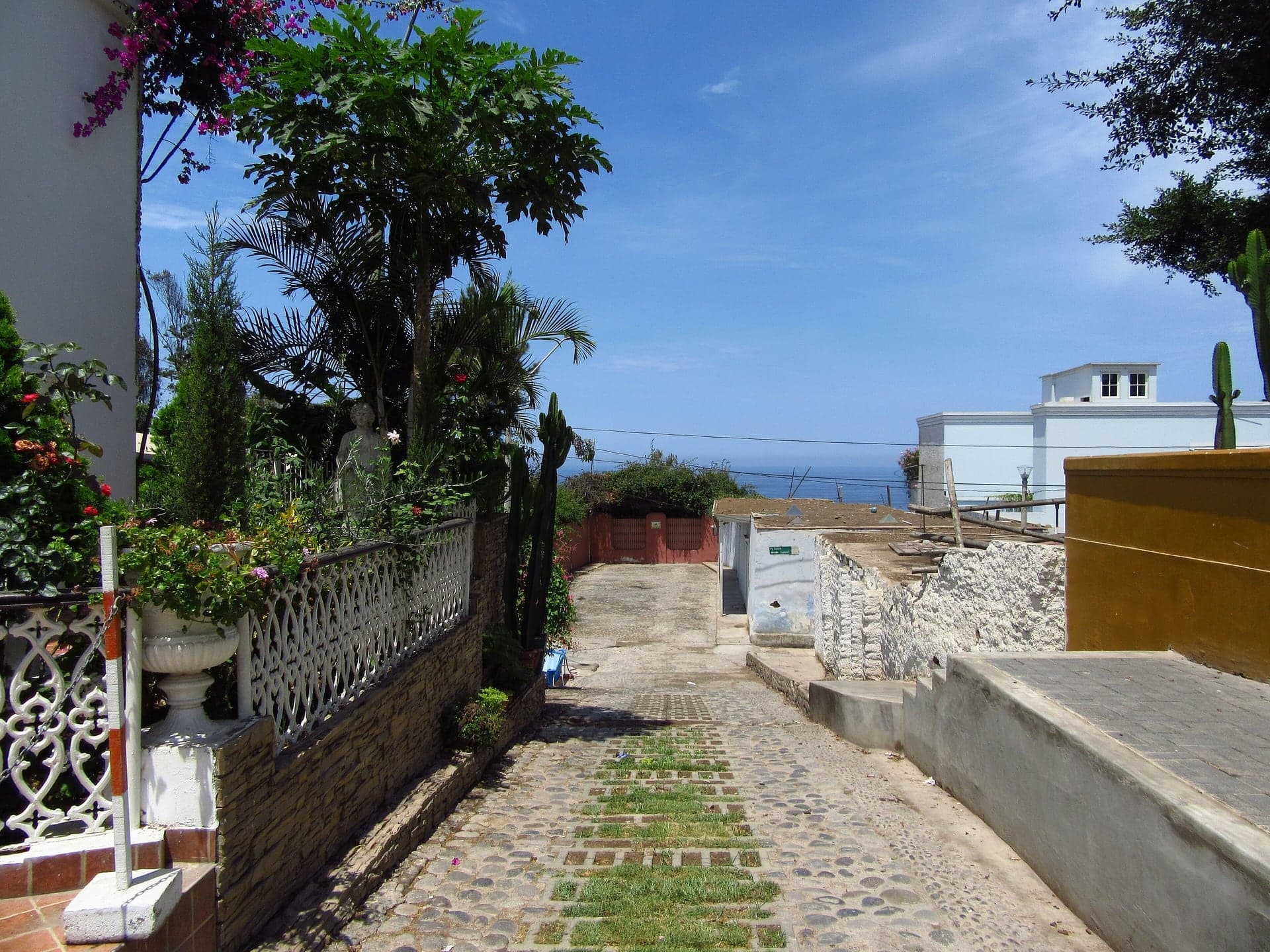
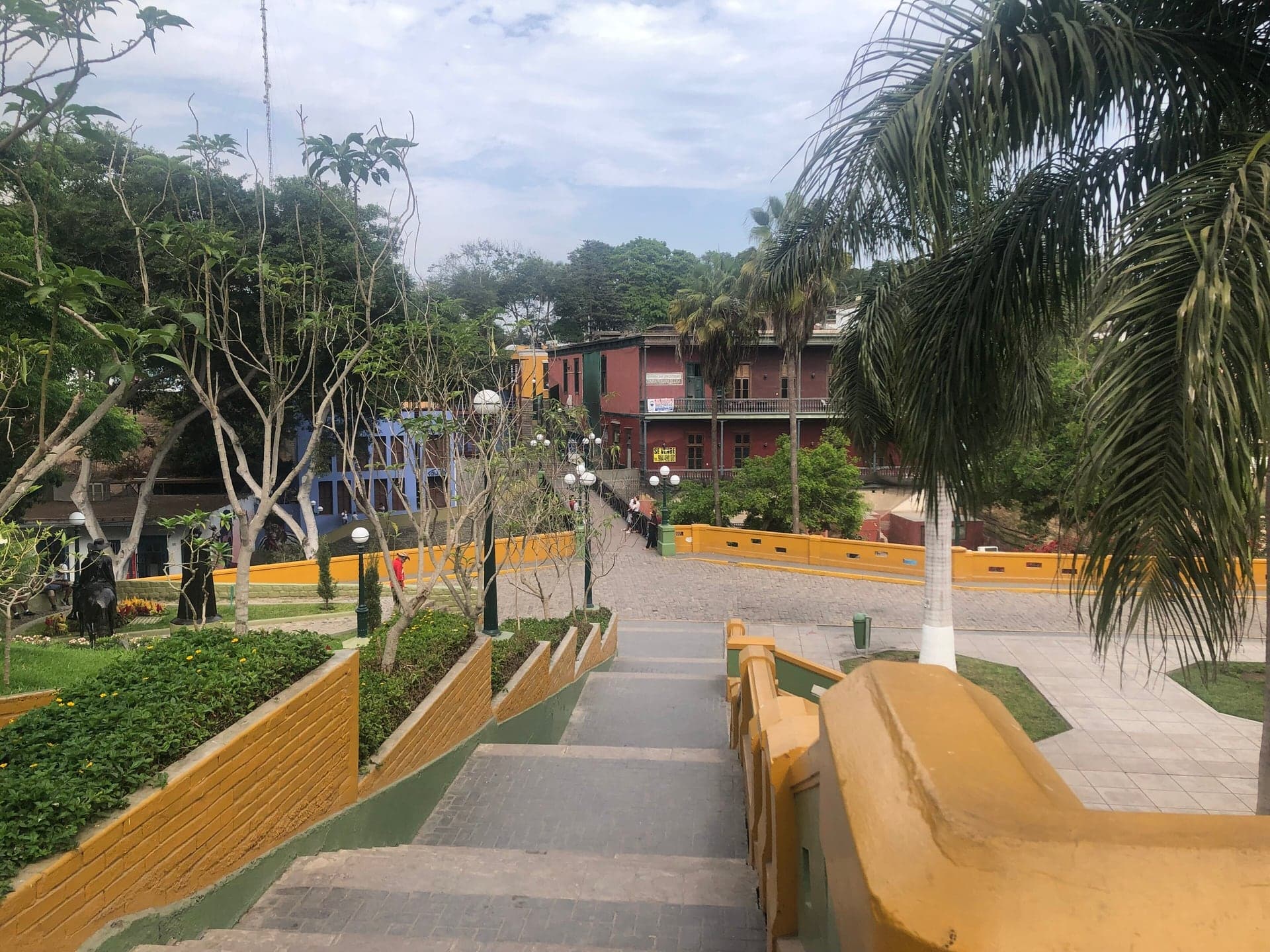
Bajada de Baños: The Path a Flood Made
The ravine path to Barranco's bathing houses, carved wider by a released flood and lined with murals.
- 8
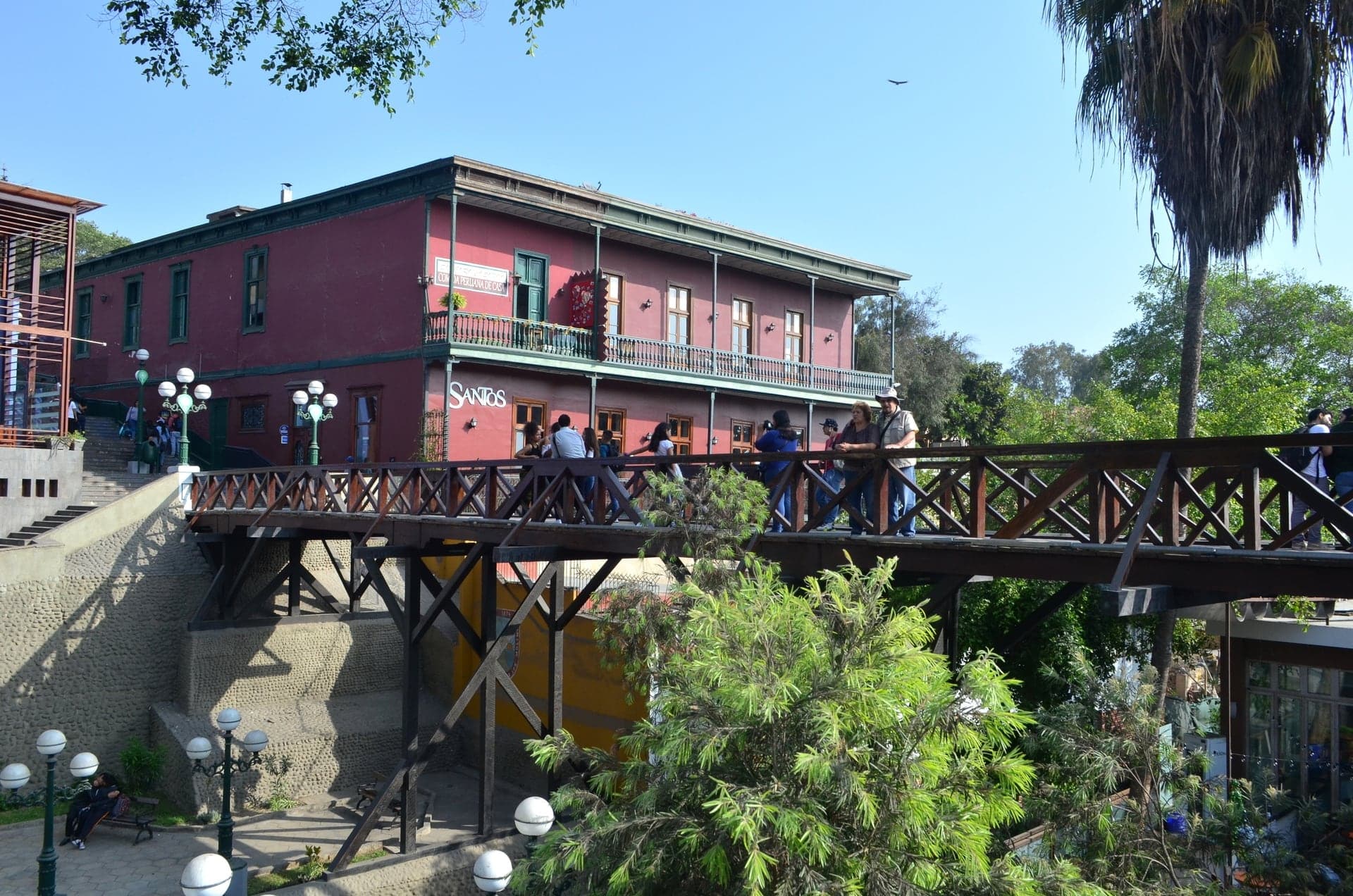
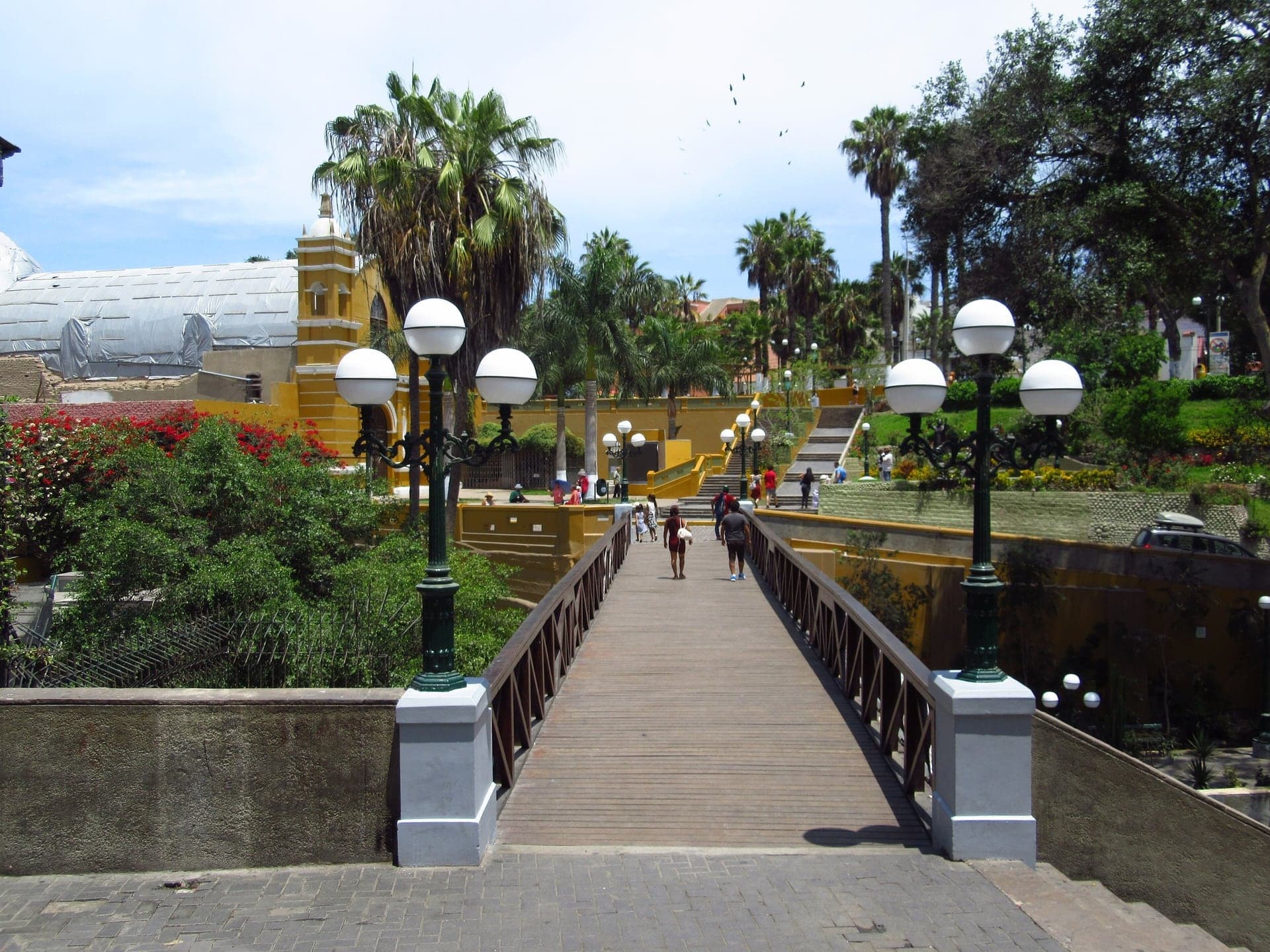
Puente de los Suspiros: Hold Your Breath
A wooden bridge over the ravine path. Partly burned in 1881, mended, and named by a song.
- 9
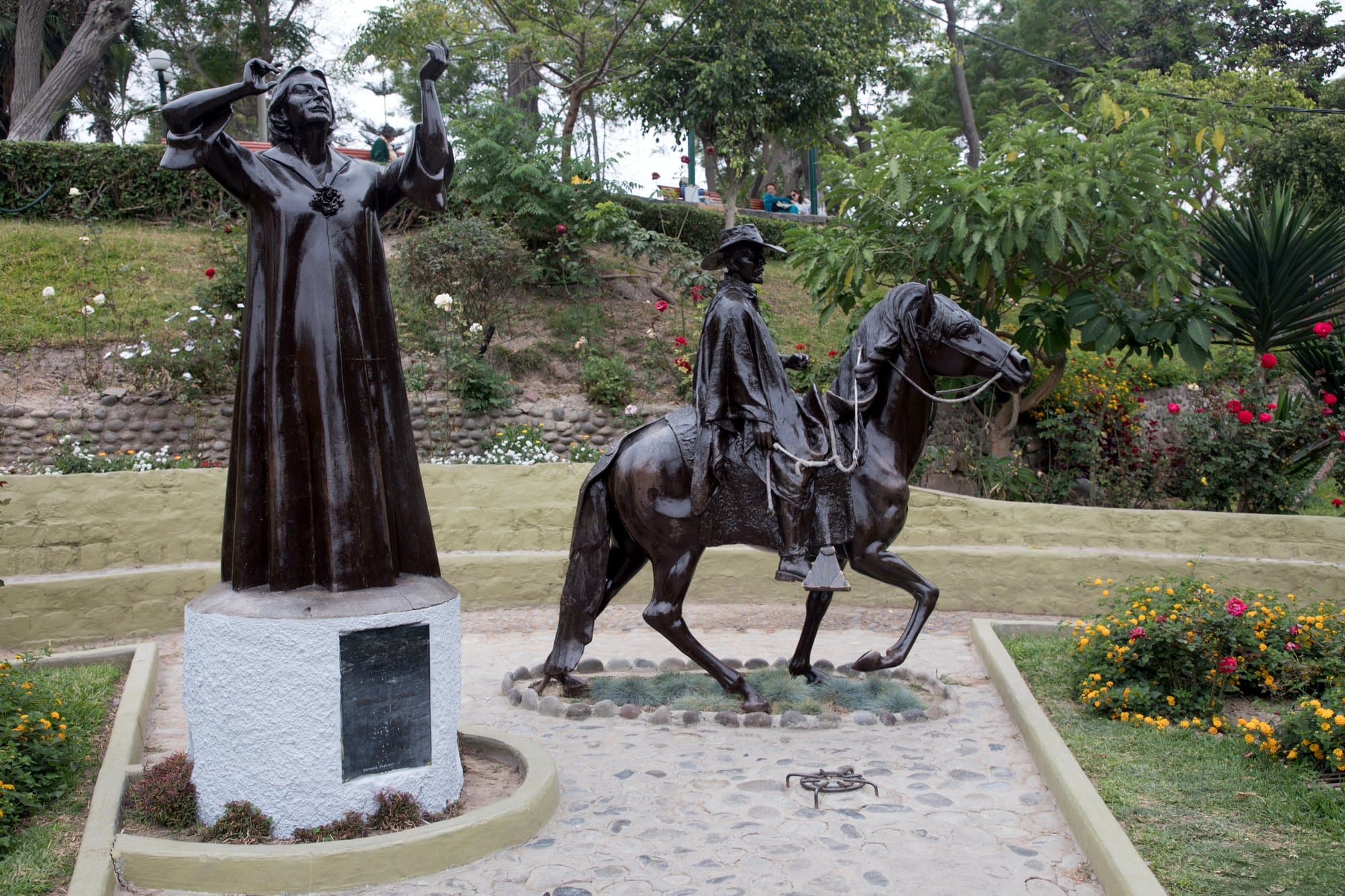
Plazuela Chabuca Granda: The Woman Who Named the Bridge
A plaza honoring the bridge's songwriter. Statues of Chabuca Granda and José Antonio de Lavalle on a Peruvian Paso horse.
- 10
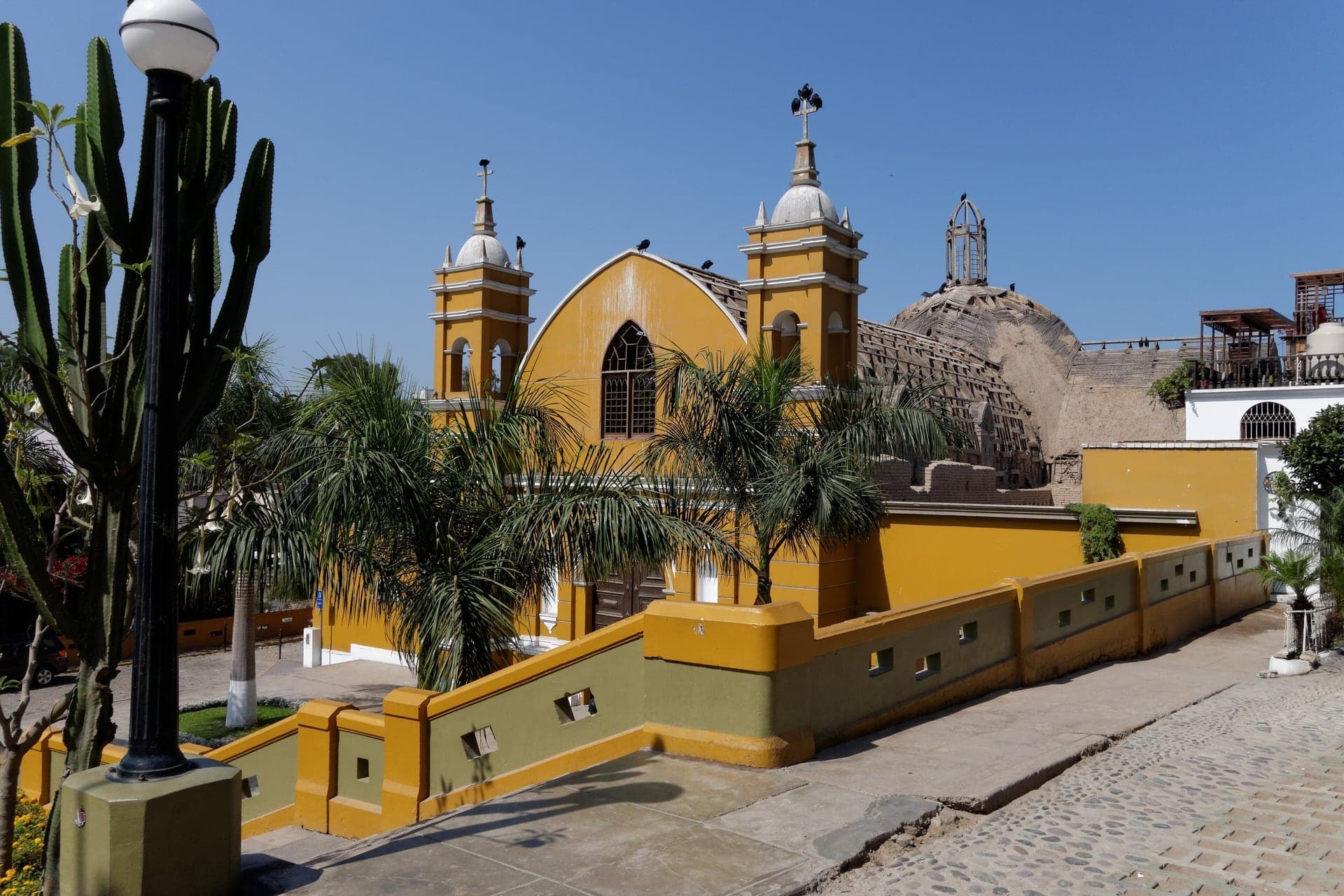
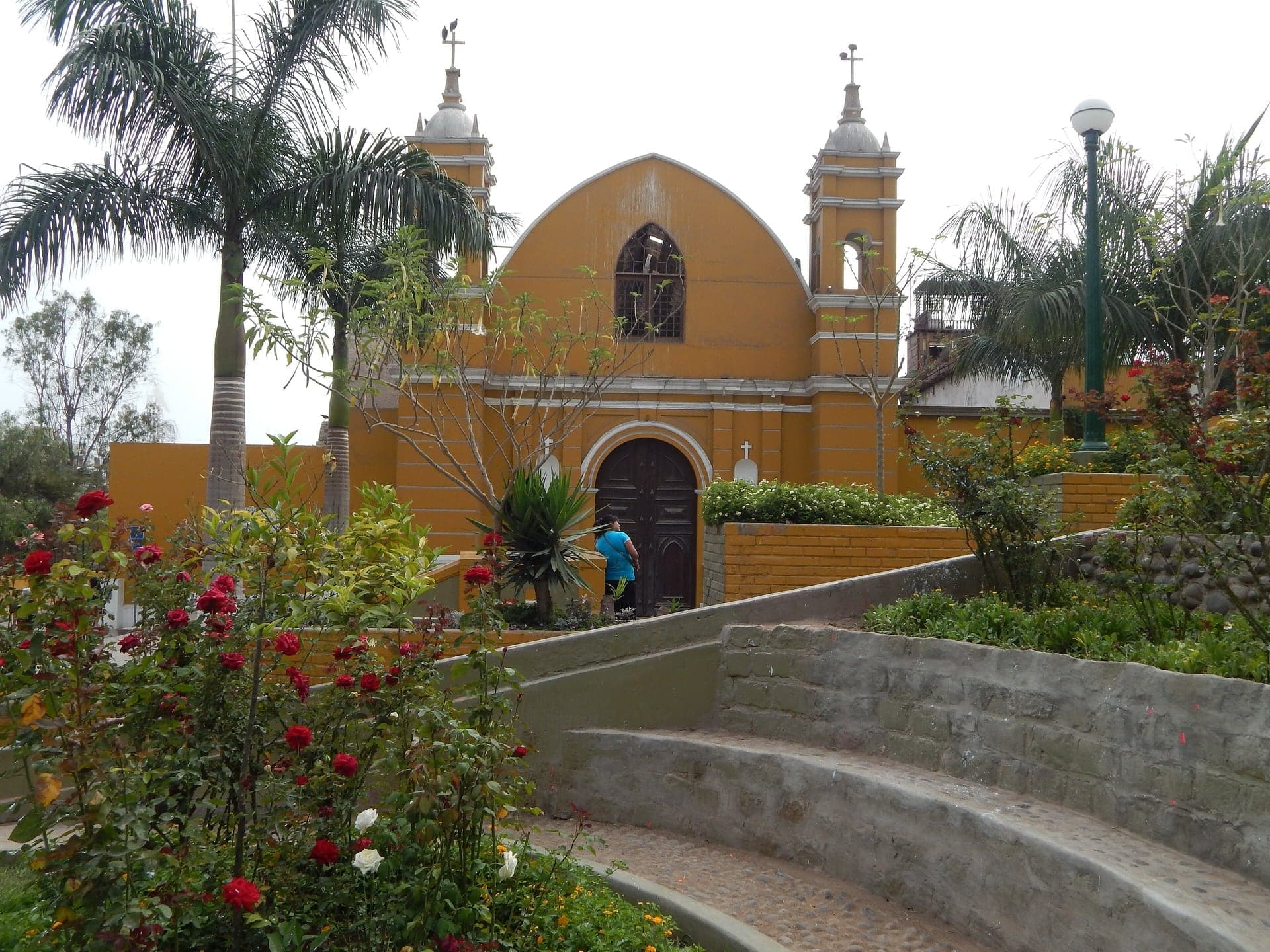
La Ermita: A Light for Lost Fishermen
A church founded on a fishermen's legend. Burned in 1881, rebuilt in cane and mud, and under restoration behind fences since June 2026.
- 11
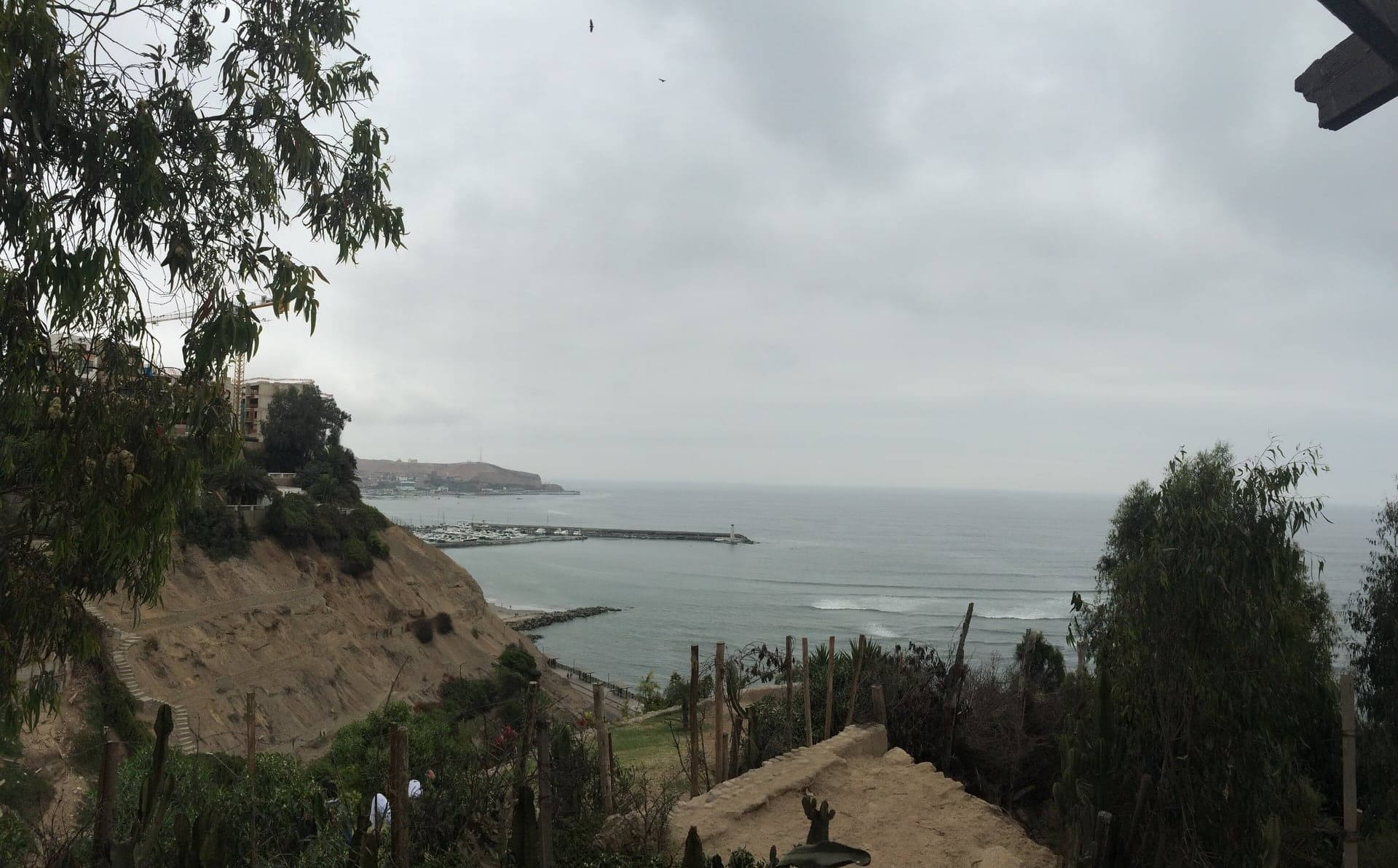
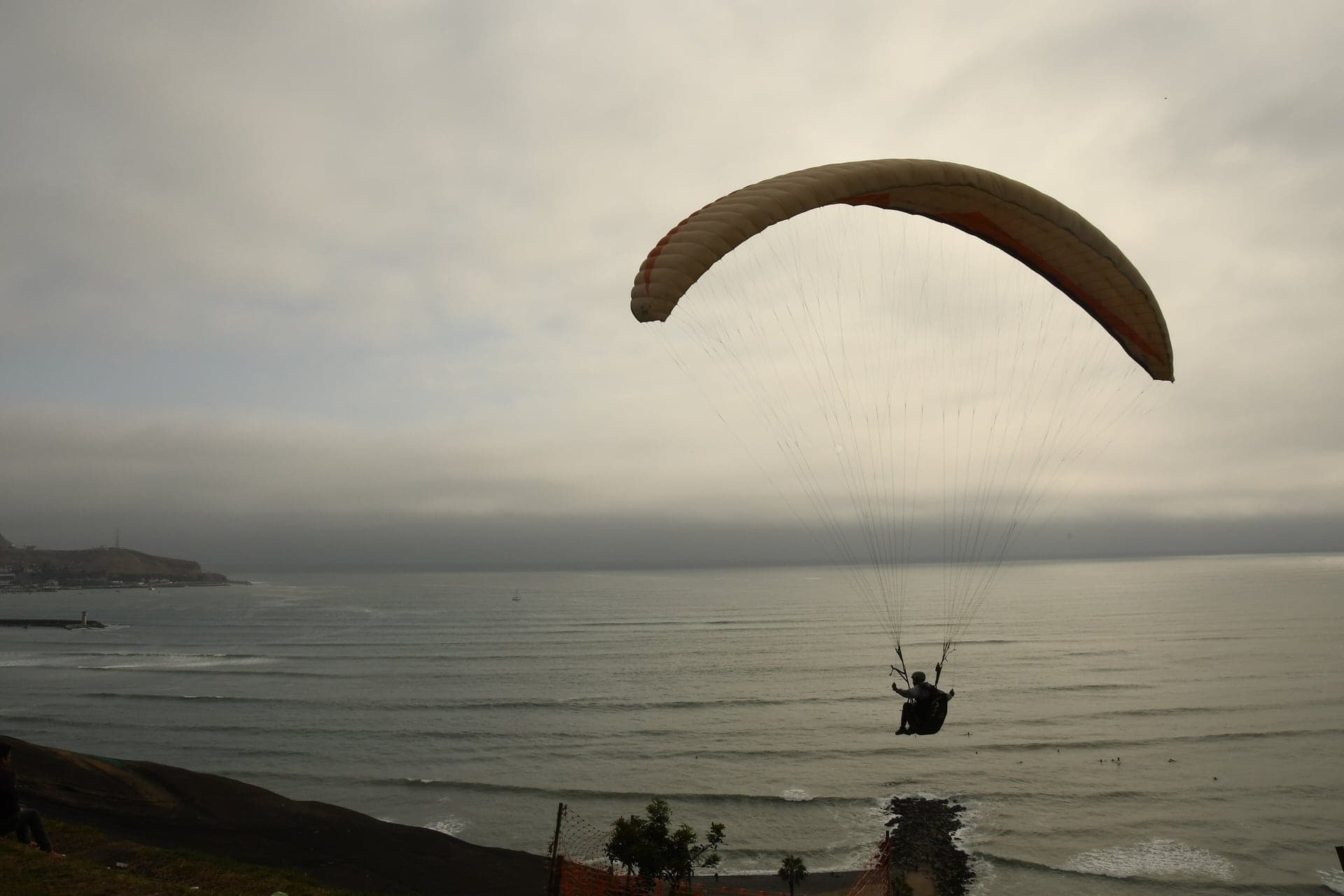
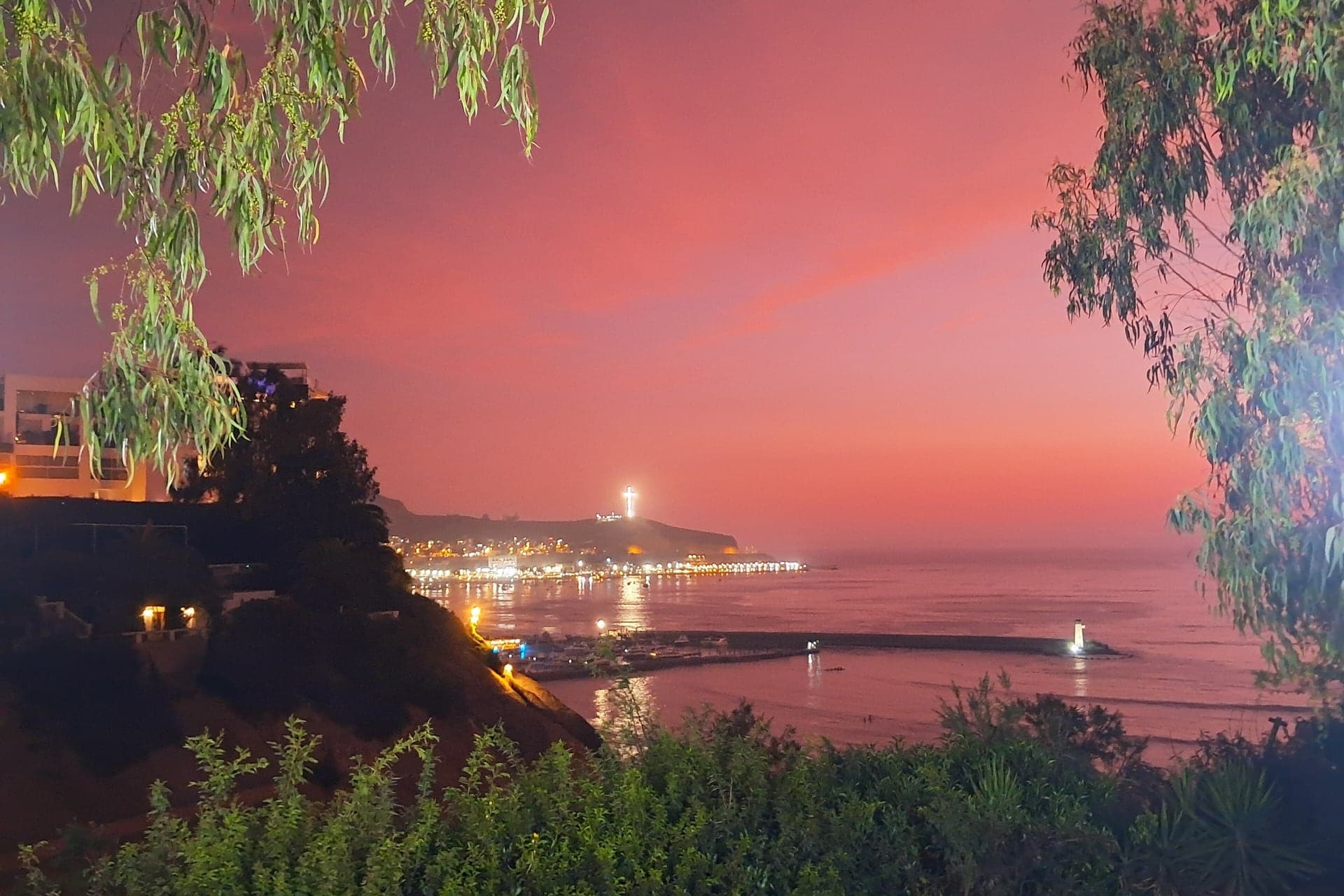
Mirador Catalina Recavarren: The Edge of the Pacific
A clifftop viewpoint over the Pacific. The walk ends where Barranco's ravine meets the ocean.
Details
Best Time to Visit
Late afternoon, so you reach the viewpoint behind La Ermita for sunset over the Pacific and see the bridge lights come on (they switch on at 6 pm since the August 2026 reopening). December to March brings the clearest skies; from May to November the coastal mist called garúa often grays out the view. Start between Tuesday and Saturday, before 5 pm, if you want to look inside the free Museo de la Electricidad.
Pro Tips
- •Cross the Puente de los Suspiros holding your breath and make a wish: it is Barranco's tradition. Since its August 2026 reopening its lights come on at 6 pm.
- •Wear shoes with grip. The Bajada de Baños is cobbled and the walk has two short flights of steps, up to the bridge and on toward La Ermita.
- •The Museo de la Electricidad is free and, per the Municipalidad de Barranco (checked 6 October 2026), open Tuesday to Saturday, 9:00 to 17:00. Confirm before you go.
- •Casa Rosell is seen across Avenida Grau: wait for a gap in the buses for the full view of its staircases, and take photos from the pavement rather than the road.
- •Two larger museums sit about 600 m south along Avenida Pedro de Osma: the Museo Pedro de Osma (no. 421, viceregal art in a 1906 mansion) and MATE (no. 409, photography). Both charge admission; check current hours.
- •To reach the sea, go back over the bridge, take the steps down to the Bajada de Baños and follow it toward the beach.
Safety & Precautions
- •Keep phones and valuables secure on busy Avenida Grau (buses, banks, crowds) and on and around the bridge at sunset.
- •A cycle lane runs along the clifftop path at the Malecón de los Ingleses: watch for bikes, and keep children close at the cliff edge.
- •Avenida San Martín is crossed at the Jirón Domeyer corner without traffic lights: the traffic is one-way and there is a bike lane on the far side. The earlier crossing at Jirón Colina has lights.
- •Jirón Colina, Batalla de Junín and Jirón Domeyer are quiet residential streets and very quiet after dark: walk this part in daylight or early evening.
- •La Ermita has been a restoration worksite since 5 June 2026, planned for about 480 days (into late 2027); stay outside the fences.
- •The stairs and cobbles can be slippery when the garúa mist dampens them between May and November.
- •Supervise children at the clifftop viewpoint.
Travel advisory: Exercise Increased Caution (Level 2).
Gallery
Related Reading
Go deeper on what you'll see, hear, and walk through.
Read the walk
The full story of Barranco: The Bridge of Sighs and the Way Down to the Sea, in words. Prefer to listen? Play it narrated, from home or on location.
Introduction
Barranco, a seaside district of Lima, the capital of Peru, sits on top of a cliff. Its name means ravine, and almost everything in it was built to solve one problem: how to get the city down to the sea. Lima's families came by train, and later by tram, to spend their summers on the clifftop. Then they needed ways down: a ravine path, wooden stairs, a funicular, and pumps that pushed fresh water up the cliff.
On the fourteenth of January, eighteen eighty-one, during Peru's war with Chile, soldiers set much of this town on fire. Many summer houses burned, and so did the church above the ravine and part of the bridge beside it. Most of what you will see is the town that came back.
Two names return along the way: Juan de Arona, a Peruvian writer whose eighteen ninety-four book described this town, and Chabuca Granda, a songwriter who grew up on the path to the sea and named its most famous bridge.
The walk is eleven stops and about one point eight kilometres, a little over a mile: about sixty-five minutes, with two short flights of steps. It loops out to an English promenade on the cliff, follows the ravine path down, crosses the Bridge of Sighs and ends above the Pacific.
When you arrive at the Museo de la Electricidad on Avenida Pedro de Osma, beside the town square, begin with stop one.
1. Museo de la Electricidad: The Tram to the Sea
Welcome to Barranco, and to the first stop on this walk, outside the Museo de la Electricidad on Avenida Pedro de Osma. Long before it was part of the city, Barranco was a place you had to travel to, and this avenue is where that journey is remembered.
In eighteen fifty-eight a railway opened between Lima and the beach town of Chorrillos, running through Barranco. By the late nineteenth century Lima's families kept summer houses along these cliffs. Then, on the seventeenth of February, nineteen oh four, Peru's president opened an electric tram line that reached Barranco first. For sixty-one years trams carried people between the city and the sea, until a strike stopped them in nineteen sixty-five, and they never came back.
This small museum opened in nineteen ninety-four in a former office of the electricity company. It is free, and open Tuesday to Saturday; the details are on this stop's card. Its best-known exhibit is outside: an Italian-built tram car of the kind that ran here, restored and put on show in nineteen ninety-seven. It no longer carries passengers, but you may find it resting on its rails.
Next door to the museum stands Casa Cilloniz, built in nineteen oh three for the family whose name it carries, and declared a national monument in nineteen eighty-nine. Look for its porch on four columns and, above it, the year and the owner's initials. It is the first of the grand houses on this walk, a reminder of how much this seaside suburb once meant to be.
Follow the route a short way to the town square.
2. Parque Municipal: The Square Laid Out After the Fire
You've reached Parque Municipal, the town square of Barranco. It was inaugurated on the thirteenth of February, eighteen ninety-eight.
By then Barranco had been its own district for less than twenty-five years, and it had already been burned once. Seventeen years after the fire, the town laid out this square, and it has been where Barranco meets ever since. In a city where it almost never rains, every lawn and flowerbed here lives on watering.
Find the fountain. The municipality calls the water figure at its center La Danaide, after the daughters of King Danaus in Greek myth, who were condemned to carry water forever in vessels that would never fill. It is a strange choice for a fountain, an image of endless, useless work, and a very Barranco one, in a town that would spend so much effort moving water up and down a cliff.
Look too for the tall candelabra of white Carrara marble, carved with acanthus leaves, which the municipality says copies one in the Vatican Museums, and for the stage under its pergola of eight columns.
Now find the building with the clock tower, lettered Biblioteca. It was built as Barranco's town hall and opened in nineteen twenty-two, its front laid out in three parts around a columned porch. Since nineteen seventy-six it has been the municipal library, with more than twenty-six thousand books.
Follow the route across the park to the church with the row of statues on its front. It is only a few steps away.
3. Iglesia Santísima Cruz: The Parish Church Built After the Earthquake
This is the Iglesia de la Santísima Cruz, the Church of the Holy Cross, Barranco's parish church on the north side of the square.
It is younger than the town around it. From nineteen oh three, Barranco's parish church was La Ermita, the chapel above the ravine that you'll reach near the end of this walk. When an earthquake in nineteen forty damaged it, the district set out to build a new one here. The first stone was laid on the fourteenth of February, nineteen forty-four, under the mayor Montero Bernales, and the work took almost twenty years. The church opened on the first of June, nineteen sixty-three.
Hold on to that mayor's name, Montero Bernales. The road bridge over the old path to the sea, which you'll walk under later, carries the same name.
Step back and take in the whole front before you go. The style is neo-Baroque, and the front holds five niches, each with a statue: Santa Rosa de Lima, Saint Joseph with the Child, the Sacred Heart, Saint John Bosco and San Martín de Porres. Of everything around this square, this church is the newest landmark, built by a district that had already lost one church to fire and another to an earthquake.
Follow the route along the top of the park to Avenida Grau, Barranco's high street, and up it. Next, a summer house that became a villa.
4. Casa Rosell: The Summer House That Became a Villa
Walk on up Avenida Grau and stop when a house with two curving staircases comes into view across the avenue, behind a low railing on the far pavement. When the traffic clears, you can see it whole: this is Casa Rosell, the grandest summer house on this walk.
Barranco called its summer houses ranchos. Many were plain and low: one storey, a door in the middle, tall windows behind iron grilles. This one, finished in nineteen twelve for a wealthy owner, set out to be something more, and its French architect gave it the shape of a European villa. Look at how the front opens to the street in a U. Two great curving staircases climb from the forecourt to a wide balcony, a lookout that Barranco's own tourism office calls without equal in the district, under a small dome. Galleries of arches run along both wings, with a balustrade along the roof.
The name came from the family. Its owner, Ríos, built a small house into one wing, with its own entrance, for his daughter, who had married a Rosell. So the house is Rosell and Ríos at once.
Now the trick behind all this decoration. Under the plaster the walls are adobe and quincha: cane and mud over a timber frame, light enough to flex when the ground moves. That is how a house this fancy has ridden out the earthquakes of nineteen forty, sixty-six, seventy, seventy-four and two thousand seven. Keep that word, quincha, in mind for later.
The summer boom that built this house lasted, by the municipality's account, until about nineteen twenty, and the trains brought it: Barranco's railway station opened a block away in nineteen oh three.
Follow the route on up Grau and along Jirón Colina toward the sea, crossing Avenida San Martín at the traffic lights and Batalla de Junín at the corner. Next, the English promenade.
5. Malecón de los Ingleses: The English Promenade
Walk on into the little park at the edge of the cliff, and stop where the sea opens up beyond the lawn. This is the Malecón de los Ingleses, the Promenade of the English. Here is what the houses on Grau were built to be near: the cliff, the air, and the ocean below. In…
Full narration for this stop unlocks with the tour.
6. Jirón Domeyer: The Street of Iron Hearts
Walk on into Jirón Domeyer and stop on its pavement, looking along the street. Part of this street is protected as a historic setting, and it shows the plainer Barranco summer house: one storey, painted fronts, tall windows behind iron grilles. After the villa on Grau, the…
Full narration for this stop unlocks with the tour.
7. Bajada de Baños: The Path a Flood Made
Walk on down the Bajada de Baños, the Descent to the Baths, and stop on the path below the road bridge. That bridge is the Puente Montero Bernales, and it carries the same name as the mayor who laid the first stone of the church on the square. Fishermen once came down this…
Full narration for this stop unlocks with the tour.
8. Puente de los Suspiros: Hold Your Breath
Stop at the end of the bridge. This is the Puente de los Suspiros, the Bridge of Sighs, and Barranco has one rule for it: take a breath, make a wish, and cross to the other side without letting it out. The bridge opened on the fourteenth of February, eighteen seventy-six, built…
Full narration for this stop unlocks with the tour.
9. Plazuela Chabuca Granda: The Woman Who Named the Bridge
You've crossed. Welcome to Plazuela Chabuca Granda. The standing woman is Chabuca herself, a two-metre statue in alabaster by a sculptor from Ayacucho. Chabuca Granda lived from nineteen twenty to nineteen eighty-three. She grew up on the Bajada below and became a composer of…
Full narration for this stop unlocks with the tour.
10. La Ermita: A Light for Lost Fishermen
The church ahead of you is La Ermita, the Hermitage, and its story starts at sea. Since June twenty twenty-six it has been a building site behind fences, and everything here is told from outside them. Barranco's founding legend says that fishermen lost in the fog saw a light on…
Full narration for this stop unlocks with the tour.
11. Mirador Catalina Recavarren: The Edge of the Pacific
Welcome to the viewpoint behind La Ermita, your final stop. It was built in nineteen eighty-eight and named for Catalina Recavarren, a Barranco poet who wrote many of her poems for children. Look out to sea: this is the Pacific, from the top of the cliffs of the Costa Verde, the…
Full narration for this stop unlocks with the tour.
- Lima (Barranco), Electricity Museum — Unukorno, CC BY 3.0 · source
- This is a photo of a monument in Peru, identified by ID — Ibrehaut, CC BY-SA 4.0 · source
- This is a photo of a monument in Peru, identified by ID — Ibrehaut, CC BY-SA 4.0 · source
- This is a photo of a monument in Peru, identified by ID — Alejandrovilbort, CC BY-SA 4.0 · source
- This is a photo of a monument in Peru, identified by ID — Ursula Paulina Uriarte Espejo, CC BY-SA 4.0 · source
- This is a photo of a monument in Peru, identified by ID — Ursula Paulina Uriarte Espejo, CC BY-SA 4.0 · source
- This is a photo of a monument in Peru, identified by ID — Ibrehaut, CC BY-SA 4.0 · source
- This is a photo of a monument in Peru, identified by ID — Ursula Paulina Uriarte Espejo, CC BY-SA 4.0 · source
- This is a photo of a monument in Peru, identified by ID — Ibrehaut, CC BY-SA 4.0 · source
- Callejuela en la Bajada de Baños — Felipe Restrpo Acosta, CC BY-SA 4.0 · source
- Pérou 2016 — Damien RAMOS, CC BY-SA 2.0 · source
- Puente de los suspiros en la Bajada de Baños — Felipe Restrpo Acosta, CC BY-SA 4.0 · source
- Plaza Chabuca Granda in the Barranco District in Lima, Peru. — Arturo Pardavila III, CC BY 2.0 · source
- Vista de la Plazuela Chabuca Granda y el Puente de los Suspiros en Barranco — AlejandroFC, CC BY-SA 4.0 · source
- La Iglesia Ermita — KimonBerlin, CC BY-SA 2.0 · source
- Puente de los suspiros — Nina Zaitceva, CC BY-SA 4.0 · source
- Mirador de Barranco, Lima - Peru — Paulo JC Nogueira, CC BY-SA 3.0 · source
Images may be cropped or resized. Other photos via Unsplash and Pexels.