Silver, Blood & Independence
100 min · 3.2 km · moderate
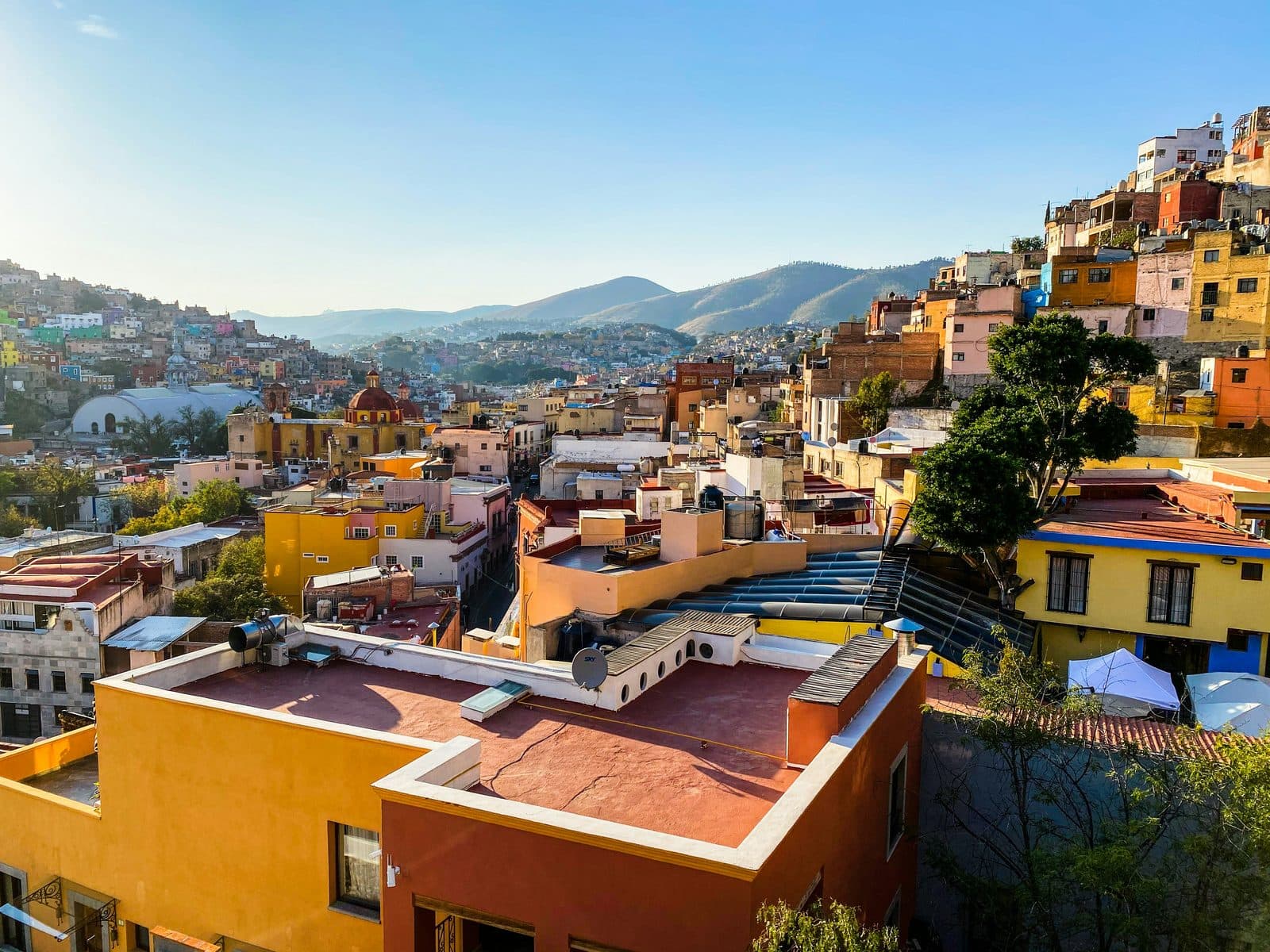
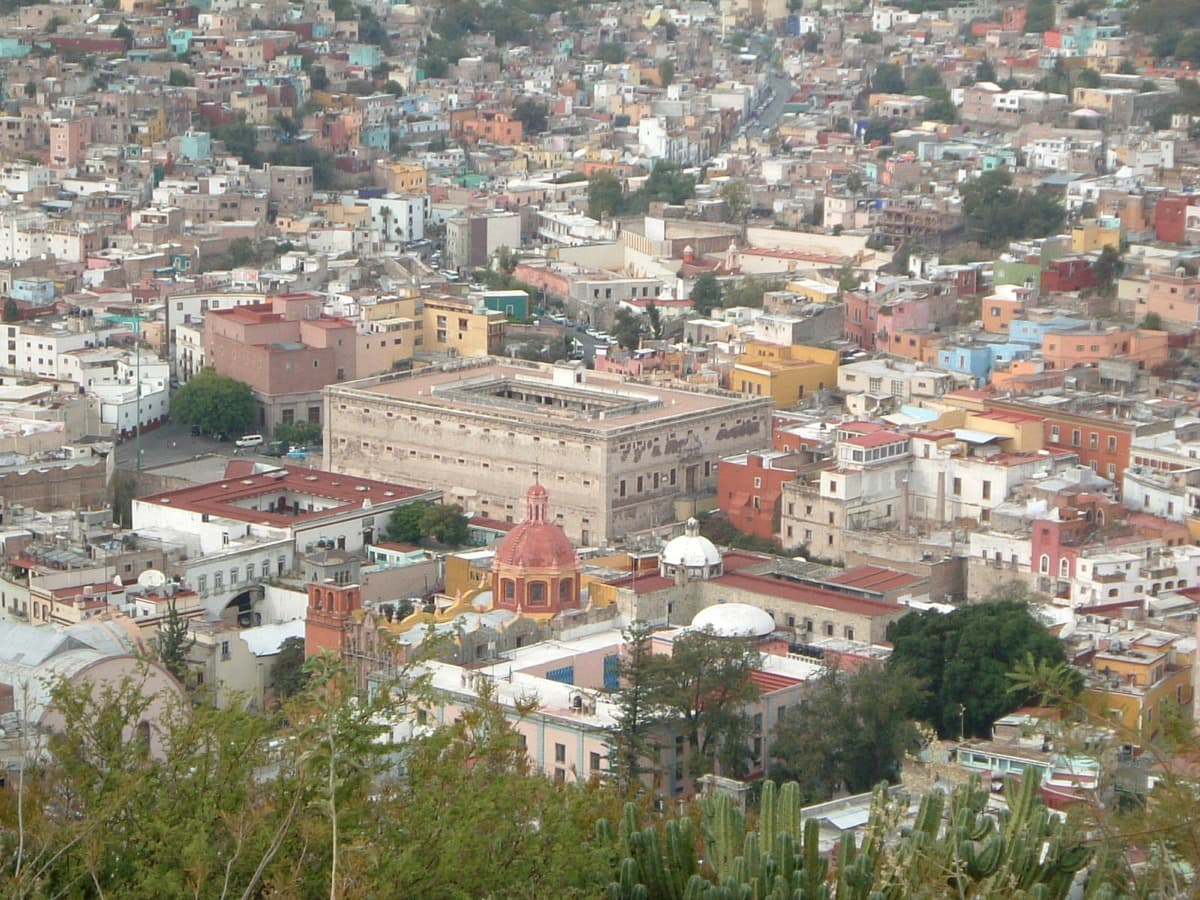
Most cities sit on flat ground or beside a river. Guanajuato does neither. It sits at the bottom of a narrow ravine in the highlands of central Mexico, about two thousand meters above sea level, with a former riverbed running through it underground and walls of hills on three sides. There is no grid. There could not be a grid. Streets fork, climb, dead-end against rock, and reappear three terraces up. The alleys are called callejones. The river is now a road. The houses are painted, building by building, in mustard yellow, cobalt blue, terracotta orange, lime green, fuchsia. UNESCO recognized the whole canyon and its mines as a World Heritage Site in 1988.
Everything that makes Guanajuato what it is descends from one geological fact. The hills around the city are riddled with silver. The veins are part of the Sierra Madre and they were, at their peak in the late eighteenth century, among the richest mineral deposits in the world. Silver pulled the Spanish Empire into the ravine. The ravine then shaped everything the silver paid for.
The canyon is the story
Guanajuato was founded in 1554, a decade after Spanish prospectors located ore in the surrounding hills. Within a generation the empty ravine was one of the wealthiest places in the Americas. By the late seventeen hundreds the mines around the city produced an enormous share of the world's silver, and at its peak the single La Valenciana mine alone is credited with around two-thirds of global output. Silver from these hills paid for cathedrals in Madrid, fortifications in Manila, the Royal Treasury in Lima, and the global wars Spain fought across three centuries.
But the canyon would not let the city grow normally. There was no room. The flat ground at the bottom of the ravine was a riverbed that flooded every rainy season. The houses had to stack on the slopes. The roads had to climb in switchbacks or burrow through stone. By the eighteenth century, Guanajuato was already a city of stairs. The colonial dam at Presa de la Olla was finished in 1749 to control the floods. Two centuries later, in the 1960s, the city took the more radical step of diverting the river entirely and paving its old channels as a network of subterranean roads. Today over nine kilometers of road tunnel run underneath the historic center. Cars drive through what was once a river. Pedestrians descend a staircase and emerge two streets away.
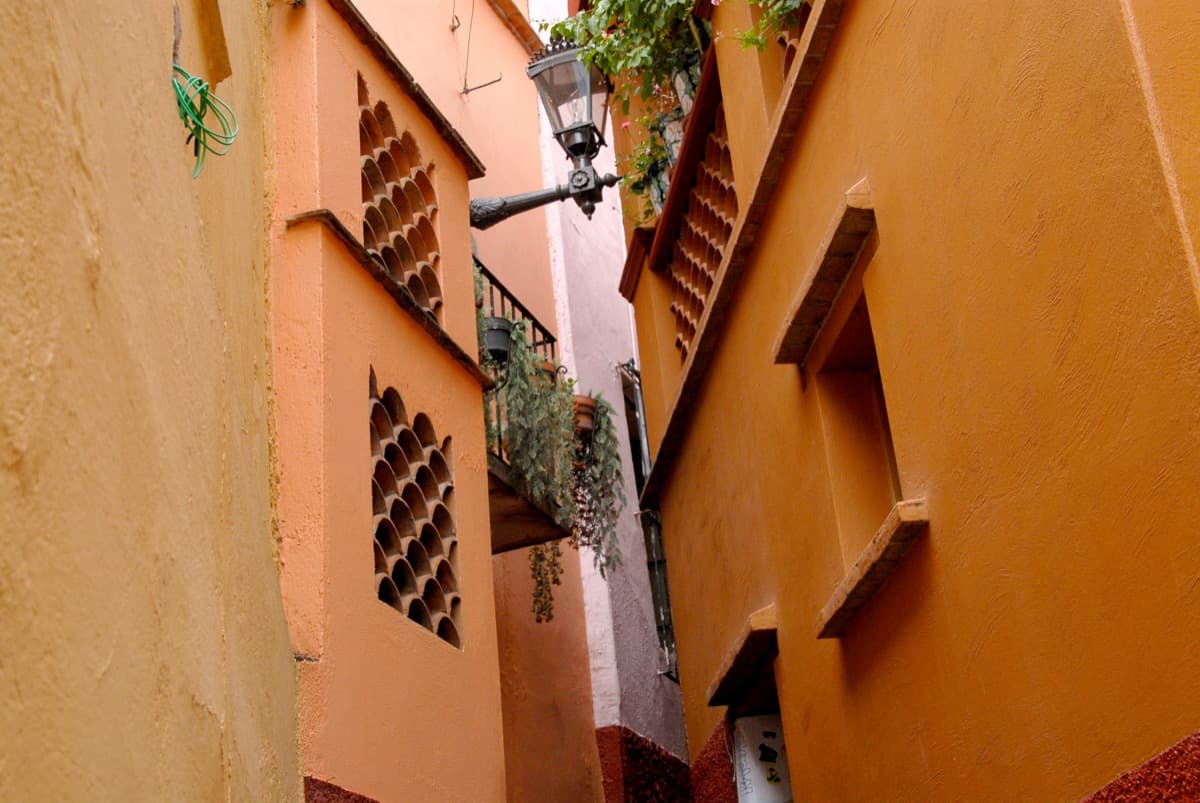
The alleys above ground stayed alleys. The narrowest of them, the Callejón del Beso, measures sixty-eight centimeters at its tightest point. You can touch both walls. Two people can lean out of opposing second-floor balconies and kiss. That is not architectural metaphor. It is a measured distance.
Silver, blood, and the granary
Hear a stop from this walk
Alhóndiga de Granaditas
Silver also produced the contradiction that defines the city's place in Mexican history. The wealth filled the coffers of the Spanish Crown and a tiny class of mine owners and Spanish-born administrators. Below them, indigenous workers, enslaved Africans, and mestizo miners descended into shafts that sometimes dropped more than five hundred meters into the earth. Silicosis killed men in their thirties. Cave-ins killed them at any age. Mercury poisoning, from the amalgamation process used to refine silver, killed them slowly.
When the priest Miguel Hidalgo issued his Grito de Dolores in September 1810, forty kilometers from here, his army of indigenous workers, miners, and peasants marched on Guanajuato. The Spanish loyalists and wealthy criollo merchants fled into the Alhóndiga de Granaditas, a massive stone granary on the main square, and sealed themselves in. A young miner whose nickname was El Pípila strapped a flagstone to his back as a shield, crawled to the wooden door, and set it on fire. The rebels poured in. Over five hundred people died in the building. The first major battle of the Mexican War of Independence ended in a massacre, and the silver city had bitten back at the empire it had paid for.
The Spanish response was equally savage. Within a year, Hidalgo and three other rebel leaders had been captured and executed. Their heads were brought back to Guanajuato and hung in iron cages at the four corners of the Alhóndiga. They stayed there for a decade, from 1811 to 1821, as a warning. The iron hooks that held the cages are still bolted to the building.
After the silver: a long quiet
Mexican independence in 1821 broke the colonial economy that the mines depended on. The nineteenth century in Guanajuato was a slow contraction. Civil wars, invasions, and the upheaval of the Reform period drained the labor force and broke the financing of the mines. Mexico's twentieth-century Revolution after 1910 hollowed the workforce further. The mines that had once filled European treasuries operated at a fraction of their colonial output, and by the mid-twentieth century the city's population had stalled. The painted houses on the canyon walls were a relic of past wealth, not a sign of present prosperity.
What saved Guanajuato in the second half of the twentieth century was culture. In 1953, a theater professor at the University of Guanajuato named Enrique Ruelas Espinosa began staging short comic plays, entremeses, by Miguel de Cervantes on the stone steps of Plaza San Roque. No stage, no curtain, no lights. Students performed. Audiences sat on the steps. The performances became a beloved annual tradition. By the late 1960s they had attracted enough national attention that the Mexican federal government formalized them. In 1972 the Festival Internacional Cervantino was officially established.
The festival did to twentieth-century Guanajuato what silver had done to colonial Guanajuato: it pulled in money, attention, and outside artists. The Cervantino is now the largest performing arts festival in Latin America. Every October the city fills with theater, dance, music, visual art, and film from over thirty countries. The Teatro Juárez, the city's grand neoclassical-Moorish theater inaugurated in 1903, became the festival's flagship venue. Plaza San Roque still hosts the entremeses every October, in the same format Ruelas designed, on the same steps.
In 1988 UNESCO designated the historic center and its mines as a World Heritage Site, recognizing both the colonial architecture and the engineering of the canyon city itself. The painted facades, the callejones, the tunnel network, the baroque churches that the silver paid for, the granary where the war began, the theater where the festival anchors itself, all of it is now under formal preservation.
How the city reads from the inside
Three threads run through every part of Guanajuato that you will actually walk. Silver explains the wealth. The canyon explains the geometry. The festival explains why the city is still alive as a cultural place rather than a museum.
The three audio tours in this city each follow one of those threads. The silver-and-independence tour walks from the colonial dam to the granary to the mine, and it carries the contradiction of empire and revolution in a single ninety-minute arc. The legends tour walks the callejones, the cemetery, and the tunnels, and it shows how the geometry of the ravine produced the ghost stories. The color and Cervantes tour walks Diego Rivera's birthplace, the Cervantes museum, and the painted barrio of Pastita, and it shows what the city has done with its silence after the mines went quiet.
Read those threads together and the contradictions resolve. The baroque churches were funded by men whose miners died young. The granary that started a national revolution sits two minutes' walk from the mansions of the men who would have profited if the revolution had failed. The festival that revived the city in the 1970s rents the theater that the dictator Porfirio Díaz inaugurated in 1903. The painted facades that delight every visitor were once a working-class response to the imported pigments of the silver elite. The city has been adding layers like this for almost five hundred years and has thrown almost none of them out.
What to do with this on your walk
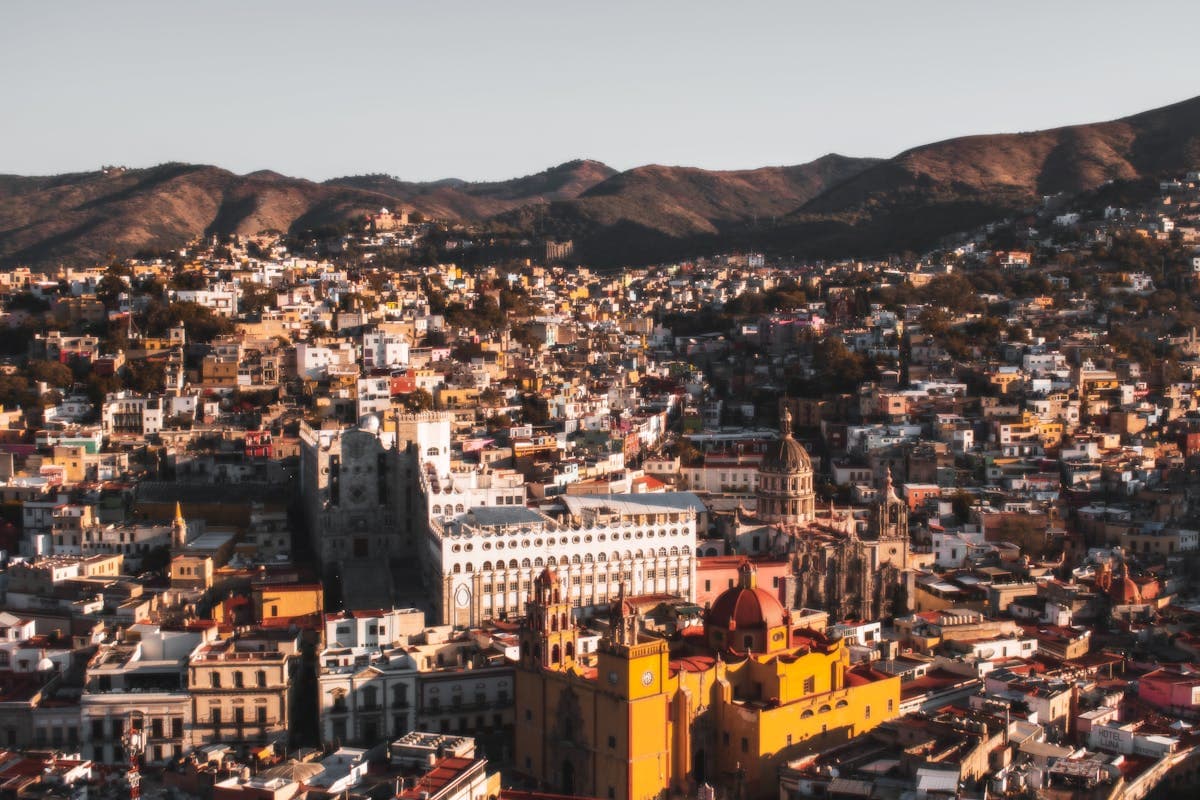
Start with a view. Climb to the El Pípila monument on the south rim of the canyon, or take the funicular from behind the Teatro Juárez, and look down. From up there you can see the whole problem the city has been solving since 1554: how to fit a wealthy, contradictory, multilingual culture into a ravine that does not want to hold it. The painted hillsides, the cathedral spires, the iron-and-glass roof of Mercado Hidalgo, the white staircase of the university, all of it stacked at angles that should not be possible.
Then walk down through the callejones. Touch the walls. The city is closer to your body here than it is in any other Mexican city. That closeness is what produced the legends, the colors, the music. It is also what made the silver economy work, by packing labor into a space the empire could control, and what made the revolution possible, by putting the wealthy and the desperate within five minutes of each other.
Every tour in Guanajuato is a tour of the same canyon. The themes are different. The geometry is the same.
Frequently asked questions
- How many self-guided walking tours are there in Guanajuato?
- Roamer currently has 3 self-guided audio walking tours in Guanajuato. Every tour is free to start: the introduction and first stop play in full, and every later stop plays a short preview before you decide to buy.
- How much does a self-guided walking tour in Guanajuato cost?
- Each tour is free to preview and $4.99 for lifetime access. If you want more than one, a 7-day pass is $12.99 and a 30-day pass covering every tour is $19.99, which works out to well under a dollar a day.
- Can I do the Guanajuato tours offline?
- Yes. Tours can be downloaded in advance in the Roamer app and played with no signal, which is useful when you are travelling without mobile data.
- How long are the Guanajuato walking tours?
- They run about 85 to 100 minutes, covering 2.3 to 3.2 km on foot, with up to 8 stops on the longest route. You set the pace and can pause any time.
Mexico eSIM· 10% off with ROAMER10
Ready to experience it?
Silver, Blood & Independence
100 min · 3.2 km · moderate
More from Guanajuato
Explore more at your own pace.
Best Self-Guided Walking Tours in Guanajuato (2026)
Guanajuato Travel Guide: How Many Days, Getting Around, When to Go (2026)
One Day in Guanajuato: A Walkable Canyon Itinerary (2026)
What to Eat in Guanajuato: A Food Guide (2026)
The Alhóndiga de Granaditas: Where Mexico's War for Independence Began